“What is Romanian Christmas food?” is the question everyone asks. Well, since I did one of these things for Easter, I figured I might as well do one for Christmas. When all you heathens and heretics eat Chinese food and prime ribs and such, Eastern Orthodox do what God intended: slaughter a pig. It is rather traditional for any Romanian family of some size – well, older folk, I suppose, not kids these days… – to buy a whole pig, usually not from an industrial farm but from relatives in the country or a small farmer (we still call ’em peasants here). The pig is prepared nose to tail and little is wasted, to form a very large Christmas feast, which often results in the ambulance being called due to overeating (though never in my family).
Lard, pure and simple
So I will talk of the food I know. Other Romanians families may have somewhat different traditions. This year Christmas was a sad one as it was the first since my father passed away, but my mother and I decided to try to keep Christmas as close to usual as possible. We only got less than half a pig, though. We could have gotten a whole and frozen most of it, but I prefer cooking from fresh meat so I don’t freeze much. The pictures are not good – taken by phone and I don’t know shit about taking pictures – but the food is tastier than it looks.
The liver
The first meal of the day – usually around 9 AM – consists of what we call mezeluri, could be translated as cold cuts. This includes leber (from the German word for liver, I think) which is basically the pig’s liver boiled and minced very fine, mixed with some pig fat minced very fine, some onion chopped fine and sauteed a little in oil, plus five eggs (for the average pig liver), beaten. This makes a liver pate-like paste which is then stuffed in a pig intestine and boiled as a whole for a bit more. Toba – meaning drum – may be similar to what you call head cheese in looks. It is made from parts of the pig’s head and trotters, plus years for the gristle – gristle gives texture – boiled, chopped up roughly, stuffed into the pig’s stomach and boiled a little more. Șorici is basically raw pig’s skin, packed in salt for a few days – the pig is generally seared in order to remove the hair, so the skin may be slightly cooked in the process. Slănină is basically what Italians may call lardo – just less sophisticated, raw pig fat with a little skin attached, also slightly salt cured. Hard salty cheese and raw onion complete the meal, usually alongside bread and țuica.
Drumroll…Caltabos
The second meal -around 12 – is of caltaboș, a thick boiled sausage. It is reasonably fatty pig’s meat minced more roughly, mixed with rice, seasoned with salt and pepper, stuffed in a piece of large intestine and boiled in a broth of mainly water, onions and a bay leaf. This is eaten hot with a squeeze of fresh lemon and some grated horseradish (fresh horseradish just grated and mixed with some salt and a little white wine vinegar). Generally, unlike sausage, the intestine casing is not eaten, and neither is the broth, which is used for cooking. Although red wine works better with pork, in my family we usually drink white with this one.
Pie’s special meat ‘n sausage
Around two or three, the sarmale come – stuffed cabbage leaves cooked with some tomato juice and wine. Red wine usually accompanies this meal, and sometimes a hot pepper to take the occasional bite out of.
In the evening, stomach room permitting, the final meal is usually some roast or grilled pork – ribs in general – and sausage. The sausage is a simple but delicious affair, a mix of fatty pork and beef with salt, pepper, garlic and paprika. This is generally eaten alongside pickles. With this part, red wine continues to be drunk.
Gogosar and friends
As dessert, traditionally it is cozonac (I mentioned it in my Easter post, it is, if I remember my Seinfeld, maybe similar to what polish call babka). More red wine here, if you can handle it, which many cannot. Cozonac goes well with red wine. The saying goes in Romania the only thing better in life than cozonac with wine is just wine.
So that is about it, did not feel like writing a longer post so this will have to do. How Romanians gain weight during the winter holidays.
There is a Romanian phrase, used when someone abuses a certain issue, which can be paraphrased along the line of, “Easy with the Western Culture down the stairs.” If you rush too much, you may break whatever you are rushing with, is the meaning. I feel that recently this is the case with Western Culture in the Culture/Social Justice/Whatfuckingever wars that do not seem to go away.
There are two facets to this. Well let’s not go to binary, like gender there are a million facets to this. One is that the CW/SJW thing is often little more than a massive distraction, a lot of noise to drown the signal, keep the participants busy while corrupt politicians keep doing corrupt politician shit. On the other hand, it cannot be fully ignored, because aspects of it are very dangerous. One of the main components of this was/is the late/great Western Culture. I will address this, sort of, kind of, with plenty of to be sure and wimpy language.
So let’s get ready to a-rumble… in the ehm Red (Pinko sometimes) corner we have the Progressive Left. In the Other Red corner we have the various flavours of the alt right. In the middle we have the enlightened alt centrist; the self-described non regressive left; the modern right; the cosmotarians; and a few odds and ends. In the end, we have the battle of progressives versus literal Nazis. And western culture is at the forefront, it is the gloves, if you will.
Culture or a pile of rocks?
To start with, let’s go to Wikipedia, because why not. “Western culture, sometimes equated with Western civilization, Occidental culture, the Western world, Western society, European civilization, or Judeo-Greco-Christian civilization, is a term used very broadly to refer to a heritage of social norms, ethical values, traditional customs, belief systems, political systems and specific artifacts and technologies that have some origin or association with Europe.”
So, as we can see, Western Culture is a very expansive category. It can mean many things to many people (for some The Sistine chapel, for others The Chive and the invention of the bikini), then and there, now and here. This is why I am rather wary of overusing it as some generic all-encompassing term in a debate. We must defend western culture is the rallying cry. Which one? Which parts of it? To what ends? These are questions I feel we need to keep in mind.
Just as a side note, I find the construct Judeo-Greco-Christian rather silly, and one of the things that annoys me about some modern conservatives. For most western history this was not a thing, as Christians were highly divided until recently and Jews have a long history of not being on the best terms with the mighty western culture. There is no single unified Judeo-Greco-Christian tradition. Yes, various flavors of Christian and Jew contributed to the development of the ideas behind the West, and the culture obviously developed in the context of religion. But this is not enough for this construct.
I might state that I am not religious and I see little worth to attaching so called western values to a religion or other in the present, especially since a number of the enlightenment people who developed these values, while most likely being religious themselves, did not approach philosophy from a religious angle. Judeo –Christian means in modern speak not Muslim and sometimes not secular, and it is an attempt to try to co-opt all sorts of people as a collective. It is, as we say in Romania, an ostrichcamel.
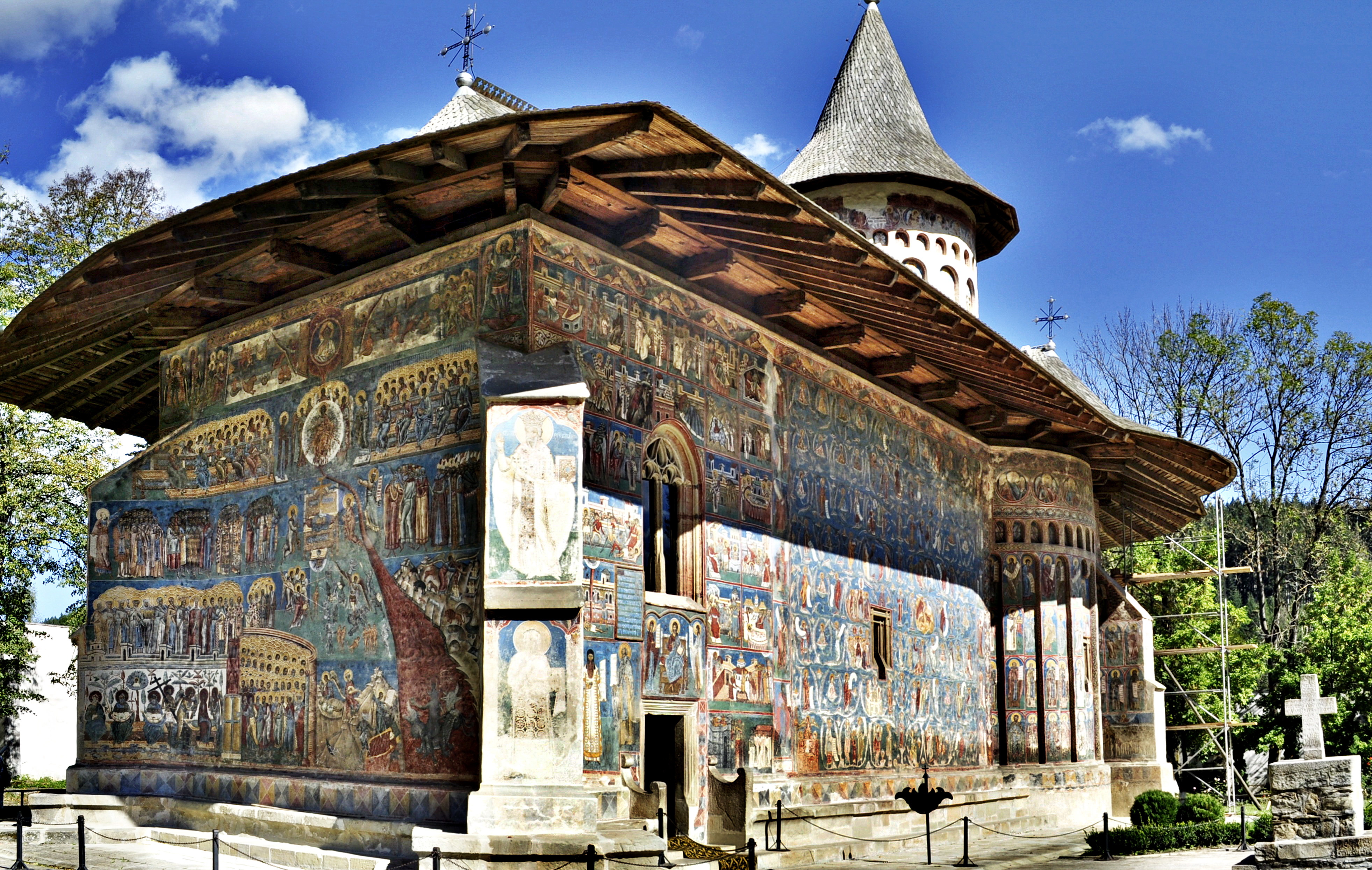
Good church need not be huge. Mind the hellfire.
Now, for a second side note, let’s get subjective, as the various warriors are wont to do. You may not have noticed, but I am a Romanian. As such, I am somewhat at the fringes of western culture. Romania was not traditionally part of it, or not fully, at least. Always scurrying along the edges, looking in. An eastern orthodox nation heavily influenced by Russian and the Ottoman Empire, the habits, mores, traditions are different. We were of course part of Christendom in the premodern era, and had elements of western and eastern culture. And many a times the leaders wanted more, Romania was always on a long slow path to being more of a part of the West. When joining the EU many said we joined Europe.
With all that said, I can say I admire many a thing about western culture, and as a modern Romanian I consider myself part of it. But I do not like to look at it as a uniform thing. As a libertarian, I like liberty and individualism. As a human I like security, prosperity and everything that comes with that. And I like the parts of Western culture that promoted those things, many then, most if not all, other human cultures. I am also critical of elements of Western Culture that did the opposite.
I do not like mindless worship of anything, including culture. And I do not like nostalgia about some long lost ideal past. There was never such a thing. All cultures need improvement and everything needs criticism. Humans, and their societies, are hardly perfect. And it looks to me like all these western culture warriors only use it as a rhetorical tool and little else.
The free speech war is a good example in this regard. One should not think rightists want to preserve free speech when they did not in the past. Just like the true face of the left free speech movement was seen after they thought they could get speech they didn’t like banned. It is also good to notice that, while free speech was a value of Western Culture and vigorously defended by many in the past, it needed vigorous defence precisely as it was constantly under attack by elements of the same culture.
One issue is that, as a libertarian, you often are accused of wanting to go back to sometime in the past because you want a reduction in taxes regulations and general involvement of the state in the economy. This is due to the fact that leftist arguing 101 is to scream racist at people, and they constantly try to equate thinking that the regulatory environment was better in the past, that the whole society was better, and that you want all aspects of that society including the racism and discrimination. This is false and should be countered, which why it is important to phrase arguments properly beyond the western culture thing.
I often sample western culture myself.
Me, I do not want to go back. I do not like the phrase going forward either to be honest. But, to take the standard analogy, going forward on the wrong road is not a good idea. I want to go down the road to more liberty. If this implies certain aspects to be more like they were in the past, it is not going back, it is going toward liberty. If I find things wrong in the past, but OK now, I want to keep them. If there was something wrong then and wrong now, I do not want to “move forward,” I want change towards liberty. But I do not appreciate keeping things as they are just because that’s how they are. If they are wrong, they must be changed.
Everyone thinks repealing laws they don’t like is progress, but repealing laws they do like is regressive. Which is natural, let’s not stop progress towards my goal. But switching targets is not regressive in itself, even if I don’t like the targets. The trick to improvement is to keep the parts that are good and change the ones that are not. Change for the sake of change is not always desirable. And not everything new is good.
With all the previous caveats, I do believe that western culture is up there with the best that human achieved, lacking as it may be. I do not judge the past based on the future, and while there are things in 1800 I find wrong, it does not in any way invalidate western culture or the achievement of those people, mostly white men who sometimes owned slaves or maybe didn’t think women should have equal rights.
Free markets and capitalism brought the biggest increase in human prosperity in history. Of course this does not mean that some industrialists did not treat their employees poorly, although governments did have something to do with constant meddling. But this does not take away the achievements of capitalism, nor does it mean that without the big government of today, conditions would have remained like in the 1800s. Society and ideas evolve, views and attitudes improve. And above all, economic and technological growth moves things in the right direction, despite what government or some of the worse industrialists would want. You do not need the benevolence of the capitalist to improve worker conditions; the market does that just fine if you let it be. But I do not glorify the 1800s.
I believe that the best development of the West was individualism and individual negative rights. This led to liberty and values that lead to a successful life. Through the tumultuous past, I see ideals of liberty as a fine wire weaved through, moving things the right way. There probably is an English expression for this but I can’t figure it out.
Be a good person. Educate yourself. Earn your keep, have stable relationships, raise you children right (should you have any), and be charitable to the less fortunate. Help your neighbours, family and friends – as long as they deserve it. Be fair, be just. Do not initiate violence. Drink good scotch. Don’t dress like a clown. This is all a part of western culture that must be not only kept but enhanced. We don’t have enough of it. But it is not necessarily exclusive to western culture and it was not, sadly, an overwhelming component of it.
The height of Western political though has been achieved
And here lies the problem that makes me somewhat more favorable towards the pro west-cult people than The Others. The right try to make of western culture something that it was not, and some sort of sacred cow. The progressive left, and even worse the postmodern left (yeah yeah I know the word postmodern gets thrown about a lot, but I believe it applies), the SJWs of the world are in fact a much bigger threat. They do want to tear down all elements of western culture. Which is stupid. It is more than stupid, it is insane. Tearing down everything means there is nothing worth keeping. This is utterly ridiculous, as they were quite obviously the most successful nations, even when it comes to the stuff leftist claim to care about such as tolerance, secularism etc. And being collectivists, they want to tear down individualism. This can only lead to disaster.
Why are these people so suicidal insane? It is hard to tell. Human nature one would suppose. They are so desperate to push their idiotic economic ideology, that they just don’t care what they destroy doing so. How someone may think this is a good idea is baffling. Fiat Socialism, pereat mundus, I suppose. Red or dead. Communism or bust.
The moderate left is timidly fighting back, and more and more. This is not just the YouTube sphere of the so called non-regressive left, but more of the mainstream. There is of course the vestige of the non-prog left, which does admit some value to western culture. These people are, of course, literally Nazis.
All nations have various saying and proverbs as part of their culture. Romania is a nation. Logic would dictate that Romania has proverbs. And this is one of those few cases where logic would be right. And I am sure the Glibertariat are dying to learn some of these fabulous sayings. Pie, the comments clamor, how about a post on proverbs. Well, I aim to please, so here it is.
Old man. Very wise.
Proverbs… Are these ancient nuggets of wisdom that survived the ages to provide valuable advice, or some trait affectation, nonsense spouted by senile elders in the past? Maybe a bit of both? Now some think one may learn something about a people by their proverbs. I doubt this myself but to each their own. The problem with such an endeavor as mine is that proverbs do not always translate perfectly. The general solution for this could be to find equivalents in English, but this loses part of the specificity and local flavor. You can go the road of word by word translation, mot a mot as we say in Romanian, which is what I will.do, after which I will explain, in my words, the meaning of the proverb. I leave it to the commentariat to find equivalent proverbs if they are so inclined.
For the sake of brevity, I did not use all proverbs in the Romanian language. Also for the sake of keeping it interesting, I will not use proverbs with to direct equivalent. In Romanian, we say “Calul de dar nu se cauta la dinti” which has a literal translation of you don’t look at a gift horse’s teeth. This seems to me similar to some English proverb I heard once, so it is omitted.
So let’s get on to it. The pattern is: proverb in original Romanian, word by word translation, and finally explanation. I will sometimes skip the diacritical marking cause I am too lazy to do them.
Buturuga mica rastoarna carul mare –The small stump can overturn the big wagon- This is basically a warning to care when driving on the bad roads of Romania, as you may run into a tree stump and have an accident.
This second one is also about infrastructure “Fă-te frate cu dracul până treci puntea.” -Become brother to the devil until you cross the bridge- This confuses even me. I would say safety in numbers, but I do not see how increasing the number of people on a rickety bridge would help.
Cine sapa groapa altuia cade singur in ea –Who digs a grave for someone else might fall themselves in it– So gravedigging is a dangerous profession and should be better payed. Also, mind the gap.
Cine se trezeste dimineata departa ajunge –He who wakes early goes far– Jogging is good for you early in the morning.
Strica orzul pe gaste –Wasting the barley on geese- Geese can eat other stuff so make beer.
Calul moare de drum lung si prostul de grija altuia. –The horse dies off to much distance and the fool dies of caring for other’s business– This tells people to take care of their horse.
Ai apucat pisica de coadă, învârteşte-o să nu te zgârie. –If you grabbed the cat by the tail, spin it or it will scratch you– I will not comment on this as I do not condone animal cruelty. In a similar vein is A fi prins cu cioara vopsită –to be caught selling crows painted over- Do not apply paint to live crows please.
La placinte inainte la razboi inapoi –First when it comes to pie, last when it comes to war- Basically good food better than violence.
Dupa razboi multi vieji se arata –after the war is over, a lot of brave people show up- Basically just because you had something else to do during when fighting was going on and could not participate does not make you less brave then the ones who did.
Dracul când a îmbătrânit atunci s-a călugărit. –When the devil became old he became a monk– It is never too late to settle down.
Cine fura azi un ou, maine va fura un bou. -Who steals an egg today, will steal an ox tomorrow- It is important to plan your career ahead and try to make progress.
Young man. Less wise
Lupu schimba parul dar naravul ba –the wolf sheds his hair but not his character– basicalluy some elements of behavior are genetically determined.
Cand pisica nu-i acasa, joaca soarecii pe masa –when the cat is away the mice dance on the table– All creature need enjoyment and recreation.
De bani se plang toti, dar de minte niciunul –everyone complains of insufficient money, but no one of insufficient wisdom- This says intelligence does not always lead to high income.
Cine s-a fript cu ciorba, sufla si-n iaurt. -Who gets burned eating soup blows over yogurt– You never know when yogurt may be hot so be careful.
Lauda de sine nu miroase a bine. –Self-praise smells bad- Take a shower before telling people how great you are.
Frate ca frate, da’ branza-i pe bani. –We may be brothers, but cheese costs money- This speaks of the greed of cheese mongers in Romania.
Faci și din țânțar armăsar. –Make a stallion out of a mosquito – GMO is okay
A face umbră pământului degeaba. –Making a shadow on the earth for no reason– Just get a parasol if sun is an issues
Un prost aruncă o piatră in apași zece înțelepți se chinuie s-o scoată –a fool throws a stone in the water and 10 wise men struggle to get it out- This means it is a waste of time to look for specific stones, all stones look alike anyway so just grab one.
Apa trece, pietrele raman –water flows but stone remains- I assume this is the same stone as the previous saying and no one could find it, but it didn’t damn the river so it does not create major environmental issues.
Bătrânețe – haina grea –Old age is a heavy coat– In Romania, like most societies, the elderly no longer care so much about fashion.
Țara arde și/iar baba se piaptănă. –The country is burning and the old woman is combing her hair– This is similar to the previous ones and encourages grooming among the elderly even if they may not have much hair left.
Bunul gospodar își face vara sanie și iarna car –the good farmer works on his sled in the summer and his wagon in the winter– This means it is important to have some hobby
Famous Romanian Sage
Capra sare masa, iada sare casa. –The goat jumps over the table, the kid jumps over the house-This is a warning that goat enclosures need higher fences than sheep
Cine seamana vant culege furtuna. -Who sows wind reaps a storm- This is about the perils of global warming and I think there may be a similar saying in English.
Brânzăbuna in burduf de caine. – good cheese wrapped in dog’s stomach- A reference to a type of cheese that is aged in a cleaned sheep’s stomach. The point of the saying is do not give your dog cheese, you will not be able to recover it after aging.
Domnia si prostia se platesc. –Luxury and stupidity cost money- This does not make much sense because stupidity is not a marketable good, but I put it here anyway.
Nu e dracul (chiar) așa de negru. -The devil is not that black- Do not take the Bible to literally, it can be interpreted in different ways.
Nu este pădure fără uscături. -There is no forest without deadwood- Basically, you can make fire even if you do not have an ax to chop a tree down, just collect fallen branches.
Nu face ce face popa, fă ce zice popa. –Don’t do what the priest does, do what the priest says to do – So do not start preaching to random people.
Numai în pomul care nu face roade nu dă nimeni cu pietre. -No one throws stones at the tree without fruit– This is just common sense, you won’t knock fruit down if there aren’t any.
Sârguința e mama norocului. –persistence is the mother of luck – I guess this refers to some people named like that that lived sometime in the past, but I don’t know who they are.
A bate apa-n piuă -grinding water in a mortar and pestle- Basically, do not try an electric grinder for water as it may short circuit.
So this is it, fellow glibs, I hope a bit of useful wisdom will help you from now on.
One of the things that surprise me about people and politics is how little time they spend thinking about an issue. Actually thinking. Like you would think of a work problem, let’s say. Not that many people think about work problems, too many incompetents for that. But many a time I had a debate with someone on an issue, and a week later, when I asked again about it I got blank stare. They did not spend one more minute dwelling on it, thinking. I did, because I wanted to clear it in my head.
So that being said, it reminded me of some of the things that gave me thought when I started really thinking about politics. I wanted to see the general opinion of the Glibertariat about a couple of issues. Both times I started out pretty sure of myself, but actually thinking about it got me to at least be less certain. This is what made me realize that I actually have to think about these things seriously before forming an opinion, and changed the way I view issues of politics, economics etc. In this particular case both are issues of justice.
Tough but fair
One of them can be tied to the whole common law versus roman or codified law debate. How much of law should be codified, what is the relationship between The Law as a philosophical concept and legislation, how strict or flexible should a piece of legislation be and how much leeway should courts have. How many laws should there exist codified, on the book? And how strict can these laws be?
How much can you trust a pure common law? Misbehavior by judges happens. How much can you trust a strict codified system? Misbehavior by politicians is just as often at least, and there can be a difference between theory and actual cases. See mandatory minimums.
One of the things about laws is that the need to be to a certain point clear and predictable. You must be able to expect an outcome, so you can behave appropriately. This makes it difficult to have no codified laws and leave everything up to courts – whatever these may be. In customary law, of course locals know the local custom, but laws can be more than custom of the particular area.
Strict laws can be inflexible but flexible laws unpredictable. Laws can start strict and become lax with exceptions and loopholes; this makes the system poorly performing, excessively complex and unfair, as exceptions tend to favor interest groups. My general idea is if a law requires an exception, it is badly made and it should not exist until crafted not to contain one.
My original position was that circumstances vary and as such laws should be flexible. This is countered by the notion that the law should be predictable and not too much subjected to the whims of judges. My conclusion at the time was that laws on the books should be simple, clear and few – only the absolutely essential ones. Only make them about absolutely necessary things. Keep them manageable and knowable. You can’t expect people to respect laws they do not understand. Not knowing the law is not an excuse is bullshit given the complex law code we have.
Where the courts come in is in having some flexibility on punishment – deciding guilt (was it murder or self defense? did the accused do it?), fault, mens rea and circumstances and the like. And covering conflicts that are not covered by codified law, but these should be less critical situations.
A second dilemma was about corrective, preventive, retributive justice. What is the goal? Rehabilitate the criminals? Discourage others? Punish the crime, irrespective of the first two? Or a combination of all three?
Burn her!
Originally I was completely against the idea of retributive justice, for several reasons. I thought that the main goal of justice would be to minimize crime and number of people in jail. Help criminals reintegrate in society. Retributive justice felt a little too much like revenge and prone to cruel and unusual punishment, and I did not believe it to be good to have the government in the revenge business.
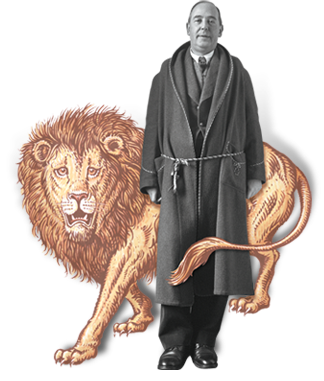
Doubt crept into my mind when I read a defense of retributive justice by C S Lewis. The idea was that just justice is somewhat akin to “let the punishment fit the crime”. You did something wrong, you pay the price for what you did and that is it. You do not depend on judgments whether you are rehabilitated enough, or whether your punishing is enough to deter others sufficiently. The argument was that thinking mainly at prevention or rehabilitation moves the punishment from what is just to what the Government decides is useful for the previous stated goals.
The idea of retributive justice still makes me uncomfortable, but I cannot say it does not at least have a point. And I still mostly lean towards prevention, rehabilitation. As, while the punishment fits the crime sounds good and all, how do you determine an accurate punishment for a crime? Why 5 years in jail and not 3? Why a 500 dollar fine and not a 1000 dollar fine? What is fair?
My fellow libertarians, I have a shameful secret to share. I have not, nor do I intend to, read Ayn Rand. I have no idea of the value of her work, but I have a lot more I would rather read. This will inevitably lead to me being stripped of my libertarian decoder ring, as any fool knows libertarians are all Rand worshipers and the libertarian thought definitely does not go back hundreds of years. Or thousands, if you believe a certain Murry R. who claims Taoism was sort of a precursor to libertarianism.
In fact, were I to recommend something to read to a person who want to get started on the politics of liberty, it would be Bastiat. It is short, clear and very relevant. Not the meandering obscurantist crap that passes for intellectualism on the left.
Which brings me to the idea of this post, although it is basically a lazy non-post, because I did not write much. While I know quotes and aphorisms are mostly meaningless nonsense in most context, one can agree that some people have a way with words others do not, and it is no shame to sometimes use someone else words to express ideas in a more poetic fashion than you could yourself (no, not you SugarFree, but for the others it applies).
So what are the quotes that I like and best express my view of liberty? I can give a few and leave more as an exercise to the class. In no particular order, here is a random quote dump.
“Socialism, like the ancient ideas from which it springs, confuses the distinction between government and society. As a result of this, every time we object to a thing being done by government, the socialists conclude that we object to its being done at all. We disapprove of state education. Then the socialists say that we are opposed to any education. We object to a state religion. Then the socialists say that we want no religion at all. We object to a state-enforced equality. Then they say that we are against equality. And so on, and so on. It is as if the socialists were to accuse us of not wanting persons to eat because we do not want the state to raise grain.” – Bastiat
“Power tends to corrupt, and absolute power corrupts absolutely. Great men are almost always bad men.” -Lord Acton
“Half the harm that is done in this world is due to people who want to feel important. They don’t mean to do harm — but the harm does not interest them. Or they do not see it, or they justify it because they are absorbed in the endless struggle to think well of themselves.” -T. S. Eliot
“The first lesson of economics is scarcity: there is never enough of anything to fully satisfy all those who want it. The first lesson of politics is to disregard the first lesson of economics.” – Thomas Sowell
“Representative government cannot express the will of the mass of the people, because there is no mass of the people; The People is a fiction, like The State. You cannot get a Will of the Mass, even among a dozen persons who all want to go on a picnic. The only human mass with a common will is a mob, and that will is a temporary insanity. In actual fact, the population of a country is a multitude of diverse human beings with an infinite variety of purposes and desires and fluctuating wills. ” – Rose Wilder Lane
“The free market is not a creed or an ideology that political conservatives, libertarians, and Ayn Rand acolytes want Americans to take on faith. The free market is simply a measurement. The free market tells us what people are willing to pay for a given thing at a given moment. That’s all the free market does. The free market is a bathroom scale. We may not like what we see when we step on the bathroom scale, but we can’t pass a law making ourselves weigh 165. Liberals and leftists think we can.” —P.J. O’Rourke
“When plunder becomes a way of life for a group of men living together in society, they create for themselves in the course of time a legal system that authorizes it and a moral code that justifies it.” -Frederic Bastiat
P.J. O’Rourke
“When buying and selling are controlled by legislation, the first things to be bought and sold are legislators.” -P.J. O’Rourke
“Laws are like cobwebs, which may catch small flies, but let wasps and hornets break through.” -Johnathan Swift
“Throughout history, poverty is the normal condition of man. Advances which permit this norm to be exceeded — here and there, now and then — are the work of an extremely small minority, frequently despised, often condemned, and almost always opposed by all right-thinking people. Whenever this tiny minority is kept from creating, or (as sometimes happens) is driven out of a society, the people then slip back into abject poverty. This is known as “bad luck.” -Robert A. Heinlein
“I believe that liberty is the only genuinely valuable thing that men have invented, at least in the field of government, in a thousand years. I believe that it is better to be free than to be not free, even when the former is dangerous and the latter safe. I believe that the finest qualities of man can flourish only in free air – that progress made under the shadow of the policeman’s club is false progress, and of no permanent value. I believe that any man who takes the liberty of another into his keeping is bound to become a tyrant, and that any man who yields up his liberty, in however slight the measure, is bound to become a slave.” -H. L. Mencken
“Of all tyrannies, a tyranny sincerely exercised for the good of its victims may be the most oppressive. It would be better to live under robber barons than under omnipotent moral busybodies. The robber baron’s cruelty may sometimes sleep, his cupidity may at some point be satiated; but those who torment us for our own good will torment us without end for they do so with the approval of their own conscience.” -C. S. Lewis
Walter Sobchak: Am I wrong?
The Dude: You’re not wrong Walter. You’re just an asshole.
“He that would make his own liberty secure must guard even his enemy from oppression; for if he violates this duty he establishes a precedent that will reach to himself.” -Thomas Paine
“The urge to save humanity is almost always a false front for the urge to rule.” –H. L. Mencken
“Don’t go around saying the world owes you a living. The world owes you nothing. It was here first.” – Mark Twain
Mongol General: Conan! What is best in life
Conan: Crush your enemies. See them driven before you. Hear the lamentations of their women.”
“Reasoning will never make a man correct an ill opinion, which by reasoning he never acquired.” – Johnathan Swift
“Political tags—such as royalist, communist, democrat, populist, fascist, liberal conservative, and so forth—are never basic criteria. The human race divides politically into those who want people to be controlled and those who have no such desire. The former are idealists acting from highest motives for the greatest good of the greatest number. The latter are surly curmudgeons, suspicious and lacking in altruism. But they are more comfortable neighbours than the other sort.” -Robert Heinlein
“The trouble with fighting for human freedom is that one spends most of one’s time defending scoundrels. For it is against scoundrels that oppressive laws are first aimed, and oppression must be stopped at the beginning if it is to be stopped at all.” -H. L. Mencken
“I hold it to be the inalienable right of anybody to go to hell in his own way.” -Robert Frost
“Back in my teaching days, many years ago, one of the things I liked to ask the class to consider was this: Imagine a government agency with only two tasks: (1) building statues of Benedict Arnold and (2) providing life-saving medications to children. If this agency’s budget were cut, what would it do? The answer, of course, is that it would cut back on the medications for children. Why? Because that would be what was most likely to get the budget cuts restored. If they cut back on building statues of Benedict Arnold, people might ask why they were building statues of Benedict Arnold in the first place.” – Thomas Sowell
“When law and morality contradict each other, the citizen has the cruel alternative of either losing his moral sense or losing his respect for the law.” ― Frédéric Bastiat
“Life, faculties, production-in other words, individuality, liberty, property-this is man. And in spite of the cunning of artful political leaders, these three gifts precede all human legislation, and are superior to it.” ― Frédéric Bastiat
“Laws were most numerous when the commonwealth was most corrupt,” – Tacitus
“Good intentions will always be pleaded for every assumption of authority. It is hardly too strong to say that the Constitution was made to guard the people against the dangers of good intentions. There are men in all ages who mean to govern well, but they mean to govern. They promise to be good masters, but they mean to be masters.” – Daniel Webster
“To have a right to do a thing is not at all the same as to be right in doing it.” – G.K. Chesterton
“It’s now very common to hear people say, ‘I’m rather offended by that,’ as if that gives them certain rights. It’s actually nothing more… than a whine. ‘I find that offensive.’ It has no meaning; it has no purpose; it has no reason to be respected as a phrase. ‘I am offended by that.’ Well, so fucking what.” – Stephen Fry
“When applied to the ultimate ends of action, the terms rational and irrational are inappropriate and meaningless. The ultimate end of action is always the satisfaction of some desires of the acting man. Since nobody is in a position to substitute his own value judgments for those of the acting individual, it is vain to pass judgment on other people’s aims and volitions.” – Ludwig von Mises
“If the natural tendencies of mankind are so bad that it is not safe to permit people to be free, how is it that the tendencies of these organizers are always good? Do not the legislators and their appointed agents also belong to the human race? Or do they believe that they themselves are made of finer clay than the rest of mankind?” – Frédéric Bastiat
“Sooner or later, the people in this country are gonna realize the government does not give a fuck about them! The government doesn’t care about you, or your children, or your rights, or your welfare or your safety. It simply does not give a fuck about you! It’s interested in its own power. That’s the only thing. Keeping it and expanding it wherever possible.” – George Carlin
“First, given the existence of a powerful government, the people who are most likely to wind up in control of that government are those who (a) have the greatest drive for power, (b) have the skills needed for seizing it (for example, the ability to intimidate or manipulate others), and (c) are unperturbed by moral compunctions about doing what is required to seize power. These individuals are not in the game for the money. They are in it for the pleasure of exercising power. “- The Problem of Political Authority.
“The art of economics consists in looking not merely at the immediate but at the longer effects of any act or policy; it consists in tracing the consequences of that policy not merely for one group but for all groups. Nine-tenths of the economic fallacies that are working such dreadful harm in the world today are the result of ignoring this lesson.” – Henry Hazlitt
“The Marxian definition of value is ridiculous. All the work one cares to add will not turn a mud pie into an apple tart; it remains a mud pie, value zero. By corollary, unskillful work can easily subtract value; an untalented cook can turn wholesome dough and fresh green apples, valuable already, into an inedible mess, value zero. Conversely, a great chef can fashion of those same materials a confection of greater value than a commonplace apple tart, with no more effort than an ordinary cook uses to prepare an ordinary sweet.” – Robert Heinlein
“If you require force to promote your ideal, there is something wrong with your ideal.” – JSB Morse
“There is no virtue in compulsory government charity, and there is no virtue in advocating it. A politician who portrays himself as “caring” and “sensitive” because he wants to expand the government’s charitable programs is merely saying that he’s willing to try to do good with other people’s money. Well, who isn’t? And a voter who takes pride in supporting such programs is telling us that he’ll do good with his own money — if a gun is held to his head.” – PJ O’Rourke
“All governments suffer a recurring problem: Power attracts pathological personalities. It is not that power corrupts but that it is magnetic to the corruptible. Such people have a tendency to become drunk on violence, a condition to which they are quickly addicted.” – Frank Herbert
“Political correctness is fascism pretending to be manners” –George Carlin
“Don’t blame me, I voted for Kodos” – Homer Simpson
And finally
“It comes from a very ancient democracy, you see…”
“You mean, it comes from a world of lizards?”
“No,” said Ford, who by this time was a little more rational and coherent than he had been, having finally had the coffee forced down him, “nothing so simple. Nothing anything like to straightforward. On its world, the people are people. The leaders are lizards. The people hate the lizards and the lizards rule the people.”
“Odd,” said Arthur, “I thought you said it was a democracy.”
“I did,” said Ford. “It is.”
“So,” said Arthur, hoping he wasn’t sounding ridiculously obtuse, “why don’t the people get rid of the lizards?”
“It honestly doesn’t occur to them,” said Ford. “They’ve all got the vote, so they all pretty much assume that the government they’ve voted in more or less approximates to the government they want.”
“You mean they actually vote for the lizards?”
“Oh yes,” said Ford with a shrug, “of course.”
“But,” said Arthur, going for the big one again, “why?”
“Because if they didn’t vote for a lizard,” said Ford, “the wrong lizard might get in. Got any gin?”
“What?”
“I said,” said Ford, with an increasing air of urgency creeping into his voice, “have you got any gin?”
“I’ll look. Tell me about the lizards.”
Ford shrugged again.
“Some people say that the lizards are the best thing that ever happened to them,” he said. “They’re completely wrong of course, completely and utterly wrong, but someone’s got to say it.”
Look, I assume every glib is thinking, if we wanted to see Romanian commercials we would have beaten them out of you. Well no need for violence, stout yeomen! I decided that I will enact your labor for you (whether you want it to or not) and present the following. I tried to use a selection which reveal a bit of Romanian spirit, a bit of Romanian flavor. The video quality is not great and mostly there are no English subtitles. But it matters not, as they send their message across just fine.
In case you don’t want to actually watch the video
First we start with Rom Tricolor, a candy bar that is, like many cheap candy bars, mediocre overall, but for some reason you want to eat it. Rom is rum, so it is chocolate on the outside and a rum essence cocoa cream in the inside. This is enhanced by nostalgia, as for me it tastes of childhood. Their campaign was based on a slogan “Romanian sensations since 1964”
Two of the commercials go into communist nostalgia and the good old days when the actual fashion police came a calling, because “We will not tolerate such attire for the socialist youth”
The third is a modern view of certain less than ideal aspects of Romanian culture, centered on the person of the Cocalar – which I have no idea how to translate in American. It is what the English might call a chav. This one is for Q as it briefly contains a female in a bathing suit.
A different commercial focusing on history is for a painkiller called Algocalmin, which has been since made prescription only in most countries, even banned in some, as it contains a substance called metamizole, which is actually bad. Now in my family we didn’t really use Algocalmin as a painkiller, but there was nothing like it to break a very high fever. Worked like magic for that purpose.
Next couple are for detergent – DERO comes from “Detergent Românesc” (Romanian Detergent) –which is no longer Romanian, but a brand of Unilever. The commercials are basically a couple talking about the kind of stains DERO removes –ciorba de burta (tripe soup) and coal dust.
Now we have one showing the fabled Romanian construction workers in their natural environment, for cheap rotgut liquor with the slogan “Unde’s multi puterea creste” – basically Strength in numbers. (The name is Unirea, or Unification, and the slogan was the one during the unification of Wallachia and Moldovia)
As a noobie libertarian, in the olden days of 2010, I was all about natural law, as a fairly objective way of looking at ethics. Now I can say that I believe in liberty, which in my view should not need justification, although sadly it does.
Note: Morality and ethics – I never know if the words are interchangeable, not unlike freedom and liberty. So I use them interchangeably.
Thus spake the almighty Wikipedia: “Natural law is a philosophy that certain rights or values are inherent by virtue of human nature, and universally cognizable through human reason. Historically, natural law refers to the use of reason to analyze both social and personal human nature to deduce binding rules of moral behavior. The law of nature, being determined by nature, is universal.”
Remember cheetah, sharing is caring
When philosophers talk of natural law, they don’t mean how things happen in nature. If you drop a rock, it falls (hopefully not on someone’s head). The hyena eating a cheetah’s kill cares not that the cheetah worked hard for that, although it probably thinks it is getting its fair share. The gazelle tax, if you will. Natural law is about human nature and how humans ought to behave within the constraints of human nature – animals or planetary movement when we talk about natural law. Human nature is not the same as hummingbird nature – nice bird, lovely plumage. But the plumage don’t enter into it.
Natural law theory looks for universal concepts, or as dead, white, possibly slave owning American males – basically shitlords – said, self-evident truths. Without this, you have little more than might makes right – the actual law of the jungle, and you can’t really define morality as might makes right, because there is no need for debate or definitions if simply the strongest gets the stuff.
While I am cautious of moral absolutism, I can’t help but be more wary of excessive moral subjectivism or moral relativism. Some things must be clear cut, otherwise what’s the point of discussing ethics? Can one say that Hitler or Stalin or Pol Pot were objectively evil? I believe so. Can there be a moral argument for child rape? Ehm… ! If we admit this, we can determine some general objective rules. Not everything is relative, and you need a paradigm of some sort. Unless we can create an objective standard, we cannot weigh one thing versus another. The scales must be calibrated. Preferably in metric. I fully understand that trying to explain your rights to Genghis Khan would have been tricky. But the Khan was not really moved by morality and I would assume getting slaughtered is objectively bad.
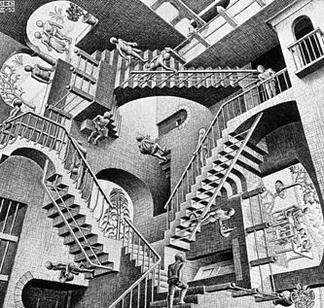
Up can be down
Although ethics differed widely through human history, there is also an abundance of common threads and principles, just inconsistently applied. And the whole point of a principle is consistency; otherwise you can change your views depending on how the wind blows. Principles but– especially the ones which sound good – can often be found in many a culture, and the but is where problems begin. Nobles lorded over indentured peasants but were sensitive about their liberties when the king came a-knocking. I would say that if someone admits a right exists for him, he cannot refuse to extend same to others. Otherwise it can’t be to universal.
But humans rationalize exceptions all the time, when it suits them. An easy way was to consider some humans inferior to others, maybe even less than human. It was a way for the noble to justify oppressing the inferior peasant, while this not being inconsistent with his rights. Another way was basically my people versus the others, the in-group versus the out-group. Same was extended to gender, race, and whatever the hell else was convenient. But if you want to have a somewhat objective principle, it must be universally applied to all homo sapiens. Otherwise it is not really objective.
You can think of asking a question to a person about himself. How many people would have the same answer? I think if you ask someone, “Do you agree that someone can just come and kill you with no repercussion,” I think the vast majority would say no, so we can agree the murder is bad mkay is universal. So then it should be universally applied to all Homo sapiens. I would say that any moral philosophy needs to have axioms, let’s call them the fundamental principles, the paradigm. No exceptions can be made, lest everything becomes an exception. You can’t have math if 1+1 changes value, the formalism should be constant. And there should be a set of clear and logical steps between axioms and theorems that do not change; higher level should be derived from lower level. There should be some level of consistency, not it’s A when it suits me and B when it doesn’t.
Never compromise. Not even in the face of Armageddon
In the previous part, I talked about the basics of human nature and the question of morality. I avoided giving any opinions and just set up things a bit. Now I am going to contribute my 2 satoshi to the debate.
First, I don’t do the religion thing when it comes to morality and do not really see the debate that interesting if one brings the big G into it. What is there to debate if Deus Vult? So I look at things outside the scope of the divine.
Second, I am a believer in objective ethics – as objective as possible would be a better way to phrase it – as it should apply to all humans, and such independent of each person’s subjective opinions.
Third – to clarify the second – I believe there are two spheres for ethics or morality. And these are quite different.
The inner sphere is the personal – what you think is right when it mostly affects you and no other. This is subjective, as the only judge is you. Eating meat or not on a Friday, drinking, drugs come in this sphere. Basically your personal liberty. This can also be fuzzy at parts. Is it OK for one to lie to one’s parents? Well yes, if the car just hit itself with the tree, tricky these cars are.
The second sphere, the outer one, the one where humans interact and where your actions affect others. As others are involved, I believe this is much less subjective. This is, or in my view should be, the main topic of debate.
Fourth, I am for deontological ethics and against utilitarian, because I believe in fundamental principles, a paradigm, a foundation if you will.
This is what libertarians want
Utilitarian ethics I find to be flawed in several respects. They can go down the road of the ends justify the means, and they cannot be anything but subjective, as desired ends differ between people. Of course, inside each human there is a bit of utilitarianism, as many deontologists believe that a good foundation leads to a solid building, good results. Few if any want to live in the world of Mad Max. I mean the cars are cool, but it seems very hot, especially given the leather clothes and lack of showers. That is a recipe for chafing.
On what do I base my so called objective belief in liberty? The fact that humans are unique, autonomous creatures, endowed with free will (I wrote a post on that). I believe only an individual can act, decide the actions, and bear their consequences. Your actions are the one thing that is in your control and the thing you should be judged on. Also, as I can not control others actions directly, I should not be too much affected by them as there is nothing I can do about it, nothing I can change or improve. Due to this I am an individualist. Society is a general term describing groups of humans, it has no substance, one cannot say it exist in the way a rock (or The Rock, for that matter) exists. Societies cannot act, only individuals composing them can. Similarly societies can’t have rights or responsibilities, only individuals can. Human societies are not like ant colonies or other eusocial creatures – like the mighty naked mole rat, which is not, in fact, a mole or a rat-, where individuals are practically indistinguishable from one another and the colony works almost as a single organism. I find these things pretty objective.
I will leave you with some words of C S Lewis as food for though, which I may or may not fully agree.
“If a man will go into a library and spend a few days with the Encyclopaedia of Religion and Ethics he will soon discover the massive unanimity of the practical reason in man. From the Babylonian Hymn to Samos, from the Laws of Manu, the Book of the Dead, the Analects, the Stoics, the Platonists, from Australian aborigines and Redskins, he will collect the same triumphantly monotonous denunciations of oppression, murder, treachery, and falsehood, the same injunctions of kindness to the aged, the young, and the weak, of almsgiving and impartiality and honesty. He may be a little surprised (I certainly was) to find that precepts of mercy are more frequent than precepts of justice; but he will no longer doubt that there is such a thing as the Law of Nature. There are, of course, differences. There is even blindness in particular cultures – just as there are savages who cannot count up to twenty. But the pretence that we are presented with a mere chaos – that no outline of universally accepted value shows through – is simply false and should be contradicted in season and out of season wherever it is met. Far from finding a chaos, we find exactly what we should expect if good is indeed something objective and reason the organ whereby it is apprehended – that is, a substantial agreement with considerable local differences of emphasis and, perhaps, no one code that includes everything.”
“Nihilists! Fuck me. I mean, say what you want about the tenets of National Socialism, Dude, at least it’s an ethos.” – Walter Sobchack
Throughout history, among the various Big Questions of Philosophy – of Life, the Universe and Everything – were the Questions of ethics, morality and human nature. These may or may not have been supplanted by the query “are traps gay” in present, more enlightened times. But ehm… let’s focus on the older questions. What’s all this then?
There once was a saying, in some old language no one cares about anymore, “Homo homini lupus est”, which either had to do with aspects of human nature or was a warning against having wolves as pets. Either way, it gave me ideas for the title of this post.
What is human nature? What is wolf nature? How similar are the two? Is human nature immutable or does it evolve in time – if so, in which time-frame? Can it be change at will – just one gulag away from the New Man? Do some things never change? How many questions in a row can I ask before it gets annoying? How much wood would a woodchuck… Hell, if I knew all that, I’d be teaching at Oxford or Cambridge – whichever one is cooler and with hotter students. In the meantime, here we are.
The debate of how static human nature is revolves around the never-ending discussion of nature versus nurture in human development. Trying to fully answer this would achieve little, as it is as old as philosophy and yet to be resolved. Long story short, it’s a combination of both, and how much of each varies from person to person, society to society, time to time, in unknowable ways. Sociologists will investigate this further –whether we want them to or not – although, being sociologists, they are highly unlikely to find anything worthwhile. Also Steven Pinker and Nassim Taleb had a spat about it over the Better Angels of our Nature book. At least it keeps them occupied.
I am not a social constructionist, so I believe there are strong elements of human nature that are clearly innate, genetic. They may change over long periods of time, with the evolution of man and maybe human society; they may be softened by education or experience. But they are forever lurking in the shadows of the human mind. This is the nature part. Frankly I find the notion that human behavior has no significant genetic component ridiculous. Everything about humans has genetic influence – height, the color of various external components (and implicitly whether you have a soul or not), or liking coriander (or is it cilantro… anyway I sort of like it, but I don’t love it). Everything, it seems, except the brain. What amuses me is that people who claim that nurture is everything are also people who claim to believe in evolution and mock religious creationists. There is no way, after all, that evolution shaped behaviour.
Conan! What is best in life?
By human nature, of course, I do not mean characteristics of a certain individual, but general characteristics of most humans. But can we truly know which parts of humans are nature? While there are differences between brains of humans, there are also similarities. This is to do with what the immutable part of human nature is, basic facts like response to incentives, wishing to increase satisfaction and decrease unease, wanting to achieve goals, needing friends and family, sex, drugs and rock n roll (since caveman time people have gotten high and created art, often at the same time).
Some things about human nature can be positive, others decidedly not so. This should be understood and fought against by each of us – the darkness within. Fighting it is hard and often useless, but fight we must. You will not eliminate these things, try as you might. Can you truly change your nature? Well, it depends on what nature is. An alcoholic can stop drinking, but is human nature to be an alcoholic? Probably not.
The ridiculous thing is that the Old left understood this on some level. They wanted to create the New Man, the Socialist man. Bigger, better, sexier, more obedient. They realized that the nature of the Old Man was not what they wanted. But did they truly believe they could do this, or was it demagoguery? Probably a bit of both.
Of course there are elements which greatly differ between individuals and which are also biologically determined – height, athleticism, intelligence, personality, socializing. They are, of course, a clear combination of nature and nurture, meaning they can be influenced and shaped by nurture, but not completely. In basketball you are either an explosive athlete or you are not, no amount of training will make old Pie into Russell Westbrook.
Artist’s representation of Pie playing ball
One should not be afraid to admit there both human nature and some difference between individuals. It is just that morality should not be based on such difference.
Now, assuming human nature exists, can we get a coherent system of ethics out of it, especially given subjectivity is inherent in human nature? We can at least try, which is precisely what I plan on doing.
Now in regards to ethics the million silver dollar (screw inflation) question is – can a universal, objective system of ethics be derived directly from human nature? Not an easy question – this depends on where one stands in investigating the classics, like Hume’s is–ought problem or Moore naturalistic fallacy – writing tip: randomly name calling past philosophers makes you seem smart and well read. I sort of agree with C. S. Lewis on this on, that nature is about what is and ethics about what ought to be. But maybe you can use some solid facts as a starting point.
One thing is certain: ethic systems are generally based on a first premise – some basic axioms – which, cannot be easily claimed as universal. Not without extremly well though out arguments. This should be obvious by simply analyzing human civilization and finding wildly different systems.
The fact that there are different systems of ethics does not mean they are all equally valid. Is it that ethics is subjective, or that some people are just plain wrong? Are all systems equal, or are some better than others? The tendency is to say that, obviously, some are better – expecially the one the person holds, if we believe something we think it is correct.
Some axioms will be better than others, more rational, logically consistent and easier to apply universally and leading to better results, but in the end some things have to be asserted.
Ethics systems have changed. Has human nature evolved in time? Or did it reflect a changing world. I don’t think it changed substantially, and me it seems to me that systems who tried to change some very basic facts of human nature have failed to take hold. Humans have the need to eat and to do that they hunted, but after some time they learned how to satisfy hunger through agriculture – though some still claim we were better off as hunter gatherers. This often made humans much less nomadic then they were as hunter-gatherers – can this be considered a change in human nature? I think not.
Also Conan
As society evolves, some types of violence tend to decrease, but not disappear – is violence human nature or is it just one of several means to an end? Some people are inherently aggressive and that does not change, but as society evolves that aggression can be channeled differently or kept in check by isolation. Culture matters obviously, children learn from parents, society or religion affects people, and these evolve faster than the human creature.
A strong influence in modern times is availability of information. When people lived isolated in small town and villages, they didn’t know much about foreigners, so it was easy to view different as dangerous or evil, but as people learn that the inhabitants of other lands are people just like them, they may be inclined to more tolerance of The Others.
So the conclusion thus far: Humans have various views on morality, some better than others, and the views change in time. I will more clearly present my personal views in a future installment (should it be published).
Now, I feel every glib saying to itself, this is a pretty pointless article. Does not say much really. Which is true. But this here is a blog post, not a scholarly work, so the point is to basically do a survey of the audience. The question being “what is human nature” and how does it balance with nurture (50/50 60/40 that sort of thing). Discuss …
Something every libertarian knows is that many people see liberty differently than themselves, and most want to expand the liberty they feel is lacking, not liberty as a general value. Case in point, in my fair country, guns are hard to acquire by civilians, but most to don’t see this as an infringement of liberty.
I wrote a post before about freedom de facto and de jure. There is also the distinction between actual and perceived. I do not smoke marijuana, so I do not see marijuana prohibition as an infringement of liberty. I drink beer and would be outraged at beer prohibition. Most people believe themselves to be free enough, as long as the world seems to be generally how they like it. They feel more liberty with compulsory government healthcare, for example, than without, and care little that others feel their liberty infringed by this. They are, of course, outraged about every little thing they happen to care about and does not go their way.
I was thinking of the perception of freedom by children, which is quite different than adults. A child, as long as he is not an orphan toiling away polishing monocles, sees life–and freedom–as doing as much of what he likes as possible. Often playing. They live in a perfect socialist world–their family–and cares of money or economics are usually distant, relative to adults. This as long as there is a minimum standard of living–and this does not have to be too high, having a roof over their head and food in their belly often is enough. Those from reasonably responsible families, lower middle class upwards, have a special type of freedom, freedom from care. Of course, a child’s real liberty is quite restricted. But the reason this is–their immature mind–is the reason they don’t care about the adult stuff–entering contracts, for example. They, of course, can have a temper tantrum when the freedom they care about–let’s say drawing on a wall–is infringed.
Some left-wingers are much like children in their view–they want the victuals taken care of and want to do what they will with their time. They want to play free from care. Sadly this does not work for adults, wish as they might. But this is not the point of this post, although I can’t pass an opportunity to mock the left.
I was thinking of my very own childhood as an example of a moment of feeling pretty damn free, compared to now, when I perceive all sorts of infringements upon my liberty. Romania still has a sizable rural population as EU countries go, with many country dweller practicing more or less subsistence agriculture–non-remunerated family laborers, as they are called in government statistics.
There was a rather fast attempt at urbanization during communism, to build the glorious industry of the multilaterally developed socialist society. Many urbanites had elderly parents in the country, and it was the custom for city kids to spend holidays with rural grandparents. I was no exception. This was mostly due to lack of availability of other things to do with children when schools closed, but also because it was thought to be good for kids to spend time in the country. I agree with this, I can say they were some of the happiest times of my childhood and were actually good for my development. Those were the days my friend, we thought they’d never… Moving on.
I had no major trauma as a child. I was healthy and so was my family. While not rich, we never really had to worry about our next meal. My parents worked hard and managed to provide as well as possible in those days. The collapse of communism was chaotic for most Romanians, but as a child, I was insulated from most of the worst stuff. It never touched me; I didn’t even realize a lot of it, beyond the sudden availability of a bounty of goods to buy–although not that much money to buy all of them–unlike the last stark years of the old regime.
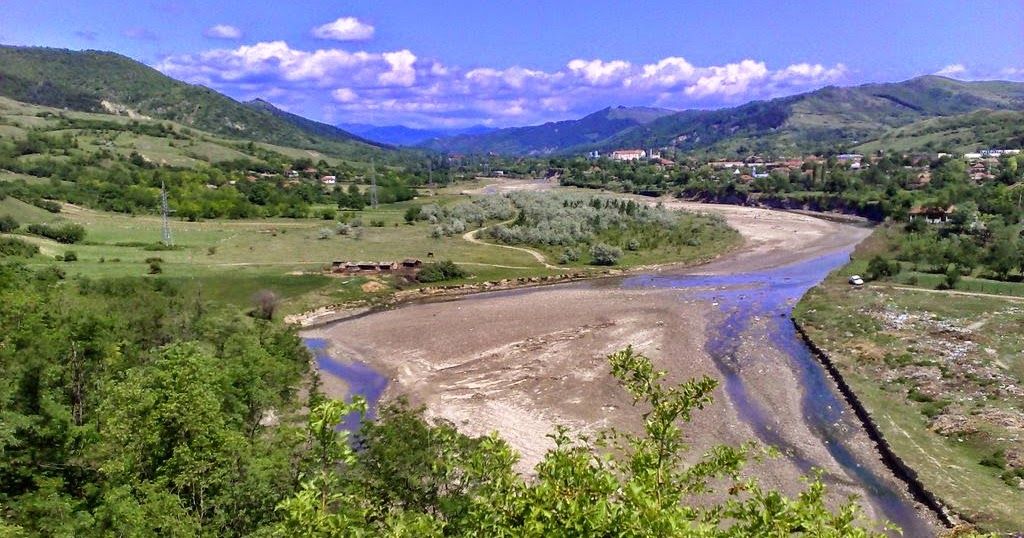
My grandma lived off the beaten track–as Romania goes–a village along a small river in a valley surrounded by wooded hills. The comforts were not great, but they needn’t be. No running water and the toilet was a latrine unconnected to the house, which got pretty interesting come winter when the blizzard was blowing between the wooden boards. The TV was a black and white vacuum tube number and it needed a minute or so to warm up before starting. But did we complain? I think not. Kids these days!
Back then we were as free range as it got and had the kind of freedom that only a kids have. We had some chores–all village kids did–but not as many as the local boys, we being holidaying city slickers and the like. So much so that the chores were almost fun. Feeding livestock, drawing water from the well (tastier than anything we got in the city), helping in the garden. Those sorts of things took a few of hours. Maybe an hour of school work was needed–we had “holiday homework”.
After that, the long summer day was ours. Nothing we had to do–except be close to home after dark. Not a damn care in the world. We were a gang of some 7 or 8 boys with little adult supervision. There were, as you can imagine, no play dates in rural Romania. As an adult, I now appreciate the value of unstructured play. We had control of our time, and always found the way to stave off boredom.
At no certain time of the day, we would drift to the unpaved road outside the yard, and find whoever drifted there at the same time. In summer, we would have a daily swim in the river–we had our deep holes in the otherwise shallow stream, no adults, no lifeguards, nothing. We would – like all Romanian kids – play football or just wander the hills and forest. All we had to do is scream “Granma we’re going”. We would jump off a high dike in the water, climb trees, and scale ravines and all the good things reckless boys do. Scrapes and bruises were common, but no one got really hurt – some luck involved, I guess, probably lots of kids got hurt in Romania. But bad cases were rare – none in my memory among my group. We were mostly shirtless, often barefoot; with a tan no beach holiday can ever give. We had bows with reed arrows, slingshots, pocket knives, and access to axes, hammers and more.
Average lane in rural Romania, give or take
In a way, country life spoiled me–all summer and some of the autumn I ate just-picked fruit, straight from the tree, and vegetables from the garden. I do not like fully ripe fruit, just about halfway so to be somewhat more sour than sweet, so I could choose just the ones I liked. Milk came from cows those days, not from cartons, and the chickens ran around the yard eating bugs and grass, and the meat and eggs tasted nothing like 90% of store chicken.
It is hard to find good food in most city stores and markets–although things are improving. I am not going to start praising organic for the sake of organic, but most fruit and vegetables in the city markets are not picked at the right time and spend some time in crates. The stuff in supermarkets, at least in Romania, is inedible to me. I don’t know if it was in my favour to get the taste for the good stuff or, like life-long city dwellers, to think the food you find is good, because you don’t know better. I am a city person now and like it that way, so I won’t go back to live in the country anytime soon. The trade-offs are not worth it. But I can have the odd pastoral fantasy. And I can be amused of urban friends who couldn’t tell a sheep from a goat up close well in their twenties.
In the end, rural childhood was a taste of freedom missing from some city raised kids, and one I won’t likely find again. Maybe it is one of the many reasons urban folk favour government on the bigger side. Or maybe not. As country grandparents start disappearing, new generations of kids will not have access to this. They couldn’t, really. Or maybe they will from a VR headset or the next Minecraft. They will have many things I did not, and anyway you can’t go all Luddite about things, and I do not. But one can occasionally be nostalgic of things past.
When it comes to imbibing beverages with a non-negligible fraction of ethanol, Romanians can hold their own. In fact, we are known to often go above and beyond the call of duty. According to some ranking or other, we are 5th in Europe in drinking per capita, equal to the Czech Republic. Off course, keep in mind it is hard to keep track of all the home made hooch in Romania, as a lot consume țuică and wine of their own production. So we might be even higher. Off course the same is probably the case in Russia, Belarus, Moldova, Lithuania and other countries near the top of the list.
Generic beer picture is generic
Romania was traditionally a wine and plum brandy country, but that changed significantly in the last 50 years. Beer gained a prominent role in the drinking hierarchy, estimated at 80 litres per capita, 7th in Europe. Sadly, most of this beer is generic and profoundly mediocre, even if drinkable (then again on a hot summer day, most beer is drinkable, even that Bud Light thing you Americans have). The market is dominated by a few brands, which while having some tradition in Romania, are now bottled by large multinationals – SABMiller, Heineken, Carlsberg or Molson Coors- and are almost interchangeable. There is a bit of scandal going on about using corn and special enzymes to speed up the fermentation process, but in the end, there is no proof either practice is harmful, and the result is still mediocre.
But times they are a-changing and the hipster they are a-coming. So Romania, like many a country, the craft beer movement started and it is gaining steam. It was a timid start, mind, as craft beer tends to be on the pricey side and Romanian incomes are still on the scant side. But a start is better than nothing. I want to do a quick overview of the scene here, although I will avoid reviews, tasting notes and the like for this post. This is just the cliff notes, in case any Glib runs into some Romanian Beer – the odds of which are similar to being hit by lightning or election fraud, very low.
The first wave of the “craft” movement started by making standard style beers, slightly better, but not by much. These were Clinica de Bere – which made a beer called Terapia, Nemteana, Zaganul and a few others. They all were fairly similar; they had a pale lager beer, an amber one and usually a German style wheat beer. I rarely drink these, as they do not bring much to the table.
The second wave got into the ale style beers, producing some standard ales and some very hoppy IPAs. Now, while I don’t want to get controversies started (kidding, I totally do, I measure the worth of my posts by the number of comments they get), and while I am reasonably fond of IPAs myself, there is a slight tendency to over-hop these ones. Although the results were pretty good, it was also a way to hide imperfections in the brew. More hops do not automatically a better beer make, just like more oak does not always mean better wine.
Among the more mediocre of this wave is Sikaru. Among the better ones is Ground Zero, which actually produced the first decent Romanian craft beers I have tasted.
Being hipsters, one of the things craft breweries have in common with other countries is the silly… ehm let’s say creative, actually, names. But hey, they try, and that’s not nothing. And I like their beer overall, although the prices tend to be a bit high. They have a good pale ale – Easy Rider, a decent IPA – Morning Glory (which is actually good as a Sunday morning drink), an pretty good imperial IPA – Imperial Fuck (not bad, but I like beer lower in alcohol) and a dark Gypsy Porter (racist? I don’t know). They also have seasonal stuff like autumn spiced ales. Overall, very solid effort for our fair country, and recommended for drinking should you find yourselves on our distant shores.
After the modest success of the second wave, a bit of increased prosperity and the growing fashion in craft whatever, the third wave came with a significant increase in the number of craft brewers. I haven’t had the chance to taste all, but there is some good stuff and an encouraging amount of experimentation.
To highlight one that is worth a taste, Hop Hooligans – stereotypical name, I know, craft beer has almost metal band level of names – were among the first more experimental ones. They had, for example, the first coconut stout which I tasted. Didn’t like it, didn’t expect to, really, but I appreciated the effort. I have yet to gather the courage to try Coconut Vanilla Smoothie IPA, whatever the bloody hell that is. They started with Summer Punch (American pale ale) and Crowd Control (IPA) and branched quite a bit. I won’t list them all, here’s a link for the curious.
Other brewers are Hophead Brewing – again with the hops, that’s original; Perfektum which I found underwhelming compared to others; Amistad Beer and Bereta which I have not tasted yet.
One of the signs the movement is still in its infancy is the low availability of these beers in the market. Except for a handful of bars and one or two hard to reach specialty stores, you will find it difficult to purchase these. Although availability is increasing, it is doing so slowly. But we take what we can get. A lot of bars have deals with Big Beer – either brewers or large distributors -and are generally reluctant to get the craft stuff. But as the customers appear, so will the purveyors.
You can get craft beer in a few places, although mostly by the bottle. I only saw craft on tap in one pub, which is specialized on beer and almost nothing else – I think they have beer and tap water.
I would also find it interesting if the brewers themselves opened tap houses, and if more pubs or restaurants in the country would start brewing their own house beer. Just to have something special for the customers. In the meantime, I just drink the stuff by the bottle, mostly at home, and am pleased that it exists in the first place.







 “Socialism, like the ancient ideas from which it springs, confuses the distinction between government and society. As a result of this, every time we object to a thing being done by government, the socialists conclude that we object to its being done at all. We disapprove of state education. Then the socialists say that we are opposed to any education. We object to a state religion. Then the socialists say that we want no religion at all. We object to a state-enforced equality. Then they say that we are against equality. And so on, and so on. It is as if the socialists were to accuse us of not wanting persons to eat because we do not want the state to raise grain.” – Bastiat
 “Reasoning will never make a man correct an ill opinion, which by reasoning he never acquired.” – Johnathan Swift
 “There is no virtue in compulsory government charity, and there is no virtue in advocating it. A politician who portrays himself as “caring” and “sensitive” because he wants to expand the government’s charitable programs is merely saying that he’s willing to try to do good with other people’s money. Well, who isn’t? And a voter who takes pride in supporting such programs is telling us that he’ll do good with his own money — if a gun is held to his head.” – PJ O’Rourke




 There once was a saying, in some old language no one cares about anymore, “Homo homini lupus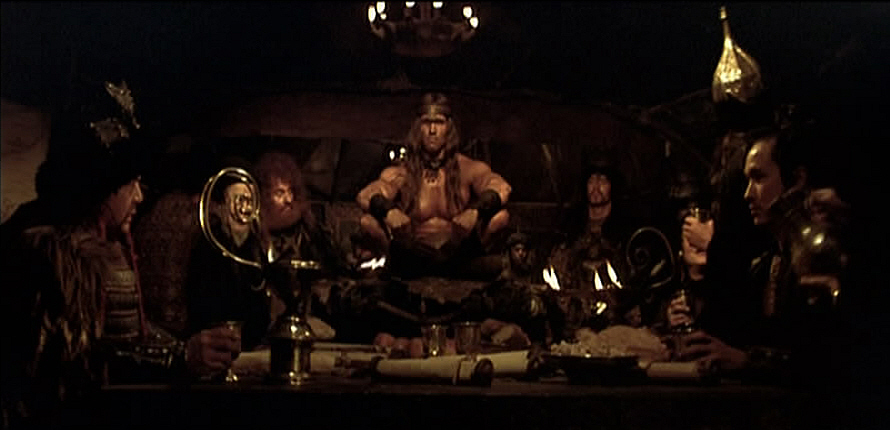





 Being hipsters, one of the things craft breweries have in common with other countries is the silly… ehm let’s say creative, actually, names. But hey, they try, and that’s not nothing. And I like their beer overall, although the prices tend to be a bit high. They have a good pale ale – Easy Rider, a decent IPA – Morning Glory (which is actually good as a Sunday morning drink), an pretty good imperial IPA – Imperial Fuck (not bad, but I like beer lower in alcohol) and a dark Gypsy Porter (racist? I don’t know). They also have seasonal stuff like autumn spiced ales. Overall, very solid effort for our fair country, and recommended for drinking should you find yourselves on our distant shores.
 To highlight one that is worth a taste, Hop Hooligans – stereotypical name, I know, craft beer has almost metal band level of names – were among the first more experimental ones. They had, for example, the first coconut stout which I tasted. Didn’t like it, didn’t expect to, really, but I appreciated the effort. I have yet to gather the courage to try Coconut Vanilla Smoothie IPA, whatever the bloody hell that is. They started with Summer Punch (American pale ale) and Crowd Control (IPA) and branched quite a bit.