Category: Art

  • Mormons and the Bill of Rights, Part Two – The dirty books episode

    I intend to take the Smoot-Hawley Tariff, which has been mocked again and again as the very epitome of boringness, and I will make the subject…anyone?…I will make the subject interesting.

    To start with, I won’t call it the Hawley-Smoot Tariff, because…anyone?…because my focus is on Smoot, not Hawley. So I’ll put Smoot’s name first.

    The Smoot in Smoot-Hawley was Reed Smoot, a Republican U. S. Senator from…anyone?…Utah. We first learned about Senator Smoot in Part One, in which Senator Smoot’s…anyone?…credentials were challenged because of the whole polygamy thing. After the Mormon church, of which Smoot was a leader, dropped the practice of polygamy, the U. S. Senate decided to…anyone?…decided to let Smoot keep his seat in the Senate, to which he was repeatedly re-elected, even after Senatorial elections were taken away from the state legislatures and given to the voters.

    Now, class, can anyone tell me what the Smoot-Hawley Tariff was all about? You can? And here I thought you weren’t paying attention. From your spittle-flecked responses, I can see that you can identify the Smoot-Hawley Tariff as a protectionist law passed by Congress in 1930, in the depths of the Depression, and that this law has generally been blamed for making the Depression worse. In the unlikely event there’s anyone here who doesn’t already know this stuff, here’s a Wikipedia article.


    File:John Lennon & Yoko Ono leave Amsterdam 3.jpg
    After Smoot got together with Hawley, things went downhill

    Ha ha, seriously, here’s Smoot and Hawley:

    File:Smoot and Hawley standing together, April 11, 1929.jpg
    Senator Smoot is…anyone?…the one with the glasses. And the pocket with pens in it. Why can’t you students be more like Smoot, and less like that Bueller fellow? Where is Bueller, anyway?

    The dynamic duo of Smoot and Hawley put forward their protectionist bill in 1929, and it passed in 1930. It is a key event in economic history, and Smoot, a hard worker with one of the best heads for figures in Congress, was proud of his work, even though it didn’t save him from a Democratic sweep shortly thereafter which put him out of the Senate.

    But the Smoot-Hawley Tariff has also gotten a good deal of attention in the history of literature. To explain, let’s go back a bit.

    Congress tightened up the obscenity laws in 1873, thanks to the lobbying efforts of this man, who was promptly made a postal inspector to help enforce the law. Can you identify him, class?


    No, I'm fairly sure his name isn't "jerkface" or any of those other, more colorful epithets you're using.

    Yes, it was Anthony Comstock (1844 – 1915).

    But this isn’t a history of postal censorship, so let’s move on from Comstock and look at the U. S. Customs.

    "Actually, this is a list of the groundhog's demands...he says his operatives are poised to burrow under elite golf courses across the nation."
    Groundhog Day? No, not that kind of U. S. customs.


    This kind:

    This was a year after Chester Arthur was fired as New York's Collector of Customs. The scandal was so great that Arthur ended up as President. He had to pull a sword out of a stone, or was that a different Arthur?
    U. S. Custom House, New York City, 1879.

    I chose the New York City customs house for my illustration because New York City was a key point of entry for foreign literature coming into the country – or trying to come in (Los Angeles and Chicago were also key ports of entry). Until 1873, Customs officials policed a federal ban on the importation of obscene pictures and photos, but not books. The Comstock Act of 1873, in addition to dealing with the Post Office, added books and pamphlets to the list of obscene material that was to be banned. Local customs inspectors – or sometimes their superiors in Washington – had to read potentially obscene books to decide whether to ban them.


    "...but inspecting these books and pamphlets is more boring than inspecting dirty pictures."
    “At least inspecting this is less boring than inspecting other types of goods.”

    The Comstock law passed despite some grumbling that “I do not know whether it can be left to employees of a custom house to determine with safety what kind of literature or what sort of matter is to be admitted.” This Congressman finally decided to support the bill once he concluded that the decision on whether a work was obscene would be left to the courts, not customs officials.

    In practice, judicial review was limited and rarely used, and the final decision on what could be imported was made by Customs officials.

    The Smoot-Hawley tariff, as introduced, would have kept the existing Customs ban on obscene books. It looked like a fairly noncontroversial item, continuing the law in force, until Republican Senator Bronson Cutting of New Mexico piped up. Cutting was an arty type of Republican, indignant when he learned that a friend of his hadn’t been able to import D. H. Lawrence’s novel about adultery, Lady Chatterley’s Lover. Lawrence was actually in favor of censoring pornography, he simply didn’t think he (Lawrence) was a pornographer. He was an artist, not the same thing. Cutting agreed.

    Senator Cutting [insert pun about “Cutting remarks”] proposed to take away Customs’ power to ban books on obscenity grounds. Such censorship, if it was to exist, should be exercised by the post office and by state and local governments, plus the church and the family. What qualifications did Customs people have in this area?

    The Senate, in Committee of the Whole, actually accepted Cutting’s amendment. This took Smoot by surprise, and it shocked him to his core.

    Smoot biograper Milton Merrill says that Smoot’s objection to dirty books was not due to some kind of repressed prurience or similar factor. Dirty books were dirty and gross, and it made no difference whether the author was some kind of artist or a good writer. There was also the fact that, as a Mormon whose moral qualifications to sit in the Senate had been attacked, Smoot was extra alert to any opportunity to rebut suspicions of dirty-mindedness.

    The humorless Smoot decided to demonstrate the dangers of allowing a flood of porn to enter the country and corrupt the people, especially the youth. From the Customs officials, Smoot got copies of some of the worst porn he could find to show his fellow-Senators, many of whom perhaps were pruriently interested in this legislative documentation.

    Smoot was genuinely outraged. The Senator known for his calm and detailed analyses of economic legislation spoke at the top of his voice, denouncing smutty writers like Lawrence as black-hearted villains.

    When the Senate, as a Committee of the Whole, reported the bill back to itself, Smoot had a chance to challenge the obscenity provision. He wanted to reinstate the ban on importing obscene books. To be fair, this ban dated back to 1873, and Smoot hadn’t anticipated that his beloved tariff measure would be the vehicle his colleagues chose to make what he deemed a pro-smut gesture. Couldn’t Congress just keep the obscene-books ban which had been in place for over half a century, and go back to the important business of protecting legitimate American industries from unfair foreign competition?

    So the poet Ogden Nash was being unjust when, in a much-cited poem, he sarcastically praised Smoot as if the Senator was inventing a new book-banning law:

    Senator Smoot ( Republican, Ut. )
    Is planning a ban on smut.
    Oh root-ti-toot for Smoot of Ut.
    And his reverent occiput.

    With his outbursts of indignation, Smoot helped turn the Senate back to supporting a customs ban on dirty books. But as an experienced legislator, Smoot knew that his colleagues seemed to believe that Customs was going too far and hurting the importation of genuine, non-obscene literature. To conciliate this skepticism about Customs’ literary capacities, Smoot decided to yield somewhat and allow some reform.

    For one thing, Smoot would accept an amendment by which the Treasury Secretary (as boss of the Customs Service) could allow “so-called” classics, even dirty ones, into the country on a non-commercial basis. Smoot also accepted a plan endorsed by, among others, future Supreme Court Justice Hugo Black – former Klansman and currently known as the saner of Alabama’s two Senators (this guy was the other). The Black plan would provide that the final decision on whether an imported book was obscene would be made by a federal court, in a jury trial. That ought to meet the objection that random bureaucrats were making literary decisions – the book would get a full due-process trial.

    File:Cigarette smuggling with a book.JPG
    “Hey, they mutilated a copy of the Marquis de Sade’s classic Justine just so they could smuggle cigarettes!”

    The Smoot-Hawley Tariff passed with the amendments somewhat softening the Customs ban on obscene books. The first true tests case involved Ulysses.

    Statua di ulisse di età antoniniana (II sec.), da un modello ellenistico del III sec. ac.jpg
    No wonder they wanted to ban Ulysses – he’s stark naked!

    Customs believed that James’ Joyce’s now-classic work was obscene, but after the Smoot-Hawley Tariff, the publisher, Random House, insisted on taking the case to trial. Waiving a jury, Random House had the issue decided by federal district Judge James Woolsey. Both Woolsey and the literature-friendly Second Circuit appeals court said the book was not obscene and could be freely imported (at least as far as the Customs laws were concerned). Woolsey’s opinion is probably more famous than the more authoritative Second Circuit opinion because Woolsey had a gift for words and Random House put his opinion at the beginning of Ulysses.

    The Ulysses case was historic because the influential Second Circuit, followed by other courts, rejected an old English case known as Regina v. Hicklin. In that case, an opinion by Chief Justice Cockburn said that a work could be condemned as obscene based only on isolated passages, based on the assumption that susceptible people might be harmed by these passages without regard to the surrounding material.

    (Hicklin wasn’t the alleged pornographer, he was a lower-court judge who had tried to legalize the alleged pornography;  the pamphlet in question was issued in the name of the Protestant Electoral Union.)

    The Ulysses decision said that in deciding whether a book is obscene it must be looked at as a whole. Just because there were, say, sex scenes in a book didn’t automatically make it illegal – the entire book had to be dirty, not just a few bits and pieces.

    Because the Ulysses case was so historic, and was decided under the supposedly literary-friendly provisions of the Smoot-Hawley Act, some people got the impression that winning court hearings for books Customs wanted to ban represented an advance for literature, making censorship tougher. In reality, importers rarely challenged Customs decisions in court, since legal challenges are quite expensive and it would simply be easier, if possible, to cut out the offensive bits designated by Customs.

    Customs liberalized its treatment of books (and movies), not because of Smoot-Hawley, but because of a gentleman named Huntington Cairns. A lawyer, litterateur, and later counsel for the National Gallery of Art, Cairns informally advised the Customs service on disputed works, generally erring in favor of letting the works into the country, at a time when the Post Office and many local censors were stricter against alleged porn.

    So Smoot’s “concession” wasn’t what protected literature against Customs overreach – maybe Smoot wasn’t as dumb as they thought.


    Works Consulted

    Paul S. Boyer, Purity in Print: The Vice-Society Movement and Book Censorship in America. New York: Charles Scribner’s Sons, 1968.

    Milton R. Merrill, Reed Smoot: Apostle in Politics. Logan, Utah: Utah State University Press, 1990.

    James C. N. Paul and Murray L. Schwartz, Federal Censorship: Obscenity in the Mail. New York: The Free Press of Glencoe, 1961.

  • Reviews You’ll Never Use: Gargoyles (1972)

    Greetings once again, fellow intrepid interlocutors of the insidious and the incredible, it is I, your humble author, once again delving into his personal DVD archive to bring you only the finest is bizarro horror filmmaking.

    This week we take a look at the largely forgotten 1972 made-for-tv movie, Gargoyles. I’m afraid I don’t have much to regale you with in terms of production information; such is lost in the sands of time. And in the sands of New Mexico, where this beauty was filmed on a single camera in 18 days.

    Opening title card. It’s always promising when they go with “day-glo slime” font.

    No dear readers, this film is remembered for one reason, and one reason only: the exemplary practical gargoyle effects, made for zero dollars and whipped up over only a few days time. Now when I say, “exemplary,” understand that I’m grading on a curve here. Obviously, they don’t touch what is seen in much larger budget films. The costume designer was a fellow named Tom Dawson, who also did the wardrobe and costume effects for Blazing Saddles and Arnold Schwarzenegger crap-fest End of Days. It is interesting, however, to note that one of two people tasked with creating and applying the gargoyle makeup is Stan Winston, in his first credited special effects role. If after perusing that link you find yourself still unimpressed with the fine work of Mr. Winston, then you can go right to hell – my reviews are not for the likes of you.

    Our story begins with a voice over explaining that gargoyles are actually the earthly spawn of Satan himself and that they arise every 600 years to try and take over the planet. However, it appears humans whip dat azz pretty badly every time because the creatures are now on the verge of extinction. However, it does result in many of the world’s myths about monsters.

    Cut to anthropologist Cornel Wilde (who, fun fact, was blacklisted during the HUAC era) taking a drive through the desert, with daughter Jennifer Salt in tow (Salt would later touch again on the world of the macabre as a producer for sometimes-great-sometimes-dumb FX staple American Horror Story). Interestingly, throughout the film, Jennifer always seems to wear her shirts tied up to show off her stomach, which is, I suppose, something of a welcome diversion. Coming across a barely-functional roadside tourist trap run by lovable old Uncle Willie, the drunken coot ushers them out back to show them his prized possession: a gargoyle skeleton hung up in his shed out back. Willie proceeds to tell the anthropologist (the character has a name, but does it really matter?) about how the Injuns in the area used to have a lot of stories about these and….you know what, it’s just the usual hokum spun out in crappy horror movies. I’m so damned sick of people acting like/assuming that a bunch of freaking dudes dancing around smoking peyote have some kind of magical powers or great insight into the universe that I lack because I wear pants. Fuck that noise.

    Bernie Casey is a Critical Monster Studies Professor

    Anyway, the titular monsters attack, killing Uncle Willie and driving Generic Anthropologist and Hot Daughter to seek refuge at a nearby roach motel run by horny drunk Grayson Hall (best known for her long-running stint as Dr. Julia Hoffman on the original Dark Shadows). Having escaped with the gargoyle skull from Willie’s shed and with audio recordings of the attack, our protagonists try to make sense of all the shenanigans and goings on. They are attacked again by two of the creatures trying to retrieve the skull, and once they have it, they flee across the road only for one of them to be hilariously run over by a semi. It comes out of nowhere and is really quite funny, because normally when you see the creatures running or attacking, they director uses a kind of weird slow-mo, so it cuts straight from that, to a damn truck coming out of nowhere and smacking one of them.

    “I don’t remember you from the faculty meetings at UCLA…”

    Running to the police station to report the latest attack, Hot Daughter pleads with the cops to believe her, and to release several dirt bikers they caught at the scene of Uncle Willie’s earlier that day (the lead biker being played by Scott Glenn, who is one of those guys whose name you don’t know but you’ll recognize him when you read through his IMDB). On her way back, she’s kidnapped by King Gargoyle…Bernie Casey?! I think that’d be racist today. You may know him from his work in Revenge of the Nerds or Bill and Ted’s Excellent Adventure, but because I’m me, I’ll always remember him from Suzanne Somers and Stacey Keach eco-horror film, Ants. Yes, I have that on DVD as well. Anyway, the actually pretty awesome looking head gargoyle takes Hot Daughter back to their cave, where he explains that 1) they’ve only been woke for a few weeks, 2) he’s taught himself pretty good English in that time, and 3) he likes to have chicks read stories about 15th century rapes out of scholarly books to him. We also see the gargoyle hatchery, where eggs literally half the size of the adults hatch the creatures, and we learn that the ones with wings (such as Casey and his female gargoyle consort) are “breeders”.

    A close-up of the really quite good monster makeup used in this film

    Generic Anthropologist convinces the cops and the local dirt bikers to help search for Hot Daughter, and the group is eventually assaulted by the gargoyles. The humans manage to kill a lot of them with shotguns and pistols, which really makes one wonder how the whole, “We’re going to exterminate humanity” thing is going to work out for the monsters. Scott Glenn goes in to throw gas around and burns the hatchery, and upon seeing him beset with gargoyles, Generic Anthropologist declares him dead and flees (he did the same to Uncle Willie earlier – seriously, the guy will decide you’re a lost cause within seconds of you running into any adverse circumstance). The supposedly thousands of eggs burn up from the two gas cans splashed around one room, and Bernie Casey, along with his consort, try to fly away with Hot Daughter to, I guess, rape the shit out of her, since it’s pretty clearly established that the monsters only produce offspring with each other. However, Generic Anthropologist makes a Quick Decision and uses a handy rock to bust the consort gargoyle’s wing, forcing Bernie Casey to abandon Hot Daughter so that he can fly away with his basic bitch. And…that’s it. They get away, they end.

    Bernie Casey: Critical Monster Studies Professor’s breeder counterpart. She actually gets jealous of Hot Daughter and helps Generic Anthropologist to escape at one point, dooming her entire race because she can’t control her womanish cattiness.

    The movie basically sucks, but really, if you have the 74 minutes to spare, it is honestly remarkable how good they do with the gargoyle costumes given what you know must have been incredible time and budgetary constraints. So kudos for that. Director Bill Norton went on to acclaim *coughbullshitcough* as the director of such masterpieces as More American Graffiti, and Hercules and the Amazon Women. If any of you have seen either of these, sound off in the comments.

    Actually please don’t, nobody gives a shit.

    On a parting note, apparently it’s not safe to trust the TCM website’s user-generated movie ratings, because holy hell, check this out. The lowest one is 4.31  out of 5.

    Personally, I award Gargoyles 10 Pubic Hair Cartoons out of a possible 30. Keep track of the percentages here; 10 isn’t very good.


  • Reviews You’ll Never Use: Zardoz

    ZARDOZ SPEAKS TO YOU, HIS CHOSEN ONES.

    He speaks to you of his wonderful, magical, infuriating, nonsensical, visually bounteous film.

    This review is the direct result of a number of comments noticed by Your Friendly Ruling Council of Eternals Admins which indicate that a disturbing number of you may not have seen this film. The original plan was to write the entire review as Zardoz, and post it using the Zardoz account. However, I tried it out for a paragraph, and trust me…as a reader, that gimmick has its limits.

    Image result for zardoz
    The Flying Stone Head of Zardoz

    The 1974 movie Zardoz is a passion project tossed as a bone to director, screenwriter, and producer John Boorman in appreciation of his wild success with the 1972 classic, Deliverance. If you haven’t yet seen that one, I’m afraid it’s a tad too conventional for Reviews You’ll Never Use. Deliverance is a completely mainstream film, and so will find no place in this column.

    Zardoz marks only the second post-Bond film of Sean Connery. The actor was apparently having some trouble with typecasting, and not only accepted the role, but became fast friends with Boorman. Our other leading thespian is the beautiful Charlotte Rampling, a prolific actress known for many roles over the years, but perhaps best remembered by trash cinema & horror fans from her turn in the 1977 Richard Harris vehicle Orca, a brutally unsubtle Jaws knock-off.

    Given carte blanche, Boorman oversaw every aspect of the film, from writing to post-production. In his director commentary it is obvious that he reflects on the film fondly but admits that he perhaps stretched too far. To which your humble author would reply, Ah, but a man’s reach should exceed his grasp, Or what’s a heaven for? Indeed what Mr. Boorman considers an ultimately flawed product, is still so delightful in myriad ways that I shudder to think what would have come about if he had succeeded in bringing the totality of his vision to the screen.

    Somehow I don't think this guy believes that the penis is evil.
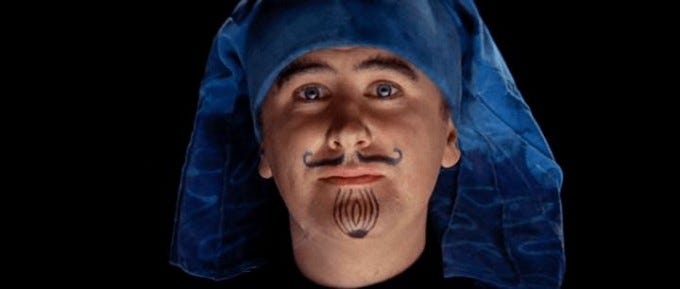
    I wasn’t kidding about the drawn-on facial hair.

    Our film opens in the year 2293 with a floating head providing exposition (explained by Boorman to be an ultimately unsuccessful attempt tacked on in post-production to reduce audience confusion). Interestingly, this narrator is fully self-aware and refers to his understanding that he is a fictional construct of the writer/director. The head inexplicably has a thin drawn-on mustache and goatee. We cut to a giant flying head that vomits guns and commands the “Brutals” worshiping it to go forth and kill, because, “the penis is evil” and overbreeding brings about a plague of men.

    One particularly clever Brutal, our protagonist Zed, stows away in the flying head and is taken to a realm preserved out of time, where the enlightened scientific remnants of advanced humanity live eternal lives of unspeakable drudgery. Punishment in this society is conducted by forced aging, the senile being sent to live in what appears to be an endless New Year’s Eve party ala TGI McScratchy’s. Others simply give up caring about life, and become Apathetics, standing around catatonic and being given green bread on which to sustain themselves. The self-styled Eternals view themselves as the preservers of the past, collapsed civilization, and their Eden is run by a supercomputer known as the Tabernacle.

    Yep, you get to see dem titties, along with a wonderful assortment of others.
    Charlotte Rampling
    Hard pass.
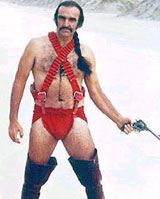
    The famous costume that Sean Connery wore to his wedding, and still wears to all public functions to this very day.

    The Eternals capture Zed and decide to study him, to find out how the vulgar strain of humanity has changed over the last two hundred years. One thing leads to another, as things inevitably tend to do in a story, and ultimately the Eternals find the answer to their weary prison of never-ending life.

    This film feels like something that was going to be, supposed to be, could have been, a great artistic achievement. Boorman’s self-directed criticism is on solid ground; it’s all simply too much. The visuals are wonderful. The costumes, the colors, the backgrounds, are all rich and help to bring this very interesting world to life. The problem is that this world is so very rich, that it becomes simply impossible to do it justice while remaining focused on progressing the plot. Who cleans up the Apathetics and the prematurely aged Renegades? They’re all quite spotless. Where do these non-functioning individuals relieve themselves? How on earth do the Eternals plan to cope when, inevitably, everyone slips up and commits transgressions resulting in forced aging into senility? The psychological scenes, in particular, seem over-wrought, as one begins to slip the line of confusing complexity for its own sake and nonsensicality with an artistic statement.

    For all that, I cannot find it in my heart to say this is a bad film. Imperfect? Surely. Plot holes you could drive a reasonably-priced sedan through? Absolutely. But the film is so lovely, the acting so involved, the entire production handled with such obvious love and hope, that it wins you over. Boorman is a good enough director to take what in anyone else’s hands would have become a tangled mess, and turn it into a modern bizarro masterpiece. While it lacks the raw insanity of House, it is obviously the vision of a man who knows exactly what he wants to express, and how he wants to express it, and that vision is sublime. Unfortunately, due to the limitations of time, budget, technology, etc, it is up to you as an audience member to take a step forward and meet the film halfway by taking the parts of that vision which are offered and completing it with your own mind and soul.

    And yes, there are a fair number of titties.

    I award this film 10 Severed Feet out of a possible 13.

  • Reviews You’ll Never Use: House

    Oh boy, where to begin with this one. Forgive me for running long, but this film deserves the digital ink.

    Let us start with this: if I were to receive some moderate sum of money, and be given complete creative control, House is the film that I would make. Please note that I am not necessarily saying this is a good thing.

    This also gives you a pretty good idea about how this movie is going to go, i.e. FUCKING CRAZY.
    Promo Image

    House is unlike anything you’ve ever seen. It’s a big (by the standards of late 70s Japanese cinema) budget art-house experiment horror-but-maybe-not-kind-of-black-comedy. To properly understand this film, you must ingest consciousness-altering substances. Drop some acid, rip as much as you can out of a bong 10 times, eat some mushrooms, get drunk, whatever you have to do to open your mind to the higher mysteries – just do it.

    Looking wistfully across the sea at the success of Jaws, in 1975 director Nobuhiko Obayashi was approached by Toho Films (makers of my favorite franchise, Godzilla) to produce a treatment for a summer thriller blockbuster. While only being a director of commercials, he was known as a creative eccentric who had produced films on the art-house circuit years before. Working with his friend Chiho Katsura, they quickly turned in a script for a haunted house film.

    The gag was, Obayashi had gone to his 10-year-old daughter and asked her for ideas of what frightened her. So impressed by the creativeness of what scares a little girl, he decided to treat the entire picture as if it was from the perspective of a young girl. This meant the inclusion of nonsensical plot elements, shallow archetypes, purposefully hokey effects and animations, all tied together with traditional Japanese ghost story elements.

    Toho green-lit the project and shopped the script for two years, but no director would touch it because they all thought it would ruin their careers. That’s how off the wall this film already was. Fearing that it would never be produced, Obayashi asked the studio if he could at least announce that it had been green-lit. They agreed, and the wild-haired filmmaker began a two-year media blitz to promote the film. He shot promo pictures with the cast, commissioned and released the soundtrack, and even had the film novelized and performed as a radio drama, all for a film that didn’t exist yet!

    That's a weird glory hole.
    So…that just happened.

    Eventually bowing to public pressure in 1977, Toho agreed to allow Obayashi to direct the film himself, even though he had only helmed commercials as a professional, and he wasn’t under contract with the studio (a highly unusual move for a Japanese studio to take at that time). His cast primarily consisted of a gaggle of 17-year-old girls who had been in his commercials previously.

    Without giving away too many details of the plot, our heroines Fantasy, Gorgeous, Melody, Mac, Sweet, Prof, and Kung Fu are slowly consumed by the house, as personified by its evil avatar, a fluffy cat named Blanche. We have an attack by a severed head from a well, which bites one girl in the rear, then vomits blood and throws itself back down the well. We have attacks by chandeliers, attacks by flying log piles, attacks by mirrors, attacks by cannibalistic pianos, attacks by futons and linens, and attacks by telephones. By the end, the house has regenerated itself, showing shades of Burnt Offerings, which had come out in the United States the year before (if you get the chance to see it, Burnt Offerings is a passable haunted house film mostly notable for being mediocre despite a fantastic cast including Oliver Reed, Karen Black, Bette Davis, and even a few minutes of Burges Meredith playing, shockingly, a curmudgeonly old man).

    The plot, though, is not the point of this film. This film is entirely focused on the telling, rather than the tale. The Austin Chronicle perhaps said it best, “there’s surprisingly little to recommend House as a film. But as an experience, well, that’s a whole other story.” We have scenes in which one character tells the others a story, which is shown as a sepia-tone film reel which the other girls can see and comment on. One girl describes a mushroom cloud as looking like cotton candy. There are animations, matte paintings, animals that are clearly being thrown at the actors from off screen, a man who mysteriously turns into a pile of bananas, and several scenes involving 17-year-old girl titties…sometimes disembodied and floating around.

    Obayashi went on to a prolific film career, and eventually in 2009 earned the Order of the Badge of the Rising Sun for contributions to Japanese culture. However, he never managed to match the beautiful insanity of his first effort. The film was a hit in Japan, due to being a breath of fresh air in a completely stagnant industry (by this time, most Japanese directors were churning out Toro-san rip-offs or pinku eiga, which is softcore porn).

    And yes, you get to see some of their little girl titties
    Our intrepid band of potential victims

    The Criterion Collection DVD has several excellent bonus features, including Obayashi’s 1966 experimental film Emotion, a lengthy interview with the director, and a retrospective by Ti West, director of House of the Devil. I had quite liked that film, but Mr. West comes across as somewhat of a smug film-school student spouting platitudes about “challenging the audience”.

    To sum up, I cannot recommend this film highly enough – if you’re a person like me, who takes most of your personal philosophy concerning the nature of existence from the Joker. If you’re a Very Serious Person who likes to Seriously Discuss Very Serious Things, and have a silly hang-up by which you insist that your films follow a coherent narrative structure and conventional character arcs, then…have an adventure and watch it anyway. But get really fucking high or drunk first. It’s worth it.

    I rate this film 8 drug-using dogs out of 10.

    Image result for crazy Image result for crazy Image result for crazy Image result for crazy Image result for crazy Image result for crazy Image result for crazy Image result for crazy

  • Reviews You’ll Never Use: Dark House

    Hello, and welcome to (what may be) the first in an on-going series of film reviews. These will not be your ordinary film reviews, oh no sir, for your humble reviewer is no ordinary cis-gendered heteropatriarchal man. Much as our dear friend the Derpetologist plumbs the depths of the interwebz to bring you only the derpiest in modern derp, I, too, am an explorer in dangerous environs. My particular faculty, however, lies in obscure, campy, poorly made, misunderstood, niche horror and sci-fi films.

    Let us begin with the most recent horror film I have seen – Darin Scott’s Dark House. This appears at first glance to be a meaningless addition to the already rich canon of poorly acted, poorly written, cheap computer FX DTV (direct to video) horror library. However, as our parents should have taught us, looks can be deceiving.

    Some scant years ago, at a small private orphanage, a small gaggle of children are butchered by their insane caretaker, who then takes her own life in suitably gruesome fashion. Cutting to the present, a group of acting students at the local community college are approached by haunted house impresario Walston Rey to act as a skeleton crew for a press run of his new haunted attraction. The attraction is, of course, located in the previously seen massacre house, which over the years took on a “haunted” reputation in the local community. One of the students, Claire, is strangely eager to go. It turns out Claire had a terrifying experience there, and her shrink thinks spending time in the house would unlock her repressed trauma. Unable to go it alone, she believes this will be the perfect opportunity to revisit the house in a safe environment. Thankfully for us viewers, her supposition about the safety of said house turns out to be hideously wrong.

    https://images-na.ssl-images-amazon.com/images/M/MV5BMTU3NDQxMTAxOV5BMl5BanBnXkFtZTcwOTE0Njg1Mw@@._V1_UY268_CR4,0,182,268_AL_.jpg
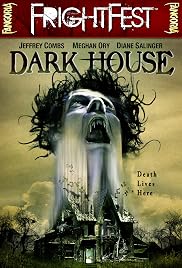
    Box cover. I swear, sweet 80s VHS box covers are a lost art. We will discuss this, AT LENGTH, in a future post.

    The film starts off in a very paint-by-numbers fashion (for low-budget horror) and is saved by the timely arrival of Walston, played by the always delightful Jeffrey Combs. Seriously, I would pay money to watch Jeffrey Combs read the Calcutta phone book. Many of you may know him from his recurring roles in various Star Trek series, notably both as the Vorta Weyoun and the Andorian Shran. True horror connoisseurs, though, will always think of him as Dr. Herbert West in the immortal and perfect in every way Re-Animator. Since Mr. Combs takes the stage (literally) while in a scene featuring the entire rest of the cast, the immediately noticeable gap between his talent, and that of the remainder, is almost jarring. It is here that we are introduced to Claire, played by Meghan Ory. This Canadian actress’s screen credits are ample, if mostly guest shots on TV shows. She plays the role of slightly nutsy Claire adequately, if not with any great enthusiasm. When the rest of her class expresses skepticism, she has some wonderful meta-lines about how many famous actors got their start in low-budget horror. For our readers who may not be aware, this is an actual fact, and will perhaps be the focus of a future post.

    Our intrepid team of would-be actors (and I do mean that in both an in-universe sense and in a real life sense) show up to learn their roles for the press opening of the haunted attraction. Something unnatural goes wrong with the computer controlling the effects and…well, if you’ve ever seen a horror movie in your life, you know where this is headed. Thankfully Mr. Combs is not the first to go, as so often happens in these sorts of films when they spend the money to trot out a fan favorite, but can’t really afford to give their character more than minimal screen time.

    It is at the ending that the film makes its first real attempt to separate itself from the pack. Without giving away too much, what appears to be the closing scene contains a plotting element that comes just…this…close to being interesting and at least a little different. That is something that many of you have no idea how hard it is to find in this genre of film: anything different.

    OH SHIT SON!!!
    Creative Commons image that comes up when you search, “horror”. That’s right, I’m lazy. Screw you.

    Unfortunately, the filmmaker then completely shits it all away with an extra few minutes that wake us violently from the beautiful dream of a low-budget horror film that doesn’t feel like one has wasted 90 minutes of one’s life in viewing, and plants us firmly back in the reality in which most low-budget horror films feel like you’ve just wasted 90 minutes of your life in viewing. A real shame, honestly. This was only director Darin Scott’s second film, so he may be forgiven for not having fully developed his instincts yet. That’s what a good editor is for. He later helmed several other horror films, which you can find on IMDB if you are so inclined, and also directed what I’m sure was an underrated classic, House Party: Tonight’s the Night. That’s right, a House Party sequel, in 2013. When I’m having a hard time slogging through a particularly bad horror movie, I can look back on that fact and remind myself that it could always be worse.

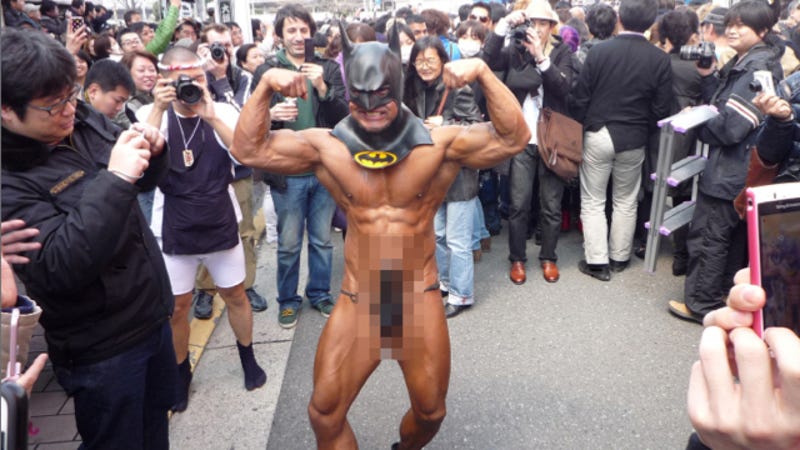
    I award Dark House two-and-a-half Naked Asian Batmen out of five. Image result for pixelated dicks  Image result for pixelated dicks Image result for pixelated dicks

  • From the Art Trenches: Entry Deadline for “We, The People”

    You have until Friday to gather your artwork (in any art medium) and write a “statement that engages in the theme.” Here is the exhibition vision:

    As artists, we have the power to change the world and promote messages of peace and harmony. We have a responsibility to speak out against racism. Now, more than ever it is time to lift our voices. Offer a solution, illicit some empathy, discuss an issue. There is plenty of fodder for inspiration. We are seeking engaging images and thought provoking statements.

    Spoiler alert: they don’t actually want anything thought-provoking.