In the early 00’s things were different for me. I had gotten out of college a few years earlier, and taken a job as a software developer doing contract work for steel mills and other industry. While it was a good way to make money, my heart was still into art and design, so I set forth finding a way to combine art and technology into a new career. Enter the Internet. I started a web and print design company on the side as I worked my full time job. I had steady income, and my employer was paying my health insurance premiums. I wasn’t on the company plan because I knew someday I’d want to leave that job and work on my business full time, and having my own policy would make that transition seamless. My employer took out the premiums from my paycheck pre-tax and sent in the premiums for me. So far so good.
Then things went downhill fast. My employer was accused of not depositing 401(k) contributions from employees. He was also involved in a discrimination lawsuit by an employee he fired. And finally, I was notified by my insurance company that the employer hadn’t paid my insurance premiums even though he’d taken the money out of my paycheck. This was the third time he’d done that, so my insurance company dropped my policy. I attempted to re-apply, but because I have a preexisting condition (I was born with spina bifida), I was rejected by my insurance company and all the others to which I applied. One agent told me that there was an unofficial “black list”, and once one insurance agency rejects your application, your information goes into a database where other insurance companies can see the rejection, and they will also reject you.
I promptly quit my job and called a few lawyers. Because my employer had given me a check to cover the money he took out of my paychecks, I wasn’t technically “out” anything tangible as far as the law was concerned. There was nothing they could do. I was self-employed, and my wife, one of my three kids, and I were uninsured. (Two of my kids were adopted through foster care so they were still on Medicaid). I was no longer living the dream, I was pretty much screwed.
I continued on with the business, making a decent living but still under the constant threat of losing everything in the event of a medical emergency. I had hoped to grow the business so that I could create an insurance group, but that never happened. After five years, I shut down the business and took a full time job as a software developer, which is where I sit today as I write this. My dream of working for myself had come to an end.
The Great Red Hope
In those five uninsured years, I was not without hope. I had joined the NFIB (National Federation of Independent Business Owners) when I started my business. This was during the first years of George W. Bush, when the Republicans controlled everything much like they do today. NFIB was pushing some changes to insurance laws that would have benefited me greatly. With the Republicans in office, they felt they had a chance. They proposed:
1. Allowing insurance companies to sell policies across state lines.
2. Allowing trade groups and clubs, such as NFIB, to create insurance groups that members could be insured through instead of having to get insurance through an employer.
Either of those options could have solved my insurance problem. I could look for a policy in another state with fewer limits on preexisting conditions, or that allowed policies that only covered catastrophic events. Or, I could have just gotten insurance through NFIB. I contributed cash, wrote letters, and filled out petitions. In the end, the Republicans did… nothing. The next election they lost seats the Democrats, and their monopoly on power was over. I became bitter and angry, vowing never to vote Republican again. A few Ron Paul articles later, I turned to the dark side of the political spectrum. I was officially a libertarian.
Enter Obamacare
When Obamacare was being debated, I was livid. You’d think that I’d love it, considering that I have a preexisting condition and the law was supposed to make sure everyone could get insurance. But everything proposed by the Democrats was the complete opposite of what I knew would work for me and others like me. They would make insurance more expensive, more complicated, and more of a bureaucratic nightmare.
My ideal solution would be the above two items, to which I would have added a third:
3. Provide another way for people with preexisting conditions, who were working but could not get insurance elsewhere, to get a policy through Medicare or some other program.
That’s it. Almost everyone would then have access to health insurance, and the extra competition between states would bring down prices. Of course, this wouldn’t require a huge government program, so the Democrats wouldn’t even consider it. When Obamacare became law, I saw that my initial thoughts were right. If I were still self-employed, there is no way I would be able to afford those premiums.
The Repeal
So here we are today, waiting for the Republicans to repeal Obamacare and set things straight, which isn’t happening. While I’m disappointed, I’m not surprised. The Republicans have been here before. They’ve had a chance to use their power to make things better for many people. Whether it’s lack of intelligence, spinelessness, or something else, who knows? But every day I see more proof that neither of the major parties has any intention of doing what’s right or helpful. Democrats just want to create bigger government programs that cement their power, and Republicans want to do pretty much nothing, for fear of pissing someone off and not getting elected next cycle.
As for me, I’m still sitting behind a desk working for someone else, and I think I’ll be here for a while. The cost of insurance, and the amount of time, effort, and money required to follow regulations required to run a business are more than I’d like to deal with.
Now that Team Red has demonstrated their utter hackery by suddenly changing their minds about dismantling the government-controlled health insurance system and demonstrating their deep and abiding love for expansive government, the next ripe target is so-called “tax reform.” Team Blue is already manning the ramparts in the certain fear that any adjustments in the tax code will be away from their moneybags and toward the Team Red moneybags (we know for certain that actually cutting taxes and pushing all the moneybags away from the trough is as likely as the sudden heat death of the Universe).
So it was with that thought in mind that I approached a Vox article written by the reliably mendacious Matt Yglesias as a general hit-piece on Trump. The article doesn’t disappoint, it was the expected (and at this point yawn-inducing) brew. The section on taxes drew my attention: as expected, the well-past-damn-lies use of statistics, cherry-picked quotes, emotional appeals, and the Diana Moon Glampers view of the purpose of economic manipulation.
Back on the policy front, Trump says of his tax plan that “if you add what the people are going to save in the middle income brackets, if you add that to what they’re saving with health care, this is like a windfall for the country, for the people.”
Trump’s actual tax plan would raise taxes on millions of Americans while delivering a windfall to the rich…
According to the Tax Policy Center, the average American family would see its after-tax income rise by about $760, while families in the top 1 percent of the income distribution would see their incomes rise by about $175,000 — more than triple the total household income of the median American. Trump’s plan also features a big corporate tax cut.
Now, being the sort of suspicious and cynical guy that I am, and admittedly not a news junkie, I wondered if the part about “would raise taxes on millions of Americans” was complete bullshit, the usual dishonest conflation of “tax rates” with “taxes,” or even “millions of Americans” being people in the dreaded 1%. So I followed the links to the source, the Tax Policy Center, which according to Wikipedia is “non-partisan.” From the article:
Without those revenue-raisers, nearly all US households would get a tax reduction, averaging about $4,400. The tax cuts would be highly regressive, with high income households getting much more than those with low- or middle-incomes. However, if a half-dozen tax hikes are included in a revenue package, the average tax cut would shrink to about $2,300 and about one-in-five households would pay more tax than under current law.
OK, this was the expected mendaciousness- the tax cuts are significant, and surprise surprise! the folks who pay more taxes get proportionately more reduction (i.e., the rate would be the same or smaller, but applied against a larger number). I guess that’s what they mean by “regressive.”
It was the very next several paragraphs which floored me:
TPC could not model an actual Trump tax plan since far too many critical details are unknown. For instance, the Administration has been sending mixed signals about whether it wants a tax bill to raise as much revenue as current law or whether it prefers a version that reduces overall taxes and add to the deficit.
Beyond those threshold questions, the White House outline left out many critical details. For instance, during the campaign, candidate Trump said he’d increase the standard deduction but eliminate both the personal exemption and head of household filing status. The April outline repeated the promise to boost the standard deduction but was silent on the two revenue-raisers.
In other words, “We have no idea of what the plan we’re criticizing actually is.” But it gets better:
As a result, TPC created a stylized version of what the key elements of a Trump plan might look like. It first analyzed the tax cuts that the White House outlined in April, adding key assumptions to fill in unspecified details. For instance, TPC assigned income ranges to the proposed tax brackets, which the Administration did not.
In other words, WE JUST MADE THIS SHIT UP OURSELVES. And THAT was what got cited, and Yglesias still had to apply the usual lying sack of shit spin and misquotation to it.
In both England and the United States, the legal establishment, helped by would-be reformers, first curtailed the power of grand juries to reach independent judgments, and gave grand juries the power to abuse power on behalf of prosecutors. Then the enemies of the grand jury turned around and indulged in concern-trolling about how grand juries didn’t give adequate protection to suspects. This softened up the grand jury system, making it more vulnerable to attack, and in some cases to abolishing the institution or making it optional.
Zachary Babington (1611-1688) was a functionary in Restoration England’s judiciary system. He was at various times an associate court clerk, a deputy clerk, and a justice of the peace. Zachary’s brother Matthew had been one of the chaplains to Charles I, who was killed when his royal tyranny provoked a counter-tyranny by revolutionaries. That unpleasantness was supposedly over after Charles II, son of the “martyr,” took the throne, but the new king’s supporters were on their guard to safeguard royal prerogatives and minimize the opportunities for the people to thwart the royal will. Zachary may well have learned from his pious brother about the perils of trusting the judgment of the people. So Zachary had a crack at grand juries, trying to limit their usefulness as shields for the rights of suspects. Fortunately, Zachary did not prevail at that time.
In a 1676 book, Advice to Grand Jurors in Cases of Blood, Zachary Babington complained that grand jurors often dared to ignore the judge’s instructions, and to refuse to indict suspects, or to indict suspects for manslaughter when the judge wanted a murder indictment.
“Hi, it’s me again, William Penn. The judges wanted me punished for preaching in the streets, and when the jurors refused to convict, the jurors got punished, but some of the jurors fought their case in a higher court and won, and here we are…isn’t it weird how I keep turning up everywhere?”
…as well as the House of Commons had told judges they couldn’t punish jurors for making “wrong” decisions. Most pertinently for our purposes, the House of Commons had raked Chief Justice John Kelynge over the coals for his treatment of grand jurors. Don Jordan and Michael Walsh wrote that Kelynge was so biased toward suspects and defendants that he “made George Jeffr[e]ys, ‘The Hanging Judge,’ [look] like Rumpole of the Bailey.”
Lord Chief Justice Jeffreys presided at the Bloody Assizes, but he was still a piker next to Kelynge (not shown)
Kelynge had punished grand jurors for refusing to indict for murder in homicide cases, and the Commons warned Kelynge that he had to allow both grand jurors and trial jurors vote how they wanted, without penalty.
Babington apparently realized that, deprived of their power to punish recalcitrant grand jurors, judges could only rely on persuasion to get grand juries to fall into line. So in his Advice, Babington tried to use argument to achieve what threats and punishment had failed to do in Kelynge’s situation. Babington urged grand jurors to give the prosecution, not the suspect, the benefit of the doubt, and to err on the side of overcharging the defendant. If the defendant was innocent, or was guilty of a lesser offense, the trial jury could figure that out later. Babington specifically applied his principles to homicide cases. So long as the prosecution showed evidence that the suspect had committed a homicide, Babington said, the grand jury should indict for murder, even if there was evidence that might justify, say, a lesser charge of manslaughter. The grand jurors “are only to prepare fit matter for the Court to proceed further upon, and to make a more diligent inquiry after.” Only the trial jury can figure out the true nature of the crime after hearing “both sides” – Babington assumed the grand jury would only hear the prosecution’s side, and seemed to think that this was prejudicial…to the prosecution.
“There is very much difference in Law betwixt an Inquiry and a Trial, betwixt a Presentment and a Conviction,” said Babington, and there was a lesser standard of evidence for the grand jury’s “Presentment” – “if they find upon their Evidence, that the party said to be slain in the Indictment, by the person there charged with it, with the time, and place, and manner how, they are to enquire no farther into the nature of it.” If the charges the grand jury files turn out to be excessive, it was up to the trial jury to exonerate the defendant – “however it passeth fairly out of [the grand jurors’] hands, they may more clearly than Pilate wash their hands in Innocency from the Innocent blood of such a person.”
Pontius Pilate washes his hands to symbolize his total innocence of shedding innocent blood. (Matthew 27:24)
Babington was discussing cases of murder – then automatically a capital crime – but his reasoning would justify the grand jury in giving the prosecution the benefit of the doubt in any kind of case.
(Babington’s view of a grand jury’s functions were articulated in 2014 by, of all people, an avowed libertarian deploring the grand jury’s failure to indict police officer Darren Wilson – “the likelihood that Darren Wilson would have been acquitted if he had faced a homicide charge in connection with the death of Michael Brown does not mean he should not have been indicted….A public airing of the evidence, with ample opportunity for advocates on both sides to present and probe it, is what Brown’s family has been demanding all along….”)
Actual grand juries do not seem to have taken Babington’s Pilatian advice. While the evidence is incomplete, Professor J. S. Cockburn says “surviving gaol [jail] calenders suggest that in the seventeenth century approximately twelve per cent. of all assize bills were returned ignoramus” – that is, grand juries disagreed with the prosecutors in 12 percent of cases and refused to indict.
A colorful figure and prolific author, Henry Care, eloquently rebutted authors like Babington. Care published the book English Libertiesin 1680, expressing doctrines directly contrary to Babington’s, and more in line with the real-world activities of grand jurors.
Care said that grand jurors, “if they be doubtful, or not fully satisfied” about the truth of the accusation against a suspect, should not file charges.
People may tell you; That you ought to find a Bill [of indictment] upon any probable Evidence, for ’tis but matter of Course, a Ceremony, a Business of Form, only an Accusation, the party is to come before another Jury, and there may make his Defence: But if this were all, to what purpose haye we Grand furies at all ?…Do not Flatter yourselves you of the Grand Jury are as much upon your Oaths as the Petty [trial] Jury, and the Life of the man against whom the Bill is brought, is–in your Hands…The [famous judge and legal author Edward Coke]…plainly calls the Grand Jury-men all wilfully forsworn: and Perjured, if they wrongfully find an Indictment; and if in such a Case the other Jury [trial jury] through Ignorance, &c. should find the person Guilty too, you are Guilty of his Blood as well as they: but suppose he get off there, do you think it nothing to Accuse a man upon your Oaths of horrid Crimes, your very doing of which puts him, tho never so Innocent, to Disgrace, Trouble, Damage, danger of Life, and makes him liable to Outlawry, Imprisonment, and every thing but Death itself, and that too for all you know may wrongfully be occasion’d by it, your rash Verdict gaining Credit, and giving Authority to another Jury to find him Guilty…
Care wrote that, before a grand jury can indict a suspect, the testimony must be “clear, manifest, plain and evident.” The grand jurors must “diligently inquire” into the credibility of the witnesses.
The prophet Daniel exposes the lying witnesses who falsely accused Susannah
It was Care’s defense of English liberties, not Babington’s attack on them, which became a popular work in the American colonies. Not only did Care’s English Liberties fill shelf space in colonial libraries, its content was invoked by the Patriots of the Revolutionary era in defending American liberties against British oppression. The side which cited English Liberties was the side that won the American Revolution, while the side that looked to the likes of Zachary Babington for advice was the losing side. At least for the moment.
And in both England and America, the influential eighteenth-century jurist William Blackstone came down on the side of the duty of grand jurors to protect suspects against unfounded charges.
Sir William Blackstone
In Blackstone’s words, grand jurors should only vote to indict “[i]f they are satisfied of the truth of the accusation.” Blackstone spoke of a “strong and two-fold barrier, of a presentment [grand-jury indictment] and a trial by jury, between the liberties of the people, and the prerogatives of the crown.” Before approving charges, at least twelve grand jurors had to be “thoroughly persuaded of the truth of an indictment” – “remote possibilities” were not enough.
While America was going through its founding era, on the other side of the Atlantic English grand juries blocked indictments in 10%-20% of cases – so for every ten suspects, one or two were cleared without the danger, expense, anxiety and humiliation of a public trial.
But the legal reformers were circling like birds of prey, waiting to enfeeble and then devour the grand jury system. Jeremy Bentham, the utilitarian legal reformer, denounced the grand jury in the eighteenth century, but added that the legal establishment wanted to keep the system: “lawyers and their dupes never speak of [the grand jury] but with rapture.”
If only that were so! In the nineteenth century, many lawyers and judges, in England and America, joined the ranks of the reformers. “Probable cause” became the standard which grand juries were told to follow in deciding whether to indict. This is certainly curious in the American case – the Bill of Rights does indeed mention “probable cause,” but that’s in the Fourth Amendment, dealing with warrants, rather than in the Fifth Amendment’s grand jury clause.
Probable cause doesn’t seem to be the same thing as believing the suspect is guilty. In fact, the concept is kind of vague. As Professor Orin Kerr put it: “In one study, 166 federal judges were asked to quantify probable cause. Their answers ranged from 10% certainty to 90% certainty, with an average of 44.52% certainty.” Perhaps that sort of vagueness is tolerable when judges or magistrates are issuing warrants, but not in the case of grand jurors accusing their fellow citizens of serious crimes.
Not only was the standard of proof watered down, but grand juries were limited in the kind of evidence they could hear. The only outside evidence they were entitled to examine was the evidence provided by the prosecutor (including private prosecutors in England – contradicting Justice Brown, English reformers said the grand jury was not an adequate protection against unjustifiable private prosecutions). Members of the public could not submit evidence to grand juries, the legal establishment made clear – not even suspects could send in affidavits and lists of witnesses with information favorable to them. Unless the grand jurors had personal knowledge of an alleged crime, they would have to rely for their information on what the prosecutor chose to spoon-feed them, and then they had to vote on the proposed indictment based on the loose “probable cause” standard, with the evidence stacked in favor of indictment by the prosecutor.
The New York judge Sol Wachtler, an opponent of grand juries who supposedly said a grand jury would indict a ham sandwich…
…had further animadversions against grand juries in his prison memoir, After the Madness. (The judge was convicted of stalking and harassing his former lover.)“If anyone should try to convince you that the grand jury is not a device used by prosecutors to garner publicity at the expense of someone still presumed innocent, watch out! The deed to the Brooklyn Bridge is probably in his back pocket.” That sort of misbehavior, of course, is the fault of the prosecutor, not of the grand jury. And somehow, even when they bypass grand juries, prosecutors find ways to generate prejudicial publicity about their cases.
Ovio C. Lewis, a law professor who served on a grand jury in Cleveland, Ohio, decided that the grand jury system was defective in comparison to the reformers’ favorite objective of a preliminary hearing before a judge. Writing in 1980, Lewis said: “In most cities where the grand jury is used it eliminates fewer than twenty percent of the cases it receives. In Cleveland, Ohio, the figure is seven percent; in the District of Columbia, twenty percent; and in Philadelphia, Pa., two to three percent.” From these figures, we see that at least some people were getting exonerated even under the watered-down grand jury system which had come to replace the robust grand jury of the founding era. It would be nice to know what those figures would be like in the case of a grand jury which fulfilled the functions described by Care and Blackstone: investigating and sifting the evidence and only indicting people whom the grand jurors are convinced are guilty.
Returning to the 19th century: some English grand juries – especially in big cities – called for their own abolition. These grand juries were influenced by presiding judges who discussed the alleged uselessness of the grand jury in front of the grand jurors themselves. The Birmingham Daily Post criticized one of these judges in 1872. Even though the newspaper agreed with the judge about the desirability of abolishing grand juries, it said it wasn’t cricket to harangue the grand jurors themselves on the subject:
The Recorder of Birmingham, in his charge the other day, made the usual remarks about the uselessness of grand juries. . . . It is unpleasant enough to have to sit in a stuffy room for two or three days, against one’s will, and it certainly does not render the infliction more tolerable to be penned up in a box, and be publicly told that one is incompetent and useless, and out of date, and in the way-nothing more in fact, than a sort of antiquated machine, less ornamental than a barrister’s wig, and less useful and important than the wheeziest of ‘criers of the Court’.
With these attitudes, it’s hardly surprising that judges and juries were making their talk of grand juries’ uselessness into a self-fulfilling prophecy.
Parliament put grand juries on hold during the First World War, as a supposed emergency measure. This simply whetted the appetite of the judicial establishment for a permanent, peacetime ban on grand juries, and such a ban was finally achieved by Act of Parliament in 1933.
You know why else 1933 was a bad year for liberty?
Albert Lieck, chief clerk (or former chief clerk?) of London’s Bow Street Police Court, rejoiced at the abolition of the grand jury, while inadvertently suggesting reasons the institution should have been retained. Lieck acknowledged that grand juries had sometimes released suspects: “Here and there a bill [of indictment] was thrown out, but on no discoverable principle.” Perhaps the grand jurors hadn’t been satisfied of the suspects’ guilt?
Lieck uttered a non-sequitur which one would associate with Yogi Berra more than with a distinguished British bureaucrat: “the real security against oppression lies not in outworn judicial machinery [i. e., the grand jury], but in the alertness and resolution of the citizen.” Of course, grand jury service has the potential to provide citizens a vehicle to exercise their alertness toward the criminal-justice process.
American critics of the grand jury cited (and still cite) abuses which are not in any way required by the Fifth Amendment. That amendment simply says you need an accusation from a grand jury in order to be brought to trial for a sufficiently serious crime. The Fifth Amendment doesn’t say grand juries should be dependent on prosecutors for their information, or interrogate witnesses without their lawyers, or wield overbroad subpoena powers, or act in complete secrecy (unless the prosecutors chooses to leak information, of course), or fail to keep records of their proceedings. Critics have harped for a long time on these “Star Chamber” features of grand jury procedure, suggesting that the only cure is to bypass the grand jury and have magistrates or judges hold preliminary hearings, where both sides can present evidence and argue over whether probable cause exists. Then the magistrate or judge, after such an open hearing, would decide if there is probable cause to bring the suspect to trial. This type of “reform” has been adopted in England, and in many U. S. states.
The problem with such a “reform” is that it cuts the public – at least the informed portion of the public which has actually heard the evidence – out of the decision whether to bring charges against a suspect. The suspect is dragged into a public hearing by the accusation of a prosecutor, and put at the mercy of a judge who – at least in a well-publicized case – may well feel the voters – who generally don’t know the details of the case but know that the suspect is guilty – breathing down the judicial neck and demanding a trial. With the vagueness of the term “probable cause,” it wouldn’t take a whole lot of evidence for the judge to put the case down for trial, if that’s the judge’s mood at the time. Not to mention the loss of the opportunity for nullification if the defendant, while technically guilty, is morally innocent and doesn’t deserve to be dragged through a trial.
There are some useful features which were traditionally associated with American grand juries. These features are not required by the Fifth Amendment, but they provide some historical context to refute those who think the founders would have been happy to do without grand juries. Grand juries used to have (and to a greatly limited extent sometimes still have) responsibility for making recommendations relating to the problems of their communities: from fixing bad roads to dealing with polluted streams to making new laws, American grand juries have historically often broadened out from simply looking at local criminal cases.
Sometimes, and this is hard to believe nowadays, grand juries, on their own initiative, looked into corruption and misconduct by local officials, including even prosecutors and judges and cops and jailers. Sometimes grand jurors took the bit between their teeth and looked into certain types of local crime which the prosecutors and judges would just as soon not look into – maybe because the prosecutors and judges were trying to sweep that crime under the rug.
Whatever we think nowadays of these crusading, self-assertive grand juries from history – and the Fifth Amendment doesn’t require that grand juries play this role – we can reject the idea that most of the founding generation took a dismissive view of grand juries or would have been willing to abolish or sideline them, or to abolish their constitutional role in protecting suspects from overzealous or corrupt government prosecutors and judges.
The point of having two juries – a grand jury and a trial jury – is to have the grand jury make a broad inquiry, with comparatively few technical rules, in order to find the truth, and if the grand jury believes the charge, then it’s time to have the evidence heard by a trial jury under much more rigid procedural rules. For serious enough charges, it should take these two juries – one acting broadly and informally, the other following careful rules – to agree that someone is a criminal before that person can be punished as a criminal.
Now, in the real world, where most criminal charges are resolved through plea-bargaining, I’d advocate a more limited objective: To make sure that a person suspected of a serious crime has his case considered by at least one jury – and since cases are generally resolved with pleas before a trial jury can be called, that one jury would have to be the grand jury. There should be laws to prohibit plea negotiations from beginning in serious cases until after a grand jury has issued its indictment(s). We may have come full circle to the days of Henry II – grand juries are usually the only criminal juries involved in a case, and the trial procedure is almost as unreliable as in Henry’s day – a plea negotiation approaches in arbitrariness the old dunking-in-cold-water procedure when it comes to sorting out the innocent from the guilty. All the more reason to keep grand juries, so that some type of jury, at least, will review serious cases.
Is there any chance that the right to a grand jury, as intended by the Founders, will be restored any time soon? Probably not. The political and judicial establishment seems to have no particular interest in encouraging such a degree of citizen involvement. They either want to keep grand juries on a tight leash, acting on the limited evidence the prosecutors spoon-feed them, or to keep them on the sidelines, taking no role in cases unless a prosecutor needs political cover for a controversial decision.
And many regular citizens are parading around demanding that the right to a grand jury be abrogated.
And of course advocates of a restored grand jury system will be called racists.
Well, it’s too bad, but there it is.
Works Consulted
Richard L. Aynes, “Unintended Consequences of the Fourteenth Amendment and What They Tell Us About its Interpretation,” 39 Akron L. Rev. 289 (2006).
William J. Campbell, “Eliminate the Grand Jury,” 64 J. Crim. L. & Criminology 174 (1973).
Nathan T. Elliff, “Notes on the Abolition of the English Grand Jury,” Journal of Criminal Law and Criminology, Volume 29,Issue 1 (May-June) Summer 1938.
Thomas Andrew Green, Verdict According to Conscience: Perspectives on the English Criminal Trial Jury 1200-1800. Chicago: University of Chicago Press, 1985.
Don Jordan and Michael Walsh, The King’s Bed: Sex, Power and the Court of Charles II. London: Little, Brown, 2015.
Orin Kerr, “Why Courts Should Not Quantify Probable Cause” (March 28, 2011). The Political Heart of Criminal Procedure: Essays on Themes of William J. Stuntz (Klarman, Skeel, and Steiker, eds), pages 131-43 (2012); GWU Law School Public Law Research Paper No. 543. Available at SSRN: https://ssrn.com/abstract=1797824
Andrew D. Leipold,”Why Grand Juries Do Not (and Cannot) Protect the Accused,” 80 Cornell L. Rev. 260 (1995). Available at: http://scholarship.law.cornell.edu/clr/vol80/iss2/10
Ovio C. Lewis (1980) “The Grand Jury: A Critical Evaluation,” Akron Law Review: Vol. 13 : Iss. 1 , Article 3. Available at: http://ideaexchange.uakron.edu/akronlawreview/vol13/iss1/3.
Albert Lieck, “Abolition of the Grand Jury in England,” Journal of Criminal Law and Criminology, Volume 25, Issue 4, November-December (Winter 1934).
Kenneth Rosenthal, “Connecticut’s New Preliminary Hearing: Perspectives on Pretrial Proceedings in Criminal Law.” University of Bridgeport Law Review, Volume 5, Number 1, 1983.
Suja A. Thomas, The Missing American Jury: Restoring the Fundamental Constitutional Role of the Criminal, Civil, and Grand Juries. New York: Cambridge University Press, 2016.
___________, Nonincorporation: The Bill of Rights after McDonald v. Chicago, Notre Dame Law Review, Vol. 88, 2012.
Mary Turck, “It is time to abolish the grand jury system,” Al Jazeera America, January 11, 2016, http://america.aljazeera.com/opinions/2016/1/it-is-time-to-abolish-the-grand-jury-system.html
Rachel A. Van Cleave, “Viewpoint: Time to Abolish the ‘Inquisitorial’ Grand Jury System” (2014). Publications. Paper 656. http://digitalcommons.law.ggu.edu/pubs/656.
Sol Wachtler, After the Madness: A Judge’s Own Prison Memoir. New York: Random House, 1997.
_________, “Grand Juries: Wasteful and Pointless,” New York Times, Opinion, January 6, 1990, http://www.nytimes.com/1990/01/06/opinion/grand-juries-wasteful-and-pointless.html.
Richard D. Younger, The people’s panel: the Grand Jury in the United States, 1634-1941. Providence, RI: American History Research Center, Brown University Press, 1963.
Here’s a story which is intended to convey a message, but (as is so often the case) perhaps a different one than that which was intended. And unusually, I don’t know what to think.
A summary: a fellow named Terry is a teacher in Florida. As with most teaching gigs, it’s a nine-month job. At the end of the academic year, Terry files for unemployment until the beginning of the next academic year. This year, Terry decided to take a vacation in the summer and head out to Colorado. Now, I can’t blame him for that, given that Florida is a pretty horrible place, especially in the summer. But… this caused him problems in getting his unemployment. Florida instructed him to file where he is, in Colorado. Colorado won’t help him because he works in Florida and instructed him to file there instead. Terry bounced back and forth between unresponsive agencies until finally contacting someone in the Florida governor’s office. The person they sent him to determined in seconds that, since Terry works in Florida and intended to return there after the summer vacation, he should indeed file there, and straightened out the whole situation is a few seconds.
The author of this article asks (in essence), “Why did this have to be escalated like this? Why couldn’t the bureaucrats have done this right in the first place?” and considers this a question of competence.
It doesn’t look that simple to me. Why is someone eligible for unemployment when they voluntarily work in a seasonal profession? Should their vacations be subsidized? Can they be said to be actively looking for work (a requirement for unemployment) in a state when they are physically several thousand miles away? Is unemployment in a circumstance like this (9 month academic years, characteristic of the profession) an entitlement since you and your employer are forced to pay into the fund?
And most importantly, why is the government involved in compulsory unemployment insurance on their terms in the first place? Is this a legitimate function of state governments and (ultimately) the feds?
“No state shall make or enforce any law which shall abridge the privileges or immunities of citizens of the United States…” – Fourteenth Amendment, U. S. Constitution
“No person shall be held to answer for a capital, or otherwise infamous crime, unless on a presentment or indictment of a grand jury, except in cases arising in the land or naval forces, or in the militia, when in actual service in time of war or public danger…” – Fifth Amendment, U. S. Constitution
We saw in Part One how, according to the Supreme Court, the Fourteenth Amendment doesn’t require the states to obey the grand-jury clause of the Fifth Amendment. Most of the Bill of Rights has been applied to the state – “incorporated” is the technical term – but not this part.
(In its incorporation cases, the Supreme Court likes to talk in terms of “due process,” but here’s Justice Clarence Thomas explaining how the Privileges and Immunities Clause is what we should be looking at.)
For the most part, when the U. S. Supreme Court exempts the states from part of the Bill of Rights, most states don’t take advantage of this. With some exceptions, the states chose on their own to obey the Bill of Rights, even when the Supremes wouldn’t hold them to it – state courts would sometimes interpret some rights differently than the federal courts, but they admitted the rights were applicable, if only as a matter of state law.
That’s not the case with the grand-jury clause. Here, the Supremes opened the door for the states to disobey this clause, and the states rushed through the open door.
Between the Civil War and the end of the First World War, many American states amended their constitutions so that suspects could go to trial for serious crimes without the approval of a grand jury (Michigan had started the ball rolling on the eve of the Civil War). This analysis summarizes the situation as of 2014. In most cases, grand juries were kept in reserve in case the prosecutors, in their discretion, wanted to use the grand jury procedure. Only two states – Pennsylvania and Connecticut (I would probably add Michigan) – banned grand juries even as an option (apart from extraordinary cases). Twenty-three holdout states still mandated that certain serious crimes be reviewed by grand juries, at least if the suspect demanded it.
Rather than give a comprehensive history of the victories of “reformers” who curtailed grand-jury rights in state after state, let me attempt to give some historical vignettes, and tie these vignettes together with some semblance of narrative coherence. Then later, I’ll give an account of the triumph of the reformers in their battle against the grand jury.
The Plessy Judge vs. Grand Juries
U. S. Supreme Court Justice Henry Billings Brown came to the Court too late to take part in the Hurtado case, which said the states could limit or abolish the right of a suspect to have his case considered by a grand jury. But Brown was one of the many would-be reformers of that era who wanted the institution of the grand jury largely abolished.
Justice Henry Billings Brown
Brown gave a speech to the Ohio Bar Association in 1892 that included the judge’s discussion of this issue. Getting rid of grand juries, said Brown, would make criminal procedure more simple and efficient. Brown noted that he had begun his legal career in Connecticut, where grand-jury indictments were only required for crimes punishable with death or life imprisonment. Then Brown boasted of his fifteen-year legal career in Michigan (1860-1875), where grand juries were rarely used and were never required before a defendant could be brought to trial.
Brown suggested that grand juries may have been necessary in England to protect suspects against false charges by private accusers, but this problem didn’t exist in America. In America there were public prosecutors to bring charges and judges to rule on probable cause, and with these steadfast public servants on the job, Brown triumphantly concluded, grand juries were no longer necessary to shield suspects from wrongful accusations.
Brown went on to praise trial juries for their power of nullification – they could spare a guilty defendant, if punishing him went against local community norms. Of course, grand juries could perform that function too, sparing worthy but technically guilty suspects from the ordeal of a trial, not to mention saving them many legal expenses. That did not seem to occur to the Justice. “I think the question whether a man in a particular case should be punished for a crime is a question that is properly left to the public,” Brown said. But under Brown’s scheme, the nullification of an unfair charge would have to wait until the end of an excruciating trial for the suspect, since “the public” would only be able to get a word in edgewise after the trial was over. The public would be kept out of the decision of whether to bring charges in the first place.
Another defect in Brown’s logic is apparent with the growth of the plea-bargaining system, which requires a defendant to gamble on the possibility of a higher sentence if he wants to try his luck with a trial jury.
Brown concluded his speech with a boast that “[t]he Anglo-Saxon is a slow-moving race, but it rarely takes a step backward. It makes mistakes, but its progress has been in the right direction. No serious mistakes have yet been made.”
Speaking of serious Anglo-Saxon mistakes: four years after his speech, Brown again showed his ability to have things both ways and to spin nice-sounding legal theories which were oppressive in practice. Brown gave the Supreme Court’s decision in Plessy v. Ferguson. States could pass Jim Crow legislation separating blacks and whites, Brown’s opinion declared, so long as the separate facilities were “equal” (Justice John Marshal Harlan dissented in the Plessy case – Harlan had also defended the right to a grand jury in his dissent in the Hurtado case). Brown had affirmed the importance of equal protection under the law, while negating this principle in practice with his endorsement of racial segregation. In a similar manner, Brown had praised trial juries for their power of nullification, while calling for the abolition of grand juries which were in the best position to nullify charges against a suspect before he could be dragged through the court system.
Plaque on Homer Plessy’s tomb, New Orleans
Grand juries as scapegoats for police abuse
The fact that one of the most infamous racists in American judicial history wanted to abolish grand juries hasn’t stopped modern, hip and woke activists from throwing the racism charge at grand juries themselves.
In Minnesota, a proposed state constitutional amendment on the 1904 ballot would abolish the right to a grand jury and empower the legislature to decide how prosecutions were to be initiated – and it was correctly anticipated that the legislature would allow the elected county prosecutors to bring charges without grand jury approval. This concerned an anonymous “Voter,” who wrote to The Princeton Union to warn against the amendment. This voter was more skeptical about the professionalism of prosecutors than Justice Brown had been:
The grand jury is a body of citizens who are selected regardless of political belief or creed….[T]he law throws around them secrecy in their actions and they are entirely removed from all political taint or influence. It very often happens that county attorneys are not men wholly competent to exercise powers ordinarily delegated to a grand jury. Much of our politics is run on the “good fellow” plan and sometimes men are kept in office for being good fellows or for various reasons, regardless of qualifications or fitness for office….[County attorneys] are human and to say that their judgment in a case would be as good as as that of the members of a grand jury would be to make an extravagant statement.
The “good fellow” plan
A majority of Minnesotans went ahead and approved the amendment despite these arguments, and the legislature proceeded to give county attorneys the option of bringing charges without using grand juries. Grand juries would still be held in reserve if the prosecutor wanted to employ them, but suspects would no longer have the right to have their cases considered by grand juries. The optional system necessarily gives grand juries a bad odor – prosecutors who use grand juries when they don’t have to do so are often hiding behind the grand jurors’ skirts in order to pass the buck for controversial decisions. And sometimes the public falls for it.
In 2015, two Minneapolis cops confronted and shot Jamar Clark, who died of his injuries. The fact that Clark was black made the issue particularly volatile. Protesters demanded that the county attorney, Mike Freeman, investigate the shooting without involving a grand jury. Freeman had this option thanks to the voters’ decision back in 1904.
Minneapolis protesters in the Clark case
The protesters got their wish. Freeman announced that his office would no longer use grand juries when investigating shootings by police. The president of the Minneapolis NAACP, Nekima Levy-Pounds, said:
I am overjoyed that in this instance Mike Freeman decided to do the right thing. Mike Freeman is fully aware that the grand jury process has been ineffective here and nationally in holding officers accountable. I believe sustained community pressure played a huge role in Mike Freeman’s decision.
Then Freeman, without the help of a grand jury, announced he wouldn’t be bringing charges. The omission of a grand jury didn’t placate the protesters. An NAACP spokesperson (not Levy-Pounds) said, “You, Mr. Freeman, did not give a fair and accurate portrayal…and let me tell you: If the city burns, it’s on your hands.”
Last I heard, Minneapolis was still standing, though the shooting did provoke some protests. Nevertheless, cutting the grand jury out of the loop in the Clark case didn’t ease community tensions, or lead to charges being filed (assuming for the sake of argument that charges ought to have been filed).
The opposition to grand juries was exacerbated when a grand jury in Missouri failed to charge Officer Darren Wilson for shooting Michael Brown. The grand jury’s decision sparked riots. But the Obama/Holder Justice Department, examining the evidence against Wilson, also decided not to bring charges, and there was no grand jury involvement in that decision. So a grand jury took the rap for taking the same position on a racially-charged police shooting as the country’s two top-ranked race-baiters.
(Click here for an article about a controversy over using grand juries in police-abuse cases in California.)
Grand juries came first
The grand jury system was itself created through the actions of a would-be reformer, Henry II of England. The ruler who encouraged St. Thomas Becket’s assassination…
…was not a civil libertarian, but he “built better than he knew” in creating the grand jury. Henry was thinking more in terms of law and order when he decreed that panels of his subjects would be summoned and commanded to report about crime in their localities. What Henry wanted was to root out criminals who had managed to evade justice. Before Henry’s decree, bringing alleged criminals to trial in the secular courts required a private accuser to voluntarily come forward, risking punishment if he failed to prove his charge – and risking retaliation from the criminal. Henry knew that there were criminals running around who were known to the general public, but not known to the courts, since nobody had the guts to make a formal accusation. Not to mention that England was an occupied country whose rulers spoke a foreign language (French) and might not be au courant with the news circulating among their English-speaking subjects.
So Henry II’s early versions of grand juries were required to name people in their area who were believed by the public to be guilty of serious crimes. The grand jurors were not making their own investigations or reaching their own conclusions, but were reporting what was widely believed among their neighbors. Malicious local gossip need not be reported – just the solid consensus of public opinion.
King Henry, the scourge of the Church, was actually adapting a procedure used in England’s Church courts. The Church’s jurists and reformers borrowed from Roman law the maxim that the public interest required crime to be punished. This was in contrast to the Germanic idea of using the justice system to mitigate blood feuds. The descendants of the Germans who conquered the Western Roman Empire wanted people who had mortal grudges against each other to resolve their differences without dragging entire clans into Hatfield/McCoy style, multigenerational cycles of reprisal and counter-reprisal. So if angry relatives came seeking an alleged murderer, the matter would be settled with a trial by battle (if the feud was among aristocrats) or by some form of ordeal (if the feud was among the lower orders) – putting your hand on a burning piece of iron, getting thrown in water to see if you floated, trying to swallow a morsel of bread after boasting of your innocence (choking=guilt). If these methods didn’t identify the criminal with 100% accuracy, at least it was an agreed-upon method, presided over by priests, to settle the feud and move on. And if a crime didn’t spark a feud, or if the victim or their would-be champions were too weak, then it was like “OK, forget about it and let’s have some more mead.”
The Church’s reformers noticed that a lot of crime was overlooked in this way, and that trial procedures left something to be desired in terms of accuracy. So the Church courts, at least in England, came up with a procedure which seemed to inspire Henry II. Instead of waiting for a private individual to take the initiative and prosecute, the Church’s judges would identify a suspect and summon a panel of the suspect’s neighbors to see if public opinion regarded the person as a criminal. If the community wasn’t fairly solid in believing that the suspect committed the crime in question, that was the end of the matter – or rather, any crimes would have to be settled in the “internal forum” (the confessional). But if the community witnesses were like, “yeah, everyone thinks he did it,” then that counted as “fama” – the equivalent of a formal accusation – and a trial would begin.
King Henry thought that was a good idea, so he created his early version of the grand jury to report to the secular courts about those people whom local public opinion identified as serious criminals. If a person was so reported, the accused would undergo an ordeal – apparently the throw-them-in-water-to-see-if-they-drown ordeal – because the criminal trial jury hadn’t been invented yet. Yes, in criminal cases there was only one jury, and that was the ancestor of the grand jury – and unless you put your reliance in the cold-water ordeal, you better hope that public opinion, as reflected by the grand jury’s accusation, was accurate.
“So if the water receives my body, I’m innocent? And if I float, I’m guilty, and you execute me? It’s a good thing the grand jury correctly identified me as the murderer, otherwise I’d be really annoyed at this whole procedure.”
The creation of the English criminal jury was kind of forced on England by the Church. The Fourth Lateran Council in 1215, decided that priests should not preside at ordeals – because priests shouldn’t be shedding blood and because ordeals were not always reliable anyway. Without priests to bless the water ordeal, the practice fell into disuse, and so the English started using trial juries to decide the guilt or innocence of people who had been charged by grand juries with serious crimes.
Another important decision of the Fourth Lateran Council was in clarifying how church courts would go about ascertaining whether a suspect had a reputation as a criminal, so that the court could proceed in the absence of an individual accuser. It wasn’t enough if the rumors against the suspect were generated by “enemies and slanderers” – the public accusations had to come from “prudent and honest persons, not once only, but often.” Commentators gave Biblical examples: the clamor against the sinners of Sodom and Gomorrah, which prompted God to investigate (Genesis 18:20), and the complaints against the steward in Luke 16:1, which prompted the master to demand an accounting from the steward.
Since the creation of secular grand juries in England had probably been prompted by church-court procedure, it is not surprising that grand juries, acting on the same principles as the Fourth Vatican Council, undertook to distinguish between true and false public opinion. As the grand jury evolved, it came to do its own investigation, not simply reporting what their neighbors believed. Grand jurors were becoming the representatives of responsible public opinion by acting as “prudent and honest persons” and seeking reliable evidence about suspects.
But at least people who were accused by grand juries could now look forward to a full trial by another jury, not simply an arbitrary procedure like the water ordeal where one prevails only through blind good fortune. Even today, a small proportion of those who are indicted by grand juries go on to have their cases heard by a trial jury (the rest, of course, resolve their cases by plea-bargains, where the result totally isn’t arbitrary).
Works Consulted
Bab(b)ington Family – Descendants of John de Babington, http://members.iinet.net.au/~billeah/babingdesc.html
Henry Billings Brown, “Justice Brown’s Address,” in Proceedings of the Ohio State Bar Association, 13:35-51 (July, 1892).
Rebecca V. Colman, “Reason and Unreason in Early Medieval Law,” Journal of Interdisciplinary History, 4.4 (Spring, 1974), 571-591.
Nathan T. Elliff, “Notes on the Abolition of the English Grand Jury,” Journal of Criminal Law and Criminology, Volume 29,Issue 1 (May-June) Summer 1938.
Richard M. Fraher, “The Theoretical Justification for the New Criminal Law of the High Middle Ages: ‘Rei Publicae Interest, Ne Crimina Remaneant Impunita’” (1984). Articles by Maurer Faculty. 1854.
http://www.repository.law.indiana.edu/facpub/1854
Richard. H. Helmholz, “The Early History of the Grand Jury and the Canon Law,” 50 University of Chicago Law Review 613 (1983), online at http://chicagounbound.uchicago.edu/cgi/viewcontent.cgi?article=2484&context=journal_articles
Finbarr McAuley, “Canon Law and the End of the Ordeal.” Oxford Journal of Legal Studies, Vol. 26, Issue 3, pp. 473-513, 2006.
Kenneth Pennington, “Introduction to the Courts,” in Wilfried Hartmann and Kenneth Pennington (eds.), The History of Courts and Procedure in Medieval Canon Law. Washington, D. C.: Catholic University of America Press, 2016.
“Proposed Amendments to the Constitution of Minnesota,” Cook County Herald (Grand Marais, Minn)., Oct. 22, 1904, p. 8, column 1.
“Shall we abolish the grand jury,” The Princeton union, October 06, 1904, p. 3, column 2, http://bit.ly/2strpg7
Suja A. Thomas, The Missing American Jury: Restoring the Fundamental Constitutional Role of the Criminal, Civil, and Grand Juries. New York: Cambridge University Press, 2016.
___________, Nonincorporation: The Bill of Rights after McDonald v. Chicago, Notre Dame Law Review, Vol. 88, 2012.
Richard D. Younger, The people’s panel: the Grand Jury in the United States, 1634-1941. Providence, RI: American History Research Center, Brown University Press, 1963.
As far as I can tell, there is no other plausible explanation for his actions in retrospect.
Many of you watched the hearing as I did. Hell, I think it was watched by half of America (not including John McCain apparently). And its hard for me to comprehend how there are any true winners or losers here from either a legal standpoint other than maybe Loretta Lynch losing some footing as being above partisanship when it comes to her department’s handling of the Clinton private email server investigation.
John McCain in his natural state.
But what should be attacked vigorously by any responsible authority tasked with oversight or any media talking head is Comey’s ability to be a man and do his job with any form of integrity whatsoever. Because he completely contradicted prior sworn testimony today by suggesting that Trump was attempting to influence him. And that he should have carried himself differently many times with interactions with the President in regards to how he reacted and how he reported (or failed to report) what he perceives months later as attempts to coerce or manipulate the FBI head into dropping investigations.
I’m sure there is some sense of being awe-struck by someone being summoned to the White House. I would like to think I’d be immune to that, but you never know. But the head of the nation’s federal law enforcement apparatus should never be of that mindset unless he is feeling guilty about something. He has spent his life climbing into situations and relationships that are complicated and him being somehow cowed by a President he believes is acting in an unprofessional and borderline-illegal way defies common sense.
I swear to tell the truth. Even if its different than the “truth” I told the last time I was under oath here.
Which leads me to my personal opinion: Comey is changing his tune because he feels like he was wronged. He deliberately leaked government property to a friend so they could be sent to the media. He allowed erroneous leaks to remain in the news in order to damage a President he didn’t care for. He contradicted prior sworn testimony in an attempt to change the public narrative on meetings that he considered “notingburgers” until he was fired to “possible attempts at coercion” in the aftermath of that termination.
Whatever your thoughts about Donald Trump are, whatever you think his relationship with the Russians was, and whatever you think the Democrats are attempting to accomplish here, one thing should be taken away by anybody with an ounce of brains: Comey is gutless or Comey is grinding his axe. I’ve made my decision. Please discuss yours in the comments.
When I wrote a while ago about the general wish for liberty, some of the comments reminded me of several difficulties in doing so. One of these, something often told to libertarians by the left-leaning, is government should be more efficient and better, not smaller. Better government versus smaller. I have yet to be convinced of the possibility of achieving this. This is not an in-depth post in any way, shape or form, just a quick thought, let us say.
Personally, and as a libertarian, I think it is hardly possible to make big government efficient. Which I assume shocks no one. It is not even a given that it is desirable to have big efficient government, as Frank Herbert may have observed in a book or two. As for better, it is one of those things that do not have clear, universally accepted, definitions. Like common sense, it can mean whatever the speaker wants it to mean. I often get countered with accusations of being ideological and few clear, concrete measures to achieve this mythical good big government, besides boilerplate feel good nonsense like “if we all work together” blah blah blah.
My argument is that it is not really possible to make government efficient in a significant without making it smaller because the size is often in itself the source of inefficiency: large numbers of regulations, large numbers of agencies with overlapping functions which not even the government can keep track of, complex bureaucratic organizations, and no inherent checks and balances, as one would find in a market. Man-made checks and balances are given as an alternative, but these are as flawed as the humans who design them, and equally as crooked. Experience does not show this to be a source of efficiency. I say in a significant way because, as inefficient as governments currently are, it should be possible I suppose to make them somewhat less inefficient.
Now, I’m sure we can make this quite efficient
In general, the larger and more complex a system is, the harder it is to manage. This is equally true of big corporations, which can become quite the bureaucratic nightmare and highly inefficient, but they are occasionally forced by the market situation to do something about it. This is rarely the case for government, and when it happens it is with much wailing and gnashing of teeth. It is even harder to do by bureaucrats with all sorts of agendas, with the incapacity of economic calculation, with little interest in efficiency and much interest in other things, and without any inherent constraints, as exists in the market.
When the last financial crisis hit, the corporation I work for quickly found hundreds of millions of wasteful spending brought by the previous boom. It cut more than any government did. One of the problems with corporations – one that is increasing in frequency- is precisely the need of government to intervene when the market attempts to correct something.
But, to get to the point of this post, for the sake of argument, we can give the left the benefit of the doubt. Let’s say they want good efficient big government. My problem is that they never show it. The standard should be: we believe government can be efficient and well prove it to you doubters. We will do everything in our power, leave no stone unturned, to achieve this!
We will look at every expense thrice to make sure we don’t spend unnecessarily. We will review every law and regulation to make sure it is as simple and clear as possible. We will review all the laws and regulations to see they are not deprecated, overlapping, confusing. We will work tirelessly to spend money better and regulate better. This happens approximately once in a blue moon, give or take. For all the efficiency rhetoric, they are quick to advocate for any expense that they like, for any regulation no matter how dumb. The left wing should be always ready to criticize what government does wrong, but libertarian publications seem to do a much better job of this.
Bureaucrats being a base of votes for the left, they seldom seek to make bureaucracy efficient. And this would be crucial in efficient government. Get rid of any agency not needed or overlapping. Simplify bureaucratic procedures. Reduce the number of meaningless forms, analyze all processes in an agency. Hire external auditors and consultants and improve constantly. This happens once in a never.
So where is this desire for efficient big government? Even if such a beast would be possible–which I say it is not–it is certainly nowhere to be seen outside empty rhetoric. Didn’t the old cliche use to go “actions speak louder than words?” If people demand good, efficient big government–not small government–we have to tell them that “there ain’t no such thing.” And no one trying to achieve it.
I’ve just finished The Campus Rape Frenzy, by K. C. Johnson and Stuart Taylor, Jr. The subtitle – The Attack on Due Process at America’s Universities – should dash any false hopes that this book is a STEVE SMITH adventure. It’s about how the federal government forced – or probably the right word is egged on – colleges to provide inadequate hearings for male students accused of sexual misconduct.
The usual scenario is that Bob
and Betty
Drive safely, indeed
two hypothetical students at Hypothetical U, both drink a lot of booze, then get together and have sex.
Here’s a picture of the booze
Later, sometimes much later, Betty decides that she was raped and, after failing to persuade the real-world judicial system of the reality of the crime (or neglecting to report the alleged crime to the real-world judicial system at all), takes the case to the campus “justice” system.
In the name of being Tough on Rapists, the federal government – invoking the anti-sex-discrimination statute, Title IX – has encouraged the campus SJWs who were already pressing for making campus “courts” accuser-friendly. The campus “judges” are students, administrators and faculty who have been trained to view accusers sympathetically and to be on the lookout for those predatory rapists responsible for 1 in 5 or 1 in 4 coeds getting sexually assaulted. These “judges” are warned that the idea of large numbers of false accusations is a myth, and “only” 2%-8% of accused men are actually innocent. These statistics are phony, as the authors show.
Never mind, though – combined with the “judges’” training is their ability to ignore many traditional due-process restraints on their power, restraints which might allow the accused man to throw a wrench or two in the accusation. The “courts” can put the defendant on trial on really short notice, they can limit his right to cross-examine the accuser, invoke the assistance of a lawyer, or present evidence in his own favor (there’s a lot of cases where the texts the “victim” sent at the time of the “rape” are not consistent with the behavior of the victim of such a crime, but the “judges” aren’t always interested in seeing these texts).
Sometimes the trial is conducted by one person hired by the college to conduct and investigation and reach a verdict, without holding a full-dress hearing in front of both parties as in traditional Anglo-American trials. The judge/investigator just interviews the witnesses, gives the accused a (perhaps incomplete) summary of what the witnesses said, and then reaches a verdict.
It almost gets to be like the old joke of the judge who didn’t want to hear the other side because hearing both sides tended to confuse him.
All rise for His Honor
The bottom line is Bob is branded a rapist and suspended or expelled. It’s kind of hard for him to get another college to accept him, and many employers, seeing that the guy was branded a rapist, will be like “don’t call us, we’ll call you.”
So if Bob or his family has enough money he can sue, and maybe win or maybe lose. But any victory, while it benefits Bob, doesn’t necessarily benefit the next guy who comes along accused of rape in the Kampus Kangaroo Kourt.
And if there actually was a rape? In that case only the real-world justice system can impose the prison sentence needed to keep the rapist away from the public for term of years. Throwing an actual rapist out of college and out onto the streets seems a tad lenient, and not entirely safe.
You want to teach rapists not to rape? Send them to one of these educational institutions.
Johnson and Taylor have all sorts of perfectly sensible ideas for reform, but I want to focus on one idea they reject.
Johnson and Taylor indicate that it might be desirable to discourage students from getting drunk and screwing. This might annoy Jimmy Buffett (NSFW), as well as the “don’t blame the victim – teach rapists not to rape” crowd. But such discouragement is a good idea as far as it goes. Rape accusations flourish, as a practical matter, in vaguely-remembered encounters which may be regretted once sober, adding to which is how easy it is (according to university regulations) for alcohol to make consent to sex irrelevant. And current dogma means that if both Bob and Betty are drunk when they have sex, Bob is raping Betty but not vice versa. How colleges reconcile this doctrine with Title IX’s ban on sex discrimination is unclear, but that’s how the system operates.
But Johnson and Taylor don’t go all the way (so to speak). They frown on drunken sex, but they scoff at the idea of discouraging student sex in general. They acknowledge that, given the kind of cases which lead to these “he said/she said” controversies, a good survival strategy might be “celibacy,” but the authors dismiss this as a “nonstarter[]” which “few will find appealing.” College students in the past – often from necessity – often managed not to rut like bunnies while pursuing their studies, but I suppose the idea is that we’re a more sophisticated, liberated, non-taboo-having, healthier people today.
“I hate going to these orgies – so many thank-you notes to write afterwards.” /old joke
What if colleges simply stopped encouraging student sex? That could make moot the question of how to handle drunken hookups by their students.
Don’t mistake my meaning – I am speaking of the separation of college and sex, not the abolition of sex itself, although of course as you know abolishing sex is the ultimate objective of the Catholic conspiracy.
Colleges can only do so much, and training the horniness out of its students is something which is beyond their capacity. But that doesn’t mean a college should provide boinking facilities for its students. No using dorms as sleepover facilities, fraternity would-be orgies, etc.
When I worked as a student dormitory assistant, checking students into and out of their rooms, I felt like the clerk at a sleazy hotel. My job wasn’t to keep the guys out of the girls’ rooms or vice versa, but to make sure they left their student IDs at my office before going upstairs for their…whatever it was they did (probably not canasta).
I was also the piano player
Did colleges put up with this sort of thing in the past? No – although students weren’t any less horny than today. College education wasn’t as near-universal as now, you needed some money or enough talent to get a scholarship, but if you had one of these qualifications there were plenty of institutions to choose from. But generally, the colleges at least made an effort to keep the students on the straight and narrow.
Mandatory chapel. Curfews. If the college admitted women (not a given), then there was separation between the sexes, and social events needed chaperones.
“Don’t mind me, you kids just have fun.”
Most students wouldn’t put up with that today. But that’s all right, most students don’t need to be at a modern residential college.
We’re in a situation where colleges and universities ought to downsize anyway. A four-year sojourn at a residential college (often involving indebtedness and fairly sketchy post-college plans for promptly paying off that indebtedness) is not an essential part of every young person’s life, if it ever was.
There are some career paths which may require studying at a residential college, some career paths which may call for online education (dropping by the local public library for proctored exams), and some career paths which may call for a good high school education (where it can be found) and/or an apprenticeship.
And there are some people who may still go in for a liberal arts education as defined by Cardinal Newman – learning for its own sake, including the things associated with being a learned person, including theology, the “queen of the sciences.”
Blessed John Henry Newman
In each of these situations, the college can separate itself from enabling its students’ sex lives.
If a student is working on his or her online degree while holding down a job, then their college life and social life will run on separate tracks, for the most part, or if they get together with other students it will be off campus and they’ll have signed all sorts of forms that the college won’t be liable for broken hearts, broken bones, disease, death, etc., resulting from independently developing relationships with other students.
Or if students are taking one of those intensive courses of study which requires a residential program, they should be warned to do their foolishness (if any) while they’re off campus.
And at least in theory, nontraditional-age students supplementing their education, often online or through occasional visits to campus for class purposes, will have homes of their own and any kinkiness they do will be in those homes (and they should ask their spouses first, if any).
And for those few liberal-arts residential colleges which survive the coming shakeup of higher education – those colleges should be unashamedly elitist, recruiting students who are actually committed to a course of study, with socializing with the other sex limited to chaperoned activities like in earlier times.
(If a young man and woman meet at a residential college (or before going) and decide to get married, then of course after their marriage the college should put them in married-student housing.)
I guess the one downside to my scheme would be that it would force the SJW “student life” bureaucrats to get other work.
Look carefully, and you might be able to see the violin on which I am playing “My Heart Bleeds for You”
Space is big. You just won’t believe how vastly, hugely, mind-bogglingly big it is. I mean, you may think it’s a long way down the road to the chemist’s, but that’s just peanuts to space.
Douglas Adams, The Hitchhiker’s Guide to the Galaxy
Of all the great adventures that humanity can embark on in the near future, none has captured the popular imagination quite like space exploration. Since before the time that humanity launched the first artificial satellite, we have dreamed of what it might be like to set foot on other worlds. Where dreams lead, however, the bureaucrats are sure to be lurching close behind. Passing judgment and crafting policy has long been the pleasure of the professional statist. In man’s adventure into space, such a creature was given a rare gift: A virgin field, unframed by any law save those of nature. Before even the first V-1 was launched, there were those who contemplated both exploration and policy. Theodore von Kármán, one of the founders of Aerojet, an early rocket company, had this to say in 1942, just after the incorporation of the company, “Now, Andy, we will make the rockets – you must make the corporation and obtain the money. Later on you will have to see that we behave well in outer space…After all, we are the scientists but you are the lawyer, and you must tell us how to behave ourselves according to law and to safeguard our innocence.[i]” There were, at that time, no laws on the books to describe allowable action, inactions, and responsibilities that would accompany space flight. But in the next two decades, such a field would develop. Andrew Haley would be one of the main crafters of space law[ii], even coining a term for it, ‘metalaw.’
The laws that would be crafted were largely a creation of their time when the UN was paralyzed between cold warriors. As such, they are imbued with a certain neutrality and compromise. The most famous and overarching of these regulatory documents was the 1967 ‘Outer Space Treaty.’ This treaty laid down some basic conventions which are still honored today, such as Article V forbidding the placement of WMD’s in orbit, on the Moon, or in any sort of stationary platform or satellite. There are gaps, though; the treaty mentions WMD’s but not conventional weapons, so in theory, orbital bombardment is still allowed. Another gap in the treaty, one that is becoming increasingly relevant, is the use of resources in space. At the time the treaty was written, the idea of commercial entities who could perform their own launches or exploit resources was inconceivable. Now there are at least eighteen competing commercial space companies. That’s only counting ones working on launch vehicles. There are many other companies that specialize in other areas and more being created every day. That would come as a grand surprise to the many bureaucrats who were stuck in a binary view of policy, who could never imagine advances beyond what they saw before them. Even more pressing today: the treaty does not allow any nation to claim territory in space. The moon, asteroids, and all other stellar bodies are seen as communally owned and for the benefit of all mankind[iii]. That might come as news to the several space mining companies that are looking to exploit the potential trillions of dollars of precious metal and rare earth elements that are locked in the numerous asteroids in the solar system[iv].
Indeed, as much the way that regulators were unable to predict the rise of disruptive technology online or in new media, they were equally unable to foresee the rise of a whole industry based around the idea of exploiting the resources present in the solar system and beyond. In attempting to placate the powers of the time, they left no room for innovators to build on the fantastic possibilities of space exploration. This has meant that those who wish to dream of riches from beyond the world must go to antiquated documents written in a time before we had even set foot on the moon. Even when the push against regulation comes, one must also wonder how hard the early pioneers of space exploitation will try to close the door behind them in order to throttle competition. In a truly free market, companies would not have to go hat in hand to the national regulators to get launch permission, then comb the international laws looking for a loophole to exploit in their quest for mineral exploitation. Rather, it would only be a matter of capital investment and an entrepreneurial spirit that would lead the way. Of course, as the race for asteroid wealth increases pace it is certain that some enterprising person will find a way around the laws, even if it means approaching their state looking for succor to reach around international regulations.
Space is big, but governments currently control the sky that separates us from heavenly riches. There will undoubtedly come a time when the exploitation of space resources becomes a common practice. It is important for the allies of economic liberty to push for the reforms needed to open up a truly free market, so when that success comes, it will be that much harder for the bureaucrats to take the credit for the success that their laws would have nearly strangled in the crib.
________________________________________________ [i]Andrew G. Haley (1963) Space Law and Government, page xii, Appleton-Century-Crofts [ii] Daniel Lang and Brendan Gill (December 29, 1956) The Talk of the Town, “Metalaw”, The New Yorker, p. 19 [iii] Jennifer Frakes, (2003) The Common Heritage of Mankind Principle and the Deep Seabed, Outer Space, and Antarctica: Will Developed and Developing Nations Reach a Compromise? Wisconsin International Law Journal, 21, at 409 [iv] Webster, Ian “Asterank” Asterank
 The Great Red Hope


.jpg "In one part of the book, Care urged voters to elect independent, incorruptible men to Parliament - Care was charged with seditious libel for these statements, which the government considered a reflection on its Parliamentary supporters.")


.jpg "\"Please take away rights from these people we don't like!\"")


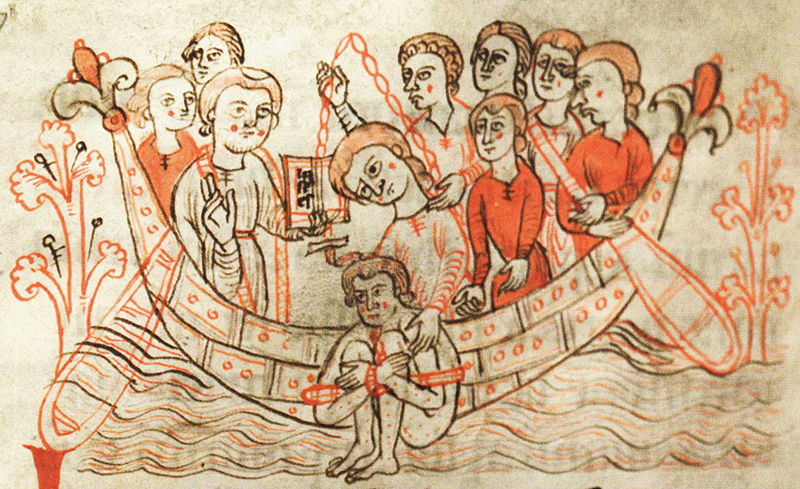


.jpg "It looks like the inmates in this cell block only got a C in not-raping.")


!["As long as you're looking, can you find [insert name of unpopular sports player]'s talent?"](https://commons.wikimedia.org/wiki/Category:Microscopes_in_art#/media/File:Santiago_Ram%C3%B3n_y_Cajal_(8691434507).jpg "\"As long as you're looking, can you find [insert name of unpopular sports player]'s talent?\"")
