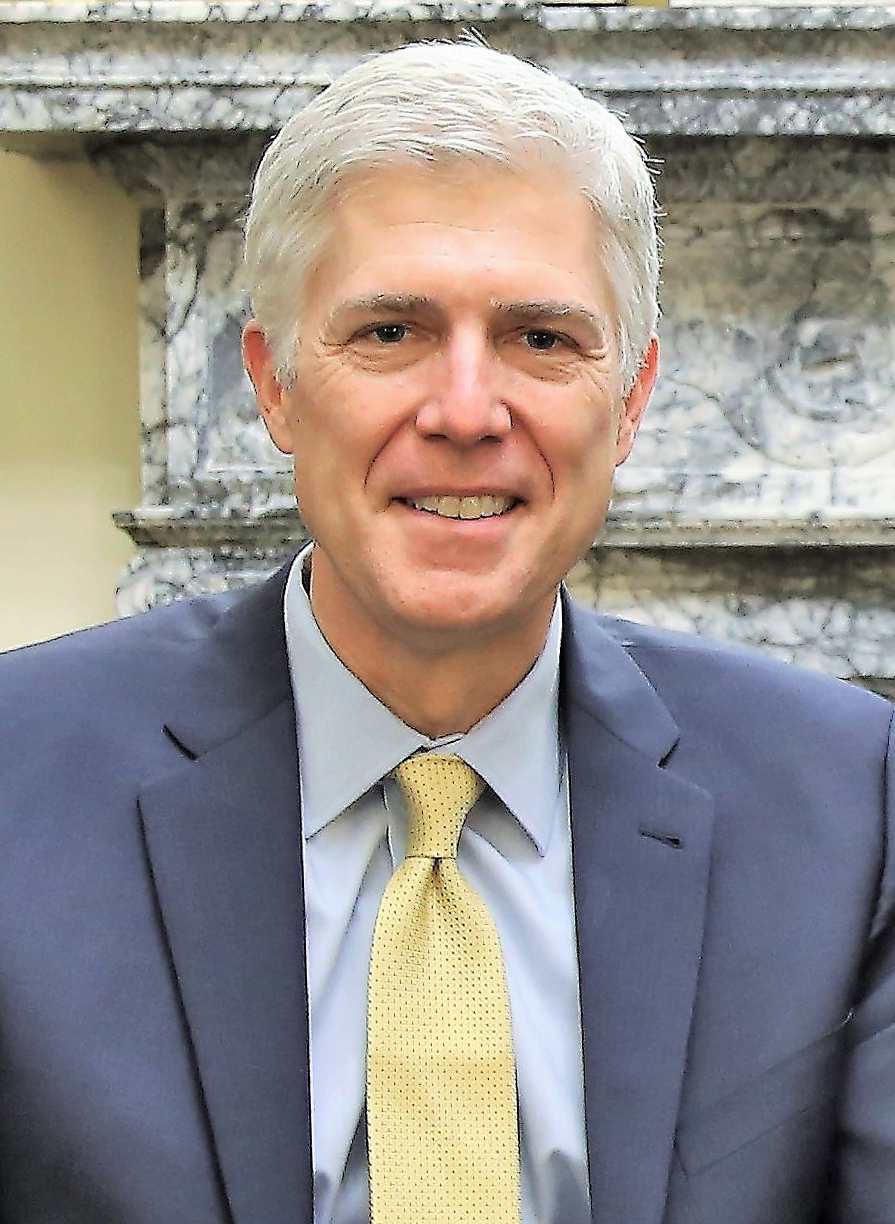
This is going to suck all the air out of the news for a while, and I’m predicting it will cause several heads to explode on both “sides” of American politics, let alone the impact it will have on the Deep State bureaucrats who think they are above the law.
The US constitution is 4,440 words long. It is the shortest constitution in the world and the oldest still in use.
Unfortunately, the Constitution was not quite enough, so over the years, we added a few more laws. By 1925, all of the country’s laws fit in a book 7 inches thick–much more impressive than that flimsy old Constitution. Later came the IRS tax code. It is around 4 million words, but no one really knows for sure because it gets longer every year. It is now longer than the Bible (788,000 words), War and Peace (587,000 words), and the complete works of Shakespeare (884,000 words)–combined.
Not bad, but still not quite enough. Obamacare added another 387 thousand words and its regulations another 11 million words. It is important to remember that laws include both statutes and regulations. The regulations are often much longer than the law (statute) itself. I tried and failed to find a word count for all US laws, including federal, state, and local. I failed because it turns out there are so many of them, no one knows how many there really are. A rough guess is that there are probably around 100 million words total in all the country’s laws.
Now we’re getting somewhere. A Roman orator named Cicero famously said “more laws, less justice.” But those were ancient times. Things are completely different today. The record of history clearly shows that as laws grow more numerous and complex, corruption and crime decrease. This is especially true for vice laws which have successfully eradicated prostitution and drugs. And with no unintended consequences whatsoever.
You see, with every law we pass, we inch ever closer to utopia. That’s why we should be passing as many laws as possible and never, ever repealing them. To repeal even one law is to risk plunging the nation into anarchy. So the next time you hear someone complain about laws, just remember that laws are the only things stopping people from killing and eating each other. Even the laws like the one which banned pinball machines in New York City from 1940 to 1976. Those are the most important of all.
In May 1907, Timothy D. “Big Tim” Sullivan, a key leader in the powerful Tammany Democratic organization in New York City, spoke to a reporter from the New York Herald. “Help your neighbor, but keep your nose out of his affairs,” said Big Tim, seemingly libertarian-ly.
Timothy Sullivan
The former New York state legislator, who had recently resigned from Congress but not from his role as Tammany power-broker, wasn’t actually endorsing libertarianism. He was talking about his no-questions-asked policy of distributing charity to the poor who lived in the Bowery district – poor people whom the Democrats relied on to get elected and re-elected. Sullivan held an annual daylong summer extravaganza of food and entertainment for grateful voters and their families, and an annual Christmas dinner, too, plus clothing giveaways. He literally bailed out people who got in legal trouble, and helped job-seekers get employed in government or the private sector.
A businessman who had ownership interests in saloons and theaters, Sullivan probably chipped in some of his own money for his charitable efforts. But he didn’t have to rely solely on the contents of his own pocketbook. Sullivan took a “regulate and tax” approach to gambling, liquor, and other kinds of vice – if by “tax” you mean payoffs to himself and his friends, plus help for his poor constituents.
Often charged with being “King of the Underworld,” Sullivan denied it. He particularly denied shaking down prostitutes. At one point, in order to forcibly, as it were, rebut the allegations, Sullivan’s people raided some brothels and beat up some pimps.
Sullivan was even more enthusiastic about practicing violence against Republican poll-watchers. To take one example: when political reformer William Travers Jerome in 1901 threatened to employ poll watchers in Sullivan’s territory, Big Tim told the press: “If Jerome brings down a lot of football playing, hair-mattressed college athletes to run the polls by force, I will say now that there won’t be enough ambulances in New York to carry them away.”
And if Big Tim had to recruit from the criminal underworld to accomplish his dirty work, he would do so. As Professor Daniel Czitrom put it: “The Sullivan machine occasionally employed rival gangs for strong-arm support at election time, especially during the rare but bruising intra-Tammany primary fights. The largest and most notorious of these were the Jewish Monk Eastman gang and the Italian Paul Kelly Association, whose bitter feuding sometimes exploded into gunfire on Lower East Side streets.”
Shortly after Sullivan gave his comments about keeping one’s nose out of people’s affairs, a prestigious Quaker school in Washington, D. C., held its graduation ceremonies. Friends School, as it was known, was presided over by the husband-and-wife team of Thomas and Frances Sidwell, after whom the school would later be renamed. The graduates were to be addressed by a very important, albeit non-Quaker figure: President Theodore Roosevelt, whose son went to the school (Roosevelt, incidentally, was an old adversary of Sullivan’s).
While waiting for Roosevelt and his wife to arrive, the graduation crowd listened to a Friends School alumnus and Harvard graduate, who had studied in Berlin and Vienna to be a professional violinist and now shared his talent with the audience with solos by Vieuxtemps, Elgar, and Bazzini.
The violinist, Fitzhugh Coyle Goldsborough, was from a Southern family as distinguished as his name sounded. His doctor-father had financed his education and was probably relieved that Fitzhugh seemed to have settled down to a regular job. Fitzhugh’s sometimes strange and disturbing behavior made him unpleasant to have around the family home.
President Roosevelt arrived and gave his speech. Goldsborough remained during the speech, as we know from a photograph of the event showing the violinist standing on the President’s right. A later search of Goldsborough’s notebook showed the violinst describing the Rough Rider as “An example of evolution from Politics to Barbarism,” but despite this, perhaps Goldsborough found something in Roosevelt’s speech worth listening to. Roosevelt gave a version of one of his favorite speeches, “The American Boy” (the graduating class had a handful of girls as well as boys). Roosevelt proclaimed: “When a boy grows up, I want him to be of such a type that when somebody wrongs him he will feel a good, healthy desire to show the wrongdoers that he can not be wronged with impunity.”
With these not-fully-Quakerish sentiments echoing in their ears, the graduates, the President, and Goldsborough went their separate ways. Goldsborough got work playing first violin for the Pittsburgh Orchestra. He had undeniable musical talent. But he was not a talented poet. This was unfortunate, since Goldsborough insisted on reading his poetry to other members of the orchestra. His colleagues put up with it, until one day a fellow-musician said that Goldsborough’s poetry was terrible. Goldsborough broke his violin over the other musician’s head.
[insert “sax and violins” joke here]
Soon after this, in 1910, Goldsborough left Pittsburgh, explaining everything in a brief note so that nobody would worry: “The Pittsburgh smoke has driven me crazy. You will never see me again.”
David Graham Phillips
On January 23, 1911, around New York City’s Gramercy Park, the novelist David Graham Phillips was taking his regular walk in the high-toned neighborhood. Phillips was a “muckracker,” a term coined by President Roosevelt to describe writers like Phillips who focused on corruptions and abuses in society. Phillips had written several novels denouncing political abuses, and he had also written a novel of manners, The Fashionable Adventures of Joshua Craig, mocking the upper crust.
One of the young ladies in the Joshua Craig novel was described as follows: “To her luxurious, sensuous nature every kind of pleasurable physical sensation made keen appeal, and she strove in every way to make it keener.” Someone had recently been bombarding Phillips with letters complaining that this character was a satire on his (the correspondent’s) sister. This was not true, and Phillips had rightly concluded that the letter-writer was a nut, but what Phillips didn’t know was that the letter-writer had taken up lodging nearby in order to stalk Phillips and seek “revenge.”
And now the letter-writer, Fitzhugh Coyle Goldsborough, was coming up to Phillips, shooting the novelist and then himself. Goldsborough died promptly; Phillips died the following day.
Phillips’ murder was quite helpful to a bureaucrat named George P. LeBrun, a gun-control zealot who got together a coalition for a more restrictive firearms law. LeBrun recruited a committee consisting of John D. Rockefeller and other bigshots – the committee called itself the Legislation League for the Conservation of Human Life, of which LeBrun became secretary.
To sponsor the gun law, LeBrun recruited Big Tim Sullivan, who by this time was back in the state Senate. Sullivan, who now represented in the Lower East Side, piously told LeBrun about the need to stop murderous gang rivalry. (Cynics to this day suggest that Sullivan wanted a legal weapon to keep his allies well-armed while disarming his adversaries, but what possible basis can there be for such a supposition?) Sullivan took the floor on behalf of his bill, which would require permits for concealable guns. The legislature voted with Sullivan and the bill became law.
LeBrun credited Phillips’ murder: “Four shots fired by a maniac caused me to become the father of the Sullivan Law…” This law, of course, restricts the arms-bearing rights of perfectly sane people. Unless they have connections, like Big Tim Sullivan’s allies.
The New York Times reported Sullivan’s reassurances: “Senator Sullivan said that householders and business men who desired to keep weapons in their homes and places of business as a measure of protection would not be inconvenienced by the new law.” As reported in the Times, Sullivan was sure of the law’s constitutionality because he had “consulted a Supreme Court Justice [i. e., state trial judge] in preparing it.”
This justice may or may not have been the retired judge – and Tammany ally – Roger A. Pryor, who in an interview with the Times assured the reporter that the law was constitutional, because the state of New York did not have to obey the Second Amendment – “it is settled by uniform adjudication that [the Second Amendment] is a limitation on the authority and power of the Federal Government only….Senator Sullivan is entirely right and his critics are all wrong.”
Judge Pryor had certainly come a long way since that April day in Charleston harbor half a century before, when he and others discussed whether to fire on Fort Sumter…but that is a story for another time.
As for Sullivan, he was elected to Congress again in 1912, but went mad, and died mysteriously in 1913.
Commencement Exercises and President Roosevelt’s Address, May 24, 1907. Friends School, Washington, D.C.
Richard C. Cortner, The Supreme Court and the Second Bill of Rights: The Fourteenth Amendment and the Nationalization of Civil Liberties. Madison: University of Wisconsin Press, 1981.
Daniel Czitrom, “Underworlds and Underdogs: Big Tim Sullivan and Metropolitan Politics in New York, 1889- 1913.” The Journal of American History, Vol. 78, No. 2 (Sep., 1991), pp. 536-558
Friends’ Intelligencer, Sixth month [June] 8, 1907, p. 366.
George P. Le Brun, as told to Edward D. Radin, call me if it’s murder! New York: Bantam, 1965, pp. 69-77.
The seven-meter rigid hull inflatable boat carried us across a light chop on the purple sea. There is something about the Gulf Stream that makes the sea a deep purple. I often stared into the depths wondering how many fish would get a go at me if I was sinking to the sea floor 700 fathoms below. I sat on the sponson, gripping the life line and felt the weight of my body armor and the Berretta on my belt with each bounce of the hull. My preferred job was to be the guy operating the boat. That was why I joined the Coast Guard, after all. I had no desire to be the guy climbing off the small boat and onto the sailboat we were racing toward in front of us a few hundred yards away. In the opposite direction, past the widening V of our small boat’s wake was our ship: a glistening white 110-foot patrol boat with the well known diagonal orange stripe on the bow that parted the light chop with a small splash as it passed through each wave.
The captain had made contact with the sailboat prior to our departing the cutter. He gave them the usual orders, “Sailing vessel off my starboard bow, this is the United States Coast Guard. Muster your crew on deck, maintain heading and speed, and prepare to be boarded”. The USCG has the right to board any US flag vessel on the high seas, as well as any foreign flag vessel within our territorial waters extending out 12 NM. This “right” is written into law. 14 U.S. Code § 89
• (a) The Coast Guard may make inquiries, examinations, inspections, searches, seizures, and arrests upon the high seas and waters over which the United States has jurisdiction, for the prevention, detection, and suppression of violations of laws of the United States.
I knew little of this law when I joined the Coast Guard. The right of the Coast Guard to board a vessel was only briefly covered in a seamanship school I previously attended in hopes of making a career as a sailor. (My life didn’t work out that way.) My only contact with the Coast Guard prior to becoming one of them was being boarded once during a sailboat delivery from Grand Cayman to Venezuela. That trimaran was a UK flagged vessel, but the captain I was working for, a grizzled, wrinkled, weathered old German with an affinity for speedos, gave the Coast Guard permission to board our boat a couple hundred nautical miles south of Jamaica somewhere in the middle of the Caribbean.
Having grown up in western Colorado, I had a strong mistrust of authority, as did everyone I grew up with. I think there is something in the water in Colorado. Or at least there used to be. The general attitude was “leave me alone, and I will leave you alone.” The best government was a small government. We grew up with a respect for private property because if you didn’t, there was a good chance you would get shot at. I had learned of the constitution only in a basic way in high school civics classes, but I did know what the 4th amendment was. All that I was part of that day as we raced across a small part of the Florida Straights to board a boat we did not suspect of anything but were going to board, anyway, just because we could, seemed, at least to my simple understanding of the constitution to be, kind of messed up, and at the worst, un-fucking-constitutional.
The boat coxswain matched the sailboat’s speed and came alongside, edging the bow into the hull of the larger boat at an angle to allow us to climb over the wire rope lifelines onto the deck of the sailboat. The owners were polite, but, as usual, annoyed at the intrusion. Standard procedure was to keep the people on board in the cockpit, and search the vessel, “for officer safety”. The training goes: search all “man-sized” spaces to ensure there is nobody else on board that could do you harm and that the vessel was safe i.e. not sinking or about to burst into flame. My supervisor and I went below while the Boarding Officer stayed on deck and went through the owner’s documents and asked questions from a checklist to ensure they had all the required safety equipment. I went forward to the V-berth. My supervisor, the BM2, said, “Close the door to check that closet, and when it’s closed have a good look around”. I closed the door, looked in the closet, the bilge, and then flipped the bird at the door outside of which my BM2 stood. I did not have it in me to search where I should not. This is why I am no longer in law enforcement. It turned out not to be my cup of horse shit.
“Assets” *snicker*
I spent somewhere around 18 months stationed in Key West attached to that patrol boat. Much of it standing watch as we floated dark ship on dead calm nights on the Cal Sal bank under the glow of a magnificent star-filled sky as I stared off into the darkness looking for the smugglers. Many patrols ended with the rescue of rafters fleeing Castro’s Cuba, and I can say the odor of people who have been pickling in salt water for days is something that does not leave a person. We rescued a few boaters in distress and got underway in what was a storm lacking a couple mph of wind speed to make it to hurricane status. We made one big drug bust that was all intel and DEA had been watching the guys for months as they outfitted their boat with a false hull in the Bahamas. The amount of intelligence the federal agencies had filled several binders kept on the bridge with the names of suspect vessels as well as those on watch lists. All in all, I have fond memories, but it all watered the seeds of liberty from my Colorado youth and mistrust of big government and all the eyes watching what we do.
• Liberty is rarely lost overnight. The wall of tyranny often begins with benign building blocks of safety — each one lying on top of a predecessor — eventually collectively constituting an impediment to the exercise of free choices by free people, often not even recognized until it is too late.
14 USC 89 became law in 1949. It was a building block for safety and is the reason “inquiries” are made.
My goal at the time I joined the Coast Guard was to drive boats and do search and rescue. To advance at the rate that were the drivers of said boats, Boatswainsmate, one has to become a Boarding Officer. As I advanced in rank and moved on to my next duty station in Washington state, I got orders from the USCG Maritime Law Enforcement School in Yorktown Virginia. The most important thing I learned there was that the strippers at the clubs in the area can’t actually take their clothes off. What kind of puritan idiocy is that? Hell, they even have proper strippers in Oklahoma for titties sake. I also received lessons in the case law that allows the USCG to continue with what seemed to me to be unconstitutional searches. Those searches have stood up in court time and time again. (I am sure there are those who would comment on this with much more knowledge than I and is why I followed this group of intelligent well-read degenerates across the interwebz. For lessons in liberty and smartassery.) A good breakdown of how 14 USC 89 became law can be found here, written by much smarterer peeples than me.
My experiences in that realm of things I never intended to be a part of all occurred in the early 90’s, when I was young and not nearly as jaded as I am now in my current state of being an irascible middle age jackass. Those were times when the USCG was under the umbrella of the Department of Transportation and fought Amtrak for funds. Now, after 9/11, the Patriot Act, and lord knows what else, they fall under Department of Homeland Security. I fear for what happens on the seas these days, and I wonder what eyes watch us at this very moment.
After reading the review on the prepper info manual disguised as a novel by Gojira, I noticed the comments touched on a wide range of topics. I’d like to go into a more practical insight on several of these, but not so much an ideology, as was done in the novel. This will be a series of articles on various subjects regarding survival preparation, though mostly pertaining to natural disasters and weather events as this is the most common situation hopefully that any of us will see. This is not intended to do anything but give ideas and spark discussion. Weapons, accessories, gear, all are what I have determined to be best for me, in my situation
This intro article will, by necessity, touch on a little bit of ideology because that is what sparked both a practical interest in the mechanics and gear/skills for self-reliance, as well as my decision to join the Army when I was 20.
First, definitions. The plain text of the Second Amendment states that:
“A well regulated Militia, being necessary to the security of a free State, the right of the people to keep and bear Arms, shall not be infringed.”
The history and clear intent are widely available since all of this was discussed during the ratification process in personal correspondence and the Federalist/Anti-Federalist Papers. The important part is in the terms well-regulated and militia. Regulated in this context clearly meant equipped and trained. A modern equivalent would be an armed neighborhood watch, as well as local and state militias. Militia is simply anyone able to fight, being prepared to do so if called upon – The Minuteman. The phrase “a free State” meant literally a state of freedom. As a citizen of the USA, I have always known that it is my responsibility to defend the ideals set forth in the Declaration, and the mechanism by which government was created to protect them, the Articles of Confederation and the Constitution.
I thank my grandparents who were educators before the infusion of Marxist and non-Marxist Progressive-tainted indoctrination. My upbringing was infused with learning practical skills such as farming, hunting, weapons training, computer programming, and use of tools to either fix broken equipment or make a tool specific to the task at hand.
My level of deep study into the founding documents intensified as my 18th birthday approached and I prepared to vote in a Presidential election later that year, Ronald Reagan’s bid for a second 4 years in office. Reagan was the first and last time I have voted for a candidate from either major party. I was a libertarian and just didn’t know the term yet. I did know that neither political party had any interest in adhering to the Constitutional functions, structure, and limitations that Federal government exists under.
Two years later I swore an oath, supreme in which I was to uphold and defend the Constitution, against enemies for foreign and domestic. I made damned sure I was aware of what I was willing to put my life on the line for, and agreed with it. I served in the 82nd Airborne as an infantryman, and then, after 9/11, as a Parachute Rigger (which is ironically when I was used in a combat zone in an infantry capacity). I got out in 2005; they wouldn’t let me keep going due to too many TBIs and structural damage to knees, back, neck, and lumbar spine. Plus, there was no way I was going to a promotion board in the Rigger field.
So, my choices regarding arms and equipment are based on compatibility with current issued equipment for several reasons. By definition, I am part of the militia, even though I am not part of any local or state group. All of my neighbors and I live on plots of land ranging from 10 acres up to 120 acres; all are former active military, and reverting into an organized cohesive unit in times of severe societal disruption is second nature. Ft. Bragg’s southwestern corner is our boundary, and has several thousand acres of forest land crossed by dirt road fire breaks – lots of deer, coyotes, black bears, rabbits, and squirrels. My choices are based on these environmental conditions, and I would do some things differently in Austin, Texas than I would here. From an equipment standpoint, my personal gear is set up for me to go and meet a threat before it makes it home; whereas, the family’s is geared toward defense in place. Most of all, the most important weapon you have is you. The rest are just tools.
Whew, enough of that! Today, I want to talk about basic arms and ammunition.
I chose the AR-15 as my primary weapon. It is a SIG M400 direct impingement rifle with a 16” barrel, 1 in 7” twist on the rifling to handle heavier bullets up to 77 grains (Sierra Match King and the Nosler version). It isn’t that expensive in basic form. The trigger group needs some light touches with a fine stone to make it glass smooth. Parts are interchangeable with standard .mil issue. It uses the same ammo, 5.56×45 NATO M855 62 grain penetrator FMJ, as the .mil issue, and it loves this stuff to the point of being sub-MOA (one minute of angle is approximately 1” at 100 yards).
I have upgraded parts to include a Troy M-LOK 15” free-float handguard with a MAGPUL vertical foregrip, Troy backup iron sights, a 2-point padded sling from Tactical Tailor, and an EOTech XPS-2 holographic sight. I am getting the M33 3x magnifier to go with it for more precise shooting and target ID at middle ranges (100-400 meters). The rifle has the MAGPUL MOE-SL stock. I have the Streamlight TLR-1 Game Spotter green LED light for taking out predatory species such as coyotes at night, and a Streamlight TLR-1HL as my primary weapon light with a tape remote activation switch.
This rifle needs to be capable of CQC as well as SPR uses at close range and mid-range respectively. I try to keep at least 1,000 rounds of the .mil ammo in reserve, and I usually put that many through the rifle every week. I carry 3 30-round PMAGs and one 20-round PMAG on my plate carrier, with a knife, a 2-liter hydration bladder, an MBITR pouch, and an individual first aid kit. I carry and additional 8 30-round PMAGs, another IFAK, 2 spare pistol mags, and the pistol on my belt system (currently an HSGI padded battle belt with slimline suspenders from Warrior Assault Systems, though I want to try out a couple of other options).
Secondary weapon currently is a Springfield Armory XD45 (.45 ACP). I’m a 1911 guy, so Glock ergonomics didn’t do it for me. I can easily do headshots at 25 meters with this pistol, all day long. Same ammo routine as with the primary, 1,000 rounds in reserve and about 1,000 a week through the pipe. However, I will be transitioning to the SIG P320 for the same reasons as I chose the AR-15 as my primary. With the 9mm version, I can have interchangeability with current .mil weapon. With the barrel and magazine kit, I can go to .40 S&W caliber and therefore be compatible with LEO ammo used by most departments here. I also will get a second P320 in .45 ACP because I like the caliber, have reloading dies for it, and have tons of brass to reload for it.
Lastly, I have the Mossberg 500 in 12 GA since I am left-handed; my sister has the Remington 870 Express Magnum. The difference is in the safety – The Mossberg’s is on the tang and is ambidextrous; the Remington’s is on the trigger guard and is only practical for right-handed persons.
The above shows why the next article will cover reloading and why I am getting into doing it. I can make match ammo for the pistol and rifle for less than ½ the cost of surplus or commercial ammo, using all-new brass. Closer to 1/3 if I reload the brass.
After eight years of waging war on whistleblowers, and indeed, being president during former Army intelligence officer Chelsea Manning’s sentence, trial, and three years of brutal detainment before that—President Obama finally delivered some pleasant news on Tuesday. Instead of 35 years in prison for 20 charges, Manning will be out in May of this year.
A heroic whistleblower to some and a traitor to others, Manning was an Army private who leaked thousands of documents related to the Iraq and Afghan wars to WikiLeaks, which in turn shared some of those documents with various newspapers. Though U.S. officials and their most dutiful lapdogs cried out in outrage over this individualist act of light shedding, no one died because of these leaks, as some claimed. We did, however, get to see what war looks like live with the “collateral murder” video. Furthermore, Manning’s information gave us body counts for Iraq, reports of the U.S. failing to follow up on reports of torture and murder, and war crimes committed that were never prosecuted.
There was all the reason in the world to assume Obama wouldn’t free Manning. His administration tried a record number of people under the espionage act. Edward Snowden fled to Russia rather than face the dubious justice that anyone unimportant would be granted for spilling government secrets. Former NSA executive Thomas Drake narrowly escaped the Espionage Act, and now works at an Apple Store, because he spoke to a reporter about privacy concerns he had with the agency, which he said was committing privacy violations worse than those which took place under Richard Nixon.
General David Petraeus could have been charged under a section of the Espionage Act for leaking classified secrets to his mistress/biographer, but he wasn’t. He pled guilty to a misdemeanor, and retired as CIA director, and that was all. Six months later, there was talk of him being in Donald Trump’s administration.
After two suicide attempts, miserable treatment, and draconian punishments for crimes such as possessing verboten books and expired toothpaste,
The law is the law, and “illegal” has serious meaning which all should respect. Because toothpaste.
and seven total years without freedom, Manning has five more months to go. It appears that President Trump will have no power to reverse this decision. Presidential clemency power is a beefy power indeed. Obama, after a term and a half of being known for a dubious healthcare law, and setting exciting new precedents in drone assassinations of Americans, finally started using that power in earnest, and is now breaking records there. As of today’s news, the president had commuted the sentences of more than 1500 people, and pardoned 212 people.
Though the news of Manning’s imminent release is great, there can be at least a semi-cynical explanation. Having diluted his civil libertarian rhetoric with his, uh, actual record, Obama can now go out with a bang, one that makes even the crankiest small government fans cheer when they consider the 1500 people whose lives are improved (or in the case of the handful of people who sentences Obama changed from death to life imprisonment, saved). But he can also keep an elite credibility by saying Manning was punished already. The clemency was a surprise, but there’s a certain savvy logic to it as well.
It’s not enough for security state vampires such as National Review’s David French, who found 35 years in prison for Manning to be an unsatisfying compromise, and seven measly years and torturous solitary confinement to be an insult. French and his ilk, such as former UN Ambassador John Bolton (and the Trump of 2010), thought Manning deserved death. She could have received the death penalty if she had been charged with treason, or if she hadn’t been acquitted of the charge of aiding the enemy. Manning’s sentencing must have been a sad day for people who demand their pound of flesh, and who think that 35 years behind bars is small.
That’s the thing. This could be a brilliant compromise move. There are people who believe Manning deserved to be punished, and there are people who have been furious about her imprisonment for the past seven years.
But the former could develop some proportionality and realized that seven years is a lot of life to lose. Manning was punished for trying to show the world what war looks like beyond George W. Bush and a “mission accomplished” banner, or even sanitized photos of flag-draped coffins. By freeing her, Obama gets to get back some of his civil libertarian cred, but also isn’t doing something “crazy” like pardoning Snowden. In a country that loves to punish too much (2.3 million people in prison), Obama ending his presidency with a cascade of mercy is a good thing, no matter what you think of the people whose sentences he has commuted, or the people he has freed. But it’s a shame that he didn’t have the courage to push for these things earlier. Or that he didn’t feel like risking some of the political capital that he spent on drones, Libya, and ObamaCare.
Petraeus was showing off to his mistress. Hell, Dick Cheney has been enjoying his freedom for many years now. Henry Kissinger has a Nobel Peace prize, no matter how many Cambodians he helped to melt.
What happened to Manning is proof that there are rules for them, and rules for the rest of us. There are rules for former heads of the CIA, and there are rules for Army privates who want Americans to know what is going on.
They will go to war for us, and in our name. But God help anyone who wants to help the public get a picture of what those wars really resemble. No matter what Obama’s motivation was, sincere or otherwise, his freeing of Manning is a pleasant surprise, and a capper to a rocky, often-authoritarian presidency that Trump is about to inherit.
Originally published at Rare.us on January 17th, 2017. Reprinted with permission.
We the people of the United States, in order to form a more perfect union, establish justice, insure domestic tranquility, provide for the common defense, promote the general welfare, and secure the blessings of liberty to ourselves and our posterity, do ordain and establish this Constitution for the United States of America.
A dozen airport and Transportation Security Administration (TSA) employees have been arrested for their alleged involvement in a massive cocaine smuggling operation in Puerto Rico, the U.S. Attorney’s Office announced Monday.
Which one of the preamble clauses do you think government drug smuggling and trafficking is? It must fall under one of those clauses, since that’s what the government is for and this is what the government is doing.
Logic, how does it work. Like this, clearly:
An Airport Aviation Services worker, who was a baggage handler and ramp employee, is charged with paying TSA employees to clear the suitcases stuffed with cocaine; taking the suitcases to their designated flights; and giving a drug trafficking organization member the “all clear” for mules to board the plane.
“These individuals were involved in a conspiracy to traffic massive quantities of illegal narcotics to the continental United States,” Rosa Emilia Rodríguez-Vélez, U.S. Attorney for the District of Puerto Rico, said in a statement. “These arrests demonstrate the success of the AirTAT initiative, which has successfully allocated a dedicated group of state and federal law enforcement officers, whose mission is to ensure that our airports are not used in the drug traffickers’ illicit businesses.”
Emphasis added for effect. A government agency charged with providing for the common defense requires yet another government initiative and a dedicated team to police it to also provide for the common defense violated by the first agency.
Children sing of an old woman who swallowed a dog to catch a cat that she’d swallowed to catch a bird that she’d swallowed to catch a spider that she’d swallowed to catch a fly. As analogies go, this works quite well.
(Spoiler: no one knows why she swallowed the fly. Analogy still accurate.)
It remains unclear how much it will cost to swallow the buffalo to catch the cougar needed to catch the goat, and it seems unlikely we can comfortably swallow the elephant currently being eyeballed. In the old days, before modern medical innovations, the patient usually died but one must keep in mind the profession only had horses to rely upon. We’ve learned so much since then.
What a good thing the entire affair is such a demonstrated success.
The TSA has dealt with a number of high-profile security lapses at airports in recent years, including a gun-smuggling operation uncovered at Atlanta’s Hartsfield-Jackson International Airport in 2015.
Well. This is probably far preferable to and not even remotely similar to bathrooms and cloths and million-dollar birthday gifts. Sound off in the comments to explain which clause this feels like to you.
while eminently qualified to sit on the nation’s highest court, be Borked out of spite.
He begins with a fair amount of logic when he says:
“Given Gorsuch’s stellar professional record, his competence does not seem to be in question. At least from the leaked remarks about his meeting with Connecticut Senator Richard Blumenthal, he appears to have a healthy unease with President Trump’s aggressive statements about the judiciary.”
So he wants Gorsuch to get “Borked”. He’s too conservative and its simply not fair that the Senate chose to abide by the Biden Rule, proposed in a fit in 1992 by then-Senator and recent Vice President Joe Biden in an effort to undermine the possibility of George HW Bush filling a vacancy on the Supreme Court that never materialized. It’s just not fair that one of the Justices furthest to the right be replaced by someone relatively far to the right when Obama would have put someone left of center on the bench.
Perhaps the Senate didn’t do their job last year. Perhaps Biden should have kept his mouth shut in 1992 and this never would have happened. And perhaps Democrats mailed it in in 2006. I won’t try to answer those questions here. But I have a hard time respecting someone that would call for an eminently-qualified jurist to be kept off the highest court in the land merely out of spite. It undermines the presidential prerogative to nominate judges to federal judgeships that has served us well for over 200 years.


 The US constitution is 4,440 words long. It is the shortest constitution in the world and the oldest still in use.