Category: Education

  • A History Of American Public Education: Part 2 in a 4 Part Series

    For Part 1, go here .


    Part 2: Eugenics and Anti-Catholic Sentiment

    The other side of the Progressive movement was a secular philosophy anchored in the theories of Darwin and in an increased role of government. Social Darwinism had become a popular philosophy which eventually evolved into the eugenics movement. The premise of Social Darwinism was that the races developed and evolved apart from one another, and the relative civilization of each race determined how advanced they were. Therefore, certain races were more or less worthy of power. This, combined with a populist push to eradicate social ills (aided by the Social Gospel movement), led to a massive change in the role of government from dispassionate referee to guarantor of social justice. Many of the social programs instituted in the late 19th and early 20th centuries had aspects of Social Darwinism as the foundation.

    Scientifically Inferior

    Through the 1850s there was a mass migration of Germans, Irish, and other Europeans, specifically Catholic Europeans to the United States. Some of this was due to famine, but much was due to governmental upheaval. In the 1850s there was a number of outbreaks of violence against immigrant Catholics, specifically the Irish Catholics. The nativist tendency of the natural-born Americans was showing itself through resistance to the more assertive Catholic Church. As the Irish Catholics were forced to retreat into their own communities, they created systems of schools. These schools, which became parochial Catholic schools, raised even more suspicions from the native-born Americans regarding the infiltration of Catholicism into American society.

    Many Americans, especially the Social Darwinists, despised the low-class Irish Catholics that immigrated to the United States during the Potato Famine and thereafter. Anti-immigrant sentiment was not new in the Progressive Era, but for the first time there was a science that supported the bias. Even more, there was something to be done about it. The Progressive movement had finally consolidated enough power in the national government that the Social Darwinists could implement policy, highlighted by the election of Teddy Roosevelt.

    The Protestants were somewhat split on the science of eugenics versus the spirituality of the Social Gospel. On the one hand, racism against Catholics was stoked by the Social Darwinists. On the other hand, the Social Gospel preached a different message regarding the poor and the destitute in an attempt to purify and perfect America. As is the case in modern politics, the message became muddled and descended to the lowest common denominator: the dislike of immigrant Catholics. Economist Francis Walker bluntly summed up the moral and scientific fusion of the eugenics camp, “We must strain out of the blood of the race more of the taint inherited from a bad and vicious past before we can eliminate poverty, much more pauperism, from our social life. The scientific treatment which is applied to physical diseases must be extended to mental and moral disease, and a wholesome surgery and cautery must be enforced by the whole power of the state for the good of all.”

    Dying Influence

    Protestants were confronted with an emotionally charged problem. Everything had been fine up until the increased Catholic immigration of the 1850s, but there were fears of influence from Rome, and a general scientific consensus that the Irish and Italian Catholic immigrants were lesser races and were uncivilized. Stoking the flames of Catholic hatred was the First Vatican Council in 1869. The most well-known decision to come from Vatican I was the doctrine of papal infallibility. The Roman Catholic Church established that when the Pope was speaking ex cathedra, he was speaking in an inerrant manner. To a skeptical and hostile Protestant America, this looked exactly like what they feared. The Catholics were attempting to run the world from Rome.

    To have a major player such as the Pope be declared infallible, especially in political and social pronouncements, makes clear why Protestants were uncomfortable with Catholics, especially since Protestants were losing their grip on the society. They were panicked by the thought of the Catholics having a growing political and social coalition that would ruin the previous homogeneity of thought and culture in the United States. In order to protect against this encroaching foreign power, Progressive Era Protestants focused their attention on the most malleable of the Catholics, their children.

  • A History Of American Public Education: Part 1 of 4

    PART 1: Awakening the Progressive Giant

    I wrote a paper on the topic of public education for a class a couple years ago, which I am heavily excerpting from for this article. The main purpose is to explain some of the 19th Century factors that went into the whole-hog acceptance of compulsory public education, and a little bit of analysis of how to roll some of this back. Part 1 addresses the religious circumstances in the 19th Century that led to compulsory public school. Part 2 will address the secular circumstances leading to compulsory schooling. Part 3 addresses implementation of compulsory schooling and the effects on society. Part 4 will address long term effects and rolling back compulsory schooling.


    The Second Great Awakening


    In the early 19th century, the United States was going through a massive theological change. The nation was in the midst of the Second Great Awakening, and revivals swept the countryside. These revivals led to the growth of Methodist and Baptist evangelical denominations throughout the country. One of the doctrines of major importance in this Awakening was the doctrine of postmillennialism.

    While postmillennialism is not popular in today’s church, it was a major part of antebellum Protestant doctrine.  Postmillennialism taught that Jesus’ second coming would occur after a millennium of peace and justice, which had to be initiated by the Christians. Therefore, these evangelicals worked to root out conflict and injustice, such as slavery and moral decay. The clergy found themselves walking a fine line between destroying the unity of the nation that they believed would bring a millennium of peace and justice and actually promoting that peace and justice. If they pushed too hard on slavery, it would result in the dissolution of the Union, but if they didn’t push hard enough, there would still be societal sin in slavery.

    As it turned out, they could not achieve this balance, and the evangelicals largely took the side of the Union during the Civil War. Some ministers, however, condemned this secular and religious concept of America’s perfectibility as idolatry, and tried to steer those impulses toward the betterment of the Church. Although the Civil War and the friction between different ministerial factions slowed down the revivalist nature of the Second Great Awakening, it also laid the foundation for the Social Gospel movement of the late 19th century.

    The Social Gospel

    The Social Gospel was an evolution from the postmillennialist Second Great Awakening toward the idea that churches were responsible for social action and the eradication of societal ills. This Social Gospel was not particularly theologically deep and was primarily a codification of New England liberalism with an appeal to “teachings of Jesus.” The Social Gospel was, in a sense, a mix of the prophesies of the Bible with the burgeoning public understanding of the science of evolution and its application to societal progress.

    In order to establish the Kingdom of God on Earth, and specifically in America, Social Gospel preachers such as Baptist pastor Walter Rauschenbusch believed that the nation needed a spiritual regeneration. The initial push of the Social Gospel movement was government-neutral, but the movement evolved. By the second generation, which was defined by the temperance issue, the Social Gospel had come around to using government for its advantage. Rauschenbusch recognized the change that was afflicting his movement. He saw the tendency of the Social Gospel to drift away from its mooring and eventually secularize as they gained wider acceptance. He warned against the movement sagging down “from evangelical religion to humanitarian morality.”

    However, despite his best efforts to prevent it, the Christian-led Social Gospel already had cracks of secularism forming. The Southern Progressives united their message with the Social Gospel being preached in the South, relying on the religiosity of southerners as a connection between faith and politics.  As those sympathetic to the Social Gospel waded into secularism through the Progressive movement, they put the Christian revival and spiritual betterment of society on the back burner.  The Progressive Era had been born, a secular manifestation of the populist energy that had been created by the Social Gospel, the muckraking labor movement, and Teddy Roosevelt’s trust busting.

    The Social Gospelers were one voice among many in the Progressive movement, and the Progressives’ ideas gradually transformed away from the Social Gospel due to the “irrational hatreds of certain groups such as foreigners.” This was, in part, due to a second side of the Progressive movement, the Social Darwinists.


    (to be cont’d… Same Bat-time. Same Bat-channel.)

  • HR 610 – Restoring Parental Freedom to Pack Lunches, Etc.

    Congressman Steve King (R, IA) has introduced HR 610, titled Choices in Education Act of 2017. The bill does two things – establishes a nationwide voucher program and tinkers with the school lunch regulations. I’ll cover the voucher program at length in another article. Here’s a brief walk-through of the the school lunches part.

    Hey! Teachers! Leave them kids alone!

    Section 9(a)(1)(A)(i) of the Richard B. Russell National School Lunch Act (42 U.S.C. 1758(a)(1)(A)(i)) is amended by inserting before the semicolon the following: “, to establish a calorie maximum for individual school lunches, or to prohibit a child from eating a lunch provided by the child’s parent or legal guardian”.

    That would amend §1758 to read as follows (changes in bold):

    • 1758. Program requirements

    (a) Nutritional requirements

    (1)(A) Lunches served by schools participating in the school lunch program under this chapter shall meet minimum nutritional requirements prescribed by the Secretary on the basis of tested nutritional research, except that the minimum nutritional requirements-

    (i) shall not be construed to prohibit the substitution of foods to accommodate the medical or other special dietary needs of individual students, to establish a calorie maximum for individual school lunches, or to prohibit a child from eating a lunch provided by the child’s parent or legal guardian; and

    (ii) shall, at a minimum, be based on the weekly average of the nutrient content of school lunches.

    So, no calorie maximums and no confiscations of lunches sent from home. Not that the Congress has any business meddling in education in the first place, but this is not the typical unfunded mandate to take positive action which Congress has traditionally imposed upon public schools.

    Public education priority. All your lunch are belong to us.


    The no-calorie-maximums part will doubtlessly cause hysterics among the usual suspects, but in practicality will free the school lunch folks from having to worry about going over the limit by one calorie and incurring the wrath of US DoEd retribution.  And while this is indeed micromanagement of the schools by Congress, it is a net gain because it rolls back existing onerous federal regulations; regulations which should not exist, of course. The US Secretary of Education would still be in the business of  prescribing minimum nutritional requirements for school lunches.

    The second part is a huge win for parents – no confiscation of lunches sent from home. HR 610 may also override the peanut butter bans in place in many schools.  While still meddling in education, this is a more libertarian-friendly form of meddling as it articulates an individual right which the government may not infringe – much like the First Amendment.


    The House Committee on Education and the Workforce, where HR 610 currently resides, has twenty two Republican members including Chairwoman Virginia Foxx (NC), Vice Chairman Joe Wilson (SC) and Tea Party star Dave Brat (Virginia).  The committee also includes seventeen Democrats. It will be interesting to see what they do with this.

  • Thursday Afternoon Links

    • California Assemblywoman Melissa Melendez introduced a bill to make California a “shall-issue” state.

    “It is our Constitutional right to defend ourselves,” said sponsor Assemblywoman Melissa Melendez, a

    Trump is calling contractors to discuss height requirements for his wall as we speak.

    Republican from Lake Elsinore. “Californians should not be subjugated to the personal beliefs of one individual who doesn’t believe in the Second Amendment. If a citizen passes the background check and completes the necessary safety training requirements, there should be no reason to deny them a CCW.”


    • Denver police officer Julian Archuleta forgot to turn his bodycam off. Hilarity ensued.


  • Deconstructing the ‘Liberal Campus’ Cliche?

    (Image from Google Image Search)

    From The Atlantic: Deconstructing the ‘Liberal Campus’ Cliche

    The author, Jason Blakely, start with admitting that yes, there might be a problem:

    Are American universities now spaces where democratic free expression is in decline, where insecurity, fear, and an obsessive, self-preening political correctness make open dialogue impossible? This was a view voiced by many at the start of the month, after the University of California, Berkeley, canceled a speech by the right-wing provocateur, Milo Yiannopoulos, when a demonstration against his appearance spun out of control. Yiannopoulos had been invited to speak by campus Republicans, but headlines the next morning were dominated by images of 100 to 150 protesters wearing black masks, hurling rocks, fireworks, and Molotov cocktails en route to doing $100,000 dollars of damage to a student center named after the great icon of pacifist civil disobedience, Martin Luther King, Jr.

    But you see it’s all just part of a false narrative:

    Such reports have in turn reinforced a longstanding political narrative, which seeks to demean America’s universities as ideologically narrow, morally slack, hypersensitive, and out of touch. For example, commentators like the New York Times columnist Ross Douthat have argued that America’s “university system” is “genuinely corrupt” in relying on “rote appeals to … left-wing pieties to cloak its utter lack of higher purpose.”

    But does this widespread portrait of universities as morally weak and anti-democratic—circulating at least since the time of Allan Bloom—really hold true? This vision of American universities is largely inadequate in at least two ways. First, it incorrectly blames increased fragility exclusively on the university system itself and, second, it relies on a reductive caricature of America’s institutions of higher learning.

    And then starts with numerous hand-waving and deflections.  And leaves the question unanswered: is the “conservative-identity” group merely responding in kind because of the left?

    Identity politics places individual and group notions of selfhood at the center of politics. As the philosopher Charles Taylor has argued at length, the main goal of identity politics is “recognition” or validation of a given identity by others in society. I have written elsewhere about how identity politics (normally associated with American liberalism) is actually a major engine fueling the rise of Trump. The categories of left and right often distort the ways in which cultural trends, like those associated with identity politics, are far more widely shared across American life. While some left-wing groups on campus are guilty of retreating from open dialogue, a conservative-identity movement has likewise tried to buffer students from having to hear ideas that upset them.

    And a summation:

    Any society that routinely attacks and undermines the institutions that support its greatest minds is caught up in an act of either extravagantly naïve or profoundly sinister self-sabotage. America’s college campuses remain places of astounding diversity in which democratic exchange of the highest kind still routinely takes place. The country’s university system remains, with all its imperfections, the best school for American democracy.

    If the United States is to flourish in the coming generation in the way it did in the prior century, it will need to embrace and even learn from the diversity and dialogue of its universities—not destroy them through simplistic grabs for popular power.

    It’s been over two decades since I’ve been in college, and yes, there were both liberal and conservative groups on campus.  But neither were rioting; that was for after the homecoming game when the student body burned sofas and overturned cars.  Now that was a honored tradition!

    Today one doesn’t see right-wing or moderates shaking their fists, chanting, or throwing stones in response to someone from the left visiting campus.  Instead we have a “progressive” movement that not only riots when someone they don’t like visits, but also expects the universities to enforce their limited belief system.  And very often they do.

    Mr. Blakely fails to address the First Amendment issues and also the growing concern that higher education are hardening into leftist enclaves.  If we truly want the country to flourish, then free inquiry and freedom of speech are a necessity, not an option.

  • Education Rorschach

    Fredrick Hess, former social studies teacher, asked on EducationNext this morning whether educational scholars are afflicted with a bias. He ponders that the movers and shakers of our nation’s schools may have an anti-conservative bent which leaves masses of the ruralvolk and their ilk cold, if not blocking them out of the conversation entirely.

    This is what inclusion looks like. No, really. See how diverse?

    He would like you to judge for yourself.

    CALL FOR PROPOSALS

    The College and University Faculty Assembly (CUFA), an Affiliated Group of the National Council for the Social Studies (NCSS), invites proposals for its Annual Conference, which will be held on November 15-17, 2016, in San Francisco, CA. The theme of this year’s NCSS conference is Expanding Visions/Bridging Traditions. In the spirit of this year’s theme, the CUFA 2017 program will challenge presenters and attendees to (re)envision the future of social studies while also responding to the present conditions of the field. CUFA 2017 will look at what social studies can make possible in turbulent times when settler colonialism, systemic and systematic racism, white supremacy, Islamophobia, xenophobia, homophobia, transphobia, free speech and voter suppression, socioeconomic disparities, sexism, environmental destruction, and the corporatization of PK-12 and teacher education (to name a few) continue to threaten each and every one of us, both personally and professionally, in the United States and around the world. Social studies education must be(come) a driving force for social change.

    As Program Chair, I challenge you to disrupt status quo discourses, practices, and methods in your paper and session proposals. I ask you to consider the following question: How does your research and/or teaching work to transform social studies education in our local, state, national, and global communities?

    As you prepare your proposals, please consider the following areas of relevance for social studies in PK-12 and higher education settings:

    Intersectionality
    Decolonization
    Anti-Oppressive, Anti-Racist, and Critical Pedagogies
    Subversive Social Studies Teaching Methods
    Indigenous Studies
    Gender Studies
    LGBTQ+ Studies
    Critical Race Studies
    Critical Media Literacy
    Environmental Justice
    Technology
    Economics Education
    Geography Education
    Global Education
    Politics, Power, and Policy in Social Studies Education
    Research Methodologies (Qualitative, Post-Qualitative, Quantitative, Mixed Methods)
    Social Studies Advocacy and Outreach
    Citizenship Education
    History Education

    This year’s program will include individual papers and roundtables, symposia, contemporary issue dialogues (CIDs), invited speakers, and CUFA/NCSS co-sponsored Research into Practice (RIP) sessions. I am also working closely with NCSS event staff to offer CUFA pre-conference workshops on the morning of Wednesday, November 15. CUFA 2017 will continue to also feature an unconference space and the Java Networks lunch.

    I encourage colleagues preparing symposia and CID proposals to explicitly create space(s) that talk across theories, methodologies, and practices where everyone is seen, heard, and can contribute to new visions for social studies. I urge colleagues from a variety of disciplinary perspectives to submit their work. Accepted proposals will be linked to presentations through the open conference system. Authors will have the option of uploading their completed papers to replace the proposal after the program is finalized.

    The submission deadline is 11:59 pm PST, Tuesday, February 28, 2017: http://www.socialstudies.org/cufa2017/openconf.php. No submissions will be accepted after that time and date.

    For those of you on Twitter, please tweet about the conference using the official conference hashtag: #CUFA17. I will also post regular updates about the conference on CUFA’s Facebook groups.

    If you have any questions about the call, proposal submission process, or reviewer sign-up process, please contact me at [email redacted]. Thank you for your hard work and commitment to the social studies education community.

    In Solidarity,
    Sarah

    Sarah B. Shear, Ph.D.
    CUFA Program Chair, 2017 San Francisco
    Assistant Professor, Social Studies Education, Penn State Altoona
    Faculty, The Graduate School, The Pennsylvania State University

    Mr. Hess made efforts to discuss this with his fellow educators and colleagues, and the response was, in part, to ask whether any possible bias was a “product of his imagination”.

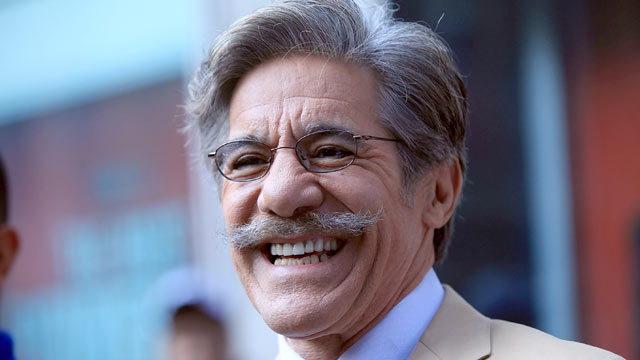
  • Geraldo Rivera Causes Meltdown On Social Media Over Yale Step-down

    Who wants a mustache ride?
    Geraldo Rivera

    In a move against political correctness run amok, Geraldo Rivera, who made his name unlocking the secrets of the Al Capone vault and giving away US troop positions in Iraq has decided to step down as an Associate Fellow at Yale University’s (soon to be renamed) Calhoun College.

    As anticipated by anybody with a pulse, his twitter feed went completely insane with people calling him everything under the sun.


    I wonder how many of those accusing him of everything from slavery apologia to outright hatred of blacks realizes that Yale will remain named after an actual slave trader even after the name of the slave-owning seventh Vice President of the United States is removed from campus buildings.