Category: First Amendment

  • The Reaction to Trump’s Press Conference is about Class and White Guilt

    by John Kluge


    The only way to describe the media’s reaction to Trump’s press conference and statements about the events in Charlottesville yesterday is irrational. To understand how irrational the reaction was, just imagine if instead of involving white nationalists and antifa counter protestors the events of last weekend had been a conflict between two rival biker gangs.

    Do not change a single event from this weekend but imagine the events being the result of violence at a biker rally. One biker club has its national rally and a rival biker club shows up to protest and disrupt it. During the course of the weekend, a lot of shouting and violence take place. Fights break out on Friday. For reasons yet to be known the local police do nothing to separate the rival gangs and violence and conflict spills over into Saturday. Finally, on Saturday afternoon a member of the first gang runs a car into a crowd of its rival gang injuring nineteen and killing one.

    Now ask yourself, would anyone in their right mind claim that only the first biker gang was to blame and everyone is obligated to condemn it? Of course, no one would. There would be national outrage about the problem of biker gangs. The local police would be called to the carpet for not maintaining order. Law enforcement would crack down hard on both gangs and biker rallies in general.

    The only reason the media and the nation at large are not having the same reaction it would if Charlottesville involved a fight between biker gangs is because it involved white nationalists. And the media and political class are incapable of having a rational conversation about anything involving white nationalism or white supremacy. The reason for this is that to do so would be to call into question the entire concept of white guilt.

    White guilt, like all racial collectivist beliefs, is completely irrational. White guilt is doubly irrational because it embraces the very sort of racial collectivism it claims to reject. It is irrational to say that one person is responsible for the actions of another person just because they share the same color of skin. It is irrational to say that anyone living today is in any way accountable or responsible or has any reason to feel guilty about events that occurred before they were born. The entire concept of collective guilt, be it based on race, class, sex or anything else is utterly irrational. It represents the worst sort of tribalism that civilization and rationality seek to end.

    White guilt, like all irrational belief systems, is completely antithetical to any form of rational discourse about any of the areas it concerns. Once a believer in an irrational ideology is forced to have a rational discussion about one area of the ideology the entire ideology comes into question. This is why the integration of professional sports did so much towards ending the idea of white racial supremacy. When blacks and whites were not allowed to compete on the same field, whites could hold the irrational belief that whites were inherently superior athletes to blacks. Once Jackie Robinson became a star in the major leagues and Jim Brown became the best football player in the world, whites could no longer hold that belief. They were forced to have a rational conversation based on facts about the relative athletic ability of the two races. And once they did that, they could no longer refuse to question or discuss rationally their views on racial superiority in every other area of life. The entire ideology fell like a house of cards. Within a few decades, white supremacy went from a societal given to a fringe belief.

    One of the primary tenants of white guilt is that white nationalism is a unique evil. White guilt necessitates that white nationalism not just be wrong but a unique wrong in the world, worse than communism or any of the sins of other races. If white nationalism isn’t worse than other isms, then whites have no more or less to answer for than any other race or creed and the whole edifice of white guilt collapses. This is of course irrational. White nationalism and belief in white supremacy is evil but no more or less evil than any other form of nationalism or religious or racial supremacy. So no believer in white guilt can have a rational discussion about white nationalism without calling the entire concept of white guilt into question.

    When Donald Trump spoke yesterday, he attempted to force the nation to have an honest and rational conversation about white nationalism and its involvement in the events last weekend. He said two undeniably truthful and rational things about the events this weekend. First, he said that not everyone at the march in Charlottesville was a white nationalist. This is true. The march was a protest against tearing down of the Robert E. Lee statue. It was organized by white nationalists but 200 or so people attended. It is perfectly rational and truthful to say that not all of them were white nationalists. Some of them, albeit a small minority, no doubt were there because they wanted to save the statue.

    Second, he said that the counter protesters deserve a significant share of the blame for the resulting violence and death. This is also true. The counter protesters were active willing participants in the violence that occurred. The proof of that is in the photos and accounts of the weekend given in the Virginia ACLU Twitter feed. And as I explained above, had the events in Charlottesville involved any other group but white nationalists everyone involved would be assessed their share of the blame.

    To say those things and to try and have a rational and truthful conversation about last weekend is to admit that it is possible for white nationalists, no matter how bad they are, to have been if the victims of a wrong or at least not be entirely responsible for the events of last weekend. And to do that is to necessarily admit the reality that white nationalists are not uniquely evil or worse than other violent or supremacist groups. Donald Trump’s statements were a direct challenge to the entire concept of collective white guilt.

    One of the interesting things about Charlottesville that no one seems to have noticed is that an event that was supposed to be about white nationalism and white supremacy was not a race riot. I have not, in any of the pictures and video I have seen of the weekend, seen a single black person. Charlottesville was a conflict almost entirely or maybe entirely between white people. There is a good reason for this. The debate and conflict over white guilt is almost always a conflict between upper class and middle and lower class whites. Black people are nearly always bystanders or props in that conflict.

    To understand why you have to understand how white guilt works. You would think the belief in collective white guilt would be an expression of self-loathing, but it is not. When a white person believes in white guilt they are engaging in one of the purest forms of virtue signaling. Since the belief is irrational and has nothing to do with their actions, they are not accepting any real moral responsibility. What they are doing is asserting their moral superiority over other white people who refuse to accept the belief. When a black person asserts collective white guilt, they are doing it to attack white people. When a white person does it, the white person is saying they understand their burden and the horrible sins of their race. In doing that, the white person is showing their moral superiority over other white people who refuse to accept their guilt and responsibility.

    Embracing some level of white guilt is one of the primary ways upper class and gentry whites assert their moral superiority over middle and lower class whites. Middle and lower class whites don’t believe in white guilt. As a result, they often have more rational views about race. Middle and lower class whites can say and think rational things about race that upper-class whites cannot do without losing their class status. Lower and middle-class whites can believe that black people are sometimes just as racist as whites. They can believe that black supremacist groups can be just as bad as the KKK. They can believe that the Civil War was a complex event that wasn’t just about slavery and white supremacy, or that just because South Carolina or Mississippi were slave states and have a bad racial history doesn’t mean there are no good parts of those places or that people from there can’t be proud of being from them.

    Upper-class whites cannot believe any of that. No upper-class white would ever wave a Confederate flag. No upper-class white would ever say that the Black Panthers are as bad as the KKK. If they are conservative, they might say the KKK is insignificant but they would never say that a black group is qualitatively just as bad. To do any of that would necessarily call into question the idea of white guilt and mean being kicked out of the class.

    So when Trump yesterday tried to force a rational conversation about white nationalism, Washington, that most white and upper class of cities, lost its mind. It was all hands on deck, left and right, to save and assert the white guilt moral privilege. The responses to Trump were predictably irrational and counter factual. For the crime of saying not every incident is entirely one sided, Trump was accused of being a white supremacist; the President everyone feared he would be. Some of the reaction was so counterfactual it can fairly be called insane. Mitt Romney and John McCain described the counter protesters as fighters for justice and equality against the forces of prejudice and racism. People who showed up waving Communist flags and carrying pepper spray and bags of feces and urine are now fighters against evil and prejudice. Really? The entire response boiled down to a giant guttural groan of “How Dare You!!” by the white upper class. Trump had attacked their most sacred moral privilege and they were not going to take it lying down.

    What will be the fall out of all this? Like most things involving Trump, a lot less than people think. First, I don’t think it is going to make a bit of difference politically. The people who voted for Trump are almost to the person people who reject the concept of white guilt. So, they won’t see it the way the media and Washington has. They will see it as Trump saying entirely fair and rational things. I don’t see Trump’s support dropping one bit. Trump’s enemies will just have a new reason to feel aggrieved.

    Second, I don’t think we are going to see much white nationalist antifa violence going forward. Trump tried to force a conversation the left doesn’t want to have. For the left white guilt is not just about class it is also how it enforces identity politics. The left needs white guilt. Trump also tried to force the left to talk about its role in this violence. And that is also not a conversation anyone on the left wants to have. The left has condoned and enabled antifa violence for years and gotten away with it. They do not want to have to answer for that.

    So I think the police departments in Democratic cities are going to start doing their jobs. Instead of standing down at these marches and counter protests, the police will start keeping the two sides apart, arresting people who show up with weapons and bags of urine and cracking down hard on any fights that break out and maintaining order. Deprived of the ability to riot with impunity, antifa will find better things to do. They don’t want to go to jail any more than anyone else and protests get pretty boring if you no longer have free reign to attack people. Deprived of any violence to use to slander the right, the media will lose interest as well. These marches are going over the next few months return to being the small events of paper hanging losers they have always been. So, I wouldn’t stock up on ammunition for the coming civil war just yet.

    Lastly, I think that the drive to tear down Confederate monuments will likely fizzle as well. They will tear a few more down in Democratic cities but the issue will fade away as well. Trump did another thing yesterday and laid down the mark that if this stuff didn’t stop they would be calling for tearing down George Washington statues. Of course, all right thinking people are today dismissing this. They, however, know that it is true. There are already calls to tear down the statues of Theodore Roosevelt in museums in New York City. You can tear down Confederate statues and largely avoid a rational conversation. Most people really don’t know who the people were and you can always use the “but it’s racist” charge to keep the average observer from objecting. George Washington or Teddy Roosevelt are different. People do know who they are and can’t be scared off by the racist charge. And the left doesn’t want a rational conversation about that any more than they want a rational conversation about last weekend.

    The statue controversy like all leftist causes is entirely manufactured. We had a hundred year struggle for black civil rights in this country. During that time not a single person to my knowledge, not Martin Luther King, not W.E.B Dubois, not Booker T. Washington, not Malcolm X, ever cared or said a single word about those monuments. Yet, suddenly in 2017, they are a threat to all that is right and good. Give me a break. Once the left decides tearing them down is no longer to their advantage, and they will if they haven’t already, no more will be heard about the subject.

  • Why Dreamhost is our host

    Even Google knows thisIn alarming, but not surprising, news, the Department of Justice is demanding over 1.3 million IP addresses and associated contact information for visitors to a website hosted by Dreamhost, a Los Angeles-based web hosting company. Our web host.

    The only surprising aspect of the case is that it is not Glibertarians.com that is targeted. The website in question is disruptj20.org, “a website that organized participants of political protests against the current United States administration,” according to Dreamhost. Not only is the contact and personal information of the site visitors wanted, the DOJ is also pushing for access to photographs of protesters that are on the site’s server, and what content the website visitors viewed.

    If you don’t want something coming back to bite you in the ass, don’t put it online in any form. Almost everyone gets this. (Well, maybe not the assorted criminals who are easily apprehended after posting videos of their criminal exploits publicly on Facebook.) This has been a concern for far longer than the current administration has been around, as I am quite sure the Glibertariat is well aware. Hell, the Foreign Intelligence Surveillance Court was established in 1978, and it has been perverted and allowed to be used for nefarious purposes willy-nilly ever since, completely gutting Fourth Amendment protections.

    However, web browsing is something that most people do automatically, without thinking too much about the ramifications. Of course, many people routinely block their browsing history from spouses, children, bosses and other people in their daily lives. (Visitors to the Certified Family Friendly website Glibertarians.com should certainly be doing so.) It’s far more difficult to block one’s browsing history from one’s internet service provider, and from the web host of sites one visits.

    But back to Dreamhost. Dreamhost has a long history of attempting to protect its users by challenging law enforcement requests for information and legally rejecting them. In 2014, for example, DH was able to legally block 57% of the information requests it received.

    I’ve been a Dreamhost customer for a decade, give or take. I use DH for all websites I build and domains I register, no matter who owns the site. One of the first things that sold me on DH was the ability to have one’s domain registrant and contacts protected by DH during a whois search, at a time when most other web hosts and domain registrars simply wouldn’t bother. I was happy to avoid random obnoxious marketers targeting website owners, and the occasional too-ardent admirer.

    Since then, I’ve repeatedly seen that Dreamhost makes sincere and real efforts to protect more than my mailing address.

    My concern over the gutting of the Bill of Rights by the government has increased steadily since 9/11. That dismantling shows no sign of slowing down. It gives me some tiny measure of comfort that Dreamhost shares that concern.

    And THAT is why Dreamhost is our host.


    If so led, show DH a little appreciation by commenting on their post (link below) or giving a quick shoutout on Twitter or Facebook.


    Read more about it:

    Dreamhost’s blog post

    DOJ Search Warrant

    DOJ Motion to Compel

    Dreamhost’s Opposition Motion

    Popehat’s take

  • The (Small-l) Libertarian Case For a Non-Libertarian President

    What is libertarianism’s best strategy to gain a legitimate amount of power nationally (and then happily cede it to the people)?  Libertarians of the small-l and big-L varieties have sought to gain power by either co-opting one of the major political parties (See; Ron Paul Revolution that the GOP squashed) or by finding candidates to run as a Libertarian that appeal to establishment voters (see: Aleppo).  But I believe there is a third, and overlooked, option: get a candidate who does some libertarian things that irritate the major parties and the deep state apparatus, and allow those actions to result in political hysterics from ultra-partisans while average Americans see no net loss from the actions and in many cases a serious net gain.  I believe this will continue to set in motion a series of events where the government can be shrunk to a level that’s at least tolerable to minarchists and other run-of-the-mill libertarians.

    How libertarian is President Donald Trump?

    The answer is: not very. I think that’s been established.  The man swam in a pool of cronyism sharks his entire professional life. He, through desire or necessity, has been a rent-seeker. He has used eminent domain to further his projects. He has sought special treatment from political entities both domestic and foreign to further his interests.  The man is no altruist. But does that make him distasteful, or does it make the system in which he operated distasteful?  Personally, I will rarely fault someone for utilizing the same processes his competition would use, so long as it does not originate from a position of government authority.  And Trump never held office before his inauguration.  In other words, he never utilized political office for financial gain by, say, orchestrating government access to foreign actors that overwhelmingly donated to your personal foundation or for trade groups and banks that hired your unqualified husband to give speeches at ridiculously over-inflated fees.  In other words, I don’t hate the player, I hate the game.

    And yes,  Trump is allowing Jeff Sessions to wage the drug war, which is a sticking point to a lot of libertarian minds. But I ask you, is it better to wage a drug war and uphold the concepts of equal protection and the rule of law (while allowing Congress to do their job and vote to legalize drugs the right way)? Or is it better to arbitrarily enforce duly enacted laws based on the geography of a person and/or their willingness to bend a knee to the state and support legalization with a ton of unlibertarian strings attached?

    The sadder these people are, the happier I get.

    Some policy positives already achieved and in the works:

    So now we come to Donald Trump’s libertarianism or lack thereof.  The man, no doubt, will continue some of our military adventurism overseas.  But he has already stopped our policy of running guns to terrorists and terrorist-sympathizers in Libya and Syria after the previous admin established those programs and destabilized an entire region, while thoroughly destroying the likelihood that a rogue regime would abandon its weapons programs and try to re-enter the international community (read: we came, we saw, he died). There has been no resurrection of the programs nthe last two administrations ran to ship guns into Mexico through the drug cartels, for different motives yet still in gross violation of Mexican sovereignty.  And perhaps he will continue to not carry out targeted assassinations of American citizens that have never been charged with a crime, which the prior admin was all too happy to do in gross violation of the Fourth Amendment.  Furthermore, he has already started to roll back our country’s association with liberty-robbing agreements like the Paris Climate Accord and the Trans-Pacific Partnership. Both of those agreements undercut the ability for American companies and consumers to freely negotiate what they were willing to exchange goods and services for. Removing our name from them is a step in the right direction, especially if it’s followed up with free trade agreements that haven’t existed in a century or more. That action is yet to be seen, but at least someone had the audacity to upset the globalist apple cart and stop a little bit of the insanity those agreements put us further along the path to.

    Get us out of this circus, please!

    As for civil liberties, Trump is still an unknown quantity.  His statement about “roughing up” suspects is problematic to say the least. And I can only hope it was hollow bluster. But even so, it sets a very poor example and he should correct it immediately.  Now, having said that, he has not furthered Obama’s policy of killing Americans without due process, but that’s not going to be enough.  His willingness to stop going after businesses that exercise what should be a fundamental right to free association looks good so far. As do his overtures to Second Amendment causes. As does his willingness to tackle Affirmative Action and Title IX insanity.  Holy crap, I just realized he’s been the best president on civil liberties we’ve had in recent memory. People that overlook the substance of these actions due to his boorishness need to reassess what their priorities are, in my opinion.

    Furthermore, our business climate has benefited greatly from having an outsider installed as the head of the regulatory apparatus.  Trump has already vowed, and started to carry out, a dismantling of the bureaucracies that stifle economic growth and freedom for Americans.  From the onerous EPA regulations to CAFE standards being rolled back or passed to the states, there has been a serious uptick in confidence from the business and manufacturing sectors that Trump will get the government out of the way of prosperity.  The hilarious irony there is that Trump was a crony his entire life, as I mentioned earlier.  But perhaps he had no choice but to play the game the only way that could lead to success: do what the government tells you and push others out.  Now, when given the reins, he seems to be more than willing to eliminate programs that he personally benefited from but that create barriers to entry for others.  Yes, he could have opposed the system while benefiting from it. But let’s not pretend he’s some awful hypocrite because he played the hand he was dealt. Business “leaders” like Elon Musk, Mark Bezos, Mark Zuckerberg, Bill Gates, etc, etc, etc have done the same thing and so did their forefathers like Ford, Carnegie, Mellon, and others on back through the ages as long as there was a government agent with a hand in their pocket.  So I’m willing to forgive that.

    Be happy for this.

    And lastly, he put what appears to be a strict constructionist on the Supreme Court in Neil Gorsuch.  That is a marked improvement on any names mentioned by establishment candidates on either side of the aisle during the last campaign.

    The other intangible positive results of a Trump presidency:

    Another thing libertarians have always sought is a diminished reverence for elected officials and other “public servants” whose goals are often at odds with those of the people.  Trump’s mere presence has caused probably 2/3 of the political spectrum to demand the reverence for the office be scaled back.  They are now calling for more power in the hands of the states or localities and even ::gasp:: the people, on occasion.  These are people that have been statists to the core. They are the Big Government democrats and NeoCon statist Republicans.  And they are finally unified in an effort to diminish the role of the Executive Branch.  This serves to re-establish the separation of powers that has become all-too-muddy with much of the congressional responsibilities being passed to Executive Branch agencies in an attempt to deflect responsibility and ensure easy reelection for entrenched politicians.  The more responsibility that is pushed back into the laps of our directly elected officials and down to the state or local level, the better for us.  It helps us create a more diverse political environment where “laboratories of democracy” are able to compete for ideas and human investment, rather than an all-powerful centralized state controlling everything. And one need look no further than minimum wage laws (since we have them, I’ll address it) to realize a top-down approach where the minimum wage “needed” in New York is imposed on small towns in New Mexico or Wyoming, where the cost of living doesn’t even come close, is a horrific idea.  The Trump era is returning us to an ideal the founders embraced in that respect.

    And he is returning us to another ideal the founders cherished: temporary service from business-people and non-careerist politicians.  The flood of people on Trump’s coattails from all sides of the political spectrum is refreshing. Sure, many are moneyed and or celebrity candidacies. But so what?  Its a step in the right direction any time we start to end political dynasties and careerists that sit in the Senate for 30 years as they grow further and further out of touch from average Americans.  More turnover from political novices has a much better potential upside of shrinking our government than does further entrenching those who have pushed us to near financial ruin and reduced individual liberty.

    Pucker up!

    The net result so far (in my opinion):

    So let us all embrace the non-libertarian president. For one of these reasons or for another I might have missed. But embrace it nonetheless, because it has already borne libertarian fruit, and I suspect it will continue to do so for many of the right and some of the wrong reasons. Its the best we could have hoped for and probably the most libertarian moment in America for a hundred years.

  • The Nation Misses The Point on Counterterrorism

    It was brought up in the morning links (h/t: AmSoc), but deserves expanding upon.

    Grande and Mattis

    The Nation is more concerned with making President Trump and his administration look foolish than they are about taking terrorism or counterterrorism seriously. And I have no doubt that Ariana Grande means well, but she’s dead wrong.  Inclusiveness is no strategy to fight terrorism. It is a strategy to offer people an opportunity to assimilate to an enlightened western culture.  Some people will take that opportunity, as evidenced by the millions of Muslims that live peacefully among people of other religions as well as agnostics and atheists throughout the western world.  But some won’t. And you can be as inclusive as you want to be, but that won’t take away their desire to impose their beliefs upon everyone else, often resorting to terrorism when people aren’t receptive.

    Juan Cole writes:

    Secretary of Defense Jim “Mad Dog” Mattis said in an interview on Sunday that US strategy toward ISIL has moved from attrition to annihilation. Since 2014, he said, the United States has been making it difficult for them to stay in one place, disrupting them and chasing them out of their strongholds (through airstrikes). Now, he said, the new strategy is to surround them and kill them all, to prevent the foreign fighters from returning home to foment more terrorism. He also urged a battle of humiliation against them in cyberspace, depriving them of any mantle of legitimacy. He was unapologetic about the recent Pentagon finding that a US air raid set off explosives in a Mosul apartment building, killing over 100 civilians, and seemed to pledge more reckless airstrikes.

    Certainly there is a case to be made for non-interventionism.  But that’s not the case Ariana Grande is calling for. (If she were, I’d be happy to cheer her on.) She calls for inclusion.  Now tell me, what possible good can come from being “inclusive” toward a regime built on terror? Can we “include” into western culture their belief that women caught without an escort should be stoned to death? Can we “include” into western culture their belief that gay men and women should be tossed to their death from the highest point in town? Can we “include” into western culture the taking of sex slaves when they conquer a city?  And lastly, can we “include” into western culture the celebration of slaughtering innocent people in our cities because we resist the importation of their insane lifestyle? That’s not inclusion. That’s tolerance and acceptance of barbarism.  We, as a society, are better than that.  And while I believe we should remain non-interventionist when it comes to global meddling, once they import that activity to out nations, we should destroy those who would perpetrate those violences with every tool that is constitutionally available to us.

    The strategy of annihilation is sort of like fighting forest fires with gasoline hoses.

    Actually, its not.  An enemy can be annihilated. It can be rooted out and extracted like a cancer. Sure it may pop back up again at a future date, but that doesn’t mean its not worth fighting to eradicate. And its a damn sight better to have tried and failed that to succumb to evil in any form. And I have to say, the strain of any religion that accepts massacring innocent people at a concert for the spread of it, or the killing of any gay person for the spread of it, or the taking of sex slaves and stoning of women not adequately subservient for the spread of it, deserves to be wiped from the face of the earth with all haste possible.

    I will give him partial credit, though. He wrote this:

    George W. Bush’s war on Iraq, in other words, created the exact conditions in that country that were guaranteed to foster terrorism. Washington has never come to terms with its own responsibility for destabilizing the region.

    However, he completely omits the expanded war on terror Obama waged, expanding it to nations Bush never bombed. He fomented rebellion in Libya and Syria, directly leading to the soldiers, and in all likelihood the arms, necessary for ISIS to gain a foothold. He also forgets the overwhelming bipartisan support Bush and Obama both received to wage their wars in parts of the world that posed no threat to us.  I’m sure it was an oversight and not a deliberate attempt to score cheap political points. But it deserves to be mentioned.

    This is real.

    Look, there is no surefire way to prevent terrorism. But once it reaches our shores, the individuals carrying it out deserve to be treated harshly, so long as it is within constitutional limits. And people that are guests here who return to the battlefields of the middle east should be forbidden re-entry. We are under no obligation to “include” their idiocy any longer. Neither does Britain, Germany, Sweden or any other nation that chooses to eject those whose sole purpose is conquest through barbarism.

    If this runs counter to open borders libertarianism, I’ll happily accept the scorn of those friends of mine on this one issue. But open borders can exist at the same time a strong counter-terrorism operation can be waged within the confines of our Constitution. And its time we allowed the warriors to stand up and properly defend us from those who are using “inclusive” appeasement as a means to infect our society with their oppressive, pre-enlightenment form of barbarism.

    **The views in this are mine alone and do not represent the views of other Glibs staff.

  • The man who fought a blacklist and killed the First Amendment (it got better)

    Things were different in many ways a century ago, but in one respect it was like all places at all times: there were insurance agents.


    Monument to the insurance agent 009.jpg
    Monument to insurance agent, Donetsk, Ukraine

    Robert T. Cheek of St. Louis, Missouri, was one of those insurance agents, selling policies in his hometown for the Prudential Insurance Company. In the 1910s, after many years of what he obviously considered faithful service, he left his job and began looking for work with another insurer. He asked his former employer, Prudential, for a letter describing his work and the reasons he left.

    Prudential refused to provide such a letter. Without such a “service letter” from his prior employer, Cheek had trouble getting another job in the insurance field. Insurance, as he claimed, was pretty much what Cheek knew, and he didn’t want to go into another line of work where he didn’t have so much experience. He thought he was being blacklisted.

    So he sued Prudential in a state court in St. Louis. In that part of the case which is relevant for our purposes, Cheek said that Prudential had violated Missouri’s “service letter” statute. Missouri law required that an employee who had worked 90 days or longer for an employer could demand that his ex-boss provide a letter saying that he used to work for that boss, and explaining why he doesn’t work for that boss any longer.

    States like Missouri which passed these “service letter” laws were concerned about employer blacklists. If an employee had crossed his ex-boss, the boss might just decide not to help that employee get new work. But if the boss was forced to give a service letter, the employee could obtain information about his work history, without which new employers might not want to take a chance on him. And if the ex-boss gave the former employer a bad reference, the employee could sue for defamation.

    The trial court in Missouri threw out Cheek’s suit. Sure, Prudential hadn’t given Cheek a “service letter,” but it didn’t have to do so. Anyone, even an insurance company, has the right to free speech, which includes the “right of silence” – that is, the right not to talk.

    I tried to find a SFW image of someone with a gag in their mouth, but no such luck

    Precedents from other states, like Georgia, indicated that service-letter statues violated the freedom not to speak, and therefore violated the freedom of speech as constitutionally guaranteed by state constitutions. Of course, a company didn’t have the right to lie about former employees – that would be defamation. But if an employer didn’t want to talk about an ex-employee, it shouldn’t be forced to talk.

    Cheek took the case to the Supreme Court of Missouri, which in 1916 gave Cheek a victory and upheld the “service letter” law. Those other courts which had talked about a constitutional right to silence were simply out of harmony with the up-to-date enlightened principles of 1916. After all, all that the service letter law demanded was that a company give truthful information about former employees who had worked for them for three months or more. Disclosing accurate information – how could mandating that violate any company’s rights? The court spoke of the legislative struggle against blacklisting, and how the service letter law was a modest tool to help victims of that iniquitous practice.

    Now it was Prudential’s turn to appeal, all the way to the United States Supreme Court. To defend his position, and the Missouri service letter law, Cheek had Frederick H. Bacon as his attorney.

    In U. S. Supreme Court, Bacon saves you!
    At some point, I’m bound to get tired of telling food puns, right? Right?

    Bacon, a Michigan native who practiced law in Missouri, had written a textbook on insurance law. Perhaps Cheek hired Bacon because of the attorney’s knowledge of the insurance industry, although this was not a specifically insurance-oriented case, but a broader labor-law case. And, as it turned out, a First Amendment case.

    In those days, pretty much anyone with enough money could take their case to the United States Supreme Court. So many people exercised this right that there was a bit of a backlog, which may be why it took until 1922 for the U. S. Supremes to give their opinion in Prudential Insurance Company v. Cheek.

    Most of the opinion dealt with the issue of economic freedom – in those days the Supremes still recognized the right of businesses to operate free from arbitrary government restrictions. But Missouri’s service-letter law was not arbitrary, said the majority opinion. Companies just had to provide accurate information about former employees. It wasn’t like Missouri was trying to cartelize the ice business or anything oppressive like that.

    But the Supremes still had to deal with Prudential’s argument based on free speech, and the corollary right not to speak. Remarkably, the Supremes had not yet decided, one way or another, whether the First Amendment’s rights of free expression even applied to the states.

    In 1907, the Supreme Court assumed, for the purpose of argument, that the 14th Amendment required the states to respect freedom of the press. But Thomas Patterson, said the Court, had abused his freedom of the press by criticizing the decisions of the Colorado Supreme Court in his newspaper, for which the state supreme court could legitimately convict him of contempt. Patterson, owner of the Rocky Mountain News and an influential Democrat, had run editorials and cartoons accusing the Colorado Supremes of acting in subservience to corporate interests when it awarded elections to Republicans and abolished home rule for the state’s cities.

    Nowadays, people in Colorado are much more mellow

    In a case arising out of the First World War, the Supreme Court assumed, for the purpose of argument, that the 14th Amendment required the states to respect freedom of speech. But Joseph Gilbert, said the court, had abused his freedom of speech, and could legitimately be punished by the state of Minnesota for making the following wartime remarks:

    We are going over to Europe to make the world safe for democracy, but I tell you we had better make America safe for democracy first. You say, what is the matter with our democracy? I tell you what is the matter with it: Have you had anything to say as to who should be President? Have you had anything to say as to who should be Governor of this state? Have you had anything to say as to whether we would go into this war? You know you have not. If this is such a good democracy, for Heaven’s sake why should we not vote on conscription of men? We were stampeded into this war by newspaper rot to pull England’s chestnuts out of the fire for her. I tell you if they conscripted wealth like they have conscripted men, this war would not last over forty‑eight hours…

    Minnesota don’t want none of your free speech unless you bash Huns, hon

    (If you’re interested, here is a highly sympathetic biography of Mr. Gilbert.)

    In both of those cases the Court had assumed, without deciding, that the states had to respect freedom of expression. The issue hadn’t affected the outcomes of those cases because the Justices didn’t think freedom of expression applied to the insidious activities of Patterson and Gilbert.

    Now, suddenly, the Justices decided it was time to make an official ruling: Do the states have to obey the First Amendment? In other words, do the basic rights protected by the Fourteenth Amendment against the states include free expression (subject to common-sense regulations such as suppression of wartime dissent)?

    Here’s how the Supremes answered that question in Cheek’s case:

    the Constitution of the United States imposes upon the states no obligation to confer upon those within their jurisdiction either the right of free speech or the right of silence….

    Cheek won, and Prudential and the First Amendment lost.

    Apparently, Cheek was able to get back into the insurance business. When he died in 1926, his death certificate said that at the time of his decease he had been an insurance agent for the “Missouri State Life Co.”

    The year before Cheek’s death, the Supremes were back to their old tricks, refusing to say whether states have to respect the First Amendment’s rights of free expression. This was  in a case involving a Communist firebrand, Benjamin Gitlow, who had written a manifesto advocating revolution. In a key paragraph, the Court said:

    For present purposes we may and do assume that freedom of speech and of the press-which are protected by the First Amendment from abridgment by Congress-are among the fundamental personal rights and ‘liberties’ protected by the due process clause of the Fourteenth Amendment from impairment by the States. We do not regard the incidental statement in Prudential Ins. Co. v. Cheek…that the Fourteenth Amendment imposes no restrictions on the States concerning freedom of speech, as determinative of this question.

    Then the Supremes went on to do what they had done in the cases of Patterson and Gilbert – they declared that Gitlow had abused his First Amendment freedoms and could rightly be punished for it, even if the First Amendment applied to the states.

    File:Gitlow-benjamin-1928.jpg
    Benjamin Gitlow running for Vice President as a Communist in 1928

    (Gitlow later left the Communist Party and published a memoir entitled I Confess: The Truth About American Communism.)

    So it was back to the old drawing board – the applicability of the First Amendment to the states was still officially unresolved.

    In two key cases in 1931 (here and here), the Supremes finally decided that the states did have to obey the free-expression guarantees of the First Amendment.

    The first of these decisions said that both the federal and state governments have to respect your right to wave a communist flag. The second decision said that the government (whether state or federal) can’t shut down a newspaper as a “public nuisance.”

    (Here is a book about the freedom-of-the-press case, Near v. Minnesota).

    Neither in their published opinions nor in their private papers through 1931 did the Justices engage in any detailed examination of the question of “incorporation” – whether the states had to obey the First Amendment and if so, why. The Supremes just veered from one side to another, almost as if they were flying by the seat of their pants and not acting on any coherent principle. It was only later, in subsequent cases, that the Justices began working out various rationales for applying the First Amendment to the states (TL;DR version – because free expression is a Good Thing and is Good for Democracy).

    A good guess would be that, when the Supremes were unenthusiastic about free expression, they weren’t that interested in imposing it on the states, but when (as in the 1931 cases) they got interested in free expression, they decided it was time to make the states as well as the feds respect that right.

    Many states still have service-letter laws to this day. Check your local listings.


    Works Consulted

    Floyd Abrams, The Soul of the First Amendment. New Haven: Yale University Press, 2017, pp. 60-62.

    “Anti-Blacklist Law Upheld,” Iron County Register (Ironton, Missouri), December 7, 1916, http://bit.ly/2rjmnTh

    Ruth A. Binger and Tracy R. Ring, “BEWARE – PROCEED CAUTIOUSLY – WHAT THE MISSOURI EMPLOYER SHOULD KNOW ABOUT THE SERVICE LETTER STATUTE AND DEFAMATION.” St. Louis: Danna McKitrick, P.C., Attorneys at Law, WWW.DANNAMCKITRICK.COM, 2003.

    Vickie Caison, “Bacon, Frederick H.” Friends of Silverbrook Cemetery, last updated November 22, 2010, http://www.friendsofsilverbrook.org/site4/obituaries/95-bacon-frederick-h

    Russell Cawyer, “Texas Has No Enforceable Service Letter Statute,” Texas Employment Law Update, December 2, 2011, http://www.texasemploymentlawupdate.com/2011/12/articles/human-resources/texas-has-no-enforceable-service-letter-statute/

    “Robert T. Cheek,” St. Louis, Missouri City Directories for 1910, 1913 and 1916, Ancestry.com. U.S. City Directories, 1822-1995 [database on-line]. Provo, UT, USA: Ancestry.com Operations, Inc., 2011.

    Richard C. Cortner, The Supreme Court and the Second Bill of Rights: The Fourteenth Amendment and the Nationalization of Civil Liberties. Madison, WI: University of Wisconsin Press, 1981.

    “Frederick H. Bacon,” Find a Grave, https://www.findagrave.com/cgi-bin/fg.cgi?page=gr&GSln=bacon&GSfn=frederick&GSmn=h&GSbyrel=all&GSdyrel=all&GSob=n&GRid=60501380&df=all&

    Klaus H. Heberle, “From Gitlow to Near: Judicial ‘Amendment’ by Absent-Minded Incrementalism,” The Journal of Politics, Vol. 34, No. 2 (May, 1972), pp. 458-483

    “Labor and Employment Laws in the State of Missouri,” Fisher and Phillips LLP, Attorneys at Law, www.laborlawyers.com.

    “Master and Servant: Blacklisting Statute: Failure to Give Service Letter,” Michigan Law Review, Vol. 8, No. 8 (Jun., 1910), pp. 684-685

    Ruth Mayhew, “States that Require an Employment Termination Letter,” http://work.chron.com/states-require-employment-termination-letter-24010.html

    Missouri State Board of Health, Bureau of Vital Statistics, Death Certificate for Robert T. Cheek, St. Louis, Missouri, c. March 1926 [courtesy of Ancestry.com]

    “Online Books by Frederick H. Bacon,” Online Books Page, University of Pennsylvania, http://bit.ly/2r9YTDm

    Robert Gildersleeve Patterson, Wage-Payment Legislation in the United States. Washington: Government Printing Office, 1918, p. 75

    James Z. Schwartz, “Thomas M. Patterson: Criticism of the Courts,” in Melvin I. Urofsky (ed.), 100 Americans Making Constitutional History: A Biographical History. Washington, DC: CQ Press, 2004, pp. 154-56.

    Ralph K. Soebbing,”The Missouri Service Letter Statute,” Missouri Law Review, Volume 31, Issue 4 Fall 1966 Article 2 Fall 1966, pp. 505-515.

  • Wednesday Afternoon Links

    Good Odin’s day, fair commenters. I bring you the freshest of links pulled from the sea and slapped down–still wriggling–on your monitors.

    American flights might not cost an arm and a leg, but they’d be more comfortable with fewer appendages

    As if American flights weren’t bad enough already.

    Taiwan moved up six spots on the World Press Freedom Index to #45! Oh, wait. It’s just because everyone else got worse this year, not because they actually improved. For reference the US is #43 (full list here). North Korea is unsurprisingly dead last.

    If he pulls this off I’ll eat my hat.

    Nissan outfitting its cars with tinfoil hats. Protect your phones from prying spooks, buy Nissan. TW: Autoplay video because CNN.

  • Mormons and the Bill of Rights, Part Two – The dirty books episode

    I intend to take the Smoot-Hawley Tariff, which has been mocked again and again as the very epitome of boringness, and I will make the subject…anyone?…I will make the subject interesting.

    To start with, I won’t call it the Hawley-Smoot Tariff, because…anyone?…because my focus is on Smoot, not Hawley. So I’ll put Smoot’s name first.

    The Smoot in Smoot-Hawley was Reed Smoot, a Republican U. S. Senator from…anyone?…Utah. We first learned about Senator Smoot in Part One, in which Senator Smoot’s…anyone?…credentials were challenged because of the whole polygamy thing. After the Mormon church, of which Smoot was a leader, dropped the practice of polygamy, the U. S. Senate decided to…anyone?…decided to let Smoot keep his seat in the Senate, to which he was repeatedly re-elected, even after Senatorial elections were taken away from the state legislatures and given to the voters.

    Now, class, can anyone tell me what the Smoot-Hawley Tariff was all about? You can? And here I thought you weren’t paying attention. From your spittle-flecked responses, I can see that you can identify the Smoot-Hawley Tariff as a protectionist law passed by Congress in 1930, in the depths of the Depression, and that this law has generally been blamed for making the Depression worse. In the unlikely event there’s anyone here who doesn’t already know this stuff, here’s a Wikipedia article.


    File:John Lennon & Yoko Ono leave Amsterdam 3.jpg
    After Smoot got together with Hawley, things went downhill

    Ha ha, seriously, here’s Smoot and Hawley:

    File:Smoot and Hawley standing together, April 11, 1929.jpg
    Senator Smoot is…anyone?…the one with the glasses. And the pocket with pens in it. Why can’t you students be more like Smoot, and less like that Bueller fellow? Where is Bueller, anyway?

    The dynamic duo of Smoot and Hawley put forward their protectionist bill in 1929, and it passed in 1930. It is a key event in economic history, and Smoot, a hard worker with one of the best heads for figures in Congress, was proud of his work, even though it didn’t save him from a Democratic sweep shortly thereafter which put him out of the Senate.

    But the Smoot-Hawley Tariff has also gotten a good deal of attention in the history of literature. To explain, let’s go back a bit.

    Congress tightened up the obscenity laws in 1873, thanks to the lobbying efforts of this man, who was promptly made a postal inspector to help enforce the law. Can you identify him, class?


    No, I'm fairly sure his name isn't "jerkface" or any of those other, more colorful epithets you're using.

    Yes, it was Anthony Comstock (1844 – 1915).

    But this isn’t a history of postal censorship, so let’s move on from Comstock and look at the U. S. Customs.

    "Actually, this is a list of the groundhog's demands...he says his operatives are poised to burrow under elite golf courses across the nation."
    Groundhog Day? No, not that kind of U. S. customs.


    This kind:

    This was a year after Chester Arthur was fired as New York's Collector of Customs. The scandal was so great that Arthur ended up as President. He had to pull a sword out of a stone, or was that a different Arthur?
    U. S. Custom House, New York City, 1879.

    I chose the New York City customs house for my illustration because New York City was a key point of entry for foreign literature coming into the country – or trying to come in (Los Angeles and Chicago were also key ports of entry). Until 1873, Customs officials policed a federal ban on the importation of obscene pictures and photos, but not books. The Comstock Act of 1873, in addition to dealing with the Post Office, added books and pamphlets to the list of obscene material that was to be banned. Local customs inspectors – or sometimes their superiors in Washington – had to read potentially obscene books to decide whether to ban them.


    "...but inspecting these books and pamphlets is more boring than inspecting dirty pictures."
    “At least inspecting this is less boring than inspecting other types of goods.”

    The Comstock law passed despite some grumbling that “I do not know whether it can be left to employees of a custom house to determine with safety what kind of literature or what sort of matter is to be admitted.” This Congressman finally decided to support the bill once he concluded that the decision on whether a work was obscene would be left to the courts, not customs officials.

    In practice, judicial review was limited and rarely used, and the final decision on what could be imported was made by Customs officials.

    The Smoot-Hawley tariff, as introduced, would have kept the existing Customs ban on obscene books. It looked like a fairly noncontroversial item, continuing the law in force, until Republican Senator Bronson Cutting of New Mexico piped up. Cutting was an arty type of Republican, indignant when he learned that a friend of his hadn’t been able to import D. H. Lawrence’s novel about adultery, Lady Chatterley’s Lover. Lawrence was actually in favor of censoring pornography, he simply didn’t think he (Lawrence) was a pornographer. He was an artist, not the same thing. Cutting agreed.

    Senator Cutting [insert pun about “Cutting remarks”] proposed to take away Customs’ power to ban books on obscenity grounds. Such censorship, if it was to exist, should be exercised by the post office and by state and local governments, plus the church and the family. What qualifications did Customs people have in this area?

    The Senate, in Committee of the Whole, actually accepted Cutting’s amendment. This took Smoot by surprise, and it shocked him to his core.

    Smoot biograper Milton Merrill says that Smoot’s objection to dirty books was not due to some kind of repressed prurience or similar factor. Dirty books were dirty and gross, and it made no difference whether the author was some kind of artist or a good writer. There was also the fact that, as a Mormon whose moral qualifications to sit in the Senate had been attacked, Smoot was extra alert to any opportunity to rebut suspicions of dirty-mindedness.

    The humorless Smoot decided to demonstrate the dangers of allowing a flood of porn to enter the country and corrupt the people, especially the youth. From the Customs officials, Smoot got copies of some of the worst porn he could find to show his fellow-Senators, many of whom perhaps were pruriently interested in this legislative documentation.

    Smoot was genuinely outraged. The Senator known for his calm and detailed analyses of economic legislation spoke at the top of his voice, denouncing smutty writers like Lawrence as black-hearted villains.

    When the Senate, as a Committee of the Whole, reported the bill back to itself, Smoot had a chance to challenge the obscenity provision. He wanted to reinstate the ban on importing obscene books. To be fair, this ban dated back to 1873, and Smoot hadn’t anticipated that his beloved tariff measure would be the vehicle his colleagues chose to make what he deemed a pro-smut gesture. Couldn’t Congress just keep the obscene-books ban which had been in place for over half a century, and go back to the important business of protecting legitimate American industries from unfair foreign competition?

    So the poet Ogden Nash was being unjust when, in a much-cited poem, he sarcastically praised Smoot as if the Senator was inventing a new book-banning law:

    Senator Smoot ( Republican, Ut. )
    Is planning a ban on smut.
    Oh root-ti-toot for Smoot of Ut.
    And his reverent occiput.

    With his outbursts of indignation, Smoot helped turn the Senate back to supporting a customs ban on dirty books. But as an experienced legislator, Smoot knew that his colleagues seemed to believe that Customs was going too far and hurting the importation of genuine, non-obscene literature. To conciliate this skepticism about Customs’ literary capacities, Smoot decided to yield somewhat and allow some reform.

    For one thing, Smoot would accept an amendment by which the Treasury Secretary (as boss of the Customs Service) could allow “so-called” classics, even dirty ones, into the country on a non-commercial basis. Smoot also accepted a plan endorsed by, among others, future Supreme Court Justice Hugo Black – former Klansman and currently known as the saner of Alabama’s two Senators (this guy was the other). The Black plan would provide that the final decision on whether an imported book was obscene would be made by a federal court, in a jury trial. That ought to meet the objection that random bureaucrats were making literary decisions – the book would get a full due-process trial.

    File:Cigarette smuggling with a book.JPG
    “Hey, they mutilated a copy of the Marquis de Sade’s classic Justine just so they could smuggle cigarettes!”

    The Smoot-Hawley Tariff passed with the amendments somewhat softening the Customs ban on obscene books. The first true tests case involved Ulysses.

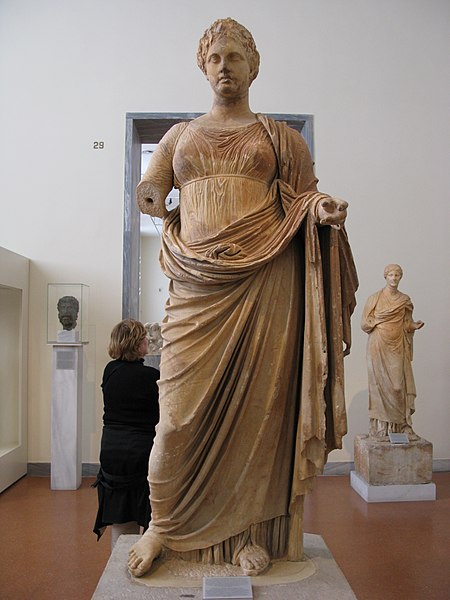
    Statua di ulisse di età antoniniana (II sec.), da un modello ellenistico del III sec. ac.jpg
    No wonder they wanted to ban Ulysses – he’s stark naked!

    Customs believed that James’ Joyce’s now-classic work was obscene, but after the Smoot-Hawley Tariff, the publisher, Random House, insisted on taking the case to trial. Waiving a jury, Random House had the issue decided by federal district Judge James Woolsey. Both Woolsey and the literature-friendly Second Circuit appeals court said the book was not obscene and could be freely imported (at least as far as the Customs laws were concerned). Woolsey’s opinion is probably more famous than the more authoritative Second Circuit opinion because Woolsey had a gift for words and Random House put his opinion at the beginning of Ulysses.

    The Ulysses case was historic because the influential Second Circuit, followed by other courts, rejected an old English case known as Regina v. Hicklin. In that case, an opinion by Chief Justice Cockburn said that a work could be condemned as obscene based only on isolated passages, based on the assumption that susceptible people might be harmed by these passages without regard to the surrounding material.

    (Hicklin wasn’t the alleged pornographer, he was a lower-court judge who had tried to legalize the alleged pornography;  the pamphlet in question was issued in the name of the Protestant Electoral Union.)

    The Ulysses decision said that in deciding whether a book is obscene it must be looked at as a whole. Just because there were, say, sex scenes in a book didn’t automatically make it illegal – the entire book had to be dirty, not just a few bits and pieces.

    Because the Ulysses case was so historic, and was decided under the supposedly literary-friendly provisions of the Smoot-Hawley Act, some people got the impression that winning court hearings for books Customs wanted to ban represented an advance for literature, making censorship tougher. In reality, importers rarely challenged Customs decisions in court, since legal challenges are quite expensive and it would simply be easier, if possible, to cut out the offensive bits designated by Customs.

    Customs liberalized its treatment of books (and movies), not because of Smoot-Hawley, but because of a gentleman named Huntington Cairns. A lawyer, litterateur, and later counsel for the National Gallery of Art, Cairns informally advised the Customs service on disputed works, generally erring in favor of letting the works into the country, at a time when the Post Office and many local censors were stricter against alleged porn.

    So Smoot’s “concession” wasn’t what protected literature against Customs overreach – maybe Smoot wasn’t as dumb as they thought.


    Works Consulted

    Paul S. Boyer, Purity in Print: The Vice-Society Movement and Book Censorship in America. New York: Charles Scribner’s Sons, 1968.

    Milton R. Merrill, Reed Smoot: Apostle in Politics. Logan, Utah: Utah State University Press, 1990.

    James C. N. Paul and Murray L. Schwartz, Federal Censorship: Obscenity in the Mail. New York: The Free Press of Glencoe, 1961.

  • Mormons and the Bill of Rights, Part One – Too Many Wives

    After the newly-founded religion of the Latter Day Saints, under the leadership of Brigham Young (successor to the martyred Joseph Smith), moved to Utah, it presented the federal government with some problems, as soon as the United States had acquired the area from Mexico. Young and other Mormon leaders announced a revelation from God – Mormon men were strongly encouraged (to put it mildly) to marry multiple wives. Joseph Smith had been doing this in private but starting around 1852 the revelation was out in the open.

    Mormon theologians and polemicists made clear that their “principle” – polygamy – was far superior to monogamy. The great patriarchs in the Old Testament had done it with God’s approval. Polygamous unions supposedly produced healthy children. Men with many wives were not tempted, like monogamists, to frequent prostitutes or engage in fornication or adultery, thus polygamy was an answer to these social ills.

    Opponents of Mormon polygamy – whom historian Stephen Prothero calls “conservatives” although the critics included prominent feminists – denounced polygamy as barbarous, oppressive to women, and a practice which had harmed civilization in other continents.

    At first the federal government’s solution to the Mormon question was to make Brigham Young the governor of Utah. After all, Utah was a federal territory, most of its settlers were Mormons, and they’d obey Young.

    There was another consideration. To be sure, polygamy was problematic, but should Congress be telling the people of the territories what domestic institutions they should have? Southerners and their Northern Democratic allies said no – thinking of course of slavery. But polygamy was a domestic institution, too, so if Congress started banning it, people might get ideas about banning territorial slavery, also.

    Indeed, the Republican platform in 1856 said Congress should ban polygamy and slavery in the territories, calling the two institutions “twin relics of barbarism.”

    Budweiser, Beck’s 2012.jpg
    Twin relics of barbarism

    Democrat James Buchanan defeated the Republican candidate, on a platform of keeping Congress from meddling in the question of territorial slavery. Buchanan did meddle with the Mormons just a little bit in Utah, to the extent of deciding that Utah wasn’t the Papal States, and the religious leader shouldn’t double as the head of the civil government. So Buchanan fired Young as civil governor and replaced him with a non-Mormon.

    Mormons referred to non-Mormons as “Gentiles,” and it wasn’t meant as a compliment. Rather than submit to the Gentile governor, the Mormons launched a guerrilla war, but the rebellion was put down with the help of U. S. general Albert Sydney Johnston.

    I looked up the proper spelling of his name at Find A Grave
    Monument to Albert Sydney Johnston in his U. S. Army uniform, sternly determined to crush all rebels against the United States…hey, wait a minute, that’s not a U. S. Army uniform!

    OK, so General Johnston and a bunch of other people waged a Civil War, and for our purposes the result was that most of the Southerners left Congress, leaving a Republican majority which passed laws against both slavery and polygamy, the twin relics, in the federal territories. The Morrill Act of 1862 prescribed punishments for polygamists, but was rarely enforced. President Lincoln, though he signed the law, suggested leaving the polygamists alone, telling a folksy tale about a farmer plowing around a stump which was too big for him to remove. Or maybe Lincoln told the story about the salesman and the farmers’ three daughters – who cares what joke he told, Mormon-majority juries didn’t convict people under the law even if the local officials cared enough to prosecute.

    Still, the Mormon leadership wanted a test case to show the polygamy was part of their religious freedom, protected by the First Amendment’s guarantee of the free exercise of religion. So they got a guy named Reynolds to get prosecuted and to appeal his conviction to the U. S. Supreme Court.

    The Supreme Court, in Reynolds’ case, decided that Congress could ban polygamy in federal territories. There was no First Amendment right to engage in such a practice – polygamy was a blot on civilization. The true meaning of the First Amendment was spelled out in President Thomas’ Jefferson’s 1802 letter to the Danbury Baptists – the First Amendment erected “a wall of separation between Church & State.” The phrase (which isn’t in the Constitution) is fairly controversial, but for the Mormons the bottom line was that polygamy was on the state’s side of the wall, not religion’s side.


    That was pretty awful, wasn't it?
    My name is Reynolds and here is my rap / They put me in prison but it is all crap / It’s wrong to put me in this dungeon / When it comes to wives I want more than one

    Now it was time to put some teeth in the anti-polygamy laws. It was the 1880s, and Congress wasn’t down with Mormons marrying multiple ladies. So Congress tightened the screws in 1882 and again in 1887. Prosecuting polygamists – both for their multiple marriages and for “unlawfully cohabiting” with their surplus wives – was made easier through keeping polygamists off the juries. Gentile juries began convicting Mormon patriarchs, and the federal pen started looking crowded.


    File:Polygamists in prison.jpg
    Polygamist Mormons in the federal penitentiary in Utah

    Plus Congress took the vote away from many polygamists, and seized the property of the Mormon church for its defiance of the polygamy law. Some polygamists went underground, trying to evade detection from the sex police. Others went to the recently-established Mormon colonies in Mexico. While I don’t think Mexican law allowed polygamy, there wasn’t the same level of legal repression as in the United States.

    That joke wasn't offensive, was it?
    Gaskell Romney with his children. Gaskell grew up in a Mormon colony in Mexico, son of a Mormon polygamist refugee from the United States (Miles Park Romney). Fourth from left is Gaskell’s son George. George would move to the United States and have an anchor baby named Mitt.

    The Mormon leaders thought enough was enough. It was time for Utah to be its own state, so that under the Constitution, it would no longer be subject to federal morals laws. The Mormon leadership began a campaign to persuade the public that the whole polygamy thing was exaggerated, and that the Mormons were turning away from the practice. This wasn’t strictly true, but the Mormons had found some new friends, wealthy railway companies and railroad promoters, who were willing to spread the wealth around among newspapers and Congress members to create a favorable climate of opinion for the Mormons. If Utah ended up as a state, these railway interests expected that the government would be dominated by grateful Mormons, happy to pay back their benefactors.

    To help with the public-relations campaign, boss Mormon Wilford Woodruff issued a declaration in 1890 suggesting that he would hereafter urge his flock to adhere to the federal antipolygamy laws and not to contract new polygamous marriages.

    "Hold me, like you did by the lake on Nauvoo"
    Wilford Woodruff’s house from way back when the Mormons were in Nauvoo, Illinois – before they fled to Utah. The house is now a historic site maintained by the Mormons.

    The new declaration basically indicated a new determination to keep the polygamy on the down low. Men who already had multiple wives (married before 1890) would not be hassled by the church for continuing to cohabit. If men wanted extra wives after 1890, they could go to one of the Mexican settlements – there was nothing in United States law against being a polygamist in Mexico (or keeping extra wives there).

    The Mormons and their allies could now claim (with some truthiness) to have gone beyond polygamy. Another step was necessary. Hitherto, the political parties in Utah had been divided between the (Mormon) People’s Party and the (Gentile) Liberal Party. The Mormon leadership decided to make Utah competitive between Democrats and Republicans, dangling before the two major parties the prospect of Senators, Congressmen, and electoral votes. It was a delicate operation, since the traditional Republican support of anti-polygamy laws made Mormons Democratic by inclination – and the leadership wanted a politically-competitive state which neither party could write off or take for granted. So the leaders sent the word out that those of the faithful who hadn’t already become Democrats should become Republicans, thus setting up the needed balance.

    These various underhanded tactics worked – Congress agreed in 1894 that if Utah adopted an anti-polygamy state constitution, it could become a state in 1896. The voters complied, and the state of Utah entered the Union in 1896. Polygamy was a crime on the books, but that was a state law, and the state law wasn’t enforced with the same vigor as the old federal anti-polygamy law had been. The railroad interests were disappointed that they didn’t get the keys to the state treasury – they thought they deserved at least that much at the hands of the new Mormon-dominated government in exchange for advocating statehood. But the deed was done.

    Then something happened to bring the whole polygamy issue back into unwelcome public attention.

    In 1903, the Utah Legislature chose the Republican Reed Smoot for U. S. Senate. Smoot was a successful, hardworking businessman, and a monogamist. He was also one of Mormonism’s 12 Apostles – part of the top leadership of the Mormon Church, and it soon transpired that not all of the church leadership shared Smoot’s personal preference for monogamy.

    The Senate provisionally gave Smoot a seat, then its Committee on Privileges and Elections held hearings on Smoot’s qualifications. The issue at hand was whether the top Mormon leadership, of which Smoot was a member, encouraged polygamy.


    Kind of funny


    During about three years of hearings, it transpired that the top Mormon leadership was riddled with polygamy. President Joseph F. Smith – the boss Mormon – had several wives. The practice was still widespread.


    President Smith was grilled by the Senate Committee

    This was a problem because it was the Progressive era, and reforming society was the “in” thing once again. While the progressives were not so deluded and mad with power lust as to think they could simply pass morals legislation to supersede the laws of the states, there were rumblings about an anti-polygamy amendment to the U. S. Constitution. The Mormon leadership decided that it was time for the other shoe to drop. In 1890 they’d put their polygamous practices on the down-low, no longer advertising them. Now in the early 20th century they stopped polygamy for real.

    Fortunately, previous Mormon criticisms of monogamy turned out to be exaggerated. When they became monogamists, Mormon men didn’t rush off en masse to the brothels. To this day, Mormon family life, while subject to imperfections and scandals like anything human, has compared favorably with family life in other communities.

    Congress had banned the immigration of polygamists in 1891. In the Progressive era, they banned the advocates of polygamy from immigrating. This caused diplomatic tension with the Ottoman Empire, which was indignant at the idea that Muslims – even monogamist Muslims – might be kept out of the United States merely for believing that the Muslim faith says about polygamy sometimes being OK. In practice, there was no Muslim ban, and only those who actually called for the introduction of polygamy into the U. S. were hit with the ban. In 1990, Congress decided that advocates of polygamy could immigrate here, just so long as they weren’t polygamists themselves.

    By this time, all of this had grown irrelevant to mainstream Mormonism, though one still hears of the splinter Mormon sects.

    As far as the mainstream Mormons are concerned – that is, most adherents to the religion – a contemporary Mormon apologist summed up polygamy this way: “here are the facts: yes we did and no we don’t.”

    As to Reed Smoot, we will meet him again, but for now let me mention the possibly-true story about Senator Boies Penrose, who allegedly said he preferred a polygamist who didn’t polyg to a monogamist who didn’t monag.


    Works Consulted

    Kathleen Flake, The Politics of American Religious Identity: The Seating of Senator Reed Smoot, Mormon Apostle. Chapel Hill, University of North Carolina Press, 2004.

    C. Carmon Hardy, Solemn Covenant: The Mormon Polygamous Passage. Urbana: University of Illinois Press, 1992.

    Edward Leo Lyman, Political Deliverance: The Mormon Quest for Utah Statehood. Urbana: University of Illinois Press, 1986.

    Charles S. Peterson and Brian Q. Cannon, The Awkward State of Utah: Coming of Age in the Nation, 1896-1945. Salt Lake City: University of Utah Press, 2015.

    Stephen Prothero, “The Mormon Question,” in Why Liberals Win the Culture Wars (Even When They Lose Elections). New York: HarperOne, 2016, pp. 99-137.

    Thomas Cottam Romney, The Mormon Colonies in Mexico. Salt Lake City: Deseret Book Company, 1938.

    Claire A. Smearman, “Second Wives’ Club: Mapping the Impact of Polygamy in U.S. Immigration Law,” Berkeley Journal of International Law
    Volume 27, Issue 2, Article 3 (2009).

  • Looking into their hearts and fighting harder (Fourth and final episode of the Berger trilogy)

    (For prior installments of this “trilogy,” see Part One, Part Two and Part Three)

    On October 7, 1873, the new American ambassador to Japan met emperor Mutsuhito and showed his credentials.

    A high-level Japanese delegation, headed by Iwakura Tomomi, the minister responsible for foreign affairs, had in the previous month returned from a lengthy foreign journey, which had included the United States. The Iwakura Mission had sought to alert the West to Japan’s complaints about the “unequal treaties” forced on the country under the prior Japanese regime, the Shogunate.

    After the United States “opened up” Japan in 1853-54, the U.S. and several European powers had negotiated treaties with the Shogun’s regime. Many Japanese patriots considered the treaties to be unfair and humiliating. In the 1860s, Japan went through a civil war. The victorious faction had overthrown the Shogunate and established the “Meiji Restoration” regime in 1868. The Meiji government, which ruled in the Emperor’s name, believed its predecessor had been too weak in the face of foreign pressure.

    The new American minister plenipotentiary would adopt a conciliatory approach regarding Japan’s grievances.

    John Armor Bingham

    John A. Bingham was a former member of the U.S. House of Representatives, but the local leaders of Bingham’s own Republican party had denied him renomination the previous year. Bingham had left Congress under something of a cloud. He’d had dubious dealings with the crooked Crédit Mobilier company, and on his way out the door he joined his Congressional colleagues in voting themselves a retroactive pay increase (known as the “Salary Grab”). But despite some grumbling, the Grant administration and the Senate had approved him as minister to Japan.

    Bingham had once been an important legislator and prosecutor when America, like Japan, was enduring civil strife in the 1860s. Bingham supported laws to conscript men, suspend habeas corpus, and to take other steps allegedly needed to win the war. During a two-year interval after he had been rejected by the voters in the Democratic surge of 1862, Bingham served as a military prosecutor. His cases included the controversial court-martial of Surgeon General William A. Hammond during the war, and the also-controversial military trial of the alleged Lincoln assassination conspirators at the war’s end.

    Accused of violating the Bill of Rights with his wartime actions, Bingham replied that in the dire emergency posed by the war, civil liberties would have to be set aside.

    Bingham’s constituents sent him back to the House in time for him to serve in the postwar Congress as it grappled with Reconstruction. Bingham seemed to have been chastened by his defeat in 1862 – a believer in equal rights, he’d been reminded that he could only go so far ahead of his white racist constituents. He began showing comparative caution on race – at least he was cautious in comparison to Thaddeus Stevens, whose unswerving commitment to racial equality, combined with his anger at the ex-Confederates, earned him the title “Radical.”

    To be fair, he had a lot to be mad about
    Thaddeus Stevens

    Re-elected in 1864, Bingham became a member of the powerful committee on Reconstruction when Congress started its postwar deliberations in December 1865. Bingham wanted to keep military rule in the occupied South until the former Confederate states adopted a new constitutional amendment – the Fourteenth. Bingham would at first be content with that, without obliging the states to enfranchise the former slaves. But Bingham, and Congress, ultimately decided that the defeated Southern states would have to reorganize themselves with governments chosen by black and white voters, in addition to ratifying the new Amendment. After taking these steps, the rebellious states would be restored to the Union.

    Bingham helped shape the Fourteenth Amendment, particularly its provisions about civil liberties (Sections One and Five), as expressed in language about the privileges and immunities of citizens, due process, and equal protection. Section One was “the spirit of Christianity embodied in your legislation,” Bingham assured his constituents. Concerning the evils which the amendment would prevent, Bingham said:

    Hereafter the American people can not have peace, if, as in the past, states are permitted to take away the freedom of speech, and to condemn men, as felons, to the penitentiary for teaching their fellow men that there is a hereafter, and a reward for those who learn to do well.

    In this and other remarks, Bingham suggested that the Fourteenth Amendment provided federal enforcement to the Bill of Rights in the states. At one point, Bingham suggested that the 1833 decision in Barron v. Baltimore had simply denied that the feds could enforce the Bill of Rights in the states – the Court had not denied that the states were bound by the Bill of Rights. The Fourteenth Amendment would arm the federal government with the needed enforcement tools.

    The Supreme Court indicated that it might ruin everything by requiring civil trials for subversive elements in the ex-Confederacy. To ensure that the U. S. military could punish ex-Confederate obstructionists without a jury trial, Bingham helped strip the Supreme Court of jurisdiction in those sorts of cases. The Supreme Court acquiesced. Bingham thought it would be time enough to allow full constitutional rights after the South had accepted the terms of Congressional Reconstruction.

    When President Andrew Johnson tried to obstruct the Congressional Reconstruction program, the House impeached him. Bingham was one of the “managers” (prosecutors) in the impeachment trial, which ended with the Senate acquitting Johnson with a nailbiting margin of one vote.

    With the former slaves enfranchised and the Fourteenth Amendment ratified, Congress readmitted the former Confederate states into the Union and restored civil government. Bingham kept an eye on the South, supporting the Fifteenth (voting rights) Amendment and pushing for a bill to prosecute white supremacist terrorists like the Klan. After the Klan prosecutions seemed to cripple that organization, the Reconstruction process, and the transition to a peacetime regime of full constitutional liberties, seemed complete.

    Meanwhile, in the year Bingham arrived in Japan, the Japanese government took various reform and modernization measures with a view of catching up with the West. In 1873, the government, in an attempt to bolster its military, adopted conscription. Bingham would be familiar with conscription, which he pushed during the Civil War, but Japanese conscription was initiated in peacetime (though a dissident faction unsuccessfully pushed for a war in Korea in that same year).

    1873 also marked Japan’s adoption of the Gregorian calendar and the legalization of the previously-banned religion of Christianity. Bingham would certainly have applauded the latter measure, even though many of the newly-legalized Christians were Catholics, not members of the zealous Presbyterian “Covenanter” denomination to which Bingham belonged. Around the same time that it made Christianity legal, the Japanese government was supervising the building of new shrines for the official Shinto religion, which focused its devotional energies on the Emperor.

    As ambassador, Bingham tried to free Japan from the tentacles of the “unequal treaties”…

    These treaties were a national calamari, I mean calamity


    …agreeing in 1878 that the United States would renounce any rights under these treaties if the European powers could be induced to do so, too. Bingham wished to treat the Japanese government with respect instead of throwing his weight around and stomping through Tokyo like a giant fire-breathing lizard.


    Are you buying it?
    That lizard is YUUUGE!

    In 1878, as Bingham was showing his willingness to get Japan out from the “unequal treaties,” the secretary to minister Iwakura Tomomi published a journal of the Iwakura Mission from a few years before. The secretary, Kume Kunitake, discussed the American part of the delegation’s journey in the first of his five volumes.

    The delegation members, apart from Iwakura, all wore Western-style clothes to make a better impression on the Westerners they met (look, I used the alt-text feature to make a serious comment!)
    Japanese foreign minister Iwakura Tomomi with several key members of his delegation

    The delegates were not exactly giddy as schoolgirls about their 1872 trip through the U. S….

    File:Madre Jerónima de la Fuente, by Diego Velázquez.jpg
    What kind of image did you think I was going to put here?

    They were not simply sightseers. As Kume’s official journal showed, the delegates wanted to find out what they could about the United States so that they could turn that information to good use in their own country. The publication of the journal in 1878 indicated that the Japanese public was expected to learn these lessons, too.

    Readers of Kume’s journal learned that the delegation visited many Western and Northern states, with the visits to the ex-Confederacy limited to Washington’s home in Mount Vernon, VA. Perhaps they wanted to learn from the Civil War’s winners, not its losers. Delegation members studied the schools in Oakland, CA (“a famous educational centre in the western United States”), observed some Native Americans in Nevada (“Their features display the bone structure often seen among our own base people and outcasts”), visited Salt Lake City (“According to Mormon beliefs, if a man does not have at least seven wives he cannot enter Heaven”), visited Chicago in the wake of its recent fire (“said to have been the worst fire since the city was founded”), mixed sightseeing and diplomacy in Washington, D.C., where they reflected on the turbulence of the Presidential election (“Merchants forgot their calculations; women stayed their sewing needles in mid-stitch”), visited the naval academy in Annapolis, MD (“In America, women are not forbidden from entering government buildings”), went to see New York City’s Bible Society and YMCA (“We were suspicious of the tears of those who prayed before a man condemned to death for heresy, whom they acclaim as the son of a celestial king”), checked out West Point (“Those who fail are shamed before their relatives, but, on the other hand, this may serve as a spur to them”), and “attended a concert at the World Peace Jubilee and International Music Festival” in Boston (“Now the world is at peace, with not a speck of dust stirring”).

    Kume’s journal frequently paused in its descriptions to inform the readers of the lessons the Japanese should learn from what was being described. After recounting how the delegates were able to hire an American company to ship packages to Japan, Kume added these reflections: “When Japanese merchants think of the West, they imagine some distant galaxy. When western merchants view the world, however, they see it as a single city. With that attitude, they cannot fail to prosper.” Recounting the death of Horace Greeley “of a broken heart” after he lost the Presidential election in 1872, Kume wrote: “This reveals how Westerners are willing to throw their whole heart into the pursuit of their convictions, and if they do not realise them, they are even willing to sacrifice their lives. Without such extreme virtue and endurance, it is hard to expect success in this world.”

    "Wait, so I'm some kind of kamikaze pilot? Yeah, I'll show you a 'divine wind' - breathe deeply!"
    Horace Greeley, before he died for honor

    Kume’s account of the American Civil War also seemed to point to a moral for the Japanese to follow. After describing the strength of the proslavery forces before the war, Kume’s journal said: “Faced with such determination, the abolitionists looked into their hearts and fought harder.”

    Kume described how, after the war, many black people had achieved success in business and politics, thus showing that skin color was unconnected to intelligence. After noting the surge in the establishment of black schools, Kume’s journal added: “It is not inconceivable that, within a decade or two, talented black people will rise and white people who do not study hard will fall by the wayside.” Kume was marking out a path to success for any people whom whites were trying to marginalize.

    The North had won the American Civil War in the name of the supremacy of the federal government. But from the standpoint of centralized Japan, the U. S. still had broad respect for states’ rights: “With its own legislature, each state maintaining its autonomy and assumes the features of a genuine independent state within the federal union….the federal government derives its power from the states; the states are not created by the federal government.”

    By 1878, when Japanese readers were reading about the lessons of the Iwakura Mission’s American travels, the U. S. had already dropped a notch or two since 1872 when it came to civil liberties. President Rutherford B. Hayes, to shore up support for his contested election victory, agreed to withdraw federal troops from the South at the very time that white terrorism was resuming against the former slaves. The Supreme Court narrowed the scope of  the Fourteenth Amendment, denying it the broad liberty-affirming meaning which Bingham had once attributed to it (the process had started with the Slaughterhouse decision shortly before Bingham departed for Japan in 1873).

    To nationalists like Kume and his bosses in the Japanese government, civil liberties as such were not a concern. To them, Japan could not afford much Western-style individualism. As Bingham left his post in 1885 – removed from office by an incoming Democratic administration – Japanese leaders were preparing a Constitution which did not exactly embody Bingham’s vision of peacetime civil liberties. That constitution came out in 1889, and it centered political authority in the Emperor, not in the people. Civil liberties were generally subject to being restricted by law. The one similarity with Bingham’s ideas was a provision that the Emperor could operate without regard to constitutional rights during war or “national emergency.”

    After his diplomatic service, Bingham told Americans that he was impressed by Japan’s Meiji leadership. Like Bismarck (and like himself, Bingham might have added), the Japanese rulers had centralized and modernized a great country. Bingham did worry about one thing – the propensity of the Japanese leadership for foreign aggression.

    In his old age, Bingham fell into poverty and was apparently deteriorating mentally. His friends in Congress proposed to award him a Civil War pension based on his wartime service as a military prosecutor. To sweeten the pill for the now-resurgent Southern Democrats, Bingham’s supporters magnified his clashes with Thaddeus Stevens, whose memory the Southern leaders execrated. Bingham, the scourge of Southern “traitors,” became, in the feel-good glow of retrospect, an apostle of moderation and kindness to the white South. The pension bill was adopted. Bingham died in 1900 at age 85.

    What rescued Bingham from comparative obscurity was the debate over the meaning of the Fourteenth Amendment – specifically, the question of whether the Fourteenth Amendment required the states to obey the Bill of Rights – a doctrine known as “incorporation.” Supporters of incorporating the Bill of Rights portray Bingham as a James Madison figure who shaped the Fourteenth Amendment and whose vision was adopted by the people. Opponents of incorporation pay attention to Bingham for the purpose of minimizing his role or portraying him as legally ignorant.

    One of Bingham’s key scholarly opponents was Raoul Berger, who referred to Bingham’s “sloppiness” in reasoning, and called him a “muddled thinker, given to the florid, windy rhetoric of a stump orator, liberally interspersed with invocations to the Deity.” Berger said Bingham was “utterly at sea as to the role of the Bill of Rights.”

    Berger’s discussion of Bingham was included in his book Government by Judiciary, published in 1977. This book is a key event in the history of originalist Constitutional thought. The book took aim at key Warren Court’s decisions, in which the Court invoked the Fourteenth Amendment to justify remaking state laws regarding criminal justice, legislative apportionment, welfare rights, education, and so on. Berger presented evidence that the Fourteenth Amendment, if read according to intent of the framers of that amendment, did not achieve what the Warren court said it did.

    Some of Berger’s claims proved highly contentious, even among his fellow originalists. For instance, Berger said that the Fourteenth Amendment was never meant to abolish segregated schools or to apply the Bill of Rights to the states.

    Supporters of the Warren Court, the sort of folks who had loved Berger’s works on impeachment and executive privilege, took issue with Berger’s conclusions on the Fourteenth Amendment.

    "We don't cotton to no originalism around here."
    “We would like to address some disagreements we have with your work.”

    Conservatives, on the other hand, liked Berger’s main points, and Berger’s book became the jumping-off point for the movement of legal originalism, which conservatives liked because it exposed the bad Supreme Court decisions they opposed as illegitimate.

    Ronald Reagan’s Attorney General, Edwing Meese, took up the theme of originalism in the 1980s, including criticism of the incorporation of the Bill of Rights.

    [insert joke with Jar-Jar Binks accent here]
    Edwin Meese (center) in 1981
     In 1989, Berger doubled down on his contention that the Fourteenth Amendment does not incorporate the Bill of Rights. Berger had even more epithets for Bingham – the Congressman was “[i]ntoxicated by his own rhetoric,” his “confused utterances must have confused his listeners,” he was wrong about Barron v. Baltimore.

    To many originalists, who liked much of what Berger had to say, attacking the incorporation of the Bill of Rights (and attacking the Brown decision) represented a step too far. It was one thing to criticize made-up rights like welfare rights and the right to abortion, but there was nothing made-up about the Bill of Rights or about its applicability to the states.

    And then there are the people who throw out the baby and keep the bathwater, they're called progressives
    Bill of Rights on left, bad Supreme Court precedents on right

    Berger’s claim, briefly, was that the relevant provisions of the Fourteenth Amendment had been intended to validate the Civil Rights Act of 1866. This law guaranteed that with respect to certain basic rights (like property ownership and access to the courts), all native-born citizens would have the same rights as white citizens. Thus, so long as the states had the same laws for black people as for white people, it didn’t matter whether they obeyed the Bill of Rights.

    Berger’s opponents said, with John Bingham, that the Fourteenth Amendment was intended to force the states to obey at least the rights spelled out in the Bill of Rights, and maybe other rights of citizenship as well.

    The debate continues.


    Hungry yet?
    “You’ve got your Bill of Rights in my Civil Rights Bill!” “You’ve got your Civil Rights Bill in my Bill of Rights!”


    (See this article criticizing originalism, and this reply. See also this critique of originalism and this response.)

    Berger, who had regarded himself as a good progressive, wasn’t sure he liked the praise he was getting from the likes of Ronald Reagan, but he did not back down, defending his work in speeches and numerous articles – and even in more books.

    He died in 2000 at the age of 99.


    Works Consulted


    Raoul Berger, Death Penalties: The Supreme Court’s Obstacle Course. Harvard University Press, 1982.

    ___________, The Fourteenth Amendment and the Bill of Rights. Norman, OK: University of Oklahoma Press, 1989.

    ___________, Government by Judiciary: The Transformation of the Fourteenth Amendment. Cambridge, MA: Harvard University Press, 1977.

    ___________, The Intellectual Portrait Series: Profiles in Liberty – Raoul Berger [2000], Online Library of Liberty, http://oll.libertyfund.org/titles/berger-the-intellectual-portrait-series-profiles-in-liberty-raoul-berger (audio recording)

    Marius B. Jansen, The Making of Modern Japan. Cambridge, MA: The Belknap Press of Harvard University Press, 2000.

    Kume Kunitake (Chushichi Tsuzuki and R. Jules Young eds.), Japan Rising: The Iwakura Embassy to the USA and Europe.  Cambridge: Cambridge University Press, 2009.

    Walter LaFeber, The Clash: A History of U. S. – Japan Relations. New York: W. W. Norton, 1997.

    Gary L. McDowell, “The True Constitutionalist. Raoul Berger, 1901-2000: His Life and His Contribution to American Law and Politics.” The Times Literary Supplement, no. 5122 (May 25, 2001): 15.

    Gerald N. Magliocca, American Founding Son: John Bingham and the Invention of the Fourteenth Amendment. New York: New York University Press, 2013.

    Johnathan O’Neill, Originalism in American Law and Politics: A Constitutional History. Baltimore: The Johns Hopkins University Press, 2005.

    “Raoul Berger, Whose Constitution Writings Helped To Sink Nixon,” Boston Globe, reprinted in Chicago Tribune, September 28, 2000, http://articles.chicagotribune.com/2000-09-28/news/0009280256_1_executive-privilege-writings-constitutional


  • Raoul Berger, Originalism, and the Bill of Rights, Part One – Music and Mussolini

    Not a real photo of Raoul Berger – scroll down and click his name to see a real photo

    Charles Jones and C. A. Cecil were Jehovah’s Witnesses from Mount Lookout, West Virginia. On June 28, 1940, they came to the nearby town of Richwood. Richwood’s dominant local industries relied on harvesting the high-quality (or “rich”) wood from local forests. Jobs working wood and coal helped swell Richwood to about 4,000 inhabitants. That represented a lot of doorbells to ring and souls to save. Simultaneously with spreading their spiritual message, Jones and Cecil wanted to get signatures on a petition against the Ohio State Fair, which had cancelled its contract to host a national convention of Witnesses.


    Downtown Richwood, West Virginia, 2006

    Under the dictatorial direction of their boozy but efficient leader, Joseph Franklin Rutherford, the Jehovah’s Witnesses had become a society of evangelizers. All members were required to spend time spreading Christian truth to their neighbors (in time which they spared from their day jobs). Basically, as many people as possible needed to be rescued from the diabolical world system, dominated by evil governments and the “racketeering” clergy of other religious groups. The end times were imminent, or had already arrived – the exact details changed with time, but the urgency of the situation did not change. Witnesses had to descend on communities like “locusts” – Rutherford’s term – and turn people to God’s ways.

    The true nature of the current wicked system must be made clear in publications, speeches, and even phonograph records. Certain sinful behavior must be shunned. In 1935, Rutherford had made clear that saluting the U. S. flag was idolatry – Rutherford compared it to the Nazi salute. (To be fair, until the end of 1942, the American flag salute was uncomfortably similar to the Nazi salute – and German Witnesses were killed or put in concentration camps for their defiance.) Young Witness men must not sign up for the draft because all Witnesses – not just the leaders – were ministers and entitled to the draft law’s exemption for clergy.

    In World War I, before Rutherford took over, the antiwar teachings of the Witnesses (then called Bible Students) had been so provocative that it was persecuted in many countries including the U.S. And as a new world war was underway, Rutherford had ratcheted up the confrontation between his group and the forces of mainstream American society. A new era of persecution was dawning as mainstream American fought back in often-ugly ways.

    Jones and Cecil were picked up by the police, who took them to state police headquarters, where cops and members of the American Legion (a nationalistic veterans’ group, more militant at the time than it is today) interrogated them. Martin Louis (or Lewis) Catlette was a twofer, a Legionnaire and a deputy sheriff. This sort of overlap between American Legion vigilantes and law enforcement was common in the attacks on the Witnesses.

    Catlette and others accused Jones and Cecil of being spies and Fifth Columnists and gave them four hours to get out of town. The two Witnesses returned to Mount Lookout, but came back to Richwood the next day, June 29, with seven more members of their sect.

    Their enemies were waiting. The Legionnaires had searched the boarding house where Jones and Cecil had stayed, finding some very suspicious items, like maps (of homes the Witnesses intended to canvass), and literature about refusing to salute the flag or serve in the military. It was time to teach these subversives a lesson.

    Catlette and his Legionnaire friends got the Witnesses together in the Mayor’s office, holding them prisoner there while Richwood Chief of Police Bert Stewart guarded the door. Catlette took off his badge, proclaiming that what he was going to do would be as a private citizen, not as a law officer.

    A local doctor was among the Legionnaires, and he was not very mindful of the Hippocratic Oath. He brought some castor oil, which the mob forced the prisoners to drink.

    Castor oil was then considered a useful medicine for intestinal distress if administered in small doses. If given in large doses, as in this case, it induces severe diarrhea. One of the Witnesses, who got an extra dose because he tried to resist, had bloody urine.

    Forced dosing with castor oil had a notorious history. Mobs in Fascist Italy often poured castor oil down the throats of political opponents or people suspected of anti-social activities, as a humiliating lesson for anyone who dared resist fascism.

    The Witnesses’ ordeal was not over. Catlette and his associates tied the Witnesses’ left arms together and paraded their prisoners through the streets and tried to force them to salute the U. S. flag (with their free arms). Then the vigilante mob marched the Witnesses to their cars, which had been vandalized, and ordered them out of town again.

    Incidents like this were erupting throughout the country. The Germans had just overrun France and the Low Countries, and the public was on high alert for “Fifth Columnists” – Nazi agents undermining morale in preparation for an invasion. The Witnesses aroused suspicion because of their aggressive proselytizing, their vehement denunciation of the government (and every other religion but their own), and their refusal to salute the flag. The U. S. Supreme Court had just issued an opinion that public schools could force Jehovah’s Witness pupils to salute the flag (an opinion the Court would overturn three years later, saying compulsory flag-salutes violated the Witnesses’ freedom of religion). As in many countries, both Allied and Axis, the Witnesses were considered as a subversive influence and persecuted as such.

    Attorney General Francis Biddle, in 1941, publicly denounced the “cruel persecution” of the Witnesses, but his Justice Department didn’t seem to be acting against the persecutors. Indeed, the feds didn’t mind doing some persecuting of its own, prosecuting Witnesses for resisting the draft.

    (And after Pearl Harbor, there was the persecution of Japanese-Americans, as well as of the prosecution of certain critics of the war – but we’re getting away from the subject, which is how concerned the U. S. Justice Department was about the rights of minorities.)

    File:Statue of the goddess Themis. About 300 BC (3470818499).jpg
    You might say that the Goddess of Justice was disarmed


    In West Virginia, the local federal prosecutor, Lemuel Via, recommended against bringing charges in the Richwood case. The recently-formed Civil Rights Section of the Justice Department pressed for prosecution. By 1942, the Civil Rights Section had won out, and Via was instructed to take the case to the grand jury. Via asked the Justice Department to send one of its lawyers to assist him. This would show “that this case was being prosecuted by the Department of Justice, rather than the United States Attorney.” In other words, Via wanted to signal to the community that if it were up to him, he wouldn’t be harassing the local patriots simply for giving the Witnesses what they deserved.

    So the Justice Department sent one of its recent hires, Raoul Berger, to help Via out and take the responsibility off of him.

    Cue the scene-shifting special effects.

    Raoul Berger was born in 1901 in a town near Odessa, now in Ukraine but then in the Tsarist Russian Empire. The Berger family was Jewish, and there was lots of anti-Semitic agitation in the empire. Also, according to Raoul’s later recollection, his father Jesse predicted (correctly) an impending war between Russia and Japan.

    So it was time to emigrate. Jesse came to the United States in 1904, initially, perhaps, without his family. In 1905, Russia experienced the predicted war with Japan, a revolution, and an anti-Jewish pogrom in Odessa.


    A Jewish shop destroyed in the Odessa pogrom, 1905

    This may have reinforced Jesse’s wish to bring his wife Anna, little Raoul, and his sister Esther, to the United States, which Jesse did no later than 1907 (if he had not done it already).

    Jesse worked as a cigarmaker in the West Side of Chicago. He wanted his son to study engineering, but Raoul was taken with music. Raoul acquired a violin, learned some gypsy tunes, and began more formal musical studies under a private tutor. After he got out of high school, Raoul went to New York City to study at the Institute of Musical Art, now Julliard. His teacher was Franz Kneisel, a rigorous and stern instructor. Raoul later reflected on how, in studying the violin, he learned “patience and rigorous attention to detail,” which stood him in good stead throughout his life.

    After an unsuccessful sojourn in Berlin to study under Carl Flesch, Berger came back to New York to finish his studies with Kneisel. Then it was on to Philadelphia to play violin for the Philadelphia Orchestra. The conductor was Leopold Stokowski, whom Berger recalled as vain and insufferable, albeit a genius.

    Leopold Stokowski

    Berger lasted a year under Stokowski, and then went to Cleveland to become second concertmaster of the Cleveland Orchestra, under Artur Rodzinsky.

    After two years at this job, Berger got a position in Cincinnati as associate concertmaster to the conductor Fritz Reiner. With three others in the orchestra, Berger formed the Cincinnati String Quartet. In Berger’s telling, Reiner was dictatorial without the compensating advantage of genius like Stokowski.

    Fritz Reiner

    Around this time, Berger stopped being a professional musician and started looking around for another line of work. Berger’s son Carl, in a brief account of his father’s musical career, suggests that there may have been financial considerations: Berger’s new wife was the daughter of a big-shot doctor, and Berger may have wanted to give his bride a better lifestyle than a Depression-era violinist could afford. By Berger’s own account, the problem wasn’t money, but the dictatorial conductors he worked under, which led him to reconsider his musical career choice.

    After the sight of a dissecting room scared him away from medicine, Berger went to law school at Northwestern and Harvard. At Harvard he was a student of Felix Frankfurter, who remained as a mentor figure after Berger’s graduation.

    Felix Frankfurter


    With excellent credentials, the new attorney tried to get a position in a big law firm, but none of them would hire him because he was Jewish. The firms he applied to had either filled their Jewish quota, or their quota was zero. Not even the intervention of Felix Frankfurter helped.

    Fortunately, the head of the Securities and Exchange Commission (SEC) was a friend of the dean at Northwestern, so Berger began working as a government attorney. The Department of Justice hired Berger away from the SEC, and now they dropped the Richwood castor-oil case in his lap. Berger later said, probably correctly, that his bosses didn’t like this case, and expected to lose, so they handed it off to Berger who was the “low man on the totem pole.”

    OK, fine, here’s the real Felix Frankfurter

    Berger took the case to the grand jury. The Jehovah’s Witness victims testified about what happened to them. In a memorandum, Berger described how the grand jurors responded with hostile questions “about the particulars of their religion, their refusal to bear arms, their invasion of Richwood in search of ‘trouble.’” No indictments were forthcoming.


    Since the grand jury refused to indict Catlette and Stewart, felony charges were not an option. Instead, the prosecutors filed an information charging Catlette and Stewart with the misdemeanor of denying the Witnesses’ civil rights “under color of law.” By seizing and mistreating the Witnesses, the charges said, the two lawmen had violated the Witnesses’ rights under the Fourteenth Amendment of the U. S. Constitution, including “the exercise of free speech”…

    File:Stamp US 1977 2c Americana.jpg

    …and the right “to practice, observe and engage in the tenets of their religion.”

    "Religious Liberty (1876)," by Moses Jacob Ezekiel, near the National Museum of American Jewish History, PhiladelphiaU. S. Supreme Court precedent at the time held that the First Amendment rights of free speech and free exercise of religion were also protected by the Fourteenth Amendment, and thus could not be violated by state officials. The Supreme Court had exempted the states from most of the Bill of Rights, but not from these key provisions.

    (The charges also said that the defendants’ behavior had violated due process and equal protection, which are specifically protected by the Fourteenth Amendment.)

    The trial was held in early June 1942 in Charleston, WV. Federal District Judge Ben Moore presided. In his argument to the jury, as Berger later summarized it, “I played one string” – American boys were overseas fighting Mussolini, and these defendants were engaging in Mussolini-style behavior right here in the United States.

    The jury gave its verdict: Both defendants were guilty.

    Catlette was sentenced to a year in prison and a $1,000 fine. Stewart got away with a $250 fine, which he paid. Catlette appealed his conviction to the federal Fourth Circuit court. Berger helped argue the appeal on the government’s behalf.

    While Berger was fighting to keep Catlette in prison, the University of Chicago Law Review published an article Berger had written in his private capacity. The U. S. Supreme Court had just given an opinion saying the public had a broad right to criticize judges, a right which neither the federal government nor the states could take away. In his article, Berger indicated that he was sympathetic to a broad vision of free speech, but – in an elaborate historical analysis – Berger argued that the historical meaning of the First Amendment allowed judges to punish their critics.

    Speaking as a good New Deal liberal, Berger was glad that the Court was no longer imposing economic liberty on the country in the name of constitutional rights. These discredited conservative precedents (as he saw them) had led to “a generation of sweated labor and unchecked industrial piracy” from which the country was just recovering. But now that New Dealers controlled the Supreme Court, would they impose their left-wing activism on the constitution the way earlier courts had (allegedly) practiced right-wing activism? ” [I]t is easier to preach self-restraint to the opposition than to practice it oneself,” Berger reminded leftists.

    What the Supreme Court ought to do, wrote Berger, was adhere strictly to the historical meaning of the Constitution, even if this sometimes produced results leftists disliked. Some advocates of judicial activism said judges should adapt the Constitution to modern circumstances. But “an ‘unadapted’ Constitution may be the last refuge of minorities if a national Huey Long comes to power.” (To Berger, it was Long, not FDR, who served as an example of a tyrannical populist demagogue.)

    And in a foretaste of things to come, Berger included a brief footnote in his article noting the Supreme Court’s inconsistency on whether the First Amendment even applied to the states.

    For now, though, Berger was seeking to apply the First Amendment to the states by locking up Martin Catlette.

    In January 1943, the Fourth Circuit upheld Catlette’s conviction, rejecting Catlette’s claim that by removing his badge he had turned himself into a private citizen and was not acting “under color” of state law as the charges against him alleged.

    The judges made short work of Catlette’s efforts to dodge responsibility:

    We must condemn this insidious suggestion that an officer may thus lightly shuffle off his official role. To accept such a legalistic dualism would gut the constitutional safeguards and render law enforcement a shameful mockery.

    We are here concerned only with protecting the rights of these victims, no matter how locally unpalatable the victims may be as a result of their seeming fanaticism. These rights include those of free speech, freedom of religion, immunity from illegal restraint, and equal protection, all of which are guaranteed by the Fourteenth Amendment.

    The conviction of Catlette and Stewart represented the only successful prosecution in the country of anti-Witness vigilantism.

    Catlette served his sentence in the Mill Point, WV, federal prison camp. As befitted someone who had only been convicted of a misdemeanor, Catlette did not live under a very harsh prison regime. Maureen F. Crockett, daughter of the prison’s parole officer, later wrote:

    The minimum-security prison on top of Kennison Mountain had no locks or fences, and minimal supervision. Inmates stayed inside the white posts spaced every 40 feet around the perimeter. Escape was as easy as strolling into the nearby woods, but the staff took a head count every few hours. During the [twenty-one] years it was open, the prison had only 20 escapes.

    Local lore says so few prisoners left because they thought the local woods were haunted.

    For whatever reason, Catlette did not run off. He served eleven months of his twelve-month sentence before being paroled (and the court excused him from paying the fine). During his incarceration, he probably had the chance to meet some of the convicted draft resisters who were entering Mill Point at this time, including Jehovah’s Witnesses.

    Berger continued his career as a government lawyer. His jobs included working at the Office of the Alien Property Custodian.

    After his stint in government service, Berger went into private practice.

    In 1958, Berger was devastated by the death of his wife. He considered what to do with the rest of his life. Perhaps, he thought, he could return to being a musician. He went to Vienna and gave a violin performance.

    To illustrate the idea of Vienna, here are some Vienna sausages

    As Berger told it, he was deterred from resuming his musical career when he read a review in the Vienna press, saying that he played the violin very well…for a lawyer.

    Berger began a new career as a law professor. Eventually, his research would lead him to the conclusion that the states did not have to obey the Bill of Rights.

    How would Martin Catlette react if he knew that one of the prosecutors who sent him to prison for violating freedom of speech and religion would later claim the states were exempt from the Bill of Rights?

    But before Berger got to that point, he had a date with destiny in the form of a crooked President.


    Works Consulted

    Cecil Adams, “Did Mussolini use castor oil as an instrument of torture?” A Straight Dope classic from Cecil’s store of human knowledge, April 22, 1994, http://www.straightdope.com/columns/read/965/did-mussolini-use-castor-oil-as-an-instrument-of-torture

    Ancestry.com message boards > Surnames > Beck > “Not sure where to begin – Helen Theresa Beck,” https://www.ancestry.com/boards/thread.aspx?mv=flat&m=3755&p=surnames.beck

    Raoul Berger, “Constructive Contempt: A Post-Mortem,” University of Chicago Law Review: Vol. 9 : Iss. 4 , Article 5 (1942).
    Available at: http://chicagounbound.uchicago.edu/uclrev/vol9/iss4/5

    _________, The Intellectual Portrait Series: Profiles in Liberty – Raoul Berger [2000], Online Library of Liberty, http://oll.libertyfund.org/titles/berger-the-intellectual-portrait-series-profiles-in-liberty-raoul-berger (audio recording)

    Robert K. Carr, Federal Protection of Civil Rights: Quest for a Sword. Ithaca, NY: Cornell University Press, 1947.

    Maureen F. Crockett, “Mill Point Prison Camp,” https://www.wvencyclopedia.org/articles/1785

    Bill Davidson, “Jehovah’s Traveling Salesmen,” Colliers, November 2, 1946, pp. 12 ff.

    Robert Freeman, The Crisis of Classical Music in America: Lessons from a Life in the Education of Musicians. New York: Rowman and Littlefield, 2014.

    “Italian Fascists and their coercive use of laxative as political weapons,” http://toilet-guru.com/castor-oil.php

    James Penton, Apocalypse Delayed: The Story of Jehovah’s Witnesses (Third Edition). Toronto: University of Toronto Press, 2015.

    Shawn Francis Peters, Judging Jehovah’s Witnesses: Religious Persecution and the Dawn of the Rights Revolution. Lawrence: University Press of Kansas, 2000.

    Richwood, West Virginia – History, http://richwoodwv.gov/history/

    Chuck Smith, “Jehovah’s Witnesses and the Castor Oil Patriots: A West Virginia Contribution to Religious Liberty,” West Virginia History, Volume 57 (1998), pp. 95-110.

    _________, “The Persecution of West Virginia’s Jehovah’s Witnesses and the expansion of legal protection for religious liberty,” Journal of Church and State 43 (Summer 2001).

    Rick Steelhammer, “Whispers of Mill Point Prison,” Charleston Gazette-Mail, May 4, 2013, http://www.wvgazettemail.com/News/201305040074

    “Mill Point Federal Prison and the Bigfoot,” Theresa’s Haunted History of the Tri-State, January 5, 2015, http://theresashauntedhistoryofthetri-state.blogspot.com/2015/01/mill-point-federal-prison-and-bigfoot.html

    Note – There’s a Martin Lewis Catlette (1896-1965) buried in the Richwood Cemetery. I can’t say for sure if this is the same person as the deputy Sheriff (the appeals court gives the deputy’s middle name as “Louis”). The person in the cemetery seems to have served in the Navy in both world wars, and his wife died in 1943, the year that the deputy would have gotten out of prison. If this is the same person as the deputy, I would be able to add a paragraph about the widower, newly freed from prison, soothing his grief by returning to military service.