By But I like cocktails and lurking
Sauces and stocks are the foundation of good cooking. For any quality construction a good, solid foundation is necessary. In French cooking there are five basic sauces and from those countless other sauces are made. They are called Mother Sauces. One of those is unique in that it is a stand-alone sauce. I am talking about Hollandaise sauce. It is considered the most difficult sauce to master, by far. It requires lots of practice, a double boiler, time, careful timing, and lots of attention.
Except it doesn’t.
You can easily whip up a perfect Hollandaise in under ten minutes with almost no equipment. Five if you are practiced.
 Place one half of a stick of salted butter (4 tablespoons) in a 2-cup glass measuring cup. Put in the microwave and heat on high for 15 seconds. You should be able to see some of the butter has melted, usually leaving a hole in the base of the stick. If some of the butter is still cool place back in the microwave on high for five seconds. Continue doing this at 5 second intervals until the butter is about half melted and half soft-solid. Swish it around and mash it up a bit with a small whisk. If the bottom of the glass measuring cup feels warm – around body temperature or just above – you did it right. If it feels hot, even slightly, you have heated too much, in which case you can let it cool.
Place two raw egg yolks, one tablespoon of lemon juice, a pinch of cayenne pepper, and a pinch of allspice in with the butter. Whisk vigorously. After a few minutes the mixture should start to look a bit lumpy. Don’t worry. Ordinarily this would mean you have ‘broken’ the sauce, which means your butter was too hot and has cooked the egg yolk. If you heated the butter to body temp or just above, the mixture will look this way but will not be broken. Keep whisking. After a minute or two it will suddenly go from slightly lumpy to creamy smooth. It should cling generously to your whisk when you lift it.
 Congratulations – you have made a perfect Hollandaise in less time than it takes to brush your teeth. It should have a very tangy, buttery, delightful taste. This will be enough sauce for four eggs. I start my eggs in a skillet, make the hollandaise and set it aside, and then start microwaving the bacon. I put the English muffins in the toaster, and go back to flip the eggs. It should all be ready about the same time with the sauce waiting – 15 minutes start to finish.
For a Sunday morning breakfast, spoon the hollandaise generously onto a toasted half of an English muffin. Place one fried (or poached) egg on top of that. Salt and pepper the egg. Serve with bacon or sausage and orange juice. You have whipped up a fancy Eggs Benedict breakfast for your significant other. I promise they will appreciate it.
*Hollandaise is an excellent sauce for putting on cooked vegetables, particularly for asparagus. Cook your asparagus in chicken stock until tender, top with the sauce and pepper to taste.

 Put all of the same ingredients into a pot. No processor this time. You can put one pork neck bone instead of the bacon if you like, otherwise slice the bacon into 1 inch sections and toss in raw. Chop the onions yourself. Toss a few slices of jalepeno in. Thin with 1-2 cups of water. Bring to a boil, turn down to simmer, and cover. When the meat comes off of the neckbone easily, it is done (about one hour). Pull the meat off of the bone with your fingers and put back in the pot. Toss the bone to the dog. Serve over rice. If you thinned it down with water to a soup, serve over rice in a bowl. If no rice, then with Ritz crackers or corn chips. If you left it thick enough, you can spoon over rice on a plate. This can also be served as a nice complimentary side dish to any non-soup main dish.


 After grandpa got the land back, he replanted plum trees. He was living in Bucharest by then, and never did much with the orchard, so I think it was more nostalgia than anything else. After he died, the orchard was less maintained by us Bucharest dwellers, we just payed a local to do some basic maintenance. But I still have a couple of hundred “family” plum trees somewhere, should I choose to ditch the day job and get in the tuica making business. I can then smuggle it in the US, and sell it to make my fortune.
 First and foremost, SP and I have an unnatural love for Bugey Cerdon, the greatest summer wine in existence. Bugey Cerdon is lightly carbonated, pink, slightly sweet, and more than slightly earthy. It’s made from Gamay (the grape used for Beaujolais) and Ploussard (you never heard of it) grapes grown in the Ain region of France, which is tucked between Lyon and Geneva, and within a radioactive whiff of the Large Hadron Collider. The alcohol levels tend to be low (8% is typical), and there’s a crispness and snap which elevates it above most other off-dry pink wines. The method used is an old one – the wine is partially fermented, then bottled to finish fermentation. Unlike Champagne, there’s no added sugar, so the bubbliness is more subtle and muted. This is my safest recommendation – EVERYONE loves this shit, and it goes great with food or can be a warm-up before doing serious drinking. Our favorites are Renardat-Fache and (easier to find) Bottex “La Cueille.”
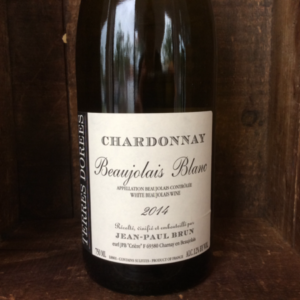 Next up, Beaujolais. Yeah, yeah, you think you know about that one. You don’t. The market is dominated by Georges duBoeuf, and his industrial product defines “mediocre.” And they tend to smell like bananas because of the particular cultured yeast strain used. Fuck that, take a walk on the wild side. What you want is a single-producer wine, one made by a guy with big, rough, hands and who doesn’t own a suit. There are a bunch of these (Michel Tete, Alain Coudert, Jean Foillard, Louis Desvignes, to name some that we love), but the primus inter pares is Jean-Paul Brun’s fabulous Terres Dorees. The reds are, as required, made exclusively from Gamay grapes, wild yeasts, and minimal processing. It’s the opposite of an industrial product. If we see any of the l’Ancien or Cote de Brouilly, we max out our credit cards. But you can’t go wrong with any of the names I mentioned. Keep your eyes open for the rarely seen but eminently wonderful Beaujolais Blanc from one of the farmers – this is what Chardonnay would be like if only it were more interesting. Racy acidity, stony minerality, none of that heavy, oaky crap that California spews.
 And lest I run on too long, I’ll tout what reputedly is the best seafood raw bar wine on the planet: Muscadet. And of all Muscadet, Domaine de la Pépière is what I’d want to be drinking tonight, at least if I were out of Luneau-Papin. Domaine de la Pépière makes an array of them at prices ranging from friendly to oh my, but you can’t go wrong here. Stony, steely, a hint of almost saltiness, and an acidity that just begs you to put some deep fried food into your whore mouth. This is serious wine, but so delightfully refreshing as the sun gets low in the sky and the food on the grill crackles and crusts.


 Justin Wilson, the Cajun chef, was famous for beginning his recipes with “First, you make a roux.” Justin knew what he was talking about.
 1/4 – 1/3 cup of prepared dark roux. A light roux will do but a dark one is preferred