So, confession time: It is more difficult to keep up a weekly column than I originally thought it would be. When I took this on, I noticed that many of the weekly columns had burned out, and I decided to show these layabouts what a real weekly column looked like. None of this ‘three or four articles and then I’m done’ garbage. Firearms Friday would become a cornerstone of the Glibertarian community; A stalwart pillar representing the foundation of our proud website. Well, to those I privately disparaged, I apologize. It is not as easy to keep up a regular article as I anticipated, even one that has as much depth and variety as a gun themed screed. Nevertheless, I will persist with this as long as I can manage, which means you are stuck with me for the time being. This week, by popular demand, I will look into the business of making your own firearms yourself. Much hullabaloo has been raised and many gallons of digital ink spilled in reference to DIY guns, namely 3D printed guns and so called 80% receivers. Most of this ink has been accompanied by an equally copious amount of feces lining the panties of the writers of these various articles over the idea that anyone, ANYONE AT ALL, could build their own functional firearm in the comfort of their own home or garage with just a few simple tools or an inexpensive printer and a roll of plastic filament. Well, I am going start out up front with some bad news: you aren’t going to pop a working M60 out of your makerbot anytime soon, or probably ever.
Complete lower on top, 80% lower on bottom.
Before I drop too many turds into this 3D printed punch bowl (so far this article has enough poop references to be a SugarFree piece) lets back up a bit and define some of these ideas more clearly. First off: What makes a gun a gun? Obviously it requires a specific quantity and type of parts as well as certain mechanical abilities, but at what point is it no longer just a pile of steel and wood? Legally, in America a gun is defined as the part designated as the frame or receiver. Every other part of the gun, including the barrel, trigger, stock, etc. is merely a part and can be bought and sold as freely as a toaster. The receiver, however, is always considered a firearm regardless of it’s functionality. It must be engraved with a unique serial number and is subject to all rules and regulations regarding working firearms. This means that you can buy all of the parts necessary to build a gun without any sort of paperwork or background check, except for the receiver which must be purchased either from a gun store (thus requiring a background check) or face to face from another resident of your home state (subject to local restrictions). At some point, some wise ass got to building a receiver, stopped before he drilled the last hole, and said “So this doesn’t count as a gun, right? LOL!” This pissed the ATF off, I’m sure, at which point they declared that almost a receiver IS a receiver, and then probably shot the guy’s dog. Well eventually people started asking questions about this ‘almost a receiver’ crap. Is a halfway finished receiver still a gun? How about a solid block of raw billet? The ATF realized they needed a concrete point at which a receiver was actually considered a firearm. They came out with a set of guidelines concerning what machining and manufacturing operations constituted a finished receiver, and guns meeting this definition were considered ‘finished’. You can take a piece of metal up to that point and it’s still just a piece of metal, but if you go one cunt hair over that line it is considered a receiver and you better have your papers in order. This is known as the 80% rule (considering most guns are black they probably should have called it the 4/5ths rule) and it is where the term ‘80% receiver’ comes from. By far the most common 80% receivers are for AR 15s, but you can also get them for AKs, 1911s, Glocks, and a whole slew of other guns.
An 80% lower in a jig. The jig is used as a guide for correct hole placement and pocket depth.
So what does this mean for you? Well, it means you can buy one of these 80% receivers, finish it at home using a mill and/or other tools, buy the rest of the parts online, and build yourself a working baby killing death machine without any kind of background check or paper trail. At least, that’s what some people with an above average supply of tinfoil say. I personally am not so sure (more on that later). Confession #2, I have absolutely no working experience with 80% lowers or 3D printed firearms. I do, however, have some experience with CNC milling and additive manufacturing (3D printing), so I am aware of what is involved and what each is capable of. There are 2 common materials used in 80% AR lowers: polymer and aluminum. Polymer is not as strong or as stiff but is much lighter and much easier to shape. Polymer80 is the most well known of polymer AR lowers, and they sell a kit which will let you make a polymer lower using a drill press and a dremel. They also make 80% Glock frames as well. The other option is aluminum. Aluminum is much stronger but also heavier and not as forgiving to machine. 80% Arms has a kit for finishing an aluminum lower using a routing tool commonly used for woodworking. If you already have one then this is probably your best bet, or you can pick one up for about $80. An aluminum lower is going to take much longer to complete than a polymer one, but the end result should be much better quality. The initial cost for these kits are relatively high, but once you have them you can purchase more 80% lowers for cheap and finish them up for essentially free.
Cody Wilson: American Hero
The big problem, however, is that these kits take a) time, b) a workspace, and c) a modicum of skill. Some people lack one or more of these items, making an 80% build problematic. Fortunately, there is a solution. For those of you on here who have not heard of Cody Wilson, shame on you. Turn your libertarian card in at the door, you just failed the purity test. Cody Wilson is basically the ancap equivalent of Che Guevara. At the age of 24, he founded a company called Defense Distributed. I am pretty sure he picked that name only because ‘Fuck the Police’ was already being used. His first order of business was to develop and release CAD models of a fully functional 3D printed handgun called the liberator, which I will discuss a little later. This caused such an uproar that the government forcibly took down and banned the files, citing ITAR infringement. He is currently suing the state department over the matter. Not one to rest on his laurels, he started his next big project, called the ghost gunner. The name comes from the term ‘ghost gun’, which California state senator Kevin De Leon made famous in a hilariously incoherent cringe inducing speech he made on the subject. The ghost gunner is a purpose built CNC mill specifically designed to machine AR lowers. Simply drop in an 80% lower of your choice, push a few buttons, and in about 2 hours a finished, working AR lower pops out. For a mere $1500, you too can crank out as many unregistered, untraceable AR lowers as your little heart desires. If $1500 seems a bit steep, I can assure you it is a pittance compared to what a traditional CNC mill will run, and the added software which makes finishing lowers as easy as running your microwave is a nice bonus.
Kevin De Leon: Pants on head retarded.
I can already hear some of (((you))) now “$1500?! I can’t afford that! Isn’t there a cheaper way of doing it?” I’m glad you asked. For those of you that can’t afford the wonderful ghost gunner mentioned above, there is a slightly more economical option. With a suitable 3D printer and good quality polymer, you can, in fact, print an AR lower. There are working examples on the internet, and a decent 3D printer runs in the $200-$500 range. Now, don’t think it’s going to be as simple as pushing a button, or that you will get a working lower on your first try. I know from my experience with 3D printing that it is usually a trial and error process, and that it takes a very long time to print anything. Don’t expect to it to look great or be terribly durable either. I expect no more than a few thousand rounds out of a printed lower, tops. It does work however, and if you break it you can always print another one.
This is a working metal 3D printed gun. It costs about $12,000 each. And yes, they named it ‘Reason’.
But there is a flaw with all of this. Ostensibly the point of making your own gun is to keep da gubmint from knowing about your ballistic proclivities. But does making an AR lower yourself actually do that? Technically Uncle Sugar is forbidden from maintaining a database of firearms purchases. I highly doubt anyone here actually believes that they do not, myself included. If we concede that the government is willing to break its own explicit laws to keep track of gun owners, however, then our logic eats itself. Remember that these lowers are not functional firearms themselves. You still have to buy quite a few components and assemble them. Unless you pay cash (or bitcoin) for every part of your gun and all of your ammo, then you’re already on the list. What about 3D printing, you ask. What about it? The only working gun that I am familiar with that can be 100% printed is the liberator, which is a single shot 380 pistol with no rifling. Half the time these explode when they are fired…. not exactly military grade. There are metal 3D printers, but they are hundreds of thousands of dollars and you can’t simply order one off of Amazon. In short, 3D printing is simply not a viable strategy for building a working gun, at least at the moment.
So, if you’re doing this to try to stay below the radar, then you’re probably better off simply buying a gun off of armslist from a private seller. If, however, you’re doing it cause you’re worried about a gun ban at some point down the road and you want your instruments of insurrection… well, you’re still boned, because I really doubt you’re going to be able to run down to Cabelas and pick up a lower parts kit and a barreled upper, no matter how many lowers you crank out. If you’re just doing it for funsies and to put a middle finger to the law, then have at it, my devious little anarchists! There is way too much ground to cover on this one topic in just a short article like this, so I highly recommend you do your own research if you’re interested in making your own guns.
The future is steel…. and about 4 inches long.
Before I go, there is one upcoming product that I do want to mention, because I believe it is going to have a serious impact on the future of 80% firearms. Most of you are familiar with the Sig P320, but for those that are not, it is a striker fired handgun that was recently selected as the new issue sidearm for the US army, and probably all of the military will be issuing it in a few years. What makes the P320 unique is that the registered part of the gun, the part that makes it a gun, is not the frame. The P320 is built on a removable stamped steel chassis that allows you to change out grips and slides quickly and easily with no tools. You can switch out a broken frame for a new one in the field, or simply change your full sized pistol into a compact or subcompact one in a few minutes. A company called Ghost Guns (notice a pattern?) recently announced that they are releasing an 80% receiver for the P320. This has vast implications for a multitude of reasons. First off, the receiver of a P320 is remarkably simple. From looking at the videos released by ghost guns, a person should be able to finish a P320 80% lower with nothing more than a file and a hand drill, something most people already have and almost anyone can afford. Secondly, because the fire control group is removable as a single unit, that means that there is nothing limiting the chassis from being used in other guns. Imagine if a company released a rifle body that took AR magazines and used the P320 chassis as the trigger. Someone could buy one of these 80% kits, make themselves a P320 chassis, then install it into this rifle and have a working fighting gun, without ever doing a background check or even leaving the house. That is just one possibility for this system. I believe that we could be seeing the beginning of a whole new future for firearms development, and it is quite an exciting prospect.
America, in general, is a great place for libertarians. It is not perfect, of course, but to my knowledge, it is the only place on earth you can legally buy an ounce of weed and an AR 15 in the same day (although you may not want to publicly declare it since the weed is still federally regulated). In particular, our gun laws are some of the most permissive in the world, for better or worse, and we can own damn near anything we like. Our silencer laws, however, bite ass. For those that just woke up out of an extended coma or are learning English as a second language, silencers are long tubes you screw or clamp onto the muzzle of a gun which reduce the deafening boom accompanying a shot down to a more manageable level. They are also called suppressors or mufflers, the latter being probably the most accurate description since they function very much like the muffler of a car. They are primarily used for safety and comfort, since it is much nicer to not go deaf from your hobbies, and ear muffs can be uncomfortable and ineffective, along with other downsides. “Those sound like great inventions” you’re probably thinking. They are. Too bad they are damn near illegal here.
Pictured: Shit you can’t have.
You see, about 80 years ago, a bunch of politicians decided to take their first really big shit on the second amendment, and boy did they deliver. It’s called the National Firearms Act. You may have heard me talk about it once or twice, and I promise I will mention it again in the future because you will never love a woman (or man, if that’s your bag) as much as I hate that piece of legislation. The NFA put a de facto ban on a whole bunch of fun, useful, and constitutionally protected items, including silencers. The silencer regulation was particularly painful because it affects all silencers, for all guns, for all reasons. There is absolutely no way you can own or possess one without going through the NFA. There’s no decibel threshold for what constitutes a silencer, either. If it reduces the sound signature of a firearm in any noticeable way, it is considered a silencer. You literally cannot legally make your gun quieter. I don’t think it’s difficult to grasp how infuriatingly asinine it is to prohibit an item that is dangerously loud from being made safer to use. What really puts the corn kernels in this shit sandwich is that, by itself, a silencer is completely harmless. They’re regulating ownership of an overpriced piece of sewer pipe. In terms of lethality, it’s somewhere above a metal spatula and below a large flashlight.
If only the chainsaw was a little louder, we could have had a chance.
The thinking (and I use that word as loosely as possible) behind it is that criminals use silencers to muffle their murderous gunshots during crimes, thereby delaying or avoiding police intervention. Sounds reasonable, right? Except that it’s 100% horseshit. A silencer doesn’t actually silence anything, it simply reduces the sound of the gunshot down to hearing safe levels, and even with a silencer many guns still do require hearing protection. A silenced gun is still about as loud as a chainsaw or an ambulance siren. I don’t hear any morons in congress talking about making those louder for safety. Imagine if a law was introduced severely restricting mufflers on passenger vehicles in order to reduce collisions. It would be laughed right out of Congress, but change ‘cars’ to ‘guns’ and suddenly it’s common sense regulation!
To put this in perspective, a number of countries with significantly more restrictive firearm laws not only allow but encourage ownership and usage of silencers on firearms. Places like Norway, New Zealand, and Poland have essentially no restrictions at all on silencers, and even the gun hating utopia of the UK is relatively lax in their silencer ownership laws. When you’re doing worse than the UK at something gun related, you know you’ve got problems.
See this guy? FUCK THIS GUY! FUCK HIM RIGHT IN THE EAR!
There is, however, some hope on the horizon. a few years ago some politicians got together and introduced the Hearing Protection Act, a name which puts a big trollish grin on my face every time I read it. The HPA would take silencers out of the purview of the NFA and treat them like a gun, requiring only a 4473 and a background check to purchase. It had fairly broad support in Congress, but never went anywhere because chocolate Jesus would have vetoed it on the spot. That all changed when Big Donny Sixgun came to town, though. With orange being the new black, the HPA has a real shot at getting passed. That shot got a little bit louder (or is it quieter?) recently when some clever fellow in Congress (oxymoron, I know) decided to roll all of the major provisions of the HPA into an otherwise boring little piece of paper called the ‘Sportsmen Heritage and Recreational Enhancement Act’ or SHARE Act. I wonder how much they pay people to come up with names for these bills. Is that where greeting card writers go after they’re promoted? Anywho, the bill was scheduled for a hearing on Wednesday, but some fucking dicknose bernie bro douche canoe had to go and put bullet holes in a couple of politicians that morning, and the hearing has been canceled until further notice. So, if that was your ultimate goal, you fuckstick, then mission accomplished. I am going to break my foot off in your ass when I see you in hell.
Let’s take it down a notch and have a little fun this week. This… is Carnik Con.
https://www.youtube.com/watch?v=YFpvY1lIp4g
Carnik con is what you would get if you took Homestar Runner, added a class 3 FFL, and served it on top of some Monty Python. It is hands down the absolute funniest and most awesome gun related youtube channel, probably of all time. Carnik con was created by Dugan Ashley, who also starred in, directed, and edited the videos as well. It launched in 2013 and quickly gained popularity in the circles of the ballistically inclined for its humor, slick production quality, and fuckton of awesome guns. What’s notable is the sheer variety of different types of content produced. There’s general gun knowledge:
https://www.youtube.com/watch?v=h0ACX6ZcqTU
Insightful firearms reviews:
https://www.youtube.com/watch?v=gZTRjXD7AVU
Tactical training for operators:
https://www.youtube.com/watch?v=ZepJFmFB7BE
Historical Content:
https://www.youtube.com/watch?v=dqpHU0oLG2Y
And of course, the musical smash hit ‘Hold an AK’, whose single went triple platinum mere days after release.
https://www.youtube.com/watch?v=dgpEuCUm6SE
Sadly, we will never realize the full potential of this bold visionary. Dugan ended the Carnik con program near the end of March 2015, which I have determined to be the cruelest and most effective April fools prank in history. Thankfully the videos are still up, and despite the last video airing almost 2 years ago it still has over 100,000 subscribers.
Just when it seems darkest, however, a light appears on the horizon. The torch may have been passed to a new generation. Allow me to introduce Firepower United, starring Phuc Long:
Marvel at his tactical skills:
Gaze in awe at his mastery of common vernacular:
Be dazzled by his historical knowledge:
Phuc’s videos lack the polish and finesse of his sweater clad predecessor, but I find his videos wildly entertaining nonetheless. Needless to say, I recommend you check out both channels.
I have been a libertarian, to varying degrees and levels of enlightenment, for all of my adult life and probably most of my childhood as well. There is not really a defining event I can point to as a road to Damascus moment regarding politics. If there is one thing, however, that I can hold up as a shining example of why I believe that government is inept, corrupt, and generally full of more shit than the third member of the human centipede, it is the National Firearms Act. The NFA is quite possibly the worst law in America. It simultaneously violates the constitution, endangers human health, gives bureaucrats massive power, places unreasonable burdens on civil rights, bans or heavily restricts otherwise common products, and does all of this while not actually performing any useful function. Add in the fact that we have had this dumpster fire on the books for over EIGHTY FUCKING YEARS and the prospects for recovery are grim. In order to keep this post out of the novella section, I won’t go too deeply into details, but the cliff notes version is that rifles with barrels less than 16 inches in length are considered ‘short barreled rifles’ and are a royal pain in the ass to buy and make. They cost an extra $200 dollars per gun to register and registration can take up to a year. Silencers are also similarly restricted because… reasons? I honestly don’t know. I guess they just hated gun owners so much they wanted them all to blow their eardrums out. If you want to know more the Wikipedia page is linked above.
The gun on the left is considered a short barreled rifle, subject to heavy regulation and a federal felony for unlicensed possession. The gun on the right is an AR pistol, legal almost everywhere with no special permits.
Fortunately, like most bad laws, the NFA is complex and poorly written. This allows freedom loving capitalists to find loopholes to exploit for fun and profit. And exploit them we have! Using just a bit of technical understanding and a careful reading of the law, some clever individuals have found suitable workarounds for most of the restrictions that the NFA has created. The most common of these available are AR/AK pistols. As I stated before, if you have a rifle with an overall length less than 26 inches or a barrel less than 16 inches, it is considered a sbr. If the gun does not have a stock, however, then the ATF has decided in their benevolence that this is a pistol. I wrote about these kinds of pistols in my last post so I won’t repeat myself too much, but these can be extremely fun and useful guns if you need something handy and compact with lots of firepower. By themselves, these guns are fairly awkward to handle, but if you attach a single point sling or an arm brace (more on that below), they become extremely viable systems. They are very common and affordable. You cannot, however, just take a normal rifle and cut it down. If you make a pistol out of a rifle, then by law you have made a SBR or AOW even if you remove the stock. It has to come from the factory as a pistol or you have to build it as a pistol from parts. You can take a pistol and make into a rifle though, and then take that rifle back to a pistol with no problems. The other thing you cannot do is attach a vertical foregrip to a pistol, ANY pistol. Doing this makes the gun an AOW in the eyes of the ATF and you go to prison. Angled foregrips, however, are completely kosher. I told you this law was retarded.
I mentioned before that a SBR is a gun that has a barrel length less than 16 inches or an overall length less than 26 inches. What if you have a gun with no stock, a barrel length less than 16 inches and an overall length greater than 26 inches? Is it a rifle? Nope. Is it a SBR? Wrong again. Is it a handgun? Not that either. What you have is a class of weapons known simply as ‘firearms’. This is a relatively new breed of gun that first came to the forefront when a company named Franklin Armory debuted their XO 26. It is an AR with an 11 inch barrel, no stock, and a foregrip. Normally foregrips on this type of gun are verboten, but because it is longer than 26 inches it is beyond the purview of the NFA as long as you don’t put a stock on it. The vertical foregrip doesn’t sound like much but it actually does make a gun like this a lot easier to shoot. Plus it’s a nice fuck you to the gov, which is a reward unto itself. You don’t have to buy that version, you can make your own if you like. As long as the gun was not originally a rifle, it can be made into a firearm. Just make sure the overall length is greater than 26 inches.
Dual wield for extra DPS.
Okay, so a foregrip on an AR is probably not the most exciting thing ever. How about a short barreled pistol grip shotgun? As I said before, a shotgun must have a barrel length greater than 18 inches. Unlike rifles, there are no pistol loopholes in regard to smooth bore guns, so you can’t simply build a stockless shotgun and call it a pistol. BUT, if you have a shotgun with an overall length greater than 26 inches, a barrel length less than 18 inches, and no stock, you officially have a ‘firearm’. Enter the Mossberg Shockwave. This is a pump action 12 gauge with a 14 inch barrel. The secret is the shockwave birds head grip. The grip sticks out almost inline with the barrel, unlike a traditional pistol grip. This grip is what gives the gun the overall length needed to beat the NFA and escape regulation. They still lack a stock so they are not the most stable shooting platform, but they are definitely useful at close range, and they are short enough to be holstered like a large handgun. They would make an excellent car gun or even home defense weapon. I plan on picking one of these up when prices level off.
Now let’s get into some really fun stuff. How do you get around the machine gun ban? When you get right down to it, the functional difference between a semi auto gun and a full auto one is simply a matter of how fast you can pull the trigger. Some of you may be familiar with a technique known as bump firing, in which you hold a gun in such a way that the recoil of the gun causes your finger to bump the trigger, resulting in what appears to be fully automatic fire. A company figured out a way to design a stock that slides freely and allows you to bump fire the gun while actually controlling and aiming it. Enter the slide fire stock. They make models for ARs and AKs that start around $200. It is a bit gimmicky and it takes some practice to get used to it, but it does work. It’s still more than I am willing to pay for such a device, but anything that make gun grabbers shit their pants can’t be a bad thing.
So slide fire stocks are a good first step, but let’s take things to the next level. The legal definition of a machine gun is any gun that fires more than 1 bullet per motion of the trigger. The ATF considers pulling the trigger and releasing the trigger as two separate motions. Some clever guy decided to make a trigger that fires when you pull the trigger and then fires again when you release the trigger. The result looks something like this:
That is not a full auto AR. It is a binary trigger. It is completely legal and stamp free. I can hear you creaming your panties from here. They are pretty expensive though, coming in around $400 for just the trigger pack. It is considerably less expensive than even the cheapest full auto gun, however, and much more accessible. Franklin Armory was the first company to come out with a binary trigger (I think their unofficial slogan is ‘We love to fuck with the ATF’) but there are now a few of them on the market.
Now it’s time to talk about a slightly more controversial topic: pistol arm braces. These caused quite the stir when they were released a few years ago. They are designed so that a person who is disabled or has weak arm strength can put a brace on an AR pistol, slide his or her arm into the brace, and hold and fire the pistol more easily. If you remember my last post, I showed you a picture of one. They look a lot like a stock. They also work a lot like a stock, too, if you shoulder them. When these first came out, the ATF issued an opinion letter that stated that these were not considered stocks and would not make your pistol into a SBR no matter how you used them, as long as they were not modified. Thousands of these braces were sold, most of them probably not to disabled veterans. People declared it the death of the SBR. Videos popped up showing smiling people happily shouldering and firing AR and AK pistols while wiping their asses with the ATF logo*. The world was at peace. Then people got a little reckless. Other companies came out with their own, more stock like designs. People started modifying the braces, increasing their lengths, making them collapsible and foldable. The tipping point was when a company called Black Aces Tactical actually put one on a short barreled shotgun and got it declared as a firearm. The ATF took the unusual step of specifically articulating that people were not allowed to shoulder these guns. Why were these guns singled out? Well, they weren’t. A few weeks after that declaration, the ATF sent out a new open letter stating that, in their opinion, touching a gun equipped with an arm brace to your shoulder was redesigning a pistol into a short barreled rifle, and that anyone doing that was making an unregistered SBR. Was the ruling arbitrary, capricious, completely devoid of legal backing, and nigh impossible to enforce? Of course it was, it’s the fucking ATF! Despite this, few people wanted to risk their freedom over such a thing, and the pistol brace craze was over… until recently. Last month, in a stunning bout of clarity and common sense, the ATF reversed their reversal, and once again you can shoulder your arm brace like a boss. Being the ATF, they may change their mind again at any point, so buyer beware.
Silencer? What silencer?
The last thing on this list requires a bit of explanation. Say you’re an environmentally conscious gun owner. I mean a really environmentally conscious one. You only use lead free, shade grown ammo, you only buy guns made from non old growth forests, and you ensure your targets are made from 100% recycled paper. Yet that still is not enough to soothe your aching guilt. Well, my friend, you need a solvent trap. Simply thread one of these cylindrical tubes full of tiny cups onto the end of your rifle and it automatically catches all 8 drops of the used, contaminated gun cleaner that washes out of your barrel during cleaning, ready for proper disposal at your nearest hazardous waste facility. What’s that? It looks like a silencer? Gee… I guess it does. Huh, that is one strange and completely uncanny coincidence. It can’t be a silencer, though.. I mean, you would have to own a drill press and at least 1 extra long drill bit to make it into a functional silencer, and everyone knows that kind of technology is far out of the reach of your average yokel. Okay, okay, fine, how bout this: For a more heavy duty option, you can buy one of these handy adapters that let you thread a common automotive filter right onto the end of your gun. That thing will hold enough solvent to last a lifetime, and there is simply no possible way that an oil filter could be used as an effective silencer. Nope, no way at all.
All kidding aside, don’t fuck with these. You can probably bullshit your way through even the most flagrant violation of one of the other rules listed above. It’s not like cops are going to pull out a tape measure and check your barrel length if they see you at the range. But there is no way on God’s green earth you are fooling anyone into thinking that big fucking can on the end of your gun is anything other than a silencer. You can buy these online and at most large gun shows, but ffs just say no. Assuming the republicans pull their heads out of their own asses sometime in the next 18 months (asking a lot, I know) we might even get silencers off the NFA list. Until then, you’re just going to have to wear ear plugs and deal with it like we all have. Oh yeah, and for the record, I am not a lawyer so don’t take anything I just said as legal advice.
Expecting your favorite barbarian sodomite? Not today, ladies! I kicked his happy ass to the curb* and we’re going to be talking about the most American of pastimes: Shooting shit! You need a dose of some good old fashioned testosterone up in this joint, and Vhyrus is filling your prescription weekly. This post was originally going to be part 2 of my get home bag series, but it’s now become the premiere post of Firearm Fridays. So sit down and start reading, and don’t mind that itching under your blouse… that’s just all the hair this gun talk is putting on your chest. This week I have a long, boring post in which I show off my guns and talk about how much of gun nerd I am. I promise future posts will be a bit lighter.
You’ll recall in part 1 we discussed a basic functional layout for a get home bag, of which the primary element is a long gun. For the sake of clarity (if not brevity), I did not go into great detail about the possible choices for a defensive rifle. There are literally hundreds, if not thousands, of different long guns available for purchase on the market. Some of these naturally lend themselves to a combat or defensive role more readily than others, while some are less obvious but have a few benefits that may outweigh their shortcomings in certain situations. We’re now going down the rabbit hole into hardcore ammosexuality to take a look at the various types of guns, their advantages and disadvantages, and what would make a good weapon for your particular case. SVD (that’s Standard Vhyrus Disclaimer, which is cool cause it’s also the name of a sniper rifle) that this is entirely based on my opinion and that I am a moron so you should stop reading and ignore everything I have to say.
I am going to organize these guns by tiers. Tier 1 guns are the absolute most effective in terms of overall capability. They are usually based around a proven military design and many are well known throughout the world. Barring any legal or financial obstacles, this should be the gun you want. Tier 2 guns lack either the firepower or the dexterity of tier 1 weapons, but make up for it in other ways. Tier 2 guns are still extremely effective, just not as much as tier 1. Tier 3 guns are guns that are picked because they are legal or more practical in places tier 1 and 2 guns are not. In this tier are the non self loading firearms. These guns usually have reduced capacity and rate of fire, but are still decent weapons in their own right, and some make up their shortcomings with excellent knockdown power and/or accuracy. Tier 3 guns are definitely compromises, but with training they can be wielded with great success. Tier 4 guns are not recommended except for very limited conditions. These weapons are hunting type rifles or WW1 or 2 era surplus rifles. They are simply too slow, too large, and too heavy to be effective. Mind you, these guns will still put a bullet on target, and they are generally the most accurate of the 4 tiers, but their disadvantages are numerous. Avoid if possible. One final note: I will avoid naming brands as anything other than examples, unless a specific model of gun does something special or noteworthy, in which case I will call it out for consideration.
We will start with the best possible choices, the tier 1 guns. The two most obvious, and by far the most common, are the AR 15 and the AK 47. The AR 15 is the civilian version of the M4 and M16 in use by the US and other various militaries since the 1960s. It is commonly chambered in 5.56×45, also called .223 remington. While 5.56 and .223 are not technically interchangeable, any AR made in the last 15 years will be able to shoot both so you can ignore the distinction. The primary advantages of the AR include light weight, low price, enhanced accuracy, commonly available parts and ammo, excellent ergonomics and extremely modular design. Disadvantages include a difficult cleaning, many small parts during field stripping, and a non folding stock. The AK refers to a number of semi automatic clones of the Russian AK 47 in service throughout the world. It can be found in the armories of just about every banana republic and tin pot dictator from Castro to Kim Jong. AKs are commonly chambered in 7.62×39, henceforth referred to as 7.62S. Advantages of the AK are a robust, simple design, ease of maintenance, available folding stock, and an abundance of inexpensive ammo. Disadvantages include reduced accuracy, higher weight, awkward controls, and a lack of customization. A decent AK is now also slightly more expensive than a base model AR currently.
The main difference between these guns primarily lies in their common calibers. The 5.56 is a very small, fast round. It uses kinetic energy over weight to inflict most of its damage. This gives the AR a very flat trajectory and long range. It also gives the AR one other distinct advantage: it can penetrate all but the highest level body armor using 55 grain M193 rounds, which are commonly available under the Federal ammunition brand. It is the only common semi automatic caliber I am aware of capable of doing this. While this advantage would be highly situational in use, it is still worth considering. The 7.62S round used by the AK is much larger and slower. It has more drop at longer ranges and slightly more recoil. As a result it is not considered useful past 300 yards. It does, however, possess superior wounding capabilities at close range compared to the 5.56. With this in mind, I offer this recommendation: If armor penetration, extreme accuracy, or long range effectiveness are of critical importance to you, the 5.56 is the better caliber. If close range performance is your most important factor, 7.62S is what you want. If you want 7.62S performance in an AR, there are conversions which allow you to shoot it from an AR platform using special magazines, or you can look into 300 blackout, which is specifically designed to feed in an AR platform. This is a bit outside the realm of this article so I will let you do your own research into those options if you are so inclined.
A whole article (hell a whole book) could be written about the various different calibers and options available for the AR platform, so I will add one final note about twist rate and move on. The most common barrel twist rates available for the 5.56 are 1:9, 1:8, and 1:7. This refers to the number of rotations a bullet in the barrel makes while travelling down the barrel. 1:9 means one rotation every 9 inches, 1:8 means one rotation in 8 inches, etc. The tighter the barrel, the heavier a projectile it will adequately stabilize, but a twist rate too high will over spin a lighter bullet and cause poor accuracy. Most military barrels are 1:7, and most higher end ARs are as well, but I actually recommend a 1:8 twist. A 1:7 will allow you to stabilize 70 and even 80 grain projectiles, but most people never shoot anything heavier than 62 grains. A 1:8 will allow you to stabilize everything between 40 and 80 grains, with the sweet spot right around 60 grains. This will allow you to shoot essentially every commercially available load for the AR with at least reasonable accuracy. This matter is still hotly debated, and I encourage you to research more, but I have noticed that many of the newest ARs are coming with 1:8 barrels from the factory so I believe this idea is catching on. A few years ago you would have been hard pressed to find any 1:8 barrels and now they are sold on almost every gun website.
While the AR and AK will give you the best bang for the buck in terms of an affordable lead slinger, there is another class of rifles I feel deserve mentioning, because these offer something a bit extra for those inclined. I am referring to bullpup rifles. A bullpup rifle is a rifle that moves the action behind the trigger, where the stock would be. On most rifles the stock is just a useless piece of wood or plastic to rest your shoulder on, but bullpups actually use that space to house the working components. The result is a gun with a full length barrel that is 20% shorter than a traditional rifle. This makes the bullpups the shortest rifles legally available without an NFA tax stamp. They are usually as short or shorter than an AK with the stock folded, yet they are always ready to go. They excel if you have to get in and out of vehicles or work in cramped hallways and doorways due to their small size. There are some drawbacks, however. Bullpups can be a little ergonomically awkward, requiring some extra training to master. They are generally not ambidextrous, although there are exceptions. They are also not cheap. While a base model AR can be had for as little as $400, the cheapest bullpups start at $1000 and go up past $2000. I am personally a huge proponent of bullpup rifles, and if you have the money I definitely recommend at least swinging by a gun store and checking a few out.
A small selection of the author’s firearms. From Top: IWI Tavor X95, Zastava M70 (AK clone) with stock folded, AR-15, and AR pistol with 10” barrel. You can see the pistol is actually longer than the bullpup at the top or the AK with the stock folded, with worse performance.
Now let’s discuss tier 2 weapons. These are guns that offer some sort of compromise or trade vs the tier 1 guns. This is a rather large category so I will have to break it into sections. The first set of guns in this tier are what I call the featureless or ranch rifles. These are guns that have the same basic function as an AR or AK but look more like a traditional hunting rifle. The two most common are the Ruger mini 14 and the Kel Tec SU 16 that I mentioned in the first article. Both of these guns shoot the 5.56 cartridge (Ruger also makes a version called the mini 30 that shoots 7.62S). The Ruger takes proprietary magazines while the SU-16 takes AR magazines. The Kel Tec has the added bonus of folding in half. These guns are less intimidating and/or conspicuous than the assault rifles** in tier 1, but they shoot just as fast and hit just as hard. They lack some of the features of the assault rifles, such a pistol grips or muzzle brakes, which means they can skirt some of the more onerous assault weapons bans in the less free states. If you want the most firepower but you live in a ban state, a gun like this is your best option. If you are on a budget you can also look for a SKS. These guns are a cousin of the AK and shoot the same round, but they feed from 10 round internal magazines and can be reloaded with stripper clips. You can usually get them from around $400 – $500. The trade off is that these guns will not have the level of aftermarket accessories and magazines available to them. You may have to pay more to get what you want, if they even offer it at all, and the controls are generally less user friendly on these guns. Some of these guns can also be fairly pricey for what you get, especially the Rugers. Also, if you are picking these to get around assault weapons bans then you are probably limited to 10 round magazines which makes these guns a bit of a weak choice. With so few rounds a larger caliber may be more desirable.
The next set of guns up for discussion are short barreled rifles or SBRs. These are rifles (usually ARs or AKs although there are others available) which have a barrel shorter than 16 inches. These rifles can be extremely light and compact, taking up no more space than a laptop, yet still able to give a high rate of firepower in a controllable package. In theory, these are the best of both worlds: the size of a large pistol, the firepower of a rifle. So why are they not tier 1 guns? Well, for one thing they’re almost illegal. In fact they are illegal in some places. Even where they are not banned by state law, they are heavily regulated by federal law. In order to make or buy one, you must go through a lengthy registration process and pay a $200 tax per gun for the privilege to have one. You have to keep this paperwork with the gun wherever it goes. You cannot allow anyone not authorized to possess it to use it or even have access to it outside of your direct supervision, and you must file paperwork with the ATF if you plan on taking it across state lines. That’s every time you cross state lines, not just once. Oh, and it usually takes 6 to 12 months for the feds to approve your application. In short, it is the definition of a pain in the ass. This alone should make you think twice about going this route.
The gun on the top is an AR pistol, completely legal and unrestricted in most of the US. The gun on the bottom is a SBR, an extremely dangerous and highly regulated assault weapon which will net you 10-25 in federal prison without the proper permits. See the difference? Yeah, me neither.
If you look at an AR SBR (the easiest one to make) you are not even saving any space. Because an AR stock does not fold, even an AR SBR with a 10 inch barrel is going to be roughly the same length as a bullpup, but a bullpup doesn’t come with a suitcase of red tape and you are not compromising your barrel length. Furthermore, because the gun has a short barrel, you are significantly hindering your firepower. In general, the shorter the barrel, the less velocity you produce. Reduced velocity equals reduced power, which means your rifle isn’t hitting like a rifle. In fact it is this reason that I do not recommend using any short barreled AR weapon chambered in 5.56. 5.56 is a very velocity dependent cartridge and using short barrels cuts too much velocity off the round for it to work effectively. There are commercially available rounds that are effective out of a 10 inch barrel but that is beyond the purview of this article so I leave it to you to do your research if you want to go that route. The only SBR I can comfortably recommend is an AK SBR with a folding stock. It is small enough to actually gain significant movement and concealment but still large enough to hit with authority. You are still going to pay out of the ass for it and have a suitcase of paperwork to haul around, and God forbid if the thing gets stolen out of your car.
Modified SKS on the top, AK in the middle, AK pistol bottom right. You can see how much smaller the pistol is compared to the rifles.
So, if SBRs are out, what can you do? Well, there is another option. It is called the AK pistol. You see, we have kind of screwed up gun laws in America. If you take an AK and chop the barrel down, that’s a short barreled rifle, but if you chop the barrel down AND take the stock off, that’s a handgun. Makes total sense, doesn’t it? With an AK pistol, you can run a single point sling off the back of the gun and use the sling as a stabilization point, kind of like a reverse stock. This gives you a nice small gun with lots of maneuverability and plenty of power. The downside is that an AK pistol is simply not as stable as a rifle. The stock adds a lot to the accuracy of a gun, and your follow up shots are definitely going to be slower and less consistent. AR pistols also exist but because the problems with AR SBRs extend to AR pistols I would not recommend them either. If you want maximum concealment and maximum firepower, this is the only way to roll.
Or is it? You see, there is a third way. A company called SB Tactical makes something called an arm brace. Here is a picture of it on my AR pistol:
Now, you are probably thinking “Gee Vhyrus, that looks an awful lot like a stock.” Why, yes it does! Despite this, the ATF has ruled that this thing is not a stock and can be placed on any pistol without making it a SBR. I am not going to sugar coat it: this thing is the definition of ‘grey area’. Up until very recently, the ATF publicly stated that if you had one of these on a gun you could not legally touch it to your shoulder or you would be making a short barreled rifle. They backed off of this very shaky and nigh indefensible stance in the last few weeks, but being the arbitrary and capricious motherfuckers that they are, they could change their mind at any moment. Still, as of this writing, there is nothing explicitly forbidding you from equipping a brace to your pistol and using it like a short little stock. I have used one of these, and while it is short it is definitely usable, especially if you’re wearing a plate carrier. The only way to really get the most out of it is to put one on a folding stock tube so you can get the smallest possible package, otherwise you might as well just get a bullpup. This adds about $200 – $300 to the price of the gun but you are getting an almost SBR with none of the SBR legal entanglements. The brace comes with it’s own legal baggage though, so you have to weigh the pros and cons. FWIW, if you’re dead set on a SBR I would go with a AK pistol equipped with a brace on a folding tube. You can get a Yugo M92 with the brace and 3 mags for about $650 right now and then you would need to do a little work to add in the folding mechanism.
AK pistol (specifically a Zastava M92) with a folding arm brace.
On the other end of the spectrum are the .308 rifles. These are semi automatic military rifles of usually cold war origin chambered in .308 winchester or 7.62×51 (also called 7.62 NATO). The 308 is a considerably more capable round than 5.56 or 7.62S. It flies farther and hits harder. There are many effective guns chambered in this caliber that make excellent defensive rifles. The AR-10, M14, SCAR, FAL, CETME, HK91, and their derivatives are all available and reliable systems. I would never feel outgunned with one of these in my hands. The drawbacks are primarily related to size and weight. A 308 is simply overkill for most situations. Most people do not need an 800 yard effective range in a defensive rifle, and the additional power is wasted. Recoil is increased significantly over 5.56 or 7.62S. Furthermore, a 308 is going to be larger and heavier than an intermediate caliber rifle, and the ammo is larger and heavier as well which means you won’t carry as much. These guns also have reduced capacity compared to the tier 1 rifles, with magazine capacity typically around 20 rounds. 308 is also twice as expensive as 5.56, and the guns are usually more expensive as well. If you live in a ban state and are limited to 10 round magazines then it would actually make sense to go with 308 since you need all the power you can get to make up for the lack of capacity, but otherwise it’s a lot of unnecessary weight.
A VEPR 12 semi auto shotgun on top, a Hawk 982 pump action 12 gauge in the middle, and an AR 15 at the bottom for comparison. You can see how much larger the shotguns are compared to the AR. There are folding stocks available but you’re still looking at a large package.
The final type of guns in this tier are semi auto 12 gauge shotguns. A shotgun is a very versatile and capable platform, able to shoot many different kinds of ammo to fill various roles and can adapt to many different scenarios quickly. In terms of close range lethality, there is absolutely nothing more powerful than a semi automatic shotgun loaded with buckshot. Each trigger pull sends nine 9mm sized shots at your target, and you could easily empty 10 rounds out of a modern shotgun in less than 3 seconds, making a semi auto shotgun as powerful as a full auto mp5. Using slugs, a shotgun can make hits at 100 and even 200 yards with practice. Ammo is plentiful and readily available, and can be changed at will to suit your particular needs. Sounds like an excellent platform, so what are the drawbacks? There is a reason the shotgun is a niche weapons in all modern militaries. Shotguns are large and heavy, for one. Secondly, ammo capacity is severely limited. The average tube fed shotgun has a maximum capacity of about 9 rounds, and even magazine fed shotguns usually top out at 10 unless you use heavy and expensive drums. Recoil is punishing, especially with slugs. Reliability can be hit and miss with certain loads or models. Reloading is slow, especially with tube fed guns. Ammo is large and heavy, which means you will be able to carry less. Accuracy is considerably diminished over rifles, and range is greatly reduced. Groups at 100 yards will be around 6 inches with slugs, and will most likely require some holdover to get on target. Buckshot is essentially useless beyond 50 yards.
Now we get into tier 3 guns, which includes pump and lever guns, and pistol caliber carbines. Pistol caliber carbines (henceforth abbreviated at PCCs) are rifles that shoot handgun rounds. 9mm is the most common, but you can get PCCs in just about every popular autoloading caliber, including 40, 45, and 10mm. PCCs can use either proprietary magazines or feed from commonly available handgun mags. GLOCK mags are the most common. Obviously one immediate advantage is that your rifle and pistol can use the same round and the same magazines interchangeably, which greatly simplifies your loadout. Also PCCs tend to be light with almost zero recoil. The disadvantages of a PCC lie in their ammo. To be blunt, pistol rounds suck. They are low power, have poor penetration, poor ballistics, and poor range. 200 yards is a stretch for a PCC and would require significant hold over. Not only that, but because of our barrel length laws, a PCC is going to be roughly the same size as a full size AR or AK. You aren’t gaining any advantage size wise but you are taking a real firepower hit. These guns are usually subject to the same assault weapons bans that the rifles have, so you aren’t winning on that front either. The only major advantage is magazine commonality, and that is a lot to pay for a relatively minor advantage. Unless you are extremely recoil sensitive I would not go for a PCC as my first choice.
There are two notable exceptions to this that I must mention. Two specific PCCs get a pass into tier 2 due to their design. The first one is the Kel Tec Sub 2000. The Sub 2k is a PCC chambered in 9 or 40 that takes mags from one of several major handgun brands. What makes the S2K unique is that it can fold completely in half without tools and deploy in seconds. This gives you a gun no wider than a standard laptop that can deliver rounds on target and then fold back up into a small backpack. You are still dealing with a PCC so range and firepower are limited, but it’s extremely low weight and folding ability are enough to put it above the rest. If you have to pick a true PCC, pick that one. The second gun that moves up a slot is the FN PS90. The PS90 is the duck billed platypus of the gun world. It is neither a rifle nor PCC but it shares characteristics of both. The centerpiece of the PS90 is the 5.7×28 round. It is designed like a shrunk down 5.56 cartridge, so while technically a handgun round it has similar ballistics to a rifle. It is effective out to around 200 yards with minimal drop. The gun itself is a bullpup design which keeps the size to the minimum allowed by law. What makes it really stand out is that the proprietary magazines can hold 50 rounds, almost double the standard capacity of an AR or AK. The rounds themselves are very small and light which means you can carry more. A standard loadout consists of only 2 or 3 full magazines vs the 4 or 5 needed for an AR. Ammo and mags are somewhat pricey and you aren’t going to find them at your local walmart, but it is definitely one to look into if you have the money.
The other half of the tier 3 guns are lever/pump action firearms. These are manually operated firearms usually fed from a tube under the barrel, although some do use detachable magazines. If you’ve ever seen an old west movie, you have probably seen a lever action. These are chambered in older rimmed calibers like 357, 30-30, 44, 45-70, or 45 LC. They are simple steel guns with wood stocks and basic sights. Some have been modernized and can mount a scope or a red dot. They are very light, simple, and reliable firearms. Their greatest asset is that they are not semi auto so they can get around even the most restrictive firearms laws in the US. Since they are not scary black assault rifles there is a very good chance that most people that would normally get agitated from the sight of a rifle would ignore or discount a simple cowboy gun like a lever action. Make no mistake, though. These are serious guns. They fire fast and hit hard. They have the added bonus of being chambered in revolver calibers, so if you carry a revolver you only need to carry 1 type of ammo for both. A 357 or 44 magnum out of a 16 inch barrel is no joke, and will do a real number on whatever you hit. Range is limited by ballistics but 100 – 200 yard shots should not be too much trouble for most calibers. The downsides are the obviously low rate of fire and low capacity, as well as outdated cartridges. No lever action is going to keep up with a semi auto, and rounds must be hand loaded individually. If you do get a lever action, I strongly recommend getting one with a side loading gate which will greatly decrease your reloading times. Rossi makes a very affordable version in many calibers. If this is the best you are able to get, train hard with it and learn what it can and cannot do. As for shotguns, pump action is much more common than lever action, though both do exist. Manual shotguns have the same drawbacks as semi auto shotguns but a slower fire rate. Their reliability is much better, however. The main advantage to pump shotguns are their low price and accessibility. Many people already have a pump shotgun they can simply put a shorter barrel on, and those that don’t can pick up a simple 12 gauge for as little as $200 brand new. Many police still carry 12 gauge pumps as their long gun, so they definitely have their uses as defensive weapons. If you want simple, reliable, and cheap, you can’t do much better than a 12 gauge.
There is one shotgun I feel I should call out as a cut above the rest feature wise. I don’t feel that it’s good enough to be considered a tier 2 weapon, but if you really want a pump shotgun and money is not an issue, I would recommend looking into the Kel Tec KSG. The KSG is a pump action 12 gauge but it is nothing like any other gun on the market. For one, it is a bullpup, which makes it a very compact and handy weapon. You could easily stash one in a large backpack. Secondly, the KSG had dual feed tubes. Fully loaded it holds 15 rounds. That is double the average shotgun and more than even most magazine fed shotguns. Because it feeds from each tube independently, you could do some really clever things like fill one with slugs and one with buckshot, which would allow you to switch back and forth whenever you like. They are considerably more expensive than a standard pump 12 gauge, coming in around 700, but the added features are worth the extra price.
Finally, we’ve reached the bottom of the barrel, tier 4. These guns are simply not recommended for defensive use. They are fine weapons, but they are simply too outdated or outclassed by more modern guns. I am talking about bolt action and single shot rifles and shotguns. These can be hunting weapons or surplus arms from the world wars. They can also be super expensive precision rifles for shooting the wings off a fly at 1000 yards. They come in literally every known caliber and price range, from $100 all the way up to many thousands of dollars. Most are fed from internal magazines, although some do have detachable box mags. They are simple, reliable, and ballistically they can have impressive numbers, but the downsides are just too great. They are slow to load, slow to reload, have very limited capacity, and are not ambidextrous. If you live in a very rural area where shot placement and extreme accuracy are your only considerations, then a bolt gun may be the ticket, but in a defensive situation it would be extremely rare to justify shooting at someone from hundreds of yards away from ambush, which would be the only place a bolt gun would really work. It simply doesn’t make sense.
That about covers it. This was considerably drier than my last post so hopefully it was at least somewhat educational. This is a huge topic but I tried to give the best possible overview of the situation without going too deep into any particular detail. If you have specific questions or want to call me a moron, comment below.
*Not really. I begged them to let me do this and they felt sorry for me.
**I know they’re not really assault rifles. Just let me trigger some progs for a bit.
Like all ideologies out there, there are those within libertarianism who see the, how should I put this… the modest reach of our ideas to the general public as bad marketing, or insufficient awareness. That people would like liberty if the right message reached then. This view is also shared by other ideologies. Every time the majority rejects some policy or other, someone complains about the message being bad or propaganda from the other side or whatever.
But is it really marketing? Do people support liberty – actual liberty — but don’t know it? I sincerely doubt it. Granted, the libertarian message has more limited reach than the others, less exposure in schools, media and such. Also granted, there are people in the movement who couldn’t sell water in the desert, let alone an idea which is mostly counter-intuitive to many. But will a better message make a huge amount of difference? Some *cough* sites out there seem to think so and do their darndest to make the message more appealing. Colour me skeptical.
Liberty, baby
Most people claim to like liberty, even support it. It does not sound good to say you are against it. Then … well, then that pesky little but comes in. And one can usually stop listening. People don’t like liberty as it is, they like a better class of liberty, improved to their standards, of course. They want moderate amounts of liberty, a little here, little there, liberty that is just right. Preferably organic, GMO-free, without anything unpleasant attached. They often like liberty for themselves, but not for others. They certainly don’t approve of unrestricted liberty or the consequences of being free. Consequences can be bad, you see, and we can’t have any of that.
What is liberty, some haughtily ask, on an empty stomach… Well, in my humble opinion, it is pretty much the same as on a full stomach, no more nor less, as the fullness of one’s innards does not define liberty. In fact, there are choices in life that lead you to sleeping rough and hungry. If you are not free to make those choices, you are not free. If you are free and are saved from those choices by government, it is at the expense of resources that come from someone else and their liberty. You are not free unless you are free to make bad choices and suffer the consequences.
Dying doing something you love
There are extreme sports out there that lead to many or even most practitioners to smash their skull on a big damn rock. But if you are free, you should be free to smash your head against a rock. Now, many of these sports are not banned. At least they died doing something they loved, am I right? But then, why ban other so-called dangerous activities? If you can smash your head on a rock you can choose to overdose on heroin. Well, this is a step too far for so-called pro-freedom folk out there, they cannot take it.
Liberty within reasonable limits, what more can you want? I think that fella Kim Jong Un is also all for liberty within very reasonable limits.
In the attempt to avoid saying I don’t like liberty, some people do the classic split between stuff they like and stuff they don’t. Separate certain aspects of life from others, in order to still support their preferred flavour of government intervention. The most common manifestation of this is to separate economic activity from other aspects of life, or better said financial outcomes.
Some who support let’s say gay marriage but government involvement in every single aspect of those married gay dudes lives, call themselves social libertarians or civil libertarians. Glorious, glorious modifiers. Social liberty, social justice etcetera.
The economic side is no less part of your life as the person you choose to have sex with, hell you usually spend more time doing the former rather than the latter. Almost everything a person does is an economic decision. The bread you buy the beer you drink is an economic decision. Procreation, sex, food… whatever
You cannot be free economically just because the taxes are small if you cannot spend your earnings as you wish – let’s say doing drugs and doing whomever you choose. As such, it matters not that Saudi Arabia has small taxes, for example.
But you cannot be free in your private life if the money you have earnt and the way you earn it are controlled by the state. If you cannot decide what to do for a living, how to use your money, how to raise children or plan retirement how can legal weed – but not heroin, never heroin – and gay marriage make you free. Or is it free birth control that makes you free? I forget…
You are free to do a job the government allows you to do – with the proper licencing and bureaucracy off course, we cannot have people working willy-nilly; you are then equally free to keep whatever amount of the money you earn the government sees fit to allow you to keep, and then are quite free to buy from a list of government allowed products at government inflated prices. Clean, nice, government approved liberty. Ain’t liberty grand?
So how many people would think about this and say hmmm that does not sound like liberty to me? I’m not gonna sugar coat it, I think the answer to that is very few. In the minds of most, the only alternative is pandemonium, chaos, anarchy. Do you want people to have Guns? and Drugs? Guns and Drugs at the same time? Insanity!
And after all, government is the same as society, and society is us, so government is us. As such, no one is really restricting our liberty; we just choose to limit ourselves. It is obvious, to the reasonable common sense individual, that bureaucrats are just doing what is best for us, and they know better anyway. We really need more government micromanagement, if anything. Oh not in this area I care about and anyway I want to be left alone, but everywhere else.
So, as a libertarian why keep arguing then? Well, it is human nature to argue and debate, especially with all this internet everywhere, it can be entertaining albeit aggravating, and maybe you make a little bit of headway. Maybe. Also, you get to say fuck off slaver a lot, which is always nice. But just don’t expect libertopia to kick in anytime soon.
It’s really amusing watching the MSM twist their panties in a wad trying to connect Trump to Russia. They’ve gotten the smallest amount of traction and the chants for Trump’s head have started. Besides the fact that the original Trump to Russia connection is based on innuendo and suggestion, the witch hunt has broadened out into a general search for any connection between Trump and the entire nation of Russia. Like a brain damaged chihuahua, the media chants “Russia! Russia! Russia!” hoping beyond hope that they will scare the GOP and Trump into submission. “We can finally control the renegade!” they think, as they piss away the last of their credibility.
Although people joke about “alternative facts,” it’s not a joke. There are two prevailing agendas across the country: 1) Trump is LITERALLY HITLER and A RUSSIAN MOLE AT THE SAME TIME!!! 2) Trump is DADDY and GOD-KING OF KEKISTAN, VANQUISHER OF THE SJWs and CUCKS!!! The left has their educational and media empire churning out outrage by the gallon. The right has their independent media matching the outrage of the left.
Antifa is smashing windows and folks like Based Stickman (who the fuck is Based Stickman and why is he called that??) are bashing Antifa heads in. People are primed to believe that the violence will do nothing but escalate.
I tend to be quite skeptical of claims that the next civil war is about to start. Like the Rapture, many people have predicted a civil war, only to be laughably wrong.
However, let’s travel through another dimension, a dimension not only of sight and sound but of derp. A journey into a scandalous land whose boundaries are that of imagination. That’s the signpost up ahead – your next stop, the Derplight Zone!
This is Donald. Donald is a normal man, somewhat spoiled, somewhat outspoken. Donald has been a real estate mogul for the last few decades, accumulating a vast amount of wealth and notoriety. Recently, Donald was chosen to be the sacrificial lamb of the GOP to allow Hillary Clinton to ascend to her rightful place as Grand Master of the Lizard People The First Female President of the United States. However, something went wrong. Horribly wrong. Donald had an energy that transfixed the public, and nobody could explain it. Donald became President.
Okay, I can’t keep the Twilight Zone schtick up, but let’s continue to investigate why this latest push to impeach could lead to a civil war. There is one big reason why: Trump’s election was an unexpected boon to a class of people that have felt trod over by the political elites for decades. People most fiercely defend unexpected gains, especially when it is threatened by their enemy. The Alt-Right has ascended and has labeled Trump as their knight in shining armor, here to wipe out the scourge of establishment politics and social justice. The Fascist Left has also ascended, using Hitlerian tactics while decrying Trump as literally Hitler. While an escalation of rhetoric isn’t a sure sign of war, it is a prerequisite.
The desperation seen on both sides is significantly more concerning. Antifa Nazis have normalized mob violence and intimidation as protest tactics, and Alt-Righters have responded in kind. This powder keg is gonna blow at some point, and we’re gonna get another Kent State. The question then becomes what happens in response to the deaths of 5 or 10 rioters (of either side). Everything in my mind and heart tells me that a crisis like that would boil up for a few weeks and slowly subside. However, what if it didn’t? What if it boiled up into a tempest?
I think it’s unlikely but possible that this could happen. Either Antifa is gonna beat some people to death, or the Alt-Righters are going to start shooting when Antifa gets violent in the wrong town. This could escalate to people seeking out the melee to contribute, which could escalate to large-scale violence between groups of people. . . also known as a battle. From there, things could snowball into nationwide insurrection.
Obviously, I find this quite improbable, but the increasing violence and radical rhetoric inspire some unlikely thoughts.
*1950’s PSA announcer voice* Are you worried about the threat of violence due to local or global sociopolitical destabilization caused by natural or man-made catastrophic events? Do you feel your current daily equipment loadout or everyday carry would be insufficient when responding to a large, agitated populace or large scale terrorist attack? Are you simply bored and have too much money and need an excuse to purchase more guns? Sounds like you need a Get-Home-Bag!™ In this installment, NRA certified* tier mall ninja Vhyrus will show you how to make your GHB (or ‘force multiplier package’ for all you operators out there) using affordable, off the shelf items available to most of us courtesy of free market capitalism.
For the well-equipped gentleman
Now, before I begin, I want to start out with a few assumptions that I have made in composing this article. First, I assume you live in an area where you can legally purchase long arms and store them in some manner in your vehicle at all times. So, this article is basically void outside of North America (and CA, NY, and the rest of the slave states). Second, I assume you are able bodied enough to carry about 40 pounds of equipment and function while doing so. If that is not the case you may need to scale back your gear according to your ability.
If you are new to guns or not much of a gun person, this article is definitely made for you. I tried to explain the more esoteric points as clearly as possible. Those of you into guns may find this article a bit oversimplified, and for that I apologize. I also want to add that much of this is based on my opinion. Well researched opinion, mind you, but opinion nonetheless. This kit as I describe it certainly will get the job done, but certain specific details may be up for debate among some of the more ballistically inclined among you. Feel free to tell me how stupid I am in the comments.
So, what is a get home bag? Put simply, it is an emergency battle kit that will allow you to defend yourself if a serious SHTF situation were to occur while you were not home. This kit is not designed to protect or defend against normal criminal activity, such as a carjacker or mugger. That is what your pistol is for. I mean, you DO carry a pistol, don’t you? This is more designed along the lines of a major violent riot, large scale natural disaster, zombie apocalypse, etc. It is designed to be a self contained unit that you can grab from your vehicle in case you need to bail out and hoof it due to impassable roads or other quickly developing events. A GHB is not a bug out bag per se, although it could be part of a bug out bag if designed properly. I am going to go over the simplest form of the GHB, which is a rifle or shotgun, ammo, and body armor. Also, many of the items I will describe in this kit are not one size fits all. Depending on your local environment and laws, your bag may be very different from the one I show in this article. For example, if you live in a high population urban area, you will be more interested in a gun that can shoot quickly and accurately and hold a lot of ammo, whereas if you live out in bumfuck Iowa, you may want to ditch the body armor entirely for food and water, and carry a gun that holds fewer rounds but allows for longer range shots and more power. In part 2 of this series (yes, there is a part 2. Strap in fuckers, we’re just getting started) I will go into more detail on different guns for different situations and what works best for your area. This article is going to focus on a budget minded approach, so I am going to illustrate the cheapest way to implement a GHB. If you have a lot of disposable income and want to go crazy, then there is absolutely nothing wrong with buying a 2000 dollar trunk gun and a grand worth of ultra lightweight body armor. The kit I have put together is what I would consider to be the minimum necessary for a decent kit.
The first and most important part of your get home bag is a gun. Depending on your budget and situation, this may be the only part of your GHB, in which case it simply becomes a get home gun. Slap some ammo in it, throw it behind your seat, and you’re good to go. I recommend more than that in most cases, but at least it’s a good start. There are literally dozens, if not hundreds, of viable guns you could use for a trunk gun, and as I mentioned I intend to go into more detail in a separate article. If you’re pressed for time and want a TL;DR version, then the short answer is to buy an AR-15, which is what I ended up using for my kit. My initial idea was to purchase what I consider to be (at least in theory) the best get home gun currently on the market, the Kel-Tec SU-16CA. The SU-16 is essentially what you would get if you forced an AK to dress up like an AR. It is a piston driven, side charging rifle that takes AR15 magazines. It is lightweight, simple to operate, inexpensive, and has a few little features that make it unique amongst it’s peers. There are many different models, but the one we will focus on is the CA model. The CA model has 2 features in particular that are extremely useful for our purposes: It can fold in half for compact storage, and it can hold a 30 round magazine in the stock. This makes it the perfect grab and go rifle. The other great thing about this rifle is that it lacks features that would cause it to be classified as an assault rifle in the less free states, which should make it easier to acquire and carry in those second amendment challenged locations.
So, with my ideal rifle picked out, I set out to purchase one. The problem is, I can’t fucking find one! Right now it appears that the only model commonly available is the C model, which has an AK like underfolding stock. While handy and compact, it also gets rid of the magazine storage, which is kind of the whole point of the damn gun. The A and B models are also available, but the A has an 18 inch barrel which makes it harder to store and carry, and the B model has a pencil barrel, which makes it slightly lighter but also makes it much less capable of prolonged firing. Then there is the price. Right now these guns are running about $500-$600 new. While not expensive, currently you can get a brand name base model AR15 for as low as $400 and change, and the AR is a much better platform overall compared to anything kel-tec makes. The other nice thing about an AR is that they can be separated into two halves which allows very compact storage, even more compact than a folded SU-16. The only issue is that an AR does not have magazine storage in the buttstock. Fortunately, someone else took care of that since there are several options currently available that allow you to keep a magazine on the stock of the gun ready to go. The one I purchased is made by Blackhawk, but I actually recommend the Condorversion. The straps on the Blackhawk one that I purchased are only designed for use with a GI type collapsible stock, so if you have a magpul one you will have to buy different straps like I did. The condor one comes with longer straps that will better fit different stocks, and it is cheaper.
In the end, I used a gun I already owned rather than buying a new gun, which obviously saves a ton of money. If you have a gun that could fit the role of a trunk or get home gun and you’d rather not buy another one then perhaps your existing gun could simply be modified to suit your needs. The gun I have is a side charging AR which uses a Bear Creek Arsenal side charging upper. Currently these are a ridiculously low price, and if you are at all interested in making a side charging AR, I highly recommend getting one. If there is an interest from the commentariat, I can also write up a short piece on assembling your own AR. Getting back to the topic at hand, I picked a side charging AR for several reasons. First, a side charging AR is simpler than a standard AR, as the charging handle pulls triple duty as a forward assist and a shell deflector. It also gets rid of the god awful charging handle on a mil spec AR. The barrel is a mid length 1:7 twist, although if I could do it again I would make it a 1:8 twist. I will go into barrel twist in the rifle article, but if buying an AR try to get a 1:8 twist barrel. Failing that, the 1:7 twist is best for all around defensive use.
Black rifles matter
The two accessories I highly recommending adding to any fighting rifle are a sling and an optic. For slings, 2 point slings are better for moving, but 1 point slings are better for fighting. Magpul makes a convertible unit called the MS3 sling that I like very much, or you could make your own like mine but it will probably be better just to buy one pre-made. If you want to stay cheap and simple just go with a 2 point sling. For optics, this largely depends on your local environment, but it is hard to go wrong with simple red dot. For a good cheap red dot look no farther than the Bushnell TRS-25. I have 2 of these and they have never let me down. They can put up with the recoil of my VEPR 12 which had broken the other 2 red dots I tried on it within minutes, so you can be sure they will work. I wouldn’t go scuba diving with it or run it over with a train, but for normal use it should hold. I would also recommend iron sights as a backup. This may sound redundant but a lot of less expensive ARs do not come with any sights at all so you have to buy them. Remember, you want to keep this setup inexpensive in case it gets stolen from your car or wrecked in a crash, or you have to throw it in a lake for some reason. Now all you need are magazines and ammo. For my GHB, I used Magpul Pmags. The gen 3 pmags come with snap on dust covers that take the pressure off the feed lips, so you can load them up, snap on the covers, and store them worry free for years. Note that gen 3 pmags don’t fit in the stock mag pouch mentioned earlier, so you’ll need to buy 1 or 2 gen 2 or GI steel mags to fit in the pouch. Finally, ammo. To keep it simple and cheap you’ll want to go down to Walmart or your local gun shop and pick up some m193made by federal. This is the same stuff the military uses, so it’s nice and strong. It’s also very affordable. How many magazines you carry is up to you. I have 5 30 round mags ready to go in my kit.
The second major part of the bag is the body armor. I may also write a short article about body armor if people are interested, but the general idea is that there are levels of body armor from 2a to 4. The higher the level the more calibers the armor will stop. Everything below level 3 is only rated for handguns, not rifles. The advantage of lower level armor is that it is cheaper and lighter, but soft armor will not only not stop rifles; if you do get hit with a handgun, even if it doesn’t penetrate, it is going to ring your bell something awful. There’s no point stopping a handgun round if it knocks the wind out of you so badly that the bad guy can just walk up and pop you in the head while you’re rolling around on the ground. Level 3 and 4 armor plates are solid plates, either ceramic or steel. They are much heavier, but they can take multiple rifle hits without failing. Not only that, but because they don’t deform when hit, they won’t transfer the energy of the round into you like a Chuck Norris roundhouse kick, which means you will actually be able to react and either fight back or find cover. The minimum I recommend are level 3 plates. The ones in my kit are level 3+, which is not an industry standard but came up because certain commercially available rifle rounds (hint: I mentioned them back in the last paragraph) can actually penetrate level 3 armor at closer ranges. 3+ are slightly beefier but they can protect against everything not explicitly armor piercing. The company I recommend is AR500 armor. You can get a set of 3+ plates and a carrier for around $300 from them, which is a very reasonable price. Body armor prices have come down drastically in the last 10 years or so to the point that they are truly affordable, so there is no reason not to have a set. For guys, you want a rounded front plate, girls should have a flat front plate. Rear plate can be flat to save money.
Last, but not least, you need a bag to keep everything in. This part is trickier than it sounds. The most important thing is you want a bag that does NOT look like a gun bag. You do not want anyone to think there is anything valuable in the bag. It also should be something that you can transport easily, which means it should have a shoulder strap and/or backpack straps. If you plan on using an AR broken down you will need a minimum of 25 inches in the bag for the upper. If you get something like an AK with a folding stock, you will need about 28 inches, and if you plan on keeping the AR together, you’ll need about 33 inches. At first I bought a bag online with the intention of keeping the AR broken down into two halves and putting it together when needed. The bag I bought turned out to be too small. I was able to fit everything, but it was an extremely tight fit and it wouldn’t zip up completely. Frustrated, I decided to solve the problem the way I normally do: Drive to Wal-Mart and walk around the aisles until I find something that works. And find something I definitely did. I ended up with a 32 inch duffel bag. It’s larger than I originally planned, but it allows me to keep the AR as a whole unit ready to go and it has plenty of room for other things even after I put the gun and plate carrier in the bag. It also has a shoulder strap and backpack straps that tuck into a little pouch when not in use. It kind of looks like a large gym bag or maybe a bag full of laundry, which is exactly what I want people who see it to think. It was also less than 30 bucks. I don’t expect it to be super durable but it should hold up for it’s intended purposes. Remember most of this stuff is only designed to work for a few hours or days tops. None of this is intended to be a long term solution (except maybe the gun itself).
There is one last thing I added to my bag: a cable lock. The purpose of this is twofold. First is to discourage theft in case my car is broken into. I basically lock the gun to the car and thread the cable through the plate carrier. If they tried hard they could get the plates, but the gun isn’t going anywhere without a set of bolt cutters. This is not just for regular smash and grab, though. Depending on how far away from your car you are when something happens, you may not be the first person to get to your bag. The last thing you want is your own gun used against you. If you live in a rural area you can probably skip this, but it does make it a little less likely to be stolen.
Now that we have our kit laid out, let’s do a quick cost estimate so far:
Rifle: $500
Body Armor: $300
Bag: $30
Magazines: $50
Optic, ammo, accessories: $120
Grand Total: $1000
So there you go, one basic GHB for a grand. Not a bad deal if you ask me. Remember that this is a minimum budget based on my specific needs. If you need a 2 person kit or you have some of the items already purchased, this is going to change the amount you need to spend.
Once you start assembling your kit, you can’t just throw everything in your trunk and forget about it. Test your gun with the magazines you plan on using and the ammo you plan on carrying. Make sure the gun is 100% reliable. Sight in the optic, adjust the sling to your desired length. Wear the plate carrier with the plates in, and make sure it is adjusted and fits well. Clean the gun before you put the kit away, and make sure you take it out every 6 to 12 months and make sure everything is still working. Inspect the gun, mags, ammo, etc. That’s it! You’re now ready to fight the fascist capitalist pigs! I mean smash the patriarchy! Wait, which site am I on again? Oh fuck! Uh, I mean *reads notes* protect yourself from violent antifa mobs and other catastrophic events. There we go. Hopefully you learned something from this article…. aside from the fact that I have crippling paranoia, that is! *Laughter, studio applause, end credits*
The West. Two cowboys, Bart and Biff, are sitting around a campfire…
BIFF: Well, we’ve amused ourselves quite a bit lighting our own farts, now let’s find some other way to entertain ourselves.
BART: Let’s tell the story of “Gunplay” Maxwell.
BIFF: OK, let’s see…”Gunplay” Maxwell is known as a Western outlaw, but he was actually born James Otis Bliss, the son of a respectable businessman in Massachusetts. I heard tell that when things got too hot for him in the West, Maxwell/Bliss would send his wife and daughter to live with his Bliss relatives in Massachusetts until things cooled down.
BART: But when she wasn’t in Massachusetts, his wife would be with him to help him out in his criminal pursuits.
BIFF: Now, some say that Maxwell was turned down for membership in Butch Cassidy’s gang…
“We have considered your application, Mr. Maxwell, and we’re sorry to say we have no positions available at present. We’ll keep your resume on file.”
BART: That ain’t the way I heard it. Way I heard it, Maxwell was in on some of Butch Cassidy’s gang’s jobs.
BIFF: When we’re looking at the career of “Gunplay” Maxwell, it looks a lot like that Japanese movie Rashomon.
BART: Never seen it.
BIFF: ‘Course you never seen it, it ain’t been made yet, but you’re supposed to pretend you’ve seen it, so you can look sophisticated.
BART: …says Mr. “Look at me lighting my own farts.”
BIFF: Anyways, the historiographical conflicts have yet to be resolved, but Maxwell was either an outlaw with Cassidy’s gang, or else he was acting just with his own gang, rustling cattle and stuff like that.
BART: And supposedly, one time the cops were out to arrest him, and he was going to turn himself in, but his wife said he was being a wimp so he got away and stayed on the run.
BIFF: And a lot of his jobs were supposedly planned with the help of a local postmaster.
BART: Ha ha, going postal.
BIFF: But the important part of the story takes place in Springville, Utah on May 28, 1898, when an alarm from the bank was linked to a store across the street. Now, the storekeeper hear the alarm go off, but at first he didn’t think anything of it, because there had been a lot of false alarms lately…
BART: But the fact that we’re sitting here talking about it now is kind of a tip-off that it wasn’t no false alarm this time…
BIFF: Yeah, it was the Maxwell gang trying to rob the bank, but the teller had the presence of mind to trigger the alarm.
BART: Yeah, so the townspeople formed a posse.
BIFF: And they killed Maxwell’s companion, but they took Maxwell alive, and he was convicted.
BART: So Maxwell got himself a lawyer and took his case to the highest court in the land.
BIFF: Judge Judy?
BART: No, dummy, the U. S. Supreme Court. Now, the Supremes had previously given a decision that said a trial by jury meant a trial by exactly 12 jurors. Yet Maxwell’s jury, in accordance with the Utah Constitution, had only eight members.
Eight is enough?
BIFF: Those Mormons, amirite?
BART: Sure, the Mormons agreed to put this idea of 8-person juries (with certain exceptions) in the Utah constitution, but it wasn’t strictly the Mormons’ idea. It was the idea of some non-Mormon lawyers who were members of the state constitutional convention, like C. C. Goodwin. In fact, Goodwin was very disparaging of the idea of trial by jury and openly fantasized about abolishing juries altogether.
BIFF: Is that the same C. C. Goodwin who ran the anti-Mormon Salt Lake Tribune? The guy who supported the federal prosecution of Mormon polygamists? Why would the delegates care about what he said? Wouldn’t they do the opposite of what Goodwin wanted?
BART: Danged if I know. When the state constitution was being written in 1895 there seems to have been kind of a truce between the Mormons and their erstwhile oppressors, and this Goodwin fella used to be a judge, so I guess they were willing to listen to his legal expertise…
BIFF: Earth to Mormons: Don’t take advice from your sworn enemies about whether to dilute your constitutional rights! But the U. S. Supremes said that a jury means 12 people, so I guess Maxwell won his case?
BART: No, actually, because even though the Supreme Court said a jury means 12 people, in Maxwell’s case the Supreme Court also said that the states don’t have to have trial by jury. So since Maxwell didn’t have the right to a trial by jury, it didn’t matter how many jurors he had, or even if he had any jurors at all.
BIFF: Well if that don’t beat all! So what did happen to Maxwell?
BART: He got together a bunch of local citizens, including the judge at his trial, who persuaded the parole board to release him. It helped that Maxwell assisted in stopping a jailbreak by other inmates.
BART: I dunno, maybe you could say he was rehabilitated…right up until he picked a fight and got fatally shot. Some say he was planning another job at the time.
BIFF: That Rashomon thing again.
BART: But in the 1960s, the Supreme Court admitted that states have to provide jury trials, at least to those accused of serious crimes.
BIFF: So now we all have a right to a 12-person jury?
BART: No, because the Supremes also said around that time that a jury doesn’t need twelve people anymore. Maybe it can be as few as six.
BIFF: So they changed their mind about that, too? But the fewer jurors you have, the less of a cross-section of the community you’ve got.
BART: I think that’s the point.
Book Learnin’ that I Consulted
Erma Armstrong, “Aunt Ada & the Outlaws: The Story of C. L. Maxwell.” The Outlaw Trail Journal, Winter 1997.
Raoul Berger, “Trial by Jury:” Six or Twelve Jurors,” in Government by Judiciary: The Transformation of the Fourteenth Amendment. Cambridge, MA: Harvard University Press, 1977, pp. 397-406.
“C.L. aka John Carter “Gunplay” Maxwell,” https://www.findagrave.com/cgi-bin/fg.cgi?page=gr&GRid=5459997.
Richard C. Courtner, The Supreme Court and the Second Bill of Rights: The Fourteenth Amendment and the Nationalization of Civil Liberties. Madison: The University of Wisconsin Press, 1981.
“Gunplay Maxwell – Utah Gunfighter and Outlaw.” http://www.legendsofamerica.com/we-gunplaymaxwell.html
Official Report of the Proceedings and Debates of the Convention Assembled at Salt Lake City on the Fourth Day of March, 1895, to Adopt a Constitution for the State of Utah, Volume 1.Salt Lake City: Star Printing Company, 1898.
Charles S. Peterson and Brian Q. Cannon, The Awkward State of Utah: Coming of Age in the Nation, 1896-1945. Salt Lake City: University of Utah Press, 2015.
Michael Rutter, “Gunplay Maxwell, the Wannabe Gunman,” in Outlaw Tales of Utah: True Stories of the Beehive State’s Most Infamous Crooks, Culprits and Cutthtroats. Guilford, Conn: Twodot Press, 2011, pp. 156-165.
Jean Bickmore White, Charter for Statehood: The Story of Utah’s State Constitution. Salt Lake City: University of Utah Press, 1996.
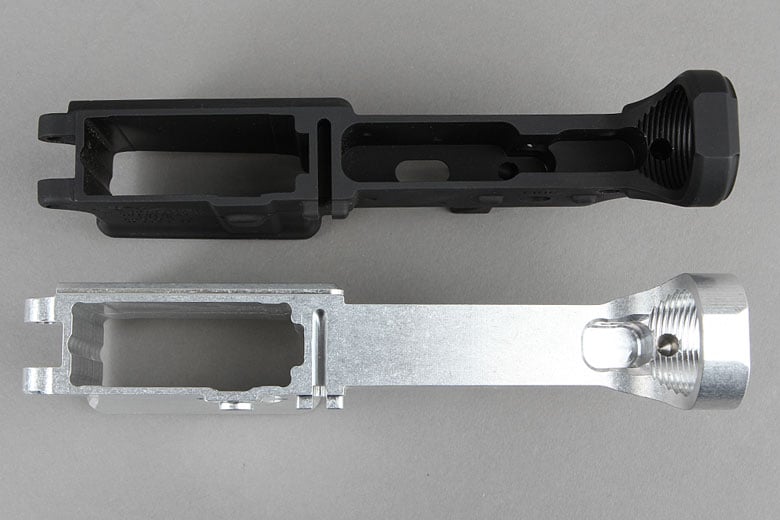


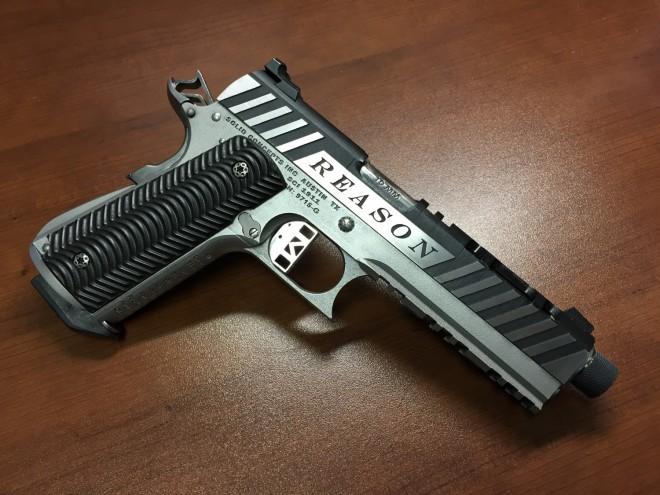





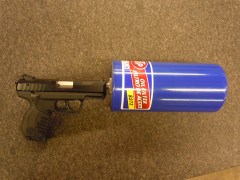




 This is Donald. Donald is a normal man, somewhat spoiled, somewhat outspoken. Donald has been a real estate mogul for the last few decades, accumulating a vast amount of wealth and notoriety. Recently, Donald was chosen to be the sacrificial lamb of the GOP to allow Hillary Clinton to ascend to her rightful place as
 So, with my ideal rifle picked out, I set out to purchase one. The problem is, I can’t fucking find one! Right now it appears that the only model commonly available is the C model, which has an AK like underfolding stock. While handy and compact, it also gets rid of the magazine storage, which is kind of the whole point of the damn gun. The A and B models are also available, but the A has an 18 inch barrel which makes it harder to store and carry, and the B model has a pencil barrel, which makes it slightly lighter but also makes it much less capable of prolonged firing. Then there is the price. Right now these guns are running about $500-$600 new. While not expensive, currently you can get a brand name base model AR15 for as low as $400 and change, and the AR is a much better platform overall compared to anything kel-tec makes. The other nice thing about an AR is that they can be separated into two halves which allows very compact storage, even more compact than a folded SU-16. The only issue is that an AR does not have magazine storage in the buttstock. Fortunately, someone else took care of that since there are several options currently available that allow you to keep a magazine on the stock of the gun ready to go. The one I purchased is made by


