Don Swissxote checking in on Catalonia… Hmmm. Looks like anothervote. When last we left this mess, the former Catalan Regional President, Carles Puigdemont, had fled to Belgium, to avoid the fate of other members of the regional government – imprisonment (which didn’t stop campaigning. *Chicago area politicians perk up*). Note, however, that the international warrant for Puigdemont was withdrawn (should he go back to Spain, I have no doubts the handcuffs would be on him in seconds).
The scenarios for post-vote Catalonia are numerous. I will glibly lay out what they are:
On the one hand, voters have been scared off from independence – by the use of force by Madrid (cops beating down people voting in the October referendum) or the number of business HQ’s fleeing Barcelona, or having second thoughts about being wholly responsible for themselves (in a national sense) now. So, they end up with MILFy Ines Arrimadasin charge….the independence movement returns to Quebec or Scotland levels of annoying/festering.
On the other hand, independence favoring parties win small – but squabble while trying to form a coalition to govern, and accomplish little to nothing before collapsing and needing new elections (see post-war Italian and Belgian governments). Being the cynical SOB that I am, I think this will end up happening… and the sound of cans being kicked down the road will echo for years.
Or, on the gripping hand, independence parties end up winning bigger – people get a case of the “fuck off, slaver” and one of the three independence parties gets enough of a mandate to lead a coalition….from exile, from jail or in Socialist person. Madrid would again suspend the regional government, send in the coppers and we would reach a decision point… give up under the force employed? Turn into a Basque style guerrilla type conflict? Start Civil War 2.0?
Costa Brava, Catalonia
As a libertarian type, I want force avoided. But, it ain’t my country/language/culture/self-determination at stake. I am not ready to go off and join the Reconstituted Abraham Lincoln Brigade as of yet. But this will be worth watching one way or the other.
P.S. For those that Twitter, follow #catalonia for all sorts of opinion and news.
There is a Romanian phrase, used when someone abuses a certain issue, which can be paraphrased along the line of, “Easy with the Western Culture down the stairs.” If you rush too much, you may break whatever you are rushing with, is the meaning. I feel that recently this is the case with Western Culture in the Culture/Social Justice/Whatfuckingever wars that do not seem to go away.
There are two facets to this. Well let’s not go to binary, like gender there are a million facets to this. One is that the CW/SJW thing is often little more than a massive distraction, a lot of noise to drown the signal, keep the participants busy while corrupt politicians keep doing corrupt politician shit. On the other hand, it cannot be fully ignored, because aspects of it are very dangerous. One of the main components of this was/is the late/great Western Culture. I will address this, sort of, kind of, with plenty of to be sure and wimpy language.
So let’s get ready to a-rumble… in the ehm Red (Pinko sometimes) corner we have the Progressive Left. In the Other Red corner we have the various flavours of the alt right. In the middle we have the enlightened alt centrist; the self-described non regressive left; the modern right; the cosmotarians; and a few odds and ends. In the end, we have the battle of progressives versus literal Nazis. And western culture is at the forefront, it is the gloves, if you will.
Culture or a pile of rocks?
To start with, let’s go to Wikipedia, because why not. “Western culture, sometimes equated with Western civilization, Occidental culture, the Western world, Western society, European civilization, or Judeo-Greco-Christian civilization, is a term used very broadly to refer to a heritage of social norms, ethical values, traditional customs, belief systems, political systems and specific artifacts and technologies that have some origin or association with Europe.”
So, as we can see, Western Culture is a very expansive category. It can mean many things to many people (for some The Sistine chapel, for others The Chive and the invention of the bikini), then and there, now and here. This is why I am rather wary of overusing it as some generic all-encompassing term in a debate. We must defend western culture is the rallying cry. Which one? Which parts of it? To what ends? These are questions I feel we need to keep in mind.
Just as a side note, I find the construct Judeo-Greco-Christian rather silly, and one of the things that annoys me about some modern conservatives. For most western history this was not a thing, as Christians were highly divided until recently and Jews have a long history of not being on the best terms with the mighty western culture. There is no single unified Judeo-Greco-Christian tradition. Yes, various flavors of Christian and Jew contributed to the development of the ideas behind the West, and the culture obviously developed in the context of religion. But this is not enough for this construct.
I might state that I am not religious and I see little worth to attaching so called western values to a religion or other in the present, especially since a number of the enlightenment people who developed these values, while most likely being religious themselves, did not approach philosophy from a religious angle. Judeo –Christian means in modern speak not Muslim and sometimes not secular, and it is an attempt to try to co-opt all sorts of people as a collective. It is, as we say in Romania, an ostrichcamel.
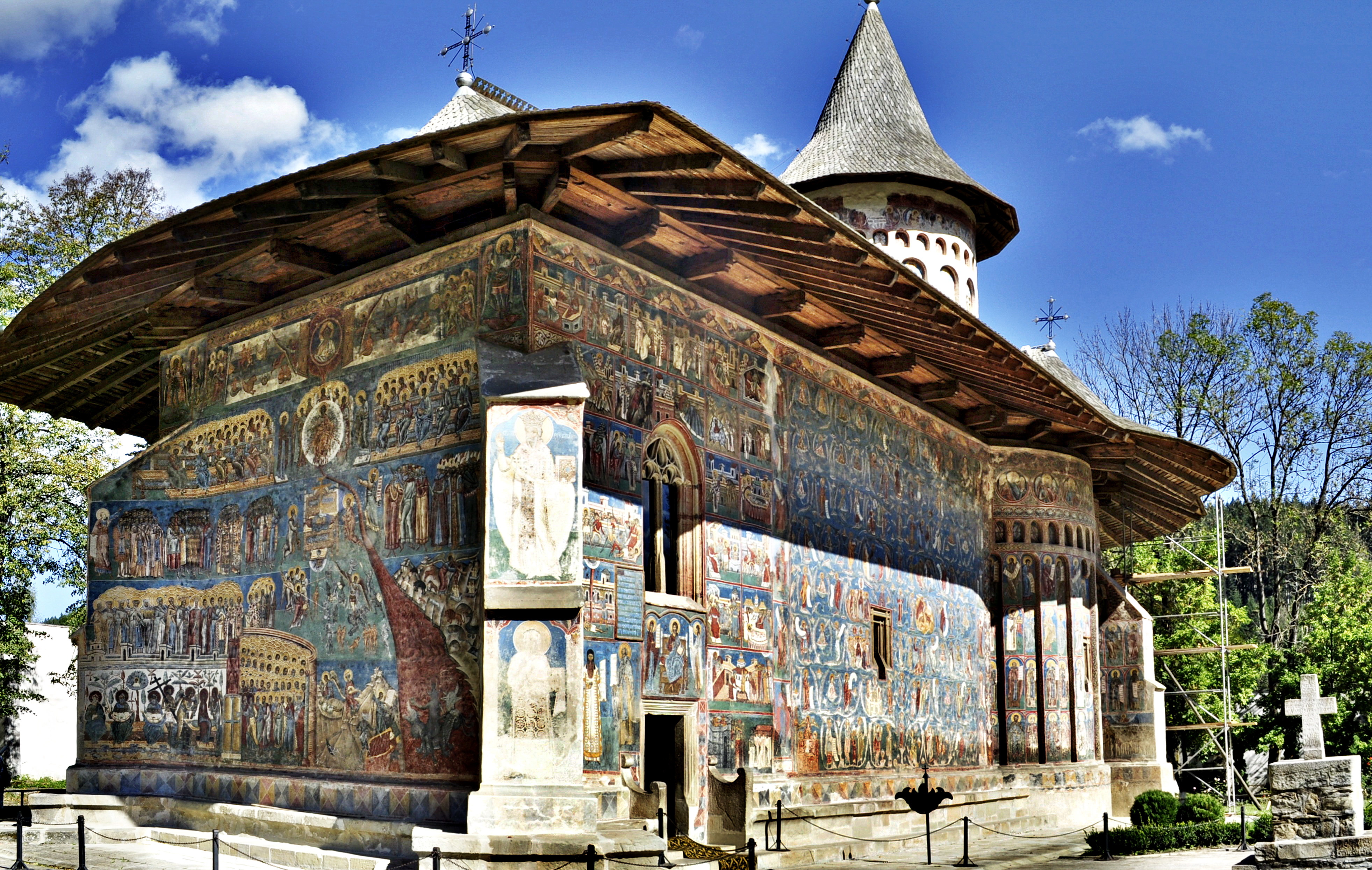
Good church need not be huge. Mind the hellfire.
Now, for a second side note, let’s get subjective, as the various warriors are wont to do. You may not have noticed, but I am a Romanian. As such, I am somewhat at the fringes of western culture. Romania was not traditionally part of it, or not fully, at least. Always scurrying along the edges, looking in. An eastern orthodox nation heavily influenced by Russian and the Ottoman Empire, the habits, mores, traditions are different. We were of course part of Christendom in the premodern era, and had elements of western and eastern culture. And many a times the leaders wanted more, Romania was always on a long slow path to being more of a part of the West. When joining the EU many said we joined Europe.
With all that said, I can say I admire many a thing about western culture, and as a modern Romanian I consider myself part of it. But I do not like to look at it as a uniform thing. As a libertarian, I like liberty and individualism. As a human I like security, prosperity and everything that comes with that. And I like the parts of Western culture that promoted those things, many then, most if not all, other human cultures. I am also critical of elements of Western Culture that did the opposite.
I do not like mindless worship of anything, including culture. And I do not like nostalgia about some long lost ideal past. There was never such a thing. All cultures need improvement and everything needs criticism. Humans, and their societies, are hardly perfect. And it looks to me like all these western culture warriors only use it as a rhetorical tool and little else.
The free speech war is a good example in this regard. One should not think rightists want to preserve free speech when they did not in the past. Just like the true face of the left free speech movement was seen after they thought they could get speech they didn’t like banned. It is also good to notice that, while free speech was a value of Western Culture and vigorously defended by many in the past, it needed vigorous defence precisely as it was constantly under attack by elements of the same culture.
One issue is that, as a libertarian, you often are accused of wanting to go back to sometime in the past because you want a reduction in taxes regulations and general involvement of the state in the economy. This is due to the fact that leftist arguing 101 is to scream racist at people, and they constantly try to equate thinking that the regulatory environment was better in the past, that the whole society was better, and that you want all aspects of that society including the racism and discrimination. This is false and should be countered, which why it is important to phrase arguments properly beyond the western culture thing.
I often sample western culture myself.
Me, I do not want to go back. I do not like the phrase going forward either to be honest. But, to take the standard analogy, going forward on the wrong road is not a good idea. I want to go down the road to more liberty. If this implies certain aspects to be more like they were in the past, it is not going back, it is going toward liberty. If I find things wrong in the past, but OK now, I want to keep them. If there was something wrong then and wrong now, I do not want to “move forward,” I want change towards liberty. But I do not appreciate keeping things as they are just because that’s how they are. If they are wrong, they must be changed.
Everyone thinks repealing laws they don’t like is progress, but repealing laws they do like is regressive. Which is natural, let’s not stop progress towards my goal. But switching targets is not regressive in itself, even if I don’t like the targets. The trick to improvement is to keep the parts that are good and change the ones that are not. Change for the sake of change is not always desirable. And not everything new is good.
With all the previous caveats, I do believe that western culture is up there with the best that human achieved, lacking as it may be. I do not judge the past based on the future, and while there are things in 1800 I find wrong, it does not in any way invalidate western culture or the achievement of those people, mostly white men who sometimes owned slaves or maybe didn’t think women should have equal rights.
Free markets and capitalism brought the biggest increase in human prosperity in history. Of course this does not mean that some industrialists did not treat their employees poorly, although governments did have something to do with constant meddling. But this does not take away the achievements of capitalism, nor does it mean that without the big government of today, conditions would have remained like in the 1800s. Society and ideas evolve, views and attitudes improve. And above all, economic and technological growth moves things in the right direction, despite what government or some of the worse industrialists would want. You do not need the benevolence of the capitalist to improve worker conditions; the market does that just fine if you let it be. But I do not glorify the 1800s.
I believe that the best development of the West was individualism and individual negative rights. This led to liberty and values that lead to a successful life. Through the tumultuous past, I see ideals of liberty as a fine wire weaved through, moving things the right way. There probably is an English expression for this but I can’t figure it out.
Be a good person. Educate yourself. Earn your keep, have stable relationships, raise you children right (should you have any), and be charitable to the less fortunate. Help your neighbours, family and friends – as long as they deserve it. Be fair, be just. Do not initiate violence. Drink good scotch. Don’t dress like a clown. This is all a part of western culture that must be not only kept but enhanced. We don’t have enough of it. But it is not necessarily exclusive to western culture and it was not, sadly, an overwhelming component of it.
The height of Western political though has been achieved
And here lies the problem that makes me somewhat more favorable towards the pro west-cult people than The Others. The right try to make of western culture something that it was not, and some sort of sacred cow. The progressive left, and even worse the postmodern left (yeah yeah I know the word postmodern gets thrown about a lot, but I believe it applies), the SJWs of the world are in fact a much bigger threat. They do want to tear down all elements of western culture. Which is stupid. It is more than stupid, it is insane. Tearing down everything means there is nothing worth keeping. This is utterly ridiculous, as they were quite obviously the most successful nations, even when it comes to the stuff leftist claim to care about such as tolerance, secularism etc. And being collectivists, they want to tear down individualism. This can only lead to disaster.
Why are these people so suicidal insane? It is hard to tell. Human nature one would suppose. They are so desperate to push their idiotic economic ideology, that they just don’t care what they destroy doing so. How someone may think this is a good idea is baffling. Fiat Socialism, pereat mundus, I suppose. Red or dead. Communism or bust.
The moderate left is timidly fighting back, and more and more. This is not just the YouTube sphere of the so called non-regressive left, but more of the mainstream. There is of course the vestige of the non-prog left, which does admit some value to western culture. These people are, of course, literally Nazis.
I was reminded the other day that the Ringling Bros. and Barnum & Bailey Circus had closed recently, and it got me to thinking about animal rights, particularly from a libertarian perspective.
Ringling Brothers…no more.
First, a bit about where I stand: I eat meat; I’m fine with employing animals for their labor; I’m also fine with keeping animals for companionship. We have an English bulldog who’s pretty awesome, if occasionally stubborn and flatulent. I hunt and fish, and I don’t have a problem with killing an animal that I’m not emotionally attached to for food. But, I don’t want to cause any unnecessary suffering to any animal, and I don’t think anyone else should, either. If someone intentionally hurt my dog, I’d inflict as much pain as possible on them, and maybe on their children, too. Ideally, I’d eat free range meat, but I haven’t done my research yet to figure out what that entails (or even means) and how to go about it.
Circuses are out for me. I don’t want animals to be kept in captivity for my entertainment. Zoos require some nuance. Some zoos exist purely for entertainment, and there are many examples of cases in which the animals in these zoos aren’t treated well. However, there are also many zoos (and aquaria) which have multiple functions of research, education, and, entertainment. I’ve had the privilege of visiting some excellent ones, including the San Diego Zoo and Safari Park, the Monterey Bay Aquarium, and the Vancouver Aquarium. These zoos have biologists on staff who conduct studies to better understand the animals, as well as biologists charged with the care and well-being of the animals. As an added benefit, those of us who aren’t biologists can visit and learn about, and, yes, be entertained by the animals.
I’m torn on medical experimentation on animals. While I realize that medical experimentation can cause suffering to animals, I recognize that it can also relieve the suffering of humans.
Now, on to the perspectives on animals rights that I was aware of beforehand. One perspective is that animals are not humans, and thus have no rights. Another is that there’s no special sauce that distinguishes humans from other living creatures (indeed, we share an overwhelming percentage of our genetic material with most other living organisms), and thus animals should have the same rights as humans. I think that these are both extreme views.
Given that western civilization is heavily influenced by Judeo-Christian values, it’s not a coincidence that the origins of some western values on animal rights can be traced to the Bible. Genesis 1:26 says “And let them have dominion over the fish of the sea and over the birds of the heavens and over the livestock and over all the earth and over every creeping thing that creeps on the earth.”
Saint Francis preachin’ it.
However, there are also many examples in Judaism and Christianity that hold that humans should care for and protect animals (see Francis of Assisi, patron saint of animals, and the analogy of Jesus as the shepherd). (Aside: ZARDOZ seems mostly concerned with grain production, but what does He command about animal rights?)
So, what are the libertarian perspectives on animal rights? It seems to me that a libertarian’s view on animal rights is largely dependent on whether one views animals as “individuals” that are afforded rights, or property, which has no rights of its own. In this respect, libertarian viewpoints on animal rights parallel libertarian viewpoints on abortion (which come down to whether one believes that a fetus has rights). My research seems to indicate that, as with abortion, the majority of libertarians seem to come down on the side of animals having no rights, but it’s certainly not unanimous.
It’s been a full year since Donald Trump was elected by Russian hackers to be President of the United States. As the country has plunged headlong into the darkest time anyone who’s never read a history book can imagine, being to the right of a ‘center’ that to the #resistance drifts inexorably leftward has become increasingly dangerous. Punching Nazis, white supremacists, and anyone who disagrees with Karl Marx has become in vogue, as has shooting at Republicans, and lately, one more person to the right of Lenin has been sent to the hospital. Rand Paul was attacked by an irate neighbor, suffering broken ribs and bruised lungs. Major news outlets will tell you this involved some sort of long-standing personal matter between the two neighbors that had nothing to do with their differing political viewpoints. The neighbor’s lawyer has made similar assertions in an attempt to protect his client from likely harsher charges. Fortunately for seekers of truth, Elie Mystal, the Executive Editor of the website Above the Law, has sussed out the real culprit: Libertarianism itself.
In his piece Libertarian Hero Meets The Justice Of The Streets (Err.. Suburbs), Mystal engages in victim blaming so obvious that he himself admits to doing so towards the end of his piece. He shrugs his self-acknowledged hypocrisy off because in his view the natural, inevitable outcome of a libertarian society is that people will physically attack each other over matters their lawyers will later describe as ‘trivial,’ because there will be no other options for people to settle disputes. The ignorance of libertarian thought he displays throughout his article is as garish as a neighboring barn painted hot pink accented with neon green lightning bolts; It’s ugly to look at, and one wonders what the person who created it was thinking, or even if they were in their right mind to begin with.
Mystal describes the atrocities Paul was allegedly committing that would, were it not for the benevolent hand of laws that would mysteriously be absent in Libertopia, naturally cause one to resort to physical violence to solve. Rand Paul allegedly grew pumpkins on his property, you see, and sometimes pumpkins smell bad. He also perhaps liked to compost on his property, which can also (if not properly done) become noticeably malodorous. And if that weren’t enough to drive perfectly normal people into fits of violent rage, there may have been lawn clippings where Paul’s neighbor thought they shouldn’t be. In Mystal’s view, the only available options someone living in Libertopia would have is to either move away or start cracking ribs. Libertarianism just leaves people with no other options, he presumes.
Anyone with even a passing familiarity with anything other than the grossest stereotypes of libertarian thought knows this to be false. Paul’s home, and his neighbor’s are part of a Home Owner’s Association, which would certainly still be permitted to exist in Libertopia. Home Owners’ Associations represent a great example of an entirely voluntary exercise in collectivism. People who buy or inherit a house in an HOA know of its existence before moving in. But if you’re in the market for a house but don’t want to be in an HOA, you do research and avoid looking at homes under an HOA. If you inherit a house in an HOA and you don’t want to be part of it, you sell the house to someone who doesn’t mind being in one. The formation, operation, and dissolution of HOAs are a valid exercise in the freedoms libertarians recognize.
This particular libertarian lives in a condominium and is the president of the association. HOAs and condo associations have rules that owners are expected to abide by, but the association cannot force compliance. What associations can do is levy fines for noncompliance until the property is no longer violating established association rules. If the problem persists and fines left unpaid, the association can, through the court system, place a lien on the offending owner’s property until such time as outstanding fines are paid up. This is something that happens pretty regularly depending on how bad an owner is regarding paying their dues to the association. The association also has some discretion in when fines should or should not be assessed, and that is laid out in rules that every owner has the right to peruse at any time. By contrast, an association representative cannot, for example, force entry into a unit to confiscate an unapproved decoration on the owner’s balcony. The association cannot call the police to have them do it unless the owner or occupant is violating the law in some way–for example, if someone is cooking outside on a grill too close to the building, the association can call the police because it violates a city ordinance. If a dispute cannot be resolved this way, owners and the association can take each other to court and have the court render judgments. But if a unit owner simply pays the assessed fines along with regular fees, the association cannot do anything further concerning rules violations unless laws or ordinances are also being violated.
My condo is on the second floor of a two-story building, with windows facing east and south. It tends to trap heat, which is great in the winter, but awful in the summer. Each unit has a permanent wall mount for a window-mounted air conditioner in the living room, but nothing in the two bedrooms. The layout of the unit makes having a cross-breeze all but impossible. So in the summer months, my unit is often hotter on the inside than it is on the outside.
I have tried to solve that by buying the most powerful A/C I could find that will fit in the wall mount, buying sun-blocking drapes for the windows, and having double-paned windows and a triple-paned glass sliding door. The sliding door did not come in an exterior color approved by the association, but I wanted triple-paned so I painted it myself after installation. I have literally spent thousands of dollars trying to fix this problem in a way that doesn’t run afoul of association rules. The problem is better, but no one who comes by in the summer thinks it’s been solved.
So I purchased a portable AC that goes up in a window. This is a violation of association rules; because they strive for the exteriors of the units to be consistent and fairly uniform, they prohibit hanging air conditioners in windows. My air conditioner is of the type that sits on the floor, with a penal for the exhaust that hangs in the window. I’ve been open with the Board of Directors about having the unit there when it’s hot. They have the option to fine me for noncompliance, and I’ve told them that I value my health and the health and comfort of my guests over the monthly fine. I wouldn’t complain or abuse my power as president to avoid paying the fine if the BoD decided to assess it, but in four or five years it hasn’t even come up. I’m aware that this may not be the norm for HOAs, as they tend to attract the sort of petty tyrant who couldn’t be elected in a one-person race, but that’s not my point.
My point is that, unlike the presumption espoused by Mystal, Paul’s neighbor had a recourse other than blind-side tackling someone who doesn’t follow HOA rules, and that recourse would have existed in Libertopia. If Paul’s neighbor has addressed his grievances to the association directors, their legal option was to assess Paul fines based on noncompliance. If Paul is paying those fines, and assuming he is breaking no local laws, there’s nothing more the association can do, and neither is there anything Paul’s neighbor can do. In this case, Paul would be complying with association rules by paying fines as directed for noncompliance. The neighbor’s next option is to see if Paul were violating any local ordinances and pursue matters with the local authorities. Those ordinances may or may not have existed under Libertopia, but the court system involved would remain.
Mystal really needs to do a bit more research into libertarianism.
One of the things that surprise me about people and politics is how little time they spend thinking about an issue. Actually thinking. Like you would think of a work problem, let’s say. Not that many people think about work problems, too many incompetents for that. But many a time I had a debate with someone on an issue, and a week later, when I asked again about it I got blank stare. They did not spend one more minute dwelling on it, thinking. I did, because I wanted to clear it in my head.
So that being said, it reminded me of some of the things that gave me thought when I started really thinking about politics. I wanted to see the general opinion of the Glibertariat about a couple of issues. Both times I started out pretty sure of myself, but actually thinking about it got me to at least be less certain. This is what made me realize that I actually have to think about these things seriously before forming an opinion, and changed the way I view issues of politics, economics etc. In this particular case both are issues of justice.
Tough but fair
One of them can be tied to the whole common law versus roman or codified law debate. How much of law should be codified, what is the relationship between The Law as a philosophical concept and legislation, how strict or flexible should a piece of legislation be and how much leeway should courts have. How many laws should there exist codified, on the book? And how strict can these laws be?
How much can you trust a pure common law? Misbehavior by judges happens. How much can you trust a strict codified system? Misbehavior by politicians is just as often at least, and there can be a difference between theory and actual cases. See mandatory minimums.
One of the things about laws is that the need to be to a certain point clear and predictable. You must be able to expect an outcome, so you can behave appropriately. This makes it difficult to have no codified laws and leave everything up to courts – whatever these may be. In customary law, of course locals know the local custom, but laws can be more than custom of the particular area.
Strict laws can be inflexible but flexible laws unpredictable. Laws can start strict and become lax with exceptions and loopholes; this makes the system poorly performing, excessively complex and unfair, as exceptions tend to favor interest groups. My general idea is if a law requires an exception, it is badly made and it should not exist until crafted not to contain one.
My original position was that circumstances vary and as such laws should be flexible. This is countered by the notion that the law should be predictable and not too much subjected to the whims of judges. My conclusion at the time was that laws on the books should be simple, clear and few – only the absolutely essential ones. Only make them about absolutely necessary things. Keep them manageable and knowable. You can’t expect people to respect laws they do not understand. Not knowing the law is not an excuse is bullshit given the complex law code we have.
Where the courts come in is in having some flexibility on punishment – deciding guilt (was it murder or self defense? did the accused do it?), fault, mens rea and circumstances and the like. And covering conflicts that are not covered by codified law, but these should be less critical situations.
A second dilemma was about corrective, preventive, retributive justice. What is the goal? Rehabilitate the criminals? Discourage others? Punish the crime, irrespective of the first two? Or a combination of all three?
Burn her!
Originally I was completely against the idea of retributive justice, for several reasons. I thought that the main goal of justice would be to minimize crime and number of people in jail. Help criminals reintegrate in society. Retributive justice felt a little too much like revenge and prone to cruel and unusual punishment, and I did not believe it to be good to have the government in the revenge business.
Doubt crept into my mind when I read a defense of retributive justice by C S Lewis. The idea was that just justice is somewhat akin to “let the punishment fit the crime”. You did something wrong, you pay the price for what you did and that is it. You do not depend on judgments whether you are rehabilitated enough, or whether your punishing is enough to deter others sufficiently. The argument was that thinking mainly at prevention or rehabilitation moves the punishment from what is just to what the Government decides is useful for the previous stated goals.
The idea of retributive justice still makes me uncomfortable, but I cannot say it does not at least have a point. And I still mostly lean towards prevention, rehabilitation. As, while the punishment fits the crime sounds good and all, how do you determine an accurate punishment for a crime? Why 5 years in jail and not 3? Why a 500 dollar fine and not a 1000 dollar fine? What is fair?
This is from a long, far-ranging discussion of economics and politics a former friend and I had on Facebook, and this post was originally written in 2013. I think this still stands up well, but this is not a new post.
My friend has a BA in Business Administration, hence the reference at least once to his business degree, and presumed cluefulness about how businesses operate and how business owners think. This jumps into the middle, and I’d rather just post this as-is, so I’ll paraphrase his points leading up to this. We wandered over to minimum wage via government regulation (which in turn stemmed from a discussion of the incestuous relationship between business and government); I’d said that most regulations are obsolete and hurt business, he pointed out that yes, some are obsolete, but others are there to protect people, and voila, minimum wage is an example of protecting workers.
My response:
You and I are coming from the minimum wage question from 2 completely different angles. You believe in (federal) government protection of workers. I believe in the (federal) government sticking to the Constitution… and minimum wage isn’t in the Constitution, even under the commerce clause (what Joe Shmoe is paid in Wichita, KS, has nothing to do with a different franchise in Kenosha, WI, selling their burgers). If it was a state minimum wage, it’d be a different thing… although I’d still be against it, the “it’s not a role of government” argument wouldn’t apply.
However, setting that argument aside, I’m still coming at it from the side of “personal responsibility”. You have 3 options as a burger flipper: either find an employer who will pay you what you think a burger flipper is worth at whatever quality of burger flipper you are (I’d assume shoddy, since you feel you need some kind of protectionism to get paid a ‘decent’ wage, but I may be wrong and you may just be ignorant and unaware that you can switch jobs without your world shattering), be the best damn burger flipper you can be and justify that raise you’re asking for (what everyone making over minimum wage does when they want/need to make more money), or learn a skilled trade or get a higher education in something and stop being a burger flipper and start being something like a carpenter or architect.
Again, I’m not talking out my ass, or in theoretical terms about things I only vaguely observe from some mystical ivory tower somewhere… I have the t-shirt. In high school and through college (and after college for a couple years, because of the recession) I worked really crappy jobs. Food Lion and Walmart didn’t pay minimum wage (even McDonald’s doesn’t), but it was bloody close. After I moved out, I didn’t make enough most of the time to cover my gas and such (I was in college by the time I moved out)… so I did the best job I could do and got raises every year. When I could, I got promotions. And when I found a job that paid me well and needed my skill set, I changed jobs and came to work at my current job. I didn’t ask the government to make anyone pay me more, or wish minimum wage was $12/hr… I made myself a better employee and justified the money I was getting, and went above and beyond so raises and promotions would be justified as well.
And since you have a BA, I assume you know as well as I do that businesses aren’t charities– they aren’t there to give workers the money they ‘want’, or deserve for being a special snowflake human being. Businesses exist to make money, and as a side effect pay people to make money for the business… and that pay is in proportion to a person’s value as an employee. If Mother Teresa sucks at flipping burgers, then dang it, Mother Teresa deserves minimum wage… or to be fired. It doesn’t matter to Burger King that she’s Mother flippin’ Teresa, man. She’s a terrible employee, and her pay reflects that.
Also worth noting is the point he’d made earlier about employees being replaced by automation if they get too expensive to employ. This is a very valid point that most minimum wage workers and people who advocate for them don’t seem to understand. Again, people own businesses to make themselves money. If they can’t make enough money, something’s got to give. And when there’s no more non-employee overhead to cut, they need to start cutting people. As a general rule of thumb, it costs about twice an employee’s gross pay to employ them (given employer shares of FICA, certain states’ income tax, worker’s comp, benefits, etc.)… so that $10k/yr employee actually costs the business owner around $20k. I’d imagine Obamacare penalties and/or post-obamacare insurance premiums have upped that 2:1 ratio. So if it costs less than $20k/yr to set up an automated ordering kiosk and a burger flipping robot, guess what a business owner is going to do?
And then there’s the economic effects of raising the minimum wage. Less than 10% of workers make minimum wage, so this would have very little direct positive effect on people. However, in short order, it would have great negative effects on a large number of people. Artificially raising the wages of one segment of the population increases cost for certain businesses, they raise their prices, which raises costs for other businesses, and so on down the line until prices have increased across the board, and we’re right back where we were. This is how raising the minimum wage is a driver of inflation.
In this country, like most countries in the world, we have a fiat currency; that is, a currency whose value is not linked to a commodity (like gold, silver, or salt), but is based on the trust that the country issuing the currency can pay its bills. By its nature, fiat currencies are subject to almost constant inflation through devaluation of the currency. Especially when the country in question is engaging in… let’s say non-optimal monetary and economic practices. In our case, budget deficits, a high national debt, and things like quantitative easing. It’s part of the reason everyone’s parents have stories of “I remember when gas was $0.35!” (for my generation’s parents) or “I remember when gas was $0.98!” (the story I get to tell if/when I have kids and they’re old enough to be regaled with tales of ‘the good old days’). Another factor in inflation is artificially raising wages– you’ve arbitrarily decided that the dollar is worth less than it is, so people need more of them. And by deciding that one segment of the population needs more, less valuable dollars, everyone else needs to have and spend more, less valuable dollars to keep up with the sudden devaluation of a dollar for a certain segment of the population.
So, with a rough idea of how inflation works in mind, it makes sense that raising the minimum wage (or even having one, I would argue) is detrimental to the economy as a whole, and you end up chasing your own tail. What happens when inflation catches right back up to you again? The cycle of artificial inflation begins again, and the minimum wage is raised, devaluing the currency and forcing business costs to go up, rippling down the supply chain, raising costs of end-consumer goods, etc. We aren’t going to rein in fiat-based inflation any time soon, but we can stop wage-induced inflation by not raising the minimum wage.
*Okay, no one said that. But this is the story of my getting into the pot business (sorry, no Mexicans and only tangential references to ass sex) and commentary on regulatory issues from a libertarian perspective.
My career has been in IT, Operations, and Finance for Food & Beverage manufacturing. I’ve got a bunch of certifications that prove I can manage a project and make improvements and create models. But the winter of 2016 was one of discontent. I realized that if I continued working in a cubicle / office at a large corporation, I was going to splatter someone’s brains all over the beige fabric cube walls. And since I am too ornery for suicide and too pretty for prison, I decided to get out of Cubeville. My performance had suffered, and I wasn’t fitting culturally at work anyway, so when they offered me a chance to leave, I took it.
My business partner is a friend from the kink community. His career has mostly been IT startups. And two years ago he started doing research into becoming a canna-business owner. When I lost my last job, he invited me over to hang out, showed me the operation, and then talked to me about my plans. At that point I wanted to simply take a month off; period. I haven’t had a vacation except for family visits, in over 5 years.
I started helping with his small med grow just to have something to do and get out of the house. The month elapsed and we started discussing it in earnest. What it would take to get involved money wise, plans, the pot market itself, the various options and strategies. I started thinking about it more and doing some of my own research. I had, by that time, decided I wanted to start my own business and this seemed like a good opportunity.
I’m not a pot user. In 42 years old and I’ve used pot maybe 10 times, all within the last few months. But that’s okay. I see its uses for both recreation and medicine as valid. One needs pleasures in one’s life, and while I think pursuing them in some moderation is better, others may have different priorities. I think that whatever risks come with using marijuana are small enough and manageable enough that I am satisfied morally about selling it as a legal product. Were, say, heroin to be legalized, I wouldn’t feel the same way as there does not seem to be a way for one to use that drug and stay productive. That was critical for my personal decision making – can people use pot and still function or even improve their functioning? I think so.
I also realized I was enjoying myself when I was helping out my friend (and now business partner). We were building things, figuring out how to get things working, digging in the dirt. I’d come home tired and dirty and happy. I spent 20 years trying to get away from anything agricultural because I grew up in a rural area and thought success was wearing a 3 piece suit. But success is enjoying your life and the people in it.
On a business level, cannabis is at an interesting place. I worked in the craft beer industry for a few years and investigated the craft distilling industry as a potential business and I found the history informative. Those families that acquired distributor licenses when the 22nd Amendment was repealed have businesses now that that are worth 100s of millions of dollars. They got in early and they are still reaping the rewards generations later. It’s also interesting to look at wine in the late 70s – early 80s, craft beer in the 80s and early 90s, and craft distilling since the early 2000s. The early movers into those markets are doing well and have strong businesses. Now’s the time for getting into the legal cannabis market.
Growing Cannabis; Clone to Flower (Startup Life, Entrepreneurship)
I didn’t chose the startup life, the startup life choose me. I use that quip sometimes when I have a play partner ask when I can tie her up again and I have to beg off due to running the business. It’s true that running your own business can suck; your boss is usually a dick that rarely wants to give you any time off, and sometimes the sonovabitch doesn’t even pay you, you have to pay him.
My wife and I have always been white collar folks, making excellent money. Further, we lived well within our means and don’t have kids. Which translated to us rarely having to worry about money. We made way more than we spent, even after savings, so we had a huge cushion. Part of being an entrepreneur is that I’ve had to give that up a little bit. My wife still has her white collar job and makes enough to support us easily. But that carries its own struggles with it.
First and foremost I was brought up to, at the least, do my fair share for my family, to be the breadwinner. Yes, yes, I’m a cis-het shitlord. Whatever. So there’s some ego issues with being dependent on the wife’s income for the bills. Also, since she is fascinated by arcane Jewish rules despite not being a Jewess, she claims that since I am technically unemployed, I owe her sex twice a day. I do my best to fulfill that obligation despite not being Jewish, so that keeps her happy with the arrangement. Be that as it may, it’s also a calculated risk, that if this hits as well as it could, in a few years the business will support us in a way that would mean a lifestyle of wealth and time to enjoy that wealth. In the meantime, we are budgeting and making sure we continue to live within our means and it is well worth it.
And that calculated risk I mention does have a huge potential payoff. This is something an entrepreneur has to learn to deal with; risk calculation. Which sounds kind of scary, but is fairly simple if you understand a little math. What’s the potential worst case scenario? What’s the best case? What are the odds of each? Apply dollar amounts to the first two and multiply them by the answer to the last question. If there are things you can do to improve the odds adjust for that, then compare your values and that should help make the decision.
I don’t want to get into specifics of how much I’ve invested, but I’ll walk through the math. I’ll also talk a little about where the investment money came from. We moved to Portland 4 years ago and bought a house at a relative low in the market. A couple of years later we moved out to the suburbs but kept the original house. Due to the house’s location, when we sold it this spring, we made a substantial sum of money. The profit was about 5x of what we expected to make in that period of time. Even after paying off some remaining grad school loans, tucking some away to fatten up the retirement account, the amount needed to invest was less than the remainder. It’s essentially a large windfall, or as I refer to it, we’re playing with house money.
So even if we lose that money it doesn’t damage us long term. There’s an opportunity cost, of course. We could have put that money into paying down our existing house, or invested it in some other enterprise. But anything we do with it would have some risk. The other potential cost is the salary I’m forgoing for the next two years while I try to launch this. That’s my downside number. Let’s call it $100k just to use a round number.
The upside, of course, is if the operation is successful. Since the partnership is 50/50, I simply need to calculate what the expected revenue will be over the next two years and what the profit is going to be. Right now, even the really poorly run ops are making about a margin that is about twice what a well-run food manufacturer makes, and about 25% more than a well-run alcohol producer. For the sake of discussion we’ll put the amount of money I can expect from the profits at $1.5mm. Again, not a real number, but it is proportional to the real number. This also ignores the longer term, and options for integrating the vertical by spinning up a processor and our own retail outlets, as well as some other strategies we have for expansion.
Alright, the risk is losing $100k versus winning $1.5mm. So what are the odds of each happening? That’s the real important part of the decision. Let’s assume the failure rate is 90%. In reality about 67% of cannabis businesses in Oregon have failed. The vast majority were due to failure to comply with either reporting requirements or basic shit like tracking your employees’ hours and properly paying them, which even some fresh off the boat immigrant can manage when starting a restaurant. So that failure rate is low, but for determining expected value, I think it’s a good number.
Multiply $100k times .9 and that’s $90k. Multiple $1.5mm times .10 and you get $150k. Subtract the $90k from the $150k and my expected value is $60k more than if I don’t take the gamble. That makes it a risk worth taking. That ignores that it is difficult to value the experience of trying to start my own business and the freedom and flexibility it provides me.
Any entrepreneur needs to think in those terms, and unless you are starting a lifestyle business, you also need to think of terms of longer term potential. My guess, taking in the past closest benchmark industries (alcohol, primarily), looking at the current demand, and at the future possibilities is that this can be huge.
The market for legal recreational and medical marijuana is massive. In Oregon at least, the demand is higher than the current level of supply. That gap is closing, but it’s going to take a few years for several reasons. Most of the early entrants were black market or med growers who had been growing enough to make a house payment. They are good growers and make some excellent weed. But their business sense is limited. They’d get hooked up with an outside investor that had the money, but no knowledge of growing or interest in being intimately involved. They could smell the opportunity, but didn’t want to be heavy lifting investors. So they wrote a check for $1mm or $2mm. And in a year, they are out of business because the grower burned through the cash. Or they can’t comply with the regulations.
We think our competitive advantage is that my partner and I have grown the product and developed our basic process along with an experienced grower. We believe that we can bring an analytic, process based approach to growing that few others can. Which will allow us to get big enough so that when the market hits saturation and prices start falling down to commodity levels, we have higher margins than average and are able to weather those changes while also scooping up smaller grows. The margins decreasing will only help us as it puts pressure on less well-run organizations.
We also plan to invest heavily in vertical integration. Once the first Tier 1 is fully operational, we’ll open a processor. Then we’ll start the franchise part of the business. There are lots of good growers that either don’t have the cash to get the land, or don’t have much business sense and know it. While we can’t own more than one license of the same type, we can lease the land and provide services to other growers and/or investors. We’re working on the details of that, but it lets us expand legally. Within five years we expect to have our Tier 1 grow, a piece of 3-5 more Tier 1 grows, a processor, and some retail outlets and a testing lab all under our umbrella. We have specific landmarks and decision points along the way. But we are building an enterprise.
Which brings us to exit strategy. Which is venture-speak for ‘how are you going to really get paid off for this investment?’ Are you going to sell it to someone else? Keep running and growing it? Own it but let someone else run it? The answer is; we have plans for each eventuality. I’ll talk more about this in the last section.
A little spindly, innit?
Medium and Nutrition (Specifics about Weed growing)
Cannabis is a weed. So it should be easy to grow. And that’s true. You really only need some dirt, some water, and some light and you can grow a marijuana plant. But there is a difference between growing a single plant and running a farm, both in terms of quantity and quality. It takes skill, art, and science to grow large quantities of high quality product in a given space. Like any other similar enterprise, it’s all about yield. And keeping costs down for each pound you produce.
So every ounce of marijuana starts as either a seed or a cutting. Either way, once the seed or the cutting has roots, it’s placed in a growth medium. That can be soil or hydroponic. We grow in a soil like medium called Tupur. It’s made primarily from shredded coconut shells. It provides a medium for the roots of the plant, but no nutritional value like various other types of soil. The advantage of that is that we can feed more often than if it were in soil and at lower PPM of the nutrients.
That helps in the next stage which is vegetation. The objective in this stage is to grow the plant and strengthen it to prepare it to go into flower. Flowering is determined by the number of hours of darkness the plant experiences each day. The plant will stay in veg as long as it has more than about 13 hours of sunlight. There are some differences between strains and the easy way is to just keep them under the right kind of lights 18-24 hours a day. The longer in veg the bigger the individual plants become and the more they’ll yield when they go into flower. It also allows for different styles of growing; trees (tall), pineapple (bushy), or various types of trellising. There is a trade-off; the longer spent in veg, the longer until you get your final flower. So there’s some balancing we’re still figuring out on that.
Once it is time to go into flower, the grower needs to see that the plants are in total darkness for a certain amount of time. Usually 12-13 hours. This is the natural state of things in the fall when the plants normally flower on their own. But it can be induced artificially outdoors by having green houses with systems for blacking out the green house, or indoors by simply turning off the lights. Flower usually lasts for about 8-9 weeks. Though for some pure sativa strains that time can as much as double.
In flower is where the bud begins to form and grow. The signs one is looking for are solid, dense buds, for the trichs or sugar on the leaves close to the buds and the buds themselves, and looking for other signs on the buds related to the color and density in the buds. There is some art to this and if you harvest too soon it can impact the levels of THC and CBDs, as well as the taste and the quality of the smoke. Harvest too soon and the smoke can be not as smooth or be “speedy” meaning you get amped up instead of relaxed.
When the bud is ready, it is time to harvest. This involves cutting down the plants so that the buds can be dried and cut away from the branches and remove the unwanted stems and leaves. The bud also needs to cure a little while to make it the smoke smooth and maximize flavor. Each bud has to be trimmed and the old school way is to hand trim it so you leave just the right amount. For large harvests though, machines are used. Slightly lower quality, but much more efficient even than orphans. Once the cure is finished, it is time to sell.
Selling for a producers is wholesale. You’re usually selling pounds at a time to dispensaries. There’s some sales effort involved, but much of that is simply taking samples to the buyer at a dispensary, smoking it with them, and then arranging the order and delivery. The three biggest factors are the amount of THC and CBDs, the way it looks when displayed (bag appeal), and lastly how it actually smokes.
Insect & Pest Prevention (Taxes, Regulation, and Weed)
When you wait too long to harvest…
Regulations surrounding weed are interesting. They fall broadly into three types in the state I’m in. First are the types of license, second are zoning related for getting your license, and the rest are operational regulations for keeping your license and being able to sell your product legally. The industry is over regulated, but then, virtually every industry is. And in some ways, pot is less regulated than beer, wine, and liquor if you put aside Federal laws. It’s also less regulated than the food manufacturing industry. The regs are cumbersome and immoral because FYTW and god forbid people actually /enjoy/ themselves, but that’s true for many products. In this section I’ll try to review the basic regulations and how they interfere liberty and some of the unintended consequences I think they bring about.
License Types – One can have either a med license or a recreational license. With med you pay an extra fee on your med card and designate a grower. Depending on where you are, you are allowed a certain number of plants in flower at any given time. There is no real limit on the number not in flower or on the amount produced. You can stack cards, meaning get someone with a card to designate you as a grower, but there are limits on the maximum number of cards you can stack. Other than that, there is not much regulation or reporting required. And if someone reports you, the cops have to call and schedule an inspection when it is convenient for you.
Recreational is a different game. It is more complex and brings with it more reporting and regulatory oversight. But that plant limit goes away and is replaced with square footage limits. In Oregon, there are no limits on the number of people who can have a recreational cannabis license for any of five categories; Producer, Processor, Wholesaler, Retailer, or Research. The same person or group can have all five if they like. And there are different types of sub-businesses. For example, a seed bank is considered a producer. A lab is considered a processor. A home delivery service is a retailer. The exact same ownership group can’t own more than one license of the same type, but there are ways to burn that bridge.
Zoning – The way zoning plays into is that each county is able to have its own zoning regulations related to the various types of licenses. So they can designate various zoning types as allowing only producers and whether it is only indoor or outdoor producers. Any interesting side thing is that the difference between indoor and outdoor is whether the structure has lights. So if you have a greenhouse with no lights, it is an outdoor grow. If you add lights, you are an indoor grow. The reason that matters is both zoning and that a Tier 1 license (the current largest) allows for 40k sq ft of canopy in flower outdoors. Indoors each sq ft of canopy counts for 4 of those sq ft. So effectively it is 10k sq ft. of indoor space allowed. Or you can do a mix of say 5k indoor and 20k outdoor.
There are also zoning laws related to minimum property size, how close to the property line the grow can be, what kind of odor remediation has to be done, visibility of lights, and the kind of fencing and access control that are required. Those all vary for the different kinds of rec licenses. There are other oddities such as you can have a Producer license for land that is considered Agriculture only and it will satisfy that requirement, but you can’t count the income from that toward your tax status. This is one area where the zoning is slightly more complicated than other agri businesses.
Operational – The real regulations come in as part of applying for the license and keeping it. The biggest are all around reporting. The weed has to be tracked individually by plant, including the state of life it is in, and any changes made to it. So, for example, plant 001 has to be trimmed. You have to account for the weight of how much of that is disposed, and if any clones are made from it, you have to track that as well. Once harvested the weight of the flower and any waste or other byproducts have to be tracked. All those numbers have to be reported to the agency monitoring compliance, the OLCC. When you sell any product to another rec license holder, you have to track that as well, so that there is ‘seed to sale’ visibility and prevent weed going into the black market. This is actually common in the food, beverage, and alcohol industries, at least the tracking if not the reporting.
To add to that, the entire grow operation has to be covered by cameras that run 24/7. Again, this is to make sure you aren’t slipping stuff out the back door into the black market. The recordings have to be made available to the OLCC at their request for spot checks. It’s also security for the rec operation as it helps with dealing with any thefts. Slipping stuff out the back door is really dumb. As we all know, the back door is for going in. *ahem* When people do this, they are risking 100s of thousands of dollars of revenue for a couple of extra grand by selling to the black market.
The last of the big three are testing requirements. For every 15 pounds of product, you have to take random samples and send them to a lab for testing. The testing provides proof that you haven’t used any banned pesticides and that your weed is ostensibly safe to consume (compared to literal Mexican ditch weed, most of the stuff on the banned list could be safely used). It also provides information on THC and CBD content that has to be placed on labels for packaging.
There are some other minor things related; you can’t have barb wire on your fencing, you can only have so many visitors per year to a grow operation, and a few other things. But the other three are the big ones. Compared to other industries, they are a little intrusive, but not as complicated.
From a libertarian perspective, the zoning, the size limits and the like are all ridiculous. Those are things which can be worked out by individuals. The monitoring to prevent the black market is, of course, ridiculous. Any adult who wants to buy should be able to buy however much they want from anyone willing to sell it. And the testing reqs are things the free market would demand anyway. So they simply add cost to the entire enterprise without much real value.
Harvest, Trim, Cure and Sell (Where I think this is leading)
From a macro perspective, I think full legalization of marijuana / cannabis is on the horizon. While Sessions has a hard-on about it, I am not particularly worried that he’ll go after legal producers in states where it recreational is legal. Oregon makes far too much tax money from weed to cooperate if the feds go after their legal producers. But the state does have incentive to cooperate in going after black market producers. Which allows Sessions to beat off about stopping the demon weed and the states to force more of the black market producers toward getting legal so they can get that sweet, sweet lucre. Extortion 101.
Beyond that, the real question is when it will be removed from Schedule 1. My estimate is sometime in the next 8-12 years. We’re down to only 2 states where marijuana possession is fully criminalized. All the rest range from being fully legal for both medical and recreational (8 states) to simple decriminalization. The holdouts are really the Midwest and the south east. My guess is that once Texas and/or Florida allows rec or one of the south east states (NC, SC, VA, TN, AL, GA) allows med and/or rec that’ll be the final nail in the coffin.
There’s also growing pressure from various corporate interests. Monsanto is huge in the space at providing lights and nutrients and the rest of the infrastructure and equipment. There is interest from the tobacco companies as well, but they can’t get involved until it is legal nationally. Pharma is opposed at the moment, but I think if you ever see Merck or Bayer get onboard that could help speed up the change.
As I mentioned earlier, cannabis wholesale prices are going to fall as more competitors enter the market. As that happens, you’ll see the standard consolidation. The enterprises that are well run and forward looking will start opening operations in new states that open up their laws. They won’t be able to transfer between states, but they’ll be well positioned to gobble up the smaller operations that have good growers, but poor business practices. And the ones that survive that sorting out and are large enough to be operating profitably once national legalization happens will be acquisition targets for the Monsantos and Mercks and RJRs.
I don’t think the regulations will ever be less than they are now. Unfortunately, I simply don’t see a libertarian moment occurring that will bring the overall level of regulation down. The best the cannabis industry can hope for is a similar level of regulation to the alcohol industry, unfortunately. Which proves we don’t live in the best of all possible worlds, but it would be an improvement over the current situation.
I thought the topic was done with. The Catalonian leadership had waffled, Madrid had growled and it looked like the whole thing was done. A bluff called and folded.
Remember, Sully, when I promised not to talk about Catalonia anymore?
But, as in many things…I was wrong. The Spanish central government appears to want this over with, once and for all. As I have been questioning – what does this matter to a libertarian? Is this a case of “When in the course of human events it becomes necessary for one people to dissolve the political bands which have connected them with another and to assume among the powers of the earth, the separate and equal station to which the Laws of Nature and of Nature’s God entitle them“? Or just a bunch of whiny Socialists saying “What do we want? Socialism! Where do we want it? Here!” Should that even matter?
And now my bid to win a Judge Napolitano Medal for Meritorious Question Marking:
A good point Playa Manhattan had brought up – at what point is enough of the populace saying “we want out” enough? The referendum that trigger this shitstorm did not see even majority of eligible voter participation. Is there a number where you can draw a line and say “OK, there it is, enough to call it just”?
What happens to someone who wants to remain Spanish? You see a lot about the Spanish Constitution saying Spain is indivisible – does that hold for people who were not even born, or of age when it was adopted?
Will Madrid’s continuing crackdown push Catalans to say “hey, maybe the independence types are right…Madrid really does want to crap on us!”?
Can we just airdrop STEVE SMITH or send Zardoz over there to solve the whole thing?
I am torn…but if pushed, I would say that I would reluctantly back the Catalans. I do truly believe that Governments are instituted among Men,deriving their just powers from the consent of the governed.But I can be convinced this is not the case here. Discuss, debate and snark, as you will.
Looks like I have my answer as to what would happen with Catalonia…the separatist administration of the Province has blinked. The Madrid government is still making sure this isn’t a cutesy effort to avoid conflict and depart later.
So looks like we won’t get a test case to see how Europe/the EU would react to secession hitting a core state.
Oh…This makes it 0-2 recently, with Scotland, Catalonia not jumping ship. Calexit hardest hit?
Something every libertarian knows is that many people see liberty differently than themselves, and most want to expand the liberty they feel is lacking, not liberty as a general value. Case in point, in my fair country, guns are hard to acquire by civilians, but most to don’t see this as an infringement of liberty.
I wrote a post before about freedom de facto and de jure. There is also the distinction between actual and perceived. I do not smoke marijuana, so I do not see marijuana prohibition as an infringement of liberty. I drink beer and would be outraged at beer prohibition. Most people believe themselves to be free enough, as long as the world seems to be generally how they like it. They feel more liberty with compulsory government healthcare, for example, than without, and care little that others feel their liberty infringed by this. They are, of course, outraged about every little thing they happen to care about and does not go their way.
I was thinking of the perception of freedom by children, which is quite different than adults. A child, as long as he is not an orphan toiling away polishing monocles, sees life–and freedom–as doing as much of what he likes as possible. Often playing. They live in a perfect socialist world–their family–and cares of money or economics are usually distant, relative to adults. This as long as there is a minimum standard of living–and this does not have to be too high, having a roof over their head and food in their belly often is enough. Those from reasonably responsible families, lower middle class upwards, have a special type of freedom, freedom from care. Of course, a child’s real liberty is quite restricted. But the reason this is–their immature mind–is the reason they don’t care about the adult stuff–entering contracts, for example. They, of course, can have a temper tantrum when the freedom they care about–let’s say drawing on a wall–is infringed.
Some left-wingers are much like children in their view–they want the victuals taken care of and want to do what they will with their time. They want to play free from care. Sadly this does not work for adults, wish as they might. But this is not the point of this post, although I can’t pass an opportunity to mock the left.
I was thinking of my very own childhood as an example of a moment of feeling pretty damn free, compared to now, when I perceive all sorts of infringements upon my liberty. Romania still has a sizable rural population as EU countries go, with many country dweller practicing more or less subsistence agriculture–non-remunerated family laborers, as they are called in government statistics.
There was a rather fast attempt at urbanization during communism, to build the glorious industry of the multilaterally developed socialist society. Many urbanites had elderly parents in the country, and it was the custom for city kids to spend holidays with rural grandparents. I was no exception. This was mostly due to lack of availability of other things to do with children when schools closed, but also because it was thought to be good for kids to spend time in the country. I agree with this, I can say they were some of the happiest times of my childhood and were actually good for my development. Those were the days my friend, we thought they’d never… Moving on.
I had no major trauma as a child. I was healthy and so was my family. While not rich, we never really had to worry about our next meal. My parents worked hard and managed to provide as well as possible in those days. The collapse of communism was chaotic for most Romanians, but as a child, I was insulated from most of the worst stuff. It never touched me; I didn’t even realize a lot of it, beyond the sudden availability of a bounty of goods to buy–although not that much money to buy all of them–unlike the last stark years of the old regime.
My grandma lived off the beaten track–as Romania goes–a village along a small river in a valley surrounded by wooded hills. The comforts were not great, but they needn’t be. No running water and the toilet was a latrine unconnected to the house, which got pretty interesting come winter when the blizzard was blowing between the wooden boards. The TV was a black and white vacuum tube number and it needed a minute or so to warm up before starting. But did we complain? I think not. Kids these days!
Back then we were as free range as it got and had the kind of freedom that only a kids have. We had some chores–all village kids did–but not as many as the local boys, we being holidaying city slickers and the like. So much so that the chores were almost fun. Feeding livestock, drawing water from the well (tastier than anything we got in the city), helping in the garden. Those sorts of things took a few of hours. Maybe an hour of school work was needed–we had “holiday homework”.
After that, the long summer day was ours. Nothing we had to do–except be close to home after dark. Not a damn care in the world. We were a gang of some 7 or 8 boys with little adult supervision. There were, as you can imagine, no play dates in rural Romania. As an adult, I now appreciate the value of unstructured play. We had control of our time, and always found the way to stave off boredom.
At no certain time of the day, we would drift to the unpaved road outside the yard, and find whoever drifted there at the same time. In summer, we would have a daily swim in the river–we had our deep holes in the otherwise shallow stream, no adults, no lifeguards, nothing. We would – like all Romanian kids – play football or just wander the hills and forest. All we had to do is scream “Granma we’re going”. We would jump off a high dike in the water, climb trees, and scale ravines and all the good things reckless boys do. Scrapes and bruises were common, but no one got really hurt – some luck involved, I guess, probably lots of kids got hurt in Romania. But bad cases were rare – none in my memory among my group. We were mostly shirtless, often barefoot; with a tan no beach holiday can ever give. We had bows with reed arrows, slingshots, pocket knives, and access to axes, hammers and more.
Average lane in rural Romania, give or take
In a way, country life spoiled me–all summer and some of the autumn I ate just-picked fruit, straight from the tree, and vegetables from the garden. I do not like fully ripe fruit, just about halfway so to be somewhat more sour than sweet, so I could choose just the ones I liked. Milk came from cows those days, not from cartons, and the chickens ran around the yard eating bugs and grass, and the meat and eggs tasted nothing like 90% of store chicken.
It is hard to find good food in most city stores and markets–although things are improving. I am not going to start praising organic for the sake of organic, but most fruit and vegetables in the city markets are not picked at the right time and spend some time in crates. The stuff in supermarkets, at least in Romania, is inedible to me. I don’t know if it was in my favour to get the taste for the good stuff or, like life-long city dwellers, to think the food you find is good, because you don’t know better. I am a city person now and like it that way, so I won’t go back to live in the country anytime soon. The trade-offs are not worth it. But I can have the odd pastoral fantasy. And I can be amused of urban friends who couldn’t tell a sheep from a goat up close well in their twenties.
In the end, rural childhood was a taste of freedom missing from some city raised kids, and one I won’t likely find again. Maybe it is one of the many reasons urban folk favour government on the bigger side. Or maybe not. As country grandparents start disappearing, new generations of kids will not have access to this. They couldn’t, really. Or maybe they will from a VR headset or the next Minecraft. They will have many things I did not, and anyway you can’t go all Luddite about things, and I do not. But one can occasionally be nostalgic of things past.








 Also worth noting is the point he’d made earlier about employees being replaced by automation if they get too expensive to employ. This is a very valid point that most minimum wage workers and people who advocate for them don’t seem to understand. Again, people own businesses to make themselves money. If they can’t make enough money, something’s got to give. And when there’s no more non-employee overhead to cut, they need to start cutting people. As a general rule of thumb, it costs about twice an employee’s gross pay to employ them (given employer shares of FICA, certain states’ income tax, worker’s comp, benefits, etc.)… so that $10k/yr employee actually costs the business owner around $20k. I’d imagine Obamacare penalties and/or post-obamacare insurance premiums have upped that 2:1 ratio. So if it costs less than $20k/yr to set up an automated ordering kiosk and a burger flipping robot, guess what a business owner is going to do?
 In this country, like most countries in the world, we have a fiat currency; that is, a currency whose value is not linked to a commodity (like gold, silver, or salt), but is based on the trust that the country issuing the currency can pay its bills. By its nature, fiat currencies are subject to almost constant inflation through devaluation of the currency. Especially when the country in question is engaging in… let’s say non-optimal monetary and economic practices. In our case, budget deficits, a high national debt, and things like quantitative easing. It’s part of the reason everyone’s parents have stories of “I remember when gas was $0.35!” (for my generation’s parents) or “I remember when gas was $0.98!” (the story I get to tell if/when I have kids and they’re old enough to be regaled with tales of ‘the good old days’). Another factor in inflation is artificially raising wages– you’ve arbitrarily decided that the dollar is worth less than it is, so people need more of them. And by deciding that one segment of the population needs more, less valuable dollars, everyone else needs to have and spend more, less valuable dollars to keep up with the sudden devaluation of a dollar for a certain segment of the population.
 First and foremost I was brought up to, at the least, do my fair share for my family, to be the breadwinner. Yes, yes, I’m a cis-het shitlord. Whatever. So there’s some ego issues with being dependent on the wife’s income for the bills. Also, since she is fascinated by arcane Jewish rules despite not being a Jewess, she claims that since I am technically unemployed, I owe her sex twice a day. I do my best to fulfill that obligation despite not being Jewish, so that keeps her happy with the arrangement. Be that as it may, it’s also a calculated risk, that if this hits as well as it could, in a few years the business will support us in a way that would mean a lifestyle of wealth and time to enjoy that wealth. In the meantime, we are budgeting and making sure we continue to live within our means and it is well worth it.

 Harvest, Trim, Cure and Sell (Where I think this is leading)