Category: Liberty

  • The states and grand juries, Part Two: Historical vignettes of grand juries under siege

    Introduction

    “No state shall make or enforce any law which shall abridge the privileges or immunities of citizens of the United States…” – Fourteenth Amendment, U. S. Constitution

    “No person shall be held to answer for a capital, or otherwise infamous crime, unless on a presentment or indictment of a grand jury, except in cases arising in the land or naval forces, or in the militia, when in actual service in time of war or public danger…” – Fifth Amendment, U. S. Constitution

    We saw in Part One how, according to the Supreme Court, the Fourteenth Amendment doesn’t require the states to obey the grand-jury clause of the Fifth Amendment. Most of the Bill of Rights has been applied to the state – “incorporated” is the technical term – but not this part.

    (In its incorporation cases, the Supreme Court likes to talk in terms of “due process,” but here’s Justice Clarence Thomas explaining how the Privileges and Immunities Clause is what we should be looking at.)

    For the most part, when the U. S. Supreme Court exempts the states from part of the Bill of Rights, most states don’t take advantage of this. With some exceptions, the states chose on their own to obey the Bill of Rights, even when the Supremes wouldn’t hold them to it – state courts would sometimes interpret some rights differently than the federal courts, but they admitted the rights were applicable, if only as a matter of state law.

    That’s not the case with the grand-jury clause. Here, the Supremes opened the door for the states to disobey this clause, and the states rushed through the open door.

    Between the Civil War and the end of the First World War, many American states amended their constitutions so that suspects could go to trial for serious crimes without the approval of a grand jury (Michigan had started the ball rolling on the eve of the Civil War). This analysis summarizes the situation as of 2014. In most cases, grand juries were kept in reserve in case the prosecutors, in their discretion, wanted to use the grand jury procedure. Only two states – Pennsylvania and Connecticut (I would probably add Michigan) – banned grand juries even as an option (apart from extraordinary cases). Twenty-three holdout states still mandated that certain serious crimes be reviewed by grand juries, at least if the suspect demanded it.

    Rather than give a comprehensive history of the victories of “reformers” who curtailed grand-jury rights in state after state, let me attempt to give some historical vignettes, and tie these vignettes together with some semblance of narrative coherence. Then later, I’ll give an account of the triumph of the reformers in their battle against the grand jury.


    The Plessy Judge vs. Grand Juries

    U. S. Supreme Court Justice Henry Billings Brown came to the Court too late to take part in the  Hurtado case, which said the states could limit or abolish the right of a suspect to have his case considered by a grand jury. But Brown was one of the many would-be reformers of that era who wanted the institution of the grand jury largely abolished.

    "Don't let the author of the post fool you - just because I said something doesn't make it wrong...that's just guilt by association! My being wrong was an accident which could have happened to anyone."
    Justice Henry Billings Brown

    Brown gave a speech to the Ohio Bar Association in 1892 that included the judge’s discussion of this issue. Getting rid of grand juries, said Brown, would make criminal procedure more simple and efficient. Brown noted that he had begun his legal career in Connecticut, where grand-jury indictments were only required for crimes punishable with death or life imprisonment. Then Brown boasted of his fifteen-year legal career in Michigan (1860-1875), where grand juries were rarely used and were never required before a defendant could be brought to trial.

    Brown suggested that grand juries may have been necessary in England to protect suspects against false charges by private accusers, but this problem didn’t exist in America. In America there were public prosecutors to bring charges and judges to rule on probable cause, and with these steadfast public servants on the job, Brown triumphantly concluded, grand juries were no longer necessary to shield suspects from wrongful accusations.

    Brown went on to praise trial juries for their power of nullification – they could spare a guilty defendant, if punishing him went against local community norms. Of course, grand juries could perform that function too, sparing worthy but technically guilty suspects from the ordeal of a trial, not to mention saving them many legal expenses. That did not seem to occur to the Justice. “I think the question whether a man in a particular case should be punished for a crime is a question that is properly left to the public,” Brown said. But under Brown’s scheme, the nullification of an unfair charge would have to wait until the end of an excruciating trial for the suspect, since “the public” would only be able to get a word in edgewise after the trial was over. The public would be kept out of the decision of whether to bring charges in the first place.

    Another defect in Brown’s logic is apparent with the growth of the plea-bargaining system, which requires a defendant to gamble on the possibility of a higher sentence if he wants to try his luck with a trial jury.

    Brown concluded his speech with a boast that “[t]he Anglo-Saxon is a slow-moving race, but it rarely takes a step backward. It makes mistakes, but its progress has been in the right direction. No serious mistakes have yet been made.”

    Speaking of serious Anglo-Saxon mistakes: four years after his speech, Brown again showed his ability to have things both ways and to spin nice-sounding legal theories which were oppressive in practice. Brown gave the Supreme Court’s decision in Plessy v. Ferguson. States could pass Jim Crow legislation separating blacks and whites, Brown’s opinion declared, so long as the separate facilities were “equal” (Justice John Marshal Harlan dissented in the Plessy case – Harlan had also defended the right to a grand jury in his dissent in the Hurtado case). Brown had affirmed the importance of equal protection under the law, while negating this principle in practice with his endorsement of racial segregation. In a similar manner, Brown had praised trial juries for their power of nullification, while calling for the abolition of grand juries which were in the best position to nullify charges against a suspect before he could be dragged through the court system.

    Justice Brown gave a great speech, he wrote a textbook on admiralty law, but do they call him Justice Brown the textbook writer? But give one racist decision...
    Plaque on Homer Plessy’s tomb, New Orleans


    Grand juries as scapegoats for police abuse

    The fact that one of the most infamous racists in American judicial history wanted to abolish grand juries hasn’t stopped modern, hip and woke activists from throwing the racism charge at grand juries themselves.

    In Minnesota, a proposed state constitutional amendment on the 1904 ballot would abolish the right to a grand jury and empower the legislature to decide how prosecutions were to be initiated – and it was correctly anticipated that the legislature would allow the elected county prosecutors to bring charges without grand jury approval. This concerned an anonymous “Voter,” who wrote to The Princeton Union to warn against the amendment. This voter was more skeptical about the professionalism of prosecutors than Justice Brown had been:

    The grand jury is a body of citizens who are selected regardless of political belief or creed….[T]he law throws around them secrecy in their actions and they are entirely removed from all political taint or influence. It very often happens that county attorneys are not men wholly competent to exercise powers ordinarily delegated to a grand jury. Much of our politics is run on the “good fellow” plan and sometimes men are kept in office for being good fellows or for various reasons, regardless of qualifications or fitness for office….[County attorneys] are human and to say that their judgment in a case would be as good as as that of the members of a grand jury would be to make an extravagant statement.

    This joke is not intended as criticism of any specific living person
    The “good fellow” plan

    A majority of Minnesotans went ahead and approved the amendment despite these arguments, and the legislature proceeded to give county attorneys the option of bringing charges without using grand juries. Grand juries would still be held in reserve if the prosecutor wanted to employ them, but suspects would no longer have the right to have their cases considered by grand juries. The optional system necessarily gives grand juries a bad odor – prosecutors who use grand juries when they don’t have to do so are often hiding behind the grand jurors’ skirts in order to pass the buck for controversial decisions. And sometimes the public falls for it.

    In 2015, two Minneapolis cops confronted and shot Jamar Clark, who died of his injuries. The fact that Clark was black made the issue particularly volatile. Protesters demanded that the county attorney, Mike Freeman, investigate the shooting without involving a grand jury. Freeman had this option thanks to the voters’ decision back in 1904.

    "Please take away rights from these people we don't like!"
    Minneapolis protesters in the Clark case

    The protesters got their wish. Freeman announced that his office would no longer use grand juries when investigating shootings by police. The president of the Minneapolis NAACP, Nekima Levy-Pounds, said:

    I am overjoyed that in this instance Mike Freeman decided to do the right thing. Mike Freeman is fully aware that the grand jury process has been ineffective here and nationally in holding officers accountable. I believe sustained community pressure played a huge role in Mike Freeman’s decision.

    Then Freeman, without the help of a grand jury, announced he wouldn’t be bringing charges. The omission of a grand jury didn’t placate the protesters. An NAACP spokesperson (not Levy-Pounds) said, “You, Mr. Freeman, did not give a fair and accurate portrayal…and let me tell you: If the city burns, it’s on your hands.”

    Last I heard, Minneapolis was still standing, though the shooting did provoke some protests. Nevertheless, cutting the grand jury out of the loop in the Clark case didn’t ease community tensions, or lead to charges being filed (assuming for the sake of argument that charges ought to have been filed).

    The opposition to grand juries was exacerbated when a grand jury in Missouri failed to charge Officer Darren Wilson for shooting Michael Brown. The grand jury’s decision sparked riots. But the Obama/Holder Justice Department, examining the evidence against Wilson, also decided not to bring charges, and there was no grand jury involvement in that decision. So a grand jury took the rap for taking the same position on a racially-charged police shooting as the country’s two top-ranked race-baiters.

    (Click here for an article about a controversy over using grand juries in police-abuse cases in California.)


    Grand juries came first

    The grand jury system was itself created through the actions of a would-be reformer, Henry II of England. The ruler who encouraged St. Thomas Becket’s assassination…

    "Stop resisting!"

    …was not a civil libertarian, but he “built better than he knew” in creating the grand jury. Henry was thinking more in terms of law and order when he decreed that panels of his subjects would be summoned and commanded to report about crime in their localities. What Henry wanted was to root out criminals who had managed to evade justice. Before Henry’s decree, bringing alleged criminals to trial in the secular courts required a private accuser to voluntarily come forward, risking punishment if he failed to prove his charge – and risking retaliation from the criminal. Henry knew that there were criminals running around who were known to the general public, but not known to the courts, since nobody had the guts to make a formal accusation. Not to mention that England was an occupied country whose rulers spoke a foreign language (French) and might not be au courant with the news circulating among their English-speaking subjects.

    So Henry II’s early versions of grand juries were required to name people in their area who were believed by the public to be guilty of serious crimes. The grand jurors were not making their own investigations or reaching their own conclusions, but were reporting what was widely believed among their neighbors. Malicious local gossip need not be reported – just the solid consensus of public opinion.

    King Henry, the scourge of the Church, was actually adapting a procedure used in England’s Church courts. The Church’s jurists and reformers borrowed from Roman law the maxim that the public interest required crime to be punished. This was in contrast to the Germanic idea of using the justice system to mitigate blood feuds. The descendants of the Germans who conquered the Western Roman Empire wanted people who had mortal grudges against each other to resolve their differences without dragging entire clans into Hatfield/McCoy style, multigenerational cycles of reprisal and counter-reprisal. So if angry relatives came seeking an alleged murderer, the matter would be settled with a trial by battle (if the feud was among aristocrats) or by some form of ordeal (if the feud was among the lower orders) – putting your hand on a burning piece of iron, getting thrown in water to see if you floated, trying to swallow a morsel of bread after boasting of your innocence (choking=guilt). If these methods didn’t identify the criminal with 100% accuracy, at least it was an agreed-upon method, presided over by priests, to settle the feud and move on. And if a crime didn’t spark a feud, or if the victim or their would-be champions were too weak, then it was like “OK, forget about it and let’s have some more mead.”

    "Are you sure this is mead? It's kind of warm and vinegary."

    The Church’s reformers noticed that a lot of crime was overlooked in this way, and that trial procedures left something to be desired in terms of accuracy. So the Church courts, at least in England, came up with a procedure which seemed to inspire Henry II. Instead of waiting for a private individual to take the initiative and prosecute, the Church’s judges would identify a suspect and summon a panel of the suspect’s neighbors to see if public opinion regarded the person as a criminal. If the community wasn’t fairly solid in believing that the suspect committed the crime in question, that was the end of the matter – or rather, any crimes would have to be settled in the “internal forum” (the confessional). But if the community witnesses were like, “yeah, everyone thinks he did it,” then that counted as “fama” – the equivalent of a formal accusation – and a trial would begin.

    King Henry thought that was a good idea, so he created his early version of the grand jury to report to the secular courts about those people whom local public opinion identified as serious criminals. If a person was so reported, the accused would undergo an ordeal – apparently the throw-them-in-water-to-see-if-they-drown ordeal – because the criminal trial jury hadn’t been invented yet. Yes, in criminal cases there was only one jury, and that was the ancestor of the grand jury – and unless you put your reliance in the cold-water ordeal, you better hope that public opinion, as reflected by the grand jury’s accusation, was accurate.
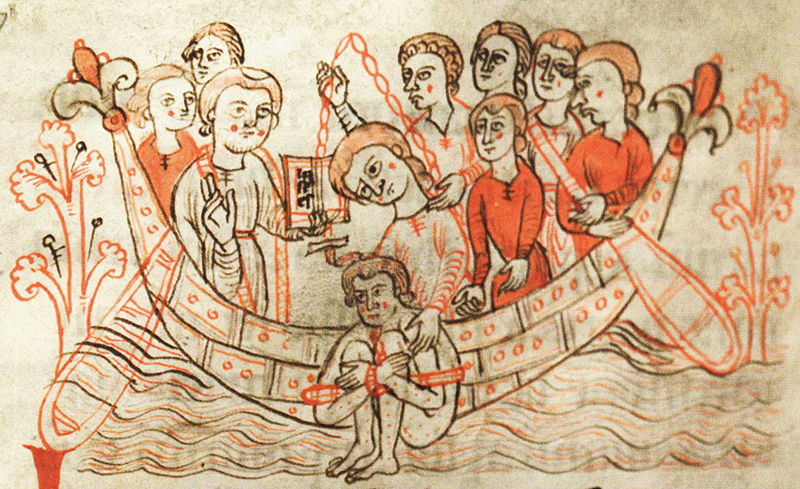
    If they weren't immersed in cold water in ordeals, medieval people would never have taken baths at all
    “So if the water receives my body, I’m innocent? And if I float, I’m guilty, and you execute me? It’s a good thing the grand jury correctly identified me as the murderer, otherwise I’d be really annoyed at this whole procedure.”

    The creation of the English criminal jury was kind of forced on England by the Church. The Fourth Lateran Council in 1215, decided that priests should not preside at ordeals – because priests shouldn’t be shedding blood and because ordeals were not always reliable anyway. Without priests to bless the water ordeal, the practice fell into disuse, and so the English started using trial juries to decide the guilt or innocence of people who had been charged by grand juries with serious crimes.

    Another important decision of the Fourth Lateran Council was in clarifying how church courts would go about ascertaining whether a suspect had a reputation as a criminal, so that the court could proceed in the absence of an individual accuser. It wasn’t enough if the rumors against the suspect were generated by “enemies and slanderers” – the public accusations had to come from “prudent and honest persons, not once only, but often.” Commentators gave Biblical examples: the clamor against the sinners of Sodom and Gomorrah, which prompted God to investigate (Genesis 18:20), and the complaints against the steward in Luke 16:1, which prompted the master to demand an accounting from the steward.

    Since the creation of secular grand juries in England had probably been prompted by church-court procedure, it is not surprising that grand juries, acting on the same principles as the Fourth Vatican Council, undertook to distinguish between true and false public opinion. As the grand jury evolved, it came to do its own investigation, not simply reporting what their neighbors believed. Grand jurors were becoming the representatives of responsible public opinion by acting as “prudent and honest persons” and seeking reliable evidence about suspects.

    But at least people who were accused by grand juries could now look forward to a full trial by another jury, not simply an arbitrary procedure like the water ordeal where one prevails only through blind good fortune. Even today, a small proportion of those who are indicted by grand juries go on to have their cases heard by a trial jury (the rest, of course, resolve their cases by plea-bargains, where the result totally isn’t arbitrary).


    Works Consulted

    Bab(b)ington Family – Descendants of John de Babington, http://members.iinet.net.au/~billeah/babingdesc.html

    Henry Billings Brown, “Justice Brown’s Address,” in Proceedings of the Ohio State Bar Association, 13:35-51 (July, 1892).

    Rebecca V. Colman, “Reason and Unreason in Early Medieval Law,” Journal of Interdisciplinary History, 4.4 (Spring, 1974), 571-591.

    Nathan T. Elliff, “Notes on the Abolition of the English Grand Jury,” Journal of Criminal Law and Criminology, Volume 29,Issue 1 (May-June) Summer 1938.

    Richard M. Fraher, “The Theoretical Justification for the New Criminal Law of the High Middle Ages: ‘Rei Publicae Interest, Ne Crimina Remaneant Impunita’” (1984). Articles by Maurer Faculty. 1854.
    http://www.repository.law.indiana.edu/facpub/1854

    Richard. H. Helmholz, “The Early History of the Grand Jury and the Canon Law,” 50 University of Chicago Law Review 613 (1983), online at http://chicagounbound.uchicago.edu/cgi/viewcontent.cgi?article=2484&context=journal_articles

    Finbarr McAuley, “Canon Law and the End of the Ordeal.” Oxford Journal of Legal Studies, Vol. 26, Issue 3, pp. 473-513, 2006.

    Kenneth Pennington, “Introduction to the Courts,” in Wilfried Hartmann and Kenneth Pennington (eds.), The History of Courts and Procedure in Medieval Canon Law. Washington, D. C.: Catholic University of America Press, 2016.

    “Proposed Amendments to the Constitution of Minnesota,” Cook County Herald (Grand Marais, Minn)., Oct. 22, 1904, p. 8, column 1.

    “Shall we abolish the grand jury,” The Princeton union, October 06, 1904, p. 3, column 2, http://bit.ly/2strpg7

    Suja A. Thomas, The Missing American Jury: Restoring the Fundamental Constitutional Role of the Criminal, Civil, and Grand Juries. New York: Cambridge University Press, 2016.

    ___________, Nonincorporation: The Bill of Rights after McDonald v. Chicago, Notre Dame Law Review, Vol. 88, 2012.

    Richard D. Younger, The people’s panel: the Grand Jury in the United States, 1634-1941. Providence, RI: American History Research Center, Brown University Press, 1963.

  • The inn-arrr light – Quakers and Pirates, Part 3: The pirates of Penn…sylvania

    In Part One, we followed the adventures of a pacifist Quaker sailor captured by pirates.

    In Part Two, we saw the Quakers, helped by William Penn, defeat an attempt by their religious opponents in the 1790s to have them prosecuted as blasphemers.

    But by the late 1690s, William Penn was no longer feeling his oats.

    File:William Penn.png

    He wasn’t getting any younger, he wasn’t getting the revenue he had expected from being Proprietor of Pennsylvania, and his finances were in a bad condition thanks to his un-thrifty, un-Quakerly spending habits. Worst of all, Gulielma, his beloved wife of twenty-two years, had died in 1694.

    File:Grass on hill.jpg
    “As for man, his days are as grass: as a flower of the field, so he flourisheth. For the wind passeth over it, and it is gone; and the place thereof shall know it no more.” – Psalm 103, 15-16 (KJV)

    But there was no time for Penn to sit around feeling sorry for himself….

    File:Mattheus van Helmont - Old Man Drinking.jpg
    Hey, what did I just say?

    The Board of Trade, the bureaucracy which oversaw the English Empire, had been receiving complaints that England’s Caribbean and North American colonies were tolerating pirates, with Pennsylvania among the worst of the lot. Other complaints about Pennsylvanians were that they were buying and selling goods without regard to the arbitrary British trade restrictions – this voluntary commerce in honest goods was to British imperial authorities about as much of a sin as trafficking in stolen pirate goods. Plus the antiwar views of the colonists meant the Empire wasn’t getting a lot of help from Pennsylvanians in the struggle with France.

    As far as the Board of Trade was concerned, the worst of the pirates was Henry Every.


    Seriously? An umbrella? That seems kind of effete for a pirate, if you ask me. And what about the poor umbrella holder?
    Henry Every (under the umbrella)

    Every led a mutiny and took over an English ship in Spain. Renaming the ship the Fancy, Every sought plunder in the Indian Ocean, the latest popular destination for greedy sea-robbers. These East Indies pirates were based in what is now called the Ile Ste Marie off the east coast of Madagascar. From this island the pirates sailed forth against the richly-loaded ships which carried goods and treasure from the Orient.

    They'll go no more a-roving. ALTERNATE ALT-TEXT: I don't want to be buried in a Pet Sematary, I don't want to live my life again, I don't want to be buried in a Pirate Sematary, I just want to sail upon the Main
    Pirate Cemetery, Ile Ste Marie, Madagascar

    Every left a message to English and Dutch merchants in the area telling them simply to identify their nationality and they would not be harmed. Like other East Indian pirates, Every targeted ships from the Muslim countries in the area (and would be happy to seize French or Spanish ships too). The Barbary Pirates who enslaved Europeans were Muslim. The Turkish armies which had jihaded their way through Europe, almost to Vienna, were Muslim. So there was a convenient conflation between the hostile Muslim powers near Europe and the not-yet-hostile Muslim powers with their tempting loot in the Indian Ocean.

    Every’s Fancy came across the Ganj-i-Sawai, a ship belonging to the powerful Mughal Emperor in India, a potentate named Aurengzeb. The Ganj-i-Sawai was part of a fleet which was returning from a Muslim pilgrimage to Mecca with many distinguished passengers and a prodigious amount of treasure.

    Every and his men captured the ship, stole the treasure and – if we are to believe the Mughal accounts and some of the pirates who later turned states’ evidence – raped the women. Every supposedly married Aurengzeb’s granddaughter, who had been on the captured ship, and she allegedly became a pirate queen.


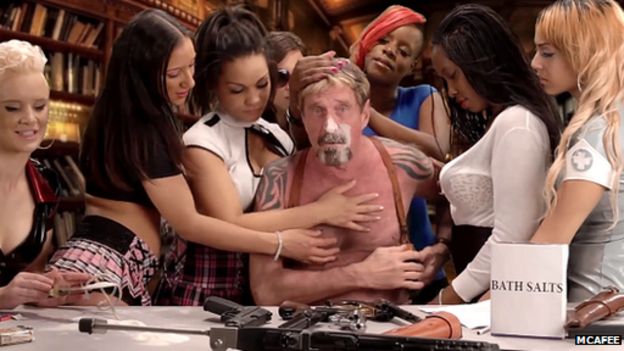
    WHY WASN'T STEVE SMITH INVITED?
    “Hand over yer booty – we’re talking to you, ladies.”

    The problem was that Aurengzeb was not someone the English wanted to cross – England’s East India Company was beginning its penetration of the Indian subcontinent, but Aurengzeb might put a stop to that if he became angry. At the time Aurengzeb was regarded as very harsh and cruel, though recent historical revisionism suggests he wasn’t that bad (for example, “Aurangzeb protected more Hindu temples than he destroyed”). But it was unwise to provoke the Emperor’s wrath, and Aurangzeb was wrathful that ships from a supposedly friendly power had committed such aggression on his pilgrim ship. What are you going to do about it, he asked the English threateningly, as he commenced retaliating.

    Apologizing for the incident,

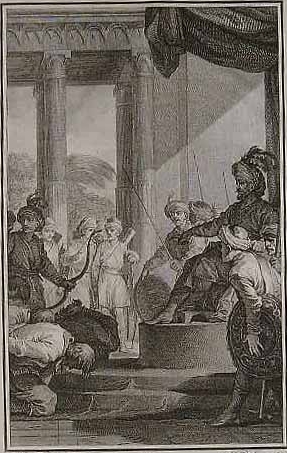
    To be fair, this is from a French book, so the authors would have an incentive to portray the English in an ignominious position
    Here are the English apologizing to Aurangzeb on an earlier occasion

    …the English tried to repair the damage by hunting for Every and his crew.

    Several of Every’s crew members were captured in Ireland, brought to London, convicted and hanged. Based on the trial and on the confessions of the captured pirates, authorities in London got a great deal of information about the friendly reception which England’s North American and Caribbean colonies gave to Every and other pirates. Reports came in of Every’s former shipmates spending and selling their loot in the colonies, bribing officials, and even settling down and becoming respectable citizens. The Board of Trade believed that Every and the remainder of his crew might be hiding out in America.

    Many people in English America were indeed friendly with the East India pirates. Many in the colonies, including many colonial officials, had personal memories of slavery at the hands of the Muslim Barbary Pirates, slavery from which they had had to be ransomed at heavy prices after enduring painful and arduous labor. The East Indies pirates were simply robbing Muslims – who were cut from the same cloth as the Barbary Pirates, the colonists thought. Speaking of cloth, calico, an Indian fabric, was very much the rage at the time, and the pirates brought calico to enliven the wardrobes even of the Boston Puritans. The stolen goods were a great stimulus to local, currency-starved economies in America.

    Reports from Rhode Island, New Jersey and Pennsylvania were particularly disturbing, at least to those willing to believe ill of the Quakers – and many English officials were willing. Tiny Rhode Island had a large measure of self-government, and the rich Quakers who ruled the colony enthusiastically cooperated with the East India pirates. New Jersey, with a heavy Quaker influence, had similar problems. Of course, the non-Quaker colonies, such as New York, Massachusetts, and the Bahamas, also provoked complaints, and these places were not Quaker-run.

    In Pennsylvania, Every’s former crew members were selling their loot and settling in that colony, like elsewhere in English America. As deputy governor of Pennsylvania, William Markham, a non-Quaker cousin of Penn’s, was responsible for wielding Penn’s powers while Penn was away in England. Markham had been in the British Navy and had taken part in a naval attack on Algiers, the Muslim pirate-state which Markham may have equated, through guilty by association, with the Muslim kingdoms of India.

    Like other American governors, Markham gave commissions to pirates for the ostensible purpose of fighting the French, who were at war with England at the time. The commissions often spoke vaguely about “the King’s enemies,” implying that the French were not the only targets. In any case, the newly-commissioned “privateers” (a term which was beginning to evolve to describe government-sanctioned pirates who fought the government’s wars) went straight to the East Indies and preyed on Muslim shipping while making the French (who didn’t have as much seizable booty) a secondary priority at best.

    Markham praised the friendliness of the pirates and the stimulus they gave to the local economy. They also seem to have brought many gifts to Markham, gifts he accepted in pretended ignorance of the givers’ piratical origins. Markham accumulated a collection of East India luxuries Although Markham arrested some of Every’s crew under pressure from London, these prisoners somehow managed to get bailed out or to simply escape. A royal official investigating Pennsylvania affairs suggested that the King wouldn’t act to suppress a rebellion against Markham, if one should develop (hint, hint). The governor of Maryland tried to stir up just such a rebellion in order to add Pennsylvania to Maryland, though that didn’t work.

    A Red Sea pirate named James Brown…

    File:JamesBrownNY87.jpg
    Come here mama…and dig this crazy scene / He’s not too fancy…but he has loot from the Red Sea / He ain’t no drag. / Papa’s got a bunch of swag

    …sailed into Philadelphia with his ill-gotten treasure, and went to see Markham, presumably with a view toward making some gifts. Brown explained to Markham about his activities, admitting that he’d sailed with the pirate Thomas Wake and also with Every, but in the latter case only as a passenger, Brown insisted. This was probably a cover story – I don’t know if Every even offered passenger service. Of the voluntary kind, that is.

    Markham’s daughter fell in love with Brown and the she married the buccaneer.


    "Where's the caterer? I'll keel-haul him!"
    “Daddy, you can tell William Penn that we totally take piracy as seriously as he does.”

    Perhaps this video will give some idea of the wedding ceremony. William Penn, however, probably did not feel good about having a pirate in the family. James Brown settled on a farm in what is now Delaware, then part of Pennsylvania.

    Penn had to balance the demands of the imperial authorities and those of his people in Pennsylvania. In 1696, Parliament passed a law increasing royal power over the colonies, including Pennsylvania, partly in the name of getting tough on piracy. Penn feared the loss of self-government and even trial by jury. Penn tried to explain to London authorities that Pennsylvanians had moved to their colony “to have more and not less freedom than at home.”

    The colonial legislature of Pennsylvania shared Penn’s concerns to an extreme degree. The Pennsylvania Quakers, as Penn had pointed out, had a longstanding suspicion of the English government, which had oppressed them when they lived in England, would seize on any excuse to extend its persecuting arm across the Atlantic. Even the anti-piracy crusade might be a pretext for colonial officials to mistreat Pennsylvanians. Robert Quarry, the admiralty judge sent to Pennsylvania to crack down on piracy, had been removed from the governorship of South Carolina for collaboration with pirates. Now Quarry had commercial interests in Pennsylvania, which suspicious Pennsylvania officials believed would give him an incentive to use his official powers to harass rival merchants – all in the name of law and order. Quarry catechized Quaker meetings about the religious beliefs, which would have reinforced the suspicion that the anti-piracy crusade was another step in England’s long-term persecution of Quakers.

    But Quarry had his own complaints:

    All the persons that I have employed in searching for and apprehending these pirates, are abused and affronted and called enemies to the country, for disturbing and hindering honest met, as they are pleased to call the pirates, from bringing their money and settling amongst them.

    The Pennsylvania lawmakers made an “anti-piracy” law full of loopholes to shield pirates’ local accomplices. James Brown, Governor Markham’s son-in-law was elected to the legislature but didn’t show up; when he did, he suggested he hadn’t want to risk arrest for piracy. The legislature expelled Brown and Markham acted to arrest his son-in-law, while also helping him out with bail money.

    Penn came to his colony to in 1799 (bringing his second wife Hannah with him), to preside over the government in person and address the vehement complaints of the colonial officials in London. He wanted to protect Pennsylvania’s autonomy as far as he could, but he also wanted to check the unrealistic defiance of the locals against the empire. If Pennsylvanians believed themselves put-upon now, how would they like it if London took the proprietorship away from Penn (again) and administered the colony directly, removing the buffer Penn provided between his colonists and the wrath of hostile imperial bureaucrats?

    Investigating the situation, Penn found that, indeed, former pirates had settled in the colony, including his cousin William Markham’s son-in-law. Penn replaced Markham and other colonial officials who had buddied up too closely to the pirates.

    After Penn gave the colonial legislators a stern talking to…

    WILLIAM PENN SPEAKS TO YOU, HIS BROTHERS AND SISTERS. STOP DOING BUSINESS WITH PIRATES, AND IN GENERAL, PAY MORE RESPECT TO MY AUTHORITY AS PROPRIETOR OF THIS COLONY.

    …the solons repealed their defendant-friendly piracy law. Mellowing somewhat, Penn suggested that the reformed pirates who had settled in Pennsylvania be left alone, so long as they earned an honest living far from the ports and coastal areas, where they might be tempted (or tempt others) into piratical ways. Perhaps Penn was thinking of his in-law, James Brown, the pirate-turned-farmer.

    Penn left Pennsylvania in 1701, and never returned.

    "Don't worry, we'll build you some monuments after you die and pretend we loved you all along."
    “Goodbye, William, Godspeed, we will take to heart all of your solemn lectures!”

    The Board of Trade was not placated, continuing to see the North American and Caribbean colonies as refuges for pirates. The problem, the bureaucrats concluded, was that not all the colonies were governed directly by the Crown. So the Board prepared a bill for Parliament by which the proprietary colonies (like Pennsylvania) and those colonies which were self-governing based on royal charters (such as Massachusetts) would become directly ruled from London Also, the colonies would be merged into larger megacolonies – for instance, Pennsylvania would be merged with Maryland and New Jersey (PenJeryland?).

    A bill matching some of the Board’s ideas was introduced in the House of Lords. To opponents of the bill, such as Penn, this was sheer oppression, abrogating charter rights. And anyway, New York was a crown colony but its former governor, Fletcher, had been in cahoots with the pirates nonetheless (Fletcher had spent time as governor of Pennsylvania when Penn had been deprived of his proprietorship). The Quakers and other colonial agents out-lobbied the Board of Trade. Penn defended his powers as proprietor in terms their Lordships could understand: “Powers are as much Property as Soil; and
    this is plain to all who have Lordships or Mannours [manors] in England… .” The bill died in Parliament – but not before passing a second reading in the House of Lords. The Board kept pushing for its pet bill, but without success.

    There wasn’t a major crackdown on piracy in the colonies until the pirates began relocating their predatory activities to the vicinity of the colonies themselves, as opposed to the remote Indian Ocean. Then the colonists bestirred themselves, and some serious pirate hangings began, putting an end to what some call the Golden Age of Piracy.


    Works Consulted

    William C. Braithwaite, The Second Period of Quakerism. London: MacMillan and Company, 1919.

    Douglas R. Burgess, Jr., The Politics of Piracy: Crime and Civil Disobedience in Colonial America. ForeEdge, 2014.

    Leonidas Dodson, “Pennsylvania Through the Eyes of a Royal Governor,” Pennsylvania History,Vol. 3, No. 2 (April, 1936), pp. 89-97.

    Mark G. Hanna, Pirate Nests and the Rise of the British Empire, 1570-1740. Chapel Hill: University of North Carolina Press, 2015.

    Rufus M. Jones, The Quakers in the American Colonies. London: MacMillan and Company, 1911.

    John A. Moretta, William Penn and the Quaker Legacy. New York: Pearson Longman, 2007.

    Andrew R. Murphy, Liberty, Conscience and Toleration: The Political Thought of William Penn. New York: Oxford University Press, 2016.

    P. Bradley Nutting, “The Madagascar Connection: Parliament and Piracy, 1690-1701,” The American Journal of Legal History, Vol. 22, No. 3 (Jul., 1978), pp. 202-215.

    I. K. Steele, “The Board of Trade, The Quakers, and Resumption of Colonial Charters, 1699-1702,”  The William and Mary Quarterly,Vol. 23, No. 4 (Oct., 1966), pp. 596-619.

    Alexander Tabarrok, “The Rise, Fall, and Rise Again of Privateers,” The Independent Review, v., XI, n. 3, Winter 2007, pp. 565-577.

    C. E. Vulliamy, William Penn. New York: Charles Scribner’s Sons, 1934.

  • A Story

    by beelzeboener

    I, too, was unjustly railroaded by a private school despite the lack of a victim, accusations, or evidence. And although I was not expelled or charged in a court of law, the incident severely tainted my college experience. Here’s the story:

    It was the fourth week of freshman year, that time when people are still making friends but kind of already know who everyone is. Late one night in the dorm common area, I encountered this girl I had flirted with a handful of times before while playing ping pong. She asked if she could borrow my computer to check Facebook, and one thing led to another. We had sex twice (once while my roommate was asleep in his bed), and she stayed overnight in my room. No alcohol or drugs were involved.

    The next morning we parted on good terms and agreed to meet up again sometime soon. I didn’t have her phone number but a couple of days later I got a harried Facebook message asking if she could come to my room & talk. When she arrived in a panic she told me that there were virulent rumors being spread that she was raped. Apparently, the morning after, she had some soreness in her lady bits, and her roommate/friends started jumping to conclusions. She claimed she adamantly denied it but to no avail and honestly, I don’t doubt her. Needless to say, I was stunned and scared shitless.

    At that point, I said that I was overwhelmed and needed to clear my head by going to Chipotle, inviting her to come along. When she replied she wasn’t interested, I announced I was going anyway, and if she didn’t want to tag along she would have to leave my room. “But I’m so horny,” she nonchalantly stated. So after doing the deed again we went to Chipotle and actually got to know each other, like a real date, oddly enough.

    After arriving back to my room, I went into damage control mode. I gathered up all my booze and bartending supplies (I was on a mojito kick at the time) and dumped them down a gutter miles away in the barrio. I tried to study in my room but the silence was unsettling, so I went to the downstairs lounge. While there, one of my newer friends, a big rugby player, asked if he could talk to me outside. He asked me what the story was in a friendly and inquisitive manner. But only a few sentences in he turned on me and insisted on telling me what he thought he knew, eventually threatening to beat my ass. He surely would have succeeded. I defused the situation enough to avoid having my face caved in but didn’t quite succeed in successfully convincing him of my innocence. After that, I avoided being seen on campus for anything but class. Admittedly, it was bad optics.

    The next afternoon while leaving the lunch hall, I was approached by one of our security guards, a pretty cool dude who looked like he played linebacker only a few years back but never went pro. He politely but firmly informed me we were going to my room and he was going to inspect it. So I then had to nervously walk all the way across campus while everyone stared. In that moment I had the gut-wrenching feeling that the process WAS the worst punishment. Before rifling through my belongings, he informed me someone anonymously reported that I had been brandishing a big knife and was talking about stabbing people. I was too shocked to do anything except repeatedly mumble “but, no, what?” I admitted to having a Swiss army knife and the only contraband left in the room, a decorative airline-sized bottle of tequila that was a gift from my high school lover. Luckily he wasn’t a pro pig and let me keep the bottle after pouring out the low-quality liquor.

    It was at this moment I knew it was only going to get worse and became extremely paranoid. Although I had a few peeps I was on friendly terms with, there was no one I could confide in or consult. And of course, at that time I wasn’t accustomed to nutpunches or similar incidents. Funnily enough, the coolest guy in class that I highly respected for his game said he didn’t know, didn’t care, had no bad blood, and wasn’t getting involved. That weekend I made the rounds of a few house parties, barely drinking shitty beer and chain smoking a whole pack of cigarettes. My story got a lot of attention from some dudes who I guess initially gave me the benefit of the doubt because I seemed too physically weak and smart to be a real rapist. The semblance of normalcy provided some small measure of hope.

    A day or two later, I was summoned by the Director of Student Resources or whatever bullshit admin title she had. She informed me that the school was going to be enforcing a “no contact order” between me and the girl, who I hadn’t spoken to in a while anyway. They would also be evicting me from my room and forcing me to move to another dormitory in a solitary room. Pretty much everyone I knew was in my dorm, so this was basically a social death sentence before even considering the appearance of guilt. I tried to be as reasonable as possible, asking what accusations had been made and if we could all sit down to a mediation session and talk things out. The administration refused to even tell me if there WERE accusations. I prodded and explained that I knew there were none because this girl had no ill will towards me and it would be social suicide to falsely cry rape. Needless to say, I left out the part about her coming back for thirds.

    This simpleton attempted to sympathize and say she knew it was all probably part of the “rumor mill” (a phrase she loved for some fucking reason), but that their methods were for the best. I protested that the appearance of guilt was socially almost as bad as actually being guilty and of course that I was completely innocent. Another thing she insisted on was me seeing the school therapist, something I vehemently opposed. But I eventually caved on that matter in order to leave the room and generate some good will. My final request was that I get a meeting with her boss since I knew this lady was too dumb and touchy feely to be pulling the real strings.

    It was the most frustrating experience of my life, not just because she didn’t believe my version of the truth, but that she was completely disinterested. Facts, reason, incentives, none of it had the slightest impact. Punitive measures had been decided, my desires were unimportant, and I had absolutely no leverage. I even considered death threats, car vandalism, killing pets, and firebombing people’s houses but figured these people were too dense to adequately grasp the level of insanity they were pushing me to. Threats of force only work when your enemy believes it’s an actual possibility you will take action.

    I struggled to keep my calm while waiting for the therapist, a nice enough 40 something gent I’ll call “Brad” because his demeanor was somewhat reminiscent of Mr. Pitt’s character in The Big Short. I had been to therapy as a child after my parent’s divorce and expected him to pussyfoot around the issue (unfortunately there were no legos to play with). But he was cool and immediately acknowledged the awkwardness of the situation and the obviousness I didn’t want to be there. I spilled my guts, particularly the part about how the administration seemed completely indifferent to my plight. I was taken aback when Brad basically sided with me, stating something to the effect of, “You’re right, they’re probably just covering their asses.” After that he proceeded to talk me off the edge, explaining that it’s better to bend over and take it then start fresh, rather than blow my scholarship or worse. So that’s what I tried to do. It never occurred to me that if the thing they most feared was word getting out, then that’s what I needed to threaten. I felt so small, and the notion of getting the press or lawyers involved just didn’t come to mind. I mean who would care? I was a privileged white male loner alleged rapist from the South.

    There was another meeting with the frog-faced HR lady and one of my parents who was, in fact, a faculty member, which interestingly didn’t count for shit. I semi-placated the administration’s insistence to bring them in for a meeting but refused to tell any part of the story. The one piece of respect I was granted was that the paper pusher didn’t spill the beans and left it at that. With the only detail to work from being my pissy mood, my family came to assume that I made unwanted advances that simply pissed off some girl.

    Eventually, I got my meeting with Ms. Chief Cunt, the bureaucrat in charge of student life. She was even less amiable to reason than her peon and didn’t even bother to feign sympathy. After resisting the temptation to flip her desk, I recognized I was the road, not the rubber, and miraculously left without an escort out from Terry Tate.

    I acquiesced and moved dorms, never violating the no-contact order, and steering clear of the girl. I spent a lot of time alone. I never found a clique but did meet my best friend to this day and managed to hook up with a few more girls as well. One was quite evidently innocent, but I’m fairly sure the others were at least familiar with my reputation. Could never tell if it was a turn-on, but the paranoia of being stained never left.

    Around the time this was happening, I was recruited by a modeling agency while shopping at the mall. It was completely outside my normal scene but flattering, to say the least. Towards the end of the ordeal, I had the opportunity to take some interviews in New York. When I got offered a contract I jumped at the opportunity to GTFO and start fresh.

    The final night on campus, I was smoking in the snowfall at midnight when I spied the girl across the quad. It was the first time I had seen her in forever, so I just stared and didn’t abashedly break eye contact. She paused for a few seconds and eventually left, but not at a hurried pace. For some reason, I had convinced myself she had grown to hate me, and while never actually corroborating the rumors, got ground down by the same system and lost energy to deny them.

    A week later, while on Christmas vacation prior to my exile to the east, I finally sacked up and Facebook messaged the girl after 3 months. I wished her well and said I don’t know what I did to make her resent me, but I wasn’t a player and genuinely liked her at the time. She was surprisingly conversational, and after a few messages I called her on the phone and we chatted for hours.

    Apparently, the administration gave it to her just as hard as they did me. She was forbidden from talking to me and treated more as a guilty party than a victim. Unlike me, she eventually broke down and told the whole story to her family. As a nice Christian girl from a rural town in the breadbasket, this did not make for a very happy Thanksgiving. The poor girl, who was quite the fit athlete when I met her, ended up gaining weight, abusing Mountain Dew (I can’t make this shit up), starting smoking, and becoming a total slut. After her second semester, she transferred to a school closer to home.

    After a semester of online classes in New York, I was ready to leave. Cash was running low, and it was obvious the modeling thing wasn’t going to work out. Despite getting to see some really interesting things while catering for the rich and famous (fun facts: George Soros’s drink is Campari and Beyoncé is even hotter in person), I was still isolated and unfulfilled. I returned to Colorado and cranked out the degree in two more years while only having my one friend. The paranoia of being “that guy” never fully went away and I got the impression some people were skittish around me because they were ashamed for believing unsubstantiated rumors. But I couldn’t bring myself to try and be friends with any of them. I had no illusions that keggers and campaigning for political causes would ever feel normal.

    The thing that still sticks with me is the amount of extreme prejudice I was shown. I was literally pre-judged as guilty by my “friends”, the administration, and even my family to a lesser degree. And although there were a few sympathetic souls, not a single one encouraged me to fight back in my most helpless of times. I still carry a grudge against the institution and refuse to donate or even pay my hundreds of dollars in outstanding parking fines. I trash it as “not worth the money” at every opportunity. I delight in their failing financial state and the impending layoffs. But part of me is reluctant to hold a grudge the same way the frog can’t fully blame the scorpion. These administrators are used to absolute authority over petty matters. It is not the individual that concerns them, nor the collective student body, and certainly not principles. It’s the perpetuation of the status quo and exercise of petty power. I’m wholeheartedly convinced their deference to procedure and dictat is so absolute that it wouldn’t take much for them to commit worse atrocities. And it would never occur to them to step back for a moment of introspection. I’ve never bothered to look it up, but I’m fairly confident they repeatedly violated their own due process policies in the student handbook, all on a whim. In short, elites uber alles. And as I’m sure you have gathered, that’s a big part of why I am a libertarian.

    Thanks for reading, and if you know of an effective organization specializing in challenging these apparatchiks with extreme prejudice, let me know. I’ve got a big fat check for them.

  • The inn-arrr light – Quakers and Pirates, Part 2: Sea-robbers, slavers, and religious persecution

    (Go here for Part 1)

    George Keith was a highly educated Scottish schoolmaster…

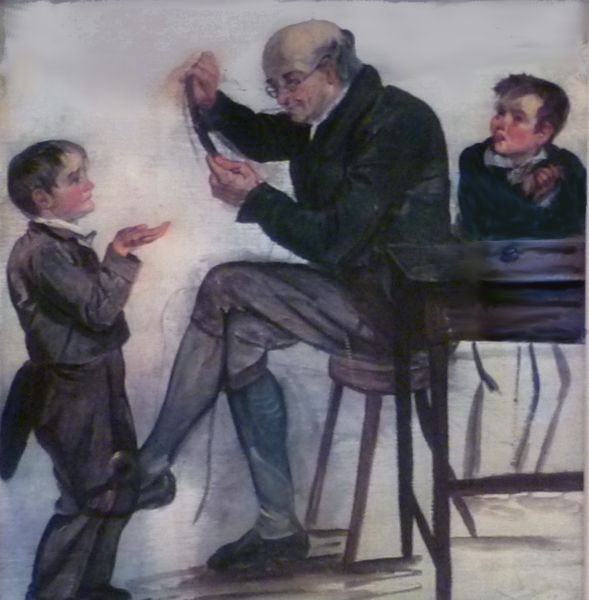
    "Ach, laddie, ye need ta maintain a well-balanced diet - I dinna see why Pink Floyd thinks that's so oppressive."
    A Scottish schoolmaster – perhaps George Keith looked something like this

    …who left the Presbyterians for the Quakers in the 1660s. He endured the persecution being laid on the Quakers at the time, but the persecution didn’t stop him from taking part in debates with his former Presbyterian coreligionists and going on a European mission trip in the 1670s with other big-shot Quakers: George Fox, William Penn, and Robert Barclay (fellow Scot and author of Quaker apologetics). It was Barclay who helped get Keith a job in North America, surveying the boundary line between the then-colonies of West Jersey and East Jersey.


    At the last minute, people came to their senses and said, “wait, do we really want two New Jerseys?”

    Around 1689 Keith went to the Quaker-run colony of Pennsylvania (named after William Penn’s father, Admiral William Penn). Keith served for a year as headmaster of a Quaker school. Educator by vocation and educator by nature, Keith thought that both younger and older Quakers in the colony were in need of religious instruction. Too many Quakers seemed ignorant of the basics of the Christian faith, relying on inspiration and vague spiritual ideas, and sometimes lapsing into heresy. Keith wrote a catechism to help get Quakers up to speed.

    Keith also waded into polemics with members of the Quaker establishment. Rufus Jones, Quaker historian wrote: “It was quite as much the spirit as the doctrine of George Keith to which the Friends objected. He loved controversy, and in the days when he was in favour used the severe language of his time against the opponents of Quakerism.” In other words, Keith was much like other Quakers in that period, who were accustomed to using strong language against their adversaries within and without the Quaker movement.

    For example, one of George Fox’s early pamphlets was called The vials of the wrath of God: poured forth upon the seat of the man of sin, and upon all professors of the world, who denieth the light of Christ which he hath enlightned every one withal, and walk contrary to it, with it they are condemned: and a warning from the Lord to all who are walking headlong to destruction in the lusts of the flesh, and deceits of the world, that they may repent and turn to the Lord, lest the overflowing scourge sweep them all into the pit.

    And Jones himself notes the vituperative tone Keith’s opponents took.

    Much of the impassioned debate was over theological points which we need not consider now. But part of Keith’s beef was with the Quaker elite in Pennsylvania, such as deputy governor Thomas Lloyd (Penn was in England), who ran the colony as well as serving as leading ministers in the Quaker meetings. These elites had grown lax, Keith thought, embracing wealth and worldly government responsibilities at the expense of Quakers’ pacifist principles.

    A man named Babbitt, a smuggler turned pirate, stole a ship from the wharves in Philadelphia and began sailing around robbing other ships in that port city.

    File:Pirateguys capnslappy 2005.jpg
    What a pirate named Babbitt might look like

    The magistrates, who were leading Quakers, sent a party of armed men to deal with Babbit. Apparently they chased Babbit and his men off their stolen ship. None of the pirates were killed, but apparently some were wounded. A Baptist preacher, John Holmes, wrote a satirical poem about this seeming violation of Quaker peace principles – a charge to which of course any Quaker government official was open.

    The Babbitt affair soon became central to the clash between Keith and his followers, on the one hand, and the Quaker establishment, on the other. The Pennsylvania Yearly Meeting was split between a majority which supported the Quaker governing establishment, and a minority which backed Keith and his “Christian Quakers.” Keith’s supporters often had pre-existing grievances about the domineering behavior of the leading Quakers in the colony, seeing them as a bunch of rich SOBs who took power into their own hands without regard for Quaker principles. The bitter dispute between the Quaker establishment and the Keithians culminated in the establishment of rival Meetings. At one point during an argument, each group took axes to the galleries from where the other side wanted to sit.

    Twenty-eight prominent Quaker leaders in the religious and political life of the colony wrote a condemnation of Keith, calling him divisive and turbulent. Keith and some of his supporters published a pamphlet in refutation called An Appeal from the Twenty Eight Judges to the Spirit of Truth and had it printed by one of Keith’s supporters, William Bradford, who happened to be the colony’s only printer and a Keith supporter. Bradford had lost his printing contract with the mainstream Quakers for supporting Keith, and though he offered, in the spirit of fairness, to print the anti-Keithians’ pamphlets, they didn’t take Bradford up on it.

    While much of An Appeal went over theological issues unconnected to the Pennsylvania government, there was also a challenge to the Quaker establishment’s behavior in the Babbitt affair, posed in the form of a rhetorical question:

    9. Whether the said 28 Persons had not done much better to have passed Judgment against som of their Brethren at Philadelphia (some of themselves being guilty) for countenancing & allowing some call’d Quakers, and owning them in so doing, to hire men to fight (& giving them a Commission so to do, signed by 3 Justices of the Peace, one whereof being a Preacher among them) as accordingly they did, and recover’d a Sloop, & took some Privateers by Force of Arms?

    …not to mention that Quaker government officials had set a demoralizing example by giving arms to allied Indians and compromising the pacifist testimony which other Quakers were persecuted for upholding. Plus, Quaker judges administered justice, which by definition involved using violence against alleged offenders.

    To Keith and his supporters, Quakers participating in violence was like…

    "Put it on some Wonder Bread and mayonnaise."
    “Come on, Rabbi, have another slice.”

    In short, Keith didn’t believe Quakers should be government officials, since a government official’s duties included the use of force, which was contrary to the best Quaker principles. What made the mainstream Quaker establishment particularly sensitive on this point was that this sort of logic would drive Quaker officials out of office, leaving them to be replaced by non-Quaker officials in their own colony. It was a politically turbulent era (see below), and the danger of the Quakers losing control of Pennsylvania was a real source of concern. A renegade Quaker saying that Quaker magistrates had a duty to resign would not help matters.

    The Pennsylvania establishment had Bradford arrested and his printing press seized, and revoked the tailor’s and victualer’s licenses of Bradford’s codefendant, one McComb, a businessman who had helped distribute the pamphlet.

    "This business's politics are not fit for human consumption."

    Keith and some other associates were also charged, while a government proclamation denounced the “sedition” of the Keithians.

    The prosecution portrayed Keith and the others as disturbers of the government because they had criticized Quaker officeholders. Keith and his codefendants, on the other hand, said that they had said nothing against the government qua government, but had denounced Quaker officials as part of a religious dispute within Quakerism (The non-Quaker officials in the government seemed to agree, since they didn’t sign on to the prosecution). The distinction was important because the right to criticize the government was not as well developed in Pennsylvania as the right to engage in religious controversy. As far as the latter was concerned, Pennsylvania had been founded based on religious-freedom principles, so the prosecution insisted that of course it wasn’t prosecuting Keith and the others for alleged theological error – that was what the Quakers’ persecutors did, and of course the Quaker establishment weren’t persecutors. They were simply clamping down on political dissent and insults to government officials.

    Keith and a codefendant were convicted and fined five pounds each. Bradford had a hung jury and wasn’t retried, perhaps because Bradford hightailed it out of Pennsylvania, becoming the public printer in the colony of New York.

    Keith publicized his trial in England, accusing the Quaker establishment in Pennsylvania of imitating the theocrats of Massachusetts and practicing religious persecution. Soon Keith went to England in person to set up headquarters for his “schismatic” brand of Quakerism.

    Meanwhile, Keith and other Christian Quaker leaders denounced African slavery – which was itself a nasty kind of piracy where kidnapped human beings were transported by ship to the New World: “as we are not to buy stollen Goods…no more are we to buy stollen Slaves; neither should such as have them keep them and their Posterity in perpetual Bondage and Slavery, as is usually done, to the great scandal of the Christian Profession.” 

    You need an eccentric Scotsman to say that this is wrong??!?!?!
    A slave ship

    The Keithites were not the first Quakers to issue such a protest against slavery – that honor belonged to some German Quakers in Germantown, PA. The Germantown antislavery memorial of 1688 was bureaucratically sidelined by English-speaking Quaker authorities.

    (The Holy Office (Inquisition) beat the Germantown Friends by two years, issuing a denunciation of the African slave trade in 1686. Illustrating the limits of the Inquisition’s power, the decree was pretty much ignored.)

    Quakers were numerous in the 17th-century Caribbean, especially in Barbados and Jamaica, and they defied Barbadian ordinances by having their slaves attend worship meetings with them. This, along with refusal of militia service and tithes, led to persecution of the Caribbean Quakers, but they did not challenge the underlying legitimacy of slavery itself. Quakerism would wait until the mid-18th century before disavowing slavery and forbidding Quakers from owning slaves.

    Meanwhile, what was William Penn doing about the Keithian crisis in his colony? Actually, it appeared that Pennsylvania might not be Penn’s colony any longer.

    Your Pop caught you soldiering and he said "no way" / That hypocrite runs the Navy every day
    William Penn in his early twenties, before he became a Quaker – he wanted to be a soldier, but his father, Admiral Penn, vetoed the idea.

    You see, back in England, Ireland and Scotland there’d been a spot of bother. King James II, the guy who’d given Penn his colony,

    "Yes, I know it's 'Whig history,' but I really *was* a bit of an would-be autocrat."
    James II

    had been driven out of England in 1688

    "OK, so we agree we're tired of royal tyranny and want to try Parliamentary tyranny for a change."
    Plotters against James II met in the Cock & Pynot Inn, Old Whittington, now the Revolution House Museum

    and replaced by William of Orange and his wife, James’ daughter Mary.

    The poor horse had to hold that pose while the portrait was being painted
    William of Orange, aka William III


    "Your Majesty, I am so shy in the presence of royalty that I can't even look you in the eyes. Let me look a little lower..."
    Mary II


    (William of Orange was also the son of James’ sister. James’s second wife, Mary of Modena, was close in age to James’ daughter Mary, and back when the two Marys were teenagers James had told his daughter that she and her new stepmother would make great “playfellow[s].”)

    Generic teenage girl
    “Ewwwww!”

    But Penn probably wasn’t brooding over inbreeding and kinky stuff in the royal houses of Europe. While others celebrated the “Glorious Revolution,” Penn was on the lam, facing treason prosecutions in England and Ireland. Treason in this case meant adhering to the losing side of the Revolution – Penn had not only gotten a province from James, he had supported some of that monarch’s controversial policies, leading to rumors that Penn was a secret Jesuit abetting the schemes of the Catholic James.

    File:St Ignatius of Loyola (1491-1556) Founder of the Jesuits.jpg
    “William Penn? No, doesn’t ring a bell. Have you checked with the Franciscans?”

    Penn kept in touch with James after the latter’s overthrow despite the fact that James was living in exile in France, with which England was now at war. To avoid arrest, Penn hid out in various places in England, surfacing briefly to attend the funeral of George Fox, founder of Quakerism, and surfacing again to give a private interview to a government official, explaining how he was totally innocent. In 1692, the new government in England took Penn’s province away from him. All this was why Penn hadn’t been able to step in and deal with the whole schism/persecution situation in Pennsylvania.

    Penn was no Vicar of Bray – he didn’t pretend that he was thrilled at the change of government. But he managed to persuade the new government that he had accepted the new political situation and wasn’t conspiring with ex-King James. Or at least the government pretended to believe Penn’s story. By 1694 the treason charges had been dropped and Penn had gotten Pennsylvania back.

    But now, with George Keith in England and making trouble, Quakerism itself was in danger.

    As head of his own branch of Quakerism, Keith denouncing Penn for his supposed Jacobite (pro-James) sympathies. Later in the 1690s, Keith left Quakerism altogether and joined the Church of England, becoming an Anglican clergyman who focused his energy on opposing the Quakers. Apparently, it wasn’t a dealbreaker for Keith that the Anglicans were part of the proslavery establishment in the English Empire. The Keithian Quakers either drifted back into the Quaker mainstream or joined other religions.

    As a newly-minted Anglican, Keith joined the high-church party, which was frustrated at the wishy-washy Anglicanism promoted by King William. Keith and the high church crowd turned their attention to cracking down on radical religious dissent. The new government had extended a limited degree of toleration to non-Anglican Protestants so long as they accepted certain basic doctrines, particularly the Trinity and the divinity of Christ. But religious troublemakers known as Socinians (Unitarians) and Deists were beginning to come out of the closet, denying basic Christian beliefs and prompting calls for their repression. Parliament would respond in 1698 with a new Blasphemy Act targeting anti-Trinitarians.

    Keith and other anti-Quaker activists tried to paint the Quakers as blasphemous enemies of Trinitarianism and other basic Christian doctrines, petitioning for Quakers to be denied their rights under the Revolutionary settlement. Penn and other Quaker leaders fought off these attacks, and in fact managed to get some relief from some (not all) of the repressive laws which oppressed their coreligionists. It was helpful that the Quakers reaffirmed their loyalty by condemning a Jacobite assassination plot against William.

    The actions of the pirate Babbitt had achieved quite a ripple effect throughout the Quaker world.


    Works Consulted

    William C. Braithwaite, The Second Period of Quakerism. London: MacMillan and Company, 1919.

    Carl and Roberta Bridenbaugh, No Peace Beyond the Line: The English in the Caribbean 1624-1690. New York: Oxford University Press, 1972.

    Douglas R. Burgess, Jr., The Politics of Piracy: Crime and Civil Disobedience in Colonial America. ForeEdge, 2014.

    Jon Butler, “Into Pennsylvania’s Spiritual Abyss: The Rise and Fall of the Later Keithians, 1693-1703,” The Pennsylvania Magazine of History and Biography, Vol. 101, No. 2 (Apr., 1977), pp. 151-170.

    J. William Frost (ed.), The Keithian Controversy in Early Pennsylvania. Norwood, PA: Norwood Editions, 1980.

    Mary K. Geiter, “Affirmation, Assassination, and Association: The Quakers, Parliament and the Court in 1696,” Parliamentary History, Vol. 16, pt. 3 (1997), pp. 277-288.

    __________, “William Penn and Jacobitism: A Smoking Gun?” Historical Research, vol. 73, no. 181 (June 2000), pp. 213-18.

    David E. W. Holden, Friends Divided: Conflict and Division in the Society of Friends. Richmond, IN: Friends United Press, 1988.

    “Introducing: George Keith’s An Exhortation & Caution to Friends Concerning Buying or Keeping of Negroes (New York, 1693),” https://roses.communicatingbydesign.com/history/ePubs/Keith-Exhortation_2Wintro.html

    Rufus M. Jones, The Quakers in the American Colonies. London: MacMillan and Company, 1911.

    Ethyn Williams Kirby, George Keith. New York: D. Appleton-Century Company, 1942.

    _______________, “The Quakers’ Efforts to Secure Civil and Religious Liberty, 1660-96,” The Journal of Modern History, Vol. 7, No. 4 (Dec., 1935), pp. 401-421.

    Leonard Levy, Blasphemy: Verbal Offenses Against the Sacred, from Moses to Salman Rushdie. New York: Knopf, 1993.

    David Manning, “Accusations of Blasphemy in English anti-Quaker Polemic, 1660-1701,” Quaker Studies 14/1 (2009), pp. 27-56.

    John A. Moretta, William Penn and the Quaker Legacy. New York: Pearson Longman, 2007.

    Andrew R. Murphy, Liberty, Conscience and Toleration: The Political Thought of William Penn. New York: Oxford University Press, 2016.

    Kenneth Andrew Shelton, “The way cast up: the Keithian schism in an English Enlightenment context.” PhD. Dissertation,  Boston College, 2009. Online at https://dlib.bc.edu/islandora/object/bc-ir:101194/datastream/PDF/view

    C. B. Vulliamy, William Penn. New York: Charles Scribner’s Sons, 1934.

    Maureen Waller, Ungrateful Daughters: The Stuart Princesses Who Stole Their Father’s Crown. St. Martin’s Griffin, 2004.

    David L. Wykes, “The Norfolk Controversy: Quakers, Parliament and the Church of England in the 1690s,Parliamentary History 24(1) (2005), 27-40.”

  • The inn-arrr light – Quakers and Pirates, Part 1: The Quaker catch-and-release pirate policy

    Thomas Lurting was an experienced seaman from Liverpool, England who converted to Quakerism while serving on a warship during one of Oliver Cromwell’s wars in the 1650s.

    The brand-new Quaker movement hadn’t formally adopted a declaration of pacifism –  Quakers were all over the map, some of them refusing to join in wars because of a literal application of the Sermon on the Mount, and others serving in Cromwell’s army and even upbraiding Cromwell for not being righteous enough to achieve more military victories – as Quaker leader George Fox wrote in 1658:

    Oliver, hadst thou been faithful and thundered down the deceit, the Hollander had been thy subject and tributary, Germany had given up to have done thy will, and the Spaniard had quivered like a dry leaf wanting the virtue of God, the King of France should have bowed his neck under thee, the Pope should have withered as in winter, the Turk in all his fatness should have smoked, thou shouldst not have stood trifling about small things, but minded the work of the Lord as He began with thee at first … Let thy soldiers go forth… that thou may rock nations as a cradle.

    File:NIXONcampaigns.jpg
    A prowar Quaker? Now I’ve seen everything!

    Lurting started out as one of the warlike Quakers, but he switched from the prowar position to the pacifist position in the middle of a battle, deciding that God didn’t want Christians to kill people. So after somehow avoiding a hanging, Lurting left the Navy and continued his seafaring career as a merchant seaman. After the Restoration of the monarchy in the 1660s, the British Navy kept trying to draft (“impress”) Lurting off of his merchant vessels, but he kept refusing to serve, and they let him go rather than endure his inflexible and troublesome conscience.

    In the interim, George Fox had switched to a more peaceful tone as he tried (unsuccessfully) to persuade the new royal regime that Quakers were loyal subjects. Far from plotting against the King, Fox and other Quaker leaders insisted, Quakers were, and had always, been, pacifists:

    …our weapons are spiritual and not carnal, yet mighty through God to the plucking down of the strongholds of Satan, who is author of wars, fighting, murder, and plots. And our swords are broken until ploughshares and spears into pruning; hooks, as prophesied of in Micah iv. Therefore we cannot learn war any more, neither rise up against nation or kingdom with outward weapons, though you have numbered us among the transgressors and plotters. The Lord knows our innocency herein, and will plead our cause with all men and people upon earth at the day of their judgement, when all men shall have a reward according to their works…

    This statement was influential enough to establish pacifism as a norm among Quakers for the time being.

    File:1ss94301.jpg
    “We’re not flip-flopping – we’ve always been not-at-war with Eastasia.”

    On one of his merchant voyages in the 1660s, Lurting was mate under Captain George Pattison, who was sailing in the southern Mediterranean. Lurting had a premonition that their merchant ship would be captured by Algerian pirates, whom Lurting called “Turks” because of their nominal allegiance to the Muslim Turkish Sultan. Algerian pirates were in the habit of seizing European ships (or even conducting coastal raids) and enslaving Europeans. The captain pooh-poohed this possibility, so as the rules of drama require, they were, in fact, captured by Algerians. Lurting says he was no longer anxious, because he believed God would deliver them all from the “Turks.”


    Not the Quaker approach
    Lorenzo A. Castro, “A Sea Fight with Barbary Corsairs”

    Lurting’s advice to the men was to comply with the Algerines’ demands and satisfy the pirates of their docility, thus lulling them into a false sense of security. Contrary to the wishes of some of the men, Lurting did not want to kill any of the pirates – such a thing would be un-Christian. Indeed, Lurting would rather be a slave in Algiers than be a killer, and he threatened to tell their captors if any of the sailors made any murderous attempt.

    Lurting recovered the ship by a ruse, luring the pirates into the ship’s cabins on a rainy night, where the pirates fell into sleep and woke up to find their weapons seized and and in the hands of Lurting and his party (except their concealed daggers, which Lurting wasn’t aware of until later) . Then Pattison and Lurting turned the ship toward the Spanish island of Majorca (or Mallorca).

    File:Mallorca.jpg
    Majorca

    The Algerians were very unhappy, since the Spanish, if they got hold of the pirates, would enslave them – and these Algerines had signed up as enslavers, not as slaves.

    File:Marche aux esclaves d alger gravure.jpg
    “Look, when we said we wanted to get to a slave market, we meant the one in Algiers.”

    Lurting, perhaps on account of his Quaker beliefs, or perhaps because of his and Pattison’s English abhorrence of turning anyone over to the despised Spaniards, decided to hide the Algerines in the ship while it docked in Majorca. During that time another English captain came over and thought it was stupid not to profit from the sale of such valuable human merchandise, so the other captain dropped a dime (or piece of eight) and told the Spaniards that there were valuable Muslim slaves in Pattison’s ship.

    So Pattison, Lurting, the English crew, and the Algerine prisoners slipped away from Majorca.

    Pattison and Lurting tricked the Algerines into thinking they were going to Algiers, steering that direction in the daytime but then surreptitiously steering for England at night. When the Algerines found out, they threatened Pattison, and it looked for a while as if the pirates might have the upper hand again. But the English crew, brandishing their weapons, persuaded the Algerines to give up their mutiny and go below. Lurting was pleased that nobody had been killed, though the English crew had only saved the day by threats of deadly force – not consistent with the purest form of pacifism.

    Pattison and Lurting, based perhaps on their compassion for the Algerines and/or the desire to be rid of them, decided to drop them on shore near Algiers. Bringing the ship close to shore, Lurting arranged the Algerines in the ship’s boat. Others in the crew wanted to at least tie up the Algerines, but that would be too degrading, Lurting believed. So the English crew stood in the boat with their weapons (and the Algerines’), while having the Algerines sit on each others’ laps while the boat was rowed to shore.

    Just before the boat landed, a crew member mistakenly thought he saw armed men in the bushes – this scared Lurting and the others, emboldening the Algerines to try another mutiny. Lurting became a bit less peaceful:

    It’s better to strike a Blow, than to cleave a Man’s Head, or cut off an Arm ; and I turned the Hook of the Boat-hook into my Hand…then I struck the Captain [of the Algerines] a smart Blow, and bid him sit down, which he did instantly

    File: Objects Room Secà and Mountain (26914860050) .jpg
    If the boat hook looked anything like this, it certainly resembled a “carnal weapon.”

    Then the English turned the Algerines loose on shore and tossed their weapons over to them. The Algerines invited the English to come with them to a nearby town and have some wine, and Lurting was tempted, but apparently the rest of the crew were not.

    File:JonLovitz08.jpg
    “C’mon, guys, come back! Don’t worry that we’re going to get you drunk and then enslave you, because the thought never even crossed our minds.”

    So the English went back to their ship and went back to England. And nobody had been killed or enslaved. Maybe it made the pirates think.

    File:Mola Pirata.jpg
    A Barbary pirate, perhaps thinking deeply about Quaker nonviolence


    Works Consulted

    William E. A. Axon, Thomas Lurting: A Liverpool Worthy. Transactions of the Historic Society of Lancashire and Cheshire. For the year 1885 – Volume XXXVII. New Series.-Volume I. Liverpool: Printed for the Society, 1888, 21-28.

    Mark G. Hanna, Pirate Nests and the Rise of the British Empire, 1570-1740. Chapel Hill: University of North Carolina Press, 2015.

    Thomas Lurting, The Fighting Sailor Turn’d Peaceable Christian: Manifested in the Convincement and Conversion of Thomas Lurting. With a short Relation of many Great Dangers, and wonderful Deliverances, he met withal. First Written for private Satisfaction, and Now Published for general Service. London: Printed and Sold at the Bible in George yard, Lombard-Street, 1766.


  • Review of Cold Mountain (the book and the movie)

    Charles Frazier, Cold Mountain. New York: Atlantic Monthly Press, 1997.

    Cold Mountain. Dir. Anthony Minghella. Perf. Nicole Kidman, Renée Zellweger, Jude Law. Mirage Enterprises, Bona Fide Productions, 2003. DVD.

    This novel, and the well-received movie based on it, can safely be said to belong to the canon of antiwar literature, though Frazier is enough of a storyteller that the lives and stories of his characters always hold center stage. This is no didactic Ayn Rand novel. As a civil war obsessive, I’m going to be giving some attention to the historical angles, but my review won’t capture the finely-crafted human story created by Frazier, and also by the film adaptation, which remarkably manages not to totally screw up the author’s vision.

    Frazier comes from Western North Carolina, where not only does half the action take place, but it’s the longed-for destination of the male protagonist.

    Let’s go back a bit and try to provide some setup. To put this story in Hollywood pitch-meeting terms, it’s like The Odyssey

    Wearing a rope and a smile
    Ulysses, by Anna Chromy, Monaco Harbor, 2011

    meets bizarro Gone With the Wind meets a chick flick.

    W. P. Inman (Jude Law in the movie)

    Jude Law - Headshot.jpg
    Jude Law

    is a Confederate soldier from, of course, Western North Carolina. He’s fighting at the Virginia front, defending Petersburg, Virginia from Union besiegers. Inman is homesick for his sort-of sweetheart Ada (played in the movie by Nicole Kidman).

    Nicole kidman3.jpg
    Nicole Kidman

    It’s complicated – at least in the novel the two aren’t formally committed to each other, but he’s managed to stick with the war, until he participates in the Battle of the Crater. This is an actual battle (July 1864) where the besieging Yankees manage to undermine the Confederate position and create a crater penetrating the Confederate front. For some reason, the federals then rush in to the steep-walled crater, as if they’re chivalrously giving the Confederates a chance at target practice. A nasty and bloody business, in which Inman is wounded. He’s sent back to a Raleigh military hospital to recover, and he decides, “screw you Confederates, I’m going home.” (In the movie, he gets a letter from Ada begging him to come home, a realistic touch since many wives, sweethearts and family members wrote soldiers begging them to desert so they could come home and help on the farm and preserve the family from starvation).

    Then begins Inman’s treck west, back to his home county. He has to keep on the lookout for Home Guards – state troops who, exempt from going to the front themselves, are supposed to chase down deserters and draft-evaders and send them to the front (or sometimes just kill them). The organization generally referred to as the Home Guard was established by the state legislature in the middle of the war, though in the movie the Home Guard has been set up at the war’s very beginning. Hollywood has to do its part to avoid strict historical accuracy.


    File:Home Guard (2).JPG
    To be fair, the English Home Guard in WWII didn’t show the same cruelty to draft-dodgers, probably because there weren’t as many as in Civil War NC


    Although North Carolina contributed a disproportionate share of Confederate troops, the state also had a disproportionate share of deserters (who walked away from the army like Inman). In addition there were the draft evaders (who refused to join the army when summoned).

    In many parts of the state, including the mountain West, deserters and draft evaders “lay out” in the woods, or in holes in the earth. A lot of them just objected to fighting, period. But some thought they were being called on to fight on the wrong side. Many young men with such views navigated the mountain trails to Tennessee to join loyalist Southern units of the U. S. Army. North Carolina had a good number of Union sympathizers (“Red Strings” or “Heroes of America”), and a peace movement (trying to get the South back into the union with slavery intact), and a state government which distrusted the Jefferson Davis administration and insisted on protecting states’ rights against the Confederates (the Confederacy weren’t actually as states-rights-ish as one might think given their rhetoric).

    "If I say that I was a fervent believer in states' rights, will they buy it?"
    Jefferson Davis in 1874

    But getting back to the plot –

    Not knowing where Inman is, Ada makes do as best she can in Appalachian North Carolina. And at first she doesn’t do very well at all. She grew up in Charleston, South Carolina, apparently with slaves to attend to her needs, until her minister-father went on a mission trip to this rural Tar Heel community, taking Ada with him. When Dad dies, Ada is alone on a farm which she doesn’t know how to care for.

    Then some sympathetic neighbors ask a young woman named Ruby to take care of Ada. Here is where the movie had every opportunity to screw up embarrassingly. The movie’s Ruby, played by Renée Zellweger,

    File:Renée Zellweger cropped 2.jpg
    Renée Zellweger

    is a sharp-tongued, no-nonsense rural Southern woman who had to learn self-reliance when her father was too busy drinking and playing the fiddle to raise her properly. Normally, Hollywood would find an actress to do a cringe-worthy performance with a character like this. Somehow, Zellweger manages to do a more or less convincing job in her role. It probably helps that she grew up in Texas (according to Wikipedia). Zellweger manages to remember at all times that her character has a Southern accent, something which sometimes slips the minds of the other actors.

    So Ruby teaches Ada how to manage the farm and its livestock and grow crops. We get a bit of a training montage in the movie. Meanwhile, the two women try to keep away from the local Home Guard, with its commander, Creepy Bearded Fad Dude, and CBFD’s top aide, Scary Blonde Guy Who Wished He’d Been Born Later So He Could Have Joined Hitler’s SS.

    File:Emma Eleonora Kendrick - Portrait of a blond man.jpg
    “Is true, blondes haf more fun, ja?”

    The pro-Confederate Home Guard are the main bad guys. But just to underscore the point that this book and movie show the dark side of war itself, not just the evils of one side, there is a scene of federal soldiers behaving very badly.

    The movie has a scene where –

    BEGIN SPOILER

    – the Home Guard kills a farmer and tortures his wife in order to make her reveal where her deserter sons are hidden. They put the woman’s thumbs under a fencepost and Scary Blonde Guy stands on the fence to make the pain worse. Scary Blonde Guy shoots the sons dead when they run out of the barn where they’re hiding in order to rescue their mother. This scene is based on actual incidents in North Carolina during the dirty war between Confederate forces (regular troops and Home Guards) and draft-resisting “outliers.”

    END SPOILER

    Neither the book nor the movie has a lot of black people in it. Those who make brief appearances don’t have real speaking roles, and one of them is unconscious. Given Hollywood’s awkward and embarrassing record on race, we can only imagine the sensitivity and delicacy with which they would have treated black characters if they had more screen time and more lines – which was no excuse not to try, of course. In any case, the limited number of black characters is arguably reflective of the comparatively small black population (whether slave or free) in North Carolina’s mountain counties during this time. To many nonslaveholding whites, the war was fought by slaveowning planters who wanted to keep their slaves but not to fight for that privilege, given the wide availability of draft exemptions which rich planters, but not poor subsistence farmers, could take advantage of. “A rich man’s war but a poor man’s fight,” many called it. To be fair, some rich planter types rushed to join the Confederate army without being drafted – chivalry and all that. They were generally able to come into the army as officers, though, not as lowly privates.

    Inman’s journey back to home and to Ada has plenty of echoes of Ulysses’ journey back to home and Penelope.

    Penélope Cruz - Cannes 2011.jpg
    Penélope Cruz

    Inman does Ulysses one better because he doesn’t wait ten years before coming back – It only takes about three years before he realizes that his duties to his home community override his duties to a collapsing slave republic. Like Ulysses, though, Inman meets plenty of monsters on his homeward journey.

    As if to balance out Ada’s dad the good minister, the narrative introduces an evil preacher – Veasey – whom Inman meets on the road. The wolf in sheep’s clothing is played in the movie by Philip Seymour Hoffman.

    File:Fabian Society coat of arms.svg

    BEGIN SPOILER

    Here is where the movie is a disappointment compared to the book. In the movie, Veasey has gotten a slave girl pregnant. Seeking to cover up his behavior, Veasey is about to throw the girl into the river to kill her when Inman comes by and puts a stop to Veasey’s evil. In the book it’s the same set-up, but the pregnant girl is a white woman named Laura Foster. This is sort of an Easter egg which Frazier, the novelist, planted for folklorists and aficionados of the ghoulish. Laura Foster was a real person in western North Carolina. One of her real-life lovers, Tom (“Tom Dooley”) Dula, was hanged for her murder soon after the Civil War.

    END SPOILER

    So, like a modern Ulysses, does Inman reach home and Ada? I’ve done enough spoilers, so I won’t add another.

    But I’m not gonna lie, this is not the feel-good hit of the summer. Whether in book or movie form, though, it is a compelling story.

  • Selling liberty: Small government, good government

    When I wrote a while ago about the general wish for liberty, some of the comments reminded me of several difficulties in doing so. One of these, something often told to libertarians by the left-leaning, is government should be more efficient and better, not smaller. Better government versus smaller. I have yet to be convinced of the possibility of achieving this. This is not an in-depth post in any way, shape or form, just a quick thought, let us say.

    Personally, and as a libertarian, I think it is hardly possible to make big government efficient. Which I assume shocks no one. It is not even a given that it is desirable to have big efficient government, as Frank Herbert may have observed in a book or two. As for better, it is one of those things that do not have clear, universally accepted, definitions. Like common sense, it can mean whatever the speaker wants it to mean. I often get countered with accusations of being ideological and few clear, concrete measures to achieve this mythical good big government, besides boilerplate feel good nonsense like “if we all work together” blah blah blah.

    My argument is that it is not really possible to make government efficient in a significant without making it smaller because the size is often in itself the source of inefficiency: large numbers of regulations, large numbers of agencies with overlapping functions which not even the government can keep track of, complex bureaucratic organizations, and no inherent checks and balances, as one would find in a market. Man-made checks and balances are given as an alternative, but these are as flawed as the humans who design them, and equally as crooked. Experience does not show this to be a source of efficiency. I say in a significant way because, as inefficient as governments currently are, it should be possible I suppose to make them somewhat less inefficient.

    Now, I’m sure we can make this quite efficient

    In general, the larger and more complex a system is, the harder it is to manage. This is equally true of big corporations, which can become quite the bureaucratic nightmare and highly inefficient, but they are occasionally forced by the market situation to do something about it. This is rarely the case for government, and when it happens it is with much wailing and gnashing of teeth. It is even harder to do by bureaucrats with all sorts of agendas, with the incapacity of economic calculation, with little interest in efficiency and much interest in other things, and without any inherent constraints, as exists in the market.

    When the last financial crisis hit, the corporation I work for quickly found hundreds of millions of wasteful spending brought by the previous boom. It cut more than any government did. One of the problems with corporations – one that is increasing in frequency- is precisely the need of government to intervene when the market attempts to correct something.

    But, to get to the point of this post, for the sake of argument, we can give the left the benefit of the doubt. Let’s say they want good efficient big government. My problem is that they never show it. The standard should be: we believe government can be efficient and well prove it to you doubters. We will do everything in our power, leave no stone unturned, to achieve this!

    We will look at every expense thrice to make sure we don’t spend unnecessarily. We will review every law and regulation to make sure it is as simple and clear as possible. We will review all the laws and regulations to see they are not deprecated, overlapping, confusing. We will work tirelessly to spend money better and regulate better. This happens approximately once in a blue moon, give or take. For all the efficiency rhetoric, they are quick to advocate for any expense that they like, for any regulation no matter how dumb. The left wing should be always ready to criticize what government does wrong, but libertarian publications seem to do a much better job of this.

    Bureaucrats being a base of votes for the left, they seldom seek to make bureaucracy efficient. And this would be crucial in efficient government.  Get rid of any agency not needed or overlapping. Simplify bureaucratic procedures. Reduce the number of meaningless forms, analyze all processes in an agency. Hire external auditors and consultants and improve constantly. This happens once in a never.

    So where is this desire for efficient big government? Even if such a beast would be possible–which I say it is not–it is certainly nowhere to be seen outside empty rhetoric. Didn’t the old cliche use to go “actions speak louder than words?” If people demand good, efficient big government–not small government–we have to tell them that  “there ain’t no such thing.” And no one trying to achieve it.

  • Do people want liberty and can libertarians sell them some?

    Like all ideologies out there, there are those within libertarianism who see the, how should I put this… the modest reach of our ideas to the general public as bad marketing, or insufficient awareness. That people would like liberty if the right message reached then. This view is also shared by other ideologies. Every time the majority rejects some policy or other, someone complains about the message being bad or propaganda from the other side or whatever.

    But is it really marketing? Do people support liberty – actual liberty — but don’t know it? I sincerely doubt it. Granted, the libertarian message has more limited reach than the others, less exposure in schools, media and such. Also granted, there are people in the movement who couldn’t sell water in the desert, let alone an idea which is mostly counter-intuitive to many. But will a better message make a huge amount of difference? Some *cough* sites out there seem to think so and do their darndest to make the message more appealing. Colour me skeptical.

    Does not really have the gravitas of Gary Johnson though
    Liberty, baby


    Most people claim to like liberty, even support it. It does not sound good to say you are against it. Then … well, then that pesky little but comes in. And one can usually stop listening. People don’t like liberty as it is, they like a better class of liberty, improved to their standards, of course. They want moderate amounts of liberty, a little here, little there, liberty that is just right. Preferably organic, GMO-free, without anything unpleasant attached. They often like liberty for themselves, but not for others. They certainly don’t approve of unrestricted liberty or the consequences of being free. Consequences can be bad, you see, and we can’t have any of that.

    What is liberty, some haughtily ask, on an empty stomach… Well, in my humble opinion, it is pretty much the same as on a full stomach, no more nor less, as the fullness of one’s innards does not define liberty. In fact, there are choices in life that lead you to sleeping rough and hungry. If you are not free to make those choices, you are not free. If you are free and are saved from those choices by government, it is at the expense of resources that come from someone else and their liberty. You are not free unless you are free to make bad choices and suffer the consequences.

    Better than base jumping
    Dying doing something you love

    There are extreme sports out there that lead to many or even most practitioners to smash their skull on a big damn rock. But if you are free, you should be free to smash your head against a rock. Now, many of these sports are not banned. At least they died doing something they loved, am I right? But then, why ban other so-called dangerous activities? If you can smash your head on a rock you can choose to overdose on heroin. Well, this is a step too far for so-called pro-freedom folk out there, they cannot take it.

    Liberty within reasonable limits, what more can you want? I think that fella Kim Jong Un is also all for liberty within very reasonable limits.


    In the attempt to avoid saying I don’t like liberty, some people do the classic split between stuff they like and stuff they don’t. Separate certain aspects of life from others, in order to still support their preferred flavour of government intervention. The most common manifestation of this is to separate economic activity from other aspects of life, or better said financial outcomes.

    Some who support let’s say gay marriage but government involvement in every single aspect of those married gay dudes lives, call themselves social libertarians or civil libertarians. Glorious, glorious modifiers. Social liberty, social justice etcetera.

    The economic side is no less part of your life as the person you choose to have sex with, hell you usually spend more time doing the former rather than the latter. Almost everything a person does is an economic decision. The bread you buy the beer you drink is an economic decision. Procreation, sex, food… whatever

    You cannot be free economically just because the taxes are small if you cannot spend your earnings as you wish – let’s say doing drugs and doing whomever you choose. As such, it matters not that Saudi Arabia has small taxes, for example.

    But you cannot be free in your private life if the money you have earnt and the way you earn it are controlled by the state. If you cannot decide what to do for a living, how to use your money, how to raise children or plan retirement how can legal weed – but not heroin, never heroin – and gay marriage make you free. Or is it free birth control that makes you free? I forget…

    You are free to do a job the government allows you to do – with the proper licencing and bureaucracy off course, we cannot have people working willy-nilly; you are then equally free to keep whatever amount of the money you earn the government sees fit to allow you to keep, and then are quite free to buy from a list of government allowed products at government inflated prices. Clean, nice, government approved liberty. Ain’t liberty grand?

    So how many people would think about this and say hmmm that does not sound like liberty to me? I’m not gonna sugar coat it, I think the answer to that is very few. In the minds of most, the only alternative is pandemonium, chaos, anarchy. Do you want people to have Guns? and Drugs? Guns and Drugs at the same time? Insanity!

    And after all, government is the same as society, and society is us, so government is us. As such, no one is really restricting our liberty; we just choose to limit ourselves. It is obvious, to the reasonable common sense individual, that bureaucrats are just doing what is best for us, and they know better anyway. We really need more government micromanagement, if anything. Oh not in this area I care about and anyway I want to be left alone, but everywhere else.

    So, as a libertarian why keep arguing then? Well, it is human nature to argue and debate, especially with all this internet everywhere, it can be entertaining albeit aggravating, and maybe you make a little bit of headway. Maybe. Also, you get to say fuck off slaver a lot, which is always nice. But just don’t expect libertopia to kick in anytime soon.

  • The man who fought a blacklist and killed the First Amendment (it got better)

    Things were different in many ways a century ago, but in one respect it was like all places at all times: there were insurance agents.


    Monument to the insurance agent 009.jpg
    Monument to insurance agent, Donetsk, Ukraine

    Robert T. Cheek of St. Louis, Missouri, was one of those insurance agents, selling policies in his hometown for the Prudential Insurance Company. In the 1910s, after many years of what he obviously considered faithful service, he left his job and began looking for work with another insurer. He asked his former employer, Prudential, for a letter describing his work and the reasons he left.

    Prudential refused to provide such a letter. Without such a “service letter” from his prior employer, Cheek had trouble getting another job in the insurance field. Insurance, as he claimed, was pretty much what Cheek knew, and he didn’t want to go into another line of work where he didn’t have so much experience. He thought he was being blacklisted.

    So he sued Prudential in a state court in St. Louis. In that part of the case which is relevant for our purposes, Cheek said that Prudential had violated Missouri’s “service letter” statute. Missouri law required that an employee who had worked 90 days or longer for an employer could demand that his ex-boss provide a letter saying that he used to work for that boss, and explaining why he doesn’t work for that boss any longer.

    States like Missouri which passed these “service letter” laws were concerned about employer blacklists. If an employee had crossed his ex-boss, the boss might just decide not to help that employee get new work. But if the boss was forced to give a service letter, the employee could obtain information about his work history, without which new employers might not want to take a chance on him. And if the ex-boss gave the former employer a bad reference, the employee could sue for defamation.

    The trial court in Missouri threw out Cheek’s suit. Sure, Prudential hadn’t given Cheek a “service letter,” but it didn’t have to do so. Anyone, even an insurance company, has the right to free speech, which includes the “right of silence” – that is, the right not to talk.

    I tried to find a SFW image of someone with a gag in their mouth, but no such luck

    Precedents from other states, like Georgia, indicated that service-letter statues violated the freedom not to speak, and therefore violated the freedom of speech as constitutionally guaranteed by state constitutions. Of course, a company didn’t have the right to lie about former employees – that would be defamation. But if an employer didn’t want to talk about an ex-employee, it shouldn’t be forced to talk.

    Cheek took the case to the Supreme Court of Missouri, which in 1916 gave Cheek a victory and upheld the “service letter” law. Those other courts which had talked about a constitutional right to silence were simply out of harmony with the up-to-date enlightened principles of 1916. After all, all that the service letter law demanded was that a company give truthful information about former employees who had worked for them for three months or more. Disclosing accurate information – how could mandating that violate any company’s rights? The court spoke of the legislative struggle against blacklisting, and how the service letter law was a modest tool to help victims of that iniquitous practice.

    Now it was Prudential’s turn to appeal, all the way to the United States Supreme Court. To defend his position, and the Missouri service letter law, Cheek had Frederick H. Bacon as his attorney.

    In U. S. Supreme Court, Bacon saves you!
    At some point, I’m bound to get tired of telling food puns, right? Right?

    Bacon, a Michigan native who practiced law in Missouri, had written a textbook on insurance law. Perhaps Cheek hired Bacon because of the attorney’s knowledge of the insurance industry, although this was not a specifically insurance-oriented case, but a broader labor-law case. And, as it turned out, a First Amendment case.

    In those days, pretty much anyone with enough money could take their case to the United States Supreme Court. So many people exercised this right that there was a bit of a backlog, which may be why it took until 1922 for the U. S. Supremes to give their opinion in Prudential Insurance Company v. Cheek.

    Most of the opinion dealt with the issue of economic freedom – in those days the Supremes still recognized the right of businesses to operate free from arbitrary government restrictions. But Missouri’s service-letter law was not arbitrary, said the majority opinion. Companies just had to provide accurate information about former employees. It wasn’t like Missouri was trying to cartelize the ice business or anything oppressive like that.

    But the Supremes still had to deal with Prudential’s argument based on free speech, and the corollary right not to speak. Remarkably, the Supremes had not yet decided, one way or another, whether the First Amendment’s rights of free expression even applied to the states.

    In 1907, the Supreme Court assumed, for the purpose of argument, that the 14th Amendment required the states to respect freedom of the press. But Thomas Patterson, said the Court, had abused his freedom of the press by criticizing the decisions of the Colorado Supreme Court in his newspaper, for which the state supreme court could legitimately convict him of contempt. Patterson, owner of the Rocky Mountain News and an influential Democrat, had run editorials and cartoons accusing the Colorado Supremes of acting in subservience to corporate interests when it awarded elections to Republicans and abolished home rule for the state’s cities.

    Nowadays, people in Colorado are much more mellow

    In a case arising out of the First World War, the Supreme Court assumed, for the purpose of argument, that the 14th Amendment required the states to respect freedom of speech. But Joseph Gilbert, said the court, had abused his freedom of speech, and could legitimately be punished by the state of Minnesota for making the following wartime remarks:

    We are going over to Europe to make the world safe for democracy, but I tell you we had better make America safe for democracy first. You say, what is the matter with our democracy? I tell you what is the matter with it: Have you had anything to say as to who should be President? Have you had anything to say as to who should be Governor of this state? Have you had anything to say as to whether we would go into this war? You know you have not. If this is such a good democracy, for Heaven’s sake why should we not vote on conscription of men? We were stampeded into this war by newspaper rot to pull England’s chestnuts out of the fire for her. I tell you if they conscripted wealth like they have conscripted men, this war would not last over forty‑eight hours…

    Minnesota don’t want none of your free speech unless you bash Huns, hon

    (If you’re interested, here is a highly sympathetic biography of Mr. Gilbert.)

    In both of those cases the Court had assumed, without deciding, that the states had to respect freedom of expression. The issue hadn’t affected the outcomes of those cases because the Justices didn’t think freedom of expression applied to the insidious activities of Patterson and Gilbert.

    Now, suddenly, the Justices decided it was time to make an official ruling: Do the states have to obey the First Amendment? In other words, do the basic rights protected by the Fourteenth Amendment against the states include free expression (subject to common-sense regulations such as suppression of wartime dissent)?

    Here’s how the Supremes answered that question in Cheek’s case:

    the Constitution of the United States imposes upon the states no obligation to confer upon those within their jurisdiction either the right of free speech or the right of silence….

    Cheek won, and Prudential and the First Amendment lost.

    Apparently, Cheek was able to get back into the insurance business. When he died in 1926, his death certificate said that at the time of his decease he had been an insurance agent for the “Missouri State Life Co.”

    The year before Cheek’s death, the Supremes were back to their old tricks, refusing to say whether states have to respect the First Amendment’s rights of free expression. This was  in a case involving a Communist firebrand, Benjamin Gitlow, who had written a manifesto advocating revolution. In a key paragraph, the Court said:

    For present purposes we may and do assume that freedom of speech and of the press-which are protected by the First Amendment from abridgment by Congress-are among the fundamental personal rights and ‘liberties’ protected by the due process clause of the Fourteenth Amendment from impairment by the States. We do not regard the incidental statement in Prudential Ins. Co. v. Cheek…that the Fourteenth Amendment imposes no restrictions on the States concerning freedom of speech, as determinative of this question.

    Then the Supremes went on to do what they had done in the cases of Patterson and Gilbert – they declared that Gitlow had abused his First Amendment freedoms and could rightly be punished for it, even if the First Amendment applied to the states.

    File:Gitlow-benjamin-1928.jpg
    Benjamin Gitlow running for Vice President as a Communist in 1928

    (Gitlow later left the Communist Party and published a memoir entitled I Confess: The Truth About American Communism.)

    So it was back to the old drawing board – the applicability of the First Amendment to the states was still officially unresolved.

    In two key cases in 1931 (here and here), the Supremes finally decided that the states did have to obey the free-expression guarantees of the First Amendment.

    The first of these decisions said that both the federal and state governments have to respect your right to wave a communist flag. The second decision said that the government (whether state or federal) can’t shut down a newspaper as a “public nuisance.”

    (Here is a book about the freedom-of-the-press case, Near v. Minnesota).

    Neither in their published opinions nor in their private papers through 1931 did the Justices engage in any detailed examination of the question of “incorporation” – whether the states had to obey the First Amendment and if so, why. The Supremes just veered from one side to another, almost as if they were flying by the seat of their pants and not acting on any coherent principle. It was only later, in subsequent cases, that the Justices began working out various rationales for applying the First Amendment to the states (TL;DR version – because free expression is a Good Thing and is Good for Democracy).

    A good guess would be that, when the Supremes were unenthusiastic about free expression, they weren’t that interested in imposing it on the states, but when (as in the 1931 cases) they got interested in free expression, they decided it was time to make the states as well as the feds respect that right.

    Many states still have service-letter laws to this day. Check your local listings.


    Works Consulted

    Floyd Abrams, The Soul of the First Amendment. New Haven: Yale University Press, 2017, pp. 60-62.

    “Anti-Blacklist Law Upheld,” Iron County Register (Ironton, Missouri), December 7, 1916, http://bit.ly/2rjmnTh

    Ruth A. Binger and Tracy R. Ring, “BEWARE – PROCEED CAUTIOUSLY – WHAT THE MISSOURI EMPLOYER SHOULD KNOW ABOUT THE SERVICE LETTER STATUTE AND DEFAMATION.” St. Louis: Danna McKitrick, P.C., Attorneys at Law, WWW.DANNAMCKITRICK.COM, 2003.

    Vickie Caison, “Bacon, Frederick H.” Friends of Silverbrook Cemetery, last updated November 22, 2010, http://www.friendsofsilverbrook.org/site4/obituaries/95-bacon-frederick-h

    Russell Cawyer, “Texas Has No Enforceable Service Letter Statute,” Texas Employment Law Update, December 2, 2011, http://www.texasemploymentlawupdate.com/2011/12/articles/human-resources/texas-has-no-enforceable-service-letter-statute/

    “Robert T. Cheek,” St. Louis, Missouri City Directories for 1910, 1913 and 1916, Ancestry.com. U.S. City Directories, 1822-1995 [database on-line]. Provo, UT, USA: Ancestry.com Operations, Inc., 2011.

    Richard C. Cortner, The Supreme Court and the Second Bill of Rights: The Fourteenth Amendment and the Nationalization of Civil Liberties. Madison, WI: University of Wisconsin Press, 1981.

    “Frederick H. Bacon,” Find a Grave, https://www.findagrave.com/cgi-bin/fg.cgi?page=gr&GSln=bacon&GSfn=frederick&GSmn=h&GSbyrel=all&GSdyrel=all&GSob=n&GRid=60501380&df=all&

    Klaus H. Heberle, “From Gitlow to Near: Judicial ‘Amendment’ by Absent-Minded Incrementalism,” The Journal of Politics, Vol. 34, No. 2 (May, 1972), pp. 458-483

    “Labor and Employment Laws in the State of Missouri,” Fisher and Phillips LLP, Attorneys at Law, www.laborlawyers.com.

    “Master and Servant: Blacklisting Statute: Failure to Give Service Letter,” Michigan Law Review, Vol. 8, No. 8 (Jun., 1910), pp. 684-685

    Ruth Mayhew, “States that Require an Employment Termination Letter,” http://work.chron.com/states-require-employment-termination-letter-24010.html

    Missouri State Board of Health, Bureau of Vital Statistics, Death Certificate for Robert T. Cheek, St. Louis, Missouri, c. March 1926 [courtesy of Ancestry.com]

    “Online Books by Frederick H. Bacon,” Online Books Page, University of Pennsylvania, http://bit.ly/2r9YTDm

    Robert Gildersleeve Patterson, Wage-Payment Legislation in the United States. Washington: Government Printing Office, 1918, p. 75

    James Z. Schwartz, “Thomas M. Patterson: Criticism of the Courts,” in Melvin I. Urofsky (ed.), 100 Americans Making Constitutional History: A Biographical History. Washington, DC: CQ Press, 2004, pp. 154-56.

    Ralph K. Soebbing,”The Missouri Service Letter Statute,” Missouri Law Review, Volume 31, Issue 4 Fall 1966 Article 2 Fall 1966, pp. 505-515.

  • Free Will, Moral Agency, and Libertarianism

    While there is a lot of talk of free will in various circles, I always wonder if this has any impact on political libertarianism. Is the question of free will relevant to politics? Or is it more just academic?

    Quoth the Wikipedia: Libertarianism is one of the main philosophical positions related to the problems of free will and determinism, which are part of the larger domain of metaphysics. In particular, libertarianism, which is an incompatibilist position, argues that free will is logically incompatible with a deterministic universe and that agents have free will, and that, therefore, determinism is false. Although compatibilism, the view that determinism and free will are in fact compatible, is the most popular position on free will amongst professional philosophers.

    The first recorded use of the term “libertarianism” was in 1789 by William Belsham in a discussion of free will and in opposition to “necessitarian” (or determinist) views.”

    I will not really answer the question of life, free will, and everything. The great free will debate has been, is, and will be raging in the foreseeable future, most likely dragging neuroscientists, physicists, philosophers, and everyone else for the ride.  I am neither of those things, but a humble guy in possession of internet access, and as such I have my 0.02 fraction of bitcoin/gold ounce/fiat currency of choice to contribute to the proceedings. And so I shall.

    I decided to write … well did I really decide? Maybe from the first moment of the Big Bang it was determined that I will. Oh well, the grandfather of all knowledge must know… Anyway…

    I fairly unambiguously believe in free will – because, otherwise, what is the point of it all? My definition of free will may be tailored to confirm my belief, but without it, if everything is predetermined, is there a use for debate or philosophy – besides being predetermined to debate, obviously? I perceive things as if I have at least some amount of free will, so having it or not, by some scientific criteria or other, is not that relevant to me. I couldn’t tell the difference, either way.

    Obviously I am but a man, and as such, bound by human nature and environment. These things affect everyone. Person X and Y would not make the exact same choices in similar circumstances – there is no such thing as identical circumstances – because each human is different from every point of view. But people being who they are, the existence of some inherent constraints to decisions, does not change the simple reality that humans can and do make decisions.

    Free will in my view is that one is put in the position of choosing, and one can use whatever reason and life experience one possesses to do so. All the things that make me me – being either nature or nurture – are part of what constitutes my free will. At least the way I see it.

    Decide, get feedback, analyse, change. There are always constraints in nature – gravity, the need for food and air, laws of thermodynamics, and many more. Being bound to human and individual nature does not negate free will, like being short preventing you from playing basketball does not negate free will.

    Now some may say at this point you are your brain chemistry, or some such. Be that as it may, there are unique chemical and electrical processes inside each individual human brain. Whether there is or isn’t something more than that to conscience or soul is not essential. Free will can be simply a faculty of the uniqueness of the brain – which leads to each brain making its own decisions, processing data in its own way.

    Some will add stories about people who had an accident and could no longer control themselves. Some people are sometimes, harsh as it may sound, broken. But most normal people are not. The existence of the blind does not negate that humans in general have sight.

    That is not to say you should judge people harshly on their decisions or that you should completely ignore their life and environment. But you can neither eliminate capacity to decide. We all make a bad choice here and there, but 100 bad choices without learning anything, that is something else entirely. And some choices cannot be excused. Taken to extreme, it is not a rapist’s fault he raped someone because he was born one or society made him one.

    Agency and responsibility are part of what makes us human, differentiates us from the simpler creatures – aka food. Humans can go beyond instinct. If you remove agency from people and go to predestination you, in a way, dehumanize, or at the very least infantilize them.

    In pure mechanical views, humans may be seen as a neural network of sorts: get an input, process it in a way, gen an output. Compare the output to the desired one, and if it is lacking go through a learning algorithm to improve processing. Free will is in the uniqueness of all these factors and the ability to consciously realize how these things work, to change the way you process things, to adapt your learning algorithm. The fact that you are aware of what you are, that you are aware how your choice works, that you are not led by blind instinct.

    If you look at free will as something outside physical reality, like God or Soul and whatnot, then the question of is there free will, like the question of the soul, cannot be answered. If you look at it as the existence of reason and self-awareness, like I do, well, there it is.

    So is the question of free will relevant to libertarian politics? Not really, I would say. Everyone is a unique, separate entity, with their own preferences and their own choices. Whether these are purely chemistry or something else is not a factor. You perceive what you perceive, wherever it comes from. As such this has nothing to do with political questions.

    Even if each human being is “predetermined,” he is predetermined in a unique way which gives a unique preference. Even assuming subjective preference is predetermined, it does not change how this manifests in the market and does not change that humans still want to fulfill that preference to achieve subjective satisfaction. There is no valid argument over the predetermined preference of some being imposed by force over the predetermined preference of others.

    Some would say than some people are programmed to make bad choices and can do nothing about it, others are programmed to make better choices. Despite the previously mentioned dehumanising qualities of this view, there is absolutely no way of telling who these people are or getting them into position of power. There is not a clear argument for substituting someone’s preferred outcome to another’s.  And no way to decide if “bad choicers” will be better off with others making their decisions.

    Off course it is very possible that we are all predetermined not to live in libertarianism, but under a bunch of incompetent sociopaths. Could go either way, really.