I’ve been mulling over a segment focusing on statistics and data for a while now. But since I suffer from (highly likely) ADHD and can’t seem to find time to properly give such a segment justice, I’ve sat on it. Aieee, sit on it, Potsie!
With that sparkling opening introducing a new feature, enjoy these “Take that for data!”
Ever wonder who the ‘drinkiest’ people in the world are?
It’s been put forth the New England Patriots benefit from being in a weak AFC east. So I investigated.
Let’s start in the AFC north with the Steelers and Ravens. In the Belichick era: The Patriots are 6-3 against the Steelers in regular season play and 4-0 in the playoffs. They’re 5-1 against the Ravens but are 2-2 in the post-season facing them. Nonetheless, it’s a dominant edge for New England.
Moving onto to the AFC south. The key team there are the Colts (who played in the AFC east for two seasons). Regardless, different team and division same result. New England is 12-5 against the Colts in the regular seasons and 5-1 in the playoffs. Again. Dominant.
The only team to give them a run are the Broncos out in the AFC west. The Pats are 7-5 against them in the regular season but 1-3 in the playoffs.
All-combined the Pats are 23-10 against those teams in the regular season and 12-6 in the playoffs. 35-16 overall.
Not enough to weaken Graca’s argument you say?
Check this out. Since 2000 the Patriots are:
77-29 against all AFC east divisional teams – .726%
70-26 against the AFC – .729%
53-17 against the NFC – .757%
That’s a .737% winning percentage for those of you scoring at home.
That’s a lot of cheating, eh?
Anyway. They won 74% of their games in the Brady/Belichick era. In addition, they’ve compiled a 25-9 record in the playoffs (.735%). In other words, they maintain their excellence in the playoffs.
The New England Patriots would likely be just as successful no matter what division they played in. The only division that *could* conceivably halted the is the NFC east. It’s historically a ferociously competitive division with strong teams at different intervals. Alas, they’re not an NFC team.
It’s really amusing watching the MSM twist their panties in a wad trying to connect Trump to Russia. They’ve gotten the smallest amount of traction and the chants for Trump’s head have started. Besides the fact that the original Trump to Russia connection is based on innuendo and suggestion, the witch hunt has broadened out into a general search for any connection between Trump and the entire nation of Russia. Like a brain damaged chihuahua, the media chants “Russia! Russia! Russia!” hoping beyond hope that they will scare the GOP and Trump into submission. “We can finally control the renegade!” they think, as they piss away the last of their credibility.
Although people joke about “alternative facts,” it’s not a joke. There are two prevailing agendas across the country: 1) Trump is LITERALLY HITLER and A RUSSIAN MOLE AT THE SAME TIME!!! 2) Trump is DADDY and GOD-KING OF KEKISTAN, VANQUISHER OF THE SJWs and CUCKS!!! The left has their educational and media empire churning out outrage by the gallon. The right has their independent media matching the outrage of the left.
Antifa is smashing windows and folks like Based Stickman (who the fuck is Based Stickman and why is he called that??) are bashing Antifa heads in. People are primed to believe that the violence will do nothing but escalate.
I tend to be quite skeptical of claims that the next civil war is about to start. Like the Rapture, many people have predicted a civil war, only to be laughably wrong.
However, let’s travel through another dimension, a dimension not only of sight and sound but of derp. A journey into a scandalous land whose boundaries are that of imagination. That’s the signpost up ahead – your next stop, the Derplight Zone!
This is Donald. Donald is a normal man, somewhat spoiled, somewhat outspoken. Donald has been a real estate mogul for the last few decades, accumulating a vast amount of wealth and notoriety. Recently, Donald was chosen to be the sacrificial lamb of the GOP to allow Hillary Clinton to ascend to her rightful place as Grand Master of the Lizard People The First Female President of the United States. However, something went wrong. Horribly wrong. Donald had an energy that transfixed the public, and nobody could explain it. Donald became President.
Okay, I can’t keep the Twilight Zone schtick up, but let’s continue to investigate why this latest push to impeach could lead to a civil war. There is one big reason why: Trump’s election was an unexpected boon to a class of people that have felt trod over by the political elites for decades. People most fiercely defend unexpected gains, especially when it is threatened by their enemy. The Alt-Right has ascended and has labeled Trump as their knight in shining armor, here to wipe out the scourge of establishment politics and social justice. The Fascist Left has also ascended, using Hitlerian tactics while decrying Trump as literally Hitler. While an escalation of rhetoric isn’t a sure sign of war, it is a prerequisite.
The desperation seen on both sides is significantly more concerning. Antifa Nazis have normalized mob violence and intimidation as protest tactics, and Alt-Righters have responded in kind. This powder keg is gonna blow at some point, and we’re gonna get another Kent State. The question then becomes what happens in response to the deaths of 5 or 10 rioters (of either side). Everything in my mind and heart tells me that a crisis like that would boil up for a few weeks and slowly subside. However, what if it didn’t? What if it boiled up into a tempest?
I think it’s unlikely but possible that this could happen. Either Antifa is gonna beat some people to death, or the Alt-Righters are going to start shooting when Antifa gets violent in the wrong town. This could escalate to people seeking out the melee to contribute, which could escalate to large-scale violence between groups of people. . . also known as a battle. From there, things could snowball into nationwide insurrection.
Obviously, I find this quite improbable, but the increasing violence and radical rhetoric inspire some unlikely thoughts.
Things were different in many ways a century ago, but in one respect it was like all places at all times: there were insurance agents.
Monument to insurance agent, Donetsk, Ukraine
Robert T. Cheek of St. Louis, Missouri, was one of those insurance agents, selling policies in his hometown for the Prudential Insurance Company. In the 1910s, after many years of what he obviously considered faithful service, he left his job and began looking for work with another insurer. He asked his former employer, Prudential, for a letter describing his work and the reasons he left.
Prudential refused to provide such a letter. Without such a “service letter” from his prior employer, Cheek had trouble getting another job in the insurance field. Insurance, as he claimed, was pretty much what Cheek knew, and he didn’t want to go into another line of work where he didn’t have so much experience. He thought he was being blacklisted.
So he sued Prudential in a state court in St. Louis. In that part of the case which is relevant for our purposes, Cheek said that Prudential had violated Missouri’s “service letter” statute. Missouri law required that an employee who had worked 90 days or longer for an employer could demand that his ex-boss provide a letter saying that he used to work for that boss, and explaining why he doesn’t work for that boss any longer.
States like Missouri which passed these “service letter” laws were concerned about employer blacklists. If an employee had crossed his ex-boss, the boss might just decide not to help that employee get new work. But if the boss was forced to give a service letter, the employee could obtain information about his work history, without which new employers might not want to take a chance on him. And if the ex-boss gave the former employer a bad reference, the employee could sue for defamation.
The trial court in Missouri threw out Cheek’s suit. Sure, Prudential hadn’t given Cheek a “service letter,” but it didn’t have to do so. Anyone, even an insurance company, has the right to free speech, which includes the “right of silence” – that is, the right not to talk.
Precedents from other states, like Georgia, indicated that service-letter statues violated the freedom not to speak, and therefore violated the freedom of speech as constitutionally guaranteed by state constitutions. Of course, a company didn’t have the right to lie about former employees – that would be defamation. But if an employer didn’t want to talk about an ex-employee, it shouldn’t be forced to talk.
Cheek took the case to the Supreme Court of Missouri, which in 1916 gave Cheek a victory and upheld the “service letter” law. Those other courts which had talked about a constitutional right to silence were simply out of harmony with the up-to-date enlightened principles of 1916. After all, all that the service letter law demanded was that a company give truthful information about former employees who had worked for them for three months or more. Disclosing accurate information – how could mandating that violate any company’s rights? The court spoke of the legislative struggle against blacklisting, and how the service letter law was a modest tool to help victims of that iniquitous practice.
Now it was Prudential’s turn to appeal, all the way to the United States Supreme Court. To defend his position, and the Missouri service letter law, Cheek had Frederick H. Bacon as his attorney.
At some point, I’m bound to get tired of telling food puns, right? Right?
Bacon, a Michigan native who practiced law in Missouri, had written a textbook on insurance law. Perhaps Cheek hired Bacon because of the attorney’s knowledge of the insurance industry, although this was not a specifically insurance-oriented case, but a broader labor-law case. And, as it turned out, a First Amendment case.
In those days, pretty much anyone with enough money could take their case to the United States Supreme Court. So many people exercised this right that there was a bit of a backlog, which may be why it took until 1922 for the U. S. Supremes to give their opinion in Prudential Insurance Company v. Cheek.
Most of the opinion dealt with the issue of economic freedom – in those days the Supremes still recognized the right of businesses to operate free from arbitrary government restrictions. But Missouri’s service-letter law was not arbitrary, said the majority opinion. Companies just had to provide accurate information about former employees. It wasn’t like Missouri was trying to cartelize the ice business or anything oppressive like that.
But the Supremes still had to deal with Prudential’s argument based on free speech, and the corollary right not to speak. Remarkably, the Supremes had not yet decided, one way or another, whether the First Amendment’s rights of free expression even applied to the states.
In 1907, the Supreme Court assumed, for the purpose of argument, that the 14th Amendment required the states to respect freedom of the press. But Thomas Patterson, said the Court, had abused his freedom of the press by criticizing the decisions of the Colorado Supreme Court in his newspaper, for which the state supreme court could legitimately convict him of contempt. Patterson, owner of the Rocky Mountain News and an influential Democrat, had run editorials and cartoons accusing the Colorado Supremes of acting in subservience to corporate interests when it awarded elections to Republicans and abolished home rule for the state’s cities.
Nowadays, people in Colorado are much more mellow
In a case arising out of the First World War, the Supreme Court assumed, for the purpose of argument, that the 14th Amendment required the states to respect freedom of speech. But Joseph Gilbert, said the court, had abused his freedom of speech, and could legitimately be punished by the state of Minnesota for making the following wartime remarks:
We are going over to Europe to make the world safe for democracy, but I tell you we had better make America safe for democracy first. You say, what is the matter with our democracy? I tell you what is the matter with it: Have you had anything to say as to who should be President? Have you had anything to say as to who should be Governor of this state? Have you had anything to say as to whether we would go into this war? You know you have not. If this is such a good democracy, for Heaven’s sake why should we not vote on conscription of men? We were stampeded into this war by newspaper rot to pull England’s chestnuts out of the fire for her. I tell you if they conscripted wealth like they have conscripted men, this war would not last over forty‑eight hours…
Minnesota don’t want none of your free speech unless you bash Huns, hon
(If you’re interested, here is a highly sympathetic biography of Mr. Gilbert.)
In both of those cases the Court had assumed, without deciding, that the states had to respect freedom of expression. The issue hadn’t affected the outcomes of those cases because the Justices didn’t think freedom of expression applied to the insidious activities of Patterson and Gilbert.
Now, suddenly, the Justices decided it was time to make an official ruling: Do the states have to obey the First Amendment? In other words, do the basic rights protected by the Fourteenth Amendment against the states include free expression (subject to common-sense regulations such as suppression of wartime dissent)?
Here’s how the Supremes answered that question in Cheek’s case:
the Constitution of the United States imposes upon the states no obligation to confer upon those within their jurisdiction either the right of free speech or the right of silence….
Cheek won, and Prudential and the First Amendment lost.
Apparently, Cheek was able to get back into the insurance business. When he died in 1926, his death certificate said that at the time of his decease he had been an insurance agent for the “Missouri State Life Co.”
The year before Cheek’s death, the Supremes were back to their old tricks, refusing to say whether states have to respect the First Amendment’s rights of free expression. This was in a case involving a Communist firebrand, Benjamin Gitlow, who had written a manifesto advocating revolution. In a key paragraph, the Court said:
For present purposes we may and do assume that freedom of speech and of the press-which are protected by the First Amendment from abridgment by Congress-are among the fundamental personal rights and ‘liberties’ protected by the due process clause of the Fourteenth Amendment from impairment by the States. We do not regard the incidental statement in Prudential Ins. Co. v. Cheek…that the Fourteenth Amendment imposes no restrictions on the States concerning freedom of speech, as determinative of this question.
Then the Supremes went on to do what they had done in the cases of Patterson and Gilbert – they declared that Gitlow had abused his First Amendment freedoms and could rightly be punished for it, even if the First Amendment applied to the states.
Benjamin Gitlow running for Vice President as a Communist in 1928
So it was back to the old drawing board – the applicability of the First Amendment to the states was still officially unresolved.
In two key cases in 1931 (here and here), the Supremes finally decided that the states did have to obey the free-expression guarantees of the First Amendment.
The first of these decisions said that both the federal and state governments have to respect your right to wave a communist flag. The second decision said that the government (whether state or federal) can’t shut down a newspaper as a “public nuisance.”
(Here is a book about the freedom-of-the-press case, Near v. Minnesota).
Neither in their published opinions nor in their private papers through 1931 did the Justices engage in any detailed examination of the question of “incorporation” – whether the states had to obey the First Amendment and if so, why. The Supremes just veered from one side to another, almost as if they were flying by the seat of their pants and not acting on any coherent principle. It was only later, in subsequent cases, that the Justices began working out various rationales for applying the First Amendment to the states (TL;DR version – because free expression is a Good Thing and is Good for Democracy).
A good guess would be that, when the Supremes were unenthusiastic about free expression, they weren’t that interested in imposing it on the states, but when (as in the 1931 cases) they got interested in free expression, they decided it was time to make the states as well as the feds respect that right.
Many states still have service-letter laws to this day. Check your local listings.
Works Consulted
Floyd Abrams, The Soul of the First Amendment. New Haven: Yale University Press, 2017, pp. 60-62.
“Anti-Blacklist Law Upheld,” Iron County Register (Ironton, Missouri), December 7, 1916, http://bit.ly/2rjmnTh
Ruth A. Binger and Tracy R. Ring, “BEWARE – PROCEED CAUTIOUSLY – WHAT THE MISSOURI EMPLOYER SHOULD KNOW ABOUT THE SERVICE LETTER STATUTE AND DEFAMATION.” St. Louis: Danna McKitrick, P.C., Attorneys at Law, WWW.DANNAMCKITRICK.COM, 2003.
Vickie Caison, “Bacon, Frederick H.” Friends of Silverbrook Cemetery, last updated November 22, 2010, http://www.friendsofsilverbrook.org/site4/obituaries/95-bacon-frederick-h
Russell Cawyer, “Texas Has No Enforceable Service Letter Statute,” Texas Employment Law Update, December 2, 2011, http://www.texasemploymentlawupdate.com/2011/12/articles/human-resources/texas-has-no-enforceable-service-letter-statute/
“Robert T. Cheek,” St. Louis, Missouri City Directories for 1910, 1913 and 1916, Ancestry.com. U.S. City Directories, 1822-1995 [database on-line]. Provo, UT, USA: Ancestry.com Operations, Inc., 2011.
Richard C. Cortner, The Supreme Court and the Second Bill of Rights: The Fourteenth Amendment and the Nationalization of Civil Liberties. Madison, WI: University of Wisconsin Press, 1981.
“Frederick H. Bacon,” Find a Grave, https://www.findagrave.com/cgi-bin/fg.cgi?page=gr&GSln=bacon&GSfn=frederick&GSmn=h&GSbyrel=all&GSdyrel=all&GSob=n&GRid=60501380&df=all&
Klaus H. Heberle, “From Gitlow to Near: Judicial ‘Amendment’ by Absent-Minded Incrementalism,” The Journal of Politics, Vol. 34, No. 2 (May, 1972), pp. 458-483
“Labor and Employment Laws in the State of Missouri,” Fisher and Phillips LLP, Attorneys at Law, www.laborlawyers.com.
“Master and Servant: Blacklisting Statute: Failure to Give Service Letter,” Michigan Law Review, Vol. 8, No. 8 (Jun., 1910), pp. 684-685
Ruth Mayhew, “States that Require an Employment Termination Letter,” http://work.chron.com/states-require-employment-termination-letter-24010.html
Missouri State Board of Health, Bureau of Vital Statistics, Death Certificate for Robert T. Cheek, St. Louis, Missouri, c. March 1926 [courtesy of Ancestry.com]
“Online Books by Frederick H. Bacon,” Online Books Page, University of Pennsylvania, http://bit.ly/2r9YTDm
Robert Gildersleeve Patterson, Wage-Payment Legislation in the United States. Washington: Government Printing Office, 1918, p. 75
James Z. Schwartz, “Thomas M. Patterson: Criticism of the Courts,” in Melvin I. Urofsky (ed.), 100 Americans Making Constitutional History: A Biographical History. Washington, DC: CQ Press, 2004, pp. 154-56.
Ralph K. Soebbing,”The Missouri Service Letter Statute,” Missouri Law Review, Volume 31, Issue 4 Fall 1966 Article 2 Fall 1966, pp. 505-515.
If there’s someone to whom we could truly and nearly universally apply the descriptor “beloved,” it would have to be the late, great Jim Henson. His creative puppetry and voice acting charmed several generations, influenced thousands of other artists, educated millions of children, and entertained the hell out of everybody. In his personal life, he was by all accounts kind, caring, generous, down-to-earth, and an all around good guy.
So of course, I can’t resist bringing up the dark side. Unless you’re of a certain age and grew up in the Baltimore-DC area, where Henson went to school and got his start on local TV, you’re likely unfamiliar with his early work. Which was… interesting.
I’ll start with something bright, charming, and quasi-hallucinogenic, the commercial for Cloverland Dairy. Ask any elderly Baltimorean what the phone number was, and they’ll sing it to you. The puppetry is crude, fun, and creative. But note the lighting, with its suggestion of ominousness. It presages what is to come.
The real breakthrough was Wilkins Coffee… You can clearly see something like The Muppets take shape here. But Muppets gone terribly wrong. These short commercials were the violentest things on TV, even outdoing the Itchy and Scratchy shows. Every one had the same story arc: puppet doesn’t like Wilkins coffee. Other puppet kills him.
Good Odin’s day, fair commenters. I bring you the freshest of links pulled from the sea and slapped down–still wriggling–on your monitors.
American flights might not cost an arm and a leg, but they’d be more comfortable with fewer appendages
As if American flights weren’t bad enough already.
Taiwan moved up six spots on the World Press Freedom Index to #45! Oh, wait. It’s just because everyone else got worse this year, not because they actually improved. For reference the US is #43 (full list here). North Korea is unsurprisingly dead last.
Hello, my name is UnCivilServant, and I have a problem with Plastic Crack – I simply don’t have enough time to assemble and paint the thousands of dollars worth of miniatures I’ve acquired. But that is not important right now. What’s important is that the latest entry in the long-running Warhammer 40k video game series Dawn of War has recently dropped. The first entry was released way back when I was still in college, and I own the whole set. It was the gateway by which I took up the tabletop game. Entries came out fairly regularly until Dawn of War II: Retribution. After which things went quiet, and the publisher THQ went bankrupt. Not because of Dawn of War, but because the people running the company were a bunch of gits.
For those of you unfamiliar with Warhammer, here is a quick exposition dump of backstory. In the beginning, there was a company that made miniatures for fantasy roleplaying games. Citadel looked at their books and went “We need to find a way to sell more miniatures.” Someone had the idea of writing a ruleset to fight tabletop battles with their miniatures. And thus Warhammer Fantasy Battles was born. People who wanted to have bigger armies would have to buy more miniatures, and most of their existing stock could be worked into the product line. At some point around here, Citadel changed their name to Games Workshop but kept the brand for some of their products, like paint.
So they looked at their books and said: “We need to find a way to sell more miniatures.” Someone had the idea of “Let’s do more Warhammer, but IN SPACE!” And so Warhammer 40,000 was born. Being the eighties, there was a lot of cocaine-fueled insanity included, including outright rip-offs of other works given a new coat of Citadel paint, and it was good. Over the years they fed the Space Dwarfs to the Space Bugs and introduced the Space Weaboo Communists, but it developed an aesthetic distinct and yet familiar.
So they looked at their books and said: “We need to find a way to sell more miniatures.” Someone had the idea of licensing their totally original and not a shameless amalgam of ideas to these newfangled video game producers. After all, gamers were the same geeks who buy their main product lines, so there was money to be had. And if there is anything Games Workshop likes, it’s money. Dawn of War was not the first of these titles. But it is a contender for having the most entries. It depends on how you count expansions and DLCs.
Let’s get to talking about this particular entry.
I open it up and find out that the opening cinematic was used as the announcement trailer. Disappointing, but it’s still fun to watch an Imperial Knight knock a Wraithknight off its feet like a linebacker that took a wrong turn and broke a referee in half. And then it asks me to either sign in to or create a Relic account. Being an antisocial git, I refuse and see if there’s a way to ignore it. Fortunately, this proved to be optional, and it hasn’t asked me again. Finding out there was a tutorial, I decided to start there. I always play the tutorial missions as it gives me an idea of the developer’s attitudes. We start out telling some Blood Ravens to wander about.
After bossing around the generic, nameless tactical and scout marines for a bit, I get told to summon Gabriel Angelos to the battle. Gabe first appeared way back in the original Dawn of War. Where he proceeded to make an awful mess of things that the Imperial Guard had to come in and clean up. To be fair, he did try to make things right, but he got beat down by the mess he made. But since he was the last Captain left not interred in a Dreadnought or self-demoted to the chaplaincy, he became Chapter Master by default. Anyway, we teleport him in and he arrives wearing a shiny suit of Cataphractii armor – and he’s freaking huge! Now Cataphractii armor is bulky, but this is not Cataphractii big, he’s the size of an original XBox. Compare him to the regular tactical marines:
I mean his head is bigger than their helmets. He’s supposed to be able to wear that same armor.
I thought maybe this was part of the new visual direction for the game. Make the hero units bigger so they stand out. But here’s the Eldar hero:
She’s the same size as the rest of her people.
Maybe the artists Relic hired mistook Gabe for an Ork. Orks do allot authority by size, so it’s perfectly reasonable for Gorgutz to be three times the height of the boyz around him.
This Git – Gorgutz
Since I brought them up, let’s talk about the Space Elves and Space Orks. The Eldar are like politicians, they lie and change sides so much that no one trusts them. They’ve even been known to lie when the truth would have worked better. They also have a tendency to get eaten by a Chaos god after they die, so it evens out. The Orks are the exact opposite. They are direct – engineered for fighting they’re happy to fight anybody, including each other. There is one batch of Orks stuck on a Daemon world that gets resurrected each morning to fight an eternal battle against the native inhabitants. They’ve gone to Orky heaven.
A thousand words in and I now get to the game proper. Outside of the fact that Gabe is fuckoff huge and somehow able to make giant leaps in Cataphractii armor (a suit which in the tabletop has the special rule “Slow and Purposeful”), I haven’t yet really had much to complain about. The first real irritant was in finding that you get one active campaign at a time. To start from scratch you have to delete the existing one. But there is not much reason to do so, since you can replay levels at will, and your advances are independent of the campaign. Indeed you can even get them through skirmish and multiplayer games. This still irritates me. It means that if you have a computer shared between more than one person, they don’t get to keep separate save games and thus separate progress. I don’t personally have this problem now, but I remember when I did.
Anyway, on to the campaign. The next irritant is that it is only one unified campaign that rotates between factions. It had started with the cycle “Space Marine – Ork – Eldar” but on chapter seven, it skipped Space Marine and went to Ork. So I’m not even sure if there is a pattern. You can’t play just a Space Marine campaign or just and Ork campaign. The story bounces around between the factions and you have to play the other guys to unlock the next mission for your chosen group. Fortunately, it doesn’t pretend to be anything but linear. Despite being called a “Campaign Map” in the game, here is what pops up:
The units depicted change by which faction the selected mission is for.
Each of those flags is either a mission color coded to the faction or a cinematic. It’s not so bad since they admit it’s linear and don’t try to pretend otherwise. The interface remains consistently meh as we progress through the mission briefing to choosing which elite units we’ll be able to deploy.
I have no idea where this room is.
The screen is not terribly intuitive, and it took a while to figure out how to unlock the other elite options for each faction. Definitely a place for improvement. We’re finally to the gameplay proper. Base building is back, but there is a dearth of defensive turrets. And they screwed up the cover system. I didn’t want to complain about the bubble system, but there’s not even an in-game excuse for capturable cover locations. Earlier incarnations had dynamic cover systems where objects on the field could be used depending on where the enemy was. Now you have to capture a cover point, and it soaks up some incoming ranged damage. Anything else on the battlefield is just there to obstruct movement. Bolt shells will fly through it without a problem – for the shooter at least.
The basics are stock standard RTS mechanics, with the attempts to be “more tactical” in terms of unit special abilities. The problem is the actual fights degrade into blobs of combatants. Figuring out who was in the correct position to use a special ability tactically is not terribly straightforward, so it ends up being hero abilities and items like jump packs for mobility assists. Personally, I don’t take umbrage at it, as even in earlier iterations I found that problems went away when locally overwhelming numbers were applied to the enemy positions.
Why yes, I am an Imperial Guard player in tabletop 40k, why do you ask?
The story is well, no more or less deep than other Dawn of War titles. The voice acting is middle of the road to decent. The change in voice actors for Gabe from the previous game is the most noticeable. But it’s not that the new guy is doing anything wrong, he just doesn’t sound right. In all, the game is just all right. The worst thing I can say about it is that it was too easy to get up and walk away. There have been times where I’ve had to call into work on the day after a release because I got hooked and could not rip myself away. There was no risk of that here. Given the addictiveness of other entries, this is a bit of a letdown. A low mark in the franchise, but not beyond salvation.
I give it seven of ten skulls for the skull throne.
My brain is going in a thousand different directions today, so I’m gonna roll with it. I’m just gonna write a few sentences for each thought in stream of consciousness form and see whether it gets me booed off the stage.
It’s amazing how much money touches every sore spot in a relationship. My wife and I are going through Dave Ramsey’s FPU to “tune up” our finances now that I’m making a paycheck again, and it’s painfully obvious how different our respective priorities are. I’m very risk averse and want to be completely out of debt within 5 years. She’d rather have nice things and not think about money. There was definitely some sleeping on the couch happening this week.
Am I the only one who couldn’t care less about this Russian bullshit? It didn’t pass the smell test in November. It didn’t pass the smell test in January. Now it smells like an Obama fart as we are starting to get wiretapping information.
I’m not at all surprised that the Whatever 7 from Wikileaks was another big nothing. We learned more about how utterly out of control our intelligence agencies are, but none of it was a “shocking revelation.” Wikileaks needs somebody to better market their info dumps because they’re all hat and no cattle at this point.
I think the NFL is suffering from the same problems as the NBA, and their ratings will continue to decline in the next few years. The players are less and less interesting to the majority of the population, prices for tickets and apparel are out of the reach of many, and the media spends more time on who beat up their girlfriend than on actual football anymore.
Basic Economics by Thomas Sowell is a great read! I think I’d recommend Economics in One Lesson by Henry Hazlitt first, simply because it’s shorter and less repetitive. Either book is a great primer on why everything politicians say about economics is crap.
Complete detox from the MSM has been nice. I’ll watch the occasional local news segment or click the random link to a MSM outlet, but generally I just avoid it. It gives a level of perspective to the daily Olympic pants shitting that happens in our culture. Also, nothing pisses a prog off more than when they’re hyperventilating with “Did you see that Trump did that????!?!?!?”, replying with “nope, must’ve missed it. Doesn’t sound very important.”
After watching a few Dateline episodes with Mrs. trshmnstr (what is with women’s obsession with that show??), I’ve come to the conclusion that if the random guy you met at a party texts you 2 hours later, he’s already in your garage getting ready to rape you, strangle you, and dump your body three counties over.
Final thought: I had always thought of the Civil War as being fought mostly in open fields. My visits to the Manassas Battlefield have disavowed me of that notion. I’m sure the artillery were set up in large fields, but it looks like much of the battle must have taken place in densely forested areas.
By Mid-Town Orphan Recycling | Over 1 Million Served!
I never was a fan of the hair. While some of my Libertarian brethren celebrate proclamations of deregulation, I remain doubtful. For me, net liberty is the best way to measure a President’s Libertarian bent or lack thereof. If Trump manages to reduce federal regulations by 20% but pushes trade protectionism, continued military engagement in Middle East matters, the expansion of the surveillance state, and other freedom-hating projects, that’s probably not a win for liberty.
I hope Trump proves me wrong, but his biggest obstacle, in any liberty-minded endeavor, will be his own party. Despite being given yet another opportunity to pass whatever they want, many Republicans lack the gonads to dismember big government. This should not be surprising given the party’s reluctance to adopt any meaningful reform efforts in the past. The opportunist in me hopes Trump can get them in line: The liberal media has gone full retard, and the political landscape is about as polarized as it can get. Reform efforts aren’t going to turn enemies into friends, but that ship has sailed. Most of the country has lined up behind their champion, and they aren’t going to switch sides anytime soon. This is the time to get unpopular things passed: Now is the time to burn it down and not look back!
Alas, Republicans seem blissfully unaware that this may be their last chance to keep the party from imploding. The election of Trump proves that a big portion of the base does not support the standard party line. That should be a wake-up call to every elected politician with the desire to maintain some authoritah. I doubt they’ll get the message – The future looks very bright for the populists.
Of course, voters want free health insurance and an Obamacare repeal; they want free retirement but don’t want to pay for it; they want free college and forgiveness of student loan debts they fully accepted; they want perfect security and zero terrorism. This puts republicans in the position of trying to satisfy unlimited demands for free shit and pipe dreams. The alternative is to back unpopular reform efforts that will lower costs, increase liberty and boost the economy. It’s time for Republicans to see the writing on the wall: The progs and populists will beat them on any efforts to give crap away; the expansion of the security state can only go so far before it collapses under its own weight. Taking the unpopular stance with big reforms now can give them support for the future, once voters see the overwhelmingly positive results of smaller government. Despite this, I expect Republicans will continue down the unsustainable path of max-security-prog-lite.
Even with my doubts on Trump’s commitment to liberty, there is something for which I owe him my deepest thanks…
Normally, I’m a news junkie. I watch and read news voraciously, and incidentally find myself completely pissed off with the slanted coverage from just about every media outlet. While I’m an equal opportunity hater of news, the liberal outlets are the frequent objects of my ire. Then Trump came along, and everything changed.
The intellectually-challenged liberal media went all-in to discredit Trump, pushing Russian conspiracy theories in the process. Allies circled the wagons and defended bad articles as merely false stories, but not fake news. #NeverTrumpers reliably bought into the media conspiracy machine, while others saw through the naked bias and tuned out. Too busy celebrating their fake news as Pulitzer-prize worthy material, the liberal media was oblivious to the fact that they had given Trump exactly what he needed…a villain and a polarized country.
Trump’s greatest skill isn’t his leadership ability or business acumen; it’s his ability to manipulate the media: If the phrase, “there is no such thing as bad publicity” is true for anyone, it’s true for Donald J. Trump. So Trump hit back and hit hard. He spewed his fair share of crap, but the media’s flailing efforts to take down Trump gave him plenty of legitimate ammunition too. And somewhere in all that mess I finally made peace with the state of the media.
Trump is not a Libertarian, not even close, yet he has brought balance to the force. Somehow, someway, the people of the United States of America elected the best possible candidate to completely undermine the media…and I love it! For years, I’ve watched the liberal media act as a direct extension of the progressive PR machine, while their trained monkeys throw shit on their chosen enemies. The people responded with Trump, a man who could throw shit faster and in greater volume than anyone else. The liberal media has met its match, and they have no idea how to fight it!
The media, as we’ve recognized it for the past decade, is done. Once the dust settles, we will see a dramatically different fourth estate: Progs will grow exhausted from their perpetual outrage act and turn their attention back on the rifts within their own movement. The resulting drop off in already low ratings will leave liberal outlets with a choice to change direction, or get pushed to the fringes. Meanwhile, the media void will be filled with interesting upstarts, a phenomenon which is well underway. The future of media is more choice, though not necessarily less bias. Still, I’ll take it!
“It has become evident that the FCC made a mistake,” Pai said at Mobile World Congress in Barcelona, according to a copy of his prepared remarks provided to CNNTech. “Our new approach injected tremendous uncertainty into the broadband market. And uncertainty is the enemy of growth.”
Reality!
Thank God we have someone that understands market realities and how consumer choice is better facilitated when agencies get out of the way and let firms compete.
According to CNN:
The net neutrality rules, approved by the FCC in 2015 amid an outpouring of online support, let the agency regulate the Internet as a public utility, placing greater restrictions on broadband providers.
The rules prevent Internet providers like Comcast (CCV) and AT&T (T, Tech30) from deliberately speeding up or slowing down traffic from specific websites and apps. In short, the rules are intended to prevent providers from playing favorites.
Bullshit!
Except there was no “outpouring of online support when people understood the issue and the uncertainties it placed on ISPs. It existed based solely on how the question was asked and what pony the respondent thought he/she’d get by supporting it. What it did, however, do was to stifle innovation, expansion, competition and relationship-building within the industry’s varying sectors that would reduce costs. It was going to retard progress that had been made, it would have imposed content restrictions and requirements and it would have increased costs for everybody downstream of the regulators.
Mark another one down in “garbage that the current admin has started the process of fixing in a way libertarians should be satisfied with”. I know it pains some people, but its the truth.
Beggs, who reached the state tournament after two opponents forfeited, was dogged throughout the tournament by questions about whether his testosterone treatments made him too strong to wrestle fairly against girls.
The University Interscholastic League, which oversees athletics in Texas public schools, enacted the birth certificate policy Aug. 1, 2016. And while Beggs’ family has said he wanted to compete against boys, UIL deputy director Jamey Harrison, who refused to address Beggs directly, said the UIL had not received a request to change divisions from any athlete at this competition.
Girls Wrestling Champion
In a twist of irony, The above story was reported on the ESPN W outlet rather than the main site. ESPN W, which ostensibly caters to women, does not have commenting in its articles. ESPN’s main site permits it. To my recollection, it’s the first article about an athlete referred to as male throughout to appear on the “W” site. I’m sure its a coincidence
Meanwhile, the Washington Post article had commenting on and the responses largely derided Beggs being able to compete against athletes who are banned from taking the same performance-enhancing drugs Beggs is mega-dosing on in order to deliberately change body structure.
USAToday had the comments turned off for their story, which said there were “a smattering of boos” amid mostly cheers. Which is a departure from the WaPo pice which hilariously led with the words “booed and bloody”. Now perhaps Kent Babb had some insight into Beggs’s monthlies (if he’s still having them while taking mega-dowses of male hormones, I don’t know) that gives him license to use “bloody” in a description of someone that looks like they barely broke a sweat while competing against a series of opponents that are physically inferior to him in every way. Perhaps his editor added it in for color. And perhaps Babb is just full of it. Either way, no blood was visible and there were more cheers than boos.
But WaPo and other outlets have gotta fight for Team Trans rather than report honestly. After all, if just the fact were reported here: “a person taking doses of steroids that nobody else in a competition designed for females is able to take under the rules, wins the competition without breaking much of a sweat”, I’d imagine the reactions would be quite consistent.
Of course, the self-proclaimed “worldwide leader in sports” doesn’t want your reaction to be heard anyway.
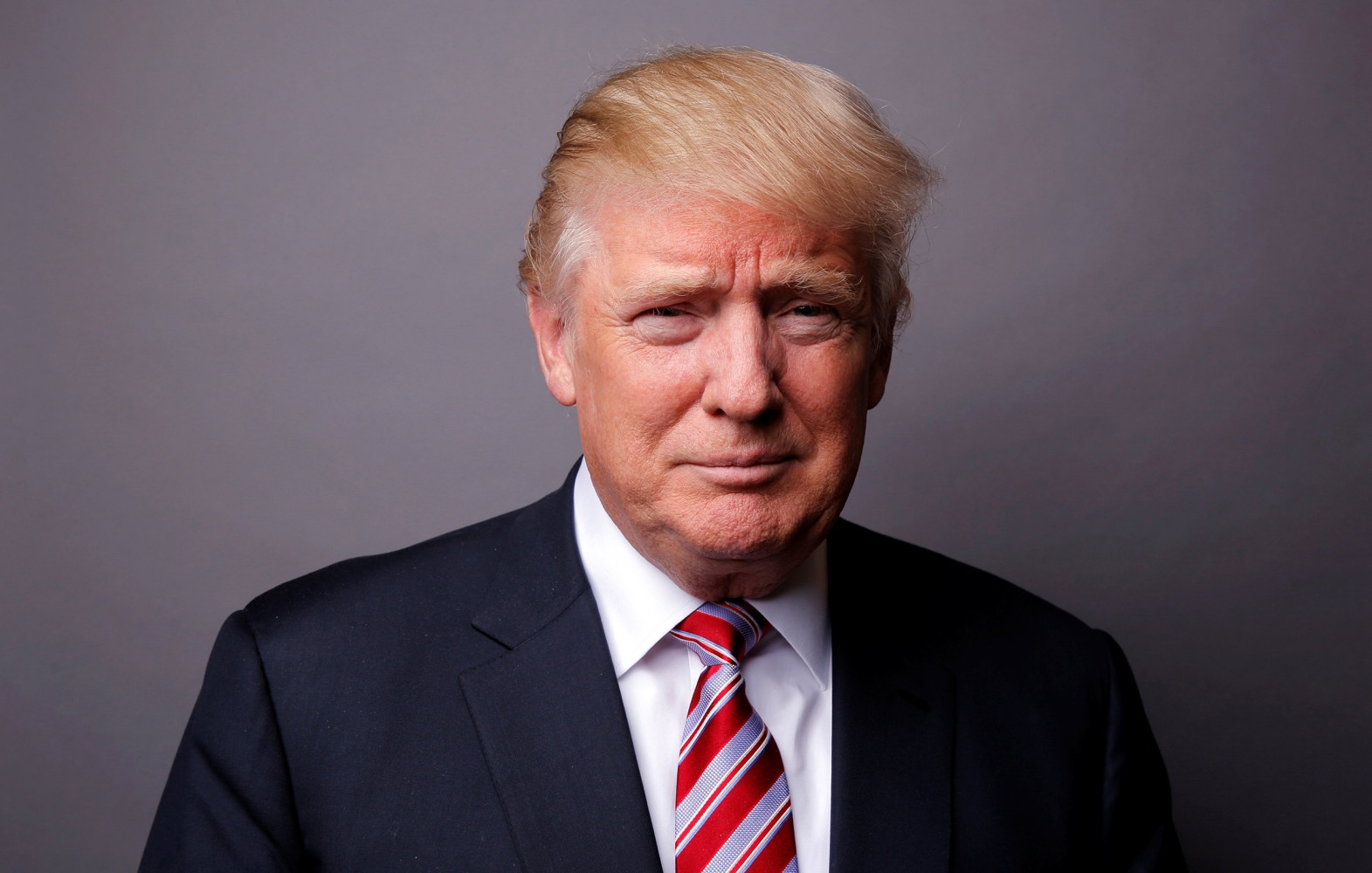 This is Donald. Donald is a normal man, somewhat spoiled, somewhat outspoken. Donald has been a real estate mogul for the last few decades, accumulating a vast amount of wealth and notoriety. Recently, Donald was chosen to be the sacrificial lamb of the GOP to allow Hillary Clinton to ascend to her rightful place as


