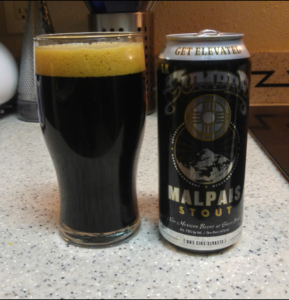
This is my review of La Cumbre (Albuquerque, NM) Malpais Stout.
The fun part about the English Milk Stout is that it does not contain milk, but it does contain lactose which as we all know is found in milk. Lactose is a disaccharide known for giving people gas because of the angle of the Oxygen bonds between glucose and galactose. That’s the O with the funny z-shaped bond that joins the monosaccharides below.
This bond in similar (but not identical!) to the type of bond found in the same type of polysaccharides found in dietary fiber. Most mammals cannot process fiber on their own, even cows; they process it with the help of bacteria that is passed to the calf from its mother. It’s also why fashion models and beauty pageant contestants eat celery. So as not to lose my audience, here’s Miss Kansas 2014, who I am quite certain eats meat.
In other words, people have issues with lactose because in a way, humans were never intended to be able to easily process the sugar beyond infancy. The sugar most people associate with beer of course is maltose.
Science AND beer?! What kind of site are we running, anyway?
Looks the same? Not quite. While they have identical chemical formulas, the difference is the angle of the oxygen bonds between the two monosaccharides. What does this subtle to the point where it appears to be a nearly meaningless difference between sugar have to do with beer? It has to do with everything. The yeast that processes these sugars must do so in a different way because of this bond but it can process both easily. The result is a beer that tastes slightly different—sweeter and not as dry. This is the explanation as to why milk stouts taste the way they do, and why not all stouts taste the same and thus were broken up into multiple articles.
Another fun fact about milk stouts: they were initially marketed to lactating women. No wonder your mom likes it.
So begins…the circle…of stouts!
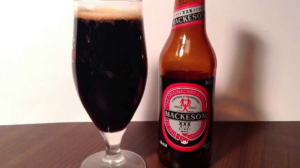
A good example of the English Milk Stout is Mackeson Stout.
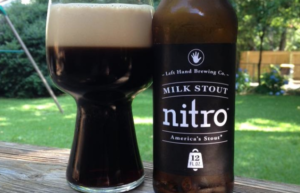
This one is kind of hard to find in the US, so if you are looking for a good example of the English Milk Stout, check out Left Hand’s Milk Stout. As a bonus, it is also available with the Nitrogen charged widget.
Another type is the English Chocolate Stout. Part 2 of this series I mentioned Young’s Double Chocolate Stout, but an arguably finer example is Samuel Smith’s Organic Chocolate Stout.
It appears arrogant to the uninitiated yet deliberately proper, and understated–like everything else the English do well. If you can find it, an example from the US might be Lancaster Double Chocolate Stout. I’ve never had this one, but I have heard a lot of good things about it. If I am wrong about it, I will recant on my deathbed.
As for the stout featured above. I asked everyone what kind of beer I should get on a Friday PM Links thread, and while I got an answer, I had already made my purchase by the time I checked my phone. I picked this because for some reason all the Glibs from the Land of Enchantment seemed to show up all at once one evening. So here is my shout out to the green chili eating weirdos to the east whose most famous resident painted pictures that my former boss has all over her office.
Internet points awarded to whoever actually knows who this is
La Cumbre Malpais Stout has a ridiculous malt complexity and a subtle bite from the hops. It’s ABV is at a healthy 7.5% and there is a slight burn to it. This one is rather dry like an Irish stout, because it is. Its old-world analogue is Guinness Extra Stout. It is a solid effort, and one I would recommend. La Cumbre Malpais Stout 3.5/5
Everyone loves to watch snipers in movies and TV shows make ultra-long shots undetected, then slip away. Anyone who’s seen the movie “Shooter” with Marky-Mark remembers the cold bore shot at a can of stew a mile away. First round hit? Yeah, right. That’s maybe a 2% shot, never mind his now-deaf dog. Just like most everything else in Hollywood, what you see is a very simplified version of what’s necessary to successfully hit a target farther away than most track and field events.
Long range rifle shooting has a lot of moving parts that must come together perfectly, or you’re going to miss. In this article, I’ll be covering the absolute basics of lingo, gear, and what’s necessary to make hits at distance.
My background: I’ve been shooting LR precision rifle matches for about 3 years. I was lucky to be employed by a precision rifle ammunition company and surrounded by some of the best in the industry, which jumpstarted my foray into the competitive LR world.
In LR competitions, typically called precision rifle matches, we typically shoot 1 to 3 MOA steel targets at 300-1200 yards from a mix of prone and alternate positions. Matches are broken down into 5-10 stages, with about 10 rounds shot in ~90 seconds. Top shooters usually have a hit ratio of around 80%. There are a ton of local and national level matches, loosely governed by the PRS. It’s unbelievably fun, and I highly recommend it.
Definitions
For those who don’t speak the LR lingo yet, I’ll define my terms.
Long Range: any shot taken that if the trajectory of the bullet is not accounted for, will result in missing the target. Long range is different for every rifle system and zero distance. What’s long range for .22LR could be a chip shot for .338 Lapua Mag.
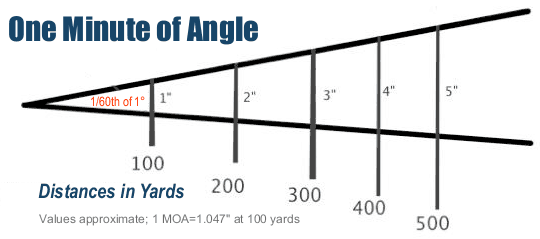
Minute of Angle (MOA): an angular unit of measurement equal to 1/60th of one degree. It scales linearly with distance. For simplicity, we can define one MOA as 1 inch at 100 yards, 5” at 500y, 10” at 1000y, etc.
Ballistic Coefficient (BC): the ballistic coefficient of a projectile is a measure of its ability to overcome air resistance in flight. Longer, pointier bullets lose velocity more slowly than round, blunt bullets, resulting in less bullet drop and wind drift at the same distance. Less drop and drift leads to less trajectory calculation error and higher hit percentages.
Transonic Range: the range of speed between about Mach 1.2 and Mach 0.8 (typically 1275 fps – 850 fps) where a bullet’s shockwave transitions from completely behind the bullet to completely in front of it. Because this happens over several hundred yards, each bullet design has a unique transition through this range, leading to trajectories that may not line up with predictions. Typically, longer, higher BC bullets are worse through transonic. This is why a weapon’s “effective range” is listed to what yardage the bullet reaches transonic. I.E. a 308 shooting a 175 SMK @ 2650 fps at sea level hits transonic at about 900 yards, which is where the “308 can’t shoot 1k yards” and “308s drop out of the sky at 900y” nonsense comes from.
Equipment
Accurate, repeatable, precision equipment, like the gear required to make first round hits at 800 yards is not cheap. I’ll list gear in descending order of importance.
Ammunition – High quality, consistent ammunition loaded with the highest BC bullet available and temperature insensitive powder is the most important ingredient to successful long range shooting. Great ammo in an ok rifle can get you acceptable results. Bulk ammo in a top of the line rifle will have you all over the place at distance.
“Good optics.”
Optic – A good optic is essential. If you’re on a tight budget, I’d spend most of my money here. A $900 optic on a $300 rifle is a much better system than a $300 optic on a $900 rifle. You need precise, repeatable elevation turrets, a good reticle, magnification range suitable to your application, and clear glass. The fixed power SWFA mil quad scopes are a good budget option in the $300 range. I wouldn’t want anything less than a scope in the $8-1200 range, like a Vortex PST or a Bushnell DMR. Once you go above $1500, you get really good stuff. Zoom ranges I’d recommend are in the 3-15x to 5-25x range. Almost everyone in the competition world runs 5-25x, does most of their shooting on 15x, and their zeroing on 25x.
Rifle – A rifle capable of 1″ 5 shot groups at 100 yards is a good minimum standard. I’m not happy with a load for a match unless it’s shooting 0.5″ or less. I’ll go in depth on cartridge selection later. Rifles meeting the 1″ criteria can be had for as little as $300. I’ve seen Savage Axis rifles shoot very well. The Ruger Precision Rifle is a great deal if you’re looking for a more feature rich rifle in the ~$1200 range. Most competition precision rigs are custom everything and will run you in the $3-5k range.
Ballistic Solver – You absolutely, positively need to know your bullet’s trajectory to make first round hits. Thankfully, the app store has tons of solvers, most of which are very accurate with the correct inputs out to transonic. No more needing to verify dope every 100y (even though you still can to confirm). All you need is your bullet’s BC, your ammo/rifle specific muzzle velocity, and current atmospherics and you’re off to the races. I’m partial to the Applied Ballistics solver for $30, but there are other good options like Shooter for $10, etc. You can even get a small weather station with an anemometer (measures wind speed) called a Kestrel with ballistics solvers built in to give you current atmospheric corrected elevation AND estimated wind corrections.
Laser Rangefinder – Once your target is out past a few hundred yards, your bullet’s trajectory starts dropping rapidly. If you think your target is at 770y but it’s really 700y, you’ve just missed a half a foot high. You absolutely need to know the range to your target to make first round hits. Thankfully, a Sig Kilo 2000 will range to 1000-1400 depending on light conditions, and do it for ~$400. You can buy better rangefinders, but less expensive units might not get you out to the magic 1k yard mark, which is within the capability of most rifles. It doesn’t help to have a rifle that can outshoot your rangefinder. Ranging with a reticle is very slow and error prone, especially out past 500y.
Chronograph – Knowing precisely how fast your bullet is going is imperative to a good trajectory solution from your ballistic solver. The old school optical chronos are no match for either a magnetospeed or a lab radar. The former uses magnets to measure velocity, the latter uses radar. Both are sufficiently accurate and don’t run into the lighting condition induced errors that optical chronos suffer.
Bubble Level – Even a few degrees of cant in your optic’s reticle can have a significant effect on your bullet’s trajectory. A miss that’s initially assumed to be a bad wind call can often be the effect of a few degrees of cant in a shooter’s reticle.
There’s a ton more gear that I’d recommend buying, but as long as you have quality offerings of the above, you’ll have a solid foundation for LR accuracy.
Taking the shot
Seeing as though the equipment list above is a mile long, the process of making first round hits at distance is involved and surprisingly time-consuming. Here’s the procedure, assuming you’ve zeroed your rifle at 100y and have chronographed the lot of ammo you’re using:
1. Range the distance to your target
2. Use environmental indicators and/or a kestrel to estimate wind speed and direction
3. Enter range, wind speed, atmospherics, and direction of fire into your ballistic calculator (muzzle velocity and BC are already entered)
4. Either adjust your optic’s turrets to the solution provided or use the optic’s reticle to hold for the solution
5. Double-check environmental wind indicators for any changes and that your bubble level indicates a level reticle
6. Use solid marksmanship fundamentals and break the shot.
Once you’ve broken the shot, its imperative that you mitigate recoil as much as possible, using both proper fundamentals, and, ideally, a muzzle device that aids in recoil reduction, such as a muzzle brake or a suppressor. In the event of a miss, being able to see your bullet splash is all the information you’ll have available to make a correction. If you fail to spot your miss, your correction will be a guess, and likely an incorrect one.
This is where an experienced spotter on high-quality optics comes in very handy. He can be watching your bullet trace and impacts to call out immediate corrections for you to adjust and reengage.
An incorrect wind hold is the most common reason for a miss. Wind is very hard to read correctly, and at 800y, a typical 308 can have around 20” worth of wind deflection in just a 5 mph wind. Seeing as though an average man is ~18” from shoulder to shoulder, aiming center and missing that 5 mph wind call would put your bullet nearly a foot off his shoulder.
With a bit of practice and homework, you’ll start becoming a proficient LR shooter. I have to admit, watching your trace smack a piece of steel you can’t see with your naked eye is some seriously satisfying stuff.
One of the things that surprise me about people and politics is how little time they spend thinking about an issue. Actually thinking. Like you would think of a work problem, let’s say. Not that many people think about work problems, too many incompetents for that. But many a time I had a debate with someone on an issue, and a week later, when I asked again about it I got blank stare. They did not spend one more minute dwelling on it, thinking. I did, because I wanted to clear it in my head.
So that being said, it reminded me of some of the things that gave me thought when I started really thinking about politics. I wanted to see the general opinion of the Glibertariat about a couple of issues. Both times I started out pretty sure of myself, but actually thinking about it got me to at least be less certain. This is what made me realize that I actually have to think about these things seriously before forming an opinion, and changed the way I view issues of politics, economics etc. In this particular case both are issues of justice.
Tough but fair
One of them can be tied to the whole common law versus roman or codified law debate. How much of law should be codified, what is the relationship between The Law as a philosophical concept and legislation, how strict or flexible should a piece of legislation be and how much leeway should courts have. How many laws should there exist codified, on the book? And how strict can these laws be?
How much can you trust a pure common law? Misbehavior by judges happens. How much can you trust a strict codified system? Misbehavior by politicians is just as often at least, and there can be a difference between theory and actual cases. See mandatory minimums.
One of the things about laws is that the need to be to a certain point clear and predictable. You must be able to expect an outcome, so you can behave appropriately. This makes it difficult to have no codified laws and leave everything up to courts – whatever these may be. In customary law, of course locals know the local custom, but laws can be more than custom of the particular area.
Strict laws can be inflexible but flexible laws unpredictable. Laws can start strict and become lax with exceptions and loopholes; this makes the system poorly performing, excessively complex and unfair, as exceptions tend to favor interest groups. My general idea is if a law requires an exception, it is badly made and it should not exist until crafted not to contain one.
My original position was that circumstances vary and as such laws should be flexible. This is countered by the notion that the law should be predictable and not too much subjected to the whims of judges. My conclusion at the time was that laws on the books should be simple, clear and few – only the absolutely essential ones. Only make them about absolutely necessary things. Keep them manageable and knowable. You can’t expect people to respect laws they do not understand. Not knowing the law is not an excuse is bullshit given the complex law code we have.
Where the courts come in is in having some flexibility on punishment – deciding guilt (was it murder or self defense? did the accused do it?), fault, mens rea and circumstances and the like. And covering conflicts that are not covered by codified law, but these should be less critical situations.
A second dilemma was about corrective, preventive, retributive justice. What is the goal? Rehabilitate the criminals? Discourage others? Punish the crime, irrespective of the first two? Or a combination of all three?
Burn her!
Originally I was completely against the idea of retributive justice, for several reasons. I thought that the main goal of justice would be to minimize crime and number of people in jail. Help criminals reintegrate in society. Retributive justice felt a little too much like revenge and prone to cruel and unusual punishment, and I did not believe it to be good to have the government in the revenge business.
Doubt crept into my mind when I read a defense of retributive justice by C S Lewis. The idea was that just justice is somewhat akin to “let the punishment fit the crime”. You did something wrong, you pay the price for what you did and that is it. You do not depend on judgments whether you are rehabilitated enough, or whether your punishing is enough to deter others sufficiently. The argument was that thinking mainly at prevention or rehabilitation moves the punishment from what is just to what the Government decides is useful for the previous stated goals.
The idea of retributive justice still makes me uncomfortable, but I cannot say it does not at least have a point. And I still mostly lean towards prevention, rehabilitation. As, while the punishment fits the crime sounds good and all, how do you determine an accurate punishment for a crime? Why 5 years in jail and not 3? Why a 500 dollar fine and not a 1000 dollar fine? What is fair?
This is from a long, far-ranging discussion of economics and politics a former friend and I had on Facebook, and this post was originally written in 2013. I think this still stands up well, but this is not a new post.
My friend has a BA in Business Administration, hence the reference at least once to his business degree, and presumed cluefulness about how businesses operate and how business owners think. This jumps into the middle, and I’d rather just post this as-is, so I’ll paraphrase his points leading up to this. We wandered over to minimum wage via government regulation (which in turn stemmed from a discussion of the incestuous relationship between business and government); I’d said that most regulations are obsolete and hurt business, he pointed out that yes, some are obsolete, but others are there to protect people, and voila, minimum wage is an example of protecting workers.
My response:
You and I are coming from the minimum wage question from 2 completely different angles. You believe in (federal) government protection of workers. I believe in the (federal) government sticking to the Constitution… and minimum wage isn’t in the Constitution, even under the commerce clause (what Joe Shmoe is paid in Wichita, KS, has nothing to do with a different franchise in Kenosha, WI, selling their burgers). If it was a state minimum wage, it’d be a different thing… although I’d still be against it, the “it’s not a role of government” argument wouldn’t apply.
However, setting that argument aside, I’m still coming at it from the side of “personal responsibility”. You have 3 options as a burger flipper: either find an employer who will pay you what you think a burger flipper is worth at whatever quality of burger flipper you are (I’d assume shoddy, since you feel you need some kind of protectionism to get paid a ‘decent’ wage, but I may be wrong and you may just be ignorant and unaware that you can switch jobs without your world shattering), be the best damn burger flipper you can be and justify that raise you’re asking for (what everyone making over minimum wage does when they want/need to make more money), or learn a skilled trade or get a higher education in something and stop being a burger flipper and start being something like a carpenter or architect.
Again, I’m not talking out my ass, or in theoretical terms about things I only vaguely observe from some mystical ivory tower somewhere… I have the t-shirt. In high school and through college (and after college for a couple years, because of the recession) I worked really crappy jobs. Food Lion and Walmart didn’t pay minimum wage (even McDonald’s doesn’t), but it was bloody close. After I moved out, I didn’t make enough most of the time to cover my gas and such (I was in college by the time I moved out)… so I did the best job I could do and got raises every year. When I could, I got promotions. And when I found a job that paid me well and needed my skill set, I changed jobs and came to work at my current job. I didn’t ask the government to make anyone pay me more, or wish minimum wage was $12/hr… I made myself a better employee and justified the money I was getting, and went above and beyond so raises and promotions would be justified as well.
And since you have a BA, I assume you know as well as I do that businesses aren’t charities– they aren’t there to give workers the money they ‘want’, or deserve for being a special snowflake human being. Businesses exist to make money, and as a side effect pay people to make money for the business… and that pay is in proportion to a person’s value as an employee. If Mother Teresa sucks at flipping burgers, then dang it, Mother Teresa deserves minimum wage… or to be fired. It doesn’t matter to Burger King that she’s Mother flippin’ Teresa, man. She’s a terrible employee, and her pay reflects that.
Also worth noting is the point he’d made earlier about employees being replaced by automation if they get too expensive to employ. This is a very valid point that most minimum wage workers and people who advocate for them don’t seem to understand. Again, people own businesses to make themselves money. If they can’t make enough money, something’s got to give. And when there’s no more non-employee overhead to cut, they need to start cutting people. As a general rule of thumb, it costs about twice an employee’s gross pay to employ them (given employer shares of FICA, certain states’ income tax, worker’s comp, benefits, etc.)… so that $10k/yr employee actually costs the business owner around $20k. I’d imagine Obamacare penalties and/or post-obamacare insurance premiums have upped that 2:1 ratio. So if it costs less than $20k/yr to set up an automated ordering kiosk and a burger flipping robot, guess what a business owner is going to do?
And then there’s the economic effects of raising the minimum wage. Less than 10% of workers make minimum wage, so this would have very little direct positive effect on people. However, in short order, it would have great negative effects on a large number of people. Artificially raising the wages of one segment of the population increases cost for certain businesses, they raise their prices, which raises costs for other businesses, and so on down the line until prices have increased across the board, and we’re right back where we were. This is how raising the minimum wage is a driver of inflation.
In this country, like most countries in the world, we have a fiat currency; that is, a currency whose value is not linked to a commodity (like gold, silver, or salt), but is based on the trust that the country issuing the currency can pay its bills. By its nature, fiat currencies are subject to almost constant inflation through devaluation of the currency. Especially when the country in question is engaging in… let’s say non-optimal monetary and economic practices. In our case, budget deficits, a high national debt, and things like quantitative easing. It’s part of the reason everyone’s parents have stories of “I remember when gas was $0.35!” (for my generation’s parents) or “I remember when gas was $0.98!” (the story I get to tell if/when I have kids and they’re old enough to be regaled with tales of ‘the good old days’). Another factor in inflation is artificially raising wages– you’ve arbitrarily decided that the dollar is worth less than it is, so people need more of them. And by deciding that one segment of the population needs more, less valuable dollars, everyone else needs to have and spend more, less valuable dollars to keep up with the sudden devaluation of a dollar for a certain segment of the population.
So, with a rough idea of how inflation works in mind, it makes sense that raising the minimum wage (or even having one, I would argue) is detrimental to the economy as a whole, and you end up chasing your own tail. What happens when inflation catches right back up to you again? The cycle of artificial inflation begins again, and the minimum wage is raised, devaluing the currency and forcing business costs to go up, rippling down the supply chain, raising costs of end-consumer goods, etc. We aren’t going to rein in fiat-based inflation any time soon, but we can stop wage-induced inflation by not raising the minimum wage.
We’re still four weeks from the home stretch of the NFL season – it’s too early in the season to talk about crucial matchups related to playoff seeding, too late in the season to pretend certain teams can contend for a playoff spot. Objectively speaking, it’s been kind a down year for the NFL. Even if you overlook off-field stuff (Zeke Elliott) or pre-game stuff (anthem protests), there’s been a paucity of exciting, competitive play this year. Injuries to superstar players such as Aaron Rodgers, Odell Beckham, and JJ Watt (just to name a few) have hurt the product on the field. But what are we to do with our Sundays otherwise? Spend them with family? Oh, come on now.
BTW, since we’re in the dog days of the NFL season, this would be a good time to pick my brain. Share any questions you have for me in the comments. Since my W/L percentage on picks is a God-like 53.3%, my expertise in all things NFL is obviously beyond all reproach.
AFC WEST
LA Chargers @ Jacksonville – This week’s upset special
New England @ Denver – The Broncos are crumbling
Rule change proposal time: because the passing game has gotten easier over the years, let’s make it a little more difficult, a little more risky. The new rule proposal is that if a thrown pass hits the ground behind the line ofscrimmage, even if the pass travels forward, the ball is live like a fumble. The short passing game has played a major role in improving passing efficiency over the years, and in particular the WR screen is almost risk-free. Rule changes nearly always favor the offense, and I think it’s past time to fine-tune the game in favor of the defense for once.
AFC NORTH
Pittsburgh @ Indianapolis – Expect a tough game from the Colts in defeat
Cincinnati @ Tennessee – Titans win the close one at home
Cleveland @ Detroit – Lions win two straight
Ace beer reviewer mexican sharpshooter made this comment in a nearly dead thread on Tuesday:
mexican sharpshooteron November 7, 2017 at 3:06 pm
The Browns… Well… they technically have a team.
You mean the Baltimore Ravens?
The Ravens’ girls don’t care. And their hair is still fabulous.
This may be sarcasm, but for the sake of discussion let’s play it straight.
One old proverb in sports says that “You play for the name on the front of the jersey, not the name on back”. Granted, many NFL jerseys don’t actually have a name on the front of the jersey, but the point of that old saying is that you don’t put yourself ahead of the team. Piggybacking off of that idea, if we are rooting for a team because they represent the name on the front of the jersey – and a majority of fans do – then why would fan sympathies remain with a team that left the home city? it’s understandable to keep rooting for the old team when the players held over through the move remain with the moved team, but in the case of the Ravens, they left Cleveland over 20 years ago. There are no original Cleveland Browns on the Baltimore Ravens’ roster any longer.
I’m amused by the Golden State Warriors claiming five NBA championships. Swallowing such BS requires us to believe that basketball fans in the Bay Area were on the edge of their seats, cheering their hearts out, in 1947 and 1956 when the Philadelphia Warriors won those titles. If you are playing for the name on the front of the jersey, you’re not playing for the cities that used to adorn the front of the jersey, nor those that will. If you’re rooting for the name on front and a Browns fan, why root for the Baltimore team over the Cleveland team? Why root for the Nashville team over the Houston team if you’re a Houston fan?
AFC SOUTH
Cincinnati @ Tennessee
LA Chargers @ Jacksonville
Pittsburgh @ Indianapolis
Houston @ LA Rams – The Rams offense is seriously clicking
Tying into our previous subject, the Houston Texans have been a mostly mediocre franchise in their fifteen years of existence. This is an improvement over Houston’s old NFL franchise, the Houston Oilers. Now the Oilers did have bigger years than the Texans’ best, and Oiler legends like Warren Moon, Earl Campbell, and Bruce Matthews were superior to their Texans counterparts. (Granted, Texans receivers Andre Johnson and Deandre Hopkins are better than any of the Oilers WRs)
But the Texans lose playoff games in totally expected ways, to teams that are clearly better, and they lose with dignity. The Texans organization is a professional big-league group. The Texans would never hire a clown like Jerry Glanville to coach their team. I’ll guarantee that once the Texans become a threat to win the Super Bowl. they’re not going to lose three straight playoff games after leading all three by double digits. The Texans’ coordinators will not throw punches at one another on the sidelines while losing those games. No organization squandered more big-time talent or embarrassed itself more, and there’s a reason the expansion Houston team passed on resurrecting the old Oilers identity.
AFC EAST
New England @ Denver
New Orleans @ Buffalo – Saints remain red hot
NY Jets @ Tampa Bay – The Bucs are in free-fall
Miami @ Carolina – Miami’s anemic offense is especially bad on the road
Given no other information, would you rather play in Miami Dolphins colors or those of the Oakland Raiders? I know I’d feel goofy playing football in teal blue with coral-orange trim.
NFC WEST
Seattle 22 @ Arizona 16 (F – 11/9)
Houston @ LA Rams
NY Giants @ San Francisco – Okay, THIS is the week the Niners get their win
1) I called the Rams “an impressive 6-10 team” going into week five. Oops!
2) There’s still plenty of time for the Rams to come back to Earth, but pro-football-reference.com‘s SRS (Simple Rating System) rates the Rams #1 in the league. I can’t really explain the system beyond (Margin of Victory * Strength of Schedule), and in the last 30 years, the team to earn the #1 rating has won the Super Bowl 11 times in the last 30 seasons.
3) After eight weeks, the 1999 St. Louis Rams scored 263 points; same is true of the 2017 Los Angeles Rams. Just sayin’.
NFC NORTH
Minnesota @ Washington – Minny’s not as good as their record
Green Bay @ Chicago – Rodgers-less Pack exposed again
Cleveland @ Detroit
Meh. Teddy Bridgewater’s coming back this week.
NFC SOUTH
New Orleans @ Buffalo
Miami @ Carolina
NY Jets @ Tampa Bay
Dallas@ Atlanta – IF Zeke is suspended, his backups are perfectly good
The only true domed stadium left in American pro sports is in New Orleans. No one plays on Astroturf anymore. Domed stadiums were the wave of the future once upon a time; nowadays the roof opens when the weather’s good. Heck, in recent years, in some harsh weather markets, they built new stadiums without roofs. Our own OMWC has said that when he’s king of the world, all NFL stadiums will be open-air. While I’m disturbed at how he might use his prima nocta rights, he’s onto something. There’s a certain magic to football being played in the elements, and fortunately that possibility still exists today.
The Baltimore Ravens will visit Lambeau Field in eight more days, and the Glibertarians power couple will be in attendance. As much as I sympathize with the football-in-weather crowd, I’m glad I’ll be watching from my folks’ house in San Antonio rather than freezing my can off in Wisconsin. But I’m happy for (((them))).
NFC EAST
Dallas @ Atlanta
Minnesota @ Washington
NY Giants @ San Francisco
I grew up a Cowboys fan, and after a couple of years under the ownership of Jerry Jones I couldn’t stand them. In the years under Tom Landry, the Cowboys were a model of professionalism and consistency. Other than the big years under Jimmie Johnson (and to be fair, the last four or five seasons), the Jerryboys were far more about sizzle than steak. Of course the Cowboys fired their two-time Super Bowl winning coach; Jerry doesn’t care for him. Of course the Cowboys signed Terrell Owens; he was the brashest character in the game. Of course the Cowboys wanted to draft Johnny Manziel; he’s got that swag.
Having said that, one of my favorite players of all time was a Cowboy by the name of Marion Barber. The guy was built like a cornerback but ran like Earl Campbell. And playing with that style cost him a longer career; he only played seven seasons, but they were fun to watch. Here, watch him run for two yards.
I have been avoiding writing about this style for a while now. It’s pretty much everywhere and people seem to either love it or hate it. People that love it are often accused of lying about it to look like they are “with it.” Even though what “it” is, is scary, smells like a barber shop when the AC breaks down and tastes like spiked piss. Then this happened:
[…]
My TI: Flight!
Me: Kill! (Parade Rest)
My TI: Attention!
Me: Osama! (Attention)
Sorry about that. Back to your regularly scheduled programing.
True. Also discussed in this thread is if Whole Foods Girl is attractive with gauged earlobes. The short answer is, maybe.
I did no such thing.
Screw it. This is my review of Bear Republic Racer 5 India Pale Ale. Hat Tip: Sean, Tundra, Playa(Hate-ah)Manhattan, et al.
Ready your rotten cabbage, ladies.
For the record, I found this one as a single at Total Wine but I have seen it in numerous places like Fry’s(Kroger), Safeway and BevMo. Since I am in Arizona, this wide distribution is likely due to my location and thus cannot speak to how far their reach is. This isn’t the first time I have had this one, but it has been a long time. Since there are so many California brands in my area, there is a fair bit of difficulty in keeping up with all of them. Then there are the local brands which for the most part are as good or better, but the Arizona brewers tend to focus on styles that aren’t this extreme. The reason? When it’s hot out the last thing I want is an IPA and I don’t think I’m alone.
India Pale Ale tends to lose its potency over time. The oils and aromatics in the hops that dominate the style break down, particularly when it comes in contact with light. Yes, even if it is stored in a brown bottle. Because of this, I always recommend finding a local brewer that makes a good version of the style, for me that’s Four Peaks Hop Knot. Fresh beer is always better and somebody that makes it nearby will likely give you the best version available for the style. Don’t have a good one? The Stone “Enjoy Before” series is your best bet. It’s not always available, but they give you the date specifically because that is the date they recommend will meet their quality standards. The idea behind this style is they over-hopped the beer in England back in the day so it could make it to their English customers in India and still taste like a traditional Pale Ale.
I tried this once when I came across a Stone Ruination IPA at a gas station about a year ago. Note, I did not say Ruination 2.0, this was the original still sitting in the corner on the bottom shelf of the refrigerator at an Arco station. It was old, and quite frankly there is proof of concept as it tasted like a terrible pale ale. If you come across this one with the green label, avoid it.
Racer 5 is pretty good for the type of style it is. Without looking it up, I would guess it is the Cascade/Centennial Hop combination that I mentioned before. It’s made in the dry-hopped “West Coast” style that seems to generate the polarizing views. I’ve been drinking a lot of balanced or malty beers lately, so it was quite the experience and even cleared my sinuses. Very fragrant in the glass but it seemed to leave a dry, bitter feeling afterwards. There are a lot of citrus notes, and it is definitely not malty. Overall, it’s a good example of the West Coast IPA style so if this is the style you like, you will enjoy it. I’m not always up for it though. Bear Republic Racer 5 India Pale Ale: 3.2/5. Other good examples include the aforementioned Four Peaks Hop Knot. Of the nationally distributed brands Sam Adams Rebel IPA, Dogfish 60 or 90 Minute IPA, Stone Ruination IPA 2.0, New Belgium Ranger IPA, Elysian Immortal IPA and if you have Avery in your area, most of their versions are very good as well.
Winner winner, drink a Pinner!
The alternative is finding one that pays homage to the traditional English version. Oskar Blues Pinner IPA is a good example. They don’t list the hops used on their website (surprise!) but I believe they lean heavily on traditional English hops. Interestingly enough, they were going for something else entirely when they made it. This one is very light, and it does not have a lot of body to it but it does taste more malty than what one would normally find from this style. The head in the photo disappeared rather quickly but to be fair, this is something I have found in all this brand’s styles.
I will say this one is almost sweet compared to Racer 5. Oskar Blues Pinner IPA: 3.2/5. Another version to consider is Firestone Walker Union Jack IPA, and if you look closely in the import section at Total Wine you will find actual English IPA from time to time. Not many other examples from the US come to mind.
Today, I am going to talk a bit about the opposite of guns. What is the opposite of a gun, you might ask. Peace? Love? Puppies? No morons, it’s body armor. For those of you just unfrozen from a 200 year cryo sleep, body armor stops bullets before they can enter your meatspace and STEVE SMITH you to death. And no, I don’t know who would know about STEVE SMITH but not understand the concept of body armor, but I’m sure if he exists he’s reading this at some point. There are 5 official levels of body armor as defined by the National Institute of Justice: NIJ level IIa, II, IIIa, III, and IV. III and IV are hard armor plates rated for rifle rounds, while everything else is soft armor only rated for handguns. Soft armor is what is usually used by police officers since it is lighter and flexible and can be worn more comfortably for long periods of time, while plates are worn by military for their ability to stop rifle rounds. I do not know much about soft armor since I don’t own it and I have never used it, but I would only recommend soft armor if you need to wear it for long periods of time or need to do a lot of walking while wearing it and don’t anticipate rifle fire. For most civilians I cannot think of a case that would justify wearing soft armor as part of your everyday loadout, and since it would be inferior in a SHTF situation, I don’t recommend it at all. If there is some situation where you need to wear armor inconspicuously then soft armor is probably the only thing that will work, but again I cannot think of many realistic situations outside of police work that would warrant it. There is another reason why I don’t recommend soft armor: It deforms when hit. Unlike a hard plate, soft armor will bulge to absorb the impact of the bullet. That means that while the bullet won’t actually enter your body, it will still feel like you got punched in the gut by Mike Tyson. Stopping the first bullet is no good if you’re laying there gasping for air immediately afterwards.
So that leaves hard plates. There are two commonly available types of plates: Ceramic and steel. Ceramic plates are the more traditional variety. These are sometimes referred to as SAPI or ESAPI plates, although that technically is a specific brand used by the US military. The advantages to ceramic plates are low weight and no spalling (I’ll get to that in a minute). Ceramic plates usually weigh half as much as equivalent steel plates, which means less weight for you to have to carry around. The disadvantages are cost, shelf life, and durability. Ceramic plates break when hit. That’s how they stop the bullet. But that also means they cannot take 2 hits in the same place. A ceramic plate can only withstand a few hits before it becomes completely worthless. Ceramic plates can also break if dropped onto a hard surface or if something heavy is dropped on top of them.
Steel plates are the newer variety of plates, and they come from a bit of good old redneck engineering. See people were looking for reusable targets they could shoot. Some people tried mild steel like you find at the hardware store but they figured out that rifles will punch holes clean through that stuff. They eventually found out that abrasion resistant steel (known as AR500 steel) was strong enough to stop most rifle rounds and they started making targets from them. Eventually someone realized you could make some very inexpensive plates that could stop a lot of bullets. The advantages of steel plates are price and durability. Theoretically, a steel plate can take hundreds of hits without failing and there are videos showing level 3 plates taking upwards of 90 rounds before failing. The disadvantages are weight and spalling. Steel is heavy, and lugging big heavy steel plates around is going to suck. These plates usually weigh around 8 pounds a piece, which works out to 15-30 pounds per set. The other issue with steel is spalling. As I said before, ceramic plates break when hit. Steel plates actually shatter the bullet, but when that happens it makes a bunch of high velocity shards spray out from the face of the plate. These shards probably won’t kill you but they will hurt, and if you get hit with enough of them in a soft vital spot like your neck it can make your day pretty bad. To help mitigate this, all decent plates come with a layer of spall coating on them to help catch the fragments. It’s usually a modified version of truck bed liner. I tried making my own plates using roll on bed liner and it didn’t go so well, so I recommend buying them pre coated. It may cost a little more but it’s worth it.
Now let’s go into protection levels. I told you before that there are 2 levels of hard plates, III and IV. That’s not entirely true. There is a third category that has come out recently called III+. III+ is not an official NIJ rating. It was created by manufacturers as a bridge between level III and IV plates. So what is III+? Well, level 3 plates stop normal rifle rounds and level 4 plates stop armor piercing rounds. Some normal rifle rounds are armor piercing under certain circumstances, however. Level 3 plates are designed to stop 5.56, 7.62×39, 30 06, and 308. However, M193, which is considered a non armor piercing 5.56 round, will defeat a standard level 3 plate. To remedy this, companies came out with 3+ plates, which will stop everything level 3 plates will stop, plus M193. Level 4 plates are designed to stop everything short of hardcore rounds like 300 win mag, 338 lapua, and 50 bmg. Level 4 armor will stop any normal gun. To my knowledge, level 4 armor is only available in ceramic, but I could be mistaken.
So what should you buy? Before we go into this I want to remind people that this is my opinion and you may find contradicting info elsewhere. Just remember that I am not trying to sell you anything. With that in mind, my answer on what you should buy is: it depends. I will tell you that because of the widespread proliferation of AR 15s and M193 ammo I strongly recommend not using anything below a 3+ rating. Beyond that, its a question of budget and desires. If you want to be able to stop basically any bullet fired at you, then level 4 is the only way to go. Remember though, you will only be able to take a few hits before the plate is compromised. If extreme durability is more important to you, a 3+ steel plate is probably your best bet. If you have a bit of money to spend and want a lightweight setup, 3+ ceramic plates are going to be your recommended option. Personally I run 3+ steel plates in my carriers. AR500 armor currently has level 3+ plates starting at 90 bucks a piece and level 4 plates at $115. It doesn’t get much cheaper than that for brand name armor.
One final piece of advice: Get a curved front plate. Curved plates are much more comfortable, especially if you’re a little round yourself, like me. You only need 1 curved plate. Back plates can be flat. Women should run 2 flat plates (this info came directly from an AR500 salesman). Their, uh… features make flat plates more comfortable.
Alright, here’s what’s gonna happen, I’m gonna start out with a story from my job, talk about minimum wage and why kids don’t work today, then end with a gripe.
Foreseeable consequences are not unintended.
So I was busing tables for my $1.50 an hour, you know just watering and cutting bread, when this kid, and when I say kid, I mean a guy who was 23 and had never had a job, who was simultaneously well groomed and unkempt walks in. I thought to myself, “Oh God, fine I’ll water you and cut, whatever.” So I continue on and water him and all that. He was rude to me and the server who I’m friends with so I didn’t like this kid, but fine again, whatever. So as the night picked up, I passed by his table a few times until eventually he drops this line on his parents, “As long as we have a middle class in america we can’t have equality.” Now I had to water and cut bread so I didn’t hear more. But this made me so angry that it almost ruined my night, a night which already had a lot going wrong recently.
Alright, story time’s over, now it’s time to talk about the minimum wage. Now this is already a loaded topic so I’m not going to step into what is so intricate about it, but instead I’ll cut right to the meat of my argument. It’s not the only reason why kids can’t get jobs now. Much of the refusal to hire kids is due to the following two reasons:
Kids are now less willing to work and are thus less reliable workers who employers are willing to hire
And kids provide a whole slew of issues, to the point where even if they are willing to work, they are not allowed to work in certain places
But let’s break both of these down. Amongst kids there is a lot of pressure to not only socialize, but also to play structured sports, to the point where they have no time to spare between homework and extracurriculars. The extracurriculars are mostly used by parents earlier in the kid’s life to signal their wealth. These extracurriculars tend to then continue later into the kid’s life until we have the current situation. But what about the liability issues? Well, they primarily start around the following two laws “kids under 16 may not work with food” and “kids under 16 may not handle cash.” I don’t know if these are federal or state, but it meant that until I was 16 I couldn’t get an actual job. There are also safety issues which mean that kids can’t be involved with heavier labor like landscaping unless they get expensive medical testing. This renders most jobs unavailable for kids.
Now onto the gripe. I don’t earn $1.50 an hour on my actual paycheck, instead it’s $5.50 an hour plus tips. But the payroll tax is so utterly fucked, to the point where out of every $5.50 I never see $4. That’s $4 which goes to the fedgov and not me. Fuck payroll and income taxes together. Anyway, y’all let me know if you have any stories of your own.
OK, Glibs. Here is a nice open post for you to paste all your links (maybe save them instead of dumping them in the Morning Links?) and snark and such. I am going to toss in a couple of bonus links on the Texas Church shooting.
There’s the immortal “Take Me Out To The Ball Game”. Terry Cashman had “Talkin’ Baseball”. CCR frontman John Fogerty scored a solo hit with “Center Field”. You can find “Van Lingle Mungo” in jazz fake books. As befits a game with 150+ years of history behind it, baseball has inspired many musical musings. Even basketball, a game with a much smaller historical footprint, has made something of a mark on the musical landscape: Grover Washington Jr.’s “Let It Flow (For Doctor J)”. Kurtis Blow’s “Basketball”. And…this thing.
But football hasn’t had the same impact in the world of music as the other two major American team sports. Which is not to say there’s been no impact whatsoever. If we look closer, we can find some instances where gridiron and melody crossed streams in, shall we say, notable instances. So as we delve into the week nine picks, let’s look at the ways in which football and music have merged over the decades.
AFC WEST
Raise your hand if you’re excited to move to Las Vegas.
Kansas City @ Dallas – the Zeke suspension finally rears its head
Denver @ Philadelphia – I’d say take the under if this was played in Denver
Oakland @ Miami – on the bright side, they’ll score some points this week
“The Autumn Wind”. Maybe you didn’t know it by name, but if you grew up with NFL Films Presents, you know it by heart. It’s even more stirring with John Facenda’s narration setting the scene. Here, restart the music and read this passage, imagining it in Facenda’s voice:
With February’s frigid chill in it’s full surge, Glibertarians.com entered the World Wide Web with a savage force equalled by few. Armed with world-class misanthropy and supported by a compliment of orphans, the Glibs contributors hit the ground running in their inaugural campaign. Swiss Servator’s signature narrowed gazes condemned rank punnery and facile jokes with ease. Sloopy’s sports linkage and fierce Ohio State fandom set a precise tone every morning. Heroic Mulatto’s YouTube finds seldom failed to shake the reader from his doldrums. And Sugarfree’s lurid, frank depictions of political pique and peccadillo shocked and appalled even the most jaded of readers.
AFC NORTH
Cincinnati @ Jacksonville– The Jags defensive front will rule the day
Baltimore @ Tennessee– The Ravens can’t win on the road if the opponent is worth a damn
Indianapolis @ Houston– Apparently, Matt Schaub is destined to own the Texans’ QB records forever
Cincinnati @ Jacksonville– The Jags formidable defense shines at home
Baltimore @ Tennessee
Before they were the Tennessee Titans, they were the Tennessee Oilers. Before that, they were the Houston Oilers. And they had a famous fight song. Being a creative musician-type myself, I can only marvel at the way the songwriter ingeniously crafted a sound so reminiscent of the Bayou City. The way the lyrics pull the listener into Harris County with a charm and specificity worthy of Arlen, Sondheim, Dylan…well, give it a listen and prepare to be amazed.
AFC EAST
Buffalo 21 @ NY Jets 34 (F – 11/2)
Oakland @ Miami
I’ve shared this before, but it’s definitely worth a repost. To the extent that I have a favorite team, it’s the Houston Texans; I don’t exactly live and die with the results of their games. But teenaged Junior definitely died with each of those four straight Super Bowl losses. That was the last time I could honestly say I had a favorite football team, and I miss those days.
NFC WEST
Arizona @ San Francisco – Into the win column, boys!
LA Rams @ NY Giants – Your week nine upset special
Washington @ Seattle – The Redskins’ weaknesses are starting to show
Without any notable song I can connect to this division, this seems as good a time as any to discuss “Heavy Action”. It wasn’t even written for football, but for NFL fans it is inextricably linked to the gridiron game. “Heavy Action” has been a part of NFL TV broadcasts for 42 years and counting. Still don’t know what it is? Alright, here’s your link.
I’m hosting a Super Bowl party at my apartment come February. Fair warning: “Heavy Action” will be playing on a continuous loop, and the party starts at 10 AM.
NFC NORTH
Detroit @ Green Bay – On the plus side, the Ravens matchup that our OMWC and SP will attend is looking up for the Ravens
The year was 1985, and 1985 in the NFL was all about the Chicago Bears. For good and for…whatever this was. Honestly, “The Superbowl Shuffle” was such a masterpiece of cringe it deserves its own post. Perhaps later…?
NFC SOUTH
Atlanta @ Carolina – The Falcons’ slide continues…
Tampa Bay @ New Orleans – …as does the Saints surge
I’ll come clean and admit that I’m running out of songs. It’s not my fault; the teams in the NFC South don’t have much of a musical heritage. In Carolina, they bang a bass drum before games; the Atlanta Falcons had ties to MC Hammer in the early 90s, which is a much greater shame than their Super Bowl loss to the Patriots. Tampa Bay’s formative years were far too embarrassing to write songs about, and while New Orleans is world-famous for a distinctive style of jazz, it hasn’t really bled into the football team. So here’s some Super Bowl halftime music from Up With People to fill the void.
 This is my review of La Cumbre (Albuquerque, NM) Malpais Stout.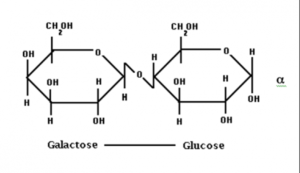
 This bond in similar (but not identical!) to the type of bond found in the same type of polysaccharides found in dietary fiber. Most mammals cannot process fiber on their own, even cows; they process it with the help of bacteria that is passed to the calf from its mother. It’s also why fashion models and beauty pageant contestants eat celery. So as not to lose my audience, here’s Miss Kansas 2014, who I am quite certain eats meat.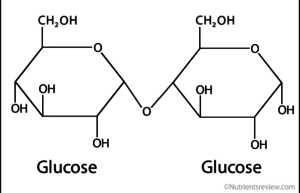
 A good example of the English Milk Stout is Mackeson Stout.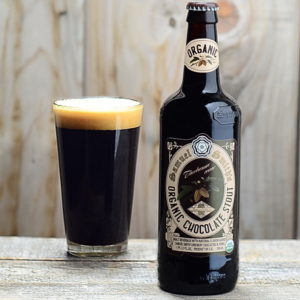
 It appears arrogant to the uninitiated yet deliberately proper, and understated–like everything else the English do well. If you can find it, an example from the US might be Lancaster Double Chocolate Stout. I’ve never had this one, but I have heard a lot of good things about it. If I am wrong about it, I will recant on my deathbed.

 Rifle – A rifle capable of 1″ 5 shot groups at 100 yards is a good minimum standard. I’m not happy with a load for a match unless it’s shooting 0.5″ or less. I’ll go in depth on cartridge selection later. Rifles meeting the 1″ criteria can be had for as little as $300. I’ve seen Savage Axis rifles shoot very well. The Ruger Precision Rifle is a great deal if you’re looking for a more feature rich rifle in the ~$1200 range. Most competition precision rigs are custom everything and will run you in the $3-5k range.
 Ballistic Solver – You absolutely, positively need to know your bullet’s trajectory to make first round hits. Thankfully, the app store has tons of solvers, most of which are very accurate with the correct inputs out to transonic. No more needing to verify dope every 100y (even though you still can to confirm). All you need is your bullet’s BC, your ammo/rifle specific muzzle velocity, and current atmospherics and you’re off to the races. I’m partial to the Applied Ballistics solver for $30, but there are other good options like Shooter for $10, etc. You can even get a small weather station with an anemometer (measures wind speed) called a Kestrel with ballistics solvers built in to give you current atmospheric corrected elevation AND estimated wind corrections.
 Laser Rangefinder – Once your target is out past a few hundred yards, your bullet’s trajectory starts dropping rapidly. If you think your target is at 770y but it’s really 700y, you’ve just missed a half a foot high. You absolutely need to know the range to your target to make first round hits. Thankfully, a Sig Kilo 2000 will range to 1000-1400 depending on light conditions, and do it for ~$400. You can buy better rangefinders, but less expensive units might not get you out to the magic 1k yard mark, which is within the capability of most rifles. It doesn’t help to have a rifle that can outshoot your rangefinder. Ranging with a reticle is very slow and error prone, especially out past 500y.
 Bubble Level – Even a few degrees of cant in your optic’s reticle can have a significant effect on your bullet’s trajectory. A miss that’s initially assumed to be a bad wind call can often be the effect of a few degrees of cant in a shooter’s reticle.


 Also worth noting is the point he’d made earlier about employees being replaced by automation if they get too expensive to employ. This is a very valid point that most minimum wage workers and people who advocate for them don’t seem to understand. Again, people own businesses to make themselves money. If they can’t make enough money, something’s got to give. And when there’s no more non-employee overhead to cut, they need to start cutting people. As a general rule of thumb, it costs about twice an employee’s gross pay to employ them (given employer shares of FICA, certain states’ income tax, worker’s comp, benefits, etc.)… so that $10k/yr employee actually costs the business owner around $20k. I’d imagine Obamacare penalties and/or post-obamacare insurance premiums have upped that 2:1 ratio. So if it costs less than $20k/yr to set up an automated ordering kiosk and a burger flipping robot, guess what a business owner is going to do?
 In this country, like most countries in the world, we have a fiat currency; that is, a currency whose value is not linked to a commodity (like gold, silver, or salt), but is based on the trust that the country issuing the currency can pay its bills. By its nature, fiat currencies are subject to almost constant inflation through devaluation of the currency. Especially when the country in question is engaging in… let’s say non-optimal monetary and economic practices. In our case, budget deficits, a high national debt, and things like quantitative easing. It’s part of the reason everyone’s parents have stories of “I remember when gas was $0.35!” (for my generation’s parents) or “I remember when gas was $0.98!” (the story I get to tell if/when I have kids and they’re old enough to be regaled with tales of ‘the good old days’). Another factor in inflation is artificially raising wages– you’ve arbitrarily decided that the dollar is worth less than it is, so people need more of them. And by deciding that one segment of the population needs more, less valuable dollars, everyone else needs to have and spend more, less valuable dollars to keep up with the sudden devaluation of a dollar for a certain segment of the population.

 Houston @ LA Rams – The Rams offense is seriously clicking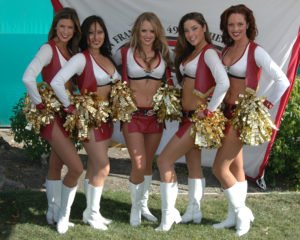
 Green Bay @ Chicago – Rodgers-less Pack exposed again




 India Pale Ale tends to lose its potency over time. The oils and aromatics in the hops that dominate the style break down, particularly when it comes in contact with light. Yes, even if it is stored in a brown bottle. Because of this, I always recommend finding a local brewer that makes a good version of the style, for me that’s
  I tried this once when I came across a Stone Ruination IPA at a gas station about a year ago. Note, I did not say Ruination 2.0, this was the original still sitting in the corner on the bottom shelf of the refrigerator at an Arco station. It was old, and quite frankly there is proof of concept as it tasted like a terrible pale ale. If you come across this one with the green label, avoid it.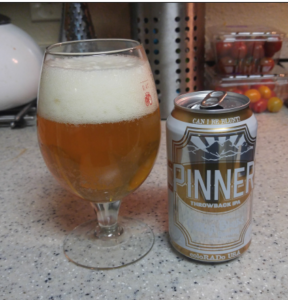
 Today, I am going to talk a bit about the opposite of guns. What is the opposite of a gun, you might ask. Peace? Love? Puppies? No morons, it’s body armor. For those of you just unfrozen from a 200 year cryo sleep, body armor stops bullets before they can enter your meatspace and STEVE SMITH you to death. And no, I don’t know who would know about STEVE SMITH but not understand the concept of body armor, but I’m sure if he exists he’s reading this at some point. There are 5 official levels of body armor as defined by the National Institute of Justice: NIJ level IIa, II, IIIa, III, and IV. III and IV are hard armor plates rated for rifle rounds, while everything else is soft armor only rated for handguns. Soft armor is what is usually used by police officers since it is lighter and flexible and can be worn more comfortably for long periods of time, while plates are worn by military for their ability to stop rifle rounds. I do not know much about soft armor since I don’t own it and I have never used it, but I would only recommend soft armor if you need to wear it for long periods of time or need to do a lot of walking while wearing it and don’t anticipate rifle fire. For most civilians I cannot think of a case that would justify wearing soft armor as part of your everyday loadout, and since it would be inferior in a SHTF situation, I don’t recommend it at all. If there is some situation where you need to wear armor inconspicuously then soft armor is probably the only thing that will work, but again I cannot think of many realistic situations outside of police work that would warrant it. There is another reason why I don’t recommend soft armor: It deforms when hit. Unlike a hard plate, soft armor will bulge to absorb the impact of the bullet. That means that while the bullet won’t actually enter your body, it will still feel like you got punched in the gut by Mike Tyson. Stopping the first bullet is no good if you’re laying there gasping for air immediately afterwards.
 So what should you buy? Before we go into this I want to remind people that this is my opinion and you may find contradicting info elsewhere. Just remember that I am not trying to sell you anything. With that in mind, my answer on what you should buy is: it depends. I will tell you that because of the widespread proliferation of AR 15s and M193 ammo I strongly recommend not using anything below a 3+ rating. Beyond that, its a question of budget and desires. If you want to be able to stop basically any bullet fired at you, then level 4 is the only way to go. Remember though, you will only be able to take a few hits before the plate is compromised. If extreme durability is more important to you, a 3+ steel plate is probably your best bet. If you have a bit of money to spend and want a lightweight setup, 3+ ceramic plates are going to be your recommended option. Personally I run 3+ steel plates in my carriers.

 I’ve shared this before,
  NFC EAST