Seriously. Look at it. How can I not pick this up?
The Holy Diver of beers
This is my review of Elysian DAYGLOW IPA.
Here’s where I rant a bit. Yes, this is an IPA, which means about half of you will avoid it to begin with. The other half? There are so many choices out there from so many breweries it’s hard to separate the men from the boys, so to speak. Let’s face it, this isn’t exactly a niche market anymore. According to the studies cited in this article the craft beer industry in 2016 contributed $67.8 Billion to the U.S economy. It is responsible for nearly ½ million full time jobs nationwide. It’s still a fraction of the beer industry overall though, which in 2016 was estimated at $350 Billion in total.
Rejoice! Too bad though, the downside is there has to be something, anything, to catch the customer’s eye. This one is eye catching. It’s got a frickin tiger with frickin laser beams coming out of its frickin eyes…
It’s the eye of the tiger! On acid!
As you can tell from my photo there isn’t much head and much to Charlie Sheen’s dismay, it is 0% tiger’s blood by volume. It’s a hazy yellow and has a bit of sweet fruitiness (pineapple, maybe) and yeast upfront, like an unfiltered wheat beer. From the standpoint of hop insanity, this one will disappoint the hopheads among us. You smell them; you certainly know they are there but they aren’t going prompt questions from the authorities as to your mental state–your driving erratically on the sidewalk will do that. Overall it’s a pretty balanced brew, but given it’s bitchin 1970s psychedelic label it seems like they are trying way too hard to sell me something. Elysian DAYGLOW IPA 2.8/5.
Another one I was disappointed by was from Stone. Typically, I like what they put out. While insulting their customers is the norm for them, lately it’s gone beyond their usual ribbing and ventured clearly into virtue signaling. This is part of an annual release of the winner of a contest between their employees, so I’ll hold my nose and give them a shot.
The flavor palate on this one is similar to Elysian’s but the hops on the back end are a bit more robust. Still a bit disappointing given what they are capable of. Stone Merc-Machine Double IPA: 2.9/5
P.S. About my OT last week.
I think it came out just fine. 3 ½ minutes per pound. The temperature was all over the place after I pulled the turkey out so it was at approximately 350F. When I dropped it in it was at 380, so I closed the valve and let it settle around 350, but had to fire the gas back up once it dropped to 325 ten minutes later. Total cook time was 18 mins.
For those that like it rare, here is your beloved center cut.
I can never understand the obsession with Santa Claus. Since this is the right time of year and since associating products with Christmas is lazy but effective marketing, there’s no sense in fighting it.
See? Lazy marketing, and I fell for it.
This is my review of Rogue Santa’s Private Reserve Ale. Go ahead and pretend I drove 2 1/2 hours north just to take this photo.
Even as a kid it seemed a dubious task: one extremely obese man flies around the world delivering presents to all the good girls and boys on a single night. As an adult, unless Santa Claus holds the key to traveling between time and space it’s downright impossible. Besides, what does he do with the other 364 days out of the year? For one thing, Santa is actually an avid shooter. Here is a photo of him at the 2016 Las Vegas Shot Show:
“You may think there’s no such thing as Santa…”
He also spends his time in the summer riding the open road. Here he is at the annual Sturgis rally:
“…But as for me and grandpa, we believe.”
Santa has a lot going for him, and since he is a pretty high profile guy crisscrossing international airspace every year, the good folks at NORAD track his every move. Even if they started tracking him by accident, its once again proof there is nothing left to cut.
In previous years, this beer was a pretty standard winter lager. There was nothing wrong with it, and Rogue probably managed to sell every ounce of the stuff. Despite this, they determined that 2017 would be the year they change it up. Maybe they got tired of people comparing it to Sam Adams Winter Lager or the overall market saturation this time of year with winter lager-I don’t know.
Whatever the reason it was a good move, as the result is something much better in my opinion. It is now a Belgian-style ale. It is very fragrant, with notes of sour fruit. They list cherry and raspberry specifically. It is definitely a malty beer, but the tartness counters the overall sweetness nicely. Like everything else this time of year, it only comes once so find it while you still can. Unless you are the type that thinks Scrooge got soft and the Grinch was a poser, you’ll enjoy this. Rogue Santa’s Private Reserve 2017: 4.5/5
And if you do think Scrooge got soft and the Grinch was a poser, here’s some girls at Sturgis peddling Jack Daniels:
An in depth perspective on how blockchain and cryptocurrencies work, along with a running commentary on social value, libertarianism, and whatever the heck fits my fancy. I’m attempting to write this at a high school comprehension level so that those who haven’t sat through 4 years of computer engineering classes can make sense of all of this.
What this isn’t
A primer on Bitcoin, an economic treatise, or a how-to. (Although, elements of all of those things will appear)
For those who don’t feel like scrolling through pages and pages of my ramblings, here’s the TL;DR. Blockchain is a bunch of messages with security built into them. The security isn’t perfect, but each message is increasingly secure as time passes. The list of messages is saved on every computer that participates in the blockchain, and the lists are constantly being compared for agreement. Blockchain relies on a bit of a gambit. They essentially say “you may be able to break the security on one node, or even a few, but after a few the increased security that comes with time passing will catch up with you, and you’ll be stuck well before you come close to succeeding in fraud.”
A Survey of Computer Science
Numbers in an Array
Computers are complex and simple at the same time. It takes millions of lines of code and tens of thousands of man-hours to put together the latest Windows or OSX version, and yet everything a computer does is simply a whole bunch of numbers saved in an array called memory.
Let’s look at an example computer memory:
Let’s ignore all of the writing for a moment and discuss what we’re looking at. Memory is “byte-addressable,” which means that you can access information 8 bits (there are 8 bits in a byte; a bit is a single value of “1” or “0”) at a time. If I want to access the byte at address 0, I write some code that properly references address 0, and I have access to the value in that address of memory. If all data was 8 bits long (e.g. a number between 0 and 255), then we’d have a pretty easy go of accessing data. Just remember the order you put it in, and you just call the number that you put it in (minus 1 because the addresses start at 0).
However, as shown in the above image, data can be much larger than 8 bits. The yellow 2-byte data is a short integer (e.g. a value between 0 and 65,535). The purple 4-byte data is an integer (e.g. a value between 0 and ~4.3 billion). There are other types of data that are even longer, like decimal numbers (called floating point numbers). Here’s more info on memory and how it works. Now it gets a bit more complicated to remember where things are in memory.
Arrays: A Simple Way to Store Large Amounts of Data
When dealing with simple data, like an integer, storing it in memory is relatively simple. As long as you know what address it starts at and how long that type of data is, you can access and retrieve the data. However, what are we to do when there is a bunch of related data?
For example, what if we want to store the daily profits for the week from our monocle and top hat shop? Now we don’t have just one piece of data to deal with, but seven. We could just toss each day’s profit into memory as we encounter it, but the accounting program we’re running may store additional info in memory: temporary values, user credentials, and other information needed by the program will also reside in memory.
We can remember each address for each individual day’s profit data, but these values are related, and it’s hard to manage access information on seven values, let alone 70 or 700 or 700,000. Treating each value individually doesn’t scale.
As shown above, Sunday’s Profit is separated from Monday’s Profit (both in red) by intervening unrelated data (in green). In order to access the week’s profit, you need to know the address of each and every day’s profit, and you have to individually retrieve each data point.
In comes a better way to handle such data: Arrays! Much like memory is an array with addresses referencing each byte, array data structures store related information sequentially so that each piece of information can be referenced with an array address.
The difference is clear. The array groups the related data together, and you can simply reference the array to get to any of the data. Array address 0 is Sunday’s profit, which is located in memory addresses 0-3. Array address 1 is Monday’s Profit and is located in memory addresses 4-7. Rather than needing to remember all of the memory addresses for each day’s profit, you can simply remember the starting memory address of the array, and use the array address to calculate where each piece of information in the array is located. For example, array address 1 translates to the array starting memory address (0) plus one array element (which is 4 bytes long), resulting in a memory address of 4. If you look at the above image, array address 1 starts at memory address of 4. NOTE: I haven’t included all 7 days of profit in the above image so that it won’t get too complicated and confusing. Here is some additional information on arrays.
However, you can also see a limitation in the above image. It works great if you know exactly how much data you need to store, but look at where the Temporary Data and User Credentials are stored. If you need to include one more piece of information in the array, you’re hosed. Either you have to start moving a bunch of stuff around in memory to make room (which is not ideal), or you have to continue the array somewhere else in memory and keep track of 2 array portions (which is also not ideal).
Linked Lists: Good for dynamic data
You may be wondering what the point of all of this is. We’re talking about blockchain, not about memory management, right? I promise, this is where we connect to blockchain.
Let’s see if we can combine the best of both worlds. Writing each day’s profit to memory separately allows you to add additional days without having to shuffle data around in the memory. On the other hand, preserving the relationship between all of the days’ profits without having to keep track of each day’s memory address allows you to scale up to large amounts of data without overcomplicating things.
One of the “best of both worlds” solutions is called a linked list. A linked list operates much like writing each day’s profit to memory separately, but preserves the relationship between the different days by including an additional bit of information pointing to the location of another day’s profit in memory.
As you can see, we have expanded Sunday’s profit and Monday’s profit from 4 bytes to 5 bytes. The additional byte (in yellow) points to the previous node. Since Sunday’s profit is the first node, its previous node is NULL (meaning it doesn’t have a previous node). Since Monday’s profit is the second node, it points back to Sunday’s profit. Previous Node 0 points to the starting memory address of Sunday’s profit.
Visualized another way, the linked list looks like this:
This is the basis of blockchain. A data structure with a payload and a reference to the previous block in the chain. Now let’s talk about security.
Hashes: Breakfast for the Masses
I dunno about y’all, but I’m sick of reading. Let’s take a quick break before getting into hashes by enjoying some pictures
Alright, back out of your bunks. Time for some more learnin’. Hashes are conceptually simple, but mathematically complicated. Since we’re not diving into the math, this section should be a breeze!
No, not that kind of Brees!
Let’s take a look at the array again:
If we call Array[0] we get Sunday’s Profit, and if we call Array[1] we get Monday’s profit. However, we don’t always have a situation where we know exactly what order the data will be put into the array. Imagine, for a moment, that instead of 3 days of profits, we have 3 years of profits, entered manually by an employee who isn’t guaranteed to get everything perfectly in order. How do we find Monday’s Profit in that deluge of data?
The traditional way is to search for the data in the array. Here is some more information on searching.
The fun way is to use hashing! How about we use some relevant characteristic of the data to access the data instead of the array index (“index” is another term for array address number). All you need is two math equations: one to determine the hash from the data, and another to determine a memory location from the hash.
As you can see, Sunday’s Profit data was hashed to “Sunday”, which is a characteristic of the data (specifically, the day of the week), and “Sunday” was computed to be connected to array address 0. Now, instead of accessing Sunday’s Profit data by loading Array[0], you can access Sunday’s Profit data by loading HashArray[“Sunday”].
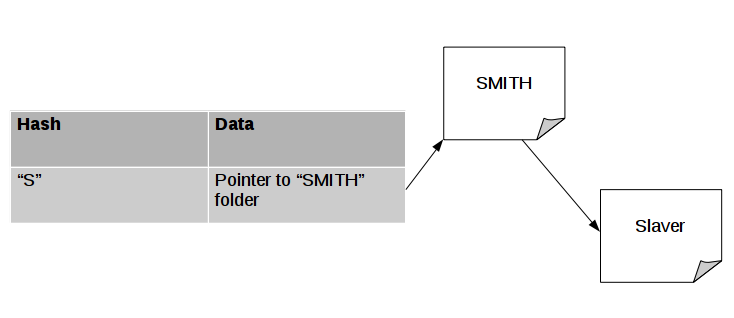
If this is a bit confusing, another simple hashing algorithm that appears in everyday life may clarify things. Placing medical records in alphabetical order by the first letter of the last name is another hashing algorithm. If the last name is SMITH, the “algorithm” for obtaining the hash involves looking at the first letter of the last name, “S”. Then, the hash “S” points to a specific shelf in the fileroom (the “S” shelf, for lack of a better name). SMITH’s folder is placed on the “S” shelf. When I want to retrieve a folder starting with “S”, I pull a folder off the “S” shelf, and I have SMITH’s folder.
But there are many people with a last name starting with “S”. What happens when SMITH’s folder is stored on the “S” shelf and I want to store Slaver’s folder? This is called a “hash collision.” Depending on the specific situation, a hash collision is either an inevitability or a disaster. In cases where hash collisions are expected, we could simply change the data stored. Rather than just storing one piece of data for each hashed value, we can store the data for each hash in a linked list. Now, the “S” shelf looks like this (pointer is just a fancy term for the memory address):
This is great for categorization hashes like the alphabetical sorting of medical records, but isn’t the best for cryptographic hashes like are used in blockchains. Instead, cryptographic hashes rely on another protection from hash collisions, small data density.
Bitcoin and most other cryptocurrencies use what is called SHA-256 hashing. In SHA-256, a message of any* size is hashed using really fancy math into a 256 bit number, which means there are 2^256 possible hashes (1.1×10^77 for you scientific notation folks, or roughly 1/10 of the total number of atoms in the universe). Hash collisions are so rare under SHA-256 as to be practically nonexistent.
*Technically, there is a maximum length of message, but it’s enormous.
But I mentioned above that hashes are based on characteristics of the data. “S” is the first letter of SMITH, and it’s fairly easy to see the relation. What is the relation between some seemingly random 256 digit number and a Bitcoin block? Well, it has to do with math well beyond my ken, but you can go here for a bit of an explanation (as well as a look ahead). In essence, the math takes all of the data, divides it into chunks, and does a mathematical transformation on each chunk before assembling the results into the hash.
Okay, assuming you’re following along so far, you understand how categorization hashes work and that cryptographic hashes are different, but how do cryptographic hashes work?
Cryptographic hashes work on the principle that it’s much easier to do the math to hash the data than to derive the data from the hash. Let’s look again at the medical records example for a picture of how this works. If you’re given the last name SMITH and told that the hashing function (fancy term for the math to calculate the hash) is the first letter of the last name. It’s trivial to calculate a hash of “S” from the data “SMITH.” However, let’s go the other direction… if all I give you is “S”, you have thousands of last names to choose from. The chance of you guessing “SMITH” is extremely low.
The same principle applies to SHA-256 hashes. It’s relatively easy for a computer to calculate the hash from the original data, but (practically) impossible to derive the original data from the hash.
We’ll discuss the specific way cryptographic hashes are used in blockchains later on.
Let’s take another break. Things are getting a bit intense. In the spirit of the glib baby pics from a while back, here’s me in a sombrero.
Cultural Appropriation from a Young Age
How about some relaxing pics from a backpacking trip I took a long time ago?
Public Key Cryptography
Alright, back to talking security! We’ve laid the groundwork for explaining the structure and security of the blocks in a blockchain, but let’s talk about individual currency transactions and how they’re secured. If I want to send 50 bitcoins to ZARDOZ, we create a transaction to transfer the bitcoins from my wallet to his. The details will be covered later, but it’s important to notice that without any security, STEVE SMITH could read the transaction, and use the information contained in the transaction to create a fake transaction to send the 50 bitcoins to him instead of ZARDOZ.
What sort of security is used on these transactions? Public key cryptography! Public key cryptography uses the same concept of “one way” algorithms, just like the cryptographic hashes. In fact, in some cases, the mathematics for generating cryptographic hashes is used in public key cryptography.
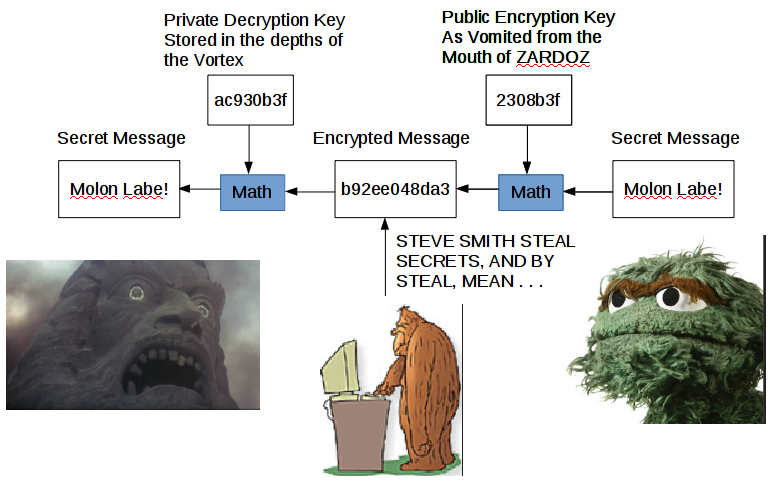
How does it work? Let’s assume I want to send a secret message to ZARDOZ. I’m sending it over the Internet, which isn’t a particularly trustworthy place. I can’t just send the text in the open. ZARDOZ decides to generate two “keys.” In this context, one of the keys is used in combination with fancy math to encrypt the message so that it can’t be read by STEVE SMITH. The other key is used in combination with more fancy math to decrypt the message. The cool thing about public key cryptography is that you can’t figure out the decrypting key by looking at the encrypting key or at an encrypted message. This is called asymmetric cryptography.
In contrast, symmetric cryptography can be “broken” by looking at the encryption key and the encrypted message. Of course, that means you shouldn’t broadcast your symmetric encryption key on an insecure channel. For example, if my encryption algorithm is addition of the encryption key to the data, and my encryption key is 4, then if my data is the number 10, the encrypted data is the number 14 (10+4 = 14). I send 14 across the unsecured network to ZARDOZ, who uses the symmetric decryption key (the number 4), and the decryption algorithm of subtraction of the decryption key from the data, and ZARDOZ gets the original data, the number 10 (14 – 4 = 10).
Seems secure enough, especially when we use something more complicated than “add 4” as an encryption. But why are we talking about asymmetric cryptography instead? Well, because we have a problem. The Internet isn’t particularly secure, and we’re not gonna VPN with the entire bitcoin network, most of whom we don’t trust, to send them our secret key. With asymmetric cryptography, the encryption key (called the public key) can be known by everybody. It doesn’t matter if half the world can encrypt messages intended for you. As long as they’re not able to decrypt those encrypted messages, the system is secure. That’s why the decryption key is called the private key. The private key must be kept secret by the receiver of the message.
As shown above, I have sent ZARDOZ the message “Molon Labe!” ZARDOZ has vomited forth (published) his public key, which allowed me to encrypt my message and send it across the Internet securely. As you can see, STEVE SMITH can try his hardest to intercept my message to ZARDOZ, but all he gets is a bunch of gibberish. Then, once ZARDOZ receives the encrypted message, he uses his private decryption key (secreted away in the Vortex where nobody can access it except ZARDOZ) to decrypt the message and read “Molon Labe!”
Now, this is great and all, but isn’t blockchain about publicly accessible data and verification instead? Well, yes. Let’s take this public key encryption and flip it around. Now, instead of keeping the data secret, we want to make sure the data is from the right person. I’m expecting a message from ZARDOZ, and want to make sure that it’s legitimately from ZARDOZ and not from STEVE SMITH.
As you can see, the message stays public the entire time, but there is extra data added based on ZARDOZ’s private key. This is called a signature. Upon receipt, anybody can verify the authorship of the message by using the public key.
What happens when STEVE SMITH tries to meddle again?
As you can see, STEVE SMITH, in his ham fisted way, has altered the message before I have received it. When I try to verify the message’s authorship, I find out that it’s not from ZARDOZ, and thus it’s a suspect message to be ignored.
This is the basis for verifying cryptocurrency transactions. We’ll put all of this book learning together into a workable model in the next article or two, but this article explains most of the theoretical underpinnings of blockchain and cryptocurrencies.
This is my review of Goose Island Bourbon County Stout.
Barrels are one of oldest inventions in use today. Herodotus is credited with the earliest written account over the use of barrels to transport wine, during the 5th century BC (or BCE if you are so inclined). The barrel itself may have origins further into antiquity due to evidence the Egyptians used buckets with slats held together by a metal ring dating to 2690 BCE. There isn’t much of a jump between a bucket’s design and a barrel, simply build your bucket higher, curve the slats, add another ring and give it a lid. Your bucket is now a barrel.
It is difficult to say who built it first. Some believe an iron age civilization such as the Celts or the Vikings. Others credit the Romans, who previously transported wine in clay jugs. The word for the tradesman, Cooper, after all comes from the Latin word Cupa, which means cask. And of course there is always this theory…
Falling further down the rabbit hole, gun barrels were initially built in a similar fashion. Due to the medieval guild system, where tradesman rarely worked with others outside the guild, lest they learn the trade secrets, coopers were consulted to build barrels for hand cannons. The earliest design was constructed by slabs of metal arranged in a cylinder with metal collars welded around the cylinder for strength. Later designs where a cylindrical blank was bored out, followed by rifling to cut into the bore was developed when the tools, techniques and metallurgy allowed for the modern design. This is why gun barrels are called barrels.
This is no ordinary stout. It is aged in a bourbon barrel that otherwise would spend the next 30 years in Scotland turning whisky into something that smells like burnt leather boots. This is a 14.5% abv beast that has a high enough alcohol content and is complex enough that a disciplined drinker can age this similar to wine for up to 5 years–per the instructions on the bottle. The bottle itself is well done. Instead of settling on the standard bomber, they opted to have their own fashioned with their name permanently embossed in the bottle. This tells me no corner was cut, no expense was spared in crafting this…and I slammed it down with a beer bong!
Like a champ
No, not really. They call for a brandy snifter but the one I have is sized to hold an ounce of liquor so I called the trusty chalice out of the bullpen. The beer pours like used 10w30. Its nose reminds me of fresh cut wood, whiskey, fruitcake and chocolate. You are greeted with an intense rush of sweet bourbon and finishes with like a smooth imperial stout. It’s really difficult to describe it, so you have to try one of these yourself. It is crafted in the manner of old where a craftsman, expert in his trade, puts everything he has into every project and gives his customer the best quality work possible. It’s a limited release for 2017 so I bought another the following morning to keep in my liquor cabinet. It costs $10 now, but if you find it later….Goose Island Bourbon County Stout 4.9/5.
It’s that time of year where people are running around in a panic wondering what the fuck to get for that one person on their gift list who just goes out and buys whatever they want.
The answer can be found at a unique startup:
Edible Anus.
They will make a chocolate replica of your anus that you can gift to that one asshole who has everything.
But the process, as demonstrated here, looks a little uncomfortable.
If sitting in a fucked up yoga position to get your anus immortalised in chocolate isn’t your thing, you can buy an assortment of anuses ensuring you still give the gift of, “wtf?”
This is my review of Platform (Cleveland, OH) Smokin Fineapple Gose.
I was graciously given the day off by my employer in observance of Veteran’s Day. I took the day mostly to hang out with my kids and on my way home I noticed the FEDEX truck driving around my neighborhood. Way to work it on a Federal holiday, FEDEX!
I got my box, fed my kids, and let the sender know the Maguffin arrived. Then I tore it open! I got some schwag: stickers, a new pint glass, a D-ring/keychain. Somewhere in there was some beer. Hat Tip of all hat tips: Nephilium.
Immediately the Gose caught my attention. I’ve had a few that were made with lemon but pineapple seemed a bit off for this style. I decided that I’ve trusted the judgement of others only to come back with a sour apple martini so I dismissed these fears and put it on ice.
This link here has a few methods on cooling beer in a few minutes time, some without electricity. The absolute fastest way to chill a beer without electricity is to take a disposable tupperware container large enough to hold the can/bottle. Poke a couple holes in the sides and in the center of the lid. Put the beverage into the container and ‘seal’ it. Then take a can of compressed air and insert the straw attachment into the hole in the lid. Invert the can of compressed air and go to town. You may want to wear gloves. It should take only a minute of two to empty the can but the results will be chilling. So in the event of the apocalypse we all can still have a cold drink. Thankfully, I don’t live in Somalia so the refrigerator sufficed.
The Gose is sour but the pineapple has a nice subtle sweetness to it to counter it. It also has sea salt floating in the mix so the result reminds me a bit of grilled pineapple. Its pretty good, but I was wrong about this one being the most interesting thing in the box. Platform Smokin Fineapple Gose: 3/5
Others in the box included:
Masthead American IPAFat Head Sunshine Daydream IPA
Masthead American IPA: 3.2/5 The head says it all, it has a lot of body and delightfully floral.
Fat Head Sunshine Daydream IPA. 3/5. I had this one the next night in observance of fight night, for obvious reasons. It was better than majority of that card.
Millersburg Brewing Panther Hollow Vanilla Porter 4.5/5. Hell yeah! Go find it, right now. Don’t worry you can record your college football game and/or Man City (probably) won. Don’t hesitate to get a six-pack.
Hoppin Frog Infusion A Coffee Porter: 3.8/5. A bit more bite than expected but overall is solid. It’s like a light imperial stout.
Finally the most interesting thing in the box, not just because it’s watching you.
Saucy Fauxbia White Stout
This one calls itself a ‘white stout’ so go ahead and insert an appropriation joke. The malts are roasted with a high intensity heat that doesn’t seem to alter its color. It’s like grilling chicken with too much flame, where the outside looks good but the inside is raw. The result is something akin to a nice bitters with a smoky finish. Do you like Scotch Whisky? You’ll probably like this. Saucy Fauxbia White Stout: 4.1/5
So the bottom line: it may be easy for us to make fun of Cleveland, unless you’re in Detroit, but their beer is most excellent. Thanks Nephilium!
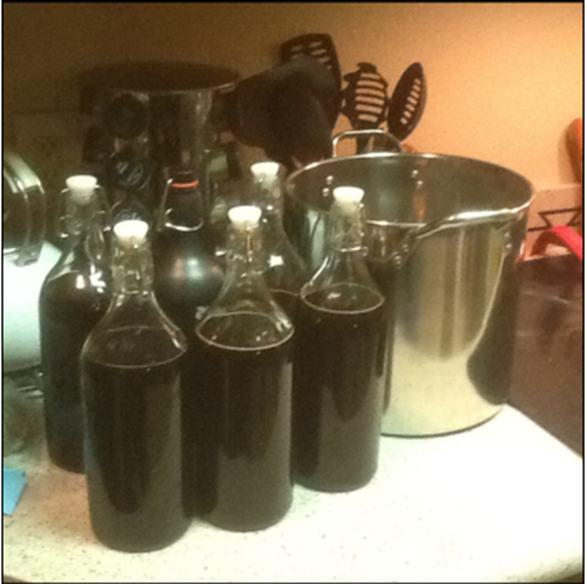
Southern Tier brewery…. from Lakeside, NY? Odd. I like to think we have come full circle with the whole Stout thing. There’s too many things one can do with it. As it turns out, this is one of the simplest styles of beer to make. The flavors that go into it can range from subtle to intense, so realistically you can add almost anything to it and come out with a palatable product—except Sriracha. For example, after four years of studying chemistry and STILL not learning how to make VX nerve gas, I took this up:
This is probably my third attempt at recreating something wonderful. Back in Colorado, I threw together a now unknown mixture of chocolate malts, Champaign yeast, English hops, Rainer cherries and sprigs of vanilla. It was amazing. I gave it to a friend of mine who said it was amazing but he still preferred whisky and that he was keeping the bottle because the bottle was a convenient place to put excess screws and nails.
Why is it now unknown? I left the ingredient list on a fruit based mobile device. That fruit based mobile device was dropped on a tile floor by a child—my child. I tried to restart it, I tried shaking it, and even pressed both buttons at the same time. Nothing. I took that device to the fruit based store and was told that I could purchase a refurbished fruit based mobile device, or a new one. It was done and I was slightly poorer, but at least I still had my tunes.
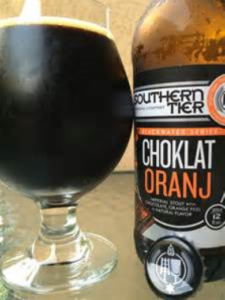
This one is rich, and has a nice milk chocolatey aroma to it. There is certainly a nice citrus aftertaste to it. It does indeed taste like a chocolate orange at first. The reason I like it is because at 10% ABV, it tastes like something I made in my closet by accident. This is best reserved for a cold winter’s night, which means I need to go outside and put my feet into my 55-degree pool to simulate a cold winter’s night. I found this one at Total Wine. Southern Tier Chocolate Orange: 3.9/5
Another thing brewers add is peanut butter. Don’t let the name of this one fool you, you’re probably going to like it. Even if you don’t care for the information in that fun map I left at the bottom. This beer, being from California, reminded me of the podcast my wife played on a road trip. I was driving, so normally I wouldn’t care, but given the subject was excise taxes, I grudgingly listened in.
Never mind the moral issues they said. The argument they focused on was that excise taxes altered the behavior of the people taxed and thus were effective at achieving the ends of the state. One of the examples they used was a tax on soda in Berkeley which did reduce the sales of soda—in Berkeley. They even conceded residents could still get cheap soda somewhere else. Which is a bit of a no-brainer, and really didn’t get into the ill effects of excise taxes. One of the ones they did mention was the taxes artificially reduced the supply of the taxed goods by pushing out smaller producers who cannot profit from the inflated price nor justify their product at the new price by reducing supply. The price after all, is determined by supply and demand. Because a producer cannot reasonably control demand, the consideration for the new market price + tax must come from a decrease in supply. I would guess this assumes the product is not something like insulin. It is outlined at this link here and honestly, I did not previously consider the angle presented. I like the moral argument against excise taxes better–mostly because it’s easier for me to explain and it’s also more convincing.
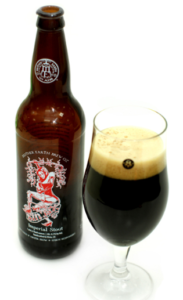
I probably shouldn’t pick beer based on its ability to irritate me. Whatever you think of excise taxes and I think I know what you think of them, the beer is good. Mother Earth Brew Co. Sin Tax Peanut Butter Imperial Stout 3.7/5
Various contributors came together to make this submission happen. Thanks, guys!
From R C Dean
Not sure what the name of this one is, but the maple syrup makes it very autumnal.
3 oz. Rye (or bourbon – I prefer rye for just about any cocktail)
3/4 oz. Orange Juice
1/3 oz. Lemon Juice
3/4 oz Dark Maple Syrup
4 – 6 dashes bitters (Angostura works, but I also like Woodford Reserve Bourbon Barrel)
Seltzer (couple ounces)
Orange garnish (optional)
I originally saw this “stirred, not shaken”. In my experience, you may not get the maple syrup to fully dissolve by stirring, so I prefer to make this one in my trusty shaker (also, drinks with citrus are classically shaken). The RC Dean method is to put everything but the seltzer and garnish in a shaker, pour over ice, top with seltzer and garnish. Protip: if you add the seltzer to the shaker, you will get a spectacular mess, so don’t do that.
From Nephilium
So here’s a recipe (modified from an issue of BeerAdvocate) I’ll be doing for a dessert this year:
Pumpkin Imperial Stout Tiramisu
Ingredients
1 pint heavy whipping cream
½ tsp cinnamon
¼ tsp nutmeg
1/8 tsp clove
¼ cup Dry Malt Extract
1 cup pumpkin puree
2 cup mascarpone cheese
24 oz Rasputin Imperial Stout (or any other good Russian Imperial Stout)
3 packages ladyfinger cookies
1 cup Simpsons Special Dark Roast Malt, ground to a powder
cinnamon, ground
powdered sugar
Notes: DME and Simpsons Special Dark Roast can be acquired at your local homebrew store. Otherwise you can substitute ovaltine for the DME, and cocoa powder for the Special Dark Roast
Directions
In a medium bowl, add cream, cinnamon, nutmeg, clove and DME. Mix this until soft peaks form, then set aside. In a different bowl, mix together the pumpkin and the mascarpone until fully combined. Fold the pumpkin mixture into the spiced whipped cream until blended (some streaks are fine), and then set aside.
Pour the stout into a shallow bowl or a pie plate. Select your serving container (I usually use a 13 x 9 pan, but you can use whatever size you wish). Then you begin the assembly of the tiramisu. Dip ladyfingers into the stout for 10 seconds, then flip them, and let them sit for 10 seconds again. Then place the ladyfingers into your serving container until you have a single layer. Then take a third of the pumpkin cream filling and distribute it over the ladyfingers. Dust with malt powder, then add another layer of soaked ladyfingers. Top the second layer with pumpkin cream and then garnish with malt powder, some cinnamon, and powdered sugar. Cover with plastic wrap and refrigerate for at least two hours before serving.
If you use a smaller container, you can go to three layers of each, or even four. Do what you want, it’s your dessert.
From DblEagle
AGED EGGNOG
Dozen egg yolks (reserve the whites for something else)
1 lb sugar
1 pint half and half
1 pint heavy cream
1 pint whole milk
1 cup rum
1 cup cognac
1 cup bourbon
1 teaspoon nutmeg (freshly grated is best)
1/4 teaspoon (((kosher))) salt
-Beat egg yolks, sugar and nutmeg until falls off a whisk in a smooth ribbon
-Combine the dairy, booze and salt in different container
– Slowly beat the booze mixture into the egg mixture
-Store in glass container(s) for 2 weeks to 2 months* in refrigerator
Serve in glasses with nutmeg (fresh is best) garnish
* You can (and I have) drink immediately but the aging time enables the tastes to smoothly combine
How to Roast a Whole Turkey with Playa Manhattan:
Don’t. White meat is well done at 165F. Dark meat is well done at 185F. Whenever possible, roast the crown separately from the legs and thighs, otherwise, part of your turkey is going to be overcooked.
For presentation purposes, if you feel that you must serve the bird whole, there is a workaround: plumping. Inject the breasts with enough flavorful liquid to slow down the temperature rise in the white meat. In addition to a 3 day soak in my brown sugar orange/lemon brine, I inject about 6 ounces into each breast before cooking. If you like a more natural, plain turkey flavor, I suggest using an injectable called “Make it Meaty”; it’s quite possibly the most perfect plumping solution I’ve ever come across. As an added bonus, it contains sodium phosphates, which will cause the meat proteins to absorb even more liquid than if you just used a plain salt/sugar brine. You can find the mix on Amazon here. There’s nothing worse than dry turkey, so do what needs to be done, even if you consider it cheating. Happy Thanksgiving, everyone!
From Old Man With Candy: What We’ll Be Drinking:
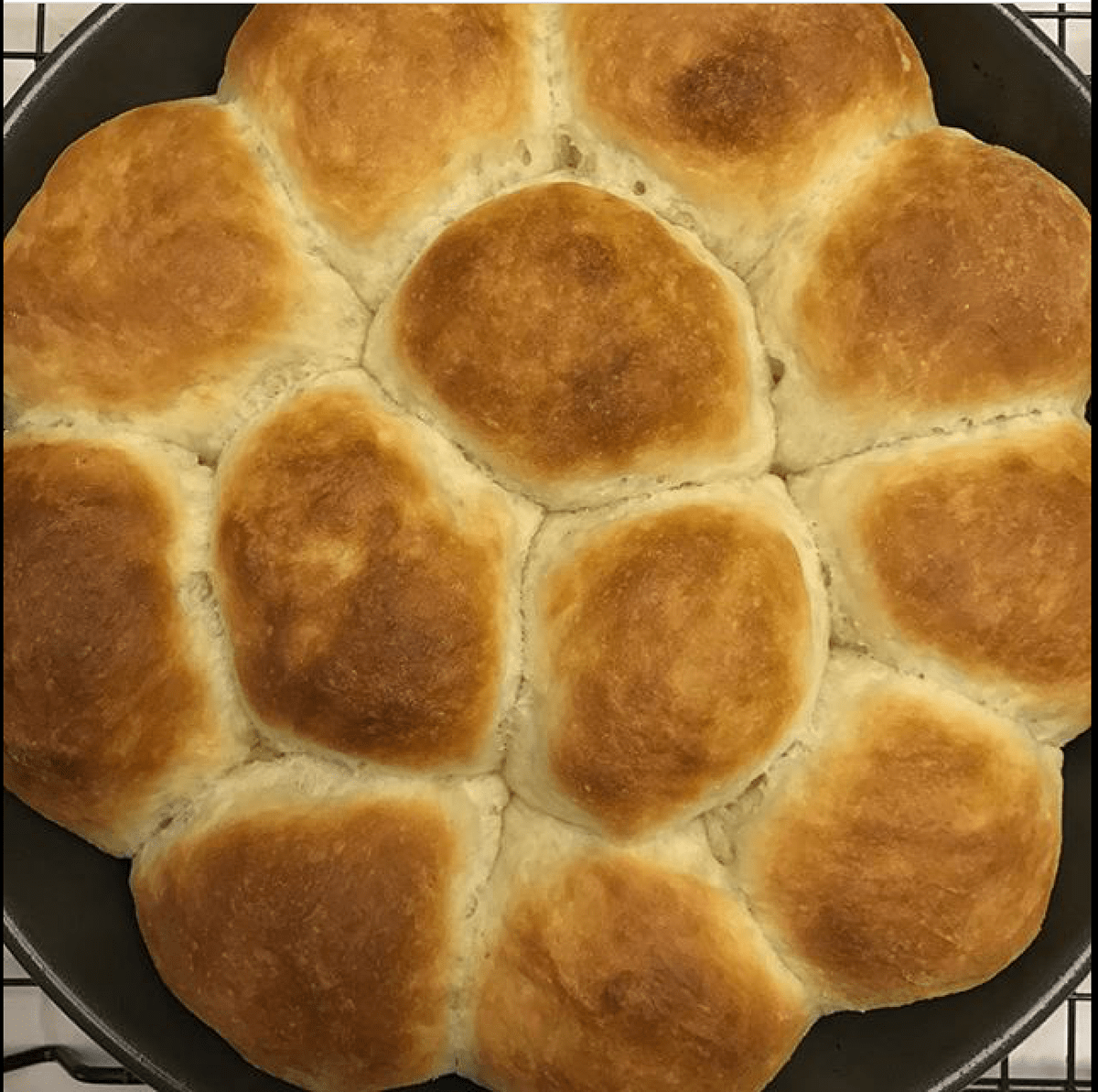
SP and I regard Thanksgiving as an excuse for gluttony. At the same time, we realize that vegetarian gluttony may not suit everyone, but in our defense, “vegetarian” does not mean “healthy” or “low fat” or “devoid of flavor.” In recognition of this, rather than spilling our vegetarian recipes (which will be made by exactly zero people here), we’ll talk about the bottles that can grace the tables and lure you into a delightful sense of drunkenness. These may be a bit of a splurge, but hey, holidays deserve better than Beringer White Zinfandel.
I admit that I’ve never eaten turkey, but I am told that rosé pairs well. In which case, you owe it to yourself to scarf up a bottle of Francois Cotat Sancerre Rosé, made from Pinot Noir grown in the Loire Valley. Current vintage is 2016, and you can’t go wrong. Unlike most other rosés, the Cotat is actually ageable, so if you find an older specimen, it will be very much worth buying. For a red, I like to be patriotic and drink domestic on T-day, and one of the very few California wineries that has avoided the blowtorch oak-bomb style of Zinfandel is Dashe. Their “L’Enfant Terrible” series (or variously, Les Enfants Terribles, depending on the bottling), made from various vineyards, is a don’t-miss. Natural winemaking: native yeast, no enzyme or flavoring packages, restrained oaking. Pure essence of fruit and soil. For whites, we can actually go cheap and grab some Seyval Blance from New York’s Finger Lakes- we have some Bully Hill in stock, which is very good, very inexpensive, and very reliable. If you want to get fancy, grab some Riesling from Michigan, like the wonderful Chateau Grand Traverse Block 12. And while you’re buying it, grab a bottle of their Late Harvest Riesling for dessert. Not “with dessert,” mind you, FOR dessert, preferably served with a fine quality Wisconsin cheddar. If you are having a chocolate dessert, run, do not walk, to a good wine shop to snarf a bottle of Dr. Parce Banyuls. You’re welcome.
Wherein SP cheerfully ignores OMWC’s comment above about not sharing our recipes
(Use the ingredients in the parentheses for Not Vegan)
2 tbsp white sugar (or honey)
1/2 tsp salt
1 2-1/4 tsp packet rapid-rise yeast
2 cups unbleached all-purpose flour, give or take – divided
1/2 cup unsweetened plain almond milk (or regular milk)
1/4 cup water
2 tbsp margarine, and a bit more for finishing (or butter)
With a small whisk, combine the sugar, salt, yeast and 1 cup of flour in a small bowl.
In a microwave safe bowl or measuring cup, heat milk, water, and margarine or butter to about 105F (41C). If it’s too hot, let it cool a bit before using.
Place the dry ingredients into the bowl of a food processor or stand mixer. With the machine running, pour in the liquid ingredients. Process or mix for 2 minutes or so. Scrape the bowl sides, add 1/2 cup more flour and beat or process until a soft dough forms, about 2 more minutes. The dough will be sticky, but should loosely hold its shape.
If the dough is too soft, mix in the rest of the flour a tablespoon at a time until the dough is still soft but holds shape. Turn the dough out and let it rest on a floured surface, covered, for 10-15 minutes.
Meanwhile, grease an 8-inch round cake pan. An actual 8-inch pan, not man “8-inches.”
Divide the dough into 8-12 pieces and shape into rounds. (I am a little compulsive, so I weigh the dough to have rolls of the same size at the end.) Place the shaped rolls in the greased cake pan, cover and let rise until doubled, about 45 minutes.
While the rolls are rising, preheat the oven to 375F.
Bake the rolls for 20 minutes or until nicely browned. If you wish, brush the top of the rolls with a little melted margarine or butter. Serve pretty close to immediately.
And you thought you couldn’t bake yeast breads from scratch!
From jesse.in.mb
My family found out I wouldn’t be showing up to Thanksgiving with artichoke dip* and fresh baked bread this year and an aunt has dropped her normal provisioning in favor of hanger-management an appetizer. *A chef friend asked me not to share her recipe, this is will get you close enough though. For the past two years I’ve been making extra batches for the BF’s family’s Thanksgiving which I was invited to and it has been strongly hinted that I should continue the tradition and perhaps bring my Aunt Sheryl’s (PBUH) apple pie. I know everyone has their favorite apple pie recipe, but this one is better and I’ll consider disagreement an act of aggression.
Aunt Sheryl’s Dutch Apple Pie
Filling:
2/3 cup sugar
2Tbsp all purpose flour
¾tsp cinnamon
½ fresh lemon
6-8 tart (Granny Smith) apples pared, cored, and sliced (equaling 6 cups)
Combine first three ingredients. Put apples in crust, sprinkle dry mix over apples then squeeze ½ lemon over them (can be left for up to 24 hours in the fridge for more flavor).
Crumb Topping
½ cup flour
¼ cup sugar
¼ cup butter
Combine flour and sugar, cut in butter until crumbly. Sprinkle on top of apples.
Bake at 400 for 45-50 minutes
Back by (surprisingly) popular demand, but probably on an irregular basis!
My boyfriend has been marketed to: a British honey producer—Rowse Honey—asked their advertising firm for something interesting and challenging and someone came up with selling honey with bears…gay bears, three of them…and porridge. Unlike the BF, my preferences do not begin and end with “is a bear,” but the ads contain three hirsute men of varying beefiness preparing oats, doing yoga, and chopping wood and they’re charming as all get-out. Rowse is available on Amazon, but not with Prime shipping (boo!)
https://youtu.be/KSZJ8yH_u2Q
Part of the problem with doing Manly Monday is that I start GISing something topical like “scruffy men in aprons” (hey, it’s Thanksgiving week*) and then have a difficult time finishing the task at hand my post. It’s fun how a simple image search can lead one to #bearnakedchef a web series of Adrian De Berardinis cooking in just an apron (often just over his nethers). *Except in Canada where y’all already blew your Thanksgiving wad
And then you might stumble on scruffy pizza chef, Daniel Gutter who goes by @Pizza_Gutt on Instagram and makes (wait for it) deep dish pizza in Philly, and was harassed online because his username was too close to #Pizzagate (wtf is wrong with people?)
http://www.instagram.com/p/BMfUSZdDab4
All that said, I need to kill the GIS window, don a full body hair net and get some cooking of my own done.
This is my review of La Cumbre (Albuquerque, NM) Malpais Stout.
The fun part about the English Milk Stout is that it does not contain milk, but it does contain lactose which as we all know is found in milk. Lactose is a disaccharide known for giving people gas because of the angle of the Oxygen bonds between glucose and galactose. That’s the O with the funny z-shaped bond that joins the monosaccharides below.
This bond in similar (but not identical!) to the type of bond found in the same type of polysaccharides found in dietary fiber. Most mammals cannot process fiber on their own, even cows; they process it with the help of bacteria that is passed to the calf from its mother. It’s also why fashion models and beauty pageant contestants eat celery. So as not to lose my audience, here’s Miss Kansas 2014, who I am quite certain eats meat.
In other words, people have issues with lactose because in a way, humans were never intended to be able to easily process the sugar beyond infancy. The sugar most people associate with beer of course is maltose.
Science AND beer?! What kind of site are we running, anyway?
Looks the same? Not quite. While they have identical chemical formulas, the difference is the angle of the oxygen bonds between the two monosaccharides. What does this subtle to the point where it appears to be a nearly meaningless difference between sugar have to do with beer? It has to do with everything. The yeast that processes these sugars must do so in a different way because of this bond but it can process both easily. The result is a beer that tastes slightly different—sweeter and not as dry. This is the explanation as to why milk stouts taste the way they do, and why not all stouts taste the same and thus were broken up into multiple articles.
Another fun fact about milk stouts: they were initially marketed to lactating women. No wonder your mom likes it.
So begins…the circle…of stouts!
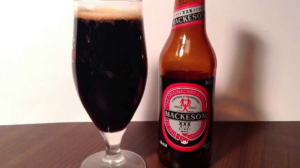
A good example of the English Milk Stout is Mackeson Stout.
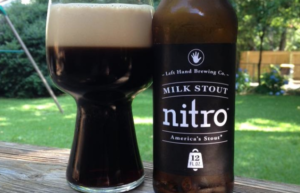
This one is kind of hard to find in the US, so if you are looking for a good example of the English Milk Stout, check out Left Hand’s Milk Stout. As a bonus, it is also available with the Nitrogen charged widget.
Another type is the English Chocolate Stout. Part 2 of this series I mentioned Young’s Double Chocolate Stout, but an arguably finer example is Samuel Smith’s Organic Chocolate Stout.
It appears arrogant to the uninitiated yet deliberately proper, and understated–like everything else the English do well. If you can find it, an example from the US might be Lancaster Double Chocolate Stout. I’ve never had this one, but I have heard a lot of good things about it. If I am wrong about it, I will recant on my deathbed.
As for the stout featured above. I asked everyone what kind of beer I should get on a Friday PM Links thread, and while I got an answer, I had already made my purchase by the time I checked my phone. I picked this because for some reason all the Glibs from the Land of Enchantment seemed to show up all at once one evening. So here is my shout out to the green chili eating weirdos to the east whose most famous resident painted pictures that my former boss has all over her office.
Internet points awarded to whoever actually knows who this is
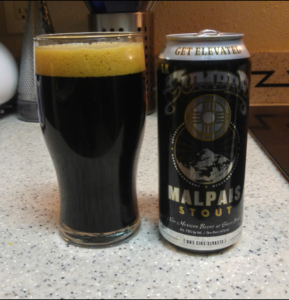
La Cumbre Malpais Stout has a ridiculous malt complexity and a subtle bite from the hops. It’s ABV is at a healthy 7.5% and there is a slight burn to it. This one is rather dry like an Irish stout, because it is. Its old-world analogue is Guinness Extra Stout. It is a solid effort, and one I would recommend. La Cumbre Malpais Stout 3.5/5

















 I got my box, fed my kids, and let the sender know the Maguffin arrived. Then I tore it open! I got some schwag: stickers, a new pint glass, a D-ring/keychain. Somewhere in there was some beer.


 Never mind the moral issues they said. The argument they focused on was that excise taxes altered the behavior of the people taxed and thus were effective at achieving the ends of the state. One of the examples they used was a tax on soda in Berkeley which did reduce the sales of soda—in Berkeley. They even conceded residents could still get cheap soda somewhere else. Which is a bit of a no-brainer, and really didn’t get into the ill effects of excise taxes. One of the ones they did mention was the taxes artificially reduced the supply of the taxed goods by pushing out smaller producers who cannot profit from the inflated price nor justify their product at the new price by reducing supply. The price after all, is determined by supply and demand. Because a producer cannot reasonably control demand, the consideration for the new market price + tax must come from a decrease in supply. I would guess this assumes the product is not something like insulin. It is outlined at
 Not sure what the name of this one is, but the maple syrup makes it very autumnal.



 This is my review of La Cumbre (Albuquerque, NM) Malpais Stout.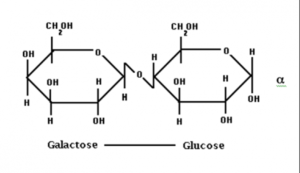
 This bond in similar (but not identical!) to the type of bond found in the same type of polysaccharides found in dietary fiber. Most mammals cannot process fiber on their own, even cows; they process it with the help of bacteria that is passed to the calf from its mother. It’s also why fashion models and beauty pageant contestants eat celery. So as not to lose my audience,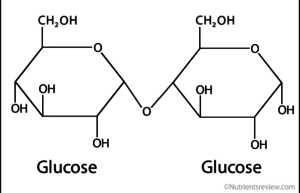
 A good example of the English Milk Stout is Mackeson Stout.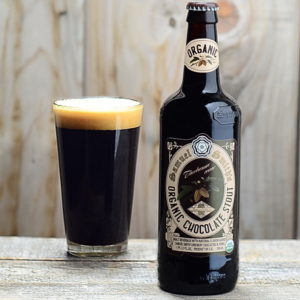
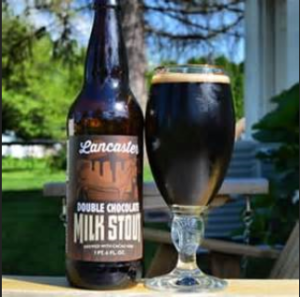 It appears arrogant to the uninitiated yet deliberately proper, and understated–like everything else the English do well. If you can find it, an example from the US might be Lancaster Double Chocolate Stout. I’ve never had this one, but I have heard a lot of good things about it. If I am wrong about it, I will recant on my deathbed.