Category: Products You Need

  • Reviews You’ll Never Use: The Monster Squad

    Greetings Boils and Ghouls, and whatever other gender you may be currently identifying as. For the next three weeks, I’ll be reviewing films from that wonderful splendiforous genre, my personal favorite, giallo. I’ll be doing this due to the presence of several well-known giallo guests at Texas Frightmare Weekend, coming up May 5th-7th. I’ll choose three different films from three of the genre masters. And don’t worry, my beloved readers, you’ll get a full report of Texas Frightmare after it’s finished and I’ve recovered from my biggest drinking & spending weekend of the year.

    But since most of you probably either haven’t heard of that genre or don’t care for it because you are philistines with no taste, who drink knock-off Colt 45 in paper cups drawn out of a large plastic bag being sold by that elderly Mexican fellow pushing it around in the little cart, I won’t subject you to four straight weeks of the best 1970s Italy had to offer. This week we’ll go with a popcorn goofy horror film, one of my favorites from my woefully mundane childhood, Monster Squad. Or more correctly, The Monster Squad. But seriously nobody calls it that in casual conversation, and if you do, you’ll stand out as being that guy.

    The movie poster. Pretty much does what it says on the tin.

    Monster Squad is a 1987 creature feature with a set-up so ludicrous you can’t help but love it. Dracula is trying to take over the world, and to do so, gets the old band back together. Only our impetuous band of child heroes can stop him.

    Monster Squad was directed by Fred Dekker, a man who writes much more than he directs. His few other directing efforts are…hit and miss. You have RoboCop 3 (boo, hiss!), but also Night of the Creeps (huzzah!). More interestingly, the film was written by Shane Black. Now if that name doesn’t ring a bell to you, see if this does: “Billy. Billy! The other day, I was going down on my girlfriend. I said to her, “Jeez, you got a big pussy. Jeez, you got a big pussy.”

    That’s right, Monster Squad was written by fucking Hawkins.

    Seriously though, check out his IMDB. In addition to being Hawkins, he’s written Lethal Weapon, Iron Man 3, and is directing the upcoming The Predator film. Nuts, huh?

    Aside from that, Monster Squad is peopled largely with actors that you may probably kinda sorta recognize, but probably not (depending, of course, on how big a film fan you are). Mary Ellen Trainor (RIP), mostly known from the Lethal Weapon series. Leonardo Cimino, who plays the weird little bald guy with an accent in every movie which called for that role (also RIP). Jason Hervey, who played asshole older brother Wayne on The Wonder Years. Tom Noonan, from all sorts of things like Last Action Hero, and decent little Satanic Panic throwback horror film The House of the Devil. The IMDB photo for the main protagonist, Andre Gower, kind of has a rapey murder vibe going on. Finally, Drac himself is played by Duncan Regehr, whom our friends from north of the border will recognize as also being Canadian. He was in several episodes of DS9 as a Bajoran dude getting to occupy Major Kira’s wormhole and was also the ghost-but-really-it’s-an-alien-who-likes-fucking-Dr. Crusher-and-lives-in-a-candle-for-some-reason on that one episode of Next Generation where they go to Planet Scotland. You know exactly the episode I’m talking about, you fucking nerds.

    ANYhoo, our story opens 100 years ago, with Dr. Van Helsing botching an attempt at killing Duncan’s Dracula – Dracan…Duncula? I like Duncula, let’s go with that.

    Cut to present. Duncula has set up shop in Red Stick, Louisiana, and has recruited The Mummy (who escapes from the local museum), The Creature from the Black Lagoon (whom I could totally see living in Louisiana), some poor schmuck who has been turned into a werewolf, and even managed to rob Frankenstein’s Monster from an airplane carrying it God-knows-where. Does Red Stick even have a museum that would be fancy enough to host an actual mummy as part of an exhibition? I dunno. Suthenboy, what of it? You’re the closest one I know to that area.

    The Jackson Five, as re-imagined by…well, me, I suppose.

    Turns out, Mary Ellen Trainor just so happens to buy Van Helsing’s diary at a fucking garage sale (not making that up) and gives it to Rapey McMurderface as a gift. See, he’s really into monsters and has an after school club where they go up in a treehouse and talk about monsters. The only problem is, the diary’s in German.

    So off we go to Leonardo Cimino, playing a Holocaust survivor, who translates it for them. Turns out there’s an amulet that balances good and evil in the world, and once every hundred years, you can bust that shit up and then evil will rule the world. So this is Duncula’s plan in a nutshell.

    Our plucky protagonists manage to defeat the monsters one at a time (the mummy never does a goddamn thing except shuffle around and then get destroyed) and even recruit Frankenstein’s Monster onto the Good Team. Finally, we’re left with only Dracula, who, in a pretty badass scene that somewhat presages what you see at the end of Rogue One, purposefully strides through the middle of town casually massacring the entire police force as they run up to him one at a time.

    Of course, in the end, a hole is opened to Limbo by having a virgin read some words (that’s how Limbo works, right?), and the mean monsters are sucked into Purgatory forever. Frankenstein’s Monster is also banished, punished for looking weird regardless of the morality of his behavior. Just like in real life. Being an 80s movie, there is, of course, a bitchin’ training montage, and a contrived rap song for the final credits.

    Look, the movie has tremendous heart. And the monster effects, particularly the Gillman, are honestly quite good (thanks to the wizardry of Stan Winston). I also personally have always preferred the half-man, half-wolf bipedal werewolves to the “he just turns into a big wolf” variety. And there are some background scenes that still warm my nerdy child heart (one of the characters wears RoboTech pajamas. I wish I had RoboTech pajamas as an adult!). It’s genuinely great for kids, or even for adults just looking for a cotton candy movie on an otherwise boring Saturday night. But ultimately, there are just too many plot holes that you can drive a bulldozer through. How the hell do all these monsters manage to converge in Red Stick? Actual non-monstrous humans have a hard enough time converging there. Why the hell does the US Army show up at the end entirely in response to a letter written to them in crayon by a little kid? Why does Duncula have so much fucking dynamite on him at all times? He casually tosses dynamite at people that he just pulls out of a pocket on his tux at least twice – I don’t remember that as being a known method of attack, and I’ve read a lot of vampire lore.

    I have no clue who this guy is wearing the shirt, but he’s pretty fucking awesome, I can tell you that.

    Still, it’s impossible not to like this movie down on some level, in the cockles of your heart. Just don’t go into it expecting it to be anything more than it is. The film didn’t do well when it was released but became a “cult classic,” and when the Alamo Drafthouse in Austin held a screening featuring many of the cast & the director in 2006, it sold out with lines around the block. So if you’ve got an hour and a half to kill and want a little old-style Universal Monster action updated to mid-80s standards, give it a shot. You’ve really got nothing to lose except time, which if you’re a frequent guest of this site we all know you have plenty of, and you may find yourself smiling here and there.

    Two quick anecdotes: first, there’s a scene where one of the characters (a fat kid who died of pneumonia in real life in 1997; I can’t help but feel it would be more tragic if he wasn’t so goddamn fat) remarks to Leonardo Cimino that he knows an awful lot about monsters. Cimino says that he supposes he does and closes the door to his house, where we see a concentration camp number tattooed on his forearm. As a kid, I had no idea what that was and thought it was Dracula’s phone number. Why else would he be saying he knew a lot about monsters, with the camera then focusing on those numbers with menacing music playing?

    The Mummy, right when he realizes he’s about to be vanquished after accomplishing exactly Jack and Shit towards Dracula’s goal.

    Also, Rapey McMurderface wears a shirt through the first portion of the film that’s just a red t-shirt with yellow screen-printed letters that say, “Stephen King Rules”. My wife loved that shirt so much she found it at Texas Frightmare Weekend three years ago and wears it around all the time. I think maybe only two people have gotten the reference in all that time, though lots of people just think it’s a pro-Stephen King t-shirt and comment on how much they enjoy that author. I love my wife. I love having sex with my wife. I think I’m going to go have sex with my wife right now while you’re reading this. Think about it.


    I rate Monster Squad 15 Weather Penises out of 27.


  • Do You Even Lift? The Deadlift

    To reiterate:

    If you aren’t strength training already, I highly encourage it. The benefits are many: increased physical attractiveness and general physical health, potential rehabilitation of old injuries or addressing impairments, increased performance (possibly as it relates to “sports”), and finally, it’s just a damn good time and feels great.

    I don’t care if you’re a bodybuilder, a weightlifter, a strongman, a crossfitter, or a couch potato; you need strength training in your life.*

    I’m not going to get into a really involved post about which program you should follow, how many sets or reps  you should do, or how often you should do cardio. You can make progress following just about any program, and any program worth the time it takes to read will tell you all of those details. I have made good progress with 5/3/1, and Mr. Riven is excelling under Starting Strength. I’d recommend either, but obviously Starting Strength is the way to go if you’re new to the barbell.

    There are four main barbell lifts: the overhead press, the bench press, the back squat, and the deadlift.

    Bending bars, amiright?

    Last time we covered the overhead press; today, we’re going to discuss the deadlift.

    So, I know I said before that the overhead press is pretty approachable and that’s not wrong; however, the deadlift is right up there, too. What could be simpler than looking at a weighted barbell on the ground, bending down, and lifting it with straight arms? There’s nothing better than the feeling of a solidly good deadlift. (Well, maybe some things.) I guess you could say this about any barbell lift, but mechanically they’re all very simple because they must be. When you execute a lift well, it should feel great.

    You know I’m going to have to link to the Art of Manliness video in which Rippetoe‘s mustache instructs the other guy’s mustache how to make the sack of meat that carries him around deadlift properly.

    I’m also going to link Alan Thrall’s samey video–though I should point out that this time it’s a full beard instructing instead of a mustache. If these two videos sound similar, it’s because they’re both operating on this set of knowledge. There is a wealth of articles and information on the deadlift just on startingstrength.com alone, and both Thrall and (obviously) Rippetoe draw on that for their videos.

    Sigh. But not me.

    I like pulling information from different folks on the same material. In particular, I like to listen for different cues since some will resonate with you and some won’t. For instance: I’d been improperly interpreting the “proud chest” cue in both the deadlift and the low bar squat, leading to poor torso-hip angles on my lifts. It wasn’t until I heard the alternative cue “tight back” that I realized I’d been focusing on the wrong things. “Ooooh, it’s not that I need to keep my chest up, necessarily; it’s that I need to keep my back, lats, etc., tight. This will keep my back straight throughout the lift, and raising the chest is only a mechanical effect of that.” What a spaz, right? So listen for different cues. And use a hook grip or you’re dead to me. I know it’s uncomfortable; deal.

    Having read the comments in the last section (but, of course, being too busy playing Horizon and the NieR demo in my underwear to participate), I noticed a few folks mentioning wanting to get into better shape but having various (valid) excuses: older, injured, don’t have the equipment, don’t want to join a gym, and more. Here is a link to a what I’ve found to be the most comprehensive, grounded, and even-handed approach to dieting–and that includes both dropping and gaining weight. I used to be pretty heavy, and one day I’d just had enough of looking at myself in the mirror and wishing it was different. Wishing doesn’t make it so. I ignorantly crash dieted down to a meager 120 pounds, but I still looked like hell–just a scant, paltry hell instead of a pudgy, chubby hell. I used the advice in the above forum to slowly put on another 30 pounds while lifting (forever bulk!), slowly lose 10-15 of those pounds without any of this nonsense, and I’ve been slowly, slowly, soooo slowly recomping in the 135-140 range ever since. All this to say I’m much happier with how I look now at 135-and-change than I was when I was lighter. It’s crazy what a little muscle-mass can do. The first time I sat on my actual ass in an office chair (y’know, instead of a pad of fat) was revelatory and over-all just awesome. You, too, can sit on your ass.

    Bonus: some burly cheesecake for you (hat-tip to LT_Fish) from the last article’s comment section. That’s a real nice jerk on the beach in #8, just sayin’!


    *Disclaimer: always consult a physician before starting a new fitness routine.

  • Reviews You’ll Never Use: Gargoyles (1972)

    Greetings once again, fellow intrepid interlocutors of the insidious and the incredible, it is I, your humble author, once again delving into his personal DVD archive to bring you only the finest is bizarro horror filmmaking.

    This week we take a look at the largely forgotten 1972 made-for-tv movie, Gargoyles. I’m afraid I don’t have much to regale you with in terms of production information; such is lost in the sands of time. And in the sands of New Mexico, where this beauty was filmed on a single camera in 18 days.

    Opening title card. It’s always promising when they go with “day-glo slime” font.

    No dear readers, this film is remembered for one reason, and one reason only: the exemplary practical gargoyle effects, made for zero dollars and whipped up over only a few days time. Now when I say, “exemplary,” understand that I’m grading on a curve here. Obviously, they don’t touch what is seen in much larger budget films. The costume designer was a fellow named Tom Dawson, who also did the wardrobe and costume effects for Blazing Saddles and Arnold Schwarzenegger crap-fest End of Days. It is interesting, however, to note that one of two people tasked with creating and applying the gargoyle makeup is Stan Winston, in his first credited special effects role. If after perusing that link you find yourself still unimpressed with the fine work of Mr. Winston, then you can go right to hell – my reviews are not for the likes of you.

    Our story begins with a voice over explaining that gargoyles are actually the earthly spawn of Satan himself and that they arise every 600 years to try and take over the planet. However, it appears humans whip dat azz pretty badly every time because the creatures are now on the verge of extinction. However, it does result in many of the world’s myths about monsters.

    Cut to anthropologist Cornel Wilde (who, fun fact, was blacklisted during the HUAC era) taking a drive through the desert, with daughter Jennifer Salt in tow (Salt would later touch again on the world of the macabre as a producer for sometimes-great-sometimes-dumb FX staple American Horror Story). Interestingly, throughout the film, Jennifer always seems to wear her shirts tied up to show off her stomach, which is, I suppose, something of a welcome diversion. Coming across a barely-functional roadside tourist trap run by lovable old Uncle Willie, the drunken coot ushers them out back to show them his prized possession: a gargoyle skeleton hung up in his shed out back. Willie proceeds to tell the anthropologist (the character has a name, but does it really matter?) about how the Injuns in the area used to have a lot of stories about these and….you know what, it’s just the usual hokum spun out in crappy horror movies. I’m so damned sick of people acting like/assuming that a bunch of freaking dudes dancing around smoking peyote have some kind of magical powers or great insight into the universe that I lack because I wear pants. Fuck that noise.

    Bernie Casey is a Critical Monster Studies Professor

    Anyway, the titular monsters attack, killing Uncle Willie and driving Generic Anthropologist and Hot Daughter to seek refuge at a nearby roach motel run by horny drunk Grayson Hall (best known for her long-running stint as Dr. Julia Hoffman on the original Dark Shadows). Having escaped with the gargoyle skull from Willie’s shed and with audio recordings of the attack, our protagonists try to make sense of all the shenanigans and goings on. They are attacked again by two of the creatures trying to retrieve the skull, and once they have it, they flee across the road only for one of them to be hilariously run over by a semi. It comes out of nowhere and is really quite funny, because normally when you see the creatures running or attacking, they director uses a kind of weird slow-mo, so it cuts straight from that, to a damn truck coming out of nowhere and smacking one of them.

    “I don’t remember you from the faculty meetings at UCLA…”

    Running to the police station to report the latest attack, Hot Daughter pleads with the cops to believe her, and to release several dirt bikers they caught at the scene of Uncle Willie’s earlier that day (the lead biker being played by Scott Glenn, who is one of those guys whose name you don’t know but you’ll recognize him when you read through his IMDB). On her way back, she’s kidnapped by King Gargoyle…Bernie Casey?! I think that’d be racist today. You may know him from his work in Revenge of the Nerds or Bill and Ted’s Excellent Adventure, but because I’m me, I’ll always remember him from Suzanne Somers and Stacey Keach eco-horror film, Ants. Yes, I have that on DVD as well. Anyway, the actually pretty awesome looking head gargoyle takes Hot Daughter back to their cave, where he explains that 1) they’ve only been woke for a few weeks, 2) he’s taught himself pretty good English in that time, and 3) he likes to have chicks read stories about 15th century rapes out of scholarly books to him. We also see the gargoyle hatchery, where eggs literally half the size of the adults hatch the creatures, and we learn that the ones with wings (such as Casey and his female gargoyle consort) are “breeders”.

    A close-up of the really quite good monster makeup used in this film

    Generic Anthropologist convinces the cops and the local dirt bikers to help search for Hot Daughter, and the group is eventually assaulted by the gargoyles. The humans manage to kill a lot of them with shotguns and pistols, which really makes one wonder how the whole, “We’re going to exterminate humanity” thing is going to work out for the monsters. Scott Glenn goes in to throw gas around and burns the hatchery, and upon seeing him beset with gargoyles, Generic Anthropologist declares him dead and flees (he did the same to Uncle Willie earlier – seriously, the guy will decide you’re a lost cause within seconds of you running into any adverse circumstance). The supposedly thousands of eggs burn up from the two gas cans splashed around one room, and Bernie Casey, along with his consort, try to fly away with Hot Daughter to, I guess, rape the shit out of her, since it’s pretty clearly established that the monsters only produce offspring with each other. However, Generic Anthropologist makes a Quick Decision and uses a handy rock to bust the consort gargoyle’s wing, forcing Bernie Casey to abandon Hot Daughter so that he can fly away with his basic bitch. And…that’s it. They get away, they end.

    Bernie Casey: Critical Monster Studies Professor’s breeder counterpart. She actually gets jealous of Hot Daughter and helps Generic Anthropologist to escape at one point, dooming her entire race because she can’t control her womanish cattiness.

    The movie basically sucks, but really, if you have the 74 minutes to spare, it is honestly remarkable how good they do with the gargoyle costumes given what you know must have been incredible time and budgetary constraints. So kudos for that. Director Bill Norton went on to acclaim *coughbullshitcough* as the director of such masterpieces as More American Graffiti, and Hercules and the Amazon Women. If any of you have seen either of these, sound off in the comments.

    Actually please don’t, nobody gives a shit.

    On a parting note, apparently it’s not safe to trust the TCM website’s user-generated movie ratings, because holy hell, check this out. The lowest one is 4.31  out of 5.

    Personally, I award Gargoyles 10 Pubic Hair Cartoons out of a possible 30. Keep track of the percentages here; 10 isn’t very good.


  • Do You Even Lift? The Overhead Press

    Close enough?

    If you aren’t strength training already, I highly encourage it. The benefits are many: increased physical attractiveness and general physical health, potential rehabilitation of old injuries or addressing impairments, increased performance (possibly as it relates to “sports”), and finally, it’s just a damn good time and feels great.

    I don’t care if you’re a bodybuilder, a weightlifter, a strongman, a crossfitter, or a couch potato; you need strength training in your life.*

    I’m not going to get into a really involved post about which program you should follow, how many sets or reps  you should do, or how often you should do cardio. You can make progress following just about any program, and any program worth the time it takes to read will tell you all of those details. I have made good progress with 5/3/1, and Mr. Riven is excelling under Starting Strength. I’d recommend either, but obviously Starting Strength is the way to go if you’re new to the barbell.

    There are four main barbell lifts: the overhead press, the bench press, the back squat, and the deadlift.

    Single arm overhead press…basically

    The most approachable of these (to me) is the overhead press. It’s a pretty simple movement. You hold the bar in a modified front rack position…and simply press it over head. When I say modified, I mean that the starting bar position for the overhead press is not the same bar position that you would use for, say, a front squat or a jerk. So there are some technical points you’ll want to review before you try this for the first time. Proper form is absolutely essential–if you lift improperly, there’s a good chance you could damage yourself. And you’ll never get through the Swolly Bible if you’re constantly injured. That said, I’ve included some links below to help you out.

    I invite you to watch this video, if only because it’s taught by an honest-to-goodness, real-life Ron Swanson. Protip: it’s called The Art of Manliness, and they have a video for each of the big four if you’re the kind to study ahead of the class.

    I also like this one, but I don’t use a thumbless grip, personally.

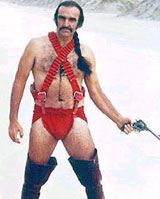
    If you’re more inclined to read like some kind of weak-wristed intellectual, as opposed to the clearly superior videos that speak to meat-heads a la Zardoz, here’s an excerpt from Starting Strength. There are pictures, too, so it might be worth browsing over even if you don’t read it.

    Next time: the deadlift.

    *Disclaimer: always consult a physician before starting a new fitness routine.

  • Let’s Go Toe-to-Toe on Beer Law

    To begin, I’m as much a lawyer as Charlie Kelly is; I just prefer to focus on beer law instead of bird law. The after effect of the terrible experiment in alcohol prohibition in the United States is the cause of most of these bizarre and strange laws. Before prohibition, the peak number of breweries in the US was over 4,100 (1873). While consolidation was already happening previous to the 18th amendment being ratified, once it was passed it started forcing breweries to close. By the time the 21st amendment was ratified, less than 750 breweries remained active. The number of breweries continued to decline as consolidation continued until we reached the nadir of less than 100 breweries in the 1970’s.

    Thankfully, Jimmy Carter did something great, and he legalized homebrewing on the national level in 1978 (although it was not legal on the state level in all states until 2013). Once homebrewing became legal, it allowed for experimentation with styles and techniques that led to small independent breweries opening up (at the time called micro-breweries, now referred to as craft beer). It took until 1994 for craft beer to even make up 1% of the US market in volume. Two years later, the US had over 1,000 active breweries, and then it took until 2011 for the US to pass 2,000 active breweries. After that, growth exploded, reaching 3,000 active breweries in 2014 and reaching over 4,100 in 2015 (while now making up 10% of the US market).

    If you are unaware, after prohibition a three tier system was put into place to extract taxes and still allow regulation of alcohol production and distribution. These tiers are regulated on the state level, meaning that we have a rare opportunity to look at each of the states, and compare the results of their regulations over the 30 years since small breweries started opening. Thankfully, the Mercatus Center has done this, with a focus on two factors:

    1. Self-distribution – Allowing breweries to sell their beer directly to retailers instead of going through a distributor
    2. Beer franchise laws – Which determine when a brewery can terminate their deal with a distributor

    The study finds that allowing breweries to self-distribute and to get out of contracts with distributors they are having issue with leads to more breweries and a higher volume of production. This leads to more jobs, more options for consumers, and more taxes for the state (they’ll always take their cut).

    It’s a common refrain that drugs should be legalized and treated like alcohol. If we want to regulate drugs like alcohol, the study by the Mercatus Center shows us that we should have less regulation if we want people to have more options. These options do not always need to be for stronger and more potent items. Two of the current fads in the craft beer world are session beers and sour beers. Both of which are generally lower in alcohol than your average beer.

    Of course, we’ll also want to try to avoid some of the more terrible laws that exist currently in some states. People are generally used to the alcohol laws in their state: they know if they have to go to a special store to buy some things, or if they need to make sure to stock up on Saturday; however, they generally don’t know the laws in the states around them. These laws vary wildly state to state, with some states being relatively good (California and Oregon come to mind) and some states just bad (Utah and Pennsylvania, I’m looking at you)

    Some of the more bizarre laws from the more moderate locations include:

    Thankfully, in this area things are getting better. In doing the research for this, I ran across several laws that have already been repealed/updated. Last year included quite a few sweeping changes to alcohol laws through the states. Almost every one of those laws was opposed by the various groups who had profited by the regulations that were in place (liquor stores, distributors, and AB InBev/SABMiller), and yet the changes continue. It helps that craft beer is still a growing industry. In my home state of Ohio, there are currently 57 active applications for new brewery licenses, and there have been only a handful of breweries that closed their doors in the past year.

    If you’re interested in keeping up with the current laws and changes that are being proposed the Brewers Association is a good start, as is your local brewery.

  • Reviews You’ll Never Use: Zardoz

    ZARDOZ SPEAKS TO YOU, HIS CHOSEN ONES.

    He speaks to you of his wonderful, magical, infuriating, nonsensical, visually bounteous film.

    This review is the direct result of a number of comments noticed by Your Friendly Ruling Council of Eternals Admins which indicate that a disturbing number of you may not have seen this film. The original plan was to write the entire review as Zardoz, and post it using the Zardoz account. However, I tried it out for a paragraph, and trust me…as a reader, that gimmick has its limits.

    Image result for zardoz
    The Flying Stone Head of Zardoz

    The 1974 movie Zardoz is a passion project tossed as a bone to director, screenwriter, and producer John Boorman in appreciation of his wild success with the 1972 classic, Deliverance. If you haven’t yet seen that one, I’m afraid it’s a tad too conventional for Reviews You’ll Never Use. Deliverance is a completely mainstream film, and so will find no place in this column.

    Zardoz marks only the second post-Bond film of Sean Connery. The actor was apparently having some trouble with typecasting, and not only accepted the role, but became fast friends with Boorman. Our other leading thespian is the beautiful Charlotte Rampling, a prolific actress known for many roles over the years, but perhaps best remembered by trash cinema & horror fans from her turn in the 1977 Richard Harris vehicle Orca, a brutally unsubtle Jaws knock-off.

    Given carte blanche, Boorman oversaw every aspect of the film, from writing to post-production. In his director commentary it is obvious that he reflects on the film fondly but admits that he perhaps stretched too far. To which your humble author would reply, Ah, but a man’s reach should exceed his grasp, Or what’s a heaven for? Indeed what Mr. Boorman considers an ultimately flawed product, is still so delightful in myriad ways that I shudder to think what would have come about if he had succeeded in bringing the totality of his vision to the screen.

    Somehow I don't think this guy believes that the penis is evil.
    I wasn’t kidding about the drawn-on facial hair.

    Our film opens in the year 2293 with a floating head providing exposition (explained by Boorman to be an ultimately unsuccessful attempt tacked on in post-production to reduce audience confusion). Interestingly, this narrator is fully self-aware and refers to his understanding that he is a fictional construct of the writer/director. The head inexplicably has a thin drawn-on mustache and goatee. We cut to a giant flying head that vomits guns and commands the “Brutals” worshiping it to go forth and kill, because, “the penis is evil” and overbreeding brings about a plague of men.

    One particularly clever Brutal, our protagonist Zed, stows away in the flying head and is taken to a realm preserved out of time, where the enlightened scientific remnants of advanced humanity live eternal lives of unspeakable drudgery. Punishment in this society is conducted by forced aging, the senile being sent to live in what appears to be an endless New Year’s Eve party ala TGI McScratchy’s. Others simply give up caring about life, and become Apathetics, standing around catatonic and being given green bread on which to sustain themselves. The self-styled Eternals view themselves as the preservers of the past, collapsed civilization, and their Eden is run by a supercomputer known as the Tabernacle.

    Yep, you get to see dem titties, along with a wonderful assortment of others.
    Charlotte Rampling
    Hard pass.
    The famous costume that Sean Connery wore to his wedding, and still wears to all public functions to this very day.

    The Eternals capture Zed and decide to study him, to find out how the vulgar strain of humanity has changed over the last two hundred years. One thing leads to another, as things inevitably tend to do in a story, and ultimately the Eternals find the answer to their weary prison of never-ending life.

    This film feels like something that was going to be, supposed to be, could have been, a great artistic achievement. Boorman’s self-directed criticism is on solid ground; it’s all simply too much. The visuals are wonderful. The costumes, the colors, the backgrounds, are all rich and help to bring this very interesting world to life. The problem is that this world is so very rich, that it becomes simply impossible to do it justice while remaining focused on progressing the plot. Who cleans up the Apathetics and the prematurely aged Renegades? They’re all quite spotless. Where do these non-functioning individuals relieve themselves? How on earth do the Eternals plan to cope when, inevitably, everyone slips up and commits transgressions resulting in forced aging into senility? The psychological scenes, in particular, seem over-wrought, as one begins to slip the line of confusing complexity for its own sake and nonsensicality with an artistic statement.

    For all that, I cannot find it in my heart to say this is a bad film. Imperfect? Surely. Plot holes you could drive a reasonably-priced sedan through? Absolutely. But the film is so lovely, the acting so involved, the entire production handled with such obvious love and hope, that it wins you over. Boorman is a good enough director to take what in anyone else’s hands would have become a tangled mess, and turn it into a modern bizarro masterpiece. While it lacks the raw insanity of House, it is obviously the vision of a man who knows exactly what he wants to express, and how he wants to express it, and that vision is sublime. Unfortunately, due to the limitations of time, budget, technology, etc, it is up to you as an audience member to take a step forward and meet the film halfway by taking the parts of that vision which are offered and completing it with your own mind and soul.

    And yes, there are a fair number of titties.

    I award this film 10 Severed Feet out of a possible 13.

  • Reviews You’ll Never Use: House

    Oh boy, where to begin with this one. Forgive me for running long, but this film deserves the digital ink.

    Let us start with this: if I were to receive some moderate sum of money, and be given complete creative control, House is the film that I would make. Please note that I am not necessarily saying this is a good thing.

    This also gives you a pretty good idea about how this movie is going to go, i.e. FUCKING CRAZY.
    Promo Image

    House is unlike anything you’ve ever seen. It’s a big (by the standards of late 70s Japanese cinema) budget art-house experiment horror-but-maybe-not-kind-of-black-comedy. To properly understand this film, you must ingest consciousness-altering substances. Drop some acid, rip as much as you can out of a bong 10 times, eat some mushrooms, get drunk, whatever you have to do to open your mind to the higher mysteries – just do it.

    Looking wistfully across the sea at the success of Jaws, in 1975 director Nobuhiko Obayashi was approached by Toho Films (makers of my favorite franchise, Godzilla) to produce a treatment for a summer thriller blockbuster. While only being a director of commercials, he was known as a creative eccentric who had produced films on the art-house circuit years before. Working with his friend Chiho Katsura, they quickly turned in a script for a haunted house film.

    The gag was, Obayashi had gone to his 10-year-old daughter and asked her for ideas of what frightened her. So impressed by the creativeness of what scares a little girl, he decided to treat the entire picture as if it was from the perspective of a young girl. This meant the inclusion of nonsensical plot elements, shallow archetypes, purposefully hokey effects and animations, all tied together with traditional Japanese ghost story elements.

    Toho green-lit the project and shopped the script for two years, but no director would touch it because they all thought it would ruin their careers. That’s how off the wall this film already was. Fearing that it would never be produced, Obayashi asked the studio if he could at least announce that it had been green-lit. They agreed, and the wild-haired filmmaker began a two-year media blitz to promote the film. He shot promo pictures with the cast, commissioned and released the soundtrack, and even had the film novelized and performed as a radio drama, all for a film that didn’t exist yet!

    That's a weird glory hole.
    So…that just happened.

    Eventually bowing to public pressure in 1977, Toho agreed to allow Obayashi to direct the film himself, even though he had only helmed commercials as a professional, and he wasn’t under contract with the studio (a highly unusual move for a Japanese studio to take at that time). His cast primarily consisted of a gaggle of 17-year-old girls who had been in his commercials previously.

    Without giving away too many details of the plot, our heroines Fantasy, Gorgeous, Melody, Mac, Sweet, Prof, and Kung Fu are slowly consumed by the house, as personified by its evil avatar, a fluffy cat named Blanche. We have an attack by a severed head from a well, which bites one girl in the rear, then vomits blood and throws itself back down the well. We have attacks by chandeliers, attacks by flying log piles, attacks by mirrors, attacks by cannibalistic pianos, attacks by futons and linens, and attacks by telephones. By the end, the house has regenerated itself, showing shades of Burnt Offerings, which had come out in the United States the year before (if you get the chance to see it, Burnt Offerings is a passable haunted house film mostly notable for being mediocre despite a fantastic cast including Oliver Reed, Karen Black, Bette Davis, and even a few minutes of Burges Meredith playing, shockingly, a curmudgeonly old man).

    The plot, though, is not the point of this film. This film is entirely focused on the telling, rather than the tale. The Austin Chronicle perhaps said it best, “there’s surprisingly little to recommend House as a film. But as an experience, well, that’s a whole other story.” We have scenes in which one character tells the others a story, which is shown as a sepia-tone film reel which the other girls can see and comment on. One girl describes a mushroom cloud as looking like cotton candy. There are animations, matte paintings, animals that are clearly being thrown at the actors from off screen, a man who mysteriously turns into a pile of bananas, and several scenes involving 17-year-old girl titties…sometimes disembodied and floating around.

    Obayashi went on to a prolific film career, and eventually in 2009 earned the Order of the Badge of the Rising Sun for contributions to Japanese culture. However, he never managed to match the beautiful insanity of his first effort. The film was a hit in Japan, due to being a breath of fresh air in a completely stagnant industry (by this time, most Japanese directors were churning out Toro-san rip-offs or pinku eiga, which is softcore porn).

    And yes, you get to see some of their little girl titties
    Our intrepid band of potential victims

    The Criterion Collection DVD has several excellent bonus features, including Obayashi’s 1966 experimental film Emotion, a lengthy interview with the director, and a retrospective by Ti West, director of House of the Devil. I had quite liked that film, but Mr. West comes across as somewhat of a smug film-school student spouting platitudes about “challenging the audience”.

    To sum up, I cannot recommend this film highly enough – if you’re a person like me, who takes most of your personal philosophy concerning the nature of existence from the Joker. If you’re a Very Serious Person who likes to Seriously Discuss Very Serious Things, and have a silly hang-up by which you insist that your films follow a coherent narrative structure and conventional character arcs, then…have an adventure and watch it anyway. But get really fucking high or drunk first. It’s worth it.

    I rate this film 8 drug-using dogs out of 10.

    Image result for crazy Image result for crazy Image result for crazy Image result for crazy Image result for crazy Image result for crazy Image result for crazy Image result for crazy

  • Reviews You’ll Never Use: Dark House

    Hello, and welcome to (what may be) the first in an on-going series of film reviews. These will not be your ordinary film reviews, oh no sir, for your humble reviewer is no ordinary cis-gendered heteropatriarchal man. Much as our dear friend the Derpetologist plumbs the depths of the interwebz to bring you only the derpiest in modern derp, I, too, am an explorer in dangerous environs. My particular faculty, however, lies in obscure, campy, poorly made, misunderstood, niche horror and sci-fi films.

    Let us begin with the most recent horror film I have seen – Darin Scott’s Dark House. This appears at first glance to be a meaningless addition to the already rich canon of poorly acted, poorly written, cheap computer FX DTV (direct to video) horror library. However, as our parents should have taught us, looks can be deceiving.

    Some scant years ago, at a small private orphanage, a small gaggle of children are butchered by their insane caretaker, who then takes her own life in suitably gruesome fashion. Cutting to the present, a group of acting students at the local community college are approached by haunted house impresario Walston Rey to act as a skeleton crew for a press run of his new haunted attraction. The attraction is, of course, located in the previously seen massacre house, which over the years took on a “haunted” reputation in the local community. One of the students, Claire, is strangely eager to go. It turns out Claire had a terrifying experience there, and her shrink thinks spending time in the house would unlock her repressed trauma. Unable to go it alone, she believes this will be the perfect opportunity to revisit the house in a safe environment. Thankfully for us viewers, her supposition about the safety of said house turns out to be hideously wrong.

    https://images-na.ssl-images-amazon.com/images/M/MV5BMTU3NDQxMTAxOV5BMl5BanBnXkFtZTcwOTE0Njg1Mw@@._V1_UY268_CR4,0,182,268_AL_.jpg
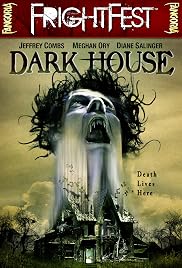
    Box cover. I swear, sweet 80s VHS box covers are a lost art. We will discuss this, AT LENGTH, in a future post.

    The film starts off in a very paint-by-numbers fashion (for low-budget horror) and is saved by the timely arrival of Walston, played by the always delightful Jeffrey Combs. Seriously, I would pay money to watch Jeffrey Combs read the Calcutta phone book. Many of you may know him from his recurring roles in various Star Trek series, notably both as the Vorta Weyoun and the Andorian Shran. True horror connoisseurs, though, will always think of him as Dr. Herbert West in the immortal and perfect in every way Re-Animator. Since Mr. Combs takes the stage (literally) while in a scene featuring the entire rest of the cast, the immediately noticeable gap between his talent, and that of the remainder, is almost jarring. It is here that we are introduced to Claire, played by Meghan Ory. This Canadian actress’s screen credits are ample, if mostly guest shots on TV shows. She plays the role of slightly nutsy Claire adequately, if not with any great enthusiasm. When the rest of her class expresses skepticism, she has some wonderful meta-lines about how many famous actors got their start in low-budget horror. For our readers who may not be aware, this is an actual fact, and will perhaps be the focus of a future post.

    Our intrepid team of would-be actors (and I do mean that in both an in-universe sense and in a real life sense) show up to learn their roles for the press opening of the haunted attraction. Something unnatural goes wrong with the computer controlling the effects and…well, if you’ve ever seen a horror movie in your life, you know where this is headed. Thankfully Mr. Combs is not the first to go, as so often happens in these sorts of films when they spend the money to trot out a fan favorite, but can’t really afford to give their character more than minimal screen time.

    It is at the ending that the film makes its first real attempt to separate itself from the pack. Without giving away too much, what appears to be the closing scene contains a plotting element that comes just…this…close to being interesting and at least a little different. That is something that many of you have no idea how hard it is to find in this genre of film: anything different.

    OH SHIT SON!!!
    Creative Commons image that comes up when you search, “horror”. That’s right, I’m lazy. Screw you.

    Unfortunately, the filmmaker then completely shits it all away with an extra few minutes that wake us violently from the beautiful dream of a low-budget horror film that doesn’t feel like one has wasted 90 minutes of one’s life in viewing, and plants us firmly back in the reality in which most low-budget horror films feel like you’ve just wasted 90 minutes of your life in viewing. A real shame, honestly. This was only director Darin Scott’s second film, so he may be forgiven for not having fully developed his instincts yet. That’s what a good editor is for. He later helmed several other horror films, which you can find on IMDB if you are so inclined, and also directed what I’m sure was an underrated classic, House Party: Tonight’s the Night. That’s right, a House Party sequel, in 2013. When I’m having a hard time slogging through a particularly bad horror movie, I can look back on that fact and remind myself that it could always be worse.

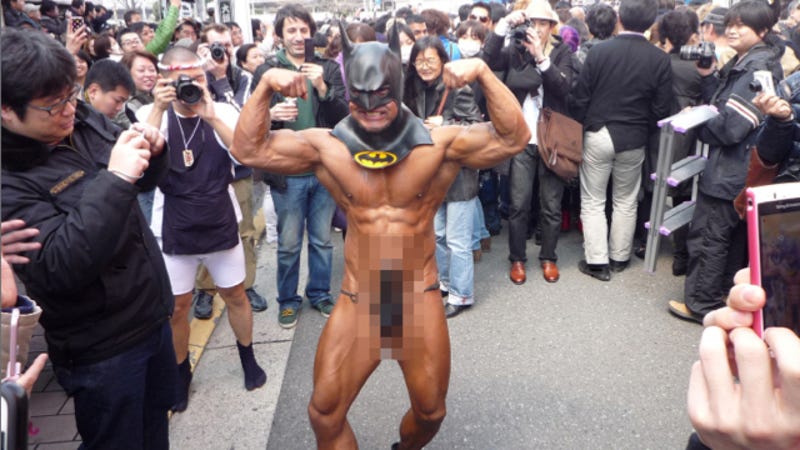
    I award Dark House two-and-a-half Naked Asian Batmen out of five. Image result for pixelated dicks  Image result for pixelated dicks Image result for pixelated dicks

  • Heinlein As A Way Of Life; or Joys Of Body Armor

    “A human being should be able to change a diaper, plan an invasion, butcher a hog, conn a ship, design a building, write a sonnet, balance accounts, build a wall, set a bone, comfort the dying, take orders, give orders, cooperate, act alone, solve equations, analyze a new problem, pitch manure, program a computer, cook a tasty meal, fight efficiently, die gallantly. Specialization is for insects.” 
    ― Robert A. Heinlein

    In my first attempt at this, I used the terms Prepper and Prepping. I should not have, though I think material aspects of those are covered by what I am doing. Dad worked on Apollo and then Apollo-Soyuz and Skylab. We lived in Seabrook with all the other NASA/JPL/IBM engineers and astronauts that worked at the Johnson Space Center. I thought it was normal to play in the display J-2 rocket engine and wander around when the NASA staff were making the displays for the little museum they had going on before they made it a paid public theme park. My choices for reading were what dad had in the bookshelves, which was a set of Great Books of the Western World, the whole set of Encyclopaedia Britannica, and a mess of Niven, Heinlein, Clarke, Pournelle, Asimov, and others.

    Heinlein always struck a chord in me, a resonance that with words expressed with the same impact that having grandparents who lived a lot of that self-reliant and ultimately satisfying life. Let us approach this from that lens, rather than all the connotations that come with Preppers and Prepping. Homesteading is probably the best term for it, in that Prepping requires that you are preparing for some great calamitous event, whereas I am coming from a point of just living life and solving problems in as self-sufficient manner as possible. This includes being prepared for disaster and mayhem, but as part of life.

    Because of a reference in some of the comments about a rant on body armor from 2015, I read the entire archived thread that was referenced. First off, it is my life, and I will use whatever means I have in order to defend it. I will even extend that to those around me, whether they deserve it or not. That is my reasoning for having and carrying a pistol. My military gear is for just that (and mainly for working around the property, which happens a lot more than Mad Max bad guy gangs tooling around the nucular (sic) wastelands causing rape and mayhem). I camp with my hammock, poncho, poncho liners, carry everything in the same ruck (and same loadout) that I could live out of indefinitely if need be. Something that was brought up in that thread, to death, was the rights v. the person’s irrational fear of the use of body armor making his guns less effective, so BAN IT, BAN IT ALL TO HELL!!11!eleventyone!!

    Don’t care. I shoot, a lot. It is one of the things that my TBIs didn’t scramble so badly that I can’t do it anymore, unlike doing artwork without great concentration or pain, or thinking about each step consciously at some level. I can still do it, and I do it well. I have also been very lucky in that on most of the ranges that I shoot on, there is a good possibility of getting hit with debris, the shorn jacket of a bullet, the odd nail in a stump that gets hit at just the wrong angle, and I have gotten away with at worst minor cuts.

    There is also the fact that its intended use for protection in armed conflict. I have it for that reason, should I ever need it. However, I find that the only use for it so far, has been range safety. I have Rx Oakley and Wiley-X specs because I value my failing eyesight. I value what is left of my scrambled brain, so I have an ACH (Advanced Combat Helmet, Ballistic) high cut helmet. It clears the Peltor active ear protection, I can wear it all day, and it is WAAAAY more comfortable than the PASGT helmets you saw from Panama, Gulf War 1, Bosnia, and the opening years of the Iraq and Afghanistan wars.

    I have a simple plate carrier that I use, any Berry-compliant (every bit of it made in the USA, to include all components) carrier will do, but my beater carrier is a Shellback Tactical Banshee with medium SAPI rifle plates front and back, with Level IIIA Aramid (Kevlar) soft inserts on the sides. It also works great for carrying 4 extra magazines, a first aid trauma kit, flashlight, and hydration kit. I also have their Banshee 2 with the 3d air mesh lining if I ever had to wear it for days-weeks at a time. Crye Precision and TYR Tactical make the best tactigucci stuff out there, but these work for me, without the several-months wait. Aftermarket is one place where they really surpass the .mil plates and carriers, but you pay for it. NIJ 2006 is the latest standard, and is more stringent than the .mil requirements for Level IV and Level IV Special Purpose plates.

    That all said and done, it’s getting to be time for proper gear. Boardshorts, t-shirt, flip-flops, the body boards, and the wetsuit. Almost time to rent a house on Topsail Island or the OBX before the waves die down for the summer. Next installment: reloading equipment and water purification.

    Don, Always 11H1P, but now just Professional Beach Bum.

  • Medical Mondays – “The Meaning of Fear…” (Part 1 of 2)

    The thyroid. Parathyroid. Bilateral axillary. Breasts and the areolas. Almost the entirety of the abdomen – stomach, liver, spleen, intestines, and pancreas. Rectus & tranversus abdominis. External & internal obliques. Linea alba & umbilicus. Inguine. Rectum & anus. All of these within my domain and scope of practice. I am a general surgeon, FACS; qualified in bariatrics, robot assisted and minimally invasive surgery (MIS), and primary care with emphasis on underserved rural communities. I have also been on-call for ER surgical, and served as alternate house physician for a large, privately run, Independent & Assisted Living/Skilled Nursing retirement facility. I have practiced medicine for almost 17 years, including surgical residency. With the exceptions of two teenaged food service jobs and one (mercifully brief) stint as a rental car call center rep (“Try Harder”? Whatta crock!); medicine is what I know.

    The uterus. Cervix. Fallopian tubes. Ovaries. Babies, intra and post partum. Colpus, internal and external. The kidneys. Ureters. Bladder. Testes. Urethra. My wife is also a physician; her scope of practice is just as vast, yet in very different areas. She is a dual specialised medical surgeon, trained and served at the behest of state and private medical agencies. She has been sent to many places in Eastern Europe and Asia, including cities in her ancestrally native Ukraine, Belarus, Russia (she was born in Kamchatka in Russia), and Chechnya, for medical missions (some of them in declared zones of conflict), and has practiced for a little over 13 years. Her childhood dream was to be a professional ballerina to see the world, and has worked entirely in the medical field. She was also the captain of her chess team during her medical training, and was a champion level competitor (a rather sore winner, she is; and, an exceptionally sore loser, to boot). Her father, a high ranking military officer, specifically encouraged her to study medicine as a way to serve her country without military enlistment.

    The job of a physician is very simple: To diagnose and treat disease. Simple, yet so very complex. Made even more complex by the very people we strive to help, and often worsened by those ostensibly charged to help them on their behalf, moreso those in the public sector, but the private sector can be just as frustrating. What we hope to accomplish in this series is to pull back the curtain and give you an idea of what we do and our respective points of view with regard to practice and overall ethos that informs our respective approaches to care.

    For example, I am of the firm belief that medical care is not an inherent, plenary, human right. Period. Full Stop. End of Story. I own my skills totally, and determine who and who does not receive them. This is, of course, subject to contract at the pleasure of an employer and/or third party payer, though I will inform them upfront that there are certain non-negotiable lines that simply won’t be crossed.

    My wife, who for now shall be referred to as Zhena Groovova (Жена Грувова – literally, “wife of Groovus”), her views were and are informed by the fact she has witnessed the dissolution of the Soviet Union, The Orange Revolution in 1991 (Ukraine’s Independence), and, most recently, The Maidan Revolution and subsequent Donbass Invasion in 2014 (we had the poor fortune to witness that one firsthand in Donetsk, and will most likely include medical experiences from that time). She received almost all her training in Ukraine post-independence, as when it was part of the Soviet Union, the job of the country was to make planes and tanks, grow wheat, and educate doctors and train nurses (Soviet Command Economy). She believes that basic medical care access is an inherent, plenary, human right, though the physician determines the limits of his or her labour by right of education and station.

    Suffice it to say, we do believe that, regardless of system, payment scheme, and even patient demands, we own our education and skills – there are ethical and personal lines we simply will not cross. Many of our anecdotes and reflections will stem directly from these competing philosophies.

    That said, the types of things we’ll cover in Medical Mondays and Супер Среда (Super Wednesdays) are:

    1. The lighter things, such as humorous patient anecdotes, medical education bloopers and blunders, and intra-office pranks (Of which there are legion; ever put SuperGlue on the Med Students’ pens and clipboards, or saran wrap the Charge Nurse’s desk?);

    2. “A Day in The Life,” and other fly on the wall vignettes, providing answers to the oft wondered, “Why is everything taking so long,” “Do you ever go to the bathroom,” “With all the gross stuff you see, how do you even have a sex life?” “Are your kids your personal lab rats?” “How do you get along with other doctors?” “How much sex and sleaze goes on in a hospital?”;

    3. More contemporary issues with regard to medical freedom, such as: records privacy in the digital age, licensure, billing, Charity Care, the roles of rising adjuncts like ARNPs, PAs, and Allied Health (like respiratory therapists, pharmacists, medical technologists, and paramedics/EMS), scope of practice, continuity of care, tele-medicine, robotics and autonomous bots, regulations, DNA and heredity, charting and dictation, “know-it-all-WebMD patients,” and other unique stressors for us that patients don’t ever see, and so much more from the doctor’s perspective;

    4. The much more serious side of medicine, such as how we deal with: patient deaths; stillborn births; preemies; birth defects; performing a surgical abortion; going to jail for freedom of conscience and religion; assessing possible sexual assault & completing a rape kit; industry drug abuse; being sued; the worst and most gruesome ER cases; war injuries, crimes, and pathologies; when to remove, and removal of, life support; attending patient’s funerals; having the Jonathan Kent/”Superman” moment (“All these powers, why couldn’t we save them?”) and other extremely emotionally draining, personally destructive, and unpleasant aspects of medicine, where no one asks what we feel or think, how it affects us and our psyches, or has never even given it a first thought, forget a second one. “Prick us, do we not bleed”?

    5) Solutions to the current medical care delivery woes, and how both technology and human conditions can improve it; conversely, addressing legal liability costs and concerns in this almost literal, Post Mendelian, “Brave New World.”

    What we don’t want is some run of the mill malady/cure column extolling the virtues of folk remedies (though many work, actually), nor throwing abstracts in your face a la Pub Med Ninjas. The InnerToobz is already bursting at the seams with advice columns; if you are hoping for a column on which is better, Vick’s Vap-o-Rub v. Lamisil, for toe fungus, BORING! (FTR, Vick’s is cheaper, no side effects, OTC, and takes not much longer than Lamisil. Wash and dry your feet, apply Vick’s to the cuticle for about three weeks. Trim nails as needed. Works wonders for thick, cracking toenails, too. OK, we may throw in a few tips…)

    The other thing we ask: Be respectful to us. We hope many of you will like us, some find us an absolute scream, know others will find us about the level of watching paint dry, know some will (and do already) hate us, and know most hate the systems as they are. If we see such comments such as, “PERMISSION SLIP!”, “CARTEL!”, “GUILD MAN!”, and other stuff we already know grinds your gears, we’re out, and we will take down our posts and comments with them.

    OMWC and SP, and The Founders here, gave us this forum out of the goodness of their hearts to entertain and educate, not be punching bags and pinatas. We get enough legit abuse to last many lifetimes over. We are here for you, but won’t hesitate for a second to keep you at arm’s length – the time we spend with you, is the time we could be spending treating paying patients, making filthy doctor lucre, and spending time with our three children…

    Our greatest fear, at this moment, is failing to meet your expectations.

    *Hangs Up “Out” Shingles*

    Be Well.