Category: Rant

  • Socialized Sports: A Microcosm of a Diseased Ideology

    There are a thousand examples that could be used to show the rot caused by the invidious tenets of socialism in our sports these days. The most illustrative, in my opinion, is that of IndyCar. For the first 75 years of the Indianapolis 500, the race and the supporting series were based on a free-market-style “run what you brung” model, resulting in a rich and storied tradition. Stories of turbine cars, diesels, close finishes, and 1000 HP rocketships on wheels echo through from the past. Before NASCAR, the various iterations of Indycar (CART, USAC, AAA, etc.) were king in the United States. Until the late 90s, IndyCar was a half-step behind Formula 1 for international popularity.

    Today, IndyCar is circling the drain. They had a race in Phoenix last weekend with 7,000 attendees and a few hundred thousand, at most, watching on TV. Why such a precipitous drop from rivaling F1 to now being on the brink of failure? Beyond the basic ineptitude and competitive failures that doom any venture, the problem can be summed up in one word: socialism.

    In the early 90s, CART (as IndyCar was called at the time) was king. Names like Unser, Andretti, and Foyt were touring North America, racing custom built race cars in front of packed stands. The Indy 500 would have 350k+ on hand for the annual culmination of a monthslong celebration of speed. Most years, certain qualifying days would have well over 100k people on hand. In 1994, the fastest qualifying speed was a hair over 228 MPH. Today, almost 25 years later, the cars do the same speed, the crowds are down and the hallowed Month of May has become a week and a half.

    Then, in response to escalating costs and a perceived shift away from the small-town American dirt track racers to foreign racers in the F1 minor leagues, the owners of the Indianapolis Motor Speedway started the IRL, which based its operating model on a top-down financing of the racing efforts of smaller teams. There are a bunch of other factors in the decadal decline of IndyCar, including a split into two series, series-wide emphasis on safety over speed, and the rise of NASCAR, but the biggest factor was the susceptibility to the allure of socialism.

    In the attempt to contain costs and attract smaller teams, the IRL and, later, IndyCar continued with two core principles that will sound familiar to all of you who are versed in the language of the socialist. First, IndyCar established a phonebook’s worth of technical regulations meant to curtail engineering costs. This resulted in the last 10+ years being run with a single allowable chassis each year. They have allowed limited competition in the engine, suspension, and aerodynamics, but the days of building your own mousetrap are over. Second, IndyCar established what’s called the “Leader’s Circle,” which is an alternative to the traditional purse system. Instead of the winner getting a zillion dollars and last place going home with a pittance, anybody who runs a certain percentage of the annual schedule is paid a salary for each full-time race car run, and winners are given a nominal sum as a prize.
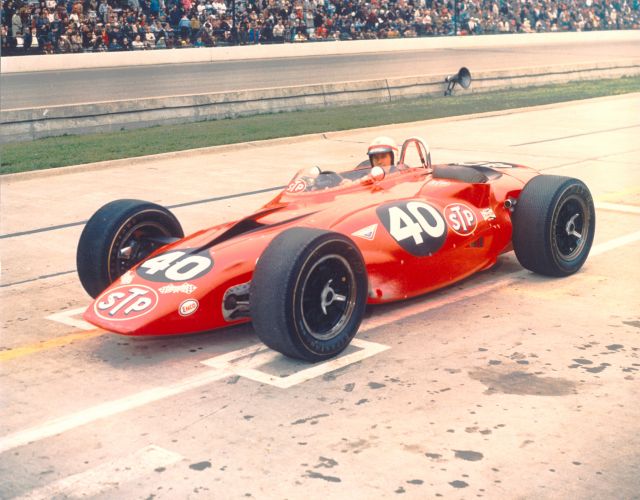
    As can be easily predicted by those of us familiar with the stories of Soviet Russia, Venezuela, Cuba, and North Korea, IndyCar has been suffering from poor racing, fewer teams, fewer race cars, and an utter collapse of the fanbase. Besides a single day per year burning off 75 years of tradition, American Open-Wheel Racing is on life support. Of course, these are “bad economic times” and “motorsports is on a decline” and “we can’t afford competition.” The excuses have been flying since 1996 when they first headed down this path. Every half-hearted, feeble attempt to introduce a market influence is quickly undone. The toe in the water is withdrawn as soon as they realize it’s wet.

    The path to success is simple and quite obvious. Undoing 25 years of stupid will hurt, but, as Venezuela is figuring out right now, the pain is inevitable. IndyCar will wither into nothing unless it reintroduces the competitive spirit of the free market into the sport. The excuses of the boot-lickers in the sport are all based on some nugget of truth, but IndyCar isn’t failing because motorsports are unpopular or because the economy is bad. IndyCar is failing because socialism is more than just painful to live under, it’s also painful to watch.

    It’s sad to see such a great tradition go down in flame, but these days even our sports act as a cautionary tale against socialism and all its variants.


  • Derp Classics

    Think of this like a compilation album.

    Note: I strongly caution against watching all these videos at once unless you have a steady supply of alcohol handy.

    Dumbest woman in California


    California Teachers’ Union explains the 2008 crash:

    College Debate Champions

    https://www.youtube.com/watch?v=sJvBwJ_h-UE

    ATF agent confiscates toy guns

    CA state senator attempts to describe gun; fails

    Tuck Frump

    https://www.youtube.com/watch?v=MfrRzW-Yqog

    Dramatic atheist at Berkeley

    Feminist Musical

    Crying Treehuggers

    MIT grads can’t make a lightbulb work

    Harvard grads can’t explain the seasons

    https://www.youtube.com/watch?v=p0wk4qG2mIg

    Understanding Leftism: Demoralization

  • Anarchy is the Communism of the Right

    Time to piss off a bunch of anarchists! Hopefully, you’ll take it in stride and disembowel me in the comments.

    Anarchy is quite the opposite of Communism when it comes to political structure and social order. However, when it comes to the relation of these ideas to their respective political segments, Anarchy is the Communism of the Right (or if that’s too harsh for your sensibilities, it’s the Communism of the Libertarian movement). How so? There are three major similarities: 1) The likelihood of long-term, stable implementation, 2) the resultant social order, and 3) the big lie that must be believed in order to accept the philosophy.

    Stable Implementation

    We’re very quick to trot out the old cliche that Communism has failed every time it was tried. When the accusation is turned back to us, we quickly disavow Somalia and begin thinking through history for a good example. However, the search through history ends very differently when looking for a successful minarchy versus a successful voluntaryist society. There are certainly successful examples of both, but the difference is in scale. History is rife with examples of empires controlling a city or region with a small military presence and a minimal government. Sure, the occupiers tended to plunder the occupied lands, but in comparison to today, such plunder would be considered libertopian. Anarchic societies are comparatively rare and quite fleeting. Usually, they are either quite small and isolated (nomadic tribes), or extremely volatile (territorial California). In essence, an anarchy does not have what is required for a stable society: protection from conquerors, safety from bad actors, and normalization of trade.

    As much as we all wish the world worked more like theory, it usually doesn’t. This is because we ignore or misestimate some of the factors that significantly affect the result. Such is how it is in a voluntaryist society. These societies are unstable for many reasons, especially because they are bad at protecting their citizens from conquerors and from bad actors. With limited recourse available, regulating and normalizing trade is outside the reach of an anarchic society of any real size. As such, any anarchic society would necessarily subdivide into small tribes with an extreme distrust of outsiders. It’s hard to imagine the amount of devastation that would be required to create these small anarchic tribes in the modern world. The sheer population density of modern cities would render it impossible sans cataclysm.

    Resultant social order

    Communism requires the deaths of millions in order to be properly implemented. In essence, instinctual self-preservation needs to be beaten and bred out of a populace before they are able to accept communism. The New Soviet Man was always a generation away because the commies could never kill off that self-preservation instinct that is endemic to all nature. The resultant social order was extremely distorted and self-focused. When staying alive meant selling out the next guy, the next guy ended up in the gulag and you slept soundly that night.

    Similarly, anarchy requires massive upheaval to be implemented, and the resultant social order has invariably been harsh, unjust, and lacking in technological growth. Despite the immense gold reserves in mid-19th century California, it was a horrible place for many of the adventurers looking for a boon. Although there was a nominal military government in place, it was wholly unable to police the vast expanse of California territory. In cities like Los Angeles, Monterey, and San Francisco, murders in the streets were common. Theft, fraud and violence were daily hazards. There was such a vacuum of power that vigilance committees were formed on a regular basis, enacting their form of justice, usually politically based and manipulated such that the leaders were enriched at the expense of the citizenry. Rather than the idyllic picture of small virtuous tribes scattered across the countryside or the progressive image of a futuristic city filled with happy prostitutes, heroin vending machines, and no taxes, the history of California shows a dystopian mix of these two images. There were small islands of virtuous, justice-seeking families floating in an ocean of rights-violating horror.

    Much like the communists’ aggression borne out of survival, the bad actors aggressed against citizens. However, unlike the communists, the bad actors were aggressive because they could get away with it.

    The Big Lie

    Acceptance of communism requires belief in a faulty premise. Namely, the premise that individuals do not have agency. Government is greater than the individual and thus can appropriate the property and labor of its citizens. Much of the horrific nature of communism derives from this faulty premise.

    Likewise, acceptance of anarchy also requires belief in a faulty premise that there is no valid authority over an individual.  In reality, people are quite unstable when completely given over to their own devices. Both outside conquerors and the less savory elements of society show the results of solely individual authority: the complete inability of society to protect citizens from outside conquerors,  make citizens safe from bad actors, and normalize trade.

    We can always have discussions of what level authority we rightfully have over one another, and, in extension, what authority society and its civil government legitimately have over us. However, the idea that the individual is not subject to any authority (whether legitimate or not, virtuous or not), results in similar absurdities like when the government is fully authoritative. Might makes right. Exploitation over altruism. Vulnerability in the face of outside threats.

  • The Derponomicon: Part 7

    I could eat alphabet soup and shit something that makes more sense than this.

    In this installment the prog speaks on public sector unions:

    On public sector unions…..Is it not ironic that the very people that demonize and whip up anger about public sector unions are public sector government workers that worked to be elected to office, so they could have insane salaries that they could raise on their own anytime, lifetime benefits, and a pension….All at the expense of THE TAXPAYERS. The very same people in fact who will happily pass billions on tax cuts for the wealthiest Americans and corporations, extend insane subsidies and benefits to billion dollar industries, vote for decades long irresponsible trillion dollar wars in league with war profiteers, and throw billions of dollars to the banks and Wall Street gamblers that collapsed our economy? And after all of those TRILLIONS of dollars pissed away they have the nerve to turn the attention on teachers and poor people as the problem? If you took away all the food stamps and teachers salaries and pensions entirely, the entire amount would be a fraction of the above mentioned insane government spending entirely authorized and executed by these teacher/poor person budget hawks. Like always, they give trillions and trillions of taxpayer dollars away to the very rich and then attempt to balance the shortfall on the backs of everyone else. It’s almost as if the corporate elites that were making windfall profits off of taxpayer dollars were orchestrating these very calculated and divisive schemes to turn the middle class against one another so they don’t notice who is actually fucking them. The sad thing is, that half of the people actually BUY it and actually blame teachers and poor people for the financial havoc the corporate elite have wrought. It’s almost as if half of the people are in a cult, completely unable to see the strings attached to them and the puppeteers making them dance.

    A response on Peter Schiff’s video about banning profits:

    I don’t know why you insist on sending me links to the most insane people you can find on the Internet, but here we go; NO ONE has ever advocated banning profits. When people talk about income inequality they are talking about the mere fact that since Reagan, the average CEOs pay has increased a hundred fold or more. There are only so many pieces of the pie to go around, and it seems as the wealthy skim more and more and more off the top, I.e. get richer and richer and richer, there is less to go around and everyone else gets poorer and poorer and poorer. This isn’t rocket science. Corporate profits are at an all time high, wages have not kept up with inflation and have remained stagnant. The ONLY people who are making any upward mobility whatsoever are the fat cats at the very top. If you have 10 people at a pizza party, and five pizzas arrive to feed everyone, and the enormous obese guy takes four pizzas for himself, the other 9 people are barely going to get a slice each. The guy that shows up late is only going to have the crumbs in the box. The problem is not that corporations make a profit, the problem is that they don’t share the profits with the people at the bottom that make them possible.

  • Focus on the Family – A Cultural Rumination

    I’ve gone back and forth on how to format this article. It’s hard to stay on one single topic when talking about the cultural erosion of the importance of family. As such, I’ve written and deleted this article a couple times, simply because it turns into a rant against elements of our culture. It wouldn’t be a good read. This is my final attempt, and I’m keeping it short and focused.

    TW: I’m probably gonna piss a lot of people off. SLDs apply here as they do anywhere else. I support your right to raise your children as you wish, no matter the cumulative cultural damage I think may result.

    The most disheartening and soon-to-be-fatal flaw of modern Western culture is the disdain for the family. (I’m completely ignoring homosexual and other “alternative” families for this analysis; they’re statistical noise when it comes to culture as a whole). This “disdain” can be seen in many contexts, including: 1) Replacing traditional family roles with outside intervention, 2) Subsidizing family failures, 3) Transforming old stigmas into laudatory praise, and 4) Portraying family negatively. I’ll quickly expose my biases and then treat each of these quickly. Any more than a quick treatment starts to turn into a rant.

    My biases are simple. I’m a complementarian, meaning that I believe women are generally better at/more inclined to certain things and men are generally better at/more inclined to certain other things. This generalization is, by no means, a straitjacket but more of a descriptive observation of people as a whole. I’m also a believer in the ideal family being a supportive, lasting, tightknit family, one that passes morals, traditions, and beliefs from generation to generation. Much of the “disdain” I see is in opposition to the generational information transfer in this ideal family.

    Replacing Traditional Family Roles

    This primarily falls into two categories: government as Santa, and “it takes a village.”  To see the biggest indicator of how much government and other outsiders have taken over traditional family roles, simply do a time audit of a child in a typical American household. Out of the 15 or so hours little Johnny is awake, how many do his parents actually have any sort of influence? Maybe an hour? He spends 7 or 8 in school, 1 or 2 in extracurriculars and on the bus, 1 or 2 doing homework, and 2 or 3 watching TV/playing video games. Besides the odd homework check or multiplayer CoD game (ha! who am I kidding??), Mommy and Daddy hardly even talk to Johnny. Then Mommy and Daddy wonder why Johnny doesn’t carry on their morals, traditions, and values when he becomes an adult. Johnny’s primary influences are leftist-feminist teachers, Lord of the Flies peer influence, and the Internet. Two income households put kids into this cycle at a few months old, and there’s never a break.

    Subsidizing failure

    This could be an article in-and-of itself. Suffice it to say that economic incentives matter, and, according to Thomas Sowell, the average black family was better off 100 years after slavery than after 30 years of welfare. Paying people because their family is broken incentivizes other struggling families to break as well. You get more of what you incentivize, and you get less of what you penalize. We’ve spent 50 years subsidizing broken families out of some naive sense of compassion. Of course, government shouldn’t pile on when families come apart at the seams, but the safety net should be a net (SLDs apply), not a pillowtop mattress.

    Stigma to “Strong”

    The cultural mantra that “different is good” completely ignores the thousands of years of trial and error that has built the traditions that the postmodern left is now tearing down. Again, this isn’t a straitjacket, but there’s a difference between approaching single parent households as parents making the best of a bad situation versus approaching them as no worse than two parent households. There’s a difference between a first marriage, a second marriage, and a fifth marriage. In attempting to build up people (primarily women) in bad situations, culture has made the traditional family passe. Being a single mom is “strong” and “brave.” Being a housewife is “backward” and “sad.”

    Portraying the Family Negatively

    This goes hand-in-hand with the “strong,” “brave,” broken family trope. Feminists have undercut the family as an oppressive structure since the 30s. Culture has followed along, making men into uninterested, idiotic fathers. Mothers (and children) have supernatural wisdom, but fathers are morons. Not surprisingly, people follow the cultural model, resulting in disinterested fathers having children only because their wife begged for it to “save the marriage.” The end result has been the MGTOW movement, which, despite the nugget of truth regarding the gender-based cultural unbalance, exacerbates the problem by tossing the entire family out with the feminist bathwater.

    I’m a little bit proud that I’ve finally gotten this article finished. This is a difficult article to write up in spare time because it could be a 10 part, 50 page monstrosity. However, I think I conveyed the pamphlet version of the argument. I agree with the Distributists in that family is the core unit of society, and I think it makes this cultural erosion of the traditional family hugely self defeating. When culture erodes its own foundation, it doesn’t last.

  • Musings from the Trash Can #2: The Muppet Mumbles

    Like the first installment, I talk about a bunch of different things in one or two sentence snippets. First off, some music to set the mood.

    • I’m continuing to listen to my biography of William Tecumseh Sherman. I feel like I have a new revelation every day about how fucked up our cultural memory of the Civil War is. For example, the guy had absolutely no love for slaves. He seemed to think it embarrassing that the abolitionists pushed “the negro issue” to the point of war. For him, slavery wasn’t the slap in the face, secession was. There seemed to be a general consensus in the mid-1850s that slavery would eventually go away if they didn’t politicize the issue.
    • Yuengling is better than I remember it. It’s a good “cheap beer.”
    • Baby Trshmnstr is hours or days away, and she’s already expensive. A questionable result on a sonogram resulted in 2 specialist appointments before the specialist came to the conclusion that this was all kicked off by a shoddy original sonogram. Sometimes things just work out, and you don’t need tech to monitor every little thing. We were teetering on the edge of inducing at 36 weeks because a sono tech was having a bad day.
    • Just like in most other parts of life, negotiating is all about preparation. Without preparation, you’re pretty much guaranteed to be taken advantage of.
    • Paying college athletes is the dumbest idea ever. I’d be cool with a small stipend increase or something, but paying them a salary will torpedo non-revenue sports, put the final nail in the coffin of the “student-athlete,” and intractably separate the blue-bloods from everybody else.
      • You know what’s dumber than paying college athletes? The solution some moron on a sports board had to the issue: socializing all aspects of college so that the athletes didn’t have to pay for a night out at the movies.
    • Something has changed recently in the way that California is viewed by the rest of the country. It’s one thing for people in Texas and Nebraska to see California as a completely different country. It’s another thing when the Mid-Atlantic and New England have a complete disconnect from California.  I don’t think it’s quite there yet, but I’m a little surprised how much the DCers I’ve met since moving here are just as down on California as Texans are.
    • I’ve tried concealed carrying my S&W M&P9 Shield, but my holster is uncomfortable. Some of it is that I need to lose some of the muffintop so it stops rubbing on the butt of the gun. Some of it is that it’s a single clip holster, so it’s constantly rotating on my belt into uncomfortable positions. Here’s the holster I got. Any suggestions?
  • Ritual. Uniformity. Ceremony. Sacrifice. Brotherhood.

    By: Anon Anon

    A group of grown men stand around in an otherwise empty schoolhouse.  Out in public, you wouldn’t be able to spot them as cohorts.  They rarely wear their uniforms out in public, and they come from every walk of life.  Some have dirty hands and torn dungarees.  Some have meticulous spectacles and Italian loafers.  In here, standing under a trifecta of flags, standing in the anonymity of their uniforms, this paramilitary squad happily show off enough pins, dangly medals, and patches to make a third world dictator lift an eyebrow.

    Once everything is in place, the youth squad is led in.  The boys have their own uniforms.  They are a little bit different from the men’s.  But a little bit the same, too.  The men stand ready when the youth come in.  Patriarchal traditions are passed on best when men present a united front, and these men look prepared and competent.  

    Ritual.  Uniformity.  Ceremony.  Sacrifice.  Brotherhood.

    These are ideas that have always motivated boys, sometimes to gleeful bloodshed.  Knowing this, these are the ideas that these men use to mold the minds of the youth.  The ceremony starts.  The rituals begin.  A flag is saluted, allegiance is pledged, prayers are invoked, oaths are repeated.  Next, a new round of indecipherable pins are given to select youth who have shown sufficient vigor.  The youth are split by age and led apart.  Small cliques are easier to control than large groups.

    What authoritarian Hellhole is this?  A Hitler Youth rally?  A Southeast Asian secret police meeting? Some African boy-army training?  No, this is America.  Trump’s America.  And it is happening right under your noses.

    It’s your local Cub Scouts.  Please buy popcorn.

    Today, I am one of those men.  A few decades ago, I was one of those boys.  Somewhere in between I picked up Heinlein, filed my first income tax return, and decided I was going to teach myself economics by reading the stilted English of a few peculiar Austrian authors.

    How’s that for some cognitive dissonance?  Paramilitarist on the streets, libertarian between the sheets.  I was raised Catholic, so I know how to hold two mutually exclusive ideas in my head at the same time.

    But really, there isn’t any dissonance.  Scouting as a youth was good for me.  Scouting was something I chose to do.  When I said the pledge every week, it was because I chose to.  When I humped a backpack through a downpour with my best friends, it was because I chose to.  When I connected with the other scouts and made a community, it was because I chose to.  When I had a personal crisis and leaned on my Scoutmasters, the way any boy should lean on his father, it’s because I chose to.  

    And those Scoutmasters made a choice to be the man in my life when I needed it.  The father that Mother Nature gave me wasn’t good for much more than introducing me to occult rock and teaching me the value of cynicism.  A boy should have more than that out of a father.  Fortunately, I had a very peculiar volunteer community that gave me what I needed.

    Then I went to college and grad school.  I focused on me, not a community.  That’s OK.  That’s what college is for.  My engineering classes hammered home some libertarian facts – bridges fall if you design them wrong and no one can argue them back up.  An A really is an A.  At the same time, my autodidactic education was directed more to some classic libertarian past times.  I read Rothbard and Hayek and Smith and Rand.  I made friends with progressives for the first time.  I learned that I wasn’t really a political conservative after all.  I started voting strategically in local elections and writing in “Fuck You” for national elections.  I rolled my eyes at the pledge and stayed silent when they played the National Anthem at hockey games.

    I thought I was an individualist.  I knew how to shoot and do laundry and cook and all those things Heinlein said to do except that bit about the sonnet.  Sure, most of those skills I learned in scouting.  But that was behind me.  It was a ghost of a memory that only rattled a few chains when I used those skills.  I had a small handful of good, deep, solid friendships with people who didn’t agree with me on anything political.  I was my own man, living in the city but apart from any real community.  I knew I was standing on my own beliefs and I didn’t need anyone with me.  I was a libertarian.  I was a lone wolf.

    What a jackass.

    After school, I moved to a new city, took up a new job, and got to know a few people.  A very few people.  I mostly lived my life alone with just my wife and later a cat and two small humans.  I spent all my time in my apartment or in the office.  I didn’t spend much time with anyone else.  I barely knew anyone I didn’t work with.  Which is OK, because I’m an individualist, I told myself.  Over, and over, and over again.  I almost believed it.

    A few years go by, the oldest kid comes home from his government school with a blue and gold flier.  “I wanna do this,” he says.  Three years later, and I’m running the kid’s Cub Scout Pack.  I struggled for all of seven minutes trying to decide if putting on the uniform, saying a pledge, and reciting an oath would constitute turning my back on everything I have come to believe.  

    No, you jackass.

    Seems like *someone* has an unfair advantage here…

    You are a big hairless ape and God made you to function in a community.  Didn’t you say you read your Hayek and Smith?  And really, this is the ideal libertarian community.  There’s no government thug making me say the pledge.  There’s no qualified immunity that attaches when I put on my uniform.  There’s a couple dozen families that set aside two or three hours every week to come together to form a community.  Arts, crafts, and watered-down juice mix are also often involved.

    We say our oath because we want to.  And it is an oath to ourselves, not to some outside authority figure that lords over us by an accident of birth.  We say a pledge to a flag of an imperfect country that, warts and all, is still the greatest engine for freedom devised by man.  We don’t pledge to land or a nobility.  We have a law, and the only enforcement mechanism is our reputation with our peers.  We work together to make a wooden cars and to make a community and to make our youth better men some day.

    For me, that’s as libertarian as it gets.  Forget the lone wolf crap.

  • March For Science Gets Real

    Wherein the IFLS crowd shows how much they Fucking Love Science by actually shooting at some real scientists. Renowned scientist Dull-witted self-important kiddie TV show actor Bill Nye only wants to jail people for having a different reading of climatological data (which generously assumes he actually has read the data rather than regurgitating the opinions of the numerous people who are significantly smarter than he is). The renowned scientist hack political attorney general Eric Schneiderman just wants to harass scientists into silence and extract a few billion from oil companies. The Science Marchers are much more action-oriented.

    To paraphrase Niven and Pournelle, “Think of it as Progressivism in action.”

  • Quick Take- What the March for Science Doesn’t Mention

    During my morning news read, I came across this article in National Review Online. It got me thinking about the abuse of science by the legal system. This quote jumped out at me:

    The second reason, a much more disturbing one, is that criminal trial lawyers tend not to be adept in evaluating scientific evidence.
     
    Nor are prosecutors, judges and courts in general. Are there positive and negative controls? Of course not. Is the testing done double-blind with randomized controls and replications? Of course not. Is the lab being paid by the same people paying the prosecution? Of course. Is there an incentive for them to give the desired (by the State) answers? Of course. Can the jurors in a trial ask tough questions to determine the validity of evidence? Of course not. Can they even research for themselves what scientific basis is used for the evidence? Don’t be silly!
     
    The criminal justice system is inherently corrupt and incompetent when it brings in “science.” And if one has any doubts about the way the “law” has determined what good and bad scientific evidence is, the courts will prevent any such skepticism from being allowed into the jury box. The upside is that the prospective juror will be dismissed and not be subjected to involuntary servitude. The downside is that the State’s carceral machine continues to hum along efficiently.
    None of this was the focus of the March For Science’s outrage- their concern was solely “gimmee free stuff” and “let’s adopt Team Blue talking points as dogma.” Putting people in cages is good for the public employee unions funding Team Blue, so best not to even THINK about this.
  • Abraham Lincoln was right (about some things at least)

    Today I won’t focus on Wartime Abraham Lincoln, the Emancipator…

    "When I look at some of my Cabinet members, my beard seems so inadequate."
    Francis Carpenter, “First Reading of the Emancipation Proclamation of President Lincoln” (1864)

    …but on Peacetime Lincoln, circa 1854-1860, the gradualist opponent of slavery.

    "How's the photography business, Mr. Brady? I wish I could give you more stuff to photograph."
    Campaign photo, 1860

    I’m going to suggest that during this period, Lincoln’s antislavery views made a good deal of sense.

    Let’s look at 1858, when Lincoln famously laid out his views in the Lincoln-Douglas debates. On the surface, Lincoln and Douglas both seemed to be on the same side. Both Senatorial candidates – the incumbent Stephen Douglas and the upstart ex-Congressman Lincoln – wanted the territory of Kansas to be a free state, and both opposed President James Buchanan’s efforts to have Kansas admitted as a slave state under the proslavery Lecompton Constitution.

    "We've drafted a proslavery document that even most whites in the territory reject, and we got the President to pass it off as a legitimate constitution - it's Miller Time!"
    Constitution Hall, Lecompton, Kansas

    But the two candidates took different routes to reach their respective conclusions.

    Douglas believed that the important thing was to let the white settlers of Kansas decide the slavery issue for themselves. Since most white settlers didn’t want slavery in Kansas, that should end the matter. Buchanan’s people had tried to rig the elections so that proslavery whites dominated over the antislavery white majority, and this was the scandal, Douglas said.

    Lincoln said that it went beyond what the white people in the territory wanted. Federal territories should be free of slavery. Lincoln claimed that the Founding Fathers had wanted to keep slavery from spreading – confining it to the states in which it already existed but not allowing slavery to be brought into the federally-controlled territories. The nation could not endure half slave and half free, but, said Lincoln, a proslavery plot, including both Southerners and northern collaborators like Douglas, was on foot to overturn the Founders’ vision and extend slavery everywhere – ultimately, perhaps, into the free states like Illinois.

    Douglas said that this was all nonsense. He appealed to the racism of his audience and said that the rights of black people meant nothing, that it was only the will of the white majority – whether that majority was proslavery or antislavery – which mattered in any given territory. The founders contemplated a diverse country, with slavery in some states and territories, and not in others, based on local whites’ assessment of local needs, free from any foolishness about rights for black people.

    Lincoln made clear that, while he was a racist, he was less racist than Douglas. While Lincoln didn’t want black people to vote, and he was even open to resettling them out of the country (biases that he began overcoming during the coming war), Lincoln defended the right of any person, regardless of color, to own his own labor and not to have the fruits of their labor stolen by anyone else. This was the famous Republican “Free Labor ideology” much mocked by modern historians for its naive belief in the ability of hardworking people to rise in the world if given the chance to do so.

    In the debates with Douglas and elsewhere, Lincoln made some exceptions to the right of free labor. For one thing there was the positive law of the Constitution, which required fugitive slaves from the South to be sent back to slavery. Lincoln supported this part of the Constitution as part of his loyalty to constitutional government. In that specific case, the positive-law provisions for slavery overcame the natural right to be free. Likewise, Lincoln recognized the validity of Southern laws providing for the enslavement of most of their black population – thus he denounced the John Brown raid seeking to overturn slavery by violence.

    So Lincoln’s thought was: be careful to respect slavery where it existed, but don’t let it spread beyond the existing slave states.

    Lincoln himself gave the best summary of his ideas, in a speech in New Haven:

    If I saw a venomous snake crawling in the road, any man would say I might seize the nearest stick and kill it; but if I found that snake in bed with my children, that would be another question. [Laughter.] I might hurt the children more than the snake, and it might bite them. [Applause.] Much more if I found it in bed with my neighbor’s children, and I had bound myself by a solemn compact not to meddle with his children under any circumstances, it would become me to let that particular mode of getting rid of the gentleman alone. [Great laughter.] But if there was a bed newly made up, to which the children were to be taken, and it was proposed to take a batch of young snakes and put them there with them, I take it no man would say there was any question how I ought to decide! [Prolonged applause and cheers.]

    As for slavery where it existed, it should be allowed to wither away with time, as was bound to happen if it wasn’t allowed to spread.

    "Just be patient and it will happen...didn't I tell you the Cubs would one day win the pennant?"
    Father Time waits for the slaves to be free

    John Brown, of course, didn’t go in for that sort of gradualism.

    Brown thought slaves were oppressed now, and they should be freed now. Just before he was hanged, Brown said that America’s sin of slavery would only be washed out with blood.

    "Thanks, but the actual facts of my life are interesting enough without pretending the guards let me kiss a slave baby just before my execution."
    Not a historically accurate painting

    But Lincoln was, I believe, right about the Founders and the replacement of the Founders’ wisdom with an aggressive proslavery consensus among Southern leaders and their allies

    The Founders may have been hypocrites, they may have been naive about slavery gradually withering away, they may not have knocked themselves out fighting against slavery, but they did mostly realize that slavery was wrong and that it was incompatible with the principles of the Declaration of Independence.

    They set up the biggest anti-slavery territory in the world with the Northwest Ordinance. They got rid of the institution in the Northern states. They banned the importation of slaves from Africa into the United States. And at least in theory, they banned U. S. citizens and U. S. ships from taking part in the slave trade from Africa to Latin America.

    Benjamin Franklin ended his career as a near-abolitionist.

    "It took me some time, but I came around to the antislavery cause."
    Benjamin Franklin

    Alexander Hamilton was for gradual emancipation.

    "Fa la la la, I wanted to slowly end slavery, but meanwhile I did some slave-dealing on behalf of my in-laws...tra la la la."
    Statue of Alexander Hamilton, National Constitution Center, Philadelphia

    George Mason was a Virginia slaveholder whose papers contained considerable denunciation of slavery.

    "Have you looked inside one of my patented jars?"
    George Mason
    George Mason’s grandson James, a Virginia Senator, wrote in 1857 that poor old Grandpa George had been unduly harsh on slavery, but should be excused because of the circumstances of the time, when going all-out for freedom was the fashionable thing. Senator Mason told the historian George Bancroft not to use the antislavery stuff in Grandpa George’s papers, because even poor deluded Grandpa George wouldn’t want his slavery-bashing writings to come into “profane or depraved hands” (probably meaning opponents of slavery).
    "I will be faithful to grandpa's memory and not reveal the shameful family secret that he criticized slavery."
    Senator James Murray Mason
    John C. Calhoun, one of the foremost supporters of slavery, admitted that the language in the Preamble to the Declaration of Independence was inconvenient to the proslavery cause:
    We now begin to experience the danger of admitting so great an error to have a place in the Declaration of our Independence.  For a long time it lay dormant; but in the process of time it began to germinate, and produce its poisonous fruits.  It had strong hold on the mind of Mr. Jefferson, the author of that document, which caused him to take an utterly false view of the subordinate relation of the black to the white race in the South, and to hold, in consequence, that the latter, though utterly unqualified to possess liberty, were as fully entitled to both liberty and equality as the former, and that to deprive them of it was unjust and immoral.  To this error his proposition to exclude slavery from the territory northwest of the Ohio may be traced, and to that the ordinance of ’87, and through it the deep and dangerous agitation which now threatens to ingulf, and will certainly ingulf, if not speedily settled, our political institutions, and involve the country in countless woes.
    "And don't get me started on Mom and apple pie - Mom is a skank and apple pie is unhealthy."
    John C. Calhoun statute, Statuary Hall, Capitol building, Washington, D. C.

    So it seems Lincoln was onto something when he said that slavery apologists in his time were abandoning the pro-freedom ideals of the Founders.

    As for a conspiracy to spread slavery – perhaps it should be called a competition among pro-slavery forces rather than a conspiracy. The various slavery supporters were at the time vying with each other to show proslavery voters in the South that they were more proslavery than the other guys.

    So with these limitations – allowing that he did not recognize human equality to the same extent as did abolitionists, allowing that his wartime behavior raises a whole new set of issues, allowing that he had a background (and a future) as a Whiggish pro-big-government guy, we can say that the Lincoln of 1854-1860 was right.

    Right, that is, about two specific things: (a) The Founders didn’t like slavery, and looked forward to a day when slavery didn’t exist in the U. S., and (b) there was by Lincoln’s time a strong faction which rejected the Founders’ wisdom and was committed to spreading slavery.