Shortly after President Trump’s election there were commentators who bemoaned the effect that the new president would have on free trade. And there were reasons for concern. One of the first acts of the administration was to end the Trans Pacific Partnership- a long negotiated free trade pact. This was followed in short order by the administration threatening economic consequences to businesses outsourcing their operations. The president also took to Twitter attacking China as a currency manipulator and reiterated his desire to ‘re-negotiate’ NAFTA. The president also surrounded himself with noted trade protectionists, such as Daniel DiMicco, who is currently a trade representative in the administration. Through his words and actions, President Trump has shown that he is no fan of free trade.
But the same people who once worried about a revival of high tariffs and onerous sanctions on trade partners are now some of the most vocal proponents of more trade restrictions. To be sure, they are advocating that trade restrictions only be imposed on the right ‘bad guy’ (Iran, North Korea, and particularly Russia) with a bipartisan bill quickly moving through Congress. The bill is unique, in the fact that Congress, which has historically ceded trade authority to the executive branch, has imposed a caveat in this legislation that would prevent the president from unilaterally lifting the trade sanctions. Certainly, the fair weather free traders that support ‘sanctions for me and not for thee’ assert that these three countries pose a unique military threat to the United States and its allies. North Korea is an erratic dictatorship that possesses nuclear weapons; Iran is getting closer to developing its own nuclear weapons (so we’re told); and Russia continues to occupy parts of Ukraine, along with having ‘interfered’ in the most recent presidential election. Respectable society has decided that free trade is important, but not with those who pose an existential threat to our nation.
Ignoring the question of whether or not these three ‘bad guys’ actually pose a threat to the United States, it’s glaringly obvious that the justification for these economic sanctions, coupled with opposition to others, is rooted in pure hypocrisy. These same ‘free traders’ were just recently lecturing the administration that we should not retreat from opening trade with Cuba, even though that country remains a despotic hell-hole and props up the man-made disaster that is Venezuela by providing arms and personnel. These were the same people that were alarmed every time President Trump talked about penalizing China for currency manipulation and supporting the Kim regime in North Korea. If North Korea poses a unique military threat to the United States, then why are we imposing more meaningless sanctions on that state, while ignoring its Chinese benefactor?
The response regarding China and Cuba from these selective ‘free traders’ is always the same: engagement is more successful than isolation. Then why doesn’t that philosophy apply to North Korea, Iran, and Russia? It’s clear that neither President Trump, nor his detractors, are particularly keen on actual ‘free trade’. Each one wants to trade with some, while excluding others. The only difference is in who they don’t want to trade with and why. The president, as if ignorant of David Ricardo, wants to restrict trade with countries that enjoy trade surpluses with the United States, while his opponents want to restrict trade with countries identified as the ‘baddies’ by The Weekly Standard. Even those who have whittled the notion of ‘libertarianism’ down to nothing more than ‘free trade and free migration’ seem to be embracing The Weekly Standard mentality. So, since it is obvious to any casual observer that we are all trade protectionists now, can we stop pretending as if the president is the only one that threatens liberal trade?
In extremely unexpected good news, DC has now become shall issue! I can’t wait to shoot people from the top of the Washington Monument!
An in depth, detailed analysis of why the military Top Men have their heads up their asses, part 1 and part 2.
Finally, is this the most retarded gun themed product ever invented? We report, you deride.
https://www.youtube.com/watch?v=DPWuyP5AwTk
So, just a couple of random additions from me. First, I was talking with someone in the comments about 5.7 x 28 for home defense and they mentioned that they liked the cartridge but were not a fan of the PS90. Well fret not, ladies and gentlemen, for I have not 1 but 2 solutions to your troubles. The first comes to us from the ironically named Masterpiece Arms. Their ubiquitous brick on a 2×4 mac 10 clones are now chambered in 5.7 and available as a pistol and as a carbine. I am told that despite their looks they are excellent performers. The second option is by far the more attractive one. A company called AR57 manufactures 16″ and 12″ AR uppers chambered in 5.7 that use PS90 magazines and eject out the magwell, not unlike the PS90 itself. If you’re looking for a 5.7 slinger with more traditional features and layout, you’d be hard pressed to do better.
The other thing I want to touch on is concealed carry. I have avoided talking about ‘the best guns EVAR for concealed carry!’ because for one it has been beaten into a bloody paste by every gun blog, website, and magazine that has ever existed, and secondly because everyone is different and the gun I recommend for you probably isn’t going to work. Also, I have been open carrying for several years now and if it’s feasible in your area I recommend you give that a try. For one, it stops the fight before it starts. No criminal with even a hint of situational awareness is going to pick a fight with an obviously armed person (although it does happen occasionally). Secondly, it’s a nice conversation starter and a very simple, passive way to assert your rights in an obvious but non invasive manner. Granted, I live in the wild west where we all walk around in our Stetsons and spurred boots with six shooters on, so YMMV.
With that out of the way, here are my suggestions for getting into concealed carry. First, expect to change your carry gun several times throughout your life until you figure out what works. I think I have gone through close to a dozen EDC guns in the last 8 years. The nice thing about guns is that they hold their value very well, so if you do choose to sell yours you should get very close to what you paid for it if you didn’t get hosed on the initial purchase. Second, expect to purchase about 3 holsters for every gun you buy. Yes, three. Holsters are like shoes, no holster will fit the two people the same, and the holster that one guy loves the next guy will hate. The holster that I finally decided on for concealed carry is from N8 squared tactical. They are affordable and well made and fit a variety of pistols.
What I have noticed and experienced myself is that people go through phases with concealed carry. The first phase is what I call the big gun phase. This is where people try to conceal a full sized pistol as their EDC. They do this until basically they get sick of the weight and the pain of having a huge chunk of steel up their ass all day. Then they go into the tiny gun phase, where they buy the smallest little mouse gun they can slip into their speedo. This is great for actually carrying the thing, but then they go to shoot it and realize that mouse guns are tiny, weak, difficult to aim, painful to shoot, and not 100% reliable. At this point their gun size fluctuates up and down a few more times til they find the perfect sized gun, which is usually a single stack 9 or a compact/subcompact of their choice. This process is going to be different for everyone, so be prepared to buy and sell quite a few pistols until you get the one you like. I am loathe to recommend a cc pistol, but if you put a gun to my head and forced to recommend one… well I would probably shoot you for doing that, but if I was being nice I would recommend a single stack 9mm. The two that immediately spring to mind are the M&p9 Shield and the XD-S. I own an XD-S, and other than its mediocre trigger I have zero complaints. My final recommendation is to carry the biggest gun (size wise, not caliber) you can comfortably conceal. For me that is my Sig P320 carry, which is not really a CC sized gun (roughly Glock 19 size). If I have to go deep concealment I will switch to my XDs in a pocket holster. Big guns are easier to shoot, hold more ammo, are more reliable, and actually hit what you aim for. Notice that all of those actually matter if you have to pull the gun, whereas comfort while carrying doesn’t mean shit if you’re dead.
So, confession time: It is more difficult to keep up a weekly column than I originally thought it would be. When I took this on, I noticed that many of the weekly columns had burned out, and I decided to show these layabouts what a real weekly column looked like. None of this ‘three or four articles and then I’m done’ garbage. Firearms Friday would become a cornerstone of the Glibertarian community; A stalwart pillar representing the foundation of our proud website. Well, to those I privately disparaged, I apologize. It is not as easy to keep up a regular article as I anticipated, even one that has as much depth and variety as a gun themed screed. Nevertheless, I will persist with this as long as I can manage, which means you are stuck with me for the time being. This week, by popular demand, I will look into the business of making your own firearms yourself. Much hullabaloo has been raised and many gallons of digital ink spilled in reference to DIY guns, namely 3D printed guns and so called 80% receivers. Most of this ink has been accompanied by an equally copious amount of feces lining the panties of the writers of these various articles over the idea that anyone, ANYONE AT ALL, could build their own functional firearm in the comfort of their own home or garage with just a few simple tools or an inexpensive printer and a roll of plastic filament. Well, I am going start out up front with some bad news: you aren’t going to pop a working M60 out of your makerbot anytime soon, or probably ever.
Complete lower on top, 80% lower on bottom.
Before I drop too many turds into this 3D printed punch bowl (so far this article has enough poop references to be a SugarFree piece) lets back up a bit and define some of these ideas more clearly. First off: What makes a gun a gun? Obviously it requires a specific quantity and type of parts as well as certain mechanical abilities, but at what point is it no longer just a pile of steel and wood? Legally, in America a gun is defined as the part designated as the frame or receiver. Every other part of the gun, including the barrel, trigger, stock, etc. is merely a part and can be bought and sold as freely as a toaster. The receiver, however, is always considered a firearm regardless of it’s functionality. It must be engraved with a unique serial number and is subject to all rules and regulations regarding working firearms. This means that you can buy all of the parts necessary to build a gun without any sort of paperwork or background check, except for the receiver which must be purchased either from a gun store (thus requiring a background check) or face to face from another resident of your home state (subject to local restrictions). At some point, some wise ass got to building a receiver, stopped before he drilled the last hole, and said “So this doesn’t count as a gun, right? LOL!” This pissed the ATF off, I’m sure, at which point they declared that almost a receiver IS a receiver, and then probably shot the guy’s dog. Well eventually people started asking questions about this ‘almost a receiver’ crap. Is a halfway finished receiver still a gun? How about a solid block of raw billet? The ATF realized they needed a concrete point at which a receiver was actually considered a firearm. They came out with a set of guidelines concerning what machining and manufacturing operations constituted a finished receiver, and guns meeting this definition were considered ‘finished’. You can take a piece of metal up to that point and it’s still just a piece of metal, but if you go one cunt hair over that line it is considered a receiver and you better have your papers in order. This is known as the 80% rule (considering most guns are black they probably should have called it the 4/5ths rule) and it is where the term ‘80% receiver’ comes from. By far the most common 80% receivers are for AR 15s, but you can also get them for AKs, 1911s, Glocks, and a whole slew of other guns.
An 80% lower in a jig. The jig is used as a guide for correct hole placement and pocket depth.
So what does this mean for you? Well, it means you can buy one of these 80% receivers, finish it at home using a mill and/or other tools, buy the rest of the parts online, and build yourself a working baby killing death machine without any kind of background check or paper trail. At least, that’s what some people with an above average supply of tinfoil say. I personally am not so sure (more on that later). Confession #2, I have absolutely no working experience with 80% lowers or 3D printed firearms. I do, however, have some experience with CNC milling and additive manufacturing (3D printing), so I am aware of what is involved and what each is capable of. There are 2 common materials used in 80% AR lowers: polymer and aluminum. Polymer is not as strong or as stiff but is much lighter and much easier to shape. Polymer80 is the most well known of polymer AR lowers, and they sell a kit which will let you make a polymer lower using a drill press and a dremel. They also make 80% Glock frames as well. The other option is aluminum. Aluminum is much stronger but also heavier and not as forgiving to machine. 80% Arms has a kit for finishing an aluminum lower using a routing tool commonly used for woodworking. If you already have one then this is probably your best bet, or you can pick one up for about $80. An aluminum lower is going to take much longer to complete than a polymer one, but the end result should be much better quality. The initial cost for these kits are relatively high, but once you have them you can purchase more 80% lowers for cheap and finish them up for essentially free.
Cody Wilson: American Hero
The big problem, however, is that these kits take a) time, b) a workspace, and c) a modicum of skill. Some people lack one or more of these items, making an 80% build problematic. Fortunately, there is a solution. For those of you on here who have not heard of Cody Wilson, shame on you. Turn your libertarian card in at the door, you just failed the purity test. Cody Wilson is basically the ancap equivalent of Che Guevara. At the age of 24, he founded a company called Defense Distributed. I am pretty sure he picked that name only because ‘Fuck the Police’ was already being used. His first order of business was to develop and release CAD models of a fully functional 3D printed handgun called the liberator, which I will discuss a little later. This caused such an uproar that the government forcibly took down and banned the files, citing ITAR infringement. He is currently suing the state department over the matter. Not one to rest on his laurels, he started his next big project, called the ghost gunner. The name comes from the term ‘ghost gun’, which California state senator Kevin De Leon made famous in a hilariously incoherent cringe inducing speech he made on the subject. The ghost gunner is a purpose built CNC mill specifically designed to machine AR lowers. Simply drop in an 80% lower of your choice, push a few buttons, and in about 2 hours a finished, working AR lower pops out. For a mere $1500, you too can crank out as many unregistered, untraceable AR lowers as your little heart desires. If $1500 seems a bit steep, I can assure you it is a pittance compared to what a traditional CNC mill will run, and the added software which makes finishing lowers as easy as running your microwave is a nice bonus.
Kevin De Leon: Pants on head retarded.
I can already hear some of (((you))) now “$1500?! I can’t afford that! Isn’t there a cheaper way of doing it?” I’m glad you asked. For those of you that can’t afford the wonderful ghost gunner mentioned above, there is a slightly more economical option. With a suitable 3D printer and good quality polymer, you can, in fact, print an AR lower. There are working examples on the internet, and a decent 3D printer runs in the $200-$500 range. Now, don’t think it’s going to be as simple as pushing a button, or that you will get a working lower on your first try. I know from my experience with 3D printing that it is usually a trial and error process, and that it takes a very long time to print anything. Don’t expect to it to look great or be terribly durable either. I expect no more than a few thousand rounds out of a printed lower, tops. It does work however, and if you break it you can always print another one.
This is a working metal 3D printed gun. It costs about $12,000 each. And yes, they named it ‘Reason’.
But there is a flaw with all of this. Ostensibly the point of making your own gun is to keep da gubmint from knowing about your ballistic proclivities. But does making an AR lower yourself actually do that? Technically Uncle Sugar is forbidden from maintaining a database of firearms purchases. I highly doubt anyone here actually believes that they do not, myself included. If we concede that the government is willing to break its own explicit laws to keep track of gun owners, however, then our logic eats itself. Remember that these lowers are not functional firearms themselves. You still have to buy quite a few components and assemble them. Unless you pay cash (or bitcoin) for every part of your gun and all of your ammo, then you’re already on the list. What about 3D printing, you ask. What about it? The only working gun that I am familiar with that can be 100% printed is the liberator, which is a single shot 380 pistol with no rifling. Half the time these explode when they are fired…. not exactly military grade. There are metal 3D printers, but they are hundreds of thousands of dollars and you can’t simply order one off of Amazon. In short, 3D printing is simply not a viable strategy for building a working gun, at least at the moment.
So, if you’re doing this to try to stay below the radar, then you’re probably better off simply buying a gun off of armslist from a private seller. If, however, you’re doing it cause you’re worried about a gun ban at some point down the road and you want your instruments of insurrection… well, you’re still boned, because I really doubt you’re going to be able to run down to Cabelas and pick up a lower parts kit and a barreled upper, no matter how many lowers you crank out. If you’re just doing it for funsies and to put a middle finger to the law, then have at it, my devious little anarchists! There is way too much ground to cover on this one topic in just a short article like this, so I highly recommend you do your own research if you’re interested in making your own guns.
The future is steel…. and about 4 inches long.
Before I go, there is one upcoming product that I do want to mention, because I believe it is going to have a serious impact on the future of 80% firearms. Most of you are familiar with the Sig P320, but for those that are not, it is a striker fired handgun that was recently selected as the new issue sidearm for the US army, and probably all of the military will be issuing it in a few years. What makes the P320 unique is that the registered part of the gun, the part that makes it a gun, is not the frame. The P320 is built on a removable stamped steel chassis that allows you to change out grips and slides quickly and easily with no tools. You can switch out a broken frame for a new one in the field, or simply change your full sized pistol into a compact or subcompact one in a few minutes. A company called Ghost Guns (notice a pattern?) recently announced that they are releasing an 80% receiver for the P320. This has vast implications for a multitude of reasons. First off, the receiver of a P320 is remarkably simple. From looking at the videos released by ghost guns, a person should be able to finish a P320 80% lower with nothing more than a file and a hand drill, something most people already have and almost anyone can afford. Secondly, because the fire control group is removable as a single unit, that means that there is nothing limiting the chassis from being used in other guns. Imagine if a company released a rifle body that took AR magazines and used the P320 chassis as the trigger. Someone could buy one of these 80% kits, make themselves a P320 chassis, then install it into this rifle and have a working fighting gun, without ever doing a background check or even leaving the house. That is just one possibility for this system. I believe that we could be seeing the beginning of a whole new future for firearms development, and it is quite an exciting prospect.
America, in general, is a great place for libertarians. It is not perfect, of course, but to my knowledge, it is the only place on earth you can legally buy an ounce of weed and an AR 15 in the same day (although you may not want to publicly declare it since the weed is still federally regulated). In particular, our gun laws are some of the most permissive in the world, for better or worse, and we can own damn near anything we like. Our silencer laws, however, bite ass. For those that just woke up out of an extended coma or are learning English as a second language, silencers are long tubes you screw or clamp onto the muzzle of a gun which reduce the deafening boom accompanying a shot down to a more manageable level. They are also called suppressors or mufflers, the latter being probably the most accurate description since they function very much like the muffler of a car. They are primarily used for safety and comfort, since it is much nicer to not go deaf from your hobbies, and ear muffs can be uncomfortable and ineffective, along with other downsides. “Those sound like great inventions” you’re probably thinking. They are. Too bad they are damn near illegal here.
Pictured: Shit you can’t have.
You see, about 80 years ago, a bunch of politicians decided to take their first really big shit on the second amendment, and boy did they deliver. It’s called the National Firearms Act. You may have heard me talk about it once or twice, and I promise I will mention it again in the future because you will never love a woman (or man, if that’s your bag) as much as I hate that piece of legislation. The NFA put a de facto ban on a whole bunch of fun, useful, and constitutionally protected items, including silencers. The silencer regulation was particularly painful because it affects all silencers, for all guns, for all reasons. There is absolutely no way you can own or possess one without going through the NFA. There’s no decibel threshold for what constitutes a silencer, either. If it reduces the sound signature of a firearm in any noticeable way, it is considered a silencer. You literally cannot legally make your gun quieter. I don’t think it’s difficult to grasp how infuriatingly asinine it is to prohibit an item that is dangerously loud from being made safer to use. What really puts the corn kernels in this shit sandwich is that, by itself, a silencer is completely harmless. They’re regulating ownership of an overpriced piece of sewer pipe. In terms of lethality, it’s somewhere above a metal spatula and below a large flashlight.
If only the chainsaw was a little louder, we could have had a chance.
The thinking (and I use that word as loosely as possible) behind it is that criminals use silencers to muffle their murderous gunshots during crimes, thereby delaying or avoiding police intervention. Sounds reasonable, right? Except that it’s 100% horseshit. A silencer doesn’t actually silence anything, it simply reduces the sound of the gunshot down to hearing safe levels, and even with a silencer many guns still do require hearing protection. A silenced gun is still about as loud as a chainsaw or an ambulance siren. I don’t hear any morons in congress talking about making those louder for safety. Imagine if a law was introduced severely restricting mufflers on passenger vehicles in order to reduce collisions. It would be laughed right out of Congress, but change ‘cars’ to ‘guns’ and suddenly it’s common sense regulation!
To put this in perspective, a number of countries with significantly more restrictive firearm laws not only allow but encourage ownership and usage of silencers on firearms. Places like Norway, New Zealand, and Poland have essentially no restrictions at all on silencers, and even the gun hating utopia of the UK is relatively lax in their silencer ownership laws. When you’re doing worse than the UK at something gun related, you know you’ve got problems.
See this guy? FUCK THIS GUY! FUCK HIM RIGHT IN THE EAR!
There is, however, some hope on the horizon. a few years ago some politicians got together and introduced the Hearing Protection Act, a name which puts a big trollish grin on my face every time I read it. The HPA would take silencers out of the purview of the NFA and treat them like a gun, requiring only a 4473 and a background check to purchase. It had fairly broad support in Congress, but never went anywhere because chocolate Jesus would have vetoed it on the spot. That all changed when Big Donny Sixgun came to town, though. With orange being the new black, the HPA has a real shot at getting passed. That shot got a little bit louder (or is it quieter?) recently when some clever fellow in Congress (oxymoron, I know) decided to roll all of the major provisions of the HPA into an otherwise boring little piece of paper called the ‘Sportsmen Heritage and Recreational Enhancement Act’ or SHARE Act. I wonder how much they pay people to come up with names for these bills. Is that where greeting card writers go after they’re promoted? Anywho, the bill was scheduled for a hearing on Wednesday, but some fucking dicknose bernie bro douche canoe had to go and put bullet holes in a couple of politicians that morning, and the hearing has been canceled until further notice. So, if that was your ultimate goal, you fuckstick, then mission accomplished. I am going to break my foot off in your ass when I see you in hell.
Legislative Hurdles To National Security In The Civil Maritime Domain
Ie. A *Starting Point* for Maritime Deregulation
Part 3.
5. Inefficient Cargo Preference Requirements
Turning again to the regulations in question and their relevance in twenty first century operations, it is important to examine the specific national security concerns they addressed at the time of their introduction.
While the Military Cargo Preference Act of 1904 (10 USC 2631) specifies that all cargoes purchased by the armed forces must be carried on a US flagged vessel – excepting where unavailable due to resources and/or costs are unreasonable – it does not require a great deal of effort to justify the use of a foreign-flagged vessel in the case of an emergency. In a situation not dissimilar to the previous contradiction noted with the crewing differences between military and civilian operators, 31 of the 46 Ready Reserve Force ships maintained by the military for emergency transport of materiel in case of war, were constructed outside the United States and are therefore ineligible for any use domestically were they to be sold to a US-flagged operator in the future.
USNS Supply resupplies a Danish Navy frigate and USS George H.W. Bush
In an amendment to the Merchant Marine Act of 1936, passed in 1954, at least 50% of all general US government cargo must also be carried by US-flagged vessels. The type of cargo specified in this legislation has generally focused on high volume products like food aid to be delivered overseas – and this amendment was further modified to 75% specifically in relation to food aid deliveries in 1985. While it is not hard to fault the original intent of the legislation at the time it was developed, it appears to have very little utility in everyday operation – and in fact is more harmful than beneficial. In the case of a real emergency or wartime situation, the military already has large amounts of munitions and materiel pre-staged. During routine operations, there are far fewer routine shipments needed for military support than earlier in the 20th century – which makes sense given the smaller numbers of vessels involved as well. Naval resupply for instance is predominantly conducted underway between Naval vessels and Maritime Sealift Command (MSC) auxiliaries – commercial vessels never enter the equation. An exception to this from recent years has been the drawdown of military materiel following the formal end of hostilities in Iraq and to a lesser extent, Afghanistan.
In general, Cargo Preference to date is limited to emergency food aid and similar emergency aid programs. The utility of this program has deteriorated greatly due to the increasing variability of international harvesting results. Even Federal Aid Agencies are becoming less likely to utilize these programs – even when still required to by law – it can be far more efficient both in time and money to purchase the necessary aid or in the vicinity of the emergency and have it transported locally – rather than paying to have it acquired and shipped internationally on a ship that may not immediately be available when needed.
These acts and the issues they embody are further reflected by MARAD’s Maritime Security Program. Out of 110 US-flagged vessels participating in international commerce, a full 60 are enrolled in the Maritime Security Program. By participating in this program, the operators acknowledge that the ships will be made available to the US government at the earliest possible convenience in the event of an emergency or wartime situation. In exchange for this availability, these operators receive a cash allotment of about $3.1 million per vessel per year or about $8500 per day. While initially appearing to be a significant amount, as the PwC MARAD report demonstrates, that amount only covers about 2/3 of the daily differential in operating costs between US and foreign-flagged vessels. [But it’s still your taxpayer dollars being shelled out]
6. Security Issues Specific to the Jones Act
Returning to the Jones Act as a commercial speed bump, it is possible to force exceptions through, but the process is cumbersome and time intensive and requires action at the congressional level. This includes a considerable number of cases where vessels have been repaired or refurbished overseas but have been certified by the Coast Guard that their refurbishments did not exceed reasonable limits as established by the Second Proviso of the Jones Act – currently listed in 46 CFR 67.177. This issue is complicated enough on the surface – attempting to calculate the mass differentials from multiple pieces of equipment out of a very large vessel – but it often becomes far more politicized as commercial competitors will attempt to challenge each other on the legality of any foreign repairs. Leaving aside that the repairs have already activated the Ad Valorem duty by default, if a corporation can prove that more than, say 7.5% of a competitor’s vessel’s steelweight has been repaired or worked on, that would potentially void the Jones Act eligibility that vessel for future operations. Bearing in mind that the National Vessel Documentation Center is the only fully civilian staffed command under the Coast Guard – and possesses neither the resources nor qualified manpower to inspect the ships during refits to verify the claims made by the companies – which by and large have proven accurate under penalty of law. This is also a sort of situation open to abuse in that in a number of cases, decisions by the Coast Guard have been retroactively reversed or thrown out by courts based on these corporate complaints, although the Coast Guard assessments have been conducted in good faith in accordance with their established legal precedents. It is difficult in many cases to determine whether any US jobs are currently being lost by work conducted overseas due to the timing involved and the limited number of active shipyards – estimates and guesses are freely distributed by both sides of the argument, but there are no solid numbers available.
The legislative limitations of the Jones Act are also such that those situations in which the casual observer would expect common sense to address swiftly, become political footballs. US Coast Guard icebreakers for instance are an extremely valuable asset, but as there are only three currently active (between six and ten would be required to adequately meet all current operational goals), a waiver was required from the Department of Homeland Security (DHS) in order to resupply Nome, Alaska, after a Russian ice-class tanker was forced to take on fuel from Dutch Harbor to deliver to Nome as weather prevented the intended pickup in a Japanese port. This situation among others, verges on the legal absurdity of applying a near-century old law in a blanket format with no available consideration for logic.
Just tuggin’ along…
In another situation, an oil drilling company which had previously been granted a Jones Act Waiver by DHS (under National Security auspices) to transport an oil rig from Texas to Alaska using a foreign built, foreign owned vessel was told that the waiver had been revoked and would require a new application. Although the company halted the transit in Vancouver and used a US towing company to take the rig the remainder of the way, they were still fined $15 million – the equivalent value of the rig itself – for breaking the coastwise trades portion of the Jones Act. This was in spite of a lack of available Jones Act eligible vessels needed for a timely transit and the fact that DHS refused to review their appeal in regardless of Congressional support, although – for example – 56 Jones Act Waivers were granted in the period of July-August 2011 (utilizing the identical national security rationales to allow private companies to transport oil from the Strategic Petroleum Reserve). As the largest fine of its type to date, it’s also something of a precedent in that the company was charged the full value of the vessel being transported even though as an actual vessel it was argued that it should not be treated like ordinary cargo or merchandise being transported from one port to another port. [Because FYTW]
This scenario does bring up a related question that has yet to be addressed, but which also further exposes the limitations of the Jones Act. Recently, vast reserves of natural gas have been located offshore of Alaska. These reserves are easily exploitable, and would benefit the state and country immensely – but for one issue. Even if there are new Liquid Natural Gas terminals constructed on the west coast, it will be impossible for any LNG tanker to qualify for the Jones Act – in part due to the limitations discussed previously, the US simply does not possess the shipbuilding capability to construct one. Given the legal precedents already established, it is unlikely that any corporation or vessel would receive a blanket waiver for the life of one or more foreign-built vessels to engage in Alaska to West Coast deliveries. That basically means that under current legal rulings, Alaska will be required to transport and export all their natural gas internationally, with no net gain to national energy security.
7. Potential Corrective Legislative Actions
So, returning to legislative actions that would provide a net gain to national security utilizing Mahan’s rationale, each previously discussed act will be reviewed.
The Military Cargo Preference Act of 1904 and all the follow-on associated legislation should be scrapped in full. The US military already maintains its own Ready Reserve Force in addition to the federally operated Maritime Sealift Command ships. Any needs beyond that in time of emergency should be addressed as needed – utilizing appropriate contingency planning and the best vessel available at the time of the requirement – without excessive micromanagement or favoritism. Security concerns would obviously be observed and dealt with accordingly as necessary. In the case of non-military cargoes, the respective federal agencies and departments should again be free to negotiate for the best available carrier to transport their cargo. In this time of skyrocketing deficits – it is important to provide the best possible deal for the taxpayer.
The Ad Valorem duty portion of the Tariff Act should be fully rescinded. It functions simply as a punitive tax on companies that have very few options to begin with, while not providing any actual incentive to have repair work conducted in a US shipyard. A better alternative might be to provide tax breaks for operators – US-flagged and otherwise – who do conduct their maintenance availabilities and repairs in US shipyards. Additionally it is far too arbitrary in its enforcement – between the precedent-based measurements conducted by the Coast Guard, and the irregular legal reversals in the courts.
Regarding the Jones Act itself, depending on the legislative process it might be easier to address the various issues in individual amendments, as opposed to replacing the entire piece carte blanche. For instance, the citizen crew requirement should be removed immediately – at least for the seamen – although it would be worth reviewing in further detail whether that citizenship requirement should be left fully in place for ship officers. Similarly, it should be examined further whether there is any inherent harm in removing the right to sue from a seaman injured onboard a vessel. If insurance provided by the operator is adequate, in accordance with the routine union protections, there ought not to be any loss suffered by the seaman. Again, there are precedents set for this that can be reviewed – both as a matter of routine policy for all US service members, but also for the seamen employed by non-US-flagged operators.
Coast Guard to the rescue!
Finally, regarding the Coastwise Trade requirements of the Jones Act – it is reasonable to maintain the existing regulations for trade on the inland waterways of the United States – to include the Great Lakes – the precedents and general operating procedures established there are not in dispute. However, at this time, given the existing restrictions and limitations on US shipyards, it makes no sense to maintain the US-flagged requirements for all trade between mainland ports, with particular emphasis on trade between the mainland and Alaska, Hawaii, Guam and Puerto Rico. Like the Ad Valorem Duty issues, it is a regulation that has outgrown its utility in the last century and causes more considerably more economic hardship than benefit for both the operators and customers. [A number of estimates place the cost of shipping a container from San Diego to Hawaii at 10 times the cost of shipping the same container from San Diego to Shanghai. Numbers have fluctuated a little over the years.]
8. Conclusion
Reducing or eliminating these regulations should not be carried out in a vacuum, but in conjunction with providing more incentives to operators and service providers. As with other industries, it should be the goal of the government to make normal business operations easier, not more difficult – whether in developing or maintaining a shipyard, transporting cargo and passengers, or anything else. These are all capital-intensive industries that provide a very large number of secondary and tertiary jobs and business opportunities across the country – which in turn provide far more tax revenue in net gains. It is possible to restore and revitalize our nation’s maritime tradition, but the way forward involves far less government interference and legislation, not more.
Things were different in many ways a century ago, but in one respect it was like all places at all times: there were insurance agents.
Monument to insurance agent, Donetsk, Ukraine
Robert T. Cheek of St. Louis, Missouri, was one of those insurance agents, selling policies in his hometown for the Prudential Insurance Company. In the 1910s, after many years of what he obviously considered faithful service, he left his job and began looking for work with another insurer. He asked his former employer, Prudential, for a letter describing his work and the reasons he left.
Prudential refused to provide such a letter. Without such a “service letter” from his prior employer, Cheek had trouble getting another job in the insurance field. Insurance, as he claimed, was pretty much what Cheek knew, and he didn’t want to go into another line of work where he didn’t have so much experience. He thought he was being blacklisted.
So he sued Prudential in a state court in St. Louis. In that part of the case which is relevant for our purposes, Cheek said that Prudential had violated Missouri’s “service letter” statute. Missouri law required that an employee who had worked 90 days or longer for an employer could demand that his ex-boss provide a letter saying that he used to work for that boss, and explaining why he doesn’t work for that boss any longer.
States like Missouri which passed these “service letter” laws were concerned about employer blacklists. If an employee had crossed his ex-boss, the boss might just decide not to help that employee get new work. But if the boss was forced to give a service letter, the employee could obtain information about his work history, without which new employers might not want to take a chance on him. And if the ex-boss gave the former employer a bad reference, the employee could sue for defamation.
The trial court in Missouri threw out Cheek’s suit. Sure, Prudential hadn’t given Cheek a “service letter,” but it didn’t have to do so. Anyone, even an insurance company, has the right to free speech, which includes the “right of silence” – that is, the right not to talk.
Precedents from other states, like Georgia, indicated that service-letter statues violated the freedom not to speak, and therefore violated the freedom of speech as constitutionally guaranteed by state constitutions. Of course, a company didn’t have the right to lie about former employees – that would be defamation. But if an employer didn’t want to talk about an ex-employee, it shouldn’t be forced to talk.
Cheek took the case to the Supreme Court of Missouri, which in 1916 gave Cheek a victory and upheld the “service letter” law. Those other courts which had talked about a constitutional right to silence were simply out of harmony with the up-to-date enlightened principles of 1916. After all, all that the service letter law demanded was that a company give truthful information about former employees who had worked for them for three months or more. Disclosing accurate information – how could mandating that violate any company’s rights? The court spoke of the legislative struggle against blacklisting, and how the service letter law was a modest tool to help victims of that iniquitous practice.
Now it was Prudential’s turn to appeal, all the way to the United States Supreme Court. To defend his position, and the Missouri service letter law, Cheek had Frederick H. Bacon as his attorney.
At some point, I’m bound to get tired of telling food puns, right? Right?
Bacon, a Michigan native who practiced law in Missouri, had written a textbook on insurance law. Perhaps Cheek hired Bacon because of the attorney’s knowledge of the insurance industry, although this was not a specifically insurance-oriented case, but a broader labor-law case. And, as it turned out, a First Amendment case.
In those days, pretty much anyone with enough money could take their case to the United States Supreme Court. So many people exercised this right that there was a bit of a backlog, which may be why it took until 1922 for the U. S. Supremes to give their opinion in Prudential Insurance Company v. Cheek.
Most of the opinion dealt with the issue of economic freedom – in those days the Supremes still recognized the right of businesses to operate free from arbitrary government restrictions. But Missouri’s service-letter law was not arbitrary, said the majority opinion. Companies just had to provide accurate information about former employees. It wasn’t like Missouri was trying to cartelize the ice business or anything oppressive like that.
But the Supremes still had to deal with Prudential’s argument based on free speech, and the corollary right not to speak. Remarkably, the Supremes had not yet decided, one way or another, whether the First Amendment’s rights of free expression even applied to the states.
In 1907, the Supreme Court assumed, for the purpose of argument, that the 14th Amendment required the states to respect freedom of the press. But Thomas Patterson, said the Court, had abused his freedom of the press by criticizing the decisions of the Colorado Supreme Court in his newspaper, for which the state supreme court could legitimately convict him of contempt. Patterson, owner of the Rocky Mountain News and an influential Democrat, had run editorials and cartoons accusing the Colorado Supremes of acting in subservience to corporate interests when it awarded elections to Republicans and abolished home rule for the state’s cities.
Nowadays, people in Colorado are much more mellow
In a case arising out of the First World War, the Supreme Court assumed, for the purpose of argument, that the 14th Amendment required the states to respect freedom of speech. But Joseph Gilbert, said the court, had abused his freedom of speech, and could legitimately be punished by the state of Minnesota for making the following wartime remarks:
We are going over to Europe to make the world safe for democracy, but I tell you we had better make America safe for democracy first. You say, what is the matter with our democracy? I tell you what is the matter with it: Have you had anything to say as to who should be President? Have you had anything to say as to who should be Governor of this state? Have you had anything to say as to whether we would go into this war? You know you have not. If this is such a good democracy, for Heaven’s sake why should we not vote on conscription of men? We were stampeded into this war by newspaper rot to pull England’s chestnuts out of the fire for her. I tell you if they conscripted wealth like they have conscripted men, this war would not last over forty‑eight hours…
Minnesota don’t want none of your free speech unless you bash Huns, hon
(If you’re interested, here is a highly sympathetic biography of Mr. Gilbert.)
In both of those cases the Court had assumed, without deciding, that the states had to respect freedom of expression. The issue hadn’t affected the outcomes of those cases because the Justices didn’t think freedom of expression applied to the insidious activities of Patterson and Gilbert.
Now, suddenly, the Justices decided it was time to make an official ruling: Do the states have to obey the First Amendment? In other words, do the basic rights protected by the Fourteenth Amendment against the states include free expression (subject to common-sense regulations such as suppression of wartime dissent)?
Here’s how the Supremes answered that question in Cheek’s case:
the Constitution of the United States imposes upon the states no obligation to confer upon those within their jurisdiction either the right of free speech or the right of silence….
Cheek won, and Prudential and the First Amendment lost.
Apparently, Cheek was able to get back into the insurance business. When he died in 1926, his death certificate said that at the time of his decease he had been an insurance agent for the “Missouri State Life Co.”
The year before Cheek’s death, the Supremes were back to their old tricks, refusing to say whether states have to respect the First Amendment’s rights of free expression. This was in a case involving a Communist firebrand, Benjamin Gitlow, who had written a manifesto advocating revolution. In a key paragraph, the Court said:
For present purposes we may and do assume that freedom of speech and of the press-which are protected by the First Amendment from abridgment by Congress-are among the fundamental personal rights and ‘liberties’ protected by the due process clause of the Fourteenth Amendment from impairment by the States. We do not regard the incidental statement in Prudential Ins. Co. v. Cheek…that the Fourteenth Amendment imposes no restrictions on the States concerning freedom of speech, as determinative of this question.
Then the Supremes went on to do what they had done in the cases of Patterson and Gilbert – they declared that Gitlow had abused his First Amendment freedoms and could rightly be punished for it, even if the First Amendment applied to the states.
Benjamin Gitlow running for Vice President as a Communist in 1928
So it was back to the old drawing board – the applicability of the First Amendment to the states was still officially unresolved.
In two key cases in 1931 (here and here), the Supremes finally decided that the states did have to obey the free-expression guarantees of the First Amendment.
The first of these decisions said that both the federal and state governments have to respect your right to wave a communist flag. The second decision said that the government (whether state or federal) can’t shut down a newspaper as a “public nuisance.”
(Here is a book about the freedom-of-the-press case, Near v. Minnesota).
Neither in their published opinions nor in their private papers through 1931 did the Justices engage in any detailed examination of the question of “incorporation” – whether the states had to obey the First Amendment and if so, why. The Supremes just veered from one side to another, almost as if they were flying by the seat of their pants and not acting on any coherent principle. It was only later, in subsequent cases, that the Justices began working out various rationales for applying the First Amendment to the states (TL;DR version – because free expression is a Good Thing and is Good for Democracy).
A good guess would be that, when the Supremes were unenthusiastic about free expression, they weren’t that interested in imposing it on the states, but when (as in the 1931 cases) they got interested in free expression, they decided it was time to make the states as well as the feds respect that right.
Many states still have service-letter laws to this day. Check your local listings.
Works Consulted
Floyd Abrams, The Soul of the First Amendment. New Haven: Yale University Press, 2017, pp. 60-62.
“Anti-Blacklist Law Upheld,” Iron County Register (Ironton, Missouri), December 7, 1916, http://bit.ly/2rjmnTh
Ruth A. Binger and Tracy R. Ring, “BEWARE – PROCEED CAUTIOUSLY – WHAT THE MISSOURI EMPLOYER SHOULD KNOW ABOUT THE SERVICE LETTER STATUTE AND DEFAMATION.” St. Louis: Danna McKitrick, P.C., Attorneys at Law, WWW.DANNAMCKITRICK.COM, 2003.
Vickie Caison, “Bacon, Frederick H.” Friends of Silverbrook Cemetery, last updated November 22, 2010, http://www.friendsofsilverbrook.org/site4/obituaries/95-bacon-frederick-h
Russell Cawyer, “Texas Has No Enforceable Service Letter Statute,” Texas Employment Law Update, December 2, 2011, http://www.texasemploymentlawupdate.com/2011/12/articles/human-resources/texas-has-no-enforceable-service-letter-statute/
“Robert T. Cheek,” St. Louis, Missouri City Directories for 1910, 1913 and 1916, Ancestry.com. U.S. City Directories, 1822-1995 [database on-line]. Provo, UT, USA: Ancestry.com Operations, Inc., 2011.
Richard C. Cortner, The Supreme Court and the Second Bill of Rights: The Fourteenth Amendment and the Nationalization of Civil Liberties. Madison, WI: University of Wisconsin Press, 1981.
“Frederick H. Bacon,” Find a Grave, https://www.findagrave.com/cgi-bin/fg.cgi?page=gr&GSln=bacon&GSfn=frederick&GSmn=h&GSbyrel=all&GSdyrel=all&GSob=n&GRid=60501380&df=all&
Klaus H. Heberle, “From Gitlow to Near: Judicial ‘Amendment’ by Absent-Minded Incrementalism,” The Journal of Politics, Vol. 34, No. 2 (May, 1972), pp. 458-483
“Labor and Employment Laws in the State of Missouri,” Fisher and Phillips LLP, Attorneys at Law, www.laborlawyers.com.
“Master and Servant: Blacklisting Statute: Failure to Give Service Letter,” Michigan Law Review, Vol. 8, No. 8 (Jun., 1910), pp. 684-685
Ruth Mayhew, “States that Require an Employment Termination Letter,” http://work.chron.com/states-require-employment-termination-letter-24010.html
Missouri State Board of Health, Bureau of Vital Statistics, Death Certificate for Robert T. Cheek, St. Louis, Missouri, c. March 1926 [courtesy of Ancestry.com]
“Online Books by Frederick H. Bacon,” Online Books Page, University of Pennsylvania, http://bit.ly/2r9YTDm
Robert Gildersleeve Patterson, Wage-Payment Legislation in the United States. Washington: Government Printing Office, 1918, p. 75
James Z. Schwartz, “Thomas M. Patterson: Criticism of the Courts,” in Melvin I. Urofsky (ed.), 100 Americans Making Constitutional History: A Biographical History. Washington, DC: CQ Press, 2004, pp. 154-56.
Ralph K. Soebbing,”The Missouri Service Letter Statute,” Missouri Law Review, Volume 31, Issue 4 Fall 1966 Article 2 Fall 1966, pp. 505-515.
Legislative Hurdles To National Security In The Civil Maritime Domain
Ie. A *Starting Point* for Maritime Deregulation
Part 2.
3. Commercial Shipbuilding Obstacles Hamstringing Maritime Development
The second area in which existing legislation could be amended in order to affect a significant increase in national economic well-being is related to shipbuilding and maintenance policies. Over the years, it is clear that the nation has allowed our shipbuilding capability to deteriorate to levels that severely impact our overall national security. Simply in order to meet the requirements of the Jones Act, a vessel must be flagged in the US and have an all-citizen crew. Additionally, the ship must have been built in the United States.
Of the 126 active, registered shipyards operating in the United States, only 20 are recognized as capable of building large ships – and as demonstrated by the numbers, 10 out of 12 deep-draft vessels delivered in 2014 were ordered by the federal government. In fact, taking into account the ongoing long-term Naval and Coast Guard construction and modernization projects, over 70% of total shipbuilding and repair revenues come strictly from military orders. For further comparison, out of 1067 total shipyard deliveries in 2014, only 11 were made to the federal government.
In short, while there is clearly a robust system for constructing and delivering smaller craft tailor-made to operate in the littoral region and inland waterways of the United States, the national capability to construct large vessels has vastly deteriorated since the second World War.
As a point of contrast, consider the shipbuilding industry in South Korea. Reviewing a report from 2015, in 2006 the industry employed approximately 150,000 people directly – but that number should be extrapolated higher over the intervening decade considering the increasing number of deliveries. By comparison, MARAD recorded a little over 110,000 people directly involved in the domestic shipbuilding industry in 2013 (rising to 400,000 when including secondary jobs associated with the industry). At the same time, for the year 2013, US shipbuilders delivered 227 ships and commercial vessels of which only 28 were above 2000 gross tonnage (GT) (including government orders) – and of those 21 were offshore support vessels or ocean-going barges. By comparison, South Korean shipyards delivered at least 301 vessels measuring 5000 GT or more each in 2013, including offshore support vessels. That there are several magnitudes of difference in production in spite of the numbers of employees involved in both cases reflects several issues.
An improvement in the economy of scale is a goal to aspire to for any nation – and while the United States was previously capable of great strides in shipbuilding during specific periods such as World War II with the Liberty and Victory class freighters, at this date, delays and cost overruns are common – both in military and civilian shipbuilding. A new cargo vessel can cost up to three times as much from a US commercial shipyard as one built overseas, while taking significantly longer. Additionally, a common belief held by commercial carriers and operators is that US shipbuilders contribute to these factors by refusing to commit to fixed price contracts or delivery by a fixed date.
Liberty Class Freighter
While these commercial failings are frustrating, they can in turn be attributed in part to the continuously growing burden of governmental regulations and standards placed on domestic companies, which will be discussed further below. Traditionally, critics have pointed to lower environmental standards, salaries and costs of living in shipbuilding countries like China and South Korea – but as has been proven repeatedly before, a rising tide lifts all ships and we are rapidly seeing all of those factors approaching the western world – particularly in South Korea. Simultaneously, examining the governmental policies of South Korea also provides an interesting contrast to the US. While initially operating on several policies not dissimilar from the US regulations discussed here, by the mid 1980s, the government realized that corporate competition on an international scale was sufficient to allow domestic shipbuilding corporations to operate on their own under free market principles without excessive governmental support – and rescinded several key acts. Additionally during a recession in the early 90s and periodically since then, the government has recognized the need to make additional capital available for expansions or upgrades of facility but these have been acts of limited duration with the intents of the measures highly specified. These policies stand in contrast to the domestic regulations discussed here – some of which have been established for over a century and have consequently become that much more ingrained in the political consciousness – and accordingly difficult to address in a reasonable manner.
The issue of shipbuilding capabilities touches on several specific factors. To begin with, it is a very capital-intensive industry. Unlike building construction, which takes place from the ground up at the desired location – often utilizing a wide variety of mobile, easily transportable equipment and tools, shipbuilding requires very large, very expensive pieces of equipment that must be fixed in place (or potentially very costly to move in a limited fashion) in a set location. In order to incentivize stakeholders to maintain or upgrade – or even develop and build – these facilities, there must be clearly achievable economic benefits to doing so. Specifically, they must have an expectation of future orders on which to predicate continue operation – and in turn employee manning, secondary and tertiary orders and subcontracting requirements.
Vancouver Wharves
More to the point of this paper – once a company becomes insolvent or determines that the shipbuilding portion of their portfolio is no longer economical, mothballing or shuttering operations is a decidedly final step for equipment and facilities. Without constant use or maintenance much related equipment – particularly dry-docking facilities or cranes – rapidly deteriorates, and the prime waterfront real estate these facilities occupy can be disposed of equally efficiently. At this juncture, given the political realities – taking into account environmental regulations, particularly with finding an appropriate location, it would likely be very difficult to build, establish and open a new shipyard domestically without expending an extremely large amount of capital.
As previously stated, there are well over 100 shipyards currently operating in the United States and many of them operate on a much smaller scale. The geography of the United States with its myriad rivers and lakes, supports a broader, shallower base of smaller vessels that must still be built to detailed specifications in order to meet Jones Act requirements – which in turn do employ large numbers of employees. Korea in contrast, builds virtually exclusively for blue-water operations, taking into account that over 90% of deliveries were for international buyers.
Which consequently introduces the second issue regarding shipbuilding in the United States – to put it bluntly, there is no competitive advantage whatsoever for a corporation to construct a ship domestically. Even if a company wanted to order large cargo vessels domestically in order to participate in Jones Act commerce, the turnaround time for almost any order would be significant, measured in years at a minimum. This assumption is predicated strictly on the limited numbers of available domestic shipyards capable of actually constructing a large, ocean-going vessel. One report commissioned by the US Navy in 1991 estimated that from conception to delivery, a new 42,000 DWT single shaft commercial cargo vessel would take approximately 57 months. Of those numbers, the 12 month concept development window is the portion that would most likely be reduced – significantly – by the various technological advances that have taken place since the report was generated. The 15 month contracting period and the 30 month construction period still appear largely accurate under the current industrial environment – although if the vessel was constructed in a shipyard owned by a parent corporation, that would probably result in a reduction in time as well. While that situation is not rare to see in South Korea, at this date, none of the current US flagged shipping operators maintain their own shipyard facilities – although given the numbers involved, it is clearly not a surprise.
While MARAD does run a number of incentive programs offering competitive loans and even grants for shipyard and port modernization and fleet upgrades to private corporations, it is telling that only a limited number of carriers reported direct experience with these loans, and that the surface consensus appeared to be that approval was overly complex. Similarly, the official website for the Small Shipyard Grant program hasn’t been updated since 2013 and as of its last update, reported nearly $10 million in outstanding grant funding.
(*NOTE*: site has been updated since this article was drafted in 2015 and reports there is no funding currently available – yay – and frankly – who really wants to be on the hook to Uncle Sugar?)
4. Onerous Tax Burdens
One other legislative antique is the Ad Valorem duty on overseas ship repairs for US flagged ships – associated with the Tariff Act of 1930. In short, for any repair work conducted on a US flagged vessel beyond emergent work necessary for safe operation – that is to say, routine overhaul maintenance or upgrades involving rebuilding more than a certain percentage of the superstructure or replacement of equipment measured in tonnage, must be conducted in a US shipyard or else face a 50% tax on the dollar value of the work. While this measure was established to direct more work to US shipyards and US jobs, it is difficult to see at this juncture what its value is to the overall economy. Indeed shipping companies report that even after paying the Ad Valorem duty, they are still saving a significant amount of money over the amount they would pay for the work to be conducted domestically. This is to say nothing of the time involved waiting for an available shipyard to open up. With so few large shipyards capable of handling larger cargo vessels, it becomes increasingly difficult to schedule availabilities in a timely manner. [NOTE: From my Navy experience the past 7 years, including multiple maintenance periods two of which were in dry-dock (both of which ran multiple months longer than originally scheduled) – this is an understatement if anything.] Different companies have different maintenance standards and while some may schedule repairs and refurbishments in advance of actual faults, in accordance with the tight budgets and timeframes of the shipping industry, others will gladly continue operation until forced otherwise. In these cases in particular, the lack of an immediately available, affordable shipyard is a key factor in deciding to conduct necessary work overseas.
I’ve just finished The Campus Rape Frenzy, by K. C. Johnson and Stuart Taylor, Jr. The subtitle – The Attack on Due Process at America’s Universities – should dash any false hopes that this book is a STEVE SMITH adventure. It’s about how the federal government forced – or probably the right word is egged on – colleges to provide inadequate hearings for male students accused of sexual misconduct.
The usual scenario is that Bob
and Betty
Drive safely, indeed
two hypothetical students at Hypothetical U, both drink a lot of booze, then get together and have sex.
Here’s a picture of the booze
Later, sometimes much later, Betty decides that she was raped and, after failing to persuade the real-world judicial system of the reality of the crime (or neglecting to report the alleged crime to the real-world judicial system at all), takes the case to the campus “justice” system.
In the name of being Tough on Rapists, the federal government – invoking the anti-sex-discrimination statute, Title IX – has encouraged the campus SJWs who were already pressing for making campus “courts” accuser-friendly. The campus “judges” are students, administrators and faculty who have been trained to view accusers sympathetically and to be on the lookout for those predatory rapists responsible for 1 in 5 or 1 in 4 coeds getting sexually assaulted. These “judges” are warned that the idea of large numbers of false accusations is a myth, and “only” 2%-8% of accused men are actually innocent. These statistics are phony, as the authors show.
Never mind, though – combined with the “judges’” training is their ability to ignore many traditional due-process restraints on their power, restraints which might allow the accused man to throw a wrench or two in the accusation. The “courts” can put the defendant on trial on really short notice, they can limit his right to cross-examine the accuser, invoke the assistance of a lawyer, or present evidence in his own favor (there’s a lot of cases where the texts the “victim” sent at the time of the “rape” are not consistent with the behavior of the victim of such a crime, but the “judges” aren’t always interested in seeing these texts).
Sometimes the trial is conducted by one person hired by the college to conduct and investigation and reach a verdict, without holding a full-dress hearing in front of both parties as in traditional Anglo-American trials. The judge/investigator just interviews the witnesses, gives the accused a (perhaps incomplete) summary of what the witnesses said, and then reaches a verdict.
It almost gets to be like the old joke of the judge who didn’t want to hear the other side because hearing both sides tended to confuse him.
All rise for His Honor
The bottom line is Bob is branded a rapist and suspended or expelled. It’s kind of hard for him to get another college to accept him, and many employers, seeing that the guy was branded a rapist, will be like “don’t call us, we’ll call you.”
So if Bob or his family has enough money he can sue, and maybe win or maybe lose. But any victory, while it benefits Bob, doesn’t necessarily benefit the next guy who comes along accused of rape in the Kampus Kangaroo Kourt.
And if there actually was a rape? In that case only the real-world justice system can impose the prison sentence needed to keep the rapist away from the public for term of years. Throwing an actual rapist out of college and out onto the streets seems a tad lenient, and not entirely safe.
You want to teach rapists not to rape? Send them to one of these educational institutions.
Johnson and Taylor have all sorts of perfectly sensible ideas for reform, but I want to focus on one idea they reject.
Johnson and Taylor indicate that it might be desirable to discourage students from getting drunk and screwing. This might annoy Jimmy Buffett (NSFW), as well as the “don’t blame the victim – teach rapists not to rape” crowd. But such discouragement is a good idea as far as it goes. Rape accusations flourish, as a practical matter, in vaguely-remembered encounters which may be regretted once sober, adding to which is how easy it is (according to university regulations) for alcohol to make consent to sex irrelevant. And current dogma means that if both Bob and Betty are drunk when they have sex, Bob is raping Betty but not vice versa. How colleges reconcile this doctrine with Title IX’s ban on sex discrimination is unclear, but that’s how the system operates.
But Johnson and Taylor don’t go all the way (so to speak). They frown on drunken sex, but they scoff at the idea of discouraging student sex in general. They acknowledge that, given the kind of cases which lead to these “he said/she said” controversies, a good survival strategy might be “celibacy,” but the authors dismiss this as a “nonstarter[]” which “few will find appealing.” College students in the past – often from necessity – often managed not to rut like bunnies while pursuing their studies, but I suppose the idea is that we’re a more sophisticated, liberated, non-taboo-having, healthier people today.
“I hate going to these orgies – so many thank-you notes to write afterwards.” /old joke
What if colleges simply stopped encouraging student sex? That could make moot the question of how to handle drunken hookups by their students.
Don’t mistake my meaning – I am speaking of the separation of college and sex, not the abolition of sex itself, although of course as you know abolishing sex is the ultimate objective of the Catholic conspiracy.
Colleges can only do so much, and training the horniness out of its students is something which is beyond their capacity. But that doesn’t mean a college should provide boinking facilities for its students. No using dorms as sleepover facilities, fraternity would-be orgies, etc.
When I worked as a student dormitory assistant, checking students into and out of their rooms, I felt like the clerk at a sleazy hotel. My job wasn’t to keep the guys out of the girls’ rooms or vice versa, but to make sure they left their student IDs at my office before going upstairs for their…whatever it was they did (probably not canasta).
I was also the piano player
Did colleges put up with this sort of thing in the past? No – although students weren’t any less horny than today. College education wasn’t as near-universal as now, you needed some money or enough talent to get a scholarship, but if you had one of these qualifications there were plenty of institutions to choose from. But generally, the colleges at least made an effort to keep the students on the straight and narrow.
Mandatory chapel. Curfews. If the college admitted women (not a given), then there was separation between the sexes, and social events needed chaperones.
“Don’t mind me, you kids just have fun.”
Most students wouldn’t put up with that today. But that’s all right, most students don’t need to be at a modern residential college.
We’re in a situation where colleges and universities ought to downsize anyway. A four-year sojourn at a residential college (often involving indebtedness and fairly sketchy post-college plans for promptly paying off that indebtedness) is not an essential part of every young person’s life, if it ever was.
There are some career paths which may require studying at a residential college, some career paths which may call for online education (dropping by the local public library for proctored exams), and some career paths which may call for a good high school education (where it can be found) and/or an apprenticeship.
And there are some people who may still go in for a liberal arts education as defined by Cardinal Newman – learning for its own sake, including the things associated with being a learned person, including theology, the “queen of the sciences.”
Blessed John Henry Newman
In each of these situations, the college can separate itself from enabling its students’ sex lives.
If a student is working on his or her online degree while holding down a job, then their college life and social life will run on separate tracks, for the most part, or if they get together with other students it will be off campus and they’ll have signed all sorts of forms that the college won’t be liable for broken hearts, broken bones, disease, death, etc., resulting from independently developing relationships with other students.
Or if students are taking one of those intensive courses of study which requires a residential program, they should be warned to do their foolishness (if any) while they’re off campus.
And at least in theory, nontraditional-age students supplementing their education, often online or through occasional visits to campus for class purposes, will have homes of their own and any kinkiness they do will be in those homes (and they should ask their spouses first, if any).
And for those few liberal-arts residential colleges which survive the coming shakeup of higher education – those colleges should be unashamedly elitist, recruiting students who are actually committed to a course of study, with socializing with the other sex limited to chaperoned activities like in earlier times.
(If a young man and woman meet at a residential college (or before going) and decide to get married, then of course after their marriage the college should put them in married-student housing.)
I guess the one downside to my scheme would be that it would force the SJW “student life” bureaucrats to get other work.
Look carefully, and you might be able to see the violin on which I am playing “My Heart Bleeds for You”
There are a thousand examples that could be used to show the rot caused by the invidious tenets of socialism in our sports these days. The most illustrative, in my opinion, is that of IndyCar. For the first 75 years of the Indianapolis 500, the race and the supporting series were based on a free-market-style “run what you brung” model, resulting in a rich and storied tradition. Stories of turbine cars, diesels, close finishes, and 1000 HP rocketships on wheels echo through from the past. Before NASCAR, the various iterations of Indycar (CART, USAC, AAA, etc.) were king in the United States. Until the late 90s, IndyCar was a half-step behind Formula 1 for international popularity.
Today, IndyCar is circling the drain. They had a race in Phoenix last weekend with 7,000 attendees and a few hundred thousand, at most, watching on TV. Why such a precipitous drop from rivaling F1 to now being on the brink of failure? Beyond the basic ineptitude and competitive failures that doom any venture, the problem can be summed up in one word: socialism.
In the early 90s, CART (as IndyCar was called at the time) was king. Names like Unser, Andretti, and Foyt were touring North America, racing custom built race cars in front of packed stands. The Indy 500 would have 350k+ on hand for the annual culmination of a monthslong celebration of speed. Most years, certain qualifying days would have well over 100k people on hand. In 1994, the fastest qualifying speed was a hair over 228 MPH. Today, almost 25 years later, the cars do the same speed, the crowds are down and the hallowed Month of May has become a week and a half.
Then, in response to escalating costs and a perceived shift away from the small-town American dirt track racers to foreign racers in the F1 minor leagues, the owners of the Indianapolis Motor Speedway started the IRL, which based its operating model on a top-down financing of the racing efforts of smaller teams. There are a bunch of other factors in the decadal decline of IndyCar, including a split into two series, series-wide emphasis on safety over speed, and the rise of NASCAR, but the biggest factor was the susceptibility to the allure of socialism.
In the attempt to contain costs and attract smaller teams, the IRL and, later, IndyCar continued with two core principles that will sound familiar to all of you who are versed in the language of the socialist. First, IndyCar established a phonebook’s worth of technical regulations meant to curtail engineering costs. This resulted in the last 10+ years being run with a single allowable chassis each year. They have allowed limited competition in the engine, suspension, and aerodynamics, but the days of building your own mousetrap are over. Second, IndyCar established what’s called the “Leader’s Circle,” which is an alternative to the traditional purse system. Instead of the winner getting a zillion dollars and last place going home with a pittance, anybody who runs a certain percentage of the annual schedule is paid a salary for each full-time race car run, and winners are given a nominal sum as a prize.
As can be easily predicted by those of us familiar with the stories of Soviet Russia, Venezuela, Cuba, and North Korea, IndyCar has been suffering from poor racing, fewer teams, fewer race cars, and an utter collapse of the fanbase. Besides a single day per year burning off 75 years of tradition, American Open-Wheel Racing is on life support. Of course, these are “bad economic times” and “motorsports is on a decline” and “we can’t afford competition.” The excuses have been flying since 1996 when they first headed down this path. Every half-hearted, feeble attempt to introduce a market influence is quickly undone. The toe in the water is withdrawn as soon as they realize it’s wet.
The path to success is simple and quite obvious. Undoing 25 years of stupid will hurt, but, as Venezuela is figuring out right now, the pain is inevitable. IndyCar will wither into nothing unless it reintroduces the competitive spirit of the free market into the sport. The excuses of the boot-lickers in the sport are all based on some nugget of truth, but IndyCar isn’t failing because motorsports are unpopular or because the economy is bad. IndyCar is failing because socialism is more than just painful to live under, it’s also painful to watch.
It’s sad to see such a great tradition go down in flame, but these days even our sports act as a cautionary tale against socialism and all its variants.
The following article is adapted and abridged from a term paper I submitted for a Port Logistics and Management Course back in 2015. If anyone is interested in seeing the full article or a complete list of references, just ask. For obvious structural reasons, rather than stick with my original footnote format, I will be linking directly to the references where appropriate (but not linking to the same article multiple times).
Legislative Hurdles To National Security In The Civil Maritime Domain
The goal of this paper is to examine the potential costs and benefits of repealing the Jones Act and similar associated regulations. Not in a strictly economic sense looking at the potential trade [im]balances, but more focused on the security aspects originally envisioned by the act and how relevant they remain nearly a century later and how they could potentially be improved for a net gain for the operators, government, and taxpayers. A strictly economic consideration of the impact of rescinding the Jones Act previously published estimates a minimum net gain of approximately $700 million annually. [NOTE: This is an excellent, well-researched paper on the whole – although if anything it’s a little conservative on the economic benefits re: Alaska and Hawaii. It also makes some good points re: previous deregulation of the trucking and rail industries and economic growth that followed as examples. Recommended reading!]
Although the Jones Act is the most well-known regulation limiting players in domestic water-borne trade, it is just one of a number of over-reaching regulations, which operate in concert to limit economic opportunities and growth – while similarly acting as potential barriers to improving national security options. Upon closer consideration, legislation affecting the Jones Act alone will not in and of itself resolve some of the most pressing long-term national security considerations.
To begin with, it is necessary to define the specific characteristics of the Jones Act and the associated pieces of legislation to be discussed below.
Merchant Marine Memorial
The Merchant Marine Act of 1920 (46 USC), also known as the Jones Act. This piece of legislation is centered on domestic commercial shipping utilizing the common term of cabotage. Specifically, the Jones Act placed formal restrictions on the nature of all vessels engaged in trade on US waterways and between domestic ports. This trade can only be conducted by vessels constructed, owned, and flagged in the United States registry and all crew must be US citizens. The definition of domestic ports includes not only facilities in Hawaii and Alaska, but also the territories of Guam and Puerto Rico – although additional territories such as the Virgin Islands and Greater Marianas islands have been granted waivers. Additionally, the Jones Act grants specific rights and privileges to seamen employed by US carriers.
The Merchant Marine Act of 1936 (46 USC 27) – contrary to popular belief regarding the Jones Act – in part due to its official title, this piece of legislation formally created a National Merchant Marine service for the United States – a formal federal service auxiliary that could be called upon to support national defense for transportation/logistics purposes in time of war or critical need – while the vessels themselves were owned and operated by private interests.
The Tariff Act of 1930 (19 CFR 1466) – a subordinate portion of the overarching Smoot-Hawley Tariff Act of 1930 specifically addresses limitations regarding the repair and refurbishment of Jones Act-qualified vessels. Excepting emergencies, only minor repairs are permitted in non-US shipyard facilities and operators violating this provision are required to pay a 50% tax on all work-related expenses.
The Maritime Security Program (MSP) of 1996 (46 CFR 296) – A program administered by the United States Maritime Administration (MARAD) providing funding to US flagged vessels in exchange for ensuring their availability for necessary military requirements in time of war or emergency.
The Military Cargo Preference Act of 1904 (10 USC 2631) requires all military materiel owned or procured by the military services of the United States to be transported by US flagged vessels where possible.
In the cases of most pieces of legislation, including the sample posted above, it is possible to amend portions of the regulations without discarding the full law, but in many of these cases, we have reached a position in which it is significantly more beneficial to scrap the entirety of the regulation.
2. Specific Limitations Associated with Crewing Practices on US-Flagged Vessels
A study by Price Waterhouse Coopers (PwC) on behalf of MARAD conducted a survey of US-flagged operators and non-US-flagged operators in order to determine the primary disparities in operating costs. The primary determination was that the largest delta in expenses came from crewing costs. Under the Jones Act, all vessels involved in cabotage and coast-wise trade must employ all US citizens. That in and of itself is not particularly surprising given that the vast majority of the cabotage trade takes place on the inland waters of the United States, including the Great Lakes. Somewhat more eye-opening is that, under the current regulations, every ship registered and flagged by the United States must demonstrate a 100% Citizen Crew Requirement, even those involved solely in international trade.
Unsurprisingly, this policy is considered by a majority of commercial carriers to be a significant barrier to flagging a ship under the United States registry. Not only is the pool of available employees significantly smaller – or shallower in this case – but the costs are vastly higher. Between cost of living expenses, standard wages, insurance rates – inflated by Jones Act protections and benefits, and union fees, the average crewing cost of a US flagged vessel is well over five times as much as a comparable non-US-flagged vessel.
There is one major counter to this policy, and it does provide an interesting contrast to the current civil regulations.Both the US Navy and US Coast Guard allow (and have allowed since their inception) non-citizens to serve in enlisted roles throughout their surface forces. This practice has multiple benefits not limited to providing an accelerated path to citizenship for qualified legal permanent residents (aka the kind of legal immigration we should continue to encourage), in addition to providing a steady source of ready, willing and able seamen to fill critical billets on all surface vessels.
Although this has been a longstanding practice in the sea services (and likewise all the other military services), there has never been an outcry against volunteer non-citizen permanent resident service members taking away jobs and pay from citizens. Traditionally permanent residents have strong ties to their communities locally wherever they are stationed – and the salary they receive would traditionally not leave the country aside from the case of remittances sent overseas in support of family. Accordingly, it is difficult to envision any real loss of capital were all other Merchant Marine jobs opened to qualified, eligible, non-citizens and the Citizen Crew requirement for US flagged vessels rescinded.
2. Continued Specific Limitations Associated with Crewing Practices on US-Flagged Vessels
An additional consideration in terms of lowering overall crew expenses is to re-examine the insurance requirements and labor union policies enforced by the Jones Act and similar pieces of legislation. As in many other industries over the past few years, the evolving nature of operations has reduced the need for the union coverage and assistance. Since the advent of the law – and increasingly rapidly in part due to containerization (beginning in the early ’50s) and more recent safety features introduced, the environment aboard vessels at sea has grown considerably safer and less hazardous on the whole – while specific vessel-types and operations obviously remain inherently risky by the nature of their locations and missions. On a ship as anywhere else in our progressively more wired world, the optics of hazardous operations or personnel accidents are nearly instantaneously visible to newsrooms and shareholders alike – increasing the incentive to prioritize crew safety over equipment and profits. Under the Jones Act however, a crewman retains the right to sue the carrier employing them – a practice which has raised insurance rates for US-flagged carriers far above the international average.
Northeast Marine Pilot boat docked in Newport, RI
One response to this may be found in a report made by the Cedar River Group on behalf of the Washington State Legislature. This report was commissioned to examine the cost differentials to the state between state employees covered by the Jones Act working on Washington State Ferries and those other state employees covered by state Industrial Insurance. The case of Washington state is unique compared to the other states operating state ferry systems (including Texas, North Carolina, Oregon, Alaska, and New York) because Washington alone has chosen not to invoke sovereign immunity and can therefore be sued by Jones Act eligible employees. In a detailed summary, the numbers presented demonstrate that covering Jones Act eligible seamen by state Industrial Insurance would save the state money over the court costs and lawsuits brought under the Jones Act, but would also benefit the employees by providing insurance benefits in a far timelier manner than following the long wait associated with a lawsuit. While the total dollar amount a seaman will receive may be less, the utility of receiving regular payments in a timely manner is far higher.
While this solution would not currently be relevant to a private firm engaged in similar operations, the numbers do provide a valuable, practical, realistic sampling to use for comparison. This is the sort of precedent that could be used to demonstrate adequate coverage and model updated insurance costs should the Jones Act be revised to better meet current national requirements. It must be noted however, that all the forecast estimates were based on pre-existing cases and developed prior to full passage and implementation of the Affordable Care Act – a key variable which will require additional review.

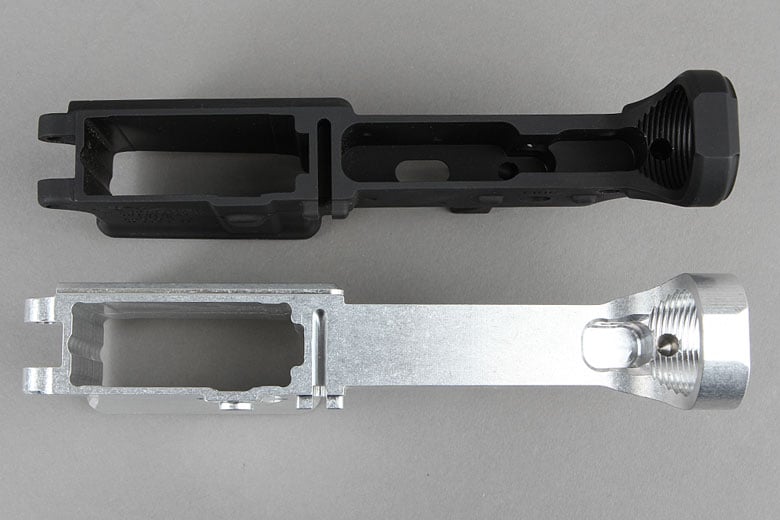





 The second area in which existing legislation could be amended in order to affect a significant increase in national economic well-being is related to shipbuilding and maintenance policies. Over the years, it is clear that the nation has allowed our shipbuilding capability to deteriorate to levels that severely impact our overall national security. Simply in order to meet the requirements of the Jones Act, a vessel must be flagged in the US and have an all-citizen crew. Additionally, the ship must have been built in the United States.

 While MARAD does run a number of incentive programs offering competitive loans and even grants for shipyard and port modernization and fleet upgrades to private corporations, it is telling that only a limited number of carriers reported direct experience with these loans, and that the surface consensus appeared to be that approval was overly complex. Similarly, the


.jpg "It looks like the inmates in this cell block only got a C in not-raping.")


!["As long as you're looking, can you find [insert name of unpopular sports player]'s talent?"](https://commons.wikimedia.org/wiki/Category:Microscopes_in_art#/media/File:Santiago_Ram%C3%B3n_y_Cajal_(8691434507).jpg "\"As long as you're looking, can you find [insert name of unpopular sports player]'s talent?\"")
 years of the Indianapolis 500, the race and the supporting series were based on a free-market-style “run what you brung” model, resulting in a rich and storied tradition. Stories of
  As can be easily predicted by those of us familiar with the stories of Soviet Russia, Venezuela, Cuba, and North Korea, IndyCar has been suffering from poor racing, fewer teams, fewer race cars, and an utter collapse of the fanbase. Besides a single day per year burning off 75 years of tradition, American Open-Wheel Racing is on life support. Of course, these are “bad economic times” and “motorsports is on a decline” and “we can’t afford competition.” The excuses have been flying since 1996 when they first headed down this path. Every half-hearted, feeble attempt to introduce a market influence is quickly undone. The toe in the water is withdrawn as soon as they realize it’s wet.
 There is one major counter to this policy, and it does provide an interesting contrast to the current civil regulations. Both the US Navy and US Coast Guard allow (and have allowed since their inception) non-citizens to serve in enlisted roles throughout their surface forces. This practice has multiple benefits not limited to providing an accelerated path to citizenship for qualified legal permanent residents (aka the kind of legal immigration we should continue to encourage), in addition to providing a steady source of ready, willing and able seamen to fill critical billets on all surface vessels.