There is a Romanian phrase, used when someone abuses a certain issue, which can be paraphrased along the line of, “Easy with the Western Culture down the stairs.” If you rush too much, you may break whatever you are rushing with, is the meaning. I feel that recently this is the case with Western Culture in the Culture/Social Justice/Whatfuckingever wars that do not seem to go away.
There are two facets to this. Well let’s not go to binary, like gender there are a million facets to this. One is that the CW/SJW thing is often little more than a massive distraction, a lot of noise to drown the signal, keep the participants busy while corrupt politicians keep doing corrupt politician shit. On the other hand, it cannot be fully ignored, because aspects of it are very dangerous. One of the main components of this was/is the late/great Western Culture. I will address this, sort of, kind of, with plenty of to be sure and wimpy language.
So let’s get ready to a-rumble… in the ehm Red (Pinko sometimes) corner we have the Progressive Left. In the Other Red corner we have the various flavours of the alt right. In the middle we have the enlightened alt centrist; the self-described non regressive left; the modern right; the cosmotarians; and a few odds and ends. In the end, we have the battle of progressives versus literal Nazis. And western culture is at the forefront, it is the gloves, if you will.
Culture or a pile of rocks?
To start with, let’s go to Wikipedia, because why not. “Western culture, sometimes equated with Western civilization, Occidental culture, the Western world, Western society, European civilization, or Judeo-Greco-Christian civilization, is a term used very broadly to refer to a heritage of social norms, ethical values, traditional customs, belief systems, political systems and specific artifacts and technologies that have some origin or association with Europe.”
So, as we can see, Western Culture is a very expansive category. It can mean many things to many people (for some The Sistine chapel, for others The Chive and the invention of the bikini), then and there, now and here. This is why I am rather wary of overusing it as some generic all-encompassing term in a debate. We must defend western culture is the rallying cry. Which one? Which parts of it? To what ends? These are questions I feel we need to keep in mind.
Just as a side note, I find the construct Judeo-Greco-Christian rather silly, and one of the things that annoys me about some modern conservatives. For most western history this was not a thing, as Christians were highly divided until recently and Jews have a long history of not being on the best terms with the mighty western culture. There is no single unified Judeo-Greco-Christian tradition. Yes, various flavors of Christian and Jew contributed to the development of the ideas behind the West, and the culture obviously developed in the context of religion. But this is not enough for this construct.
I might state that I am not religious and I see little worth to attaching so called western values to a religion or other in the present, especially since a number of the enlightenment people who developed these values, while most likely being religious themselves, did not approach philosophy from a religious angle. Judeo –Christian means in modern speak not Muslim and sometimes not secular, and it is an attempt to try to co-opt all sorts of people as a collective. It is, as we say in Romania, an ostrichcamel.
Good church need not be huge. Mind the hellfire.
Now, for a second side note, let’s get subjective, as the various warriors are wont to do. You may not have noticed, but I am a Romanian. As such, I am somewhat at the fringes of western culture. Romania was not traditionally part of it, or not fully, at least. Always scurrying along the edges, looking in. An eastern orthodox nation heavily influenced by Russian and the Ottoman Empire, the habits, mores, traditions are different. We were of course part of Christendom in the premodern era, and had elements of western and eastern culture. And many a times the leaders wanted more, Romania was always on a long slow path to being more of a part of the West. When joining the EU many said we joined Europe.
With all that said, I can say I admire many a thing about western culture, and as a modern Romanian I consider myself part of it. But I do not like to look at it as a uniform thing. As a libertarian, I like liberty and individualism. As a human I like security, prosperity and everything that comes with that. And I like the parts of Western culture that promoted those things, many then, most if not all, other human cultures. I am also critical of elements of Western Culture that did the opposite.
I do not like mindless worship of anything, including culture. And I do not like nostalgia about some long lost ideal past. There was never such a thing. All cultures need improvement and everything needs criticism. Humans, and their societies, are hardly perfect. And it looks to me like all these western culture warriors only use it as a rhetorical tool and little else.
The free speech war is a good example in this regard. One should not think rightists want to preserve free speech when they did not in the past. Just like the true face of the left free speech movement was seen after they thought they could get speech they didn’t like banned. It is also good to notice that, while free speech was a value of Western Culture and vigorously defended by many in the past, it needed vigorous defence precisely as it was constantly under attack by elements of the same culture.
One issue is that, as a libertarian, you often are accused of wanting to go back to sometime in the past because you want a reduction in taxes regulations and general involvement of the state in the economy. This is due to the fact that leftist arguing 101 is to scream racist at people, and they constantly try to equate thinking that the regulatory environment was better in the past, that the whole society was better, and that you want all aspects of that society including the racism and discrimination. This is false and should be countered, which why it is important to phrase arguments properly beyond the western culture thing.
I often sample western culture myself.
Me, I do not want to go back. I do not like the phrase going forward either to be honest. But, to take the standard analogy, going forward on the wrong road is not a good idea. I want to go down the road to more liberty. If this implies certain aspects to be more like they were in the past, it is not going back, it is going toward liberty. If I find things wrong in the past, but OK now, I want to keep them. If there was something wrong then and wrong now, I do not want to “move forward,” I want change towards liberty. But I do not appreciate keeping things as they are just because that’s how they are. If they are wrong, they must be changed.
Everyone thinks repealing laws they don’t like is progress, but repealing laws they do like is regressive. Which is natural, let’s not stop progress towards my goal. But switching targets is not regressive in itself, even if I don’t like the targets. The trick to improvement is to keep the parts that are good and change the ones that are not. Change for the sake of change is not always desirable. And not everything new is good.
With all the previous caveats, I do believe that western culture is up there with the best that human achieved, lacking as it may be. I do not judge the past based on the future, and while there are things in 1800 I find wrong, it does not in any way invalidate western culture or the achievement of those people, mostly white men who sometimes owned slaves or maybe didn’t think women should have equal rights.
Free markets and capitalism brought the biggest increase in human prosperity in history. Of course this does not mean that some industrialists did not treat their employees poorly, although governments did have something to do with constant meddling. But this does not take away the achievements of capitalism, nor does it mean that without the big government of today, conditions would have remained like in the 1800s. Society and ideas evolve, views and attitudes improve. And above all, economic and technological growth moves things in the right direction, despite what government or some of the worse industrialists would want. You do not need the benevolence of the capitalist to improve worker conditions; the market does that just fine if you let it be. But I do not glorify the 1800s.
I believe that the best development of the West was individualism and individual negative rights. This led to liberty and values that lead to a successful life. Through the tumultuous past, I see ideals of liberty as a fine wire weaved through, moving things the right way. There probably is an English expression for this but I can’t figure it out.
Be a good person. Educate yourself. Earn your keep, have stable relationships, raise you children right (should you have any), and be charitable to the less fortunate. Help your neighbours, family and friends – as long as they deserve it. Be fair, be just. Do not initiate violence. Drink good scotch. Don’t dress like a clown. This is all a part of western culture that must be not only kept but enhanced. We don’t have enough of it. But it is not necessarily exclusive to western culture and it was not, sadly, an overwhelming component of it.
The height of Western political though has been achieved
And here lies the problem that makes me somewhat more favorable towards the pro west-cult people than The Others. The right try to make of western culture something that it was not, and some sort of sacred cow. The progressive left, and even worse the postmodern left (yeah yeah I know the word postmodern gets thrown about a lot, but I believe it applies), the SJWs of the world are in fact a much bigger threat. They do want to tear down all elements of western culture. Which is stupid. It is more than stupid, it is insane. Tearing down everything means there is nothing worth keeping. This is utterly ridiculous, as they were quite obviously the most successful nations, even when it comes to the stuff leftist claim to care about such as tolerance, secularism etc. And being collectivists, they want to tear down individualism. This can only lead to disaster.
Why are these people so suicidal insane? It is hard to tell. Human nature one would suppose. They are so desperate to push their idiotic economic ideology, that they just don’t care what they destroy doing so. How someone may think this is a good idea is baffling. Fiat Socialism, pereat mundus, I suppose. Red or dead. Communism or bust.
The moderate left is timidly fighting back, and more and more. This is not just the YouTube sphere of the so called non-regressive left, but more of the mainstream. There is of course the vestige of the non-prog left, which does admit some value to western culture. These people are, of course, literally Nazis.
As a noobie libertarian, in the olden days of 2010, I was all about natural law, as a fairly objective way of looking at ethics. Now I can say that I believe in liberty, which in my view should not need justification, although sadly it does.
Note: Morality and ethics – I never know if the words are interchangeable, not unlike freedom and liberty. So I use them interchangeably.
Thus spake the almighty Wikipedia: “Natural law is a philosophy that certain rights or values are inherent by virtue of human nature, and universally cognizable through human reason. Historically, natural law refers to the use of reason to analyze both social and personal human nature to deduce binding rules of moral behavior. The law of nature, being determined by nature, is universal.”
Remember cheetah, sharing is caring
When philosophers talk of natural law, they don’t mean how things happen in nature. If you drop a rock, it falls (hopefully not on someone’s head). The hyena eating a cheetah’s kill cares not that the cheetah worked hard for that, although it probably thinks it is getting its fair share. The gazelle tax, if you will. Natural law is about human nature and how humans ought to behave within the constraints of human nature – animals or planetary movement when we talk about natural law. Human nature is not the same as hummingbird nature – nice bird, lovely plumage. But the plumage don’t enter into it.
Natural law theory looks for universal concepts, or as dead, white, possibly slave owning American males – basically shitlords – said, self-evident truths. Without this, you have little more than might makes right – the actual law of the jungle, and you can’t really define morality as might makes right, because there is no need for debate or definitions if simply the strongest gets the stuff.
While I am cautious of moral absolutism, I can’t help but be more wary of excessive moral subjectivism or moral relativism. Some things must be clear cut, otherwise what’s the point of discussing ethics? Can one say that Hitler or Stalin or Pol Pot were objectively evil? I believe so. Can there be a moral argument for child rape? Ehm… ! If we admit this, we can determine some general objective rules. Not everything is relative, and you need a paradigm of some sort. Unless we can create an objective standard, we cannot weigh one thing versus another. The scales must be calibrated. Preferably in metric. I fully understand that trying to explain your rights to Genghis Khan would have been tricky. But the Khan was not really moved by morality and I would assume getting slaughtered is objectively bad.
Up can be down
Although ethics differed widely through human history, there is also an abundance of common threads and principles, just inconsistently applied. And the whole point of a principle is consistency; otherwise you can change your views depending on how the wind blows. Principles but– especially the ones which sound good – can often be found in many a culture, and the but is where problems begin. Nobles lorded over indentured peasants but were sensitive about their liberties when the king came a-knocking. I would say that if someone admits a right exists for him, he cannot refuse to extend same to others. Otherwise it can’t be to universal.
But humans rationalize exceptions all the time, when it suits them. An easy way was to consider some humans inferior to others, maybe even less than human. It was a way for the noble to justify oppressing the inferior peasant, while this not being inconsistent with his rights. Another way was basically my people versus the others, the in-group versus the out-group. Same was extended to gender, race, and whatever the hell else was convenient. But if you want to have a somewhat objective principle, it must be universally applied to all homo sapiens. Otherwise it is not really objective.
You can think of asking a question to a person about himself. How many people would have the same answer? I think if you ask someone, “Do you agree that someone can just come and kill you with no repercussion,” I think the vast majority would say no, so we can agree the murder is bad mkay is universal. So then it should be universally applied to all Homo sapiens. I would say that any moral philosophy needs to have axioms, let’s call them the fundamental principles, the paradigm. No exceptions can be made, lest everything becomes an exception. You can’t have math if 1+1 changes value, the formalism should be constant. And there should be a set of clear and logical steps between axioms and theorems that do not change; higher level should be derived from lower level. There should be some level of consistency, not it’s A when it suits me and B when it doesn’t.
Never compromise. Not even in the face of Armageddon
In the previous part, I talked about the basics of human nature and the question of morality. I avoided giving any opinions and just set up things a bit. Now I am going to contribute my 2 satoshi to the debate.
First, I don’t do the religion thing when it comes to morality and do not really see the debate that interesting if one brings the big G into it. What is there to debate if Deus Vult? So I look at things outside the scope of the divine.
Second, I am a believer in objective ethics – as objective as possible would be a better way to phrase it – as it should apply to all humans, and such independent of each person’s subjective opinions.
Third – to clarify the second – I believe there are two spheres for ethics or morality. And these are quite different.
The inner sphere is the personal – what you think is right when it mostly affects you and no other. This is subjective, as the only judge is you. Eating meat or not on a Friday, drinking, drugs come in this sphere. Basically your personal liberty. This can also be fuzzy at parts. Is it OK for one to lie to one’s parents? Well yes, if the car just hit itself with the tree, tricky these cars are.
The second sphere, the outer one, the one where humans interact and where your actions affect others. As others are involved, I believe this is much less subjective. This is, or in my view should be, the main topic of debate.
Fourth, I am for deontological ethics and against utilitarian, because I believe in fundamental principles, a paradigm, a foundation if you will.
This is what libertarians want
Utilitarian ethics I find to be flawed in several respects. They can go down the road of the ends justify the means, and they cannot be anything but subjective, as desired ends differ between people. Of course, inside each human there is a bit of utilitarianism, as many deontologists believe that a good foundation leads to a solid building, good results. Few if any want to live in the world of Mad Max. I mean the cars are cool, but it seems very hot, especially given the leather clothes and lack of showers. That is a recipe for chafing.
On what do I base my so called objective belief in liberty? The fact that humans are unique, autonomous creatures, endowed with free will (I wrote a post on that). I believe only an individual can act, decide the actions, and bear their consequences. Your actions are the one thing that is in your control and the thing you should be judged on. Also, as I can not control others actions directly, I should not be too much affected by them as there is nothing I can do about it, nothing I can change or improve. Due to this I am an individualist. Society is a general term describing groups of humans, it has no substance, one cannot say it exist in the way a rock (or The Rock, for that matter) exists. Societies cannot act, only individuals composing them can. Similarly societies can’t have rights or responsibilities, only individuals can. Human societies are not like ant colonies or other eusocial creatures – like the mighty naked mole rat, which is not, in fact, a mole or a rat-, where individuals are practically indistinguishable from one another and the colony works almost as a single organism. I find these things pretty objective.
I will leave you with some words of C S Lewis as food for though, which I may or may not fully agree.
“If a man will go into a library and spend a few days with the Encyclopaedia of Religion and Ethics he will soon discover the massive unanimity of the practical reason in man. From the Babylonian Hymn to Samos, from the Laws of Manu, the Book of the Dead, the Analects, the Stoics, the Platonists, from Australian aborigines and Redskins, he will collect the same triumphantly monotonous denunciations of oppression, murder, treachery, and falsehood, the same injunctions of kindness to the aged, the young, and the weak, of almsgiving and impartiality and honesty. He may be a little surprised (I certainly was) to find that precepts of mercy are more frequent than precepts of justice; but he will no longer doubt that there is such a thing as the Law of Nature. There are, of course, differences. There is even blindness in particular cultures – just as there are savages who cannot count up to twenty. But the pretence that we are presented with a mere chaos – that no outline of universally accepted value shows through – is simply false and should be contradicted in season and out of season wherever it is met. Far from finding a chaos, we find exactly what we should expect if good is indeed something objective and reason the organ whereby it is apprehended – that is, a substantial agreement with considerable local differences of emphasis and, perhaps, no one code that includes everything.”
“Nihilists! Fuck me. I mean, say what you want about the tenets of National Socialism, Dude, at least it’s an ethos.” – Walter Sobchack
Throughout history, among the various Big Questions of Philosophy – of Life, the Universe and Everything – were the Questions of ethics, morality and human nature. These may or may not have been supplanted by the query “are traps gay” in present, more enlightened times. But ehm… let’s focus on the older questions. What’s all this then?
There once was a saying, in some old language no one cares about anymore, “Homo homini lupus est”, which either had to do with aspects of human nature or was a warning against having wolves as pets. Either way, it gave me ideas for the title of this post.
What is human nature? What is wolf nature? How similar are the two? Is human nature immutable or does it evolve in time – if so, in which time-frame? Can it be change at will – just one gulag away from the New Man? Do some things never change? How many questions in a row can I ask before it gets annoying? How much wood would a woodchuck… Hell, if I knew all that, I’d be teaching at Oxford or Cambridge – whichever one is cooler and with hotter students. In the meantime, here we are.
The debate of how static human nature is revolves around the never-ending discussion of nature versus nurture in human development. Trying to fully answer this would achieve little, as it is as old as philosophy and yet to be resolved. Long story short, it’s a combination of both, and how much of each varies from person to person, society to society, time to time, in unknowable ways. Sociologists will investigate this further –whether we want them to or not – although, being sociologists, they are highly unlikely to find anything worthwhile. Also Steven Pinker and Nassim Taleb had a spat about it over the Better Angels of our Nature book. At least it keeps them occupied.
I am not a social constructionist, so I believe there are strong elements of human nature that are clearly innate, genetic. They may change over long periods of time, with the evolution of man and maybe human society; they may be softened by education or experience. But they are forever lurking in the shadows of the human mind. This is the nature part. Frankly I find the notion that human behavior has no significant genetic component ridiculous. Everything about humans has genetic influence – height, the color of various external components (and implicitly whether you have a soul or not), or liking coriander (or is it cilantro… anyway I sort of like it, but I don’t love it). Everything, it seems, except the brain. What amuses me is that people who claim that nurture is everything are also people who claim to believe in evolution and mock religious creationists. There is no way, after all, that evolution shaped behaviour.
Conan! What is best in life?
By human nature, of course, I do not mean characteristics of a certain individual, but general characteristics of most humans. But can we truly know which parts of humans are nature? While there are differences between brains of humans, there are also similarities. This is to do with what the immutable part of human nature is, basic facts like response to incentives, wishing to increase satisfaction and decrease unease, wanting to achieve goals, needing friends and family, sex, drugs and rock n roll (since caveman time people have gotten high and created art, often at the same time).
Some things about human nature can be positive, others decidedly not so. This should be understood and fought against by each of us – the darkness within. Fighting it is hard and often useless, but fight we must. You will not eliminate these things, try as you might. Can you truly change your nature? Well, it depends on what nature is. An alcoholic can stop drinking, but is human nature to be an alcoholic? Probably not.
The ridiculous thing is that the Old left understood this on some level. They wanted to create the New Man, the Socialist man. Bigger, better, sexier, more obedient. They realized that the nature of the Old Man was not what they wanted. But did they truly believe they could do this, or was it demagoguery? Probably a bit of both.
Of course there are elements which greatly differ between individuals and which are also biologically determined – height, athleticism, intelligence, personality, socializing. They are, of course, a clear combination of nature and nurture, meaning they can be influenced and shaped by nurture, but not completely. In basketball you are either an explosive athlete or you are not, no amount of training will make old Pie into Russell Westbrook.
Artist’s representation of Pie playing ball
One should not be afraid to admit there both human nature and some difference between individuals. It is just that morality should not be based on such difference.
Now, assuming human nature exists, can we get a coherent system of ethics out of it, especially given subjectivity is inherent in human nature? We can at least try, which is precisely what I plan on doing.
Now in regards to ethics the million silver dollar (screw inflation) question is – can a universal, objective system of ethics be derived directly from human nature? Not an easy question – this depends on where one stands in investigating the classics, like Hume’s is–ought problem or Moore naturalistic fallacy – writing tip: randomly name calling past philosophers makes you seem smart and well read. I sort of agree with C. S. Lewis on this on, that nature is about what is and ethics about what ought to be. But maybe you can use some solid facts as a starting point.
One thing is certain: ethic systems are generally based on a first premise – some basic axioms – which, cannot be easily claimed as universal. Not without extremly well though out arguments. This should be obvious by simply analyzing human civilization and finding wildly different systems.
The fact that there are different systems of ethics does not mean they are all equally valid. Is it that ethics is subjective, or that some people are just plain wrong? Are all systems equal, or are some better than others? The tendency is to say that, obviously, some are better – expecially the one the person holds, if we believe something we think it is correct.
Some axioms will be better than others, more rational, logically consistent and easier to apply universally and leading to better results, but in the end some things have to be asserted.
Ethics systems have changed. Has human nature evolved in time? Or did it reflect a changing world. I don’t think it changed substantially, and me it seems to me that systems who tried to change some very basic facts of human nature have failed to take hold. Humans have the need to eat and to do that they hunted, but after some time they learned how to satisfy hunger through agriculture – though some still claim we were better off as hunter gatherers. This often made humans much less nomadic then they were as hunter-gatherers – can this be considered a change in human nature? I think not.
Also Conan
As society evolves, some types of violence tend to decrease, but not disappear – is violence human nature or is it just one of several means to an end? Some people are inherently aggressive and that does not change, but as society evolves that aggression can be channeled differently or kept in check by isolation. Culture matters obviously, children learn from parents, society or religion affects people, and these evolve faster than the human creature.
A strong influence in modern times is availability of information. When people lived isolated in small town and villages, they didn’t know much about foreigners, so it was easy to view different as dangerous or evil, but as people learn that the inhabitants of other lands are people just like them, they may be inclined to more tolerance of The Others.
So the conclusion thus far: Humans have various views on morality, some better than others, and the views change in time. I will more clearly present my personal views in a future installment (should it be published).
Now, I feel every glib saying to itself, this is a pretty pointless article. Does not say much really. Which is true. But this here is a blog post, not a scholarly work, so the point is to basically do a survey of the audience. The question being “what is human nature” and how does it balance with nurture (50/50 60/40 that sort of thing). Discuss …
IFLS! I love it so much in fact that I spent (wasted?) the years from age 5-29 pursuing higher education; finally culminating in a PhD in Physics. I can send you a copy of my thesis if you’re suffering from insomnia. This has nominally trained me to be a scientist. The purpose of obtaining a PhD in a hard science is not to learn a lot of facts, though I did do that (not that I can remember very many of them). No, the true purpose of an education in scientific research is to inculcate a certain mindset amenable to critical thinking and weighing of evidence. To retread an already tired cliché, it teaches you how to think. So why, you may ask yourself, would an over-educated Gen X failure with a PhD in Physics still believe in G-d? Aren’t all nominal scientists and educated people atheists? If you’ve built a life around obtaining evidence, why would you put faith in something for which there is no proof; even worse something that is likely unprovable, the true hobgoblin of the scientific mind? Well, my friends, wonder no more. Take another shot and join me on a wonderful journey in which we discuss the Question. The only Question that really matters.
Historical Approaches
Many people much smarter than I have tried to do the unlikely, prove the existence of G-d. Trying to even paraphrase the massive amount of work already done in this area over the course of human history would not only be impossible here, but it would be arrogant for a peon like myself to lecture as a layman. To that end, I will just put forth (extremely) brief summaries of some of the most well-known arguments.
The very concept of G-d is quite malleable and before even forming an argument, some basic understanding of what you’re arguing for needs to be established. I will be discussing a prototypical Western perception of G-d as a single, transcendent, metaphysically supreme being; the antecedent and origin of everything. This typically encompasses a being with omnipotence and omniscience and with some semblance of freedom of action and will. The trick is avoiding anthropomorphizing so I’ll try to be very general. I also won’t delve into the Trinity or other tricky, paradoxical concepts. I’m also not going to try and cross over between Abrahamic conceptions of G-d with those of deism, as I personally find many of the tenets from both to not be mutually exclusive.
The ontological argument is one of the most famous, basically positing that the existence of G-d is confirmed by the fact that the concept of G-d can be held. If such a concept can be held in the mind, even by a non-believer, then such a being must exist in reality. Descartes was a big fan of this theory and published it in several different ways arguing in favor of G-d’s existence. Kant, on the other hand, rejected this argument by saying that the ontological argument is actually encapsulating two separate entities, the concept of G-d and G-d Himself and the argument only addresses the former. Aquinas also rejected this argument for the reason that G-d *cannot* be conceived of, as He is, by His nature, unknowable to the mortal mind. Finally, strict empiricists hold that the argument is not an argument at all because there is no evidence either for or against such a claim.
Empirical arguments, of which Aquinas’ are the most famous, argue G-d’s existence from physically observable phenomena. The elegance of the laws of nature encompass one such argument; ie, it’s so improbable that Planck’s constant should be exactly what it is, and the fact that if it were just slightly different life could not exist as we know it, must imply the existence of a supreme being controlling it. Also considered an empirical argument is the unmoved mover argument. Arguing that tracing backward from effect to cause eventually reaches some initial effect for which no cause exists; therefore the only way that such an effect could happen is if it comes from some transcendent unmoved mover that puts into motion the machinery of existence.
What does this have to do with (((you))) and your pretentious way of writing His name?
First, the pretentiousness: carrying around my own cultural baggage dictates the writing of His name as G-d in English. This is homage to the “Adonai” placeholder in Jewish scripture. The unpronounceable tetragram is meant as a way of demonstrating G-d’s unknowable true nature. This is, in my opinion, a (possibly unintentional) refutation of the ontological argument; it basically agrees with Aquinas in a superficial way. To me, it’s a way of showing respect for that which is beyond our petty lives and meager understanding. I see it as a gesture of humility.
I’m no deep thinker. I love guns, titties, scotch and jalapeno poppers. I like to cogitate on these things from time to time, but I’m a mental midget in comparison to the likes of Aquinas, Hume, Nietzsche and Descartes. So what does this have to do with me? Well, I believe strongly in the Aristotelian imperative of living an examined life. To me, that implies at least some effort to tackle the Big Question, at least to my own satisfaction.
Get to the point.
Alright, jeez. Gimme a break. My belief in G-d’s existence doesn’t really break down to a rigorously structured argument a-la the classic thinkers. I have a few bread crumbs all emulsified and held together by the egg yolk of faith and meaning. First off, I do not ascribe to Pascal’s wager at all. I think that’s a coward’s way out. Stop playing the odds. Further, and related to my rejection of Pascal’s wager, I’m undecided on the existence of an afterlife, upon which Pascal’s wager hinges. I certainly believe we are immortal in that the coalesced energy that constitutes the matter of our bodies will not be destroyed, it will just change form in one way or another. By that same token, I think it’s pretty unlikely that when you croak you get transported to a beautiful garden filled with awesome food from Chili’s and unlimited copulation with underwear models of your particular gender preference. Still, I do believe in a soul. Modern cognitive science and neural network models seem to be on the verge of identifying how thoughts propagate in our brains. Similarly, we also know from incidences of brain injury that physical changes to the brain can have a profound impact on the mind. However, stealing from Stan in South Park, that explains the how and not the why. While such studies are fascinating and useful, they do not answer the pertinent question; where do the thoughts originate? Where is the unmoved mover in our own brains? To me, this is the image of Himself from which G-d made us. That is the spark of divinity in each of us, not, as some have argued, the crude orgasmic procreation. To me, the seat of free will, the ultimate gift given, is in that unmoved mover inside us.
Further, I posit that even if G-d did not exist, it would have been necessary for us to invent him. I have seen arguments that a functioning set of ethics could be constructed without appeal to G-d. This may be true in a strictly theoretical sense, but I have difficulty believing that it could work in practice. It can easily devolve into relativism and, ultimately, nihilism. Nietzsche struggled with this all his life. If G-d doesn’t exist, then what are the implications for ethical decision-making? Again, I’m not going to try, even if I could (which I can’t), and reinvent the wheel with Nietzsche’s arguments. Suffice it to say that I never found he could adequately overcome the handicap of not having G-d in trying to create a code of ethics. To put it simply, there must be an authority outside the realm of human debate when it comes to the actions of ultimate ethical import. Would anyone have taken Moses seriously if he came down from Mt. Sinai and said “Hey guys! I came up with these rules and you’ve gotta follow them. And some of them you’re not gonna like cause you’ll have to stop banging your buddy’s wife then stealing his money behind his back.” Let’s just say it carries a lot more weight to say “G-d is telling you to do this, not me.” How do we know Moses didn’t just write that stuff down on his own and pull a fast one? I don’t suppose we can know for sure. However, based on the fact that the rules given seem to work really well, and make intuitive sense to the overwhelming majority of people, that’s a pretty good start. If you’re not a Ten Commandments fan, you can always default back to the Golden Rule (also supposedly provided by G-d).
I can see you Glibs already, hunkered down in front of your computer, television in the background mellifluously serenading you with the latest episode of Game of Thrones, a large, mostly empty bottle of something precariously perched next to the computer. You’re thinking, “this guy hasn’t proven anything, he hasn’t even really argued anything! I came here expecting answers and he’s just given me pablum!” Well, I never claimed to have any answers or even an argument. It all, in the end, comes down to faith and how it applies to your individual life. To quote Dr. House, “there’s no conclusive science. My choice has no practical relevance to my life, I choose the outcome I find more comforting.” Dr. House chooses to believe that life isn’t a “test” and thus confirms his atheism. Dr. House’s conception of life (and the way in which much religion is sold) is that life doesn’t have meaning in and of itself; it’s just a staging area where, if you make the right decisions, once you shuffle from the mortal coil, you’ll be tapping Adriana Lima’s ass while scarfing an Awesome Blossom. I similarly choose to believe this is not a test but come to different conclusions. Rather than a test, it is a gift and I find it more comforting to believe that this gift was bestowed by some benevolent force rather than by a strictly random set of circumstances. One atom was set in motion, which precipitated down to pond scum on Earth which precipitated down to mammals and primates and eventually Adriana Lima. And G-d saw that she was good.
In both England and the United States, the legal establishment, helped by would-be reformers, first curtailed the power of grand juries to reach independent judgments, and gave grand juries the power to abuse power on behalf of prosecutors. Then the enemies of the grand jury turned around and indulged in concern-trolling about how grand juries didn’t give adequate protection to suspects. This softened up the grand jury system, making it more vulnerable to attack, and in some cases to abolishing the institution or making it optional.
Zachary Babington (1611-1688) was a functionary in Restoration England’s judiciary system. He was at various times an associate court clerk, a deputy clerk, and a justice of the peace. Zachary’s brother Matthew had been one of the chaplains to Charles I, who was killed when his royal tyranny provoked a counter-tyranny by revolutionaries. That unpleasantness was supposedly over after Charles II, son of the “martyr,” took the throne, but the new king’s supporters were on their guard to safeguard royal prerogatives and minimize the opportunities for the people to thwart the royal will. Zachary may well have learned from his pious brother about the perils of trusting the judgment of the people. So Zachary had a crack at grand juries, trying to limit their usefulness as shields for the rights of suspects. Fortunately, Zachary did not prevail at that time.
In a 1676 book, Advice to Grand Jurors in Cases of Blood, Zachary Babington complained that grand jurors often dared to ignore the judge’s instructions, and to refuse to indict suspects, or to indict suspects for manslaughter when the judge wanted a murder indictment.
“Hi, it’s me again, William Penn. The judges wanted me punished for preaching in the streets, and when the jurors refused to convict, the jurors got punished, but some of the jurors fought their case in a higher court and won, and here we are…isn’t it weird how I keep turning up everywhere?”
…as well as the House of Commons had told judges they couldn’t punish jurors for making “wrong” decisions. Most pertinently for our purposes, the House of Commons had raked Chief Justice John Kelynge over the coals for his treatment of grand jurors. Don Jordan and Michael Walsh wrote that Kelynge was so biased toward suspects and defendants that he “made George Jeffr[e]ys, ‘The Hanging Judge,’ [look] like Rumpole of the Bailey.”
Lord Chief Justice Jeffreys presided at the Bloody Assizes, but he was still a piker next to Kelynge (not shown)
Kelynge had punished grand jurors for refusing to indict for murder in homicide cases, and the Commons warned Kelynge that he had to allow both grand jurors and trial jurors vote how they wanted, without penalty.
Babington apparently realized that, deprived of their power to punish recalcitrant grand jurors, judges could only rely on persuasion to get grand juries to fall into line. So in his Advice, Babington tried to use argument to achieve what threats and punishment had failed to do in Kelynge’s situation. Babington urged grand jurors to give the prosecution, not the suspect, the benefit of the doubt, and to err on the side of overcharging the defendant. If the defendant was innocent, or was guilty of a lesser offense, the trial jury could figure that out later. Babington specifically applied his principles to homicide cases. So long as the prosecution showed evidence that the suspect had committed a homicide, Babington said, the grand jury should indict for murder, even if there was evidence that might justify, say, a lesser charge of manslaughter. The grand jurors “are only to prepare fit matter for the Court to proceed further upon, and to make a more diligent inquiry after.” Only the trial jury can figure out the true nature of the crime after hearing “both sides” – Babington assumed the grand jury would only hear the prosecution’s side, and seemed to think that this was prejudicial…to the prosecution.
“There is very much difference in Law betwixt an Inquiry and a Trial, betwixt a Presentment and a Conviction,” said Babington, and there was a lesser standard of evidence for the grand jury’s “Presentment” – “if they find upon their Evidence, that the party said to be slain in the Indictment, by the person there charged with it, with the time, and place, and manner how, they are to enquire no farther into the nature of it.” If the charges the grand jury files turn out to be excessive, it was up to the trial jury to exonerate the defendant – “however it passeth fairly out of [the grand jurors’] hands, they may more clearly than Pilate wash their hands in Innocency from the Innocent blood of such a person.”
Pontius Pilate washes his hands to symbolize his total innocence of shedding innocent blood. (Matthew 27:24)
Babington was discussing cases of murder – then automatically a capital crime – but his reasoning would justify the grand jury in giving the prosecution the benefit of the doubt in any kind of case.
(Babington’s view of a grand jury’s functions were articulated in 2014 by, of all people, an avowed libertarian deploring the grand jury’s failure to indict police officer Darren Wilson – “the likelihood that Darren Wilson would have been acquitted if he had faced a homicide charge in connection with the death of Michael Brown does not mean he should not have been indicted….A public airing of the evidence, with ample opportunity for advocates on both sides to present and probe it, is what Brown’s family has been demanding all along….”)
Actual grand juries do not seem to have taken Babington’s Pilatian advice. While the evidence is incomplete, Professor J. S. Cockburn says “surviving gaol [jail] calenders suggest that in the seventeenth century approximately twelve per cent. of all assize bills were returned ignoramus” – that is, grand juries disagreed with the prosecutors in 12 percent of cases and refused to indict.
A colorful figure and prolific author, Henry Care, eloquently rebutted authors like Babington. Care published the book English Libertiesin 1680, expressing doctrines directly contrary to Babington’s, and more in line with the real-world activities of grand jurors.
Care said that grand jurors, “if they be doubtful, or not fully satisfied” about the truth of the accusation against a suspect, should not file charges.
People may tell you; That you ought to find a Bill [of indictment] upon any probable Evidence, for ’tis but matter of Course, a Ceremony, a Business of Form, only an Accusation, the party is to come before another Jury, and there may make his Defence: But if this were all, to what purpose haye we Grand furies at all ?…Do not Flatter yourselves you of the Grand Jury are as much upon your Oaths as the Petty [trial] Jury, and the Life of the man against whom the Bill is brought, is–in your Hands…The [famous judge and legal author Edward Coke]…plainly calls the Grand Jury-men all wilfully forsworn: and Perjured, if they wrongfully find an Indictment; and if in such a Case the other Jury [trial jury] through Ignorance, &c. should find the person Guilty too, you are Guilty of his Blood as well as they: but suppose he get off there, do you think it nothing to Accuse a man upon your Oaths of horrid Crimes, your very doing of which puts him, tho never so Innocent, to Disgrace, Trouble, Damage, danger of Life, and makes him liable to Outlawry, Imprisonment, and every thing but Death itself, and that too for all you know may wrongfully be occasion’d by it, your rash Verdict gaining Credit, and giving Authority to another Jury to find him Guilty…
Care wrote that, before a grand jury can indict a suspect, the testimony must be “clear, manifest, plain and evident.” The grand jurors must “diligently inquire” into the credibility of the witnesses.
The prophet Daniel exposes the lying witnesses who falsely accused Susannah
It was Care’s defense of English liberties, not Babington’s attack on them, which became a popular work in the American colonies. Not only did Care’s English Liberties fill shelf space in colonial libraries, its content was invoked by the Patriots of the Revolutionary era in defending American liberties against British oppression. The side which cited English Liberties was the side that won the American Revolution, while the side that looked to the likes of Zachary Babington for advice was the losing side. At least for the moment.
And in both England and America, the influential eighteenth-century jurist William Blackstone came down on the side of the duty of grand jurors to protect suspects against unfounded charges.
Sir William Blackstone
In Blackstone’s words, grand jurors should only vote to indict “[i]f they are satisfied of the truth of the accusation.” Blackstone spoke of a “strong and two-fold barrier, of a presentment [grand-jury indictment] and a trial by jury, between the liberties of the people, and the prerogatives of the crown.” Before approving charges, at least twelve grand jurors had to be “thoroughly persuaded of the truth of an indictment” – “remote possibilities” were not enough.
While America was going through its founding era, on the other side of the Atlantic English grand juries blocked indictments in 10%-20% of cases – so for every ten suspects, one or two were cleared without the danger, expense, anxiety and humiliation of a public trial.
But the legal reformers were circling like birds of prey, waiting to enfeeble and then devour the grand jury system. Jeremy Bentham, the utilitarian legal reformer, denounced the grand jury in the eighteenth century, but added that the legal establishment wanted to keep the system: “lawyers and their dupes never speak of [the grand jury] but with rapture.”
If only that were so! In the nineteenth century, many lawyers and judges, in England and America, joined the ranks of the reformers. “Probable cause” became the standard which grand juries were told to follow in deciding whether to indict. This is certainly curious in the American case – the Bill of Rights does indeed mention “probable cause,” but that’s in the Fourth Amendment, dealing with warrants, rather than in the Fifth Amendment’s grand jury clause.
Probable cause doesn’t seem to be the same thing as believing the suspect is guilty. In fact, the concept is kind of vague. As Professor Orin Kerr put it: “In one study, 166 federal judges were asked to quantify probable cause. Their answers ranged from 10% certainty to 90% certainty, with an average of 44.52% certainty.” Perhaps that sort of vagueness is tolerable when judges or magistrates are issuing warrants, but not in the case of grand jurors accusing their fellow citizens of serious crimes.
Not only was the standard of proof watered down, but grand juries were limited in the kind of evidence they could hear. The only outside evidence they were entitled to examine was the evidence provided by the prosecutor (including private prosecutors in England – contradicting Justice Brown, English reformers said the grand jury was not an adequate protection against unjustifiable private prosecutions). Members of the public could not submit evidence to grand juries, the legal establishment made clear – not even suspects could send in affidavits and lists of witnesses with information favorable to them. Unless the grand jurors had personal knowledge of an alleged crime, they would have to rely for their information on what the prosecutor chose to spoon-feed them, and then they had to vote on the proposed indictment based on the loose “probable cause” standard, with the evidence stacked in favor of indictment by the prosecutor.
The New York judge Sol Wachtler, an opponent of grand juries who supposedly said a grand jury would indict a ham sandwich…
…had further animadversions against grand juries in his prison memoir, After the Madness. (The judge was convicted of stalking and harassing his former lover.)“If anyone should try to convince you that the grand jury is not a device used by prosecutors to garner publicity at the expense of someone still presumed innocent, watch out! The deed to the Brooklyn Bridge is probably in his back pocket.” That sort of misbehavior, of course, is the fault of the prosecutor, not of the grand jury. And somehow, even when they bypass grand juries, prosecutors find ways to generate prejudicial publicity about their cases.
Ovio C. Lewis, a law professor who served on a grand jury in Cleveland, Ohio, decided that the grand jury system was defective in comparison to the reformers’ favorite objective of a preliminary hearing before a judge. Writing in 1980, Lewis said: “In most cities where the grand jury is used it eliminates fewer than twenty percent of the cases it receives. In Cleveland, Ohio, the figure is seven percent; in the District of Columbia, twenty percent; and in Philadelphia, Pa., two to three percent.” From these figures, we see that at least some people were getting exonerated even under the watered-down grand jury system which had come to replace the robust grand jury of the founding era. It would be nice to know what those figures would be like in the case of a grand jury which fulfilled the functions described by Care and Blackstone: investigating and sifting the evidence and only indicting people whom the grand jurors are convinced are guilty.
Returning to the 19th century: some English grand juries – especially in big cities – called for their own abolition. These grand juries were influenced by presiding judges who discussed the alleged uselessness of the grand jury in front of the grand jurors themselves. The Birmingham Daily Post criticized one of these judges in 1872. Even though the newspaper agreed with the judge about the desirability of abolishing grand juries, it said it wasn’t cricket to harangue the grand jurors themselves on the subject:
The Recorder of Birmingham, in his charge the other day, made the usual remarks about the uselessness of grand juries. . . . It is unpleasant enough to have to sit in a stuffy room for two or three days, against one’s will, and it certainly does not render the infliction more tolerable to be penned up in a box, and be publicly told that one is incompetent and useless, and out of date, and in the way-nothing more in fact, than a sort of antiquated machine, less ornamental than a barrister’s wig, and less useful and important than the wheeziest of ‘criers of the Court’.
With these attitudes, it’s hardly surprising that judges and juries were making their talk of grand juries’ uselessness into a self-fulfilling prophecy.
Parliament put grand juries on hold during the First World War, as a supposed emergency measure. This simply whetted the appetite of the judicial establishment for a permanent, peacetime ban on grand juries, and such a ban was finally achieved by Act of Parliament in 1933.
You know why else 1933 was a bad year for liberty?
Albert Lieck, chief clerk (or former chief clerk?) of London’s Bow Street Police Court, rejoiced at the abolition of the grand jury, while inadvertently suggesting reasons the institution should have been retained. Lieck acknowledged that grand juries had sometimes released suspects: “Here and there a bill [of indictment] was thrown out, but on no discoverable principle.” Perhaps the grand jurors hadn’t been satisfied of the suspects’ guilt?
Lieck uttered a non-sequitur which one would associate with Yogi Berra more than with a distinguished British bureaucrat: “the real security against oppression lies not in outworn judicial machinery [i. e., the grand jury], but in the alertness and resolution of the citizen.” Of course, grand jury service has the potential to provide citizens a vehicle to exercise their alertness toward the criminal-justice process.
American critics of the grand jury cited (and still cite) abuses which are not in any way required by the Fifth Amendment. That amendment simply says you need an accusation from a grand jury in order to be brought to trial for a sufficiently serious crime. The Fifth Amendment doesn’t say grand juries should be dependent on prosecutors for their information, or interrogate witnesses without their lawyers, or wield overbroad subpoena powers, or act in complete secrecy (unless the prosecutors chooses to leak information, of course), or fail to keep records of their proceedings. Critics have harped for a long time on these “Star Chamber” features of grand jury procedure, suggesting that the only cure is to bypass the grand jury and have magistrates or judges hold preliminary hearings, where both sides can present evidence and argue over whether probable cause exists. Then the magistrate or judge, after such an open hearing, would decide if there is probable cause to bring the suspect to trial. This type of “reform” has been adopted in England, and in many U. S. states.
The problem with such a “reform” is that it cuts the public – at least the informed portion of the public which has actually heard the evidence – out of the decision whether to bring charges against a suspect. The suspect is dragged into a public hearing by the accusation of a prosecutor, and put at the mercy of a judge who – at least in a well-publicized case – may well feel the voters – who generally don’t know the details of the case but know that the suspect is guilty – breathing down the judicial neck and demanding a trial. With the vagueness of the term “probable cause,” it wouldn’t take a whole lot of evidence for the judge to put the case down for trial, if that’s the judge’s mood at the time. Not to mention the loss of the opportunity for nullification if the defendant, while technically guilty, is morally innocent and doesn’t deserve to be dragged through a trial.
There are some useful features which were traditionally associated with American grand juries. These features are not required by the Fifth Amendment, but they provide some historical context to refute those who think the founders would have been happy to do without grand juries. Grand juries used to have (and to a greatly limited extent sometimes still have) responsibility for making recommendations relating to the problems of their communities: from fixing bad roads to dealing with polluted streams to making new laws, American grand juries have historically often broadened out from simply looking at local criminal cases.
Sometimes, and this is hard to believe nowadays, grand juries, on their own initiative, looked into corruption and misconduct by local officials, including even prosecutors and judges and cops and jailers. Sometimes grand jurors took the bit between their teeth and looked into certain types of local crime which the prosecutors and judges would just as soon not look into – maybe because the prosecutors and judges were trying to sweep that crime under the rug.
Whatever we think nowadays of these crusading, self-assertive grand juries from history – and the Fifth Amendment doesn’t require that grand juries play this role – we can reject the idea that most of the founding generation took a dismissive view of grand juries or would have been willing to abolish or sideline them, or to abolish their constitutional role in protecting suspects from overzealous or corrupt government prosecutors and judges.
The point of having two juries – a grand jury and a trial jury – is to have the grand jury make a broad inquiry, with comparatively few technical rules, in order to find the truth, and if the grand jury believes the charge, then it’s time to have the evidence heard by a trial jury under much more rigid procedural rules. For serious enough charges, it should take these two juries – one acting broadly and informally, the other following careful rules – to agree that someone is a criminal before that person can be punished as a criminal.
Now, in the real world, where most criminal charges are resolved through plea-bargaining, I’d advocate a more limited objective: To make sure that a person suspected of a serious crime has his case considered by at least one jury – and since cases are generally resolved with pleas before a trial jury can be called, that one jury would have to be the grand jury. There should be laws to prohibit plea negotiations from beginning in serious cases until after a grand jury has issued its indictment(s). We may have come full circle to the days of Henry II – grand juries are usually the only criminal juries involved in a case, and the trial procedure is almost as unreliable as in Henry’s day – a plea negotiation approaches in arbitrariness the old dunking-in-cold-water procedure when it comes to sorting out the innocent from the guilty. All the more reason to keep grand juries, so that some type of jury, at least, will review serious cases.
Is there any chance that the right to a grand jury, as intended by the Founders, will be restored any time soon? Probably not. The political and judicial establishment seems to have no particular interest in encouraging such a degree of citizen involvement. They either want to keep grand juries on a tight leash, acting on the limited evidence the prosecutors spoon-feed them, or to keep them on the sidelines, taking no role in cases unless a prosecutor needs political cover for a controversial decision.
And many regular citizens are parading around demanding that the right to a grand jury be abrogated.
And of course advocates of a restored grand jury system will be called racists.
Well, it’s too bad, but there it is.
Works Consulted
Richard L. Aynes, “Unintended Consequences of the Fourteenth Amendment and What They Tell Us About its Interpretation,” 39 Akron L. Rev. 289 (2006).
William J. Campbell, “Eliminate the Grand Jury,” 64 J. Crim. L. & Criminology 174 (1973).
Nathan T. Elliff, “Notes on the Abolition of the English Grand Jury,” Journal of Criminal Law and Criminology, Volume 29,Issue 1 (May-June) Summer 1938.
Thomas Andrew Green, Verdict According to Conscience: Perspectives on the English Criminal Trial Jury 1200-1800. Chicago: University of Chicago Press, 1985.
Don Jordan and Michael Walsh, The King’s Bed: Sex, Power and the Court of Charles II. London: Little, Brown, 2015.
Orin Kerr, “Why Courts Should Not Quantify Probable Cause” (March 28, 2011). The Political Heart of Criminal Procedure: Essays on Themes of William J. Stuntz (Klarman, Skeel, and Steiker, eds), pages 131-43 (2012); GWU Law School Public Law Research Paper No. 543. Available at SSRN: https://ssrn.com/abstract=1797824
Andrew D. Leipold,”Why Grand Juries Do Not (and Cannot) Protect the Accused,” 80 Cornell L. Rev. 260 (1995). Available at: http://scholarship.law.cornell.edu/clr/vol80/iss2/10
Ovio C. Lewis (1980) “The Grand Jury: A Critical Evaluation,” Akron Law Review: Vol. 13 : Iss. 1 , Article 3. Available at: http://ideaexchange.uakron.edu/akronlawreview/vol13/iss1/3.
Albert Lieck, “Abolition of the Grand Jury in England,” Journal of Criminal Law and Criminology, Volume 25, Issue 4, November-December (Winter 1934).
Kenneth Rosenthal, “Connecticut’s New Preliminary Hearing: Perspectives on Pretrial Proceedings in Criminal Law.” University of Bridgeport Law Review, Volume 5, Number 1, 1983.
Suja A. Thomas, The Missing American Jury: Restoring the Fundamental Constitutional Role of the Criminal, Civil, and Grand Juries. New York: Cambridge University Press, 2016.
___________, Nonincorporation: The Bill of Rights after McDonald v. Chicago, Notre Dame Law Review, Vol. 88, 2012.
Mary Turck, “It is time to abolish the grand jury system,” Al Jazeera America, January 11, 2016, http://america.aljazeera.com/opinions/2016/1/it-is-time-to-abolish-the-grand-jury-system.html
Rachel A. Van Cleave, “Viewpoint: Time to Abolish the ‘Inquisitorial’ Grand Jury System” (2014). Publications. Paper 656. http://digitalcommons.law.ggu.edu/pubs/656.
Sol Wachtler, After the Madness: A Judge’s Own Prison Memoir. New York: Random House, 1997.
_________, “Grand Juries: Wasteful and Pointless,” New York Times, Opinion, January 6, 1990, http://www.nytimes.com/1990/01/06/opinion/grand-juries-wasteful-and-pointless.html.
Richard D. Younger, The people’s panel: the Grand Jury in the United States, 1634-1941. Providence, RI: American History Research Center, Brown University Press, 1963.
“No state shall make or enforce any law which shall abridge the privileges or immunities of citizens of the United States…” – Fourteenth Amendment, U. S. Constitution
“No person shall be held to answer for a capital, or otherwise infamous crime, unless on a presentment or indictment of a grand jury, except in cases arising in the land or naval forces, or in the militia, when in actual service in time of war or public danger…” – Fifth Amendment, U. S. Constitution
We saw in Part One how, according to the Supreme Court, the Fourteenth Amendment doesn’t require the states to obey the grand-jury clause of the Fifth Amendment. Most of the Bill of Rights has been applied to the state – “incorporated” is the technical term – but not this part.
(In its incorporation cases, the Supreme Court likes to talk in terms of “due process,” but here’s Justice Clarence Thomas explaining how the Privileges and Immunities Clause is what we should be looking at.)
For the most part, when the U. S. Supreme Court exempts the states from part of the Bill of Rights, most states don’t take advantage of this. With some exceptions, the states chose on their own to obey the Bill of Rights, even when the Supremes wouldn’t hold them to it – state courts would sometimes interpret some rights differently than the federal courts, but they admitted the rights were applicable, if only as a matter of state law.
That’s not the case with the grand-jury clause. Here, the Supremes opened the door for the states to disobey this clause, and the states rushed through the open door.
Between the Civil War and the end of the First World War, many American states amended their constitutions so that suspects could go to trial for serious crimes without the approval of a grand jury (Michigan had started the ball rolling on the eve of the Civil War). This analysis summarizes the situation as of 2014. In most cases, grand juries were kept in reserve in case the prosecutors, in their discretion, wanted to use the grand jury procedure. Only two states – Pennsylvania and Connecticut (I would probably add Michigan) – banned grand juries even as an option (apart from extraordinary cases). Twenty-three holdout states still mandated that certain serious crimes be reviewed by grand juries, at least if the suspect demanded it.
Rather than give a comprehensive history of the victories of “reformers” who curtailed grand-jury rights in state after state, let me attempt to give some historical vignettes, and tie these vignettes together with some semblance of narrative coherence. Then later, I’ll give an account of the triumph of the reformers in their battle against the grand jury.
The Plessy Judge vs. Grand Juries
U. S. Supreme Court Justice Henry Billings Brown came to the Court too late to take part in the Hurtado case, which said the states could limit or abolish the right of a suspect to have his case considered by a grand jury. But Brown was one of the many would-be reformers of that era who wanted the institution of the grand jury largely abolished.
Justice Henry Billings Brown
Brown gave a speech to the Ohio Bar Association in 1892 that included the judge’s discussion of this issue. Getting rid of grand juries, said Brown, would make criminal procedure more simple and efficient. Brown noted that he had begun his legal career in Connecticut, where grand-jury indictments were only required for crimes punishable with death or life imprisonment. Then Brown boasted of his fifteen-year legal career in Michigan (1860-1875), where grand juries were rarely used and were never required before a defendant could be brought to trial.
Brown suggested that grand juries may have been necessary in England to protect suspects against false charges by private accusers, but this problem didn’t exist in America. In America there were public prosecutors to bring charges and judges to rule on probable cause, and with these steadfast public servants on the job, Brown triumphantly concluded, grand juries were no longer necessary to shield suspects from wrongful accusations.
Brown went on to praise trial juries for their power of nullification – they could spare a guilty defendant, if punishing him went against local community norms. Of course, grand juries could perform that function too, sparing worthy but technically guilty suspects from the ordeal of a trial, not to mention saving them many legal expenses. That did not seem to occur to the Justice. “I think the question whether a man in a particular case should be punished for a crime is a question that is properly left to the public,” Brown said. But under Brown’s scheme, the nullification of an unfair charge would have to wait until the end of an excruciating trial for the suspect, since “the public” would only be able to get a word in edgewise after the trial was over. The public would be kept out of the decision of whether to bring charges in the first place.
Another defect in Brown’s logic is apparent with the growth of the plea-bargaining system, which requires a defendant to gamble on the possibility of a higher sentence if he wants to try his luck with a trial jury.
Brown concluded his speech with a boast that “[t]he Anglo-Saxon is a slow-moving race, but it rarely takes a step backward. It makes mistakes, but its progress has been in the right direction. No serious mistakes have yet been made.”
Speaking of serious Anglo-Saxon mistakes: four years after his speech, Brown again showed his ability to have things both ways and to spin nice-sounding legal theories which were oppressive in practice. Brown gave the Supreme Court’s decision in Plessy v. Ferguson. States could pass Jim Crow legislation separating blacks and whites, Brown’s opinion declared, so long as the separate facilities were “equal” (Justice John Marshal Harlan dissented in the Plessy case – Harlan had also defended the right to a grand jury in his dissent in the Hurtado case). Brown had affirmed the importance of equal protection under the law, while negating this principle in practice with his endorsement of racial segregation. In a similar manner, Brown had praised trial juries for their power of nullification, while calling for the abolition of grand juries which were in the best position to nullify charges against a suspect before he could be dragged through the court system.
Plaque on Homer Plessy’s tomb, New Orleans
Grand juries as scapegoats for police abuse
The fact that one of the most infamous racists in American judicial history wanted to abolish grand juries hasn’t stopped modern, hip and woke activists from throwing the racism charge at grand juries themselves.
In Minnesota, a proposed state constitutional amendment on the 1904 ballot would abolish the right to a grand jury and empower the legislature to decide how prosecutions were to be initiated – and it was correctly anticipated that the legislature would allow the elected county prosecutors to bring charges without grand jury approval. This concerned an anonymous “Voter,” who wrote to The Princeton Union to warn against the amendment. This voter was more skeptical about the professionalism of prosecutors than Justice Brown had been:
The grand jury is a body of citizens who are selected regardless of political belief or creed….[T]he law throws around them secrecy in their actions and they are entirely removed from all political taint or influence. It very often happens that county attorneys are not men wholly competent to exercise powers ordinarily delegated to a grand jury. Much of our politics is run on the “good fellow” plan and sometimes men are kept in office for being good fellows or for various reasons, regardless of qualifications or fitness for office….[County attorneys] are human and to say that their judgment in a case would be as good as as that of the members of a grand jury would be to make an extravagant statement.
The “good fellow” plan
A majority of Minnesotans went ahead and approved the amendment despite these arguments, and the legislature proceeded to give county attorneys the option of bringing charges without using grand juries. Grand juries would still be held in reserve if the prosecutor wanted to employ them, but suspects would no longer have the right to have their cases considered by grand juries. The optional system necessarily gives grand juries a bad odor – prosecutors who use grand juries when they don’t have to do so are often hiding behind the grand jurors’ skirts in order to pass the buck for controversial decisions. And sometimes the public falls for it.
In 2015, two Minneapolis cops confronted and shot Jamar Clark, who died of his injuries. The fact that Clark was black made the issue particularly volatile. Protesters demanded that the county attorney, Mike Freeman, investigate the shooting without involving a grand jury. Freeman had this option thanks to the voters’ decision back in 1904.
Minneapolis protesters in the Clark case
The protesters got their wish. Freeman announced that his office would no longer use grand juries when investigating shootings by police. The president of the Minneapolis NAACP, Nekima Levy-Pounds, said:
I am overjoyed that in this instance Mike Freeman decided to do the right thing. Mike Freeman is fully aware that the grand jury process has been ineffective here and nationally in holding officers accountable. I believe sustained community pressure played a huge role in Mike Freeman’s decision.
Then Freeman, without the help of a grand jury, announced he wouldn’t be bringing charges. The omission of a grand jury didn’t placate the protesters. An NAACP spokesperson (not Levy-Pounds) said, “You, Mr. Freeman, did not give a fair and accurate portrayal…and let me tell you: If the city burns, it’s on your hands.”
Last I heard, Minneapolis was still standing, though the shooting did provoke some protests. Nevertheless, cutting the grand jury out of the loop in the Clark case didn’t ease community tensions, or lead to charges being filed (assuming for the sake of argument that charges ought to have been filed).
The opposition to grand juries was exacerbated when a grand jury in Missouri failed to charge Officer Darren Wilson for shooting Michael Brown. The grand jury’s decision sparked riots. But the Obama/Holder Justice Department, examining the evidence against Wilson, also decided not to bring charges, and there was no grand jury involvement in that decision. So a grand jury took the rap for taking the same position on a racially-charged police shooting as the country’s two top-ranked race-baiters.
(Click here for an article about a controversy over using grand juries in police-abuse cases in California.)
Grand juries came first
The grand jury system was itself created through the actions of a would-be reformer, Henry II of England. The ruler who encouraged St. Thomas Becket’s assassination…
…was not a civil libertarian, but he “built better than he knew” in creating the grand jury. Henry was thinking more in terms of law and order when he decreed that panels of his subjects would be summoned and commanded to report about crime in their localities. What Henry wanted was to root out criminals who had managed to evade justice. Before Henry’s decree, bringing alleged criminals to trial in the secular courts required a private accuser to voluntarily come forward, risking punishment if he failed to prove his charge – and risking retaliation from the criminal. Henry knew that there were criminals running around who were known to the general public, but not known to the courts, since nobody had the guts to make a formal accusation. Not to mention that England was an occupied country whose rulers spoke a foreign language (French) and might not be au courant with the news circulating among their English-speaking subjects.
So Henry II’s early versions of grand juries were required to name people in their area who were believed by the public to be guilty of serious crimes. The grand jurors were not making their own investigations or reaching their own conclusions, but were reporting what was widely believed among their neighbors. Malicious local gossip need not be reported – just the solid consensus of public opinion.
King Henry, the scourge of the Church, was actually adapting a procedure used in England’s Church courts. The Church’s jurists and reformers borrowed from Roman law the maxim that the public interest required crime to be punished. This was in contrast to the Germanic idea of using the justice system to mitigate blood feuds. The descendants of the Germans who conquered the Western Roman Empire wanted people who had mortal grudges against each other to resolve their differences without dragging entire clans into Hatfield/McCoy style, multigenerational cycles of reprisal and counter-reprisal. So if angry relatives came seeking an alleged murderer, the matter would be settled with a trial by battle (if the feud was among aristocrats) or by some form of ordeal (if the feud was among the lower orders) – putting your hand on a burning piece of iron, getting thrown in water to see if you floated, trying to swallow a morsel of bread after boasting of your innocence (choking=guilt). If these methods didn’t identify the criminal with 100% accuracy, at least it was an agreed-upon method, presided over by priests, to settle the feud and move on. And if a crime didn’t spark a feud, or if the victim or their would-be champions were too weak, then it was like “OK, forget about it and let’s have some more mead.”
The Church’s reformers noticed that a lot of crime was overlooked in this way, and that trial procedures left something to be desired in terms of accuracy. So the Church courts, at least in England, came up with a procedure which seemed to inspire Henry II. Instead of waiting for a private individual to take the initiative and prosecute, the Church’s judges would identify a suspect and summon a panel of the suspect’s neighbors to see if public opinion regarded the person as a criminal. If the community wasn’t fairly solid in believing that the suspect committed the crime in question, that was the end of the matter – or rather, any crimes would have to be settled in the “internal forum” (the confessional). But if the community witnesses were like, “yeah, everyone thinks he did it,” then that counted as “fama” – the equivalent of a formal accusation – and a trial would begin.
King Henry thought that was a good idea, so he created his early version of the grand jury to report to the secular courts about those people whom local public opinion identified as serious criminals. If a person was so reported, the accused would undergo an ordeal – apparently the throw-them-in-water-to-see-if-they-drown ordeal – because the criminal trial jury hadn’t been invented yet. Yes, in criminal cases there was only one jury, and that was the ancestor of the grand jury – and unless you put your reliance in the cold-water ordeal, you better hope that public opinion, as reflected by the grand jury’s accusation, was accurate.
“So if the water receives my body, I’m innocent? And if I float, I’m guilty, and you execute me? It’s a good thing the grand jury correctly identified me as the murderer, otherwise I’d be really annoyed at this whole procedure.”
The creation of the English criminal jury was kind of forced on England by the Church. The Fourth Lateran Council in 1215, decided that priests should not preside at ordeals – because priests shouldn’t be shedding blood and because ordeals were not always reliable anyway. Without priests to bless the water ordeal, the practice fell into disuse, and so the English started using trial juries to decide the guilt or innocence of people who had been charged by grand juries with serious crimes.
Another important decision of the Fourth Lateran Council was in clarifying how church courts would go about ascertaining whether a suspect had a reputation as a criminal, so that the court could proceed in the absence of an individual accuser. It wasn’t enough if the rumors against the suspect were generated by “enemies and slanderers” – the public accusations had to come from “prudent and honest persons, not once only, but often.” Commentators gave Biblical examples: the clamor against the sinners of Sodom and Gomorrah, which prompted God to investigate (Genesis 18:20), and the complaints against the steward in Luke 16:1, which prompted the master to demand an accounting from the steward.
Since the creation of secular grand juries in England had probably been prompted by church-court procedure, it is not surprising that grand juries, acting on the same principles as the Fourth Vatican Council, undertook to distinguish between true and false public opinion. As the grand jury evolved, it came to do its own investigation, not simply reporting what their neighbors believed. Grand jurors were becoming the representatives of responsible public opinion by acting as “prudent and honest persons” and seeking reliable evidence about suspects.
But at least people who were accused by grand juries could now look forward to a full trial by another jury, not simply an arbitrary procedure like the water ordeal where one prevails only through blind good fortune. Even today, a small proportion of those who are indicted by grand juries go on to have their cases heard by a trial jury (the rest, of course, resolve their cases by plea-bargains, where the result totally isn’t arbitrary).
Works Consulted
Bab(b)ington Family – Descendants of John de Babington, http://members.iinet.net.au/~billeah/babingdesc.html
Henry Billings Brown, “Justice Brown’s Address,” in Proceedings of the Ohio State Bar Association, 13:35-51 (July, 1892).
Rebecca V. Colman, “Reason and Unreason in Early Medieval Law,” Journal of Interdisciplinary History, 4.4 (Spring, 1974), 571-591.
Nathan T. Elliff, “Notes on the Abolition of the English Grand Jury,” Journal of Criminal Law and Criminology, Volume 29,Issue 1 (May-June) Summer 1938.
Richard M. Fraher, “The Theoretical Justification for the New Criminal Law of the High Middle Ages: ‘Rei Publicae Interest, Ne Crimina Remaneant Impunita’” (1984). Articles by Maurer Faculty. 1854.
http://www.repository.law.indiana.edu/facpub/1854
Richard. H. Helmholz, “The Early History of the Grand Jury and the Canon Law,” 50 University of Chicago Law Review 613 (1983), online at http://chicagounbound.uchicago.edu/cgi/viewcontent.cgi?article=2484&context=journal_articles
Finbarr McAuley, “Canon Law and the End of the Ordeal.” Oxford Journal of Legal Studies, Vol. 26, Issue 3, pp. 473-513, 2006.
Kenneth Pennington, “Introduction to the Courts,” in Wilfried Hartmann and Kenneth Pennington (eds.), The History of Courts and Procedure in Medieval Canon Law. Washington, D. C.: Catholic University of America Press, 2016.
“Proposed Amendments to the Constitution of Minnesota,” Cook County Herald (Grand Marais, Minn)., Oct. 22, 1904, p. 8, column 1.
“Shall we abolish the grand jury,” The Princeton union, October 06, 1904, p. 3, column 2, http://bit.ly/2strpg7
Suja A. Thomas, The Missing American Jury: Restoring the Fundamental Constitutional Role of the Criminal, Civil, and Grand Juries. New York: Cambridge University Press, 2016.
___________, Nonincorporation: The Bill of Rights after McDonald v. Chicago, Notre Dame Law Review, Vol. 88, 2012.
Richard D. Younger, The people’s panel: the Grand Jury in the United States, 1634-1941. Providence, RI: American History Research Center, Brown University Press, 1963.
In Part One, we followed the adventures of a pacifist Quaker sailor captured by pirates.
In Part Two, we saw the Quakers, helped by William Penn, defeat an attempt by their religious opponents in the 1790s to have them prosecuted as blasphemers.
But by the late 1690s, William Penn was no longer feeling his oats.
He wasn’t getting any younger, he wasn’t getting the revenue he had expected from being Proprietor of Pennsylvania, and his finances were in a bad condition thanks to his un-thrifty, un-Quakerly spending habits. Worst of all, Gulielma, his beloved wife of twenty-two years, had died in 1694.
“As for man, his days are as grass: as a flower of the field, so he flourisheth. For the wind passeth over it, and it is gone; and the place thereof shall know it no more.” – Psalm 103, 15-16 (KJV)
But there was no time for Penn to sit around feeling sorry for himself….
Hey, what did I just say?
The Board of Trade, the bureaucracy which oversaw the English Empire, had been receiving complaints that England’s Caribbean and North American colonies were tolerating pirates, with Pennsylvania among the worst of the lot. Other complaints about Pennsylvanians were that they were buying and selling goods without regard to the arbitrary British trade restrictions – this voluntary commerce in honest goods was to British imperial authorities about as much of a sin as trafficking in stolen pirate goods. Plus the antiwar views of the colonists meant the Empire wasn’t getting a lot of help from Pennsylvanians in the struggle with France.
As far as the Board of Trade was concerned, the worst of the pirates was Henry Every.
Henry Every (under the umbrella)
Every led a mutiny and took over an English ship in Spain. Renaming the ship the Fancy, Every sought plunder in the Indian Ocean, the latest popular destination for greedy sea-robbers. These East Indies pirates were based in what is now called the Ile Ste Marie off the east coast of Madagascar. From this island the pirates sailed forth against the richly-loaded ships which carried goods and treasure from the Orient.
Pirate Cemetery, Ile Ste Marie, Madagascar
Every left a message to English and Dutch merchants in the area telling them simply to identify their nationality and they would not be harmed. Like other East Indian pirates, Every targeted ships from the Muslim countries in the area (and would be happy to seize French or Spanish ships too). The Barbary Pirates who enslaved Europeans were Muslim. The Turkish armies which had jihaded their way through Europe, almost to Vienna, were Muslim. So there was a convenient conflation between the hostile Muslim powers near Europe and the not-yet-hostile Muslim powers with their tempting loot in the Indian Ocean.
Every’s Fancy came across the Ganj-i-Sawai, a ship belonging to the powerful Mughal Emperor in India, a potentate named Aurengzeb. The Ganj-i-Sawai was part of a fleet which was returning from a Muslim pilgrimage to Mecca with many distinguished passengers and a prodigious amount of treasure.
Every and his men captured the ship, stole the treasure and – if we are to believe the Mughal accounts and some of the pirates who later turned states’ evidence – raped the women. Every supposedly married Aurengzeb’s granddaughter, who had been on the captured ship, and she allegedly became a pirate queen.
“Hand over yer booty – we’re talking to you, ladies.”
The problem was that Aurengzeb was not someone the English wanted to cross – England’s East India Company was beginning its penetration of the Indian subcontinent, but Aurengzeb might put a stop to that if he became angry. At the time Aurengzeb was regarded as very harsh and cruel, though recent historical revisionism suggests he wasn’t that bad (for example, “Aurangzeb protected more Hindu temples than he destroyed”). But it was unwise to provoke the Emperor’s wrath, and Aurangzeb was wrathful that ships from a supposedly friendly power had committed such aggression on his pilgrim ship. What are you going to do about it, he asked the English threateningly, as he commenced retaliating.
Apologizing for the incident,
Here are the English apologizing to Aurangzeb on an earlier occasion
…the English tried to repair the damage by hunting for Every and his crew.
Several of Every’s crew members were captured in Ireland, brought to London, convicted and hanged. Based on the trial and on the confessions of the captured pirates, authorities in London got a great deal of information about the friendly reception which England’s North American and Caribbean colonies gave to Every and other pirates. Reports came in of Every’s former shipmates spending and selling their loot in the colonies, bribing officials, and even settling down and becoming respectable citizens. The Board of Trade believed that Every and the remainder of his crew might be hiding out in America.
Many people in English America were indeed friendly with the East India pirates. Many in the colonies, including many colonial officials, had personal memories of slavery at the hands of the Muslim Barbary Pirates, slavery from which they had had to be ransomed at heavy prices after enduring painful and arduous labor. The East Indies pirates were simply robbing Muslims – who were cut from the same cloth as the Barbary Pirates, the colonists thought. Speaking of cloth, calico, an Indian fabric, was very much the rage at the time, and the pirates brought calico to enliven the wardrobes even of the Boston Puritans. The stolen goods were a great stimulus to local, currency-starved economies in America.
Reports from Rhode Island, New Jersey and Pennsylvania were particularly disturbing, at least to those willing to believe ill of the Quakers – and many English officials were willing. Tiny Rhode Island had a large measure of self-government, and the rich Quakers who ruled the colony enthusiastically cooperated with the East India pirates. New Jersey, with a heavy Quaker influence, had similar problems. Of course, the non-Quaker colonies, such as New York, Massachusetts, and the Bahamas, also provoked complaints, and these places were not Quaker-run.
In Pennsylvania, Every’s former crew members were selling their loot and settling in that colony, like elsewhere in English America. As deputy governor of Pennsylvania, William Markham, a non-Quaker cousin of Penn’s, was responsible for wielding Penn’s powers while Penn was away in England. Markham had been in the British Navy and had taken part in a naval attack on Algiers, the Muslim pirate-state which Markham may have equated, through guilty by association, with the Muslim kingdoms of India.
Like other American governors, Markham gave commissions to pirates for the ostensible purpose of fighting the French, who were at war with England at the time. The commissions often spoke vaguely about “the King’s enemies,” implying that the French were not the only targets. In any case, the newly-commissioned “privateers” (a term which was beginning to evolve to describe government-sanctioned pirates who fought the government’s wars) went straight to the East Indies and preyed on Muslim shipping while making the French (who didn’t have as much seizable booty) a secondary priority at best.
Markham praised the friendliness of the pirates and the stimulus they gave to the local economy. They also seem to have brought many gifts to Markham, gifts he accepted in pretended ignorance of the givers’ piratical origins. Markham accumulated a collection of East India luxuries Although Markham arrested some of Every’s crew under pressure from London, these prisoners somehow managed to get bailed out or to simply escape. A royal official investigating Pennsylvania affairs suggested that the King wouldn’t act to suppress a rebellion against Markham, if one should develop (hint, hint). The governor of Maryland tried to stir up just such a rebellion in order to add Pennsylvania to Maryland, though that didn’t work.
A Red Sea pirate named James Brown…
Come here mama…and dig this crazy scene / He’s not too fancy…but he has loot from the Red Sea / He ain’t no drag. / Papa’s got a bunch of swag
…sailed into Philadelphia with his ill-gotten treasure, and went to see Markham, presumably with a view toward making some gifts. Brown explained to Markham about his activities, admitting that he’d sailed with the pirate Thomas Wake and also with Every, but in the latter case only as a passenger, Brown insisted. This was probably a cover story – I don’t know if Every even offered passenger service. Of the voluntary kind, that is.
Markham’s daughter fell in love with Brown and the she married the buccaneer.
“Daddy, you can tell William Penn that we totally take piracy as seriously as he does.”
Perhaps this video will give some idea of the wedding ceremony. William Penn, however, probably did not feel good about having a pirate in the family. James Brown settled on a farm in what is now Delaware, then part of Pennsylvania.
Penn had to balance the demands of the imperial authorities and those of his people in Pennsylvania. In 1696, Parliament passed a law increasing royal power over the colonies, including Pennsylvania, partly in the name of getting tough on piracy. Penn feared the loss of self-government and even trial by jury. Penn tried to explain to London authorities that Pennsylvanians had moved to their colony “to have more and not less freedom than at home.”
The colonial legislature of Pennsylvania shared Penn’s concerns to an extreme degree. The Pennsylvania Quakers, as Penn had pointed out, had a longstanding suspicion of the English government, which had oppressed them when they lived in England, would seize on any excuse to extend its persecuting arm across the Atlantic. Even the anti-piracy crusade might be a pretext for colonial officials to mistreat Pennsylvanians. Robert Quarry, the admiralty judge sent to Pennsylvania to crack down on piracy, had been removed from the governorship of South Carolina for collaboration with pirates. Now Quarry had commercial interests in Pennsylvania, which suspicious Pennsylvania officials believed would give him an incentive to use his official powers to harass rival merchants – all in the name of law and order. Quarry catechized Quaker meetings about the religious beliefs, which would have reinforced the suspicion that the anti-piracy crusade was another step in England’s long-term persecution of Quakers.
But Quarry had his own complaints:
All the persons that I have employed in searching for and apprehending these pirates, are abused and affronted and called enemies to the country, for disturbing and hindering honest met, as they are pleased to call the pirates, from bringing their money and settling amongst them.
The Pennsylvania lawmakers made an “anti-piracy” law full of loopholes to shield pirates’ local accomplices. James Brown, Governor Markham’s son-in-law was elected to the legislature but didn’t show up; when he did, he suggested he hadn’t want to risk arrest for piracy. The legislature expelled Brown and Markham acted to arrest his son-in-law, while also helping him out with bail money.
Penn came to his colony to in 1799 (bringing his second wife Hannah with him), to preside over the government in person and address the vehement complaints of the colonial officials in London. He wanted to protect Pennsylvania’s autonomy as far as he could, but he also wanted to check the unrealistic defiance of the locals against the empire. If Pennsylvanians believed themselves put-upon now, how would they like it if London took the proprietorship away from Penn (again) and administered the colony directly, removing the buffer Penn provided between his colonists and the wrath of hostile imperial bureaucrats?
Investigating the situation, Penn found that, indeed, former pirates had settled in the colony, including his cousin William Markham’s son-in-law. Penn replaced Markham and other colonial officials who had buddied up too closely to the pirates.
After Penn gave the colonial legislators a stern talking to…
WILLIAM PENN SPEAKS TO YOU, HIS BROTHERS AND SISTERS. STOP DOING BUSINESS WITH PIRATES, AND IN GENERAL, PAY MORE RESPECT TO MY AUTHORITY AS PROPRIETOR OF THIS COLONY.
…the solons repealed their defendant-friendly piracy law. Mellowing somewhat, Penn suggested that the reformed pirates who had settled in Pennsylvania be left alone, so long as they earned an honest living far from the ports and coastal areas, where they might be tempted (or tempt others) into piratical ways. Perhaps Penn was thinking of his in-law, James Brown, the pirate-turned-farmer.
Penn left Pennsylvania in 1701, and never returned.
“Goodbye, William, Godspeed, we will take to heart all of your solemn lectures!”
The Board of Trade was not placated, continuing to see the North American and Caribbean colonies as refuges for pirates. The problem, the bureaucrats concluded, was that not all the colonies were governed directly by the Crown. So the Board prepared a bill for Parliament by which the proprietary colonies (like Pennsylvania) and those colonies which were self-governing based on royal charters (such as Massachusetts) would become directly ruled from London Also, the colonies would be merged into larger megacolonies – for instance, Pennsylvania would be merged with Maryland and New Jersey (PenJeryland?).
A bill matching some of the Board’s ideas was introduced in the House of Lords. To opponents of the bill, such as Penn, this was sheer oppression, abrogating charter rights. And anyway, New York was a crown colony but its former governor, Fletcher, had been in cahoots with the pirates nonetheless (Fletcher had spent time as governor of Pennsylvania when Penn had been deprived of his proprietorship). The Quakers and other colonial agents out-lobbied the Board of Trade. Penn defended his powers as proprietor in terms their Lordships could understand: “Powers are as much Property as Soil; and
this is plain to all who have Lordships or Mannours [manors] in England… .” The bill died in Parliament – but not before passing a second reading in the House of Lords. The Board kept pushing for its pet bill, but without success.
There wasn’t a major crackdown on piracy in the colonies until the pirates began relocating their predatory activities to the vicinity of the colonies themselves, as opposed to the remote Indian Ocean. Then the colonists bestirred themselves, and some serious pirate hangings began, putting an end to what some call the Golden Age of Piracy.
Works Consulted
William C. Braithwaite, The Second Period of Quakerism. London: MacMillan and Company, 1919.
Douglas R. Burgess, Jr., The Politics of Piracy: Crime and Civil Disobedience in Colonial America. ForeEdge, 2014.
Leonidas Dodson, “Pennsylvania Through the Eyes of a Royal Governor,” Pennsylvania History,Vol. 3, No. 2 (April, 1936), pp. 89-97.
Mark G. Hanna, Pirate Nests and the Rise of the British Empire, 1570-1740. Chapel Hill: University of North Carolina Press, 2015.
Rufus M. Jones, The Quakers in the American Colonies. London: MacMillan and Company, 1911.
John A. Moretta, William Penn and the Quaker Legacy. New York: Pearson Longman, 2007.
Andrew R. Murphy, Liberty, Conscience and Toleration: The Political Thought of William Penn. New York: Oxford University Press, 2016.
P. Bradley Nutting, “The Madagascar Connection: Parliament and Piracy, 1690-1701,” The American Journal of Legal History, Vol. 22, No. 3 (Jul., 1978), pp. 202-215.
I. K. Steele, “The Board of Trade, The Quakers, and Resumption of Colonial Charters, 1699-1702,” The William and Mary Quarterly,Vol. 23, No. 4 (Oct., 1966), pp. 596-619.
Alexander Tabarrok, “The Rise, Fall, and Rise Again of Privateers,” The Independent Review, v., XI, n. 3, Winter 2007, pp. 565-577.
C. E. Vulliamy, William Penn. New York: Charles Scribner’s Sons, 1934.
George Keith was a highly educated Scottish schoolmaster…
A Scottish schoolmaster – perhaps George Keith looked something like this
…who left the Presbyterians for the Quakers in the 1660s. He endured the persecution being laid on the Quakers at the time, but the persecution didn’t stop him from taking part in debates with his former Presbyterian coreligionists and going on a European mission trip in the 1670s with other big-shot Quakers: George Fox, William Penn, and Robert Barclay (fellow Scot and author of Quaker apologetics). It was Barclay who helped get Keith a job in North America, surveying the boundary line between the then-colonies of West Jersey and East Jersey.
At the last minute, people came to their senses and said, “wait, do we really want two New Jerseys?”
Around 1689 Keith went to the Quaker-run colony of Pennsylvania (named after William Penn’s father, Admiral William Penn). Keith served for a year as headmaster of a Quaker school. Educator by vocation and educator by nature, Keith thought that both younger and older Quakers in the colony were in need of religious instruction. Too many Quakers seemed ignorant of the basics of the Christian faith, relying on inspiration and vague spiritual ideas, and sometimes lapsing into heresy. Keith wrote a catechism to help get Quakers up to speed.
Keith also waded into polemics with members of the Quaker establishment. Rufus Jones, Quaker historian wrote: “It was quite as much the spirit as the doctrine of George Keith to which the Friends objected. He loved controversy, and in the days when he was in favour used the severe language of his time against the opponents of Quakerism.” In other words, Keith was much like other Quakers in that period, who were accustomed to using strong language against their adversaries within and without the Quaker movement.
For example, one of George Fox’s early pamphlets was called The vials of the wrath of God: poured forth upon the seat of the man of sin, and upon all professors of the world, who denieth the light of Christ which he hath enlightned every one withal, and walk contrary to it, with it they are condemned: and a warning from the Lord to all who are walking headlong to destruction in the lusts of the flesh, and deceits of the world, that they may repent and turn to the Lord, lest the overflowing scourge sweep them all into the pit.
And Jones himself notes the vituperative tone Keith’s opponents took.
Much of the impassioned debate was over theological points which we need not consider now. But part of Keith’s beef was with the Quaker elite in Pennsylvania, such as deputy governor Thomas Lloyd (Penn was in England), who ran the colony as well as serving as leading ministers in the Quaker meetings. These elites had grown lax, Keith thought, embracing wealth and worldly government responsibilities at the expense of Quakers’ pacifist principles.
A man named Babbitt, a smuggler turned pirate, stole a ship from the wharves in Philadelphia and began sailing around robbing other ships in that port city.
What a pirate named Babbitt might look like
The magistrates, who were leading Quakers, sent a party of armed men to deal with Babbit. Apparently they chased Babbit and his men off their stolen ship. None of the pirates were killed, but apparently some were wounded. A Baptist preacher, John Holmes, wrote a satirical poem about this seeming violation of Quaker peace principles – a charge to which of course any Quaker government official was open.
The Babbitt affair soon became central to the clash between Keith and his followers, on the one hand, and the Quaker establishment, on the other. The Pennsylvania Yearly Meeting was split between a majority which supported the Quaker governing establishment, and a minority which backed Keith and his “Christian Quakers.” Keith’s supporters often had pre-existing grievances about the domineering behavior of the leading Quakers in the colony, seeing them as a bunch of rich SOBs who took power into their own hands without regard for Quaker principles. The bitter dispute between the Quaker establishment and the Keithians culminated in the establishment of rival Meetings. At one point during an argument, each group took axes to the galleries from where the other side wanted to sit.
Twenty-eight prominent Quaker leaders in the religious and political life of the colony wrote a condemnation of Keith, calling him divisive and turbulent. Keith and some of his supporters published a pamphlet in refutation called An Appeal from the Twenty Eight Judges to the Spirit of Truthand had it printed by one of Keith’s supporters, William Bradford, who happened to be the colony’s only printer and a Keith supporter. Bradford had lost his printing contract with the mainstream Quakers for supporting Keith, and though he offered, in the spirit of fairness, to print the anti-Keithians’ pamphlets, they didn’t take Bradford up on it.
While much of An Appeal went over theological issues unconnected to the Pennsylvania government, there was also a challenge to the Quaker establishment’s behavior in the Babbitt affair, posed in the form of a rhetorical question:
9. Whether the said 28 Persons had not done much better to have passed Judgment against som of their Brethren at Philadelphia (some of themselves being guilty) for countenancing & allowing some call’d Quakers, and owning them in so doing, to hire men to fight (& giving them a Commission so to do, signed by 3 Justices of the Peace, one whereof being a Preacher among them) as accordingly they did, and recover’d a Sloop, & took some Privateers by Force of Arms?
…not to mention that Quaker government officials had set a demoralizing example by giving arms to allied Indians and compromising the pacifist testimony which other Quakers were persecuted for upholding. Plus, Quaker judges administered justice, which by definition involved using violence against alleged offenders.
To Keith and his supporters, Quakers participating in violence was like…
“Come on, Rabbi, have another slice.”
In short, Keith didn’t believe Quakers should be government officials, since a government official’s duties included the use of force, which was contrary to the best Quaker principles. What made the mainstream Quaker establishment particularly sensitive on this point was that this sort of logic would drive Quaker officials out of office, leaving them to be replaced by non-Quaker officials in their own colony. It was a politically turbulent era (see below), and the danger of the Quakers losing control of Pennsylvania was a real source of concern. A renegade Quaker saying that Quaker magistrates had a duty to resign would not help matters.
The Pennsylvania establishment had Bradford arrested and his printing press seized, and revoked the tailor’s and victualer’s licenses of Bradford’s codefendant, one McComb, a businessman who had helped distribute the pamphlet.
Keith and some other associates were also charged, while a government proclamation denounced the “sedition” of the Keithians.
The prosecution portrayed Keith and the others as disturbers of the government because they had criticized Quaker officeholders. Keith and his codefendants, on the other hand, said that they had said nothing against the government qua government, but had denounced Quaker officials as part of a religious dispute within Quakerism (The non-Quaker officials in the government seemed to agree, since they didn’t sign on to the prosecution). The distinction was important because the right to criticize the government was not as well developed in Pennsylvania as the right to engage in religious controversy. As far as the latter was concerned, Pennsylvania had been founded based on religious-freedom principles, so the prosecution insisted that of course it wasn’t prosecuting Keith and the others for alleged theological error – that was what the Quakers’ persecutors did, and of course the Quaker establishment weren’t persecutors. They were simply clamping down on political dissent and insults to government officials.
Keith and a codefendant were convicted and fined five pounds each. Bradford had a hung jury and wasn’t retried, perhaps because Bradford hightailed it out of Pennsylvania, becoming the public printer in the colony of New York.
Keith publicized his trial in England, accusing the Quaker establishment in Pennsylvania of imitating the theocrats of Massachusetts and practicing religious persecution. Soon Keith went to England in person to set up headquarters for his “schismatic” brand of Quakerism.
Meanwhile, Keith and other Christian Quaker leaders denounced African slavery – which was itself a nasty kind of piracy where kidnapped human beings were transported by ship to the New World: “as we are not to buy stollen Goods…no more are we to buy stollen Slaves; neither should such as have them keep them and their Posterity in perpetual Bondage and Slavery, as is usually done, to the great scandal of the Christian Profession.”
A slave ship
The Keithites were not the first Quakers to issue such a protest against slavery – that honor belonged to some German Quakers in Germantown, PA. The Germantown antislavery memorial of 1688 was bureaucratically sidelined by English-speaking Quaker authorities.
(The Holy Office (Inquisition) beat the Germantown Friends by two years, issuing a denunciation of the African slave trade in 1686. Illustrating the limits of the Inquisition’s power, the decree was pretty much ignored.)
Quakers were numerous in the 17th-century Caribbean, especially in Barbados and Jamaica, and they defied Barbadian ordinances by having their slaves attend worship meetings with them. This, along with refusal of militia service and tithes, led to persecution of the Caribbean Quakers, but they did not challenge the underlying legitimacy of slavery itself. Quakerism would wait until the mid-18th century before disavowing slavery and forbidding Quakers from owning slaves.
Meanwhile, what was William Penn doing about the Keithian crisis in his colony? Actually, it appeared that Pennsylvania might not be Penn’s colony any longer.
William Penn in his early twenties, before he became a Quaker – he wanted to be a soldier, but his father, Admiral Penn, vetoed the idea.
You see, back in England, Ireland and Scotland there’d been a spot of bother. King James II, the guy who’d given Penn his colony,
James II
had been driven out of England in 1688
Plotters against James II met in the Cock & Pynot Inn, Old Whittington, now the Revolution House Museum
and replaced by William of Orange and his wife, James’ daughter Mary.
William of Orange, aka William III
Mary II
(William of Orange was also the son of James’ sister. James’s second wife, Mary of Modena, was close in age to James’ daughter Mary, and back when the two Marys were teenagers James had told his daughter that she and her new stepmother would make great “playfellow[s].”)
“Ewwwww!”
But Penn probably wasn’t brooding over inbreeding and kinky stuff in the royal houses of Europe. While others celebrated the “Glorious Revolution,” Penn was on the lam, facing treason prosecutions in England and Ireland. Treason in this case meant adhering to the losing side of the Revolution – Penn had not only gotten a province from James, he had supported some of that monarch’s controversial policies, leading to rumors that Penn was a secret Jesuit abetting the schemes of the Catholic James.
“William Penn? No, doesn’t ring a bell. Have you checked with the Franciscans?”
Penn kept in touch with James after the latter’s overthrow despite the fact that James was living in exile in France, with which England was now at war. To avoid arrest, Penn hid out in various places in England, surfacing briefly to attend the funeral of George Fox, founder of Quakerism, and surfacing again to give a private interview to a government official, explaining how he was totally innocent. In 1692, the new government in England took Penn’s province away from him. All this was why Penn hadn’t been able to step in and deal with the whole schism/persecution situation in Pennsylvania.
Penn was no Vicar of Bray – he didn’t pretend that he was thrilled at the change of government. But he managed to persuade the new government that he had accepted the new political situation and wasn’t conspiring with ex-King James. Or at least the government pretended to believe Penn’s story. By 1694 the treason charges had been dropped and Penn had gotten Pennsylvania back.
But now, with George Keith in England and making trouble, Quakerism itself was in danger.
As head of his own branch of Quakerism, Keith denouncing Penn for his supposed Jacobite (pro-James) sympathies. Later in the 1690s, Keith left Quakerism altogether and joined the Church of England, becoming an Anglican clergyman who focused his energy on opposing the Quakers. Apparently, it wasn’t a dealbreaker for Keith that the Anglicans were part of the proslavery establishment in the English Empire. The Keithian Quakers either drifted back into the Quaker mainstream or joined other religions.
As a newly-minted Anglican, Keith joined the high-church party, which was frustrated at the wishy-washy Anglicanism promoted by King William. Keith and the high church crowd turned their attention to cracking down on radical religious dissent. The new government had extended a limited degree of toleration to non-Anglican Protestants so long as they accepted certain basic doctrines, particularly the Trinity and the divinity of Christ. But religious troublemakers known as Socinians (Unitarians) and Deists were beginning to come out of the closet, denying basic Christian beliefs and prompting calls for their repression. Parliament would respond in 1698 with a new Blasphemy Act targeting anti-Trinitarians.
Keith and other anti-Quaker activists tried to paint the Quakers as blasphemous enemies of Trinitarianism and other basic Christian doctrines, petitioning for Quakers to be denied their rights under the Revolutionary settlement. Penn and other Quaker leaders fought off these attacks, and in fact managed to get some relief from some (not all) of the repressive laws which oppressed their coreligionists. It was helpful that the Quakers reaffirmed their loyalty by condemning a Jacobite assassination plot against William.
The actions of the pirate Babbitt had achieved quite a ripple effect throughout the Quaker world.
Works Consulted
William C. Braithwaite, The Second Period of Quakerism. London: MacMillan and Company, 1919.
Carl and Roberta Bridenbaugh, No Peace Beyond the Line: The English in the Caribbean 1624-1690. New York: Oxford University Press, 1972.
Douglas R. Burgess, Jr., The Politics of Piracy: Crime and Civil Disobedience in Colonial America. ForeEdge, 2014.
Jon Butler, “Into Pennsylvania’s Spiritual Abyss: The Rise and Fall of the Later Keithians, 1693-1703,” The Pennsylvania Magazine of History and Biography, Vol. 101, No. 2 (Apr., 1977), pp. 151-170.
J. William Frost (ed.), The Keithian Controversy in Early Pennsylvania. Norwood, PA: Norwood Editions, 1980.
Mary K. Geiter, “Affirmation, Assassination, and Association: The Quakers, Parliament and the Court in 1696,” Parliamentary History, Vol. 16, pt. 3 (1997), pp. 277-288.
__________, “William Penn and Jacobitism: A Smoking Gun?” Historical Research, vol. 73, no. 181 (June 2000), pp. 213-18.
David E. W. Holden, Friends Divided: Conflict and Division in the Society of Friends. Richmond, IN: Friends United Press, 1988.
“Introducing: George Keith’s An Exhortation & Caution to Friends Concerning Buying or Keeping of Negroes (New York, 1693),” https://roses.communicatingbydesign.com/history/ePubs/Keith-Exhortation_2Wintro.html
Rufus M. Jones, The Quakers in the American Colonies. London: MacMillan and Company, 1911.
Ethyn Williams Kirby, George Keith. New York: D. Appleton-Century Company, 1942.
_______________, “The Quakers’ Efforts to Secure Civil and Religious Liberty, 1660-96,” The Journal of Modern History, Vol. 7, No. 4 (Dec., 1935), pp. 401-421.
Leonard Levy, Blasphemy: Verbal Offenses Against the Sacred, from Moses to Salman Rushdie. New York: Knopf, 1993.
David Manning, “Accusations of Blasphemy in English anti-Quaker Polemic, 1660-1701,” Quaker Studies 14/1 (2009), pp. 27-56.
John A. Moretta, William Penn and the Quaker Legacy. New York: Pearson Longman, 2007.
Andrew R. Murphy, Liberty, Conscience and Toleration: The Political Thought of William Penn. New York: Oxford University Press, 2016.
Kenneth Andrew Shelton, “The way cast up: the Keithian schism in an English Enlightenment context.” PhD. Dissertation, Boston College, 2009. Online at https://dlib.bc.edu/islandora/object/bc-ir:101194/datastream/PDF/view
C. B. Vulliamy, William Penn. New York: Charles Scribner’s Sons, 1934.
Maureen Waller, Ungrateful Daughters: The Stuart Princesses Who Stole Their Father’s Crown. St. Martin’s Griffin, 2004.
David L. Wykes, “The Norfolk Controversy: Quakers, Parliament and the Church of England in the 1690s,Parliamentary History 24(1) (2005), 27-40.”

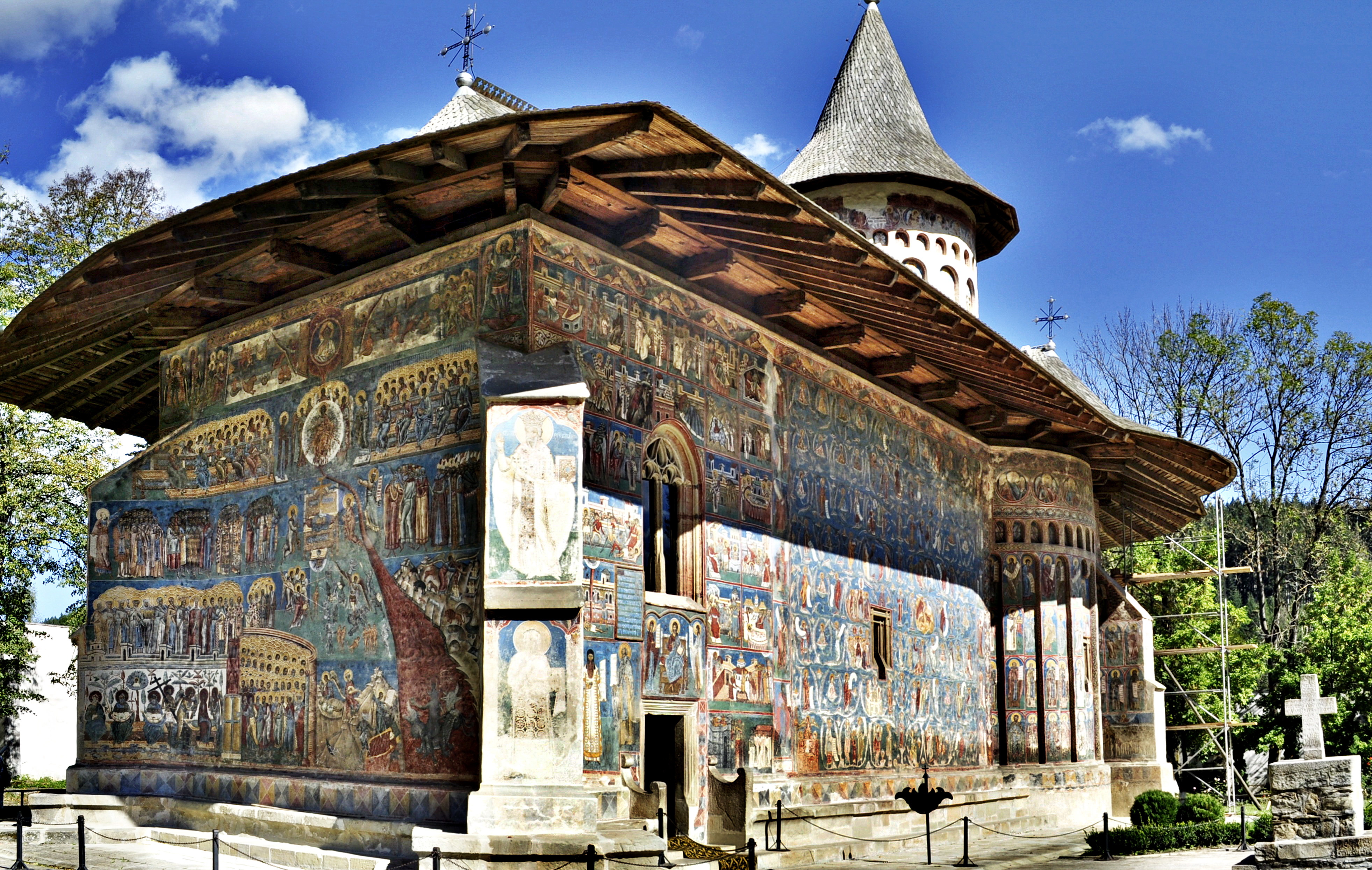


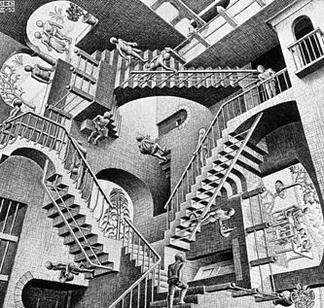


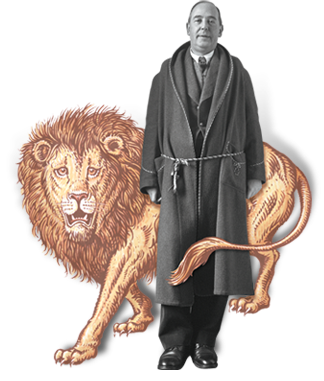
 There once was a saying, in some old language no one cares about anymore, “Homo homini lupus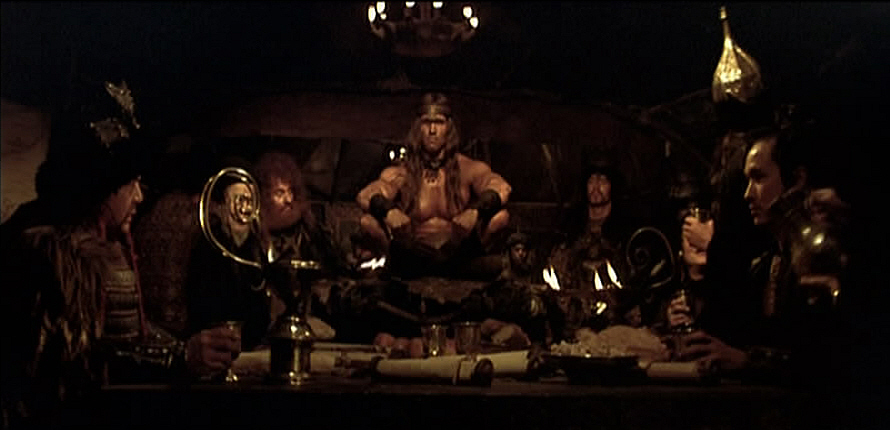


.jpg "In one part of the book, Care urged voters to elect independent, incorruptible men to Parliament - Care was charged with seditious libel for these statements, which the government considered a reflection on its Parliamentary supporters.")


.jpg "\"Please take away rights from these people we don't like!\"")


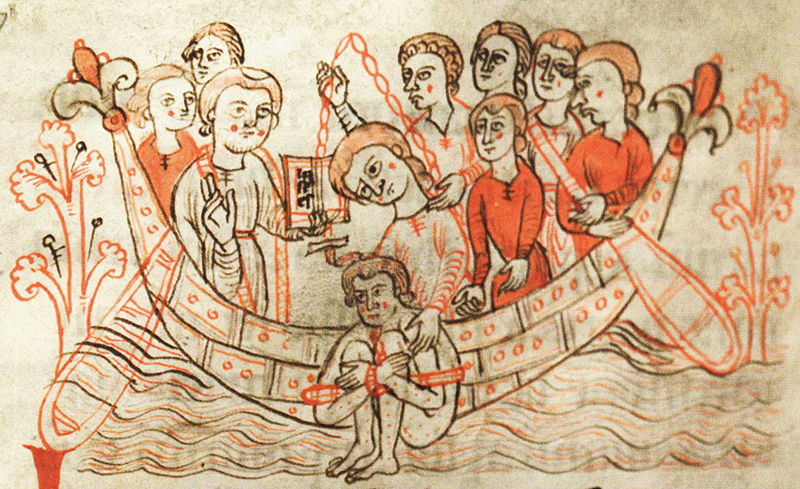


,_after_Ambroise_Louis_Garneray.jpg "WHY WASN'T STEVE SMITH INVITED?")
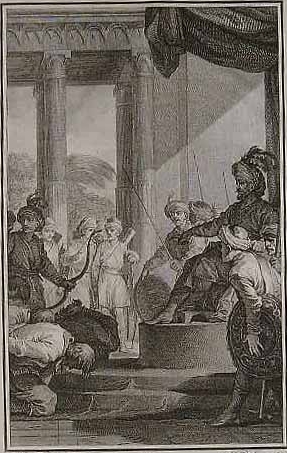


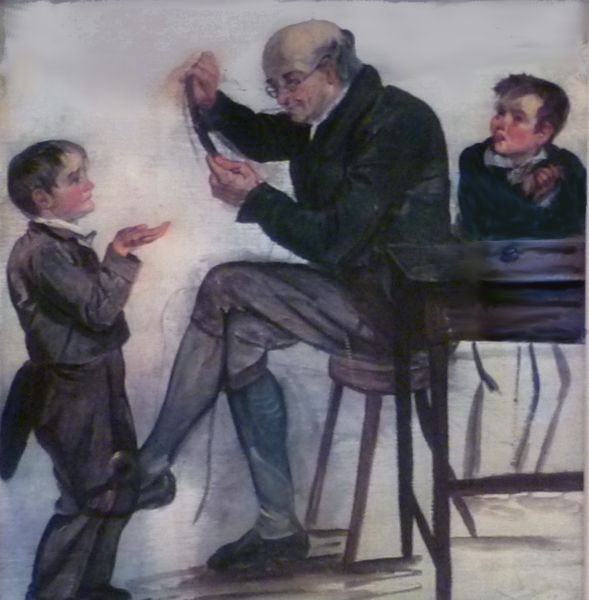


_-_geograph.org.uk_-_1484148.jpg "\"This business's politics are not fit for human consumption.\"")


_Wellcome_V0048357EL.jpg "\"Your Majesty, I am so shy in the presence of royalty that I can't even look you in the eyes. Let me look a little lower...\"")

_Founder_of_the_Jesuits.jpg)