The holiday most goyim know about is Hanukkah, mostly because it drops in the calendar at the same time as their big-deal holiday, Christmas. Too bad because Hanukkah is not only a lame little thing, it’s something no-one ever paid attention to until American Jewkids started whining about converting to Christianity because of the presents. Fuck Hanukkah, the real analog for the goyish holiday where everyone gets together, sings songs, drinks, and has family fights is Passover, or more correctly Pesach. And Pesach is a kick-ass holiday with a great back-story. The general backstory is pretty well known, and if you haven’t seen the sprawling epic The Ten Commandments, pour a few drinks and take in the splendor created by that notorious Jew, Cecil B. DeMille.
Unlike most other Jew holidays, Pesach is not synagogue-centric, but mostly home-based. It centers on a large ritual meal called a Seder (Hebrew for “order,” which generally does not describe real Seders). Because the Seder is a ritual, there is, of course, a guidebook, in this case, called by the euphonious appellation “Haggadah.”
The most obvious way that Pesach kicks ass is, not surprisingly, drinking. Part of the Seder ritual is the consumption of at least four glasses of wine per person, not including what you slurp down during dinner. This includes the kids, and until you’ve seen a shit-faced 8-year-old grab his Aunt Minnie’s tits and yell, “HONK! HONK!” you haven’t really experienced Pesach. The kids usually pass out shortly after this, which reminds the adults of why this requirement was traditionally put into the ceremony. The order in the Haggadah tries to space this out a bit, but the kids will still end up blowing a 0.15 BAC.
Highlights of the ritual include singing songs of praise to Yahweh for killing a bunch of Egyptians. But hey, we show our sorrow by spilling a drop of wine for each of the Ten Plagues. 100,000 dead Egyptians, 10 drops of wine, seems fair. The fun part is intoning the names of each of the plagues as the drops are spilled- we do it in Hebrew because “Dom, Tsvardayah, Kinim, Arov, Dever..” sounds much cooler than chanting, “Blood, frogs, flies, darkness, cattle disease…”
There’s a lot to choose from in the ceremony, but without a doubt, the best part was The Four Sons. Each son (with one exception) consisted of a question, which was then answered at length. Before you assume, no, the sons weren’t Groucho, Chico, Harpo, and Zeppo, but rather Chachem (the wise son), Rasha (the evil son), Tam (the stupid son), and She’eino Yodaiah Lishol (the son who is too naive or young to ask a question). The questions start with “(son’s name), what does he ask?” or in Hebrew, “(son’s name), ma hu omair?” followed by the son’s question and the answer. For example, “Tam, ma hu omair? ‘What’s all this?’ You answer the dummy by saying. ‘Yahweh sprung us from Egypt and killed a shitload of them.’” Or something like that. I have a sentimental attachment to this ritual because inevitably when the reader started with “Rasha, ma hu omair?” (the evil son, what does he say?), everyone’s head would turn to look in my direction.
The answers to the remaining three of the Four Sons’s questions are pretty much what you’d expect. To the Evil Son’s, “Why do you even bother with this” the answer is to punch him in the mouth and tell him, “it’s because of what Yahweh did for me. Not for you. I’m not sure what the fuck you’re on about.” To the Wise Son’s, “What are all the laws, rules, and histories here?” you answer, “OK, hope you’ve got a few minutes, this is a long story…” then tell him all of the odd little rules and practices, interspersed with a history lesson. The Son Who Is Too Naive To Ask, well, just answer the question you wish he had asked, and tell him that Yahweh kicked 16 varieties of ass and sprung us from slavery.
The other fun ritual for the kids is the Ransom of the Afikomen. Y’all know about matzo, right? It’s like a large Communion wafer with even less flavor. Early in the Seder ceremony, a matzo is broken into thirds, and one of the thirds is wrapped up and set aside. Because we have a different word for everything, it’s called an afikomen, which loosely translates as “dessert.” Having a piece of matzo for dessert is just one more way we like to fuck ourselves over. Part of the ritual demands that the afikomen be used to end the meal and that the ceremony can’t end until the afikomen is eaten. So we train our kids to recognize a business opportunity, and they ritually steal the afikomen and hide it, demanding a ransom payment to produce it so the adults can finish up the ceremony and drink more wine (two glasses are supposed to follow the afikomen consumption). Our favorite hiding place was in my grandfather’s filing cabinet, under “A” for “afikomen.” We were not the most creative of children. In any case, the kid’s grubby little hands are greased with lucre, the afikomen is produced, and many Hebrew and Aramaic songs are sung.
Theoretically, the Seder of 1971 has not ended, because our Dalmatian sniffed out the afikomen hiding place and ate it while we were all busy opening the door for Elijah (who was, as usual, a no show). The Bible and the Talmud make no mention of what to do in these circumstances.
Unfortunately, all things Pesach have gone sharply downhill since I was a kid. Let’s start with the Haggadah itself. In the finest American mercantile tradition, the overwhelmingly most common Haggadah was published by… Maxwell House Coffee. Just about every American Jew Family had a set of them, typically stained with wine and food from previous years. And really, they were quite good, having both the traditional Hebrew/Aramaic text and on the facing page an English translation. For very common prayers, there was even a transliteration of the Semitic so that the benighted few who hadn’t attended Hebrew school could join in.
But, given that the main religion of contemporary American Jews is liberalism, you can predict what happened. Yes, they “revised” the Haggadah. A mere few thousand years of tradition cannot withstand the onslaught of Social Justice Warriors. The New and Improved Maxwell House Haggadah is “inclusive” and “gender neutral.” The Four Sons has transmuted to “The Four Kinds of Children.” And sometimes a Fifth is added, the oppressed child. Yahweh is no longer a King, he xe is a Monarch. Yahweh is also no longer a Father, but a Parent. It takes a lot to de-ball Yahweh, but the SJWs managed.
It gets worse.
One of the Pesach rituals is an unattended glass of wine for the prophet Elijah, just in case he shows up. Think “milk and cookies for Santa.” The SJWs, of course, find this intolerably sexist, so put out TWO cups, the other one for Maryam, mother of Moses. Because you never know.
Woke Jews will place Fair Trade coffee beans on the Seder plate to symbolize… something. They will also place an orange on the plate, not as you might think to symbolize Donald Trump, but to honor LGBTQ3M# Jews. Because Biblical Era Jews were all about tolerance and acceptance of homosexuality, right? If you’re going to do social signaling, might as well get Vitamin C with it.
Alternative Haggadahs are a big deal now. Here’s the Four Sons told in the Earth Justice Haggadah (I am not making that up!):
The Wise Child: This child knows that climate change is real and that they must act to combat its effects. The Wise Child has read that global temperatures and sea levels are rising every year, that more species are becoming endangered, and that more communities are experiencing extreme weather events and decreased crop viability. The Wise Child sees all this and is motivated to combat climate change in any way they can.
The Wicked Child: The Wicked Child has read about climate change and is aware that scientists predict a whole range of negative effects if we don’t reduce global carbon emissions. But the Wicked Child doesn’t think the issues caused by climate change apply to them. They believe climate change will only affect the poor and the vulnerable in places they will never visit. They remain unconcerned.
The Simple Child: The Simple Child is overwhelmed by the idea that humankind could be radically altering the entire face of the earth. They don’t believe it’s possible that scientific predictions are accurate. This child simply ignores the evidence that the problem is real at all.
The One Who Does Not Know How to Ask: This child is much more like The Wise Child than we may typically imagine. The One Who Does Not Know How to Ask has also read about climate change and knows that environmental degradation and the effects on the global population are a real and present threat. Unlike The Wise Child and much more like the Simple Child, this child is overwhelmed. How is this possible? This child might ask, How can I, alone, prevent this global catastrophe?
If Global warming isn’t your fashion statement in social signalling, you can also have Haggadahs centered on Conflict Minerals, LGBTQ (make sure you read the new prayer, “We’re Rainbow Folk” and have that orange out), Unions, Palestinian Arab issues (what’s the blessing for suicide bombers?)… anything on the Progressive menu. Fuck the actual meaning of the holiday, we have to show solidarity, resist, make our voices heard, and no better way to do this than by refocusing Pesach on our own moral preening.
OK, so what do we need to do here? My personal opinion is to troll troll troll. Wear a MAGA yarmulke. Bring along a BLT, toss it on the Seder plate, and point out that it’s just as traditional as the Fair Trade coffee beans. Blow out all the candles, pointing out that they’re contributing CO2 to global warming. Grab Maryam’s cup, lament that they didn’t fill it to only 70% of Elijah’s, chug it, and yell, “OK, grab her pussy!” Ask loudly, “How do you get a Jewish girl’s number” and when you get blank looks, roll up your sleeve and point to your arm.
Your problem of what to do for next year’s Progressive Seder will solve itself.
For most Americans, the Middle East is an exotic and mysterious place. Like the Persian carpets made there, it is a complex weave of nations, tribes, languages, and religions. And like a Persian carpet, you can’t pull on one thread without pulling on many others.
However, if you study the history of the region, certain patterns emerge. I studied the history and cultures of the region for many years until I had my eureka moment. I had discovered what I call the Grand Unified Theory of the Middle East. It is a unifying principle which explains every event there since the beginning of history. Once you learn this theory, you will instantly understand everything that happens there.
Here is my Grand Unified Theory of the Middle East: Everyone hates everyone.
The Arabs and Persians hate each other. The Turks and the Kurds hate each other.The Sunni and the Shia hate each other. The Bedouins and the Berbers hate each other. The Muslims and Christians hate each other. And all of them hate the Jews. The Jews, not wanting to be outdone in the hating game, boldly up the ante by hating both themselves and other Jews, mostly because they are either too Jewish or not Jewish enough.
Democracy at work
Could this geopolitical dumpster fire possibly get any worse? Yes, it can! Democracy in the Middle East, where it exists at all, tends to get into a rut. Generally, there is a two-party system which is a fierce duel between the Islamic Party of Islam for Muslims against the Very Very Very Islamic Party. In such a situation, it is difficult to find common ground.
So what should the US do? I suggest treating the place like a nest of killer bees. The farther away you are, the less likely you are to get stung. And if you insist on getting close and throwing rocks at the hive, throw really big rocks. In 1983, Reagan withdrew US forces from Lebanon after a truck bomb killed 241 Marines. He said:
“Perhaps we didn’t appreciate fully enough the depth of the hatred and the complexity of the problems that made the Middle East such a jungle. Perhaps the idea of a suicide car bomber committing mass murder to gain instant entry to Paradise was so foreign to our own values and consciousness that it did not create in us the concern for the marines’ safety that it should have.”
On October 7, 1873, the new American ambassador to Japan met emperor Mutsuhito and showed his credentials.
A high-level Japanese delegation, headed by Iwakura Tomomi, the minister responsible for foreign affairs, had in the previous month returned from a lengthy foreign journey, which had included the United States. The Iwakura Mission had sought to alert the West to Japan’s complaints about the “unequal treaties” forced on the country under the prior Japanese regime, the Shogunate.
After the United States “opened up” Japan in 1853-54, the U.S. and several European powers had negotiated treaties with the Shogun’s regime. Many Japanese patriots considered the treaties to be unfair and humiliating. In the 1860s, Japan went through a civil war. The victorious faction had overthrown the Shogunate and established the “Meiji Restoration” regime in 1868. The Meiji government, which ruled in the Emperor’s name, believed its predecessor had been too weak in the face of foreign pressure.
The new American minister plenipotentiary would adopt a conciliatory approach regarding Japan’s grievances.
John Armor Bingham
John A. Bingham was a former member of the U.S. House of Representatives, but the local leaders of Bingham’s own Republican party had denied him renomination the previous year. Bingham had left Congress under something of a cloud. He’d had dubious dealings with the crooked Crédit Mobilier company, and on his way out the door he joined his Congressional colleagues in voting themselves a retroactive pay increase (known as the “Salary Grab”). But despite some grumbling, the Grant administration and the Senate had approved him as minister to Japan.
Bingham had once been an important legislator and prosecutor when America, like Japan, was enduring civil strife in the 1860s. Bingham supported laws to conscript men, suspend habeas corpus, and to take other steps allegedly needed to win the war. During a two-year interval after he had been rejected by the voters in the Democratic surge of 1862, Bingham served as a military prosecutor. His cases included the controversial court-martial of Surgeon General William A. Hammond during the war, and the also-controversial military trial of the alleged Lincoln assassination conspirators at the war’s end.
Accused of violating the Bill of Rights with his wartime actions, Bingham replied that in the dire emergency posed by the war, civil liberties would have to be set aside.
Bingham’s constituents sent him back to the House in time for him to serve in the postwar Congress as it grappled with Reconstruction. Bingham seemed to have been chastened by his defeat in 1862 – a believer in equal rights, he’d been reminded that he could only go so far ahead of his white racist constituents. He began showing comparative caution on race – at least he was cautious in comparison to Thaddeus Stevens, whose unswerving commitment to racial equality, combined with his anger at the ex-Confederates, earned him the title “Radical.”
Thaddeus Stevens
Re-elected in 1864, Bingham became a member of the powerful committee on Reconstruction when Congress started its postwar deliberations in December 1865. Bingham wanted to keep military rule in the occupied South until the former Confederate states adopted a new constitutional amendment – the Fourteenth. Bingham would at first be content with that, without obliging the states to enfranchise the former slaves. But Bingham, and Congress, ultimately decided that the defeated Southern states would have to reorganize themselves with governments chosen by black and white voters, in addition to ratifying the new Amendment. After taking these steps, the rebellious states would be restored to the Union.
Bingham helped shape the Fourteenth Amendment, particularly its provisions about civil liberties (Sections One and Five), as expressed in language about the privileges and immunities of citizens, due process, and equal protection. Section One was “the spirit of Christianity embodied in your legislation,” Bingham assured his constituents. Concerning the evils which the amendment would prevent, Bingham said:
Hereafter the American people can not have peace, if, as in the past, states are permitted to take away the freedom of speech, and to condemn men, as felons, to the penitentiary for teaching their fellow men that there is a hereafter, and a reward for those who learn to do well.
In this and other remarks, Bingham suggested that the Fourteenth Amendment provided federal enforcement to the Bill of Rights in the states. At one point, Bingham suggested that the 1833 decision in Barron v. Baltimorehad simply denied that the feds could enforce the Bill of Rights in the states – the Court had not denied that the states were bound by the Bill of Rights. The Fourteenth Amendment would arm the federal government with the needed enforcement tools.
The Supreme Court indicated that it might ruin everything by requiring civil trials for subversive elements in the ex-Confederacy. To ensure that the U. S. military could punish ex-Confederate obstructionists without a jury trial, Bingham helped strip the Supreme Court of jurisdiction in those sorts of cases. The Supreme Court acquiesced. Bingham thought it would be time enough to allow full constitutional rights after the South had accepted the terms of Congressional Reconstruction.
When President Andrew Johnson tried to obstruct the Congressional Reconstruction program, the House impeached him. Bingham was one of the “managers” (prosecutors) in the impeachment trial, which ended with the Senate acquitting Johnson with a nailbiting margin of one vote.
With the former slaves enfranchised and the Fourteenth Amendment ratified, Congress readmitted the former Confederate states into the Union and restored civil government. Bingham kept an eye on the South, supporting the Fifteenth (voting rights) Amendment and pushing for a bill to prosecute white supremacist terrorists like the Klan. After the Klan prosecutions seemed to cripple that organization, the Reconstruction process, and the transition to a peacetime regime of full constitutional liberties, seemed complete.
Meanwhile, in the year Bingham arrived in Japan, the Japanese government took various reform and modernization measures with a view of catching up with the West. In 1873, the government, in an attempt to bolster its military, adopted conscription. Bingham would be familiar with conscription, which he pushed during the Civil War, but Japanese conscription was initiated in peacetime (though a dissident faction unsuccessfully pushed for a war in Korea in that same year).
1873 also marked Japan’s adoption of the Gregorian calendar and the legalization of the previously-banned religion of Christianity. Bingham would certainly have applauded the latter measure, even though many of the newly-legalized Christians were Catholics, not members of the zealous Presbyterian “Covenanter” denomination to which Bingham belonged. Around the same time that it made Christianity legal, the Japanese government was supervising the building of new shrines for the official Shinto religion, which focused its devotional energies on the Emperor.
As ambassador, Bingham tried to free Japan from the tentacles of the “unequal treaties”…
…agreeing in 1878 that the United States would renounce any rights under these treaties if the European powers could be induced to do so, too. Bingham wished to treat the Japanese government with respect instead of throwing his weight around and stomping through Tokyo like a giant fire-breathing lizard.
That lizard is YUUUGE!
In 1878, as Bingham was showing his willingness to get Japan out from the “unequal treaties,” the secretary to minister Iwakura Tomomi published a journal of the Iwakura Mission from a few years before. The secretary, Kume Kunitake, discussed the American part of the delegation’s journey in the first of his five volumes.
Japanese foreign minister Iwakura Tomomi with several key members of his delegation
The delegates were not exactly giddy as schoolgirls about their 1872 trip through the U. S….
What kind of image did you think I was going to put here?
They were not simply sightseers. As Kume’s official journal showed, the delegates wanted to find out what they could about the United States so that they could turn that information to good use in their own country. The publication of the journal in 1878 indicated that the Japanese public was expected to learn these lessons, too.
Readers of Kume’s journal learned that the delegation visited many Western and Northern states, with the visits to the ex-Confederacy limited to Washington’s home in Mount Vernon, VA. Perhaps they wanted to learn from the Civil War’s winners, not its losers. Delegation members studied the schools in Oakland, CA (“a famous educational centre in the western United States”), observed some Native Americans in Nevada (“Their features display the bone structure often seen among our own base people and outcasts”), visited Salt Lake City (“According to Mormon beliefs, if a man does not have at least seven wives he cannot enter Heaven”), visited Chicago in the wake of its recent fire (“said to have been the worst fire since the city was founded”), mixed sightseeing and diplomacy in Washington, D.C., where they reflected on the turbulence of the Presidential election (“Merchants forgot their calculations; women stayed their sewing needles in mid-stitch”), visited the naval academy in Annapolis, MD (“In America, women are not forbidden from entering government buildings”), went to see New York City’s Bible Society and YMCA (“We were suspicious of the tears of those who prayed before a man condemned to death for heresy, whom they acclaim as the son of a celestial king”), checked out West Point (“Those who fail are shamed before their relatives, but, on the other hand, this may serve as a spur to them”), and “attended a concert at the World Peace Jubilee and International Music Festival” in Boston (“Now the world is at peace, with not a speck of dust stirring”).
Kume’s journal frequently paused in its descriptions to inform the readers of the lessons the Japanese should learn from what was being described. After recounting how the delegates were able to hire an American company to ship packages to Japan, Kume added these reflections: “When Japanese merchants think of the West, they imagine some distant galaxy. When western merchants view the world, however, they see it as a single city. With that attitude, they cannot fail to prosper.” Recounting the death of Horace Greeley “of a broken heart” after he lost the Presidential election in 1872, Kume wrote: “This reveals how Westerners are willing to throw their whole heart into the pursuit of their convictions, and if they do not realise them, they are even willing to sacrifice their lives. Without such extreme virtue and endurance, it is hard to expect success in this world.”
Horace Greeley, before he died for honor
Kume’s account of the American Civil War also seemed to point to a moral for the Japanese to follow. After describing the strength of the proslavery forces before the war, Kume’s journal said: “Faced with such determination, the abolitionists looked into their hearts and fought harder.”
Kume described how, after the war, many black people had achieved success in business and politics, thus showing that skin color was unconnected to intelligence. After noting the surge in the establishment of black schools, Kume’s journal added: “It is not inconceivable that, within a decade or two, talented black people will rise and white people who do not study hard will fall by the wayside.” Kume was marking out a path to success for any people whom whites were trying to marginalize.
The North had won the American Civil War in the name of the supremacy of the federal government. But from the standpoint of centralized Japan, the U. S. still had broad respect for states’ rights: “With its own legislature, each state maintaining its autonomy and assumes the features of a genuine independent state within the federal union….the federal government derives its power from the states; the states are not created by the federal government.”
By 1878, when Japanese readers were reading about the lessons of the Iwakura Mission’s American travels, the U. S. had already dropped a notch or two since 1872 when it came to civil liberties. President Rutherford B. Hayes, to shore up support for his contested election victory, agreed to withdraw federal troops from the South at the very time that white terrorism was resuming against the former slaves. The Supreme Court narrowed the scope of the Fourteenth Amendment, denying it the broad liberty-affirming meaning which Bingham had once attributed to it (the process had started with the Slaughterhouse decision shortly before Bingham departed for Japan in 1873).
To nationalists like Kume and his bosses in the Japanese government, civil liberties as such were not a concern. To them, Japan could not afford much Western-style individualism. As Bingham left his post in 1885 – removed from office by an incoming Democratic administration – Japanese leaders were preparing a Constitution which did not exactly embody Bingham’s vision of peacetime civil liberties. That constitution came out in 1889, and it centered political authority in the Emperor, not in the people. Civil liberties were generally subject to being restricted by law. The one similarity with Bingham’s ideas was a provision that the Emperor could operate without regard to constitutional rights during war or “national emergency.”
After his diplomatic service, Bingham told Americans that he was impressed by Japan’s Meiji leadership. Like Bismarck (and like himself, Bingham might have added), the Japanese rulers had centralized and modernized a great country. Bingham did worry about one thing – the propensity of the Japanese leadership for foreign aggression.
In his old age, Bingham fell into poverty and was apparently deteriorating mentally. His friends in Congress proposed to award him a Civil War pension based on his wartime service as a military prosecutor. To sweeten the pill for the now-resurgent Southern Democrats, Bingham’s supporters magnified his clashes with Thaddeus Stevens, whose memory the Southern leaders execrated. Bingham, the scourge of Southern “traitors,” became, in the feel-good glow of retrospect, an apostle of moderation and kindness to the white South. The pension bill was adopted. Bingham died in 1900 at age 85.
What rescued Bingham from comparative obscurity was the debate over the meaning of the Fourteenth Amendment – specifically, the question of whether the Fourteenth Amendment required the states to obey the Bill of Rights – a doctrine known as “incorporation.” Supporters of incorporating the Bill of Rights portray Bingham as a James Madison figure who shaped the Fourteenth Amendment and whose vision was adopted by the people. Opponents of incorporation pay attention to Bingham for the purpose of minimizing his role or portraying him as legally ignorant.
One of Bingham’s key scholarly opponents was Raoul Berger, who referred to Bingham’s “sloppiness” in reasoning, and called him a “muddled thinker, given to the florid, windy rhetoric of a stump orator, liberally interspersed with invocations to the Deity.” Berger said Bingham was “utterly at sea as to the role of the Bill of Rights.”
Berger’s discussion of Bingham was included in his book Government by Judiciary, published in 1977. This book is a key event in the history of originalist Constitutional thought. The book took aim at key Warren Court’s decisions, in which the Court invoked the Fourteenth Amendment to justify remaking state laws regarding criminal justice, legislative apportionment, welfare rights, education, and so on. Berger presented evidence that the Fourteenth Amendment, if read according to intent of the framers of that amendment, did not achieve what the Warren court said it did.
Some of Berger’s claims proved highly contentious, even among his fellow originalists. For instance, Berger said that the Fourteenth Amendment was never meant to abolish segregated schools or to apply the Bill of Rights to the states.
Supporters of the Warren Court, the sort of folks who had loved Berger’s works on impeachment and executive privilege, took issue with Berger’s conclusions on the Fourteenth Amendment.
“We would like to address some disagreements we have with your work.”
Conservatives, on the other hand, liked Berger’s main points, and Berger’s book became the jumping-off point for the movement of legal originalism, which conservatives liked because it exposed the bad Supreme Court decisions they opposed as illegitimate.
Ronald Reagan’s Attorney General, Edwing Meese, took up the theme of originalism in the 1980s, including criticism of the incorporation of the Bill of Rights.
Edwin Meese (center) in 1981 In 1989, Berger doubled down on his contention that the Fourteenth Amendment does not incorporate the Bill of Rights. Berger had even more epithets for Bingham – the Congressman was “[i]ntoxicated by his own rhetoric,” his “confused utterances must have confused his listeners,” he was wrong about Barron v. Baltimore.
To many originalists, who liked much of what Berger had to say, attacking the incorporation of the Bill of Rights (and attacking the Brown decision) represented a step too far. It was one thing to criticize made-up rights like welfare rights and the right to abortion, but there was nothing made-up about the Bill of Rights or about its applicability to the states.
Bill of Rights on left, bad Supreme Court precedents on right
Berger’s claim, briefly, was that the relevant provisions of the Fourteenth Amendment had been intended to validate the Civil Rights Act of 1866. This law guaranteed that with respect to certain basic rights (like property ownership and access to the courts), all native-born citizens would have the same rights as white citizens. Thus, so long as the states had the same laws for black people as for white people, it didn’t matter whether they obeyed the Bill of Rights.
Berger’s opponents said, with John Bingham, that the Fourteenth Amendment was intended to force the states to obey at least the rights spelled out in the Bill of Rights, and maybe other rights of citizenship as well.
The debate continues.
“You’ve got your Bill of Rights in my Civil Rights Bill!” “You’ve got your Civil Rights Bill in my Bill of Rights!”
Berger, who had regarded himself as a good progressive, wasn’t sure he liked the praise he was getting from the likes of Ronald Reagan, but he did not back down, defending his work in speeches and numerous articles – and even in more books.
He died in 2000 at the age of 99.
Works Consulted
Raoul Berger, Death Penalties: The Supreme Court’s Obstacle Course. Harvard University Press, 1982.
___________, The Fourteenth Amendment and the Bill of Rights. Norman, OK: University of Oklahoma Press, 1989.
___________, Government by Judiciary: The Transformation of the Fourteenth Amendment. Cambridge, MA: Harvard University Press, 1977.
Marius B. Jansen, The Making of Modern Japan. Cambridge, MA: The Belknap Press of Harvard University Press, 2000.
Kume Kunitake (Chushichi Tsuzuki and R. Jules Young eds.), Japan Rising: The Iwakura Embassy to the USA and Europe. Cambridge: Cambridge University Press, 2009.
Walter LaFeber, The Clash: A History of U. S. – Japan Relations. New York: W. W. Norton, 1997.
Gary L. McDowell, “The True Constitutionalist. Raoul Berger, 1901-2000: His Life and His Contribution to American Law and Politics.” The Times Literary Supplement, no. 5122 (May 25, 2001): 15.
Gerald N. Magliocca, American Founding Son: John Bingham and the Invention of the Fourteenth Amendment. New York: New York University Press, 2013.
Johnathan O’Neill, Originalism in American Law and Politics: A Constitutional History.Baltimore: The Johns Hopkins University Press, 2005.
“Raoul Berger, Whose Constitution Writings Helped To Sink Nixon,” Boston Globe, reprinted in Chicago Tribune, September 28, 2000, http://articles.chicagotribune.com/2000-09-28/news/0009280256_1_executive-privilege-writings-constitutional
Of all the stories in the Bible, the story of Phineas is probably my favorite. It has it all: plague, badass gods, wizards, executions, intercourse, more executions, complete confusion, and random violence. It’s all about what ISIS wants to be when it grows up.
Phineas was the grandson of Aaron (who bore a striking resemblance to John Carradine), and thus the great nephew of Moses (who later became a spokesman for the NRA, but that’s a story for a different Bible). As a youth, he was distinguished by his zealotry, that being a euphemism for “crazed killer wrapping himself in religion.” He first comes to our attention with the Heresy of Peor.
The HoP was a bit of a complicated issue: it all started during the 40 Year Hike from Egypt to Israel with a wizard named Balaam. Balaam was hired by the King of Moab to curse the Jews. The King of Moab later went on to be the deputy chair of the DNC. Whatever, Balaam went up on a mountain (people seemed to do that a lot in those days) to do some sacrifices as part of the curse thing, but in a senior moment, he accidentally blessed the Jews. Don’t ask.
Anyway, realizing his mistake, he went back to the King and said, “This cursing shit is all well and good, but if you really want to stick it to Yahweh, what you need to do is get some pussy involved. The women you’ve got here, they’re some pretty fine shiksas, and Jew men cannot resist the lure of the shiksa. That’ll put ’em on Team Baal Peor!” The King thought that this seemed to be a pretty good idea. And what do you know, pretty soon, the Jews were banging Moabite women and worshiping Moabite gods (“Hey, bow down to Baal Peor or no nookie tonight!”).
This pissed off Yahweh something fierce, so he instructed Moses to grab the ringleaders and hang them, which he did with a combination of dispatch, glee, and rope. Now here’s where things get confusing: everyone was worried about the Moabites, but suddenly, the worry is about the Midianites. No explanation beyond, “Well, both names start with the letter mem.” OK, they didn’t even explain THAT much. Maybe it was just shitty copy editing when the Bible got assembled. But whatever, Jew men will fuck anything that’s not wearing a mezuzah and a sheitel, so who cares, bring on the Midianite babes!
Further confusion: apparently the still unmollified Yahweh started a plague which killed like 24,000 Jews, but no one seemed to think that this was worth writing down. Or they were scared to, because a pissed off Yahweh is not a good thing if you want to remain plague-free. Enter Phineas. He found out that there was a VIP from the tribe of Simeon named Zimri, who had a hankering for the strange. Zimri picked up a Midianite woman named Cozbi (or Cosby, which would be fitting) and took her back to the tent for some special desert hummina-hummina. I assume that, being experienced desert wanderers, they had worked out a system to avoid sand in the vagina, but the Bible is rather quiet about those details.
Phineas went to the Love Tent and saw Zimri and Cosby going at it like crazed weasels. Moses knew that this was an issue, but seemed hesitant to act. So Phineas, being a doer and not just a thinker, did what any of us would do in the same situation: he took his spear (which he had snuck past the Hebrew version of TSA, disguising it as a cane) and ran it through both of them. One of the disadvantages of the missionary position is that it really takes only one good spear thrust for both participants to die, but in the heat of the moment, they hadn’t really given this much thought, despite knowing that the homicidal nutbag Phineas was out and about. Phineas, being a lifter stud on the order of Warty, then used the spear as a bar, Cosby and Zimri as plates, deadlifted them, and carried them out of the tent.
Now with Jew-Midianite shishkabob on the menu, Yahweh smiled and stopped that plague that no-one wanted to mention. Phineas got onto the promotion track, pulled together an army, killed a shitload of Midianites, managed to pull this off with no Jewish losses (if you don’t count the 24,000 Yids offed by Yahweh and the newly-ventilated Zimri), and eventually got promoted to High Priest.
Not a real photo of Raoul Berger – scroll down and click his name to see a real photo
Charles Jones and C. A. Cecil were Jehovah’s Witnesses from Mount Lookout, West Virginia. On June 28, 1940, they came to the nearby town of Richwood. Richwood’s dominant local industries relied on harvesting the high-quality (or “rich”) wood from local forests. Jobs working wood and coal helped swell Richwood to about 4,000 inhabitants. That represented a lot of doorbells to ring and souls to save. Simultaneously with spreading their spiritual message, Jones and Cecil wanted to get signatures on a petition against the Ohio State Fair, which had cancelled its contract to host a national convention of Witnesses.
Downtown Richwood, West Virginia, 2006
Under the dictatorial direction of their boozy but efficient leader, Joseph Franklin Rutherford, the Jehovah’s Witnesses had become a society of evangelizers. All members were required to spend time spreading Christian truth to their neighbors (in time which they spared from their day jobs). Basically, as many people as possible needed to be rescued from the diabolical world system, dominated by evil governments and the “racketeering” clergy of other religious groups. The end times were imminent, or had already arrived – the exact details changed with time, but the urgency of the situation did not change. Witnesses had to descend on communities like “locusts” – Rutherford’s term – and turn people to God’s ways.
The true nature of the current wicked system must be made clear in publications, speeches, and even phonograph records. Certain sinful behavior must be shunned. In 1935, Rutherford had made clear that saluting the U. S. flag was idolatry – Rutherford compared it to the Nazi salute. (To be fair, until the end of 1942, the American flag salute was uncomfortably similar to the Nazi salute – and German Witnesses were killed or put in concentration camps for their defiance.) Young Witness men must not sign up for the draft because all Witnesses – not just the leaders – were ministers and entitled to the draft law’s exemption for clergy.
In World War I, before Rutherford took over, the antiwar teachings of the Witnesses (then called Bible Students) had been so provocative that it was persecuted in many countries including the U.S. And as a new world war was underway, Rutherford had ratcheted up the confrontation between his group and the forces of mainstream American society. A new era of persecution was dawning as mainstream American fought back in often-ugly ways.
Jones and Cecil were picked up by the police, who took them to state police headquarters, where cops and members of the American Legion (a nationalistic veterans’ group, more militant at the time than it is today) interrogated them. Martin Louis (or Lewis) Catlette was a twofer, a Legionnaire and a deputy sheriff. This sort of overlap between American Legion vigilantes and law enforcement was common in the attacks on the Witnesses.
Catlette and others accused Jones and Cecil of being spies and Fifth Columnists and gave them four hours to get out of town. The two Witnesses returned to Mount Lookout, but came back to Richwood the next day, June 29, with seven more members of their sect.
Their enemies were waiting. The Legionnaires had searched the boarding house where Jones and Cecil had stayed, finding some very suspicious items, like maps (of homes the Witnesses intended to canvass), and literature about refusing to salute the flag or serve in the military. It was time to teach these subversives a lesson.
Catlette and his Legionnaire friends got the Witnesses together in the Mayor’s office, holding them prisoner there while Richwood Chief of Police Bert Stewart guarded the door. Catlette took off his badge, proclaiming that what he was going to do would be as a private citizen, not as a law officer.
A local doctor was among the Legionnaires, and he was not very mindful of the Hippocratic Oath. He brought some castor oil, which the mob forced the prisoners to drink.
Castor oil was then considered a useful medicine for intestinal distress if administered in small doses. If given in large doses, as in this case, it induces severe diarrhea. One of the Witnesses, who got an extra dose because he tried to resist, had bloody urine.
Forced dosing with castor oil had a notorious history. Mobs in Fascist Italy often poured castor oil down the throats of political opponents or people suspected of anti-social activities, as a humiliating lesson for anyone who dared resist fascism.
The Witnesses’ ordeal was not over. Catlette and his associates tied the Witnesses’ left arms together and paraded their prisoners through the streets and tried to force them to salute the U. S. flag (with their free arms). Then the vigilante mob marched the Witnesses to their cars, which had been vandalized, and ordered them out of town again.
Incidents like this were erupting throughout the country. The Germans had just overrun France and the Low Countries, and the public was on high alert for “Fifth Columnists” – Nazi agents undermining morale in preparation for an invasion. The Witnesses aroused suspicion because of their aggressive proselytizing, their vehement denunciation of the government (and every other religion but their own), and their refusal to salute the flag. The U. S. Supreme Court had just issued an opinion that public schools could force Jehovah’s Witness pupils to salute the flag (an opinion the Court would overturn three years later, saying compulsory flag-salutes violated the Witnesses’ freedom of religion). As in many countries, both Allied and Axis, the Witnesses were considered as a subversive influence and persecuted as such.
Attorney General Francis Biddle, in 1941, publicly denounced the “cruel persecution” of the Witnesses, but his Justice Department didn’t seem to be acting against the persecutors. Indeed, the feds didn’t mind doing some persecuting of its own, prosecuting Witnesses for resisting the draft.
(And after Pearl Harbor, there was the persecution of Japanese-Americans, as well as of the prosecution of certain critics of the war – but we’re getting away from the subject, which is how concerned the U. S. Justice Department was about the rights of minorities.)
You might say that the Goddess of Justice was disarmed
In West Virginia, the local federal prosecutor, Lemuel Via, recommended against bringing charges in the Richwood case. The recently-formed Civil Rights Section of the Justice Department pressed for prosecution. By 1942, the Civil Rights Section had won out, and Via was instructed to take the case to the grand jury. Via asked the Justice Department to send one of its lawyers to assist him. This would show “that this case was being prosecuted by the Department of Justice, rather than the United States Attorney.” In other words, Via wanted to signal to the community that if it were up to him, he wouldn’t be harassing the local patriots simply for giving the Witnesses what they deserved.
So the Justice Department sent one of its recent hires, Raoul Berger, to help Via out and take the responsibility off of him.
Raoul Berger was born in 1901 in a town near Odessa, now in Ukraine but then in the Tsarist Russian Empire. The Berger family was Jewish, and there was lots of anti-Semitic agitation in the empire. Also, according to Raoul’s later recollection, his father Jesse predicted (correctly) an impending war between Russia and Japan.
So it was time to emigrate. Jesse came to the United States in 1904, initially, perhaps, without his family. In 1905, Russia experienced the predicted war with Japan, a revolution, and an anti-Jewish pogrom in Odessa.
A Jewish shop destroyed in the Odessa pogrom, 1905
This may have reinforced Jesse’s wish to bring his wife Anna, little Raoul, and his sister Esther, to the United States, which Jesse did no later than 1907 (if he had not done it already).
Jesse worked as a cigarmaker in the West Side of Chicago. He wanted his son to study engineering, but Raoul was taken with music. Raoul acquired a violin, learned some gypsy tunes, and began more formal musical studies under a private tutor. After he got out of high school, Raoul went to New York City to study at the Institute of Musical Art, now Julliard. His teacher was Franz Kneisel, a rigorous and stern instructor. Raoul later reflected on how, in studying the violin, he learned “patience and rigorous attention to detail,” which stood him in good stead throughout his life.
After an unsuccessful sojourn in Berlin to study under Carl Flesch, Berger came back to New York to finish his studies with Kneisel. Then it was on to Philadelphia to play violin for the Philadelphia Orchestra. The conductor was Leopold Stokowski, whom Berger recalled as vain and insufferable, albeit a genius.
Leopold Stokowski
Berger lasted a year under Stokowski, and then went to Cleveland to become second concertmaster of the Cleveland Orchestra, under Artur Rodzinsky.
After two years at this job, Berger got a position in Cincinnati as associate concertmaster to the conductor Fritz Reiner. With three others in the orchestra, Berger formed the Cincinnati String Quartet. In Berger’s telling, Reiner was dictatorial without the compensating advantage of genius like Stokowski.
Fritz Reiner
Around this time, Berger stopped being a professional musician and started looking around for another line of work. Berger’s son Carl, in a brief account of his father’s musical career, suggests that there may have been financial considerations: Berger’s new wife was the daughter of a big-shot doctor, and Berger may have wanted to give his bride a better lifestyle than a Depression-era violinist could afford. By Berger’s own account, the problem wasn’t money, but the dictatorial conductors he worked under, which led him to reconsider his musical career choice.
After the sight of a dissecting room scared him away from medicine, Berger went to law school at Northwestern and Harvard. At Harvard he was a student of Felix Frankfurter, who remained as a mentor figure after Berger’s graduation.
Felix Frankfurter
With excellent credentials, the new attorney tried to get a position in a big law firm, but none of them would hire him because he was Jewish. The firms he applied to had either filled their Jewish quota, or their quota was zero. Not even the intervention of Felix Frankfurter helped.
Fortunately, the head of the Securities and Exchange Commission (SEC) was a friend of the dean at Northwestern, so Berger began working as a government attorney. The Department of Justice hired Berger away from the SEC, and now they dropped the Richwood castor-oil case in his lap. Berger later said, probably correctly, that his bosses didn’t like this case, and expected to lose, so they handed it off to Berger who was the “low man on the totem pole.”
OK, fine, here’s the real Felix Frankfurter
Berger took the case to the grand jury. The Jehovah’s Witness victims testified about what happened to them. In a memorandum, Berger described how the grand jurors responded with hostile questions “about the particulars of their religion, their refusal to bear arms, their invasion of Richwood in search of ‘trouble.’” No indictments were forthcoming.
Since the grand jury refused to indict Catlette and Stewart, felony charges were not an option. Instead, the prosecutors filed an information charging Catlette and Stewart with the misdemeanor of denying the Witnesses’ civil rights “under color of law.” By seizing and mistreating the Witnesses, the charges said, the two lawmen had violated the Witnesses’ rights under the Fourteenth Amendment of the U. S. Constitution, including “the exercise of free speech”…
…and the right “to practice, observe and engage in the tenets of their religion.”
U. S. Supreme Court precedent at the time held that the First Amendment rights of free speech and free exercise of religion were also protected by the Fourteenth Amendment, and thus could not be violated by state officials. The Supreme Court had exempted the states from most of the Bill of Rights, but not from these key provisions.
(The charges also said that the defendants’ behavior had violated due process and equal protection, which are specifically protected by the Fourteenth Amendment.)
The trial was held in early June 1942 in Charleston, WV. Federal District Judge Ben Moore presided. In his argument to the jury, as Berger later summarized it, “I played one string” – American boys were overseas fighting Mussolini, and these defendants were engaging in Mussolini-style behavior right here in the United States.
The jury gave its verdict: Both defendants were guilty.
Catlette was sentenced to a year in prison and a $1,000 fine. Stewart got away with a $250 fine, which he paid. Catlette appealed his conviction to the federal Fourth Circuit court. Berger helped argue the appeal on the government’s behalf.
While Berger was fighting to keep Catlette in prison, the University of Chicago Law Review published an article Berger had written in his private capacity. The U. S. Supreme Court had just given an opinion saying the public had a broad right to criticize judges, a right which neither the federal government nor the states could take away. In his article, Berger indicated that he was sympathetic to a broad vision of free speech, but – in an elaborate historical analysis – Berger argued that the historical meaning of the First Amendment allowed judges to punish their critics.
Speaking as a good New Deal liberal, Berger was glad that the Court was no longer imposing economic liberty on the country in the name of constitutional rights. These discredited conservative precedents (as he saw them) had led to “a generation of sweated labor and unchecked industrial piracy” from which the country was just recovering. But now that New Dealers controlled the Supreme Court, would they impose their left-wing activism on the constitution the way earlier courts had (allegedly) practiced right-wing activism? ” [I]t is easier to preach self-restraint to the opposition than to practice it oneself,” Berger reminded leftists.
What the Supreme Court ought to do, wrote Berger, was adhere strictly to the historical meaning of the Constitution, even if this sometimes produced results leftists disliked. Some advocates of judicial activism said judges should adapt the Constitution to modern circumstances. But “an ‘unadapted’ Constitution may be the last refuge of minorities if a national Huey Long comes to power.” (To Berger, it was Long, not FDR, who served as an example of a tyrannical populist demagogue.)
And in a foretaste of things to come, Berger included a brief footnote in his article noting the Supreme Court’s inconsistency on whether the First Amendment even applied to the states.
For now, though, Berger was seeking to apply the First Amendment to the states by locking up Martin Catlette.
In January 1943, the Fourth Circuit upheld Catlette’s conviction, rejecting Catlette’s claim that by removing his badge he had turned himself into a private citizen and was not acting “under color” of state law as the charges against him alleged.
The judges made short work of Catlette’s efforts to dodge responsibility:
We must condemn this insidious suggestion that an officer may thus lightly shuffle off his official role. To accept such a legalistic dualism would gut the constitutional safeguards and render law enforcement a shameful mockery.
We are here concerned only with protecting the rights of these victims, no matter how locally unpalatable the victims may be as a result of their seeming fanaticism. These rights include those of free speech, freedom of religion, immunity from illegal restraint, and equal protection, all of which are guaranteed by the Fourteenth Amendment.
The conviction of Catlette and Stewart represented the only successful prosecution in the country of anti-Witness vigilantism.
Catlette served his sentence in the Mill Point, WV, federal prison camp. As befitted someone who had only been convicted of a misdemeanor, Catlette did not live under a very harsh prison regime. Maureen F. Crockett, daughter of the prison’s parole officer, later wrote:
The minimum-security prison on top of Kennison Mountain had no locks or fences, and minimal supervision. Inmates stayed inside the white posts spaced every 40 feet around the perimeter. Escape was as easy as strolling into the nearby woods, but the staff took a head count every few hours. During the [twenty-one] years it was open, the prison had only 20 escapes.
Local lore says so few prisoners left because they thought the local woods were haunted.
For whatever reason, Catlette did not run off. He served eleven months of his twelve-month sentence before being paroled (and the court excused him from paying the fine). During his incarceration, he probably had the chance to meet some of the convicted draft resisters who were entering Mill Point at this time, including Jehovah’s Witnesses.
Berger continued his career as a government lawyer. His jobs included working at the Office of the Alien Property Custodian.
After his stint in government service, Berger went into private practice.
In 1958, Berger was devastated by the death of his wife. He considered what to do with the rest of his life. Perhaps, he thought, he could return to being a musician. He went to Vienna and gave a violin performance.
To illustrate the idea of Vienna, here are some Vienna sausages
As Berger told it, he was deterred from resuming his musical career when he read a review in the Vienna press, saying that he played the violin very well…for a lawyer.
Berger began a new career as a law professor. Eventually, his research would lead him to the conclusion that the states did not have to obey the Bill of Rights.
How would Martin Catlette react if he knew that one of the prosecutors who sent him to prison for violating freedom of speech and religion would later claim the states were exempt from the Bill of Rights?
But before Berger got to that point, he had a date with destiny in the form of a crooked President.
Works Consulted
Cecil Adams, “Did Mussolini use castor oil as an instrument of torture?” A Straight Dope classic from Cecil’s store of human knowledge, April 22, 1994, http://www.straightdope.com/columns/read/965/did-mussolini-use-castor-oil-as-an-instrument-of-torture
Raoul Berger, “Constructive Contempt: A Post-Mortem,” University of Chicago Law Review: Vol. 9 : Iss. 4 , Article 5 (1942).
Available at: http://chicagounbound.uchicago.edu/uclrev/vol9/iss4/5
James Penton, Apocalypse Delayed: The Story of Jehovah’s Witnesses (Third Edition). Toronto: University of Toronto Press, 2015.
Shawn Francis Peters, Judging Jehovah’s Witnesses: Religious Persecution and the Dawn of the Rights Revolution. Lawrence: University Press of Kansas, 2000.
Chuck Smith, “Jehovah’s Witnesses and the Castor Oil Patriots: A West Virginia Contribution to Religious Liberty,” West Virginia History, Volume 57 (1998), pp. 95-110.
_________, “The Persecution of West Virginia’s Jehovah’s Witnesses and the expansion of legal protection for religious liberty,” Journal of Church and State 43 (Summer 2001).
Note – There’s a Martin Lewis Catlette (1896-1965) buried in the Richwood Cemetery. I can’t say for sure if this is the same person as the deputy Sheriff (the appeals court gives the deputy’s middle name as “Louis”). The person in the cemetery seems to have served in the Navy in both world wars, and his wife died in 1943, the year that the deputy would have gotten out of prison. If this is the same person as the deputy, I would be able to add a paragraph about the widower, newly freed from prison, soothing his grief by returning to military service.
Dr. Dean Ahmad, President and Director, Minaret of Freedom
In which a Palestinian Arab Muslim and a secular Zionist Jew find much accord.
Many take it as a given that Islam and any notion of liberty are diametrically opposed. People are quick to point out the number of Islamic dictatorships and repressive theocracies, and generalize that (for example) to Muslims in America. Dr. Imad Ad-Dean Ahmad, a scholar of Islam and history, would disagree. His organization, Minaret of Freedom, is dedicated to spreading a different narrative, that of a religion which values economic and social freedom, despite its use as a tool of repression by autocrats and theocrats in the Middle East and South Asia.
OMWC: Your background was originally in science. What sort of work were you doing?
Ahmad: My dissertation at the University of Arizona was on “Heavy Element Radio Recombination Lines from the Orion Complex.” (Robert Williams, then an Associate Professor at the astronomy program there, told me years later when he was the director of the Space Telescope Science Institute that mine was the only dissertation from which he could still remember the opening sentence: “From the belt of Orion hangs a sword.”) I focused on radio astronomy and on the conditions in the proto-stellar nebulae in which stars are formed. Comparing observations that I made with the National Radio Observatory’s 140-foot antenna with theoretical calculations I made with the Kitt Peak Observatory’s (at the time) state-of-the-art CDC 6400 computer, I was able to resolve an apparent contradiction in the astronomical literature as to the precise location from which the radiation was emitted.
I worked in astrophysics for another fifteen years after getting my doctorate, publishing models for the solar atmosphere and stellar winds, using mainly X-ray and ultra-violet data.
OMWC: What prompted your career change from science to social and religious activism?
Ahmad: By the late 1980s, I had become increasingly concerned about the inefficiency, immorality, and counter-productivity of American policy in the Middle East. I became painfully aware that of the role that ignorance and political agendas played in formation of bad policy. The so-called experts on the Muslim world had not seen the Iranian revolution coming and their retrospective attempts to account for it were incoherent. Having been a practicing Muslim and a libertarian all my adult life, I realized that the research discipline I had learned as a scientist was much more badly needed in the realm of Islamic studies.
I made the transition by writing a book on the role Islamic Civilization played in the development of modern science (Signs in the Heavens: A Muslim Astronomer’s Perspective on Religion and Science). After I gave a talk on the book for the Honors program at the University of Maryland (College Park) the head of the program invited me to offer a course there on Islamic Civilization. At the same time, the great libertarian historian Leonard Liggio introduced me to the good people at the Atlas Economic Research Foundation, who helped me to start the Minaret of Freedom Institute, the Islamic libertarian think tank I have headed for 23 years (www.minaret.org). The Muslim community also came to appreciate my work, initially because of my knowledge on issues related to the Islamic calendar, but gradually on an increasingly wide range of matters from Islamic civilization to Islamic law and chaplaincy.
OMWC: What was the thing or things which led you to libertarian thought in the first place? Were you raised with this or was it reading or experiences that took you in that direction?
Ahmad: My father (a businessman) was politically conservative and my mother (a teacher and media personality) was politically liberal, so my upbringing provided me a choice. The main sources that influenced how I managed to navigate between their very different views were, in order of encounter (and I think in order of importance) the Qur’an, Henry David Thoreau and Ayn Rand. From the Qur’an I learned the non-aggression principle (“Let there be no compulsion in religion” 2:256) and of the individual’s direct responsibility to the Creator (“There is none worthy of worship but God” 37:35) and the corollary of the idolatry inherent in arbitrary human authority over other humans (“Do not fear them but fear Me” 3:175). From Thoreau I learned of the value of individualism (Walden) and of the power that a righteous individual has over a corrupt state (“Civil Disobedience”). From Ayn Rand I first learned the how markets work and why state intervention is both morally evil and consequentially destructive.
OMWC: In some of your writing, you state that (in essence) you regard the Quran as axiomatic. Does your view of libertarianism derive from those axioms?
Ahmad: Axiomatic is your term, not mine. If by that you mean that I find the values articulated in the Qur’an to be the starting point of my weltanschauung, I agree: Every individual is directly responsible to God (37:35), no one bears the burdens of another (35:18); speak truth to power (28:37); stand for justice even against your own self or near of kin, rich or poor (4:135); say to those who reject your way of life, “to you your way and to me mine” (109:1-6); trade is good (4:29) and fraud (83:1-2) is bad; respond to an injury only in kind, or better yet forgive in order that you should be forgiven (42:40); defend yourself (22:39) but do not aggress (2:190).
OMWC: To clarify, I used the word “axiomatic” because of your statement “There are some things we shall take as a given. We shall not question the text of the Qur’an. While the Qur’an itself invites individuals to ascertain for themselves its authenticity by investigating its inimitability, we, as an institution, take the received Arabic text as our starting point.” So at least in my naive view, it would look like an axiom.
Ahmad: I see your point. The distinction is that an axiom is “self-evident,” whereas, the starting points for a Muslim are inherent in the definition of a Muslim. A Muslim, by definition, believes there is only one God and that Muhammad is His Messenger (i.e., that the Qur’an is His message). This is true regardless of whether the Muslim arrived at that point because he finds these things self-evident or because he had previously questioned them and found the answers convincing.
OMWC: Where in the current Muslim world do you see the possibility of libertarian approaches to social and cultural issues as having the greatest chance for a toehold? Can a Muslim country be culturally libertarian in the sense of treating all belief and disbelief equally under law?
Ahmad: I think that Tunisia is the most promising, with the Nahda Party holding fast to these principles whether their fortunes are good or bad. More secular people than I may think Dubai is the most promising since, despite its undemocratic political structure and strong religiosity of its rulers, it seems to be very tolerant socially and culturally. Until recently, Muslim countries were historically much more tolerant than the West on treating subjects of various religious belief under the law. When the Jews were evicted from Spain, they dared not move to any other Western country, but the Sultan of Turkey invited them to the Ottoman lands promising them absolute freedom to work, worship, and raise their families as they saw fit. Oppression of religious minorities in Muslim countries today is no more inherent in Islamic teachings than the oppression of Muslims (and others) in France is inherent in “Liberté, égalité, fraternité.” The one area in which Muslim tradition is a serious obstacle is in the question of equal citizenship. I do not see this as a problem inherent in Islamic law so much as in the conflict of the Westphalian notion of the modern nation-state with the Muslim traditional system of autonomous confessional communities. I am not the only one who has pointed out that the resolution to this conflict may be found in the Prophet Muhammad’s remarkable covenant for the governance of Medina.
OMWC: Do you think that the US has a responsibility to promote liberty in other countries and in other cultures? (This begs the question, of course, of whether the US has a responsibility to promote liberty internally!)
Ahmad: The best way to promote liberty in other countries is to be “the shining city on a hill” and practice it here. The next best way is to trade freely with other countries and facilitate, not impede, cultural and social exchange. Speaking frankly to them can be a good way, if done with discretion and respect. Direct intervention into their internal affairs is generally counter-productive, and military intervention is the absolutely worst way, being immoral, ineffective, and counter-productive.
OMWC: In a related question, does the US, in your view, have a moral imperative to assist in the overthrow of despots where there isn’t a specific threat to us?
Ahmad: No. And there would be far fewer despots if we would stop propping them up.
OMWC: In Europe, Muslims have not seemed to have been integrated into their societies in the same way as Muslims have been in the US. When I hear about the Muslim “threat” here and examples from (say) France or Germany are cited, I ask, “Where are the American banlieues? Why are Naperville, Devon, Lincolnwood, or Orland Park (to choose Chicago suburbs with significant Muslim populations) not hotbeds of crime?” In the US, Muslims tend to be better educated and more economically successful than average, and media posturing aside, apparently as integrated as Jews or Hindus. To what do you attribute that difference?
Ahmad: It is true that Muslims in Europe have not integrated as well as those in the U.S., and while, statistically, Muslims in the U.S. have above average educations and material success, those factors alone cannot account for the more successful integration, since even those American Muslims who are undereducated and in poverty are better integrated than European Muslims. I think the most important single factor accounting for the better integration of Muslims (and other minority religion members) in America than in Europe is the unique American notion of secularity that incorporates both the disestablishment of state from religion and complete freedom of religion. Allowing Muslims the ability to freely interpret and practice their religion with neither interference nor support from the state threatens neither Muslims (and other religious minorities) nor the majority. Under French secularism, the suppression of religion from public life such as the ban on headscarves (and yarmulkes) alienates Muslims (and Jews), and even “neutral” Switzerland bans minarets as a threat to national identity. In England, the state gives preference to Anglicans over other (especially non-Christian) religions, which is a driver of discontent. In Germany the state supports all religions, which provokes resentment in the Christian majority.
OMWC: A rather open-ended question: What would you consider, in general, to be a rational US immigration policy?
Ahmad: Anyone who comes here for a peaceful and positive purpose, including to work or study, should be allowed to do so with a path for citizenship if they want it. Those who demonstrably seek to engage in crime or violence should be denied. The government welfare system should be reformed (or abolished) so that it does not attract freeloaders, and lets private and religious social service agencies carry the load of resettlement.
OMWC: What do you think is the greatest misunderstanding among American libertarians about Islam in a cultural (rather than theological) sense? If a libertarian wanted to understand more about Islamic culture beyond the usual prejudices, what should he or she be reading as an introduction and overview to gain a clearer and more accurate understanding?
Ahmad: The greatest cultural misunderstanding about Islam is the belief that it is culturally monolithic. Islamic culture spans an enormous range of nationalities, ethnic groups, cuisines, literature, arts, architecture, and political systems. If I had to recommend a single book it would be The Cultural Atlas of Islam by Ismail and Lois Faruqi. When you’ve finished reading that book head over to your local mosque and chat with the people there. (Just make sure to talk to more than one person!) Better yet, visit a few different mosques. Muslims are your neighbors and most of them would be delighted to chat with you.
OMWC: And my final question: Given an audience of libertarians with a rather wide range of views on Islam and how it relates to American culture, which question do you wish I had asked? And what over-arching message would you want to convey?
Ahmad: Given that the apprehension about Muslim immigrants is found even among some professing libertarians, I would have welcomed a question along these lines: You note the wide diversity of political views among Muslims. Since you clearly see the Qur’an as a document with some strong libertarian content, why are overt libertarians such a small minority among Muslims? I would have replied that I also see the U.S. Constitution as with a document with some strong libertarian content, and I wonder why are overt libertarians are such a small minority among Americans? In both cases I believe that ignorance of the Quran and the Constitution respectively are the problem, a problem compounded by corrupt political leaders whose interest in power motivates them to keep their respective constituencies in a state of ignorance.
OMWC: I really appreciate the time you’ve taken and the information you’ve given us. My own feeling is that ignorance is the root cause of fear, and your mission to dispel ignorance is far more valuable and effective than the moral preening and name-calling that passes for political discussion these days.
Greetings, and welcome back to this long, meandering lecture on the history of Canada for our southern friends. When last we left off, early French attempts to colonize the New World failed spectacularly, and then they decided to take a break from the whole idea while they fought amongst themselves.
Birth of New France (1604-1635)
You know what Europeans love? Hats. You know what makes good hats? Beaver pelts. You know what Europe doesn’t have a lot of? Beavers. You know who does have a lot of beavers? French Canada.
Since Cartier’s attempts at colonization failed numerous French merchants and traders have continued to trade with the native populations for beaver pelts and have attempted to establish permanent trading posts. One merchant, Pierre de Chauvin de Tonnetuit, is granted a monopoly on the fur trade by the French Crown and attempts to build a settlement at Tadoussac. Only five men survive the winter, and it’s only due to the intervention of the natives. Chauvin forfeits his rights to the fur monopoly in 1602 and dies a year later. The fur monopoly is granted to a new merchant, Aymar de Chaste, who is approached by a man called Samuel de Champlain, who requests a place on the first voyage.
Champlain has a background that makes him extremely qualified for a position. A commoner raised in a family of mariners, he learned how to navigate and draw coastal maps at a young age. In his twenties, he served in the French Army during their religious wars, where he apparently had a reputation as an excellent marksman. In the 1590s he worked as a sailor for the Spanish, traveling to the West Indies and rigorously studying Spanish colonial ventures. When he returned to France he wrote a detailed espionage report on these ventures for King Henry IV, cementing his influence in the French court.
Chaste hires him as an observer on the voyage run by François Gravé Du Pont, the previous captain who sailed for Chauvin’s expeditions. Du Pont and Champlain soon become bros for life, the former educating the latter on the geographical nature of the St. Lawrence River. When Champlain returns to France, he’s created a detailed map of the region and believes he can explore further than Cartier did. By 1607 merchants in favour of free trade have managed to get the French Crown to cancel the fur trade monopoly, and Champlain is hired by a former employer, Pierre Dugua de Mons, to establish a permanent colony on the St. Lawrence.
Champlain has both studied the successes and failures of other colonial ventures and experienced his own failures trying to set up settlements in what becomes Nova Scotia for Dugua. So by 1608 he knows what he’s doing, and sails down the St. Lawrence with Du Pont to establish a settlement he calls ‘the Habitation’ with 28 men on what will become Quebec City. Champlain is sure to design the settlement with fortification in mind, building a large stockade and massive moat. Severe winters, famine and disease will continue to plague the Habitation for decades, but he has successfully set up the first permanent settlement along the St. Lawrence River. Meanwhile, far down south, some big English stupidheads have established their own permanent settlement at a place called Jamestown (it will never last, I’m sure).
In order to avoid the mistakes of the past, as well as to ensure that the fur trade continues, Champlain begins to negotiate with the local tribes, primarily the Algonquin and Wyandot (called the Huron by the French). The natives, interested in a long-term alliance, demand that the French assist them in their war with their longstanding rivals, the Iroquois. The Iroquois are a tribal confederacy that lived in what is now upper state New York. Champlain sets out with a war party of around three hundred Huron and travels south. Having failed to find any Iroquois, most of the party disbands, leaving Champlain, two Frenchmen, and several dozen Huron. And that’s when two hundred Iroquois attack. As the battle begins, one of Champlain’s native guides points out the chiefs of the Iroquois in their formation.
Champlain raises his arquebus and kills two of them with a single shot.
The Iroquois, horrified by both this show of European gunpowder and Champlain’s sheer badassery, flee. Little does he know it, but Champlain’s shot is the opening salvo in the next hundred and fifty years of conflict between the French and Iroquois, a likely inevitable conflict due to the Iroquois’ later alliance with the English. Champlain goes on to also fight the Mohawk, with similar results. With their major tribal rivals pushed back the Huron and Algonquin agree to an alliance that will define early French Canada.
Champlain travels back to New France and builds a fort and fur trading outpost on what will become Montreal. After returning to France to deal with some political upheaval and secure long-term funding for colonization (also, he has sex with a twelve-year-old, but I’m trying to write a hagiography here, so moving on) Champlain returns in 1613 and begins to explore west, into what is now Ontario. He travels the Ottawa River and later portages until he becomes the first European to reach the Great Lakes.
Throughout this time Champlain is using his native connections and geographical knowledge to establish a long line of trade routes reaching into the interior. In order to further solidify relations with various native groups, he has been leaving young French boys with them in order for them to learn the language and the culture. These boys will become the first coureur des bois (‘Runners of the Wood’), independent interpreters and entrepreneurs that will become a key part of the French-Indian trade system. Many coureurs will intermarry into the native populations (there’s very, very few women in New France, so it’s either native women or ‘what happens in des bois, stays in des bois’) and create long-term trade alliances that will ensure the spice…err, furs will flow. The government of New France will later prefer that the trade be directly between French merchants and native groups but will find the coureurs are a vital middleman between them. Champlain himself ends up spending an extended period of time learning native customs. In 1615 while fighting the Iroquois with native allies he ends up lost after retreating. He spends three days alone, surviving in the wilderness before wintering with Huron allies.
After returning to France once again, Champlain decides to focus on administrative matters and settles back in The Habitation. He’s managed to negotiate a peace treaty with the Iroquois, who are still reeling from his raids into their territory, and works to improve the stone fortifications of his new city. The fur trade has become an on-again-off-again monopoly based on who the king favours for the past decade, but that’s about to change. Cardinal Richelieu, the famous French statesmen, views New France as a vital colonial expansion of the French Kingdom. Thus he creates a new colonial company, the Company of One Hundred Associates, to manage the fur trade. Made up of one hundred investors, including Champlain himself, it looks like it will dominate the fur trade in the New World.
Except then the war with England starts. Part of the broader Thirty Years War in Europe, the war gives every French and English bandit, pirate and rogue a full justification to start attacking their opponents’ settlements. In 1628 two Scottish merchants, the Kirkes, show up at The Habitation and demand Champlain’s surrender. Champlain is able to bluff them into not attacking, claiming that his gunpowder supply is “HUUUUUUUUUUUGE” and that The Habitation’s walls are “the best wall, it’s fantastic, and I got the Iroquois to pay for it”. In reality, supplies are low, and Champlain writes to both the Company and the French government for support. Unfortunately, the Kirkes intercept the message, and also take over almost the entirety of the Company’s merchant fleet, permanently damaging their revenue and ensuring their decline. Champlain is forced to surrender in 1629. Three months after a peace treaty was signed.
Because bureaucracy is just as slow back then as it is now, it took three years before New France was returned to France per treaty obligations. Champlain, having spent the last few years in London demanding the English “give me my goddamn land back” is assigned the Lieutenant General of New France. By this point in time Champlain is basically the Governor of the colony, but due to his status as a commoner will never receive the title. Champlain would continue to administrate the new colony until his death in 1635, just as a new war with the Iroquois was breaking out.
Champlain is called ‘the father of New France’, and rightly so. For over two decades he managed to establish permanent colonies, ensure lasting diplomatic ties with the Huron and Algonquin, develop a complex and wide-reaching trading system, map most of what would become southern Quebec and Ontario, and vastly expand French influence in the region. In Canada today he has rivers, lakes, bridges, colleges, shopping malls, and a lake monster named after him. On a hill overlooking downtown Ottawa stands his statue, where teenagers like to make out. While he watches them. From beyond the grave. Smiling.
Have You Accepted Jesus Christ Into Your Life? *Shot with arrows* (1635-1660)
With Big Boss Sam dead, the most influential group in New France became the Catholic Church, who had been granted a great deal of land by both the French Crown and Champlain himself. The Jesuits in particular were massively expanding their operation in the region. Jesuits establish schools and chapels throughout the region and turn Champlain’s fort into an actual town called Ville Marie, the precursor to Montreal. The Jesuits in New France have come to embrace an ideal similar to the American settlers’ ‘Shining City upon a Hill’ concept. They believe that they can carve out a Catholic French-native utopia in New France.
Since the French refused to trade with any native group who wouldn’t accept missionaries, the Jesuits could always find some souls that needed saving. The Huron, in particular, became a primary focus of the Jesuits. Huron cultural practices had, over a short two decades, become completely dependent on French goods. In addition to that, European diseases have become a major problem within their communities. Jesuit sources say that many Huron believe that the Jesuits will curse you with illness unless you convert. Unsurprisingly, conversion is not solving the problem. On top of all that, the Huron need to convert in order to acquire firearms. The Iroquois have recently begun trading with the Dutch. Being the Dutch, they’ll sell you their mother if you promise to throw in a second item for half off, so they’re giving the Iroquois firearms freely, with no requirements for conversion. This is fueling Iroquois expansion, and they have a score to settle with the Huron and the French.
By the 1640s the Beaver Wars (stop laughing) begin again, as the Iroquois stage a large-scale invasion into Huron and Jesuit lands. They burn several Huron settlements and mission villages to the ground and capture several Jesuits. These missionaries are ritualistically tortured and then executed. For example, one missionary, Isaac Jogues, had his fingernails torn out and his fingers gnawed down to the bone. Then they forced him to run through a gauntlet of Iroquois beating him with sticks, kind of like that Klingon trial thing from Star Trek. Jogues, along with eight others, took their horrific torture like champs and as such are now the Canadian Martyrs in Catholic Church tradition.
Most of the Jesuit missions are leveled by the Iroquois. The Jesuit influence in New France decreased substantially as a result. Later missions will have some degree of success, but sudden Indian conflicts will always hinder their operations. The Huron did not fare much better. By 1649 they begin a scorched earth policy of burning their villages and scattering as refugees into other tribes. The remaining Huron relocated to the area around Quebec City, but by this time their influence is waning. The Huron will never be a prominent force in the region again.
Without the Huron and other tribes providing a strong buffer, the Iroquois now begin to freely attack New France. The fort at Ville Marie sits on an important strategic point on the St. Lawrence River. It is the central location of the fur trade due to its easy access to numerous inland rivers. Iroquois began to encamp along the Ottawa River and plan raids on other major settlements, such as Quebec City and a new settlement, Trois-Rivières. The natives are advising the French to use their fortresses to their advantage, but the Iroquois attacks are disrupting the fur trade. Some suggest that an offensive is needed, including the commander of Ville Marie’s militia, Adam Dollard des Ormeaux.
Sometimes a picture says a thousand words, so I’m not going to describe how much of a badass Adam Dollard is, I’m just going to post one of his most common depictions:
In 1660 Dollard leaves Ville Marie with around twenty men, mostly French militia, and travels to Long Sault, where he occupies an old Algonquian fort and begins to reinforce it. Several dozen Huron show up and pledge to assist him. Shortly afterward, two hundred Iroquois in war canoes are spotted traveling down the Ottawa River. Dollard lays an ambush and attacks them, killing several and forcing the remainder to land. Retreating to his fort, the Iroquois attempt to attack and are beaten off. They attempt to parley, but Dollard is here to kill Iroquois, not talk to them and refuses. In response they destroy the French militia’s undefended canoes, cutting off their only escape route.
The Iroquois attack the fort a second time and are repulsed again by musket fire, with one of their chiefs being killed. Dollard, being somewhat pissed about the whole canoe affair, leads some men outside of the fort, still fighting off the Iroquois, so they can cut off the chief’s head and mount it on their wall. A third attack follows that also fails. It’s at this point that another five hundred Iroquois come rolling down the river. This attack force was planning on assaulting Ville Marie, but now they’re going to go after the half-crazed white man in the fortress.
Unfortunately for Dollard, his luck is running out. Huron slaves in the Iroquois group call out to the Hurons in the fort and tell them that if they switch sides they will be spared. The Hurons do so, but hell hath no fury like Dollard scorned, and only five of them survive the next attack. The Iroquois have begun constructing crude wooden walls to protect themselves from musket fire as they advance. With their food supply low and their major advantage now neutralized, the Iroquois attack for a fourth and final time, hacking at the walls of the fort with axes.
The Iroquois break through, pouring into the fort. Dollard, in a final fuck-you, lights a barrel of gunpowder and tosses it at the advancing horde. But it’s not enough. The fort is swarmed and then set on fire. Any remaining Frenchmen are too wounded to try to escape and are burned alive. Iroquois desperately search the ruins for Dollard’s massive, iron balls to keep as a trophy but fail to find them. Iroquois losses are extremely heavy, and it prevents them from attacking their initial targets. To this day Dollard is seen as a heroic figure in French Canadian history.
The Battle of Long Sault is, in many ways, a turning point for New France. Afterward, the established settlements will not be threatened by any major attacks, at least from natives. But it is still primarily a series of barely populated trading posts in the middle of vast wilderness. Following 1660, New France will undergo a transformation that will solidify it as a true colonial state in the New World.
I wrote a paper on the topic of public education for a class a couple years ago, which I am heavily excerpting from for this article. The main purpose is to explain some of the 19th Century factors that went into the whole-hog acceptance of compulsory public education, and a little bit of analysis of how to roll some of this back. Part 1 addresses the religious circumstances in the 19th Century that led to compulsory public school. Part 2 will address the secular circumstances leading to compulsory schooling. Part 3 addresses implementation of compulsory schooling and the effects on society. Part 4 will address long term effects and rolling back compulsory schooling.
The Second Great Awakening
In the early 19th century, the United States was going through a massive theological change. The nation was in the midst of the Second Great Awakening, and revivals swept the countryside. These revivals led to the growth of Methodist and Baptist evangelical denominations throughout the country. One of the doctrines of major importance in this Awakening was the doctrine of postmillennialism.
While postmillennialism is not popular in today’s church, it was a major part of antebellum Protestant doctrine. Postmillennialism taught that Jesus’ second coming would occur after a millennium of peace and justice, which had to be initiated by the Christians. Therefore, these evangelicals worked to root out conflict and injustice, such as slavery and moral decay. The clergy found themselves walking a fine line between destroying the unity of the nation that they believed would bring a millennium of peace and justice and actually promoting that peace and justice. If they pushed too hard on slavery, it would result in the dissolution of the Union, but if they didn’t push hard enough, there would still be societal sin in slavery.
As it turned out, they could not achieve this balance, and the evangelicals largely took the side of the Union during the Civil War. Some ministers, however, condemned this secular and religious concept of America’s perfectibility as idolatry, and tried to steer those impulses toward the betterment of the Church. Although the Civil War and the friction between different ministerial factions slowed down the revivalist nature of the Second Great Awakening, it also laid the foundation for the Social Gospel movement of the late 19th century.
The Social Gospel
The Social Gospel was an evolution from the postmillennialist Second Great Awakening toward the idea that churches were responsible for social action and the eradication of societal ills. This Social Gospel was not particularly theologically deep and was primarily a codification of New England liberalism with an appeal to “teachings of Jesus.” The Social Gospel was, in a sense, a mix of the prophesies of the Bible with the burgeoning public understanding of the science of evolution and its application to societal progress.
In order to establish the Kingdom of God on Earth, and specifically in America, Social Gospel preachers such as Baptist pastor Walter Rauschenbusch believed that the nation needed a spiritual regeneration. The initial push of the Social Gospel movement was government-neutral, but the movement evolved. By the second generation, which was defined by the temperance issue, the Social Gospel had come around to using government for its advantage. Rauschenbusch recognized the change that was afflicting his movement. He saw the tendency of the Social Gospel to drift away from its mooring and eventually secularize as they gained wider acceptance. He warned against the movement sagging down “from evangelical religion to humanitarian morality.”
However, despite his best efforts to prevent it, the Christian-led Social Gospel already had cracks of secularism forming. The Southern Progressives united their message with the Social Gospel being preached in the South, relying on the religiosity of southerners as a connection between faith and politics. As those sympathetic to the Social Gospel waded into secularism through the Progressive movement, they put the Christian revival and spiritual betterment of society on the back burner. The Progressive Era had been born, a secular manifestation of the populist energy that had been created by the Social Gospel, the muckraking labor movement, and Teddy Roosevelt’s trust busting.
The Social Gospelers were one voice among many in the Progressive movement, and the Progressives’ ideas gradually transformed away from the Social Gospel due to the “irrational hatreds of certain groups such as foreigners.” This was, in part, due to a second side of the Progressive movement, the Social Darwinists.
He begins by admitting to his tone-deafness on the issue and how he perhaps needed to have more understanding of a broad audience when speaking in a scholarly manner. He then puts out a claim that he has received many death and rape threats on him as well as his family, although he doesn’t substantiate the claim in any way, shape or form.
He then continues to spin interesting stories about what he means and that the context was completely misrepresented. He continues to explain how Muslims were actually some of the greatest abolitionists in the history of mankind and that a lot of the latter slavery in the Muslim world was misunderstood, especially much of that from the Ottoman Empire.
Read it for yourself, but I personally have a hard time taking someone seriously that says rape can actually be punished under Sharia as assault with only two witnesses as opposed to the four necessary to prove the charge of Hudud (fornication/adultery). It diminishes the rule of law in a civil society and still essentially makes women second-class citizens.

 There’s a lot to choose from in the ceremony, but without a doubt, the best part was The Four Sons. Each son (with one exception) consisted of a question, which was then answered at length. Before you assume, no, the sons weren’t Groucho, Chico, Harpo, and Zeppo, but rather Chachem (the wise son), Rasha (the evil son), Tam (the stupid son), and She’eino Yodaiah Lishol (the son who is too naive or young to ask a question). The questions start with “(son’s name), what does he ask?” or in Hebrew, “(son’s name), ma hu omair?” followed by the son’s question and the answer. For example, “Tam, ma hu omair? ‘What’s all this?’ You answer the dummy by saying. ‘Yahweh sprung us from Egypt and killed a shitload of them.’” Or something like that. I have a sentimental attachment to this ritual because inevitably when the reader started with “Rasha, ma hu omair?” (the evil son, what does he say?), everyone’s head would turn to look in my direction.
 If Global warming isn’t your fashion statement in social signalling, you can also have Haggadahs centered on Conflict Minerals, LGBTQ (make sure you read the new prayer, “We’re Rainbow Folk” and have that orange out), Unions, Palestinian Arab issues (what’s the blessing for suicide bombers?)… anything on the Progressive menu. Fuck the actual meaning of the holiday, we have to show solidarity, resist, make our voices heard, and no better way to do this than by refocusing Pesach on our own moral preening.


_-_panoramio.jpg "These treaties were a national calamari, I mean calamity")


_(14780845575).jpg "\"Wait, so I'm some kind of kamikaze pilot? Yeah, I'll show you a 'divine wind' - breathe deeply!\"")

![[insert joke with Jar-Jar Binks accent here]](https://commons.wikimedia.org/wiki/File:The_Troika_1981.jpg "[insert joke with Jar-Jar Binks accent here]")


 Phineas was the grandson of Aaron (who bore a striking resemblance to John Carradine), and thus the great nephew of Moses (who later became a spokesman for the NRA, but that’s a story for a different Bible). As a youth, he was distinguished by his zealotry, that being a euphemism for “crazed killer wrapping himself in religion.” He first comes to our attention with the Heresy of Peor.




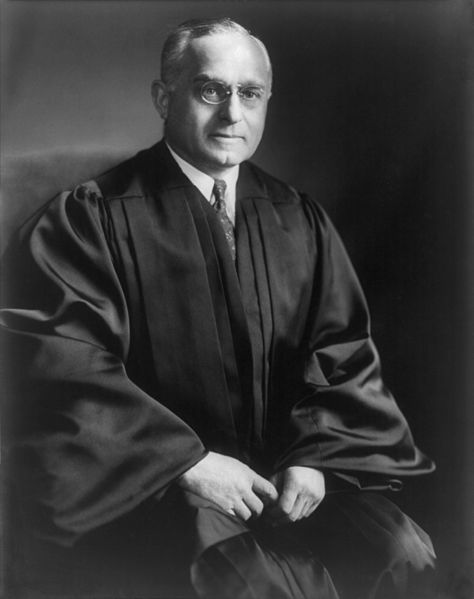
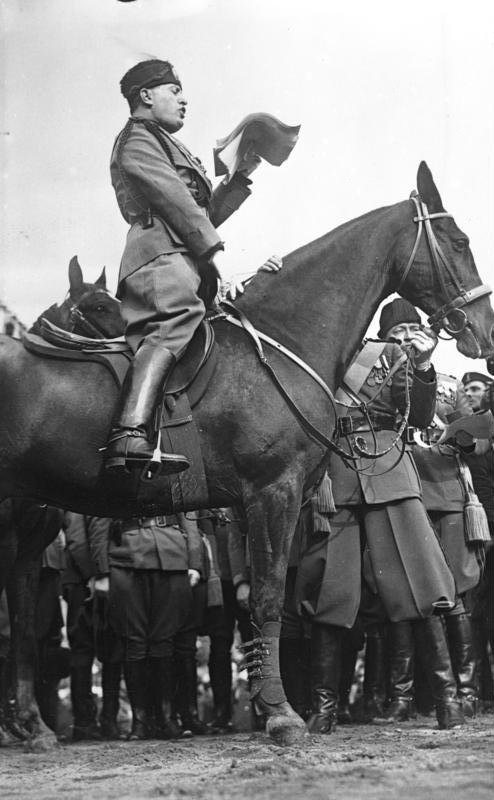




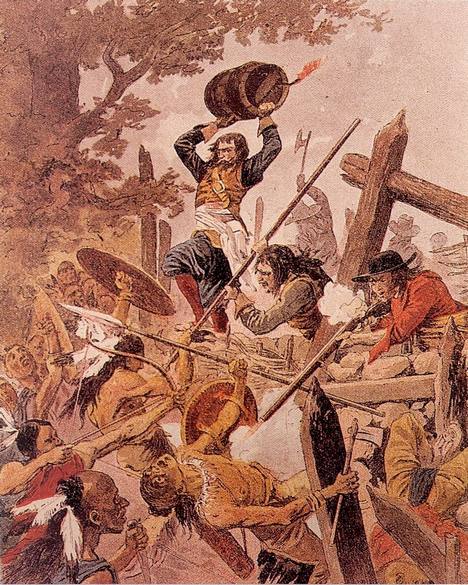

 However, despite his best efforts to prevent it, the Christian-led Social Gospel already had cracks of secularism forming. The Southern Progressives united their message with the Social Gospel being preached in the South, relying on the religiosity of southerners as a connection between faith and politics. As those sympathetic to the Social Gospel waded into secularism through the Progressive movement, they put the Christian revival and spiritual betterment of society on the back burner. The Progressive Era had been born, a secular manifestation of the populist energy that had been created by the Social Gospel, the muckraking labor movement, and Teddy Roosevelt’s trust busting.

