Category: Reviews

  • Reviews You’ll Never Use: Zardoz

    ZARDOZ SPEAKS TO YOU, HIS CHOSEN ONES.

    He speaks to you of his wonderful, magical, infuriating, nonsensical, visually bounteous film.

    This review is the direct result of a number of comments noticed by Your Friendly Ruling Council of Eternals Admins which indicate that a disturbing number of you may not have seen this film. The original plan was to write the entire review as Zardoz, and post it using the Zardoz account. However, I tried it out for a paragraph, and trust me…as a reader, that gimmick has its limits.

    Image result for zardoz
    The Flying Stone Head of Zardoz

    The 1974 movie Zardoz is a passion project tossed as a bone to director, screenwriter, and producer John Boorman in appreciation of his wild success with the 1972 classic, Deliverance. If you haven’t yet seen that one, I’m afraid it’s a tad too conventional for Reviews You’ll Never Use. Deliverance is a completely mainstream film, and so will find no place in this column.

    Zardoz marks only the second post-Bond film of Sean Connery. The actor was apparently having some trouble with typecasting, and not only accepted the role, but became fast friends with Boorman. Our other leading thespian is the beautiful Charlotte Rampling, a prolific actress known for many roles over the years, but perhaps best remembered by trash cinema & horror fans from her turn in the 1977 Richard Harris vehicle Orca, a brutally unsubtle Jaws knock-off.

    Given carte blanche, Boorman oversaw every aspect of the film, from writing to post-production. In his director commentary it is obvious that he reflects on the film fondly but admits that he perhaps stretched too far. To which your humble author would reply, Ah, but a man’s reach should exceed his grasp, Or what’s a heaven for? Indeed what Mr. Boorman considers an ultimately flawed product, is still so delightful in myriad ways that I shudder to think what would have come about if he had succeeded in bringing the totality of his vision to the screen.

    Somehow I don't think this guy believes that the penis is evil.
    I wasn’t kidding about the drawn-on facial hair.

    Our film opens in the year 2293 with a floating head providing exposition (explained by Boorman to be an ultimately unsuccessful attempt tacked on in post-production to reduce audience confusion). Interestingly, this narrator is fully self-aware and refers to his understanding that he is a fictional construct of the writer/director. The head inexplicably has a thin drawn-on mustache and goatee. We cut to a giant flying head that vomits guns and commands the “Brutals” worshiping it to go forth and kill, because, “the penis is evil” and overbreeding brings about a plague of men.

    One particularly clever Brutal, our protagonist Zed, stows away in the flying head and is taken to a realm preserved out of time, where the enlightened scientific remnants of advanced humanity live eternal lives of unspeakable drudgery. Punishment in this society is conducted by forced aging, the senile being sent to live in what appears to be an endless New Year’s Eve party ala TGI McScratchy’s. Others simply give up caring about life, and become Apathetics, standing around catatonic and being given green bread on which to sustain themselves. The self-styled Eternals view themselves as the preservers of the past, collapsed civilization, and their Eden is run by a supercomputer known as the Tabernacle.

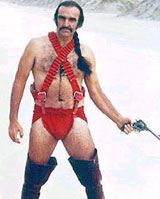
    Yep, you get to see dem titties, along with a wonderful assortment of others.
    Charlotte Rampling
    Hard pass.
    The famous costume that Sean Connery wore to his wedding, and still wears to all public functions to this very day.

    The Eternals capture Zed and decide to study him, to find out how the vulgar strain of humanity has changed over the last two hundred years. One thing leads to another, as things inevitably tend to do in a story, and ultimately the Eternals find the answer to their weary prison of never-ending life.

    This film feels like something that was going to be, supposed to be, could have been, a great artistic achievement. Boorman’s self-directed criticism is on solid ground; it’s all simply too much. The visuals are wonderful. The costumes, the colors, the backgrounds, are all rich and help to bring this very interesting world to life. The problem is that this world is so very rich, that it becomes simply impossible to do it justice while remaining focused on progressing the plot. Who cleans up the Apathetics and the prematurely aged Renegades? They’re all quite spotless. Where do these non-functioning individuals relieve themselves? How on earth do the Eternals plan to cope when, inevitably, everyone slips up and commits transgressions resulting in forced aging into senility? The psychological scenes, in particular, seem over-wrought, as one begins to slip the line of confusing complexity for its own sake and nonsensicality with an artistic statement.

    For all that, I cannot find it in my heart to say this is a bad film. Imperfect? Surely. Plot holes you could drive a reasonably-priced sedan through? Absolutely. But the film is so lovely, the acting so involved, the entire production handled with such obvious love and hope, that it wins you over. Boorman is a good enough director to take what in anyone else’s hands would have become a tangled mess, and turn it into a modern bizarro masterpiece. While it lacks the raw insanity of House, it is obviously the vision of a man who knows exactly what he wants to express, and how he wants to express it, and that vision is sublime. Unfortunately, due to the limitations of time, budget, technology, etc, it is up to you as an audience member to take a step forward and meet the film halfway by taking the parts of that vision which are offered and completing it with your own mind and soul.

    And yes, there are a fair number of titties.

    I award this film 10 Severed Feet out of a possible 13.

  • Reviews You’ll Never Use: House

    Oh boy, where to begin with this one. Forgive me for running long, but this film deserves the digital ink.

    Let us start with this: if I were to receive some moderate sum of money, and be given complete creative control, House is the film that I would make. Please note that I am not necessarily saying this is a good thing.

    This also gives you a pretty good idea about how this movie is going to go, i.e. FUCKING CRAZY.
    Promo Image

    House is unlike anything you’ve ever seen. It’s a big (by the standards of late 70s Japanese cinema) budget art-house experiment horror-but-maybe-not-kind-of-black-comedy. To properly understand this film, you must ingest consciousness-altering substances. Drop some acid, rip as much as you can out of a bong 10 times, eat some mushrooms, get drunk, whatever you have to do to open your mind to the higher mysteries – just do it.

    Looking wistfully across the sea at the success of Jaws, in 1975 director Nobuhiko Obayashi was approached by Toho Films (makers of my favorite franchise, Godzilla) to produce a treatment for a summer thriller blockbuster. While only being a director of commercials, he was known as a creative eccentric who had produced films on the art-house circuit years before. Working with his friend Chiho Katsura, they quickly turned in a script for a haunted house film.

    The gag was, Obayashi had gone to his 10-year-old daughter and asked her for ideas of what frightened her. So impressed by the creativeness of what scares a little girl, he decided to treat the entire picture as if it was from the perspective of a young girl. This meant the inclusion of nonsensical plot elements, shallow archetypes, purposefully hokey effects and animations, all tied together with traditional Japanese ghost story elements.

    Toho green-lit the project and shopped the script for two years, but no director would touch it because they all thought it would ruin their careers. That’s how off the wall this film already was. Fearing that it would never be produced, Obayashi asked the studio if he could at least announce that it had been green-lit. They agreed, and the wild-haired filmmaker began a two-year media blitz to promote the film. He shot promo pictures with the cast, commissioned and released the soundtrack, and even had the film novelized and performed as a radio drama, all for a film that didn’t exist yet!

    That's a weird glory hole.
    So…that just happened.

    Eventually bowing to public pressure in 1977, Toho agreed to allow Obayashi to direct the film himself, even though he had only helmed commercials as a professional, and he wasn’t under contract with the studio (a highly unusual move for a Japanese studio to take at that time). His cast primarily consisted of a gaggle of 17-year-old girls who had been in his commercials previously.

    Without giving away too many details of the plot, our heroines Fantasy, Gorgeous, Melody, Mac, Sweet, Prof, and Kung Fu are slowly consumed by the house, as personified by its evil avatar, a fluffy cat named Blanche. We have an attack by a severed head from a well, which bites one girl in the rear, then vomits blood and throws itself back down the well. We have attacks by chandeliers, attacks by flying log piles, attacks by mirrors, attacks by cannibalistic pianos, attacks by futons and linens, and attacks by telephones. By the end, the house has regenerated itself, showing shades of Burnt Offerings, which had come out in the United States the year before (if you get the chance to see it, Burnt Offerings is a passable haunted house film mostly notable for being mediocre despite a fantastic cast including Oliver Reed, Karen Black, Bette Davis, and even a few minutes of Burges Meredith playing, shockingly, a curmudgeonly old man).

    The plot, though, is not the point of this film. This film is entirely focused on the telling, rather than the tale. The Austin Chronicle perhaps said it best, “there’s surprisingly little to recommend House as a film. But as an experience, well, that’s a whole other story.” We have scenes in which one character tells the others a story, which is shown as a sepia-tone film reel which the other girls can see and comment on. One girl describes a mushroom cloud as looking like cotton candy. There are animations, matte paintings, animals that are clearly being thrown at the actors from off screen, a man who mysteriously turns into a pile of bananas, and several scenes involving 17-year-old girl titties…sometimes disembodied and floating around.

    Obayashi went on to a prolific film career, and eventually in 2009 earned the Order of the Badge of the Rising Sun for contributions to Japanese culture. However, he never managed to match the beautiful insanity of his first effort. The film was a hit in Japan, due to being a breath of fresh air in a completely stagnant industry (by this time, most Japanese directors were churning out Toro-san rip-offs or pinku eiga, which is softcore porn).

    And yes, you get to see some of their little girl titties
    Our intrepid band of potential victims

    The Criterion Collection DVD has several excellent bonus features, including Obayashi’s 1966 experimental film Emotion, a lengthy interview with the director, and a retrospective by Ti West, director of House of the Devil. I had quite liked that film, but Mr. West comes across as somewhat of a smug film-school student spouting platitudes about “challenging the audience”.

    To sum up, I cannot recommend this film highly enough – if you’re a person like me, who takes most of your personal philosophy concerning the nature of existence from the Joker. If you’re a Very Serious Person who likes to Seriously Discuss Very Serious Things, and have a silly hang-up by which you insist that your films follow a coherent narrative structure and conventional character arcs, then…have an adventure and watch it anyway. But get really fucking high or drunk first. It’s worth it.

    I rate this film 8 drug-using dogs out of 10.

    Image result for crazy Image result for crazy Image result for crazy Image result for crazy Image result for crazy Image result for crazy Image result for crazy Image result for crazy

  • Reviews You’ll Never Use: Dark House

    Hello, and welcome to (what may be) the first in an on-going series of film reviews. These will not be your ordinary film reviews, oh no sir, for your humble reviewer is no ordinary cis-gendered heteropatriarchal man. Much as our dear friend the Derpetologist plumbs the depths of the interwebz to bring you only the derpiest in modern derp, I, too, am an explorer in dangerous environs. My particular faculty, however, lies in obscure, campy, poorly made, misunderstood, niche horror and sci-fi films.

    Let us begin with the most recent horror film I have seen – Darin Scott’s Dark House. This appears at first glance to be a meaningless addition to the already rich canon of poorly acted, poorly written, cheap computer FX DTV (direct to video) horror library. However, as our parents should have taught us, looks can be deceiving.

    Some scant years ago, at a small private orphanage, a small gaggle of children are butchered by their insane caretaker, who then takes her own life in suitably gruesome fashion. Cutting to the present, a group of acting students at the local community college are approached by haunted house impresario Walston Rey to act as a skeleton crew for a press run of his new haunted attraction. The attraction is, of course, located in the previously seen massacre house, which over the years took on a “haunted” reputation in the local community. One of the students, Claire, is strangely eager to go. It turns out Claire had a terrifying experience there, and her shrink thinks spending time in the house would unlock her repressed trauma. Unable to go it alone, she believes this will be the perfect opportunity to revisit the house in a safe environment. Thankfully for us viewers, her supposition about the safety of said house turns out to be hideously wrong.

    https://images-na.ssl-images-amazon.com/images/M/MV5BMTU3NDQxMTAxOV5BMl5BanBnXkFtZTcwOTE0Njg1Mw@@._V1_UY268_CR4,0,182,268_AL_.jpg
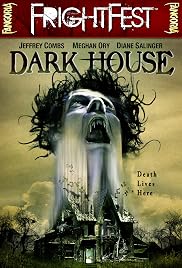
    Box cover. I swear, sweet 80s VHS box covers are a lost art. We will discuss this, AT LENGTH, in a future post.

    The film starts off in a very paint-by-numbers fashion (for low-budget horror) and is saved by the timely arrival of Walston, played by the always delightful Jeffrey Combs. Seriously, I would pay money to watch Jeffrey Combs read the Calcutta phone book. Many of you may know him from his recurring roles in various Star Trek series, notably both as the Vorta Weyoun and the Andorian Shran. True horror connoisseurs, though, will always think of him as Dr. Herbert West in the immortal and perfect in every way Re-Animator. Since Mr. Combs takes the stage (literally) while in a scene featuring the entire rest of the cast, the immediately noticeable gap between his talent, and that of the remainder, is almost jarring. It is here that we are introduced to Claire, played by Meghan Ory. This Canadian actress’s screen credits are ample, if mostly guest shots on TV shows. She plays the role of slightly nutsy Claire adequately, if not with any great enthusiasm. When the rest of her class expresses skepticism, she has some wonderful meta-lines about how many famous actors got their start in low-budget horror. For our readers who may not be aware, this is an actual fact, and will perhaps be the focus of a future post.

    Our intrepid team of would-be actors (and I do mean that in both an in-universe sense and in a real life sense) show up to learn their roles for the press opening of the haunted attraction. Something unnatural goes wrong with the computer controlling the effects and…well, if you’ve ever seen a horror movie in your life, you know where this is headed. Thankfully Mr. Combs is not the first to go, as so often happens in these sorts of films when they spend the money to trot out a fan favorite, but can’t really afford to give their character more than minimal screen time.

    It is at the ending that the film makes its first real attempt to separate itself from the pack. Without giving away too much, what appears to be the closing scene contains a plotting element that comes just…this…close to being interesting and at least a little different. That is something that many of you have no idea how hard it is to find in this genre of film: anything different.

    OH SHIT SON!!!
    Creative Commons image that comes up when you search, “horror”. That’s right, I’m lazy. Screw you.

    Unfortunately, the filmmaker then completely shits it all away with an extra few minutes that wake us violently from the beautiful dream of a low-budget horror film that doesn’t feel like one has wasted 90 minutes of one’s life in viewing, and plants us firmly back in the reality in which most low-budget horror films feel like you’ve just wasted 90 minutes of your life in viewing. A real shame, honestly. This was only director Darin Scott’s second film, so he may be forgiven for not having fully developed his instincts yet. That’s what a good editor is for. He later helmed several other horror films, which you can find on IMDB if you are so inclined, and also directed what I’m sure was an underrated classic, House Party: Tonight’s the Night. That’s right, a House Party sequel, in 2013. When I’m having a hard time slogging through a particularly bad horror movie, I can look back on that fact and remind myself that it could always be worse.

    I award Dark House two-and-a-half Naked Asian Batmen out of five. Image result for pixelated dicks  Image result for pixelated dicks Image result for pixelated dicks

  • Review: Horizon Zero Dawn

    Horizon Zero Dawn is a third-person action RPG developed by the same folks who put together the many, many Killzone games–none of which I have played.

    Mr. Riven and I had been following the news about this game since we saw the first trailer for it. As time went on, we both had concerns that it was going to be an Assassin’s Creed clone …but with a pre-historic feel and metal dinosaurs guise!!11! Thankfully, that doesn’t seem to be the case.

    Not that I didn't try, of course
    Too beautiful to kill

    The game doesn’t have much in the way of traditional tutorials other than some very brief scenes when you’re a child. I, personally, love that. A game that encourages you to learn by playing it takes me back to simpler times. That’s not to say that prompts won’t appear on screen to help you out–press triangle to gather herbs or loot downed enemies, etc.–but you also won’t have to go through 10-minutes of forced actions with a new weapon, either. (“OK, use this weapon to kill enemies this way, now that way, now this other way, congratulations on completing the mandatory tutorial!” I’m looking at you, Batman: Arkham Knight, even though I think you’re otherwise a fabulous game.)

    The world map looks small …until you start playing. Fast traveling costs resources, but I found that I preferred to hoof it from one place to another, anyway. The absolutely stunning world is populated with plenty of machines and wildlife, all of which you are free to kill as you please or not. I highly recommend killing everything that moves because I dislike being resource-starved. That said, as meticulously as I do hunt and gather, I haven’t out-paced the economy; there’s quite a few shinies for sale that encourage “saving up.”

    You could say he has a predilection
    “Mecha-raptor butt-hacking has never been so beautiful.” – Mr. Riven

    The skill point system and accompanying skill trees offer some decent customization options regarding gameplay. Consider yourself a brawler? There’s a tree for that. Prefer a stealthier style? There’s a tree for that. The last tree seems to be largely environmental: gather more resources from fewer sources, override machines for longer, that sort of thing. But it should be noted–so, y’know, note it–that you will certainly max out each of these trees by the end of the game, so it really comes down to what you want first. I’d also like to point out that Mr. Riven plays like Deadshot (lots of ranged combat), while I prefer more of a Deathstroke approach (up close melee combat). So, like I said earlier, options.

    Finally, the story is compelling and downright beautiful, and it shows you right away in the first thirty minutes (ish) of gameplay that the dialogue choices you make might come up again later. Not having played through the entire game, I can only hope that this continues to be the case. Mr. Riven is further along than I am, and there seem to be all kinds of tangled webs to unweave and mysteries to solve. I’m definitely looking forward to seeing how it unfolds, especially considering how gorgeous that unfolding has been so far. (Seriously, the main character’s hair [and hips] are mesmerizing.)

    9/10; will continue to bang.

    If you have questions, please feel free to leave them in the comments below, and I will do my best to address them in a spoiler-free manner…after I put this game down for two goddamn seconds.

  • Prepping & Survivalism

    So I read a book recommended to me by a nice dealer at the Lewisville Gun Show a few weekends back: Patriots: A Novel of Survival in the Coming Collapse, by James Wesley Rawles. I’ll give a brief review, then I thought it might be interesting to open up the comments to ideas on prepping and survivalism, since these are recurrent themes in a lot of the circles that radical constitutionalists and libertarians run in.

    I am sorry to say the book disappoints. The writing is didactic in the extreme. People regularly refer to their gear by both the brand and model number, and their weapons by brand, model, and caliber. In casual conversation. I don’t think at any point during my time in the Army National Guard did I ever refer to my equipment by anything more than it’s most generic name, i.e., “Hey hand me my LBE”. The names of specific companies where supplies were purchased are given, and even the names of the clerks at the companies that the protagonists deal with, only to never be used throughout the rest of the story. The author goes into agonizing detail on how to weld steel shutters over your windows, set up traps, etc. Frankly it reads more like the author wanted to write a how-to manual on setting up your own Cwazy Compund, but decided to do it through the medium of a novel.

    There are, of course, the usual fringe-right fever dreams. The villains are cardboard cutouts: the UN, lead by nefarious Europeans, wants to conquer America because they simultaneously hate/envy us because we’re free, and two traveling communists are found to be literally eating children. Only religious people can be moral, and one of the most important things you ask refugees when you first meet them is if they’re Christian. It’s formulaic: everyone who has a Bible or mentions going to Bible study is found to be a good-guy, and the ones who don’t, well…see the second sentence of this paragraph. There is a Jew who is one of the main protagonists, though he several times reminds the group that they worship the same God. Their Christianity is repeatedly invoked as being the reason they don’t go around raping and pillaging. The main protagonist is leery of leaving two young people alone at his compound, because he won’t tolerate “fornication”, but his wife assures him that as Good Christians they can be trusted to be celibate until they are married. And the Waco and Ruby Ridge killings by the government are described as specifically being the massacre of Christians who just want to be left alone. Would those incidents have been less tragic if they were Buddhists?

    There is a happy ending – a Libertarian gets elected president! Hooray! But aside from that, I’m afraid it doesn’t resonate with a person like myself, who is taking sensible precautions for a several week disruption of supplies and services (accompanied by potential looters or attempts at street violence by bolsheviks), but doesn’t have the time or money needed to create your own private Fortress of Solitude in rural Idaho. Even if it sounds like a fun project, I have no doubt that a divorce would be in my near future should I attempt the thing!

    That brought me the idea for the post: if you’re reading this, presumably you, too, are of a libertarian-ish bent. That means that it is likely that you have thought about prepping in some form or other. Personally, I have several weeks worth of water and non-perishable food stored, a bug-out bag with the usual contents, and a variety of weapons in several common calibers, with a few hundred spare rounds for each.

    So I’ll open it up to the comments: do you consider yourself a “prepper”? What thought, if any, have you given it? What preparations have you made? What’s in your bug-out bag? What’s your main plan (bug-out, bug-in, etc.)? Perhaps we can have future articles on BOB prep, good fall-back locations, tips & tricks on making do without utility service, etc.


    Image result for doge meme

  • Hong Kong, Libertarian Style

    When upon returning from a vacation to visit my wife’s family in the Far East a friend of mine asked me what I saw in Hong Kong. I replied, “A shit load of Chinese people”, and assumed the matter was settled.

    However, that friend then clarified that he was referring to what I witnessed about government and society from a libertarian perspective. Unfortunately for you, dear reader, that answer is much longer, and not nearly as pithy.

    Economics 101

    Ask any educated person about the economy of Hong Kong, and one of the things they are likely to bring up is the fabled commitment to laissez-faire capitalism, with a minimal social safety net. Your gallant author first encountered this when exchanging money at the airport. The HK notes came from multiple different banks. The Hong Kong Monetary Authority has a legal arrangement with three different banks to issue their own notes, all of which are accepted as legal tender for government purposes. The HKMA also prints its own notes, which help to keep the system balanced. Banks are leery of overprinting in part due to their contract with the HKMA, and in part because if they were to do so, the government-issued currency might begin to drive their own out of circulation.

    Both personal and corporate income taxes are exceptionally low, and there is no automatic withholding.

    Interestingly, I saw very few police officers. There mostly seemed to be private security everywhere. There were entire days with not a single cop to be found. The ones I did see were mostly on motorcycles, or driving large Mercedes paddy-wagons.

    The permitting process for businesses also appears remarkably cavalier, from an American perspective. Across the street from the apartment we stayed in, what was an empty storefront turned into, by the time we left, an open and fully functional retail store. I mentioned this to our host, and asked him about the process he went through when opening his own business. He replied that the entire effort amounts to one afternoon of paperwork, which took him about four hours to complete. Essentially, the government wants to know, 1) who you are, 2) what you’re selling, 3) who your co-owners and investors are, and 4) where to find you in case someone files a claim or complaint of some sort. Safety inspections and permitting of the sort we as Americans are used to is largely handled through the landlord-tenant contractual relationship. Please note that there are a bevy of laws governing worker safety, permissible employment conditions, etc., it’s just that the government seems more interested in investigating breeches of these laws and awarding compensation/assessing penalties after a violation has occurred, and less interested in preemptive inspections and permitting.

    Landlords have a great deal of both responsibility and power due to the hands-off nature of local government, and the extreme lack of space. The latter ensures that prices remain high for their room, and the former means a lack of heaving zoning regulation. While I did notice some areas being more industrial than others, by and large there doesn’t appear to be much top-down instruction on what can be built where. Apartment blocks and stores are not only side-by-side everywhere, but are usually found in the same building. Many of the blocks had stores ranging from small general shops and restaurants to full-sized supermarkets taking up their bottom few stories.

    Libertarian Problems

    More worryingly from a libertarian perspective, is the government’s attempt to mitigate the land shortage with massive housing subsidies. I was told by our host that half of the apartment dwellers in Hong Kong have to get some sort of subsidy from the government to afford their apartments. This seems to be the largest government intervention in the marketplace.

    There is a minimum wage law, but it was passed for the first time in 2010, and remains relatively low, at the rough equivalent of  $4.19 USD/hr.

    Taxis are heavily regulated. The color of the taxi determines which part of the city and region it is allowed to operate in. My trip was in 2012, and so predated widespread use of ride-sharing platforms. I would be interested to see how that has changed the landscape. Despite the odd geographic restrictions, the taxies were all extremely cheap by American standards.

    There are increasingly strident pollution controls. This is another item that I asked about specifically, and was informed that up through the 80s, pollution was getting out of hand, and they began to pass laws on emissions and dumping waste into the bay. Our host seemed pleased about it, and told me that the city is a much better place to live now that there is not nearly as much smog and the water isn’t full of trash.

    They also have a combination public/private health care system. Individuals largely purchase catastrophic insurance, and use cash for most smaller medical purchases. There are several designated hospitals heavily subsidized by the government who take in and treat the public for a minimal, token payment.

    Drugs are still strictly illegal, and cigarettes have half their pack taken up with big health warnings and pictures of lung cancer. On the upside, you can walk down the street drinking beer, and as long as you aren’t drunk, it isn’t an issue. I was flabbergasted to find this out, because I hadn’t seen anyone doing it, and immediately purchased a beer so I could walk around drinking it. People still looked at me askance, as apparently it’s considered somewhat uncouth to drink in outside like that, instead of keeping it in the bar.

    All in all, I was greatly concerned to hear that even a government and populace that embrace the minarchist concept could not bring themselves to embrace a free market in medical care or housing, still viewing both as “essential services” that must be provided to people whether they can afford it or not, and that no free market solution was found to the pollution issue.

    In Closing…

    While there are many fun stories, your intrepid author will leave you with two amusing anecdotes.

    First, there are, at my best guess, one hundred billion 7-11s and Circle Ks in Hong Kong. Really, you can’t throw a rock without hitting at least two of them. They seem to not compete with themselves due to population density. However, everyone refers to the Circle K as the “O-K store”. I tried telling a few people that it is actually Circle K, but most don’t know the word “circle”, however they do recognize “OK” in English.

    Finally, their beer is awful. It’s nothing but an endless procession of weak light lagers and pilsners. While in the 7-11 at the base of my apartment block, I was scanning the beer cooler when suddenly I saw a type of Guinness that I had never seen before, called Foreign Extra Stout. My face lit up, and when I turned to take the beer to the cashier, I noticed her sniggering. I knew already that this cashier spoke fairly good English, so I asked her why she had laughed at me. She explained that she was just watching my head scanning the rows of beer, waiting for me to find that one, which she knew I would purchase. Apparently the Chinaman has an inveterate hatred of bold flavors and dark beers, and won’t touch the Guinness, but they keep one stack of them for the white people who come in. I told her I was proud to live up to this particular stereotype!