“What is Romanian Christmas food?” is the question everyone asks. Well, since I did one of these things for Easter, I figured I might as well do one for Christmas. When all you heathens and heretics eat Chinese food and prime ribs and such, Eastern Orthodox do what God intended: slaughter a pig. It is rather traditional for any Romanian family of some size – well, older folk, I suppose, not kids these days… – to buy a whole pig, usually not from an industrial farm but from relatives in the country or a small farmer (we still call ’em peasants here). The pig is prepared nose to tail and little is wasted, to form a very large Christmas feast, which often results in the ambulance being called due to overeating (though never in my family).
Lard, pure and simple
So I will talk of the food I know. Other Romanians families may have somewhat different traditions. This year Christmas was a sad one as it was the first since my father passed away, but my mother and I decided to try to keep Christmas as close to usual as possible. We only got less than half a pig, though. We could have gotten a whole and frozen most of it, but I prefer cooking from fresh meat so I don’t freeze much. The pictures are not good – taken by phone and I don’t know shit about taking pictures – but the food is tastier than it looks.
The liver
The first meal of the day – usually around 9 AM – consists of what we call mezeluri, could be translated as cold cuts. This includes leber (from the German word for liver, I think) which is basically the pig’s liver boiled and minced very fine, mixed with some pig fat minced very fine, some onion chopped fine and sauteed a little in oil, plus five eggs (for the average pig liver), beaten. This makes a liver pate-like paste which is then stuffed in a pig intestine and boiled as a whole for a bit more. Toba – meaning drum – may be similar to what you call head cheese in looks. It is made from parts of the pig’s head and trotters, plus years for the gristle – gristle gives texture – boiled, chopped up roughly, stuffed into the pig’s stomach and boiled a little more. Șorici is basically raw pig’s skin, packed in salt for a few days – the pig is generally seared in order to remove the hair, so the skin may be slightly cooked in the process. Slănină is basically what Italians may call lardo – just less sophisticated, raw pig fat with a little skin attached, also slightly salt cured. Hard salty cheese and raw onion complete the meal, usually alongside bread and țuica.
Drumroll…Caltabos
The second meal -around 12 – is of caltaboș, a thick boiled sausage. It is reasonably fatty pig’s meat minced more roughly, mixed with rice, seasoned with salt and pepper, stuffed in a piece of large intestine and boiled in a broth of mainly water, onions and a bay leaf. This is eaten hot with a squeeze of fresh lemon and some grated horseradish (fresh horseradish just grated and mixed with some salt and a little white wine vinegar). Generally, unlike sausage, the intestine casing is not eaten, and neither is the broth, which is used for cooking. Although red wine works better with pork, in my family we usually drink white with this one.
Pie’s special meat ‘n sausage
Around two or three, the sarmale come – stuffed cabbage leaves cooked with some tomato juice and wine. Red wine usually accompanies this meal, and sometimes a hot pepper to take the occasional bite out of.
In the evening, stomach room permitting, the final meal is usually some roast or grilled pork – ribs in general – and sausage. The sausage is a simple but delicious affair, a mix of fatty pork and beef with salt, pepper, garlic and paprika. This is generally eaten alongside pickles. With this part, red wine continues to be drunk.
Gogosar and friends
As dessert, traditionally it is cozonac (I mentioned it in my Easter post, it is, if I remember my Seinfeld, maybe similar to what polish call babka). More red wine here, if you can handle it, which many cannot. Cozonac goes well with red wine. The saying goes in Romania the only thing better in life than cozonac with wine is just wine.
So that is about it, did not feel like writing a longer post so this will have to do. How Romanians gain weight during the winter holidays.
Hat tip to F. Stupidity, Jr. for the brilliant idea.
jesse.in.mb
Leaning, not doctrinaire. I’ll keep a bug-out bag handy for the next round of purity purges.
Swiss Servator
Minarchist. I previously wielded government power over other people’s life, liberty and property. The experience was…enlightening. Now I shun any dominion over my fellow man, and would hope to see government power limited, severely, over everyone’s life liberty or property.
Brett L
I have an idea of what is Good for me, I have no way of proving it is Good for anyone else. I believe that every human is equally valuable and there is no “fair” way to determine which individuals or groups “deserve” something from our society (whether that be help or to be on the wrong end of the “Trolley Dilemma”). Being a somewhat social animal, people are eventually going to contend in their quest for their Good. I believe that: strong protections of property are vital, people can’t be property, intentional or negligent taking of life is the worst rights violation, and a small, impartial, rigidly process bound entity for settling rights disputes is probably necessary. I have resigned myself to the fact that taking principled stands on this will forever put me on the side of assholes and bigots — so long as they are doing so in a way that doesn’t harm anyone physically or defraud another person. I don’t know what that makes me.
Heroic Mulatto
Recognizing that in current usage the term encompass several different but related schools of thought, I do identify as libertarian. Indeed, much like a Gold Star Lesbian, from the age of 13 when I first developed some semblance of a political conscious, I have never been outside of the libertarian umbrella. My journey has taken me from Objectivist, to card-carrying member of the Libertarian Party, to where I sit now: the Voluntaryist school of anarcho-capitalism.
SugarFree
Small-l libertarian, for lack of a better term. The LP is like watching clowns slapping each other with their own dicks, but I do support them out in The Normal World because, once again, there is a lack of a better alternative. I don’t think of myself as an anarcho-whatever because I don’t believe anarchy is truly self-sustaining–some form of government is inevitable because of The Irritating Asshole Problem–so you better constrain it as long as you can, keep it weak and beaten-down. Like Nietzsche, I look for reasons not to be an out-right nihilist but often fail and slip into the blackest sort of cynicism about the nature of man.
Riven
I consider myself a libertarian. Turn-ons: property rights, contracts, limited government, free market solutions, incentives. Turn-offs: drug and firearm laws, meddling foreign policies, government contracted infrastructure, taxes, preemptive and violent action.
Old Man With Candy
Let’s see… Bill of Rights absolutist, check. Delimited government powers, check. Free market economics, check. No special privileges or restrictions on unions, check. Anti-intervention and antiwar other than defense, check. Freedom of association, check. Freedom of contract, check. No desire for “leaders” and an attitude that elected officials are the hired help, check.
Yeah, I guess I’m a libertarian.
Gojira
Far be it for me to disagree with my esteemed colleague Heroic Mulatto, but I personally don’t consider voluntaryist anarchists (which I am) to fall under the umbrella of libertarianism. I consider anarchism to be aspirational, an overarching philosophy to guide moral decision making, even if it quite possibly can never be perfectly/completely realized.
That having been said, drawing any attention to or harping on the differences between us all is like the leftists and rightists within the CPUSA duking it out in…1901. The distinctions between all anti-government thought are so slight in comparison with the differences we have with the 97% of humanity that believes passionately in CONTROL that infighting is pointless right now. Anyone who wants less government is a potential ally. We can worry about these other details after the Tsar has been overthrown.
Sloopyinca
Yeah, I think I am, in principle. I’m probably leaning a lot more conservative than most of today’s libertarians because I’m probably a little more religious than most libertarians are. And certainly more than most Libertarians are. I hate pubsec unions. I hate compelled participation in government programs. I hate the “progressive” tax system. I hate the welfare state. I hate any government spending that’s not related to protecting life and property (both militarily and police-wise), or for operating our criminal and civil court systems and jails. I’m not a big fan of drugs but don’t think it’s “society’s” business to regulate what someone puts in their own body. I don’t think we should have a federal government that regulates markets or negotiates trade policies. I believe in the natural rights of self defense, freedom of expression, free association, private property and due process and think they’ve been all but demolished by the state.
I’d be open borders if the above were implemented but realize it will continue to create massive problems if not curtailed until then.
So before I ramble on too long, I’ll just say yes, I’m as libertarian as I can be in the current climate. And if certain things our government does with its money were ended, I’d be even more libertarian.
Various contributors came together to make this submission happen. Thanks, guys!
From R C Dean
Not sure what the name of this one is, but the maple syrup makes it very autumnal.
3 oz. Rye (or bourbon – I prefer rye for just about any cocktail)
3/4 oz. Orange Juice
1/3 oz. Lemon Juice
3/4 oz Dark Maple Syrup
4 – 6 dashes bitters (Angostura works, but I also like Woodford Reserve Bourbon Barrel)
Seltzer (couple ounces)
Orange garnish (optional)
I originally saw this “stirred, not shaken”. In my experience, you may not get the maple syrup to fully dissolve by stirring, so I prefer to make this one in my trusty shaker (also, drinks with citrus are classically shaken). The RC Dean method is to put everything but the seltzer and garnish in a shaker, pour over ice, top with seltzer and garnish. Protip: if you add the seltzer to the shaker, you will get a spectacular mess, so don’t do that.
From Nephilium
So here’s a recipe (modified from an issue of BeerAdvocate) I’ll be doing for a dessert this year:
Pumpkin Imperial Stout Tiramisu
Ingredients
1 pint heavy whipping cream
½ tsp cinnamon
¼ tsp nutmeg
1/8 tsp clove
¼ cup Dry Malt Extract
1 cup pumpkin puree
2 cup mascarpone cheese
24 oz Rasputin Imperial Stout (or any other good Russian Imperial Stout)
3 packages ladyfinger cookies
1 cup Simpsons Special Dark Roast Malt, ground to a powder
cinnamon, ground
powdered sugar
Notes: DME and Simpsons Special Dark Roast can be acquired at your local homebrew store. Otherwise you can substitute ovaltine for the DME, and cocoa powder for the Special Dark Roast
Directions
In a medium bowl, add cream, cinnamon, nutmeg, clove and DME. Mix this until soft peaks form, then set aside. In a different bowl, mix together the pumpkin and the mascarpone until fully combined. Fold the pumpkin mixture into the spiced whipped cream until blended (some streaks are fine), and then set aside.
Pour the stout into a shallow bowl or a pie plate. Select your serving container (I usually use a 13 x 9 pan, but you can use whatever size you wish). Then you begin the assembly of the tiramisu. Dip ladyfingers into the stout for 10 seconds, then flip them, and let them sit for 10 seconds again. Then place the ladyfingers into your serving container until you have a single layer. Then take a third of the pumpkin cream filling and distribute it over the ladyfingers. Dust with malt powder, then add another layer of soaked ladyfingers. Top the second layer with pumpkin cream and then garnish with malt powder, some cinnamon, and powdered sugar. Cover with plastic wrap and refrigerate for at least two hours before serving.
If you use a smaller container, you can go to three layers of each, or even four. Do what you want, it’s your dessert.
From DblEagle
AGED EGGNOG
Dozen egg yolks (reserve the whites for something else)
1 lb sugar
1 pint half and half
1 pint heavy cream
1 pint whole milk
1 cup rum
1 cup cognac
1 cup bourbon
1 teaspoon nutmeg (freshly grated is best)
1/4 teaspoon (((kosher))) salt
-Beat egg yolks, sugar and nutmeg until falls off a whisk in a smooth ribbon
-Combine the dairy, booze and salt in different container
– Slowly beat the booze mixture into the egg mixture
-Store in glass container(s) for 2 weeks to 2 months* in refrigerator
Serve in glasses with nutmeg (fresh is best) garnish
* You can (and I have) drink immediately but the aging time enables the tastes to smoothly combine
How to Roast a Whole Turkey with Playa Manhattan:
Don’t. White meat is well done at 165F. Dark meat is well done at 185F. Whenever possible, roast the crown separately from the legs and thighs, otherwise, part of your turkey is going to be overcooked.
For presentation purposes, if you feel that you must serve the bird whole, there is a workaround: plumping. Inject the breasts with enough flavorful liquid to slow down the temperature rise in the white meat. In addition to a 3 day soak in my brown sugar orange/lemon brine, I inject about 6 ounces into each breast before cooking. If you like a more natural, plain turkey flavor, I suggest using an injectable called “Make it Meaty”; it’s quite possibly the most perfect plumping solution I’ve ever come across. As an added bonus, it contains sodium phosphates, which will cause the meat proteins to absorb even more liquid than if you just used a plain salt/sugar brine. You can find the mix on Amazon here. There’s nothing worse than dry turkey, so do what needs to be done, even if you consider it cheating. Happy Thanksgiving, everyone!
From Old Man With Candy: What We’ll Be Drinking:
SP and I regard Thanksgiving as an excuse for gluttony. At the same time, we realize that vegetarian gluttony may not suit everyone, but in our defense, “vegetarian” does not mean “healthy” or “low fat” or “devoid of flavor.” In recognition of this, rather than spilling our vegetarian recipes (which will be made by exactly zero people here), we’ll talk about the bottles that can grace the tables and lure you into a delightful sense of drunkenness. These may be a bit of a splurge, but hey, holidays deserve better than Beringer White Zinfandel.
I admit that I’ve never eaten turkey, but I am told that rosé pairs well. In which case, you owe it to yourself to scarf up a bottle of Francois Cotat Sancerre Rosé, made from Pinot Noir grown in the Loire Valley. Current vintage is 2016, and you can’t go wrong. Unlike most other rosés, the Cotat is actually ageable, so if you find an older specimen, it will be very much worth buying. For a red, I like to be patriotic and drink domestic on T-day, and one of the very few California wineries that has avoided the blowtorch oak-bomb style of Zinfandel is Dashe. Their “L’Enfant Terrible” series (or variously, Les Enfants Terribles, depending on the bottling), made from various vineyards, is a don’t-miss. Natural winemaking: native yeast, no enzyme or flavoring packages, restrained oaking. Pure essence of fruit and soil. For whites, we can actually go cheap and grab some Seyval Blance from New York’s Finger Lakes- we have some Bully Hill in stock, which is very good, very inexpensive, and very reliable. If you want to get fancy, grab some Riesling from Michigan, like the wonderful Chateau Grand Traverse Block 12. And while you’re buying it, grab a bottle of their Late Harvest Riesling for dessert. Not “with dessert,” mind you, FOR dessert, preferably served with a fine quality Wisconsin cheddar. If you are having a chocolate dessert, run, do not walk, to a good wine shop to snarf a bottle of Dr. Parce Banyuls. You’re welcome.
Wherein SP cheerfully ignores OMWC’s comment above about not sharing our recipes
(Use the ingredients in the parentheses for Not Vegan)
2 tbsp white sugar (or honey)
1/2 tsp salt
1 2-1/4 tsp packet rapid-rise yeast
2 cups unbleached all-purpose flour, give or take – divided
1/2 cup unsweetened plain almond milk (or regular milk)
1/4 cup water
2 tbsp margarine, and a bit more for finishing (or butter)
With a small whisk, combine the sugar, salt, yeast and 1 cup of flour in a small bowl.
In a microwave safe bowl or measuring cup, heat milk, water, and margarine or butter to about 105F (41C). If it’s too hot, let it cool a bit before using.
Place the dry ingredients into the bowl of a food processor or stand mixer. With the machine running, pour in the liquid ingredients. Process or mix for 2 minutes or so. Scrape the bowl sides, add 1/2 cup more flour and beat or process until a soft dough forms, about 2 more minutes. The dough will be sticky, but should loosely hold its shape.
If the dough is too soft, mix in the rest of the flour a tablespoon at a time until the dough is still soft but holds shape. Turn the dough out and let it rest on a floured surface, covered, for 10-15 minutes.
Meanwhile, grease an 8-inch round cake pan. An actual 8-inch pan, not man “8-inches.”
Divide the dough into 8-12 pieces and shape into rounds. (I am a little compulsive, so I weigh the dough to have rolls of the same size at the end.) Place the shaped rolls in the greased cake pan, cover and let rise until doubled, about 45 minutes.
While the rolls are rising, preheat the oven to 375F.
Bake the rolls for 20 minutes or until nicely browned. If you wish, brush the top of the rolls with a little melted margarine or butter. Serve pretty close to immediately.
And you thought you couldn’t bake yeast breads from scratch!
From jesse.in.mb
My family found out I wouldn’t be showing up to Thanksgiving with artichoke dip* and fresh baked bread this year and an aunt has dropped her normal provisioning in favor of hanger-management an appetizer. *A chef friend asked me not to share her recipe, this is will get you close enough though. For the past two years I’ve been making extra batches for the BF’s family’s Thanksgiving which I was invited to and it has been strongly hinted that I should continue the tradition and perhaps bring my Aunt Sheryl’s (PBUH) apple pie. I know everyone has their favorite apple pie recipe, but this one is better and I’ll consider disagreement an act of aggression.
Aunt Sheryl’s Dutch Apple Pie
Filling:
2/3 cup sugar
2Tbsp all purpose flour
¾tsp cinnamon
½ fresh lemon
6-8 tart (Granny Smith) apples pared, cored, and sliced (equaling 6 cups)
Combine first three ingredients. Put apples in crust, sprinkle dry mix over apples then squeeze ½ lemon over them (can be left for up to 24 hours in the fridge for more flavor).
Crumb Topping
½ cup flour
¼ cup sugar
¼ cup butter
Combine flour and sugar, cut in butter until crumbly. Sprinkle on top of apples.
Bake at 400 for 45-50 minutes
My fellow libertarians, I have a shameful secret to share. I have not, nor do I intend to, read Ayn Rand. I have no idea of the value of her work, but I have a lot more I would rather read. This will inevitably lead to me being stripped of my libertarian decoder ring, as any fool knows libertarians are all Rand worshipers and the libertarian thought definitely does not go back hundreds of years. Or thousands, if you believe a certain Murry R. who claims Taoism was sort of a precursor to libertarianism.
In fact, were I to recommend something to read to a person who want to get started on the politics of liberty, it would be Bastiat. It is short, clear and very relevant. Not the meandering obscurantist crap that passes for intellectualism on the left.
Which brings me to the idea of this post, although it is basically a lazy non-post, because I did not write much. While I know quotes and aphorisms are mostly meaningless nonsense in most context, one can agree that some people have a way with words others do not, and it is no shame to sometimes use someone else words to express ideas in a more poetic fashion than you could yourself (no, not you SugarFree, but for the others it applies).
So what are the quotes that I like and best express my view of liberty? I can give a few and leave more as an exercise to the class. In no particular order, here is a random quote dump.
“Socialism, like the ancient ideas from which it springs, confuses the distinction between government and society. As a result of this, every time we object to a thing being done by government, the socialists conclude that we object to its being done at all. We disapprove of state education. Then the socialists say that we are opposed to any education. We object to a state religion. Then the socialists say that we want no religion at all. We object to a state-enforced equality. Then they say that we are against equality. And so on, and so on. It is as if the socialists were to accuse us of not wanting persons to eat because we do not want the state to raise grain.” – Bastiat
“Power tends to corrupt, and absolute power corrupts absolutely. Great men are almost always bad men.” -Lord Acton
“Half the harm that is done in this world is due to people who want to feel important. They don’t mean to do harm — but the harm does not interest them. Or they do not see it, or they justify it because they are absorbed in the endless struggle to think well of themselves.” -T. S. Eliot
“The first lesson of economics is scarcity: there is never enough of anything to fully satisfy all those who want it. The first lesson of politics is to disregard the first lesson of economics.” – Thomas Sowell
“Representative government cannot express the will of the mass of the people, because there is no mass of the people; The People is a fiction, like The State. You cannot get a Will of the Mass, even among a dozen persons who all want to go on a picnic. The only human mass with a common will is a mob, and that will is a temporary insanity. In actual fact, the population of a country is a multitude of diverse human beings with an infinite variety of purposes and desires and fluctuating wills. ” – Rose Wilder Lane
“The free market is not a creed or an ideology that political conservatives, libertarians, and Ayn Rand acolytes want Americans to take on faith. The free market is simply a measurement. The free market tells us what people are willing to pay for a given thing at a given moment. That’s all the free market does. The free market is a bathroom scale. We may not like what we see when we step on the bathroom scale, but we can’t pass a law making ourselves weigh 165. Liberals and leftists think we can.” —P.J. O’Rourke
“When plunder becomes a way of life for a group of men living together in society, they create for themselves in the course of time a legal system that authorizes it and a moral code that justifies it.” -Frederic Bastiat
P.J. O’Rourke
“When buying and selling are controlled by legislation, the first things to be bought and sold are legislators.” -P.J. O’Rourke
“Laws are like cobwebs, which may catch small flies, but let wasps and hornets break through.” -Johnathan Swift
“Throughout history, poverty is the normal condition of man. Advances which permit this norm to be exceeded — here and there, now and then — are the work of an extremely small minority, frequently despised, often condemned, and almost always opposed by all right-thinking people. Whenever this tiny minority is kept from creating, or (as sometimes happens) is driven out of a society, the people then slip back into abject poverty. This is known as “bad luck.” -Robert A. Heinlein
“I believe that liberty is the only genuinely valuable thing that men have invented, at least in the field of government, in a thousand years. I believe that it is better to be free than to be not free, even when the former is dangerous and the latter safe. I believe that the finest qualities of man can flourish only in free air – that progress made under the shadow of the policeman’s club is false progress, and of no permanent value. I believe that any man who takes the liberty of another into his keeping is bound to become a tyrant, and that any man who yields up his liberty, in however slight the measure, is bound to become a slave.” -H. L. Mencken
“Of all tyrannies, a tyranny sincerely exercised for the good of its victims may be the most oppressive. It would be better to live under robber barons than under omnipotent moral busybodies. The robber baron’s cruelty may sometimes sleep, his cupidity may at some point be satiated; but those who torment us for our own good will torment us without end for they do so with the approval of their own conscience.” -C. S. Lewis
Walter Sobchak: Am I wrong?
The Dude: You’re not wrong Walter. You’re just an asshole.
“He that would make his own liberty secure must guard even his enemy from oppression; for if he violates this duty he establishes a precedent that will reach to himself.” -Thomas Paine
“The urge to save humanity is almost always a false front for the urge to rule.” –H. L. Mencken
“Don’t go around saying the world owes you a living. The world owes you nothing. It was here first.” – Mark Twain
Mongol General: Conan! What is best in life
Conan: Crush your enemies. See them driven before you. Hear the lamentations of their women.”
“Reasoning will never make a man correct an ill opinion, which by reasoning he never acquired.” – Johnathan Swift
“Political tags—such as royalist, communist, democrat, populist, fascist, liberal conservative, and so forth—are never basic criteria. The human race divides politically into those who want people to be controlled and those who have no such desire. The former are idealists acting from highest motives for the greatest good of the greatest number. The latter are surly curmudgeons, suspicious and lacking in altruism. But they are more comfortable neighbours than the other sort.” -Robert Heinlein
“The trouble with fighting for human freedom is that one spends most of one’s time defending scoundrels. For it is against scoundrels that oppressive laws are first aimed, and oppression must be stopped at the beginning if it is to be stopped at all.” -H. L. Mencken
“I hold it to be the inalienable right of anybody to go to hell in his own way.” -Robert Frost
“Back in my teaching days, many years ago, one of the things I liked to ask the class to consider was this: Imagine a government agency with only two tasks: (1) building statues of Benedict Arnold and (2) providing life-saving medications to children. If this agency’s budget were cut, what would it do? The answer, of course, is that it would cut back on the medications for children. Why? Because that would be what was most likely to get the budget cuts restored. If they cut back on building statues of Benedict Arnold, people might ask why they were building statues of Benedict Arnold in the first place.” – Thomas Sowell
“When law and morality contradict each other, the citizen has the cruel alternative of either losing his moral sense or losing his respect for the law.” ― Frédéric Bastiat
“Life, faculties, production-in other words, individuality, liberty, property-this is man. And in spite of the cunning of artful political leaders, these three gifts precede all human legislation, and are superior to it.” ― Frédéric Bastiat
“Laws were most numerous when the commonwealth was most corrupt,” – Tacitus
“Good intentions will always be pleaded for every assumption of authority. It is hardly too strong to say that the Constitution was made to guard the people against the dangers of good intentions. There are men in all ages who mean to govern well, but they mean to govern. They promise to be good masters, but they mean to be masters.” – Daniel Webster
“To have a right to do a thing is not at all the same as to be right in doing it.” – G.K. Chesterton
“It’s now very common to hear people say, ‘I’m rather offended by that,’ as if that gives them certain rights. It’s actually nothing more… than a whine. ‘I find that offensive.’ It has no meaning; it has no purpose; it has no reason to be respected as a phrase. ‘I am offended by that.’ Well, so fucking what.” – Stephen Fry
“When applied to the ultimate ends of action, the terms rational and irrational are inappropriate and meaningless. The ultimate end of action is always the satisfaction of some desires of the acting man. Since nobody is in a position to substitute his own value judgments for those of the acting individual, it is vain to pass judgment on other people’s aims and volitions.” – Ludwig von Mises
“If the natural tendencies of mankind are so bad that it is not safe to permit people to be free, how is it that the tendencies of these organizers are always good? Do not the legislators and their appointed agents also belong to the human race? Or do they believe that they themselves are made of finer clay than the rest of mankind?” – Frédéric Bastiat
“Sooner or later, the people in this country are gonna realize the government does not give a fuck about them! The government doesn’t care about you, or your children, or your rights, or your welfare or your safety. It simply does not give a fuck about you! It’s interested in its own power. That’s the only thing. Keeping it and expanding it wherever possible.” – George Carlin
“First, given the existence of a powerful government, the people who are most likely to wind up in control of that government are those who (a) have the greatest drive for power, (b) have the skills needed for seizing it (for example, the ability to intimidate or manipulate others), and (c) are unperturbed by moral compunctions about doing what is required to seize power. These individuals are not in the game for the money. They are in it for the pleasure of exercising power. “- The Problem of Political Authority.
“The art of economics consists in looking not merely at the immediate but at the longer effects of any act or policy; it consists in tracing the consequences of that policy not merely for one group but for all groups. Nine-tenths of the economic fallacies that are working such dreadful harm in the world today are the result of ignoring this lesson.” – Henry Hazlitt
“The Marxian definition of value is ridiculous. All the work one cares to add will not turn a mud pie into an apple tart; it remains a mud pie, value zero. By corollary, unskillful work can easily subtract value; an untalented cook can turn wholesome dough and fresh green apples, valuable already, into an inedible mess, value zero. Conversely, a great chef can fashion of those same materials a confection of greater value than a commonplace apple tart, with no more effort than an ordinary cook uses to prepare an ordinary sweet.” – Robert Heinlein
“If you require force to promote your ideal, there is something wrong with your ideal.” – JSB Morse
“There is no virtue in compulsory government charity, and there is no virtue in advocating it. A politician who portrays himself as “caring” and “sensitive” because he wants to expand the government’s charitable programs is merely saying that he’s willing to try to do good with other people’s money. Well, who isn’t? And a voter who takes pride in supporting such programs is telling us that he’ll do good with his own money — if a gun is held to his head.” – PJ O’Rourke
“All governments suffer a recurring problem: Power attracts pathological personalities. It is not that power corrupts but that it is magnetic to the corruptible. Such people have a tendency to become drunk on violence, a condition to which they are quickly addicted.” – Frank Herbert
“Political correctness is fascism pretending to be manners” –George Carlin
“Don’t blame me, I voted for Kodos” – Homer Simpson
And finally
“It comes from a very ancient democracy, you see…”
“You mean, it comes from a world of lizards?”
“No,” said Ford, who by this time was a little more rational and coherent than he had been, having finally had the coffee forced down him, “nothing so simple. Nothing anything like to straightforward. On its world, the people are people. The leaders are lizards. The people hate the lizards and the lizards rule the people.”
“Odd,” said Arthur, “I thought you said it was a democracy.”
“I did,” said Ford. “It is.”
“So,” said Arthur, hoping he wasn’t sounding ridiculously obtuse, “why don’t the people get rid of the lizards?”
“It honestly doesn’t occur to them,” said Ford. “They’ve all got the vote, so they all pretty much assume that the government they’ve voted in more or less approximates to the government they want.”
“You mean they actually vote for the lizards?”
“Oh yes,” said Ford with a shrug, “of course.”
“But,” said Arthur, going for the big one again, “why?”
“Because if they didn’t vote for a lizard,” said Ford, “the wrong lizard might get in. Got any gin?”
“What?”
“I said,” said Ford, with an increasing air of urgency creeping into his voice, “have you got any gin?”
“I’ll look. Tell me about the lizards.”
Ford shrugged again.
“Some people say that the lizards are the best thing that ever happened to them,” he said. “They’re completely wrong of course, completely and utterly wrong, but someone’s got to say it.”
*Okay, no one said that. But this is the story of my getting into the pot business (sorry, no Mexicans and only tangential references to ass sex) and commentary on regulatory issues from a libertarian perspective.
My career has been in IT, Operations, and Finance for Food & Beverage manufacturing. I’ve got a bunch of certifications that prove I can manage a project and make improvements and create models. But the winter of 2016 was one of discontent. I realized that if I continued working in a cubicle / office at a large corporation, I was going to splatter someone’s brains all over the beige fabric cube walls. And since I am too ornery for suicide and too pretty for prison, I decided to get out of Cubeville. My performance had suffered, and I wasn’t fitting culturally at work anyway, so when they offered me a chance to leave, I took it.
My business partner is a friend from the kink community. His career has mostly been IT startups. And two years ago he started doing research into becoming a canna-business owner. When I lost my last job, he invited me over to hang out, showed me the operation, and then talked to me about my plans. At that point I wanted to simply take a month off; period. I haven’t had a vacation except for family visits, in over 5 years.
I started helping with his small med grow just to have something to do and get out of the house. The month elapsed and we started discussing it in earnest. What it would take to get involved money wise, plans, the pot market itself, the various options and strategies. I started thinking about it more and doing some of my own research. I had, by that time, decided I wanted to start my own business and this seemed like a good opportunity.
I’m not a pot user. In 42 years old and I’ve used pot maybe 10 times, all within the last few months. But that’s okay. I see its uses for both recreation and medicine as valid. One needs pleasures in one’s life, and while I think pursuing them in some moderation is better, others may have different priorities. I think that whatever risks come with using marijuana are small enough and manageable enough that I am satisfied morally about selling it as a legal product. Were, say, heroin to be legalized, I wouldn’t feel the same way as there does not seem to be a way for one to use that drug and stay productive. That was critical for my personal decision making – can people use pot and still function or even improve their functioning? I think so.
I also realized I was enjoying myself when I was helping out my friend (and now business partner). We were building things, figuring out how to get things working, digging in the dirt. I’d come home tired and dirty and happy. I spent 20 years trying to get away from anything agricultural because I grew up in a rural area and thought success was wearing a 3 piece suit. But success is enjoying your life and the people in it.
On a business level, cannabis is at an interesting place. I worked in the craft beer industry for a few years and investigated the craft distilling industry as a potential business and I found the history informative. Those families that acquired distributor licenses when the 22nd Amendment was repealed have businesses now that that are worth 100s of millions of dollars. They got in early and they are still reaping the rewards generations later. It’s also interesting to look at wine in the late 70s – early 80s, craft beer in the 80s and early 90s, and craft distilling since the early 2000s. The early movers into those markets are doing well and have strong businesses. Now’s the time for getting into the legal cannabis market.
Growing Cannabis; Clone to Flower (Startup Life, Entrepreneurship)
I didn’t chose the startup life, the startup life choose me. I use that quip sometimes when I have a play partner ask when I can tie her up again and I have to beg off due to running the business. It’s true that running your own business can suck; your boss is usually a dick that rarely wants to give you any time off, and sometimes the sonovabitch doesn’t even pay you, you have to pay him.
My wife and I have always been white collar folks, making excellent money. Further, we lived well within our means and don’t have kids. Which translated to us rarely having to worry about money. We made way more than we spent, even after savings, so we had a huge cushion. Part of being an entrepreneur is that I’ve had to give that up a little bit. My wife still has her white collar job and makes enough to support us easily. But that carries its own struggles with it.
First and foremost I was brought up to, at the least, do my fair share for my family, to be the breadwinner. Yes, yes, I’m a cis-het shitlord. Whatever. So there’s some ego issues with being dependent on the wife’s income for the bills. Also, since she is fascinated by arcane Jewish rules despite not being a Jewess, she claims that since I am technically unemployed, I owe her sex twice a day. I do my best to fulfill that obligation despite not being Jewish, so that keeps her happy with the arrangement. Be that as it may, it’s also a calculated risk, that if this hits as well as it could, in a few years the business will support us in a way that would mean a lifestyle of wealth and time to enjoy that wealth. In the meantime, we are budgeting and making sure we continue to live within our means and it is well worth it.
And that calculated risk I mention does have a huge potential payoff. This is something an entrepreneur has to learn to deal with; risk calculation. Which sounds kind of scary, but is fairly simple if you understand a little math. What’s the potential worst case scenario? What’s the best case? What are the odds of each? Apply dollar amounts to the first two and multiply them by the answer to the last question. If there are things you can do to improve the odds adjust for that, then compare your values and that should help make the decision.
I don’t want to get into specifics of how much I’ve invested, but I’ll walk through the math. I’ll also talk a little about where the investment money came from. We moved to Portland 4 years ago and bought a house at a relative low in the market. A couple of years later we moved out to the suburbs but kept the original house. Due to the house’s location, when we sold it this spring, we made a substantial sum of money. The profit was about 5x of what we expected to make in that period of time. Even after paying off some remaining grad school loans, tucking some away to fatten up the retirement account, the amount needed to invest was less than the remainder. It’s essentially a large windfall, or as I refer to it, we’re playing with house money.
So even if we lose that money it doesn’t damage us long term. There’s an opportunity cost, of course. We could have put that money into paying down our existing house, or invested it in some other enterprise. But anything we do with it would have some risk. The other potential cost is the salary I’m forgoing for the next two years while I try to launch this. That’s my downside number. Let’s call it $100k just to use a round number.
The upside, of course, is if the operation is successful. Since the partnership is 50/50, I simply need to calculate what the expected revenue will be over the next two years and what the profit is going to be. Right now, even the really poorly run ops are making about a margin that is about twice what a well-run food manufacturer makes, and about 25% more than a well-run alcohol producer. For the sake of discussion we’ll put the amount of money I can expect from the profits at $1.5mm. Again, not a real number, but it is proportional to the real number. This also ignores the longer term, and options for integrating the vertical by spinning up a processor and our own retail outlets, as well as some other strategies we have for expansion.
Alright, the risk is losing $100k versus winning $1.5mm. So what are the odds of each happening? That’s the real important part of the decision. Let’s assume the failure rate is 90%. In reality about 67% of cannabis businesses in Oregon have failed. The vast majority were due to failure to comply with either reporting requirements or basic shit like tracking your employees’ hours and properly paying them, which even some fresh off the boat immigrant can manage when starting a restaurant. So that failure rate is low, but for determining expected value, I think it’s a good number.
Multiply $100k times .9 and that’s $90k. Multiple $1.5mm times .10 and you get $150k. Subtract the $90k from the $150k and my expected value is $60k more than if I don’t take the gamble. That makes it a risk worth taking. That ignores that it is difficult to value the experience of trying to start my own business and the freedom and flexibility it provides me.
Any entrepreneur needs to think in those terms, and unless you are starting a lifestyle business, you also need to think of terms of longer term potential. My guess, taking in the past closest benchmark industries (alcohol, primarily), looking at the current demand, and at the future possibilities is that this can be huge.
The market for legal recreational and medical marijuana is massive. In Oregon at least, the demand is higher than the current level of supply. That gap is closing, but it’s going to take a few years for several reasons. Most of the early entrants were black market or med growers who had been growing enough to make a house payment. They are good growers and make some excellent weed. But their business sense is limited. They’d get hooked up with an outside investor that had the money, but no knowledge of growing or interest in being intimately involved. They could smell the opportunity, but didn’t want to be heavy lifting investors. So they wrote a check for $1mm or $2mm. And in a year, they are out of business because the grower burned through the cash. Or they can’t comply with the regulations.
We think our competitive advantage is that my partner and I have grown the product and developed our basic process along with an experienced grower. We believe that we can bring an analytic, process based approach to growing that few others can. Which will allow us to get big enough so that when the market hits saturation and prices start falling down to commodity levels, we have higher margins than average and are able to weather those changes while also scooping up smaller grows. The margins decreasing will only help us as it puts pressure on less well-run organizations.
We also plan to invest heavily in vertical integration. Once the first Tier 1 is fully operational, we’ll open a processor. Then we’ll start the franchise part of the business. There are lots of good growers that either don’t have the cash to get the land, or don’t have much business sense and know it. While we can’t own more than one license of the same type, we can lease the land and provide services to other growers and/or investors. We’re working on the details of that, but it lets us expand legally. Within five years we expect to have our Tier 1 grow, a piece of 3-5 more Tier 1 grows, a processor, and some retail outlets and a testing lab all under our umbrella. We have specific landmarks and decision points along the way. But we are building an enterprise.
Which brings us to exit strategy. Which is venture-speak for ‘how are you going to really get paid off for this investment?’ Are you going to sell it to someone else? Keep running and growing it? Own it but let someone else run it? The answer is; we have plans for each eventuality. I’ll talk more about this in the last section.
A little spindly, innit?
Medium and Nutrition (Specifics about Weed growing)
Cannabis is a weed. So it should be easy to grow. And that’s true. You really only need some dirt, some water, and some light and you can grow a marijuana plant. But there is a difference between growing a single plant and running a farm, both in terms of quantity and quality. It takes skill, art, and science to grow large quantities of high quality product in a given space. Like any other similar enterprise, it’s all about yield. And keeping costs down for each pound you produce.
So every ounce of marijuana starts as either a seed or a cutting. Either way, once the seed or the cutting has roots, it’s placed in a growth medium. That can be soil or hydroponic. We grow in a soil like medium called Tupur. It’s made primarily from shredded coconut shells. It provides a medium for the roots of the plant, but no nutritional value like various other types of soil. The advantage of that is that we can feed more often than if it were in soil and at lower PPM of the nutrients.
That helps in the next stage which is vegetation. The objective in this stage is to grow the plant and strengthen it to prepare it to go into flower. Flowering is determined by the number of hours of darkness the plant experiences each day. The plant will stay in veg as long as it has more than about 13 hours of sunlight. There are some differences between strains and the easy way is to just keep them under the right kind of lights 18-24 hours a day. The longer in veg the bigger the individual plants become and the more they’ll yield when they go into flower. It also allows for different styles of growing; trees (tall), pineapple (bushy), or various types of trellising. There is a trade-off; the longer spent in veg, the longer until you get your final flower. So there’s some balancing we’re still figuring out on that.
Once it is time to go into flower, the grower needs to see that the plants are in total darkness for a certain amount of time. Usually 12-13 hours. This is the natural state of things in the fall when the plants normally flower on their own. But it can be induced artificially outdoors by having green houses with systems for blacking out the green house, or indoors by simply turning off the lights. Flower usually lasts for about 8-9 weeks. Though for some pure sativa strains that time can as much as double.
In flower is where the bud begins to form and grow. The signs one is looking for are solid, dense buds, for the trichs or sugar on the leaves close to the buds and the buds themselves, and looking for other signs on the buds related to the color and density in the buds. There is some art to this and if you harvest too soon it can impact the levels of THC and CBDs, as well as the taste and the quality of the smoke. Harvest too soon and the smoke can be not as smooth or be “speedy” meaning you get amped up instead of relaxed.
When the bud is ready, it is time to harvest. This involves cutting down the plants so that the buds can be dried and cut away from the branches and remove the unwanted stems and leaves. The bud also needs to cure a little while to make it the smoke smooth and maximize flavor. Each bud has to be trimmed and the old school way is to hand trim it so you leave just the right amount. For large harvests though, machines are used. Slightly lower quality, but much more efficient even than orphans. Once the cure is finished, it is time to sell.
Selling for a producers is wholesale. You’re usually selling pounds at a time to dispensaries. There’s some sales effort involved, but much of that is simply taking samples to the buyer at a dispensary, smoking it with them, and then arranging the order and delivery. The three biggest factors are the amount of THC and CBDs, the way it looks when displayed (bag appeal), and lastly how it actually smokes.
Insect & Pest Prevention (Taxes, Regulation, and Weed)
When you wait too long to harvest…
Regulations surrounding weed are interesting. They fall broadly into three types in the state I’m in. First are the types of license, second are zoning related for getting your license, and the rest are operational regulations for keeping your license and being able to sell your product legally. The industry is over regulated, but then, virtually every industry is. And in some ways, pot is less regulated than beer, wine, and liquor if you put aside Federal laws. It’s also less regulated than the food manufacturing industry. The regs are cumbersome and immoral because FYTW and god forbid people actually /enjoy/ themselves, but that’s true for many products. In this section I’ll try to review the basic regulations and how they interfere liberty and some of the unintended consequences I think they bring about.
License Types – One can have either a med license or a recreational license. With med you pay an extra fee on your med card and designate a grower. Depending on where you are, you are allowed a certain number of plants in flower at any given time. There is no real limit on the number not in flower or on the amount produced. You can stack cards, meaning get someone with a card to designate you as a grower, but there are limits on the maximum number of cards you can stack. Other than that, there is not much regulation or reporting required. And if someone reports you, the cops have to call and schedule an inspection when it is convenient for you.
Recreational is a different game. It is more complex and brings with it more reporting and regulatory oversight. But that plant limit goes away and is replaced with square footage limits. In Oregon, there are no limits on the number of people who can have a recreational cannabis license for any of five categories; Producer, Processor, Wholesaler, Retailer, or Research. The same person or group can have all five if they like. And there are different types of sub-businesses. For example, a seed bank is considered a producer. A lab is considered a processor. A home delivery service is a retailer. The exact same ownership group can’t own more than one license of the same type, but there are ways to burn that bridge.
Zoning – The way zoning plays into is that each county is able to have its own zoning regulations related to the various types of licenses. So they can designate various zoning types as allowing only producers and whether it is only indoor or outdoor producers. Any interesting side thing is that the difference between indoor and outdoor is whether the structure has lights. So if you have a greenhouse with no lights, it is an outdoor grow. If you add lights, you are an indoor grow. The reason that matters is both zoning and that a Tier 1 license (the current largest) allows for 40k sq ft of canopy in flower outdoors. Indoors each sq ft of canopy counts for 4 of those sq ft. So effectively it is 10k sq ft. of indoor space allowed. Or you can do a mix of say 5k indoor and 20k outdoor.
There are also zoning laws related to minimum property size, how close to the property line the grow can be, what kind of odor remediation has to be done, visibility of lights, and the kind of fencing and access control that are required. Those all vary for the different kinds of rec licenses. There are other oddities such as you can have a Producer license for land that is considered Agriculture only and it will satisfy that requirement, but you can’t count the income from that toward your tax status. This is one area where the zoning is slightly more complicated than other agri businesses.
Operational – The real regulations come in as part of applying for the license and keeping it. The biggest are all around reporting. The weed has to be tracked individually by plant, including the state of life it is in, and any changes made to it. So, for example, plant 001 has to be trimmed. You have to account for the weight of how much of that is disposed, and if any clones are made from it, you have to track that as well. Once harvested the weight of the flower and any waste or other byproducts have to be tracked. All those numbers have to be reported to the agency monitoring compliance, the OLCC. When you sell any product to another rec license holder, you have to track that as well, so that there is ‘seed to sale’ visibility and prevent weed going into the black market. This is actually common in the food, beverage, and alcohol industries, at least the tracking if not the reporting.
To add to that, the entire grow operation has to be covered by cameras that run 24/7. Again, this is to make sure you aren’t slipping stuff out the back door into the black market. The recordings have to be made available to the OLCC at their request for spot checks. It’s also security for the rec operation as it helps with dealing with any thefts. Slipping stuff out the back door is really dumb. As we all know, the back door is for going in. *ahem* When people do this, they are risking 100s of thousands of dollars of revenue for a couple of extra grand by selling to the black market.
The last of the big three are testing requirements. For every 15 pounds of product, you have to take random samples and send them to a lab for testing. The testing provides proof that you haven’t used any banned pesticides and that your weed is ostensibly safe to consume (compared to literal Mexican ditch weed, most of the stuff on the banned list could be safely used). It also provides information on THC and CBD content that has to be placed on labels for packaging.
There are some other minor things related; you can’t have barb wire on your fencing, you can only have so many visitors per year to a grow operation, and a few other things. But the other three are the big ones. Compared to other industries, they are a little intrusive, but not as complicated.
From a libertarian perspective, the zoning, the size limits and the like are all ridiculous. Those are things which can be worked out by individuals. The monitoring to prevent the black market is, of course, ridiculous. Any adult who wants to buy should be able to buy however much they want from anyone willing to sell it. And the testing reqs are things the free market would demand anyway. So they simply add cost to the entire enterprise without much real value.
Harvest, Trim, Cure and Sell (Where I think this is leading)
From a macro perspective, I think full legalization of marijuana / cannabis is on the horizon. While Sessions has a hard-on about it, I am not particularly worried that he’ll go after legal producers in states where it recreational is legal. Oregon makes far too much tax money from weed to cooperate if the feds go after their legal producers. But the state does have incentive to cooperate in going after black market producers. Which allows Sessions to beat off about stopping the demon weed and the states to force more of the black market producers toward getting legal so they can get that sweet, sweet lucre. Extortion 101.
Beyond that, the real question is when it will be removed from Schedule 1. My estimate is sometime in the next 8-12 years. We’re down to only 2 states where marijuana possession is fully criminalized. All the rest range from being fully legal for both medical and recreational (8 states) to simple decriminalization. The holdouts are really the Midwest and the south east. My guess is that once Texas and/or Florida allows rec or one of the south east states (NC, SC, VA, TN, AL, GA) allows med and/or rec that’ll be the final nail in the coffin.
There’s also growing pressure from various corporate interests. Monsanto is huge in the space at providing lights and nutrients and the rest of the infrastructure and equipment. There is interest from the tobacco companies as well, but they can’t get involved until it is legal nationally. Pharma is opposed at the moment, but I think if you ever see Merck or Bayer get onboard that could help speed up the change.
As I mentioned earlier, cannabis wholesale prices are going to fall as more competitors enter the market. As that happens, you’ll see the standard consolidation. The enterprises that are well run and forward looking will start opening operations in new states that open up their laws. They won’t be able to transfer between states, but they’ll be well positioned to gobble up the smaller operations that have good growers, but poor business practices. And the ones that survive that sorting out and are large enough to be operating profitably once national legalization happens will be acquisition targets for the Monsantos and Mercks and RJRs.
I don’t think the regulations will ever be less than they are now. Unfortunately, I simply don’t see a libertarian moment occurring that will bring the overall level of regulation down. The best the cannabis industry can hope for is a similar level of regulation to the alcohol industry, unfortunately. Which proves we don’t live in the best of all possible worlds, but it would be an improvement over the current situation.
One of the most difficult problems in current political philosophy is related to the concept of vagueness. This is a distinct phenomenon, but related to, vague communication. In common vernacular, when we say someone is “being vague”, typically we mean that individual is, purposefully or not, leaving out certain details of a concept or description that prevent it from being fully defined. The problem of formal logic I’m discussing here involves the issue of definition, but not from a communicational standpoint or a necessary lack of defining information.
Philosophically speaking, vagueness falls within the greater realm of metaphysics, a greater branch of philosophy that seeks to define the nature of reality. Clearly, in defining reality, a key exercise is understanding and categorizing objects and concepts around us. This is where vagueness kicks into gear. The classical problem of vagueness is the sorites paradox (the paradox of the heap). Start with a heap of sand, then remove one grain at a time, at what point does it cease to be a heap and become something else? Working in reverse, one grain of sand is certainly not a heap, nor two, nor three. The heap object and furthermore the concept of a heap itself is vague. Vagueness is distinct from ambiguity, which implies multiple specific, well-defined interpretations of a particular concept (eg: a problem that presents a dilemma) whereas vagueness presents difficulty in forming a well-defined interpretation at all.
What does this have to do with politics?
Problems of this type often present some of the most difficult challenges in contemporary political philosophy. After all, politics is really just philosophy applied to the question of how a society should function, and any problem which calls into question the very nature of specific pieces of reality will be particularly operose. Vagueness often lies at the core of so-called “slippery slope” arguments; if the difficulty in defining a heap is bound up in a wedge issue, then the point at which a heap ceases to be a heap becomes of critical interest.
Let’s explore examples a little closer to home. Probably the biggest problem in society currently related to vagueness is the point as which a fetus ceases to be a fetus and becomes a baby. The way that our society has currently structured the debate about abortion, it is nominally “ok” to kill a fetus because it is not defined as a human, whereas a baby is unquestionably a human and killing it would be murder. I am well aware that there are many other angles to the abortion debate and many people would say that “fetus” and “baby” is a distinction without a difference; i.e., they are the same thing and killing either one is murder. I focus on this particular framing of the abortion debate strictly for illustrative purposes.
Another issue at hand is the concept of adulthood. It is universally agreed upon that two “adults” having consensual sex with one another is acceptable (I would certainly hope so for the sake of humanity’s continued existence). However, what defines “adult”? In the context of sex, it seems to not only depend on an individual’s age, but also the disparity in ages between the two participants. Most people are OK with two 14 year-olds fucking, but would, at the very least, consider a 49 year-old male copulating with a 14 year-old female unsettling. Switch the genders. Does it make a difference? Should it? Outside the specific context of sex, the concept becomes even murkier. Much has been said that it’s unreasonable for someone to be able to legally die for his country, yet not order a beer. Why is it unreasonable? Who should decide this? These questions all arise from vagueness surrounding the concept of adulthood.
Go on…
While one can see clearly that vague definitions can have potentially disastrous consequences for policy debate, libertarianism is especially susceptible to inconsistency and hypocrisy surrounding vagueness. The reason for this is libertarianism’s special emphasis on principle and logic. Libertarians pride themselves on intellectual consistency, principle, logic and rationalism. When definitional concepts of objects themselves (say, fetuses for example) become questionable, strict rationalism becomes quite difficult.
There’s a reason why it’s a common joke/stereotype that autists are drawn to libertarianism. One of the archetypes of the autistic mind is an extreme black and white understanding of the world. If everything in the world is either black or white and everything that’s black is evil (RAAAACIST!!!) and everything that’s white is good, it’s very easy to be principled. However, once vagueness is introduced, the water is muddied.
Many philosophers have tried to solve this problem. There are three main philosophical solutions to this problem: fuzzy logic, the epistemic solution and vague object solution. In fuzzy logic, true and false are not absolute concepts. To paraphrase from the Big Bang Theory, it’s somewhat wrong to call a tomato a vegetable, it’s very wrong to call a tomato a suspension bridge. Truth or falsity of the tomato’s description is subject to gradation. The epistemic solution says that there are solid definitions and boundaries, they simply can’t be known. There is a single, discrete grain of sand that marks the boundary between “heap” and “not heap”. Finally, the vague object solution claims that the objects themselves have no firm definition and they are fungible depending on context.
SHITLORDS!
Typical of libertarian shitlordianism, usually we punt on this question. Libertarians often admit that there is no valid solution to these concerns and give the power to make such determinations back to the individual. Each individual sees the problem differently and the emphasis of libertarian philosophy is sovereignty of the individual, so each and every one of us is free to make such determinations as we see fit. The problem with this is when it clashes with commonly held beliefs (a “tyranny of the majority” problem in itself). If I arbitrarily define “human” to be someone over the age of 5, and furthermore anything below that age is fair game for barbecuing, I face no sanctions morally or otherwise for going on an cannibal killing spree in the maternity ward. Conversely, if I admit that I can’t possibly define what a “human” is, and I remain in irresolvable doubt whether a fetus of any age is human or not, it’s probably better to not kill it. I can even take this to a more absurd level and then make an unironic argument that Onan was morally reprehensible for depriving his sperm of the chance at future personhood (the “every sperm is sacred” argument).
What is to be done? I haven’t the foggiest idea. Often, we libertarians enclose ourselves in a cloak of moral superiority related to our principles. “We have logic on our side!” is our battle cry. The point of this essay is not to tear us down into the muck of progtastic postmodern nihilism; a miasma of nothingness in which nothing has any solid definition and there are no truths. The purpose is to re-examine our premises so that we may be better prepared to tackle these difficult questions when faced with opponents who debate in good faith. It also serves to explain why principles are often more difficult to keep in practice than in theory. And boobs; nothing can ever change the definition of a high-quality rack.
A “hot take” on Catalonia and the recent crackdown by the Spanish central government.
The central government in Spain decided to use force to disrupt the independence referendum held by the Catalan regional government. Exact figures on the vote are not available – partially due to Spanish police seizing ballot boxes, and the lack of independent verification or accounting of the votes. However, the regional prime minister claims victory for the “yes” vote.
The stance of the EU, normally ready to moralize at the drop of a hat, was muted at best. At worst, it was quite unhelpful. Worrying about the EU’s integrity camefirst. Unsurprisingly, France backed Spain. The US said something similar(NOTE: this was a bit ago, but current events have absorbed all attention here).
The most interesting reactions, I figured, would be from Italy. Two of their regions are going after greater autonomy this month. There appears to be a bit of a split of opinion amongst the figures moving for autonomy in Italy…while the central government was quite silent.
No official statement was made on the referendum by Italian Prime Minister Paolo Gentiloni, who told journalists the week before the vote that he considered it “a question for Spain”, or Foreign Minister Angelino Alfano.
So we see little to no support from governments, or the extragovernmental bureaubehemoth EU. This leads me to some questions of you, the resident libertarians (or close enough to it).
Should the Catalans (or Kurds or Lombards) be able to vote themselves out of the country?
If their vote is not recognized, disrupted or such – what do they do next? Civil disobedience? Guerrilla warfare? Full on revolt? Grin and bear it?
What would you do if you were a Catalan, Kurd or Lombard who wanted out?
I was thinking of starting a quick discussion about libertarianism and feminism and how the two go together, because well it could be rather entertaining.
Disclaimer: I am white, male, Romanian, and an engineer, with a huge penis. I mean massive. You should see this thing. So I maybe do not have the full nuances of Americanese society or the blessing of an education in intersectionality at a social sciences college. Which I think is a good thing, as I talk general principle not the particularities of this or that society. Onwards, then.
Also disclaimer: while I use terms like men and women in the article, it goes without saying I do so for the sake of brevity, do add how many ever other identifications in there.
Feminists for liberty
So let’s get ready to rumble. In the blue corner we have a lot of libertarians who are against the concept of feminism, for a wide variety of reasons (from philosophy to actual misogyny). In the red (well pinko mostly) corner, feminists like good ol’ Lizzie NB from you know which site, who says feminism is part of libertarianism, I think. She has that whole feminist for liberty thing going.
Personal view: I am not a feminist. I do support full liberty and rights for women. I do not believe men/women are superior/inferior in any way, though I believe there are some biological differences. Those differences are irrelevant from a philosophical point of view. Beyond the State and the Law, the main concerns of libertarianism, I think people should respect each other and treat each other as equals.
So what is my disagreement with feminism? And to be clear, I do not qualify this by stating third wave/radical/intersectional/postmodern/critical theory/whatever feminism. Feminism period. Well, it is the same with my disagreement with any form of identity politics. Any form of group politics, group rights. The way I see it, it is quite inherent in identity politics to devolve into tribalism and collectivism. It is just human nature. In the end, these movements will fill with self-interested people who profit from them and with people with various ideological ideas beyond the scope of the movement. These people will be interested in grievance mongering, keeping conflicts, and hijacking the movements for other reasons. Inevitably, the demand for positive rights or privileges appears.
Women were not equal to men throughout history. The fact that I believe feminism is not a solution does not mean I discount the problem. Saying communism was a disaster for Russia is not saying Tsarist Russia was just great. I think actually advocating liberty for all is the solution, without going down the path of identity politics. I am sympathetic to arguments that liberty for all is fine, but a certain group’s liberty is more restricted/infringed than other groups, and it should be highlighted, but, in the long term, doing this via identity politics can be counterproductive. You can highlight it strongly without different terms for this. The liberty movement has a long history of supporting equal rights, and can attack a particular injustice without attaching it to identity terminology.
Unlike feminists for sharia
Also, it goes without saying that most of these movements – sex, sexual orientation, race – will be inevitably taken over by ideological leftist – which is the standard left MO – and high jacked for entirely different purposes. The reaction of the left-wing press to organizations like Pink Pistols is quite relevant. Or the environmental movement dominated by watermelons (you know, green on the outside, red on the inside). In the end capitalism is the true problem, because of course. It always is.
Now Lizzie, or people like Christina Hoff Sommers, may say at this point that there is plenty she disagrees with from left feminists and they claim they want a different type of feminism, which is in fact about equal rights and liberty. But that, to me, is like saying oh we don’t want the current big bureaucratic state, we want a competent efficient big bureaucracy. Not gonna happen, as the problems are inherent in bureaucracy and will inevitably reach this point. The same goes for feminism. What the world needs is not more labels and groups and tribalism.
I do not want to suggest that people who identify as libertarian feminists are not real libertarians or something like that. Just that the second label is unneeded and can be quite counterproductive.
About sexism, it is quite important to define it because “anything some feminist does not like is sexism” is bullshit. To give an example, I have heard many a feminist call sexism that a man tells another man a joke that a woman overhears and finds offensive, even if not directed at that woman. Well, tough shit. I my-very-self sometimes like to tell improper jokes, transgressive, or jokes which are offensive just for the sake of being offensive. Jimmy Carr built a very lucrative career on this. If you are bothered, that is your problem and none of mine. I will have to go with the thicker skin thing here. I mean honestly, the world is a nasty place, and it ain’t gonna change soon. So I think a thicker skin is universally useful advice.
Patrice was offensive to women, but it was funny
That is offensive to women, is an oft heard claim. Which women? Are all women offended by the same thing? Who made someone official spokespersons for all women (good gig if you can get it)? Another thing is men will not behave towards women exactly like they behave towards other men and the same goes for women. This is not sexism, it is just nature. It is, as they say, OK.
Is there sexism in the libertarian movement? Well yes, like everywhere. Except the US Democratic party, where there are zero sexists. Furthermore libertarianism attracts a lot of… let’s say non mainstream people, due to not wanting laws against non-violent behavior, irrespective of how in poor taste that behavior may be. Can libertarian men change towards being less sexist / offensive to some women? Sure, probably some of them could.
But here is the problem: I hear many claim casual sexism is what turns women from libertarianism. I am sorry, but this is nonsense. If casual sexism puts you off your principles, your principles were not strong in the first place, and inevitably you would repent and write for Salon about being an ex-libertarian. A community is nice and all, but principles should somewhat transcend that.
Now, of course, ideas reaching people is important. If someone is exposed to libertarian ideas they may become interested in researching further and thinking about it, and in the end developing the principles, so it is important not to turn people off directly. This can use some work for libertarians, including better outreach towards womenfolk. Also, it should be a basic goal in life not to be a complete asshole, sexism or otherwise.
Sadly, the notion that libertarianism is not popular mostly because of marketing issues rings hollow to me. Most people, men and women, do not really have strong principles, do not really research and think about why they believe what they believe. They are just not interested in what libertarians are selling. The movement is small and even doubling the numbers will keep it small. And better marketing will sadly not change much. Looking at the major challenges of spreading libertarianism, casual sexism is not one. Which is sad because it would probably be easier to fix. Of course, that does not change the premise of trying not to be offensive for no apparent reason. This is basic politeness.
It’s really amusing watching the MSM twist their panties in a wad trying to connect Trump to Russia. They’ve gotten the smallest amount of traction and the chants for Trump’s head have started. Besides the fact that the original Trump to Russia connection is based on innuendo and suggestion, the witch hunt has broadened out into a general search for any connection between Trump and the entire nation of Russia. Like a brain damaged chihuahua, the media chants “Russia! Russia! Russia!” hoping beyond hope that they will scare the GOP and Trump into submission. “We can finally control the renegade!” they think, as they piss away the last of their credibility.
Although people joke about “alternative facts,” it’s not a joke. There are two prevailing agendas across the country: 1) Trump is LITERALLY HITLER and A RUSSIAN MOLE AT THE SAME TIME!!! 2) Trump is DADDY and GOD-KING OF KEKISTAN, VANQUISHER OF THE SJWs and CUCKS!!! The left has their educational and media empire churning out outrage by the gallon. The right has their independent media matching the outrage of the left.
Antifa is smashing windows and folks like Based Stickman (who the fuck is Based Stickman and why is he called that??) are bashing Antifa heads in. People are primed to believe that the violence will do nothing but escalate.
I tend to be quite skeptical of claims that the next civil war is about to start. Like the Rapture, many people have predicted a civil war, only to be laughably wrong.
However, let’s travel through another dimension, a dimension not only of sight and sound but of derp. A journey into a scandalous land whose boundaries are that of imagination. That’s the signpost up ahead – your next stop, the Derplight Zone!
This is Donald. Donald is a normal man, somewhat spoiled, somewhat outspoken. Donald has been a real estate mogul for the last few decades, accumulating a vast amount of wealth and notoriety. Recently, Donald was chosen to be the sacrificial lamb of the GOP to allow Hillary Clinton to ascend to her rightful place as Grand Master of the Lizard People The First Female President of the United States. However, something went wrong. Horribly wrong. Donald had an energy that transfixed the public, and nobody could explain it. Donald became President.
Okay, I can’t keep the Twilight Zone schtick up, but let’s continue to investigate why this latest push to impeach could lead to a civil war. There is one big reason why: Trump’s election was an unexpected boon to a class of people that have felt trod over by the political elites for decades. People most fiercely defend unexpected gains, especially when it is threatened by their enemy. The Alt-Right has ascended and has labeled Trump as their knight in shining armor, here to wipe out the scourge of establishment politics and social justice. The Fascist Left has also ascended, using Hitlerian tactics while decrying Trump as literally Hitler. While an escalation of rhetoric isn’t a sure sign of war, it is a prerequisite.
The desperation seen on both sides is significantly more concerning. Antifa Nazis have normalized mob violence and intimidation as protest tactics, and Alt-Righters have responded in kind. This powder keg is gonna blow at some point, and we’re gonna get another Kent State. The question then becomes what happens in response to the deaths of 5 or 10 rioters (of either side). Everything in my mind and heart tells me that a crisis like that would boil up for a few weeks and slowly subside. However, what if it didn’t? What if it boiled up into a tempest?
I think it’s unlikely but possible that this could happen. Either Antifa is gonna beat some people to death, or the Alt-Righters are going to start shooting when Antifa gets violent in the wrong town. This could escalate to people seeking out the melee to contribute, which could escalate to large-scale violence between groups of people. . . also known as a battle. From there, things could snowball into nationwide insurrection.
Obviously, I find this quite improbable, but the increasing violence and radical rhetoric inspire some unlikely thoughts.
I can tell this crowd has its fair share of folks who like their liquor straight up, with none of that faggy “mixology” or “artisanal” bullshit [mental note: must Google to see if “Artisanal Bullshit” is a cocktail already]. So, this week’s post is for you lot.
Liquor that’s enjoyable straight out of the bottle is the Good Stuff; at some level, cocktails are what you do to make liquor that isn’t as palatable more drinkable. You can use the Good Stuff in cocktails and it will often make a better cocktail – although we use Casa Noble for margaritas due to Mrs. Dean’s unfortunate reaction to other tequilas, it is plenty good enough to drink straight up.
For me, mixed drinks are more social – I just associate them and generally drink them in groups when there is a lot of chatter and whatnot. Drinking liquor neat is more contemplative for me – I’ve done some of my best thinking with a glass of Scotch, a cigar, and a sunset. As Timothy Leary taught us way back in the day, set and setting are important when monkeying with your brain chemistry, and those are the sets and settings I use/associate with different kinds of drinking.
Ice? Water? Hey, de gustibus. I don’t drink the Good Stuff on the rocks, but I put a splash of water in my Scotch. Do what thou wilt, I say.
Things about the Good Stuff to keep in mind:
There is a deliriously huge number of brands and varieties. No matter how hard you try, there will always be a ton of things you haven’t tried yet. I always try to have two or three bottles of sippin’ likker in the cabinet, and not just Scotch (I’m a Scotch guy, not a Bourbon guy, when it comes to drinking neat). I always have a good Scotch and tend to rotate rum, mescal/tequila, and Armagnac. I am a creature of habit; I typically get the same booze for mixing, but the variety of the Good Stuff on offer practically demands that I try different ones. The good news is that it’s hard to go far wrong, so that $50 bet you just made on a new bottle is likely to pay off. Worst case – you can use it for making cocktails.
Unfortunately, it’s the Good Stuff, and it is priced accordingly. While my palate for wine runs out around $20/bottle (retail, not restaurant, pricing), in that I just don’t taste what’s “better” about more expensive wines, my palate for liquor hardly ever runs out as the price goes up. Sure, there are bottles that cost $60 that are as good as bottles that cost $100, but by and large the older, more expensive stuff tastes better, sometimes a lot better. That said, anything that is the latest, hottest booze is probably going to be overpriced – I’ve never had Whistle Pig or Balcones because I figure the hype on these has run the price too high. My personal price cap for stuff I drink neat is around $60/bottle (subject to moments of weakness); I’ve never paid much more than $80/bottle for anything but a gift.
So, a few recommendations:
Scotch: I’m an Islay guy. Laphroiag Quarter Cask is a regular visitor to the liquor cabinet, and their 18 year old bottling is reliably divine (I’ve never had the 25 year old). One of these years I hope to make it to the Islay Festival. Caol Ila (thanks to Ron for the recommendation over at TSTSNBN) is excellent, not as peaty/oily/smoky as Laphroiag. Honestly, the problem isn’t finding excellent Scotch, it’s affording excellent Scotch. Personally, I blame hipsters.
Mezcal: The Del Maguey Single Village line-up is excellent. They have contacts with OG local distillers, and some of it is amazing (and priced accordingly – the spendy Chichicapa tastes like the love child of an excellent Scotch and a very naughty tequila). I tend to have a bottle of the more affordable Vida available for those evenings when the world needs that particular mescal vibe.
Rum: The Ron Zacapa Solera 23 has to be tried to be believed. They age it like brandy, and, well, just try it. Honestly, I’ve never even tried another rum for drinking neat. I sprung for a bottle of their XO once, but that was one of the few times when I just couldn’t quite taste the extra money.
Armagnac: Basically, Cognac’s country cousin – I think the only real difference is that each is grown in a particular region (yeah, I’m sure the terroir is totes different, but whatev). I have the vague impression that Armagnac is a little more affordable. This one is more occasional, but I’ve enjoyed the Dartigalongue XO and Hors d’Age, which are both affordable(ish) and not a bad place to start if you are curious.
Derpetologist’s Spot the Not: Thomas Piketty
1. My premise is not to tax to destroy the wealth of the wealthy; it’s to increase the wealth of the bottom and the middle class.
2. I draw my inspiration from Sweden, not the Soviet Union. I have never advocated a centrally-planned economy.
3. I am not political. It is not my job. But I would be happy if politicians could read my work and draw some conclusions from it.
4. One way to have broader access to wealth is to reduce the tax on the large group and increase the tax on the very top so concentration of wealth doesn’t get to extreme levels.
5. I loved American universities. In many ways, they are better organized – certainly than French universities.
6. To put it bluntly, the discipline of economics has yet to get over its childish passion for mathematics.


 Not sure what the name of this one is, but the maple syrup makes it very autumnal.


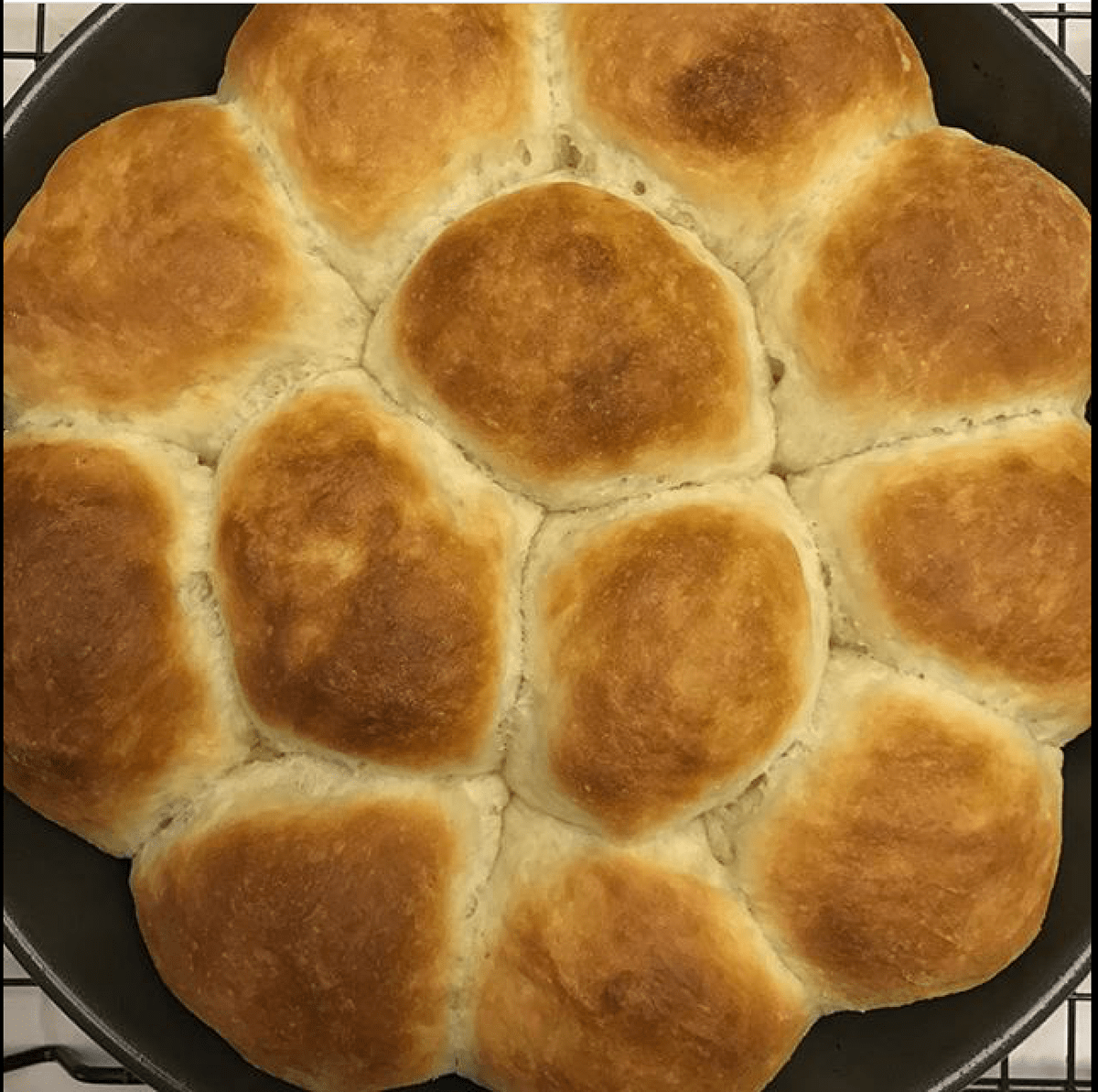

 “Socialism, like the ancient ideas from which it springs, confuses the distinction between government and society. As a result of this, every time we object to a thing being done by government, the socialists conclude that we object to its being done at all. We disapprove of state education. Then the socialists say that we are opposed to any education. We object to a state religion. Then the socialists say that we want no religion at all. We object to a state-enforced equality. Then they say that we are against equality. And so on, and so on. It is as if the socialists were to accuse us of not wanting persons to eat because we do not want the state to raise grain.” – Bastiat
 “Reasoning will never make a man correct an ill opinion, which by reasoning he never acquired.” – Johnathan Swift
 “There is no virtue in compulsory government charity, and there is no virtue in advocating it. A politician who portrays himself as “caring” and “sensitive” because he wants to expand the government’s charitable programs is merely saying that he’s willing to try to do good with other people’s money. Well, who isn’t? And a voter who takes pride in supporting such programs is telling us that he’ll do good with his own money — if a gun is held to his head.” – PJ O’Rourke
 First and foremost I was brought up to, at the least, do my fair share for my family, to be the breadwinner. Yes, yes, I’m a cis-het shitlord. Whatever. So there’s some ego issues with being dependent on the wife’s income for the bills. Also, since she is fascinated by arcane Jewish rules despite not being a Jewess, she claims that since I am technically unemployed, I owe her sex twice a day. I do my best to fulfill that obligation despite not being Jewish, so that keeps her happy with the arrangement. Be that as it may, it’s also a calculated risk, that if this hits as well as it could, in a few years the business will support us in a way that would mean a lifestyle of wealth and time to enjoy that wealth. In the meantime, we are budgeting and making sure we continue to live within our means and it is well worth it.

 Harvest, Trim, Cure and Sell (Where I think this is leading)
 One of the most difficult problems in current political philosophy is related to the concept of vagueness. This is a distinct phenomenon, but related to, vague communication. In common vernacular, when we say someone is “being vague”, typically we mean that individual is, purposefully or not, leaving out certain details of a concept or description that prevent it from being fully defined. The problem of formal logic I’m discussing here involves the issue of definition, but not from a communicational standpoint or a necessary lack of defining information.
 There’s a reason why it’s a common joke/stereotype that autists are drawn to libertarianism. One of the archetypes of the autistic mind is an extreme black and white understanding of the world. If everything in the world is either black or white and everything that’s black is evil (RAAAACIST!!!) and everything that’s white is good, it’s very easy to be principled. However, once vagueness is introduced, the water is muddied.


 This is Donald. Donald is a normal man, somewhat spoiled, somewhat outspoken. Donald has been a real estate mogul for the last few decades, accumulating a vast amount of wealth and notoriety. Recently, Donald was chosen to be the sacrificial lamb of the GOP to allow Hillary Clinton to ascend to her rightful place as