
For most Americans, the Middle East is an exotic and mysterious place. Like the Persian carpets made there, it is a complex weave of nations, tribes, languages, and religions. And like a Persian carpet, you can’t pull on one thread without pulling on many others.
However, if you study the history of the region, certain patterns emerge. I studied the history and cultures of the region for many years until I had my eureka moment. I had discovered what I call the Grand Unified Theory of the Middle East. It is a unifying principle which explains every event there since the beginning of history. Once you learn this theory, you will instantly understand everything that happens there.
Here is my Grand Unified Theory of the Middle East: Everyone hates everyone.
The Arabs and Persians hate each other. The Turks and the Kurds hate each other.The Sunni and the Shia hate each other. The Bedouins and the Berbers hate each other. The Muslims and Christians hate each other. And all of them hate the Jews. The Jews, not wanting to be outdone in the hating game, boldly up the ante by hating both themselves and other Jews, mostly because they are either too Jewish or not Jewish enough.

Could this geopolitical dumpster fire possibly get any worse? Yes, it can! Democracy in the Middle East, where it exists at all, tends to get into a rut. Generally, there is a two-party system which is a fierce duel between the Islamic Party of Islam for Muslims against the Very Very Very Islamic Party. In such a situation, it is difficult to find common ground.
So what should the US do? I suggest treating the place like a nest of killer bees. The farther away you are, the less likely you are to get stung. And if you insist on getting close and throwing rocks at the hive, throw really big rocks. In 1983, Reagan withdrew US forces from Lebanon after a truck bomb killed 241 Marines. He said:
“Perhaps we didn’t appreciate fully enough the depth of the hatred and the complexity of the problems that made the Middle East such a jungle. Perhaps the idea of a suicide car bomber committing mass murder to gain instant entry to Paradise was so foreign to our own values and consciousness that it did not create in us the concern for the marines’ safety that it should have.”


 First and foremost, SP and I have an unnatural love for Bugey Cerdon, the greatest summer wine in existence. Bugey Cerdon is lightly carbonated, pink, slightly sweet, and more than slightly earthy. It’s made from Gamay (the grape used for Beaujolais) and Ploussard (you never heard of it) grapes grown in the Ain region of France, which is tucked between Lyon and Geneva, and within a radioactive whiff of the Large Hadron Collider. The alcohol levels tend to be low (8% is typical), and there’s a crispness and snap which elevates it above most other off-dry pink wines. The method used is an old one – the wine is partially fermented, then bottled to finish fermentation. Unlike Champagne, there’s no added sugar, so the bubbliness is more subtle and muted. This is my safest recommendation – EVERYONE loves this shit, and it goes great with food or can be a warm-up before doing serious drinking. Our favorites are Renardat-Fache and (easier to find) Bottex “La Cueille.”
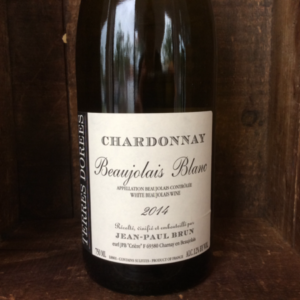 Next up, Beaujolais. Yeah, yeah, you think you know about that one. You don’t. The market is dominated by Georges duBoeuf, and his industrial product defines “mediocre.” And they tend to smell like bananas because of the particular cultured yeast strain used. Fuck that, take a walk on the wild side. What you want is a single-producer wine, one made by a guy with big, rough, hands and who doesn’t own a suit. There are a bunch of these (Michel Tete, Alain Coudert, Jean Foillard, Louis Desvignes, to name some that we love), but the primus inter pares is Jean-Paul Brun’s fabulous Terres Dorees. The reds are, as required, made exclusively from Gamay grapes, wild yeasts, and minimal processing. It’s the opposite of an industrial product. If we see any of the l’Ancien or Cote de Brouilly, we max out our credit cards. But you can’t go wrong with any of the names I mentioned. Keep your eyes open for the rarely seen but eminently wonderful Beaujolais Blanc from one of the farmers – this is what Chardonnay would be like if only it were more interesting. Racy acidity, stony minerality, none of that heavy, oaky crap that California spews.
 And lest I run on too long, I’ll tout what reputedly is the best seafood raw bar wine on the planet: Muscadet. And of all Muscadet, Domaine de la Pépière is what I’d want to be drinking tonight, at least if I were out of Luneau-Papin. Domaine de la Pépière makes an array of them at prices ranging from friendly to oh my, but you can’t go wrong here. Stony, steely, a hint of almost saltiness, and an acidity that just begs you to put some deep fried food into your whore mouth. This is serious wine, but so delightfully refreshing as the sun gets low in the sky and the food on the grill crackles and crusts.