Most people care a lot about equality. References to it abound in national mottoes and constitutions. But what do people really mean when they talk about equality?
Surely they know people are unequal in countless ways already: strength, intelligence, looks, height, gender, age, and so on. It is impossible to equalize people in these areas, outside of science fiction. So the only way people can be equal in a meaningful way is if they are held to the same standard.
But some people don’t like that. In particular, it bothers them a great deal that some are rich and others are poor. Others demand that people they perceive as inferior be treated differently.
I once saw a very interesting video of an experiment with monkeys. There were two monkeys in separate cages but close enough to see each other. They had tokens in their cages, and the trainers had taught the monkeys to hand them the tokens in exchange for a cucumber slice. But then they started giving one monkey grapes instead of cucumbers. Monkeys like cucumbers, but they love grapes. The other monkey began throwing back the cucumber slices at the trainers when it was not getting “equal pay for equal work.”
It appears that primates have a kind of instinct for fairness. People are similar, except that they become angry in response to things they merely *perceive* as unfair. Social justice has become the new catchphrase for this group, though they most shy away from explaining how it differs from regular justice.
Imagine your boss calls you to his office and tells you you’ve been doing great work this year and so decides to give you a bonus of $5,000. You walk out of the office feeling amazing. A coworker notices and asks what you’re so happy about. You tell him about the bonus and he replies, “Oh, I got $10,000 and so did everyone else.” You would probably instantly become angry. But why? You’re still richer than you were before. Why would it upset you that others are doing better? Their greater success did not cause your lesser success. You’d probably be angry because you’d say to yourself you’re just as good as them and so deserve the same – even if this wasn’t true.
The easiest way to be unhappy is to compare yourself to other people. This is why many religions teach that envy is a sin.
Communist countries, too, tried to eliminate envy by making everyone equal. There was an inherent contradiction in this. If you put a group in charge of equalizing people, you have created a new form of inequality. There are many jokes about this from the USSR:
In the US, the rich become powerful, but in the USSR, the powerful become rich.
In capitalism, man exploits man, but in socialism, it’s the other way around.
One joke I particularly like is the story of a bunch of triumphant Bolsheviks rejoicing in the streets after they hear of the revolution. They ask an old woman why she isn’t rejoicing, that soon there will be no more rich people. The old woman says “I thought the point of the revolution was that there would be no more *poor* people.”
Although it often rubs us the wrong way when we see someone doing better than us, it’s important to resist the urge to bring them down. When people are free to be the best they can be, the result is better goods and services for everyone.
Finally, it’s important to realize that money and power always find each other, no matter how hard we try to keep them apart. The only answer to this is for people to believe that there should be strict limits on the government’s power and that people should be free to live as they want. Aristotle said justice consists of“treating equals equally, and unequals unequally.” Anything else is unjust and stupid.
Freedom does not guarantee happiness, but forced equality guarantees misery.
Friday! Friday! Friday! Thank the Lord in heaven. This has been a challenging week, y’all. I’m glad we’re reaching the end of it.. Let’s dive in, shall we?
Well, you say that but …
Venezuela takes one step closer to becoming a dictatorship. Lefties across America wish they controlled the courts so they could do the same here…except with Trump. And the legislature. And some of the courts. And state legislatures. And governorships. And …well, you get the point. I just wonder if it’ll dawn on them that this is the march to death their political-economic dream leads to.
Penn State trustee keeping it classy. I still say they should have razed the football stadium to the ground and turned it into a prison for child molestors. They’re not worthy of participating in organized sports after the shit they pulled.
I’m going to break one of my own rules established when I began this review column and provide a review for a new, mainstream blockbuster film. In a broad sense, I’m doing this simply because I can; admin power is not worth having unless it is wielded capriciously. But in a much more focused sense, I’m doing this because this film falls firmly in my wheelhouse. It is an American kaiju eiga, and there are damned few bigger fans of this genre in the world than your intrepid author.
I hope that it is not too much of a letdown when I tell you that even as someone radically predisposed to enjoying this sort of film, I found Kong: Skull Island to be an unsatisfying experience. Let’s delve a little into what brought this film about, and see where things went wrong.
Promotional poster for the film
This movie is a direct result of the existence of Marvel Comics. More specifically, the new Hollywood craze of “shared universe” largely instituted by the success of the Marvel films, beginning with 2008’s Iron Man. Shared universes existed previously, of course, mostly in linear sequels which often only obliquely referenced the events of prior films in the series. Perhaps the most famous and successful shared universe pre-Marvel was the Star Wars franchise. However, Marvel took it to an entirely new level, with cross-over cameos, and explicit tie-ins canonically linking each movie into a specific place and event sequence in the universe, and where actions in each film had direct repercussions upon the subsequent films in other lines (Agent Smith’s capture of the Tesseract in the first Captain America story having a direct influence not only on the first Avengers movie, but also creating the overarching story of the hunt for the Infinity Gems/Stones, as they are called in the comics and film series, respectively). This level of cross-promotional bonanza was unheard of before the wild success enjoyed by Marvel, and other studios have been scrambling to catch up ever since (and mostly failing – suck it, Warner Bros.!). Even one of the previews for this film is for another franchise-starter for a shared universe, The Mummy. Universal is hoping to rehash all their classic monsters in new, gritty films in which the monsters will all presumably eventually work together. This will lead to a steaming pile of crap, OR possibly be one of the greatest movies ever made.
Never ones to pass up an opportunity to copy something else more successful, studio after studio began planning sessions on which properties they could franchise into endless streams of summer blockbusters in shared universes. In 2010, Legendary Entertainment had acquired the rights from Toho Co. for a big-budget American Godzilla film. This led to the Gareth Edwards 2014 film, titled simply, Godzilla. I thought it was very well done, but I’ll not say more lest you heathens receive two reviews for the price of one.
After the success of that film, in which Legendary partnered with Warner Bros. for financing and distribution, some bright bulb thought to check and see if WB had or could secure the rights to our own homegrown giant monster, King Kong. Sure enough, they did, and Shared Universe Mania did the rest.
What this is all ultimately leading up to. Read on!
However, you can’t simply launch straight into a two-marquee monster mash-up without the mortar of the shared universe structure, which in the industry is called universe building. A more prosaic term might be “let’s see how many of these cash-grabs we can shit out before having to get to the main event”. And so Kong: Skull Island was born in their small, fevered minds.
Our story takes place in 1973. Fancy-pants cryptozoologist (fun fact: Microsoft Office does not recognize that as a real word, just like it isn’t a real job) John Goodman has discovered a new island in the South Pacific, where he believes be dragons. He fakes an interest in cartography and securing any unknown natural resources of this island before the Soviets can get their red claws on it, and manages to convince the gub’mint to provide him with an Air Cav escort led by regular-pants Samuel L. Jackson. Jackson is an officer who is bitter over America’s seeming defeat in the Vietnam War, and looking for one last mission to find meaning in an otherwise meaningless age.
Pictured here: all you need to know about Vietnam
With Too Tall and Snake Shit in tow (damn, wrong movie), along with stock issue anti-war journalist Brie Larson, and drunken burned out former SAS devastatingly handsome devil-may-care mercenary Tom Hiddleston, the stage is set. Upon flying over Skull Island on an investigatory bombing run (yes, I meant what I typed: it’s part of a geological survey cover story so preposterous I don’t want to spoil it for you), the entire force is knocked out of the sky by Kong. The remainder of the film is the story of groups of survivors trying to make their way to a pre-planned rendezvous with a resupply mission from the cargo ship they arrived in. Jackson wants to kill Kong to avenge his dead soldiers, whereas the civilians are only worried about getting the hell off the island. Various giant beasties make their usually violent appearances, and we meet the taciturn natives of the island, who have taken in stranded World War II fighter pilot John C. Reilly.
It’s a hell of a cast. Legendary obviously was willing to spend All Of The Money to make this thing work. The problems, though, begin to surface early.
First, I honestly thought that Goodman and Reilly turned in the only worthwhile performances in this film, and even then barely. The characters are written so thinly that they all come across as clichéd archetypes, from the Handsomely Brooding Very Serious Hiddleston to Jackson’s bitter war vet, played by the actor shockingly against type as a loud badass angry black man. Reilly is genuinely funny as the comic relief, though there’s nothing in his performance that you haven’t seen before, so if you weren’t a fan of him in Talladega Nights or Step Brothers, there won’t be much for you here.
Director Jordan Vogt-Roberts seems to be aware of the paucity of actual artistic effort going into this movie, and we’re introduced to the titular giant ape extremely early in the film. I suppose he knows why people are coming to see this movie, and it isn’t just to find out it was a fucking sled from his fucking childhood (I still get angry thinking about that, at random times throughout the day). His only other full-length efforts prior to this were the indy film The Kings of Summer, and 49-minute runtime made-for-tv movie Cocked. Being given the keys to the kingdom on such a large production so early in one’s career paid off handsomely with an at-the-time still relatively unknown Gareth Edwards and Godzilla (Gareth got that job on the really quite good indy alien invasion film, Monsters, before using his kaiju success to then land the plum directorial job for Rogue One), but here Vogt-Roberts’s fails to bring life to an already torpid script.
A small sampling of my personal Godzilla memorabilia collection, and every film except for the 1998 Matthew Broderick abortion.
The effects, always of paramount concern in a film such as this, are passable. It is, of course, a CGI crap-fest, but since that is the future of all film, I suppose I have to rein in my old man frustration and forever bury my man-crushes for the masters of the practical. If the names Tom Savini, Rick Baker, and Rob Bottin mean nothing to you, you are a sad, deprived little person.
There are call-backs to Jurassic Park (Mr. Jackson tells his men to, “Hold on to your butts!”), the original King Kong Vs. Godzilla (giant octopus fight scene), and universe building with the 2014 Godzilla. The secretive government-sponsored Monarch Corporation is a prime player, and Godzilla-related past events shown in the earlier film are referenced again in this one.
Already announced: the next film to be released will be Godzilla: King of the Monsters (2019), followed by Godzilla vs. Kong (2020). Hold on to your butts.
Ultimately I rate Kong: Skull Island 12 Bags of Cat Food out of a possible 20.
I always count on HuffPo for understanding science. Bill Nye, the actor who pretends to be a scientist, is waiting outside with handcuffs for Curry and Christie, actual scientists. And all is not smooth sailing in Nye-land.
If we had built that wall, this would not have happened. OMWC approves.
This undated photo released by the Tennessee Bureau of Investigations shows Elizabeth Thomas in Tennessee. The Tennessee Bureau of Investigation said it remains “extremely concerned” about the well-being of Thomas, a high school student who was last seen Monday, March, 13, 2017, in Columbia, Tenn. (Tennessee Bureau of Investigations via AP)
In Part One, we started following the life of Raoul Berger (1901-2000).
Now in Part Two, we pick up where we left off last time. We find Berger, recently widowed, in his sixties as the Sixties got started. He took a job teaching law at the University of California at Berkeley.
“Berkeley, here I come! California sun, hippies, free love, rock and roll, marijuana, taking over the dean’s office…I hope they don’t make too much noise enjoying those things while I’m at the library studying constitutional history.”
Holding his views about the importance of history to nailing down the meaning of the Constitution, Berger was now in a position to flesh out that history. He began the first of several historical research projects seeking the meaning of the Constitution as understood by those who framed and adopted it.
Berger produced a two-part article about executive privilege in the UCLA Law Review in 1964 and 1965. These articles vehemently attacked the executive privilege doctrine, both on practical grounds and on the grounds of the intent of the Framers of the Constitution.
Executive privilege is basically part of a double standard cooked up by lawyers in the Cold War executive branch. At a time when the executive branch was engaged in massive intrusions into the privacy of the American people (with or without the approval of Congress and Congress), Presidential lawyers suggested that neither Congress nor the courts could see the private and confidential records of the executive branch or obtain testimony about the executive’s affairs, unless the President approved. The justification was that, if the President’s advisers feared having their confidential advice being disclosed to Congress and the courts, it would make them timid. Welcome to the world the rest of us have to live in – a world where things we thought were private can be revealed to the government via subpoenas and snooping.
For the supporters of “executive privilege,” one of the rhetorically most effective arguments involved former Senator Joseph McCarthy (R-WI), who flourished from 1950 to 1954. As a powerful subcommittee chairman from 1953 to 1954, McCarthy had been able to subpoena various government departments (such as the Army) for testimony and documents about possible Communist infiltration and the adequacy of existing procedures for keeping Communists out of the government. When we realize that McCarthy’s subcommittee was the Permanent Subcommittee on Investigations of the Committee on Government Operations, we can see how utterly irrelevant McCarthy’s subpoenas were to anything in which Congress or the public had an interest (note the sarcasm). The Eisenhower administration had ducked and defied the subpoenas and had justified its behavior by reference to executive privilege. McCarthy’s censure in 1954 had seemed to justify the Eisenhower administration’s stance. (To be sure, the censure denounced McCarthy, not for abusing his Senate investigative powers, but for obstructing Senate committee investigations into his own conduct). Given McCarthy’s reputation as a reckless demagogue who targeted innocent people, executive privilege could be portrayed (though it was a stretch) as a necessary protection against Congressional prying into the executive branch’s affairs.
“Now, Mr. Hendrix, remembering that you are under oath, answer my questions: Are you experienced? Have you ever been experienced?”
Berger’s article said that “One who would espouse the claim of Congress to be fully informed must face up to the fact that the rampant excesses of the McCarthy Senate investigations left the process in bad odor.”
Congress had every right, said Berger, to demand information from the executive branch. The President and the bureaucracy were seeking “immunity from congressional inquiry except by executive leave.” This was wrong as a matter of policy because the executive branch had too much power already, and Congress was entitled to get information about the operation of the laws it passed and the spending of the money it appropriated. Executive privilege wasn’t necessary to protect the executive, as shown by the fact that the Kennedy administration had greatly curtailed the use of executive privilege, without any noticeable harm. The issue had not yet been settled however. The current President, Lyndon Johnson, still claimed the right to invoke executive privilege even though, like Kennedy, he was not exercising it very much. “[I]t may be doubted in light of the past, whether future successors who lack [Kennedy and Johnson’s] legislative experience will” be as deferential to Congressional demands for information.
To show the unconstitutional nature of executive privilege, Berger gave a lengthy review of “parliamentary and colonial history prior to the adoption of the Constitution, without which ‘the language of the Constitution cannot be interpreted safely.’” (the internal quotation is from this case). This history, Berger argued, demonstrated that the Constitution did not confer on the executive branch the unlimited privilege of withholding information from Congress.
“History,” Berger proclaimed, is “the traditional index of constitutional construction.” Berger did not insist that historical analysis would trump all practical considerations, but he added that there was no conflict between history and practicality when it came to the executive privilege question. “For present purposes, it suffices to regard historical evidence, not as conclusive, but as a necessary beginning upon which we can rely until, in Holmes’ phrase, ‘we have a clear reason for change.’” In a footnote, Berger reiterated his belief in the historical approach: “the Constitution was designed as a bulwark for minorities; and it can be sapped by freewheeling interpretation.” Berger commented in another footnote: “On any theory it is incompatible with the lofty role of the Constitution to ‘expand’ it as waywardly as an accordion.”
Berger’s solution was to have the courts review Congressional demands for information from Congress. This would avoid giving the final decision to the executive, and it would avoid the dangers of an opposite problem of unlimited Congressional power.
During the mid-sixties, executive privilege was a strictly back-burner subject. It was of interest to legal scholars like Berger, but as Berger himself had mentioned in his article, Presidents Kennedy and Johnson had dialed back on the exercise of the privilege. Of course, Kennedy and Johnson still insisted they had the right to block Congressional inquiries, but this sort of abstract question was not the sort of thing which would get most people excited. Certainly not in the left-progressive community, which for the moment was comfortable with the idea of broad Presidential power. With the White House occupied by Democrats who were more leftist than the Congressional leadership, progressives had no urgent need to curtail the President’s prerogatives. So they thought.
Berger left Berkeley in 1965. He ended up at Harvard, where he would become the Charles Warren Senior Fellow in American Legal History.
Harvard Gate, with its low-key, modest inscription
The fruits of Berger’s next research project came out in 1969. His work was based on a desire to find out whether judicial review – the power of federal courts to declare laws unconstitutional – was actually based in the original understanding of the Constitution. Berger also wanted to know whether Congress could limit the power of the U. S. Supreme Court to hear appeals from lower courts. In Congress v. The Supreme Court, Berger answered the first question with a yes (the original understanding justified judicial review) and the second question with a no (Congress did not have the power to limit the Supreme Court’s appellate jurisdiction).
These particular topics certainly resonated in 1969, given then-recent history. To review this history, given that my ultimate topic is the Bill of Rights, let me discuss what happened with the Bill of Rights in the 1960s, and let me in particular direct the reader to the dog that didn’t bark.
Awww…cute little doggie! Now, what was I saying?
In a series of decisions in the 1960s, the Supreme Court under Chief Justice Earl Warren said that the states were required, under the Fourteenth Amendment, to obey several provisions of the Bill of Rights from which the Court had previously exempted them.
You may remember Earl Warren as the author of a California law by which a criminal defendant’s refusal to take the stand could be considered evidence of guilt. The Supreme Court had upheld that provision in 1947, based on the idea that the states didn’t have to respect the privilege against self-incrimination. In 1964, the Supremes said that actually, the states couldn’t force criminal defendants to incriminate themselves.
(In 1965 the Supremes clarified that this made Earl Warren’s old law unconstitutional – a defendant’s refusal to testify could not be used against him. Warren did not take part in this decision due to his authorship of the law the Court was striking down).
States now had to obey the Fifth Amendment’s self-incrimination clause. States also had to obey a bunch of other clauses which had formerly been optional for them: the Sixth Amendment’s right to trial by jury, the Eighth Amendment’s ban on cruel and unusual punishments, the right to counsel (even for the poor), the Fifth Amendment’s ban on double jeopardy, and some others. By the time the Court was finished, only a few Bill of Rights provisions remained optional for the states – minor things like the Second Amendment and the grand jury clause.
If applying parts of the Bill of Rights to the states had been all the Warren Court had done, the Justices probably wouldn’t have provoked a lot of fuss. The reason that opposition to the Warren Court grew in the 1960s wasn’t because of the Bill of Rights, it was because of the Court’s controversial interpretations of the Bill of Rights.
Specifically, the court gave three controversial decisions – Escobedo v. Illinois, Miranda. v. Arizona, and United States v. Wade. Under these decisions, federal, state, county, and city cops had to follow certain standards when investigating or questioning suspects or else their police work wouldn’t hold up in court. The cops had to allow a suspect have his lawyer with him during questioning or during a post-indictment lineup. The cops had to inform a suspect of his rights, including the right not to talk to the cops at all. If the cops ignored a suspect’s newly-enunciated rights, then any confession they obtained would have to be excluded from the suspect’s trial. In the case of post-indictment lineups held without the suspect’s lawyer, a witness who had been tainted by such a lineup wouldn’t be allowed to identify the defendant in court.
These decisions may well have been the right call, but what I want to emphasize is the nature of the opposition these decisions provoked. Opponents didn’t say that it was an outrage that the Supremes imposed parts of the Bill of Rights on the states. They didn’t object in principle, they claimed, to the right against self-incrimination or the right to a lawyer. What they objected to was the broad interpretation the Supremes had given to these rights, an interpretation so broad (opponents claimed) that it improperly assisted criminals against society’s “peace forces” (to quote Richard Nixon, who began his Presidential campaign around this time). To the critics, a suspect’s confession could be perfectly voluntary even if the police hadn’t given an explicit Miranda warning in advance of questioning, and a witness who said (s)he recognized the suspect from a lineup should be able to say so in court even if the cops hadn’t allowed the suspect’s lawyer to attend the lineup.
So here is “the dog that didn’t bark.” Whether the opponents of the Warren Court were right or wrong, what irked the critics wasn’t that the Court had imposed parts of the Bill of Rights on the states. The critics simply interpreted the Bill of Rights differently than the Court did, and they claimed that the Court’s interpretation was excessively pro-defendant.
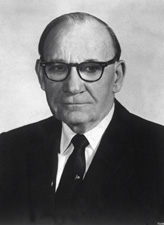
This distinction can be shown by an anti-Warren-Court proposal put forward by two influential Senators, John McClellan (D-Arkansas)
Senator John McClellan
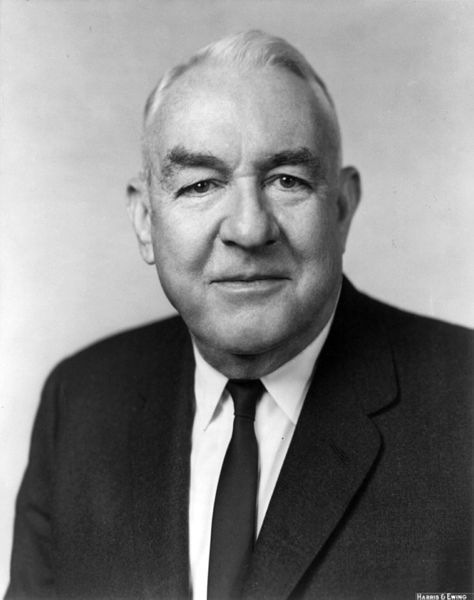
and Senator Sam Ervin (D-North Carolina).
Senator Sam Ervin
McClellan and Ervin proposed to strip…
…the U. S. Supreme Court of its jurisdiction in certain cases. Specifically, McClellan and Ervin proposed that if a state trial court found a confession to be voluntary or decided to admit eyewitness testimony, and if a state appeals court agreed with the trial court, the U. S. Supreme Court would not have any jurisdiction to hear any challenge to the confession or the testimony (and the lower federal courts wouldn’t have jurisdiction, either). To McClellan and Ervin, this was not an attack on the Bill of Rights because properly interpreted, the Bill of Rights did not force the courts to ignore what the Senators deemed to be voluntary confessions and reliable eyewitness testimony.
(In contrast, one might question whether a confession given in police custody, by someone who hasn’t been told of their rights, is truly voluntary; one may also question whether eyewitness testimony is reliable if the witness was influenced by an unfair lineup, especially when the suspect’s lawyer wasn’t there to double-check the process. Anyway, this is a debate on the meaning of the Bill of Rights, not on its applicability to the states.)
McClellan and Ervin said their proposal was constitutional because the Constitution specifically empowered Congress to make “Exceptions” to the appellate jurisdiction of the Supreme Court.
While McClellan and Ervin failed in their attempt to limit the Supreme Court’s jurisdiction, the controversy was still in the memory of Berger’s readers in 1969. In Congress v. The Supreme Court, Berger seemed to take the side of the Warren Court against its critics. Berger’s take on the intent of the founding generation was that they fully meant the U.S. Supreme Court to be able to exercise judicial review of state and federal laws. As to attempts to strip the Supremes of jurisdiction, Berger said this was unconstitutional. His analysis of the Founders’ intent took priority over what one would think was the clear constitutional language about “Exceptions.”
In the debate over ratification, Berger explained, the “Exceptions” clause only came up with respect to the issue of jury verdicts. Opponents of the Constitution had said that the Supreme Court might arbitrarily overrule jury decisions on factual issues, and the Constitution’s supporters cited the “Exceptions” clause to show that Congress could protect jury fact-finding from Supreme Court meddling. In contrast, nothing in the ratification debates indicated that Congress would be able to close off particular legal issues from the Supremes, as McClellan and Ervin had attempted to do. Allowing such action would contradict the Founders’ concerns about the dangers of Congressional overreach and the need for judicial checks on such overreach.
Berger concluded his book by rejecting the ideas of some Warren Court supporters that the U.S. Supreme Court should serve a policy-making role. Many progressives, unable to get their favorite policies enacted in the states and Congress, rejoiced to see Earl Warren and his colleagues impose such policies on the country in the name of the Constitution. Shouldn’t an enlightened Supreme Court provide “leadership” to a country in dire need of it? Berger said no, the U. S. Supreme Court was intended by the Founders to be a strictly legal tribunal, not a policy-making body.
The progressives were willing to forgive Berger for opposing their vision of a policy-making Supreme Court. After all, didn’t Berger’s scholarship show that the Supreme Court was constitutionally protected against the reactionaries who would hobble the Court’s ability to do justice? So Berger got a good deal of praise in progressive circles.
Now Berger turned to another obscure legal topic: impeachment.
To Be Continued…
Works Consulted
Raoul Berger, Congress v. The Supreme Court. Cambridge, MA: Harvard University Press, 1969.
___________, “Executive Privilege v. Congressional Inquiry,” Part I, 12 UCLA L. Rev. 1043 1964-1965.
___________, “Executive Privilege v. Congressional Inquiry,” Part II, 12 UCLA L. Rev. 1287 1964-1965.
Adam Carlyle Breckenridge, Congress Against the Court. Lincoln, NE: University of Nebraska Press, 1970.
Carl E. Campbell, Senator Sam Ervin, Last of the Founding Fathers. Chapel Hill: University of North Carolina Press, 2007.
Richard C. Cortner, The Supreme Court and the Second Bill of Rights. Madison: University of Wisconsin Press, 1981.
Gary L. McDowell, “The True Constitutionalist. Raoul Berger, 1901-2000: His Life and His Contribution to American Law and Politics.” The Times Literary Supplement, no. 5122 (May 25, 2001): 15.
Johnathan O’Neill, Originalism in American Law and Politics: A Constitutional History. Baltimore: The Johns Hopkins University Press, 2005.
David A. Nichols, Ike and McCarthy: Dwight Eisenhower’s Secret Campaign Against Joseph McCarthy. New York: Simon and Schuster, 2017.
Israel Shenker, “Expert on the Constitution Studies Executive Privilege,” New York Times, July 26, 1973.
My brain is going in a thousand different directions today, so I’m gonna roll with it. I’m just gonna write a few sentences for each thought in stream of consciousness form and see whether it gets me booed off the stage.
It’s amazing how much money touches every sore spot in a relationship. My wife and I are going through Dave Ramsey’s FPU to “tune up” our finances now that I’m making a paycheck again, and it’s painfully obvious how different our respective priorities are. I’m very risk averse and want to be completely out of debt within 5 years. She’d rather have nice things and not think about money. There was definitely some sleeping on the couch happening this week.
Am I the only one who couldn’t care less about this Russian bullshit? It didn’t pass the smell test in November. It didn’t pass the smell test in January. Now it smells like an Obama fart as we are starting to get wiretapping information.
I’m not at all surprised that the Whatever 7 from Wikileaks was another big nothing. We learned more about how utterly out of control our intelligence agencies are, but none of it was a “shocking revelation.” Wikileaks needs somebody to better market their info dumps because they’re all hat and no cattle at this point.
I think the NFL is suffering from the same problems as the NBA, and their ratings will continue to decline in the next few years. The players are less and less interesting to the majority of the population, prices for tickets and apparel are out of the reach of many, and the media spends more time on who beat up their girlfriend than on actual football anymore.
Basic Economics by Thomas Sowell is a great read! I think I’d recommend Economics in One Lesson by Henry Hazlitt first, simply because it’s shorter and less repetitive. Either book is a great primer on why everything politicians say about economics is crap.
Complete detox from the MSM has been nice. I’ll watch the occasional local news segment or click the random link to a MSM outlet, but generally I just avoid it. It gives a level of perspective to the daily Olympic pants shitting that happens in our culture. Also, nothing pisses a prog off more than when they’re hyperventilating with “Did you see that Trump did that????!?!?!?”, replying with “nope, must’ve missed it. Doesn’t sound very important.”
After watching a few Dateline episodes with Mrs. trshmnstr (what is with women’s obsession with that show??), I’ve come to the conclusion that if the random guy you met at a party texts you 2 hours later, he’s already in your garage getting ready to rape you, strangle you, and dump your body three counties over.
Final thought: I had always thought of the Civil War as being fought mostly in open fields. My visits to the Manassas Battlefield have disavowed me of that notion. I’m sure the artillery were set up in large fields, but it looks like much of the battle must have taken place in densely forested areas.
Hopefully the flooding from yesterday is done and I can get on with my life. Just as soon as I clean the frogs out of the pool. Looks like something biblical happened in my back yard. And I don’t mean that in a good way. So let me get these links out so I can address the hellscape.
Nothing says justice like prior restraint. (thanks, OMWC) I guess we can dispense with the rest of the Constitution in the Ninth Circus now. They’ve already gone out of their way to destroy the First Amendment.
 I once saw a very interesting video of an experiment with monkeys. There were two monkeys in separate cages but close enough to see each other. They had tokens in their cages, and the trainers had taught the monkeys to hand them the tokens in exchange for a cucumber slice. But then they started giving one monkey grapes instead of cucumbers. Monkeys like cucumbers, but they love grapes. The other monkey began throwing back the cucumber slices at the trainers when it was not getting “equal pay for equal work.”
 In capitalism, man exploits man, but in socialism, it’s the other way around.