Several years ago, before 55 gallon drums of personal lubricant were even a glimmer in my eye (incidentally they’ve sexed up their promotional material in an offensively heterosexist way), I would frequently find a reason to link this or similar videos of swarthy Greek and Turkish men helping each other lubricate for wrestling matches. Now if you watched the video all the way through you may have noticed that the combatants really get into their pants to lubricate themselves and that’s because it’s perfectly cricket for your opponent to get inside your pants and use your nether bits as a hand hold. While I hate to eroticize a purely platonic traditional sport, matches can fairly quickly look like a party in the back room of a Castro bar.
Anyway, I’m experiencing some severe hypotension (ICD 10 code I95.9) after slaving over a hot keyboard for hours to give you this serving of beef. I’ll leave you all with a pair of tumblrs where you can research this fascinating sport more thoroughly.
Not a real photo of Raoul Berger – scroll down and click his name to see a real photo
Charles Jones and C. A. Cecil were Jehovah’s Witnesses from Mount Lookout, West Virginia. On June 28, 1940, they came to the nearby town of Richwood. Richwood’s dominant local industries relied on harvesting the high-quality (or “rich”) wood from local forests. Jobs working wood and coal helped swell Richwood to about 4,000 inhabitants. That represented a lot of doorbells to ring and souls to save. Simultaneously with spreading their spiritual message, Jones and Cecil wanted to get signatures on a petition against the Ohio State Fair, which had cancelled its contract to host a national convention of Witnesses.
Downtown Richwood, West Virginia, 2006
Under the dictatorial direction of their boozy but efficient leader, Joseph Franklin Rutherford, the Jehovah’s Witnesses had become a society of evangelizers. All members were required to spend time spreading Christian truth to their neighbors (in time which they spared from their day jobs). Basically, as many people as possible needed to be rescued from the diabolical world system, dominated by evil governments and the “racketeering” clergy of other religious groups. The end times were imminent, or had already arrived – the exact details changed with time, but the urgency of the situation did not change. Witnesses had to descend on communities like “locusts” – Rutherford’s term – and turn people to God’s ways.
The true nature of the current wicked system must be made clear in publications, speeches, and even phonograph records. Certain sinful behavior must be shunned. In 1935, Rutherford had made clear that saluting the U. S. flag was idolatry – Rutherford compared it to the Nazi salute. (To be fair, until the end of 1942, the American flag salute was uncomfortably similar to the Nazi salute – and German Witnesses were killed or put in concentration camps for their defiance.) Young Witness men must not sign up for the draft because all Witnesses – not just the leaders – were ministers and entitled to the draft law’s exemption for clergy.
In World War I, before Rutherford took over, the antiwar teachings of the Witnesses (then called Bible Students) had been so provocative that it was persecuted in many countries including the U.S. And as a new world war was underway, Rutherford had ratcheted up the confrontation between his group and the forces of mainstream American society. A new era of persecution was dawning as mainstream American fought back in often-ugly ways.
Jones and Cecil were picked up by the police, who took them to state police headquarters, where cops and members of the American Legion (a nationalistic veterans’ group, more militant at the time than it is today) interrogated them. Martin Louis (or Lewis) Catlette was a twofer, a Legionnaire and a deputy sheriff. This sort of overlap between American Legion vigilantes and law enforcement was common in the attacks on the Witnesses.
Catlette and others accused Jones and Cecil of being spies and Fifth Columnists and gave them four hours to get out of town. The two Witnesses returned to Mount Lookout, but came back to Richwood the next day, June 29, with seven more members of their sect.
Their enemies were waiting. The Legionnaires had searched the boarding house where Jones and Cecil had stayed, finding some very suspicious items, like maps (of homes the Witnesses intended to canvass), and literature about refusing to salute the flag or serve in the military. It was time to teach these subversives a lesson.
Catlette and his Legionnaire friends got the Witnesses together in the Mayor’s office, holding them prisoner there while Richwood Chief of Police Bert Stewart guarded the door. Catlette took off his badge, proclaiming that what he was going to do would be as a private citizen, not as a law officer.
A local doctor was among the Legionnaires, and he was not very mindful of the Hippocratic Oath. He brought some castor oil, which the mob forced the prisoners to drink.
Castor oil was then considered a useful medicine for intestinal distress if administered in small doses. If given in large doses, as in this case, it induces severe diarrhea. One of the Witnesses, who got an extra dose because he tried to resist, had bloody urine.
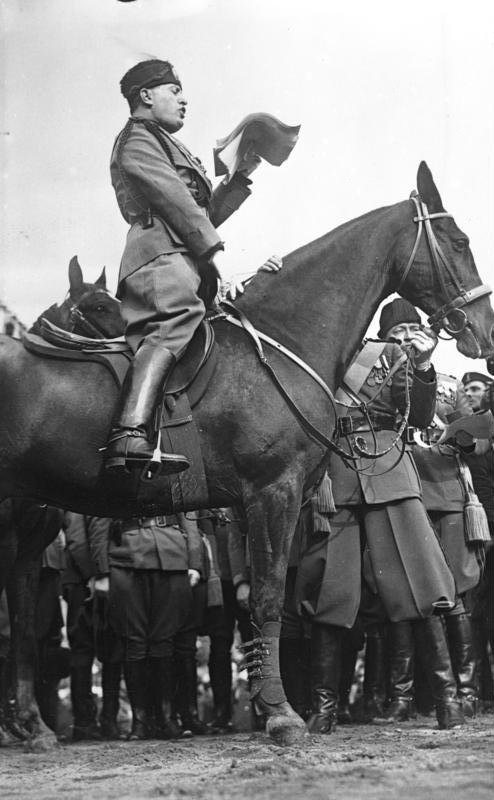
Forced dosing with castor oil had a notorious history. Mobs in Fascist Italy often poured castor oil down the throats of political opponents or people suspected of anti-social activities, as a humiliating lesson for anyone who dared resist fascism.
The Witnesses’ ordeal was not over. Catlette and his associates tied the Witnesses’ left arms together and paraded their prisoners through the streets and tried to force them to salute the U. S. flag (with their free arms). Then the vigilante mob marched the Witnesses to their cars, which had been vandalized, and ordered them out of town again.
Incidents like this were erupting throughout the country. The Germans had just overrun France and the Low Countries, and the public was on high alert for “Fifth Columnists” – Nazi agents undermining morale in preparation for an invasion. The Witnesses aroused suspicion because of their aggressive proselytizing, their vehement denunciation of the government (and every other religion but their own), and their refusal to salute the flag. The U. S. Supreme Court had just issued an opinion that public schools could force Jehovah’s Witness pupils to salute the flag (an opinion the Court would overturn three years later, saying compulsory flag-salutes violated the Witnesses’ freedom of religion). As in many countries, both Allied and Axis, the Witnesses were considered as a subversive influence and persecuted as such.
Attorney General Francis Biddle, in 1941, publicly denounced the “cruel persecution” of the Witnesses, but his Justice Department didn’t seem to be acting against the persecutors. Indeed, the feds didn’t mind doing some persecuting of its own, prosecuting Witnesses for resisting the draft.
(And after Pearl Harbor, there was the persecution of Japanese-Americans, as well as of the prosecution of certain critics of the war – but we’re getting away from the subject, which is how concerned the U. S. Justice Department was about the rights of minorities.)
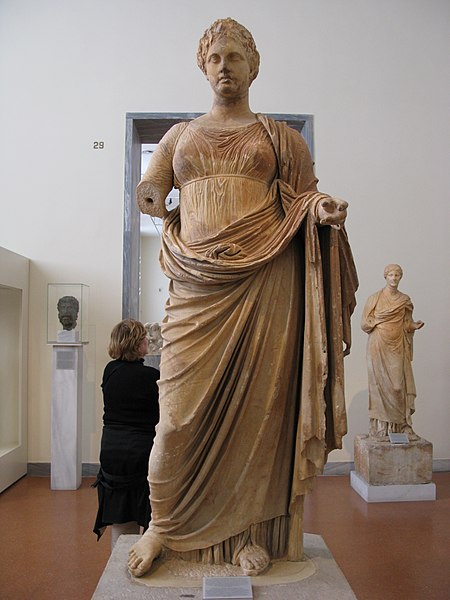
You might say that the Goddess of Justice was disarmed
In West Virginia, the local federal prosecutor, Lemuel Via, recommended against bringing charges in the Richwood case. The recently-formed Civil Rights Section of the Justice Department pressed for prosecution. By 1942, the Civil Rights Section had won out, and Via was instructed to take the case to the grand jury. Via asked the Justice Department to send one of its lawyers to assist him. This would show “that this case was being prosecuted by the Department of Justice, rather than the United States Attorney.” In other words, Via wanted to signal to the community that if it were up to him, he wouldn’t be harassing the local patriots simply for giving the Witnesses what they deserved.
So the Justice Department sent one of its recent hires, Raoul Berger, to help Via out and take the responsibility off of him.
Raoul Berger was born in 1901 in a town near Odessa, now in Ukraine but then in the Tsarist Russian Empire. The Berger family was Jewish, and there was lots of anti-Semitic agitation in the empire. Also, according to Raoul’s later recollection, his father Jesse predicted (correctly) an impending war between Russia and Japan.
So it was time to emigrate. Jesse came to the United States in 1904, initially, perhaps, without his family. In 1905, Russia experienced the predicted war with Japan, a revolution, and an anti-Jewish pogrom in Odessa.
A Jewish shop destroyed in the Odessa pogrom, 1905
This may have reinforced Jesse’s wish to bring his wife Anna, little Raoul, and his sister Esther, to the United States, which Jesse did no later than 1907 (if he had not done it already).
Jesse worked as a cigarmaker in the West Side of Chicago. He wanted his son to study engineering, but Raoul was taken with music. Raoul acquired a violin, learned some gypsy tunes, and began more formal musical studies under a private tutor. After he got out of high school, Raoul went to New York City to study at the Institute of Musical Art, now Julliard. His teacher was Franz Kneisel, a rigorous and stern instructor. Raoul later reflected on how, in studying the violin, he learned “patience and rigorous attention to detail,” which stood him in good stead throughout his life.
After an unsuccessful sojourn in Berlin to study under Carl Flesch, Berger came back to New York to finish his studies with Kneisel. Then it was on to Philadelphia to play violin for the Philadelphia Orchestra. The conductor was Leopold Stokowski, whom Berger recalled as vain and insufferable, albeit a genius.
Leopold Stokowski
Berger lasted a year under Stokowski, and then went to Cleveland to become second concertmaster of the Cleveland Orchestra, under Artur Rodzinsky.
After two years at this job, Berger got a position in Cincinnati as associate concertmaster to the conductor Fritz Reiner. With three others in the orchestra, Berger formed the Cincinnati String Quartet. In Berger’s telling, Reiner was dictatorial without the compensating advantage of genius like Stokowski.
Fritz Reiner
Around this time, Berger stopped being a professional musician and started looking around for another line of work. Berger’s son Carl, in a brief account of his father’s musical career, suggests that there may have been financial considerations: Berger’s new wife was the daughter of a big-shot doctor, and Berger may have wanted to give his bride a better lifestyle than a Depression-era violinist could afford. By Berger’s own account, the problem wasn’t money, but the dictatorial conductors he worked under, which led him to reconsider his musical career choice.
After the sight of a dissecting room scared him away from medicine, Berger went to law school at Northwestern and Harvard. At Harvard he was a student of Felix Frankfurter, who remained as a mentor figure after Berger’s graduation.
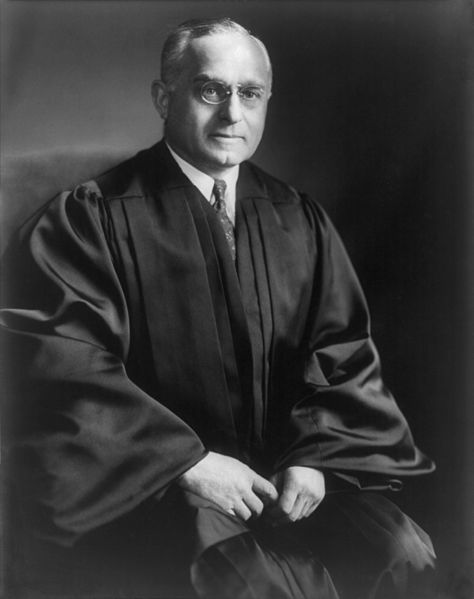
Felix Frankfurter
With excellent credentials, the new attorney tried to get a position in a big law firm, but none of them would hire him because he was Jewish. The firms he applied to had either filled their Jewish quota, or their quota was zero. Not even the intervention of Felix Frankfurter helped.
Fortunately, the head of the Securities and Exchange Commission (SEC) was a friend of the dean at Northwestern, so Berger began working as a government attorney. The Department of Justice hired Berger away from the SEC, and now they dropped the Richwood castor-oil case in his lap. Berger later said, probably correctly, that his bosses didn’t like this case, and expected to lose, so they handed it off to Berger who was the “low man on the totem pole.”
OK, fine, here’s the real Felix Frankfurter
Berger took the case to the grand jury. The Jehovah’s Witness victims testified about what happened to them. In a memorandum, Berger described how the grand jurors responded with hostile questions “about the particulars of their religion, their refusal to bear arms, their invasion of Richwood in search of ‘trouble.’” No indictments were forthcoming.
Since the grand jury refused to indict Catlette and Stewart, felony charges were not an option. Instead, the prosecutors filed an information charging Catlette and Stewart with the misdemeanor of denying the Witnesses’ civil rights “under color of law.” By seizing and mistreating the Witnesses, the charges said, the two lawmen had violated the Witnesses’ rights under the Fourteenth Amendment of the U. S. Constitution, including “the exercise of free speech”…
…and the right “to practice, observe and engage in the tenets of their religion.”
U. S. Supreme Court precedent at the time held that the First Amendment rights of free speech and free exercise of religion were also protected by the Fourteenth Amendment, and thus could not be violated by state officials. The Supreme Court had exempted the states from most of the Bill of Rights, but not from these key provisions.
(The charges also said that the defendants’ behavior had violated due process and equal protection, which are specifically protected by the Fourteenth Amendment.)
The trial was held in early June 1942 in Charleston, WV. Federal District Judge Ben Moore presided. In his argument to the jury, as Berger later summarized it, “I played one string” – American boys were overseas fighting Mussolini, and these defendants were engaging in Mussolini-style behavior right here in the United States.
The jury gave its verdict: Both defendants were guilty.
Catlette was sentenced to a year in prison and a $1,000 fine. Stewart got away with a $250 fine, which he paid. Catlette appealed his conviction to the federal Fourth Circuit court. Berger helped argue the appeal on the government’s behalf.
While Berger was fighting to keep Catlette in prison, the University of Chicago Law Review published an article Berger had written in his private capacity. The U. S. Supreme Court had just given an opinion saying the public had a broad right to criticize judges, a right which neither the federal government nor the states could take away. In his article, Berger indicated that he was sympathetic to a broad vision of free speech, but – in an elaborate historical analysis – Berger argued that the historical meaning of the First Amendment allowed judges to punish their critics.
Speaking as a good New Deal liberal, Berger was glad that the Court was no longer imposing economic liberty on the country in the name of constitutional rights. These discredited conservative precedents (as he saw them) had led to “a generation of sweated labor and unchecked industrial piracy” from which the country was just recovering. But now that New Dealers controlled the Supreme Court, would they impose their left-wing activism on the constitution the way earlier courts had (allegedly) practiced right-wing activism? ” [I]t is easier to preach self-restraint to the opposition than to practice it oneself,” Berger reminded leftists.
What the Supreme Court ought to do, wrote Berger, was adhere strictly to the historical meaning of the Constitution, even if this sometimes produced results leftists disliked. Some advocates of judicial activism said judges should adapt the Constitution to modern circumstances. But “an ‘unadapted’ Constitution may be the last refuge of minorities if a national Huey Long comes to power.” (To Berger, it was Long, not FDR, who served as an example of a tyrannical populist demagogue.)
And in a foretaste of things to come, Berger included a brief footnote in his article noting the Supreme Court’s inconsistency on whether the First Amendment even applied to the states.
For now, though, Berger was seeking to apply the First Amendment to the states by locking up Martin Catlette.
In January 1943, the Fourth Circuit upheld Catlette’s conviction, rejecting Catlette’s claim that by removing his badge he had turned himself into a private citizen and was not acting “under color” of state law as the charges against him alleged.
The judges made short work of Catlette’s efforts to dodge responsibility:
We must condemn this insidious suggestion that an officer may thus lightly shuffle off his official role. To accept such a legalistic dualism would gut the constitutional safeguards and render law enforcement a shameful mockery.
We are here concerned only with protecting the rights of these victims, no matter how locally unpalatable the victims may be as a result of their seeming fanaticism. These rights include those of free speech, freedom of religion, immunity from illegal restraint, and equal protection, all of which are guaranteed by the Fourteenth Amendment.
The conviction of Catlette and Stewart represented the only successful prosecution in the country of anti-Witness vigilantism.
Catlette served his sentence in the Mill Point, WV, federal prison camp. As befitted someone who had only been convicted of a misdemeanor, Catlette did not live under a very harsh prison regime. Maureen F. Crockett, daughter of the prison’s parole officer, later wrote:
The minimum-security prison on top of Kennison Mountain had no locks or fences, and minimal supervision. Inmates stayed inside the white posts spaced every 40 feet around the perimeter. Escape was as easy as strolling into the nearby woods, but the staff took a head count every few hours. During the [twenty-one] years it was open, the prison had only 20 escapes.
Local lore says so few prisoners left because they thought the local woods were haunted.
For whatever reason, Catlette did not run off. He served eleven months of his twelve-month sentence before being paroled (and the court excused him from paying the fine). During his incarceration, he probably had the chance to meet some of the convicted draft resisters who were entering Mill Point at this time, including Jehovah’s Witnesses.
Berger continued his career as a government lawyer. His jobs included working at the Office of the Alien Property Custodian.
After his stint in government service, Berger went into private practice.
In 1958, Berger was devastated by the death of his wife. He considered what to do with the rest of his life. Perhaps, he thought, he could return to being a musician. He went to Vienna and gave a violin performance.
To illustrate the idea of Vienna, here are some Vienna sausages
As Berger told it, he was deterred from resuming his musical career when he read a review in the Vienna press, saying that he played the violin very well…for a lawyer.
Berger began a new career as a law professor. Eventually, his research would lead him to the conclusion that the states did not have to obey the Bill of Rights.
How would Martin Catlette react if he knew that one of the prosecutors who sent him to prison for violating freedom of speech and religion would later claim the states were exempt from the Bill of Rights?
But before Berger got to that point, he had a date with destiny in the form of a crooked President.
Works Consulted
Cecil Adams, “Did Mussolini use castor oil as an instrument of torture?” A Straight Dope classic from Cecil’s store of human knowledge, April 22, 1994, http://www.straightdope.com/columns/read/965/did-mussolini-use-castor-oil-as-an-instrument-of-torture
Raoul Berger, “Constructive Contempt: A Post-Mortem,” University of Chicago Law Review: Vol. 9 : Iss. 4 , Article 5 (1942).
Available at: http://chicagounbound.uchicago.edu/uclrev/vol9/iss4/5
James Penton, Apocalypse Delayed: The Story of Jehovah’s Witnesses (Third Edition). Toronto: University of Toronto Press, 2015.
Shawn Francis Peters, Judging Jehovah’s Witnesses: Religious Persecution and the Dawn of the Rights Revolution. Lawrence: University Press of Kansas, 2000.
Chuck Smith, “Jehovah’s Witnesses and the Castor Oil Patriots: A West Virginia Contribution to Religious Liberty,” West Virginia History, Volume 57 (1998), pp. 95-110.
_________, “The Persecution of West Virginia’s Jehovah’s Witnesses and the expansion of legal protection for religious liberty,” Journal of Church and State 43 (Summer 2001).
Note – There’s a Martin Lewis Catlette (1896-1965) buried in the Richwood Cemetery. I can’t say for sure if this is the same person as the deputy Sheriff (the appeals court gives the deputy’s middle name as “Louis”). The person in the cemetery seems to have served in the Navy in both world wars, and his wife died in 1943, the year that the deputy would have gotten out of prison. If this is the same person as the deputy, I would be able to add a paragraph about the widower, newly freed from prison, soothing his grief by returning to military service.
Everything has a limit. The natural world is full of them. For example, there is no such thing as an unboilable liquid. Every liquid will boil if you heat it up enough. The same holds true for man-made things. It is impossible to build a mile-high brick tower with parallel sides, because after a few hundred feet, the weight of the bricks on top would crush the ones at the base.
(Source: physbot.co.uk)
There are mental and emotional limits as well. There is a limit to how much a person can remember or learn. There is a limit to how much stress a person can take, and so on.
Laws have limits, too. Many people mistakenly think laws are magic spells that alter behavior. Nothing could be further from the truth. Take speed limits, for example. How many people drive the speed limit? Hardly anyone. Almost everyone drives over the speed limit – most by a little, some by a lot.
If there were no speed limits, most people would drive faster, but only up to a point. This is because there are mechanical limits to how fast it a car can go, as well as psychological limits – such as the driver’s sense of fear.
Many people do not realize what a law is. Laws are not suggestions or friendly pieces of advice. They are enforced with violence. A law is essentially a formal threat. “Do this or else.”
People weigh risk when they make any decision, including whether to follow a law. Even if a law carries a very harsh punishment, it will not deter many people if there is a low risk of being caught. For example, in 19th century England, many minor crimes such as theft were punishable by death. Thieves were hanged in public before huge crowds. And while those people were gawking, pickpockets would take advantage of the distraction to steal.
In brief, laws are like language – they only work when a community is in near universal agreement on them. Imagine if each person in a town spoke a language differently. That language would be useless because the same word would mean different things to different people.
Fuck this guy.
Another point to consider is that since laws are made by imperfect people, there will be imperfect laws. Things which were once illegal are now legal and vice-versa. And in many cases, those bad laws were only repealed because many people were breaking them, and this put pressure on politicians to change them. All moral progress comes from lawbreakers – the abolitionists who defied slavery laws, the suffragettes who defied sexist laws, the anti-war protesters who defied draft laws, and so on. The United States itself was founded by outlaws.
Shakespeare wrote, “None call treason as treason if it prospers.” So it is with laws. If a group of outlaws are successful in getting a law repealed, they are no longer outlaws.
One last point to consider: there are limits to how well a law can be enforced. There is only so much that can be spent on police, courts, jails, and so on. Given that, the sensible thing would be to focus those scarce resources on preventing actual crimes – the kind that actually have a victim.
Laws can also have awful side-effects. In Boulder, CO, for example, the city built many speed bumps in residential areas to prevent speeding cars from hitting children. Unfortunately, those speed bumps also forced ambulances to slow down, and for heart attacks, a minute or two can make the difference between life and death. The speed bumps lead to a great increase in heart attack mortality.
Research in the USA supports these claims. One report from Boulder, Colorado suggests that for every life saved by traffic calming, as many as 85 people may die because emergency vehicles are delayed. It found response times are typically extended by 14% by speed-reduction measures. Another study conducted by the fire department in Austin, Texas showed an increase in the travel time of ambulances when transporting victims of up to 100%.
There are no solutions, only trade-offs. If you want to make A better, you will make B worse.
When most people hear of a problem, they reflexively say “there ought to be a law.” They ought to remember these words:
“The wise know that foolish legislation is a rope of sand which perishes in the twisting; that the State must follow and not lead the character and progress of the citizen;… that the form of government which prevails is the expression of what cultivation exists in the population which permits it. The law is only a memorandum.”
―Ralph Waldo Emerson
South Carolina’a Chris Silva helps his team advance last weekend.
Well, the Duke-less Final Four is set. Perhaps that is even being gracious. But that’s why they call it Madness. And by the way, the Glibs tourney pick-em leaderboard is what one might call a “shitshow.” Which has nothing to do with why I played Madness on the Sunday links. But it is an interesting coincidence now that I think about it. Anyway, I hope you all had a nice weekend. But its over now. And these links signify that its back to the grind for all of us.
I guess Saturday Night Live has somewhat moved on from hating on President Trump. City of Boston hardest hit. I guess there aren’t enough hipsters among the chowderheads for Lorne Michaels tastes.
Once I finished laughing at myself (I was thinking of the look on my face) I said “This is important. Did he say ‘some mines” or ‘some more mines’?” The interpreter turned to the farmer and then yelled up to me “He said some more mines. But you should be OK, if you stay on the path.”
The “path” was not as wide as my size 12 boots. Putting aside the thought “this would be a really stupid way to die”, I managed to make the last 35 meters or so up the cliff-side. Why did the farmer warn me? Because some tidewater Virginians had towed an old Soviet tractor that had gotten stuck in his village.
They see me rollin’, they hatin’, patrolling
Late 2004, I was the CJTF Eagle Civil Affairs Officer, and I was with a squad of Virginia Army National Guard as they visited Ashrafkhel, in Parwan Province, Afghanistan. One of the men in the village pointed out the small cliffs near the Panjshir River and said that some suspicious people had been up there a couple of nights ago. Half the squad swarmed up the two paths nearest where the man had pointed. Thinking I was clever, I took a path over to the north of where everyone else was going up, to keep an eye on things. Halfway up, I heard the interpreter yell up to me “He says the weather may have uncovered some (unintelligible) mines.”
So I was able to avoid stomping on old Taliban or Northern Alliance mines, join the Virginians and find evidence that someone had been tinkering with things that go boom.
Well, lookie here. Somebody done been naughty.
Why did these people help us? When we rolled in to town, they looked like most of the people in the area. Thinking things like “Now what?” “These guys, again?” “Oh boy, the circus is in town!” The squad leader asked the first man we spoke to “how is the tractor doing?” The man’s face lit up and he said something to the effect of “Oh, it is you guys! The ones who helped us!” The month before, this same squad had rolled through and used their HMMWVs to pull the village’s only tractor (an old Soviet model) out of a ditch. No doors kicked in, no searches, no swaggering around acting tough and such. Just some farm boys helping out other farmers. We had a nice chat about how the old tractor was now kaputt, but they were hoping to get a new one soon. That was the point when someone joined us and mentioned where the naughty folks had been hanging out.
Some number of hours later, when my sphincter had finally unclenched, I reported everything to the Ops Officer. I even had the insight to mention how this was a nice contrast to the company of Airborne guys that had caused quite a stir booting in doors and barging through houses in a village to the north, a while back. But it took reading various police misconduct stories to make the connection here at home.
Gaining trust, when you are seen as (or actually are) outsiders, armed and seemingly unaccountable to anyone, can be difficult. It takes restraint. When faced with intransigent, maybe even sullen and uncooperative people, it can be very be very difficult to not get impatient and resort to “tell me what I want to know/comply/obey!” It also takes time. If you roll up and say “trust me”, most people are going to reflexively go on guard.
The good will many police departments had years back, was earned over a long time. It probably arose, in part, from having the same beat cops around. They got to know you, and you got to see they were not just interested in hassling you, writing citations or getting in a bust right at the end of a shift for some sweet overtime.
To rebuild the trust lost by many departments (primarily during the Drug War) from property grabbing to door busting to stop and frisk, it will take restraint and time. We need cops who help a drunk get home from the bus stop or train station, call for a wrecker for a broken down car and waits until it shows up, stop in and talk to store owners, bar tenders and other people in the neighborhood and then amiably go on their way. Rather than act like an occupying army, pull a tractor out of a ditch.
“Harrumph, harrumph,” grumbled the crowd, “This place used to be better when you could beat the waiters.”
The purpose of insurance is to provide protection from low-risk, high-cost events like car accidents and medical emergencies. The first major insurance company was Lloyd’s of London in 1688. It began in a coffee shop popular with sailors and merchants, so it was a good place to get news on sea trade. The sea was a dangerous place at that time (hint: AARGH! SHIVER ME TIMBERS!) and merchants wanted protection from losses. Speculators began offering to pay for potential losses according to the perceived risk in exchange for fees from the merchants. Basically, they were gambling on which ships would sink. If the ship sank, the merchant won, and if it didn’t, the speculator won. This practice later spread to other activities. Then the government got involved – with predictable results. Crop insurance came to the US in 1938 and flood insurance in 1968. Like everything else the government does, its insurance programs are costly and heavily in debt. More on this later.
Insurance companies work only as long as the value of the claims paid is less than the revenue (premiums) they get from their customers. In short, there are only so many things they can pay for and stay in business. If the government required car insurance companies to pay for oil changes, car insurance would become much more expensive and every car insurance companies would go bankrupt. And it would be impossible to find a mechanic on Saturday.
This situation is similar to what has been happening with health insurance. Most people do not spend much on healthcare between the ages of 1 and 60. For an average person in the US, about $9,000 is spent on healthcare in the first year of life, and about $3,000 per year until the age of 60. Costs rise steeply after that. For a typical American, about 30% of all the money spent on healthcare in their life is spent in their last year of life and about 80% in their last 15 years of life. For this reason, in countries with government-run healthcare, old and seriously ill people often face very long wait times for medical treatment. The bureaucrats hope that they will die before the government must pay for their treatment. This isn’t a conspiracy theory. Britain’s National Healthcare Service freely admits to rationing care such as cancer drugs and hip replacements to fix the hole in its budget.
Dr Mark Porter, leader of the British Medical Association, said: “The NHS is being forced to choose between which patients to treat, with some facing delays in treatment and others being denied some treatments entirely. This survey lays bare the extreme pressure across the system and the distress caused to patients as a result.”
Those of us in the US hear constantly about how greedy heartless health insurance companies are because they won’t pay for this or that (often a highly questionable this or that, Sandra Fluke). But it’s important to realize that NO insurance system, whether private or public, can pay for everything. The whole point of insurance is that many people pay in some often and a few take out a lot rarely. This isn’t politics. It’s arithmetic. And for those who claim that Britain or Canada’s system is better because it is cheaper, the reason it is cheaper is not because it is more efficient. It’s because they decide in advance how much to spend each year. It’s easy to keep costs down when you decide you will only spend so much and keep people waiting for as long as possible.
Again, insurance can only work when it is used for low-risk, high-cost events. For health insurance, this means that the only things that ought to be covered are things like surgeries and expensive medicines. Some people might choose to buy extra health insurance, just as some people with pricey cars buy extra car insurance. But if you drive a regular car, there is no point to fancy car insurance, and if you are healthy, you do not need fancy health insurance. In short, if you want to fix America’s healthcare system, the best thing to do would be to let consumers buy whatever level of coverage they want. For most people, this would mean a cheap plan with a high deductible–the so-called substandard and junk policies.
President Obama has repeatedly referred to the 4.7 million discontinued policies as “substandard.”[3] When the President announced his administrative “fix” that attempted to allow those with canceled plans to keep their existing plans for another year, Senator Tom Harkin (D–IA) said he was still “concerned about people having policies which don’t do anything. They’re just junk policies.”[4]
The only kind of junk insurance is the kind you can’t afford and are forced to buy.
Now let’s go back to the US government’s insurance programs. The US govt flood insurance program is currently $25 billion in debt. If it was a private company, it would have gone bankrupt decades ago. The Federal Crop Insurance program has done better since it was partially privatized in 1980. The government is still paying about 60% of its $12 billion cost.
The lesson: whatever the good or service, it is always cheaper and better through the market than through the government.
When, as a nation, did we get to the point of media talking heads asking if the party that’s made monumental gains over the last 6-8 years across the country can govern? Oh yeah, I guess its after they can’t agree on a health care replacement for 1/6th of our nation’s economy in a matter of a few weeks and decided to wait a few months before tackling it. It also happened when that party was the GOP, which most media do not agree with politically. Oh well, let’s get on with the SUNDAY MORNING LINKS!!!