Friday is here. But to basketball fans, the weekend started last night. Three fantastic games and one blowout. Poor Purdue, they just didn’t show up in the second half. But on the bright side, Michigan lost (few things could make me happier), and Arizona lost (few things could make Banjos happier) to Xavier (my old hometown team representing). And I’ll admit, I’d have liked to have seen WVU beat Gonzaga, but the refs managed to completely take them out of their game by alternately calling every touch foul for 5 minutes and then letting them play a rugby match for five minutes. Totally schizophrenic officiating. Oh yeah, and Duke doesn’t play again until November.
Alas, this isn’t a sports website, so I need to get my focus back and get down to business. So here we go…
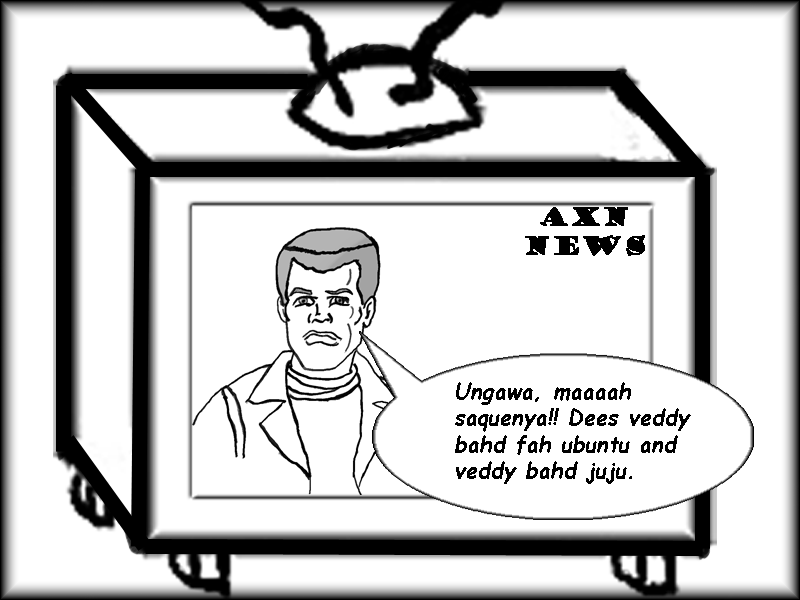
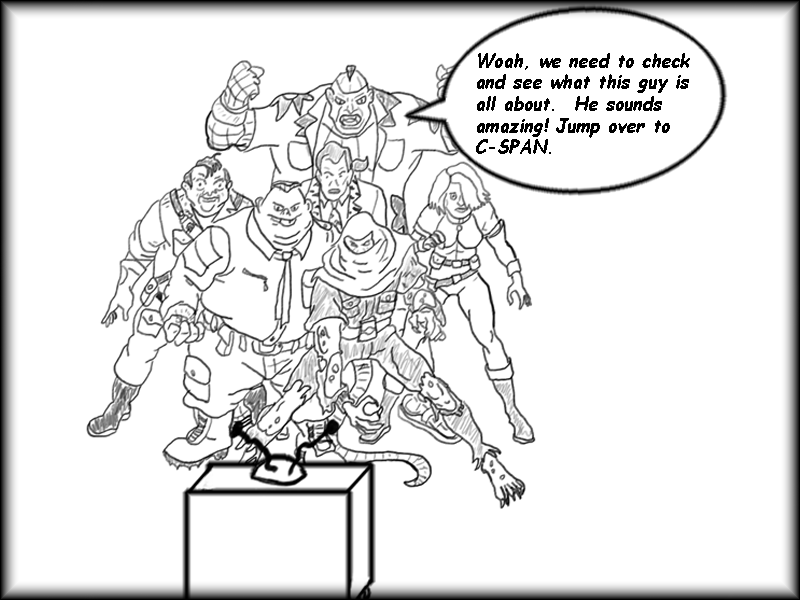
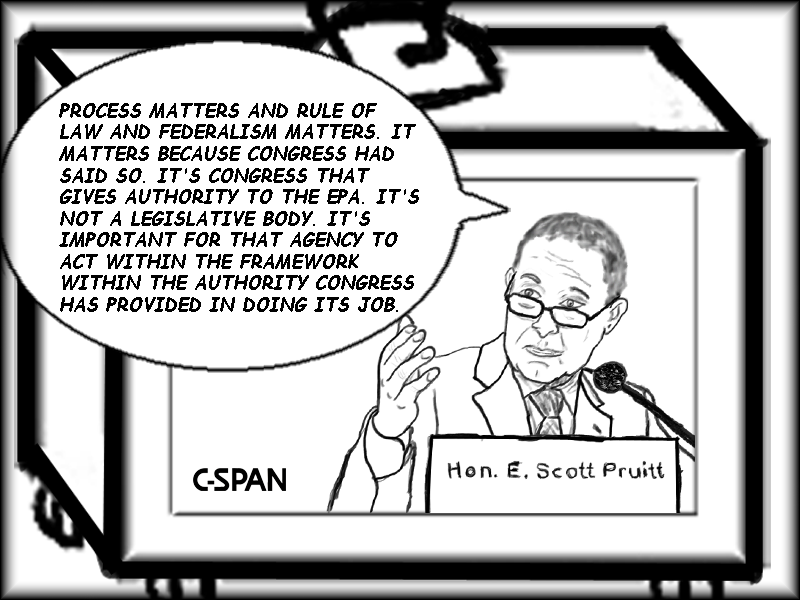
Senator Schumer.
President Trump has given congress an ultimatum: either pass the proposed Obamacare replacement this week or leave the ACA in place. I guess he’s unaware that there are grave concerns from House and Senate members in his own party that the replacement doesn’t solve some of the structural problems related to the terrible law and that it doesn’t sit well with people that wanted a better bill.
Next week’s House Intelligence Committee meeting ought to be interesting if this turns out to be true. And by “interesting,” I mean people ought to be walking out of there with subpoenas if what that story alleges is true. Lots and lots of subpoenas.
He speaks to you of his wonderful, magical, infuriating, nonsensical, visually bounteous film.
This review is the direct result of a number of comments noticed by Your Friendly Ruling Council of Eternals Admins which indicate that a disturbing number of you may not have seen this film. The original plan was to write the entire review as Zardoz, and post it using the Zardoz account. However, I tried it out for a paragraph, and trust me…as a reader, that gimmick has its limits.
The Flying Stone Head of Zardoz
The 1974 movie Zardozis a passion project tossed as a bone to director, screenwriter, and producer John Boorman in appreciation of his wild success with the 1972 classic, Deliverance. If you haven’t yet seen that one, I’m afraid it’s a tad too conventional for Reviews You’ll Never Use. Deliverance is a completely mainstream film, and so will find no place in this column.
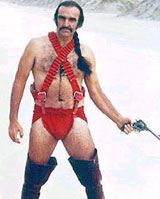
Zardoz marks only the second post-Bond film of Sean Connery. The actor was apparently having some trouble with typecasting, and not only accepted the role, but became fast friends with Boorman. Our other leading thespian is the beautiful Charlotte Rampling, a prolific actress known for many roles over the years, but perhaps best remembered by trash cinema & horror fans from her turn in the 1977 Richard Harris vehicle Orca, a brutally unsubtle Jaws knock-off.
Given carte blanche, Boorman oversaw every aspect of the film, from writing to post-production. In his director commentary it is obvious that he reflects on the film fondly but admits that he perhaps stretched too far. To which your humble author would reply, Ah, but a man’s reach should exceed his grasp, Or what’s a heaven for? Indeed what Mr. Boorman considers an ultimately flawed product, is still so delightful in myriad ways that I shudder to think what would have come about if he had succeeded in bringing the totality of his vision to the screen.
I wasn’t kidding about the drawn-on facial hair.
Our film opens in the year 2293 with a floating head providing exposition (explained by Boorman to be an ultimately unsuccessful attempt tacked on in post-production to reduce audience confusion). Interestingly, this narrator is fully self-aware and refers to his understanding that he is a fictional construct of the writer/director. The head inexplicably has a thin drawn-on mustache and goatee. We cut to a giant flying head that vomits guns and commands the “Brutals” worshiping it to go forth and kill, because, “the penis is evil” and overbreeding brings about a plague of men.
One particularly clever Brutal, our protagonist Zed, stows away in the flying head and is taken to a realm preserved out of time, where the enlightened scientific remnants of advanced humanity live eternal lives of unspeakable drudgery. Punishment in this society is conducted by forced aging, the senile being sent to live in what appears to be an endless New Year’s Eve party alaTGI McScratchy’s. Others simply give up caring about life, and become Apathetics, standing around catatonic and being given green bread on which to sustain themselves. The self-styled Eternals view themselves as the preservers of the past, collapsed civilization, and their Eden is run by a supercomputer known as the Tabernacle.
Charlotte RamplingThe famous costume that Sean Connery wore to his wedding, and still wears to all public functions to this very day.
The Eternals capture Zed and decide to study him, to find out how the vulgar strain of humanity has changed over the last two hundred years. One thing leads to another, as things inevitably tend to do in a story, and ultimately the Eternals find the answer to their weary prison of never-ending life.
This film feels like something that was going to be, supposed to be, could have been, a great artistic achievement. Boorman’s self-directed criticism is on solid ground; it’s all simply too much. The visuals are wonderful. The costumes, the colors, the backgrounds, are all rich and help to bring this very interesting world to life. The problem is that this world is so very rich, that it becomes simply impossible to do it justice while remaining focused on progressing the plot. Who cleans up the Apathetics and the prematurely aged Renegades? They’re all quite spotless. Where do these non-functioning individuals relieve themselves? How on earth do the Eternals plan to cope when, inevitably, everyone slips up and commits transgressions resulting in forced aging into senility? The psychological scenes, in particular, seem over-wrought, as one begins to slip the line of confusing complexity for its own sake and nonsensicality with an artistic statement.
For all that, I cannot find it in my heart to say this is a bad film. Imperfect? Surely. Plot holes you could drive a reasonably-priced sedan through? Absolutely. But the film is so lovely, the acting so involved, the entire production handled with such obvious love and hope, that it wins you over. Boorman is a good enough director to take what in anyone else’s hands would have become a tangled mess, and turn it into a modern bizarro masterpiece. While it lacks the raw insanity of House, it is obviously the vision of a man who knows exactly what he wants to express, and how he wants to express it, and that vision is sublime. Unfortunately, due to the limitations of time, budget, technology, etc, it is up to you as an audience member to take a step forward and meet the film halfway by taking the parts of that vision which are offered and completing it with your own mind and soul.
And yes, there are a fair number of titties.
I award this film 10 Severed Feet out of a possible 13.
Yes, that is a Supercat lurking at the bottom left.
Power Girl is clearly the thiccest mainstream superhero. Look at those dirty pillows!
She has a hilariously complicated backstory to go with her massive sweater puppies and her beeper meat. She’s Earth-Two Supergirl. She’s an ancient Atlantean (Atlantis, not Atlanta) and then, later on, she’s not. Currently, she’s Supergirl from another dimension, a dimension with more cupcakes and Nintendo games and got into the mainstream DC universe because a superbutthurt Superboy punched reality very hard. (No, seriously.)
The main thing to remember is that she has big tits, a stripper ass and she sports an epic boob window in her costume, one so big it might be more honestly be called a boob atrium.
The various boob windows and lesbian haircuts of Power Girl.
Also a boob window.
As the thiccer version of Supergirl, she is a popular character for thicc cosplayers. Let’s take a look at a few.
And then, of course, there are the variant Power Girls…
Intellectual Property is a thorny subject around here. I have trouble discussing it from an abstract philosophical standpoint because I have a financial stake in the matter. Being a content creator, I like knowing there is legal recourse if someone began reselling my work or passing it off as their own. How likely this is to ever happen is unknown, and it is far more likely there will be pirated copies running around instead. It is the issue of content piracy that is central to my complaints today. Early copyright law was essentially an avenue of redress for content piracy, though when the concept was introduced, making additional copies required more of an investment of resources than it does now. As such, purveyors of pirated works would have to sell them to recoup their investment.
With the insignificant marginal cost of digital copies, the financial element has largely receded into an equally insignificant fraction of the market in pirated content. However, the perception of lost revenue remains. Since the people who are doing the copying are difficult to track down and often have little in the way of money to extract, large content distributors have to look elsewhere to assuage their fears. Thus they invest ludicrous sums in Digital Rights Management technologies. DRM to anyone who doesn’t want to write out the whole darn thing every time. The premise behind DRM is that it will increase the opportunity cost to the pirates with regards to the additional effort required to make a usable or viewable copy.
There is just one not so tiny problem with this theory. With no financial gain from a successful crack, the motive for pirating has to be something else. Opportunity cost does not exist when the pirates tackle the task of cracking DRM for the challenge of breaking it. As a result, DRM technologies have ended up being measured in time to crack, with the presumption that they will be cracked and that this delay is the window of exclusive profits for the distributor. However, this does not hold true when the content market is examined. The content most commonly associated with DRM is video games. A number of publishers have re-examined the premise upon which the use of DRM has been predicated. They have distributed some of their top titles without DRM ‘protection’ and found no loss in sales. Surprisingly, the user base is still more than willing to pay for quality content from their favorite development houses. Most of the people who pirated these games were either never going to buy them in the first place or could not afford to. And the dubious protection of DRM was worth less than the cost to implement or license it.
This piece was not inspired by video game DRM, however; it was Amazon’s streaming video DRM requirement. As a paying customer (both a Prime member and someone who’s bought digital video content through that marketplace), I have a contractual right to view the content I’ve paid for. The problem is, I am morally opposed to DRM. I do not like the idea of someone with a (metaphorical) boot on my back telling me what I can and cannot do with the copy I have purchased just because someone, somewhere, might try to distribute it for free. The irony is, after my spat with the computer screen, I ended up going to the pirates to get a copy of the content I already paid for because it was easier. What is the point when the people you are trying to shut out not only get the content on the day of release but provide a better customer experience?
On a personal note, for as long as I have the option, none of the digital versions of my books will have DRM. If I could, I would also disable it on the audio versions, but Amazon does not give me that option. I’m not terribly worried about pirated versions wandering about. In fact, if someone asks nicely, I’ll usually give them a copy with the only caveat being ‘let me know what you think’. How does this mesh with the statement at the beginning? Well, as I said, digital pirates don’t typically sell it and don’t tend to change the credits.
There are few things in the world more frustrating than talking to average people about healthcare, but surely one of them is talking to fellow libertarians about the problems with our healthcare system. This goes beyond frustration with the typical libertarian infighting. Part of it is that there are so many things terribly wrong with our healthcare system, any libertarian can point to most any aspect of the system and find some legitimate confirmation that their favorite peeve is, in fact, a problem. However, even though there are numerous contributing factors to our healthcare woes, there is one evil to rule them all—but very few libertarians seem to understand what that is. The purpose of this analysis is to identify the ultimate cause of our problems, show why most libertarians’ favorite solution doesn’t really address it, and show why the Ryan plan is a hell of a lot better than most libertarians seem to appreciate.
What the Chart Does and Doesn’t Say
So, here is the ultimate source of the problem—Medicare and Medicaid only pay for a fraction of the cost of care. Providers are left to gouge private insurers and out of pocket patients for all the money they lose treating Medicare and Medicaid patients. According to the chart, hospitals are charging private pay patients about 150% of cost.
There are two major implications of this that people don’t generally appreciate. More charts would probably only make things more confusing, just understand two things: 1) Medicare and Medicaid patients are more expensive than private pay patients, and 2) the unfunded costs of Medicaid aren’t evenly distributed across the country.
What the hell does that mean?
Medicare and Medicaid patients tend to cost more than private pay patients. People on Medicare are older and need more in the way of expensive treatments—heart surgeries, terminal illnesses, etc. Poor people on Medicaid, likewise, tend to have more babies, more health problems, and may generally be more expensive to treat than private pay patients.
So, don’t be confused by the averages in the chart—Medicare and Medicaid are covering 85% of the costs (on average), but they’re also covering more expensive costs. In other words, if the average private pay patient goes to the hospital once a year for an MRI scan, when the insurer pays 150% of that relatively small cost, they’re reimbursing that provider for the tens of thousands of dollars the provider lost performing heart surgery on someone with Medicaid or Medicare.
The unfunded costs of Medicaid are not evenly distributed, and that points to another problem caused by Medicare and Medicaid only reimbursing providers for a fraction of the cost of care. Medicaid is for poor people, and poor people aren’t evenly distributed in your city, much less your state.
Hospitals are like retailers in that they serve a local community and that community has a particular income level. If the hospital is in an area with a disproportionate percentage of poor people, then there are few private pay patients in that community on insurance to make up for the shortfall. That means where the chart says that the average private pay patient is paying 150% of cost vs. Medicare/Medicaid’s 85%, it assumes that the patient mix is the national average.
In other words, if the hospital is an area where the local population only has 10% private pay patients and 90% Medicare and Medicaid patients, then that 150% percent of cost figure for private pay patients is going to be much, much higher–and those kinds of patient mix numbers are not uncommon in urban poor areas.
Sensitivity Analysis
The part where you all get mad at me!
Usually, a sensitivity analysis would show how taking the Medicare and Medicaid reimbursement rate up higher would impact the local cost of care. This sensitivity analysis is more about how the system would improve relative to various solutions. How would doing x, y, or z improve the situation?
For instance, wouldn’t the system be better if individuals and insurers formed the market instead of getting insurance through employers? I suppose it would be better, but that solution doesn’t address the real cause of the problem. Insurers would still be competing to sell you a policy that covers 150% of the cost of care (national average).
What about removing the “Cadillac” tax, getting the AMA to stop limiting class sizes of nurses and doctors, making pricing transparent, or making policies portable across state lines? Without getting into too much detail, transparency and portability are extremely complicated because of Medicaid, and even if those things were possible—what would any of them do about the fact that insurers are still paying 150% of cost (national average)?
Solutions
I suppose a lucid progressive might suggest taxing productive workers to take Medicaid’s and Medicare’s reimbursement rate up to 100%, but 1) raising people’s taxes so they can afford to buy insurance is just playing an especially stupid shell game with costs, 2) Medicare and Medicaid spending already make up almost a third of the federal budget, 3) the Medicare rolls are already set to increase as baby boomers continue to retire, and 4) that might be an extra $300 billion a year in real payouts—something like the size of our national interest payment.
The ultimate solution is to cut these programs.
Medicare is more politically sensitive, and Medicaid is especially responsible for driving up the cost of private insurance in economically distressed areas. Certainly, rolling back the ObamaCare Medicaid expansion is a necessary step before we can cut back the rest of Medicaid—and did you know there is a plan being considered in Congress, right now, that gets rid of the ACA Medicaid expansion after 2019?
Whatever else the Ryan plan isn’t, it’s one of those rare situations in which the actual cause of the problem is actually being addressed.
Basketball is back today! And Duke is still out of the tournament, which should be cause for celebration to any decent human being. Anyway, here are your links for the day (or the patties for people like Ted S, because we strive to give you what you want)…
Islamist asshole responsible for London terrorist attack.
Some puzzle pieces are being put together in London after the terrorist attack yesterday. Several arrests have been made in connection with the English-born man of middle eastern descent. Radical Islamism is his motive, though no connection to a particular group has been established at this point.
Devin Nunes, the House Intelligence Committee chairman, is giving some credence to President Trump’s claims that he was “wiretapped”. Democrats accuse him of playing politics because he told the White House before he told them. I guess they wanted their talking points in order before the tweets started going out.
Let’s take a moment a consider Haribo Milky Mushroom treats.
What the fuck is going on here? Milky mushrooms? Have you ever had a mushroom whose taste you would describe as “milky?” Are they made from milked mushrooms? What sort of milk do mushrooms produce and is it an appropriate flavor for candy?
Now, there is a type of mushrooms called “milky mushrooms” but they are a pure, snowy white, not the swirling cream and pink madness you see here. And I doubt the candy tastes anything remotely like them.
And let’s be honest: those discs don’t even look like candy mushrooms. That is a plastic tub of severed nipples. Excited, severed nipples, erect for eating. And pink young nipples at that, not the tough, brown, chewy nipples of a mature woman who has breastfed. I’m surprised there isn’t cherry-flavored red dipping sauce congealing in the bottom of the tub.
And yes, we eat gummy frogs and sharks and worms, but shouldn’t we draw the line at some fucked up Ed Gein shit like gummy nipples or, at least, not market them to children? They sell these nightmarish things on Amazon. They will ship them to your home.
Hey, Haribo, you sick German fucks, Gein kept a bowl of salt-cured labias on his bedside table for late-night snacking. Am I giving you ideas?
Ed Gein also had a belt made out of nipples. Coincidence, Haribo? Are we really supposed to believe that?
OK you lot, Afternoon links for ya. Even a bit early. Try to read a couple before going OT and posting a dozen of your own, yes?… What is that? I am being overly sensitive?! ME?!!! WHY I …
*storms out wiping away tears of rage*
Due to a completely random car attack, Westminster Bridge saw dozens of casualties, then it got a bit stabby/shooty outside Parliament… probably the IRA.
How did Florida Man get his python a work permit in Dresden, Germany?






 Intellectual Property is a thorny subject around here. I have trouble discussing it from an abstract philosophical standpoint because I have a financial stake in the matter. Being a content creator, I like knowing there is legal recourse if someone began reselling my work or passing it off as their own. How likely this is to ever happen is unknown, and it is far more likely there will be pirated copies running around instead. It is the issue of content piracy that is central to my complaints today. Early copyright law was essentially an avenue of redress for content piracy, though when the concept was introduced, making additional copies required more of an investment of resources than it does now. As such, purveyors of pirated works would have to sell them to recoup their investment.
 This piece was not inspired by video game DRM, however; it was Amazon’s streaming video DRM requirement. As a paying customer (both a Prime member and someone who’s bought digital video content through that marketplace), I have a contractual right to view the content I’ve paid for. The problem is, I am morally opposed to DRM. I do not like the idea of someone with a (metaphorical) boot on my back telling me what I can and cannot do with the copy I have purchased just because someone, somewhere, might try to distribute it for free. The irony is, after my spat with the computer screen, I ended up going to the pirates to get a copy of the content I already paid for because it was easier. What is the point when the people you are trying to shut out not only get the content on the day of release but provide a better customer experience?