Today I present three delicious alcohol-laced desserts. An easy one for bakers, an impressively showy one for stove-top cooks who love heat, and one that requires no talent or ability whatsoever!
Torta al Vino
This recipe is by famed Italian chef Lidia Bastianich (although I’ve changed the narrative). Don’t be fooled by the ease and simplicity of this cake. The final result is unexpectedly delicious. It’s also perfect for anyone afraid of decorating a cake, as it finishes to a beautiful golden brown that needs no ornamentation.
Have all your ingredients at room temperature before starting (unless your a/c is broken and you live someplace like Phoenix!), as it will make it come together much more easily. And don’t skimp on the citrus zest. It really makes a huge difference.
Either seedless grapes or blueberries or raspberries can be used as the fruit. I used blueberries since they are in season here now and very inexpensive.
I use a 9-inch springform pan. Springform pans are available pretty much everywhere now, very inexpensively, even at Walmart and equivalent. It will make the final presentation much easier, and this cake does rise in the oven more than a standard 9-inch cake pan can happily accommodate. Splurge on the springform pan. You might even decide to start baking cheesecakes.
As is the case with many things, this is even more delicious the next day. You’re a grown-up; yes, you can eat cake for breakfast!
Serves 8-12
For the pan:
1 tbsp unsalted butter
1 tbsp all-purpose flour
For the cake:
1-1/2 cups all-purpose flour, plus 1 tsp for fruit
1-1/2 tsp baking powder
1/2 tsp baking soda
1/8 tsp salt
6 tbsp unsalted butter
3/4 cup white sugar
2 eggs
1 tbsp olive oil
1 tsp vanilla extract
1 tbsp orange or lemon zest (I use lemon if using grapes, orange if blueberries are the fruit)
3/4 cup dry white wine (nearly any kind will work)
2 cups seedless grapes, stemmed, rinsed and patted dry OR 2 cups fresh or frozen blueberries or raspberries
For the topping:
2 tbsp butter, diced
1 tbsp white sugar
1. Preheat oven to 375F.
2. Rub the entire inside of the cake pan with butter. Sprinkle with flour and shake to coat the entire surface. Dump out any extra flour.
3. In a small bowl, mix together flour, baking powder, baking soda, and salt. Set aside.
4. In a large bowl, cream butter and sugar. When blended together, beat at high speed to smooth and lighten. Scrape down the sides of the bowl, and – one at a time – add eggs, beating after each one until fully incorporated. Add olive oil, vanilla extract, and citrus zest. Beat on high for a couple minutes until very smooth.
5. Scrape down the sides of the bowl. Add 1/3 of the flour mixture, then 1/3 of the wine, beating as thoroughly as you would your “orphan.” Continue alternating the flour mixture with wine, beating completely until all dry ingredients and wine are fully incorporated. Scrape bottom and sides of bowl and beat on high to finish smoothing the batter.
6. Pour the cake batter into the prepared pan, spreading it evenly. Sprinkle 1 tsp flour on the fruit and shake to coat evenly. Sprinkle the fruit over the cake batter, then lightly swirl the fruit into the batter. It doesn’t need to be fully submerged.
7. Pour yourself a glass of white wine. Bake cake on the middle rack of the oven for 25 minutes, drinking wine while you clean up the kitchen. After 25 minutes, the top of the cake will be set and starting to brown, but the inside of the cake will still shake. Carefully pull the rack out until you can reach the cake. Sprinkle the surface of the cake with the diced butter, then sprinkle the sugar on top. Don’t burn yourself – you’ve been drinking, after all!
8. Return cake to oven and bake until the cake is set and the top is golden brown, about 15 more wine-drinking minutes. Test with a toothpick inserted into the middle of the cake. It should be clean with no cake clinging to the toothpick when done.
9. Remove the cake from the oven and allow to cool on a rack for 10 minutes. Release the springform side and remove. Allow the cake to completely cool before serving. Continue drinking wine while you wait.
10. Slice into wedges and serve as is or add a little whipped cream (try whipping with some orange liqueur for a nice touch).
Spicy Rum Pineapple
I must emphasize that this dish can be made as spicy or as mild as your taste dictates. Make sure you use a smoked pepper powder, or add some smoked paprika to the mix. We like it so spicy (mmmmm habaneros!) that most of our guests don’t even dare try it. Those who do, generally curse us while performing their morning rituals the next day.
Fresh pineapple is a must here, but you can save yourself some work by purchasing it already cored, sliced and cut into chunks. We serve this with homemade vanilla bean ice cream. (You are definitely going to want that ice cream if you make this right.)
UNDER NO CIRCUMSTANCES SHOULD THIS BE ANYWHERE NEAR A PIZZA. (I’m looking at you, Doom!)
Serves 4-6
1 pineapple, peeled, cored, sliced, and chunked (chunks should be about 1/2-3/4 inch thick)
3 tbsp butter
3 tbsp white sugar
1/3 – 1/2 cup dark rum
Smoked, fruity hot pepper powder (to taste)
1. Melt butter in a large skillet over medium high heat. Add pineapple and saute until caramelized, making sure to turn the pineapple so both sides are caramelized.
2. Add sugar and cook until the sugar melts.
3. While keeping your face and all small children back from the pan, pour in the rum all at once.
4. After the flames have died down, cook until the liquid has cooked down into a thick syrup. Remove from heat and sprinkle with smoked hot pepper powder.
5. Divide onto dessert plates and serve a scoop of good vanilla ice cream right alongside.
Spiked Melon
Fruit, sugar, sparkling wine, fresh herbs. Can it get any easier? No, it can’t. Don’t bring a boring, uninspired carton of Ben & Jerry’s next time you’re asked to contribute a summer dessert to a dinner party. Really, don’t be that guy.
A couple great combinations to try: cantaloupe and mint; honeydew and basil.
Serves 4
1 cup Prosecco or Cava
1/8-1/4 cup superfine sugar (adjust for taste and/or how sweet the melon is)
4 cups melon balls (oh, grow up!)
1/4 cup packed fresh herb leaves
1. Pour the sparkling wine into a large bowl. Add the superfine sugar and stir until dissolved.
2. Add the melon and stir to coat completely. Cover and refrigerate at least 2 hours. (I like to prepare this first thing in the morning for an evening event.)
3. Right before you serve, roll up the herb leaves and chiffonade (slice into thin ribbons).
4. Divide melon and liquid evenly into 4 pretty dessert glasses, garnishing each with 1 tbsp of herb ribbons.
It’s been a long week chez Candy, so SP and I decided that Zinfandel from Mendocino (one of the most interesting wine regions in California) would be an appropriate finish. I’m paying for that this morning. But with great power comes great responsibility, so I’m gritting my teeth against the clicking of the keyboard (goddamn, can’t I silence this damn thing?) and actually trying to put up a few interesting stories for you wonderful top-hatted folks to ignore.
Iceberg Panic is in fashion this week. I am amused and not at all surprised that CNN chose as a writer someone they describe as “a columnist for CNN who focuses on climate change and social justice.”
And a personal music indulgence- a song from my teen years that not only still speaks to me, but also has maybe the best bass line of any rock song I’ve ever heard (with the possible exception of the Beatles’s Hey Bulldog).
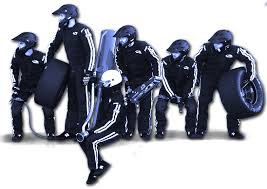
ZARDOZ SPEAKS TO YOU, HIS CHOSEN ONES. ZARDOZ READIES FOR RACING. A PIT CREW OF BRUTAL EXTERMINATORS IS READY, AND ZARDOZ HAS THRICE CHECKED HIS GRAVITRONIC DRIVE.
“Why are we holding tires?” “Does anyone know if Zardoz uses fuel?”
BUT THE CHOSEN ONES NEED NOT FEAR. ZARDOZ STILL FOUND TIME TO PROVIDE LINKS.
RECEIVE THE GIFT OF THE LINK!
ZARDOZ DOES NOT UNDERSTAND “HIRING“? DO YOU NOT SIMPLY HAVE BRUTALS ENSLAVED BY ENFORCERS?
IF THIS BRUTAL IS BORED WITH WORK – ZARDOZ COULD USE HIM TO ARRANGE GRAIN SHIPMENT SCHEDULE.
ZARDOZ SUSPECTS INVOLVEMENT OF ROMANIAN BRUTAL KNOWN AS PIEINTHESKY.
BOVINES VERSUS BRUTALS – ZARDOZ IS ROOTING FOR BOVINES….NO OFFENSE TO HIS CHOSEN ONES.
Yeah, I don’t have a whole lot to cover this week either. I still haven’t gotten to try my new gun (although with any luck I will have by the time you read this) so I can’t talk much about that, and nothing particularly noteworthy has popped up this week that I can devote a whole topic to, so I’ll be doing more firearms links. At least these one’s are actually worth talking about.
Okay, which one of you idea stealing fuckers set this website up? I thought we had a deal!
better than the last time there were German rifles walking around Paris.
I want to talk quickly about a serious topic for a bit. There have been some high profile cases lately in which police officers have shot suspects under less than justifiable conditions and ended up found not guilty after a trial. The two that most readily spring to mind are Philandro Castile and Terrence Crutcher. My personal opinion is that both of these shooting were not justifiable, and while they may not constitute outright murder I would not hesitate to label these as involuntary manslaughter. The thread tying these two cases together is that both of the victims were either high or at least regular drug users (Crutcher tested positive for PCP while Castile tested positive for THC). A very disturbing trend I have noticed on my gun blogs (which in general run on the conservative side) are that these people somehow deserved their fate because they were drug users and therefore criminals. I get very bent out of shape when I hear people suggest that using drugs somehow justifies being murdered by a police officer because you violated a minor traffic law. It’s particularly maddening when very pro gun people, nearly all of whom carry a concealed handgun everyday, justify Castile’s shooting on the basis of ‘well he’s a drug user then by definition he’s not a legal concealed license holder’. And yes I have heard these actual arguments out of gun owners. It’s really put me off from the usual gun blogs as of late. I don’t have an answer to these problems, but it really sobers you up on the reality of traditional conservatives opening up their views on drug decriminalization.
In both England and the United States, the legal establishment, helped by would-be reformers, first curtailed the power of grand juries to reach independent judgments, and gave grand juries the power to abuse power on behalf of prosecutors. Then the enemies of the grand jury turned around and indulged in concern-trolling about how grand juries didn’t give adequate protection to suspects. This softened up the grand jury system, making it more vulnerable to attack, and in some cases to abolishing the institution or making it optional.
Zachary Babington (1611-1688) was a functionary in Restoration England’s judiciary system. He was at various times an associate court clerk, a deputy clerk, and a justice of the peace. Zachary’s brother Matthew had been one of the chaplains to Charles I, who was killed when his royal tyranny provoked a counter-tyranny by revolutionaries. That unpleasantness was supposedly over after Charles II, son of the “martyr,” took the throne, but the new king’s supporters were on their guard to safeguard royal prerogatives and minimize the opportunities for the people to thwart the royal will. Zachary may well have learned from his pious brother about the perils of trusting the judgment of the people. So Zachary had a crack at grand juries, trying to limit their usefulness as shields for the rights of suspects. Fortunately, Zachary did not prevail at that time.
In a 1676 book, Advice to Grand Jurors in Cases of Blood, Zachary Babington complained that grand jurors often dared to ignore the judge’s instructions, and to refuse to indict suspects, or to indict suspects for manslaughter when the judge wanted a murder indictment.
“Hi, it’s me again, William Penn. The judges wanted me punished for preaching in the streets, and when the jurors refused to convict, the jurors got punished, but some of the jurors fought their case in a higher court and won, and here we are…isn’t it weird how I keep turning up everywhere?”
…as well as the House of Commons had told judges they couldn’t punish jurors for making “wrong” decisions. Most pertinently for our purposes, the House of Commons had raked Chief Justice John Kelynge over the coals for his treatment of grand jurors. Don Jordan and Michael Walsh wrote that Kelynge was so biased toward suspects and defendants that he “made George Jeffr[e]ys, ‘The Hanging Judge,’ [look] like Rumpole of the Bailey.”
Lord Chief Justice Jeffreys presided at the Bloody Assizes, but he was still a piker next to Kelynge (not shown)
Kelynge had punished grand jurors for refusing to indict for murder in homicide cases, and the Commons warned Kelynge that he had to allow both grand jurors and trial jurors vote how they wanted, without penalty.
Babington apparently realized that, deprived of their power to punish recalcitrant grand jurors, judges could only rely on persuasion to get grand juries to fall into line. So in his Advice, Babington tried to use argument to achieve what threats and punishment had failed to do in Kelynge’s situation. Babington urged grand jurors to give the prosecution, not the suspect, the benefit of the doubt, and to err on the side of overcharging the defendant. If the defendant was innocent, or was guilty of a lesser offense, the trial jury could figure that out later. Babington specifically applied his principles to homicide cases. So long as the prosecution showed evidence that the suspect had committed a homicide, Babington said, the grand jury should indict for murder, even if there was evidence that might justify, say, a lesser charge of manslaughter. The grand jurors “are only to prepare fit matter for the Court to proceed further upon, and to make a more diligent inquiry after.” Only the trial jury can figure out the true nature of the crime after hearing “both sides” – Babington assumed the grand jury would only hear the prosecution’s side, and seemed to think that this was prejudicial…to the prosecution.
“There is very much difference in Law betwixt an Inquiry and a Trial, betwixt a Presentment and a Conviction,” said Babington, and there was a lesser standard of evidence for the grand jury’s “Presentment” – “if they find upon their Evidence, that the party said to be slain in the Indictment, by the person there charged with it, with the time, and place, and manner how, they are to enquire no farther into the nature of it.” If the charges the grand jury files turn out to be excessive, it was up to the trial jury to exonerate the defendant – “however it passeth fairly out of [the grand jurors’] hands, they may more clearly than Pilate wash their hands in Innocency from the Innocent blood of such a person.”
Pontius Pilate washes his hands to symbolize his total innocence of shedding innocent blood. (Matthew 27:24)
Babington was discussing cases of murder – then automatically a capital crime – but his reasoning would justify the grand jury in giving the prosecution the benefit of the doubt in any kind of case.
(Babington’s view of a grand jury’s functions were articulated in 2014 by, of all people, an avowed libertarian deploring the grand jury’s failure to indict police officer Darren Wilson – “the likelihood that Darren Wilson would have been acquitted if he had faced a homicide charge in connection with the death of Michael Brown does not mean he should not have been indicted….A public airing of the evidence, with ample opportunity for advocates on both sides to present and probe it, is what Brown’s family has been demanding all along….”)
Actual grand juries do not seem to have taken Babington’s Pilatian advice. While the evidence is incomplete, Professor J. S. Cockburn says “surviving gaol [jail] calenders suggest that in the seventeenth century approximately twelve per cent. of all assize bills were returned ignoramus” – that is, grand juries disagreed with the prosecutors in 12 percent of cases and refused to indict.
A colorful figure and prolific author, Henry Care, eloquently rebutted authors like Babington. Care published the book English Libertiesin 1680, expressing doctrines directly contrary to Babington’s, and more in line with the real-world activities of grand jurors.
Care said that grand jurors, “if they be doubtful, or not fully satisfied” about the truth of the accusation against a suspect, should not file charges.
People may tell you; That you ought to find a Bill [of indictment] upon any probable Evidence, for ’tis but matter of Course, a Ceremony, a Business of Form, only an Accusation, the party is to come before another Jury, and there may make his Defence: But if this were all, to what purpose haye we Grand furies at all ?…Do not Flatter yourselves you of the Grand Jury are as much upon your Oaths as the Petty [trial] Jury, and the Life of the man against whom the Bill is brought, is–in your Hands…The [famous judge and legal author Edward Coke]…plainly calls the Grand Jury-men all wilfully forsworn: and Perjured, if they wrongfully find an Indictment; and if in such a Case the other Jury [trial jury] through Ignorance, &c. should find the person Guilty too, you are Guilty of his Blood as well as they: but suppose he get off there, do you think it nothing to Accuse a man upon your Oaths of horrid Crimes, your very doing of which puts him, tho never so Innocent, to Disgrace, Trouble, Damage, danger of Life, and makes him liable to Outlawry, Imprisonment, and every thing but Death itself, and that too for all you know may wrongfully be occasion’d by it, your rash Verdict gaining Credit, and giving Authority to another Jury to find him Guilty…
Care wrote that, before a grand jury can indict a suspect, the testimony must be “clear, manifest, plain and evident.” The grand jurors must “diligently inquire” into the credibility of the witnesses.
The prophet Daniel exposes the lying witnesses who falsely accused Susannah
It was Care’s defense of English liberties, not Babington’s attack on them, which became a popular work in the American colonies. Not only did Care’s English Liberties fill shelf space in colonial libraries, its content was invoked by the Patriots of the Revolutionary era in defending American liberties against British oppression. The side which cited English Liberties was the side that won the American Revolution, while the side that looked to the likes of Zachary Babington for advice was the losing side. At least for the moment.
And in both England and America, the influential eighteenth-century jurist William Blackstone came down on the side of the duty of grand jurors to protect suspects against unfounded charges.
Sir William Blackstone
In Blackstone’s words, grand jurors should only vote to indict “[i]f they are satisfied of the truth of the accusation.” Blackstone spoke of a “strong and two-fold barrier, of a presentment [grand-jury indictment] and a trial by jury, between the liberties of the people, and the prerogatives of the crown.” Before approving charges, at least twelve grand jurors had to be “thoroughly persuaded of the truth of an indictment” – “remote possibilities” were not enough.
While America was going through its founding era, on the other side of the Atlantic English grand juries blocked indictments in 10%-20% of cases – so for every ten suspects, one or two were cleared without the danger, expense, anxiety and humiliation of a public trial.
But the legal reformers were circling like birds of prey, waiting to enfeeble and then devour the grand jury system. Jeremy Bentham, the utilitarian legal reformer, denounced the grand jury in the eighteenth century, but added that the legal establishment wanted to keep the system: “lawyers and their dupes never speak of [the grand jury] but with rapture.”
If only that were so! In the nineteenth century, many lawyers and judges, in England and America, joined the ranks of the reformers. “Probable cause” became the standard which grand juries were told to follow in deciding whether to indict. This is certainly curious in the American case – the Bill of Rights does indeed mention “probable cause,” but that’s in the Fourth Amendment, dealing with warrants, rather than in the Fifth Amendment’s grand jury clause.
Probable cause doesn’t seem to be the same thing as believing the suspect is guilty. In fact, the concept is kind of vague. As Professor Orin Kerr put it: “In one study, 166 federal judges were asked to quantify probable cause. Their answers ranged from 10% certainty to 90% certainty, with an average of 44.52% certainty.” Perhaps that sort of vagueness is tolerable when judges or magistrates are issuing warrants, but not in the case of grand jurors accusing their fellow citizens of serious crimes.
Not only was the standard of proof watered down, but grand juries were limited in the kind of evidence they could hear. The only outside evidence they were entitled to examine was the evidence provided by the prosecutor (including private prosecutors in England – contradicting Justice Brown, English reformers said the grand jury was not an adequate protection against unjustifiable private prosecutions). Members of the public could not submit evidence to grand juries, the legal establishment made clear – not even suspects could send in affidavits and lists of witnesses with information favorable to them. Unless the grand jurors had personal knowledge of an alleged crime, they would have to rely for their information on what the prosecutor chose to spoon-feed them, and then they had to vote on the proposed indictment based on the loose “probable cause” standard, with the evidence stacked in favor of indictment by the prosecutor.
The New York judge Sol Wachtler, an opponent of grand juries who supposedly said a grand jury would indict a ham sandwich…
…had further animadversions against grand juries in his prison memoir, After the Madness. (The judge was convicted of stalking and harassing his former lover.)“If anyone should try to convince you that the grand jury is not a device used by prosecutors to garner publicity at the expense of someone still presumed innocent, watch out! The deed to the Brooklyn Bridge is probably in his back pocket.” That sort of misbehavior, of course, is the fault of the prosecutor, not of the grand jury. And somehow, even when they bypass grand juries, prosecutors find ways to generate prejudicial publicity about their cases.
Ovio C. Lewis, a law professor who served on a grand jury in Cleveland, Ohio, decided that the grand jury system was defective in comparison to the reformers’ favorite objective of a preliminary hearing before a judge. Writing in 1980, Lewis said: “In most cities where the grand jury is used it eliminates fewer than twenty percent of the cases it receives. In Cleveland, Ohio, the figure is seven percent; in the District of Columbia, twenty percent; and in Philadelphia, Pa., two to three percent.” From these figures, we see that at least some people were getting exonerated even under the watered-down grand jury system which had come to replace the robust grand jury of the founding era. It would be nice to know what those figures would be like in the case of a grand jury which fulfilled the functions described by Care and Blackstone: investigating and sifting the evidence and only indicting people whom the grand jurors are convinced are guilty.
Returning to the 19th century: some English grand juries – especially in big cities – called for their own abolition. These grand juries were influenced by presiding judges who discussed the alleged uselessness of the grand jury in front of the grand jurors themselves. The Birmingham Daily Post criticized one of these judges in 1872. Even though the newspaper agreed with the judge about the desirability of abolishing grand juries, it said it wasn’t cricket to harangue the grand jurors themselves on the subject:
The Recorder of Birmingham, in his charge the other day, made the usual remarks about the uselessness of grand juries. . . . It is unpleasant enough to have to sit in a stuffy room for two or three days, against one’s will, and it certainly does not render the infliction more tolerable to be penned up in a box, and be publicly told that one is incompetent and useless, and out of date, and in the way-nothing more in fact, than a sort of antiquated machine, less ornamental than a barrister’s wig, and less useful and important than the wheeziest of ‘criers of the Court’.
With these attitudes, it’s hardly surprising that judges and juries were making their talk of grand juries’ uselessness into a self-fulfilling prophecy.
Parliament put grand juries on hold during the First World War, as a supposed emergency measure. This simply whetted the appetite of the judicial establishment for a permanent, peacetime ban on grand juries, and such a ban was finally achieved by Act of Parliament in 1933.
You know why else 1933 was a bad year for liberty?
Albert Lieck, chief clerk (or former chief clerk?) of London’s Bow Street Police Court, rejoiced at the abolition of the grand jury, while inadvertently suggesting reasons the institution should have been retained. Lieck acknowledged that grand juries had sometimes released suspects: “Here and there a bill [of indictment] was thrown out, but on no discoverable principle.” Perhaps the grand jurors hadn’t been satisfied of the suspects’ guilt?
Lieck uttered a non-sequitur which one would associate with Yogi Berra more than with a distinguished British bureaucrat: “the real security against oppression lies not in outworn judicial machinery [i. e., the grand jury], but in the alertness and resolution of the citizen.” Of course, grand jury service has the potential to provide citizens a vehicle to exercise their alertness toward the criminal-justice process.
American critics of the grand jury cited (and still cite) abuses which are not in any way required by the Fifth Amendment. That amendment simply says you need an accusation from a grand jury in order to be brought to trial for a sufficiently serious crime. The Fifth Amendment doesn’t say grand juries should be dependent on prosecutors for their information, or interrogate witnesses without their lawyers, or wield overbroad subpoena powers, or act in complete secrecy (unless the prosecutors chooses to leak information, of course), or fail to keep records of their proceedings. Critics have harped for a long time on these “Star Chamber” features of grand jury procedure, suggesting that the only cure is to bypass the grand jury and have magistrates or judges hold preliminary hearings, where both sides can present evidence and argue over whether probable cause exists. Then the magistrate or judge, after such an open hearing, would decide if there is probable cause to bring the suspect to trial. This type of “reform” has been adopted in England, and in many U. S. states.
The problem with such a “reform” is that it cuts the public – at least the informed portion of the public which has actually heard the evidence – out of the decision whether to bring charges against a suspect. The suspect is dragged into a public hearing by the accusation of a prosecutor, and put at the mercy of a judge who – at least in a well-publicized case – may well feel the voters – who generally don’t know the details of the case but know that the suspect is guilty – breathing down the judicial neck and demanding a trial. With the vagueness of the term “probable cause,” it wouldn’t take a whole lot of evidence for the judge to put the case down for trial, if that’s the judge’s mood at the time. Not to mention the loss of the opportunity for nullification if the defendant, while technically guilty, is morally innocent and doesn’t deserve to be dragged through a trial.
There are some useful features which were traditionally associated with American grand juries. These features are not required by the Fifth Amendment, but they provide some historical context to refute those who think the founders would have been happy to do without grand juries. Grand juries used to have (and to a greatly limited extent sometimes still have) responsibility for making recommendations relating to the problems of their communities: from fixing bad roads to dealing with polluted streams to making new laws, American grand juries have historically often broadened out from simply looking at local criminal cases.
Sometimes, and this is hard to believe nowadays, grand juries, on their own initiative, looked into corruption and misconduct by local officials, including even prosecutors and judges and cops and jailers. Sometimes grand jurors took the bit between their teeth and looked into certain types of local crime which the prosecutors and judges would just as soon not look into – maybe because the prosecutors and judges were trying to sweep that crime under the rug.
Whatever we think nowadays of these crusading, self-assertive grand juries from history – and the Fifth Amendment doesn’t require that grand juries play this role – we can reject the idea that most of the founding generation took a dismissive view of grand juries or would have been willing to abolish or sideline them, or to abolish their constitutional role in protecting suspects from overzealous or corrupt government prosecutors and judges.
The point of having two juries – a grand jury and a trial jury – is to have the grand jury make a broad inquiry, with comparatively few technical rules, in order to find the truth, and if the grand jury believes the charge, then it’s time to have the evidence heard by a trial jury under much more rigid procedural rules. For serious enough charges, it should take these two juries – one acting broadly and informally, the other following careful rules – to agree that someone is a criminal before that person can be punished as a criminal.
Now, in the real world, where most criminal charges are resolved through plea-bargaining, I’d advocate a more limited objective: To make sure that a person suspected of a serious crime has his case considered by at least one jury – and since cases are generally resolved with pleas before a trial jury can be called, that one jury would have to be the grand jury. There should be laws to prohibit plea negotiations from beginning in serious cases until after a grand jury has issued its indictment(s). We may have come full circle to the days of Henry II – grand juries are usually the only criminal juries involved in a case, and the trial procedure is almost as unreliable as in Henry’s day – a plea negotiation approaches in arbitrariness the old dunking-in-cold-water procedure when it comes to sorting out the innocent from the guilty. All the more reason to keep grand juries, so that some type of jury, at least, will review serious cases.
Is there any chance that the right to a grand jury, as intended by the Founders, will be restored any time soon? Probably not. The political and judicial establishment seems to have no particular interest in encouraging such a degree of citizen involvement. They either want to keep grand juries on a tight leash, acting on the limited evidence the prosecutors spoon-feed them, or to keep them on the sidelines, taking no role in cases unless a prosecutor needs political cover for a controversial decision.
And many regular citizens are parading around demanding that the right to a grand jury be abrogated.
And of course advocates of a restored grand jury system will be called racists.
Well, it’s too bad, but there it is.
Works Consulted
Richard L. Aynes, “Unintended Consequences of the Fourteenth Amendment and What They Tell Us About its Interpretation,” 39 Akron L. Rev. 289 (2006).
William J. Campbell, “Eliminate the Grand Jury,” 64 J. Crim. L. & Criminology 174 (1973).
Nathan T. Elliff, “Notes on the Abolition of the English Grand Jury,” Journal of Criminal Law and Criminology, Volume 29,Issue 1 (May-June) Summer 1938.
Thomas Andrew Green, Verdict According to Conscience: Perspectives on the English Criminal Trial Jury 1200-1800. Chicago: University of Chicago Press, 1985.
Don Jordan and Michael Walsh, The King’s Bed: Sex, Power and the Court of Charles II. London: Little, Brown, 2015.
Orin Kerr, “Why Courts Should Not Quantify Probable Cause” (March 28, 2011). The Political Heart of Criminal Procedure: Essays on Themes of William J. Stuntz (Klarman, Skeel, and Steiker, eds), pages 131-43 (2012); GWU Law School Public Law Research Paper No. 543. Available at SSRN: https://ssrn.com/abstract=1797824
Andrew D. Leipold,”Why Grand Juries Do Not (and Cannot) Protect the Accused,” 80 Cornell L. Rev. 260 (1995). Available at: http://scholarship.law.cornell.edu/clr/vol80/iss2/10
Ovio C. Lewis (1980) “The Grand Jury: A Critical Evaluation,” Akron Law Review: Vol. 13 : Iss. 1 , Article 3. Available at: http://ideaexchange.uakron.edu/akronlawreview/vol13/iss1/3.
Albert Lieck, “Abolition of the Grand Jury in England,” Journal of Criminal Law and Criminology, Volume 25, Issue 4, November-December (Winter 1934).
Kenneth Rosenthal, “Connecticut’s New Preliminary Hearing: Perspectives on Pretrial Proceedings in Criminal Law.” University of Bridgeport Law Review, Volume 5, Number 1, 1983.
Suja A. Thomas, The Missing American Jury: Restoring the Fundamental Constitutional Role of the Criminal, Civil, and Grand Juries. New York: Cambridge University Press, 2016.
___________, Nonincorporation: The Bill of Rights after McDonald v. Chicago, Notre Dame Law Review, Vol. 88, 2012.
Mary Turck, “It is time to abolish the grand jury system,” Al Jazeera America, January 11, 2016, http://america.aljazeera.com/opinions/2016/1/it-is-time-to-abolish-the-grand-jury-system.html
Rachel A. Van Cleave, “Viewpoint: Time to Abolish the ‘Inquisitorial’ Grand Jury System” (2014). Publications. Paper 656. http://digitalcommons.law.ggu.edu/pubs/656.
Sol Wachtler, After the Madness: A Judge’s Own Prison Memoir. New York: Random House, 1997.
_________, “Grand Juries: Wasteful and Pointless,” New York Times, Opinion, January 6, 1990, http://www.nytimes.com/1990/01/06/opinion/grand-juries-wasteful-and-pointless.html.
Richard D. Younger, The people’s panel: the Grand Jury in the United States, 1634-1941. Providence, RI: American History Research Center, Brown University Press, 1963.
Wimbledon mens semifinals today. Go Sam Querry! Ladies played yesterday and Venus beat that limey girl to make it to the finals. USA! USA! I hope she wins and does her usual classy interview. And I hope her smarmy, jerk of a sister takes notes. The dude I assumed was a lock to win the bike race seems to have lost his lead. I’m sure a few of you will clue us in on what’s gonna happen from here on out, because I’m not really paying attention.
Tebow Time!
Baseball, which I thought was back last night, is actually back today. Well, the minor leaguers are still playing but I doubt anybody wants to hear about the exploits of Tim Tebow. Nope. We’re all waiting for the face-off between the Minnesodans and the mighty Houston Astros. Series starts tonight, which means if Houston doesn’t do well, I only have to mention it once in Monday’s links. We shall see. Of course, the dicks over at ESPN will probably have the Yankees-Red Sox series on wall to wall coverage instead, so find the MLB Network on your tv.
No more sports (mostly). Time for…the links!
OK, a little more sports. I hate the team, but I gotta applaud the coach for this level of trolling. Also, Vice have completely turned into a bunch of pussies.
Ladies enjoying National French Fry Day at St Arnold Brewery
Yesterday was National French Fry Day! Therefore one of the greatest breweries in the world threw a party. Seriously, if none of you have had the pleasure of drinking some St Arnold beers, you’re really missing out. Their beers range from outstanding to ohmyfuckinggodittasteslikejesushimselfpissedinmymouth delicious. Which reminds me: I’ll probably try to schedule the Houston meet up at the brewery during one of their events.
For the Tour de France fans. (Some of you might want to open this in a very small window or in the background if they’re at work. It might be NSFW!)
That’s it for me. By the way, I shot a 76 at the Shell Houston Open course yesterday. From the member tees, not the tips. Played out of my mind, but its noticeable when you play a course like that because the greens are always so receptive and hold shots most local tracks won’t hold. Let’s see if I can repeat the feat at my home course today, as I have a small money match with Judge Smalls and Dr Beeper today at noon.
Since your normal (hahahaha!) purveyor of Afternoon Links Of Amusement is once again slacking off, I have generously volunteered to sling some links at you. See if you can guess the theme!
Here is another good reason to be like me and avoid the product in question.
And this is why we can’t have nice things. Or at least why Europeans can’t.
One of the bennies of being a site admin is the ability to abuse it for personal gain. In this case, professional, and there’s money involved.
Here’s the deal: at my day job, we use NAV for our ERP. We need to develop a database system which will integrate with NAV to store our product ingredient lists, where we can dynamically change the quantities to reflect changes in raw materials. Right now, that’s done through a half-assed Excel system, with NAV having nominal formulas to pull from inventory. We want to improve that process by having NAV be able to pull from the database.
The project was thrown at me, but since my boss realizes that I only have a vague idea of what a database is or how to use NAV (hey, I’m a scientist, not a computer geek), he told me I can contract the work out. So, since I have an audience with some very smart IT people in it, I wanted to toss out the opportunity here to make a few shekels by making me look good. If this looks like it’s in your wheelhouse, please raise your hand and I’ll contact you offline so we can scope out the project and get it quoted.
I have often snarked about the superiority of Rugby Union over the lesser forms of foreign sportsball. We have already had a look at Rugby League here… So in this exciting edition of Foreign Footy I will illustrate the majesty of Rugby Union. What could be better than 15 athletes trying to move a ball to the end of the field and touching it down to score (OK, they kick through posts too)?
How about when the other team is allowed to tackle you – and when you are tackled to the ground, you have to let go of the ball, and the action continues (a ruck).
No NFL 3-5 seconds of action and a halt for 45 seconds or more.
It just doesn’t stop – in this case, Welshmen never yield.
In fact, the only time the action stops is when the ball goes out of bounds, a penalty is called or there is a score. OK, at halftime and the game end too, pedants…
Oh – none of that blocking stuff allowed. No forward passes either. Run with it forward, kick it and chase it down or pass it sideways or backward to a teammate.
When the ball comes back into play, it is either the Line-out (a throw in that would make NBA players wince).
One-two punch out at Wimbledon yesterday. Looks like I was wrong about Sam Querrey vs Andy Murray. And Joker had an injury and was forced to retire. So its Fed’s to lose now. On the ladies side, Venus marches into the semifinals today, where she has to be the favorite to win it all now, although the locals will likely be cheering for her opponent.
Guys are riding bikes through France toward an inevitable win for Froome. There USAMNT (soccer for those of you who don’t know or care) beat an island with the population of Sugar Land, TX by one measly goal last night and our very own Brett L was there to bask in the glory mediocrity. And ESPN let Mr Potato Head host an awards show that I didn’t even bother to watch, because…meh.
Thank the good lord that baseball is back today, otherwise I would probably just give up on the intro tomorrow and just head straight into…the links!
Loretta Lynch needs to take another oath
The Natalia Veselnitskaya situation gets weirder and weirder. I’m sure lots of people got special permission from Loretta Lynch herself to enter the country and then weren’t asked to leave for at least six months after their purpose for being here had expired, though. Right? RIGHT?!?!
Talos Energy strikes (black) gold! Let’s see how this works out once the Mexican government gets involved and all but fucks up the wealth her people should enjoy from it.
And finally, the meme war is over. The ultimate battle was a slaughter. Seriously, I can’t stop watching. I had it on loop for a half an hour last night and I was literally crying. It was the most glorious piece of editing I’ve ever seen. Now if we can just get POTUS to retweet it (yes, its twitter, but even if you aren’t a user, you still need to click through this, trust me), the MSM will literally shit themselves. So, you know, I’m praying he does.
 This recipe is by famed Italian chef Lidia Bastianich (although I’ve changed the narrative). Don’t be fooled by the ease and simplicity of this cake. The final result is unexpectedly delicious. It’s also perfect for anyone afraid of decorating a cake, as it finishes to a beautiful golden brown that needs no ornamentation.
  6. Pour the cake batter into the prepared pan, spreading it evenly. Sprinkle 1 tsp flour on the fruit and shake to coat evenly. Sprinkle the fruit over the cake batter, then lightly swirl the fruit into the batter. It doesn’t need to be fully submerged.
 I must emphasize that this dish can be made as spicy or as mild as your taste dictates. Make sure you use a smoked pepper powder, or add some smoked paprika to the mix. We like it so spicy (mmmmm habaneros!) that most of our guests don’t even dare try it. Those who do, generally curse us while performing their morning rituals the next day.
 Fruit, sugar, sparkling wine, fresh herbs. Can it get any easier? No, it can’t. Don’t bring a boring, uninspired carton of Ben & Jerry’s next time you’re asked to contribute a summer dessert to a dinner party. Really, don’t be that guy.


.jpg "In one part of the book, Care urged voters to elect independent, incorruptible men to Parliament - Care was charged with seditious libel for these statements, which the government considered a reflection on its Parliamentary supporters.")