The Astros won the home run derby last night. God, it was brutal to watch those guys throwing meatballs up there. But a win is a win. Hey, speaking of wins, the Twins won too (see, I pay attention!). But there were bigger things happening in the sports world. Like Tim Tebow going yard on his first day after moving up to high-A ball. An umpire did something good for a change. And the Rockets signed CP3 in what many pundits are calling a serious move against the Warriors for control of the west. I think its a bit premature to call it anything but shoring up an inadequate backcourt partner for Harden, but I’ll let the talking heads go apeshit like they always do with a big signing like this.
That’s really it. You guys will be getting (teaser alert!) a foreign sports ball update in a bit, so I won’t dive into anything else. Which brings us to…the links!
Susan Rice
Poor Susan Rice. If it weren’t for racism and sexism, she’d have nothing to worry about. Well, nothing except for the crimes she’s potentially committed by unlawfully getting the names of American citizens swept up in so-called terrorism investigations and leaking them all over the place in an attempt to smear political opponents in an attempt to influence elections. Poor gal. I hope she’s able to make it through the klan rally intelligence committee hearing without incident.
New York Times editors don’t like getting laid off. I guess they don’t understand how markets work…which would explain the overwhelming majority of their financial and economy pieces for the last decade or so.
This model is perfect for understanding “appendicitis, bacterial colitis and adenocarcinoma, cancer, Crohn’s disease, diverticulitis, diverticulosis with adhesion, polyps, spastic colon, intestinal tubercolosis, ulcerative colitis, intussusception.”
Appendix depicts inflammation and fecal concretions.
“No live politician can continue for long to exist sanely under conditions of absolute reality; even Senators and Secretaries are supposed, by some, to dream. Hillary House, not sane, stood by itself against its offices, holding darkness within; it had stood for seventy years and might stand for seventy more. Within, legs staggered upright, dicks fled quickly, arms were flab, and mouths were never shut; nagging rang steadily against the wood and stone of Hillary House, and whatever stalked the woods beyond it, stalked for a photo op alone.”
Huma woke when the screaming started–long, loud cries that shattered the quiet Chappaqua night and had almost faded away when she surfaced from a dream. She reached out for Hillary, but the bed beside her was empty; she felt along the rut Hillary had worn in the mattress and it was sticky and cold. Huma usually awoke when Hillary got out of bed and so she was confused, a three-part wrinkle forming between her eyebrows with effort. That area had been deadened with botulinus toxin less than a week earlier.
Huma got out of bed slipped a thin robe over her naked body, the cool silk of it teasing her nipples and thighs. She put her feet in slippers she kept by the bed, grimacing at the echoes of pain and pleasure that made her vulva blush with blood at the memory of Hillary’s wrinkled claw of a hand being working into her inch by inch, and the sharp squeeze she had given the neck of Huma’s womb when she was finally wrist-deep. It was the ache of childbirth she felt, her breasts heavy with the memory of milk.
“Hillary?” she asked the dark bedroom, “Are you alright?” Huma heard nothing but her own breath, the beat of her own heart. She fumbled for the bedside lamp and clicked it on. Nothing. The power must be out, she thought to herself, or the bulb is dead. Faint moonlight came in through the far window of the bedroom, a milky blue that her eyes adjusted to with effort. The closet door stood open, but the door to the hallway was closed.
“Hillary?” Huma asked again as she felt her way around the bed to the open closet. “Hillary?” she whispered into the deeper darkness of the closet. She reached for the string to turn on the light but it wasn’t there. She stopped moving and held her breath. Something was in the closet, but it was not her elderly lover. There was a creaking when it breathed in and out. It was huge. Bigger than the closet. Maybe bigger than the house. Huma knew it was something that shouldn’t be.
The wet iron smell of blood flooded over her as she backed across the bedroom to the door into the hallway. She reached behind her for the doorknob but her hand found only blank wall. She stared at the closet, afraid to turn away from it. It will come for me, she thought. It’s waiting for me to turn around. She slid along the wall, both hands reaching for the knob, ears straining for its familiar rattle. Why was the bedroom door closed? We never close it.
The closet door opened slowly, silently.
“أعوذ بالله من الشيطان الرجيم,” Huma whispered, the words coming to her lips for the first time since she let the Carlos the Jew enter her. She wanted to supplicate herself, to beg Allah for mercy, but she knew to go to her knees now would be death. The knob! she screamed in her mind, feeling its round coldness. Tearing her eyes away from the closet, she pulled the bedroom door open and darted into the hallway, slamming it closed behind her.
“HILLARY!” she screamed and then, in ultimate desperation, “BILL?” but no one answered.
Huma avoided the shadows as she ran downstairs, moving from blotches of moonlight that had pooled on the floor through the windows. The house was no longer a familiar place where she lived with her lover and her lover’s gelded husband. The plush carpet seemed to swallow her feet; furniture she had placed around the house jumped out of her, the house now a maze. Huma began to cry, tears welling in her dark eyes. She couldn’t find the front door. She couldn’t find anyone. The arched doorway into the kitchen loomed before her and she could be the door that led to the backyard through it. The door won’t work, she thought. The knob will come off in my hand. The glass will shatter in my face.
Something came down the stairs behind her with the sound of sharpening knives and breaking wood.
The back door opened when she tried it and she was outside in the night. Huma ran, slippers quiet on the stones of the patio, treacherous in the wet grass. She skidded to a halt when a dozen high-intensity lights came on with a sharp crack, her legs coming out from under her to dump her on the ground.
“Huma!” the voices called, “Huma! Huma!”
“Huma, do you have a comment?” one said over the rest.
“Huma, can I get your reaction?” said another. They all began to overlap to a gurgling roar. A cameraman fell forward on his knees to get with her face. Another followed him, pointing his camera down at her bare legs, at her bare sex. She scrambled to cover herself and back away. They all laughed.
They all began to overlap to a gurgling roar. A cameraman fell forward on his knees to get with her face. Another followed him, pointing his camera down at her bare legs, at her bare sex. She scrambled to cover herself and back away. They all laughed.
“What are you all doing here?” she demanded, her voice cracking.
“Huma,” a voice said behind her. She turned her head and a hand caressed her face.
“Huma, I’m sorry,” Hillary said. She was in a dark purple leather pantsuit that glittered in the bright lights. She was made up in layers of foundation, her hair set expertly.
“Ms. Clinton,” Huma said, acutely aware of the cameras.
Hillary reached down and cupped one of Huma’s breasts under the thin silk robe.
“Huma, what must you think of me?”
“Ms. Clinton! Hillary! The journalists,” she said in an urgent whisper.
Hillary waved her hand and Huma heard heavy equipment thud on the grass of the lawn, the squeal of microphone feedback. She felt warmth and wetness. In the off-angles of the lights as they lay on the lawn, Huma looked down and watched a wave of thick blood washing past her legs and feet.
“Sacrifices have to be made, dear Huma,” Hillary said in the now silent yard.
“What’s in the house, Hillary?” Huma whispered.
“Something that has always been with me, love.”
“What is it?” Huma demanded.
Hillary stood and straightened her clothes.
“You stay here,” Hillary said, turning to the house, “I’ll put Chelsea’s father away.”
The US — being less unfree than many places — is experiencing a secondary petrochemical boom (except for the petroleum coke Sloopy needs, apparently) from fracking due to free(r) ability to take risks and make money. If only there were some political philosophy that recognized this ability for people to take more risk for higher reward without the government distorting either the risk or the reward, and the relative benefits that might accrue to such a society.
One of those more unfree places is Venezuela, where their police apparently have the same average marksmanship as the US. A helicopter strafed the Supreme Court and lobbed grenades, causing no casualties. However, the apparent ringleader is attractive, if not effective, so look for rising support for anti-Maduro factions.
Glad I didn’t stay in my first IT job today. My former employer is on the affected list. I was there for the Slammer SQL worm. That sucked.
Fifty percent of nothin… carry the nothin… I’m coming up with… nothin. Large percentages of small numbers are still small numbers. Being able to do math might make me a science denier.
I love this guy. You just know he has mullet pics. And would probably be a better representative than Paul Ryan.
It looks like SMOD might be able to save us, but not until 2029. And by save, I mean mercifully destroy.
Once it is determined who is granted access to the system and how this system is going to be paid for, the next step is discovering how these health care services are going to be delivered. After all, the point of our nation becoming part of the noble cadre of nations that recognize access to health care for all citizens as a civil right of some kind is to actually treat sick people. Sounds like a given, but how do they go about doing it?
Primary Care – The PACT Model
The key to delivery in the VA is through the Primacy Care Provider (PCP). There is one doctor (MD), or nurse practitioner (NP) that is charged with providing the basis to all services to an individual Veteran. The team also has a small cadre of Registered Nurses (RN), Licensed Practical Nurses (LPN),
Nursing Assistants and Medical Support Assistants (MSA) that work in support of the PCP. This is in effect, a small clinic that operates similar to many health care systems and even at private clinics.
What the PACT team does, is provide the Veteran with general services, also a given since the MD is typically a general practitioner. This team should handle routine services, and also does the grunt work in terms of keeping track of medical history. They provide this based on particular medical criteria designed to stay abreast of common health factors affecting the given population. As noted in the previous essay, most of the Veteran population is older and male.
This means the PACT can focus on the types of issues older men typically face. Examples of such conditions include obesity, hypertension, diabetes or any condition that will worsen over time if a relationship with a physician is not maintained. If a condition worsens, the PCP will know about it and be in a good position to alter his or her plan of care. This proactive approach is often pointed out by advocates of single payer health care systems as a feature of these systems since most of the time healthcare in the United States is a reactive proposition. Reactive in the sense that most people will simply wait until that bump gets bigger, or that knee becomes too unbearable to walk on, or it hurts too much to urinate in the morning before finally making an appointment to see a doctor.
Symptoms may not appear until it is too late for treatment to be effective for many fatal diseases; the system is more likely to catch an underlying condition while it is most effective to treat in this proactive system. Catching these conditions early on has the added benefit that it is often more cost effective than catastrophic treatment (6).
There are studies that Longman cites in his book that suggest a correlation to this approach leading to better outcomes versus the patient waiting until the symptoms get too unbearable (6). There are some studies that go so far as to say that VA patients live a longer life, in spite of disability, alcoholism, PTSD, et cetera, being more frequent than in the general population. Even studies with outcomes in specific areas cited as performing better than the private sector (6). The overall cost of such a system also has a tendency to be lower than the fee for service model. One study from 2004 suggested all VA services provided during FY 99 if reimbursed at Medicare rates would be result in an estimated 17% higher cost to the taxpayer (1).
Specialty Care
This is where things get a little more complicated. Consider what many third party insurers require of their customers to see a specialist. Typically, if a customer wants their insurance to pay for specialty care they will have to first go to a primary care clinic to initiate a referral. What this does for the insurer, is inform them the requested service is medically necessary. This necessity is important to insurers because specialty care providers have a tendency to provide services that are more expensive than their general counterparts. Similarly, in order to see a specialist, a Veteran must first see their PCP. This step allows the PCP to discuss all of the options available to the Veteran and if their condition truly warrants the expertise of a specialist they will initiate a consult.
The consult is essentially a documented source of communication between the PCP and the specialist. Once the PCP enters the consult, the specialist is notified via a provider alert on the Electronic Health Record (EHR) Software. They will review the PCP notes, review the Veteran’s charts if necessary, and if the specialist agrees the service is necessary the specialty clinic’s MSA will contact the Veteran to schedule an appointment. At this point, the treatment varies with the Veteran’s circumstances. It could be an evaluation, a noninvasive outpatient treatment or perhaps a surgery needs to be scheduled with an inpatient stay. All of these specific circumstances are documented on the consult. Once the service is provided, the specialist will document their findings in the EHR to be ultimately reviewed by the PCP. If the specialist does not agree the services are needed, the reason why is documented and the consult is discontinued. If the specialist needs more information, a lab for instance, this will be documented and sent back to the PCP, this way the specialist has every resource available to make an informed decision.
Drugs–the legal variety.
The reason often cited for the efficacy of VHA versus private sector hospitals is the VistA EHR system. It allows a somewhat simple integration between clinics as discussed in the previous sections. It also allows medical data to be stored easily, and later used for research purposes. During the Clinton administration, Ken Kizer, the SecVA at the time, implemented a prescription drug formulary by researching this data as well as recognizing that once Veterans go to the VA they typically stay there. For whatever reason why they stay, they identified they were there for life.
‘If you are going to have your patients for five years, ten years, fifteen years, or life,’ explains Kizer, ‘there are both good economic and health reasons why you would want to use the more expensive drugs. You have a population of patients who are at high risk for sclerotic heart disease, and you’ve got them for life. You make a different decision about what’s on your drug formulary than you might if you knew you only had them for a year or two.’ (6)
What the researchers were able to do with this was create a formulary that determined what drugs worked long term. When the FDA approves a drug, there typically is no long term research into the drug’s efficacy, only if it does what it claims and if it is safe for use. What this means is the VA will only prescribe drugs that have well-known, established effects, but also have been around long enough to be on the generic market. If a new prescription drug treatment hits the market, it is almost certain the VA will not add it to their formulary, even if the drug is truly is a medical breakthrough, as discovered with the new Hepatitis C drug (7). While it was later approved, it required a cost/benefit analysis on the cost of treatment at the VA for hepatitis C before they were able to add it to the formulary. The result is a system that according to the Heritage Foundation costs significantly less than Medicare Part D but presents its patients with no choice whatsoever in their prescriptions (3).
The VA formulary is created through access restrictions on drugs. For drugs to be covered on the formulary, their makers must list all of their drugs on the Federal Supply Schedule (FSS) for federal purchasers at the price given to the most favored nonfederal customer under comparable terms and conditions. Additionally, drug makers must offer the VA a price lower than a statutory federal price ceiling (FPC), which mandates a discount of at least 24 percent off the non-federal average manufacturer price (NFAMP), with a rebate if price increases exceed inflation (3).
Otherwise, the VA negotiates pricing based on volume, as they are the largest health care provider in the country. The drug companies that sell to the VA recognize that it is a closed system and there is little chance of market distortions from below market priced VA drugs. It is also small enough as a portion of the entire health care market, that they are able to break even by selling non-generic prescription drugs elsewhere (3).
Scheduling
Everything in the previous sections of this essay is utterly meaningless if Veterans cannot get an appointment.
The thing is, most major hospital systems and private practices do not worry too much about whether or not they are able to schedule patients in a timely manner. The reason being, they have many fixed costs that are baked into their operating budgets. Paying for the cost of operations requires treating patients. If they can’t get patients into beds, they go under–kind of like when airlines have no passengers. The private sector is also large enough at the moment that if a patient cannot be seen at one place, they can find another. In the grand scheme of things it is about as difficult to schedule an HVAC technician as it is to schedule an appointment with a private doctor—it just depends on where you live, and the local supply and demand for services.
Because of this, it is often difficult to find an apples to apples comparison for scheduling times. In 2014, Merritt-Hawkins published a survey on Medicare/Medicaid acceptance rates and average wait times for a number of US Metropolitan areas (2). Unfortunately, their survey uses 2013 data and is limited to a few clinic types. The VA does have a public website that currently presents average wait times at all their facilities, for a similar number of clinic types (4). For purposes of brevity, only Primary (or Family) Care and Cardiology average wait times will be displayed here by number of days. The references section has links to both resources in case further research is desired.
Ruminations on Primary Care, Specialty Care, Drugs and Scheduling
While the scheduling numbers in the area listed appear comparable or better than their private sector counterparts there is something that should be mentioned here: these data were made available as a result of a well-known scandal involving the manipulation of the wait times first identified in Phoenix, but later found to be endemic of the system as a whole. Here are a few other examples:
The VAOIG website is full of these. Unfortunately, bottlenecks within the system can occur. With a large number of people congregating into urban areas, it is very likely to happen in a hypothetical single payer system. Keep in mind the VA only provides care for a small minority of Americans (around 9 million) and scaling the system for the entire population is unlikely to make it work any faster, this is the practical experience in other countries as well. There is also the question of coordinating care with a specialist. So to recap the consult management practice goes like this:
AH! ➔ Appointment with PCP ➔ PCP Agrees and writes up a consult ➔Specialist receives consult and reviews ➔ Specialist accepts and schedules appointment ➔ Treatment ➔ Specialist documents treatment ➔ Specialist informs PCP of treatment ➔ Re-evaluation by PCP if needed.
Each of these steps requires human input; miss a step and the entire process stops. Stop early enough and treatment may never be given at all. One of the findings from an investigation determined there was little oversight at the time of the investigation of the process at all, which likely lead to unnecessary deaths (6). The prevailing issue with government systems such as these is lack of accountability.
In terms of prescription drug pricing, the VA formulary only works because it is a closed system. Scaling it up will create a massive market distortion that according to the Heritage Foundation, will only drive up costs (3). Consider the formulary is based on restricting the drugs it will pay for, and what doctors can prescribe. This will result in shifting costs to new medications for those willing to pay for it. There is also the matter of the formulary’s insistence on using generics. Generic drugs are made by a limited number of manufactures and if the only thing the hypothetical single payer will pay for are generics and the physician is required by law to only prescribe generics, it will only result in a temporary shortage due to the spike in demand. When coupled with the price controls it is probably going to take these companies longer to increase their manufacturing capacity due to limited funding. Of course if their lobbyists are half as good as they are rumored to be, they might avoid that. Not to mention the obvious result of, “billions of dollars in averted research and development expenditures by drug makers, forgone investment in an untold number of new drugs, and the considerable loss of valuable research and science jobs (3).”
Finally, there is little evidence that profit motive automatically results in poor outcomes. An informed pedant might throw out Roemer’s law. Which postulates that in the for profit model with an insured patient population, every hospital bed will be full. If the hospital finds that they are not balancing their books with primary care, they will simply shift their resources to providing a higher paying specialty—like cardiology. It is in this way they can maintain their patient population and continue to keep their revenue streams in place. If a patient needs a cardiac catheterization, they are probably going to be comforted by the fact the hospital they are at performs the procedure thousands of times a year. Given the procedure involves a surgeon threading a device through a vein in the groin and then insert a device into or near the heart, the patient might think of this as a feature rather than a bug. Finally, even if there are benefits to the “proactive” approach the VA system currently uses that can materialize in a hypothetical single payer, the argument this can only be achieved with a state-run system without the profit motive is made out of ignorance of the industry or dishonesty.
Why? Because there happens to be a similar for-profit system, that apparently made $504 million in Q1 2016 (8). While they are only available in a few areas, it just so happens they specialize in the same type of fully integrated, proactive approach to care that is touted as the feature of state run systems.
Longman, Phillip. Best Care Anywhere. Polipoint Press, February 2007.
U.S. Government Accountability Office (GAO). Report 14-808 VA Health Care Management and Oversight of Consult Process Need Improvement to Help Ensure Veterans Receive Timely Outpatient Specialty Care. http://www.gao.gov/assets/670/666248.pdf
Well the Florida Gators won the CWS. The Astros lost. John McEnroe keeps giving honest answers which keeps pissing off SJWs that can’t handle reality and the Knicks are finally done paying Phil Jackson to troll them. That’s pretty much it for sports. Damn, that’s one thing about summer that sucks.
But there are plenty of you Glibs that hate sports anyway, so you’re probably giddy that I will be forced to jump more quickly into…the links!
The New York Transit Authority just gets worse and worse at their job.
Gee, um, we’re really sorry we lied to you. Its a good explanation how the old kids game of “telephone” gets played in the news game and how it results in so much bullshit being printed that you could fill Yankee Stadium with it (which isn’t a bad idea).
Gather ’round kids, because this week’s sedrah is Chukat. And harking back to last week’s mention of the Documentary Hypothesis*, this one clearly shows the Frankenstein stitches of an editing portmanteau. Basically, it’s an incredibly tedious Priestly document which suddenly lurches to fragments of Jahwist and Elohist. That said, we can divide this into two parts: pointless ritual, followed by the usual Pissed Off Yahweh.
Trigger Warning: Tedium Ahead
Chukat is mostly concerned with the Law of the Red Cow. The Law of the Red Cow is the recipe for creating the Water of Lustration. Aren’t you glad I told you? Now down to specifics.
Step One is “get a red cow.” But not just any Red Cow, because Yahweh is picky. This has to be a perfect cow, a virgin (basically), never yoked, without blemish. There is of course extensive rabbinical debate over what “unblemished” means (which raises tedium to a new level). Here’s an excerpt from Wikipedia:
Rabbi Eliezer ruled that… the Red Cow (פָרָה, parah) prescribed in Numbers 19:2 had to be two years old. But the Sages ruled that… the Red Cow could be three or four years old. Rabbi Meir ruled that the Red Cow could be even five years old, but they did not wait with an older cow, as it might in the meantime grow some black hairs and thus become invalid.
Rabbi Eliezer ruled that a Red Cow that was pregnant was nonetheless valid, but the Sages ruled it invalid. Rabbi Eliezer ruled that the Red Cow could not be purchased from Gentiles, but the Sages ruled that such cow could be valid. If the horns or the hoofs of the Red Cow were black, they were chopped off, and the Red Cow was then valid. The cow’s eye, teeth, and tongue could cause no invalidity. And a dwarf-like cow was nonetheless valid. If the Red Cow had a sebaceous cyst and they cut it off, Rabbi Judah ruled the cow invalid, but Rabbi Simeon ruled it invalid only if no red hair grew in its place.
A Red Cow born by a caesarean section, the hire of a harlot, or the price of a dog was invalid. Rabbi Eliezer ruled it valid, for Deuteronomy 23:19 states, “You shall not bring the hire of a harlot or the price of a dog into the house of the Lord your God,” and the Red Cow was not brought into the Temple. The Mishnah taught that all blemishes that caused consecrated animals to be invalid as sacrifices also caused the Red Cow to be invalid. If one had ridden on the cow, leaned on it, hung on its tail, crossed a river with its help, doubled up its leading rope, or put one’s cloak on it, the cow was invalid. But if one had only fastened it by its leading rope or made for it a sandal to prevent it from slipping, or spread one’s cloak on it because of flies, it remained valid. The general rule was that wherever one did something for its own sake, the cow remained valid; but if one did something for the sake of another purpose, it invalidated the cow. If a bird rested on the cow, it remained valid. If a bull mounted it, it became invalid; but Rabbi Judah ruled that if people brought the bull to mate with the cow, the cow became invalid, but if the bull did so on its own, the cow remained valid.
If a cow had two black or white hairs growing within one follicle, it was invalid. Rabbi Judah said even within one hollow. If the hairs grew within two adjacent follicles, the cow was invalid. Rabbi Akiva ruled that even if there were four or even five non-red hairs, if they were dispersed, they could be plucked out. Rabbi Eliezer ruled that even as many as 50 such hairs could be plucked. But Rabbi Joshua ben Bathyra ruled that even if it had only one non-red hair on its head and one on its tail, it was invalid. If the cow had two hairs in one follicle with their roots black and their tips red or with their roots red and their tips black, Rabbi Meir taught that what was visible determined validity; but the Sages ruled that validity followed the root.
Rav Judah reported in Samuel’s name an account of the rarity of completely Red Cows: When they asked Rabbi Eliezer how far the honor due parents extended, Rabbi Eliezer told of a non-Jew from Ashkelon named Dama son of Nethinah. The Sages offered Dama a profit of 600,000 gold denarii (or Rav Kahana said 800,000 denarii) in exchange for jewels that he had that the Sages could use in the ephod, but as the key to the jewels lay under Dama’s father’s pillow, Dama declined the offer so as not to trouble his father. The next year, God rewarded Dama by causing a Red Cow to be born in his herd. When the Sages went to buy it, Dama told them that he knew that he could ask for all the money in the world and they would pay it, but he asked for only the money that he had lost in honoring his father.
This is the shit rabbis do to pass the time.
Step Two is “kill the cow.” But of course, it has to be done a certain way by a certain person in a certain place. Because Yahweh is really, really picky. The priest must take the cow outside of the camp (for desert folk) or the city (for city folk), slit its throat with the right hand, catch some blood with the left hand, then sprinkle it seven times in the direction of the Tabernacle.
Step Three is “burn the cow.” But that doesn’t mean barbecue. Oh no, the cow has to be burned thoroughly, in a fire that also burns hyssop, cedar, and crimson wool. If you don’t get all that in with the cow, Yahweh is going to get a rage-boner and there’s going to be some divine fireworks of the unpleasant sort.
Step Four is to mix the ashes with some water to form Water of Lustration. And WoL is handy shit, useful for all sorts of ritual purifications starting with…
Step Five, wherein the guy who killed the cow and the guy who burned the cow now have to be purified. This involves washing their clothes, dipping hyssop into the WoL and sprinkling it around, waiting until sunset, waving a dead chicken over their heads, and having them don fezzes and drive around in tiny cars. Or something like that.
Once you have WoL on hand, you’ll find that all sorts of ritual purifications become easier. Touch a dead guy, WoL will clean you (it takes a week, but that beats being impure forever). Someone dies in a tent, yep, WoL will make that tent useful again. Each time, the key is to dip hyssop into the WoL and start sprinkling it around. I’m sure you’ll need a Prop 65 warning and an MSDS to make this legal, but a resourceful Jew is a blessed Jew. The whole corpse-contamination thing is incredibly complex, but WoL is in the middle of all of it. By the way, here’s a rather recherche passage from the Talmud regarding corpse taboos:
Ulla said: According to the law of the Torah the skin of a man is clean, but for what reason did they say it was unclean? As a precautionary measure lest a man make rugs out of the skin of his father and mother.
Insert lampshade joke here.
OK, I could go on in great detail about corpses and purification, but frankly, this shit’s putting me to sleep. I hope you get the point which is that there IS no point.
From here, the story lurches to desert-wandering action. Mostly, it’s Jews running into other tribes and killing them, which seems to have pleased Yahweh. The sedrah is just a tribe-by-tribe account of how they got killed and basic stats. But there is one significant story in there as well, and naturally, it’s all about Yahweh being a major asshole yet again, and the Jews being whiny bitches.
The whiny bitches were getting thirsty. “Mommy, bring me a drink of water!” or something like that. Moses and Aaron, both being mindful of the necessity of distributing goodies to remain in power in Middle Eastern cultures, went to Yahweh and said, “We gotta come up with some water or these Jews are going to be a major painus in the anus.”
Yahweh responded, “See that rock over yonder? The big gray one? Yeah that one. Grab your walking stick, go over to it, and tell it to give you water. And make sure the Jews are watching so they know that it’s Another Yahweh Miracle.”
So with the restive Jews following them, Moses and Aaron walked over to the rock. Moses hollered, “OK, y’all want water?”
The Jews responded, “Yes!”
Moses yelled, “I CAN’T HEAR YOOOOUUU!”
The Jews screamed, “YESSSSSSS!”
Then Moses and Aaron turned to the rock at hit it with the walking stick. Water gushed forth in impressive quantities. Yay, a miracle! Except… this pissed off Yahweh because he hadn’t said anything about using a stick, he had just mentioned the yelling part. Like I said Yahweh is picky. And when a picky asshole isn’t satisfied, assholery is inevitable. The first thing Yahweh did was tell Moses and Aaron, “Forget entering The Promised Land, you disobeyed me.” Then he said to Aaron, “OK, you’re through as High Priest. Turn over your robes, breastplates, and employee ID to Eleazer, your son. Maybe HE won’t be such a useless fuck-up.” So Aaron gave them to Moses to pass along, then died. When Yahweh fires you, your severance is death, and he will not wish you all the best in your future endeavors.
Moses was looking a bit nervous at this point, but Yahweh said, “No worries. I’m going to kill you, just not quite yet. I have a few jobs for you to do first.” As you might expect, the “jobs” involved killing a bunch of other tribes. And as usual, Yahweh decided to plague the Jews, this time with serpents. And not just ordinary serpents- these were Fire Serpents. The verses are unclear on how many Jews he offed that way, but I would not be surprised if it were 12,900. And again as usual, he instructed Moses on how to do the extermination, by putting a Nehushtan on the top of his stick (the stick that started all this trouble) and having anyone bitten by a Fire Serpent be cured by looking at the bronze. I guess if you were blind, you were shit out of luck.
I’ll leave this as a cliffhanger. You know Moses is going to die, the question will be where and how…
*I am still not yet convinced of the Fragmentary Hypothesis, not that it really matters.
Hopefully, by the time you read this, I will have A/C again. Or a plan for A/C. Otherwise, I’m going to be sitting in a kiddie pool full of ice wearing my Florida Man birthday suit, cooling my taint.
Damn. I guess I’d better “lose” my chainsaw. I’m sure “common sense” chainsaw regulation is coming.
In lieu of flowers, send donations to the Nats Bullpen Fund. I guess they should show up as pallbearers so they can let him down one more time.
I’ll be driving by the sacred site where this happened in Apalachicola, FL on Friday
My entry for worst journalism of the week award. I am completely unable to follow the narrative.
I’d pick somewhere else than an arsenal to get shooty. But Alabama isn’t really known for its education system.
State of California — active science denier. There is good evidence that glyphosate does not cause cancer. In fact, there appears to be active scientific fraud perpetuating the myth. But hey, fuck Monsanto, right? At least this ruling probably won’t sentence tens of thousands of the world’s poorest children to die horribly like DDT myths did.
I wore just the skirt today. Working from home means I make my own dress code.
George Keith was a highly educated Scottish schoolmaster…
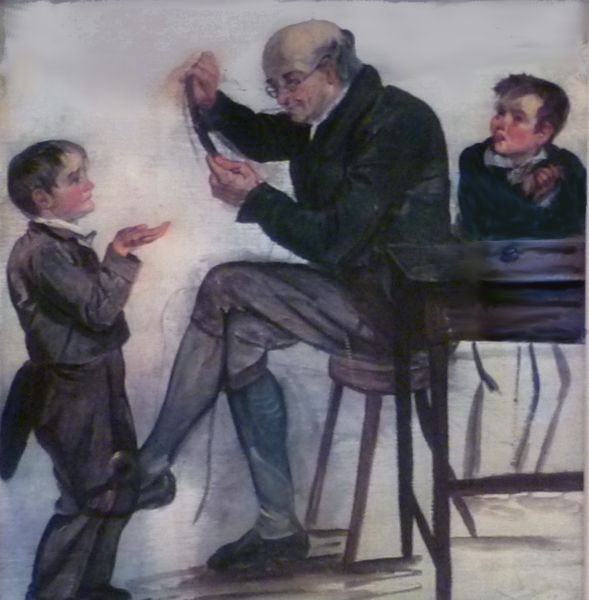
A Scottish schoolmaster – perhaps George Keith looked something like this
…who left the Presbyterians for the Quakers in the 1660s. He endured the persecution being laid on the Quakers at the time, but the persecution didn’t stop him from taking part in debates with his former Presbyterian coreligionists and going on a European mission trip in the 1670s with other big-shot Quakers: George Fox, William Penn, and Robert Barclay (fellow Scot and author of Quaker apologetics). It was Barclay who helped get Keith a job in North America, surveying the boundary line between the then-colonies of West Jersey and East Jersey.
At the last minute, people came to their senses and said, “wait, do we really want two New Jerseys?”
Around 1689 Keith went to the Quaker-run colony of Pennsylvania (named after William Penn’s father, Admiral William Penn). Keith served for a year as headmaster of a Quaker school. Educator by vocation and educator by nature, Keith thought that both younger and older Quakers in the colony were in need of religious instruction. Too many Quakers seemed ignorant of the basics of the Christian faith, relying on inspiration and vague spiritual ideas, and sometimes lapsing into heresy. Keith wrote a catechism to help get Quakers up to speed.
Keith also waded into polemics with members of the Quaker establishment. Rufus Jones, Quaker historian wrote: “It was quite as much the spirit as the doctrine of George Keith to which the Friends objected. He loved controversy, and in the days when he was in favour used the severe language of his time against the opponents of Quakerism.” In other words, Keith was much like other Quakers in that period, who were accustomed to using strong language against their adversaries within and without the Quaker movement.
For example, one of George Fox’s early pamphlets was called The vials of the wrath of God: poured forth upon the seat of the man of sin, and upon all professors of the world, who denieth the light of Christ which he hath enlightned every one withal, and walk contrary to it, with it they are condemned: and a warning from the Lord to all who are walking headlong to destruction in the lusts of the flesh, and deceits of the world, that they may repent and turn to the Lord, lest the overflowing scourge sweep them all into the pit.
And Jones himself notes the vituperative tone Keith’s opponents took.
Much of the impassioned debate was over theological points which we need not consider now. But part of Keith’s beef was with the Quaker elite in Pennsylvania, such as deputy governor Thomas Lloyd (Penn was in England), who ran the colony as well as serving as leading ministers in the Quaker meetings. These elites had grown lax, Keith thought, embracing wealth and worldly government responsibilities at the expense of Quakers’ pacifist principles.
A man named Babbitt, a smuggler turned pirate, stole a ship from the wharves in Philadelphia and began sailing around robbing other ships in that port city.
What a pirate named Babbitt might look like
The magistrates, who were leading Quakers, sent a party of armed men to deal with Babbit. Apparently they chased Babbit and his men off their stolen ship. None of the pirates were killed, but apparently some were wounded. A Baptist preacher, John Holmes, wrote a satirical poem about this seeming violation of Quaker peace principles – a charge to which of course any Quaker government official was open.
The Babbitt affair soon became central to the clash between Keith and his followers, on the one hand, and the Quaker establishment, on the other. The Pennsylvania Yearly Meeting was split between a majority which supported the Quaker governing establishment, and a minority which backed Keith and his “Christian Quakers.” Keith’s supporters often had pre-existing grievances about the domineering behavior of the leading Quakers in the colony, seeing them as a bunch of rich SOBs who took power into their own hands without regard for Quaker principles. The bitter dispute between the Quaker establishment and the Keithians culminated in the establishment of rival Meetings. At one point during an argument, each group took axes to the galleries from where the other side wanted to sit.
Twenty-eight prominent Quaker leaders in the religious and political life of the colony wrote a condemnation of Keith, calling him divisive and turbulent. Keith and some of his supporters published a pamphlet in refutation called An Appeal from the Twenty Eight Judges to the Spirit of Truthand had it printed by one of Keith’s supporters, William Bradford, who happened to be the colony’s only printer and a Keith supporter. Bradford had lost his printing contract with the mainstream Quakers for supporting Keith, and though he offered, in the spirit of fairness, to print the anti-Keithians’ pamphlets, they didn’t take Bradford up on it.
While much of An Appeal went over theological issues unconnected to the Pennsylvania government, there was also a challenge to the Quaker establishment’s behavior in the Babbitt affair, posed in the form of a rhetorical question:
9. Whether the said 28 Persons had not done much better to have passed Judgment against som of their Brethren at Philadelphia (some of themselves being guilty) for countenancing & allowing some call’d Quakers, and owning them in so doing, to hire men to fight (& giving them a Commission so to do, signed by 3 Justices of the Peace, one whereof being a Preacher among them) as accordingly they did, and recover’d a Sloop, & took some Privateers by Force of Arms?
…not to mention that Quaker government officials had set a demoralizing example by giving arms to allied Indians and compromising the pacifist testimony which other Quakers were persecuted for upholding. Plus, Quaker judges administered justice, which by definition involved using violence against alleged offenders.
To Keith and his supporters, Quakers participating in violence was like…
“Come on, Rabbi, have another slice.”
In short, Keith didn’t believe Quakers should be government officials, since a government official’s duties included the use of force, which was contrary to the best Quaker principles. What made the mainstream Quaker establishment particularly sensitive on this point was that this sort of logic would drive Quaker officials out of office, leaving them to be replaced by non-Quaker officials in their own colony. It was a politically turbulent era (see below), and the danger of the Quakers losing control of Pennsylvania was a real source of concern. A renegade Quaker saying that Quaker magistrates had a duty to resign would not help matters.
The Pennsylvania establishment had Bradford arrested and his printing press seized, and revoked the tailor’s and victualer’s licenses of Bradford’s codefendant, one McComb, a businessman who had helped distribute the pamphlet.
Keith and some other associates were also charged, while a government proclamation denounced the “sedition” of the Keithians.
The prosecution portrayed Keith and the others as disturbers of the government because they had criticized Quaker officeholders. Keith and his codefendants, on the other hand, said that they had said nothing against the government qua government, but had denounced Quaker officials as part of a religious dispute within Quakerism (The non-Quaker officials in the government seemed to agree, since they didn’t sign on to the prosecution). The distinction was important because the right to criticize the government was not as well developed in Pennsylvania as the right to engage in religious controversy. As far as the latter was concerned, Pennsylvania had been founded based on religious-freedom principles, so the prosecution insisted that of course it wasn’t prosecuting Keith and the others for alleged theological error – that was what the Quakers’ persecutors did, and of course the Quaker establishment weren’t persecutors. They were simply clamping down on political dissent and insults to government officials.
Keith and a codefendant were convicted and fined five pounds each. Bradford had a hung jury and wasn’t retried, perhaps because Bradford hightailed it out of Pennsylvania, becoming the public printer in the colony of New York.
Keith publicized his trial in England, accusing the Quaker establishment in Pennsylvania of imitating the theocrats of Massachusetts and practicing religious persecution. Soon Keith went to England in person to set up headquarters for his “schismatic” brand of Quakerism.
Meanwhile, Keith and other Christian Quaker leaders denounced African slavery – which was itself a nasty kind of piracy where kidnapped human beings were transported by ship to the New World: “as we are not to buy stollen Goods…no more are we to buy stollen Slaves; neither should such as have them keep them and their Posterity in perpetual Bondage and Slavery, as is usually done, to the great scandal of the Christian Profession.”
A slave ship
The Keithites were not the first Quakers to issue such a protest against slavery – that honor belonged to some German Quakers in Germantown, PA. The Germantown antislavery memorial of 1688 was bureaucratically sidelined by English-speaking Quaker authorities.
(The Holy Office (Inquisition) beat the Germantown Friends by two years, issuing a denunciation of the African slave trade in 1686. Illustrating the limits of the Inquisition’s power, the decree was pretty much ignored.)
Quakers were numerous in the 17th-century Caribbean, especially in Barbados and Jamaica, and they defied Barbadian ordinances by having their slaves attend worship meetings with them. This, along with refusal of militia service and tithes, led to persecution of the Caribbean Quakers, but they did not challenge the underlying legitimacy of slavery itself. Quakerism would wait until the mid-18th century before disavowing slavery and forbidding Quakers from owning slaves.
Meanwhile, what was William Penn doing about the Keithian crisis in his colony? Actually, it appeared that Pennsylvania might not be Penn’s colony any longer.
William Penn in his early twenties, before he became a Quaker – he wanted to be a soldier, but his father, Admiral Penn, vetoed the idea.
You see, back in England, Ireland and Scotland there’d been a spot of bother. King James II, the guy who’d given Penn his colony,
James II
had been driven out of England in 1688
Plotters against James II met in the Cock & Pynot Inn, Old Whittington, now the Revolution House Museum
and replaced by William of Orange and his wife, James’ daughter Mary.
William of Orange, aka William III
Mary II
(William of Orange was also the son of James’ sister. James’s second wife, Mary of Modena, was close in age to James’ daughter Mary, and back when the two Marys were teenagers James had told his daughter that she and her new stepmother would make great “playfellow[s].”)
“Ewwwww!”
But Penn probably wasn’t brooding over inbreeding and kinky stuff in the royal houses of Europe. While others celebrated the “Glorious Revolution,” Penn was on the lam, facing treason prosecutions in England and Ireland. Treason in this case meant adhering to the losing side of the Revolution – Penn had not only gotten a province from James, he had supported some of that monarch’s controversial policies, leading to rumors that Penn was a secret Jesuit abetting the schemes of the Catholic James.
“William Penn? No, doesn’t ring a bell. Have you checked with the Franciscans?”
Penn kept in touch with James after the latter’s overthrow despite the fact that James was living in exile in France, with which England was now at war. To avoid arrest, Penn hid out in various places in England, surfacing briefly to attend the funeral of George Fox, founder of Quakerism, and surfacing again to give a private interview to a government official, explaining how he was totally innocent. In 1692, the new government in England took Penn’s province away from him. All this was why Penn hadn’t been able to step in and deal with the whole schism/persecution situation in Pennsylvania.
Penn was no Vicar of Bray – he didn’t pretend that he was thrilled at the change of government. But he managed to persuade the new government that he had accepted the new political situation and wasn’t conspiring with ex-King James. Or at least the government pretended to believe Penn’s story. By 1694 the treason charges had been dropped and Penn had gotten Pennsylvania back.
But now, with George Keith in England and making trouble, Quakerism itself was in danger.
As head of his own branch of Quakerism, Keith denouncing Penn for his supposed Jacobite (pro-James) sympathies. Later in the 1690s, Keith left Quakerism altogether and joined the Church of England, becoming an Anglican clergyman who focused his energy on opposing the Quakers. Apparently, it wasn’t a dealbreaker for Keith that the Anglicans were part of the proslavery establishment in the English Empire. The Keithian Quakers either drifted back into the Quaker mainstream or joined other religions.
As a newly-minted Anglican, Keith joined the high-church party, which was frustrated at the wishy-washy Anglicanism promoted by King William. Keith and the high church crowd turned their attention to cracking down on radical religious dissent. The new government had extended a limited degree of toleration to non-Anglican Protestants so long as they accepted certain basic doctrines, particularly the Trinity and the divinity of Christ. But religious troublemakers known as Socinians (Unitarians) and Deists were beginning to come out of the closet, denying basic Christian beliefs and prompting calls for their repression. Parliament would respond in 1698 with a new Blasphemy Act targeting anti-Trinitarians.
Keith and other anti-Quaker activists tried to paint the Quakers as blasphemous enemies of Trinitarianism and other basic Christian doctrines, petitioning for Quakers to be denied their rights under the Revolutionary settlement. Penn and other Quaker leaders fought off these attacks, and in fact managed to get some relief from some (not all) of the repressive laws which oppressed their coreligionists. It was helpful that the Quakers reaffirmed their loyalty by condemning a Jacobite assassination plot against William.
The actions of the pirate Babbitt had achieved quite a ripple effect throughout the Quaker world.
Works Consulted
William C. Braithwaite, The Second Period of Quakerism. London: MacMillan and Company, 1919.
Carl and Roberta Bridenbaugh, No Peace Beyond the Line: The English in the Caribbean 1624-1690. New York: Oxford University Press, 1972.
Douglas R. Burgess, Jr., The Politics of Piracy: Crime and Civil Disobedience in Colonial America. ForeEdge, 2014.
Jon Butler, “Into Pennsylvania’s Spiritual Abyss: The Rise and Fall of the Later Keithians, 1693-1703,” The Pennsylvania Magazine of History and Biography, Vol. 101, No. 2 (Apr., 1977), pp. 151-170.
J. William Frost (ed.), The Keithian Controversy in Early Pennsylvania. Norwood, PA: Norwood Editions, 1980.
Mary K. Geiter, “Affirmation, Assassination, and Association: The Quakers, Parliament and the Court in 1696,” Parliamentary History, Vol. 16, pt. 3 (1997), pp. 277-288.
__________, “William Penn and Jacobitism: A Smoking Gun?” Historical Research, vol. 73, no. 181 (June 2000), pp. 213-18.
David E. W. Holden, Friends Divided: Conflict and Division in the Society of Friends. Richmond, IN: Friends United Press, 1988.
“Introducing: George Keith’s An Exhortation & Caution to Friends Concerning Buying or Keeping of Negroes (New York, 1693),” https://roses.communicatingbydesign.com/history/ePubs/Keith-Exhortation_2Wintro.html
Rufus M. Jones, The Quakers in the American Colonies. London: MacMillan and Company, 1911.
Ethyn Williams Kirby, George Keith. New York: D. Appleton-Century Company, 1942.
_______________, “The Quakers’ Efforts to Secure Civil and Religious Liberty, 1660-96,” The Journal of Modern History, Vol. 7, No. 4 (Dec., 1935), pp. 401-421.
Leonard Levy, Blasphemy: Verbal Offenses Against the Sacred, from Moses to Salman Rushdie. New York: Knopf, 1993.
David Manning, “Accusations of Blasphemy in English anti-Quaker Polemic, 1660-1701,” Quaker Studies 14/1 (2009), pp. 27-56.
John A. Moretta, William Penn and the Quaker Legacy. New York: Pearson Longman, 2007.
Andrew R. Murphy, Liberty, Conscience and Toleration: The Political Thought of William Penn. New York: Oxford University Press, 2016.
Kenneth Andrew Shelton, “The way cast up: the Keithian schism in an English Enlightenment context.” PhD. Dissertation, Boston College, 2009. Online at https://dlib.bc.edu/islandora/object/bc-ir:101194/datastream/PDF/view
C. B. Vulliamy, William Penn. New York: Charles Scribner’s Sons, 1934.
Maureen Waller, Ungrateful Daughters: The Stuart Princesses Who Stole Their Father’s Crown. St. Martin’s Griffin, 2004.
David L. Wykes, “The Norfolk Controversy: Quakers, Parliament and the Church of England in the 1690s,Parliamentary History 24(1) (2005), 27-40.”


 The key to delivery in the VA is through the Primacy Care Provider (PCP). There is one doctor (MD), or nurse practitioner (NP) that is charged with providing the basis to all services to an individual Veteran. The team also has a small cadre of Registered Nurses (RN), Licensed Practical Nurses (LPN),
 This means the PACT can focus on the types of issues older men typically face. Examples of such conditions include obesity, hypertension, diabetes or any condition that will worsen over time if a relationship with a physician is not maintained. If a condition worsens, the PCP will know about it and be in a good position to alter his or her plan of care. This proactive approach is often pointed out by advocates of single payer health care systems as a feature of these systems since most of the time healthcare in the United States is a reactive proposition. Reactive in the sense that most people will simply wait until that bump gets bigger, or that knee becomes too unbearable to walk on, or it hurts too much to urinate in the morning before finally making an appointment to see a doctor.
  The thing is, most major hospital systems and private practices do not worry too much about whether or not they are able to schedule patients in a timely manner. The reason being, they have many fixed costs that are baked into their operating budgets. Paying for the cost of operations requires treating patients. If they can’t get patients into beds, they go under–kind of like when airlines have no passengers. The private sector is also large enough at the moment that if a patient cannot be seen at one place, they can find another. In the grand scheme of things it is about as difficult to schedule an HVAC technician as it is to schedule an appointment with a private doctor—it just depends on where you live, and the local supply and demand for services.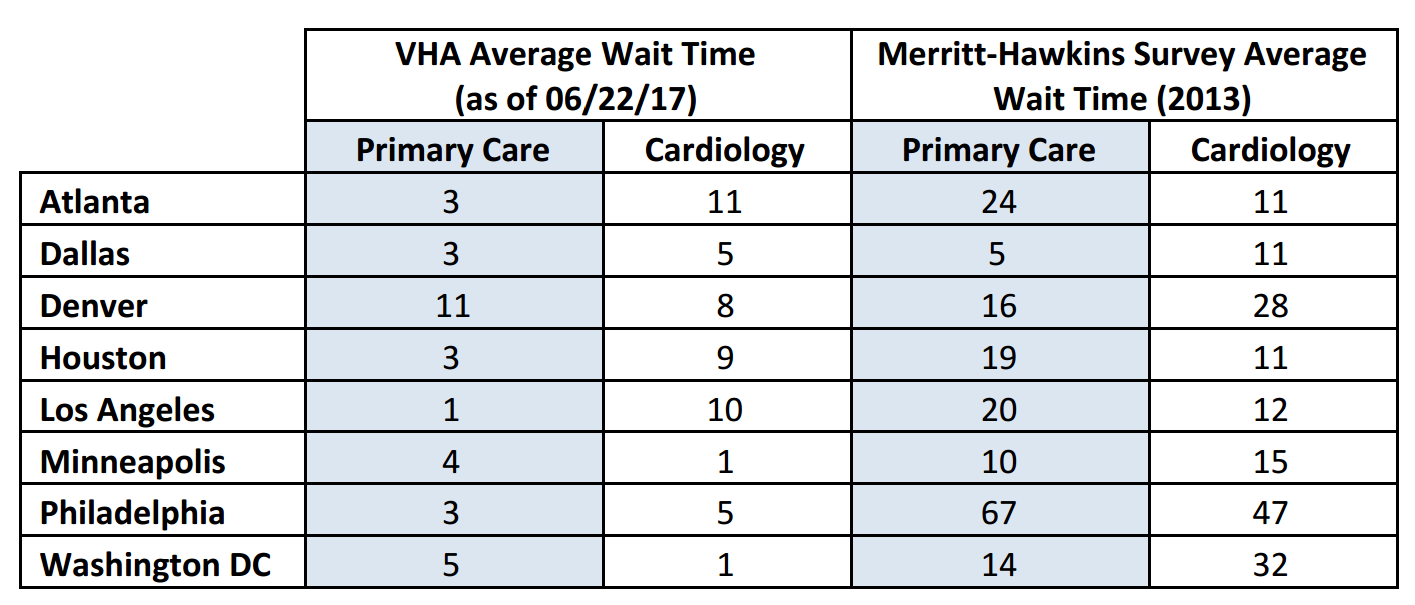
 AH! ➔ Appointment with PCP ➔ PCP Agrees and writes up a consult ➔Specialist receives consult and reviews ➔ Specialist accepts and schedules appointment ➔ Treatment ➔ Specialist documents treatment ➔ Specialist informs PCP of treatment ➔ Re-evaluation by PCP if needed.






_-_geograph.org.uk_-_1484148.jpg "\"This business's politics are not fit for human consumption.\"")


_Wellcome_V0048357EL.jpg "\"Your Majesty, I am so shy in the presence of royalty that I can't even look you in the eyes. Let me look a little lower...\"")

_Founder_of_the_Jesuits.jpg)