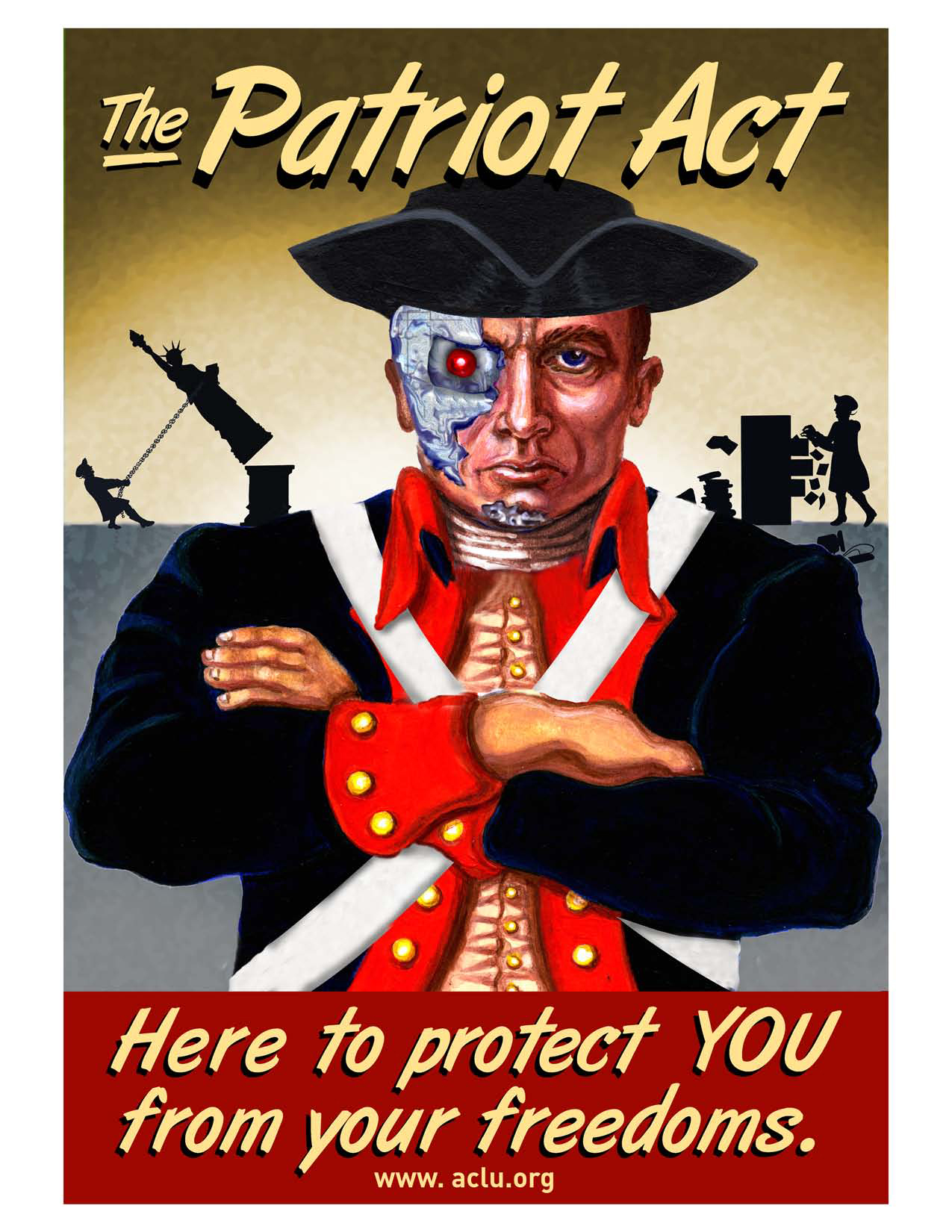
What is libertarianism’s best strategy to gain a legitimate amount of power nationally (and then happily cede it to the people)? Libertarians of the small-l and big-L varieties have sought to gain power by either co-opting one of the major political parties (See; Ron Paul Revolution that the GOP squashed) or by finding candidates to run as a Libertarian that appeal to establishment voters (see: Aleppo). But I believe there is a third, and overlooked, option: get a candidate who does some libertarian things that irritate the major parties and the deep state apparatus, and allow those actions to result in political hysterics from ultra-partisans while average Americans see no net loss from the actions and in many cases a serious net gain. I believe this will continue to set in motion a series of events where the government can be shrunk to a level that’s at least tolerable to minarchists and other run-of-the-mill libertarians.
How libertarian is President Donald Trump?
The answer is: not very. I think that’s been established. The man swam in a pool of cronyism sharks his entire professional life. He, through desire or necessity, has been a rent-seeker. He has used eminent domain to further his projects. He has sought special treatment from political entities both domestic and foreign to further his interests. The man is no altruist. But does that make him distasteful, or does it make the system in which he operated distasteful? Personally, I will rarely fault someone for utilizing the same processes his competition would use, so long as it does not originate from a position of government authority. And Trump never held office before his inauguration. In other words, he never utilized political office for financial gain by, say, orchestrating government access to foreign actors that overwhelmingly donated to your personal foundation or for trade groups and banks that hired your unqualified husband to give speeches at ridiculously over-inflated fees. In other words, I don’t hate the player, I hate the game.
And yes, Trump is allowing Jeff Sessions to wage the drug war, which is a sticking point to a lot of libertarian minds. But I ask you, is it better to wage a drug war and uphold the concepts of equal protection and the rule of law (while allowing Congress to do their job and vote to legalize drugs the right way)? Or is it better to arbitrarily enforce duly enacted laws based on the geography of a person and/or their willingness to bend a knee to the state and support legalization with a ton of unlibertarian strings attached?
The sadder these people are, the happier I get.
Some policy positives already achieved and in the works:
So now we come to Donald Trump’s libertarianism or lack thereof. The man, no doubt, will continue some of our military adventurism overseas. But he has already stopped our policy of running guns to terrorists and terrorist-sympathizers in Libya and Syria after the previous admin established those programs and destabilized an entire region, while thoroughly destroying the likelihood that a rogue regime would abandon its weapons programs and try to re-enter the international community (read: we came, we saw, he died). There has been no resurrection of the programs nthe last two administrations ran to ship guns into Mexico through the drug cartels, for different motives yet still in gross violation of Mexican sovereignty. And perhaps he will continue to not carry out targeted assassinations of American citizens that have never been charged with a crime, which the prior admin was all too happy to do in gross violation of the Fourth Amendment. Furthermore, he has already started to roll back our country’s association with liberty-robbing agreements like the Paris Climate Accord and the Trans-Pacific Partnership. Both of those agreements undercut the ability for American companies and consumers to freely negotiate what they were willing to exchange goods and services for. Removing our name from them is a step in the right direction, especially if it’s followed up with free trade agreements that haven’t existed in a century or more. That action is yet to be seen, but at least someone had the audacity to upset the globalist apple cart and stop a little bit of the insanity those agreements put us further along the path to.
Get us out of this circus, please!
As for civil liberties, Trump is still an unknown quantity. His statement about “roughing up” suspects is problematic to say the least. And I can only hope it was hollow bluster. But even so, it sets a very poor example and he should correct it immediately. Now, having said that, he has not furthered Obama’s policy of killing Americans without due process, but that’s not going to be enough. His willingness to stop going after businesses that exercise what should be a fundamental right to free association looks good so far. As do his overtures to Second Amendment causes. As does his willingness to tackle Affirmative Action and Title IX insanity. Holy crap, I just realized he’s been the best president on civil liberties we’ve had in recent memory. People that overlook the substance of these actions due to his boorishness need to reassess what their priorities are, in my opinion.
Furthermore, our business climate has benefited greatly from having an outsider installed as the head of the regulatory apparatus. Trump has already vowed, and started to carry out, a dismantling of the bureaucracies that stifle economic growth and freedom for Americans. From the onerous EPA regulations to CAFE standards being rolled back or passed to the states, there has been a serious uptick in confidence from the business and manufacturing sectors that Trump will get the government out of the way of prosperity. The hilarious irony there is that Trump was a crony his entire life, as I mentioned earlier. But perhaps he had no choice but to play the game the only way that could lead to success: do what the government tells you and push others out. Now, when given the reins, he seems to be more than willing to eliminate programs that he personally benefited from but that create barriers to entry for others. Yes, he could have opposed the system while benefiting from it. But let’s not pretend he’s some awful hypocrite because he played the hand he was dealt. Business “leaders” like Elon Musk, Mark Bezos, Mark Zuckerberg, Bill Gates, etc, etc, etc have done the same thing and so did their forefathers like Ford, Carnegie, Mellon, and others on back through the ages as long as there was a government agent with a hand in their pocket. So I’m willing to forgive that.
Be happy for this.
And lastly, he put what appears to be a strict constructionist on the Supreme Court in Neil Gorsuch. That is a marked improvement on any names mentioned by establishment candidates on either side of the aisle during the last campaign.
The other intangible positive results of a Trump presidency:
Another thing libertarians have always sought is a diminished reverence for elected officials and other “public servants” whose goals are often at odds with those of the people. Trump’s mere presence has caused probably 2/3 of the political spectrum to demand the reverence for the office be scaled back. They are now calling for more power in the hands of the states or localities and even ::gasp:: the people, on occasion. These are people that have been statists to the core. They are the Big Government democrats and NeoCon statist Republicans. And they are finally unified in an effort to diminish the role of the Executive Branch. This serves to re-establish the separation of powers that has become all-too-muddy with much of the congressional responsibilities being passed to Executive Branch agencies in an attempt to deflect responsibility and ensure easy reelection for entrenched politicians. The more responsibility that is pushed back into the laps of our directly elected officials and down to the state or local level, the better for us. It helps us create a more diverse political environment where “laboratories of democracy” are able to compete for ideas and human investment, rather than an all-powerful centralized state controlling everything. And one need look no further than minimum wage laws (since we have them, I’ll address it) to realize a top-down approach where the minimum wage “needed” in New York is imposed on small towns in New Mexico or Wyoming, where the cost of living doesn’t even come close, is a horrific idea. The Trump era is returning us to an ideal the founders embraced in that respect.
And he is returning us to another ideal the founders cherished: temporary service from business-people and non-careerist politicians. The flood of people on Trump’s coattails from all sides of the political spectrum is refreshing. Sure, many are moneyed and or celebrity candidacies. But so what? Its a step in the right direction any time we start to end political dynasties and careerists that sit in the Senate for 30 years as they grow further and further out of touch from average Americans. More turnover from political novices has a much better potential upside of shrinking our government than does further entrenching those who have pushed us to near financial ruin and reduced individual liberty.
Pucker up!
The net result so far (in my opinion):
So let us all embrace the non-libertarian president. For one of these reasons or for another I might have missed. But embrace it nonetheless, because it has already borne libertarian fruit, and I suspect it will continue to do so for many of the right and some of the wrong reasons. Its the best we could have hoped for and probably the most libertarian moment in America for a hundred years.
In both England and the United States, the legal establishment, helped by would-be reformers, first curtailed the power of grand juries to reach independent judgments, and gave grand juries the power to abuse power on behalf of prosecutors. Then the enemies of the grand jury turned around and indulged in concern-trolling about how grand juries didn’t give adequate protection to suspects. This softened up the grand jury system, making it more vulnerable to attack, and in some cases to abolishing the institution or making it optional.
Zachary Babington (1611-1688) was a functionary in Restoration England’s judiciary system. He was at various times an associate court clerk, a deputy clerk, and a justice of the peace. Zachary’s brother Matthew had been one of the chaplains to Charles I, who was killed when his royal tyranny provoked a counter-tyranny by revolutionaries. That unpleasantness was supposedly over after Charles II, son of the “martyr,” took the throne, but the new king’s supporters were on their guard to safeguard royal prerogatives and minimize the opportunities for the people to thwart the royal will. Zachary may well have learned from his pious brother about the perils of trusting the judgment of the people. So Zachary had a crack at grand juries, trying to limit their usefulness as shields for the rights of suspects. Fortunately, Zachary did not prevail at that time.
In a 1676 book, Advice to Grand Jurors in Cases of Blood, Zachary Babington complained that grand jurors often dared to ignore the judge’s instructions, and to refuse to indict suspects, or to indict suspects for manslaughter when the judge wanted a murder indictment.
“Hi, it’s me again, William Penn. The judges wanted me punished for preaching in the streets, and when the jurors refused to convict, the jurors got punished, but some of the jurors fought their case in a higher court and won, and here we are…isn’t it weird how I keep turning up everywhere?”
…as well as the House of Commons had told judges they couldn’t punish jurors for making “wrong” decisions. Most pertinently for our purposes, the House of Commons had raked Chief Justice John Kelynge over the coals for his treatment of grand jurors. Don Jordan and Michael Walsh wrote that Kelynge was so biased toward suspects and defendants that he “made George Jeffr[e]ys, ‘The Hanging Judge,’ [look] like Rumpole of the Bailey.”
Lord Chief Justice Jeffreys presided at the Bloody Assizes, but he was still a piker next to Kelynge (not shown)
Kelynge had punished grand jurors for refusing to indict for murder in homicide cases, and the Commons warned Kelynge that he had to allow both grand jurors and trial jurors vote how they wanted, without penalty.
Babington apparently realized that, deprived of their power to punish recalcitrant grand jurors, judges could only rely on persuasion to get grand juries to fall into line. So in his Advice, Babington tried to use argument to achieve what threats and punishment had failed to do in Kelynge’s situation. Babington urged grand jurors to give the prosecution, not the suspect, the benefit of the doubt, and to err on the side of overcharging the defendant. If the defendant was innocent, or was guilty of a lesser offense, the trial jury could figure that out later. Babington specifically applied his principles to homicide cases. So long as the prosecution showed evidence that the suspect had committed a homicide, Babington said, the grand jury should indict for murder, even if there was evidence that might justify, say, a lesser charge of manslaughter. The grand jurors “are only to prepare fit matter for the Court to proceed further upon, and to make a more diligent inquiry after.” Only the trial jury can figure out the true nature of the crime after hearing “both sides” – Babington assumed the grand jury would only hear the prosecution’s side, and seemed to think that this was prejudicial…to the prosecution.
“There is very much difference in Law betwixt an Inquiry and a Trial, betwixt a Presentment and a Conviction,” said Babington, and there was a lesser standard of evidence for the grand jury’s “Presentment” – “if they find upon their Evidence, that the party said to be slain in the Indictment, by the person there charged with it, with the time, and place, and manner how, they are to enquire no farther into the nature of it.” If the charges the grand jury files turn out to be excessive, it was up to the trial jury to exonerate the defendant – “however it passeth fairly out of [the grand jurors’] hands, they may more clearly than Pilate wash their hands in Innocency from the Innocent blood of such a person.”
Pontius Pilate washes his hands to symbolize his total innocence of shedding innocent blood. (Matthew 27:24)
Babington was discussing cases of murder – then automatically a capital crime – but his reasoning would justify the grand jury in giving the prosecution the benefit of the doubt in any kind of case.
(Babington’s view of a grand jury’s functions were articulated in 2014 by, of all people, an avowed libertarian deploring the grand jury’s failure to indict police officer Darren Wilson – “the likelihood that Darren Wilson would have been acquitted if he had faced a homicide charge in connection with the death of Michael Brown does not mean he should not have been indicted….A public airing of the evidence, with ample opportunity for advocates on both sides to present and probe it, is what Brown’s family has been demanding all along….”)
Actual grand juries do not seem to have taken Babington’s Pilatian advice. While the evidence is incomplete, Professor J. S. Cockburn says “surviving gaol [jail] calenders suggest that in the seventeenth century approximately twelve per cent. of all assize bills were returned ignoramus” – that is, grand juries disagreed with the prosecutors in 12 percent of cases and refused to indict.
A colorful figure and prolific author, Henry Care, eloquently rebutted authors like Babington. Care published the book English Libertiesin 1680, expressing doctrines directly contrary to Babington’s, and more in line with the real-world activities of grand jurors.
Care said that grand jurors, “if they be doubtful, or not fully satisfied” about the truth of the accusation against a suspect, should not file charges.
People may tell you; That you ought to find a Bill [of indictment] upon any probable Evidence, for ’tis but matter of Course, a Ceremony, a Business of Form, only an Accusation, the party is to come before another Jury, and there may make his Defence: But if this were all, to what purpose haye we Grand furies at all ?…Do not Flatter yourselves you of the Grand Jury are as much upon your Oaths as the Petty [trial] Jury, and the Life of the man against whom the Bill is brought, is–in your Hands…The [famous judge and legal author Edward Coke]…plainly calls the Grand Jury-men all wilfully forsworn: and Perjured, if they wrongfully find an Indictment; and if in such a Case the other Jury [trial jury] through Ignorance, &c. should find the person Guilty too, you are Guilty of his Blood as well as they: but suppose he get off there, do you think it nothing to Accuse a man upon your Oaths of horrid Crimes, your very doing of which puts him, tho never so Innocent, to Disgrace, Trouble, Damage, danger of Life, and makes him liable to Outlawry, Imprisonment, and every thing but Death itself, and that too for all you know may wrongfully be occasion’d by it, your rash Verdict gaining Credit, and giving Authority to another Jury to find him Guilty…
Care wrote that, before a grand jury can indict a suspect, the testimony must be “clear, manifest, plain and evident.” The grand jurors must “diligently inquire” into the credibility of the witnesses.
The prophet Daniel exposes the lying witnesses who falsely accused Susannah
It was Care’s defense of English liberties, not Babington’s attack on them, which became a popular work in the American colonies. Not only did Care’s English Liberties fill shelf space in colonial libraries, its content was invoked by the Patriots of the Revolutionary era in defending American liberties against British oppression. The side which cited English Liberties was the side that won the American Revolution, while the side that looked to the likes of Zachary Babington for advice was the losing side. At least for the moment.
And in both England and America, the influential eighteenth-century jurist William Blackstone came down on the side of the duty of grand jurors to protect suspects against unfounded charges.
Sir William Blackstone
In Blackstone’s words, grand jurors should only vote to indict “[i]f they are satisfied of the truth of the accusation.” Blackstone spoke of a “strong and two-fold barrier, of a presentment [grand-jury indictment] and a trial by jury, between the liberties of the people, and the prerogatives of the crown.” Before approving charges, at least twelve grand jurors had to be “thoroughly persuaded of the truth of an indictment” – “remote possibilities” were not enough.
While America was going through its founding era, on the other side of the Atlantic English grand juries blocked indictments in 10%-20% of cases – so for every ten suspects, one or two were cleared without the danger, expense, anxiety and humiliation of a public trial.
But the legal reformers were circling like birds of prey, waiting to enfeeble and then devour the grand jury system. Jeremy Bentham, the utilitarian legal reformer, denounced the grand jury in the eighteenth century, but added that the legal establishment wanted to keep the system: “lawyers and their dupes never speak of [the grand jury] but with rapture.”
If only that were so! In the nineteenth century, many lawyers and judges, in England and America, joined the ranks of the reformers. “Probable cause” became the standard which grand juries were told to follow in deciding whether to indict. This is certainly curious in the American case – the Bill of Rights does indeed mention “probable cause,” but that’s in the Fourth Amendment, dealing with warrants, rather than in the Fifth Amendment’s grand jury clause.
Probable cause doesn’t seem to be the same thing as believing the suspect is guilty. In fact, the concept is kind of vague. As Professor Orin Kerr put it: “In one study, 166 federal judges were asked to quantify probable cause. Their answers ranged from 10% certainty to 90% certainty, with an average of 44.52% certainty.” Perhaps that sort of vagueness is tolerable when judges or magistrates are issuing warrants, but not in the case of grand jurors accusing their fellow citizens of serious crimes.
Not only was the standard of proof watered down, but grand juries were limited in the kind of evidence they could hear. The only outside evidence they were entitled to examine was the evidence provided by the prosecutor (including private prosecutors in England – contradicting Justice Brown, English reformers said the grand jury was not an adequate protection against unjustifiable private prosecutions). Members of the public could not submit evidence to grand juries, the legal establishment made clear – not even suspects could send in affidavits and lists of witnesses with information favorable to them. Unless the grand jurors had personal knowledge of an alleged crime, they would have to rely for their information on what the prosecutor chose to spoon-feed them, and then they had to vote on the proposed indictment based on the loose “probable cause” standard, with the evidence stacked in favor of indictment by the prosecutor.
The New York judge Sol Wachtler, an opponent of grand juries who supposedly said a grand jury would indict a ham sandwich…
…had further animadversions against grand juries in his prison memoir, After the Madness. (The judge was convicted of stalking and harassing his former lover.)“If anyone should try to convince you that the grand jury is not a device used by prosecutors to garner publicity at the expense of someone still presumed innocent, watch out! The deed to the Brooklyn Bridge is probably in his back pocket.” That sort of misbehavior, of course, is the fault of the prosecutor, not of the grand jury. And somehow, even when they bypass grand juries, prosecutors find ways to generate prejudicial publicity about their cases.
Ovio C. Lewis, a law professor who served on a grand jury in Cleveland, Ohio, decided that the grand jury system was defective in comparison to the reformers’ favorite objective of a preliminary hearing before a judge. Writing in 1980, Lewis said: “In most cities where the grand jury is used it eliminates fewer than twenty percent of the cases it receives. In Cleveland, Ohio, the figure is seven percent; in the District of Columbia, twenty percent; and in Philadelphia, Pa., two to three percent.” From these figures, we see that at least some people were getting exonerated even under the watered-down grand jury system which had come to replace the robust grand jury of the founding era. It would be nice to know what those figures would be like in the case of a grand jury which fulfilled the functions described by Care and Blackstone: investigating and sifting the evidence and only indicting people whom the grand jurors are convinced are guilty.
Returning to the 19th century: some English grand juries – especially in big cities – called for their own abolition. These grand juries were influenced by presiding judges who discussed the alleged uselessness of the grand jury in front of the grand jurors themselves. The Birmingham Daily Post criticized one of these judges in 1872. Even though the newspaper agreed with the judge about the desirability of abolishing grand juries, it said it wasn’t cricket to harangue the grand jurors themselves on the subject:
The Recorder of Birmingham, in his charge the other day, made the usual remarks about the uselessness of grand juries. . . . It is unpleasant enough to have to sit in a stuffy room for two or three days, against one’s will, and it certainly does not render the infliction more tolerable to be penned up in a box, and be publicly told that one is incompetent and useless, and out of date, and in the way-nothing more in fact, than a sort of antiquated machine, less ornamental than a barrister’s wig, and less useful and important than the wheeziest of ‘criers of the Court’.
With these attitudes, it’s hardly surprising that judges and juries were making their talk of grand juries’ uselessness into a self-fulfilling prophecy.
Parliament put grand juries on hold during the First World War, as a supposed emergency measure. This simply whetted the appetite of the judicial establishment for a permanent, peacetime ban on grand juries, and such a ban was finally achieved by Act of Parliament in 1933.
You know why else 1933 was a bad year for liberty?
Albert Lieck, chief clerk (or former chief clerk?) of London’s Bow Street Police Court, rejoiced at the abolition of the grand jury, while inadvertently suggesting reasons the institution should have been retained. Lieck acknowledged that grand juries had sometimes released suspects: “Here and there a bill [of indictment] was thrown out, but on no discoverable principle.” Perhaps the grand jurors hadn’t been satisfied of the suspects’ guilt?
Lieck uttered a non-sequitur which one would associate with Yogi Berra more than with a distinguished British bureaucrat: “the real security against oppression lies not in outworn judicial machinery [i. e., the grand jury], but in the alertness and resolution of the citizen.” Of course, grand jury service has the potential to provide citizens a vehicle to exercise their alertness toward the criminal-justice process.
American critics of the grand jury cited (and still cite) abuses which are not in any way required by the Fifth Amendment. That amendment simply says you need an accusation from a grand jury in order to be brought to trial for a sufficiently serious crime. The Fifth Amendment doesn’t say grand juries should be dependent on prosecutors for their information, or interrogate witnesses without their lawyers, or wield overbroad subpoena powers, or act in complete secrecy (unless the prosecutors chooses to leak information, of course), or fail to keep records of their proceedings. Critics have harped for a long time on these “Star Chamber” features of grand jury procedure, suggesting that the only cure is to bypass the grand jury and have magistrates or judges hold preliminary hearings, where both sides can present evidence and argue over whether probable cause exists. Then the magistrate or judge, after such an open hearing, would decide if there is probable cause to bring the suspect to trial. This type of “reform” has been adopted in England, and in many U. S. states.
The problem with such a “reform” is that it cuts the public – at least the informed portion of the public which has actually heard the evidence – out of the decision whether to bring charges against a suspect. The suspect is dragged into a public hearing by the accusation of a prosecutor, and put at the mercy of a judge who – at least in a well-publicized case – may well feel the voters – who generally don’t know the details of the case but know that the suspect is guilty – breathing down the judicial neck and demanding a trial. With the vagueness of the term “probable cause,” it wouldn’t take a whole lot of evidence for the judge to put the case down for trial, if that’s the judge’s mood at the time. Not to mention the loss of the opportunity for nullification if the defendant, while technically guilty, is morally innocent and doesn’t deserve to be dragged through a trial.
There are some useful features which were traditionally associated with American grand juries. These features are not required by the Fifth Amendment, but they provide some historical context to refute those who think the founders would have been happy to do without grand juries. Grand juries used to have (and to a greatly limited extent sometimes still have) responsibility for making recommendations relating to the problems of their communities: from fixing bad roads to dealing with polluted streams to making new laws, American grand juries have historically often broadened out from simply looking at local criminal cases.
Sometimes, and this is hard to believe nowadays, grand juries, on their own initiative, looked into corruption and misconduct by local officials, including even prosecutors and judges and cops and jailers. Sometimes grand jurors took the bit between their teeth and looked into certain types of local crime which the prosecutors and judges would just as soon not look into – maybe because the prosecutors and judges were trying to sweep that crime under the rug.
Whatever we think nowadays of these crusading, self-assertive grand juries from history – and the Fifth Amendment doesn’t require that grand juries play this role – we can reject the idea that most of the founding generation took a dismissive view of grand juries or would have been willing to abolish or sideline them, or to abolish their constitutional role in protecting suspects from overzealous or corrupt government prosecutors and judges.
The point of having two juries – a grand jury and a trial jury – is to have the grand jury make a broad inquiry, with comparatively few technical rules, in order to find the truth, and if the grand jury believes the charge, then it’s time to have the evidence heard by a trial jury under much more rigid procedural rules. For serious enough charges, it should take these two juries – one acting broadly and informally, the other following careful rules – to agree that someone is a criminal before that person can be punished as a criminal.
Now, in the real world, where most criminal charges are resolved through plea-bargaining, I’d advocate a more limited objective: To make sure that a person suspected of a serious crime has his case considered by at least one jury – and since cases are generally resolved with pleas before a trial jury can be called, that one jury would have to be the grand jury. There should be laws to prohibit plea negotiations from beginning in serious cases until after a grand jury has issued its indictment(s). We may have come full circle to the days of Henry II – grand juries are usually the only criminal juries involved in a case, and the trial procedure is almost as unreliable as in Henry’s day – a plea negotiation approaches in arbitrariness the old dunking-in-cold-water procedure when it comes to sorting out the innocent from the guilty. All the more reason to keep grand juries, so that some type of jury, at least, will review serious cases.
Is there any chance that the right to a grand jury, as intended by the Founders, will be restored any time soon? Probably not. The political and judicial establishment seems to have no particular interest in encouraging such a degree of citizen involvement. They either want to keep grand juries on a tight leash, acting on the limited evidence the prosecutors spoon-feed them, or to keep them on the sidelines, taking no role in cases unless a prosecutor needs political cover for a controversial decision.
And many regular citizens are parading around demanding that the right to a grand jury be abrogated.
And of course advocates of a restored grand jury system will be called racists.
Well, it’s too bad, but there it is.
Works Consulted
Richard L. Aynes, “Unintended Consequences of the Fourteenth Amendment and What They Tell Us About its Interpretation,” 39 Akron L. Rev. 289 (2006).
William J. Campbell, “Eliminate the Grand Jury,” 64 J. Crim. L. & Criminology 174 (1973).
Nathan T. Elliff, “Notes on the Abolition of the English Grand Jury,” Journal of Criminal Law and Criminology, Volume 29,Issue 1 (May-June) Summer 1938.
Thomas Andrew Green, Verdict According to Conscience: Perspectives on the English Criminal Trial Jury 1200-1800. Chicago: University of Chicago Press, 1985.
Don Jordan and Michael Walsh, The King’s Bed: Sex, Power and the Court of Charles II. London: Little, Brown, 2015.
Orin Kerr, “Why Courts Should Not Quantify Probable Cause” (March 28, 2011). The Political Heart of Criminal Procedure: Essays on Themes of William J. Stuntz (Klarman, Skeel, and Steiker, eds), pages 131-43 (2012); GWU Law School Public Law Research Paper No. 543. Available at SSRN: https://ssrn.com/abstract=1797824
Andrew D. Leipold,”Why Grand Juries Do Not (and Cannot) Protect the Accused,” 80 Cornell L. Rev. 260 (1995). Available at: http://scholarship.law.cornell.edu/clr/vol80/iss2/10
Ovio C. Lewis (1980) “The Grand Jury: A Critical Evaluation,” Akron Law Review: Vol. 13 : Iss. 1 , Article 3. Available at: http://ideaexchange.uakron.edu/akronlawreview/vol13/iss1/3.
Albert Lieck, “Abolition of the Grand Jury in England,” Journal of Criminal Law and Criminology, Volume 25, Issue 4, November-December (Winter 1934).
Kenneth Rosenthal, “Connecticut’s New Preliminary Hearing: Perspectives on Pretrial Proceedings in Criminal Law.” University of Bridgeport Law Review, Volume 5, Number 1, 1983.
Suja A. Thomas, The Missing American Jury: Restoring the Fundamental Constitutional Role of the Criminal, Civil, and Grand Juries. New York: Cambridge University Press, 2016.
___________, Nonincorporation: The Bill of Rights after McDonald v. Chicago, Notre Dame Law Review, Vol. 88, 2012.
Mary Turck, “It is time to abolish the grand jury system,” Al Jazeera America, January 11, 2016, http://america.aljazeera.com/opinions/2016/1/it-is-time-to-abolish-the-grand-jury-system.html
Rachel A. Van Cleave, “Viewpoint: Time to Abolish the ‘Inquisitorial’ Grand Jury System” (2014). Publications. Paper 656. http://digitalcommons.law.ggu.edu/pubs/656.
Sol Wachtler, After the Madness: A Judge’s Own Prison Memoir. New York: Random House, 1997.
_________, “Grand Juries: Wasteful and Pointless,” New York Times, Opinion, January 6, 1990, http://www.nytimes.com/1990/01/06/opinion/grand-juries-wasteful-and-pointless.html.
Richard D. Younger, The people’s panel: the Grand Jury in the United States, 1634-1941. Providence, RI: American History Research Center, Brown University Press, 1963.
As far as I can tell, there is no other plausible explanation for his actions in retrospect.
Many of you watched the hearing as I did. Hell, I think it was watched by half of America (not including John McCain apparently). And its hard for me to comprehend how there are any true winners or losers here from either a legal standpoint other than maybe Loretta Lynch losing some footing as being above partisanship when it comes to her department’s handling of the Clinton private email server investigation.
John McCain in his natural state.
But what should be attacked vigorously by any responsible authority tasked with oversight or any media talking head is Comey’s ability to be a man and do his job with any form of integrity whatsoever. Because he completely contradicted prior sworn testimony today by suggesting that Trump was attempting to influence him. And that he should have carried himself differently many times with interactions with the President in regards to how he reacted and how he reported (or failed to report) what he perceives months later as attempts to coerce or manipulate the FBI head into dropping investigations.
I’m sure there is some sense of being awe-struck by someone being summoned to the White House. I would like to think I’d be immune to that, but you never know. But the head of the nation’s federal law enforcement apparatus should never be of that mindset unless he is feeling guilty about something. He has spent his life climbing into situations and relationships that are complicated and him being somehow cowed by a President he believes is acting in an unprofessional and borderline-illegal way defies common sense.
I swear to tell the truth. Even if its different than the “truth” I told the last time I was under oath here.
Which leads me to my personal opinion: Comey is changing his tune because he feels like he was wronged. He deliberately leaked government property to a friend so they could be sent to the media. He allowed erroneous leaks to remain in the news in order to damage a President he didn’t care for. He contradicted prior sworn testimony in an attempt to change the public narrative on meetings that he considered “notingburgers” until he was fired to “possible attempts at coercion” in the aftermath of that termination.
Whatever your thoughts about Donald Trump are, whatever you think his relationship with the Russians was, and whatever you think the Democrats are attempting to accomplish here, one thing should be taken away by anybody with an ounce of brains: Comey is gutless or Comey is grinding his axe. I’ve made my decision. Please discuss yours in the comments.
It’s really amusing watching the MSM twist their panties in a wad trying to connect Trump to Russia. They’ve gotten the smallest amount of traction and the chants for Trump’s head have started. Besides the fact that the original Trump to Russia connection is based on innuendo and suggestion, the witch hunt has broadened out into a general search for any connection between Trump and the entire nation of Russia. Like a brain damaged chihuahua, the media chants “Russia! Russia! Russia!” hoping beyond hope that they will scare the GOP and Trump into submission. “We can finally control the renegade!” they think, as they piss away the last of their credibility.
Although people joke about “alternative facts,” it’s not a joke. There are two prevailing agendas across the country: 1) Trump is LITERALLY HITLER and A RUSSIAN MOLE AT THE SAME TIME!!! 2) Trump is DADDY and GOD-KING OF KEKISTAN, VANQUISHER OF THE SJWs and CUCKS!!! The left has their educational and media empire churning out outrage by the gallon. The right has their independent media matching the outrage of the left.
Antifa is smashing windows and folks like Based Stickman (who the fuck is Based Stickman and why is he called that??) are bashing Antifa heads in. People are primed to believe that the violence will do nothing but escalate.
I tend to be quite skeptical of claims that the next civil war is about to start. Like the Rapture, many people have predicted a civil war, only to be laughably wrong.
However, let’s travel through another dimension, a dimension not only of sight and sound but of derp. A journey into a scandalous land whose boundaries are that of imagination. That’s the signpost up ahead – your next stop, the Derplight Zone!
This is Donald. Donald is a normal man, somewhat spoiled, somewhat outspoken. Donald has been a real estate mogul for the last few decades, accumulating a vast amount of wealth and notoriety. Recently, Donald was chosen to be the sacrificial lamb of the GOP to allow Hillary Clinton to ascend to her rightful place as Grand Master of the Lizard People The First Female President of the United States. However, something went wrong. Horribly wrong. Donald had an energy that transfixed the public, and nobody could explain it. Donald became President.
Okay, I can’t keep the Twilight Zone schtick up, but let’s continue to investigate why this latest push to impeach could lead to a civil war. There is one big reason why: Trump’s election was an unexpected boon to a class of people that have felt trod over by the political elites for decades. People most fiercely defend unexpected gains, especially when it is threatened by their enemy. The Alt-Right has ascended and has labeled Trump as their knight in shining armor, here to wipe out the scourge of establishment politics and social justice. The Fascist Left has also ascended, using Hitlerian tactics while decrying Trump as literally Hitler. While an escalation of rhetoric isn’t a sure sign of war, it is a prerequisite.
The desperation seen on both sides is significantly more concerning. Antifa Nazis have normalized mob violence and intimidation as protest tactics, and Alt-Righters have responded in kind. This powder keg is gonna blow at some point, and we’re gonna get another Kent State. The question then becomes what happens in response to the deaths of 5 or 10 rioters (of either side). Everything in my mind and heart tells me that a crisis like that would boil up for a few weeks and slowly subside. However, what if it didn’t? What if it boiled up into a tempest?
I think it’s unlikely but possible that this could happen. Either Antifa is gonna beat some people to death, or the Alt-Righters are going to start shooting when Antifa gets violent in the wrong town. This could escalate to people seeking out the melee to contribute, which could escalate to large-scale violence between groups of people. . . also known as a battle. From there, things could snowball into nationwide insurrection.
Obviously, I find this quite improbable, but the increasing violence and radical rhetoric inspire some unlikely thoughts.
Gather round, young children, and I’ll tell you a tale. A tale full of treachery and intrigue, mighty heroes and dastardly villains, sung to the tune of the USA PATRIOT Act’s Section 326. A harrowing account of your intrepid author’s attempts to perform a simple act, made not-so-simple by the never-ending meddling of the federal government.
Over the last several weeks, it has been my sworn and sacred duty to set up a small business banking account for our Glibertarian enterprise. Setting up a bank account should, in theory, be an easy enough exercise. One waltzes into a bank; puts hands on hips in the lobby and demands in a loud, commanding voice, “Ho, there! I require the services of a money lender! Make haste, for I have pressing affairs to attend to with the apothecary upon the satisfactory conclusion of our business!”; gives some information; and deposits some money. That is precisely how things worked the last time I had to open a bank account.
Of course, preliminary research had to be conducted. Only one of us is actually made of money (I’ll let you try to guess who!), so the majority of my time was spent on the internet and over the phone with different institutions trying to find an actually free small business checking account. The majority advertise themselves as free, but once you get into the weeds a bit during the enrollment process, it turns out they are free only so long as you meet a variety of requirements, none of which are likely to occur with our current business model.
Pictured here: a banker
And yet, I persisted. Finally landing upon a local bank that, so far as I could tell, had actual, honest-to-Zardoz free small business checking, I gallantly sacrificed my entire lunch break to go speak with these generous merchants of monetary services. I walked into the lobby which, being the middle of a weekday, was largely empty. A thick-set manager in an off-the-rack suit quickly hurried over to me, vigorously shook my hand, and assured me that his underling would be able to attend to our needs. When asking what our business was, I explained that we run a website giving political and pop culture commentary. Why how wonderful! Did you know that the manager was a journalism major? It’s so important for there to be as many voices as possible giving great, down-the-line political commentary, to fight the nefarious tide of fake news!
Bolstered by his enthusiasm and feeling mightily proud of myself for helping to selflessly bring the hard, unvarnished truth to a grateful readership (though given some of the comments made during his rambling glad-handing, I suspect he would not have been so generous with praise if he knew the direction in which our political commentary flows), I sat down comfortably with his associate to begin the process.
Now, as you may or may not know, the leadership of our merry band is scattered across these United States. I explained that not only myself, but a handful of other individuals in various states would need to be signatories on this account. I thought this could be accomplished through digital signatures, faxes, etc. It is here that the first act closes, and the central conflict begins.
The banker looked at me with a nervous smile. “Is there any chance of your associates being able to come in to one of our branches?”
“None at all,” I replied, “and frankly I think it quite racist of you to ask*.”
“I’ll need to speak to my manager. Please excuse me for a moment.”
*thundering denunciation* “YES, YOU SPEAK WITH YOUR MASTER, VULGAR HIRELING, AND TELL HIM THAT I WOULD SPEAK WITH HIM FORTHWITH!”
Some five minutes pass in hushed consultation. There are no other customers in the bank. I nonchalantly begin to inspect the windows and doors at the edge of my vision, to plan my escape, if it turns out that my growing suspicions are true, and I have wondered into a clan of vampires or ghouls using a regional bank as a front to draw in potential victims.
Meaty Manager avalanches back across the room, with an exasperated look upon his reddened ground chuck face.
“I’m sorry, but I’m afraid we’ll not be able to meet your needs.”
“Excuse me?” I replied, momentarily dumbstruck.
“It’s the PATRIOT Act, you see…” and he then begins to tell me of a curse that the Great Tribe has laid upon he and all his kind.
In 2001 of the Western reckoning of years, as many of you may recall, our great nation was paid a friendly visit by some rather motivated Mohammedans who, through a series of peculiar mishaps, wound up killing thousands of innocent people. The immediate and predictable response to this, was for our Federal Government, Beloved by All, to pass an enormous omnibus bill full of things like indefinite detention and a host of new regulations on a wide variety of industries. If they hated us for our freedom, we had found a most ingenious method by which to defuse their wrath – simply get rid of the offending freedoms.
Fox News graphic of PATRIOT ACT, heroically standing in front of the sigil of the glorious Department of Homeland Security
In this behemoth of a law lies section 326, dealing with the establishment of what is known as a Customer Identification Program. Now before establishing accounts, banks are required to, and held liable for, making strong efforts to establish the identify of their customers. The exact methods by which they do this are left up to the individual institutions. According to the text of the act itself, it sounds easy enough to perform using only legal documents. However, Meaty Manager explained to me that practically all banks, particularly those who are only regional players and who cannot afford to buy off entire branches of government, generally are held to much tighter restrictions by their compliance departments, lest they find themselves on the wrong end of a federal inquiry. And so, without having the opportunity to actually see each of the individuals face to face and have a chat with them, they simply could not pass muster using their bank’s particular CIP rules. There was no way, you see, for them to have faith that we were not drug dealers or terrorists (he mentioned those two professions explicitly, showing an interesting creep from Fighting Terrorism to Eh, the Tool is Already There, Might As Well Use It to Fight Drugs).
Gathering what dignity remained to me, I indignantly declared to him that such was foolishness in the age of internet business, and that surely a great catastrophe (in the form of lack of growth) would befall his institution if it continued in this folly. Meaty Manager could only smile and give me a Gallic shrug, as if to suggest that, if such were the vicissitudes of fate, then he would suffer what he must.
On my way out the door, Meaty Manager did offer one piece of parting advice. He suggested to consult with a bank whose reach extends across all the lands, so that there would be outposts near any person that we decided needed official access. Perhaps then, could their identities be properly ascertained to the King’s satisfaction.
Thoroughly demoralized at this point, your dogged author decided to follow the suited mound’s advice and talk to a big bank. And so, this past Saturday morn, I found myself in the lobby of a Major National Bank. After waiting for some time, I was finally introduced to Paul**, the small business banking representative. I explained to him right away the issue I had had previously, and he agreed it was an obstacle.
There followed two hours, and I am not kidding or engaging in hyperbole there, in which I was interrogated by Paul and his Manager (I was by now convinced that every man who works in a bank has the exact same physical build). I explained more than once what our business did. I showed them the site. I explained about the concept of the Internet, and how it came to be that many different people, only a few of whom have ever met in person, can reside in different states and still all have interest in a shared venture. I was asked more than once some questions that sounded suspiciously like they were going to lead to “gotcha!” moments had I answered differently, some about drugs and some about terrorism. It was, frankly, ludicrous.
I asked why I was being treated this way. Same story, different day: PATRIOT Act, section 326. We don’t Know you. How can we Know your compatriots when they aren’t even here? Was I aware how deeply suspicious this entire thing was? Why, did I know that some young dissidents have used otherwise seemingly innocuous websites to sell the Devil’s own concoctions? What nerve had I, to come in here proclaiming my own innocence, when all of my actions so clearly speak to the contrary!
I shall not bore you with further details; suffice to say that due to some stern negotiations and my resolve to not leave without a deal in hand, one hour after the bank closed, I left with a newly established account, and a series of addendums that I could mail to my compatriots that which, upon completion in front of a notary, would then suffice to establish identity for banking purposes. You see, the Financial Crimes Enforcement Network’s FAQ on the CIP allows for a bank to rely on the good offices of a third party for purposes of establishing identity. However, the bank is held responsible if the third party’s methods are found to be insufficient or unsound. As such, few banks are willing to take such a risk. However, when it comes to dislodging an agitated libertarian from your place of business after the automatically timed overhead lights have already extinguished, it appears they were willing to make an exception.
TL;DR version: apparently starting a small business with partners in different states is now considered to essentially be drug-running or terrorism related unless and until proven otherwise. This helps to preserve our freedom after 9/11. Be grateful the King is there to see all, and to protect us from the evils that lurk in the dark.
Production poster for The Patriot Two: After the Apocalypse.
All information used to write this article that was not gleaned from my personal experience was obtained here and here, if you want to ruin your Sunday afternoon reading through it. Having already done so, I wouldn’t recommend it.
*conversations may not have occurred precisely as recounted
**names have been changed to protect the barely competent
Revelations from Wikileaks have far deeper implications than have been covered by the media as yet. The CIA has lost control of not only a trove of documents about the organization’s cyber warfare capabilities. It’s lost control of the weapons themselves.
WikiLeaks has dropped a bomb on the CIA
In digital warfare, there exists the concept of a zero-day exploit. In hacker/information security parlance, a zero-day is an undisclosed vulnerability in software that has been discovered. Ordinarily, watchdog groups and the organizations that produce software have procedures in place to discuss vulnerabilities and issue patches before releasing details of exploits to the general public. Only in the extreme circumstance of an organization deliberately ignoring reports by security researchers of exploitable weaknesses do ethical hackers resort to releasing details of the attack to the general public. The obvious ramification of knowledge being openly available before a patch is released is that anyone can use it prior to patching.
There is the obvious issue, raised by Wikileaks itself, that the CIA has duplicated the functions of the NSA, but very likely with even less oversight for the use of their arsenal. This is not only a waste of taxpayers’ money, but possibly a revelation that unconstitutional attacks on the privacy of American citizens may be taking place by more than one government agency. If that is the case, it is a clear violation of the CIA’s mission, as laid out by Congress.
The ultimate effect of losing this digital arsenal, which may now be in the hands of anyone, is that literally any digital evidence may be called into question. The scope of who may have access to it is completely unknown, and this genie cannot be put back into its bottle. The evidentiary value of criminal activity stored on computers could be disclaimed as planted evidence. This has wide-ranging implications not only for cases under consideration, but for future cases which may be brought.
The CIA now has an obligation to the American people to disclose all of the methods of its infiltration to software developers in advance of the coming storm. It must shatter the weapons it created and, if Congress deems it necessary, it may rebuild a new arsenal.
Furthermore, Congress must probe the agency deeply and potentially reform the country’s spying agencies completely. There is evidently far too much overlap for which the taxpayer is expected to foot the bill. It is also evident that there is too little civilian oversight and too much delegation of powers in the name of national security, a long-standing problem which has now become an emergency. Ethical considerations of spying on foreign powers aside, this lapse has made it clear that our own spying agencies are as much a danger to our own citizens as they are to the rest of the world.
This is going to suck all the air out of the news for a while, and I’m predicting it will cause several heads to explode on both “sides” of American politics, let alone the impact it will have on the Deep State bureaucrats who think they are above the law.
Matthew Continetti, EIC of The Washington Free Beacon (which you should be reading regularly), has a fantastic column about the Deep State titled “Who Rules The United States“. I cannot endorse the entire piece, because I find Mr. Continetti’s inclusion of the judiciary to be out of place in an article about the Deep State, and strangely tone-deaf in attacking lifetime judicial appointments. That said, it is remarkable Mr. Continetti took a shot at the judiciary, as I am hoping it heralds conservatives ditching their veneration of the “Nazgul” and recognizing reality: the judiciary is nothing more than a branch of government. Getting conservatives to put down their Holy Judiciary Hymnals is an important first step in embracing a Constitutional remedy to bad judges: impeachment and removal.
Judges deserve impeachment and removal (and threatened with impeachment and removal) far more than it happens, which is effectively never. Judge Robart, who “wrote” the TRO against President Trump’s EO on immigration, needs removing. The three-judge panel that affirmed Robart’s ghastly TRO is asking for an Impeachment Party. To be clear, I am not supportive* of Trump’s EO, but regardless of politics, people of good faith across the political spectrum recognize these bums took advantage of the spotlight and decided to make names for themselves. In doing so, and mirroring my previous post about the Intelligence Community, they abused the trust and fairly unwavering adulation the Public has given them to self-aggrandize. It’s unfortunate it is impossible to get 2/3rds of the Senate to do something as minor as confirm the Secretary of {Whatever Useless Agency}, let alone impeach a judge, but so it goes. We should make these judges their sinecures are by no means a sure thing.
Speaking of dormant Constitutional powers that never get used, I sincerely hope the House of Representatives gets an infusion of sack from the White House this go around and rediscovers the power of the purse. I have a few co-workers I would like to see become the recipient of the Holman Rule. At a minimum, Congress should find those civil “servants” who think they are more important than duly-elected officials and tell them their paycheck is $1, take it or leave it. Even if my impeachment of the judiciary does not work out, maybe Congress can cut the judiciary’s allotment for some of the cushier judicial perks like staff, clerks, heating, water, whatever!


.jpg "In one part of the book, Care urged voters to elect independent, incorruptible men to Parliament - Care was charged with seditious libel for these statements, which the government considered a reflection on its Parliamentary supporters.")


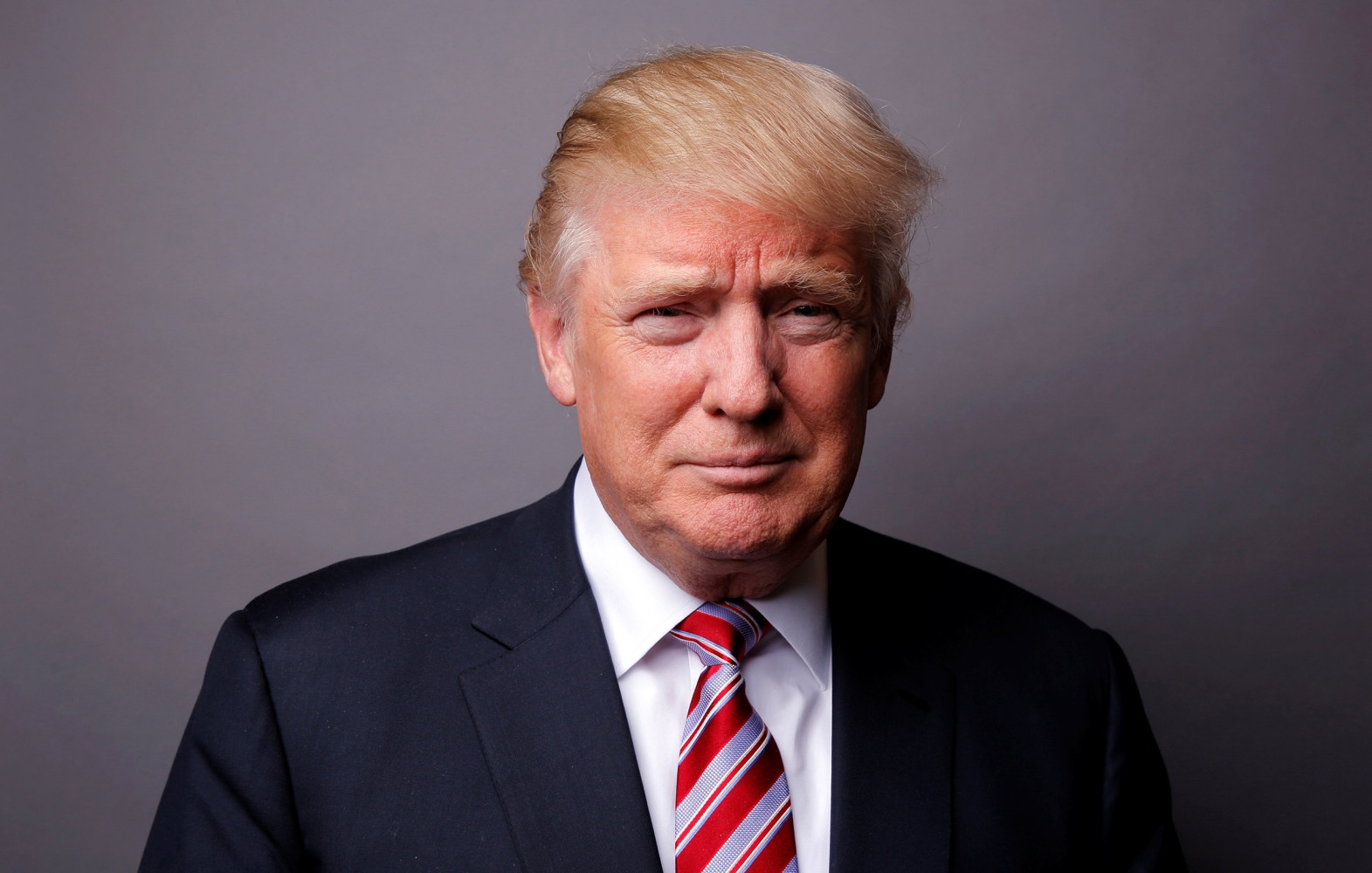 This is Donald. Donald is a normal man, somewhat spoiled, somewhat outspoken. Donald has been a real estate mogul for the last few decades, accumulating a vast amount of wealth and notoriety. Recently, Donald was chosen to be the sacrificial lamb of the GOP to allow Hillary Clinton to ascend to her rightful place as