This is the world globalists want!“Green Lives Matter” – Yes, our Border Patrol actually believes this shit.
Earlier this week, President Trump delivered his second annual speech concerning his administration’s national security strategy. In it, Trump presented a Manichean world, in which America’s cultural, economic, and military hegemony must be maintained at all costs against an insidious Asiatic peril that consists of the combined forces of Cathay and the Volga Tartar. While it is encouraging to finally see recognition of the fact that “history” is far from over, with Trump specifically, and without obfuscation, declaring Russia and China as “rival” nations of which “protection” of a nebulously defined American economic interest is a prerequisite for “cooperation,” one is forced to inquire in what essential way does Trump’s national security policy deviate from the zero-sumWeltanschauung of the neoconservatives?
After all, it was Trump’s putative national security and foreign policies that were the banner Rockwellians held aloft, front and center, when declaring a ‘libertarian case for Trump’. Instead, the bill of goods sold to libertarians by Bannon, Gorka, Miller, et alia was merely the The Project for a New American Century covered with a lamina of mercantilistic trade protectionism. Thus, what we have now is a mandate to para-militarize our borders to serve the triple purposes of escalating the Wars on Drugs, Terrorism, and Illegal Immigration; increased federal spending to defense and infrastructure cronies; going all-in on the Israeli position in the Middle East, the provision of arms to Ukraine, and continued support for adventures abroad to “confront, discredit, and defeat radical Islamic terrorism and ideology.” As we have learned on Monday, there is no meaningful distinction between the Trump administration’s strategy and the six major articles of the Wolfowitz Doctrine.
What is libertarianism’s best strategy to gain a legitimate amount of power nationally (and then happily cede it to the people)? Libertarians of the small-l and big-L varieties have sought to gain power by either co-opting one of the major political parties (See; Ron Paul Revolution that the GOP squashed) or by finding candidates to run as a Libertarian that appeal to establishment voters (see: Aleppo). But I believe there is a third, and overlooked, option: get a candidate who does some libertarian things that irritate the major parties and the deep state apparatus, and allow those actions to result in political hysterics from ultra-partisans while average Americans see no net loss from the actions and in many cases a serious net gain. I believe this will continue to set in motion a series of events where the government can be shrunk to a level that’s at least tolerable to minarchists and other run-of-the-mill libertarians.
How libertarian is President Donald Trump?
The answer is: not very. I think that’s been established. The man swam in a pool of cronyism sharks his entire professional life. He, through desire or necessity, has been a rent-seeker. He has used eminent domain to further his projects. He has sought special treatment from political entities both domestic and foreign to further his interests. The man is no altruist. But does that make him distasteful, or does it make the system in which he operated distasteful? Personally, I will rarely fault someone for utilizing the same processes his competition would use, so long as it does not originate from a position of government authority. And Trump never held office before his inauguration. In other words, he never utilized political office for financial gain by, say, orchestrating government access to foreign actors that overwhelmingly donated to your personal foundation or for trade groups and banks that hired your unqualified husband to give speeches at ridiculously over-inflated fees. In other words, I don’t hate the player, I hate the game.
And yes, Trump is allowing Jeff Sessions to wage the drug war, which is a sticking point to a lot of libertarian minds. But I ask you, is it better to wage a drug war and uphold the concepts of equal protection and the rule of law (while allowing Congress to do their job and vote to legalize drugs the right way)? Or is it better to arbitrarily enforce duly enacted laws based on the geography of a person and/or their willingness to bend a knee to the state and support legalization with a ton of unlibertarian strings attached?
The sadder these people are, the happier I get.
Some policy positives already achieved and in the works:
So now we come to Donald Trump’s libertarianism or lack thereof. The man, no doubt, will continue some of our military adventurism overseas. But he has already stopped our policy of running guns to terrorists and terrorist-sympathizers in Libya and Syria after the previous admin established those programs and destabilized an entire region, while thoroughly destroying the likelihood that a rogue regime would abandon its weapons programs and try to re-enter the international community (read: we came, we saw, he died). There has been no resurrection of the programs nthe last two administrations ran to ship guns into Mexico through the drug cartels, for different motives yet still in gross violation of Mexican sovereignty. And perhaps he will continue to not carry out targeted assassinations of American citizens that have never been charged with a crime, which the prior admin was all too happy to do in gross violation of the Fourth Amendment. Furthermore, he has already started to roll back our country’s association with liberty-robbing agreements like the Paris Climate Accord and the Trans-Pacific Partnership. Both of those agreements undercut the ability for American companies and consumers to freely negotiate what they were willing to exchange goods and services for. Removing our name from them is a step in the right direction, especially if it’s followed up with free trade agreements that haven’t existed in a century or more. That action is yet to be seen, but at least someone had the audacity to upset the globalist apple cart and stop a little bit of the insanity those agreements put us further along the path to.
Get us out of this circus, please!
As for civil liberties, Trump is still an unknown quantity. His statement about “roughing up” suspects is problematic to say the least. And I can only hope it was hollow bluster. But even so, it sets a very poor example and he should correct it immediately. Now, having said that, he has not furthered Obama’s policy of killing Americans without due process, but that’s not going to be enough. His willingness to stop going after businesses that exercise what should be a fundamental right to free association looks good so far. As do his overtures to Second Amendment causes. As does his willingness to tackle Affirmative Action and Title IX insanity. Holy crap, I just realized he’s been the best president on civil liberties we’ve had in recent memory. People that overlook the substance of these actions due to his boorishness need to reassess what their priorities are, in my opinion.
Furthermore, our business climate has benefited greatly from having an outsider installed as the head of the regulatory apparatus. Trump has already vowed, and started to carry out, a dismantling of the bureaucracies that stifle economic growth and freedom for Americans. From the onerous EPA regulations to CAFE standards being rolled back or passed to the states, there has been a serious uptick in confidence from the business and manufacturing sectors that Trump will get the government out of the way of prosperity. The hilarious irony there is that Trump was a crony his entire life, as I mentioned earlier. But perhaps he had no choice but to play the game the only way that could lead to success: do what the government tells you and push others out. Now, when given the reins, he seems to be more than willing to eliminate programs that he personally benefited from but that create barriers to entry for others. Yes, he could have opposed the system while benefiting from it. But let’s not pretend he’s some awful hypocrite because he played the hand he was dealt. Business “leaders” like Elon Musk, Mark Bezos, Mark Zuckerberg, Bill Gates, etc, etc, etc have done the same thing and so did their forefathers like Ford, Carnegie, Mellon, and others on back through the ages as long as there was a government agent with a hand in their pocket. So I’m willing to forgive that.
Be happy for this.
And lastly, he put what appears to be a strict constructionist on the Supreme Court in Neil Gorsuch. That is a marked improvement on any names mentioned by establishment candidates on either side of the aisle during the last campaign.
The other intangible positive results of a Trump presidency:
Another thing libertarians have always sought is a diminished reverence for elected officials and other “public servants” whose goals are often at odds with those of the people. Trump’s mere presence has caused probably 2/3 of the political spectrum to demand the reverence for the office be scaled back. They are now calling for more power in the hands of the states or localities and even ::gasp:: the people, on occasion. These are people that have been statists to the core. They are the Big Government democrats and NeoCon statist Republicans. And they are finally unified in an effort to diminish the role of the Executive Branch. This serves to re-establish the separation of powers that has become all-too-muddy with much of the congressional responsibilities being passed to Executive Branch agencies in an attempt to deflect responsibility and ensure easy reelection for entrenched politicians. The more responsibility that is pushed back into the laps of our directly elected officials and down to the state or local level, the better for us. It helps us create a more diverse political environment where “laboratories of democracy” are able to compete for ideas and human investment, rather than an all-powerful centralized state controlling everything. And one need look no further than minimum wage laws (since we have them, I’ll address it) to realize a top-down approach where the minimum wage “needed” in New York is imposed on small towns in New Mexico or Wyoming, where the cost of living doesn’t even come close, is a horrific idea. The Trump era is returning us to an ideal the founders embraced in that respect.
And he is returning us to another ideal the founders cherished: temporary service from business-people and non-careerist politicians. The flood of people on Trump’s coattails from all sides of the political spectrum is refreshing. Sure, many are moneyed and or celebrity candidacies. But so what? Its a step in the right direction any time we start to end political dynasties and careerists that sit in the Senate for 30 years as they grow further and further out of touch from average Americans. More turnover from political novices has a much better potential upside of shrinking our government than does further entrenching those who have pushed us to near financial ruin and reduced individual liberty.
Pucker up!
The net result so far (in my opinion):
So let us all embrace the non-libertarian president. For one of these reasons or for another I might have missed. But embrace it nonetheless, because it has already borne libertarian fruit, and I suspect it will continue to do so for many of the right and some of the wrong reasons. Its the best we could have hoped for and probably the most libertarian moment in America for a hundred years.
When you first think about it, you probably wonder why you would ever want to take a gun into space. After you think about it a little more, though, you probably wonder why you would ever not want to take a gun into space. Thousands of miles from everywhere, in a hostile environment, with no chance of escape or rescue… sounds like exactly the kind of situation to require some ballistic backup. Whether you need to un-stick a broken escape hatch or simply quell an interplanetary mutiny, a gun is a must have for any space faring humanoid. Okay, in all seriousness, some astronaut crews did take a gun into space, at least for a period of time. They weren’t designed for use during the trip, however. Well, most of them weren’t, anyway. They were for use afterwards. The thinking was that if a capsule went way off course and landed in the middle of bumfuck nowhere the ‘nauts would have a survival weapon they could use to defend from predators and forage for food until the cavalry arrived.
The Makarov. Great against spies and dissident. Useless against bears.
Shockingly, the Americans are actually not the most tooled up group of people outside of the atmosphere. I can find no record of NASA issuing or allowing any sort of guns on shuttle missions or the space station. There is a possibility that at one point they were equipped with M6 survival rifles or even Beretta 9mm pistols, but I can’t find any definitive proof of it so your guess is as good as mine. The Russians, on the other hand might as well open up a branch of the NRA on the moon, cause as far as I can tell every fucking manned spaceflight they went on had a gun on board. Originally they started out with Makarov pistols. These reliable little handguns carry 8 rounds of 9×18 (similar to .380) in a very compact package. This went on for a few years, until a mission went a bit off. One of the capsules missed it’s landing area by about 600 miles and ended up in the middle of Siberia. I don’t know if you’ve ever been to Siberia, but it’s a bit like Australia or Florida, in that everything wants to kill you. Unlike Australia or Florida, however, most of those things would laugh at you for pointing a 9mm pistol at it before mauling you and eating your steaming intestines like spaghetti while you were still alive and screaming. Thankfully, the cosmonauts survived, and one of them, Alexey Leonov, apparently developed a lasting impression of that particular feeling of terror since he mandated that a new survival weapon be developed for the space program after becoming a major general.
TP-82, with ammo and buttstock/machete.
Thus was born the first gun designed to go to space: The TP-82. I will give the commies credit, when they design a rifle they really go all out. The TP-82 is a triple barrel short barreled shotgun/rifle combo. The top two barrels are 12.5x70mm shotgun bore (roughly 38 gauge), while the bottom center barrel is chambered in 5.45×39, the common caliber of the AK 74 assault rifle. The gun has a detachable stock that doubles as a machete (no I don’t know how they fired it without cutting their arms off either) and came with birdshot, rifle rounds, and signal flares. This gun flew with all of the cosmonauts from 1986 until 2007, and even made it into the space station according to rumors. In 2007, Russia announced that there was no more shotgun ammo for the gun and no more could be produced, and the weapon was officially retired, with the cosmonauts returning to a standard semi automatic handgun. Let’s hope their search and rescue response times have gotten better.
An actual, honest to god, laser gun. Holy. Shit.
Don’t think for a second that all space weaponry was for boring old hunting and survival, though. It turns out that the reds are much more ambitious than we like to admit, because these sons of bitches went full fucking Moonraker on us and actually developed and fielded laser pistols. That’s right. Laser. Fricken. Pistols. Take THAT, John Browning! They were magazine fed and used flashbulb technology. Their reported function was to disable enemy spy satellites, but it is said that they could burn through a helmet or fry someone’s eyeballs at 60 feet. Whether or not this is actually true or a load of crap is anyone’s guess, but hats off to them for bringing energy weapons into reality.
The R-23 autocannon used on the Salyut space station.
So, what could top directed energy weapons in space? Oh I don’t know… how about an armed satellite? In the 1970s, the Soviets developed the Almaz program, which launched 3 manned reconnaissance satellites into orbit. These satellites were supposed to monitor comms traffic and do orbital imaging, but don’t think they were just for show either. Each one was fitted with a 23mm belt fed autocannon capable of 2000 rounds a minute. Of course, they didn’t carry very much ammo, but then again it doesn’t take much damage to really wreck your day in space. While they never actually attacked anything (there’s no record of it, anyway) they did successfully remotely test fire the weapon on multiple occasions.
All of this research has led me to one inescapable conclusion: The Russians will eventually own space and become fearsome interplanetary pirates, while our hopeless and disarmed astronauts fall victim to their merciless supply raids and wanton destruction. If only we hadn’t elected Trump…..
The past two weeks have not been kind to Qatar. The strange little appendage off the Arabian Peninsula has had its landward side cut-off by everyone’s favorite neighbors, the Saudis. They also got a big middle finger up from Arab heavyweight Egypt, and other neighborhood states Bahrain, Yemen (such as it is) and the UAE. Mind you, this is a state that imports almost 100% of its food. So this is going to come to a head, quite rapidly.
Some of the oddities you will find about this place;
90% of the people there are NOT Qatari (which is why over a quarter of the population is Hindu or Christian – think imported labor).
Only a bit over a quarter of the populace are women
YUUUGE natural gas reserves
Oh yeah, US CENTCOM happens to have an interest in the area (I was too stupid to take a 4 day pass and go there, when I was in Iraq in 2008)
This has all the elements of a perfectly toxic brew of regional influence struggles, a possible humanitarian disaster and all sorts of nasty knock-on effects.
I will have to say, I was quite surprised this came to a head so quickly. I think the Saudis are striking while the anti-Iran Trump iron is hot. The war in Yemen is not going well, so they figure it is time to snip off one supporter of the Houthi rebels.
Keep an eye on this one folks – it could get damned ugly, real fast if one side or the other doesn’t give, soon.
It was brought up in the morning links (h/t: AmSoc), but deserves expanding upon.
Grande and Mattis
The Nation is more concerned with making President Trump and his administration look foolish than they are about taking terrorism or counterterrorism seriously. And I have no doubt that Ariana Grande means well, but she’s dead wrong. Inclusiveness is no strategy to fight terrorism. It is a strategy to offer people an opportunity to assimilate to an enlightened western culture. Some people will take that opportunity, as evidenced by the millions of Muslims that live peacefully among people of other religions as well as agnostics and atheists throughout the western world. But some won’t. And you can be as inclusive as you want to be, but that won’t take away their desire to impose their beliefs upon everyone else, often resorting to terrorism when people aren’t receptive.
Juan Cole writes:
Secretary of Defense Jim “Mad Dog” Mattis said in an interview on Sunday that US strategy toward ISIL has moved from attrition to annihilation. Since 2014, he said, the United States has been making it difficult for them to stay in one place, disrupting them and chasing them out of their strongholds (through airstrikes). Now, he said, the new strategy is to surround them and kill them all, to prevent the foreign fighters from returning home to foment more terrorism. He also urged a battle of humiliation against them in cyberspace, depriving them of any mantle of legitimacy. He was unapologetic about the recent Pentagon finding that a US air raid set off explosives in a Mosul apartment building, killing over 100 civilians, and seemed to pledge more reckless airstrikes.
Certainly there is a case to be made for non-interventionism. But that’s not the case Ariana Grande is calling for. (If she were, I’d be happy to cheer her on.) She calls for inclusion. Now tell me, what possible good can come from being “inclusive” toward a regime built on terror? Can we “include” into western culture their belief that women caught without an escort should be stoned to death? Can we “include” into western culture their belief that gay men and women should be tossed to their death from the highest point in town? Can we “include” into western culture the taking of sex slaves when they conquer a city? And lastly, can we “include” into western culture the celebration of slaughtering innocent people in our cities because we resist the importation of their insane lifestyle? That’s not inclusion. That’s tolerance and acceptance of barbarism. We, as a society, are better than that. And while I believe we should remain non-interventionist when it comes to global meddling, once they import that activity to out nations, we should destroy those who would perpetrate those violences with every tool that is constitutionally available to us.
The strategy of annihilation is sort of like fighting forest fires with gasoline hoses.
Actually, its not. An enemy can be annihilated. It can be rooted out and extracted like a cancer. Sure it may pop back up again at a future date, but that doesn’t mean its not worth fighting to eradicate. And its a damn sight better to have tried and failed that to succumb to evil in any form. And I have to say, the strain of any religion that accepts massacring innocent people at a concert for the spread of it, or the killing of any gay person for the spread of it, or the taking of sex slaves and stoning of women not adequately subservient for the spread of it, deserves to be wiped from the face of the earth with all haste possible.
I will give him partial credit, though. He wrote this:
George W. Bush’s war on Iraq, in other words, created the exact conditions in that country that were guaranteed to foster terrorism. Washington has never come to terms with its own responsibility for destabilizing the region.
However, he completely omits the expanded war on terror Obama waged, expanding it to nations Bush never bombed. He fomented rebellion in Libya and Syria, directly leading to the soldiers, and in all likelihood the arms, necessary for ISIS to gain a foothold. He also forgets the overwhelming bipartisan support Bush and Obama both received to wage their wars in parts of the world that posed no threat to us. I’m sure it was an oversight and not a deliberate attempt to score cheap political points. But it deserves to be mentioned.
This is real.
Look, there is no surefire way to prevent terrorism. But once it reaches our shores, the individuals carrying it out deserve to be treated harshly, so long as it is within constitutional limits. And people that are guests here who return to the battlefields of the middle east should be forbidden re-entry. We are under no obligation to “include” their idiocy any longer. Neither does Britain, Germany, Sweden or any other nation that chooses to eject those whose sole purpose is conquest through barbarism.
If this runs counter to open borders libertarianism, I’ll happily accept the scorn of those friends of mine on this one issue. But open borders can exist at the same time a strong counter-terrorism operation can be waged within the confines of our Constitution. And its time we allowed the warriors to stand up and properly defend us from those who are using “inclusive” appeasement as a means to infect our society with their oppressive, pre-enlightenment form of barbarism.
**The views in this are mine alone and do not represent the views of other Glibs staff.
Gather round, young children, and I’ll tell you a tale. A tale full of treachery and intrigue, mighty heroes and dastardly villains, sung to the tune of the USA PATRIOT Act’s Section 326. A harrowing account of your intrepid author’s attempts to perform a simple act, made not-so-simple by the never-ending meddling of the federal government.
Over the last several weeks, it has been my sworn and sacred duty to set up a small business banking account for our Glibertarian enterprise. Setting up a bank account should, in theory, be an easy enough exercise. One waltzes into a bank; puts hands on hips in the lobby and demands in a loud, commanding voice, “Ho, there! I require the services of a money lender! Make haste, for I have pressing affairs to attend to with the apothecary upon the satisfactory conclusion of our business!”; gives some information; and deposits some money. That is precisely how things worked the last time I had to open a bank account.
Of course, preliminary research had to be conducted. Only one of us is actually made of money (I’ll let you try to guess who!), so the majority of my time was spent on the internet and over the phone with different institutions trying to find an actually free small business checking account. The majority advertise themselves as free, but once you get into the weeds a bit during the enrollment process, it turns out they are free only so long as you meet a variety of requirements, none of which are likely to occur with our current business model.
Pictured here: a banker
And yet, I persisted. Finally landing upon a local bank that, so far as I could tell, had actual, honest-to-Zardoz free small business checking, I gallantly sacrificed my entire lunch break to go speak with these generous merchants of monetary services. I walked into the lobby which, being the middle of a weekday, was largely empty. A thick-set manager in an off-the-rack suit quickly hurried over to me, vigorously shook my hand, and assured me that his underling would be able to attend to our needs. When asking what our business was, I explained that we run a website giving political and pop culture commentary. Why how wonderful! Did you know that the manager was a journalism major? It’s so important for there to be as many voices as possible giving great, down-the-line political commentary, to fight the nefarious tide of fake news!
Bolstered by his enthusiasm and feeling mightily proud of myself for helping to selflessly bring the hard, unvarnished truth to a grateful readership (though given some of the comments made during his rambling glad-handing, I suspect he would not have been so generous with praise if he knew the direction in which our political commentary flows), I sat down comfortably with his associate to begin the process.
Now, as you may or may not know, the leadership of our merry band is scattered across these United States. I explained that not only myself, but a handful of other individuals in various states would need to be signatories on this account. I thought this could be accomplished through digital signatures, faxes, etc. It is here that the first act closes, and the central conflict begins.
The banker looked at me with a nervous smile. “Is there any chance of your associates being able to come in to one of our branches?”
“None at all,” I replied, “and frankly I think it quite racist of you to ask*.”
“I’ll need to speak to my manager. Please excuse me for a moment.”
*thundering denunciation* “YES, YOU SPEAK WITH YOUR MASTER, VULGAR HIRELING, AND TELL HIM THAT I WOULD SPEAK WITH HIM FORTHWITH!”
Some five minutes pass in hushed consultation. There are no other customers in the bank. I nonchalantly begin to inspect the windows and doors at the edge of my vision, to plan my escape, if it turns out that my growing suspicions are true, and I have wondered into a clan of vampires or ghouls using a regional bank as a front to draw in potential victims.
Meaty Manager avalanches back across the room, with an exasperated look upon his reddened ground chuck face.
“I’m sorry, but I’m afraid we’ll not be able to meet your needs.”
“Excuse me?” I replied, momentarily dumbstruck.
“It’s the PATRIOT Act, you see…” and he then begins to tell me of a curse that the Great Tribe has laid upon he and all his kind.
In 2001 of the Western reckoning of years, as many of you may recall, our great nation was paid a friendly visit by some rather motivated Mohammedans who, through a series of peculiar mishaps, wound up killing thousands of innocent people. The immediate and predictable response to this, was for our Federal Government, Beloved by All, to pass an enormous omnibus bill full of things like indefinite detention and a host of new regulations on a wide variety of industries. If they hated us for our freedom, we had found a most ingenious method by which to defuse their wrath – simply get rid of the offending freedoms.
Fox News graphic of PATRIOT ACT, heroically standing in front of the sigil of the glorious Department of Homeland Security
In this behemoth of a law lies section 326, dealing with the establishment of what is known as a Customer Identification Program. Now before establishing accounts, banks are required to, and held liable for, making strong efforts to establish the identify of their customers. The exact methods by which they do this are left up to the individual institutions. According to the text of the act itself, it sounds easy enough to perform using only legal documents. However, Meaty Manager explained to me that practically all banks, particularly those who are only regional players and who cannot afford to buy off entire branches of government, generally are held to much tighter restrictions by their compliance departments, lest they find themselves on the wrong end of a federal inquiry. And so, without having the opportunity to actually see each of the individuals face to face and have a chat with them, they simply could not pass muster using their bank’s particular CIP rules. There was no way, you see, for them to have faith that we were not drug dealers or terrorists (he mentioned those two professions explicitly, showing an interesting creep from Fighting Terrorism to Eh, the Tool is Already There, Might As Well Use It to Fight Drugs).
Gathering what dignity remained to me, I indignantly declared to him that such was foolishness in the age of internet business, and that surely a great catastrophe (in the form of lack of growth) would befall his institution if it continued in this folly. Meaty Manager could only smile and give me a Gallic shrug, as if to suggest that, if such were the vicissitudes of fate, then he would suffer what he must.
On my way out the door, Meaty Manager did offer one piece of parting advice. He suggested to consult with a bank whose reach extends across all the lands, so that there would be outposts near any person that we decided needed official access. Perhaps then, could their identities be properly ascertained to the King’s satisfaction.
Thoroughly demoralized at this point, your dogged author decided to follow the suited mound’s advice and talk to a big bank. And so, this past Saturday morn, I found myself in the lobby of a Major National Bank. After waiting for some time, I was finally introduced to Paul**, the small business banking representative. I explained to him right away the issue I had had previously, and he agreed it was an obstacle.
There followed two hours, and I am not kidding or engaging in hyperbole there, in which I was interrogated by Paul and his Manager (I was by now convinced that every man who works in a bank has the exact same physical build). I explained more than once what our business did. I showed them the site. I explained about the concept of the Internet, and how it came to be that many different people, only a few of whom have ever met in person, can reside in different states and still all have interest in a shared venture. I was asked more than once some questions that sounded suspiciously like they were going to lead to “gotcha!” moments had I answered differently, some about drugs and some about terrorism. It was, frankly, ludicrous.
I asked why I was being treated this way. Same story, different day: PATRIOT Act, section 326. We don’t Know you. How can we Know your compatriots when they aren’t even here? Was I aware how deeply suspicious this entire thing was? Why, did I know that some young dissidents have used otherwise seemingly innocuous websites to sell the Devil’s own concoctions? What nerve had I, to come in here proclaiming my own innocence, when all of my actions so clearly speak to the contrary!
I shall not bore you with further details; suffice to say that due to some stern negotiations and my resolve to not leave without a deal in hand, one hour after the bank closed, I left with a newly established account, and a series of addendums that I could mail to my compatriots that which, upon completion in front of a notary, would then suffice to establish identity for banking purposes. You see, the Financial Crimes Enforcement Network’s FAQ on the CIP allows for a bank to rely on the good offices of a third party for purposes of establishing identity. However, the bank is held responsible if the third party’s methods are found to be insufficient or unsound. As such, few banks are willing to take such a risk. However, when it comes to dislodging an agitated libertarian from your place of business after the automatically timed overhead lights have already extinguished, it appears they were willing to make an exception.
TL;DR version: apparently starting a small business with partners in different states is now considered to essentially be drug-running or terrorism related unless and until proven otherwise. This helps to preserve our freedom after 9/11. Be grateful the King is there to see all, and to protect us from the evils that lurk in the dark.
Production poster for The Patriot Two: After the Apocalypse.
All information used to write this article that was not gleaned from my personal experience was obtained here and here, if you want to ruin your Sunday afternoon reading through it. Having already done so, I wouldn’t recommend it.
*conversations may not have occurred precisely as recounted
**names have been changed to protect the barely competent
Now that you’ve read Part One and Part Two of my discussion of the career of Raoul Berger, it’s time for the part with Nixon in it.
In the late 1960s, impeachment (accusation by the House of Representatives, followed by trial in the Senate) was thought of primarily as a means of getting rid of crooked federal judges, who could not otherwise be removed from office. Still, there had been some dramatic impeachment trials in the distant past, and there were many legal controversies left over from those trials.
One issue was the definition of “high Crimes and Misdemeanors,” the constitutional description of the grounds for impeaching members of the U. S. government. Some advocated a narrow definition, by which only the commission of an indictable crime would justify impeachment.
Professor Raoul Berger, after diving into the source material, decided that the Founders meant the term to mean something besides indictable misconduct. Any serious misconduct or official oppression by an officeholder, Berger argued, was impeachable.
Berger’s discussion went through a good many points, but let’s look at one case Berger studied: The impeachment trial of Supreme Court Justice Samuel Chase in 1805.
Samuel Chase
Conventional historiography portrayed the U. S. Senate’s acquittal of Justice Chase as a defeat for Thomas Jefferson’s Republican (now Democratic) Party and a victory for judicial independence. Had Jefferson’s Republican backers in Congress managed to remove Chase, ran the standard narrative, then other Federalist judges who stood in the way of Republican policies – people like Chief Justice John Marshall – would have been knocked down like ninepins. Only the Federalist minority in the Senate, backed by a courageous group of Republicans who put principle above party, had saved judicial independence by voting Chase Not Guilty. Such was the conventional wisdom.
Berger had a different take. He believed that the Senate should have convicted Chase and removed him from office for numerous acts of judicial oppression. None of these acts were indictable, but they were the type of official misconduct which was impeachable under the Founders’ principles, principles which a partisan minority had violated by letting Chase get away with his behavior.
Chase’s judicial misconduct, as Berger saw it, took place while Chase was presiding at trials of various enemies of the Federalist party (which held office before 1801, becoming a minority party afterward). Berger, just as Congress had in 1805, gave particular attention to the 1800 treason trial of John Fries, who is shown here:
Seriously, though, Fries (proper pronunciation: “freeze”), an auctioneer in eastern Pennsylvania, was one of the leaders of groups of discontented German-American farmers who resisted federal taxes and tax assessments on their houses and land. The 1798 house tax was graduated or, in modern terms, “progressive,” so as to impose higher burdens on wealthy homeowners. But those paranoid Germans – despite their generally moderate income – thought that higher taxes could be in the offing unless the trend was nipped in the bud. Plus, the new taxes were too reminiscent of the oppressive taxes their ancestors had faced in Germany (an early example of Godwin’s Law). Fries, a Revolutionary War veteran, rallied his supporters to drive out some of the tax assessors from his town. Then he and his forces went to demand bail for fellow-resisters who had been arrested nearby, and to insist that these defendants be tried by a local jury rather than in distant Philadelphia (about fifty miles away). When federal officials didn’t meet these demands, Fries freed the prisoners.
Auction Hero? John Fries, auctioneer and tax resister, detained some tax assessors at Enoch Roberts’s Tavern (now the Red Lion Inn) in Quakertown, PA. Fries attempted (somewhat successfully) to stop his drunken followers from beating up the tax men. Justice Chase planned to have Fries hanged in front of the tavern, but a Presidential pardon prevented that from happening.
The federal government put Fries and others on trial for treason – the trials were in Philadelphia. The first prosecution ended in a mistrial, and Chase presided at Fries’ second trial. Before he could hear from the defendant’s lawyers, Chase issued a ruling that Fries’ actions, if proven, constituted treason, and that the defense would not be allowed to argue otherwise to the jury. Fries’ lawyers withdrew from this farce of a trial, despite Chase’s efforts to walk back his behavior. Fries managed his own defense as best he could. Fries was convicted and sentenced to hang, only to be saved in the last minute when President John Adams pardoned Fries and other “rebels.” (This pardon was the final provocation which led Alexander Hamilton – who wanted Fries hanged – to break with Adams.)
Alexander Hamilton
(Incidentally, for what it’s worth, here is Murray Rothbard praising an earlier tax revolt, the Whiskey Rebellion in western Pennsylvania. Interestingly enough, Fries had served in the militia to suppress that revolt.)
Chase had engaged in oppressive behavior toward defendants in other trials, too, including the seditious libel trial of James Callender. Chase pressed, with more than judicial zeal, for Callender’s conviction for the “crime” of publishing a critical pamphlet about President Adams. (Judging from Callender’s “biography” on the Web page of the Federal Judicial Center – an agency of the federal judiciary – it seems that there may still be some hard feelings toward Callender in official circles.)
Basically, Berger portrayed Chase as a classic case of an impeachable official. Presumably, Berger hoped that the next time someone in the federal government committed comparably grave misconduct, they wouldn’t get away with it as Chase had.
By around 1971, Berger had completed work on his book, Impeachment: The Constitutional Problems. His publisher, Harvard University Press, didn’t exactly rush the book into print, delaying the publication of this boring treatise until 1973. By that time Berger had resumed his research on executive privilege in preparation for a book on that subject, Executive Privilege: A Constitutional Myth, which came out in 1974.
In the publishing industry, this is known as “good timing.”
Impeachment hit the shelves as President Richard Nixon was in the middle of the Watergate scandal, and the public eagerly bought up copies of this suddenly very relevant book. When Executive Privilege came out, that book was popular too, due to Nixon’s claim that he could withhold information from Congress and the courts. As the title suggests, Berger thought executive privilege was a myth cooked up by modern Presidents in defiance of the Founders’ intentions.
After his impeachment book came out, Berger became a popular Congressional witness for Nixon’s opponents, testifying about the legal standards for impeachment. He also testified about executive privilege, pressing Congress to have the courage to demand the necessary Watergate information from the Nixon administration, in the face of Nixon’s resistance.
The executive branch under Nixon (see alt text for punch line)
Berger was a celebrity with a message which was welcome to the media and many parts of the public: Congress had the power to investigate Nixon for abuse of power, and Nixon should be impeached. Berger appeared on a Bill Moyers special on PBS, and on Pacifica Radio.
And there was a flattering profile in the New York Times, which commenced with some really classy ethnic humor: “Raoul Berger thinks of himself as a Dutch housemaid sweeping out dark corners of the Constitution….Every few months he lays his broom aside long enough to testify before a Congressional committee, transforming himself from Dutch housemaid into Dutch uncle.”
I looked for an image of a Dutch maid, but all I found was this painting of a French kitchen maid peeling turnips
Anyway, Berger got a lot of favorable attention from the media and Congressional foes of Nixon, emboldening them in their determination to remove him from office.
(One of Berger’s stances might have been helpful to Nixon – Berger said that the U. S. Supreme Court could review impeachment cases, so that even if the Senate had convicted Nixon, Berger’s view was that Nixon could have taken the matter up to the Supreme Court. The Supreme Court itself would reject this position in 1993, in the case of another Nixon – Walter Nixon, a district judge who was impeached and removed from office. The Senate’s decision was final, said the Court.)
The end came when the U. S. Supreme Court – under Chief Justice Warren Burger, who had been appointed by Nixon…
Warren Burger
…ruled that Nixon’s claim of executive privilege would have to yield to the need of the courts for information. Shortly after that, Nixon resigned under threat of impeachment.
But as Professor Berger noted in the UCLA Law Review, the Court had simply assumed that the President possessed some level of executive privilege which might, in other circumstances (not involving Watergate) justify withholding information from the courts or Congress. Professor Berger complained that the Supreme Court had not even considered his scholarship refuting the idea of executive privilege.
But for the moment, thanks to Watergate and Nixon’s disgrace, broad constitutional claims of executive power and executive privilege were for a time discredited. As Baked Penguin has reminded me, this was the era of a strengthened Freedom of Information Act, allowing individual citizens to go to court to demand information in the custody of the executive branch. Judges, not executive officials, make the final decision about whether citizens get to see the material – though there are numerous grounds the executive can give in court for not releasing the documents (privacy, national security, etc.). (When someone does a full-blown biography of Berger, including looking at his papers at Harvard, his role in FOIA and other developments of the time can be more fully described.)
The seeds of a backlash were already being planted. Just as progressives, faced with Republican Presidents and Democratic Congresses, had become more alarmed about executive power than they had been under Democratic Presidents, so too many conservatives were reversing their former support of Congressional power and coming to see a strong Presidency as a counterbalance to a liberal Congress. In this context, conservative Yale law professor Ralph K. Winter, Jr., wrote a scathing review of Berger’s Executive Privilege. To Winter, Berger was an over-hyped academic whose views on executive privilege were not worthy of serious consideration.
Perhaps Winter grouped Berger among the leftists who (Winter believed) were trying to hamper the Presidency, now that Congressional power had become a progressive cause. To Winter, left-wingers were bitching about the growth of Presidential power because they were looking for scapegoats for the failures of the Great Society.
(Winter was later appointed to the Second Circuit court by Ronald Reagan, and in the 2000’s he served on the Foreign Intelligence Surveillance Court of Review – the FISA appeals court. In the latter position, Winter showed his sympathies with broad executive-branch surveillance. Perhaps privacy is something the President needs but not something the President has to respect when snooping on others?)
Winter’s criticism of Berger was the exception. As Nixon left office in disgrace, most of the intelligentsia and the media praised Berger for his meticulous legal scholarship and his willingness to speak truth to power.
“A toast – to a stout-hearted champion of the Constitution!”
It was time for Berger to turn to another research project. This time, he decided, he would tackle the Fourteenth Amendment.
Works Consulted
Raoul Berger, , Executive Privilege: A Constitutional Myth. Cambridge, MA: Harvard University Press, 1974.
___________, Impeachment: The Constitutional Problems. Cambridge, MA: Harvard University Press, 1973.
___________, “The Incarnation of Executive Privilege,” 22 UCLA L.R. 1 (October 1974), pp. 4-29.
Gary L. McDowell, “The True Constitutionalist. Raoul Berger, 1901-2000: His Life and His Contribution to American Law and Politics.” The Times Literary Supplement, no. 5122 (May 25, 2001): 15.
Paul Douglas Newman, Fries’s Rebellion: The Enduring Struggle for the American Revolution. Philadelphia: University of Pennsylvania Press, 2004.
Johnathan O’Neill, Originalism in American Law and Politics: A Constitutional History. Baltimore: The Johns Hopkins University Press, 2005.
Israel Shenker, “Expert on the Constitution Studies Executive Privilege,” New York Times, July 26, 1973, online at http://www.nytimes.com/1973/07/26/archives/expert-on-the-constitutionstudiesexecutive-privilege-became.html
“Raoul Berger, Whose Constitution Writings Helped To Sink Nixon,” Boston Globe, reprinted in Chicago Tribune, September 28, 2000, http://articles.chicagotribune.com/2000-09-28/news/0009280256_1_executive-privilege-writings-constitutional
“Watergate, Politics and the Legal Process,” American Enterprise Institute Round Table, March 13-14, 1974.
I’m going to break one of my own rules established when I began this review column and provide a review for a new, mainstream blockbuster film. In a broad sense, I’m doing this simply because I can; admin power is not worth having unless it is wielded capriciously. But in a much more focused sense, I’m doing this because this film falls firmly in my wheelhouse. It is an American kaiju eiga, and there are damned few bigger fans of this genre in the world than your intrepid author.
I hope that it is not too much of a letdown when I tell you that even as someone radically predisposed to enjoying this sort of film, I found Kong: Skull Island to be an unsatisfying experience. Let’s delve a little into what brought this film about, and see where things went wrong.
Promotional poster for the film
This movie is a direct result of the existence of Marvel Comics. More specifically, the new Hollywood craze of “shared universe” largely instituted by the success of the Marvel films, beginning with 2008’s Iron Man. Shared universes existed previously, of course, mostly in linear sequels which often only obliquely referenced the events of prior films in the series. Perhaps the most famous and successful shared universe pre-Marvel was the Star Wars franchise. However, Marvel took it to an entirely new level, with cross-over cameos, and explicit tie-ins canonically linking each movie into a specific place and event sequence in the universe, and where actions in each film had direct repercussions upon the subsequent films in other lines (Agent Smith’s capture of the Tesseract in the first Captain America story having a direct influence not only on the first Avengers movie, but also creating the overarching story of the hunt for the Infinity Gems/Stones, as they are called in the comics and film series, respectively). This level of cross-promotional bonanza was unheard of before the wild success enjoyed by Marvel, and other studios have been scrambling to catch up ever since (and mostly failing – suck it, Warner Bros.!). Even one of the previews for this film is for another franchise-starter for a shared universe, The Mummy. Universal is hoping to rehash all their classic monsters in new, gritty films in which the monsters will all presumably eventually work together. This will lead to a steaming pile of crap, OR possibly be one of the greatest movies ever made.
Never ones to pass up an opportunity to copy something else more successful, studio after studio began planning sessions on which properties they could franchise into endless streams of summer blockbusters in shared universes. In 2010, Legendary Entertainment had acquired the rights from Toho Co. for a big-budget American Godzilla film. This led to the Gareth Edwards 2014 film, titled simply, Godzilla. I thought it was very well done, but I’ll not say more lest you heathens receive two reviews for the price of one.
After the success of that film, in which Legendary partnered with Warner Bros. for financing and distribution, some bright bulb thought to check and see if WB had or could secure the rights to our own homegrown giant monster, King Kong. Sure enough, they did, and Shared Universe Mania did the rest.
What this is all ultimately leading up to. Read on!
However, you can’t simply launch straight into a two-marquee monster mash-up without the mortar of the shared universe structure, which in the industry is called universe building. A more prosaic term might be “let’s see how many of these cash-grabs we can shit out before having to get to the main event”. And so Kong: Skull Island was born in their small, fevered minds.
Our story takes place in 1973. Fancy-pants cryptozoologist (fun fact: Microsoft Office does not recognize that as a real word, just like it isn’t a real job) John Goodman has discovered a new island in the South Pacific, where he believes be dragons. He fakes an interest in cartography and securing any unknown natural resources of this island before the Soviets can get their red claws on it, and manages to convince the gub’mint to provide him with an Air Cav escort led by regular-pants Samuel L. Jackson. Jackson is an officer who is bitter over America’s seeming defeat in the Vietnam War, and looking for one last mission to find meaning in an otherwise meaningless age.
Pictured here: all you need to know about Vietnam
With Too Tall and Snake Shit in tow (damn, wrong movie), along with stock issue anti-war journalist Brie Larson, and drunken burned out former SAS devastatingly handsome devil-may-care mercenary Tom Hiddleston, the stage is set. Upon flying over Skull Island on an investigatory bombing run (yes, I meant what I typed: it’s part of a geological survey cover story so preposterous I don’t want to spoil it for you), the entire force is knocked out of the sky by Kong. The remainder of the film is the story of groups of survivors trying to make their way to a pre-planned rendezvous with a resupply mission from the cargo ship they arrived in. Jackson wants to kill Kong to avenge his dead soldiers, whereas the civilians are only worried about getting the hell off the island. Various giant beasties make their usually violent appearances, and we meet the taciturn natives of the island, who have taken in stranded World War II fighter pilot John C. Reilly.
It’s a hell of a cast. Legendary obviously was willing to spend All Of The Money to make this thing work. The problems, though, begin to surface early.
First, I honestly thought that Goodman and Reilly turned in the only worthwhile performances in this film, and even then barely. The characters are written so thinly that they all come across as clichéd archetypes, from the Handsomely Brooding Very Serious Hiddleston to Jackson’s bitter war vet, played by the actor shockingly against type as a loud badass angry black man. Reilly is genuinely funny as the comic relief, though there’s nothing in his performance that you haven’t seen before, so if you weren’t a fan of him in Talladega Nights or Step Brothers, there won’t be much for you here.
Director Jordan Vogt-Roberts seems to be aware of the paucity of actual artistic effort going into this movie, and we’re introduced to the titular giant ape extremely early in the film. I suppose he knows why people are coming to see this movie, and it isn’t just to find out it was a fucking sled from his fucking childhood (I still get angry thinking about that, at random times throughout the day). His only other full-length efforts prior to this were the indy film The Kings of Summer, and 49-minute runtime made-for-tv movie Cocked. Being given the keys to the kingdom on such a large production so early in one’s career paid off handsomely with an at-the-time still relatively unknown Gareth Edwards and Godzilla (Gareth got that job on the really quite good indy alien invasion film, Monsters, before using his kaiju success to then land the plum directorial job for Rogue One), but here Vogt-Roberts’s fails to bring life to an already torpid script.
A small sampling of my personal Godzilla memorabilia collection, and every film except for the 1998 Matthew Broderick abortion.
The effects, always of paramount concern in a film such as this, are passable. It is, of course, a CGI crap-fest, but since that is the future of all film, I suppose I have to rein in my old man frustration and forever bury my man-crushes for the masters of the practical. If the names Tom Savini, Rick Baker, and Rob Bottin mean nothing to you, you are a sad, deprived little person.
There are call-backs to Jurassic Park (Mr. Jackson tells his men to, “Hold on to your butts!”), the original King Kong Vs. Godzilla (giant octopus fight scene), and universe building with the 2014 Godzilla. The secretive government-sponsored Monarch Corporation is a prime player, and Godzilla-related past events shown in the earlier film are referenced again in this one.
Already announced: the next film to be released will be Godzilla: King of the Monsters (2019), followed by Godzilla vs. Kong (2020). Hold on to your butts.
Ultimately I rate Kong: Skull Island 12 Bags of Cat Food out of a possible 20.
I have previously described how being cheerful, helpful and non-intrusive had help possibly save me from getting blowed up real good. Well, the other side of the Afghan War (2001-present version) knows a thing or two about sowing doubt and mistrust. And they used just such a tactic against us in the area I was responsible for.
Some of the 3/116th INF at Qarabaghi-Robat
I spent a fair amount of time accompanying the 3/116th INF’s (VA ARNG) patrols in the area around Bagram, AF. Almost every time, the people were a mix of curious, glad, interested or slightly wary when they saw us. However, one of the times I was given quite a fright came when I went with a patrol to the village of Qarabaghi-Robat.
Our patrol had a local policeman along with us – and his behavior told me something was wrong from the get go. Normally, we would come to a village and the inevitable crowd would gather. We would then ask to see the village elder(s) and let them show us around, talk about what was going on in the area, etc. This time was different. Our policeman started suggesting that we wait outside the village, and he would go find the elder and bring him to us. When we told him that we had to go into the village, he became very agitated. He left to find someone while we waited where you see in the picture below.
Crowd gathering at Qarabaghi Robat
The people that did gather around while we waited for the elder were not acting normal either – sullen, not talkative (a non-talkative Afghan from the Bagram area was truly alarming) and they made my interpreter nervous. The interpreter (a fellow from Kabul) told me that the people were not happy we were there – and they were making rather rude and crude remarks about us, and him as well.
Eventually the policeman returned and told us no elder or other representative of the village was around, and we should wait for them outside the village. Before I could think of something suitably sarcastic to say, the NCO leading the patrol said, “You tell him we are going to look around, and he can wait somewhere else if he wants,” to our interpreter. The policeman then did leave, much to my surprise. Also, the crowd had grown in size and surliness.
The NCO and I looked at each other, shrugged, and moved out. A group of men of the village followed us as we walked through the center of the village and turned down an alley. We had obviously gone someplace nobody wanted us to go by the villager’s reaction. They were getting louder, and our interpreter mentioned they were starting to make threats.
When we got to the end of the alley, one of the soldiers told me he had walked over a hollow sounding patch of ground – and that when his platoon had been in the South of Afghanistan (near the Pakistan border), this was how many weapons caches were hidden. We stopped to check the spot out, borrowing a shovel from the property owner (he looked like he had just sucked an entire lemon). The covered over pit was full of garbage, and we figured it wasn’t a weapons cache – but as we were giving the shovel back, the interpreter told us that “these people are crazy”. I asked him why, he said that they were telling him how they were going to kill him, and then all of us. I thought about it, and drew inspiration from that legendary hero – King Arthur, of Monty Python and the Holy Grail – RUN AWAY! RUN AWAY!
I quietly mentioned to the NCO what was being said, and we agreed it was time to leave Qarabaghi-Robat.
As we were leaving, the village elder suddenly appeared. He confined his conversation to asking for supplies and help with the local school. I was upset at first, but then had to admire the man. Here were his people threatening to kill us, and he wanted school supplies…
We went back to Bagram AF and reported everything. Later, I had the leader of the area around that village, one Haji Sultan Qand (aka “Commander Qand”) apologize on behalf of the people and promise to give them a swift kick up the backside. He said that someone had told the village that the Americans were coming to look through your houses (a particularly touchy subject with the Afghans – you would bring dishonor to them, see their women, etc.) and do all sorts of bad things. The enemy had very cleverly engaged in disinformation. If we had not kept our cool, or someone had as much as thrown a rock – the effort would have probably yielded great results for the enemy. Forget LT Calley and My Lai, it would have been MAJ Swiss and Qarabaghi Robat.
So the lesson for those that would engage in counterinsurgency (or policing, hint hint), you must be prepared to sometimes just stop looking around and leave people alone. Then find out what is going on, if you do need to go back for a good reason (we did not). For police, I think, the hassling, the stop and frisk, and searches of homes that more resemble a ransacking would have a similar bad effect. The people of the community you are policing would then be confirmed in their belief you don’t care, you are just there to push them around. They will be sullen, uncooperative, or hostile.
Better to just come back if everyone is riled up at you – and there is no threat to life or property. I wasn’t about to shoot up a village to inspect a garbage pit, and the police should not trash homes or violate people’s bodily integrity just trying to find their own garbage dump.
Once I finished laughing at myself (I was thinking of the look on my face) I said “This is important. Did he say ‘some mines” or ‘some more mines’?” The interpreter turned to the farmer and then yelled up to me “He said some more mines. But you should be OK, if you stay on the path.”
The “path” was not as wide as my size 12 boots. Putting aside the thought “this would be a really stupid way to die”, I managed to make the last 35 meters or so up the cliff-side. Why did the farmer warn me? Because some tidewater Virginians had towed an old Soviet tractor that had gotten stuck in his village.
They see me rollin’, they hatin’, patrolling
Late 2004, I was the CJTF Eagle Civil Affairs Officer, and I was with a squad of Virginia Army National Guard as they visited Ashrafkhel, in Parwan Province, Afghanistan. One of the men in the village pointed out the small cliffs near the Panjshir River and said that some suspicious people had been up there a couple of nights ago. Half the squad swarmed up the two paths nearest where the man had pointed. Thinking I was clever, I took a path over to the north of where everyone else was going up, to keep an eye on things. Halfway up, I heard the interpreter yell up to me “He says the weather may have uncovered some (unintelligible) mines.”
So I was able to avoid stomping on old Taliban or Northern Alliance mines, join the Virginians and find evidence that someone had been tinkering with things that go boom.
Well, lookie here. Somebody done been naughty.
Why did these people help us? When we rolled in to town, they looked like most of the people in the area. Thinking things like “Now what?” “These guys, again?” “Oh boy, the circus is in town!” The squad leader asked the first man we spoke to “how is the tractor doing?” The man’s face lit up and he said something to the effect of “Oh, it is you guys! The ones who helped us!” The month before, this same squad had rolled through and used their HMMWVs to pull the village’s only tractor (an old Soviet model) out of a ditch. No doors kicked in, no searches, no swaggering around acting tough and such. Just some farm boys helping out other farmers. We had a nice chat about how the old tractor was now kaputt, but they were hoping to get a new one soon. That was the point when someone joined us and mentioned where the naughty folks had been hanging out.
Some number of hours later, when my sphincter had finally unclenched, I reported everything to the Ops Officer. I even had the insight to mention how this was a nice contrast to the company of Airborne guys that had caused quite a stir booting in doors and barging through houses in a village to the north, a while back. But it took reading various police misconduct stories to make the connection here at home.
Gaining trust, when you are seen as (or actually are) outsiders, armed and seemingly unaccountable to anyone, can be difficult. It takes restraint. When faced with intransigent, maybe even sullen and uncooperative people, it can be very be very difficult to not get impatient and resort to “tell me what I want to know/comply/obey!” It also takes time. If you roll up and say “trust me”, most people are going to reflexively go on guard.
The good will many police departments had years back, was earned over a long time. It probably arose, in part, from having the same beat cops around. They got to know you, and you got to see they were not just interested in hassling you, writing citations or getting in a bust right at the end of a shift for some sweet overtime.
To rebuild the trust lost by many departments (primarily during the Drug War) from property grabbing to door busting to stop and frisk, it will take restraint and time. We need cops who help a drunk get home from the bus stop or train station, call for a wrecker for a broken down car and waits until it shows up, stop in and talk to store owners, bar tenders and other people in the neighborhood and then amiably go on their way. Rather than act like an occupying army, pull a tractor out of a ditch.


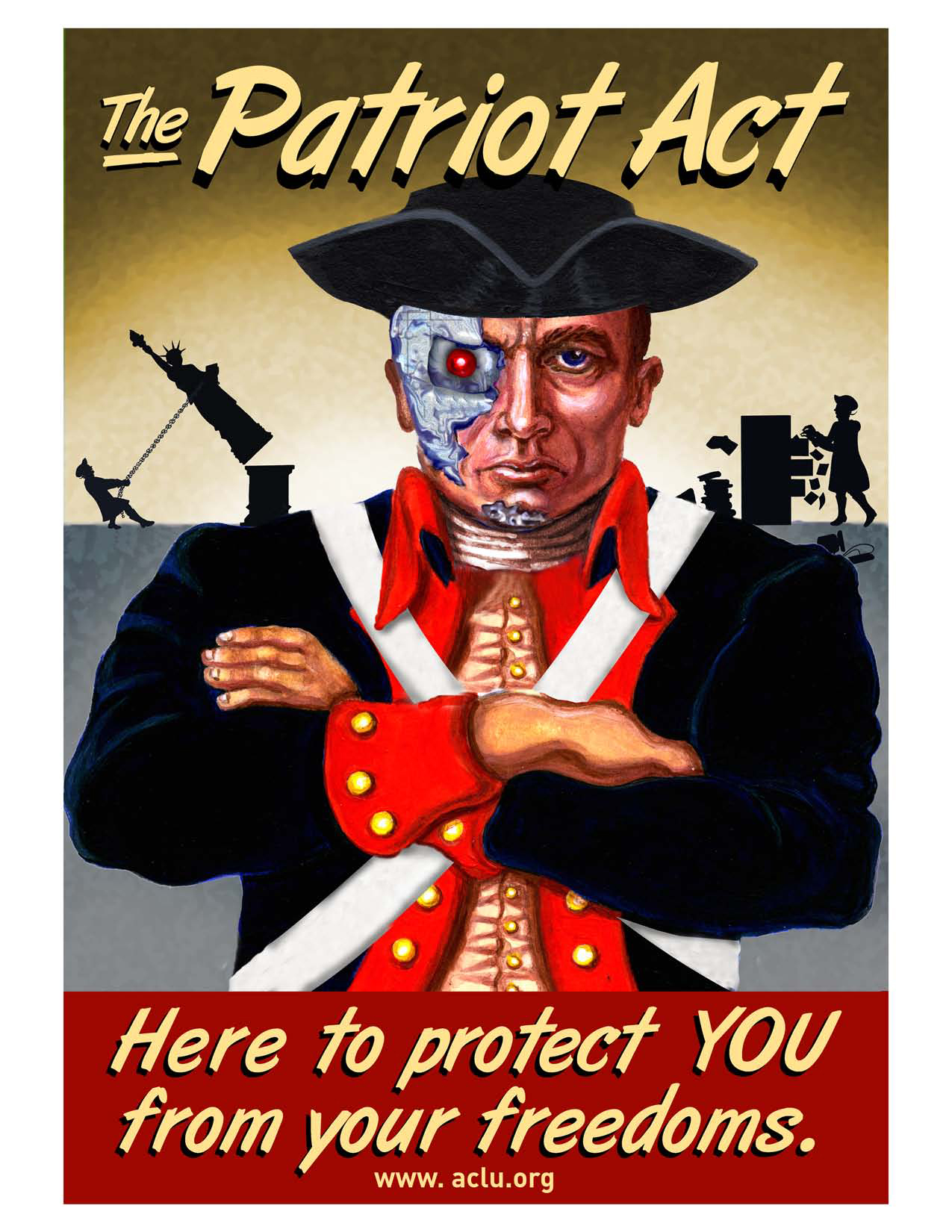


.jpg "Like an old-fashioned ladies' locker room, there were no subpoenas allowed")