In May, I wrote an article about the unlikely chance of Antifa and the Alt-Right coming to blows and kicking off a civil war. The Antifa Brownshirts were agitating about impeachment at that time, but two months later, they’ve changed gears and gone after the skinheads. While that, in and of itself, isn’t of particular concern, there is a more disturbing trend emerging. Antifa feels free to organize against any “unwoke” social gathering and attempt to get some scalps. What used to be a Simon and Garfunkel concert is now a Dropkick Murphys mosh, and the cops are happy to just sit there and watch. Even if there was just a small escalation in arms between the commies and the nazis, it wouldn’t be noteworthy, except for the way that Antifa is being treated by the left and their media hack cronies.
As I wrote in the May article:
Although people joke about “alternative facts,” it’s not a joke. There are two prevailing agendas across the country: 1) Trump is LITERALLY HITLER and A RUSSIAN MOLE AT THE SAME TIME!!! 2) Trump is DADDY and GOD-KING OF KEKISTAN, VANQUISHER OF THE SJWs and CUCKS!!! The left has their educational and media empire churning out outrage by the gallon. The right has their independent media matching the outrage of the left.
Antifa is smashing windows and folks like Based Stickman (who the fuck is Based Stickman and why is he called that??) are bashing Antifa heads in. People are primed to believe that the violence will do nothing but escalate.
This dynamic is still there, and the excuse making for the violence injected by Antifa has come to a fever pitch. It wasn’t enough that Trump denounced all of the violent elements in a volatile situation. No, he specifically had to denounce the supposed “right wing” (read: non-Marxian) “hate group” (read: non-PC group). Now that he’s showing an ounce of backbone in standing up to the Prog-Fascist media, he’s LITERALLY HITLER yet again.
Once again, we approach a crossroads. Will a critical mass of people buy the media’s angle? Will the escalating violence of Antifa be excused away as a righteous backlash against an evil President backed by a malignant social movement? Or, will people cut through the BS and hold both sides accountable for the increasing tension and violence? The first fatal blow has been struck, and it’s just a matter of time before more are landed. Will people give a collective shrug and go back to living their largely unaffected lives, or will they be galvanized to one side or the other by the unaccountable mayhem?
I still think that a widespread conflict is quite unlikely, but let’s jump back through the portal and get comfy in the Derplight Zone once more. What factors are festering under the surface that could bubble up into a civil war?
LITERALLY HITLER
Antifa and their media and political organs are doubling down on the LITERALLY HITLER rhetoric, which is absolutely polarizing and dehumanizing. There’s a reason that people were extremely hesitant to analogize to Hitler in domestic politics for 50 years. The guy was so dangerous that we co-opted an entire nation’s resources for 4 years to end his reign, at immense cost in human and economic terms. When the left compares Trump to Hitler (even implicitly), they’re sending a message to the right, and especially the Alt-Right, that this isn’t just a domestic debate, but a fight to the death.
The dangerous part is when the left leaves no room for dissent. People on both sides of the political aisle have always been susceptible to hyperbole and puffery, but when the left uses the power of boycott, violence, doxxing, and blacklisting on a regular basis, people who believe differently are given no outlet to vent off their pent up political energy. Much like gunpowder, their anger fizzles out when lit in the open, but when contained in a tidy little container, the results are explosive. The increased “all or nothing” attitude from the LITERALLY HITLER left is boxing the Alt-Right up in a tidy little container.
“They’ve Gone Too Far This Time”
I’ve seen a lot of people react this way to the way Antifa has been acting lately. It’s one thing to protest, boycott, shout down, or even make a hostile work or learning environment. It’s a completely different thing to act as a mob. People don’t like mobs, and average non-political folks are taking notice of the mob mentality that has taken hold in certain parts of the left. Antifa has chosen their targets very carefully so far, but one poorly chosen location for a riot could result in a violent response from otherwise unattached people. For most of the unattached, the distance between them in their cozy suburban or rural lifestyle and the violence in the urban liberal college setting is far enough that they don’t feel threatened. If Antifa were to overstep their bounds and perhaps threaten something more relatable to suburban folks (like schoolchildren), the backlash would be swift and violent.
Widespread Acceptance of Increasing Violence
I hate the phrase “the new normal,” but it is apt in this situation. Most people see the increasing violence, rail about it for 24 hours, and then forget about it. Like mentioned above, there’s a comfort in the fact that these goons seem to be contained on Marxist-sympathizing college campuses. However, you get less of what you penalize and more of what you celebrate. While the average Joe and Jane are ignoring the violent protests, the mainstream and leftist media are praising these goons for “punching Nazis.” We’re going to see more of this simply because there are hardly any consequences worth mentioning in comparison to the accolades bestowed upon these “woke” counter-protesters standing up to the evil Nazis. It’s getting to the point where people are resigned to the possibility of a second civil war.
Shifting Reaction to SJWs
The time is starting to come where perceptions of SJWs are shifting from a mix of fear and apathy to abject hatred. The problem is that most SJWs are emotionally stunted and unable to handle rejection. The resulting dynamic is a bunch of SJWs throwing temper tantrums, seeing that their Antifa friends (there is a significant crossover between the groups) are the golden children for breaking windows and harassing “Nazis.” On the other side is the Alt-Right, a reactionary group that makes its hay harassing SJWs and is stepping up its own reaction to these Antifa goons. As much as the Alt-Right dislikes Antifa, they HATE SJWs. They’re looking for an excuse to use Antifa’s tactics against the SJWs.
Economic Downturn
We’re about due for another recession, and people tend to be more amenable to violence when they don’t have a job. This one is fairly self-explanatory and well-documented throughout history.
Floundering Media
The traditional media is dying, and they’re trying everything they can to get people to consume their content. They’ve long since removed their mask and exposed their Marxist-sympathetic leanings, but they get consumers when there is conflict. These days they’ve gone from reporting on conflict to stoking it, and I don’t think there’s an end in sight. They’re going to do everything they can to start a race war, a communist revolution, and a national witch hunt all at the same time. The ratings will be amazing!
Overall, I’m still pessimistic on the chances of widespread fighting. I think the worst we will possibly see is an LA riots type situation. However, as shown in Charlottesville, all it takes is one body for the self-righteous leftist media to climb on top and start agitating. Like a high-stakes game of “Press Your Luck,” both sides keep smacking the button, hoping to hit the political jackpot, ignorant of the lurking Whammy.
We have a white nationalist administration in the White House. A conclave of priestly bigots, reactionaries, anti-semites, and racialists. And one of their chief objectives, along with forcing their misogynist and heteronormative world view on the country, is to keep out brown people. At no time has this been clearer than when they unveiled their new proposal for immigration reform.
This new ‘reform’ will prioritize so called ‘skilled immigrants’ who speak English above others. When I heard this proposal, I took it personally. My maid, Conchita, immigrated to this country from Honduras a few years ago. If she would have tried to immigrate under the administration’s new proposal, her lack of English proficiency or a skilled trade would have relegated her to the back of the line. Whose job does Conchita’s presence in this country threaten? What American would take her job to be paid eleven dollars an hour? In fact, before Conchita, I couldn’t even find anyone who would clean my home and watch my children for less than twenty-five dollars an hour. I couldn’t pay that and nor should I be forced to when there are immigrants like Conchita that are willing to work for less. I mourn the possible loss of opportunity for people like Conchita and myself, if this immigration ‘reform’ is passed.
Even more personally for me, though, is that this new bill has worried me about my oldest son’s future. My son, Tim, graduated from Stanford a few years ago and got a job working in computer engineering at a nearby manufacturer. He started out making a good salary, for a recent college graduate, and everything seemed to be going good for him. But over the past three years he hasn’t received a raise and he’s noticed that his company has started employing people who aren’t local. For instance, he told me that his new supervisor, Sanjay, just immigrated to the US from India. I’m happy that the company has brought diversity to their workforce, but I don’t understand why they had to import management. I don’t claim to be intricately familiar with the engineering profession, but Sanjay is a graduate of Mumbai University (hardly a well-known name within the engineering field) and yet he is supervising six other employees that have all graduated from Stanford, UCLA, and Boston College. I can’t help but think that Sanjay was hired because of the lower than average salary that he was willing to accept. To me, this is a dangerous precedent that not only suppresses wages, but also cheapens the expertise needed in these professional fields. Do we want to reduce the quality of engineers in order to save a few thousand dollars? If you’re OK with that, then would you say the same about accountants? Or architects? Or even doctors?
Pictured: artist’s interpretation of Sanjay, the bad egg
And besides the obvious skills deficit between a graduate of some foreign university versus our own renowned institutions, there is also the question of timing. Our college graduates today are burdened with high debt and struggle to find even entry level employment in their chosen fields. Why should we be making this situation even more difficult by importing ‘skilled immigrants’ that will undercut their wages and reduce their employment prospects? It’s one thing to have immigrants like Conchita who provide Americans with affordable service, but it is quite another to undermine American expertise. I had thought that we, as a country, had already come to this conclusion, before an uprising of drug-addled bigots in other parts of the country surprised me by electing a buffoonish racist.
We cannot allow this sinister piece of legislation to redefine our country. I say we allow in more Conchitas and less Sanjays. It’s just good economics.
“No state shall make or enforce any law which shall abridge the privileges or immunities of citizens of the United States…” – Fourteenth Amendment, U. S. Constitution
“No person shall be held to answer for a capital, or otherwise infamous crime, unless on a presentment or indictment of a grand jury, except in cases arising in the land or naval forces, or in the militia, when in actual service in time of war or public danger…” – Fifth Amendment, U. S. Constitution
We saw in Part One how, according to the Supreme Court, the Fourteenth Amendment doesn’t require the states to obey the grand-jury clause of the Fifth Amendment. Most of the Bill of Rights has been applied to the state – “incorporated” is the technical term – but not this part.
(In its incorporation cases, the Supreme Court likes to talk in terms of “due process,” but here’s Justice Clarence Thomas explaining how the Privileges and Immunities Clause is what we should be looking at.)
For the most part, when the U. S. Supreme Court exempts the states from part of the Bill of Rights, most states don’t take advantage of this. With some exceptions, the states chose on their own to obey the Bill of Rights, even when the Supremes wouldn’t hold them to it – state courts would sometimes interpret some rights differently than the federal courts, but they admitted the rights were applicable, if only as a matter of state law.
That’s not the case with the grand-jury clause. Here, the Supremes opened the door for the states to disobey this clause, and the states rushed through the open door.
Between the Civil War and the end of the First World War, many American states amended their constitutions so that suspects could go to trial for serious crimes without the approval of a grand jury (Michigan had started the ball rolling on the eve of the Civil War). This analysis summarizes the situation as of 2014. In most cases, grand juries were kept in reserve in case the prosecutors, in their discretion, wanted to use the grand jury procedure. Only two states – Pennsylvania and Connecticut (I would probably add Michigan) – banned grand juries even as an option (apart from extraordinary cases). Twenty-three holdout states still mandated that certain serious crimes be reviewed by grand juries, at least if the suspect demanded it.
Rather than give a comprehensive history of the victories of “reformers” who curtailed grand-jury rights in state after state, let me attempt to give some historical vignettes, and tie these vignettes together with some semblance of narrative coherence. Then later, I’ll give an account of the triumph of the reformers in their battle against the grand jury.
The Plessy Judge vs. Grand Juries
U. S. Supreme Court Justice Henry Billings Brown came to the Court too late to take part in the Hurtado case, which said the states could limit or abolish the right of a suspect to have his case considered by a grand jury. But Brown was one of the many would-be reformers of that era who wanted the institution of the grand jury largely abolished.
Justice Henry Billings Brown
Brown gave a speech to the Ohio Bar Association in 1892 that included the judge’s discussion of this issue. Getting rid of grand juries, said Brown, would make criminal procedure more simple and efficient. Brown noted that he had begun his legal career in Connecticut, where grand-jury indictments were only required for crimes punishable with death or life imprisonment. Then Brown boasted of his fifteen-year legal career in Michigan (1860-1875), where grand juries were rarely used and were never required before a defendant could be brought to trial.
Brown suggested that grand juries may have been necessary in England to protect suspects against false charges by private accusers, but this problem didn’t exist in America. In America there were public prosecutors to bring charges and judges to rule on probable cause, and with these steadfast public servants on the job, Brown triumphantly concluded, grand juries were no longer necessary to shield suspects from wrongful accusations.
Brown went on to praise trial juries for their power of nullification – they could spare a guilty defendant, if punishing him went against local community norms. Of course, grand juries could perform that function too, sparing worthy but technically guilty suspects from the ordeal of a trial, not to mention saving them many legal expenses. That did not seem to occur to the Justice. “I think the question whether a man in a particular case should be punished for a crime is a question that is properly left to the public,” Brown said. But under Brown’s scheme, the nullification of an unfair charge would have to wait until the end of an excruciating trial for the suspect, since “the public” would only be able to get a word in edgewise after the trial was over. The public would be kept out of the decision of whether to bring charges in the first place.
Another defect in Brown’s logic is apparent with the growth of the plea-bargaining system, which requires a defendant to gamble on the possibility of a higher sentence if he wants to try his luck with a trial jury.
Brown concluded his speech with a boast that “[t]he Anglo-Saxon is a slow-moving race, but it rarely takes a step backward. It makes mistakes, but its progress has been in the right direction. No serious mistakes have yet been made.”
Speaking of serious Anglo-Saxon mistakes: four years after his speech, Brown again showed his ability to have things both ways and to spin nice-sounding legal theories which were oppressive in practice. Brown gave the Supreme Court’s decision in Plessy v. Ferguson. States could pass Jim Crow legislation separating blacks and whites, Brown’s opinion declared, so long as the separate facilities were “equal” (Justice John Marshal Harlan dissented in the Plessy case – Harlan had also defended the right to a grand jury in his dissent in the Hurtado case). Brown had affirmed the importance of equal protection under the law, while negating this principle in practice with his endorsement of racial segregation. In a similar manner, Brown had praised trial juries for their power of nullification, while calling for the abolition of grand juries which were in the best position to nullify charges against a suspect before he could be dragged through the court system.
Plaque on Homer Plessy’s tomb, New Orleans
Grand juries as scapegoats for police abuse
The fact that one of the most infamous racists in American judicial history wanted to abolish grand juries hasn’t stopped modern, hip and woke activists from throwing the racism charge at grand juries themselves.
In Minnesota, a proposed state constitutional amendment on the 1904 ballot would abolish the right to a grand jury and empower the legislature to decide how prosecutions were to be initiated – and it was correctly anticipated that the legislature would allow the elected county prosecutors to bring charges without grand jury approval. This concerned an anonymous “Voter,” who wrote to The Princeton Union to warn against the amendment. This voter was more skeptical about the professionalism of prosecutors than Justice Brown had been:
The grand jury is a body of citizens who are selected regardless of political belief or creed….[T]he law throws around them secrecy in their actions and they are entirely removed from all political taint or influence. It very often happens that county attorneys are not men wholly competent to exercise powers ordinarily delegated to a grand jury. Much of our politics is run on the “good fellow” plan and sometimes men are kept in office for being good fellows or for various reasons, regardless of qualifications or fitness for office….[County attorneys] are human and to say that their judgment in a case would be as good as as that of the members of a grand jury would be to make an extravagant statement.
The “good fellow” plan
A majority of Minnesotans went ahead and approved the amendment despite these arguments, and the legislature proceeded to give county attorneys the option of bringing charges without using grand juries. Grand juries would still be held in reserve if the prosecutor wanted to employ them, but suspects would no longer have the right to have their cases considered by grand juries. The optional system necessarily gives grand juries a bad odor – prosecutors who use grand juries when they don’t have to do so are often hiding behind the grand jurors’ skirts in order to pass the buck for controversial decisions. And sometimes the public falls for it.
In 2015, two Minneapolis cops confronted and shot Jamar Clark, who died of his injuries. The fact that Clark was black made the issue particularly volatile. Protesters demanded that the county attorney, Mike Freeman, investigate the shooting without involving a grand jury. Freeman had this option thanks to the voters’ decision back in 1904.
Minneapolis protesters in the Clark case
The protesters got their wish. Freeman announced that his office would no longer use grand juries when investigating shootings by police. The president of the Minneapolis NAACP, Nekima Levy-Pounds, said:
I am overjoyed that in this instance Mike Freeman decided to do the right thing. Mike Freeman is fully aware that the grand jury process has been ineffective here and nationally in holding officers accountable. I believe sustained community pressure played a huge role in Mike Freeman’s decision.
Then Freeman, without the help of a grand jury, announced he wouldn’t be bringing charges. The omission of a grand jury didn’t placate the protesters. An NAACP spokesperson (not Levy-Pounds) said, “You, Mr. Freeman, did not give a fair and accurate portrayal…and let me tell you: If the city burns, it’s on your hands.”
Last I heard, Minneapolis was still standing, though the shooting did provoke some protests. Nevertheless, cutting the grand jury out of the loop in the Clark case didn’t ease community tensions, or lead to charges being filed (assuming for the sake of argument that charges ought to have been filed).
The opposition to grand juries was exacerbated when a grand jury in Missouri failed to charge Officer Darren Wilson for shooting Michael Brown. The grand jury’s decision sparked riots. But the Obama/Holder Justice Department, examining the evidence against Wilson, also decided not to bring charges, and there was no grand jury involvement in that decision. So a grand jury took the rap for taking the same position on a racially-charged police shooting as the country’s two top-ranked race-baiters.
(Click here for an article about a controversy over using grand juries in police-abuse cases in California.)
Grand juries came first
The grand jury system was itself created through the actions of a would-be reformer, Henry II of England. The ruler who encouraged St. Thomas Becket’s assassination…
…was not a civil libertarian, but he “built better than he knew” in creating the grand jury. Henry was thinking more in terms of law and order when he decreed that panels of his subjects would be summoned and commanded to report about crime in their localities. What Henry wanted was to root out criminals who had managed to evade justice. Before Henry’s decree, bringing alleged criminals to trial in the secular courts required a private accuser to voluntarily come forward, risking punishment if he failed to prove his charge – and risking retaliation from the criminal. Henry knew that there were criminals running around who were known to the general public, but not known to the courts, since nobody had the guts to make a formal accusation. Not to mention that England was an occupied country whose rulers spoke a foreign language (French) and might not be au courant with the news circulating among their English-speaking subjects.
So Henry II’s early versions of grand juries were required to name people in their area who were believed by the public to be guilty of serious crimes. The grand jurors were not making their own investigations or reaching their own conclusions, but were reporting what was widely believed among their neighbors. Malicious local gossip need not be reported – just the solid consensus of public opinion.
King Henry, the scourge of the Church, was actually adapting a procedure used in England’s Church courts. The Church’s jurists and reformers borrowed from Roman law the maxim that the public interest required crime to be punished. This was in contrast to the Germanic idea of using the justice system to mitigate blood feuds. The descendants of the Germans who conquered the Western Roman Empire wanted people who had mortal grudges against each other to resolve their differences without dragging entire clans into Hatfield/McCoy style, multigenerational cycles of reprisal and counter-reprisal. So if angry relatives came seeking an alleged murderer, the matter would be settled with a trial by battle (if the feud was among aristocrats) or by some form of ordeal (if the feud was among the lower orders) – putting your hand on a burning piece of iron, getting thrown in water to see if you floated, trying to swallow a morsel of bread after boasting of your innocence (choking=guilt). If these methods didn’t identify the criminal with 100% accuracy, at least it was an agreed-upon method, presided over by priests, to settle the feud and move on. And if a crime didn’t spark a feud, or if the victim or their would-be champions were too weak, then it was like “OK, forget about it and let’s have some more mead.”
The Church’s reformers noticed that a lot of crime was overlooked in this way, and that trial procedures left something to be desired in terms of accuracy. So the Church courts, at least in England, came up with a procedure which seemed to inspire Henry II. Instead of waiting for a private individual to take the initiative and prosecute, the Church’s judges would identify a suspect and summon a panel of the suspect’s neighbors to see if public opinion regarded the person as a criminal. If the community wasn’t fairly solid in believing that the suspect committed the crime in question, that was the end of the matter – or rather, any crimes would have to be settled in the “internal forum” (the confessional). But if the community witnesses were like, “yeah, everyone thinks he did it,” then that counted as “fama” – the equivalent of a formal accusation – and a trial would begin.
King Henry thought that was a good idea, so he created his early version of the grand jury to report to the secular courts about those people whom local public opinion identified as serious criminals. If a person was so reported, the accused would undergo an ordeal – apparently the throw-them-in-water-to-see-if-they-drown ordeal – because the criminal trial jury hadn’t been invented yet. Yes, in criminal cases there was only one jury, and that was the ancestor of the grand jury – and unless you put your reliance in the cold-water ordeal, you better hope that public opinion, as reflected by the grand jury’s accusation, was accurate.
“So if the water receives my body, I’m innocent? And if I float, I’m guilty, and you execute me? It’s a good thing the grand jury correctly identified me as the murderer, otherwise I’d be really annoyed at this whole procedure.”
The creation of the English criminal jury was kind of forced on England by the Church. The Fourth Lateran Council in 1215, decided that priests should not preside at ordeals – because priests shouldn’t be shedding blood and because ordeals were not always reliable anyway. Without priests to bless the water ordeal, the practice fell into disuse, and so the English started using trial juries to decide the guilt or innocence of people who had been charged by grand juries with serious crimes.
Another important decision of the Fourth Lateran Council was in clarifying how church courts would go about ascertaining whether a suspect had a reputation as a criminal, so that the court could proceed in the absence of an individual accuser. It wasn’t enough if the rumors against the suspect were generated by “enemies and slanderers” – the public accusations had to come from “prudent and honest persons, not once only, but often.” Commentators gave Biblical examples: the clamor against the sinners of Sodom and Gomorrah, which prompted God to investigate (Genesis 18:20), and the complaints against the steward in Luke 16:1, which prompted the master to demand an accounting from the steward.
Since the creation of secular grand juries in England had probably been prompted by church-court procedure, it is not surprising that grand juries, acting on the same principles as the Fourth Vatican Council, undertook to distinguish between true and false public opinion. As the grand jury evolved, it came to do its own investigation, not simply reporting what their neighbors believed. Grand jurors were becoming the representatives of responsible public opinion by acting as “prudent and honest persons” and seeking reliable evidence about suspects.
But at least people who were accused by grand juries could now look forward to a full trial by another jury, not simply an arbitrary procedure like the water ordeal where one prevails only through blind good fortune. Even today, a small proportion of those who are indicted by grand juries go on to have their cases heard by a trial jury (the rest, of course, resolve their cases by plea-bargains, where the result totally isn’t arbitrary).
Works Consulted
Bab(b)ington Family – Descendants of John de Babington, http://members.iinet.net.au/~billeah/babingdesc.html
Henry Billings Brown, “Justice Brown’s Address,” in Proceedings of the Ohio State Bar Association, 13:35-51 (July, 1892).
Rebecca V. Colman, “Reason and Unreason in Early Medieval Law,” Journal of Interdisciplinary History, 4.4 (Spring, 1974), 571-591.
Nathan T. Elliff, “Notes on the Abolition of the English Grand Jury,” Journal of Criminal Law and Criminology, Volume 29,Issue 1 (May-June) Summer 1938.
Richard M. Fraher, “The Theoretical Justification for the New Criminal Law of the High Middle Ages: ‘Rei Publicae Interest, Ne Crimina Remaneant Impunita’” (1984). Articles by Maurer Faculty. 1854.
http://www.repository.law.indiana.edu/facpub/1854
Richard. H. Helmholz, “The Early History of the Grand Jury and the Canon Law,” 50 University of Chicago Law Review 613 (1983), online at http://chicagounbound.uchicago.edu/cgi/viewcontent.cgi?article=2484&context=journal_articles
Finbarr McAuley, “Canon Law and the End of the Ordeal.” Oxford Journal of Legal Studies, Vol. 26, Issue 3, pp. 473-513, 2006.
Kenneth Pennington, “Introduction to the Courts,” in Wilfried Hartmann and Kenneth Pennington (eds.), The History of Courts and Procedure in Medieval Canon Law. Washington, D. C.: Catholic University of America Press, 2016.
“Proposed Amendments to the Constitution of Minnesota,” Cook County Herald (Grand Marais, Minn)., Oct. 22, 1904, p. 8, column 1.
“Shall we abolish the grand jury,” The Princeton union, October 06, 1904, p. 3, column 2, http://bit.ly/2strpg7
Suja A. Thomas, The Missing American Jury: Restoring the Fundamental Constitutional Role of the Criminal, Civil, and Grand Juries. New York: Cambridge University Press, 2016.
___________, Nonincorporation: The Bill of Rights after McDonald v. Chicago, Notre Dame Law Review, Vol. 88, 2012.
Richard D. Younger, The people’s panel: the Grand Jury in the United States, 1634-1941. Providence, RI: American History Research Center, Brown University Press, 1963.
Today I won’t focus on Wartime Abraham Lincoln, the Emancipator…
Francis Carpenter, “First Reading of the Emancipation Proclamation of President Lincoln” (1864)
…but on Peacetime Lincoln, circa 1854-1860, the gradualist opponent of slavery.
Campaign photo, 1860
I’m going to suggest that during this period, Lincoln’s antislavery views made a good deal of sense.
Let’s look at 1858, when Lincoln famously laid out his views in the Lincoln-Douglas debates. On the surface, Lincoln and Douglas both seemed to be on the same side. Both Senatorial candidates – the incumbent Stephen Douglas and the upstart ex-Congressman Lincoln – wanted the territory of Kansas to be a free state, and both opposed President James Buchanan’s efforts to have Kansas admitted as a slave state under the proslavery Lecompton Constitution.
Constitution Hall, Lecompton, Kansas
But the two candidates took different routes to reach their respective conclusions.
Douglas believed that the important thing was to let the white settlers of Kansas decide the slavery issue for themselves. Since most white settlers didn’t want slavery in Kansas, that should end the matter. Buchanan’s people had tried to rig the elections so that proslavery whites dominated over the antislavery white majority, and this was the scandal, Douglas said.
Lincoln said that it went beyond what the white people in the territory wanted. Federal territories should be free of slavery. Lincoln claimed that the Founding Fathers had wanted to keep slavery from spreading – confining it to the states in which it already existed but not allowing slavery to be brought into the federally-controlled territories. The nation could not endure half slave and half free, but, said Lincoln, a proslavery plot, including both Southerners and northern collaborators like Douglas, was on foot to overturn the Founders’ vision and extend slavery everywhere – ultimately, perhaps, into the free states like Illinois.
Douglas said that this was all nonsense. He appealed to the racism of his audience and said that the rights of black people meant nothing, that it was only the will of the white majority – whether that majority was proslavery or antislavery – which mattered in any given territory. The founders contemplated a diverse country, with slavery in some states and territories, and not in others, based on local whites’ assessment of local needs, free from any foolishness about rights for black people.
Lincoln made clear that, while he was a racist, he was less racist than Douglas. While Lincoln didn’t want black people to vote, and he was even open to resettling them out of the country (biases that he began overcoming during the coming war), Lincoln defended the right of any person, regardless of color, to own his own labor and not to have the fruits of their labor stolen by anyone else. This was the famous Republican “Free Labor ideology” much mocked by modern historians for its naive belief in the ability of hardworking people to rise in the world if given the chance to do so.
In the debates with Douglas and elsewhere, Lincoln made some exceptions to the right of free labor. For one thing there was the positive law of the Constitution, which required fugitive slaves from the South to be sent back to slavery. Lincoln supported this part of the Constitution as part of his loyalty to constitutional government. In that specific case, the positive-law provisions for slavery overcame the natural right to be free. Likewise, Lincoln recognized the validity of Southern laws providing for the enslavement of most of their black population – thus he denounced the John Brown raid seeking to overturn slavery by violence.
So Lincoln’s thought was: be careful to respect slavery where it existed, but don’t let it spread beyond the existing slave states.
Lincoln himself gave the best summary of his ideas, in a speech in New Haven:
If I saw a venomous snake crawling in the road, any man would say I might seize the nearest stick and kill it; but if I found that snake in bed with my children, that would be another question. [Laughter.] I might hurt the children more than the snake, and it might bite them. [Applause.] Much more if I found it in bed with my neighbor’s children, and I had bound myself by a solemn compact not to meddle with his children under any circumstances, it would become me to let that particular mode of getting rid of the gentleman alone. [Great laughter.] But if there was a bed newly made up, to which the children were to be taken, and it was proposed to take a batch of young snakes and put them there with them, I take it no man would say there was any question how I ought to decide! [Prolonged applause and cheers.]
As for slavery where it existed, it should be allowed to wither away with time, as was bound to happen if it wasn’t allowed to spread.
Father Time waits for the slaves to be free
John Brown, of course, didn’t go in for that sort of gradualism.
Brown thought slaves were oppressed now, and they should be freed now. Just before he was hanged, Brown said that America’s sin of slavery would only be washed out with blood.
Not a historically accurate painting
But Lincoln was, I believe, right about the Founders and the replacement of the Founders’ wisdom with an aggressive proslavery consensus among Southern leaders and their allies
The Founders may have been hypocrites, they may have been naive about slavery gradually withering away, they may not have knocked themselves out fighting against slavery, but they did mostly realize that slavery was wrong and that it was incompatible with the principles of the Declaration of Independence.
They set up the biggest anti-slavery territory in the world with the Northwest Ordinance. They got rid of the institution in the Northern states. They banned the importation of slaves from Africa into the United States. And at least in theory, they banned U. S. citizens and U. S. ships from taking part in the slave trade from Africa to Latin America.
Statue of Alexander Hamilton, National Constitution Center, Philadelphia
George Mason was a Virginia slaveholder whose papers contained considerable denunciation of slavery.
George Mason
George Mason’s grandson James, a Virginia Senator, wrote in 1857 that poor old Grandpa George had been unduly harsh on slavery, but should be excused because of the circumstances of the time, when going all-out for freedom was the fashionable thing. Senator Mason told the historian George Bancroft not to use the antislavery stuff in Grandpa George’s papers, because even poor deluded Grandpa George wouldn’t want his slavery-bashing writings to come into “profane or depraved hands” (probably meaning opponents of slavery).
Senator James Murray Mason
John C. Calhoun, one of the foremost supporters of slavery, admitted that the language in the Preamble to the Declaration of Independence was inconvenient to the proslavery cause:
We now begin to experience the danger of admitting so great an error to have a place in the Declaration of our Independence. For a long time it lay dormant; but in the process of time it began to germinate, and produce its poisonous fruits. It had strong hold on the mind of Mr. Jefferson, the author of that document, which caused him to take an utterly false view of the subordinate relation of the black to the white race in the South, and to hold, in consequence, that the latter, though utterly unqualified to possess liberty, were as fully entitled to both liberty and equality as the former, and that to deprive them of it was unjust and immoral. To this error his proposition to exclude slavery from the territory northwest of the Ohio may be traced, and to that the ordinance of ’87, and through it the deep and dangerous agitation which now threatens to ingulf, and will certainly ingulf, if not speedily settled, our political institutions, and involve the country in countless woes.
John C. Calhoun statute, Statuary Hall, Capitol building, Washington, D. C.
So it seems Lincoln was onto something when he said that slavery apologists in his time were abandoning the pro-freedom ideals of the Founders.
As for a conspiracy to spread slavery – perhaps it should be called a competition among pro-slavery forces rather than a conspiracy. The various slavery supporters were at the time vying with each other to show proslavery voters in the South that they were more proslavery than the other guys.
So with these limitations – allowing that he did not recognize human equality to the same extent as did abolitionists, allowing that his wartime behavior raises a whole new set of issues, allowing that he had a background (and a future) as a Whiggish pro-big-government guy, we can say that the Lincoln of 1854-1860 was right.
Right, that is, about two specific things: (a) The Founders didn’t like slavery, and looked forward to a day when slavery didn’t exist in the U. S., and (b) there was by Lincoln’s time a strong faction which rejected the Founders’ wisdom and was committed to spreading slavery.
Here we are at another Friday, Glibs. Our beloved Jesse is out of town, but I’m hoping that this particular Fur Friday makes you long for his return.
I’m sure there’s a depressing story behind that eye.
Contrary to popular belief, I am just one big softy. Look at this puppy’s face and tell me you aren’t, also. I have a particular fondness for blue heelers, corgis, wolfhounds…and, well, most furry creatures. Yes, even cats, albeit at a distance.
In Montana, there are several pet rescue chapters–various regional Humane Societies since the state is so vast, “Res-Dog-Rescue” types (usually around the major reservations), and even some breed specific Rescues if you’re just really into Border Collies or herding types. The focus of my post today is RezQ Dogs. As was mentioned in a previous post of mine, we have some odd racial dynamics at play in the Last Best Place. However, folks seem to be able to put aside any “racist!!!1!” decries they might have when it comes to pet rescues. RezQ Dogs is a volunteer, nonprofit organization in Dodson, Montana, a bustling town of ~124 people, as of the last census. They try to find homes for the unwanted and abandoned dogs from the Fort Belknap and Rocky Boy Indian Reservations. You might have guessed that it’s hard for them to find homes for all of the pups they take in, and you would be right. The owners and the volunteers of this organization foster these dogs in their own homes until they can place them. Of course, at some point, they run out of vacancy and have to turn dogs away, too. They hope that one day they won’t have to do this anymore, that people on reservations will have some kind of respect and sanctity for the life of another creature.
Clearly spoiled rotten
Before this starts to read like one of those awful, heart-breaking commercials with Sarah McLachlan music in the background, here’s a picture of a dog who has literally never known hardship, besides trying to figure out which stuffed animal to rip the eyes off first. When I drove down to Wyoming to buy this little bundle of fur, I had no idea that an organization like RezQ Dogs existed, or I really would have considered them first. They mention on their website that the bulk of their rescues are just puppies, less than a year old. You don’t always know the story behind abandoned dogs, but in the case of a puppy, seems to me like someone just wasn’t ready for the responsibility or they lacked the patience and consistency to train the dog properly, and so they abandon it. They literally leave it by the side of the road in a box, assuming that a good Samaritan will happen upon it and give it the life it deserves. Or maybe they don’t assume anything at all. Maybe they just leave it there and figure it’s in someone else’s hands now and no longer their problem. Whatever their motivation is, they deserve to go to a special Hell.
Anyway, if you’d like to make a difference in a dog’s life, feel free to visit RezQ Dogs Facebook page or their website. It doesn’t look like they update their website as often as they do their Facebook, but they do make an effort to list all of the dogs they’re currently fostering. Better yet–seek out rescue facilities in your own neighborhood and make a difference locally. It might not seem like much, donating your time one afternoon or kicking in $5, but it really does have an impact.
On March 6, 1857, a large audience crowded into a room in the U. S. Capitol to hear the justices of the Supreme Court pronounce on the fate of Dred Scott, a black man seeking a legal ruling that he was a free man. Scott claimed he had been liberated from slavery by living in federal territory where slavery had been forbidden by Congress’ Missouri Compromise law. Scott had come to the wrong place. Chief Justice Roger Brooke Taney read an opinion declaring that Scott remained a slave, that black people, slave or free, were not citizens, and that the Missouri Compromise was unconstitutional because it purported to keep slavery out of federal territories.
The following day, Justices Benjamin Curtis and John McLean read their dissents. Not all of the Justices read their opinions on these two days, however. Justice John Archibald Campbell had a written opinion in which he agreed that Dred Scott was a slave.
This is the story of John Archibald Campbell – a “fascinating figure” according to the actor Gregory Itzin, the guy who played Campbell in Steven Spielberg’s movie Lincoln. Of course, as an article in startrek.com noted, Itzin is “especially good at being bad, or at least being in league with the villains of too many movies and television shows to count.” So Itzin’s remark doesn’t necessarily count as a character reference. And since Spielberg only gave the Campbell character one line, there wasn’t much chance for Itzin to flesh out Campbell in detail (except through the stern gazes he directed at other characters).
The fact is that the same John A. Campbell who ruled for slavery in the Dred Scott case also (unsuccessfully) promoted a broad pro-liberty interpretation of the Fourteenth Amendment in the Slaughterhouse Cases.
It’s not clear whether Campbell agreed with Taney’s view that all black people – slave or free – were categorically excluded from citizenship. Campbell’s opinion in Dred Scott focused on the other key issue of the case – slavery in the federal territories. Here Campbell reiterated views he’d held since about 1850, before he was on the Court – views which had grown mainstream among Taney and other leading Southerners. Although as recently as 1848, Campbell had admitted that Congress could ban slavery in the federal territories, two years later Campbell proclaimed the opposite doctrine.
Concerned with Northern attacks on the South in the name of antislavery, Campbell in 1850, as in 1857, said that a Southerner who settled in a federal territory had the right to hold his slaves there as “property,” just like a Northern settler had the Constitutional right to hold his farm implements, cows, and pigs as property. Campbell believed that this was an issue of equal rights – the Southerner must have the same right to his version of property that the Northerner had to his version. Defending slave-owning as a matter of equal rights – that’s some messed-up s*** right there – but it’s what most elite Southerners had come to believe.
Dred Scott (1882 painting based on 1857 photograph)
Campbell actually thought slavery was on the way out. In articles he wrote in his pre-Court days, he said that the spirit of the age in America, as well as the South’s need to shift from agriculture to commerce and industry, would lead to the end of the Peculiar Institution. But sudden emancipation, such as urged by Northern abolitionists, would (Campbell believed) lead to bloodshed and economic disaster – as in Haiti. To gradually ease out of slavery, Campbell wrote, the Southern states – without Northern meddling – should prepare slaves for freedom by giving them at least a basic education, protecting their families from being broken up by sale, and preventing creditors from seizing an owner’s slaves. But as Northern pressure against slavery increased, Campbell believed that Southerners’ priority should be to resist this outside pressure and defend slavery against Yankee attacks.
Before being appointed to the Supreme Court, Campbell had been a prominent attorney in Mobile, Alabama. He made his reputation by defending clients who owned valuable land next to the Mobile River. In arguments ultimately accepted by the state and federal Supreme Courts, Campbell said that Alabama, when it became a state in 1819, acquired the right to dispose of these lands regardless of interference from the federal government – a position which established Campbell’s clients’ title to the land as well as putting Campbell on the states’ rights side of a key issue.
From 1849 to 1853, Campbell appeared many times before the U. S. Supreme Court – mostly losing his cases but impressing the Justices with the quality of his preparation and legal argument.
Campbell was also active in the Southern Rights Association, a group which warned Southerners of the dangers posed by Northern opponents of slavery in the wake of the extensive conquests of the Mexican war. Anonymous pamphlets by Campbell (on behalf of the Mobile branch of the Southern Rights Association) warned that Northern fanatics were trying to prevent Southerners from settling in the new territories with their slaves, as was allegedly their constitutional right. A fellow-Alabamian, William Lowndes Yancey, was a leader of the Southern rights Association and had previously worked with Campbell. Yancey was a leading “fire-eating” supporter of Southern rights and of a separate Southern nation.
Campbell put some distance between himself and Yancey at an 1850 convention of Southern leaders, held at Nashville to consider the danger posed by Northern antislavery initiatives. Many of the resolutions passed at the Nashville convention were drafted by Campbell, and took what in the political climate of the time was a conciliatory tone in comparison to Yancey’s secessionism. The Nashville Convention resolutions warned the North that it must allow slavery in the territories and otherwise respect Southern “rights.” But any talk of secession was declared premature. Compromise measures approved in Congress should be given a chance to work. The resolutions were vague on whether secession would ever be a good idea.
When Democratic President Franklin Pierce took office in 1853, he had to fill a Supreme Court vacancy left by the death of John McKinley of Alabama. After looking around for a good nominee, Pierce selected Campbell, who came recommended by all but two Southern legislatures. Also backing Campbell, in a historically-rare endorsement, were the remaining members of the Supreme Court, who requested that the guy who had impressed them so much as an advocate should come up and sit on the bench with them. Pierce and the Senate agreed and put Campbell on the Court.
One of Campbell’s Supreme Court would have denied citizenship…to corporations. If Campbell was correct, then the right of corporations to sue in federal court would be severely curtailed. But Campbell’s opinion was in dissent, and the Court majority, then as now, said corporations are citizens with broad rights to invoke the protection of the federal courts.
Not that Campbell supported states’ rights in all cases. Like other Southern leaders, he turned into a virulent nationalist when it came to fugitive slaves. Campbell believed the federal government, under Congress’ strong Fugitive Slave Law, should send U. S. marshals to arrest black people in the North, give them a brief and inadequate hearing to decide if they were fugitives from slavery, and then ship them off to their alleged masters, without regard to any Northern state laws which tried to protect the civil liberties of accused black people. Campbell joined a unanimous Supreme Court opinion that state courts could not hear habeas corpus petitions from federal prisoners – including alleged fugitives and their Northern rescuers.
To Campbell, the enforcement of the federal Fugitive Slave Act was a matter of justice which the North owed to the South. The South, meanwhile, should reciprocate by helping the feds fight filibusters.
No, not that kind of filibuster. More like this:
William Walker’s ship in battle near Nicaragua, 1856
Private American “filibuster” armies were organizing throughout the country, particularly in the South, in order to invade Latin American territory. Campbell thought the “filibuster” leaders were seeking to expand slavery and add new slave territories – like Spanish-held Cuba – to the United States.
In those days, Supreme Court justices had duties as trial judges, and Campbell was assigned to hear federal cases in Mobile, Alabama, and in New Orleans in neighboring Louisiana. So when Campbell came to New Orleans in 1854, he told the federal grand jury to go after the filibusters, particularly former Mississippi governor John Quitman and his associates, who were plotting an attack on Cuba.
Campbell indicated the concerns which motivated him. He told the grand jury that just as Southerners rightly demanded that Northerners put aside their antislavery feelings and let the Fugitive Slave Law be enforced, Northerners rightfully demanded that Southerners let the federal Neutrality Acts be enforced against the filibusters.
Quitman and his associates were summoned to testify before the grand jury, but they took the Fifth, and the grand jury didn’t indict anyone. But Campbell put the kibosh on Quitman’s Cuban raid by forcing the would-be filibusters to post large money bonds – the money would be forfeit if Quitman and crew waged private wars against other countries. Quitman had to give up his plans, and he spared no invective against Campbell for his allegedly oppressive actions. Campbell later tried to take proceedings against the filibuster William Walker, but did not stop Walker from ruling Nicaragua as a slave country (until he got shot, which wasn’t Campbell’s fault).
The filibuster-sympathizers in the South, of whom there were many, grew hostile to Campbell.
Campbell became distressed at what he considered a conspiracy of Southern disunionists. These conspirators, in Campbell’s telling, started plotting secession around 1858. According to Campbell, filibusters joined up with supporters of a revived African slave trade in a scheme to set up a slave republic in the Southern United States and the Latin American territories they conquered. There was certainly one person thinking along these lines – William Yancey, Campbell’s former political ally from Alabama. But Yancey wanted to break up the Union, while Campbell wanted to keep the country together, so long as this could be accomplished peacefully.
After President Lincoln was elected in November 1860, Campbell wrote what he thought were some private letters declaring that secession was at best premature. Lincoln’s election was not in itself an act of aggression against the South, and if the federal government seemed about to adopt antislavery measures, the Southern states could consult together as they had in 1850, rather than getting into a mad rush to secede. Campbell’s “private” letters were published, exacerbating the hostility against him from red-hot secessionists in Mobile and elsewhere.
Alabama voted to secede in January 1861, joining several other Southern states. Campbell decided not to resign from the Supreme Court, but to stay in Washington, D.C., and try to broker some kind of compromise which would avoid war. After Abraham Lincoln took office in March, Campbell, sometimes backed up by his Court colleague Samuel Nelson of New York, offered his good offices in soothing tense relations between North and South.
The new Confederate States of America had sent commissioners to Washington, but the Lincoln administration would not recognize them. So Campbell (and sometimes Nelson) served as go-betweens between the commissioners and William Henry Seward, the Secretary of State. Seward had been the country’s most prominent Republican before Lincoln came on the scene, and the former New York governor saw himself as basically Lincoln’s prime minister. Seward also saw himself as a peacemaker – by conciliatory gestures, he thought he could isolate the secessionists and rally support among Union-loving Southerners.
Seward gave assurances to Campbell and Nelson that the federal authorities would soon evacuate Fort Sumter, the federal fort whose presence in Charleston Harbor had become a source of serious friction between the two sides. With Seward’s permission, Campbell conveyed the Secretary’s assurances to the Confederate commissioners and to Jefferson Davis. Later, when Fort Sumter was obviously not being evacuated, Seward told Campbell that Lincoln was under pressure from hardliners not to withdraw, but at least the feds would give advance warning before resupplying the fort. What had actually happened is that Lincoln had made clear that he, not Seward, was President, and that Seward’s peace overtures were unauthorized. Seward retained considerable power in the administration, but no longer as an independent policymaker.
In the end, the Confederates concluded that United States forces wouldn’t leave Fort Sumter unless they were forced out, and thus the Civil War began.
Bombardment of Fort Sumter, Charleston Harbor: 12th & 13th of April, 1861
Campbell, understandably feeling duped by Seward, concluded that his usefulness as a peacemaker was at an end, and that his place was with the South. He resigned from the Supreme Court and moved to New Orleans, a friendlier city to him than Mobile. Campbell planned to resume private law practice.
New Orleans was an important Southern port. It also had some serious public health problems, though Campbell didn’t know the future relevance of this fact to his career. People dumped their garbage and excrement in the streets and in parts of the Mississippi which fed the municipal water pipes. Butchers dumped carcasses and offal in the river or even used their waste to fill holes in the street. Physicians and the various public-health boards before the war had issued repeated warnings that this situation was linked to the periodic outbreaks of cholera and yellow fever which almost routinely hit the city, endangering residents who weren’t well-off enough to evacuate until the infection ran its course.
The war temporarily improved the situation, though Campbell probably didn’t appreciate the way the improvements happened. In 1862, Union forces conquered the city, and General Benjamin Butler became the Union commander in occupied New Orleans. A bad general, Butler could be a good administrator and, at least in the North, a good politician. His harsh measures against Confederate sympathizers (treating rebel-sympathizing women like prostitutes, for instance) made him hated in New Orleans, but Butler did the Crescent City a favor with vigorously-enforced sanitary regulations.
Sanitary or not, Campbell for his part didn’t want to be in a Union-occupied city, and he moved to Richmond, VA, the Confederate capital. It is possible that, due to Campbell’s fame as a U.S. Supreme Court Justice, President Jefferson Davis might have appointed Campbell to the Confederate Supreme Court. However, there was no Confederate Supreme Court to which Campbell could have been appointed. The Confederate Congress refused to authorize such a Supreme Court, concerned that such a body would diminish the powers of the state courts. Another factor might have been that many of the solons didn’t like Campbell and didn’t want him to be a Justice again.
Instead, Campbell got a position as Assistant Secretary of War. He would help the War Department in its administrative work, provide legal opinions, and administer the Confederate conscription program.
The most significant part of Campbell’s legacy at the Confederate War Department was his campaign to protect the rights of conscientious objectors. Here Campbell manifested a sense of justice toward religious pacifists who refused to be drafted into the Confederate army. The conscription statute allowed members of recognized peace sects – Quakers, Mennonites, Dunkers – to be exempt from service upon payment of a hefty fee. Some pacifists could not or would not pay the fee, while others got screwed around by military authorities and were dragged into the army where the statute no longer protected them.
Campbell worked assiduously to make sure that religious pacifists had the chance to pay their commutation fees, and to receive civilian assignments which were consistent with their consciences, and even to get discharged from the army if they had been forcibly mustered in – this latter initiative on Campbell’s part went beyond the letter of the conscription statute. Lobbyists for the various peace sects knew who to call when any of their members faced draft problems. This was useful because the Quakers, in particular, could not necessarily count on sympathy with Confederate authorities due to the well-known Quaker opposition to slavery. Campbell for one was happy to help Quakers, and he had a good working relationship with John Bacon Crenshaw, a Quaker leader in the Richmond area who brought the cases of both Quakers and non-Quakers to Campbell’s attention.
Self-portrait of Cyrus Pringle, American botanist and Quaker pacifist – he was tortured during the Civil War for refusing to submit to conscription. John A. Campbell tried to protect people like Pringle from being persecuted for their consciences. (click the picture or see the alt-text for punch line)
Campbell drew the line at draft-dodgers who merely pretended to be religious pacifists – the Quakers and others saw an upsurge in membership applications at this time. Campbell warned officials not to recognize phony pacifists in religious clothing.
Campbell also fumed that certain state courts were ordering the release of conscripts deemed improperly drafted. Getting in touch again with his inner nationalist, Campbell denied that state courts could interfere with Confederate prisoners, just as he had denied that state courts could interfere with U.S. prisoners.
At one point, a would-be assassin wrote the War Department, offering his services in bumping off Lincoln. A good bureaucrat, Campbell routinely forwarded the letter to the appropriate official, and the assassination plan was ignored.
Working in the Confederate War Department was not nearly as lucrative as private law practice in the South or a Supreme Court justiceship in Washington. With a salary measured in Confederate currency, and with inflation in Richmond, it would not have been a comfortable existence. And the whole Confederacy was in a bad condition: attacked, blockaded, and losing territory (like New Orleans) to a richer, more populous enemy.
By December 1864, Campbell was convinced that the Confederacy was a Lost Cause, and he wrote North to Supreme Court Justice Samuel Nelson, his former colleague, saying that an “honorable peace” should be worked out. Nelson replied that peace talks were already in the works.
President Lincoln was being pressured by an influential supporter, the old Jacksonian Francis Preston Blair, to seek peace talks with the South. Lincoln couldn’t afford to alienate Blair, so he allowed Blair to sound out Confederate President Jefferson Davis, who seemed quite receptive.
The Confederacy was collapsing all around Jefferson Davis, morale was low, and Davis was being criticized from all quarters. Yet Davis had not had a Steiner Moment. He still thought the war was winnable, if only he could rally the people behind one more grand effort. What better way to revive the public’s patriotism than to show that Lincoln was seeking a complete, humiliating surrender? And what better way to get the necessary proof of Lincoln’s evil intentions than by sending a delegation of known peaceniks to attempt negotiations with Lincoln? That would show Davis’ domestic opposition that there was no way forward except continuing the war under Davis’ leadership.
So the Confederate President responded to Blair’s initiative. Davis picked three peace commissioners known for their opposition to his war policy: Confederate Vice President Alexander Stephens, Confederate Senator R. M. T. Hunter…and Campbell. The three commissioners crossed Union lines and met Lincoln and Seward aboard the boat River Queen near Hampton Roads, Virginia.
The River Queen
There followed four hours of friendly conversation, but the two sides were far apart. Lincoln was committed to negotiate peace in “our one common country,” while Davis’ instructions spoke of negotiating peace between “the two countries.” Campbell, pragmatically, didn’t adhere to Davis’ delusions and instead raised practical issues about the terms of a Northern victory. Would Reconstruction of the former Confederate states be harsh or lenient? Would Southerners who had lost property – not just phony “property” like slaves but honest to goodness property like land, farm animals, and so on – get restitution or compensation?
Campbell’s realism contrasted with the time-wasting weirdness of others. Hunter said Lincoln should negotiate with his domestic foes like Charles I did, virtually inviting Lincoln’s zinger that Charles had lost his head. Stephens and Seward mulled over Francis Blair’s Quixotic plan for a joint Union-Confederate expedition against the French in Mexico. Lincoln insisted that the Confederates would have to stop fighting and rejoin the Union. The meeting ended with everyone on good terms, but they were no closer to a peace deal.
As the commissioners were departing, Seward had a black sailor row a boat over to give the commissioners a gift of some champagne. In a remark worthy of Blanche Knott’s Truly Tasteless Jokes, Seward called out to the commissioners to “keep the champagne, but return the Negro.” (This incident didn’t make it into Spielberg’s movie.)
Davis, as he had probably planned all along, sought to rally the public by telling them of Lincoln’s intransigence. These pep talks didn’t stop the inevitable.
Soon after Campbell’s return to Richmond, the Confederate government evacuated the city. Campbell remained behind as federal troops moved in, and the ex-Justice again tried to take up a peacemaking role. Campbell hoped that Lincoln would let the old Confederate states keep their existing governments once they rejoined the union, and that these states would be spared military rule.
Lincoln came to Richmond on a visit, giving Campbell a chance to take the matter up with the President in person. Campbell suggested that if the pro-Confederate Virginia legislature agreed to put Virginia back in the Union, soldiers from Virginia would lay down their arms. Lincoln liked this, and he gave orders that the legislature could meet under Union protection for the purpose of pulling Virginia troops out of the war. This suggested at least a de facto recognition of the Virginia legislature, a key step toward mild Reconstruction and hopefully, Campbell thought, serving as a precedent for other states.
Campbell had out-negotiated Lincoln, but it made no difference, since Lincoln had the guns and could alter the agreement at will. After Lee surrendered at Appomattox, Lincoln, facing denunciation for his softness toward the rebels, reconsidered the deal with Campbell and blocked the meeting of the Virginia legislature.
After Lincoln’s assassination, Secretary of War Edwin Stanton believed that the killing had been plotted by Confederate higher-ups. So when a search of captured Confederate archives found that Campbell had bureaucratically handled a letter from a would-be assassin, that was enough motive to order Campbell’s arrest. Not to mention that Campbell had embarrassed Northern hardliners by trying to get Lincoln to endorse a mild reconstruction. So Campbell was imprisoned without trial at Fort Pulaski, in the harbor of Savannah (GA), for several months.
Fort Pulaski jail
Several influential people supported Campbell’s freedom in petitions to the new President, Andrew Johnson. The Dunkers praised Campbell’s protection of the rights of conscientious objectors. The Quakers, after overcoming reservations about supporting freedom for a “traitor,” joined in appealing for the release of their former benefactor. Campbell’s old Supreme Court colleague Benjamin Curtis, who had disagreed with Campbell in the Dred Scott case, added his voice in favor of Campbell’s release.
Finally, the feds let Campbell return to Mobile. The local citizenry was still mad at him for supposedly being a traitor to the South, so Campbell got federal permission to relocate to New Orleans, where he began building a successful law practice. He did this through his usual work ethic and by attention to the details of his cases, ultimately rebuilding the wealth he had lost during the war.
At first Campbell’s practice was limited to state courts, because Congress required lawyers who wanted to practice in federal court swear they had never supported the Confederacy. Campbell, of course, could not swear this. The U. S. Supreme Court, however, said that Congress’ law was unconstitutional, so Campbell could practice in federal courts again.
A prominent New Jersey lawyer wrote his daughter from New Orleans in April 1867, when he was paying a brief visit to the city. “Everybody here, of the old residency, is secessionist in feeling,” in the view of Joseph Bradley. The former slaves, stirred up to new levels of assertiveness by the federal Freedman’s Bureau, were refusing to work at rates the plantation owners could afford, and without black workers “the plantations will become a desert waste.” Back up North, Bradley dropped those sad musings when supporting General Ulysses Grant’s successful campaign for President in 1868. Bradley said that electing Grant was necessary to stamp out the “destestable heresy” of states’ rights and affirm the “paramount sovereignty” of the federal government.
Around the time Campbell regained his right to practice in federal courts, he lost his right to hold public office. Congress adopted the harsh Reconstruction policy which Campbell had tried to avert. The former Confederate states were put under military rule until they adopted modern constitutions, allowed black men to vote, and ratified a new constitutional amendment, the Fourteenth. The Fourteenth Amendment, adopted in 1868, provided in Section 3 that prewar officeholders who joined the Confederacy would be forbidden from holding state or federal office. Campbell remained a private citizen, doing his part to oppose the new order of things.
Louisiana elected carpetbagger Henry Clay Warmoth as governor and a Republican-majority legislature containing numerous black members. Writing to his daughter Katherine, Campbell said that “[w]e have the Africans in place all about us” as “jurors, post office clerks, customhouse officers, and day-by-day they barter away their obligations and duties.” It doesn’t take a diversity-training course to recognize this as racism – Campbell was casting reflections on the capacity of black people for self-government.
Many of the clients Campbell took on in New Orleans filed challenges to various parts of the legislative program of the Reconstruction legislature. Campbell spearheaded the legal offensive against these laws passed by what he deemed an illegitimate government. Campbell’s initial strategy was to seek out sympathetic trial judges in New Orleans and obtain injunctions against the policies he was challenging. A Republican state Supreme Court would ultimately overturn the injunctions and allow the laws in question to be enforced, but that allowed for a good interval in which Reconstruction policies were inoperative. The legislature got wise to Campbell’s tactics and created a trial court with the exclusive responsibility of handling these challenges to Reconstruction. This was Judge Henry C. Dibble’s court, which we’ve encountered in the account of the Sauvinet case.
During this time, Campbell took on his most famous case.
After the U. S. military stopped enforcing General Butler’s sanitary regulations, prewar filthiness returned to New Orleans, including the return of epidemics. The Reconstruction legislature took a crack at reform, borrowing an idea used in many other big cities. The slaughtering of animals was to be confined to a particular location, a system deemed safer than letting butchers dump carcasses and offal just about anywhere.
Under the statute, butchers would have to slaughter their animals at the specified location, at a slaughterhouse run by a state-chartered private corporation. This corporation was limited in the fees it could charge the butchers, but even so, it possessed a government-granted monopoly. Ronald M. Labbé and Jonathan Lurie, historians otherwise sympathetic to sanitary reform in New Orleans and to the Louisiana Reconstruction government, say that the company’s leaders used corrupt methods to get the needed votes in the legislature.
The butchers hired Campbell to challenge the slaughterhouse monopoly . Campbell claimed the law basically enslaved the butchers by requiring them to use a particular slaughterhouse. Campbell, the former defender of slavery, was prepared to invoke the Thirteenth Amendment on behalf of his clients.
Campbell also urged a broad reading of the Fourteenth Amendment, with a definition of the privileges and immunities of citizenship broad enough to protect the right to earn an honest living. With the Fourteenth Amendment so broad, it would also protect the rights in the Bill of Rights.
Campbell’s clients lost in the Louisiana Supreme Court in April 1870, so Campbell got permission to take the case to the United States Supreme Court. On May 15, Campbell’s daughter Mary Ellen died suddenly, probably from one of New Orleans’ yellow-fever outbreaks. Campbell had little time to mourn, because on June 9, he was in the federal circuit court then meeting in New Orleans. Campbell wanted the circuit court to issue an injunction, so that the slaughterhouse law wouldn’t be enforced until the U. S. Supreme Court could weigh in on the case.
The circuit court consisted of Judge William B. Woods and the newest Supreme Court Justices, Joseph Bradley. The New Jersey lawyer had been commissioned as a Justice in March, and Bradley was responsible for riding circuit in Louisiana and five other Southern states, though his experience with the South was limited to his 1867 visit.
Bradley granted the injunction, giving an opinion which indicated where he stood on the case. After initial hesitation, Bradley said that the privileges and immunities of United States citizenship under the Fourteenth Amendment included the right to earn a living, free from government monopolies such as the one the Louisiana legislature had created.
In a case of true irony (Alanis Morissette take note), Bradley’s main client in private practice had been a railway monopoly in New Jersey. The so-called Joint Companies had the exclusive right to carry passengers and freight north and south through the state. New Jersey got a cut of the profits, allowing state taxes to remain low. The ones to suffer from the arrangement were other companies, and the travelers and shippers who could have benefited from more competition. Bradley had zealously defended the Joint Companies’ monopoly as a lawyer/lobbyist, invoking states’ rights arguments to prevent the federal government from establishing competing railroad lines, even during the war emergency. Now like Prince Hal with Falstaff, Bradley had cast off his association with the Joint Companies upon becoming a Justice.
Campbell had to go to Washington to argue the Slaughterhouse Cases. And he had other reasons to come to Washington besides appearing before the Supreme Court. After the Louisiana elections of 1872, rival candidates for governor and other offices declared themselves elected. Campbell was part of a “nonpartisan” committee whose members happened to be Democrats. The committee complained about how the Republicans had stolen the election from the Democrats with the aid of the Grant administration and the federal courts. It was no use – Federal troops continued to back the Louisiana Republicans.
Meanwhile, Benjamin Butler, now a member of the U.S. House of Representatives, put a bill through Congress restoring political rights to most of the ex-Confederates who had been affected by Section 3 of the Fourteenth Amendment. The bill kept a few categories of people under political disabilities, including prewar federal judges who had joined the Confederacy. Campbell came under this ban, and though he could have applied for an individual pardon from Congress, he contemptuously declined to do so, focusing on his legal practice and his Democratic political activism (these two things were linked).
In his Supreme Court argument, Campbell said that compelling the butchers to use a specific slaughterhouse was a form of slavery or involuntary servitude, contrary to the 13th Amendment. Probably aware that the 14th Amendment argument would get taken more seriously, Campbell put particular emphasis on it, especially the clause protecting the privileges and immunities of citizenship from state infringement.
The Fourteenth Amendment had been adopted just in time, argued Campbell, because as the franchise was extended, there were more ignorant voters.
The force of universal suffrage in politics is like that of gun powder in war, or steam in industry. In the hands of power, and where the population is incapable or servile power will not fail to control it, it is irresistible. Whatever ambition, avarice, usurpation, servility, licentiousness, or pusillanimity needs a shelter will find it under its protection influence.
Campbell suggested that in places like Louisiana, crooked politicians manipulated the support of ignorant voters to push through bad, self-interested laws.
The 14th Amendment was “not confined to any race or class,” Campbell argued.
It comprehends all within the scope of its provisions. The vast number of laborers in mines, manufactories, commerce, as well as the laborers on the plantations are defended against the unequal legislation of the States. Nor is the amendment confined in its application to the laboring men.
Businessmen – including butchers – were protected as well.
[C]an there be any centralization more complete or any despotism less responsible than that of a State legislature concerning itself with dominating the avocations, pursuits and modes of labor of the population; conferring monopolies on some, voting subsidies to others, restraining the freedom and independence of others, and making merchandise of the whole?
In the Court’s internal deliberations, Justice Bradley argued the cause of a broadly-construed Fourteenth Amendment. Bradley’s adversary was Justice Samuel Freeman Miller. Both Bradley and Miller had been appointed by President Lincoln, but their judicial philosophies were very different.
Miller viewed the Confederates – specifically including Campbell – as unreliable traitors, and he backed the Fourteenth Amendment as necessary to protect blacks and white Unionists from Southern oppression. But Miller didn’t think states’ rights were a Confederate monopoly. In his home state of Iowa, Miller saw what happened when the federal government trampled on states’ rights.
Before the war, many Iowa communities, including Miller’s hometown of Keokuk, issued bonds to build railroads. Rail commerce was supposed to be an economic boon, but Keokuk and other places found the whole thing economically a bust. The bondholders still wanted their money. Iowa’s highest court said the bonds had been forbidden by state law, so the taxpayers were off the hook. The U. S. Supreme Court, however, said that Iowa law did authorize the bonds.
Miller dissented because interpreting state law is the business of state courts, not federal courts – but as a trial judge Miller felt reluctantly bound to enforce his colleagues’ majority decision. This meant putting municipal officials in prison for standing up for the taxpayers and refusing payment on bonds which Iowa courts considered illegal. You didn’t have to be a Confederate to object to that sort of federal overreaching (which the Supreme Court itself repudiated a couple generations later). Perhaps one thing Miller may have agreed with the prewar Campbell about was that corporations could do much mischief if given broad access to the federal courts.
Miller developed a hostile attitude to “capitalists,” whom he defined as “those who live solely by interest and dividends.” Apparently Miller blurred the distinction between crony capitalists and honest capitalists.
As if that weren’t enough to make Miller skeptical of the butchers’ claims, Miller used to be a country physician in Kentucky, and had seen the effects of cholera, including the deaths of two of his law partners. Miller linked disease outbreaks to unhealthy slaughterhouse disposal practices.
One of Miller’s less desirable characteristics, according to his generally sympathetic biographer Michael A. Ross, is that “Miller adjusted his legal arguments to meet practical political and economic ends, rather than adhering to a consistent judicial ideology.”
The Supreme Court divided 4-4 on the Slaughterhouse Cases, the ninth Justice being Samuel Nelson, who had once joined Campbell in trying to play peacemaker between North and South. The elderly Nelson left the court in 1872, so the Court reconsidered the Slaughterhouse Cases once President Grant had appointed Nelson’s replacement. This replacement was Ward Hunt, a New Yorker backed by political boss Roscoe Conkling. The undistinguished Hunt later became so incapacitated that Congress awarded him a full pension in exchange for his immediate retirement. But in the first year of his term, Hunt sided with Miller and upheld the Louisiana slaughterhouse law.
Justice Miller delivered the opinion. To Miller, Campbell’s broad view of the Fourteenth Amendment would make the Supreme Court into a “perpetual censor” on state legislation. Miller said that the Amendment had been passed to protect freed slaves and their descendants and would probably be only rarely invoked for any other purpose. The privileges and immunities protected by the Fourteenth Amendment, Miller said, were rights of United States citizenship, not of state citizenship – the latter rights were subject to state regulation. The privileges and immunities of U. S. citizenship did not include the right to earn an honest living – business regulation was a state matter. But there were some privileges and immunities of federal citizenship, and Miller listed a few traditional civil liberties.
Justice Bradley repeated and expanded on the views he had expressed in 1870, and in the course of arguing for a broad definition of Fourteenth Amendment rights, he indicated that these included the right to earn an honest living as well as the rights mentioned in the Bill of Rights:
The Constitution, it is true, as it stood prior to the recent amendments, specifies, in terms, only a few of the personal privileges and immunities of citizens, but they are very comprehensive in their character. The States were merely prohibited from passing bills of attainder, ex post facto laws, laws impairing the obligation of contracts, and perhaps one or two more. But others of the greatest consequence were enumerated, although they were only secured, in express terms, from invasion by the Federal government; such as the right of habeas corpus, the right of trial by jury, of free exercise of religious worship, the right of free speech and a free press, the right peaceably to assemble for the discussion of public measures, the right to be secure against unreasonable searches and seizures, and above all, and including almost all the rest, the right of not being deprived of life, liberty, or property without due process of law. These and still others are specified in the original Constitution, or in the early amendments of it, as among the privileges and immunities of citizens of the United States, or, what is still stronger for the force of the argument, the rights of all persons, whether citizens or not.
While Campbell lost the Slaughterhouse Cases, Miller’s narrow interpretation of the Fourteenth Amendment was helpful in another case Campbell took on. Here, Campbell’s clients were prosecuted for their part in a massacre.
In Grant Parish (Grant County as non-Louisianans might call it), two rival candidates for sheriff claimed to have won the election. Black residents supported the Republican claimant, and white residents supported the Democratic/Warmothite (Fusion) claimant. Both groups of supporters, deputized by their respective candidates, faced off against each other. The better-armed whites defeated the blacks and massacred many of the survivors. The “Colfax Massacre” raised enough outrage that the Grant administration prosecuted some white perpetrators for violating the blacks’ constitutional rights, including the right to bear arms (the whites had demanded the blacks disarm) and the right to assemble peacefully.
“The Louisiana Murders—Gathering The Dead And Wounded” – published in Harper’s Weekly May 10, 1873, page 397 after the Colfax massacre in Colfax on April 13, 1873.
The white defendants were convicted, and Campbell was one of the lawyers who prepared their appeal. Campbell made free use of the Slaughterhouse precedent. The rights to peaceful assembly and bearing arms were not privileges and immunities of United States citizenship, argued Campbell, but of state citizenship only, hence not protected by the Fourteenth Amendment. Also, the crimes were private acts by private persons, and not committed by a state, and the 14th Amendment did not apply.
Justice Bradley, one of the judges hearing the case at trial, reaffirmed that the privileges and immunities of citizenship includes the rights in the Bill of Rights, such as peaceful assembly and bearing arms. But Bradley went on to say that the violators were acting as private actors, not on behalf of the state, and that private actions could not be punished unless motivated by racism (which the indictment didn’t specifically allege).
The Supreme Court agreed in the Cruikshank decision and went further than Bradley. There was no federal right to bear arms, the Court said. As for the right to assemble, that was only a federal right if you assemble to petition the federal government for a redress of grievances. The Court’s views on the Bill of Rights were narrower than Bradley’s, but this time Bradley did not protest, for whatever reason.
When Democrat Samuel Tilden ran against Republican Rutherford Hayes for the Presidency in 1876, the results of the election turned on competing results from several states, including Louisiana. Campbell defended Louisiana Democrats in the Electoral Commission which had been appointed to resolve the crisis. While the Republican state government in Louisiana had certified Hayes the winner, Campbell said Congress should not defer to the states. Again putting on his nationalist hat, Campbell said Congress should overrule the Louisiana authorities and discard fraudulent Republican votes. The Commission declared Hayes the winner by an 8-7 margin. Hayes’ 8 votes came from the Republican members of the Commission, including Justices Joseph Bradley and Samuel Miller, who were voting on the same side for once.
The South agreed to accept Hayes’ election as President in exchange for Hayes withdrawing federal troops from the South. This betrayal upset Justice Miller, who unburdened himself in a letter: Miller said he had “rendered fifteen years of faithful irreproachable service” to the Republican Party since his appointment to the bench in 1862. But now Miller was so disappointed in the Republicans that “I shall hereafter feel myself at perfect liberty to oppose or disapprove of any may or any measure as my judgment may dictate.” Better late than never, I guess.
Without federal troops to support the Republicans, Louisiana was “redeemed” (taken over by racist Democrats).
Campbell moved to Baltimore where he could better conduct a legal practice which focused on appearances before the Supreme Court. He died in 1889.
If Campbell had held on for another nine years, he would have finally had his political rights restored in 1898, when a Congress flush with bro-hugging patriotism during the Spanish-American war gave an amnesty to all living ex-Confederates who still needed it. Subsequent action by Congress indicates that Campbell’s legal disabilities are still in force: In 1978 a Congressional resolution restored the office-holding rights of Jefferson Davis who, like Campbell, had died unpardoned before the 1898 amnesty. But I am not aware of any such posthumous resolution being enacted for Campbell’s benefit. Therefore, as far as Congress is concerned, Campbell is still barred from holding office under the terms of the Fourteenth Amendment.
Green Mount Cemetery in Baltimore, burial place of John A. Campbell
Congress did name the federal district courthouse in Mobile after Campbell in 1981. In 1983, the local U. S. magistrate published an article to enlighten Alabama lawyers with a brief account of the “varied” career of the man after whom the federal courthouse was named. Probably for the sake of emphasizing the positive, the article summarized Campbell’s Supreme Court career this way: “The Supreme Court decisions of Justice Campbell are of little interest to us, but it is accurate to say that they are well-written and reflect his consistent strict-constructionist and state’s rights views.”
Another federal courthouse building is currently being added, and the Campbell building is being renovated, so that the two buildings will make a “campus” where justice will be even more justice-ier.
The John Archibald Campbell United States Courthouse in Mobile, Alabama, 9 September 2012. Photo by Chris Pruitt
Richard C. Cortner, The Supreme Court and the Second Bill of Rights: The Fourteenth Amendment and the Nationalization of Civil Liberties. Madison: University of Wisconsin Press, 1981.
Richard Nelson Current,Those Terrible Carpetbaggers.New York: Oxford University Press, 1988.
Jonathan Truman Dorris, Pardon and Amnesty under Lincoln and Johnson: The Restoration of the Confederates to Their Rights and Privileges, 1681-1898. Chapel Hill: University of North Carolina Press, 1953.
John Witherspoon DuBose, The life and times of William Lowndes Yancey. A history of political parties in the United States, from 1834 to 1864; especially as to the origin of the Confederate States, volume 2. New York: Peter Smith, 1942.
Don E. Fehrenbacher, Slavery, Law, and Politics: The Dred Scott Case in Historical Perspective. New York: Oxford University Press, 1981.
Shelby Foote, The Civil War: A Narrative: Red River to Appomattox. New York: Vintage Books, 1986.
Ronald M. Labbé and Jonathan Lurie, The Slaughterhouse Cases: Regulation, Reconstruction, and the Fourteenth Amendment. Lawrence: University Press of Kansas, 2003.
Charles Lane, The Day Freedom Died: The Colfax Massacre, The Supreme Court, and the Betrayal of Reconstruction. New York: Henry Holt, 2008.
Russell McClintock, Lincoln and the Decision for War. Chapel Hill: University of North Carolina Press, 2008.
Robert E. May, John A. Quitman: Old South Crusader. Baton Rouge: Louisiana State University Press, 1985.
____________, Manifest Destiny’s Underworld: Filibustering in Antebellum America. Chapel Hill: University of North Carolina Press, 2002.
Justin A. Nystrom, New Orleans after the Civil War: Race, Politics, and a New Birth of Freedom. Baltimore: Johns Hopkins University Press, 2010.
William H. Rehnquist, The Supreme Court: How it Was, How it is. New York: William Morrow, 1987.
Michael A. Ross, Justice of Shattered Dreams: Samuel Freeman Miller and the Supreme Court During the Civil War Era. Baton Rouge: Louisiana State University Press, 2003.
______________, “Obstructing reconstruction: John Archibald Campbell and the legal campaign against Louisiana’s Reconstruction Government,” Civil War History, September 2003, pp. 235-53.
Robert Saunders, Jr., John Archibald Campbell, Southern Moderate, 1811-1889. Tuscaloosa, The University of Alabama Press, 1997.
Steven Spielberg (dir.), Lincoln. Dreamworks Pictures, 2013.
Walter Stahr, Seward: Lincoln’s Indispensable Man. New York: Simon and Schuster, 2012.
Eric H. Walther, The Fire-Eaters. Louisiana State University Press, 1992.
Downtown Billings, Montana. The city of racists, I guess?
Oh, Billings, don’t ever change. I suspect this might be a little too local, but we made national news, anyway. A local radio host, Paul Mushaben for Cat Country, KCTR 102.9, posted the following on his blog:
The crowd is so unruly and disrespectful of the facility that it may be time for the MHSA to proceed with an all Indian tourney.
Word is there was more, but the offending post was removed later that day after many, predictable complaints. Mushaben was suspended for his remarks.
… at least for a while. Following protests and an apology from Mushaben, he is now back on the air:
I would like to apologize to those who were offended by my recent blog post. It suggested separation for Native American teams to play in their own tournament at separate facilities. I apologize and regret making those statements.
My intent was to address the unruly behavior at these events and the disrespect of the facilities and to convey that any team, and I mean any team, not willing to acknowledge and obey the rules should not be allowed to participate.
I will continue to pressure the MHSA to stop the unconscionable behavior and destruction of property at our schools and local venues during all high school events by any and all parties. Disrespect and lawlessness should be dealt with swiftly and with consequences for everyone.
Again, I apologize to all who were offended and hurt by this. I also want to thank all of our Cat Country family for your loyal support.
Just another spring in one of the least diverse cities in the nation. Feel free to find your own city on the list and compare notes in the comments below!
Here is a case resembling the plot of Blazing Saddles – if Blazing Saddles were a serious legal drama. The case, based on the “right” to compel service from a private business, ended up denying the right to jury trial.
Just like this, but totally different
It started in Reconstruction-era New Orleans, where the sheriff and a couple of his buddies faced a dilemma: it was around noon, and they hadn’t had any booze. One of the sheriff’s finicky friends, named Finnegan, said there wasn’t any good booze in the French Quarter, so the party decided to try the Bank Coffeehouse on Royal Street. They couldn’t get service there, and the Sheriff, Charles St. Albin Sauvinet, believed he knew the reason. The proprietor of the Bank Coffeehouse, Joseph A. Walker, had allegedly discovered the mixed-race heritage of the white-looking Sauvinet and didn’t want to serve the Sheriff for fear of alienating racist white customers.
So Sauvinet sued Walker, accusing him of racial discrimination in violation of the constitution and laws of Louisiana.
The state of Louisiana had certainly changed from prewar tines, when white people were a dominant caste and most black people were considered property. In the middle was a class of gens de couleur – free people of color, partly black and partly white. It was probably the French influence, and a Gallican “we understand zees things” tolerance in sexual matters, but there was a quasi-official system where white men took black or mixed-race mistresses and tried to set up their children in life – without all the privileges of the whites but also without the all-out slavery and oppression meted out to blacks.
Charles Sauvinet was born into this community of gens de couleur, the son of a white father and black mother. Charles was provided with an extensive education, including learning several languages. This plus his white appearance gave him more than a foot in the white world. So when Louisiana seceded, Charles Sauvinet joined a Confederate military unit made up of free people of color from New Orleans – in which metropolis that community generally lived.
Sauvinet didn’t have the chance to do much fighting – at least not on the Confederate side. When Union troops occupied New Orleans in 1862, Sauvinet and other free people of color joined the Union side. Sauvinet was first a translator for the occupiers and then an officer of black troops. Sauvinet apparently passed for white, because he was well-treated at a time when only the white officers were allowed much authority or respect. Sauvinet also registered his children as white.
Henry C. Warmoth
After the war, former slaves joined with the free persons of color and “Radical” whites to form the state Republican Party. Two young white Northerner lawyers who had been in the Union army – Henry Clay Warmoth and Henry C. Dibble – became leaders in this party, in which Sauvinet was also active. Warmoth became governor of a Reconstructed Louisiana. Dibble, while remaining an active Republican, was appointed judge of a trial court which the Republican legislature had created to hear challenges to the Republican program of Reconstruction. Dibble’s role – which he fulfilled ably – was to reject Democratic suits against Reconstruction laws.
Sauvinet was elected as the civil sheriff in New Orleans. His job included serving and collecting rent from people in receivership, such as the landlord of the Bank Coffeehouse. It was while Sauvinet was collecting rent from Joseph A. Walker that the latter supposedly asked Sauvinet not to come to get served.
The case got to Judge Dibble’s court, where a jury weighed the evidence. Walker claimed that Sauvinet wasn’t even black, and had professed to be white. Sauvinet replied that he’d been treated as black when whites wanted to oppress him.
When the jury couldn’t agree on whether Walker had practiced illegal discrimination, Judge Dibble stepped in. A recent statute empowered the judge to give a verdict in a public-accommodation case if the jury couldn’t agree. Dibble, as it happened, knew Sauvinet, but this would certainly not have affected his impartiality. Dibble ruled against Walker and imposed $1,000 in damages, which was hardly loose change in those days.
The case ended up in the U. S. Supreme Court. Walker said he’d been deprived of his constitutional right to a trial by jury in civil cases – a right spelled out in the Seventh Amendment: “In suits at common law, where the value in controversy shall exceed twenty dollars, the right of trial by jury shall be preserved…” This right was now part of the privileges and immunities of citizenship, and of due process of law, claimed Walker. Suits for damages, like Sauvinet’s, were generally considered suits at common law.
Throughout Reconstruction, Louisiana politics was marred by often-deadly violence (on the part of white-supremacist Democrats) and fraud (on the part of Republicans). Elections were often disputed, leading to rival claimants for office and even rival legislative bodies.
In the 1872 elections, Warmoth led a faction of Louisiana Republicans into coalition with the Democrats, while other “regular” Republicans still opposed the Democrats and stood up for Reconstruction principles. Judge Dibble stood with the regular Republicans and sought to block some of the actions of the Warmoth/Democratic faction. Writing to Warmoth, Dibble justified his position and made a fairly revealing remark – “in every act where I can justly and properly exercise discretion I will be found with the [R]epublican party.”
In the mid-1870s, as Reconstruction was winding down, the Supreme Court ruled for Sauvinet, claiming that the states didn’t have to obey the Seventh Amendment. This was part of a series of decisions giving a narrow interpretation to the Fourteenth Amendment. These decisions tended to come from Louisiana cases, probably reflecting the politico-legal turmoil in that state.
Henry C. Dibble
Dibble’s term of office had come to an end in 1872, and the ex-judge moved out West, becoming a prominent attorney and California state legislator (sponsoring an antidiscrimination law), and writing a western.
The white-supremacist Louisiana Democrats took back the state from the Republicans and got rid of the public-accommodations laws. Their motive was pretty clearly racism rather than libertarianism, given that Louisiana’s Democratic government later supported forced segregation, not freedom of association. Sauvinet’s Supreme Court victory was fairly Pyrrhic: a short-lived triumph for equal accommodation was won at the expense of an important right of American citizenship, namely jury trial.
Sauvinet later killed himself when his son became mortally ill during one of New Orleans’ periodic epidemics, not really the kind of amusing ending Mel Brooks would have gone for.
Walker became head of an organization defending the right to do business on Sunday.
Law professor Paul D. Carrington praised the Walker decision a century later – “it would have been somewhat ironic in the name of due process of law to command the states to employ an institution [the civil jury] designed in part to introduce elements of non-rational emotionalism into the making of decisions purporting to enforce the law.” Yet in the very case Carrington praises, the presiding judge whose rationality and impartiality supposedly excelled the emotionalism of the jury was a zealous Republican partisan scarcely twenty-five years old. Judge Dibble commendably set his face against white supremacy, but he was hardly judicious or evenhanded.
Works Cited:
Paul D. Carrington, “The Seventh Amendment: Some Bicentennial Reflections,” 1990 University of Chicago Legal Forum 33-86 (1990).
Richard C. Cortner, The Supreme Court and the Second Bill of Rights: The Fourteenth Amendment and the Nationalization of Civil Liberties. Madison: University of Wisconsin Press, 1981.
Richard Nelson Current, Those Terrible Carpetbaggers. New York: Oxford University Press, 1988.
Charles McClain, California Carpetbagger: The Career of Henry Dibble, 28 QLR 885 (2009),
Justin A. Nystrom, New Orleans After the Civil War: Race, Politics, and a New Birth of Freedom. Baltimore: Johns Hopkins University Press, 2010.
Michael A. Ross, “Obstructing reconstruction: John Archibald Campbell and the legal campaign against Louisiana’s Reconstruction Government,” Civil War History, September 2003, pp. 235-53, at 248.
Previously: Part One – If You Can’t See the Chains, Does it Mean They Aren’t There? & Part Two – Let’s You and Him Fight!
by Suthenboy
I grew up in a home where racism was not a thing. We acknowledged that racism existed but it was only ever discussed fleetingly and in vague terms. I spent my early years in Catholic Schools where racism was essentially non-existent. My brother and I had groups of friends that looked like rainbow parties. I was completely ignorant of the language, behavior, and thought processes that were more prevalent in the wider world outside of mine. My rude introduction to that world came when our Catholic School closed down, and I began seventh grade in the wonderful world of public schooling.
Acclimating to this new world meant making friends. I was moderately successful at that. I had decent social skills and could size up candidates in short order. One of the guys I kept running into I will call Ronnie. Ronnie was a tall, lanky Black kid who seemed good-natured. We didn’t have very many Blacks in that rural school district and though they mostly kept to themselves, there wasn’t any noticeable tension between the Blacks and Whites. Ronnie and I had a few friendly conversations and interactions in passing, and it seemed like our friendship was off to a good start.
One morning while changing classes, Ronnie and I passed each other in the hall. He blindsided me with a punch to my shoulder (something that was commonly meant as a gesture of friendship). My arm cramped up and I dropped my armload of books. I laughed because I hadn’t seen it coming, he had ‘gotten me’. Just as he was laughing and turning away I caught him on the shoulder with a quick jab. He laughed. I scrambled to pick up my books and head to my classroom, pointed my finger at him and jokingly said, “Watch out boy!”
Ronnie hit me hard in the face and I was on my ass. That was not a friendly punch and he was pissed. I was confused. I asked him why he had done that. His face was twisted and angry when he said, “You called me ‘boy’”.
What? What the hell was he talking about? ‘Boy’ was a common term built into the language of the 13-year-old ‘boys’ in my circles back then. It was just a word and an accurate one. It was inconceivable to me that such a harmless word would bring about a schizophrenic change in the guy I thought I knew.
Ronnie and I never spoke again despite finishing out our schooling and graduating in the same class. I felt bad for unwittingly insulting him, and he felt bad for reacting the way he had when no slight was intended. We found ourselves at odds in a world neither of us created because of a complex stew of economic and social reasons we did not understand. We were too young and naïve to know how to bridge that gap. The divide between us was not racial, it was cultural.
A simplistic misconception in the minds of most people is that the differences they see in people of different ethnicities is due to innate differences in those ethnicities, instead of the cultural influences one is subject to during their formative years. That those innate differences do not exist is painfully obvious for anyone who cares to look. Yet solving problems related to race remains difficult primarily because that conflation is actively perpetuated by those who gain from poisoning society with identity politics.
The first place I look is a small High School in Washington D.C. that was founded in 1870 named Dunbar High School. It was the first public High School in the country devoted exclusively to educating Blacks. Its founders operated on the premise they developed after noticing the stark differences in IQ scores between northern and southern Whites. In descending order, the regional IQs in the country were northern Whites, northern Blacks, southern Whites, and lastly southern Blacks. They sought to displace the culture that southern Blacks had absorbed from their White contemporaries with that of the north.
By holding the southern Black students to the same standards, or higher, as those of northern Whites, their students achieved a remarkable result. When IQ tests were given again in 1899, the students at Dunbar, the only black school in the city, scored second highest in the city. While the average IQ for Blacks nationwide was merely 85, the average for Dunbar students was over 100 every year until 1955. The majority of Dunbar High graduates were accepted into college, making Dunbar unique in all the country. Nearly 30% of numerous Dunbar grads who attended Harvard, Amherst, Yale, Williams, Cornell, and Dartmouth graduated Phi Beta Kappa. Dunbar grads became the first Blacks to: rise from enlisted man to commissioned officer in the Army, the first Black graduate from Annapolis, the first female Black to earn a Ph.D., the first Black federal judge, the first Black general, the first black cabinet member, Dr. Charles Drew who pioneered blood plasma. During WWII, large numbers of officers from captain to general were Dunbar graduates.
It is glaringly obvious that the success Dunbar graduates achieved was due to the cultural influences they received at their school and this was met with no small amount of criticism from both the Black and White communities as identity politics sought to poison it.
Dr. Thomas Sowell on Dunbar:
“What is relevant to the issue of culture was that this was a school which, from its beginning, had a wholly different cultural orientation from that of the ghetto culture. Seven of its first ten principals were educated in a New England environment. Four had degrees from colleges located in New England and three had degrees from Oberlin, which was established by New Englanders in Ohio as a deliberate project to plant New England Culture in the Midwest. Dunbar High School issued a handbook on behavior to its students that spelled out how one should act, not only in the school but in the world at large. The values and deportment these students were taught would today be called by critics “acting white.”
Nor did the difference in Dunbar students behavior go unnoticed by the local black community. Dunbar High School became so controversial among blacks in Washington that the late Pulitzer Prize-winning Washington Post columnist William Raspberry said that you could turn any social gathering of the city’s middle-aged blacks into warring factions by simply saying the one word “Dunbar”.
In the end, identity politics and ghetto culture won out. Dunbar was demolished and the program dismantled by the cause to banish Black elitism.
While racism in the United States is mild by comparison to other countries, it still plays a very prominent role in our politics and public discourse, kept alive by those who benefit from a divided citizenry. Conflating race and culture is a strategy used by self-appointed elites to set people with common interests against one another, dividing them along the wildly ridiculous line of race. Vast oceans of human potential have been squandered before and after Dunbar’s existence by the absurd fallacy that a person’s potential is determined by the skin color of one’s parents, and we are all poorer for it. We are all human. Potential is individual, not racial. As my Grandfather was fond of reminding me “It don’t make a shit who your Daddy is. The only thing that counts is what YOU do.”
We should be looking to build a culture that maximizes everyone’s ability to achieve their potential regardless of race. We can rebuild Dunbar. It needn’t be for Blacks. It should be for Americans.
 Marxist-sympathizing college campuses. However, you get less of what you penalize and more of what you celebrate. While the average Joe and Jane are ignoring the violent protests, the mainstream and leftist media are praising these goons for “punching Nazis.” We’re going to see more of this simply because there are hardly any consequences worth mentioning in comparison to the accolades bestowed upon these “woke” counter-protesters standing up to the evil Nazis. It’s getting to the point where people are resigned to the possibility of a second civil war.

 We have a white nationalist administration in the White House. A conclave of priestly bigots, reactionaries, anti-semites, and racialists. And one of their chief objectives, along with forcing their misogynist and heteronormative world view on the country, is to keep out brown people. At no time has this been clearer than when they unveiled their new proposal for immigration reform.


.jpg "\"Please take away rights from these people we don't like!\"")


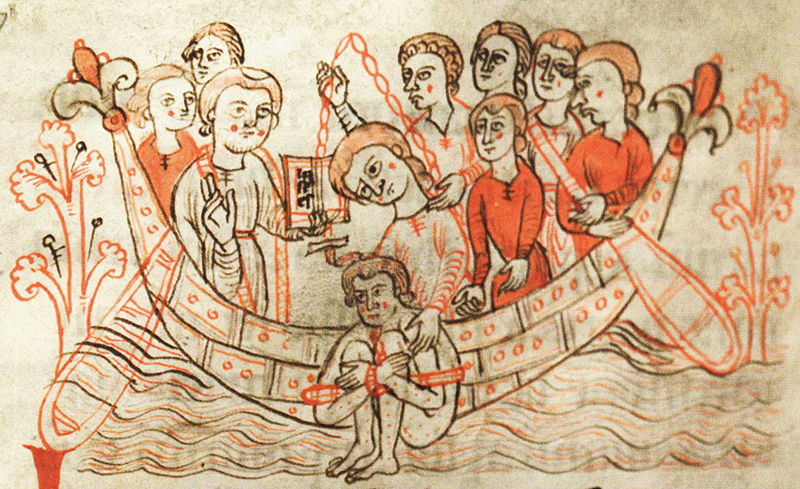


#/media/File:George_Mason.jpg "\"Have you looked inside one of my patented jars?\"")


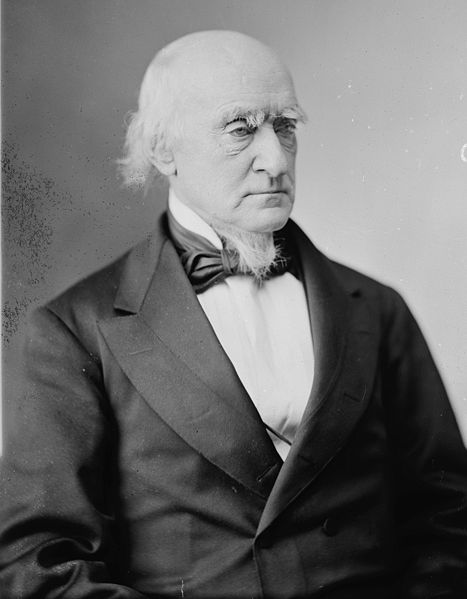
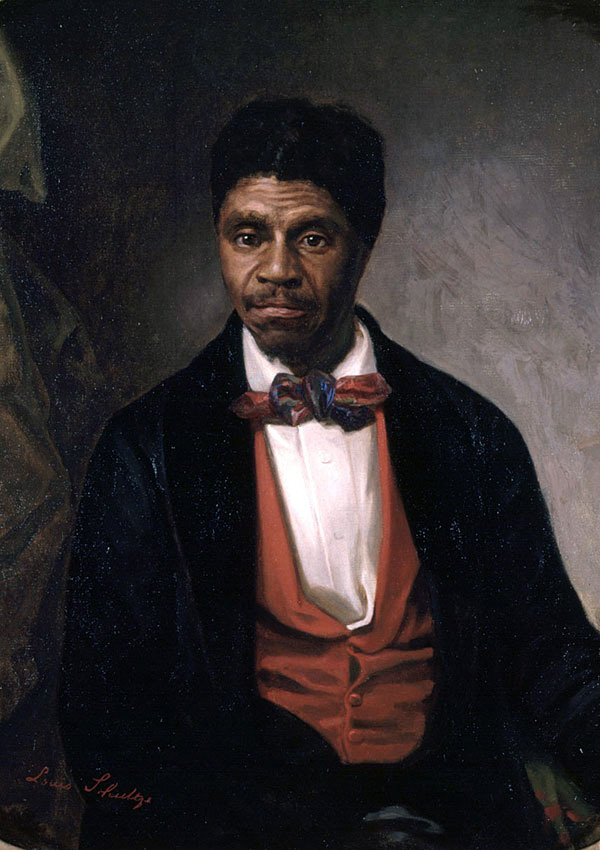
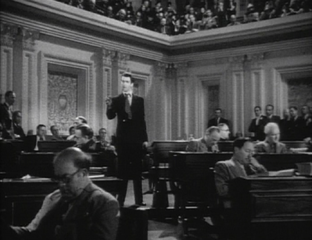

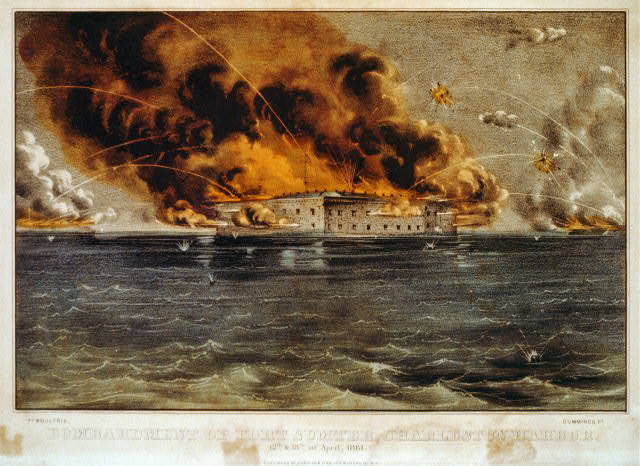






 The first place I look is a small High School in Washington D.C. that was founded in 1870 named Dunbar High School. It was the first public High School in the country devoted exclusively to educating Blacks. Its founders operated on the premise they developed after noticing the stark differences in IQ scores between northern and southern Whites. In descending order, the regional IQs in the country were northern Whites, northern Blacks, southern Whites, and lastly southern Blacks. They sought to displace the culture that southern Blacks had absorbed from their White contemporaries with that of the north.