Category: Society

  • Do you really think we are going to pay for it?

    Hold on, Mom. I’ll be there as fast as I can.

    It has been said that the Y generation is the most selfish generation there ever was. The “Selfie” generation. Yet, this is one generation that is growing up to face one of the most burdensome public debt in history.

    A few years ago, after she watched some sad sob story on some Canadian Bs Channel, my mother (boomer born in the 50’s) complained to me that old people were left alone and that none of their many children ever came to see them in their old people’s home. Now I do love my mom very much (she can still drain the life out of you with her first world problems), but yet my first thought was “Well… maybe they deserved it. Maybe they screwed up their children so bad that those children don’t care about them anymore.”

    I kind of had the same thought yesterday when I watched this clip from Molyneux.

    He makes references about Y generations kids still living in their parent’s basement, and that the reason they are stuck in their parents’s basement is because their parents had the good life while shoveling public debt down to their kids. Now their kids are stuck with the bill and can’t afford a basement by themselves anymore.

    It led me to go back to my days working in finance and check how was the dear Regime des Rentes du Quebec going. (Quebec Social Security fund if you’d prefer).

    Sad to see. I’m pretty sure it’s the same for all Social Security types of regimes around the Western World. Those Social Security schemes are going dry as we speak.

    Denouncing this as a Ponzi Scheme is no news to any of the people hanging around here. I am well aware that you won’t need any new fainting couches.

    But, knowing all we know about the snowflake generation, do the boomers still think that the Y generation, their kids, that always bring the tab to them, won’t bring the tab to them once the funds run off? Do you really think the Y are going to pay for it? The X might, but if the Y won’t, no one else will. What will you do then, at 80?

    Now it’s the thing that makes me wonder the most about all the public debt accumulation. The boomers seem to think the younger generations will subsidize their lifestyle forever. I’m just a late X, early Y, and I have agreed in my life to play the card I was dealt with, but I can tell you one thing, I don’t think the Y will.

  • Millennials and Socialism

    Joel Kotkin at the Daily Beast has a new article up about Millennials: The Screwed Generation Turns Socialist.  And they appear to be the most leftward since the Great Generation.

    In this past election, those over 45 strongly favored Trump, while those younger than that cast their ballots for Clinton. Trump’s improbable victory, and the more significant GOP sweep across the country, demonstrated that the much-ballyhooed Millennials simply are not yet sufficiently numerous or united enough to overcome the votes of the older generations.

    Yet over time, the millennials —arguably the most progressive generation since the ’30s—could drive our politics not only leftward, but towards an increasingly socialist reality, overturning many of the very things that long have defined American life. This could presage a war of generations over everything from social mores to economics and could well define our politics for the next decade.

    And some broad political generalizations ensue about the voting patterns of the existing generations.  For the sake of brevity we will skip this and get right to the meat of the article:

    Millennials’ defining political trait is their embrace of activist government. Some 54 percent of millennials, notes Pew, favor a larger government, compared to only 39 percent of older generations. One reason: Millennials face the worst economic circumstances of any generation since the Depression, including daunting challenges to home ownership. More than other generations, they have less reason to be enamored with capitalism.

    These economic realities, along with the progressive social views, has affected their voting behavior. Millennials have voted decisively Democratic since they started going to the polls, with 60 percent leaning that direction in 2012 and 55 percent last year. They helped push President Obama over the top, and Hillary Clinton got the bulk of their votes last year. But their clear favorite last year was self-described socialist Bernie Sanders, who drew more far millennial votes in the primaries than Clinton and Trump combined.

    And Socialism – everyone’s favorite zombie ideology lives on:

    Roughly half of Millennials  have positive feelings about socialist, twice the rate of the previous generation. Indeed, despite talk about a dictatorial Trump and his deplorables, the Democratic-leaning Millennials are more likely to embrace limits on free speech and are far less committed to constitutional democracy than their elders. Some 40 percent, notes Pew, favor limiting speech deemed offensive to minorities, well above the 27 percent among the Xers, 24 among the boomers, and only 12 percent among silents. They are also far more likely to be dismissive about basic constitutional civil rights, and are even more accepting of a military coup than previous generations.

    But fear not there is some hope:

    Other factors could slow the lurch to the left. There is a growing interest in third party politics, not so much Green but libertarian; 8 percent of Millennials voted for Third Party candidates, twice the overall rate. Overall, Tufts finds that moderates slightly outpace liberals, although conservatives remain well behind. Millennials, note Winograd and Hais, also dislike “top down” solutions and may favor radical action primarily at the local level and more akin to Scandinavia than Stalinism.

    As Millennials grow up, start families, look to buy houses, and, worst of all, start paying taxes, they may shift to the center, much as the Boomers did before them. Redistribution, notes a recent Reason survey, becomes less attractive as incomes grow to $60,000 annually and beyond. This process could push them somewhat right-ward, particularly as they move from the leftist hothouses of the urban core to the more contestable suburbs.

    As the old saying goes, read the article for yourself to get all of the details.  There is also a warning to the Republican Party, suggesting they abandon socially conservative ideas that offend Millennials.


    My analysis: Political generalization are often broad, and many writers assume that the parties are static and will only become fossilized as the next generational wave comes roaring in.  And maybe there is a lag in time before the voters trust an ostracized party again, one that I believe the Democrats are going through now, and the Republicans went through after Bush the Second.  Of course, Trump’s election may be a political outlier; we shall see how much he upsets the DC apple cart.  Based on past history I don’t give him much chance against the Bureaucratic State.

    Regarding Millennials – I see some of them drifting rightward as time and their incomes rise.  Some may keep their idealism, but reality has a funny way of destroying that.  Perhaps this is a chance for libertarians or even the Big-L Libertarian Party?  I have little trust in the latter, but some distant hope for the former.  We have to find ways to educate, and dare I say, gain some political leverage during this strange Trump intermezzo.  It remains to be seen whether that means the slow take-over of the Republican Party, or splitting off on our own.  Based on the current two-party dynamic, I’m guessing the first.  But if that brand image is forever tainted, then maybe a strong Libertarian party is the way to go.


  • Politically Incorrect Canadian History, Part 2: Of Manly Men and Priests

    Greetings, and welcome back to this long, meandering lecture on the history of Canada for our southern friends. When last we left off, early French attempts to colonize the New World failed spectacularly, and then they decided to take a break from the whole idea while they fought amongst themselves.

    Birth of New France (1604-1635)

    You know what Europeans love? Hats. You know what makes good hats? Beaver pelts. You know what Europe doesn’t have a lot of? Beavers. You know who does have a lot of beavers? French Canada.

    Since Cartier’s attempts at colonization failed numerous French merchants and traders have continued to trade with the native populations for beaver pelts and have attempted to establish permanent trading posts. One merchant, Pierre de Chauvin de Tonnetuit, is granted a monopoly on the fur trade by the French Crown and attempts to build a settlement at Tadoussac. Only five men survive the winter, and it’s only due to the intervention of the natives. Chauvin forfeits his rights to the fur monopoly in 1602 and dies a year later. The fur monopoly is granted to a new merchant, Aymar de Chaste, who is approached by a man called Samuel de Champlain, who requests a place on the first voyage.

    Champlain has a background that makes him extremely qualified for a position. A commoner raised in a family of mariners, he learned how to navigate and draw coastal maps at a young age. In his twenties, he served in the French Army during their religious wars, where he apparently had a reputation as an excellent marksman. In the 1590s he worked as a sailor for the Spanish, traveling to the West Indies and rigorously studying Spanish colonial ventures. When he returned to France he wrote a detailed espionage report on these ventures for King Henry IV, cementing his influence in the French court.

    Chaste hires him as an observer on the voyage run by François Gravé Du Pont, the previous captain who sailed for Chauvin’s expeditions. Du Pont and Champlain soon become bros for life, the former educating the latter on the geographical nature of the St. Lawrence River. When Champlain returns to France, he’s created a detailed map of the region and believes he can explore further than Cartier did. By 1607 merchants in favour of free trade have managed to get the French Crown to cancel the fur trade monopoly, and Champlain is hired by a former employer, Pierre Dugua de Mons, to establish a permanent colony on the St. Lawrence.

    Champlain has both studied the successes and failures of other colonial ventures and experienced his own failures trying to set up settlements in what becomes Nova Scotia for Dugua. So by 1608 he knows what he’s doing, and sails down the St. Lawrence with Du Pont to establish a settlement he calls ‘the Habitation’ with 28 men on what will become Quebec City. Champlain is sure to design the settlement with fortification in mind, building a large stockade and massive moat. Severe winters, famine and disease will continue to plague the Habitation for decades, but he has successfully set up the first permanent settlement along the St. Lawrence River. Meanwhile, far down south, some big English stupidheads have established their own permanent settlement at a place called Jamestown (it will never last, I’m sure).

    In order to avoid the mistakes of the past, as well as to ensure that the fur trade continues, Champlain begins to negotiate with the local tribes, primarily the Algonquin and Wyandot (called the Huron by the French). The natives, interested in a long-term alliance, demand that the French assist them in their war with their longstanding rivals, the Iroquois. The Iroquois are a tribal confederacy that lived in what is now upper state New York. Champlain sets out with a war party of around three hundred Huron and travels south. Having failed to find any Iroquois, most of the party disbands, leaving Champlain, two Frenchmen, and several dozen Huron. And that’s when two hundred Iroquois attack. As the battle begins, one of Champlain’s native guides points out the chiefs of the Iroquois in their formation.

    Champlain raises his arquebus and kills two of them with a single shot.

    The Iroquois, horrified by both this show of European gunpowder and Champlain’s sheer badassery, flee. Little does he know it, but Champlain’s shot is the opening salvo in the next hundred and fifty years of conflict between the French and Iroquois, a likely inevitable conflict due to the Iroquois’ later alliance with the English. Champlain goes on to also fight the Mohawk, with similar results. With their major tribal rivals pushed back the Huron and Algonquin agree to an alliance that will define early French Canada.

    Champlain travels back to New France and builds a fort and fur trading outpost on what will become Montreal. After returning to France to deal with some political upheaval and secure long-term funding for colonization (also, he has sex with a twelve-year-old, but I’m trying to write a hagiography here, so moving on) Champlain returns in 1613 and begins to explore west, into what is now Ontario. He travels the Ottawa River and later portages until he becomes the first European to reach the Great Lakes.

    Throughout this time Champlain is using his native connections and geographical knowledge to establish a long line of trade routes reaching into the interior. In order to further solidify relations with various native groups, he has been leaving young French boys with them in order for them to learn the language and the culture. These boys will become the first coureur des bois (‘Runners of the Wood’), independent interpreters and entrepreneurs that will become a key part of the French-Indian trade system. Many coureurs will intermarry into the native populations (there’s very, very few women in New France, so it’s either native women or ‘what happens in des bois, stays in des bois’) and create long-term trade alliances that will ensure the spice…err, furs will flow. The government of New France will later prefer that the trade be directly between French merchants and native groups but will find the coureurs are a vital middleman between them. Champlain himself ends up spending an extended period of time learning native customs. In 1615 while fighting the Iroquois with native allies he ends up lost after retreating. He spends three days alone, surviving in the wilderness before wintering with Huron allies.

    After returning to France once again, Champlain decides to focus on administrative matters and settles back in The Habitation. He’s managed to negotiate a peace treaty with the Iroquois, who are still reeling from his raids into their territory, and works to improve the stone fortifications of his new city. The fur trade has become an on-again-off-again monopoly based on who the king favours for the past decade, but that’s about to change. Cardinal Richelieu, the famous French statesmen, views New France as a vital colonial expansion of the French Kingdom. Thus he creates a new colonial company, the Company of One Hundred Associates, to manage the fur trade. Made up of one hundred investors, including Champlain himself, it looks like it will dominate the fur trade in the New World.

    Except then the war with England starts. Part of the broader Thirty Years War in Europe, the war gives every French and English bandit, pirate and rogue a full justification to start attacking their opponents’ settlements. In 1628 two Scottish merchants, the Kirkes, show up at The Habitation and demand Champlain’s surrender. Champlain is able to bluff them into not attacking, claiming that his gunpowder supply is “HUUUUUUUUUUUGE” and that The Habitation’s walls are “the best wall, it’s fantastic, and I got the Iroquois to pay for it”. In reality, supplies are low, and Champlain writes to both the Company and the French government for support. Unfortunately, the Kirkes intercept the message, and also take over almost the entirety of the Company’s merchant fleet, permanently damaging their revenue and ensuring their decline. Champlain is forced to surrender in 1629. Three months after a peace treaty was signed.

    Because bureaucracy is just as slow back then as it is now, it took three years before New France was returned to France per treaty obligations. Champlain, having spent the last few years in London demanding the English “give me my goddamn land back” is assigned the Lieutenant General of New France. By this point in time Champlain is basically the Governor of the colony, but due to his status as a commoner will never receive the title. Champlain would continue to administrate the new colony until his death in 1635, just as a new war with the Iroquois was breaking out.

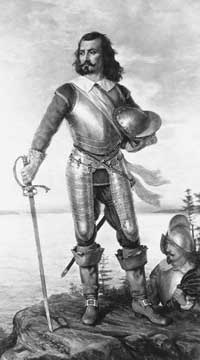
    Champlain is called ‘the father of New France’, and rightly so. For over two decades he managed to establish permanent colonies, ensure lasting diplomatic ties with the Huron and Algonquin, develop a complex and wide-reaching trading system, map most of what would become southern Quebec and Ontario, and vastly expand French influence in the region. In Canada today he has rivers, lakes, bridges, colleges, shopping malls, and a lake monster named after him. On a hill overlooking downtown Ottawa stands his statue, where teenagers like to make out. While he watches them. From beyond the grave. Smiling.


    Have You Accepted Jesus Christ Into Your Life? *Shot with arrows* (1635-1660)

    With Big Boss Sam dead, the most influential group in New France became the Catholic Church, who had been granted a great deal of land by both the French Crown and Champlain himself. The Jesuits in particular were massively expanding their operation in the region. Jesuits establish schools and chapels throughout the region and turn Champlain’s fort into an actual town called Ville Marie, the precursor to Montreal. The Jesuits in New France have come to embrace an ideal similar to the American settlers’ ‘Shining City upon a Hill’ concept. They believe that they can carve out a Catholic French-native utopia in New France.

    Since the French refused to trade with any native group who wouldn’t accept missionaries, the Jesuits could always find some souls that needed saving. The Huron, in particular, became a primary focus of the Jesuits. Huron cultural practices had, over a short two decades, become completely dependent on French goods. In addition to that, European diseases have become a major problem within their communities. Jesuit sources say that many Huron believe that the Jesuits will curse you with illness unless you convert. Unsurprisingly, conversion is not solving the problem. On top of all that, the Huron need to convert in order to acquire firearms. The Iroquois have recently begun trading with the Dutch. Being the Dutch, they’ll sell you their mother if you promise to throw in a second item for half off, so they’re giving the Iroquois firearms freely, with no requirements for conversion. This is fueling Iroquois expansion, and they have a score to settle with the Huron and the French.

    By the 1640s the Beaver Wars (stop laughing) begin again, as the Iroquois stage a large-scale invasion into Huron and Jesuit lands. They burn several Huron settlements and mission villages to the ground and capture several Jesuits. These missionaries are ritualistically tortured and then executed. For example, one missionary, Isaac Jogues, had his fingernails torn out and his fingers gnawed down to the bone. Then they forced him to run through a gauntlet of Iroquois beating him with sticks, kind of like that Klingon trial thing from Star Trek. Jogues, along with eight others, took their horrific torture like champs and as such are now the Canadian Martyrs in Catholic Church tradition.

    Most of the Jesuit missions are leveled by the Iroquois. The Jesuit influence in New France decreased substantially as a result. Later missions will have some degree of success, but sudden Indian conflicts will always hinder their operations. The Huron did not fare much better. By 1649 they begin a scorched earth policy of burning their villages and scattering as refugees into other tribes. The remaining Huron relocated to the area around Quebec City, but by this time their influence is waning. The Huron will never be a prominent force in the region again.

    Without the Huron and other tribes providing a strong buffer, the Iroquois now begin to freely attack New France. The fort at Ville Marie sits on an important strategic point on the St. Lawrence River. It is the central location of the fur trade due to its easy access to numerous inland rivers. Iroquois began to encamp along the Ottawa River and plan raids on other major settlements, such as Quebec City and a new settlement, Trois-Rivières. The natives are advising the French to use their fortresses to their advantage, but the Iroquois attacks are disrupting the fur trade. Some suggest that an offensive is needed, including the commander of Ville Marie’s militia, Adam Dollard des Ormeaux.

    Sometimes a picture says a thousand words, so I’m not going to describe how much of a badass Adam Dollard is, I’m just going to post one of his most common depictions:
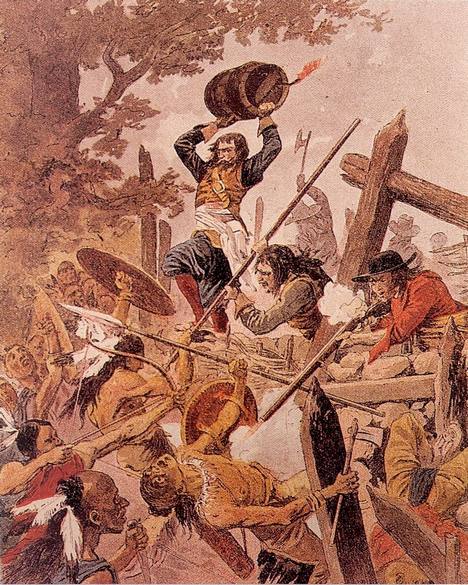
    In 1660 Dollard leaves Ville Marie with around twenty men, mostly French militia, and travels to Long Sault, where he occupies an old Algonquian fort and begins to reinforce it. Several dozen Huron show up and pledge to assist him. Shortly afterward, two hundred Iroquois in war canoes are spotted traveling down the Ottawa River. Dollard lays an ambush and attacks them, killing several and forcing the remainder to land. Retreating to his fort, the Iroquois attempt to attack and are beaten off. They attempt to parley, but Dollard is here to kill Iroquois, not talk to them and refuses. In response they destroy the French militia’s undefended canoes, cutting off their only escape route.

    The Iroquois attack the fort a second time and are repulsed again by musket fire, with one of their chiefs being killed. Dollard, being somewhat pissed about the whole canoe affair, leads some men outside of the fort, still fighting off the Iroquois, so they can cut off the chief’s head and mount it on their wall. A third attack follows that also fails. It’s at this point that another five hundred Iroquois come rolling down the river. This attack force was planning on assaulting Ville Marie, but now they’re going to go after the half-crazed white man in the fortress.

    Unfortunately for Dollard, his luck is running out. Huron slaves in the Iroquois group call out to the Hurons in the fort and tell them that if they switch sides they will be spared. The Hurons do so, but hell hath no fury like Dollard scorned, and only five of them survive the next attack. The Iroquois have begun constructing crude wooden walls to protect themselves from musket fire as they advance. With their food supply low and their major advantage now neutralized, the Iroquois attack for a fourth and final time, hacking at the walls of the fort with axes.

    The Iroquois break through, pouring into the fort. Dollard, in a final fuck-you, lights a barrel of gunpowder and tosses it at the advancing horde. But it’s not enough. The fort is swarmed and then set on fire. Any remaining Frenchmen are too wounded to try to escape and are burned alive. Iroquois desperately search the ruins for Dollard’s massive, iron balls to keep as a trophy but fail to find them. Iroquois losses are extremely heavy, and it prevents them from attacking their initial targets. To this day Dollard is seen as a heroic figure in French Canadian history.

    The Battle of Long Sault is, in many ways, a turning point for New France. Afterward, the established settlements will not be threatened by any major attacks, at least from natives. But it is still primarily a series of barely populated trading posts in the middle of vast wilderness. Following 1660, New France will undergo a transformation that will solidify it as a true colonial state in the New World.


  • Medical Mondays – “The Meaning of Fear…” (Part 1 of 2)

    The thyroid. Parathyroid. Bilateral axillary. Breasts and the areolas. Almost the entirety of the abdomen – stomach, liver, spleen, intestines, and pancreas. Rectus & tranversus abdominis. External & internal obliques. Linea alba & umbilicus. Inguine. Rectum & anus. All of these within my domain and scope of practice. I am a general surgeon, FACS; qualified in bariatrics, robot assisted and minimally invasive surgery (MIS), and primary care with emphasis on underserved rural communities. I have also been on-call for ER surgical, and served as alternate house physician for a large, privately run, Independent & Assisted Living/Skilled Nursing retirement facility. I have practiced medicine for almost 17 years, including surgical residency. With the exceptions of two teenaged food service jobs and one (mercifully brief) stint as a rental car call center rep (“Try Harder”? Whatta crock!); medicine is what I know.

    The uterus. Cervix. Fallopian tubes. Ovaries. Babies, intra and post partum. Colpus, internal and external. The kidneys. Ureters. Bladder. Testes. Urethra. My wife is also a physician; her scope of practice is just as vast, yet in very different areas. She is a dual specialised medical surgeon, trained and served at the behest of state and private medical agencies. She has been sent to many places in Eastern Europe and Asia, including cities in her ancestrally native Ukraine, Belarus, Russia (she was born in Kamchatka in Russia), and Chechnya, for medical missions (some of them in declared zones of conflict), and has practiced for a little over 13 years. Her childhood dream was to be a professional ballerina to see the world, and has worked entirely in the medical field. She was also the captain of her chess team during her medical training, and was a champion level competitor (a rather sore winner, she is; and, an exceptionally sore loser, to boot). Her father, a high ranking military officer, specifically encouraged her to study medicine as a way to serve her country without military enlistment.

    The job of a physician is very simple: To diagnose and treat disease. Simple, yet so very complex. Made even more complex by the very people we strive to help, and often worsened by those ostensibly charged to help them on their behalf, moreso those in the public sector, but the private sector can be just as frustrating. What we hope to accomplish in this series is to pull back the curtain and give you an idea of what we do and our respective points of view with regard to practice and overall ethos that informs our respective approaches to care.

    For example, I am of the firm belief that medical care is not an inherent, plenary, human right. Period. Full Stop. End of Story. I own my skills totally, and determine who and who does not receive them. This is, of course, subject to contract at the pleasure of an employer and/or third party payer, though I will inform them upfront that there are certain non-negotiable lines that simply won’t be crossed.

    My wife, who for now shall be referred to as Zhena Groovova (Жена Грувова – literally, “wife of Groovus”), her views were and are informed by the fact she has witnessed the dissolution of the Soviet Union, The Orange Revolution in 1991 (Ukraine’s Independence), and, most recently, The Maidan Revolution and subsequent Donbass Invasion in 2014 (we had the poor fortune to witness that one firsthand in Donetsk, and will most likely include medical experiences from that time). She received almost all her training in Ukraine post-independence, as when it was part of the Soviet Union, the job of the country was to make planes and tanks, grow wheat, and educate doctors and train nurses (Soviet Command Economy). She believes that basic medical care access is an inherent, plenary, human right, though the physician determines the limits of his or her labour by right of education and station.

    Suffice it to say, we do believe that, regardless of system, payment scheme, and even patient demands, we own our education and skills – there are ethical and personal lines we simply will not cross. Many of our anecdotes and reflections will stem directly from these competing philosophies.

    That said, the types of things we’ll cover in Medical Mondays and Супер Среда (Super Wednesdays) are:

    1. The lighter things, such as humorous patient anecdotes, medical education bloopers and blunders, and intra-office pranks (Of which there are legion; ever put SuperGlue on the Med Students’ pens and clipboards, or saran wrap the Charge Nurse’s desk?);

    2. “A Day in The Life,” and other fly on the wall vignettes, providing answers to the oft wondered, “Why is everything taking so long,” “Do you ever go to the bathroom,” “With all the gross stuff you see, how do you even have a sex life?” “Are your kids your personal lab rats?” “How do you get along with other doctors?” “How much sex and sleaze goes on in a hospital?”;

    3. More contemporary issues with regard to medical freedom, such as: records privacy in the digital age, licensure, billing, Charity Care, the roles of rising adjuncts like ARNPs, PAs, and Allied Health (like respiratory therapists, pharmacists, medical technologists, and paramedics/EMS), scope of practice, continuity of care, tele-medicine, robotics and autonomous bots, regulations, DNA and heredity, charting and dictation, “know-it-all-WebMD patients,” and other unique stressors for us that patients don’t ever see, and so much more from the doctor’s perspective;

    4. The much more serious side of medicine, such as how we deal with: patient deaths; stillborn births; preemies; birth defects; performing a surgical abortion; going to jail for freedom of conscience and religion; assessing possible sexual assault & completing a rape kit; industry drug abuse; being sued; the worst and most gruesome ER cases; war injuries, crimes, and pathologies; when to remove, and removal of, life support; attending patient’s funerals; having the Jonathan Kent/”Superman” moment (“All these powers, why couldn’t we save them?”) and other extremely emotionally draining, personally destructive, and unpleasant aspects of medicine, where no one asks what we feel or think, how it affects us and our psyches, or has never even given it a first thought, forget a second one. “Prick us, do we not bleed”?

    5) Solutions to the current medical care delivery woes, and how both technology and human conditions can improve it; conversely, addressing legal liability costs and concerns in this almost literal, Post Mendelian, “Brave New World.”

    What we don’t want is some run of the mill malady/cure column extolling the virtues of folk remedies (though many work, actually), nor throwing abstracts in your face a la Pub Med Ninjas. The InnerToobz is already bursting at the seams with advice columns; if you are hoping for a column on which is better, Vick’s Vap-o-Rub v. Lamisil, for toe fungus, BORING! (FTR, Vick’s is cheaper, no side effects, OTC, and takes not much longer than Lamisil. Wash and dry your feet, apply Vick’s to the cuticle for about three weeks. Trim nails as needed. Works wonders for thick, cracking toenails, too. OK, we may throw in a few tips…)

    The other thing we ask: Be respectful to us. We hope many of you will like us, some find us an absolute scream, know others will find us about the level of watching paint dry, know some will (and do already) hate us, and know most hate the systems as they are. If we see such comments such as, “PERMISSION SLIP!”, “CARTEL!”, “GUILD MAN!”, and other stuff we already know grinds your gears, we’re out, and we will take down our posts and comments with them.

    OMWC and SP, and The Founders here, gave us this forum out of the goodness of their hearts to entertain and educate, not be punching bags and pinatas. We get enough legit abuse to last many lifetimes over. We are here for you, but won’t hesitate for a second to keep you at arm’s length – the time we spend with you, is the time we could be spending treating paying patients, making filthy doctor lucre, and spending time with our three children…

    Our greatest fear, at this moment, is failing to meet your expectations.

    *Hangs Up “Out” Shingles*

    Be Well.

  • A History Of American Public Education: Part 1 of 4

    PART 1: Awakening the Progressive Giant

    I wrote a paper on the topic of public education for a class a couple years ago, which I am heavily excerpting from for this article. The main purpose is to explain some of the 19th Century factors that went into the whole-hog acceptance of compulsory public education, and a little bit of analysis of how to roll some of this back. Part 1 addresses the religious circumstances in the 19th Century that led to compulsory public school. Part 2 will address the secular circumstances leading to compulsory schooling. Part 3 addresses implementation of compulsory schooling and the effects on society. Part 4 will address long term effects and rolling back compulsory schooling.


    The Second Great Awakening


    In the early 19th century, the United States was going through a massive theological change. The nation was in the midst of the Second Great Awakening, and revivals swept the countryside. These revivals led to the growth of Methodist and Baptist evangelical denominations throughout the country. One of the doctrines of major importance in this Awakening was the doctrine of postmillennialism.

    While postmillennialism is not popular in today’s church, it was a major part of antebellum Protestant doctrine.  Postmillennialism taught that Jesus’ second coming would occur after a millennium of peace and justice, which had to be initiated by the Christians. Therefore, these evangelicals worked to root out conflict and injustice, such as slavery and moral decay. The clergy found themselves walking a fine line between destroying the unity of the nation that they believed would bring a millennium of peace and justice and actually promoting that peace and justice. If they pushed too hard on slavery, it would result in the dissolution of the Union, but if they didn’t push hard enough, there would still be societal sin in slavery.

    As it turned out, they could not achieve this balance, and the evangelicals largely took the side of the Union during the Civil War. Some ministers, however, condemned this secular and religious concept of America’s perfectibility as idolatry, and tried to steer those impulses toward the betterment of the Church. Although the Civil War and the friction between different ministerial factions slowed down the revivalist nature of the Second Great Awakening, it also laid the foundation for the Social Gospel movement of the late 19th century.

    The Social Gospel

    The Social Gospel was an evolution from the postmillennialist Second Great Awakening toward the idea that churches were responsible for social action and the eradication of societal ills. This Social Gospel was not particularly theologically deep and was primarily a codification of New England liberalism with an appeal to “teachings of Jesus.” The Social Gospel was, in a sense, a mix of the prophesies of the Bible with the burgeoning public understanding of the science of evolution and its application to societal progress.

    In order to establish the Kingdom of God on Earth, and specifically in America, Social Gospel preachers such as Baptist pastor Walter Rauschenbusch believed that the nation needed a spiritual regeneration. The initial push of the Social Gospel movement was government-neutral, but the movement evolved. By the second generation, which was defined by the temperance issue, the Social Gospel had come around to using government for its advantage. Rauschenbusch recognized the change that was afflicting his movement. He saw the tendency of the Social Gospel to drift away from its mooring and eventually secularize as they gained wider acceptance. He warned against the movement sagging down “from evangelical religion to humanitarian morality.”

    However, despite his best efforts to prevent it, the Christian-led Social Gospel already had cracks of secularism forming. The Southern Progressives united their message with the Social Gospel being preached in the South, relying on the religiosity of southerners as a connection between faith and politics.  As those sympathetic to the Social Gospel waded into secularism through the Progressive movement, they put the Christian revival and spiritual betterment of society on the back burner.  The Progressive Era had been born, a secular manifestation of the populist energy that had been created by the Social Gospel, the muckraking labor movement, and Teddy Roosevelt’s trust busting.
    The Social Gospelers were one voice among many in the Progressive movement, and the Progressives’ ideas gradually transformed away from the Social Gospel due to the “irrational hatreds of certain groups such as foreigners.” This was, in part, due to a second side of the Progressive movement, the Social Darwinists.


    (to be cont’d… Same Bat-time. Same Bat-channel.)

  • The Jerbs Curve

    (Business 101: Pretty graphs make everything better)

    Imagine, if you will, a country or city-state called Libertopia.  We have just overthrown our evil socialist masters and made a new government from scratch.  By some magic video game miracle, we don’t start with any debt, outside enemies, and have a fully functioning market-driven farming and industrial base that trades all over the world.  There will be no empty bellies in Libertopia tonight (except for the orphans who aren’t working hard enough in the monocle polishing factory).

    In my imaginary country only property owners can vote.   So after the revolution we get together, review the collected works of SugarFree, hem and haw, drink our fill of mead. and decide to go with the idea of keeping our borders closed to the nearby Outsiders.  We are, after all, a tight community with a shared background.

    What would happen?

    At first not much at all.  Business would go on as usual, and we would stay competitive with our neighbors.  But under the “nativist” model, as time goes on, domestic market limitations and labor issues start.  The heads of industry and farming may start to clamor for more talent and workers.

    The voters finally listen and get together.  After a few rounds of brandy and the feasting on deep-dish pizza, we decide to open our borders just a little bit; letting in a yearly allotment to meet our needs.  To keep things simple, these Outside workers aren’t citizens, nor do they have a vote or receive welfare (which doesn’t exist in our country, comrade!).  This “restrictionist” model, however, still causes worker shortages, especially if the economy starts heating up.

    Business is doing great – so great that more Outside workers are needed to meet demand.  Once again the voters get together, do a few squats, and finish off a keg or two.  We decide to open the borders all the way, allowing everyone who wants to come in.  After all, things are looking fantastic for business.

    But we begin to notice that the citizens are starting to get angry.  There are protests and labor strikes because they have to compete with the Outsides for jobs.

    Now what’s the point of this simplified and rather silly story?  Using the scenarios above I’m trying to minimize input variables for the idea of something like the Laffer Curve, but instead of dealing with taxation, we are touching on immigration.  I imagine such an idea has already been explored before, but hey, I’m no economist (we can tell! – ed).  This is not an economic model either, but something soft and political science-y.

    Is there an optimum rate of immigrants – we’ll call it the “Jerbs Curve” – before the citizens get resentful (the Resentment Index?) with having to compete for wages with the Outsiders?  See Chinese rail workers or the Irish immigrants as an example.  And is there a point where they get angry enough at this perceived unfairness that they revolt and put in a new leader?  Or in a real world case, have enough electoral votes to put in someone like Trump?

    If there is such a thing as a Jerbs Curve, it would only skew the line in one direction or another: adding in welfare, illegal immigration, race, identity politics, war, the state of the economy, political party dynamics, and countless other variables.

    Perhaps the conclusion to all of this, if we can make one, it is that the world is a complicated place that often defies the most simple of models. Something as dynamic as a highly populous country with millions of inputs, variations, outputs, needs, and whatnot is impossible for anyone to predict. As far as intellectual exercises go, you can create models that are perfectly logical, but do they reflect the real world at all? How would they be when implemented or exposed to the real world?

    Comments and insults are welcome.

    edited by Elspeth Flashman

  • Politically Incorrect Canadian History, Part 1: Abandon All Hope, Ye Who Enter Here

    Canada has, in the entirety of its history, gone through dramatic changes that have completely shifted its cultural and social perspective. No long standing Constitutional ideal defines Canada, its history and institutions have largely been driven by necessity, whether good or bad. Since American perceptions of Canada tend to range from this to this, these columns will be a general, not-too-serious layman’s overview of Canadian history as a whole for an American audience, touching on key elements that became grounded long-term influences on Canadian society and culture.

    Norse Colonization (985 to 1014)

    Because the Norse never really stuck around long enough to have any kind of influence on Canadian society, this is going to be the cliffnotes version:

    According to the Icelandic Vinland Sagas, in 985 AD a guy called Bjarni Herjólfsson is blown off course and sees land to the west, which he calls Vinland (he also may have picked up two shipwrecked guys, the sagas have multiple versions). He goes to Greenland and tells a guy called Leif Erikson about it, who buys his boat and sails there to set up a winter settlement (likely on the northern tip of Labrador). After exploring a bit he goes home. Four years later, his brother Thorvald shows up at his winter settlement and decides to pick a fight with some sleeping natives, starting the first European-Indian conflict. He gets shot by an arrow and dies. Everyone else leaves.

    Six years after that, a guy called Thorfinn Karlsefni, who knows about Leif’s voyage, tries to set up a permanent settlement. It does not go well. They run out of food the first winter and decide to eat a beached dead whale, causing mass illness. They also argue about who is more awesome, Thor or Jesus. Unlike Thorvald, Thorfinn is smart enough not to attack the natives, and tries to negotiate a trade deal. But then a bull shows up and scares the natives away. A few weeks later they come back and attack. The Norsemen flee when the natives throw a whistling, inflated moose bladder on a stick at them (I’m serious). Freydís, Thorfinn’s pregnant half-sister, thinks the men are being cowards, so she picks up a sword, pulls down her top and slaps her breast with it. Somehow this scares away the natives, so European steel and tits save the day. Everyone is tired of dealing with shit like this, and they go home. The only substantial contribution Thorfinn’s expedition provides is that his son Snorri is the first European born in the New World.

    All of this is based on the accounts of the Sagas, which tend to have multiple versions of the same events. There are tons of arguments amongst historians about the true extent of Norse expansion into North America and even where Vinland actually is. Some say it’s Labrador (making the Norse the first and only people to ever think Newfoundland is a paradise) while others say they expanded further into the Gulf of St. Lawrence region. Archaeological evidence is primarily based around the site at L’Anse aux Meadows, which some people argue is Erikson’s winter settlement. Recently in 2015 a new site at Point Rosee was discovered, but they’re still not entirely sure if it was a permanent settlement or a mining camp. Other more debatable evidence includes the Maine Penny, an 11th century Norse coin found in Maine.

    Regardless, the early Norse voyages did not leave any impact on Canadian society, and once the Medieval Warm Period ended and the Greenland colonies could no longer support themselves, the Norse’s ability to sail west was severely curtailed.

    Proper European Exploration (1497 to 1534)

    With the discovery of the New World by Columbus in 1492, suddenly everyone wanted to get expeditions going to see if they could find the passage to India and China that he had missed. In 1497 the English Crown funds a guy called John Cabot’s expedition to the North Atlantic. Well, his name isn’t really John Cabot, like most explorers of the period he’s actually a filthy Italian named Giovanni Caboto, but the English, like everyone else, don’t want to advertise that they’re outsourcing their work to filthy Italians. Cabot’s four journeys in the North Atlantic are actually haphazardly recorded, but we do know that he discovered land somewhere around modern day Labrador, and also found the Grand Banks fisheries.

    The banks contained so much cod that when they were actually utilized by European fishermen later on the price in Europe dropped dramatically. The discovery of the fisheries ensured that Europeans would continue to be interested in the region and explore it further. Cabot’s later journeys primarily focused on trying to find the Northwest Passage, the shipping lane that would allow trade with the Far East. The search for which will lead to many expeditions, some beneficial, others massive disasters, none of them successful. Cue the Stan Rogers.

    For most of the early 16th century the only people really exploring around the general location of Eastern Canada are the Portuguese. Portuguese fishermen utilize the Grand Banks and set up a few minor seasonal fishing outposts on Labrador. Unfortunately for them, under the Treaty of Tordesillas, it’s technically Spanish land, so they abandon it to focus on the more prosperous colonies in South America. With Spanish and Portuguese interests primarily in the south, Canada is open for whoever is willing to take it.

    Enter the French (1534 to 1604)

                    It’s 1534, and France has been making a good comeback lately. After victory in the Hundred Years War they have stabilized their country and established themselves as the military superpower of Europe, a tradition that will continue until the 19th century. With a great deal of wealth, a large army, language dominance in diplomacy and other fields, and massive population in comparison to everyone else, they were set to dominate the European continent for the next century.

    And then the Spanish start shipping over tons and tons of gold from their newly conquered subjects in the New World. Suddenly continental dominance isn’t going to cut it anymore; they need to expand outside of Europe in order to stay competitive. In 1534 French King Francis I tasks a man named Jacques Cartier (who is, surprisingly, not a filthy Italian) to find that wonderful Northwest Passage and, you know, if he happens to conquer any extremely rich savages along the way, they’re fine with that too.

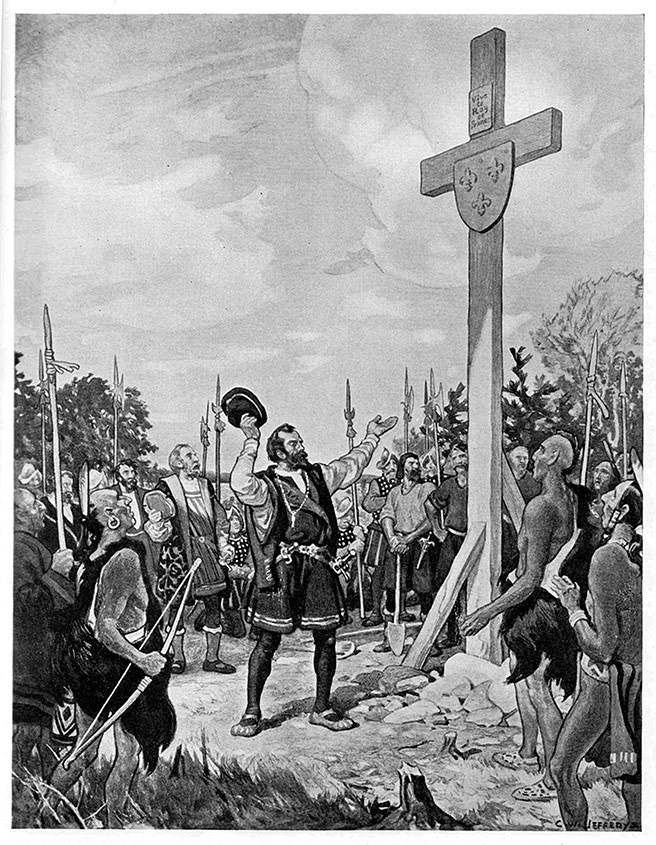
    Cartier sails into the Gulf of St. Lawrence (possibly dooming a species to extinction along the way) and goes on a general tour of what would become the Maritime provinces. He establishes contact with the local aboriginal groups, likely the Mikmaq and other tribes, who are willing to trade. On the Gaspé Peninsula he plants a cross, formally claiming the land for the kingdom of France. The local natives do not appreciate this, and then he tries to kidnap a chief’s sons, but ends up negotiating to take them back to France. The entire time he thinks he’s actually somewhere in Asia.

    Cartier’s second voyage back was more eventful. This time, he travels down the St. Lawrence River, what would become the primary shipping lane for the later Canadian interior. Cartier is convinced that this is the Northwest Passage…little does he know where it ends. He’s brought the chief’s sons back with him, and they take him to the capital of their native nation, Stadacona, a village near modern-day Quebec City. According to Cartier’s journals and this Heritage Moment, this is where the term ‘Canada’ is first used.

    Cartier continues down the river, but is stopped at the rapids near the village of Hochelaga, on the island now known as ‘downtown Montreal’. They return to Stadacona in order to wait out the winter, but have completely failed to provision food and firewood. Cartier’s ships are frozen in place by a very harsh winter that they were not prepared for. Everyone starts to get scurvy, and to make things even more miserable, the local natives start catching European diseases and dying. The natives teach the French how to use spruce to cure scurvy, and the local chief tells Cartier about a kingdom rich with gold and jewels to the north.

    So Cartier kidnaps him and brings him back to France, along with seven others (there’s a fairly consistent theme in Cartier’s voyages, can you guess what it is?). None of them ever make it back home and all but one die on the way back to France. The chief’s stories convinces Cartier that there is a great ‘Kingdom of Saguenay’ that would be ripe for the taking. By 1540 King Francis I decides that there should be an established, permanent settlement in the New World, and commissions Cartier to do it.

    But within the French court, a new privateer has gained the king’s respect. By 1541 Francis has changed the plan, and now Cartier is second in command to a Huguenot, Jean-François de La Rocque de Roberval, who is named the first lieutenant general of French Canada. Roberval has spent most of his time recently dodging executions thanks to his influence over the king, so his reason for getting out of France is probably health related. They sail to the Gulf of St. Lawrence, where Roberval decides to wait for supplies and gives permission to Cartier to continue on down the river.

    Cartier travels back down to Stadacona, where the natives are not happy to see him, for some reason. Regardless he sets up a colonial settlement nearby called Charlesbourg Royal. As they begin to try to set up fields for farming, the settlers (mostly convicts, by the way) begin to find what they think is diamonds and gold. Cartier is quite giddy, but still wants to go further down the river to see if he can find his mystical kingdom. The rapids stop him again, and he returns to the settlement to find hell breaking loose. The natives have attacked and killed a large number of settlers, and the situation seems desperate.

    So Cartier fills his ship up with diamonds and gold and heads back out to the ocean. When Cartier’s about to meet up with Roberval, he has just abandoned his sister on a deserted island, likely for financial benefits back in France. Jacques Cartier, Master Dick of French Canada, won’t be out-dicked on his own territory, so under cover of darkness he sails past Roberval’s ships and returns to France without him. Somehow he fails to kidnap Roberval’s sister on the way by.

    Almost no one in this story gets a happy ending. Cartier’s diamonds and gold turn out to be quartz and fool’s gold, and he never sails to the New World again. He dies in 1557 due to an epidemic. Roberval attempts to take over Charlesbourg, but abandons it in 1543 due to constant native attacks and lack of supply. He’s later assassinated during the start of the French Religious Wars. Roberval’s sister was rescued however, and became a bit of a minor celebrity once accounts of her story were published.

    For the next fifty years, there will be few attempts to permanently colonize French Canada, and none of them will succeed. France is going through a period of instability. The logistics, geographical knowledge, finances and a willingness to not piss off the locals simply isn’t there. If only there was some man, a manly man of integrity and ability, of both diplomatic and martial skill, a mariner with a gift for administration, to get things going again.

    Surely France won’t be able to produce one of those.

  • Psychopathic Exhibition On the Menu


    Making the rounds on the outrage circuit is this latest update into the continuing saga of Trump – Oh, What An Ass.

    ‘‘This is what it’s like to be with Trump,’’ Christie said. ‘‘He says, ‘There’s the menu, you guys order whatever you want.’ And then he says, ‘Chris, you and I are going to have the meatloaf.’’’

    The big take-away we’re supposed to have is that Trump is such dickhead. How Dare He. The choice of supper entree for an enormous fat man already the subject of one failed lap banding is none of your business, sir – he has agency, you know!

    Pardon me if I hesitated to clutch my pearls. As many times as this story has been passed from shocked ear to shocked ear, people missed what I found to be the pertinent lede to the story, which defined a damning study in character itself.

    Trump and Christie discussed the nation’s opioid epidemic during the lunch.

    Christie on Wednesday signed a series of bills he requested to address the crisis, including a five-day limit on initial prescriptions for opioids and mandating state-regulated insurance plans cover treatment.

    I’m sorry, were we discussing agency here? The agency of someone afflicted with a self-inflicted morbidity known to cause early death, disorder and severe limitations on quality of life?

    Oh yes. I went there.


    Chris Christie believes there is an opioid epidemic. Is he correct? Possibly. To what ends? His own. If the opioid epidemic were a problem for the consumers of opioids, they’d be proposing their own solutions. They might even be doing so – we don’t know, since Top Men and the mainstream media do not appear to have invited them to the discussion. But the real problem here is that Christie ate meatloaf when he might have chosen something else. Sure.

    As detailed in my earlier article, Finding the Why, humans have a talent for spotting malfunction as defined through their own worldview. We apply self-serving corrections, and then when our best-laid plans end up tattered wrecks, we blame everyone else for the failure.

    I, personally, believe Chris Christie needs to put the snacks down and take the stairs more often. I am fully confident that if he does not do so, his life will be needlessly shortened and suffer a loss of quality. I might even be right. So, tell me, America – at what point do I get to override Governor Christie’s agency in order to apply my corrections to his choices?

    In my opinion, I don’t.


    If he wants to be a great big fat bastard, that’s his problem. Nothing to do with me. But what about his elevated healthcare costs, due specifically to his bad lifestyle choices and now foisted onto the backs of taxpayers? Who, exactly, paid for Governor Christie’s surgery; the one that didn’t work?


    Red herring. If we all eat enough of them, we’ll be thin as rails. The problem isn’t that Christie has a sweetheart Cadillac healthcare plan exempted from Obamacare’s onerous health-damaging idiocies, at the expense of people who lack such privilege. The problem isn’t even that he uses this sweet privilege to rectify the self-inflicted abuse of his body. The problem is that government picks my pocket to enrich people who think lunch should be not merely free, but an all-you-can-eat buffet. Those who rob Peter to pay Paul, will always have the support of Paul.

    Is the analogy too subtle? Perhaps it is. In the abundance of articles about poor, poor Christie’s stolen agency, not one thus far to mine eyes has pointed out these astonishing parallels. Christie is upset at the loss of his own agency, while taking others’ agency away with both hands and the expectation of applause.

    Governor Christie is the very thing against which he rails. He merely has trouble seeing this clearly, since he is as convinced of his own narrative rightness as every other human on the planet. He is the good guy, because that’s what his head tells him is so.

    Being the good guy isn’t a side, a team. It doesn’t come with the proper hand-waving to paper over what you did with a thin veneer of respectability and concern. It’s an action. Those who do bad things are not the good guys. Everything from there is rationalization.

    Prediction: If an opioid epidemic exists, it will not be cured by talking at opioid consumers coupled with the proper removal of just exactly the right set of agencies from the correct people, handing that power over to some bureaucrat whose claim to fame is a bachelors degree in fine arts and a cushy job divorced from the requirement for functional results. What we’ll get then is another set of dysfunctions, and more people insistent that more money and and more power to the people who caused the new problems are the next sole best solution.
    If there is an opioid epidemic, we’d be best served to start with finding the why.

    Why are more people consuming more opioids? If consumption has reached levels causing individual health concerns, why has that individual come to the conclusion that this was the most effective cure for their pain despite the risk-reward calculation? Lest anyone labor under the delusion that only people making good and proper social normie choices make risk-reward calculations, allow me to disabuse them of that notion. Everyone makes risk-reward calculations. The man drinking himself to death knows it. This choice nevertheless appears, to his mind, to be the most effective option available. If this calculation fails to make sense, I’d suggest asking him to explain it rather than assuming we know everything about the matter and can solve that problem for him.

    Chris Christie post-surgery is still grossly obese. If you want to know why, don’t ask his surgeon; ask Christie.

    Therein lies our real solutions. Taking away the proper agencies and handing more power and money to people ill-equipped to use them will solve nothing. Such actions have, in fact, gotten us to this state of disorder and chaotic whack-a-mole with accompanying enormous and rising costs; both fiscal and societal.

    We need to start involving those who we purport to assist. Not at them and to them, but with them, will these problems be solved. Every individual has agency, and re-labeling people as sub-human and otherwise lesser-than to excuse our actions in taking away their individuality does not make us the good guys.

    It makes us psychopaths.

    The… characteristics referred to as antisocial personality in the FBI report were as follows: sense of entitlement, unremorseful, apathetic to others, unconscionable, blameful of others, manipulative and conning, affectively cold, disparate understanding of behavior and socially acceptable behavior, disregardful of social obligations, nonconforming to social norms, irresponsible. These… were not simply persistently antisocial individuals who met DSM-IV criteria for ASPD; they were psychopaths- remorseless predators who use charm, intimidation and, if necessary, impulsive and cold-blooded violence to attain their ends.

    We are eating the very people we claim to help because it feeds our narrative and increases power and money in one direction only. The stated goals are never reached, and the subjects loathe us for our efforts; this is natural, since we are not helping them, that’s just our rationalization of our bad choices. This is tribal monkey behavior with evolved vocabulary, not civilized humanity.

    Civilization is a choice. Let’s choose it.

  • Meanwhile In Canada, Motion 103 Induces Nausea

    In the aftermath of the massacre of six Muslims in Quebec City, Mississauga-Erin Mills Liberal MP Iqra Khalid tabled Motion 103 calling on the government to condemn Islamophobia. Now keep in mind, this is just a motion, not a bill. It’s just an MP using the democratic process to express an opinion. Nevertheless, it has become a leitmotif where debate about free speech is concerned in Canada. It’s worth questioning its tenets as well as the Prime Minister’s subsequent comments. If anything, it highlights why it’s rarely a good idea to formulate laws after a tragedy when emotions run higher than reason leaving itself vulnerable to unintended consequences and that protecting free speech demands eternal vigilance.

    Following her motion, Khalid unfortunately received her fair share of hate mail that would seem to confirm her position. However, if anything, it only highlights the need to protect free speech, not curb it. The messages still don’t rise for the need of such a proposal, in my view.

    Specifically the motion stipulates:

    -Recognize the need to quell the increasing public climate of hate and fear.
    -Request the heritage committee study how the government could develop a government-wide approach to reducing or eliminating systemic racism and religious discrimination, including Islamophobia.
    -Collect data to contextualize hate crime reports and to conduct needs assessments for impacted communities and present findings within 240 calendar days.

    It would be helpful if she’d clarify a couple of things. For example, how does she define ‘climate of hate and fear’?  Who will be charged with doing all this ‘contextualizing’? What’s ‘Islamophobia’ exactly? Who will guard the contextualizers?

    If the premise leading this motion into a potential Bill is clunky, what the heck does one think will happen once it’s law?

    As if this problematic (if not silly) proposal isn’t enough to send shivers down our spines, Justin Trudeau offered these illuminating words exposing his awesome dedication to free speech. CBC reports:

    “In a seven-minute response, Trudeau said fundamental rights and freedoms are enshrined in Canada’s Charter of Rights and Freedoms, but that individual rights must be balanced with others in our society. Determining the parameters is an ongoing discussion in a dynamic, successful society like ours, he said.

    Trudeau said the motion aims to address the fact there is a community that is “particularly vulnerable these days to intolerance and discrimination.”

    “You’re not allowed to call ‘Fire!’ in a crowded movie theatre and call that free speech,” Trudeau said.

    “That endangers our community. And as we saw 10 days ago in Quebec City, there are other things that can endanger our communities. And we need to stand strongly and firmly against that.”

    A little precautionary principle here, a little “save free speech from itself” there, and a dab of “protecting the vulnerable” here, and presto! Civil Nirvana!

    I’m no longer surprised – numb perhaps but not shocked – that this pretty much summarizes the general Canadian outlook on free speech. Canadians weren’t basted in notions of the First Amendment as their American cousins were in school or even afterward. If free speech is regarded as ‘quaint,’ imagine the perception of the Second Amendment.

    It just doesn’t compute. Hence, flippant musings on free speech passed off as progressive enlightened perspectives; there’s a general misguided belief we can “balance” free speech without any opportunity costs. ‘Hey, man! I didn’t mean my speech! I meant HIS speech!”

    It’s even more so with Trudeau, given his father wasn’t exactly a card carrying classical liberal. This sort of sophomoric approach to free speech, when exposed on a bigger stage than Canada, can really look, erm, second-rate at best.

    What Canadians don’t fundamentally understand is that free speech is a virtue and not a vice.

    You remove it or try to tinker with it and you’re left with the loss of individual sovereignty. Nothing more. Shutting down speech to any degree presupposes we have the answers; it suppresses self-doubt and increases misplaced self-esteem.

    It leads to assertions of it all being ‘settled’ – to borrow a flatulent term from the system, ahem, climate change crowd – so to speak. There is not a better example of a movement that has foregone tolerance and patience in the interest and spirit of debate. Does it make sense to you to hand over all your inquisitive impulses and skeptical empiricism to…Bill Nye? Are we not free to debate anything however vacuous so long as it doesn’t infringe on the civil liberty of another? It takes patience and tolerance because it’s humbling if someone challenges a prevailing world view

    It is completely alien to me how anyone would consent to allowing the government the kind of power to ‘watch over’ free speech. It’s also lazy. Rather than confront a person’s opinion by the power of argument, we ask the government merely shut down the parts we can’t be bothered to argue. After all, if the starting point is  ‘we know the truth,’ there’s no need to confront and debate. Lazy.

    What is overlooked is that being exposed to bad arguments or ideas actually enhances and strengthens our critical thinking prowess and intellectualism.

    Shutting down opinion under the threat of imprisonment, in short, isn’t liberal.

    It’s illiberal.

    It’s reactionary.

    Moving on to the specifics of his comments: there’s little evidence Muslims are facing a significant backlash – despite the tragic outlier incident witnessed in Quebec City, the hate mail received by Khalid and a recent uptick in attacks usually coming after an Islamic terrorist attack- to justify such draconian actions. Call me when things reach a ‘pogrom’ level. In fact, Jews indeed continue to be the most targeted group.

    Second, the idea that free speech can be balanced by curtailing it is an act of deception, if not outright hubris. To think we can ‘balance’ something as immeasurable as speech is just that: arrogance. Either free speech exists or it doesn’t. It should give pause that the Prime Minster basically said, ‘the feelings of a victim group comes before individual civil liberties no matter what the Charter says.’

    So why have a Charter if you plan to wipe your ass with it, I wonder?

    Does Canada have principles or not? Will it stand for freedom of expression at all cost or not? If it chooses the route (and quite frankly, it already has by the back door through the Human Rights Commission and Quebec’s language laws), then it abandons all pretences of being a nation that values freedom of speech and expression. Welcome to Canada where we cherish free speech but…

    It would be foolish, furthermore, to think this is not an example of a slippery slope. There are plenty of examples (just go to Campus Reform) to see the hideousness of what can happen if free speech isn’t vigorously defended. The natural default position of man, after all, is tyranny. Next thing you know, comedians in Germany and Canada are taken to court. Such progress we’ve made!

    It’s not like we haven’t seen how grotesque it is to take someone to court over an opinion as the cases involving Ezra Levant and Mark Steyn reveal.

    The process, as we know, is enough punishment and I can’t but think about the poor sucker who doesn’t have the kind of pull Steyn or Levant may have will see their life upended because of it.

    Count me in as one of those ‘extremists’ who doesn’t feel it’s legally, intellectually or even morally justified to destroy a person’s life for proclaiming, say, ‘Keep ’em fucken Mooslims outta m’backyird! That is, the government should not be in the business of criminalizing people for their opinions through onerous and obscene censorship laws.

    It’s bad enough that Levant – here have a look for yourself at what 1984 in 2017 looks like –  has to beg before an unelected ‘contextualizer‘ at the HRC, right? Now imagine where this can go with Motion 103 becoming law.

    And given the zeitgeist we’re experiencing in North America (if not the West as a whole), the last thing we should be doing is enabling or giving people incentives to snitch and/or lob lawsuits against one another for words.

    Next up, thought control.

    Finally, Trudeau is misinformed about not being able to yell Fire! in a theatre. In a nutshell, it’s not illegal to do so in the United States. The history of this famous analogy drawn by Justice Oliver Wendell Holmes is not what people think it is. In fact, the case whence it was born had nothing to do with fires; but it did have something to do with freedom of speech and expression.

    Though not binding, the courts got it wrong and it was eventually overturned 40 years ago but not before this trivial tripe has become a calcified Top 10 ‘go-to’ favorite tattooed into the progressive mindset. Ultimately manifesting itself along the lines of ‘You can’t yell fire in a theatre ergo you can’t make fun of Mohammed! Duh.’

    But. Bashing whites and Christians and causing property damage and violence for stuff they disagree with in general is fair game in their distorted civil order.

    Put more eloquently in The Atlantic:

    “Today, despite the “crowded theater” quote’s legal irrelevance, advocates of censorship have not stopped trotting it out as the final word on the lawful limits of the First Amendment. As Rottman wrote, for this reason, it’s “worse than useless in defining the boundaries of constitutional speech. When used metaphorically, it can be deployed against any unpopular speech.” Worse, its advocates are tacitly endorsing one of the broadest censorship decisions ever brought down by the Court. It is quite simply, as Ken White calls it, “the most famous and pervasive lazy cheat in American dialogue about free speech.”

    Sounds like you’d get just as far singing the song Fire in a theatre.

    In any event, would it have been too much to ask if Trudeau be at least up to speed on American law and legal history? It displays a rather unbecoming shallow grasp of American history if you ask me. I mean, if you can’t SJW like its the current year with up to date vapid slogans, why bother? Have some pride in your intellectual acumen, man!

    Kill Motion 103. Nothing good can come of it.

    A war on speech is doomed – condemned – to end up like the war on poverty and drugs where the families and communities are fractured to the point of dysfunction. A war on speech will eliminate good ideas and elevate bad ones leaving it exclusively in power. A war on speech is a free ticket to ‘Pass Go’ and straight into a Dark Age where the meek and weak intellectuals prevail.

    All this to bring me back to Ms. Khalid’s motion. The moment more hate speech is introduced, the more you drive it underground. Is it not better to monitor it above board? Free speech, I argue, is the best ally any person or group will ever have.

    My sister met Justin Trudeau a few years back. In a conversation over dinner she said, ‘He really is a nice person. You can tell he means well’.

    That’s the problem.

    In Justin Trudeau what we have is a walking ‘the road to hell is paved…’

    I forget the rest.


  • Rectification of Names

    子路曰、衛君待子而為政、子將奚先。子曰、必也、正名乎。子路曰、有是哉、子之迂也、奚其正。子曰、野哉、由也、君子於其所不知、蓋闕如也。名不正、則言不順、言不順、則事不成。事不成、則禮樂不興、禮樂不興、則刑罰不中、刑罰不中、則民無所措手足。故君子名之必可言也、言之必可行也、君子於其言、無所茍而已矣。

    Zi-lu said, “The ruler of Wei has been waiting for you to help him administer the government. What will you consider the first thing to be done?”

    Confucius replied, “What is necessary is to rectify names.”

    “So, indeed!” said Zi-lu. “You are wide off the mark! Why must there be such rectification?”

    Confucius said, “How uncultivated you are, Yu! A superior man, in regard to what he does not know, shows a cautious reserve. If names be not correct, language is not in accordance with the truth of things. If language be not in accordance with the truth of things, affairs cannot be carried on to success. When affairs cannot be carried on to success, proprieties and music will not flourish. When proprieties and music do not flourish, punishments will not be properly awarded. When punishments are not properly awarded, the people do not know how to move hand or foot. Therefore a superior man considers it necessary that the names he uses may be spoken appropriately, and also that what he speaks may be carried out appropriately. What the superior man requires, is just that in his words there may be nothing incorrect.”

    Analects, Book XIII, Chapter 3

    As Confucius taught, the rectification of names is the beginning of wisdom. What this means is that in order to effect change, one must have an understanding of the true nature of things; an understanding of the true nature of things comes from using the correct names for things. For example, you are a serf.

    Now, at this point, I imagine that you have straightened your shoulders, puffed out your chest and said something to the effect of “Nonsense! I am a sovereign citizen of this republic and a free man. I own me.” If this were true, then why is it required of you to notify your lord’s magistrates when traveling outside the boundaries of his manor? And if you are granted permission to travel outside of your lord’s manor and desire to return with a buxom peasant wench to wife, while we live in such enlightened times that our masters no longer exercise droit de jambage, you still must petition your lord for the privilege of cohabitation within your cottage.

    Pravo gospodina by Vasiliy Polenov, 1874.

    Why do you take umbrage at the employment of such terminology? Does it not adequately describe the state of affairs (de facto)? I suspect that some of you reading this are now protesting “we just can’t have serfs traveling between manors without oversight! How do we know that some don’t mean us harm?” Well, isn’t the entire point of the feudal contract that the serfs work their liege-lord’s land in exchange for his protection from all threats?

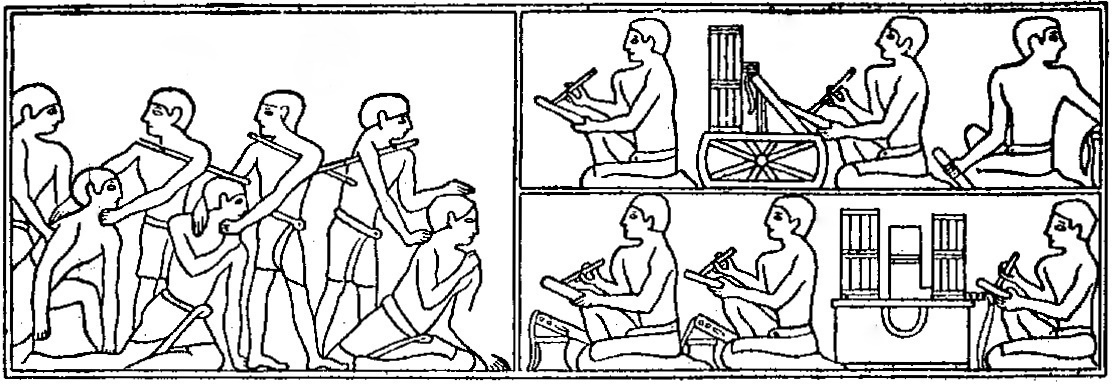
    Ok, ok! I see that my rectification of names has rankled. The present example hits too close to current fears and anxieties, and this perhaps obscures the point. So let’s turn to another feudal duty, tallage. Imagine that your lord has levied tallage upon your cottage and has sent you a notice for payment. Regardless of how well or not you have rectified names, you are aware of the consequences of not paying the tallage. First, the lord’s magistrates will send more notices for payment, and with each notice the tallage will be higher. If you still refuse to pay the tallage, the shire reeve (i.e., sheriff) will visit your cottage to demand payment. The shire reeve and his men have been deputized by their lord to take you away from your cottage and seize your property if you still refuse to pay the tallage. If you display even a modicum of resistance, the shire reeve is entitled to use as much force as necessary, up to and including deadly force, to subdue you.

    Egyptian peasants seized for non-payment of taxes (Wells, 1920).

    Now, you might not see anything wrong with this situation. After all, as a serf, you are well-fed and well-taken care of. All that I ask is that things are called by their true names.