After the newly-founded religion of the Latter Day Saints, under the leadership of Brigham Young (successor to the martyred Joseph Smith), moved to Utah, it presented the federal government with some problems, as soon as the United States had acquired the area from Mexico. Young and other Mormon leaders announced a revelation from God – Mormon men were strongly encouraged (to put it mildly) to marry multiple wives. Joseph Smith had been doing this in private but starting around 1852 the revelation was out in the open.
Mormon theologians and polemicists made clear that their “principle” – polygamy – was far superior to monogamy. The great patriarchs in the Old Testament had done it with God’s approval. Polygamous unions supposedly produced healthy children. Men with many wives were not tempted, like monogamists, to frequent prostitutes or engage in fornication or adultery, thus polygamy was an answer to these social ills.
Opponents of Mormon polygamy – whom historian Stephen Prothero calls “conservatives” although the critics included prominent feminists – denounced polygamy as barbarous, oppressive to women, and a practice which had harmed civilization in other continents.
At first the federal government’s solution to the Mormon question was to make Brigham Young the governor of Utah. After all, Utah was a federal territory, most of its settlers were Mormons, and they’d obey Young.
There was another consideration. To be sure, polygamy was problematic, but should Congress be telling the people of the territories what domestic institutions they should have? Southerners and their Northern Democratic allies said no – thinking of course of slavery. But polygamy was a domestic institution, too, so if Congress started banning it, people might get ideas about banning territorial slavery, also.
Indeed, the Republican platform in 1856 said Congress should ban polygamy and slavery in the territories, calling the two institutions “twin relics of barbarism.”
Twin relics of barbarism
Democrat James Buchanan defeated the Republican candidate, on a platform of keeping Congress from meddling in the question of territorial slavery. Buchanan did meddle with the Mormons just a little bit in Utah, to the extent of deciding that Utah wasn’t the Papal States, and the religious leader shouldn’t double as the head of the civil government. So Buchanan fired Young as civil governor and replaced him with a non-Mormon.
Mormons referred to non-Mormons as “Gentiles,” and it wasn’t meant as a compliment. Rather than submit to the Gentile governor, the Mormons launched a guerrilla war, but the rebellion was put down with the help of U. S. general Albert Sydney Johnston.
Monument to Albert Sydney Johnston in his U. S. Army uniform, sternly determined to crush all rebels against the United States…hey, wait a minute, that’s not a U. S. Army uniform!
OK, so General Johnston and a bunch of other people waged a Civil War, and for our purposes the result was that most of the Southerners left Congress, leaving a Republican majority which passed laws against both slavery and polygamy, the twin relics, in the federal territories. The Morrill Act of 1862 prescribed punishments for polygamists, but was rarely enforced. President Lincoln, though he signed the law, suggested leaving the polygamists alone, telling a folksy tale about a farmer plowing around a stump which was too big for him to remove. Or maybe Lincoln told the story about the salesman and the farmers’ three daughters – who cares what joke he told, Mormon-majority juries didn’t convict people under the law even if the local officials cared enough to prosecute.
Still, the Mormon leadership wanted a test case to show the polygamy was part of their religious freedom, protected by the First Amendment’s guarantee of the free exercise of religion. So they got a guy named Reynolds to get prosecuted and to appeal his conviction to the U. S. Supreme Court.
The Supreme Court, in Reynolds’ case, decided that Congress could ban polygamy in federal territories. There was no First Amendment right to engage in such a practice – polygamy was a blot on civilization. The true meaning of the First Amendment was spelled out in President Thomas’ Jefferson’s 1802 letter to the Danbury Baptists – the First Amendment erected “a wall of separation between Church & State.” The phrase (which isn’t in the Constitution) is fairly controversial, but for the Mormons the bottom line was that polygamy was on the state’s side of the wall, not religion’s side.
My name is Reynolds and here is my rap / They put me in prison but it is all crap / It’s wrong to put me in this dungeon / When it comes to wives I want more than one
Now it was time to put some teeth in the anti-polygamy laws. It was the 1880s, and Congress wasn’t down with Mormons marrying multiple ladies. So Congress tightened the screws in 1882 and again in 1887. Prosecuting polygamists – both for their multiple marriages and for “unlawfully cohabiting” with their surplus wives – was made easier through keeping polygamists off the juries. Gentile juries began convicting Mormon patriarchs, and the federal pen started looking crowded.
Polygamist Mormons in the federal penitentiary in Utah
Plus Congress took the vote away from many polygamists, and seized the property of the Mormon church for its defiance of the polygamy law. Some polygamists went underground, trying to evade detection from the sex police. Others went to the recently-established Mormon colonies in Mexico. While I don’t think Mexican law allowed polygamy, there wasn’t the same level of legal repression as in the United States.
Gaskell Romney with his children. Gaskell grew up in a Mormon colony in Mexico, son of a Mormon polygamist refugee from the United States (Miles Park Romney). Fourth from left is Gaskell’s son George. George would move to the United States and have an anchor baby named Mitt.
The Mormon leaders thought enough was enough. It was time for Utah to be its own state, so that under the Constitution, it would no longer be subject to federal morals laws. The Mormon leadership began a campaign to persuade the public that the whole polygamy thing was exaggerated, and that the Mormons were turning away from the practice. This wasn’t strictly true, but the Mormons had found some new friends, wealthy railway companies and railroad promoters, who were willing to spread the wealth around among newspapers and Congress members to create a favorable climate of opinion for the Mormons. If Utah ended up as a state, these railway interests expected that the government would be dominated by grateful Mormons, happy to pay back their benefactors.
To help with the public-relations campaign, boss Mormon Wilford Woodruff issued a declaration in 1890 suggesting that he would hereafter urge his flock to adhere to the federal antipolygamy laws and not to contract new polygamous marriages.
Wilford Woodruff’s house from way back when the Mormons were in Nauvoo, Illinois – before they fled to Utah. The house is now a historic site maintained by the Mormons.
The new declaration basically indicated a new determination to keep the polygamy on the down low. Men who already had multiple wives (married before 1890) would not be hassled by the church for continuing to cohabit. If men wanted extra wives after 1890, they could go to one of the Mexican settlements – there was nothing in United States law against being a polygamist in Mexico (or keeping extra wives there).
The Mormons and their allies could now claim (with some truthiness) to have gone beyond polygamy. Another step was necessary. Hitherto, the political parties in Utah had been divided between the (Mormon) People’s Party and the (Gentile) Liberal Party. The Mormon leadership decided to make Utah competitive between Democrats and Republicans, dangling before the two major parties the prospect of Senators, Congressmen, and electoral votes. It was a delicate operation, since the traditional Republican support of anti-polygamy laws made Mormons Democratic by inclination – and the leadership wanted a politically-competitive state which neither party could write off or take for granted. So the leaders sent the word out that those of the faithful who hadn’t already become Democrats should become Republicans, thus setting up the needed balance.
These various underhanded tactics worked – Congress agreed in 1894 that if Utah adopted an anti-polygamy state constitution, it could become a state in 1896. The voters complied, and the state of Utah entered the Union in 1896. Polygamy was a crime on the books, but that was a state law, and the state law wasn’t enforced with the same vigor as the old federal anti-polygamy law had been. The railroad interests were disappointed that they didn’t get the keys to the state treasury – they thought they deserved at least that much at the hands of the new Mormon-dominated government in exchange for advocating statehood. But the deed was done.
Then something happened to bring the whole polygamy issue back into unwelcome public attention.
In 1903, the Utah Legislature chose the Republican Reed Smoot for U. S. Senate. Smoot was a successful, hardworking businessman, and a monogamist. He was also one of Mormonism’s 12 Apostles – part of the top leadership of the Mormon Church, and it soon transpired that not all of the church leadership shared Smoot’s personal preference for monogamy.
The Senate provisionally gave Smoot a seat, then its Committee on Privileges and Elections held hearings on Smoot’s qualifications. The issue at hand was whether the top Mormon leadership, of which Smoot was a member, encouraged polygamy.
During about three years of hearings, it transpired that the top Mormon leadership was riddled with polygamy. President Joseph F. Smith – the boss Mormon – had several wives. The practice was still widespread.
President Smith was grilled by the Senate Committee
This was a problem because it was the Progressive era, and reforming society was the “in” thing once again. While the progressives were not so deluded and mad with power lust as to think they could simply pass morals legislation to supersede the laws of the states, there were rumblings about an anti-polygamy amendment to the U. S. Constitution. The Mormon leadership decided that it was time for the other shoe to drop. In 1890 they’d put their polygamous practices on the down-low, no longer advertising them. Now in the early 20th century they stopped polygamy for real.
Fortunately, previous Mormon criticisms of monogamy turned out to be exaggerated. When they became monogamists, Mormon men didn’t rush off en masse to the brothels. To this day, Mormon family life, while subject to imperfections and scandals like anything human, has compared favorably with family life in other communities.
Congress had banned the immigration of polygamists in 1891. In the Progressive era, they banned the advocates of polygamy from immigrating. This caused diplomatic tension with the Ottoman Empire, which was indignant at the idea that Muslims – even monogamist Muslims – might be kept out of the United States merely for believing that the Muslim faith says about polygamy sometimes being OK. In practice, there was no Muslim ban, and only those who actually called for the introduction of polygamy into the U. S. were hit with the ban. In 1990, Congress decided that advocates of polygamy could immigrate here, just so long as they weren’t polygamists themselves.
By this time, all of this had grown irrelevant to mainstream Mormonism, though one still hears of the splinter Mormon sects.
As far as the mainstream Mormons are concerned – that is, most adherents to the religion – a contemporary Mormon apologist summed up polygamy this way: “here are the facts: yes we did and no we don’t.”
As to Reed Smoot, we will meet him again, but for now let me mention the possibly-true story about Senator Boies Penrose, who allegedly said he preferred a polygamist who didn’t polyg to a monogamist who didn’t monag.
Works Consulted
Kathleen Flake, The Politics of American Religious Identity: The Seating of Senator Reed Smoot, Mormon Apostle. Chapel Hill, University of North Carolina Press, 2004.
C. Carmon Hardy, Solemn Covenant: The Mormon Polygamous Passage. Urbana: University of Illinois Press, 1992.
Edward Leo Lyman, Political Deliverance: The Mormon Quest for Utah Statehood. Urbana: University of Illinois Press, 1986.
Charles S. Peterson and Brian Q. Cannon, The Awkward State of Utah: Coming of Age in the Nation, 1896-1945. Salt Lake City: University of Utah Press, 2015.
Stephen Prothero, “The Mormon Question,” in Why Liberals Win the Culture Wars(Even When They Lose Elections). New York: HarperOne, 2016, pp. 99-137.
Thomas Cottam Romney, The Mormon Colonies in Mexico. Salt Lake City: Deseret Book Company, 1938.
Claire A. Smearman, “Second Wives’ Club: Mapping the Impact of Polygamy in U.S. Immigration Law,” Berkeley Journal of International Law
Volume 27, Issue 2, Article 3 (2009).
On October 7, 1873, the new American ambassador to Japan met emperor Mutsuhito and showed his credentials.
A high-level Japanese delegation, headed by Iwakura Tomomi, the minister responsible for foreign affairs, had in the previous month returned from a lengthy foreign journey, which had included the United States. The Iwakura Mission had sought to alert the West to Japan’s complaints about the “unequal treaties” forced on the country under the prior Japanese regime, the Shogunate.
After the United States “opened up” Japan in 1853-54, the U.S. and several European powers had negotiated treaties with the Shogun’s regime. Many Japanese patriots considered the treaties to be unfair and humiliating. In the 1860s, Japan went through a civil war. The victorious faction had overthrown the Shogunate and established the “Meiji Restoration” regime in 1868. The Meiji government, which ruled in the Emperor’s name, believed its predecessor had been too weak in the face of foreign pressure.
The new American minister plenipotentiary would adopt a conciliatory approach regarding Japan’s grievances.
John Armor Bingham
John A. Bingham was a former member of the U.S. House of Representatives, but the local leaders of Bingham’s own Republican party had denied him renomination the previous year. Bingham had left Congress under something of a cloud. He’d had dubious dealings with the crooked Crédit Mobilier company, and on his way out the door he joined his Congressional colleagues in voting themselves a retroactive pay increase (known as the “Salary Grab”). But despite some grumbling, the Grant administration and the Senate had approved him as minister to Japan.
Bingham had once been an important legislator and prosecutor when America, like Japan, was enduring civil strife in the 1860s. Bingham supported laws to conscript men, suspend habeas corpus, and to take other steps allegedly needed to win the war. During a two-year interval after he had been rejected by the voters in the Democratic surge of 1862, Bingham served as a military prosecutor. His cases included the controversial court-martial of Surgeon General William A. Hammond during the war, and the also-controversial military trial of the alleged Lincoln assassination conspirators at the war’s end.
Accused of violating the Bill of Rights with his wartime actions, Bingham replied that in the dire emergency posed by the war, civil liberties would have to be set aside.
Bingham’s constituents sent him back to the House in time for him to serve in the postwar Congress as it grappled with Reconstruction. Bingham seemed to have been chastened by his defeat in 1862 – a believer in equal rights, he’d been reminded that he could only go so far ahead of his white racist constituents. He began showing comparative caution on race – at least he was cautious in comparison to Thaddeus Stevens, whose unswerving commitment to racial equality, combined with his anger at the ex-Confederates, earned him the title “Radical.”
Thaddeus Stevens
Re-elected in 1864, Bingham became a member of the powerful committee on Reconstruction when Congress started its postwar deliberations in December 1865. Bingham wanted to keep military rule in the occupied South until the former Confederate states adopted a new constitutional amendment – the Fourteenth. Bingham would at first be content with that, without obliging the states to enfranchise the former slaves. But Bingham, and Congress, ultimately decided that the defeated Southern states would have to reorganize themselves with governments chosen by black and white voters, in addition to ratifying the new Amendment. After taking these steps, the rebellious states would be restored to the Union.
Bingham helped shape the Fourteenth Amendment, particularly its provisions about civil liberties (Sections One and Five), as expressed in language about the privileges and immunities of citizens, due process, and equal protection. Section One was “the spirit of Christianity embodied in your legislation,” Bingham assured his constituents. Concerning the evils which the amendment would prevent, Bingham said:
Hereafter the American people can not have peace, if, as in the past, states are permitted to take away the freedom of speech, and to condemn men, as felons, to the penitentiary for teaching their fellow men that there is a hereafter, and a reward for those who learn to do well.
In this and other remarks, Bingham suggested that the Fourteenth Amendment provided federal enforcement to the Bill of Rights in the states. At one point, Bingham suggested that the 1833 decision in Barron v. Baltimorehad simply denied that the feds could enforce the Bill of Rights in the states – the Court had not denied that the states were bound by the Bill of Rights. The Fourteenth Amendment would arm the federal government with the needed enforcement tools.
The Supreme Court indicated that it might ruin everything by requiring civil trials for subversive elements in the ex-Confederacy. To ensure that the U. S. military could punish ex-Confederate obstructionists without a jury trial, Bingham helped strip the Supreme Court of jurisdiction in those sorts of cases. The Supreme Court acquiesced. Bingham thought it would be time enough to allow full constitutional rights after the South had accepted the terms of Congressional Reconstruction.
When President Andrew Johnson tried to obstruct the Congressional Reconstruction program, the House impeached him. Bingham was one of the “managers” (prosecutors) in the impeachment trial, which ended with the Senate acquitting Johnson with a nailbiting margin of one vote.
With the former slaves enfranchised and the Fourteenth Amendment ratified, Congress readmitted the former Confederate states into the Union and restored civil government. Bingham kept an eye on the South, supporting the Fifteenth (voting rights) Amendment and pushing for a bill to prosecute white supremacist terrorists like the Klan. After the Klan prosecutions seemed to cripple that organization, the Reconstruction process, and the transition to a peacetime regime of full constitutional liberties, seemed complete.
Meanwhile, in the year Bingham arrived in Japan, the Japanese government took various reform and modernization measures with a view of catching up with the West. In 1873, the government, in an attempt to bolster its military, adopted conscription. Bingham would be familiar with conscription, which he pushed during the Civil War, but Japanese conscription was initiated in peacetime (though a dissident faction unsuccessfully pushed for a war in Korea in that same year).
1873 also marked Japan’s adoption of the Gregorian calendar and the legalization of the previously-banned religion of Christianity. Bingham would certainly have applauded the latter measure, even though many of the newly-legalized Christians were Catholics, not members of the zealous Presbyterian “Covenanter” denomination to which Bingham belonged. Around the same time that it made Christianity legal, the Japanese government was supervising the building of new shrines for the official Shinto religion, which focused its devotional energies on the Emperor.
As ambassador, Bingham tried to free Japan from the tentacles of the “unequal treaties”…
…agreeing in 1878 that the United States would renounce any rights under these treaties if the European powers could be induced to do so, too. Bingham wished to treat the Japanese government with respect instead of throwing his weight around and stomping through Tokyo like a giant fire-breathing lizard.
That lizard is YUUUGE!
In 1878, as Bingham was showing his willingness to get Japan out from the “unequal treaties,” the secretary to minister Iwakura Tomomi published a journal of the Iwakura Mission from a few years before. The secretary, Kume Kunitake, discussed the American part of the delegation’s journey in the first of his five volumes.
Japanese foreign minister Iwakura Tomomi with several key members of his delegation
The delegates were not exactly giddy as schoolgirls about their 1872 trip through the U. S….
What kind of image did you think I was going to put here?
They were not simply sightseers. As Kume’s official journal showed, the delegates wanted to find out what they could about the United States so that they could turn that information to good use in their own country. The publication of the journal in 1878 indicated that the Japanese public was expected to learn these lessons, too.
Readers of Kume’s journal learned that the delegation visited many Western and Northern states, with the visits to the ex-Confederacy limited to Washington’s home in Mount Vernon, VA. Perhaps they wanted to learn from the Civil War’s winners, not its losers. Delegation members studied the schools in Oakland, CA (“a famous educational centre in the western United States”), observed some Native Americans in Nevada (“Their features display the bone structure often seen among our own base people and outcasts”), visited Salt Lake City (“According to Mormon beliefs, if a man does not have at least seven wives he cannot enter Heaven”), visited Chicago in the wake of its recent fire (“said to have been the worst fire since the city was founded”), mixed sightseeing and diplomacy in Washington, D.C., where they reflected on the turbulence of the Presidential election (“Merchants forgot their calculations; women stayed their sewing needles in mid-stitch”), visited the naval academy in Annapolis, MD (“In America, women are not forbidden from entering government buildings”), went to see New York City’s Bible Society and YMCA (“We were suspicious of the tears of those who prayed before a man condemned to death for heresy, whom they acclaim as the son of a celestial king”), checked out West Point (“Those who fail are shamed before their relatives, but, on the other hand, this may serve as a spur to them”), and “attended a concert at the World Peace Jubilee and International Music Festival” in Boston (“Now the world is at peace, with not a speck of dust stirring”).
Kume’s journal frequently paused in its descriptions to inform the readers of the lessons the Japanese should learn from what was being described. After recounting how the delegates were able to hire an American company to ship packages to Japan, Kume added these reflections: “When Japanese merchants think of the West, they imagine some distant galaxy. When western merchants view the world, however, they see it as a single city. With that attitude, they cannot fail to prosper.” Recounting the death of Horace Greeley “of a broken heart” after he lost the Presidential election in 1872, Kume wrote: “This reveals how Westerners are willing to throw their whole heart into the pursuit of their convictions, and if they do not realise them, they are even willing to sacrifice their lives. Without such extreme virtue and endurance, it is hard to expect success in this world.”
Horace Greeley, before he died for honor
Kume’s account of the American Civil War also seemed to point to a moral for the Japanese to follow. After describing the strength of the proslavery forces before the war, Kume’s journal said: “Faced with such determination, the abolitionists looked into their hearts and fought harder.”
Kume described how, after the war, many black people had achieved success in business and politics, thus showing that skin color was unconnected to intelligence. After noting the surge in the establishment of black schools, Kume’s journal added: “It is not inconceivable that, within a decade or two, talented black people will rise and white people who do not study hard will fall by the wayside.” Kume was marking out a path to success for any people whom whites were trying to marginalize.
The North had won the American Civil War in the name of the supremacy of the federal government. But from the standpoint of centralized Japan, the U. S. still had broad respect for states’ rights: “With its own legislature, each state maintaining its autonomy and assumes the features of a genuine independent state within the federal union….the federal government derives its power from the states; the states are not created by the federal government.”
By 1878, when Japanese readers were reading about the lessons of the Iwakura Mission’s American travels, the U. S. had already dropped a notch or two since 1872 when it came to civil liberties. President Rutherford B. Hayes, to shore up support for his contested election victory, agreed to withdraw federal troops from the South at the very time that white terrorism was resuming against the former slaves. The Supreme Court narrowed the scope of the Fourteenth Amendment, denying it the broad liberty-affirming meaning which Bingham had once attributed to it (the process had started with the Slaughterhouse decision shortly before Bingham departed for Japan in 1873).
To nationalists like Kume and his bosses in the Japanese government, civil liberties as such were not a concern. To them, Japan could not afford much Western-style individualism. As Bingham left his post in 1885 – removed from office by an incoming Democratic administration – Japanese leaders were preparing a Constitution which did not exactly embody Bingham’s vision of peacetime civil liberties. That constitution came out in 1889, and it centered political authority in the Emperor, not in the people. Civil liberties were generally subject to being restricted by law. The one similarity with Bingham’s ideas was a provision that the Emperor could operate without regard to constitutional rights during war or “national emergency.”
After his diplomatic service, Bingham told Americans that he was impressed by Japan’s Meiji leadership. Like Bismarck (and like himself, Bingham might have added), the Japanese rulers had centralized and modernized a great country. Bingham did worry about one thing – the propensity of the Japanese leadership for foreign aggression.
In his old age, Bingham fell into poverty and was apparently deteriorating mentally. His friends in Congress proposed to award him a Civil War pension based on his wartime service as a military prosecutor. To sweeten the pill for the now-resurgent Southern Democrats, Bingham’s supporters magnified his clashes with Thaddeus Stevens, whose memory the Southern leaders execrated. Bingham, the scourge of Southern “traitors,” became, in the feel-good glow of retrospect, an apostle of moderation and kindness to the white South. The pension bill was adopted. Bingham died in 1900 at age 85.
What rescued Bingham from comparative obscurity was the debate over the meaning of the Fourteenth Amendment – specifically, the question of whether the Fourteenth Amendment required the states to obey the Bill of Rights – a doctrine known as “incorporation.” Supporters of incorporating the Bill of Rights portray Bingham as a James Madison figure who shaped the Fourteenth Amendment and whose vision was adopted by the people. Opponents of incorporation pay attention to Bingham for the purpose of minimizing his role or portraying him as legally ignorant.
One of Bingham’s key scholarly opponents was Raoul Berger, who referred to Bingham’s “sloppiness” in reasoning, and called him a “muddled thinker, given to the florid, windy rhetoric of a stump orator, liberally interspersed with invocations to the Deity.” Berger said Bingham was “utterly at sea as to the role of the Bill of Rights.”
Berger’s discussion of Bingham was included in his book Government by Judiciary, published in 1977. This book is a key event in the history of originalist Constitutional thought. The book took aim at key Warren Court’s decisions, in which the Court invoked the Fourteenth Amendment to justify remaking state laws regarding criminal justice, legislative apportionment, welfare rights, education, and so on. Berger presented evidence that the Fourteenth Amendment, if read according to intent of the framers of that amendment, did not achieve what the Warren court said it did.
Some of Berger’s claims proved highly contentious, even among his fellow originalists. For instance, Berger said that the Fourteenth Amendment was never meant to abolish segregated schools or to apply the Bill of Rights to the states.
Supporters of the Warren Court, the sort of folks who had loved Berger’s works on impeachment and executive privilege, took issue with Berger’s conclusions on the Fourteenth Amendment.
“We would like to address some disagreements we have with your work.”
Conservatives, on the other hand, liked Berger’s main points, and Berger’s book became the jumping-off point for the movement of legal originalism, which conservatives liked because it exposed the bad Supreme Court decisions they opposed as illegitimate.
Ronald Reagan’s Attorney General, Edwing Meese, took up the theme of originalism in the 1980s, including criticism of the incorporation of the Bill of Rights.
Edwin Meese (center) in 1981 In 1989, Berger doubled down on his contention that the Fourteenth Amendment does not incorporate the Bill of Rights. Berger had even more epithets for Bingham – the Congressman was “[i]ntoxicated by his own rhetoric,” his “confused utterances must have confused his listeners,” he was wrong about Barron v. Baltimore.
To many originalists, who liked much of what Berger had to say, attacking the incorporation of the Bill of Rights (and attacking the Brown decision) represented a step too far. It was one thing to criticize made-up rights like welfare rights and the right to abortion, but there was nothing made-up about the Bill of Rights or about its applicability to the states.
Bill of Rights on left, bad Supreme Court precedents on right
Berger’s claim, briefly, was that the relevant provisions of the Fourteenth Amendment had been intended to validate the Civil Rights Act of 1866. This law guaranteed that with respect to certain basic rights (like property ownership and access to the courts), all native-born citizens would have the same rights as white citizens. Thus, so long as the states had the same laws for black people as for white people, it didn’t matter whether they obeyed the Bill of Rights.
Berger’s opponents said, with John Bingham, that the Fourteenth Amendment was intended to force the states to obey at least the rights spelled out in the Bill of Rights, and maybe other rights of citizenship as well.
The debate continues.
“You’ve got your Bill of Rights in my Civil Rights Bill!” “You’ve got your Civil Rights Bill in my Bill of Rights!”
Berger, who had regarded himself as a good progressive, wasn’t sure he liked the praise he was getting from the likes of Ronald Reagan, but he did not back down, defending his work in speeches and numerous articles – and even in more books.
He died in 2000 at the age of 99.
Works Consulted
Raoul Berger, Death Penalties: The Supreme Court’s Obstacle Course. Harvard University Press, 1982.
___________, The Fourteenth Amendment and the Bill of Rights. Norman, OK: University of Oklahoma Press, 1989.
___________, Government by Judiciary: The Transformation of the Fourteenth Amendment. Cambridge, MA: Harvard University Press, 1977.
Marius B. Jansen, The Making of Modern Japan. Cambridge, MA: The Belknap Press of Harvard University Press, 2000.
Kume Kunitake (Chushichi Tsuzuki and R. Jules Young eds.), Japan Rising: The Iwakura Embassy to the USA and Europe. Cambridge: Cambridge University Press, 2009.
Walter LaFeber, The Clash: A History of U. S. – Japan Relations. New York: W. W. Norton, 1997.
Gary L. McDowell, “The True Constitutionalist. Raoul Berger, 1901-2000: His Life and His Contribution to American Law and Politics.” The Times Literary Supplement, no. 5122 (May 25, 2001): 15.
Gerald N. Magliocca, American Founding Son: John Bingham and the Invention of the Fourteenth Amendment. New York: New York University Press, 2013.
Johnathan O’Neill, Originalism in American Law and Politics: A Constitutional History.Baltimore: The Johns Hopkins University Press, 2005.
“Raoul Berger, Whose Constitution Writings Helped To Sink Nixon,” Boston Globe, reprinted in Chicago Tribune, September 28, 2000, http://articles.chicagotribune.com/2000-09-28/news/0009280256_1_executive-privilege-writings-constitutional
Gather round, young children, and I’ll tell you a tale. A tale full of treachery and intrigue, mighty heroes and dastardly villains, sung to the tune of the USA PATRIOT Act’s Section 326. A harrowing account of your intrepid author’s attempts to perform a simple act, made not-so-simple by the never-ending meddling of the federal government.
Over the last several weeks, it has been my sworn and sacred duty to set up a small business banking account for our Glibertarian enterprise. Setting up a bank account should, in theory, be an easy enough exercise. One waltzes into a bank; puts hands on hips in the lobby and demands in a loud, commanding voice, “Ho, there! I require the services of a money lender! Make haste, for I have pressing affairs to attend to with the apothecary upon the satisfactory conclusion of our business!”; gives some information; and deposits some money. That is precisely how things worked the last time I had to open a bank account.
Of course, preliminary research had to be conducted. Only one of us is actually made of money (I’ll let you try to guess who!), so the majority of my time was spent on the internet and over the phone with different institutions trying to find an actually free small business checking account. The majority advertise themselves as free, but once you get into the weeds a bit during the enrollment process, it turns out they are free only so long as you meet a variety of requirements, none of which are likely to occur with our current business model.
Pictured here: a banker
And yet, I persisted. Finally landing upon a local bank that, so far as I could tell, had actual, honest-to-Zardoz free small business checking, I gallantly sacrificed my entire lunch break to go speak with these generous merchants of monetary services. I walked into the lobby which, being the middle of a weekday, was largely empty. A thick-set manager in an off-the-rack suit quickly hurried over to me, vigorously shook my hand, and assured me that his underling would be able to attend to our needs. When asking what our business was, I explained that we run a website giving political and pop culture commentary. Why how wonderful! Did you know that the manager was a journalism major? It’s so important for there to be as many voices as possible giving great, down-the-line political commentary, to fight the nefarious tide of fake news!
Bolstered by his enthusiasm and feeling mightily proud of myself for helping to selflessly bring the hard, unvarnished truth to a grateful readership (though given some of the comments made during his rambling glad-handing, I suspect he would not have been so generous with praise if he knew the direction in which our political commentary flows), I sat down comfortably with his associate to begin the process.
Now, as you may or may not know, the leadership of our merry band is scattered across these United States. I explained that not only myself, but a handful of other individuals in various states would need to be signatories on this account. I thought this could be accomplished through digital signatures, faxes, etc. It is here that the first act closes, and the central conflict begins.
The banker looked at me with a nervous smile. “Is there any chance of your associates being able to come in to one of our branches?”
“None at all,” I replied, “and frankly I think it quite racist of you to ask*.”
“I’ll need to speak to my manager. Please excuse me for a moment.”
*thundering denunciation* “YES, YOU SPEAK WITH YOUR MASTER, VULGAR HIRELING, AND TELL HIM THAT I WOULD SPEAK WITH HIM FORTHWITH!”
Some five minutes pass in hushed consultation. There are no other customers in the bank. I nonchalantly begin to inspect the windows and doors at the edge of my vision, to plan my escape, if it turns out that my growing suspicions are true, and I have wondered into a clan of vampires or ghouls using a regional bank as a front to draw in potential victims.
Meaty Manager avalanches back across the room, with an exasperated look upon his reddened ground chuck face.
“I’m sorry, but I’m afraid we’ll not be able to meet your needs.”
“Excuse me?” I replied, momentarily dumbstruck.
“It’s the PATRIOT Act, you see…” and he then begins to tell me of a curse that the Great Tribe has laid upon he and all his kind.
In 2001 of the Western reckoning of years, as many of you may recall, our great nation was paid a friendly visit by some rather motivated Mohammedans who, through a series of peculiar mishaps, wound up killing thousands of innocent people. The immediate and predictable response to this, was for our Federal Government, Beloved by All, to pass an enormous omnibus bill full of things like indefinite detention and a host of new regulations on a wide variety of industries. If they hated us for our freedom, we had found a most ingenious method by which to defuse their wrath – simply get rid of the offending freedoms.
Fox News graphic of PATRIOT ACT, heroically standing in front of the sigil of the glorious Department of Homeland Security
In this behemoth of a law lies section 326, dealing with the establishment of what is known as a Customer Identification Program. Now before establishing accounts, banks are required to, and held liable for, making strong efforts to establish the identify of their customers. The exact methods by which they do this are left up to the individual institutions. According to the text of the act itself, it sounds easy enough to perform using only legal documents. However, Meaty Manager explained to me that practically all banks, particularly those who are only regional players and who cannot afford to buy off entire branches of government, generally are held to much tighter restrictions by their compliance departments, lest they find themselves on the wrong end of a federal inquiry. And so, without having the opportunity to actually see each of the individuals face to face and have a chat with them, they simply could not pass muster using their bank’s particular CIP rules. There was no way, you see, for them to have faith that we were not drug dealers or terrorists (he mentioned those two professions explicitly, showing an interesting creep from Fighting Terrorism to Eh, the Tool is Already There, Might As Well Use It to Fight Drugs).
Gathering what dignity remained to me, I indignantly declared to him that such was foolishness in the age of internet business, and that surely a great catastrophe (in the form of lack of growth) would befall his institution if it continued in this folly. Meaty Manager could only smile and give me a Gallic shrug, as if to suggest that, if such were the vicissitudes of fate, then he would suffer what he must.
On my way out the door, Meaty Manager did offer one piece of parting advice. He suggested to consult with a bank whose reach extends across all the lands, so that there would be outposts near any person that we decided needed official access. Perhaps then, could their identities be properly ascertained to the King’s satisfaction.
Thoroughly demoralized at this point, your dogged author decided to follow the suited mound’s advice and talk to a big bank. And so, this past Saturday morn, I found myself in the lobby of a Major National Bank. After waiting for some time, I was finally introduced to Paul**, the small business banking representative. I explained to him right away the issue I had had previously, and he agreed it was an obstacle.
There followed two hours, and I am not kidding or engaging in hyperbole there, in which I was interrogated by Paul and his Manager (I was by now convinced that every man who works in a bank has the exact same physical build). I explained more than once what our business did. I showed them the site. I explained about the concept of the Internet, and how it came to be that many different people, only a few of whom have ever met in person, can reside in different states and still all have interest in a shared venture. I was asked more than once some questions that sounded suspiciously like they were going to lead to “gotcha!” moments had I answered differently, some about drugs and some about terrorism. It was, frankly, ludicrous.
I asked why I was being treated this way. Same story, different day: PATRIOT Act, section 326. We don’t Know you. How can we Know your compatriots when they aren’t even here? Was I aware how deeply suspicious this entire thing was? Why, did I know that some young dissidents have used otherwise seemingly innocuous websites to sell the Devil’s own concoctions? What nerve had I, to come in here proclaiming my own innocence, when all of my actions so clearly speak to the contrary!
I shall not bore you with further details; suffice to say that due to some stern negotiations and my resolve to not leave without a deal in hand, one hour after the bank closed, I left with a newly established account, and a series of addendums that I could mail to my compatriots that which, upon completion in front of a notary, would then suffice to establish identity for banking purposes. You see, the Financial Crimes Enforcement Network’s FAQ on the CIP allows for a bank to rely on the good offices of a third party for purposes of establishing identity. However, the bank is held responsible if the third party’s methods are found to be insufficient or unsound. As such, few banks are willing to take such a risk. However, when it comes to dislodging an agitated libertarian from your place of business after the automatically timed overhead lights have already extinguished, it appears they were willing to make an exception.
TL;DR version: apparently starting a small business with partners in different states is now considered to essentially be drug-running or terrorism related unless and until proven otherwise. This helps to preserve our freedom after 9/11. Be grateful the King is there to see all, and to protect us from the evils that lurk in the dark.
Production poster for The Patriot Two: After the Apocalypse.
All information used to write this article that was not gleaned from my personal experience was obtained here and here, if you want to ruin your Sunday afternoon reading through it. Having already done so, I wouldn’t recommend it.
*conversations may not have occurred precisely as recounted
**names have been changed to protect the barely competent
Now that you’ve read Part One and Part Two of my discussion of the career of Raoul Berger, it’s time for the part with Nixon in it.
In the late 1960s, impeachment (accusation by the House of Representatives, followed by trial in the Senate) was thought of primarily as a means of getting rid of crooked federal judges, who could not otherwise be removed from office. Still, there had been some dramatic impeachment trials in the distant past, and there were many legal controversies left over from those trials.
One issue was the definition of “high Crimes and Misdemeanors,” the constitutional description of the grounds for impeaching members of the U. S. government. Some advocated a narrow definition, by which only the commission of an indictable crime would justify impeachment.
Professor Raoul Berger, after diving into the source material, decided that the Founders meant the term to mean something besides indictable misconduct. Any serious misconduct or official oppression by an officeholder, Berger argued, was impeachable.
Berger’s discussion went through a good many points, but let’s look at one case Berger studied: The impeachment trial of Supreme Court Justice Samuel Chase in 1805.
Samuel Chase
Conventional historiography portrayed the U. S. Senate’s acquittal of Justice Chase as a defeat for Thomas Jefferson’s Republican (now Democratic) Party and a victory for judicial independence. Had Jefferson’s Republican backers in Congress managed to remove Chase, ran the standard narrative, then other Federalist judges who stood in the way of Republican policies – people like Chief Justice John Marshall – would have been knocked down like ninepins. Only the Federalist minority in the Senate, backed by a courageous group of Republicans who put principle above party, had saved judicial independence by voting Chase Not Guilty. Such was the conventional wisdom.
Berger had a different take. He believed that the Senate should have convicted Chase and removed him from office for numerous acts of judicial oppression. None of these acts were indictable, but they were the type of official misconduct which was impeachable under the Founders’ principles, principles which a partisan minority had violated by letting Chase get away with his behavior.
Chase’s judicial misconduct, as Berger saw it, took place while Chase was presiding at trials of various enemies of the Federalist party (which held office before 1801, becoming a minority party afterward). Berger, just as Congress had in 1805, gave particular attention to the 1800 treason trial of John Fries, who is shown here:
Seriously, though, Fries (proper pronunciation: “freeze”), an auctioneer in eastern Pennsylvania, was one of the leaders of groups of discontented German-American farmers who resisted federal taxes and tax assessments on their houses and land. The 1798 house tax was graduated or, in modern terms, “progressive,” so as to impose higher burdens on wealthy homeowners. But those paranoid Germans – despite their generally moderate income – thought that higher taxes could be in the offing unless the trend was nipped in the bud. Plus, the new taxes were too reminiscent of the oppressive taxes their ancestors had faced in Germany (an early example of Godwin’s Law). Fries, a Revolutionary War veteran, rallied his supporters to drive out some of the tax assessors from his town. Then he and his forces went to demand bail for fellow-resisters who had been arrested nearby, and to insist that these defendants be tried by a local jury rather than in distant Philadelphia (about fifty miles away). When federal officials didn’t meet these demands, Fries freed the prisoners.
Auction Hero? John Fries, auctioneer and tax resister, detained some tax assessors at Enoch Roberts’s Tavern (now the Red Lion Inn) in Quakertown, PA. Fries attempted (somewhat successfully) to stop his drunken followers from beating up the tax men. Justice Chase planned to have Fries hanged in front of the tavern, but a Presidential pardon prevented that from happening.
The federal government put Fries and others on trial for treason – the trials were in Philadelphia. The first prosecution ended in a mistrial, and Chase presided at Fries’ second trial. Before he could hear from the defendant’s lawyers, Chase issued a ruling that Fries’ actions, if proven, constituted treason, and that the defense would not be allowed to argue otherwise to the jury. Fries’ lawyers withdrew from this farce of a trial, despite Chase’s efforts to walk back his behavior. Fries managed his own defense as best he could. Fries was convicted and sentenced to hang, only to be saved in the last minute when President John Adams pardoned Fries and other “rebels.” (This pardon was the final provocation which led Alexander Hamilton – who wanted Fries hanged – to break with Adams.)
Alexander Hamilton
(Incidentally, for what it’s worth, here is Murray Rothbard praising an earlier tax revolt, the Whiskey Rebellion in western Pennsylvania. Interestingly enough, Fries had served in the militia to suppress that revolt.)
Chase had engaged in oppressive behavior toward defendants in other trials, too, including the seditious libel trial of James Callender. Chase pressed, with more than judicial zeal, for Callender’s conviction for the “crime” of publishing a critical pamphlet about President Adams. (Judging from Callender’s “biography” on the Web page of the Federal Judicial Center – an agency of the federal judiciary – it seems that there may still be some hard feelings toward Callender in official circles.)
Basically, Berger portrayed Chase as a classic case of an impeachable official. Presumably, Berger hoped that the next time someone in the federal government committed comparably grave misconduct, they wouldn’t get away with it as Chase had.
By around 1971, Berger had completed work on his book, Impeachment: The Constitutional Problems. His publisher, Harvard University Press, didn’t exactly rush the book into print, delaying the publication of this boring treatise until 1973. By that time Berger had resumed his research on executive privilege in preparation for a book on that subject, Executive Privilege: A Constitutional Myth, which came out in 1974.
In the publishing industry, this is known as “good timing.”
Impeachment hit the shelves as President Richard Nixon was in the middle of the Watergate scandal, and the public eagerly bought up copies of this suddenly very relevant book. When Executive Privilege came out, that book was popular too, due to Nixon’s claim that he could withhold information from Congress and the courts. As the title suggests, Berger thought executive privilege was a myth cooked up by modern Presidents in defiance of the Founders’ intentions.
After his impeachment book came out, Berger became a popular Congressional witness for Nixon’s opponents, testifying about the legal standards for impeachment. He also testified about executive privilege, pressing Congress to have the courage to demand the necessary Watergate information from the Nixon administration, in the face of Nixon’s resistance.
The executive branch under Nixon (see alt text for punch line)
Berger was a celebrity with a message which was welcome to the media and many parts of the public: Congress had the power to investigate Nixon for abuse of power, and Nixon should be impeached. Berger appeared on a Bill Moyers special on PBS, and on Pacifica Radio.
And there was a flattering profile in the New York Times, which commenced with some really classy ethnic humor: “Raoul Berger thinks of himself as a Dutch housemaid sweeping out dark corners of the Constitution….Every few months he lays his broom aside long enough to testify before a Congressional committee, transforming himself from Dutch housemaid into Dutch uncle.”
I looked for an image of a Dutch maid, but all I found was this painting of a French kitchen maid peeling turnips
Anyway, Berger got a lot of favorable attention from the media and Congressional foes of Nixon, emboldening them in their determination to remove him from office.
(One of Berger’s stances might have been helpful to Nixon – Berger said that the U. S. Supreme Court could review impeachment cases, so that even if the Senate had convicted Nixon, Berger’s view was that Nixon could have taken the matter up to the Supreme Court. The Supreme Court itself would reject this position in 1993, in the case of another Nixon – Walter Nixon, a district judge who was impeached and removed from office. The Senate’s decision was final, said the Court.)
The end came when the U. S. Supreme Court – under Chief Justice Warren Burger, who had been appointed by Nixon…
Warren Burger
…ruled that Nixon’s claim of executive privilege would have to yield to the need of the courts for information. Shortly after that, Nixon resigned under threat of impeachment.
But as Professor Berger noted in the UCLA Law Review, the Court had simply assumed that the President possessed some level of executive privilege which might, in other circumstances (not involving Watergate) justify withholding information from the courts or Congress. Professor Berger complained that the Supreme Court had not even considered his scholarship refuting the idea of executive privilege.
But for the moment, thanks to Watergate and Nixon’s disgrace, broad constitutional claims of executive power and executive privilege were for a time discredited. As Baked Penguin has reminded me, this was the era of a strengthened Freedom of Information Act, allowing individual citizens to go to court to demand information in the custody of the executive branch. Judges, not executive officials, make the final decision about whether citizens get to see the material – though there are numerous grounds the executive can give in court for not releasing the documents (privacy, national security, etc.). (When someone does a full-blown biography of Berger, including looking at his papers at Harvard, his role in FOIA and other developments of the time can be more fully described.)
The seeds of a backlash were already being planted. Just as progressives, faced with Republican Presidents and Democratic Congresses, had become more alarmed about executive power than they had been under Democratic Presidents, so too many conservatives were reversing their former support of Congressional power and coming to see a strong Presidency as a counterbalance to a liberal Congress. In this context, conservative Yale law professor Ralph K. Winter, Jr., wrote a scathing review of Berger’s Executive Privilege. To Winter, Berger was an over-hyped academic whose views on executive privilege were not worthy of serious consideration.
Perhaps Winter grouped Berger among the leftists who (Winter believed) were trying to hamper the Presidency, now that Congressional power had become a progressive cause. To Winter, left-wingers were bitching about the growth of Presidential power because they were looking for scapegoats for the failures of the Great Society.
(Winter was later appointed to the Second Circuit court by Ronald Reagan, and in the 2000’s he served on the Foreign Intelligence Surveillance Court of Review – the FISA appeals court. In the latter position, Winter showed his sympathies with broad executive-branch surveillance. Perhaps privacy is something the President needs but not something the President has to respect when snooping on others?)
Winter’s criticism of Berger was the exception. As Nixon left office in disgrace, most of the intelligentsia and the media praised Berger for his meticulous legal scholarship and his willingness to speak truth to power.
“A toast – to a stout-hearted champion of the Constitution!”
It was time for Berger to turn to another research project. This time, he decided, he would tackle the Fourteenth Amendment.
Works Consulted
Raoul Berger, , Executive Privilege: A Constitutional Myth. Cambridge, MA: Harvard University Press, 1974.
___________, Impeachment: The Constitutional Problems. Cambridge, MA: Harvard University Press, 1973.
___________, “The Incarnation of Executive Privilege,” 22 UCLA L.R. 1 (October 1974), pp. 4-29.
Gary L. McDowell, “The True Constitutionalist. Raoul Berger, 1901-2000: His Life and His Contribution to American Law and Politics.” The Times Literary Supplement, no. 5122 (May 25, 2001): 15.
Paul Douglas Newman, Fries’s Rebellion: The Enduring Struggle for the American Revolution. Philadelphia: University of Pennsylvania Press, 2004.
Johnathan O’Neill, Originalism in American Law and Politics: A Constitutional History. Baltimore: The Johns Hopkins University Press, 2005.
Israel Shenker, “Expert on the Constitution Studies Executive Privilege,” New York Times, July 26, 1973, online at http://www.nytimes.com/1973/07/26/archives/expert-on-the-constitutionstudiesexecutive-privilege-became.html
“Raoul Berger, Whose Constitution Writings Helped To Sink Nixon,” Boston Globe, reprinted in Chicago Tribune, September 28, 2000, http://articles.chicagotribune.com/2000-09-28/news/0009280256_1_executive-privilege-writings-constitutional
“Watergate, Politics and the Legal Process,” American Enterprise Institute Round Table, March 13-14, 1974.
In Part One, we started following the life of Raoul Berger (1901-2000).
Now in Part Two, we pick up where we left off last time. We find Berger, recently widowed, in his sixties as the Sixties got started. He took a job teaching law at the University of California at Berkeley.
“Berkeley, here I come! California sun, hippies, free love, rock and roll, marijuana, taking over the dean’s office…I hope they don’t make too much noise enjoying those things while I’m at the library studying constitutional history.”
Holding his views about the importance of history to nailing down the meaning of the Constitution, Berger was now in a position to flesh out that history. He began the first of several historical research projects seeking the meaning of the Constitution as understood by those who framed and adopted it.
Berger produced a two-part article about executive privilege in the UCLA Law Review in 1964 and 1965. These articles vehemently attacked the executive privilege doctrine, both on practical grounds and on the grounds of the intent of the Framers of the Constitution.
Executive privilege is basically part of a double standard cooked up by lawyers in the Cold War executive branch. At a time when the executive branch was engaged in massive intrusions into the privacy of the American people (with or without the approval of Congress and Congress), Presidential lawyers suggested that neither Congress nor the courts could see the private and confidential records of the executive branch or obtain testimony about the executive’s affairs, unless the President approved. The justification was that, if the President’s advisers feared having their confidential advice being disclosed to Congress and the courts, it would make them timid. Welcome to the world the rest of us have to live in – a world where things we thought were private can be revealed to the government via subpoenas and snooping.
For the supporters of “executive privilege,” one of the rhetorically most effective arguments involved former Senator Joseph McCarthy (R-WI), who flourished from 1950 to 1954. As a powerful subcommittee chairman from 1953 to 1954, McCarthy had been able to subpoena various government departments (such as the Army) for testimony and documents about possible Communist infiltration and the adequacy of existing procedures for keeping Communists out of the government. When we realize that McCarthy’s subcommittee was the Permanent Subcommittee on Investigations of the Committee on Government Operations, we can see how utterly irrelevant McCarthy’s subpoenas were to anything in which Congress or the public had an interest (note the sarcasm). The Eisenhower administration had ducked and defied the subpoenas and had justified its behavior by reference to executive privilege. McCarthy’s censure in 1954 had seemed to justify the Eisenhower administration’s stance. (To be sure, the censure denounced McCarthy, not for abusing his Senate investigative powers, but for obstructing Senate committee investigations into his own conduct). Given McCarthy’s reputation as a reckless demagogue who targeted innocent people, executive privilege could be portrayed (though it was a stretch) as a necessary protection against Congressional prying into the executive branch’s affairs.
“Now, Mr. Hendrix, remembering that you are under oath, answer my questions: Are you experienced? Have you ever been experienced?”
Berger’s article said that “One who would espouse the claim of Congress to be fully informed must face up to the fact that the rampant excesses of the McCarthy Senate investigations left the process in bad odor.”
Congress had every right, said Berger, to demand information from the executive branch. The President and the bureaucracy were seeking “immunity from congressional inquiry except by executive leave.” This was wrong as a matter of policy because the executive branch had too much power already, and Congress was entitled to get information about the operation of the laws it passed and the spending of the money it appropriated. Executive privilege wasn’t necessary to protect the executive, as shown by the fact that the Kennedy administration had greatly curtailed the use of executive privilege, without any noticeable harm. The issue had not yet been settled however. The current President, Lyndon Johnson, still claimed the right to invoke executive privilege even though, like Kennedy, he was not exercising it very much. “[I]t may be doubted in light of the past, whether future successors who lack [Kennedy and Johnson’s] legislative experience will” be as deferential to Congressional demands for information.
To show the unconstitutional nature of executive privilege, Berger gave a lengthy review of “parliamentary and colonial history prior to the adoption of the Constitution, without which ‘the language of the Constitution cannot be interpreted safely.’” (the internal quotation is from this case). This history, Berger argued, demonstrated that the Constitution did not confer on the executive branch the unlimited privilege of withholding information from Congress.
“History,” Berger proclaimed, is “the traditional index of constitutional construction.” Berger did not insist that historical analysis would trump all practical considerations, but he added that there was no conflict between history and practicality when it came to the executive privilege question. “For present purposes, it suffices to regard historical evidence, not as conclusive, but as a necessary beginning upon which we can rely until, in Holmes’ phrase, ‘we have a clear reason for change.’” In a footnote, Berger reiterated his belief in the historical approach: “the Constitution was designed as a bulwark for minorities; and it can be sapped by freewheeling interpretation.” Berger commented in another footnote: “On any theory it is incompatible with the lofty role of the Constitution to ‘expand’ it as waywardly as an accordion.”
Berger’s solution was to have the courts review Congressional demands for information from Congress. This would avoid giving the final decision to the executive, and it would avoid the dangers of an opposite problem of unlimited Congressional power.
During the mid-sixties, executive privilege was a strictly back-burner subject. It was of interest to legal scholars like Berger, but as Berger himself had mentioned in his article, Presidents Kennedy and Johnson had dialed back on the exercise of the privilege. Of course, Kennedy and Johnson still insisted they had the right to block Congressional inquiries, but this sort of abstract question was not the sort of thing which would get most people excited. Certainly not in the left-progressive community, which for the moment was comfortable with the idea of broad Presidential power. With the White House occupied by Democrats who were more leftist than the Congressional leadership, progressives had no urgent need to curtail the President’s prerogatives. So they thought.
Berger left Berkeley in 1965. He ended up at Harvard, where he would become the Charles Warren Senior Fellow in American Legal History.
Harvard Gate, with its low-key, modest inscription
The fruits of Berger’s next research project came out in 1969. His work was based on a desire to find out whether judicial review – the power of federal courts to declare laws unconstitutional – was actually based in the original understanding of the Constitution. Berger also wanted to know whether Congress could limit the power of the U. S. Supreme Court to hear appeals from lower courts. In Congress v. The Supreme Court, Berger answered the first question with a yes (the original understanding justified judicial review) and the second question with a no (Congress did not have the power to limit the Supreme Court’s appellate jurisdiction).
These particular topics certainly resonated in 1969, given then-recent history. To review this history, given that my ultimate topic is the Bill of Rights, let me discuss what happened with the Bill of Rights in the 1960s, and let me in particular direct the reader to the dog that didn’t bark.
Awww…cute little doggie! Now, what was I saying?
In a series of decisions in the 1960s, the Supreme Court under Chief Justice Earl Warren said that the states were required, under the Fourteenth Amendment, to obey several provisions of the Bill of Rights from which the Court had previously exempted them.
You may remember Earl Warren as the author of a California law by which a criminal defendant’s refusal to take the stand could be considered evidence of guilt. The Supreme Court had upheld that provision in 1947, based on the idea that the states didn’t have to respect the privilege against self-incrimination. In 1964, the Supremes said that actually, the states couldn’t force criminal defendants to incriminate themselves.
(In 1965 the Supremes clarified that this made Earl Warren’s old law unconstitutional – a defendant’s refusal to testify could not be used against him. Warren did not take part in this decision due to his authorship of the law the Court was striking down).
States now had to obey the Fifth Amendment’s self-incrimination clause. States also had to obey a bunch of other clauses which had formerly been optional for them: the Sixth Amendment’s right to trial by jury, the Eighth Amendment’s ban on cruel and unusual punishments, the right to counsel (even for the poor), the Fifth Amendment’s ban on double jeopardy, and some others. By the time the Court was finished, only a few Bill of Rights provisions remained optional for the states – minor things like the Second Amendment and the grand jury clause.
If applying parts of the Bill of Rights to the states had been all the Warren Court had done, the Justices probably wouldn’t have provoked a lot of fuss. The reason that opposition to the Warren Court grew in the 1960s wasn’t because of the Bill of Rights, it was because of the Court’s controversial interpretations of the Bill of Rights.
Specifically, the court gave three controversial decisions – Escobedo v. Illinois, Miranda. v. Arizona, and United States v. Wade. Under these decisions, federal, state, county, and city cops had to follow certain standards when investigating or questioning suspects or else their police work wouldn’t hold up in court. The cops had to allow a suspect have his lawyer with him during questioning or during a post-indictment lineup. The cops had to inform a suspect of his rights, including the right not to talk to the cops at all. If the cops ignored a suspect’s newly-enunciated rights, then any confession they obtained would have to be excluded from the suspect’s trial. In the case of post-indictment lineups held without the suspect’s lawyer, a witness who had been tainted by such a lineup wouldn’t be allowed to identify the defendant in court.
These decisions may well have been the right call, but what I want to emphasize is the nature of the opposition these decisions provoked. Opponents didn’t say that it was an outrage that the Supremes imposed parts of the Bill of Rights on the states. They didn’t object in principle, they claimed, to the right against self-incrimination or the right to a lawyer. What they objected to was the broad interpretation the Supremes had given to these rights, an interpretation so broad (opponents claimed) that it improperly assisted criminals against society’s “peace forces” (to quote Richard Nixon, who began his Presidential campaign around this time). To the critics, a suspect’s confession could be perfectly voluntary even if the police hadn’t given an explicit Miranda warning in advance of questioning, and a witness who said (s)he recognized the suspect from a lineup should be able to say so in court even if the cops hadn’t allowed the suspect’s lawyer to attend the lineup.
So here is “the dog that didn’t bark.” Whether the opponents of the Warren Court were right or wrong, what irked the critics wasn’t that the Court had imposed parts of the Bill of Rights on the states. The critics simply interpreted the Bill of Rights differently than the Court did, and they claimed that the Court’s interpretation was excessively pro-defendant.
This distinction can be shown by an anti-Warren-Court proposal put forward by two influential Senators, John McClellan (D-Arkansas)
Senator John McClellan
and Senator Sam Ervin (D-North Carolina).
Senator Sam Ervin
McClellan and Ervin proposed to strip…
…the U. S. Supreme Court of its jurisdiction in certain cases. Specifically, McClellan and Ervin proposed that if a state trial court found a confession to be voluntary or decided to admit eyewitness testimony, and if a state appeals court agreed with the trial court, the U. S. Supreme Court would not have any jurisdiction to hear any challenge to the confession or the testimony (and the lower federal courts wouldn’t have jurisdiction, either). To McClellan and Ervin, this was not an attack on the Bill of Rights because properly interpreted, the Bill of Rights did not force the courts to ignore what the Senators deemed to be voluntary confessions and reliable eyewitness testimony.
(In contrast, one might question whether a confession given in police custody, by someone who hasn’t been told of their rights, is truly voluntary; one may also question whether eyewitness testimony is reliable if the witness was influenced by an unfair lineup, especially when the suspect’s lawyer wasn’t there to double-check the process. Anyway, this is a debate on the meaning of the Bill of Rights, not on its applicability to the states.)
McClellan and Ervin said their proposal was constitutional because the Constitution specifically empowered Congress to make “Exceptions” to the appellate jurisdiction of the Supreme Court.
While McClellan and Ervin failed in their attempt to limit the Supreme Court’s jurisdiction, the controversy was still in the memory of Berger’s readers in 1969. In Congress v. The Supreme Court, Berger seemed to take the side of the Warren Court against its critics. Berger’s take on the intent of the founding generation was that they fully meant the U.S. Supreme Court to be able to exercise judicial review of state and federal laws. As to attempts to strip the Supremes of jurisdiction, Berger said this was unconstitutional. His analysis of the Founders’ intent took priority over what one would think was the clear constitutional language about “Exceptions.”
In the debate over ratification, Berger explained, the “Exceptions” clause only came up with respect to the issue of jury verdicts. Opponents of the Constitution had said that the Supreme Court might arbitrarily overrule jury decisions on factual issues, and the Constitution’s supporters cited the “Exceptions” clause to show that Congress could protect jury fact-finding from Supreme Court meddling. In contrast, nothing in the ratification debates indicated that Congress would be able to close off particular legal issues from the Supremes, as McClellan and Ervin had attempted to do. Allowing such action would contradict the Founders’ concerns about the dangers of Congressional overreach and the need for judicial checks on such overreach.
Berger concluded his book by rejecting the ideas of some Warren Court supporters that the U.S. Supreme Court should serve a policy-making role. Many progressives, unable to get their favorite policies enacted in the states and Congress, rejoiced to see Earl Warren and his colleagues impose such policies on the country in the name of the Constitution. Shouldn’t an enlightened Supreme Court provide “leadership” to a country in dire need of it? Berger said no, the U. S. Supreme Court was intended by the Founders to be a strictly legal tribunal, not a policy-making body.
The progressives were willing to forgive Berger for opposing their vision of a policy-making Supreme Court. After all, didn’t Berger’s scholarship show that the Supreme Court was constitutionally protected against the reactionaries who would hobble the Court’s ability to do justice? So Berger got a good deal of praise in progressive circles.
Now Berger turned to another obscure legal topic: impeachment.
To Be Continued…
Works Consulted
Raoul Berger, Congress v. The Supreme Court. Cambridge, MA: Harvard University Press, 1969.
___________, “Executive Privilege v. Congressional Inquiry,” Part I, 12 UCLA L. Rev. 1043 1964-1965.
___________, “Executive Privilege v. Congressional Inquiry,” Part II, 12 UCLA L. Rev. 1287 1964-1965.
Adam Carlyle Breckenridge, Congress Against the Court. Lincoln, NE: University of Nebraska Press, 1970.
Carl E. Campbell, Senator Sam Ervin, Last of the Founding Fathers. Chapel Hill: University of North Carolina Press, 2007.
Richard C. Cortner, The Supreme Court and the Second Bill of Rights. Madison: University of Wisconsin Press, 1981.
Gary L. McDowell, “The True Constitutionalist. Raoul Berger, 1901-2000: His Life and His Contribution to American Law and Politics.” The Times Literary Supplement, no. 5122 (May 25, 2001): 15.
Johnathan O’Neill, Originalism in American Law and Politics: A Constitutional History. Baltimore: The Johns Hopkins University Press, 2005.
David A. Nichols, Ike and McCarthy: Dwight Eisenhower’s Secret Campaign Against Joseph McCarthy. New York: Simon and Schuster, 2017.
Israel Shenker, “Expert on the Constitution Studies Executive Privilege,” New York Times, July 26, 1973.
The Trump wiretapping scandal is back with a vengeance and you’ll want to pay close attention this time! Chairman of the House Intelligence Committee, Devin Nunes, came forward with new information involving surveillance of Trump transition team members. Nunes claims communications of Trump’s team were captured on multiple occasions, incidental to collection on foreign targets. Nunes further claims these intel reports include details about transition team members that offer “little to no foreign intelligence value.” The intelligence reports were widely disseminated in the intelligence community, and the identities of US citizens exposed during collection, were left unmasked. Finally, Nunes said none of the surveillance was related to Russia or investigations into ties between Russia and team Trump, an obvious but futile attempt to head off more Russian conspiracy theories.
My fellow Glibertarians, if this is indeed true, the significance is staggering! If you are not familiar with SIGINT collection operations you probably don’t fully appreciate what the implication is here. When signals intelligence incidentally collects information on a US citizen, it is a huge deal! The collectors must take steps to mask the identity of the US person, destroy or at least restrict any information gained from or about the US person that has little to no foreign intelligence value, and attempt to limit future collection on the US person. If Nunes is right, this didn’t happen. Whoever disseminated these intel reports never masked the Trump transition team members, included details with no relevant intelligence value, and then disseminated this information. This does not happen accidentally! I’ve seen people lose their access for far, far less.
It’s time now to put on the speculation hat and try to crack this thing wide open: If I’m President Obama and I want to dig up dirt on Trump, directly spying on him would never fly. I need a method that at least offers plausible deniability. So, I do some research and find some foreign friends of the Trump transition team; foreign persons that Trump team members have regular contact with. Next, I get a trusted intel staffer to cook up some BS accusations about these foreign targets being involved in a conspiracy or terrorism. I get my intel subordinates to present this to the FISA court, and you’re approved for surveillance! It’s easier than buying a toaster.
Next, an appropriate agency begins collection and whoops, since these foreign targets have regular contact with Trump transition team members, we just happen to incidentally collect information on them, too, but we totally weren’t intending to do that….wink, wink. This is where things fall apart for plausible deniability: If the rules are followed, the identities are masked, information is withheld, and the rest of the intel community will have no idea who the US persons were in those intelligence reports. Of course, if the rules are followed, that destroys any attempt to get dirt on Trump. So somewhere along the line, someone high up in the intel chain-of-command (most likely a director/agency head) made the call that these US citizens would remain identified in the disseminated intel reports. This was not a low-level decision!
Trump Has a Serious Intel Problem
Trump may be a master of media manipulation, but I don’t know if he fully appreciates the situation he’s in. Signals intelligence dudes illegally and improperly collected and disseminated information on his team and maybe even him. This information was probably seen by hundreds of analysts and the heads of every major US intel organization. Why the hell didn’t anyone come to Congress sooner? Sure, this looks bad for Obama, who is the probable mastermind, but it appears that a large portion of the intel community has been silent on this.
A sitting President has an intelligence powerhouse with vast surveillance powers and no qualms about blatantly illegal and unethical surveillance on the President’s own team! Trump needs to clean house and do it fast or this could get ugly. Trump’s relationship with the intel community has already been frosty, but he may have a fair number of entrenched and powerful enemies willing to go to war if it means taking him down.
This revelation also comes on the heels of FBI Director James Comey’s congressional testimony that he has “no information” to support Trump’s wiretap claims. It strains credulity if we are to believe Comey never saw these intel reports. Perhaps Comey is merely playing semantic games here, ignoring this incidental surveillance because it isn’t physical wiretapping. Either way, it doesn’t look good for Comey, and it is high time Trump gave him the ax.
The Liberal Media Playbook
This is the level of commentary you can only expect here in Glibertaria. Meanwhile, CNN’s coverage on this revolves around Nunes apologizing for not notifying Democrats of the intel before his press conference: Nunes only notified Republicans prior to the conference. Now I agree that Nunes should have briefed his Democrat committee members, but this is slow news day coverage at best. On the other hand, evidence that the former President used his powers to spy on an opposition candidate, that’s huge! But at this point, any of us could have called the news coverage a mile away.
Still, I think it’s interesting to discuss the liberal media playbook. If this is substantiated, it’s big and very bad. In the short term, they’ll continue to ignore it or downplay it like they’ve been doing. Once more details are provided, they’ll have to cover it, but I suspect the Clinton email plays will be marched back out to paint this as another unsubstantiated right-wing conspiracy theory. And with tremendous irony, they’ll fire back with their own conspiracy theories. Even if there isn’t a Russian within a light-year of this thing, liberal outlets will be wildly throwing around accusations that this is proof of a Russian conspiracy. The collection efforts were exposing those connections, contrary to Nunes’ comments, and now Republicans are trying to cover it up!
There’s one more important takeaway here: If the intelligence community willingly participated in a scheme to spy on a US Presidential candidate, what’s to stop them from doing far worse to your average US citizen? They had to realize if this got out it could be very bad for them. On the flipside, abusing your power to target a lowly US peasant, that’s easy to hide. It’s time to be paranoid folks…. very, very paranoid.
Not a real photo of Raoul Berger – scroll down and click his name to see a real photo
Charles Jones and C. A. Cecil were Jehovah’s Witnesses from Mount Lookout, West Virginia. On June 28, 1940, they came to the nearby town of Richwood. Richwood’s dominant local industries relied on harvesting the high-quality (or “rich”) wood from local forests. Jobs working wood and coal helped swell Richwood to about 4,000 inhabitants. That represented a lot of doorbells to ring and souls to save. Simultaneously with spreading their spiritual message, Jones and Cecil wanted to get signatures on a petition against the Ohio State Fair, which had cancelled its contract to host a national convention of Witnesses.
Downtown Richwood, West Virginia, 2006
Under the dictatorial direction of their boozy but efficient leader, Joseph Franklin Rutherford, the Jehovah’s Witnesses had become a society of evangelizers. All members were required to spend time spreading Christian truth to their neighbors (in time which they spared from their day jobs). Basically, as many people as possible needed to be rescued from the diabolical world system, dominated by evil governments and the “racketeering” clergy of other religious groups. The end times were imminent, or had already arrived – the exact details changed with time, but the urgency of the situation did not change. Witnesses had to descend on communities like “locusts” – Rutherford’s term – and turn people to God’s ways.
The true nature of the current wicked system must be made clear in publications, speeches, and even phonograph records. Certain sinful behavior must be shunned. In 1935, Rutherford had made clear that saluting the U. S. flag was idolatry – Rutherford compared it to the Nazi salute. (To be fair, until the end of 1942, the American flag salute was uncomfortably similar to the Nazi salute – and German Witnesses were killed or put in concentration camps for their defiance.) Young Witness men must not sign up for the draft because all Witnesses – not just the leaders – were ministers and entitled to the draft law’s exemption for clergy.
In World War I, before Rutherford took over, the antiwar teachings of the Witnesses (then called Bible Students) had been so provocative that it was persecuted in many countries including the U.S. And as a new world war was underway, Rutherford had ratcheted up the confrontation between his group and the forces of mainstream American society. A new era of persecution was dawning as mainstream American fought back in often-ugly ways.
Jones and Cecil were picked up by the police, who took them to state police headquarters, where cops and members of the American Legion (a nationalistic veterans’ group, more militant at the time than it is today) interrogated them. Martin Louis (or Lewis) Catlette was a twofer, a Legionnaire and a deputy sheriff. This sort of overlap between American Legion vigilantes and law enforcement was common in the attacks on the Witnesses.
Catlette and others accused Jones and Cecil of being spies and Fifth Columnists and gave them four hours to get out of town. The two Witnesses returned to Mount Lookout, but came back to Richwood the next day, June 29, with seven more members of their sect.
Their enemies were waiting. The Legionnaires had searched the boarding house where Jones and Cecil had stayed, finding some very suspicious items, like maps (of homes the Witnesses intended to canvass), and literature about refusing to salute the flag or serve in the military. It was time to teach these subversives a lesson.
Catlette and his Legionnaire friends got the Witnesses together in the Mayor’s office, holding them prisoner there while Richwood Chief of Police Bert Stewart guarded the door. Catlette took off his badge, proclaiming that what he was going to do would be as a private citizen, not as a law officer.
A local doctor was among the Legionnaires, and he was not very mindful of the Hippocratic Oath. He brought some castor oil, which the mob forced the prisoners to drink.
Castor oil was then considered a useful medicine for intestinal distress if administered in small doses. If given in large doses, as in this case, it induces severe diarrhea. One of the Witnesses, who got an extra dose because he tried to resist, had bloody urine.
Forced dosing with castor oil had a notorious history. Mobs in Fascist Italy often poured castor oil down the throats of political opponents or people suspected of anti-social activities, as a humiliating lesson for anyone who dared resist fascism.
The Witnesses’ ordeal was not over. Catlette and his associates tied the Witnesses’ left arms together and paraded their prisoners through the streets and tried to force them to salute the U. S. flag (with their free arms). Then the vigilante mob marched the Witnesses to their cars, which had been vandalized, and ordered them out of town again.
Incidents like this were erupting throughout the country. The Germans had just overrun France and the Low Countries, and the public was on high alert for “Fifth Columnists” – Nazi agents undermining morale in preparation for an invasion. The Witnesses aroused suspicion because of their aggressive proselytizing, their vehement denunciation of the government (and every other religion but their own), and their refusal to salute the flag. The U. S. Supreme Court had just issued an opinion that public schools could force Jehovah’s Witness pupils to salute the flag (an opinion the Court would overturn three years later, saying compulsory flag-salutes violated the Witnesses’ freedom of religion). As in many countries, both Allied and Axis, the Witnesses were considered as a subversive influence and persecuted as such.
Attorney General Francis Biddle, in 1941, publicly denounced the “cruel persecution” of the Witnesses, but his Justice Department didn’t seem to be acting against the persecutors. Indeed, the feds didn’t mind doing some persecuting of its own, prosecuting Witnesses for resisting the draft.
(And after Pearl Harbor, there was the persecution of Japanese-Americans, as well as of the prosecution of certain critics of the war – but we’re getting away from the subject, which is how concerned the U. S. Justice Department was about the rights of minorities.)
You might say that the Goddess of Justice was disarmed
In West Virginia, the local federal prosecutor, Lemuel Via, recommended against bringing charges in the Richwood case. The recently-formed Civil Rights Section of the Justice Department pressed for prosecution. By 1942, the Civil Rights Section had won out, and Via was instructed to take the case to the grand jury. Via asked the Justice Department to send one of its lawyers to assist him. This would show “that this case was being prosecuted by the Department of Justice, rather than the United States Attorney.” In other words, Via wanted to signal to the community that if it were up to him, he wouldn’t be harassing the local patriots simply for giving the Witnesses what they deserved.
So the Justice Department sent one of its recent hires, Raoul Berger, to help Via out and take the responsibility off of him.
Raoul Berger was born in 1901 in a town near Odessa, now in Ukraine but then in the Tsarist Russian Empire. The Berger family was Jewish, and there was lots of anti-Semitic agitation in the empire. Also, according to Raoul’s later recollection, his father Jesse predicted (correctly) an impending war between Russia and Japan.
So it was time to emigrate. Jesse came to the United States in 1904, initially, perhaps, without his family. In 1905, Russia experienced the predicted war with Japan, a revolution, and an anti-Jewish pogrom in Odessa.
A Jewish shop destroyed in the Odessa pogrom, 1905
This may have reinforced Jesse’s wish to bring his wife Anna, little Raoul, and his sister Esther, to the United States, which Jesse did no later than 1907 (if he had not done it already).
Jesse worked as a cigarmaker in the West Side of Chicago. He wanted his son to study engineering, but Raoul was taken with music. Raoul acquired a violin, learned some gypsy tunes, and began more formal musical studies under a private tutor. After he got out of high school, Raoul went to New York City to study at the Institute of Musical Art, now Julliard. His teacher was Franz Kneisel, a rigorous and stern instructor. Raoul later reflected on how, in studying the violin, he learned “patience and rigorous attention to detail,” which stood him in good stead throughout his life.
After an unsuccessful sojourn in Berlin to study under Carl Flesch, Berger came back to New York to finish his studies with Kneisel. Then it was on to Philadelphia to play violin for the Philadelphia Orchestra. The conductor was Leopold Stokowski, whom Berger recalled as vain and insufferable, albeit a genius.
Leopold Stokowski
Berger lasted a year under Stokowski, and then went to Cleveland to become second concertmaster of the Cleveland Orchestra, under Artur Rodzinsky.
After two years at this job, Berger got a position in Cincinnati as associate concertmaster to the conductor Fritz Reiner. With three others in the orchestra, Berger formed the Cincinnati String Quartet. In Berger’s telling, Reiner was dictatorial without the compensating advantage of genius like Stokowski.
Fritz Reiner
Around this time, Berger stopped being a professional musician and started looking around for another line of work. Berger’s son Carl, in a brief account of his father’s musical career, suggests that there may have been financial considerations: Berger’s new wife was the daughter of a big-shot doctor, and Berger may have wanted to give his bride a better lifestyle than a Depression-era violinist could afford. By Berger’s own account, the problem wasn’t money, but the dictatorial conductors he worked under, which led him to reconsider his musical career choice.
After the sight of a dissecting room scared him away from medicine, Berger went to law school at Northwestern and Harvard. At Harvard he was a student of Felix Frankfurter, who remained as a mentor figure after Berger’s graduation.
Felix Frankfurter
With excellent credentials, the new attorney tried to get a position in a big law firm, but none of them would hire him because he was Jewish. The firms he applied to had either filled their Jewish quota, or their quota was zero. Not even the intervention of Felix Frankfurter helped.
Fortunately, the head of the Securities and Exchange Commission (SEC) was a friend of the dean at Northwestern, so Berger began working as a government attorney. The Department of Justice hired Berger away from the SEC, and now they dropped the Richwood castor-oil case in his lap. Berger later said, probably correctly, that his bosses didn’t like this case, and expected to lose, so they handed it off to Berger who was the “low man on the totem pole.”
OK, fine, here’s the real Felix Frankfurter
Berger took the case to the grand jury. The Jehovah’s Witness victims testified about what happened to them. In a memorandum, Berger described how the grand jurors responded with hostile questions “about the particulars of their religion, their refusal to bear arms, their invasion of Richwood in search of ‘trouble.’” No indictments were forthcoming.
Since the grand jury refused to indict Catlette and Stewart, felony charges were not an option. Instead, the prosecutors filed an information charging Catlette and Stewart with the misdemeanor of denying the Witnesses’ civil rights “under color of law.” By seizing and mistreating the Witnesses, the charges said, the two lawmen had violated the Witnesses’ rights under the Fourteenth Amendment of the U. S. Constitution, including “the exercise of free speech”…
…and the right “to practice, observe and engage in the tenets of their religion.”
U. S. Supreme Court precedent at the time held that the First Amendment rights of free speech and free exercise of religion were also protected by the Fourteenth Amendment, and thus could not be violated by state officials. The Supreme Court had exempted the states from most of the Bill of Rights, but not from these key provisions.
(The charges also said that the defendants’ behavior had violated due process and equal protection, which are specifically protected by the Fourteenth Amendment.)
The trial was held in early June 1942 in Charleston, WV. Federal District Judge Ben Moore presided. In his argument to the jury, as Berger later summarized it, “I played one string” – American boys were overseas fighting Mussolini, and these defendants were engaging in Mussolini-style behavior right here in the United States.
The jury gave its verdict: Both defendants were guilty.
Catlette was sentenced to a year in prison and a $1,000 fine. Stewart got away with a $250 fine, which he paid. Catlette appealed his conviction to the federal Fourth Circuit court. Berger helped argue the appeal on the government’s behalf.
While Berger was fighting to keep Catlette in prison, the University of Chicago Law Review published an article Berger had written in his private capacity. The U. S. Supreme Court had just given an opinion saying the public had a broad right to criticize judges, a right which neither the federal government nor the states could take away. In his article, Berger indicated that he was sympathetic to a broad vision of free speech, but – in an elaborate historical analysis – Berger argued that the historical meaning of the First Amendment allowed judges to punish their critics.
Speaking as a good New Deal liberal, Berger was glad that the Court was no longer imposing economic liberty on the country in the name of constitutional rights. These discredited conservative precedents (as he saw them) had led to “a generation of sweated labor and unchecked industrial piracy” from which the country was just recovering. But now that New Dealers controlled the Supreme Court, would they impose their left-wing activism on the constitution the way earlier courts had (allegedly) practiced right-wing activism? ” [I]t is easier to preach self-restraint to the opposition than to practice it oneself,” Berger reminded leftists.
What the Supreme Court ought to do, wrote Berger, was adhere strictly to the historical meaning of the Constitution, even if this sometimes produced results leftists disliked. Some advocates of judicial activism said judges should adapt the Constitution to modern circumstances. But “an ‘unadapted’ Constitution may be the last refuge of minorities if a national Huey Long comes to power.” (To Berger, it was Long, not FDR, who served as an example of a tyrannical populist demagogue.)
And in a foretaste of things to come, Berger included a brief footnote in his article noting the Supreme Court’s inconsistency on whether the First Amendment even applied to the states.
For now, though, Berger was seeking to apply the First Amendment to the states by locking up Martin Catlette.
In January 1943, the Fourth Circuit upheld Catlette’s conviction, rejecting Catlette’s claim that by removing his badge he had turned himself into a private citizen and was not acting “under color” of state law as the charges against him alleged.
The judges made short work of Catlette’s efforts to dodge responsibility:
We must condemn this insidious suggestion that an officer may thus lightly shuffle off his official role. To accept such a legalistic dualism would gut the constitutional safeguards and render law enforcement a shameful mockery.
We are here concerned only with protecting the rights of these victims, no matter how locally unpalatable the victims may be as a result of their seeming fanaticism. These rights include those of free speech, freedom of religion, immunity from illegal restraint, and equal protection, all of which are guaranteed by the Fourteenth Amendment.
The conviction of Catlette and Stewart represented the only successful prosecution in the country of anti-Witness vigilantism.
Catlette served his sentence in the Mill Point, WV, federal prison camp. As befitted someone who had only been convicted of a misdemeanor, Catlette did not live under a very harsh prison regime. Maureen F. Crockett, daughter of the prison’s parole officer, later wrote:
The minimum-security prison on top of Kennison Mountain had no locks or fences, and minimal supervision. Inmates stayed inside the white posts spaced every 40 feet around the perimeter. Escape was as easy as strolling into the nearby woods, but the staff took a head count every few hours. During the [twenty-one] years it was open, the prison had only 20 escapes.
Local lore says so few prisoners left because they thought the local woods were haunted.
For whatever reason, Catlette did not run off. He served eleven months of his twelve-month sentence before being paroled (and the court excused him from paying the fine). During his incarceration, he probably had the chance to meet some of the convicted draft resisters who were entering Mill Point at this time, including Jehovah’s Witnesses.
Berger continued his career as a government lawyer. His jobs included working at the Office of the Alien Property Custodian.
After his stint in government service, Berger went into private practice.
In 1958, Berger was devastated by the death of his wife. He considered what to do with the rest of his life. Perhaps, he thought, he could return to being a musician. He went to Vienna and gave a violin performance.
To illustrate the idea of Vienna, here are some Vienna sausages
As Berger told it, he was deterred from resuming his musical career when he read a review in the Vienna press, saying that he played the violin very well…for a lawyer.
Berger began a new career as a law professor. Eventually, his research would lead him to the conclusion that the states did not have to obey the Bill of Rights.
How would Martin Catlette react if he knew that one of the prosecutors who sent him to prison for violating freedom of speech and religion would later claim the states were exempt from the Bill of Rights?
But before Berger got to that point, he had a date with destiny in the form of a crooked President.
Works Consulted
Cecil Adams, “Did Mussolini use castor oil as an instrument of torture?” A Straight Dope classic from Cecil’s store of human knowledge, April 22, 1994, http://www.straightdope.com/columns/read/965/did-mussolini-use-castor-oil-as-an-instrument-of-torture
Raoul Berger, “Constructive Contempt: A Post-Mortem,” University of Chicago Law Review: Vol. 9 : Iss. 4 , Article 5 (1942).
Available at: http://chicagounbound.uchicago.edu/uclrev/vol9/iss4/5
James Penton, Apocalypse Delayed: The Story of Jehovah’s Witnesses (Third Edition). Toronto: University of Toronto Press, 2015.
Shawn Francis Peters, Judging Jehovah’s Witnesses: Religious Persecution and the Dawn of the Rights Revolution. Lawrence: University Press of Kansas, 2000.
Chuck Smith, “Jehovah’s Witnesses and the Castor Oil Patriots: A West Virginia Contribution to Religious Liberty,” West Virginia History, Volume 57 (1998), pp. 95-110.
_________, “The Persecution of West Virginia’s Jehovah’s Witnesses and the expansion of legal protection for religious liberty,” Journal of Church and State 43 (Summer 2001).
Note – There’s a Martin Lewis Catlette (1896-1965) buried in the Richwood Cemetery. I can’t say for sure if this is the same person as the deputy Sheriff (the appeals court gives the deputy’s middle name as “Louis”). The person in the cemetery seems to have served in the Navy in both world wars, and his wife died in 1943, the year that the deputy would have gotten out of prison. If this is the same person as the deputy, I would be able to add a paragraph about the widower, newly freed from prison, soothing his grief by returning to military service.
On March 6, 1857, a large audience crowded into a room in the U. S. Capitol to hear the justices of the Supreme Court pronounce on the fate of Dred Scott, a black man seeking a legal ruling that he was a free man. Scott claimed he had been liberated from slavery by living in federal territory where slavery had been forbidden by Congress’ Missouri Compromise law. Scott had come to the wrong place. Chief Justice Roger Brooke Taney read an opinion declaring that Scott remained a slave, that black people, slave or free, were not citizens, and that the Missouri Compromise was unconstitutional because it purported to keep slavery out of federal territories.
The following day, Justices Benjamin Curtis and John McLean read their dissents. Not all of the Justices read their opinions on these two days, however. Justice John Archibald Campbell had a written opinion in which he agreed that Dred Scott was a slave.
This is the story of John Archibald Campbell – a “fascinating figure” according to the actor Gregory Itzin, the guy who played Campbell in Steven Spielberg’s movie Lincoln. Of course, as an article in startrek.com noted, Itzin is “especially good at being bad, or at least being in league with the villains of too many movies and television shows to count.” So Itzin’s remark doesn’t necessarily count as a character reference. And since Spielberg only gave the Campbell character one line, there wasn’t much chance for Itzin to flesh out Campbell in detail (except through the stern gazes he directed at other characters).
The fact is that the same John A. Campbell who ruled for slavery in the Dred Scott case also (unsuccessfully) promoted a broad pro-liberty interpretation of the Fourteenth Amendment in the Slaughterhouse Cases.
It’s not clear whether Campbell agreed with Taney’s view that all black people – slave or free – were categorically excluded from citizenship. Campbell’s opinion in Dred Scott focused on the other key issue of the case – slavery in the federal territories. Here Campbell reiterated views he’d held since about 1850, before he was on the Court – views which had grown mainstream among Taney and other leading Southerners. Although as recently as 1848, Campbell had admitted that Congress could ban slavery in the federal territories, two years later Campbell proclaimed the opposite doctrine.
Concerned with Northern attacks on the South in the name of antislavery, Campbell in 1850, as in 1857, said that a Southerner who settled in a federal territory had the right to hold his slaves there as “property,” just like a Northern settler had the Constitutional right to hold his farm implements, cows, and pigs as property. Campbell believed that this was an issue of equal rights – the Southerner must have the same right to his version of property that the Northerner had to his version. Defending slave-owning as a matter of equal rights – that’s some messed-up s*** right there – but it’s what most elite Southerners had come to believe.
Dred Scott (1882 painting based on 1857 photograph)
Campbell actually thought slavery was on the way out. In articles he wrote in his pre-Court days, he said that the spirit of the age in America, as well as the South’s need to shift from agriculture to commerce and industry, would lead to the end of the Peculiar Institution. But sudden emancipation, such as urged by Northern abolitionists, would (Campbell believed) lead to bloodshed and economic disaster – as in Haiti. To gradually ease out of slavery, Campbell wrote, the Southern states – without Northern meddling – should prepare slaves for freedom by giving them at least a basic education, protecting their families from being broken up by sale, and preventing creditors from seizing an owner’s slaves. But as Northern pressure against slavery increased, Campbell believed that Southerners’ priority should be to resist this outside pressure and defend slavery against Yankee attacks.
Before being appointed to the Supreme Court, Campbell had been a prominent attorney in Mobile, Alabama. He made his reputation by defending clients who owned valuable land next to the Mobile River. In arguments ultimately accepted by the state and federal Supreme Courts, Campbell said that Alabama, when it became a state in 1819, acquired the right to dispose of these lands regardless of interference from the federal government – a position which established Campbell’s clients’ title to the land as well as putting Campbell on the states’ rights side of a key issue.
From 1849 to 1853, Campbell appeared many times before the U. S. Supreme Court – mostly losing his cases but impressing the Justices with the quality of his preparation and legal argument.
Campbell was also active in the Southern Rights Association, a group which warned Southerners of the dangers posed by Northern opponents of slavery in the wake of the extensive conquests of the Mexican war. Anonymous pamphlets by Campbell (on behalf of the Mobile branch of the Southern Rights Association) warned that Northern fanatics were trying to prevent Southerners from settling in the new territories with their slaves, as was allegedly their constitutional right. A fellow-Alabamian, William Lowndes Yancey, was a leader of the Southern rights Association and had previously worked with Campbell. Yancey was a leading “fire-eating” supporter of Southern rights and of a separate Southern nation.
Campbell put some distance between himself and Yancey at an 1850 convention of Southern leaders, held at Nashville to consider the danger posed by Northern antislavery initiatives. Many of the resolutions passed at the Nashville convention were drafted by Campbell, and took what in the political climate of the time was a conciliatory tone in comparison to Yancey’s secessionism. The Nashville Convention resolutions warned the North that it must allow slavery in the territories and otherwise respect Southern “rights.” But any talk of secession was declared premature. Compromise measures approved in Congress should be given a chance to work. The resolutions were vague on whether secession would ever be a good idea.
When Democratic President Franklin Pierce took office in 1853, he had to fill a Supreme Court vacancy left by the death of John McKinley of Alabama. After looking around for a good nominee, Pierce selected Campbell, who came recommended by all but two Southern legislatures. Also backing Campbell, in a historically-rare endorsement, were the remaining members of the Supreme Court, who requested that the guy who had impressed them so much as an advocate should come up and sit on the bench with them. Pierce and the Senate agreed and put Campbell on the Court.
One of Campbell’s Supreme Court would have denied citizenship…to corporations. If Campbell was correct, then the right of corporations to sue in federal court would be severely curtailed. But Campbell’s opinion was in dissent, and the Court majority, then as now, said corporations are citizens with broad rights to invoke the protection of the federal courts.
Not that Campbell supported states’ rights in all cases. Like other Southern leaders, he turned into a virulent nationalist when it came to fugitive slaves. Campbell believed the federal government, under Congress’ strong Fugitive Slave Law, should send U. S. marshals to arrest black people in the North, give them a brief and inadequate hearing to decide if they were fugitives from slavery, and then ship them off to their alleged masters, without regard to any Northern state laws which tried to protect the civil liberties of accused black people. Campbell joined a unanimous Supreme Court opinion that state courts could not hear habeas corpus petitions from federal prisoners – including alleged fugitives and their Northern rescuers.
To Campbell, the enforcement of the federal Fugitive Slave Act was a matter of justice which the North owed to the South. The South, meanwhile, should reciprocate by helping the feds fight filibusters.
No, not that kind of filibuster. More like this:
William Walker’s ship in battle near Nicaragua, 1856
Private American “filibuster” armies were organizing throughout the country, particularly in the South, in order to invade Latin American territory. Campbell thought the “filibuster” leaders were seeking to expand slavery and add new slave territories – like Spanish-held Cuba – to the United States.
In those days, Supreme Court justices had duties as trial judges, and Campbell was assigned to hear federal cases in Mobile, Alabama, and in New Orleans in neighboring Louisiana. So when Campbell came to New Orleans in 1854, he told the federal grand jury to go after the filibusters, particularly former Mississippi governor John Quitman and his associates, who were plotting an attack on Cuba.
Campbell indicated the concerns which motivated him. He told the grand jury that just as Southerners rightly demanded that Northerners put aside their antislavery feelings and let the Fugitive Slave Law be enforced, Northerners rightfully demanded that Southerners let the federal Neutrality Acts be enforced against the filibusters.
Quitman and his associates were summoned to testify before the grand jury, but they took the Fifth, and the grand jury didn’t indict anyone. But Campbell put the kibosh on Quitman’s Cuban raid by forcing the would-be filibusters to post large money bonds – the money would be forfeit if Quitman and crew waged private wars against other countries. Quitman had to give up his plans, and he spared no invective against Campbell for his allegedly oppressive actions. Campbell later tried to take proceedings against the filibuster William Walker, but did not stop Walker from ruling Nicaragua as a slave country (until he got shot, which wasn’t Campbell’s fault).
The filibuster-sympathizers in the South, of whom there were many, grew hostile to Campbell.
Campbell became distressed at what he considered a conspiracy of Southern disunionists. These conspirators, in Campbell’s telling, started plotting secession around 1858. According to Campbell, filibusters joined up with supporters of a revived African slave trade in a scheme to set up a slave republic in the Southern United States and the Latin American territories they conquered. There was certainly one person thinking along these lines – William Yancey, Campbell’s former political ally from Alabama. But Yancey wanted to break up the Union, while Campbell wanted to keep the country together, so long as this could be accomplished peacefully.
After President Lincoln was elected in November 1860, Campbell wrote what he thought were some private letters declaring that secession was at best premature. Lincoln’s election was not in itself an act of aggression against the South, and if the federal government seemed about to adopt antislavery measures, the Southern states could consult together as they had in 1850, rather than getting into a mad rush to secede. Campbell’s “private” letters were published, exacerbating the hostility against him from red-hot secessionists in Mobile and elsewhere.
Alabama voted to secede in January 1861, joining several other Southern states. Campbell decided not to resign from the Supreme Court, but to stay in Washington, D.C., and try to broker some kind of compromise which would avoid war. After Abraham Lincoln took office in March, Campbell, sometimes backed up by his Court colleague Samuel Nelson of New York, offered his good offices in soothing tense relations between North and South.
The new Confederate States of America had sent commissioners to Washington, but the Lincoln administration would not recognize them. So Campbell (and sometimes Nelson) served as go-betweens between the commissioners and William Henry Seward, the Secretary of State. Seward had been the country’s most prominent Republican before Lincoln came on the scene, and the former New York governor saw himself as basically Lincoln’s prime minister. Seward also saw himself as a peacemaker – by conciliatory gestures, he thought he could isolate the secessionists and rally support among Union-loving Southerners.
Seward gave assurances to Campbell and Nelson that the federal authorities would soon evacuate Fort Sumter, the federal fort whose presence in Charleston Harbor had become a source of serious friction between the two sides. With Seward’s permission, Campbell conveyed the Secretary’s assurances to the Confederate commissioners and to Jefferson Davis. Later, when Fort Sumter was obviously not being evacuated, Seward told Campbell that Lincoln was under pressure from hardliners not to withdraw, but at least the feds would give advance warning before resupplying the fort. What had actually happened is that Lincoln had made clear that he, not Seward, was President, and that Seward’s peace overtures were unauthorized. Seward retained considerable power in the administration, but no longer as an independent policymaker.
In the end, the Confederates concluded that United States forces wouldn’t leave Fort Sumter unless they were forced out, and thus the Civil War began.
Bombardment of Fort Sumter, Charleston Harbor: 12th & 13th of April, 1861
Campbell, understandably feeling duped by Seward, concluded that his usefulness as a peacemaker was at an end, and that his place was with the South. He resigned from the Supreme Court and moved to New Orleans, a friendlier city to him than Mobile. Campbell planned to resume private law practice.
New Orleans was an important Southern port. It also had some serious public health problems, though Campbell didn’t know the future relevance of this fact to his career. People dumped their garbage and excrement in the streets and in parts of the Mississippi which fed the municipal water pipes. Butchers dumped carcasses and offal in the river or even used their waste to fill holes in the street. Physicians and the various public-health boards before the war had issued repeated warnings that this situation was linked to the periodic outbreaks of cholera and yellow fever which almost routinely hit the city, endangering residents who weren’t well-off enough to evacuate until the infection ran its course.
The war temporarily improved the situation, though Campbell probably didn’t appreciate the way the improvements happened. In 1862, Union forces conquered the city, and General Benjamin Butler became the Union commander in occupied New Orleans. A bad general, Butler could be a good administrator and, at least in the North, a good politician. His harsh measures against Confederate sympathizers (treating rebel-sympathizing women like prostitutes, for instance) made him hated in New Orleans, but Butler did the Crescent City a favor with vigorously-enforced sanitary regulations.
Sanitary or not, Campbell for his part didn’t want to be in a Union-occupied city, and he moved to Richmond, VA, the Confederate capital. It is possible that, due to Campbell’s fame as a U.S. Supreme Court Justice, President Jefferson Davis might have appointed Campbell to the Confederate Supreme Court. However, there was no Confederate Supreme Court to which Campbell could have been appointed. The Confederate Congress refused to authorize such a Supreme Court, concerned that such a body would diminish the powers of the state courts. Another factor might have been that many of the solons didn’t like Campbell and didn’t want him to be a Justice again.
Instead, Campbell got a position as Assistant Secretary of War. He would help the War Department in its administrative work, provide legal opinions, and administer the Confederate conscription program.
The most significant part of Campbell’s legacy at the Confederate War Department was his campaign to protect the rights of conscientious objectors. Here Campbell manifested a sense of justice toward religious pacifists who refused to be drafted into the Confederate army. The conscription statute allowed members of recognized peace sects – Quakers, Mennonites, Dunkers – to be exempt from service upon payment of a hefty fee. Some pacifists could not or would not pay the fee, while others got screwed around by military authorities and were dragged into the army where the statute no longer protected them.
Campbell worked assiduously to make sure that religious pacifists had the chance to pay their commutation fees, and to receive civilian assignments which were consistent with their consciences, and even to get discharged from the army if they had been forcibly mustered in – this latter initiative on Campbell’s part went beyond the letter of the conscription statute. Lobbyists for the various peace sects knew who to call when any of their members faced draft problems. This was useful because the Quakers, in particular, could not necessarily count on sympathy with Confederate authorities due to the well-known Quaker opposition to slavery. Campbell for one was happy to help Quakers, and he had a good working relationship with John Bacon Crenshaw, a Quaker leader in the Richmond area who brought the cases of both Quakers and non-Quakers to Campbell’s attention.
Self-portrait of Cyrus Pringle, American botanist and Quaker pacifist – he was tortured during the Civil War for refusing to submit to conscription. John A. Campbell tried to protect people like Pringle from being persecuted for their consciences. (click the picture or see the alt-text for punch line)
Campbell drew the line at draft-dodgers who merely pretended to be religious pacifists – the Quakers and others saw an upsurge in membership applications at this time. Campbell warned officials not to recognize phony pacifists in religious clothing.
Campbell also fumed that certain state courts were ordering the release of conscripts deemed improperly drafted. Getting in touch again with his inner nationalist, Campbell denied that state courts could interfere with Confederate prisoners, just as he had denied that state courts could interfere with U.S. prisoners.
At one point, a would-be assassin wrote the War Department, offering his services in bumping off Lincoln. A good bureaucrat, Campbell routinely forwarded the letter to the appropriate official, and the assassination plan was ignored.
Working in the Confederate War Department was not nearly as lucrative as private law practice in the South or a Supreme Court justiceship in Washington. With a salary measured in Confederate currency, and with inflation in Richmond, it would not have been a comfortable existence. And the whole Confederacy was in a bad condition: attacked, blockaded, and losing territory (like New Orleans) to a richer, more populous enemy.
By December 1864, Campbell was convinced that the Confederacy was a Lost Cause, and he wrote North to Supreme Court Justice Samuel Nelson, his former colleague, saying that an “honorable peace” should be worked out. Nelson replied that peace talks were already in the works.
President Lincoln was being pressured by an influential supporter, the old Jacksonian Francis Preston Blair, to seek peace talks with the South. Lincoln couldn’t afford to alienate Blair, so he allowed Blair to sound out Confederate President Jefferson Davis, who seemed quite receptive.
The Confederacy was collapsing all around Jefferson Davis, morale was low, and Davis was being criticized from all quarters. Yet Davis had not had a Steiner Moment. He still thought the war was winnable, if only he could rally the people behind one more grand effort. What better way to revive the public’s patriotism than to show that Lincoln was seeking a complete, humiliating surrender? And what better way to get the necessary proof of Lincoln’s evil intentions than by sending a delegation of known peaceniks to attempt negotiations with Lincoln? That would show Davis’ domestic opposition that there was no way forward except continuing the war under Davis’ leadership.
So the Confederate President responded to Blair’s initiative. Davis picked three peace commissioners known for their opposition to his war policy: Confederate Vice President Alexander Stephens, Confederate Senator R. M. T. Hunter…and Campbell. The three commissioners crossed Union lines and met Lincoln and Seward aboard the boat River Queen near Hampton Roads, Virginia.
The River Queen
There followed four hours of friendly conversation, but the two sides were far apart. Lincoln was committed to negotiate peace in “our one common country,” while Davis’ instructions spoke of negotiating peace between “the two countries.” Campbell, pragmatically, didn’t adhere to Davis’ delusions and instead raised practical issues about the terms of a Northern victory. Would Reconstruction of the former Confederate states be harsh or lenient? Would Southerners who had lost property – not just phony “property” like slaves but honest to goodness property like land, farm animals, and so on – get restitution or compensation?
Campbell’s realism contrasted with the time-wasting weirdness of others. Hunter said Lincoln should negotiate with his domestic foes like Charles I did, virtually inviting Lincoln’s zinger that Charles had lost his head. Stephens and Seward mulled over Francis Blair’s Quixotic plan for a joint Union-Confederate expedition against the French in Mexico. Lincoln insisted that the Confederates would have to stop fighting and rejoin the Union. The meeting ended with everyone on good terms, but they were no closer to a peace deal.
As the commissioners were departing, Seward had a black sailor row a boat over to give the commissioners a gift of some champagne. In a remark worthy of Blanche Knott’s Truly Tasteless Jokes, Seward called out to the commissioners to “keep the champagne, but return the Negro.” (This incident didn’t make it into Spielberg’s movie.)
Davis, as he had probably planned all along, sought to rally the public by telling them of Lincoln’s intransigence. These pep talks didn’t stop the inevitable.
Soon after Campbell’s return to Richmond, the Confederate government evacuated the city. Campbell remained behind as federal troops moved in, and the ex-Justice again tried to take up a peacemaking role. Campbell hoped that Lincoln would let the old Confederate states keep their existing governments once they rejoined the union, and that these states would be spared military rule.
Lincoln came to Richmond on a visit, giving Campbell a chance to take the matter up with the President in person. Campbell suggested that if the pro-Confederate Virginia legislature agreed to put Virginia back in the Union, soldiers from Virginia would lay down their arms. Lincoln liked this, and he gave orders that the legislature could meet under Union protection for the purpose of pulling Virginia troops out of the war. This suggested at least a de facto recognition of the Virginia legislature, a key step toward mild Reconstruction and hopefully, Campbell thought, serving as a precedent for other states.
Campbell had out-negotiated Lincoln, but it made no difference, since Lincoln had the guns and could alter the agreement at will. After Lee surrendered at Appomattox, Lincoln, facing denunciation for his softness toward the rebels, reconsidered the deal with Campbell and blocked the meeting of the Virginia legislature.
After Lincoln’s assassination, Secretary of War Edwin Stanton believed that the killing had been plotted by Confederate higher-ups. So when a search of captured Confederate archives found that Campbell had bureaucratically handled a letter from a would-be assassin, that was enough motive to order Campbell’s arrest. Not to mention that Campbell had embarrassed Northern hardliners by trying to get Lincoln to endorse a mild reconstruction. So Campbell was imprisoned without trial at Fort Pulaski, in the harbor of Savannah (GA), for several months.
Fort Pulaski jail
Several influential people supported Campbell’s freedom in petitions to the new President, Andrew Johnson. The Dunkers praised Campbell’s protection of the rights of conscientious objectors. The Quakers, after overcoming reservations about supporting freedom for a “traitor,” joined in appealing for the release of their former benefactor. Campbell’s old Supreme Court colleague Benjamin Curtis, who had disagreed with Campbell in the Dred Scott case, added his voice in favor of Campbell’s release.
Finally, the feds let Campbell return to Mobile. The local citizenry was still mad at him for supposedly being a traitor to the South, so Campbell got federal permission to relocate to New Orleans, where he began building a successful law practice. He did this through his usual work ethic and by attention to the details of his cases, ultimately rebuilding the wealth he had lost during the war.
At first Campbell’s practice was limited to state courts, because Congress required lawyers who wanted to practice in federal court swear they had never supported the Confederacy. Campbell, of course, could not swear this. The U. S. Supreme Court, however, said that Congress’ law was unconstitutional, so Campbell could practice in federal courts again.
A prominent New Jersey lawyer wrote his daughter from New Orleans in April 1867, when he was paying a brief visit to the city. “Everybody here, of the old residency, is secessionist in feeling,” in the view of Joseph Bradley. The former slaves, stirred up to new levels of assertiveness by the federal Freedman’s Bureau, were refusing to work at rates the plantation owners could afford, and without black workers “the plantations will become a desert waste.” Back up North, Bradley dropped those sad musings when supporting General Ulysses Grant’s successful campaign for President in 1868. Bradley said that electing Grant was necessary to stamp out the “destestable heresy” of states’ rights and affirm the “paramount sovereignty” of the federal government.
Around the time Campbell regained his right to practice in federal courts, he lost his right to hold public office. Congress adopted the harsh Reconstruction policy which Campbell had tried to avert. The former Confederate states were put under military rule until they adopted modern constitutions, allowed black men to vote, and ratified a new constitutional amendment, the Fourteenth. The Fourteenth Amendment, adopted in 1868, provided in Section 3 that prewar officeholders who joined the Confederacy would be forbidden from holding state or federal office. Campbell remained a private citizen, doing his part to oppose the new order of things.
Louisiana elected carpetbagger Henry Clay Warmoth as governor and a Republican-majority legislature containing numerous black members. Writing to his daughter Katherine, Campbell said that “[w]e have the Africans in place all about us” as “jurors, post office clerks, customhouse officers, and day-by-day they barter away their obligations and duties.” It doesn’t take a diversity-training course to recognize this as racism – Campbell was casting reflections on the capacity of black people for self-government.
Many of the clients Campbell took on in New Orleans filed challenges to various parts of the legislative program of the Reconstruction legislature. Campbell spearheaded the legal offensive against these laws passed by what he deemed an illegitimate government. Campbell’s initial strategy was to seek out sympathetic trial judges in New Orleans and obtain injunctions against the policies he was challenging. A Republican state Supreme Court would ultimately overturn the injunctions and allow the laws in question to be enforced, but that allowed for a good interval in which Reconstruction policies were inoperative. The legislature got wise to Campbell’s tactics and created a trial court with the exclusive responsibility of handling these challenges to Reconstruction. This was Judge Henry C. Dibble’s court, which we’ve encountered in the account of the Sauvinet case.
During this time, Campbell took on his most famous case.
After the U. S. military stopped enforcing General Butler’s sanitary regulations, prewar filthiness returned to New Orleans, including the return of epidemics. The Reconstruction legislature took a crack at reform, borrowing an idea used in many other big cities. The slaughtering of animals was to be confined to a particular location, a system deemed safer than letting butchers dump carcasses and offal just about anywhere.
Under the statute, butchers would have to slaughter their animals at the specified location, at a slaughterhouse run by a state-chartered private corporation. This corporation was limited in the fees it could charge the butchers, but even so, it possessed a government-granted monopoly. Ronald M. Labbé and Jonathan Lurie, historians otherwise sympathetic to sanitary reform in New Orleans and to the Louisiana Reconstruction government, say that the company’s leaders used corrupt methods to get the needed votes in the legislature.
The butchers hired Campbell to challenge the slaughterhouse monopoly . Campbell claimed the law basically enslaved the butchers by requiring them to use a particular slaughterhouse. Campbell, the former defender of slavery, was prepared to invoke the Thirteenth Amendment on behalf of his clients.
Campbell also urged a broad reading of the Fourteenth Amendment, with a definition of the privileges and immunities of citizenship broad enough to protect the right to earn an honest living. With the Fourteenth Amendment so broad, it would also protect the rights in the Bill of Rights.
Campbell’s clients lost in the Louisiana Supreme Court in April 1870, so Campbell got permission to take the case to the United States Supreme Court. On May 15, Campbell’s daughter Mary Ellen died suddenly, probably from one of New Orleans’ yellow-fever outbreaks. Campbell had little time to mourn, because on June 9, he was in the federal circuit court then meeting in New Orleans. Campbell wanted the circuit court to issue an injunction, so that the slaughterhouse law wouldn’t be enforced until the U. S. Supreme Court could weigh in on the case.
The circuit court consisted of Judge William B. Woods and the newest Supreme Court Justices, Joseph Bradley. The New Jersey lawyer had been commissioned as a Justice in March, and Bradley was responsible for riding circuit in Louisiana and five other Southern states, though his experience with the South was limited to his 1867 visit.
Bradley granted the injunction, giving an opinion which indicated where he stood on the case. After initial hesitation, Bradley said that the privileges and immunities of United States citizenship under the Fourteenth Amendment included the right to earn a living, free from government monopolies such as the one the Louisiana legislature had created.
In a case of true irony (Alanis Morissette take note), Bradley’s main client in private practice had been a railway monopoly in New Jersey. The so-called Joint Companies had the exclusive right to carry passengers and freight north and south through the state. New Jersey got a cut of the profits, allowing state taxes to remain low. The ones to suffer from the arrangement were other companies, and the travelers and shippers who could have benefited from more competition. Bradley had zealously defended the Joint Companies’ monopoly as a lawyer/lobbyist, invoking states’ rights arguments to prevent the federal government from establishing competing railroad lines, even during the war emergency. Now like Prince Hal with Falstaff, Bradley had cast off his association with the Joint Companies upon becoming a Justice.
Campbell had to go to Washington to argue the Slaughterhouse Cases. And he had other reasons to come to Washington besides appearing before the Supreme Court. After the Louisiana elections of 1872, rival candidates for governor and other offices declared themselves elected. Campbell was part of a “nonpartisan” committee whose members happened to be Democrats. The committee complained about how the Republicans had stolen the election from the Democrats with the aid of the Grant administration and the federal courts. It was no use – Federal troops continued to back the Louisiana Republicans.
Meanwhile, Benjamin Butler, now a member of the U.S. House of Representatives, put a bill through Congress restoring political rights to most of the ex-Confederates who had been affected by Section 3 of the Fourteenth Amendment. The bill kept a few categories of people under political disabilities, including prewar federal judges who had joined the Confederacy. Campbell came under this ban, and though he could have applied for an individual pardon from Congress, he contemptuously declined to do so, focusing on his legal practice and his Democratic political activism (these two things were linked).
In his Supreme Court argument, Campbell said that compelling the butchers to use a specific slaughterhouse was a form of slavery or involuntary servitude, contrary to the 13th Amendment. Probably aware that the 14th Amendment argument would get taken more seriously, Campbell put particular emphasis on it, especially the clause protecting the privileges and immunities of citizenship from state infringement.
The Fourteenth Amendment had been adopted just in time, argued Campbell, because as the franchise was extended, there were more ignorant voters.
The force of universal suffrage in politics is like that of gun powder in war, or steam in industry. In the hands of power, and where the population is incapable or servile power will not fail to control it, it is irresistible. Whatever ambition, avarice, usurpation, servility, licentiousness, or pusillanimity needs a shelter will find it under its protection influence.
Campbell suggested that in places like Louisiana, crooked politicians manipulated the support of ignorant voters to push through bad, self-interested laws.
The 14th Amendment was “not confined to any race or class,” Campbell argued.
It comprehends all within the scope of its provisions. The vast number of laborers in mines, manufactories, commerce, as well as the laborers on the plantations are defended against the unequal legislation of the States. Nor is the amendment confined in its application to the laboring men.
Businessmen – including butchers – were protected as well.
[C]an there be any centralization more complete or any despotism less responsible than that of a State legislature concerning itself with dominating the avocations, pursuits and modes of labor of the population; conferring monopolies on some, voting subsidies to others, restraining the freedom and independence of others, and making merchandise of the whole?
In the Court’s internal deliberations, Justice Bradley argued the cause of a broadly-construed Fourteenth Amendment. Bradley’s adversary was Justice Samuel Freeman Miller. Both Bradley and Miller had been appointed by President Lincoln, but their judicial philosophies were very different.
Miller viewed the Confederates – specifically including Campbell – as unreliable traitors, and he backed the Fourteenth Amendment as necessary to protect blacks and white Unionists from Southern oppression. But Miller didn’t think states’ rights were a Confederate monopoly. In his home state of Iowa, Miller saw what happened when the federal government trampled on states’ rights.
Before the war, many Iowa communities, including Miller’s hometown of Keokuk, issued bonds to build railroads. Rail commerce was supposed to be an economic boon, but Keokuk and other places found the whole thing economically a bust. The bondholders still wanted their money. Iowa’s highest court said the bonds had been forbidden by state law, so the taxpayers were off the hook. The U. S. Supreme Court, however, said that Iowa law did authorize the bonds.
Miller dissented because interpreting state law is the business of state courts, not federal courts – but as a trial judge Miller felt reluctantly bound to enforce his colleagues’ majority decision. This meant putting municipal officials in prison for standing up for the taxpayers and refusing payment on bonds which Iowa courts considered illegal. You didn’t have to be a Confederate to object to that sort of federal overreaching (which the Supreme Court itself repudiated a couple generations later). Perhaps one thing Miller may have agreed with the prewar Campbell about was that corporations could do much mischief if given broad access to the federal courts.
Miller developed a hostile attitude to “capitalists,” whom he defined as “those who live solely by interest and dividends.” Apparently Miller blurred the distinction between crony capitalists and honest capitalists.
As if that weren’t enough to make Miller skeptical of the butchers’ claims, Miller used to be a country physician in Kentucky, and had seen the effects of cholera, including the deaths of two of his law partners. Miller linked disease outbreaks to unhealthy slaughterhouse disposal practices.
One of Miller’s less desirable characteristics, according to his generally sympathetic biographer Michael A. Ross, is that “Miller adjusted his legal arguments to meet practical political and economic ends, rather than adhering to a consistent judicial ideology.”
The Supreme Court divided 4-4 on the Slaughterhouse Cases, the ninth Justice being Samuel Nelson, who had once joined Campbell in trying to play peacemaker between North and South. The elderly Nelson left the court in 1872, so the Court reconsidered the Slaughterhouse Cases once President Grant had appointed Nelson’s replacement. This replacement was Ward Hunt, a New Yorker backed by political boss Roscoe Conkling. The undistinguished Hunt later became so incapacitated that Congress awarded him a full pension in exchange for his immediate retirement. But in the first year of his term, Hunt sided with Miller and upheld the Louisiana slaughterhouse law.
Justice Miller delivered the opinion. To Miller, Campbell’s broad view of the Fourteenth Amendment would make the Supreme Court into a “perpetual censor” on state legislation. Miller said that the Amendment had been passed to protect freed slaves and their descendants and would probably be only rarely invoked for any other purpose. The privileges and immunities protected by the Fourteenth Amendment, Miller said, were rights of United States citizenship, not of state citizenship – the latter rights were subject to state regulation. The privileges and immunities of U. S. citizenship did not include the right to earn an honest living – business regulation was a state matter. But there were some privileges and immunities of federal citizenship, and Miller listed a few traditional civil liberties.
Justice Bradley repeated and expanded on the views he had expressed in 1870, and in the course of arguing for a broad definition of Fourteenth Amendment rights, he indicated that these included the right to earn an honest living as well as the rights mentioned in the Bill of Rights:
The Constitution, it is true, as it stood prior to the recent amendments, specifies, in terms, only a few of the personal privileges and immunities of citizens, but they are very comprehensive in their character. The States were merely prohibited from passing bills of attainder, ex post facto laws, laws impairing the obligation of contracts, and perhaps one or two more. But others of the greatest consequence were enumerated, although they were only secured, in express terms, from invasion by the Federal government; such as the right of habeas corpus, the right of trial by jury, of free exercise of religious worship, the right of free speech and a free press, the right peaceably to assemble for the discussion of public measures, the right to be secure against unreasonable searches and seizures, and above all, and including almost all the rest, the right of not being deprived of life, liberty, or property without due process of law. These and still others are specified in the original Constitution, or in the early amendments of it, as among the privileges and immunities of citizens of the United States, or, what is still stronger for the force of the argument, the rights of all persons, whether citizens or not.
While Campbell lost the Slaughterhouse Cases, Miller’s narrow interpretation of the Fourteenth Amendment was helpful in another case Campbell took on. Here, Campbell’s clients were prosecuted for their part in a massacre.
In Grant Parish (Grant County as non-Louisianans might call it), two rival candidates for sheriff claimed to have won the election. Black residents supported the Republican claimant, and white residents supported the Democratic/Warmothite (Fusion) claimant. Both groups of supporters, deputized by their respective candidates, faced off against each other. The better-armed whites defeated the blacks and massacred many of the survivors. The “Colfax Massacre” raised enough outrage that the Grant administration prosecuted some white perpetrators for violating the blacks’ constitutional rights, including the right to bear arms (the whites had demanded the blacks disarm) and the right to assemble peacefully.
“The Louisiana Murders—Gathering The Dead And Wounded” – published in Harper’s Weekly May 10, 1873, page 397 after the Colfax massacre in Colfax on April 13, 1873.
The white defendants were convicted, and Campbell was one of the lawyers who prepared their appeal. Campbell made free use of the Slaughterhouse precedent. The rights to peaceful assembly and bearing arms were not privileges and immunities of United States citizenship, argued Campbell, but of state citizenship only, hence not protected by the Fourteenth Amendment. Also, the crimes were private acts by private persons, and not committed by a state, and the 14th Amendment did not apply.
Justice Bradley, one of the judges hearing the case at trial, reaffirmed that the privileges and immunities of citizenship includes the rights in the Bill of Rights, such as peaceful assembly and bearing arms. But Bradley went on to say that the violators were acting as private actors, not on behalf of the state, and that private actions could not be punished unless motivated by racism (which the indictment didn’t specifically allege).
The Supreme Court agreed in the Cruikshank decision and went further than Bradley. There was no federal right to bear arms, the Court said. As for the right to assemble, that was only a federal right if you assemble to petition the federal government for a redress of grievances. The Court’s views on the Bill of Rights were narrower than Bradley’s, but this time Bradley did not protest, for whatever reason.
When Democrat Samuel Tilden ran against Republican Rutherford Hayes for the Presidency in 1876, the results of the election turned on competing results from several states, including Louisiana. Campbell defended Louisiana Democrats in the Electoral Commission which had been appointed to resolve the crisis. While the Republican state government in Louisiana had certified Hayes the winner, Campbell said Congress should not defer to the states. Again putting on his nationalist hat, Campbell said Congress should overrule the Louisiana authorities and discard fraudulent Republican votes. The Commission declared Hayes the winner by an 8-7 margin. Hayes’ 8 votes came from the Republican members of the Commission, including Justices Joseph Bradley and Samuel Miller, who were voting on the same side for once.
The South agreed to accept Hayes’ election as President in exchange for Hayes withdrawing federal troops from the South. This betrayal upset Justice Miller, who unburdened himself in a letter: Miller said he had “rendered fifteen years of faithful irreproachable service” to the Republican Party since his appointment to the bench in 1862. But now Miller was so disappointed in the Republicans that “I shall hereafter feel myself at perfect liberty to oppose or disapprove of any may or any measure as my judgment may dictate.” Better late than never, I guess.
Without federal troops to support the Republicans, Louisiana was “redeemed” (taken over by racist Democrats).
Campbell moved to Baltimore where he could better conduct a legal practice which focused on appearances before the Supreme Court. He died in 1889.
If Campbell had held on for another nine years, he would have finally had his political rights restored in 1898, when a Congress flush with bro-hugging patriotism during the Spanish-American war gave an amnesty to all living ex-Confederates who still needed it. Subsequent action by Congress indicates that Campbell’s legal disabilities are still in force: In 1978 a Congressional resolution restored the office-holding rights of Jefferson Davis who, like Campbell, had died unpardoned before the 1898 amnesty. But I am not aware of any such posthumous resolution being enacted for Campbell’s benefit. Therefore, as far as Congress is concerned, Campbell is still barred from holding office under the terms of the Fourteenth Amendment.
Green Mount Cemetery in Baltimore, burial place of John A. Campbell
Congress did name the federal district courthouse in Mobile after Campbell in 1981. In 1983, the local U. S. magistrate published an article to enlighten Alabama lawyers with a brief account of the “varied” career of the man after whom the federal courthouse was named. Probably for the sake of emphasizing the positive, the article summarized Campbell’s Supreme Court career this way: “The Supreme Court decisions of Justice Campbell are of little interest to us, but it is accurate to say that they are well-written and reflect his consistent strict-constructionist and state’s rights views.”
Another federal courthouse building is currently being added, and the Campbell building is being renovated, so that the two buildings will make a “campus” where justice will be even more justice-ier.
The John Archibald Campbell United States Courthouse in Mobile, Alabama, 9 September 2012. Photo by Chris Pruitt
Richard C. Cortner, The Supreme Court and the Second Bill of Rights: The Fourteenth Amendment and the Nationalization of Civil Liberties. Madison: University of Wisconsin Press, 1981.
Richard Nelson Current,Those Terrible Carpetbaggers.New York: Oxford University Press, 1988.
Jonathan Truman Dorris, Pardon and Amnesty under Lincoln and Johnson: The Restoration of the Confederates to Their Rights and Privileges, 1681-1898. Chapel Hill: University of North Carolina Press, 1953.
John Witherspoon DuBose, The life and times of William Lowndes Yancey. A history of political parties in the United States, from 1834 to 1864; especially as to the origin of the Confederate States, volume 2. New York: Peter Smith, 1942.
Don E. Fehrenbacher, Slavery, Law, and Politics: The Dred Scott Case in Historical Perspective. New York: Oxford University Press, 1981.
Shelby Foote, The Civil War: A Narrative: Red River to Appomattox. New York: Vintage Books, 1986.
Ronald M. Labbé and Jonathan Lurie, The Slaughterhouse Cases: Regulation, Reconstruction, and the Fourteenth Amendment. Lawrence: University Press of Kansas, 2003.
Charles Lane, The Day Freedom Died: The Colfax Massacre, The Supreme Court, and the Betrayal of Reconstruction. New York: Henry Holt, 2008.
Russell McClintock, Lincoln and the Decision for War. Chapel Hill: University of North Carolina Press, 2008.
Robert E. May, John A. Quitman: Old South Crusader. Baton Rouge: Louisiana State University Press, 1985.
____________, Manifest Destiny’s Underworld: Filibustering in Antebellum America. Chapel Hill: University of North Carolina Press, 2002.
Justin A. Nystrom, New Orleans after the Civil War: Race, Politics, and a New Birth of Freedom. Baltimore: Johns Hopkins University Press, 2010.
William H. Rehnquist, The Supreme Court: How it Was, How it is. New York: William Morrow, 1987.
Michael A. Ross, Justice of Shattered Dreams: Samuel Freeman Miller and the Supreme Court During the Civil War Era. Baton Rouge: Louisiana State University Press, 2003.
______________, “Obstructing reconstruction: John Archibald Campbell and the legal campaign against Louisiana’s Reconstruction Government,” Civil War History, September 2003, pp. 235-53.
Robert Saunders, Jr., John Archibald Campbell, Southern Moderate, 1811-1889. Tuscaloosa, The University of Alabama Press, 1997.
Steven Spielberg (dir.), Lincoln. Dreamworks Pictures, 2013.
Walter Stahr, Seward: Lincoln’s Indispensable Man. New York: Simon and Schuster, 2012.
Eric H. Walther, The Fire-Eaters. Louisiana State University Press, 1992.
In this installment, I asked the prog about Detroit and the case of Abner Schoenwetter, whose story was featured on the John Stossel special “Illegal Everything”.
I am not really well versed enough in the policies or politics of Detroit or much of upper Michigan for that matter. Conservatives like to claim that Detroit is a failure of liberal policies because of the rampant crime and poverty prevalent there. But a lot of Detroit’s problems are rooted in the fact that it was built around the auto industry, and the auto industry took a big hit with the advent of the foreign car boom in the early 70s. In fact, if you look at the popularity of foreign cars and their rise, you can see a correlating decline of the US auto industry, and with it, Detroit. Detroit also used to have a booming music industry. The issue is, in most of these major cities that are crumbling, is the industries that were once holding them up, abandoned them. And for every example of “liberal failures” that conservatives love to harp on so much, look to all the southern red states. Your home state of West Virginia for instance, has the worst education and poverty in the country yet the coal industry is thriving there. Mississippi, Georgia, Louisiana, Alabama, etc. Are all failures as well. In fact there are more rural whites in red states on welfare and food stamps than any other group. For every Detroit, there is an entire red state that is failing due to the polar opposite policies of suppressing workers rights, civil rights, education, minimum wage, etc. Perhaps the answer is in a healthy balance.
He sort of punted on this one, but at least he hinted that Team Blue may not have all the answers. He correctly traces the problem to industries leaving cities but never elaborates as to why. Better just to pivot to a tu quoque, I guess.
As many have noticed, this guy can barely put a sentence together without making a fallacy. I tried many, many times to explain what he was doing wrong but it never took. I even tried to boil it down to something simpler. I told him there are many ways to argue dishonestly, but the only ways to argue honestly are to show the errors in your opponent’s facts or logic.
The video reports the case of seafood businessman Abner (Abbie) Schoenwetter. He was charged, convicted, and sent to prison for 6 1/2 years by federal prosecutors because he used plastic instead of cardboard to ship lobsters, which violated an obscure Honduran regulation.
So here is my response to the Stossel piece: While it is true there are likely dozens and dozens of superfluous and burdensome laws on the books, they are almost never acted upon by law enforcement. Very rarely if ever will police officers waste their time enforcing lemonade stand or girl scout cookie sales kids soliciting laws unless there is a complaint, or several complaints from other citizens. Just like police would never on their own accord enforce a noise ordinance unless there was a complaint. So it is not superfluous and burdensome laws that are to blame in these situations, but asshole citizens who want to ruin everyone else’s fun and just need to complain about something. Every neighborhood has that one nosy, crochety, old asshole that has nothing to do all day but call the police on skateboarders and teens talking to loudly as they walk through the neighborhood. You, I, and everyone that was ever a child has fell victim to these types of people, who basically annoy the police into enforcing dumb laws that exist that they would rather not enforce. And in general soliciting laws, and I am sure lobster container laws, exist for a purpose….
For instance, to keep every street corner from having guys selling everything from knockoff bags and jewelry to stereos and socks put of their vans on every street corner. Here in Chicago you have probably seen the many street carts of fried foods, ice cream, and pickup trucks selling fruit on the side of North Avenue. Almost none of those people have licenses to sell that stuff, or have passed proper health inspections, but even in a revenue hungry city like Chicago, the police drive right past them and don’t bother wasting their time, unless of course, some old bored asshole calls to complain.
I must say I was stunned that he would even attempt to justify the govt’s actions shown in the video. When I pressed him if he really thought a man should go to jail over lobster boxes, he said this:
Sure it is, but like I said, things like that don’t happen without reason usually. Perhaps the guy was warned or fined time and time again and continued to skirt the law. In some cities you can be arrested for not mowing your lawn if you continue to ignore the ordinance and refuse to pay associated fines. Do I think that’s dumb? Yes. Sure. But these types of examples are extreme and rare. I mean I wouldn’t say I was a victim of the system, but I certainly believe their should be a distinction between grabbing girls asses, and child rape. Or that a 19 year old dating a 17 year old should be charged with statutory rape. More often than not, when these things happen, it’s because the person on the receiving end pissed off the wrong person. In my case for instance, one of my victims, was the court stenographers daughter, and the prosecutor was a rape victim. So they really wanted to throw the boom at me and pretty much saddled me with as much as the could for misdemeanors. But that doesn’t mean I believe there shouldn’t be sex offender registration or laws for these kinds of things. In most cases, the system just needs to be revised and amended, not torn down. If your boat is leaking, you try to patch the leak, not sink the whole damn thing.
I forgot to mention this guy is convicted sex offender. He spent the ages from 17 to 20 grabbing the asses of dozens of random women. Yet last time on I checked, he spends most of his time virtue-signalling on Derpbook. Go figure.
There is a saying that a thief thinks everybody steals. Maybe it’s the same with him. That is, the only thing that keeps him in line is punishment so he assumes everyone else is the same way, and that is why he supports harsh laws and punishments despite being a criminal himself.
I’ve recently become aware of the American Community Survey. And I am outraged at this overreach of government and violation of Constitutional principles and protections.
If you are blissfully ignorant of the ACS, as was I, allow me to disrupt your pleasant Sunday afternoon by sharing the gory details with you. Oh, take a moment to pour an adult beverage first. You’ll need it.
“Results from this survey are used to decide where hospitals and fire stations are needed.”Each year, approximately 3.5 million US households are randomly selected by the US Census Bureau to receive the ACS. It arrives in your mailbox in a large official envelope bearing the legend YOUR RESPONSE IS REQUIRED BY LAW. There have been some efforts to make it voluntary in the past, but it remains mandatory as of this writing.
“If it’s voluntary, then we’ll just get bad data,” said Kenneth Prewitt, a former director of the census who is now at Columbia University’s School of International and Public Affairs. “That means businesses will make bad decisions, and government will make bad decisions, which means we won’t even know where we actually are wasting our tax dollars.” NY Times, 20 May 2012
So what is it?
As you are undoubtedly aware, Article I, Section 2, Clause 3 of the Constitution requires a decennial census for a very express purpose. This purpose is limited to enumeration to determine the apportionment of “Representatives and direct Taxes.” That’s it. This, of course, began to be perverted quite early on.
Started in 2005, the ACS “replaces” the long-form census questionnaire that was formerly randomly assigned to households during the regular census years. This survey contains an amazing range of intrusive questions. Here are just a few of them, and please note that these are summaries of the very detailed layered queries:
Seriously? Don’t ALL 5 year olds have difficulty bathing and dressing?
your name and phone number
gender (only the traditional male and female are given check boxes)
age and birth date
race
relationship of all persons living in the home
year the building was constructed
actual sales from agricultural products from the property
does the dwelling have hot and cold running water
does the dwelling have a refrigerator
does any resident have a computer, including mobile devices
how do you get ‘net access
how much were all your various utility bills last month
does anyone receive Food Stamps or SNAP
do you have a mortgage or home equity line, and how much is your payment
what is the market value of your home
what are your property taxes
what time did you leave for work LAST WEEK (emphasis theirs)
what is your income from all sources, including child support
for whom do you work, what is the address of your employer and what do you do for them
how much education did you receive and in what major is your degree
where did you live a year ago – provide complete address
how many times have you been married and what’s your current marital status
in what year did you last get hitched
are you raising grandchildren
do you have a disability
do you have difficulty climbing stairs or bathing
number of persons living in the home
(Wait, what? They actually ask a question for which they have authority? Or anyway, they would have authority to ask it were this a decennial census.)
All of these questions, by the way, must be answered for each and every person living in the home. 28 pages in all, if there are five household members.
The Census Bureau freely admits that this entire process is a time-and-hassle burden (FYTW!), providing a “burden estimate” of 40 minutes right on the back of the form and in the brochures accompanying the letter from John H. Thompson, the director of the CB. If one were to actually provide accurate information for the detailed financial questions, it would require gathering of documents and calculations and would take far longer than 40 minutes if your papers are not perfectly ordered. (My total water bill for the last 12 months? Um….)
What happens to the data?
Legit?Now, all other considerations aside, filling out this form and popping it into the mail seems like a field day for an identity thief. In fact, the ACS seems so intrusive and shady to so many people who receive it, that consumer hotlines regularly get phone calls and emails asking reporters to look into it. Austin’s Bob Cole asked Politifact to check it out when he received it. Even the bureaucrats at the Census Bureau realize it sounds suspicious! (See the second question on their own website at right.)
If you are concerned about mailing a form with all this info, you can simply respond to the survey online using the code on your form and a PIN they will assign you when you start the process. Yes, answering invasive government questionnaires from your personal computer seems like a fine idea.
But, hey, don’t worry. The Census Bureau is keeping your information confidential! We all know there has never been a problem with information security in government. Even the tags on FAQs on the ACS website seek to reassure you. “Keywords: security, online, safe, legitimate.”
Surely, too, there has never been a case of a government worker misusing their access. After all, the very pretty “Frequently Asked Questions” brochure that accompanies the form in the mail tells you that every Census Bureau employee has taken an oath and is subject to jail, fines, or both if they disclose “ANY information that could identify you or your household.” I feel better already.
How is the data used?
1 in 38 households receives an “invitation” to participate. (click to enlarge)“The American Community Survey helps local officials, community leaders and businesses understand the changes taking place in their communities. It is the premier source for detailed information about the American people and workforce.
“When you respond to the ACS, you are doing your part to help your community plan hospitals and schools, support school lunch programs, improve emergency services, build bridges, and inform businesses looking to add jobs and expand to new markets, and more.”
Yep, that means Starbucks is using this data to decide where to erect another tribute to burnt coffee. Which, you know, means jobs for your neighborhood hipsters and convenient access to overpriced coffee for you.
The Rutherford Institute has a handy article which expands a bit on the ACS and how the data is put to use:
“The Bureau lists 35 different categories of questions on its website and offers an explanation on how the information is to be used. For 12 of those categories, the information is used to assist private corporations. For another 22, the information is used to aid advocacy groups, and in nine of those cases, the Census Bureau states that the responses will be used by advocacy groups to ‘advocate for policies that benefit their groups,’ including advocacy based on age, race, sex, and marital status.”
Help me out here. I’m a little rusty on the Constitution. Which Article covers Target and Home Depot using the government to do their market research for them at the expense of citizens? And certainly the advocacy groups must be in there somewhere, too….
What are the penalties for refusing the invitation to participate?
According to Title 18 U.S.C Section 3571 and Section 3559 you can be fined up to $5,000 and/or imprisoned. However, nobody seems to have been penalized for failing to attend this particular soiree.
It is far more likely that you will simply be hounded and harassed by Census Bureau field agents.
In order to collect the required American Community Survey (ACS) data, we use a multi-part strategy, including Internet, mail, telephone calls, and personal visits.
First, we send a letter to let you know your address has been selected for the ACS.
Then most respondents receive instructions to complete the ACS online. If the survey is not completed, we send you a replacement questionnaire in about two weeks.
If we still do not receive a completed survey, we may attempt to call you from one of our call centers. You may also receive a telephone call if you completed the survey, but clarification is needed on the information you provided.
If we cannot reach you by phone, we may send a Census interviewer to your address to complete the interview in person.
If you think this sounds fairly benign, read through the 900+ comments on this article. Even discounting the, er, less stable commenters, there is a clear pattern of harassment for not playing along and voluntarily giving up your privacy.
What can you do about it?
See how happy we can all be if you just get with the program?This is certainly a perfect opportunity to be a thorn in the side of your Congress humans. Not that I think they will care one little bit. Unless perhaps your Representative happens to be Daniel Webster, Jeff Duncan, or Justin Amash.
You can try simple avoidance techniques, but those field agents are a wily bunch and very determined not to let your privacy remain intact. Perhaps it’s better to take the advice of the Rutherford Institute and hit it head on. They’ve provided strategies in the article linked above and have created a form letter that you may send off to the Census Bureau.
#/media/File:Budweiser,_Beck%E2%80%99s_2012.jpg)

.jpg "That was pretty awful, wasn't it?")


_-_panoramio.jpg "These treaties were a national calamari, I mean calamity")


_(14780845575).jpg "\"Wait, so I'm some kind of kamikaze pilot? Yeah, I'll show you a 'divine wind' - breathe deeply!\"")

![[insert joke with Jar-Jar Binks accent here]](https://commons.wikimedia.org/wiki/File:The_Troika_1981.jpg "[insert joke with Jar-Jar Binks accent here]")


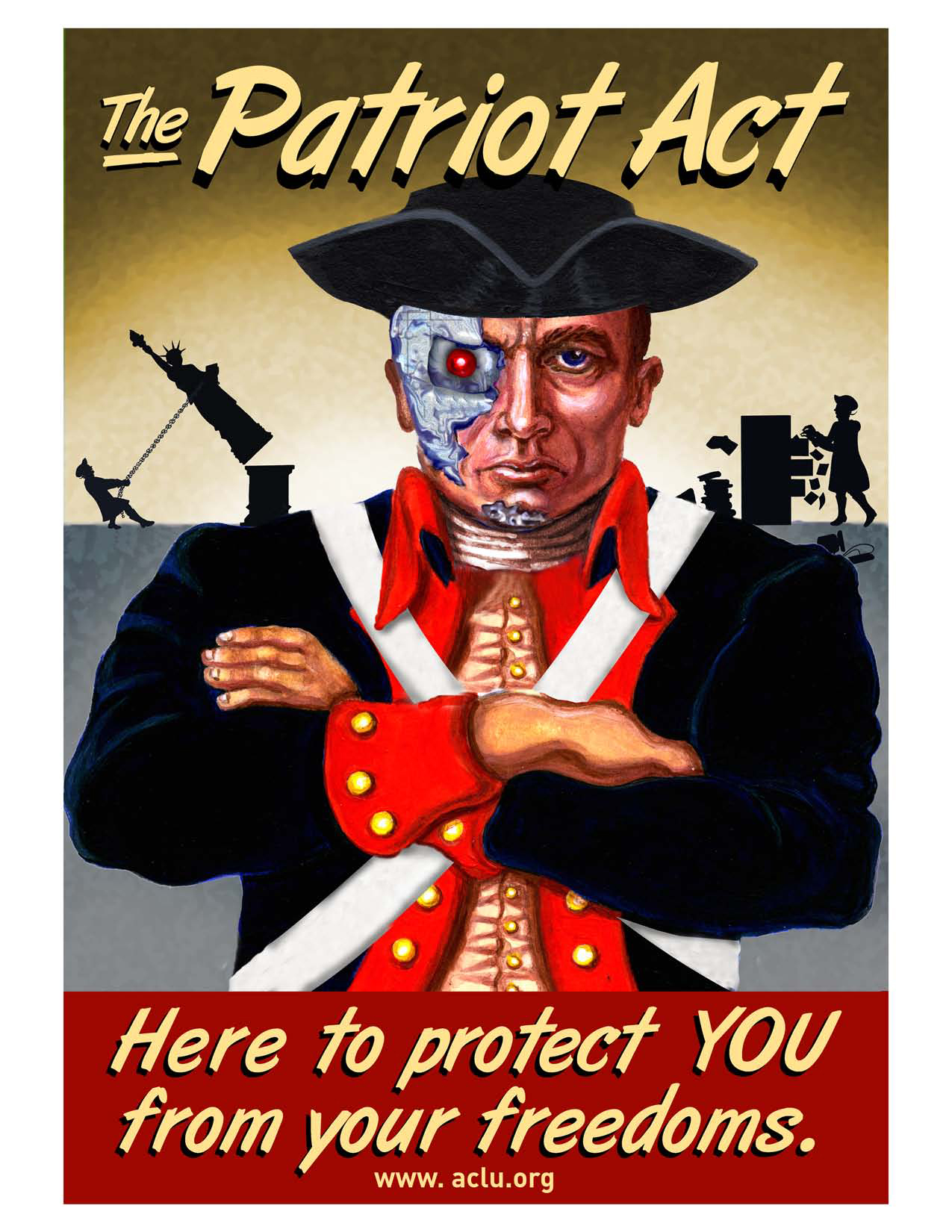


.jpg "Like an old-fashioned ladies' locker room, there were no subpoenas allowed")


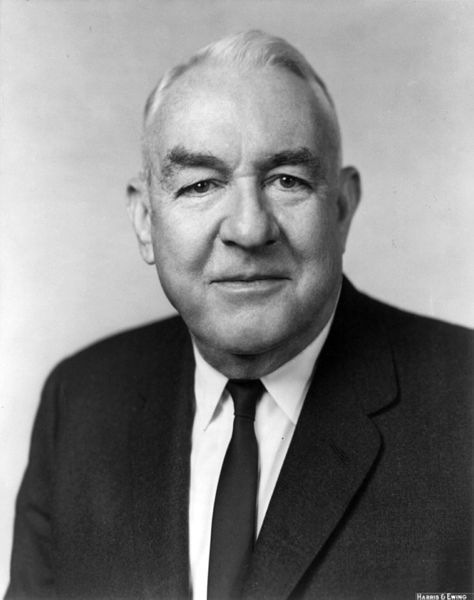

 By Trump Lotto of The Unforgiving Shadow




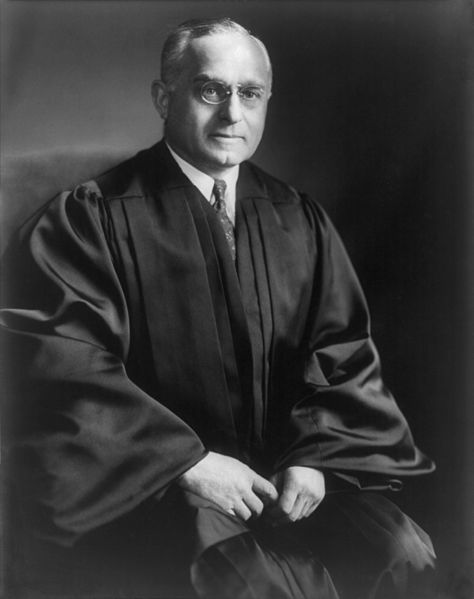
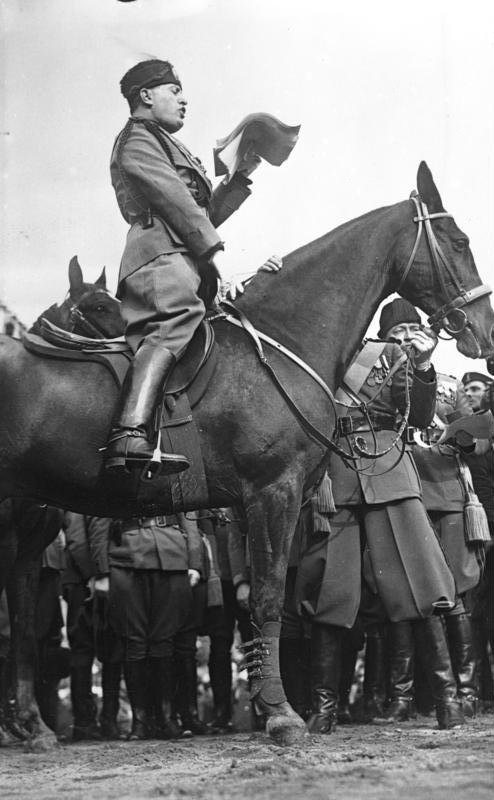


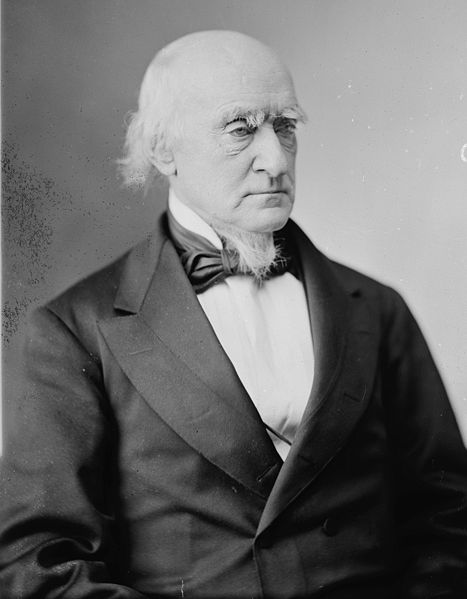
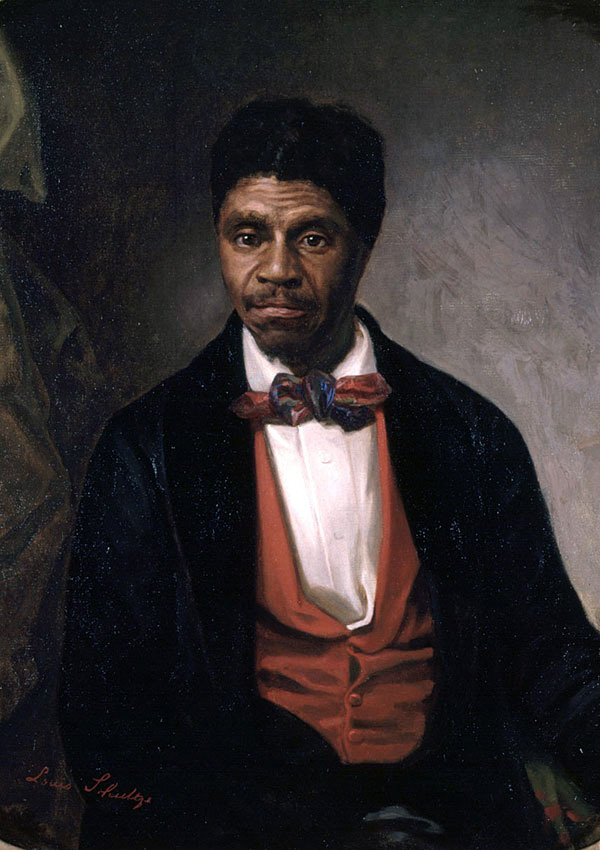






 In this installment, I asked the prog about Detroit and the case of Abner Schoenwetter, whose story was featured on the John Stossel special “Illegal Everything”.
 I forgot to mention this guy is convicted sex offender. He spent the ages from 17 to 20 grabbing the asses of dozens of random women. Yet last time on I checked, he spends most of his time virtue-signalling on Derpbook. Go figure.