Category: Food & Drink

  • Review – Tank #7 Farmhouse Ale

    This is my review of Tank #7 Farmhouse Ale, by Boulevard Brewing Company.

    Here is my mistake.  I mentioned in passing what I will be reviewing next and somebody tells me there is a standard to these things that I am overlooking.

    *pours beer down the sink*

    Okay, fine.  They didn’t have it at the Fry’s I shop at that used to be Smitty’s, therefore it’s the ULTIMATE FRY’S.  I instead went to BevMo–no dice.  Finally, I found it at Total Wine, which was the last bottle they had on the shelf.  

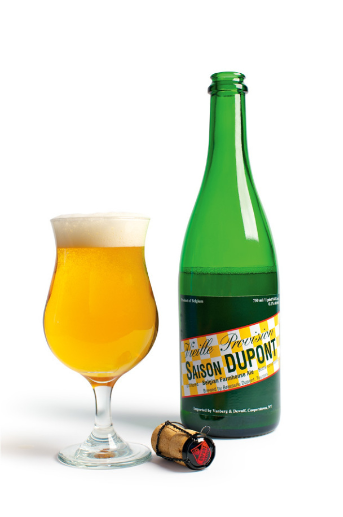
    This is my review of Saison Dupont Brasserie.  Hat Tip:  Nephilium.

    Holy shit.  This almost costs $14, including the $1.39 worth of state legitimized theft levied on beer, wine and spirits.  This reminds me of the time I was shopping for a new vehicle and I checked out the Toyota Tacoma.  For what Toyota charges people for the privilege of being labeled tough enough to drive a Taco; in comparison to some of its competitors in the light truck market it better be an amazing truck.  By golly, the Taco it is an amazing truck.  Is it amazing enough to justify buying it over a comparably priced, but used full sized?  Saison Dupont reminds me of this quandary.  It is expertly crafted, has a lot of body which is evident in the way the foam coats the inside of the glass.  It is bottle conditioned and continuously fermented, which is why it is sealed with a cork similar to the ones used to bottle champagne.  The smell is reminiscent of a crisp summer evening in the countryside, in a place where the pavement will not burn your bare feet.

    Why is it called Saison?  Those of you that speak French will probably tell me the word itself means season.  This is indeed true; Belgians like the Germans and nearly every other traditional beer culture adopted the practice of brewing beer seasonally in the time before refrigeration.  Part of the reason it is typically done in the colder months is that small insects hibernate and won’t infest the wort.  The other part is consistency in temperature.  Germans took this to another level in developing lagers, which is not nearly as resistant to temperature fluctuations as most ale, by brewing underground.  This is not why it’s called Saison.

    It was explained to me once the reason lunch is dinner and dinner is supper in the Midwest is due to the type of meal that a farm hand might have.  If one sits down for a large midday meal at a table it is more likely to be referred to as dinner.  This is how they referred to it in the dining facility at the Air Force base I was stationed at in South Carolina.  Typically, the meal was large as I was hungry at the time since I last ate around 0400 so that I can complete the airfield lighting check prior to the start of the ops day.   Lunch on the other hand, is often a much smaller meal.  When I think of lunch today, I am normally sitting at my desk munching on something small.  Be it a sandwich, or salad for example, the intent is to simply keep me going until the end of the day.  It is this type of meal that Midwesterners might refer to as lunch, just something small they can provide a farm hand that they won’t have to worry about their workers going hungry*. Back in the day, Belgian farmers would provide beer to their farm hands, known as Saisonniers, with this type of beer in part as a meal replacement but also because one gets rather thirsty when working in the fields.  This explains why it is often called Farmhouse Ale.

    *I realize this might be the most controversial statement I make in this entire article, but this is how it was explained to me.  

    Like I said before, it is expertly crafted with a lot of body in the traditional manner that defines the style.  It has a thick texture with a heavy citrus aftertaste.  To make this even more confusing, it is highly carbonated but it dissipates in the glass (foam) leaving a pleasant aroma and does not leave you feeling bloated.  Like most beers of this type, you must be into it to like it.  Wheat beers in general have a polarizing effect on people and not everybody is into it.  If you are, you will certainly appreciate its charms but perhaps will not appreciate its price tag.  Saison Dupont Brasserie 4.0/5.

    ‘Murica!

    If Brasserie is the master, Boulevard is its apprentice.  Like many American Brewers, they are quite adept at creating a worthy copy.  Often the argument against the craft industry is that they can never make the traditional ales made in Europe.  Is it the same?  No, it’s not a carbon copy, and that isn’t the point, but it certainly holds its own given the more affordable price tag. Boulevard Brewing Co. (Kansas City), Tank #7 Farmhouse Ale 3.9/5.

    In honor of the NL Wild Card, I picked up this one I never heard of as—a wild card.  

    This one is not terrible. Considering the fact that I turn into an emotional wreck watching playoff baseball, particularly when it is my team…I might have to try this one again.  I was hardly objective at the time… There is less body than expected and it is a little more sour than many would like but it is not bad. It is not one to go toe to toe with a traditional European product but it does what it does well. Prairie Artisan Ales Merica Farmhouse Ale 3.0/5

    A word on fruit  

    This is a libertarian website, it is in this spirit that I say that if you add a slice of orange to this type of beer, so be it.  To call that apostasy would make me no different than those pushing a social campaign that insists men ignore their natural preferences for women and accept them as is–i.e. real men like women that_______ or with_______.  This is hogwash; real men like whatever the fuck they want.  If you like Belgian farm girls picking strawberries, go right ahead.

    You can only pick one!
    So choose wisely

    If you like female Belgian soldiers…You might have issues, but go for it.

    If you want to add an orange because you like it, because it makes you happy, I am not going to say you are wrong.  I will not say that you should not add fruit to your beer and you may as well go to Morton’s and ask for ketchup with your steak.  It’s an immoral stance to take and I will not entertain an argument to the contrary.  Do what you like.

    Having said that, this is a libertarian website and since I have been graciously provided a platform for free speech I will state my personal opinion:  if you add orange to a well-crafted Saison–you are wrong.  Go wash your mouth with a revolver.

  • Review – Fat Jack


    This is my review of Fat Jack Double Pumpkin Ale, by Sam Adams.  

    Let’s get this out of the way right now.  Yes, it will get you drunk.  TW:  This goes on for over two minutes.

    https://youtu.be/5szRnQmyI4E

    Pumpkin Ale suffers from the indignity of being associated with hipster culture in that it only seems to come out at the time of year where everyone and everything gets excited for all things pumpkin.  Pumpkin cider, pumpkin parfaits, pumpkin cookies ….

    ….even pumpkin spice M&Ms.  It’s to the point where one can trigger an emotional response by telling a 28 year old woman in vintage glasses, a turtleneck sweater and wool scarf that she lives in Arizona, it is 96 degrees, there is no reason to dress like that and there is no reason for me to give two shits about your pumpkin spice latte.  Pumpkin ale however, I think is unfair to associate with these people to some degree.

    Pumpkins, like chocolate, corn, potatoes, and beans are indigenous to the Americas and like the other food mentioned was traded around the globe as a result of the Columbian exchange.  Native Americans initially ate only the seeds, because that was the only palatable part.  Later varieties were cultivated so that the flesh could also be consumed.  This became a staple in the diet of many native cultures, as indicated by the number of European explorers that wrote about pumpkins and the distance between the parts of North America they explored.  Jacques Cartier in Canada, to Alvar Nuñez Cabeza De Vaca in Florida, and John Smith in Virginia all wrote about the abundance of the gourds.  At the beginning of the colonial period, settlers were unable to grow the same type of crops they could grow in Europe, therefore is should be no surprise pumpkin became a staple of these early settlers.  If you want to know more about Pumpkins, click here.

    Beer/ale at the time was a necessity because the fermentation process made water potable, this has been true since the medieval period.  Being that there was at first, no barley to make it the colonists had to make due with something to make water drinkable and help them forget they were probably going to die during the winter—guess what happened to be around in great quantity?  Pumpkin ale fell out of favor after the civil war and cultivation made it more lucrative for farmers to supply a decorative element that rots on my porch overnight after the 1970s.  It was only a recent development that everybody with the means could put the stuff to market as part of the annual hipster pumpkin craze.  In other words, this is something those snooty, technocratic, Euro-weenies cannot claim because it is a uniquely American beverage with unique American heritage.  Europe can go suck it.  

    Modern Pumpkin Ale comes in two types:  The type that wants to be a severely over-spiced, gluten-free Dunkel and the other that wants to be liquid pumpkin pie.  Fat Jack is the former.  It comes at over 8% ABV so it is prudent you operate machinery or firearms while drinking this.  It is also handy to have around when Carson Palmer wants to embarrass himself by muffing the snap in an attempt to come back in the 4th quarter.  Way to go dumbass, it’s now 3rd & 20 and my only solace is a thick, hearty ale, with a flavor heavily influenced by ginger, cinnamon, ginger, cloves, ginger, allspice and ginger.  Did I mention Ginger?

    In fairness, they had to balance out the pumpkin somehow and with the high ABV, there is a lot of pumpkin in there.  This one is still pretty good but is not one to chug.  3.5/5

    If you are looking more towards the liquid pumpkin pie end of the spectrum, a good example is Elysian Night Owl Pumpkin Ale.  

    Same spices as Fat Jack, just not as intense, and a much lighter ale with less body as you can probably discern from what is indeed my photo.  It has a faint, pumpkin bitterness in the back which is kind of nice.  3.8/5

    This one is absolutely amazing.  Last time I had it in Colorado the guy at the liquor store asked that I not purchase more than 2 packs of it at a time.  The reason is because he typically sold out of it within the day.  This has a faint vanilla along with the usual pumpkin spices, so it actually tastes like pumpkin pie, like the kind your mom made.  If you happen to be in Colorado, and you happen to come across a liquor store in the fall pick some up, cowboy. 4.5/5

  • Review – Oktoberfest

    This is my review of what is arguably, the greatest beer in the world, ever.  At least according to this guy.

    https://youtu.be/MyJJZa5Q2Fw?t=25s

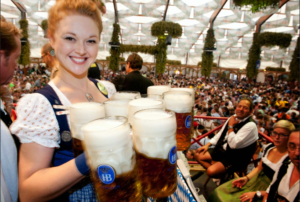
    This movie plays on the stereotypes and misconceptions that Americans have about Oktoberfest, particularly the ones that have never attended.  For the uninitiated, it’s pretty much viewed as a bunch of singing drunks served by this lady.

    I have no way of legitimately commenting on the accuracy of the portrayal of Oktoberfest, drinking contests, the German people, the Bier Garden wait staff, or sexual activity among amphibians in this film.  For that, I will direct you to a much better source previously posted by another guest contributor.  Hat Tip:  DEG.

    While Hefeweizen is served at Oktoberfest, I will not get into these.  To be sure, my aversion to German wheat beer has absolutely nothing to do with a drunk Native American that failed to recognize that I hailed from the big tribe in the south, and that I am not a homosexual.   Apparently in Northern Arizona, Hefeweizen is a calling card for gay men; I also happen to be more of a fan of the Belgian varieties of wheat beer.

    That leaves us with Marzen but since this is a somewhat saturated marked, where to begin?

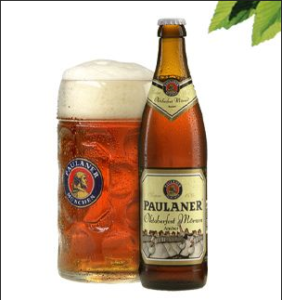
    Paulaner Oktoberfest Marzen

    Unfortunately, this is a German entity therefore we must concede the standard must be set by them.  Other well-known German brewers such as Spaaten, Warsteiner, and Becks all put their own version to market and none of them are bad.  As you can tell from what is once again, not my photo, Paulaner’s offering is copper in color, a nice light lager with caramel notes and a nutty finish.  It is lightly carbonated so it will not stop you from knocking back several liters at a time.  The only problem, as mentioned in the comments section at other dark corners of this website, German beer does not travel well, particularly lagers.  German Beer Purity laws may have something to do with that but even given the proviso that it may be a hair on the skunky side, it is still quite good.  Too bad we can’t all go to Germany. 3.8/5

    Since going to the source is not always feasible, that leaves us with the American Craft industry to pick up the slack.


    Left Hand Brewing Co. Oktoberfest – Longmont, CO

    As you can tell from what is once again, not my photo, Left Hand’s offering is copper in color, a nice light lager with caramel notes and a nutty finish.  It is lightly carbonated so it will not stop you from knocking back several liters at a time.  Yes, I just repeated what I wrote about Paulaner’s.  Am I really that lazy?  Perhaps, but repeating myself might be the best compliment I can make about it.  This is as good a copy you can get in the mountain west, and for many of us that is as good as it gets.  The reduced travel time and the Colorado snow met make this one slightly more enjoyable than waiting on the import to arrive. 4.0/5

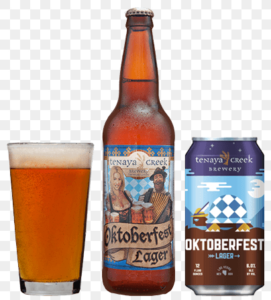
    Tenaya Creek Brewery Oktoberfest  – Las Vegas, NV (Right)

    Another one I’ve had recently is from Tenaya Creek Brewery in Las Vegas.  Not as malty as I like but given its source it is also a fair bit lighter than the norm for this type of beer. If you feel the need to enter a drinking competition this might be a good choice. 3.5/5

    Goose Island Oktoberfest – Chicago, IL (Left)

    The next one is from Goose Island from Chicago.  It could just be the batch I got; this might have been bottled sometime the previous year and left in a warehouse somewhere in Phoenix with questionable climate control.  Whatever it is, this one should be better but it is not.  I want to give them the benefit of the doubt, but after briefly researching on ratebeer.com others seem to agree.  If you are in the area, please explain this if you like because I will not extend more mental energy to find out where they went wrong.  After all the definition of pizza in that town is apparently up for their interpretation.  My only regret is I bought a 12 pack. 2.5/5.

    San Tan Brewing Co. – Chandler, AZ

    The last one is a local (to me), from San Tan.  This is probably going to be discounted as bias but I will say my local offering is pretty damn good!  My pick for this genre is still from Left Hand out of CO but it stacks up well.  The biggest difference is the nuttiness in this one gives is a slightly thicker texture than Left Hand’s.  It could also be the local water, as it is notorious for its mineral content.  3.8/5

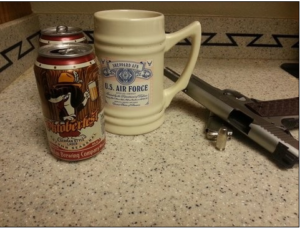
    Whether it is glass or ceramic, serve in a mug of some kind like above.  Bonus points if you have a boot.

  • UnCivil Cooks – Sandwich from Scratch

    I think I’d like a sandwich today.

    *Yells into other room*

    Oi! Make me a Sandwich!

    *Waits*

    Dammit, I live alone. I have to do it myself. Welp, I guess I’m going to talk the Glibertariat through a process again. Let’s see, do we have any bread…

    Nope.

    I guess that’s where we have to start.

    Garlic Cheddar Beer Bread

    We need some ingredients. What are they?

    • 3 Cups Flour
    • 2 Teaspoons Salt
    • 3 1/2 Teaspoons Baking Powder
    • 2-6 Teaspoons minced Garlic
    • 12 oz Beer
    • 8 oz Sharp Cheddar
    • 1 Tablespoon Butter

    Before we forget, lets make sure the oven is empty, then set it to 350 degrees. That’s Fahrenheit for anyone from a country that measures based on water rather than humans. If you don’t want to do the math that’s 1.77 times the boiling point of water.

    Let’s just toss the flour, salt, baking powder and garlic in the mixing bowl. There’s no special magic this early on in the process. We need to grate the cheese before adding it, or it won’t integrate too well. After that, it should look something like this:

    We’re still doing that cooking-show thing, right?

    Simple enough, now we mix those together. I have a stand mixer with a dough hook, but that really is overkill. We’re not going to knead the dough, the only reason I like the dough hook for this process is that it’s easier to clean in the end, and it still gets the job done. Now we have – mixed powdery substances in a bowl with some cheesy bits.

    Time to add the beer.

    Now Glibs have been known to have massive debates on the topic of beer, so I’m not going to bother telling you what you should pick. If you don’t have a preference, grab a basic American Lager, the cooking and the other ingredients will cover the flavor.

    With the beer added, we mix until we get a fully integrated dough. It will be a wet dough and will cling to pretty much anything. We need a loaf pan either greased with butter, coated with oil, or spritzed with cooking spray, anything suitable as a release agent that you’re willing to ingest. Get the dough in said loaf pan and relatively evenly distributed. I find hands to be the best implment for doing this, but don’t want to interrupt the cooking to wash the dough remnants off again. So I keep a box of disposable gloves in the kitchen for just this sort of thing.

    See:

    Ten cents well spent.

    We still have that tablespoon of butter. Melt it and get it across the top of the dough, either drizzle it, or brush it, or some combination of the two. Usually I melt it in the microwave because it’s fast and I’m lazy. Here, if you have extra cheese from the first grating, you can sprinkle it on the top. This produces an excellent effect when baked. Alas, I did not have sufficient cheese.

    Drop the loaf pan into the oven at about the middle of the space and set a timer for forty-five minutes. While we wait, we have to resist wandering off for a little bit. A proper sandwich deserves accompaniment. Lets put together some classic tomato soup.

    Simple Tomato Soup

    I haven’t got any of the canned stuff, so we’re making this from scratch too. We’ll need ingredients. Where are my handy bullet points?

    • 1/2 Stick Butter
    • 1 Onion
    • 28 Oz Crushed Tomatos
    • Oregano
    • Basil
    • Bay leaf
    • 12 Oz (1.5 cups) Stock

    There they are.

    We need to get rid of the onion skin and chop it into small pieces. Mostly because it would look silly to drop a whole onion in the pot. Cans of crushed tomato come in twenty-eight ounce sizes, so this is one such can. If you want to go through the trouble of processing your own, go right ahead. I’m in a bit of a hurry. Same thing with the stock. I used pre-made chicken stock because I had it.

    All right, time to get cooking. Find our trusty dutch oven and make sure it’s been washed since the fish stew incident. Put it on medium heat and melt the half stick of butter. Once that is more or less liquid, add the other ingredients. If you need to know what it might look like, here’s an example:

    That pan looks familiar

    Stir it up and bring to a simmer. Let it continue to simmer until the bread timer has gone off. That should be give or take forty minutes after it went on. It would be advisable to give it a stir every so often to make sure nothing is sticking to the bottom of the pan. If it does, take the edge off the heat some and give it the occasional stir. Do not cover the pan. We want it to boil off some of the excess liquid. After it’s been cooking for a while, it will start to look a bit like real soup:

    Soupy

    Find the bay leaf and toss it. You don’t want to eat that now that it’s done its part. Now, the soup is perfectly edible as-is, but if you want to have consistancy closer to the canned variety, find a blender. Me? I just moved the pan to another burner and put a lid on it. My bread was done.

    The Sandwiches (Finally)

    Well, the bread fresh from the oven was too hot to slice. And since I didn’t have the extra cheese, looked a little pale. See:

    Just loafing around.

    But, once it cooled down, we could get on to the business at hand from an hour ago – making sandwiches. If you hadn’t guessed already from the tomato soup, I’m making grilled ham and cheese. Okay, the grilled cheese was probably obvious, the ham part is pretty common, too.

    The best way to distribute butter for grilling sandwiches is about as contentious as the appropriate type of beer to cook with. You do what makes you happy. I’m going to butter the bread so that the second side is guaranteed a dose of butter equal to the first. Then we start our construction. On the unbuttered side, we lay out a slice of American cheese (It’s traditional, any melting cheese will work). Then some cubes of ham. I stopped here to take a picture because the next step would be another layer of cheese, then the second slice of bread.

    Okay, so the bread was still a bit warm when I sliced it.

    Find a skillet or frying pan, or griddle, or whatever relatively flat bottomed, low-walled (or no-walled) cooking surface you want to use. Put it on medium heat and wait until you can feel the radiant heat a few inches above the pan. Gently lay the assembled sandwiches in.

    Here’s the hard part – we wait.

    We need the heat to brown the lower surface and conduct up into the cheese to turn it molten. This will inevitably take longer than I expect, leading to me standing there in irritation as thermodynamics thumbs its nose at me again. But once we do have it, we flip it over and…

    Browned on one side.

    Yes it is Browned! I know it doesn’t look it in the picture, that’s because it’s a low-contrast to the color of the bread. Take my word for it, it’s browned, and the cheese melted. We also have to wait for the same thing to happen to the other side. This is usually even more frustrating than the first wait, after all it’s been more than an hour since I yelled for an empty kitchen to make me a sandwich, and it’s still not quite done. But, once it is browned, we cut it on a bias (conservative in my case), array it on a plate and ladle out a bowl of our herb-laden tomato soup.

    Yum

    I need to get me a sandwich-making person.

  • Tails of the the Teufelhund, PT II, Poison!

    A few Sundays ago I decided to spend the afternoon with my best friend, discussing composing, arrangement, engineering and various audio stuff, when my phone rings.

    My Wife is calling in a panic because Bella is having a major seizure and come home NOW!, but continues rambling so I just hang up, and say, “Chuck, dog’s seizing, gotta go,” and I’m out.

    As I drive the 6 blocks to my house I’m wondering, “Poison? How? I can’t even leave for a few hours without someone killing my Dog?”

    5 minutes later as I walk through the door, my 25 yr old Son is acting like a 10 yr old sniveling version of Hillary, no help at all, so I go find my Dog.

    Poor baby is sitting in a corner of my office, drooling, spaced the fuck out, and the pollen is falling heavily. I just try to love on Her, but she won’t let me touch her, at first. So I go looking for poison. My office, clear. Bedroom, clear. Kitchen, clear. Then the back yard.

    She found my extra Roundup on top of a 5 foot shelf and knocked it over. She loves to open bottles you see. At this point I walk inside and pronounce, “She drank Roundup, she lives or dies,” being Her Daddy and the heartless motherfucker I am.

    An hour goes by and She drinks some milk. Another hour, then a puppy treat. And then finally eats dog food, THANK GOD!

    After my Wife explained that my son put her out back instead of my office, I knew what happened. Bella doesn’t stay alone unless she is in her den (my office) and panicked, or she was just mad because the People left her alone.

    We often give her milk for a treat, and she had some just prior to drinking Herbicide. Maybe this helped? But she apparently voided from all orifices, while screaming in pain, probably scary as fuck, and I’m glad I didn’t have to witness it. She is fine now, but lesson learned:

    Puppies Will Find Trouble.

    Secure all poison, take no chances.

    I almost lost my Belly.

    Take Care of your puppies, Glibs

  • Review – Heavy Metal Inspired Beer


    Iron Maiden Trooper

    I picked it up despite its $5.99/can sticker price mostly due to my being a sucker for good marketing.  Apparently, Bruce Dickinson happens to be an “ale enthusiast.”  At least this is the message listed on the can.  I interpret that as Bruce is really an aging 1980’s, metal-god who happens to be British.  I am absolutely shocked–SHOCKED–to find out he drinks a lot of beer.  I went through my iTunes playlist of other Maiden songs while I tried this out.  In the off chance you do not have any Maiden on your playlist, here’s a link.

    The song, of course, is about the Battle of Balaclava during the Crimean War, and the famous Charge of the Light Brigade.  I never studied the history behind this war, but skimming the surface appears to be the usual, completely avoidable conflict between European powers.  To oversimplify:  Russia wanting some control over the area took advantage of the Ottoman Empire’s weakness but for some reason was not the aggressor—that was the Ottomans.  The Russians won the first round handily.  France joined the conflict over what appeared to be nothing more than pride from losing to the Russians at Waterloo in 1812.  Britain engaged in hostilities because of the Ottoman’s strategic location, with the Ottoman regime being their access to India at the time.  Further background on this can be found at this link here.

    How is the beer?  It’s a traditional English Extra Special Bitters (ESB) Ale.  If you’re into the ‘proper’ English ales or even understand why our British cousins use that adjective for everything, you’ll probably find this enjoyable.  Perhaps not as enjoyable as the music, but I’m pretty ambivalent about the beer.  It has the traditional full bodied texture, heavy malt character, and an ever so slight nutty aroma.  Some reviews on the internet also claim there is a hint of lemon, but I cannot taste that.  It does what it needs to do fairly well, but not enough for Bruce to quit his day job 2.8/5.

    AC/DC Rock or Bust

    It is easy to lob all the verbal jabs at the Thunder from Down Under for their remarkably simple riffs and their ability to sell millions of albums filled with songs that all sound the same.  When you do that for around 30 years, those jabs start to fall short.  Their beer in question shares this remarkably simply quality that tastes like every other mass produced pale lager in existence.  I will respect the beer more if they manage to sell it in large quantities for as long as they have filled stadiums.  Until then, I probably should not have wasted my time mentioning it here 1.9/5.

    Megadeth A Tout Le Monde

    This one comes with a backstory.  At the UFC Fight Night in Phoenix last January I got a sample of this for free.  If I bought one I got a ticket to meet Dave Mustaine, who also happened to go to the fight but I imagine got better seats than me.  My parents owned a store I worked at while growing up that he frequented.  By most accounts, he is a nice guy and I have to agree.  Since I met him before I gave the ticket away to a random fan.  The beer is a Saison, made by the same brewery that makes Fin de Monde.  Given that pedigree, one might assume it is pretty damn good.  It does in fact, live up to those expectations.             

    It has a nice foamy head, that holds up for quite some time.  The scent is a sweeter citrus, like tangerine or orange, but it finishes with a muted lemon.  I was disappointed they sold it with a twist cap when I bought it at the store but it is hardly a deal breaker.

    Way better than the swill AC/DC slapped their name on and held up way better than BJ Penn’s face.  Much like the Ottomans, that guy rather handily got his ass kicked.

    A Tout Le Monde weighs in at 4.2 /5.

  • Romania Craft Beer: It Is… Alive!

    When it comes to imbibing beverages with a non-negligible fraction of ethanol, Romanians can hold their own. In fact, we are known to often go above and beyond the call of duty.  According to some ranking or other, we are 5th in Europe in drinking per capita, equal to the Czech Republic. Off course, keep in mind it is hard to keep track of all the home made hooch in Romania, as a lot consume țuică and wine of their own production. So we might be even higher. Off course the same is probably the case in Russia, Belarus, Moldova, Lithuania and other countries near the top of the list.

    Generic beer picture is generic

    Romania was traditionally a wine and plum brandy country, but that changed significantly in the last 50 years. Beer gained a prominent role in the drinking hierarchy, estimated at 80 litres per capita, 7th in Europe. Sadly, most of this beer is generic and profoundly mediocre, even if drinkable (then again on a hot summer day, most beer is drinkable, even that Bud Light thing you Americans have). The market is dominated by a few brands, which while having some tradition in Romania, are now bottled by large multinationals – SABMiller, Heineken, Carlsberg or Molson Coors- and are almost interchangeable. There is a bit of scandal going on about using corn and special enzymes to speed up the fermentation process, but in the end, there is no proof either practice is harmful, and the result is still mediocre.

    But times they are a-changing and the hipster they are a-coming. So Romania, like many a country, the craft beer movement started and it is gaining steam. It was a timid start, mind, as craft beer tends to be on the pricey side and Romanian incomes are still on the scant side. But a start is better than nothing. I want to do a quick overview of the scene here, although I will avoid reviews, tasting notes and the like for this post. This is just the cliff notes, in case any Glib runs into some Romanian Beer – the odds of which are similar to being hit by lightning or election fraud, very low.

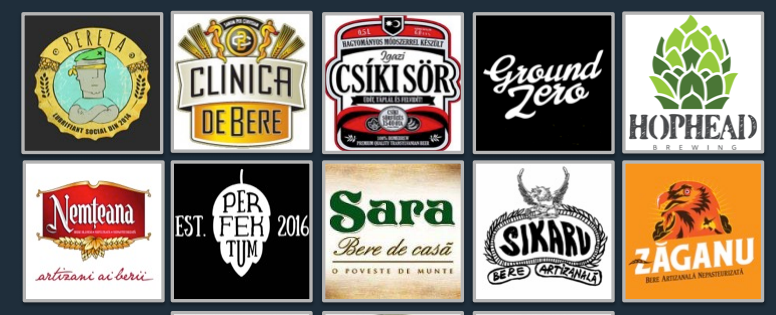
    The first wave of the “craft” movement started by making standard style beers, slightly better, but not by much. These were Clinica de Bere – which made a beer called Terapia, Nemteana, Zaganul and a few others. They all were fairly similar; they had a pale lager beer, an amber one and usually a German style wheat beer. I rarely drink these, as they do not bring much to the table.

    You Americans wish you had pretty labels like us

    The second wave got into the ale style beers, producing some standard ales and some very hoppy IPAs. Now, while I don’t want to get controversies started (kidding, I totally do, I measure the worth of my posts by the number of comments they get), and while I am reasonably fond of IPAs myself, there is a slight tendency to over-hop these ones. Although the results were pretty good, it was also a way to hide imperfections in the brew. More hops do not automatically a better beer make, just like more oak does not always mean better wine.

    Among the more mediocre of this wave is Sikaru. Among the better ones is Ground Zero, which actually produced the first decent Romanian craft beers I have tasted.

    Some of the good stuffBeing hipsters, one of the things craft breweries have in common with other countries is the silly… ehm let’s say creative, actually, names. But hey, they try, and that’s not nothing. And I like their beer overall, although the prices tend to be a bit high. They have a good pale ale – Easy Rider, a decent  IPA – Morning Glory (which is actually good as a Sunday morning drink), an pretty good imperial IPA – Imperial Fuck (not bad, but I like beer lower in alcohol) and a dark Gypsy Porter (racist? I don’t know). They also have seasonal stuff like autumn spiced ales. Overall, very solid effort for our fair country, and recommended for drinking should you find yourselves on our distant shores.

    After the modest success of the second wave, a bit of increased prosperity and the growing fashion in craft whatever, the third wave came with a significant increase in the number of craft brewers. I haven’t had the chance to taste all, but there is some good stuff and an encouraging amount of experimentation.

    To highlight one that is worth a taste, Hop Hooligans – stereotypical name, I know, craft beer has almost metal band level of names – were among the first more experimental ones. They had, for example, the first coconut stout which I tasted. Didn’t like it, didn’t expect to, really, but I appreciated the effort.  I have yet to gather the courage to try Coconut Vanilla Smoothie IPA, whatever the bloody hell that is. They started with Summer Punch (American pale ale) and Crowd Control (IPA) and branched quite a bit. I won’t list them all, here’s a link for the curious.

    Other brewers are Hophead Brewing – again with the hops, that’s original; Perfektum which I found underwhelming compared to others; Amistad Beer and Bereta which I have not tasted yet.

    One of the signs the movement is still in its infancy is the low availability of these beers in the market. Except for a handful of bars and one or two hard to reach specialty stores, you will find it difficult to purchase these. Although availability is increasing, it is doing so slowly. But we take what we can get. A lot of bars have deals with Big Beer – either brewers or large distributors -and are generally reluctant to get the craft stuff. But as the customers appear, so will the purveyors.

    You can get craft beer in a few places, although mostly by the bottle. I only saw craft on tap in one pub, which is specialized on beer and almost nothing else – I think they have beer and tap water.

    I would also find it interesting if the brewers themselves opened tap houses, and if more pubs or restaurants in the country would start brewing their own house beer. Just to have something special for the customers. In the meantime, I just drink the stuff by the bottle, mostly at home, and am pleased that it exists in the first place.

  • Oktoberfest


    The 2017 Oktoberfest will start in Munich, Bavaria, Germany on the 16th of September at noon Central European Time and will run until the 3rd of October. It is the world’s largest beer festival with roughly six million attendees annually, but it is more than just beer. There is food, carnival rides, and shooting competitions.

    There are other Oktoberfest celebrations around the world. The Munich Oktoberfest is the oldest, largest, and the subject of this article.

    I went to Oktoberfest in 2016. It was not my first time in Munich, but it was my first time at Oktoberfest. Unfortunately, I missed the shooting competitions, but I drank, ate, and enjoyed myself.

    The countdown to the start of the festival is on the website for the festival.

    First, a little mood music from the Rockaholix Buam where they sing about Bavaria in the Bavarian dialect to the tune of an Irish drinking song while driving around the Bavarian countryside in an American made pick-up truck flying a pirate flag and flags with the Bavarian coat of arms.

    Oktoberfest History

    To summarize the Oktoberfest Wikipedia article, the first Oktoberfest was held in front of the Munich city gates on October 12th, 1810. It celebrated the marriage of Crown Prince Ludwig of Bavaria to Princess Therese of Saxe-Hildburghausen. The location was named Theresienwiese (Theresa’s Meadow) and is commonly known today as Wiesn. The celebration included horse races, food, and drink. The celebration turned into an annual event. As the event grew and became more popular, the festival moved to September to take advantage of better weather. With only a few exceptions due to war and epidemics, the festival has been an annual tradition. This year’s Oktoberfest is the 184th Oktoberfest.

    Oktoberfestbier

    The most common beer served at Oktoberfest is a Märzen. The style name comes from the fact that the beer was traditionally brewed in March then stored in cellars and caves over the summer. The beer was brewed in March because brewing was prohibited in Bavaria between April and September. Early Oktoberfestbier was darker than modern Oktoberfestbier. The beer’s alcohol by volume will vary from 5.5% to 6.2%.

    The Modern Oktoberfest

    The modern day Oktoberfest starts in September and runs until either the first weekend in October or German Unity Day (October 3rd) if the first Sunday in October is either the 1st or the 2nd. The festival lasts 16 to 18 days.

    The only beers served are beers brewed in Munich that comply with the Rheinheitsgebot. Currently, the brewers who meet those criteria are Augustiner (the locals’ favorite), Paulaner, Spaten, Hacker-Pschorr, Löwenbräu, and Hofbräu.

    There are 14 large beer tents and many smaller tents. The tents are torn down and rebuilt each year. The big tents have indoor seating capacities from 1,000 to 8,400 people and many have outdoor seating areas. The smaller tents have indoor seating capacities in the hundreds and most do not have outdoor seating.

    Each tent has one brewer’s beer available. Oktoberfestbier is only available in one liter glasses called Maß. The official price list for a Maß of Oktoberfestbier is here. Hefeweizens, where available, come in half liter glasses. There are tents that sell wine, and one of the big tents specializes in wine.

    The tents have food available. Each tent has its own menu. A few examples of the variety of food:

    • ox at the Ochsenbraterei
    • seafood at the Fisch-Bäda
    • veal at the Hochreiter’s Kalbsbraterei
    • fresh baked goods at Cafe Mohrenkopf
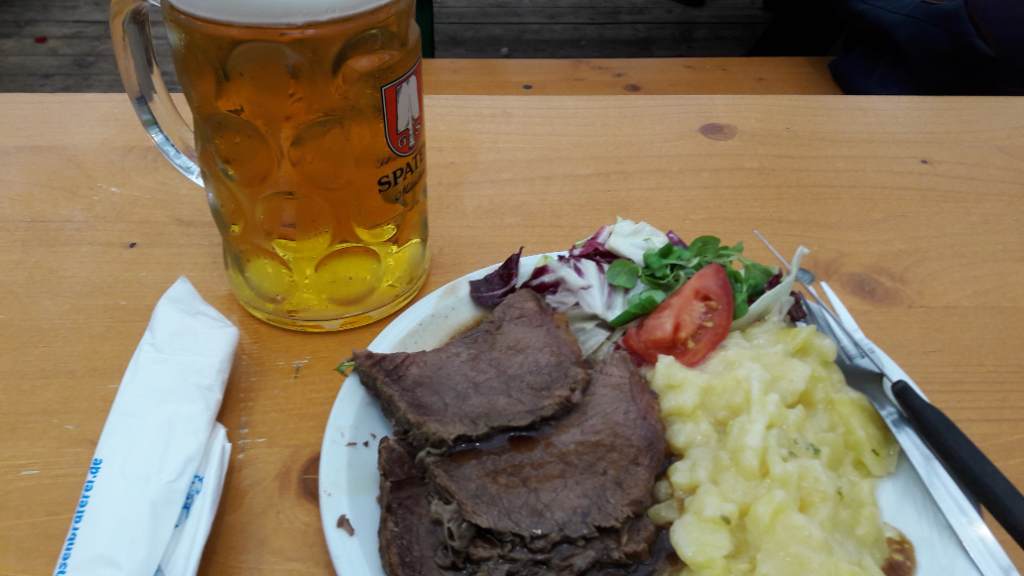
    The atmosphere is different in each tent. Locals like the Augustiner-Festhalle. Hofbräu Festzelt is popular with American, Australian, and New Zealander tourists. Bräurosl hosts a gay and lesbian party on the first Sunday of the festival, see Rosa Wiesn, in German only, for more information.

    There are also a wide variety of carnival rides and games. The Teufelsrad seems to be rather popular. The goal is to stay on a wheel spinning with increasing speed while the staff try to knock you off the wheel.

    Before we talk about the shooting competitions at Oktoberfest, let’s talk a little about guns, shooting clubs, and shooting festivals in Germany.

    Gun Laws in Germany

    This paper from the Library of Congress has one of the best English language summaries of German gun laws I’ve seen. Germany is not a good place to be a gun owner. This article says the current system traces its roots to 1928. The current system mandates separate licenses for acquiring, possessing, or carrying a firearm. Obtaining a license is not easy. There are storage requirements for firearms. Except for the national registry of firearms, current legislation is implemented by the German states even though the legislation is federal.

    According to the registry, there are about 5.5 million legal privately owned firearms in Germany and about 1.4 million legal gun owners. In 2013, Der Spiegel published an analysis of the registry breaking down gun ownership by state. Bavaria has the most registered firearms (1.1 million) but only comes in second on a per capita basis (9.2 per 100 residents). Rhineland-Palatinate has the highest per capita rate of gun ownership (9.7 per 100 residents).

    No one knows how many illegal firearms are in circulation in Germany. The Der Spiegel article I linked above includes an estimate of 20 million illegal firearms. In my research for this article, I’ve seen estimates as high as 40 million illegal firearms. Unfortunately, none of the articles I’ve been able to find include a methodology.

    Shooting Clubs and Shooting Festivals

    There are shooting clubs all over Germany. Many are affiliated with the Deutscher Schützenbund (DSB). The DSB was established in 1861 and reestablished in 1951. The DSB has regional organizations, and clubs are under the regional organizations. Total membership is about 1.4 million. Their English language website is here. Their website has historical information about German shooting clubs from their start until to the Second World War; however, almost all of the history is in German. With some help from Google translate as my German is not good enough to read all the historical information, I will summarize.

    German shooting clubs trace their roots to Medieval times. German towns were defended by militia companies armed with crossbows. Over time the companies took on a broader view of protection and defense, and started acting as mutual aid societies. Their practices grew into social events, which over time turned into modern Schützenfests (shooting festivals).

    As European armies switched over to firearms, the shooting clubs switched as well. The shooting festivals and clubs began receiving municipal funds. Winning competitions became quite prestigious. In the 17th and 18th centuries, the reliance on shooting clubs for defense declined; however, the clubs’ and festivals’ existence continued. In the mid-19th century, clubs in Gotha, Frankfurt am Main, and Bremen worked on centralizing and standardizing clubs. This work culminated in the founding of the DSB in 1861.

    In the late 19th century, with the rise of the German Empire, the DSB declined again. The reason is that competition shooting with military arms grew. The DSB did not allow use of these arms as they wanted to stay apolitical. The DSB stayed apolitical until the rise of the Nazis, whom they initially supported in hopes the Nazis would end the internal disputes and disunity of Germany. On the other hand, the Nazis did not like the DSB and tried to shut it down. The DSB could not show a clear Germanic origin for traditions like shooting birds, and the DSB did not want Nazi paraphernalia at their shooting ranges.

    Schützenfests continue today and have spread throughout the world. The oldest in America is in Cincinnati, Ohio. Australia has one near Adelaide, South Australia.

    Germany has many, and hosts the largest in the world, which takes places annually in late June to early July in Hanover, Lower Saxony. The 2018 Schützenfest runs from Jun 29th through July 8th. The Hanover Schützenfest opens with a parade of shooters from all over the world, though I’ve read that not all take part in the shooting. According to the festival’s website, in 2017 12,000 shooters took part in the parade. The website says there were 148 million attendees, but based on other sources I think that is a typo. 1.48 million attendees in 2017 is probably the correct number. The festival includes beer tents and carnival rides.

    Shooting at Oktoberfest

    Oktoberfest is not a Schützenfest, it is a folk and beer festival. However, there are some elements of the shooting festivals at Oktoberfest and it has two shooting competitions. One competition involves air pistols and air rifles. The other uses crossbows.

    The first Sunday of the festival, there is a parade of rifleman. After the parade, the shooting competitions may begin. At the end of Oktoberfest, there is a ceremony at the Bavaria statue near the Schützenfestzelt to recognize the Landesschützenkönige (loosely translated as the shooting champion).
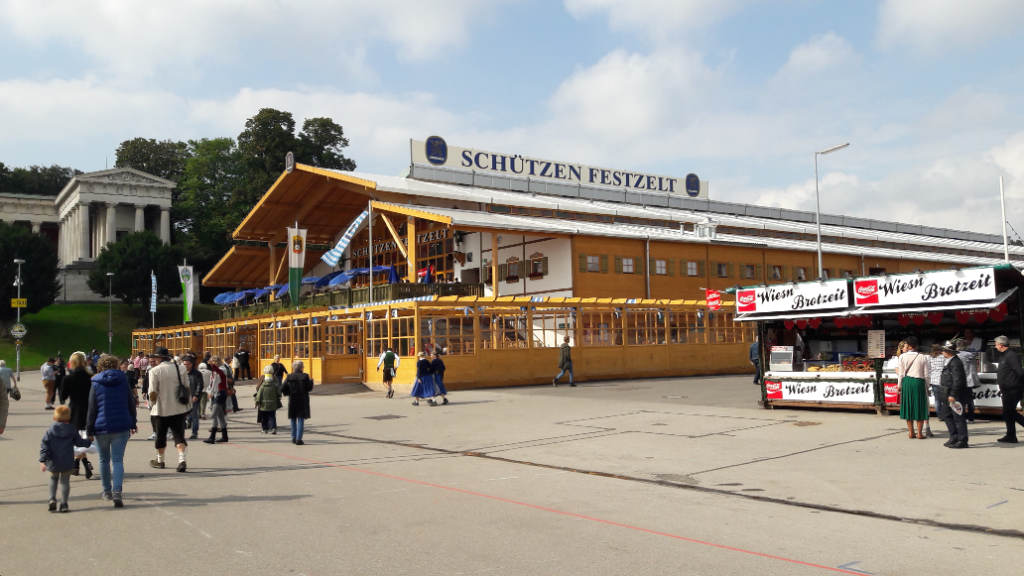
    The rifle competition is held at the Schützenfestzelt (Shooter’s Party Tent, website here). The competition is run by the Bayerischer Sportschützenbund e.V. (Bavarian Sport Shooting Association, BSSB, German only website). The competition uses air guns at a distance of 10 meters (roughly 11 yards). There are 110 shooting stands in the Schützenfestzelt. I have not been inside the Schützenfestzelt, but supposedly it is possible to watch the shooting. The BSSB’s website says the general public, aged 12 and older, is allowed to take part in the competition; however, only members of the BSSB are eligible to be Landesschützenkönig. The shooting hours are 8 AM through 5 PM on the Saturdays and Sundays of the festival, except the last Sunday when shooting stops at 2:30 PM. Weekdays shooting is on Wednesday, Thursday, and Friday between 10 AM and 5 PM. Entry fee for air rifle shooting is 18.50 Euros for adults and 7.50 Euros for students and children. Entry fee for air pistols is 12.50 Euros for adults and 5.50 Euros for students and children. There is prize money available, from tens of Euros to low hundreds of Euros.
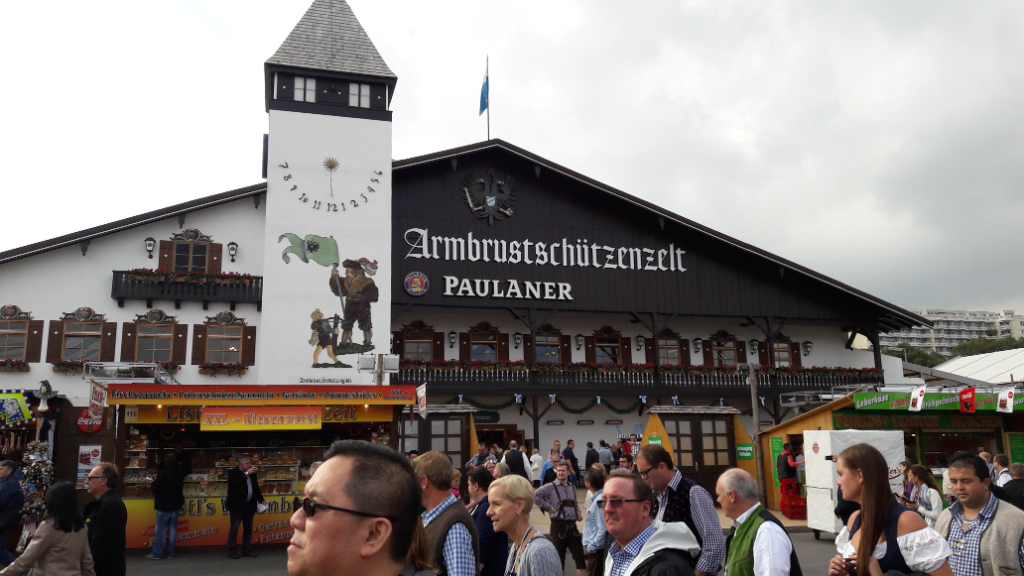
    The crossbow shooting competition is held in the Armbrustschützenzelt (Crossbow Shooter’s Tent, website here). I’ve been inside the Armbrustschützenzelt, but I could not find where the competition occurs. The Winzerer Fähndl, a crossbow guild, built the original Armbrustschützenzelt after moving out of the Winzerer Fähndl tent. I cannot find much information about this competition beyond that it dates back to 1895 and this brief video.

    When You Go

    • Book early. When I went in 2016, I looked for hotels in February 2016. Most hotels were already booked.

    • The Munich City government has imposed restrictions on AirBNB like services, so be careful if you go this route. Don’t be the person that gets your host in trouble.

    • Munich locals agreed with me when I told them my plans: Skip the weekends and go to Oktoberfest during the week. The weekends are too crowded and it is too difficult to get into a tent. If you do go on the weekend, expect the tents to fill up in the early afternoon. The weekdays are much quieter and the tents fill up in evening instead of early afternoon. Note that some tents have family days during the week where families get discounts; however, anyone is welcome in the tent.

    • I’ve heard that some tents accept credit cards, but I didn’t see any acceptance of credit cards when I was there. Expect Oktoberfest to be strictly cash-only, and pay as you go.

    • It’s OK to stand or dance on the benches, but keep your feet off the tables.

    • You can reserve tables in the tents, but only for large groups (usually eight or more people). Reservations fill up early, so like with hotels, reserve early. If a table isn’t reserved and isn’t full, ask if you can join. Most locals will gladly let you join them if there is room for your party. In almost every tent, you won’t be served unless you are seated.

    • If you decide to wear a Dirndl or Lederhosen, spend money (a few hundred Euros from what I hear) to get good stuff. Otherwise you will stick out as a tourist. Ladies, the Dirndl apron knot goes on your left front if you are available, the center front if you are a virgin, right front if you are not available, and back if you are a widow or a waitress.

    • I didn’t get a car while I was there. I relied on public transit. German public transit is good. The Münchner Verkehrs-und Tarifverbund (MVV, Munich’s public transit system) English language website includes schedules, maps, fare information, and trip planners. There is an U-bahn (subway) station at the Wiesn for the U4 and U5 lines, which is sometimes closed during Oktoberfest due to security concerns. The Hauptbahnhof (Main Train Station) is a fifteen minute or so walk from the Wiesn. All S-bahn lines except the S20 go through the Hauptbahnhof. The S1 and S8 go to the airport. To go from the Hauptbahnhof to the Wiesn, follow the signs. There are signs at the Wiesn which will direct you to both the U-bahn station and the Hauptbahnhof.

    • Due to increased security, you won’t be allowed to take large bags into the Wiesn. The Wiesn is now fenced off, and you can only enter and exit at certain points.

    • Don’t drink too much unless you want to end up on the Munich Barfs web page or in Youtube videos like this one.

    If you go, I hope you have a good time. Oktoberfest is a lot of fun.

    Postscripts

    For those that like looking at men

    I’m a straight guy, so I am a bit clueless about what those that like looking at men are attracted to, but I think the pictures I found of men in Lederhosen won’t work. Instead, have a video of Bavarian Stone Lifting, which does not take place at Oktoberfest.

    For those that like looking at women

    Enjoy this gallery of women at Oktoberfest.

    Editor’s Note: DEG is already deep into the spirit of Oktoberfest, so to speak, so he’ll check in for comments, questions, and general applause on Monday.
  • Review – Rogue Sriracha Hot Stout


    If you ever had Cave Creek Chili beer, you probably agree with the popular opinion that it is dreadful.  It didn’t help that when Cave Creek came out with the beer it was several years before novelty beers became more popular.  So when I received this as a gag gift at the office Christmas Holiday Party, I decided I would be as objective as possible.  After all, I like beer.  I like sriracha sauce, the combination should be okay, right?

    Let’s start with what is right about this.  Sriracha sauce or its parent company Huy Fong foods was founded by David Tran, a Vietnamese Immigrant.  Legend has it, the former ARVN officer stowed away on a freighter in the early 1980s.  Having survived the trip, he found himself penniless, without hot sauce to his liking, and worst of all in California.  He made the sauce first by hand, selling mainly to Chinese restaurants and his company grew from there by word of mouth.  The company is named for the freighter that brought him to America.

    The beer is not hopped at all as far as I can tell but it does not matter because there is no balance to this at all.  This reminds me of the Lindt chocolate bars with chile or those candies from Mexico.  There is a sweet full bodied beer behind it but it is overpowered by flaming cock sauce.  Mexican Indians drank something similar.  Cacao trees are native to the Americas and were believed to be a gift from the Quetzalcoatl, the god of wisdom.  It was originally prepared as a beverage; evidence of fermenting cacao seeds to make alcohol suggests the practice was in place as early as 1400 BC. To this day, it is still prepared as a hot frothy beverage mixed with spices that is believed to be a powerful aphrodisiac. Powerful, like this guy:   

    The peppers are somewhat muted by the stout but not nearly enough.  Perhaps now is a good time to mention that my ancestors engaged in human sacrifice and cannibalism, but quite frankly, I can only see myself eating this with Thai curry or Pho.  Even then I would probably only do it on a dare.

    I was at a loss as far as glassware.  That Gordon Biersch glass (they call it a Willibrecht) is as neutral a glass that I own but I typically use it for Amber and Pale Ales.  IPA, Barley wines, Trappist, and Brown Ales I opt for the Chalice or a Tulip Glass.  Lagers go in a mug.  Stouts and Porters go in a Pint glass.  The spices are so intense, it doesn’t suit any of my glassware.

    If you are going to spend the five days following the winter solstice, holed up in your house while waiting for the gods to finish deciding whether to end the world or let you live for another year…you might like this.  If you like covering yourself with black mud to celebrate the god’s gift of a new year…you might like this.  If you plan on ripping open the sternum of one of your enemies, beheading him and eating his still beating heart…you might like this.  If you have achieved a higher plane of consciousness, climbed into your pyramid and flew back to your home planet…you may like this.  For the rest of us, I leave it by saying that it is not for everyone.  I couldn’t finish the bomber, instead I pulled out a Four Peaks Kiltlifter to round out my evening. 2.2/5.

  • Review – My Antonia Imperial Pilsner by Dogfish Head


    I typically don’t buy from this brewery.  For some reason they think rather highly of themselves despite the fact they produce exactly one beer, an IPA.  They just make it with a varying amount of hops, which means they get to sell them in packs of 4 for what might normally be the price of 12.  Another reason I avoid them?  They reside in a state whose most famous resident is a bit of a creeper and likely would be considered a racist in a sane world.  That day was different and I picked it because Imperial Pilsners aren’t all that common and I remembered a book I read in high school with the same name.  

    My Antonia is a tale that begins when Jim, the novel’s main character, meets a woman by chance on a train that happened to have a mutual friend named Antonia.  Jim and his contact agree to exchange a memoir of sorts of their experiences with Antonia.  The novel is intended to be Jim’s submission to his contact on the train.  This makes the novel an unusual read because it is not written to follow a discernable plot line, rather it is a collection of “books” from Jim’s point of view.  Jim was orphaned at the age of ten and goes to live with his grandparents in Nebraska; the first book begins on a train to Black Hawk which also has the Shimerda’s, a Bohemian immigrant family with a daughter slightly older than Jim, as passengers.  It is obvious from the start that Jim has a thing for the Bohemian girl next door. 

    Her family just so happens to live on the property adjacent to his grandparents.  Later, Antonia meets Jim by a creek, where she inquires on several pronunciations to certain words in English.  As a token of her appreciation, Antonia offers Jim a gift.  The entire scene is broken up when her father awkwardly arrives and gives Jim an inquisitive look.  This language barrier comes up repeatedly as a plot device as the Shimerdas are constantly screwed over by another Bohemian immigrant from whom they purchased their property.  Jim and his family to their credit were always willing to give them a helping hand.  Ironically, Jim’s grandparents had a bilingual farm hand, Otto, who could’ve solved most of these language issues but didn’t even bother because he happens to be Austrian.

    I was 14 when I read this book, and even then, I questioned why the author wrote Otto in as a character or even made him a German speaking character at that?

    Antonia herself seems almost bipolar, depending on the season.  Eventually her father kills himself because nobody in Nebraska wants to hear him play his violin, Jim goes to Harvard and becomes a lawyer.  Academics for some reason think of this as a tale of “the west.”  It is your typical coming of age story written by an early 20th century feminist.  

    Predictably, the male protagonist, in a book full of terrible sexual metaphors–fails to score.  

    At least, I would have remembered if he did, but to be honest I didn’t finish the book. It is unclear whether Jim’s contact on the train sends her manuscript, further giving the reader the impression that Jim is an archetypal beta-male of some sort.  I imagine him penning this manuscript for a random lady on a train, reminiscing about a girl he once knew while naked on a cold New England evening.  Rewriting it numerous times because of the unreadable black streaks from the tears wiped away from his parchment.   

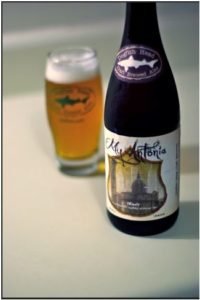
    Right…the beer. As you can tell from what is not my photo, is not quite amber in color.  It has a nice foamy head with some citrus notes.   Saaz hops which are Czech in origin are extremely prevalent, which makes no sense because the girl is not from that region.  Wouldn’t Hallertau or any German variety be more appropriate?  People notice details like this, Dogfish, and I only grade on a five-point scale.   The Saaz hops leave a dry aftertaste on the back of the tongue.  I like that they chose to go with the original Czech style, rather than the German styles that Americans are accustomed to, but for the most part these aren’t all that different.  The Imperial Pilsner variety is of course similar to any Pilsner style lager, with the obvious contrast of an insane amount of hops tossed in the mix.  The hop’s assault on your palate is reminiscent of this Czech SWAT team.

    https://youtu.be/ygGEpl0EJRw

    This video is fitting because why arm a tactical team only with pistols?  Why name a libation like this after a book?  

    Bottom line, this book sucks and under no circumstances should you take anyone seriously that says otherwise.  The beer however, is good.  I give it a solid 4.2/5.